
Small bedrooms can feel crowded and claustrophobic, even in a space with a bright window and calm paint. Here is why I wrote this. I made this post to help you turn a tiny room into something that feels open, calm, and usable.
Let me break it down for people who share rooms or live in small apartments. If you live in a small apartment, share a room, or just dream of a room that seems bigger, this one is for you. If you care about practical setup, natural light, and smart storage, you’ll find ideas here you can try this weekend.
I pulled together 30 bedroom setup ideas that cover layout, color, lighting, and storage. They’re simple, affordable, and easy to adapt to any style. You’ll learn tricks like choosing low-profile furniture, using mirrors for depth, and picking palettes that reflect light.
Not every trick fits every room. Next steps are simple. Measure your space, test before you buy, and pick pieces that can flex as your needs change.
Whether you love clean lines, cozy textures, or a mix of wood and metal, these ideas serve many styles. The swaps are about feel as much as function, with sensory details like soft textiles and warm lamps that make a small room feel welcoming.
Ready to get started? Pick one change you can make this week and see how it changes how your room feels. Save a few favorites, sketch a rough layout, and start with space-saving tricks like under-bed storage or a wall-mounted desk. If you want, tag a photo of your space and I can help tailor ideas to your exact dimensions.
1. Lofted Bed for Underlying Storage
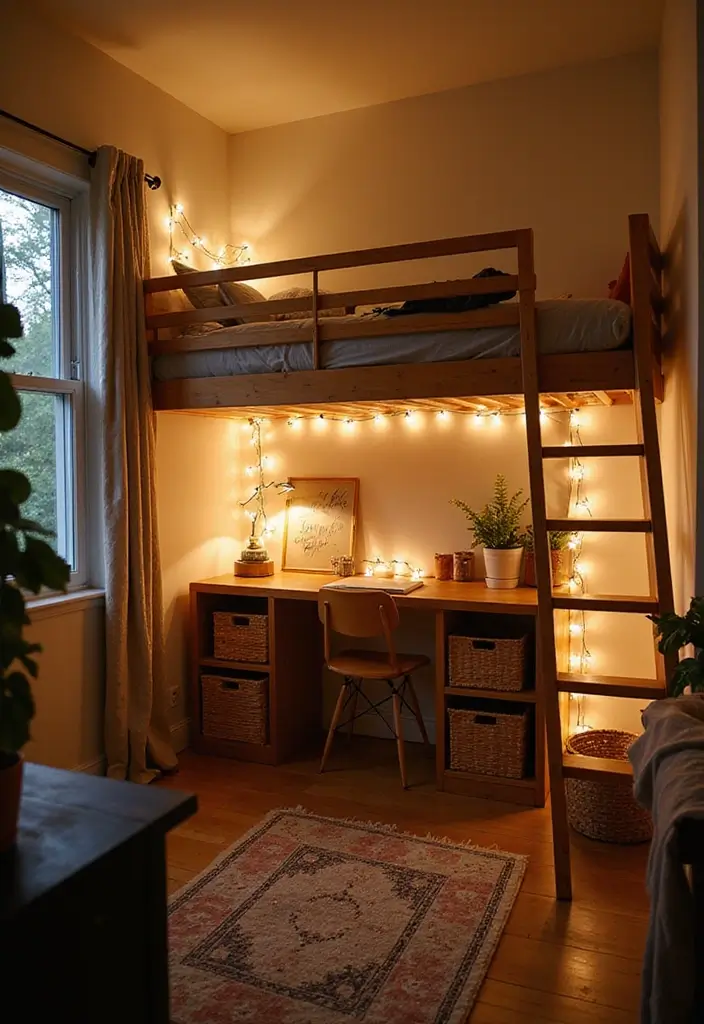
Small rooms can feel tight. You want space to sleep, work, and store gear without crowding the floor. A lofted bed can fix that. It lifts your bed up and creates a cozy space below. Underneath you can place a desk, a reading chair, or a wardrobe. This setup saves floor area and adds a playful touch to your room.
Here is why it works. A sturdy loft bed creates a higher ceiling feel, which makes the room seem bigger. Choose a frame that matches your decor – rustic wood for warmth or sleek metal for modern vibe. Add strings of fairy lights along the railing and keep the bedding light in color to keep the space airy.
Tips for a clean, usable loft setup
– Pick a low-profile desk so the area remains open.
– Find a chair that fits neatly under the bed.
– Use simple shelves or baskets for storage to stay organized.
Next steps. Measure your ceiling height before buying. Check the bed’s weight limit and assembly steps. Plan the space you want under the loft, then shop for a matching chair, desk, and storage crates. If your ceiling is tight, choose a low loft. It fits small rooms better.
2. Mirrored Furniture for Reflection
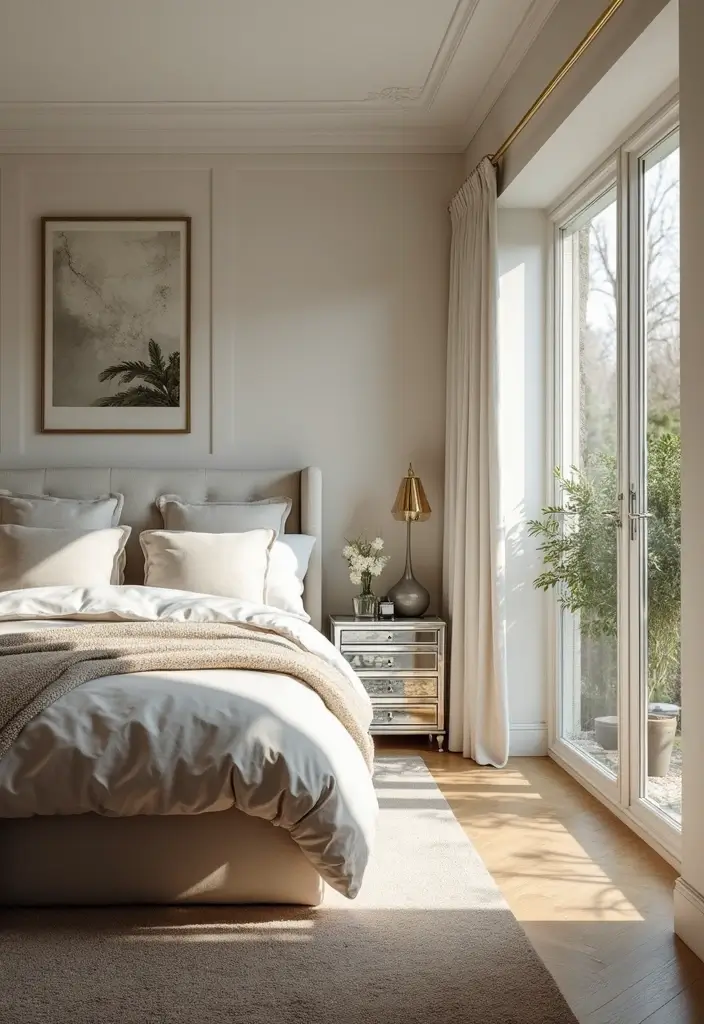
If your small bedroom feels tight, mirrored furniture can help. It reflects light and widens sightlines. A mirrored nightstand or dresser catches daylight and sends it across the room. The space looks bigger and feels more inviting. Pair mirrors with soft fabrics and light colors to keep the mood calm. Mirrors add style without heaviness.
– Why it helps Mirrors bounce light around and create a sense of space.
– Choose the right pieces Pick a nightstand or dresser with clean lines that reflect light.
– Keep it uncluttered Let mirrored surfaces stay simple so they stay bright.
– Pair with soft fabrics Light curtains, linen, and pale tones boost the airy feel.
– Add soft lighting Place a lamp near the mirror or use a thin LED strip to deepen the glow.
– Mind the reflections Check what the mirror shows in the doorway and hide clutter from view.
– Care and upkeep Wipe fingerprints and dust with a microfiber cloth.
With these steps, your small bedroom can shine with space and glam. Start with one mirrored piece and watch the room feel lighter. You can add another mirror later if you want even more brightness.
3. Vertical Shelving for Organized Storage
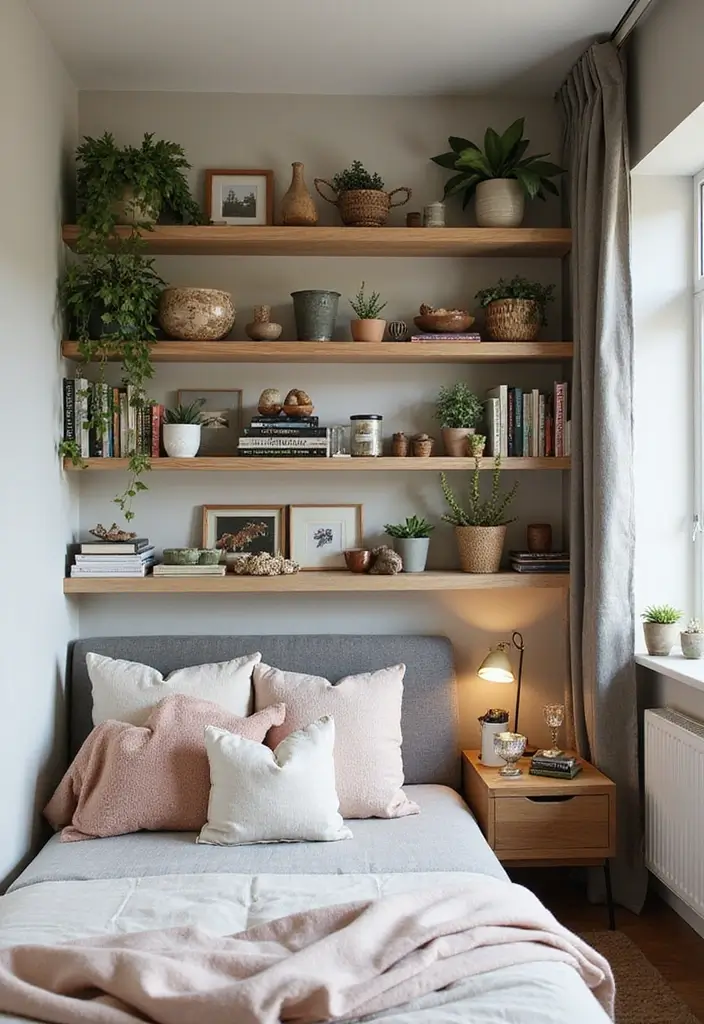
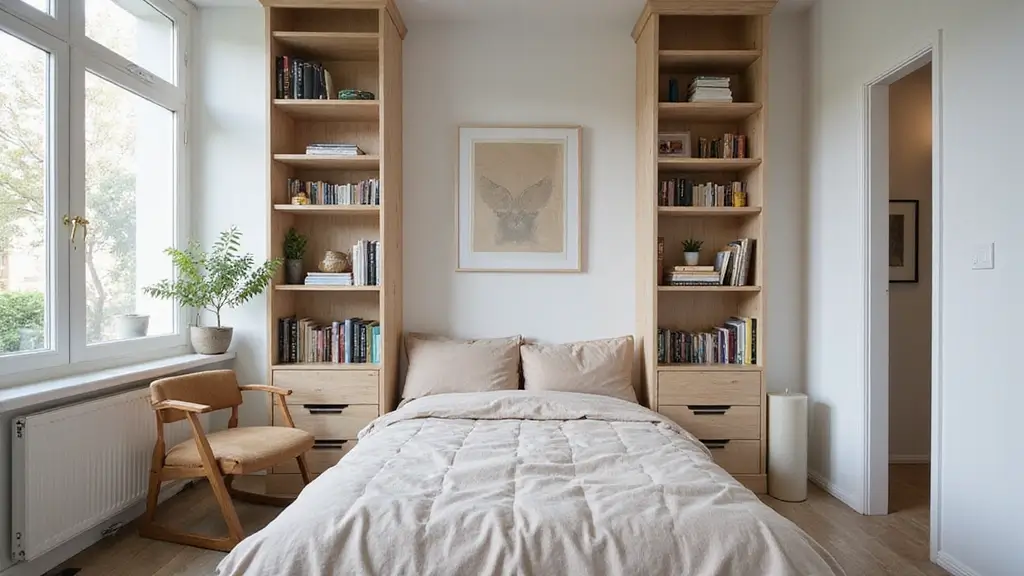
Facing a small bedroom with no free floor space? Vertical shelving can solve that. Tall bookcases or wall shelves pull your eye up. That makes the ceiling feel higher and the room feel bigger.
Use these shelves for books, plants, and keepsakes. Put them next to your bed or by your desk so you reach them without stepping around.
Mix different heights and shapes to create a lively look. Use a mix of slim boards and chunky shelves.
– Hidden storage: baskets or bins fit inside shelves so clutter stays out of sight.
– Stability: heavier items stay at the bottom to keep the unit steady.
– Color: light tones help keep the space airier.
Vertical shelving works hard and looks good. It can become a real feature in a small room. Here is why: it adds storage without crowding the floor, and it adds vertical drama that guides the eye upward.
Next steps: measure your wall, pick wall-mounted or freestanding shelves, and plan where each item will live. Place a small lamp on a shelf to soften shadows. This simple setup gives you room to breathe and room to grow.
Start small. Add a plant or two later, gradually.
4. Multi-Functional Furniture
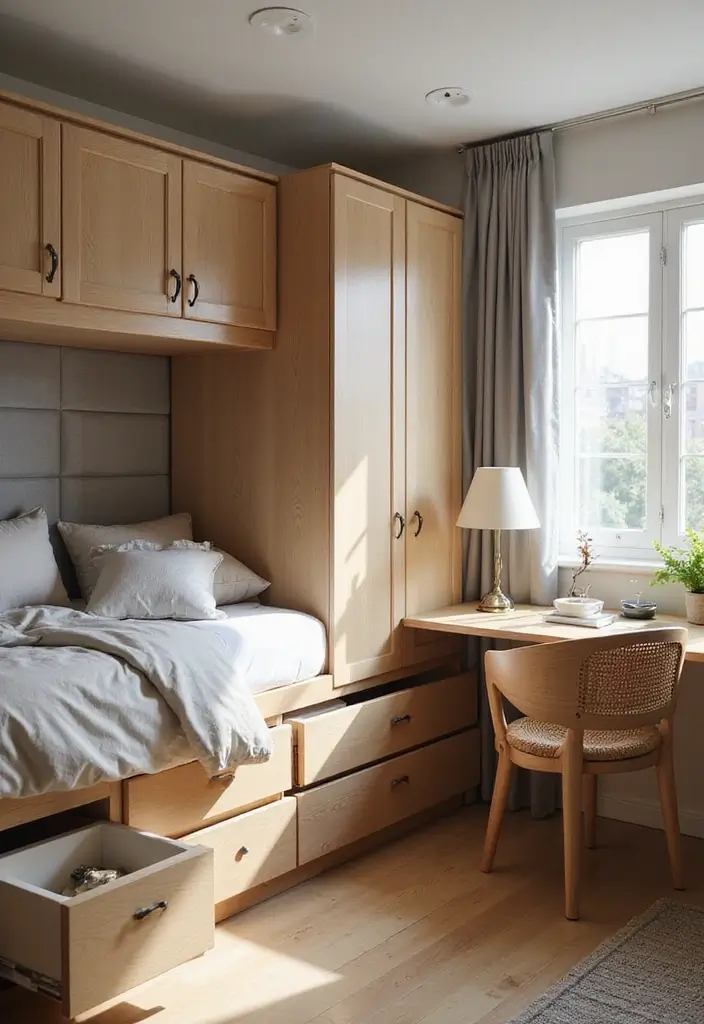
Struggling to make a small bedroom feel open? Smart, multi-functional furniture can stretch the space without making it feel crowded. Here is why it works and how you can use it every day.
– Bed with built-in drawers or a storage headboard. It hides clothes and linens and keeps the floor clear for easy movement. This makes your room feel calmer and bigger.
– Storage ottoman or window bench. Lift the lid to reveal blankets, books, or toys. Place it at the foot of the bed for a soft seat and hidden storage.
– Foldable desk or wall-mounted drop-leaf table. You get a usable workspace when you need it and a clean wall when you don’t. Mount it where it’s easy to reach from your bed or chair.
– Floating shelves and wall cubbies. Store daily items up high to clear surface space. Use baskets to keep small things tidy and easy to grab.
– Under-bed storage bins. Slide flat, clear containers under the bed. Choose clear fronts so you can see what is inside.
– Color and style harmony. Stick to a light wood or soft neutrals so the room reads bigger. Keep metal and fabric accents in the same palette to avoid visual chaos.
– Plan and measure. In very small rooms, 2 or 3 multi-functional pieces are enough. Measure doorways and bed clearance before buying.
Here is why this approach helps. It keeps surfaces clear and traffic flow smooth. Next steps: pick two pieces, test them in your space, and adjust as needed. If something feels bulky, swap it for a lighter option that still fits your style.
5. Minimalist Design for Clean Lines
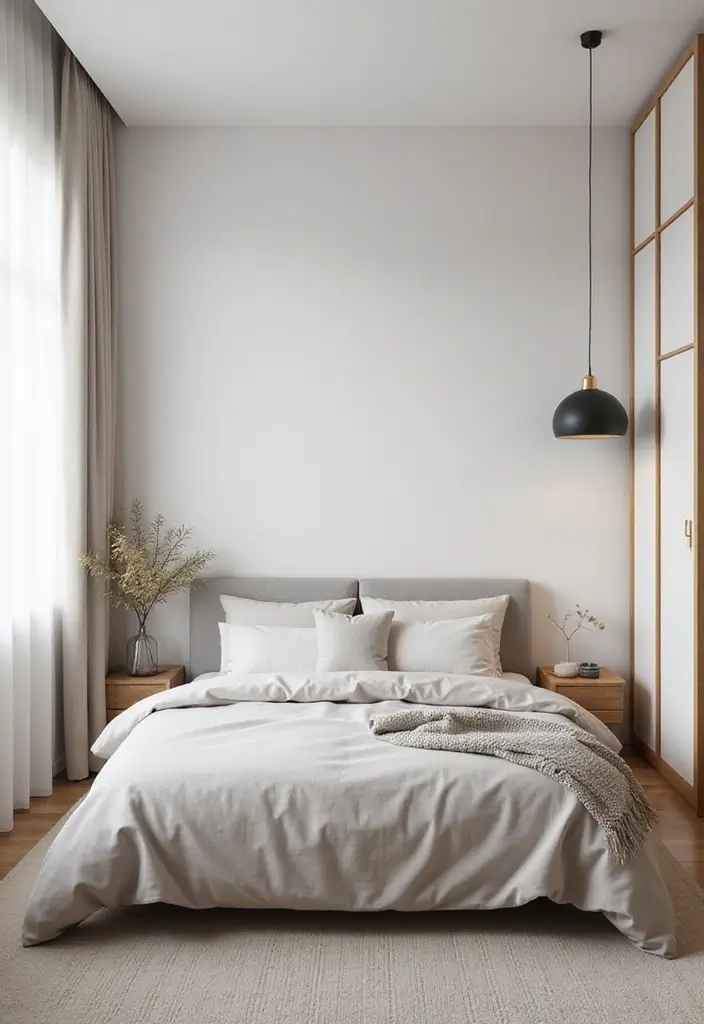
Minimalist Design for Clean Lines
You’re after a bedroom that feels bigger and calmer. A clean, simple look can give you that with careful choices, not a crowded look.
Here is how to pull it off:
– Choose furniture with a modern silhouette and clean lines. Simple shapes stay neat and easy to match.
– Use a neutral color palette. Think whites, creams, soft grays, and warm beiges. Let light play on the walls.
– Bring in texture to add warmth. Soft linens, wool throws, and natural fibers feel cozy without clutter.
– Limit decor to a few standout items. Pick one art piece, a sleek lamp, and a single plant to anchor the space.
– Add under-bed storage. Baskets or slim drawers keep toys, clothes, or bedding out of sight.
– Include plants for life, not mess. A small fern or snake plant fits any style.
– Layer lighting for depth. A ceiling light plus a small lamp adds warmth and shape.
– Choose materials with quiet finishes. Wood, matte metal, and natural stone read calm.
– Plan the layout to keep open floor space. Let the bed be the hero and keep a clear path around it.
– Maintain with a quick weekly tidy. Remove one item that doesn’t earn its keep.
This helps your small room feel large.
6. Utilize Corner Spaces
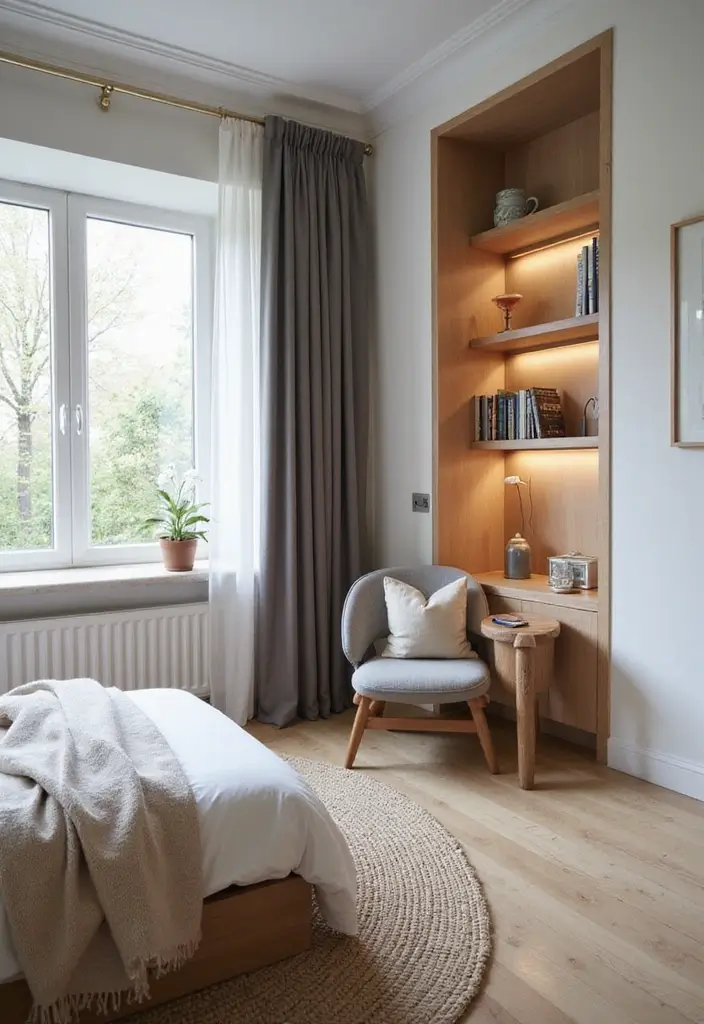
Corners in a small bedroom sit idle. Here is why they matter. You can try a few simple ideas this weekend to add storage and calm.
– Corner desk or work nook A slim desk fits in a corner for a study space or computer area. Choose a compact model with a shelf to keep papers off the desk.
– Cozy reading nook Put a slim armchair in the corner. Add a soft throw, a small lamp, and a low shelf for books.
– Corner shelving units Floating shelves or a tall corner unit gain storage without crowding. Use baskets to hide clutter.
– Light colors rule Pick pale walls and light furniture to make the corner feel airy. White, beige, or soft pastels reflect more light.
– Plants and art A small plant or a piece of art adds life and warmth. Keep it simple so the corner stays calm.
– Corner friendly furniture Look for pieces that hug the wall. A wall-mounted shelf, an L-shaped desk, or a slim storage tower fits snugly.
With a purposeful corner, your small bedroom gains function and charm without losing floor space.
Next steps: measure the corner, pick one idea, and test it for a week.
7. Bright Color Palettes
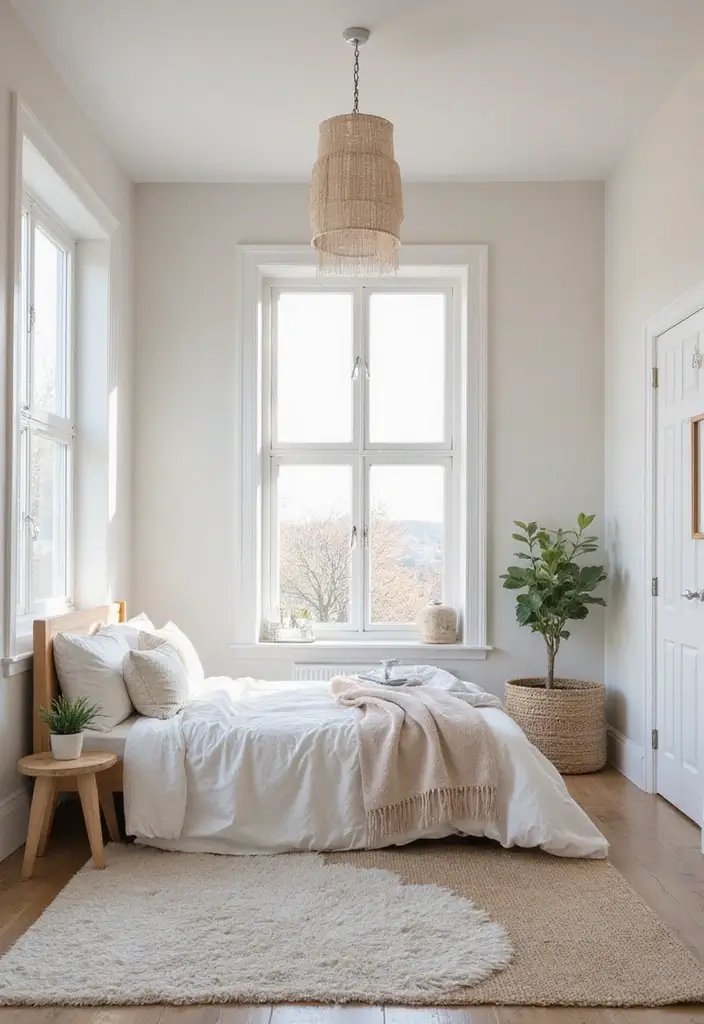
Bright Color Palettes
Here is why bright colors work in small bedrooms. A sunny palette makes walls feel farther away and the room feel more alive. You can use light tones like soft whites, pastels, and pale blues to reflect more light.
Next steps:
– Start with a soft base on the walls. Soft whites or pale blues help daylight bounce around.
– Add an accent wall for depth. Keep the shade calm so it doesn’t crowd the space.
– Keep the shade calm so it doesn’t crowd the space. (This line is kept for emphasis and can be adjusted if you prefer.)
– Pick big pieces in light colors. A pale bed frame or dresser reads as part of the whole room.
– Bring color in with textiles. Bedding, throws, and rugs in bright but gentle hues.
– Use art and pillows to add pops. Tie colors together with a common accent.
– Mix fabrics for texture. Linen, cotton, and wool add warmth and dimension.
– Let light guide you. Choose sheer curtains and add a small mirror to reflect light.
– Test color samples on the wall for a week. Check how color looks in morning and evening light.
– Keep the palette simple. Two to three main colors are enough.
– Use paint with a satin or eggshell finish for easy cleaning.
– If you use bold accents, balance with large white surfaces.
The result is a small bedroom that feels airy, clean, and welcoming all day long.
8. Floating Nightstands
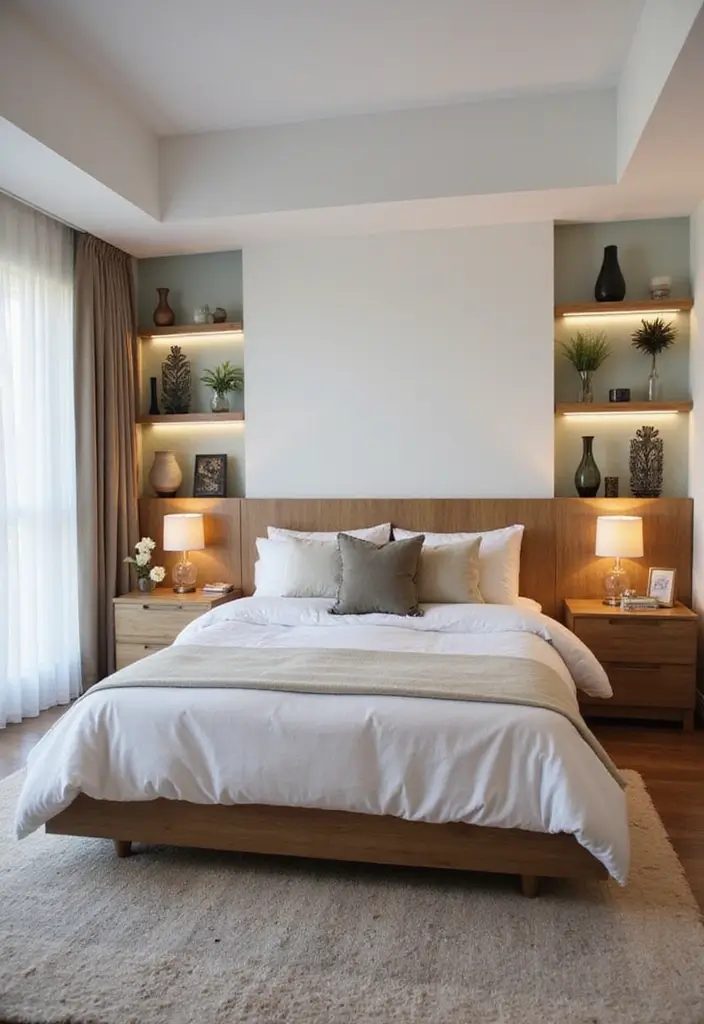
If your bedroom is small, floor space matters. Floating nightstands free up that space. They sit on the wall, not on the floor, so the room looks bigger. You still have a lamp, a book, and a glass by your bed.
Here is why they work:
– They free floor space, making the room feel bigger.
– Pick a finish that matches your decor. Wood adds warmth, white keeps it bright.
– Use them in pairs for balance, or mix styles for a personal vibe.
– Add hooks or a tiny shelf under the unit for bags or robes.
Practical setup ideas:
– Mount on studs for strength; use the right screws.
– Set the height so the top is near the bed edge. About 24 to 26 inches from the floor is a good target.
– Hide cords by routing them behind the wall or with clips.
Care and style tips:
– Choose lightweight materials if you want to move them often.
– Clean lines hide clutter. A lamp and a single book look neat.
Floating nightstands pull a small room together. They feel like part of the bed, not a loose box. They add style with space saved.
Next steps.
9. Under-Bed Storage Solutions
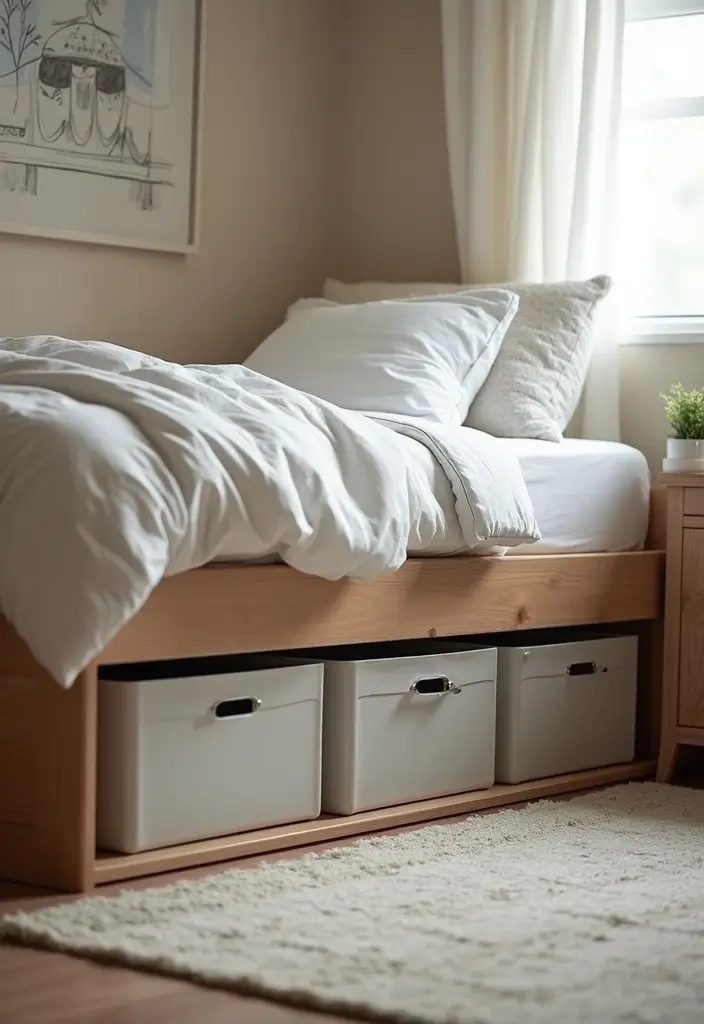
Your bed hides a smart storage spot. Under-bed storage helps you tuck away seasonal clothes, shoes, and extra bedding. With the right bins, you keep a neat room and reach items without dragging boxes across the floor. Choose materials that fit your style, such as fabric, clear plastic, or compact wood bins.
– Use clear, shallow storage bins slide out easily, letting you see contents at a glance.
– Rolling drawers save space and roll out for easy access without bending down.
– Vacuum-seal bags compress bulky items and double as dust protection.
– Heavier boxes belong near the bed’s center to keep the setup stable and balanced.
– Label each bin or bag so you find items fast without digging.
– Group by season or use, then rotate to keep the most needed items reachable.
– Use a mix of fabrics and clear plastic to match your room style and budget.
– Leave a small air gap and check for dust; wipe down items during cleanups.
– Choose low-profile bins to avoid lifting the bed height and to ease nightly routines.
Start with a simple setup this week, and notice how your room feels bigger.
10. Statement Lighting Fixtures
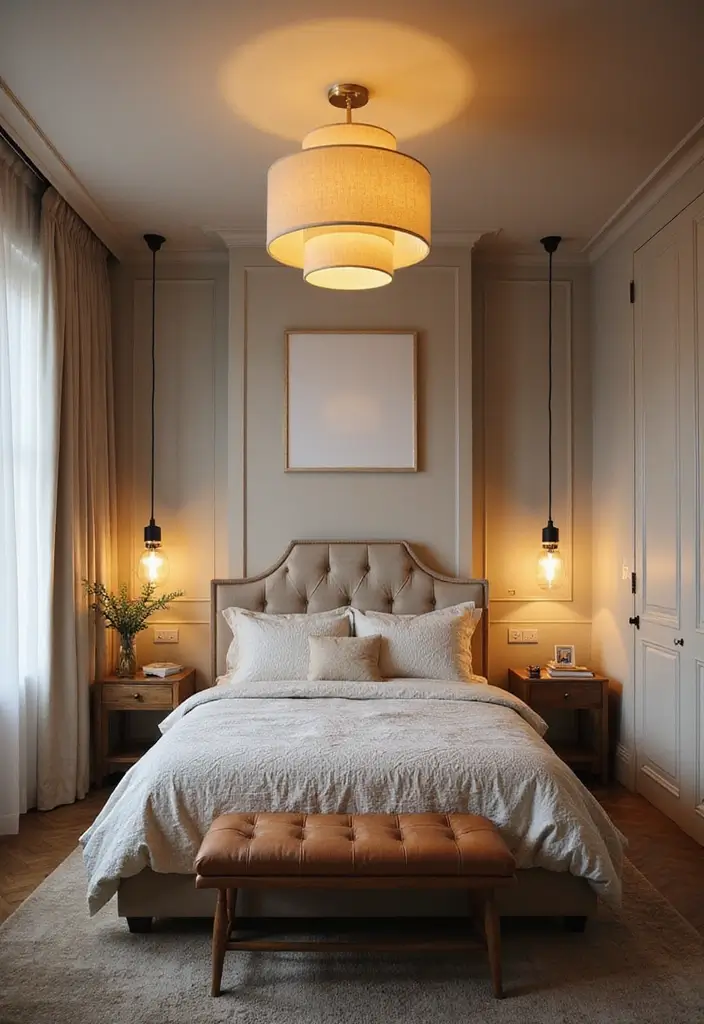
Small bedrooms can feel cramped if light is weak.
Here is why lighting matters in a small room.
A statement fixture pulls attention upward and can make the ceiling feel higher.
Choose a design that fits your style and still provides enough light for the whole space.
– Choose a statement fixture that draws the eye upward with a pendant or oversized lamp, and pick a metal finish you love.
– Layer lighting with bedside lamps on both sides to add warmth and even glow.
– Add a dimmer to adjust brightness for different times and moods.
– Reflect light with fixtures that have brass, glass, or glossy shades to bounce light around the room.
Finish with warm LEDs in the 2700K range for a cozy glow.
With the right lighting, your bedroom feels spacious and inviting.
11. Wall Art and Decor
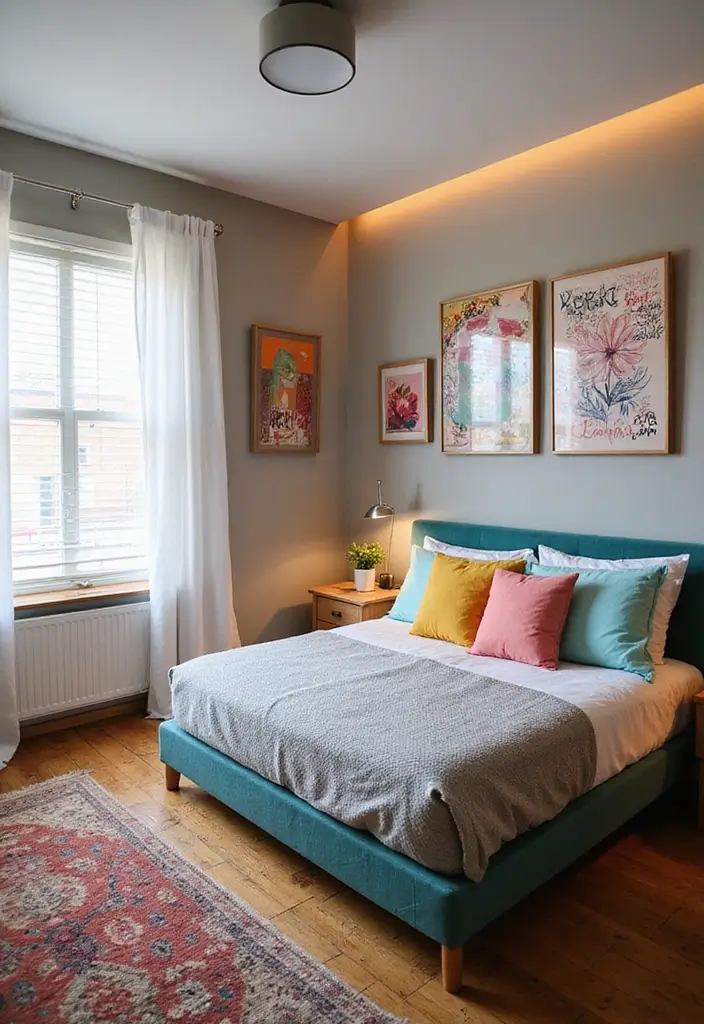
Wall Art and Decor
Is your small bedroom feeling tight? Wall art helps it breathe. It adds depth and style without crowding the room. Here is why it works: it draws the eye, breaks flat walls, and sets a calm mood.
– Go frameless or use a light gallery wall to keep the space airy.
– Pick art that matches your color scheme and the room vibe for a cohesive look.
– Use adhesive hooks or strips to hang art without drilling.
– Add mirrors as part of the wall art plan. They reflect light and make the space feel larger.
– Rotate the art with the seasons or your mood to keep things fresh.
To add texture, mix metal accents with soft fabric hangings. A single large piece on a focal wall can anchor the room, while a neat grid of small prints creates calm order.
Wall art should lift the room, not crowd it. With the right choices, your small space feels bright and open.
Keep frames slim and light. If you use frames, pick slim wood or metal that stays easy on the eye. Avoid heavy mats that hide the art. Small touches add up.
12. Sliding Doors for Wardrobes
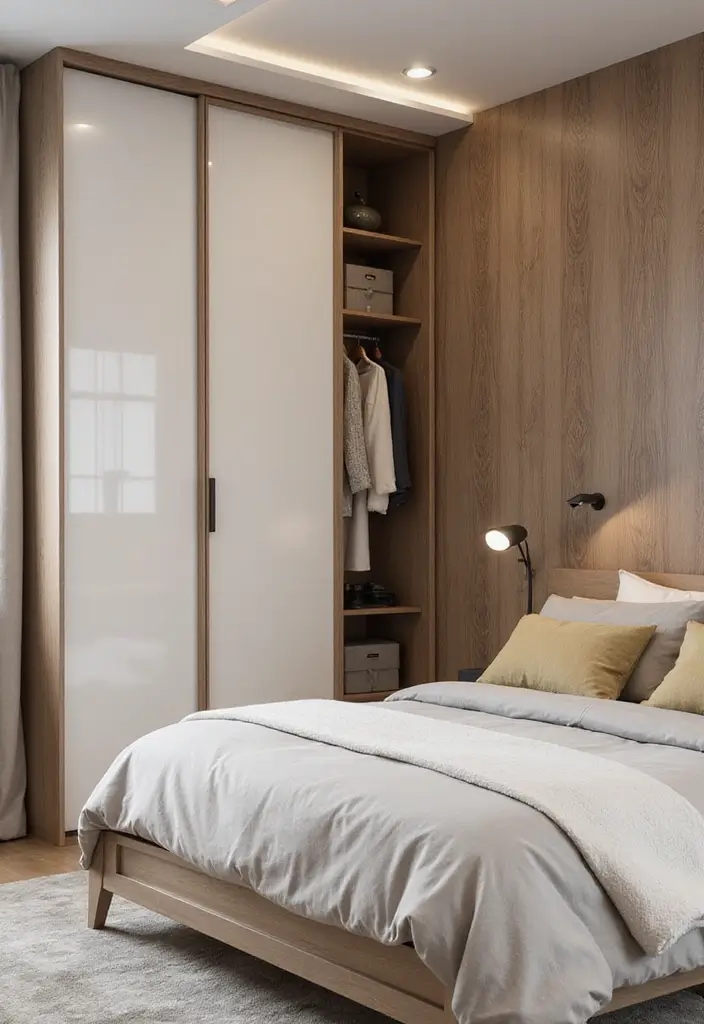
Feeling cramped in a small bedroom? Sliding doors for wardrobes can free floor space while keeping full access to your clothes.
Sliding doors glide along a track instead of swinging out. That one change can open up your layout for a bed, a desk, or a dresser without bumping into doors.
You can add a mirror panel. A mirrored wardrobe door brightens the room and makes it feel bigger. If you prefer privacy, choose frosted glass or a wood frame.
Here is how to pick and use them:
– Plan the fit: measure the opening, height, and ceiling. Make sure doors won’t hit lighting or crown molding.
– Choose a style: full mirror, frosted glass, or wood framed panels. Framed doors add warmth; large mirrors feel airy.
– Top storage: place decorative boxes or baskets on top. It hides clutter and adds a design touch.
– Inside the wardrobe: add shelves, small dividers, and a double hanging rail. This keeps items grouped and easy to grab.
– Keep it tidy: label bins, use clear totes, and vacuum shelves to prevent dust.
With sliding doors, you gain space and keep your room stylish. No more crowded corners, and you can close your closet fast for a clean look.
Unlock the potential of your small bedroom! Sliding doors not only save space but can also reflect light, making your room feel twice its size.
13. Rugs to Define Spaces
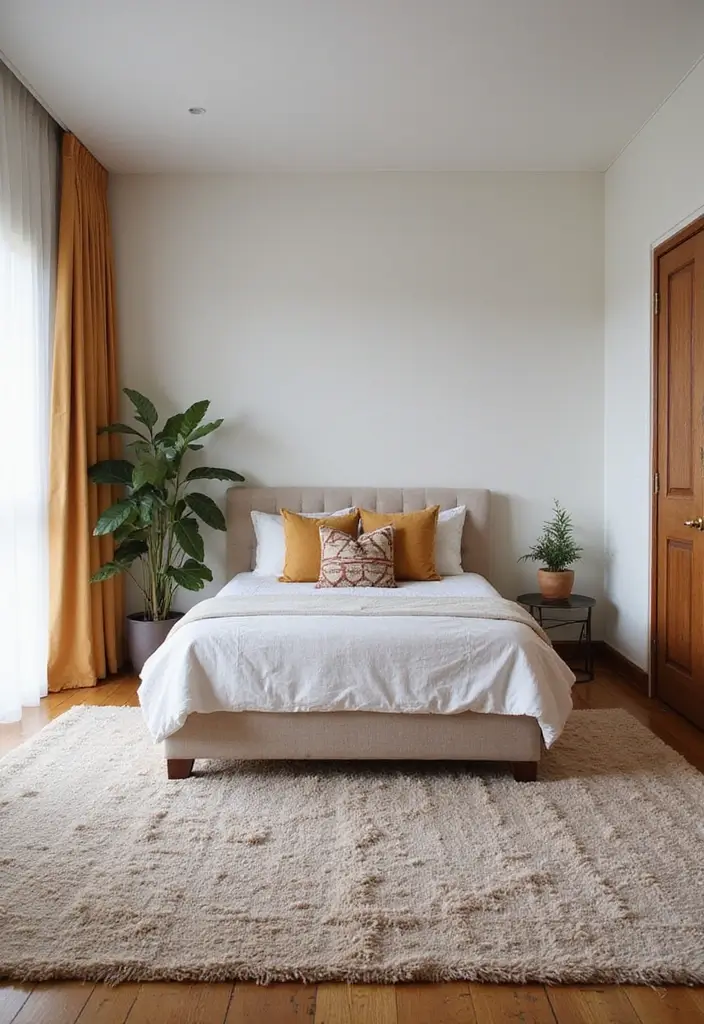
In a small bedroom, a rug can do more than decorate. A well chosen rug defines zones and adds warmth. It helps separate the bed from a desk or seating area. That simple touch makes the space feel cozy and a bit bigger.
Choosing the right rug is about flow. A big, calm rug makes the room feel orderly. It also helps your feet stay warm from floor to bed.
Here is how to pick the right rug.
– Size matters: sit under the bed and extend beyond the sides.
– Light colors and soft patterns: keep the room open.
– Layer for texture: layer a base rug with a smaller top rug.
– Care that fits you: choose washable rugs you can vacuum.
Tips to place it well.
– Anchor the bed so the room reads as one piece.
– Let the rug extend into the work area.
– If you use two rugs, keep colors in the same family.
Rugs bring unity to a small bedroom. They soften the floor, absorb sound, and guide the eye.
Next steps: measure the room, pick a shade you love, and test with a rug sample.
Take your time. A good rug fits your daily life and makes the room feel calm.
Test swatches on the floor before buying.
Small changes add big feel.
14. Wall-Mounted Desks
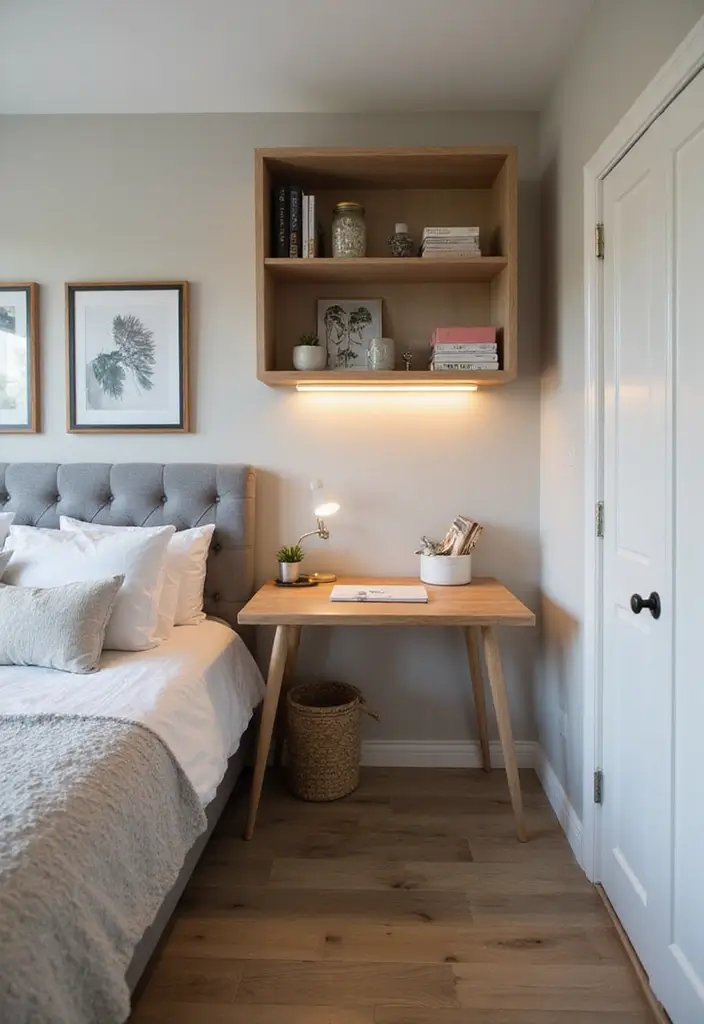
Why a wall-mounted desk fits small bedrooms
If you need a workspace without stealing floor space, a wall-mounted desk is a smart move. It stays tidy and folds away when you are done.
Here is why it works:
– It saves floor area so your bed or dresser can breathe.
– It folds flat against the wall to keep the room open.
– A desk near a window gives you natural light for focus and mood.
Practical setup tips
– Choose a floating desk for a clean, airy look that blends with any style.
– Mount near a window for bright, pleasant work sessions.
– Add shelves above the desk for books, notebooks, and small tools.
– Pick a desk that matches your bedroom style—wood, metal, or white to blend with existing furniture.
How to install and use
– Find sturdy wall studs to hold the weight you plan to place.
– Position the desk at a comfortable height for your chair, usually around 28 to 30 inches from the floor.
– Use cable clips and a small power strip to keep cords tidy.
– If space is tight, consider a fold-down desk like a compact option that unlocks when you need it.
Reality check
This setup gives you a real work spot without crowding the room. It’s ideal for a laptop, notebooks, and a light lamp.
Next steps: measure your space, pick a size, and plan placement this weekend.
15. Curtains to Enhance Verticality
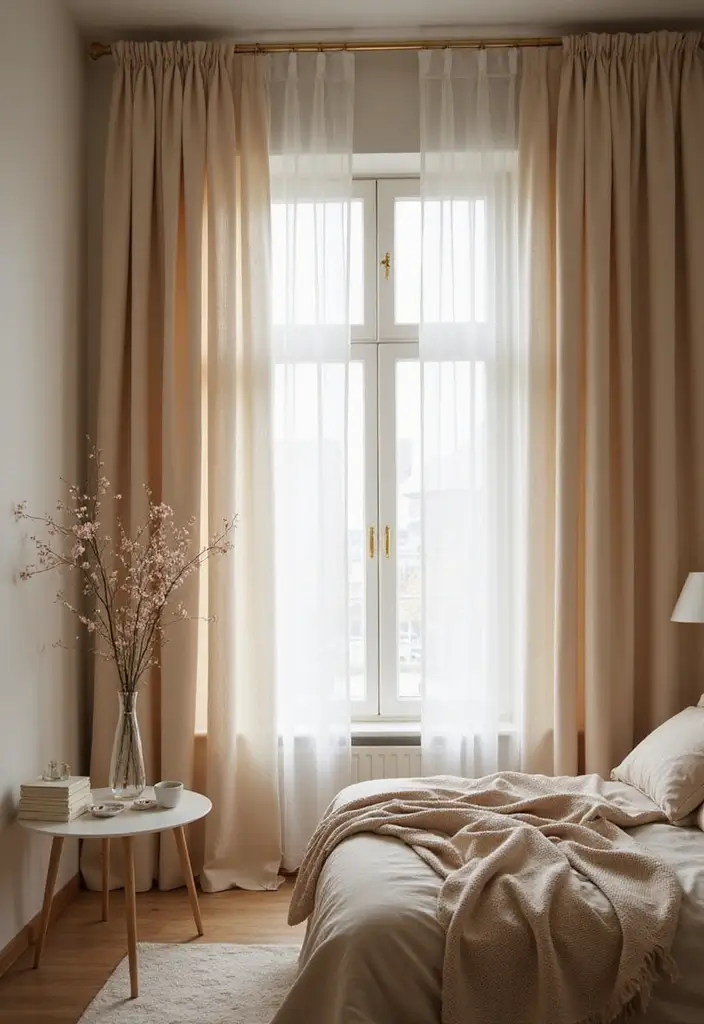
Ceiling-to-floor Curtains for Height
Small bedrooms can feel cramped fast. The ceiling seems low and the walls close in. Ceiling-to-floor curtains change that. They pull the eye upward and make the room feel taller and more open. Here is why they work. Next steps show you how to set them up.
– Choose floor-length curtains that start at the ceiling and reach the floor to add height.
– Extend the curtain rod several inches beyond the window frame to widen the view.
– Hang the rod high, close to the ceiling, so the fabric falls long and straight.
– Pick light fabrics and neutral colors for a calm, airy feel, or try bold patterns that show your style.
– Layer curtains with blinds or shades to balance privacy and light control.
– Aim for fullness by using fabric as wide as the window twice over or more.
– Use sturdy hardware and smooth-running rings so the drapes open without snagging.
– Keep maintenance simple by following the fabric’s wash care.
– Measure the window and wall space before buying to pick the right length and rod size.
– Start with one window to test the look, then repeat in other rooms if you like.
With these moves, your small bedroom can feel taller and more open.
Transform your small bedroom with ceiling-to-floor curtains! They draw the eye upward, creating an illusion of height and openness. A simple change that makes a big impact in maximizing your bedroom set up ideas!
16. Creative Headboard Storage
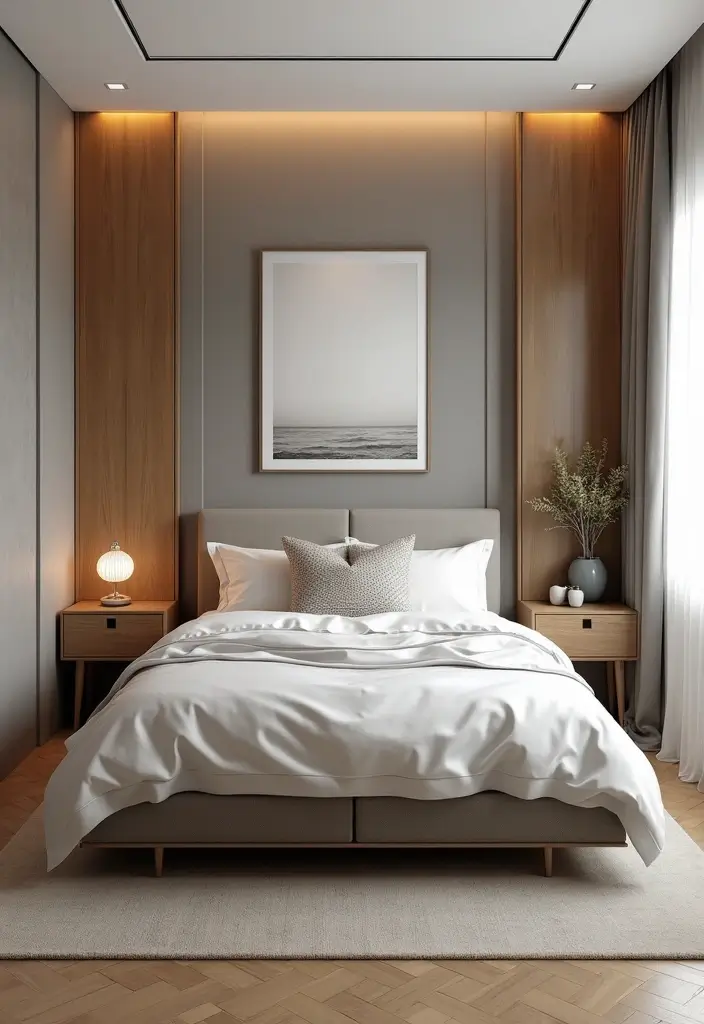
If your small bedroom feels crowded, a smart headboard can be your best ally. It adds storage where you already sit to wind down, so you remove clutter without losing bed space. Here is why this works: you gain practical shelves and pockets that keep the night’s essentials within reach, and you keep the room feeling calm and open.
– Built-in shelves: Pick a headboard with open shelves across its width. The top shelf can hold a book or a small lamp. The middle or lower shelves keep sleep masks, a clock, or a phone charger tidy.
– Side pockets: Look for fabric or faux leather pockets sewn into the sides. They’re great for glasses, remotes, or a charging cord. You can grab what you need in one smooth motion.
– Baskets and boxes: Use matching baskets or slim boxes on the lower levels. They tuck away cords and small items while keeping a clean look.
– Fabric headboard: A padded fabric surface adds warmth and reduces noise. Light colors help the room feel larger and brighter.
– Styles and materials: Choose wood, upholstered fabric, or a slim metal frame that fits your decor. Pair with simple accents so the storage stays the focal point.
Next steps: measure your bed, pick a low-profile design, and mount with straightforward brackets or a freestanding panel.
With this setup you gain space and a calmer night.
17. Layering Textures in Bedding
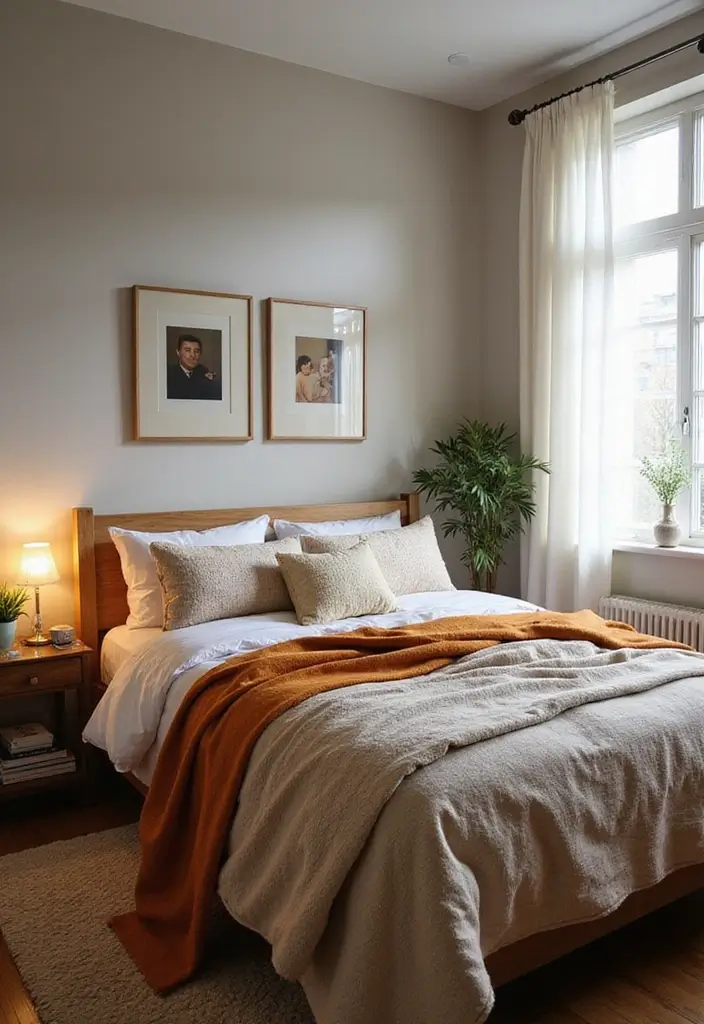
Here is why layering textures matters in a small bedroom. It adds depth and warmth without making the room feel crowded. When done right, your bed becomes a cozy focal point that makes the space feel bigger.
– Choose a cohesive color palette. This keeps the look calm and unified. Use two or three shades for sheets, blankets, and pillows.
– Add seasonal layers. Lightweight linens work in warm months. A thick throw or quilt adds warmth on chilly nights.
– Mix fabric types. Try cotton sheets, a linen cover, and a knit blanket. Add a small touch of faux fur or velvet for texture.
– Vary texture scales. Pair smooth sheets with a fluffy blanket and textured pillow covers. Vary the height of the pillows for visual interest.
– Pick washable materials. Easy care means you can refresh the look without stress.
– Finish with a simple arrangement. Place larger pillows toward the back, smaller ones in front. Tuck the blanket at the foot or drape it neatly.
Next steps: choose two to three textures you love and test them tonight. Keep colors steady, and you’ll gain depth, comfort, and a room that feels bigger.
18. Personal Touches with Photos
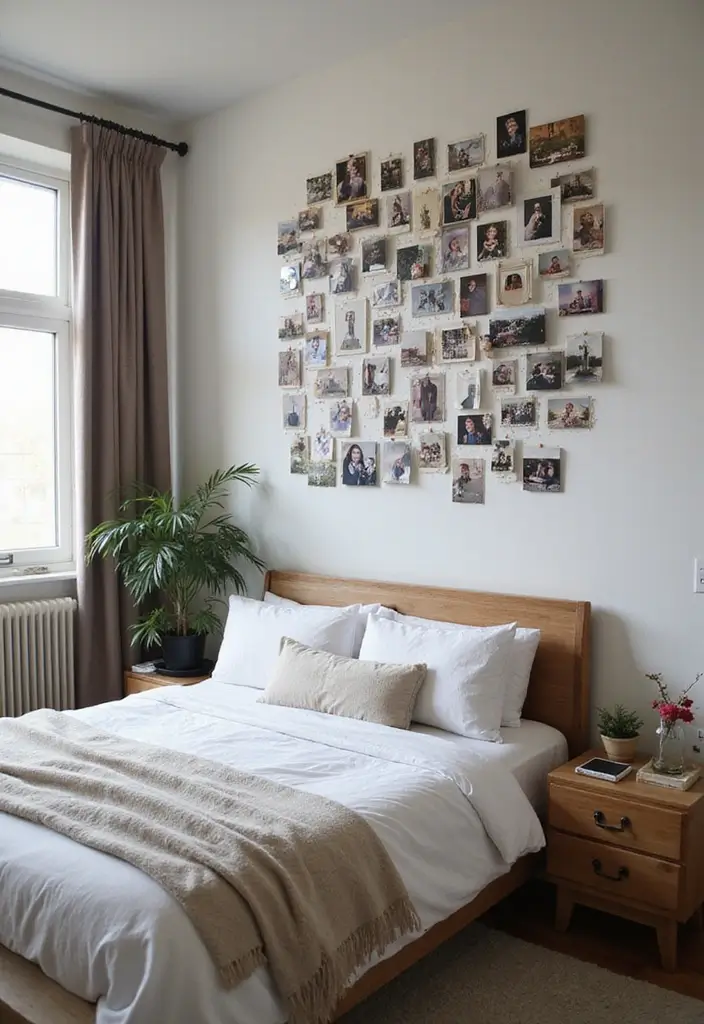
Feeling crowded in a small bedroom? Your own photos can warm the scene without adding clutter. Here is why personal pictures help and how to display them so the room still feels open. That means you can adapt them to any style.
– Lightweight frames: Pick frames that are easy to swap. Light weight means quick changes and less wall strain.
– Mix sizes and orientations: Varying widths and tall or horizontal shapes keep the display lively.
– Smart placement: Do the display on one wall or above a dresser. Leave breathing room around each frame.
– String gallery: Hang a slim wire with clips. It is affordable and lets you rotate photos daily.
– Collage board: Use a corkboard or magnetic board for a contained photo zone. Update as moods shift.
– Panel and shelf combo: Mount a narrow wood panel or a slim shelf to group frames. It looks tidy and cohesive.
Next steps: plan a simple color story so photos feel part of the room, not a separate curtain of memory.
– Choose frame finishes in the same family—white, black, or natural wood—to tie the wall together.
– Start with 6 to 9 photos and add one or two more as you live with it.
– Rotate seasons or moods every 6 to 12 weeks to keep the look fresh.
19. Use of Natural Light
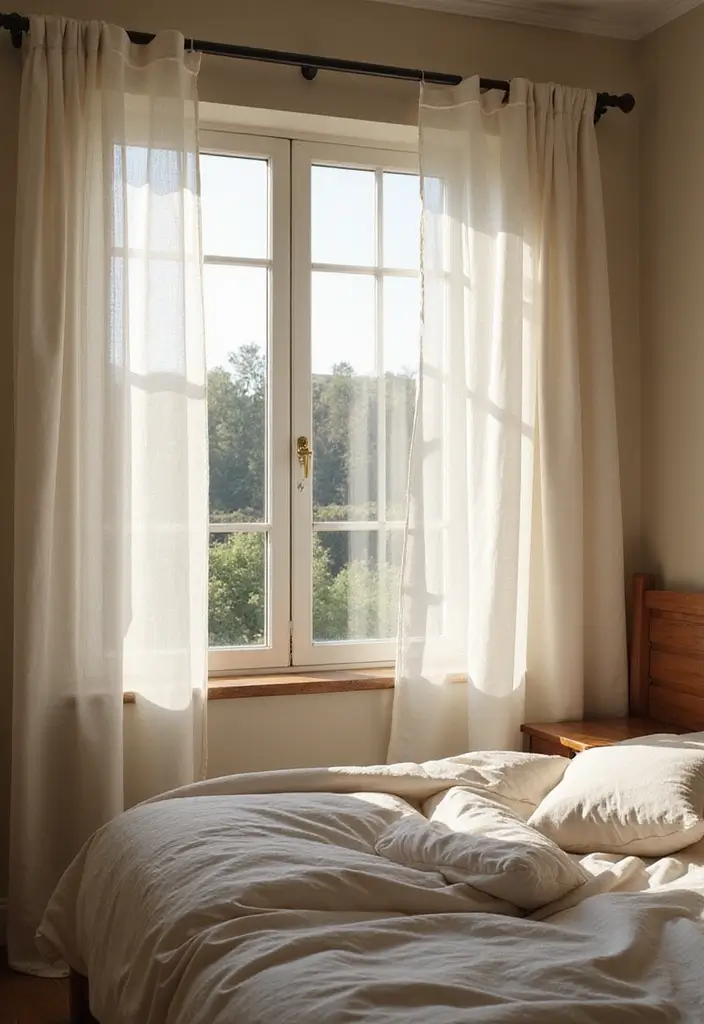
Here is why you should make natural light a focus. It makes a small room feel open and inviting. The right light also reduces the need for lamps during the day. This simple shift saves energy and keeps the room calm. You feel the glow right away.
Bright ideas for daylight
– Use sheer curtains to soften sunlight and cut glare.
– Keep window treatments light so daylight can flood the room.
– Place mirrors opposite windows to bounce sunlight across the space.
– Choose light-colored furniture and keep walls pale to reflect more glow.
– Arrange furniture with clear sight lines; avoid blocking windows.
– Add glass surfaces like a coffee table or acrylic chairs to keep lines open.
– Let the daylight guide your palette with whites, creams, and pale woods.
Next steps: check your windows and test ideas with simple swaps. Move a mirror to face a window, swap heavy drapes for sheers, or lift a couch away from a sunny wall. If you have one bright wall, pair it with light furniture to maintain an airy feel. In rooms without much sunlight, use bright white walls and bright lamps to mimic daylight.
Natural light can turn a cramped bedroom into a cheerful place you want to spend time in.
20. Use Color for Depth
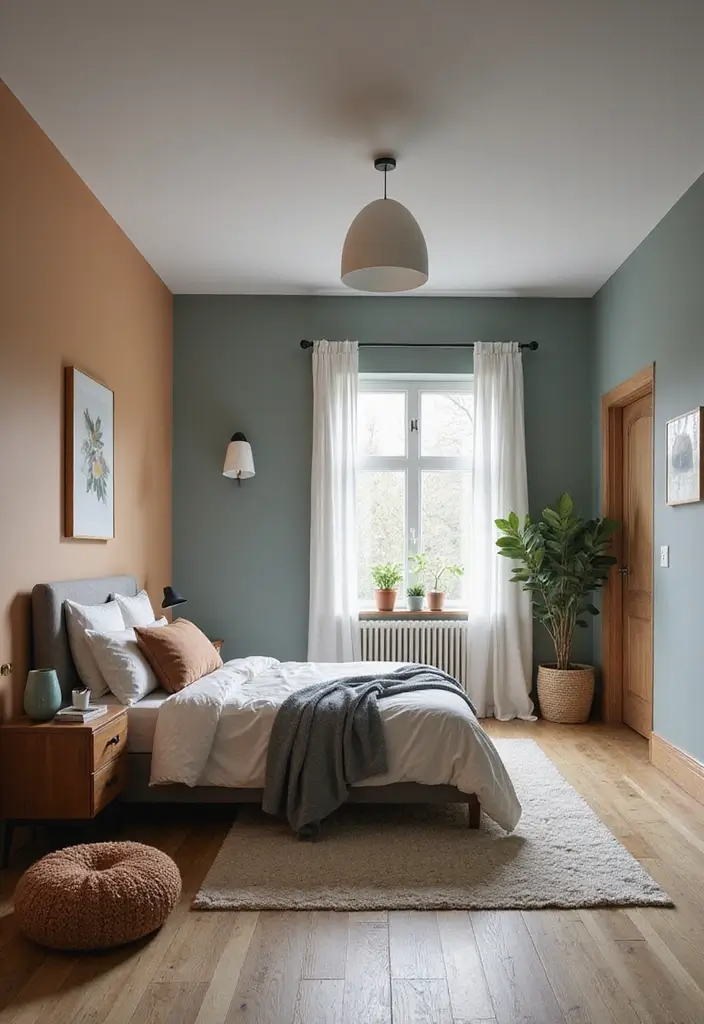
Depth with color
You want a small bedroom that feels bigger, not crowded. Color can help. Here is why this works: a light base reads open, while one darker wall pulls the eye back and adds distance.
– Choose 2–3 colors from the same family and use the light shade on most walls.
– Add one accent wall by painting a deeper tone to create depth and a clear focal point.
– Mix textures with a velvet cushion, a wool throw, or a linen curtain to keep the surface lively.
– Tie decor to the color by repeating the color in bedding, rug, and art.
– Keep furniture light or natural wood so it blends with the walls.
– Layer lighting with warm bulbs to make colors feel rich without getting dark.
Start by testing a small swatch on one patch of wall. Check it in daylight and under your room lights to see how it shifts. This simple step helps you pick the right tonal mix.
Next steps: once you settle on a shade, carry it through with textiles and accents so the space feels cohesive and calm.
If you swap colors, repeat the shade in a small rug or pillow to keep the scheme smooth.
A splash of color can work wonders! Use light shades to open up your small bedroom, and an accent wall to create depth and a striking focal point. Embrace the power of color for a spacious feel!
21. Vertical Garden for Freshness
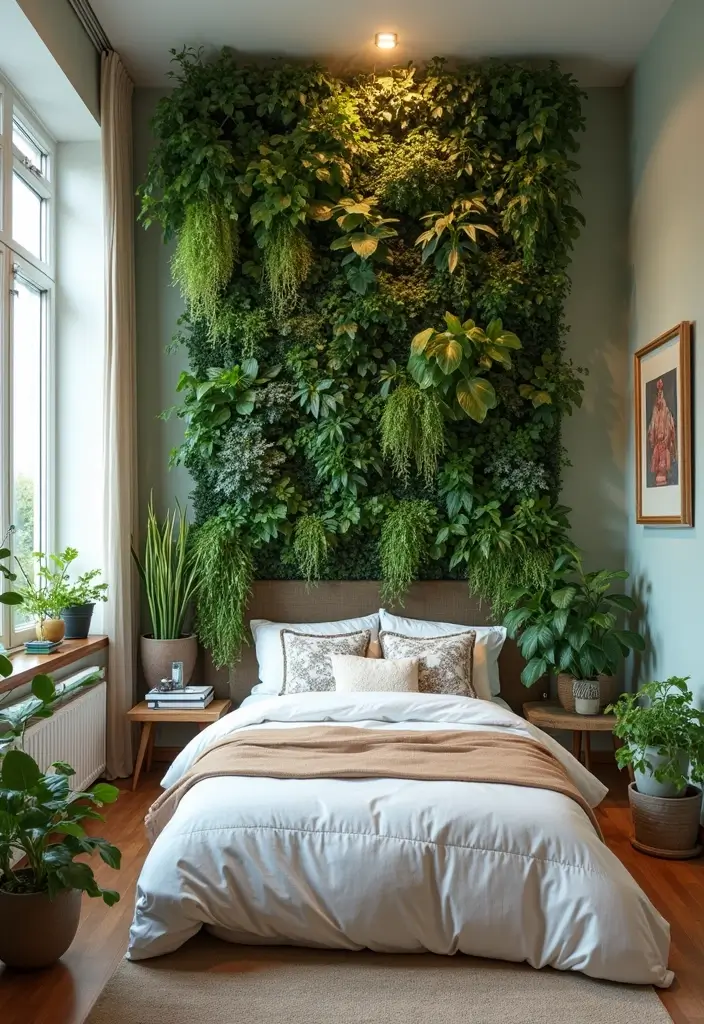
Here is why a vertical garden fits a small bedroom. You gain fresh air, texture, and color without losing floor space. A wall of plants gives your room a calm, natural feel.
– Pick low maintenance indoor plants. Pothos, snake plant, ZZ plant, philodendron, and peace lily work well.
– Choose wall planters that match your style. Options include panels, hanging pockets, or slim frames. Pick finishes like white, wood, or matte black.
– Plan for light. Put plants near a window for natural light. If light is scarce, add a small grow light.
– Create depth with different sizes. Place a few small pots higher and larger pots lower for a layered look.
– Keep care simple. Use a drip tray and wipe leaves weekly.
– Think about watering. Group thirsty plants so you don’t water too often.
With this setup you gain a living focal point you can see from your bed. It also helps the air feel fresher and softens the look of plain walls. Keep a simple watering routine to keep the wall fresh with little effort.
Next steps: mount the system securely. Use a level. Arrange plants in a calm rhythm.
Let the green wall become a quiet backdrop you enjoy every day.
22. Use Wall-Mounted Hooks
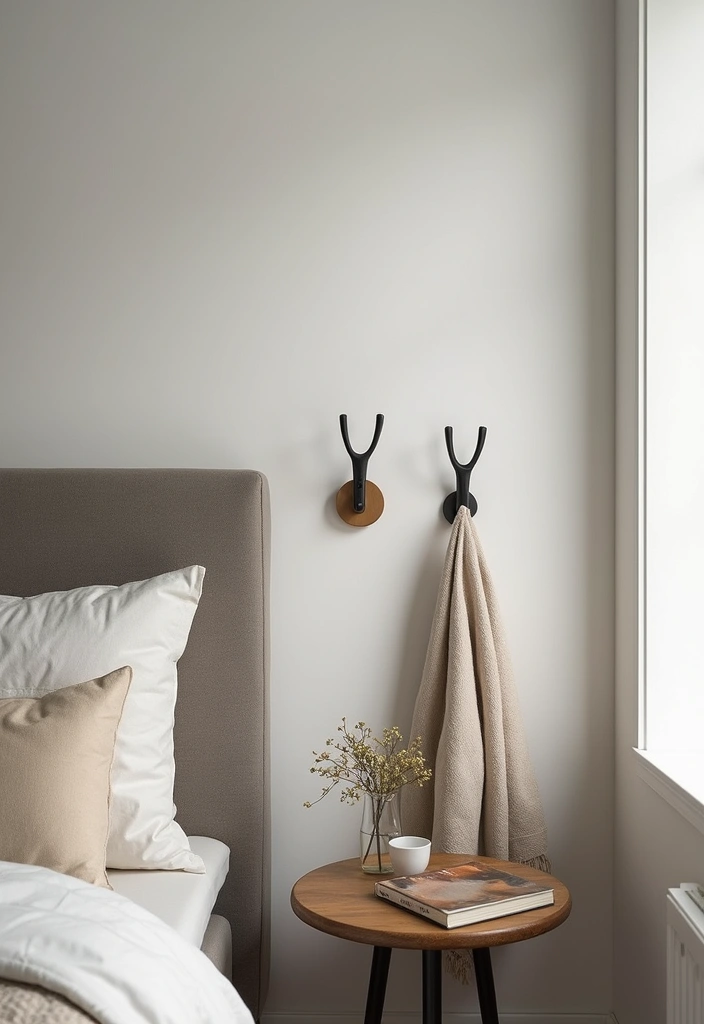
Small bedrooms lose floor space fast. Wall-mounted hooks offer a simple fix. They hold bags, hats, and jewelry without crowding the room.
Here is why this helps. Hooks use vertical space to keep the floor clear.
Start with three hooks. See how much space they save. If you need more, add later.
Where to place your hooks
– Put hooks near the door or on the back of the door so you can grab items on the way out.
– Add a slim row on a wall by the dresser for daily use.
– Mount at a height that fits the user so items are easy to reach.
Choosing hooks that fit your space
– Pick finishes that match your decor, like matte black, brass, or warm wood.
– Mix shapes for texture, but keep the total count small.
– Use decorative hooks to add a bit of character.
How to use hooks well
– Group items by type: coats, bags, jewelry, keys.
– Keep the load light; heavy coats need sturdy hooks.
– Do a quick weekly check and move items you no longer wear.
Installation and care
– Find wall studs or use strong anchors for safety.
– Measure spacing so you can reach items with one hand.
– Wipe metal hooks to prevent rust and dust.
Next steps
– Reserve a space for a hook rail near the entry.
– Start with three hooks and add more later if needed.
23. Focal Point Accent Wall
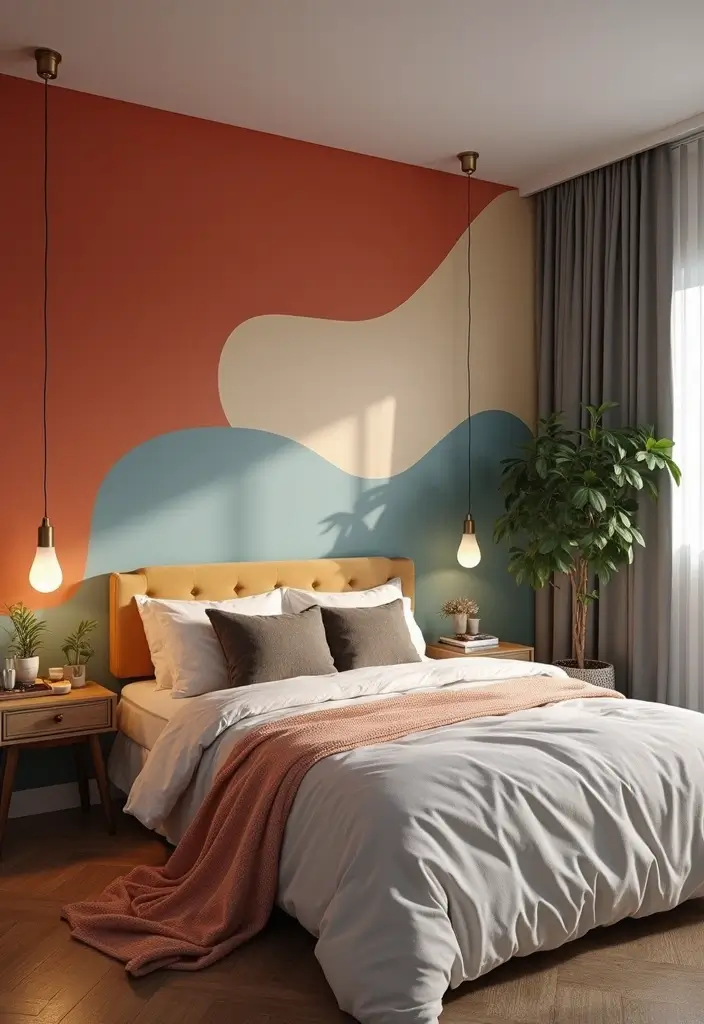
You want a small bedroom that feels bigger. A focal wall can pull the eye and add depth. Here is why: one bold wall makes the room look larger by creating contrast.
– Choose the wall that naturally draws attention, like the wall behind your bed.
– Pick a bold color or a striking pattern you love.
– Add texture with wallpaper, wood panels, or a brick look.
– Keep the other walls light or neutral to balance the scene.
– Light it up to make the wall pop with a wall sconce or a slim LED strip.
– Test swatches first and view them in different lights.
– For low ceilings, keep patterns simple and textures calm.
Materials and finishes help you nail the look. Matte paint hides flaws and feels quiet. Textured wallpaper adds depth without loud noise. Wood panels or shiplap bring warmth and charm. If you want a bold modern vibe, try a single solid color with a flat finish.
Next steps: measure the wall, choose a paint or wallpaper, and gather samples. Try the colors in person, check at different times of day, and adjust until it feels right. You can add art or a narrow shelf to accent the wall without stealing the show.
24. Clever Use of Wallpaper
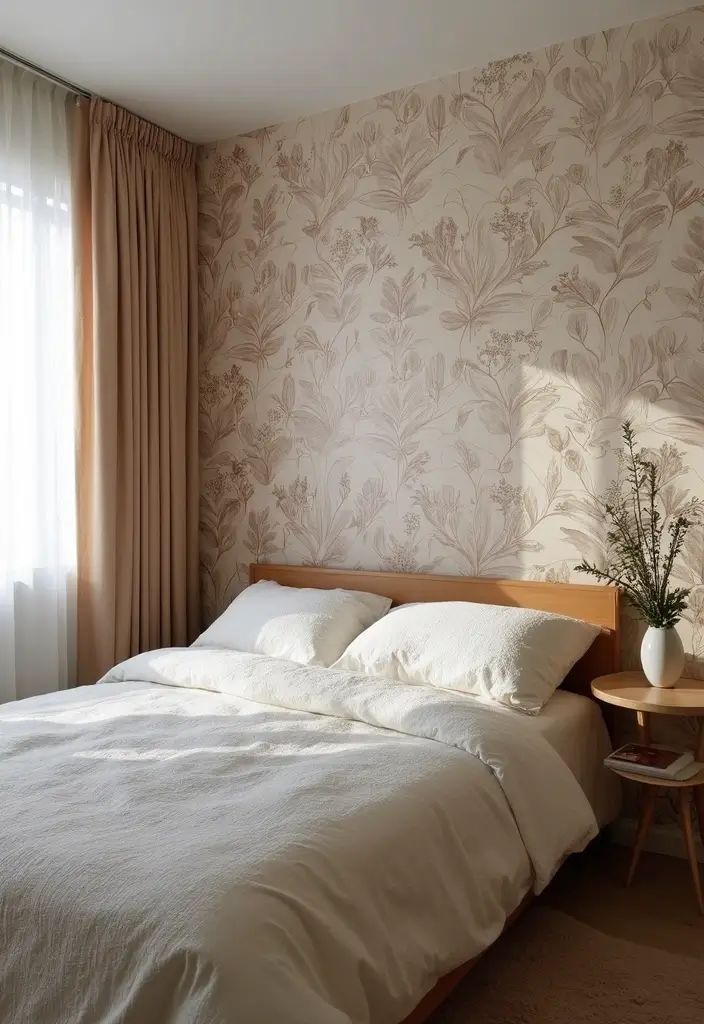
Struggling to make a small bedroom feel open? Wallpaper on a single wall can change the vibe without crowding the space. It adds texture and depth you can enjoy daily.
Clever placements
– Apply wallpaper to one focal wall, the area you see first when you enter, to set the mood.
– Try it inside a closet or behind a shelf for a hidden accent that pops when the door opens.
What to choose
– Choose patterns that feel light and lift the room. Subtle geometrics or soft florals work well in small spaces.
– Favor colors that reflect light—pale blues, whites, or airy greens.
– If you want easy updates, pick removable wallpaper for flexibility.
How to implement
– Measure the wall carefully and cut a little long.
– Decide on peel-and-stick or paste, then follow the steps.
– Align seams and smooth from top to bottom.
– Keep other walls simple so the wallpaper shines.
Final tips
– Coordinate with your bedding for a united look.
– Add a warm lamp or string lights to highlight the feature wall.
– If you’re unsure, start with a test strip on an inconspicuous spot.
This approach can make a small room feel bigger and more inviting.
Give it a try this weekend. You might love the change.
Start with a small strip to test the feel.
25. Unique Furniture Arrangements
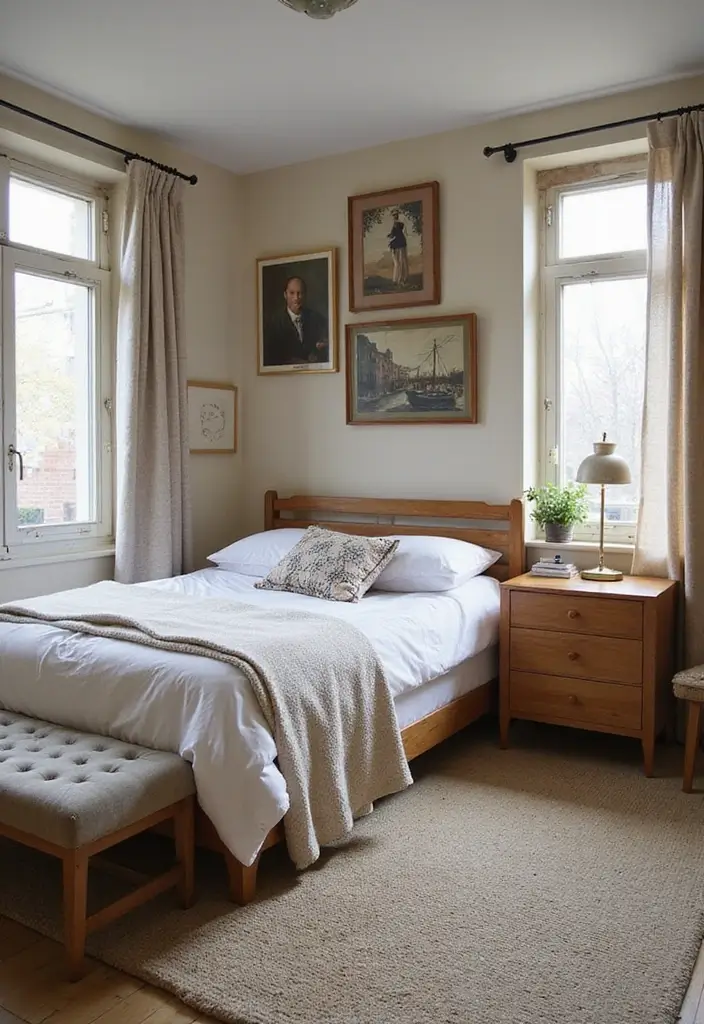
If your small bedroom feels crowded, the way you place items can open the space. A smart layout improves flow and makes the room feel larger. You control the look and how you move through it. Here is how to start.
– Measure the room, sketch it in your notes, and tape a floor map to plan where each piece sits.
– Don’t crowd the walls; leave a small gap for air and easy cleaning.
– Try angles by placing a chair, dresser, or bed off the straight lines to create depth.
– Leave at least 30 inches of clear space for doors and foot traffic.
– Use corners and nooks with a slim desk, tiny bookcase, or wall shelf to gain storage.
– Pick multi-task pieces like a storage bed or an ottoman that hides clutter.
– Go with light profiles and pale colors to bounce light and make the space feel larger.
– Test and refine by moving items for a day or two and watching how you move.
A thoughtful setup can turn a tight room into a calm, easy place to live. Take a photo from the doorway to compare with your plan and adjust as needed.
Creative furniture arrangements can turn cramped corners into airy havens! Measure, plan, and play with angles to make your small bedroom feel unexpectedly spacious.
26. Incorporate Decorative Baskets
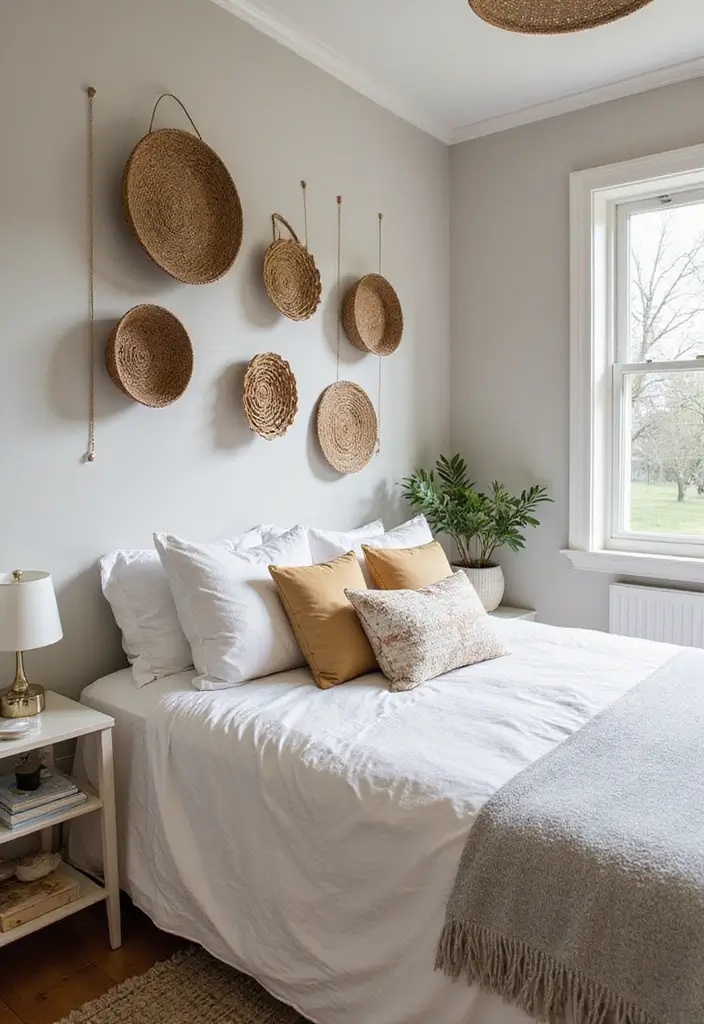
If your small bedroom feels tight, decorative baskets can be your best ally. They hide clutter and add warmth at the same time.
Here is why they work for small spaces.
– Match your decor – Choose baskets that fit your style. Natural wicker, soft fabric, or a metal frame help the room feel cohesive.
– Use different sizes – Mix large, medium, and small baskets to create rhythm on shelves or under nightstands.
– Choose sturdy materials – Look for fabric, woven fibers, or canvas that keep their shape when you stack or pull items out.
– Designate what to store – Stash blankets, books, shoes, or chargers where they belong so the nightstand stays clear.
– Place them smartly – Set baskets on shelves, at the foot of the bed, or in corners for easy reach.
– Keep daily items handy – Put things you reach often in a basket near the bed or by the door.
– Add texture and tone – Baskets bring warmth. Pick colors that echo your linens or rug for a calm look.
– Label or lid – A simple tag or lid helps keep things tidy without opening every basket.
– Limit clutter – Don’t fill every basket to the brim. Leave space so the room still feels open.
With baskets, you keep a neat look and add depth to your space.
27. Use of Canopy Beds
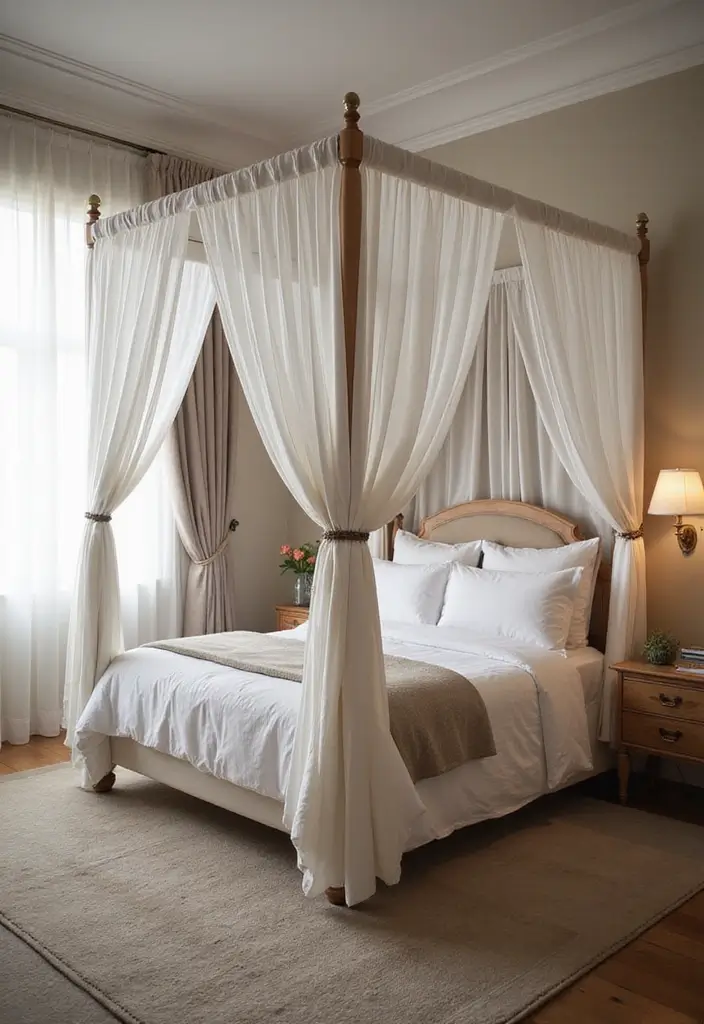
If you want a small bedroom to feel bigger, start with a canopy bed. It adds a sense of luxury and coziness. Use sheer fabrics instead of heavy drapes to keep the room light. The open fabric lets air flow and the bed still feels inviting. The vertical lines draw your eyes up, which makes ceilings look higher. Here is why it works: a taller focal point makes the space feel larger.
– Pick a canopy style that fits your look – A slim metal frame fits a modern room, while light wood suits a cozy cottage vibe. Choose clean lines that stay airy.
– Keep bed linens light – Opt for white, off white, or pale gray sheets and duvet covers. Lighter colors bounce more light and feel less crowded.
– Use vertical space for decor – Hang string lights or a delicate garland above the headboard. Add narrow shelves or slim art to draw the eye upward.
– Mind the ceiling and height – If ceilings are low, pick a low profile canopy or a simple frame. This helps the bed blend with the room, not overwhelm it.
– Coordinate with the room color – Let the canopy and linens blend with wall color. A cohesive palette makes the space feel larger and calmer.
With these steps, a canopy bed turns a small bedroom into a welcoming retreat you can enjoy every day.
28. Hidden Desk Solutions
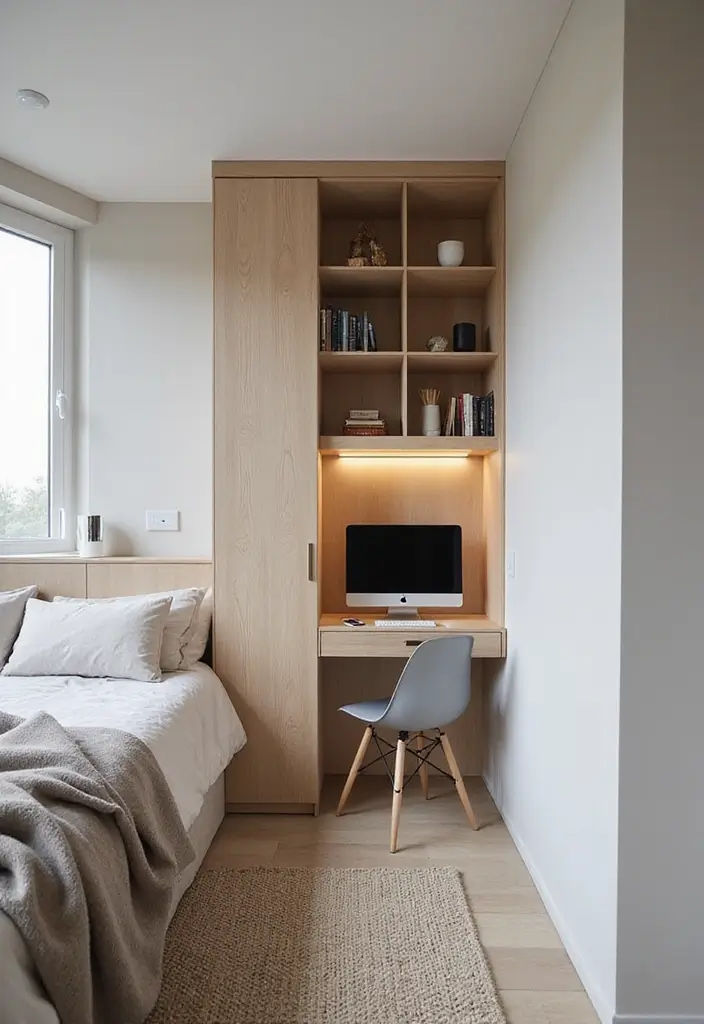
Small bedrooms crave smart storage. Hidden desk solutions let you work without stealing space. They work best when you have sturdy walls or a solid shelf for mounting. You get a real workspace and a tidy vibe at the same time. Here is why these options work and how to set them up.
– Fold-down desks that tuck away. They fold down for use and press flat to the wall when not needed. Pair it with a slim chair that tucks under the desk.
– Desk hidden in shelving. The desk sits behind a shelf panel and slides out when you need it. Keep cords neat with a small cable box hidden in the shelf.
– Wall-mounted or pull-out designs. These stay close to the wall and vanish behind room decor. Add a wheeled stool that moves easily from desk to bed or vanity.
– Built into storage or a dresser. A desk panel can sit atop a low dresser or storage unit. Use baskets or boxes on nearby shelves to hold supplies.
– Smart lighting and comfort. A good lamp or LED strip helps you see fine details. Choose a chair with a light feel and adjustable height.
Next steps: measure your space, pick a unit that fits your wall, and test it in daylight.
29. Recessed Lighting
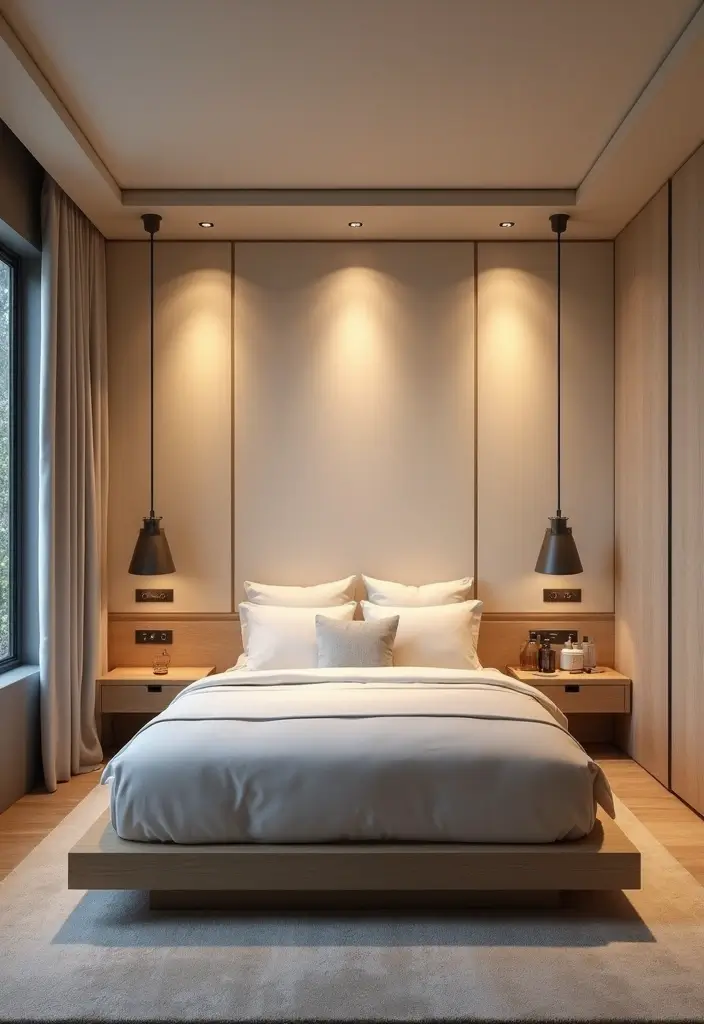
If your small bedroom feels crowded, the lighting is often the culprit. Recessed lighting sits in the ceiling, so it frees walls and floors from clutter. The room looks brighter and feels more open.
Here is why recessed lights work well in tight spaces. Let’s break it down with practical steps you can use tonight.
– Choose dimmable LED recessed lights. Dimmable cans let you lower brightness for a cozy mood and raise it for tasks like getting dressed.
– Pick warm white bulbs. Aim for about 2700K to 3000K to create a soft, inviting glow.
– Spread them evenly. Plan them so light covers the whole room and you avoid harsh shadows near the bed and closet.
– Layer with other lighting. Add a bedside lamp or a small wall sconce for focused reading light.
– Think about placement. Position lights near the bed edges and closet zones to eliminate dark corners.
– Go for clean, low-profile trims. Slim can designs stay discreet and keep the ceiling looking smooth.
Energy and upkeep matter too. LED recessed lights use less energy and last longer. They stay cool and comfortable, which helps in small rooms.
Next steps. Sketch a quick ceiling map and note where your wall switches will sit. If wiring scares you, hire a pro. You can still choose the layout and mood first.
30. Open Closet Solutions
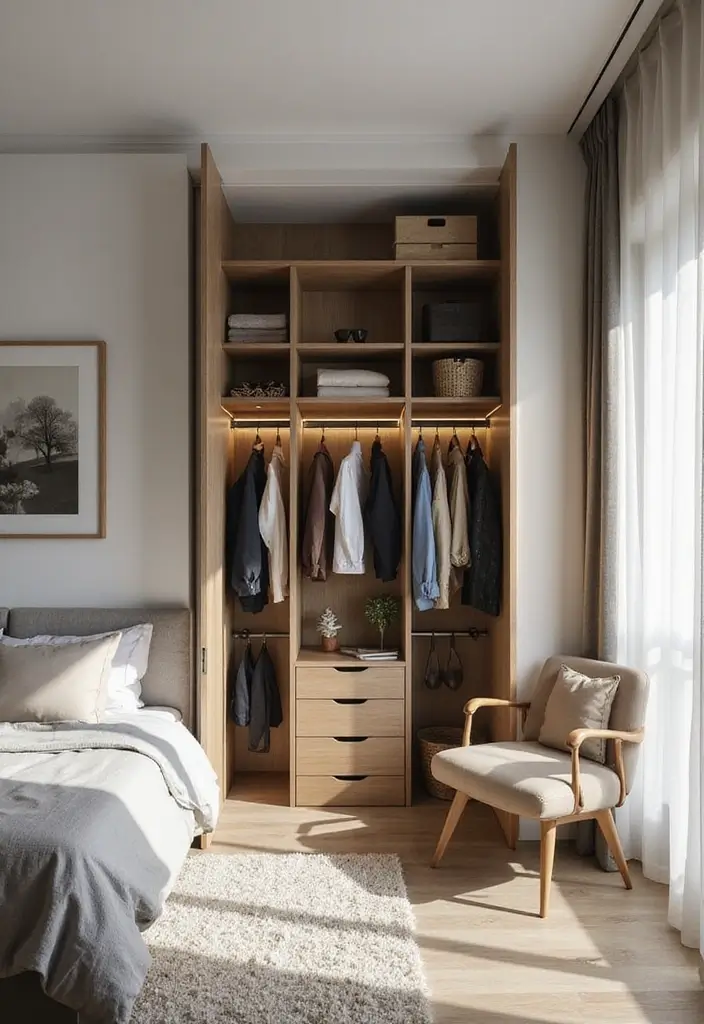
If your small bedroom has a closet with doors, you may feel boxed in. Open closet solutions can free space and make the room breathe. Here is how to do it.
Pick a simple base
– A slim metal clothing rack with wheels fits tight spots.
– Open wall shelves with a hanging rod save height and look clean.
– Mix a rack and shelves for a flexible, easy setup.
Keep it tidy
– Use matching hangers to create clean lines.
– Store off-season items in labeled boxes or baskets.
– Put small accessories in decorative boxes.
Add style and ease
– Choose finishes that match your room, such as matte black, warm wood, or bright white.
– Leave space between items so you can see everything.
– Add a small rug near the setup to cue the wardrobe zone.
Care and upkeep
– Do a quick weekly tidy to rotate items.
– Dust shelves and the rack every couple of weeks.
– Move rarely worn pieces to under-bed storage when possible.
Next steps: measure your space, pick one setup, and test it for a week. If it feels crowded, tweak the layout until it works.
Conclusion

Transforming your small bedroom into a spacious retreat is all about creativity and smart design. Each of these ideas emphasizes maximizing vertical space while ensuring your room is functional and inviting.
From clever furniture choices to stylish decor, there are endless possibilities to explore. Embrace these tips to make your smaller space feel big and full of character!
Frequently Asked Questions
What are some effective bedroom set up ideas for maximizing vertical space?
Maximizing vertical space in a small bedroom can make a huge difference! Consider utilizing vertical shelving to draw the eye upwards, or opt for a lofted bed to create additional storage underneath. You can also incorporate floating nightstands to free up floor space and enhance the room’s spacious feel. Every inch counts!
How can I make my small bedroom feel bigger with decor choices?
Decor choices can significantly impact how spacious your small bedroom feels. Using a bright color palette can make walls seem further away, while mirrored furniture reflects light and creates an illusion of depth. Don’t forget to include wall art that adds personality without crowding the space—this can draw the eye around the room and make it feel more open.
What are some space-saving furniture options for small bedrooms?
When it comes to space-saving furniture, look for multi-functional pieces that serve several purposes, like a bed with built-in drawers or a desk that folds away when not in use. Recessed lighting can also help keep surfaces clear, making your bedroom feel more open and spacious. Choose furniture that fits your needs without overwhelming the room.
What are some minimalist bedroom design tips for small spaces?
A minimalist bedroom design can work wonders in small spaces! Stick to a few key pieces to avoid clutter, and choose clean lines in furniture to enhance the feeling of space. Utilizing under-bed storage and keeping decor to a minimum helps maintain a serene environment. Layer textures in bedding to add warmth without visual clutter, creating a cozy yet spacious retreat.
How can I organize my small bedroom effectively?
Effective bedroom organization is key to making a small space feel larger. Use decorative baskets for a stylish storage solution, and install wall-mounted hooks to keep items off the floor and within reach. Don’t forget about hidden desk solutions and sliding doors for wardrobes to maximize functionality without sacrificing space. The goal is to keep everything tidy while ensuring easy access to your essentials!
Related Topics
bedroom set up ideas
small bedroom decor
space-saving furniture
minimalist bedroom design
vertical storage solutions
cozy small room ideas
wall-mounted furniture
creative organization
bright color palettes
beginner friendly
easy updates
smart design