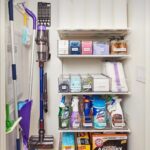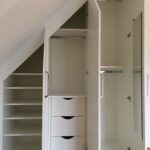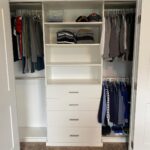


The best kid bedroom upgrades run from a $15 pillow cover to a full furniture swap, and the right pick depends on how fast your child’s taste is moving this month. Bedding and peel-and-stick wallpaper buy you flexibility, but the real trap is painting every time they change phases: White Dove on the walls and neon dinosaurs on the duvet keeps the room current without losing your weekends to primer.
1. Choose a Neutral Wall Color
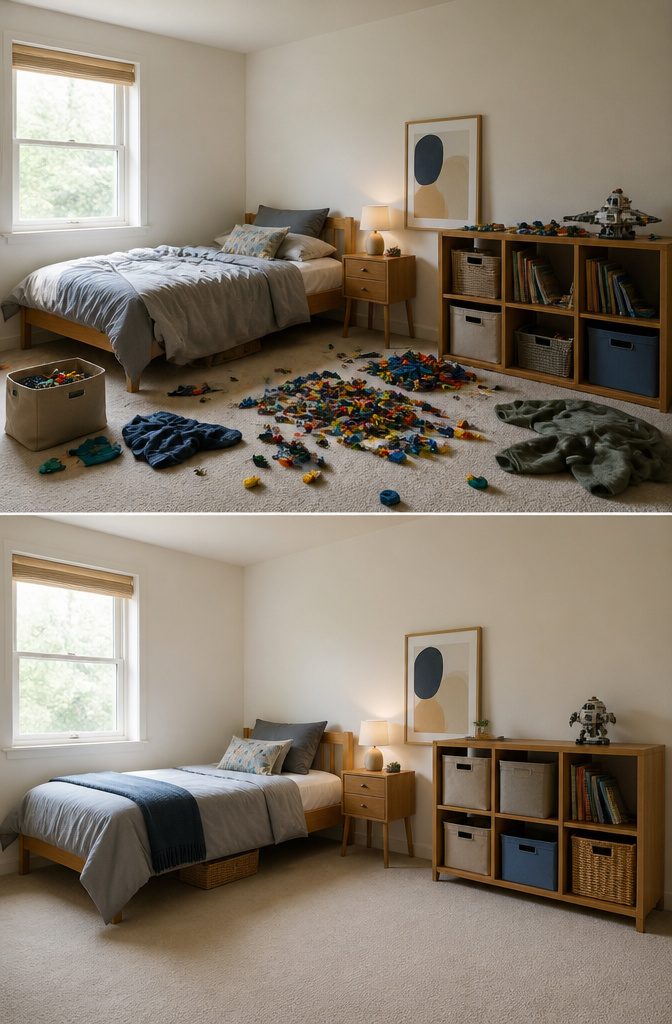
A neutral wall color is the one decision you won’t regret in two years. Kids shift from dinosaurs to space to whatever TikTok trend lands next month, and paint is too much work to chase every phase.
I lean toward warm whites and soft greiges that feel calm at 7 a.m. and still look pulled together when the floor’s covered in LEGOs. White Dove by Benjamin Moore has enough warmth to avoid that sterile rental feel, and Half Moon Crest by Benjamin Moore sits in the perfect middle, not quite beige, not quite gray. For something slightly deeper, Platinum by Behr adds enough body to hide the odd scuff without darkening the room.
The real payoff comes later. Neutral walls let you swap out bedding, a few posters, and a desk lamp, and suddenly the room feels brand new. No primer, no weekend lost to taping edges, no explaining to a ten-year-old why their lavender phase is now permanent. Keep the walls quiet and let the accessories do the talking.

Dinosaur Wallpaper: This dinosaur wallpaper features cute dinosaurs, soft green botanical leaves and warm nursery colors on a clean white background. The playful dino style works beautifully for nursery decor, boys room accents, kids room updates, playroom corners, cabinet makeovers, drawer liners, shelf liners and small DIY decorating projects.

【Unique Design】Dinosaurs wallpaper features a Jurassic period landscape, hand-drawn style. Each roll measures 17.7 inches wide by 118 inches long (44.5cm × 3m), covering 14.5 square feet. Straight match, 17.7"x17.7" pattern repeat, easy to line up
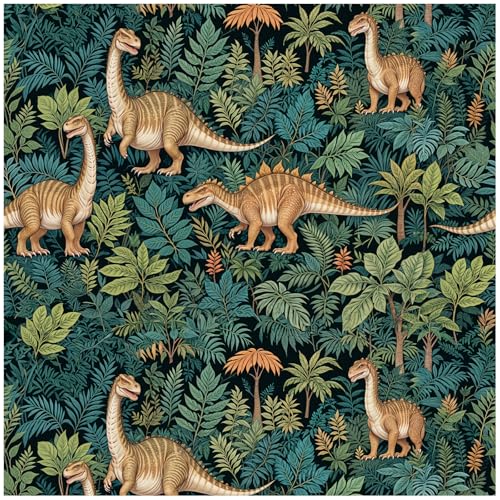
DINOSAUR PEEL AND STICK WALLPAPER:This dark green dinosaur wallpaper features different dinosaurs walking through layers of deep green leaves, ferns and forest plants. Warm brown animals stand out against the darker background for a bold jungle look that still feels natural and easy to use in a kids room
2. Add an Accent Wall
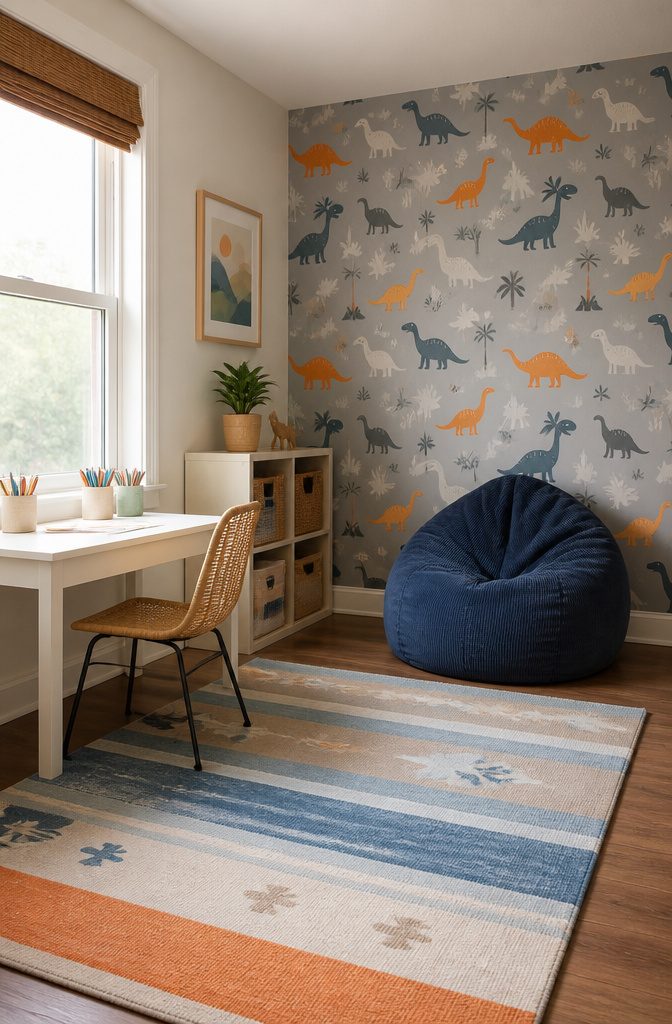
One bold wall gives a kid’s room personality without the chaos of four loud surfaces. Paint it, paper it, or hand the brush to your ten-year-old and see what happens.
Peel-and-stick wallpaper is the friendliest option for renters and fickle taste. It goes up faster than two coats of paint, wipes clean with a damp cloth, and peels off when the dinosaur phase ends. Textured walls are the catch, so check yours before you buy.
Chalkboard paint turns the same wall into a surface they can actually draw on. Sand it smooth first, lay down two coats, and season the surface by rubbing chalk over the whole thing, then wiping it off. After that, the answer to "can I draw on the wall?" is finally yes.
Older kids can handle a roller with supervision, and letting them choose the pattern or the color buys more buy-in than you’d expect. My take: let them. A wall they picked themselves beats a wall you fought over.

Ideal for creating a custom interior chalkboard on multiple surfaces including wood, metal, masonry, drywall, plaster, glass, concrete, paperboard and hardboard

VERSATILE LARGE SIZE - This unique chalkboard acrylic paint comes in an 16 oz, wide mouth jar - perfect for all your arts and crafts!

MAKES: Any Surface Hold Magnets!
3. Swap the Bedding
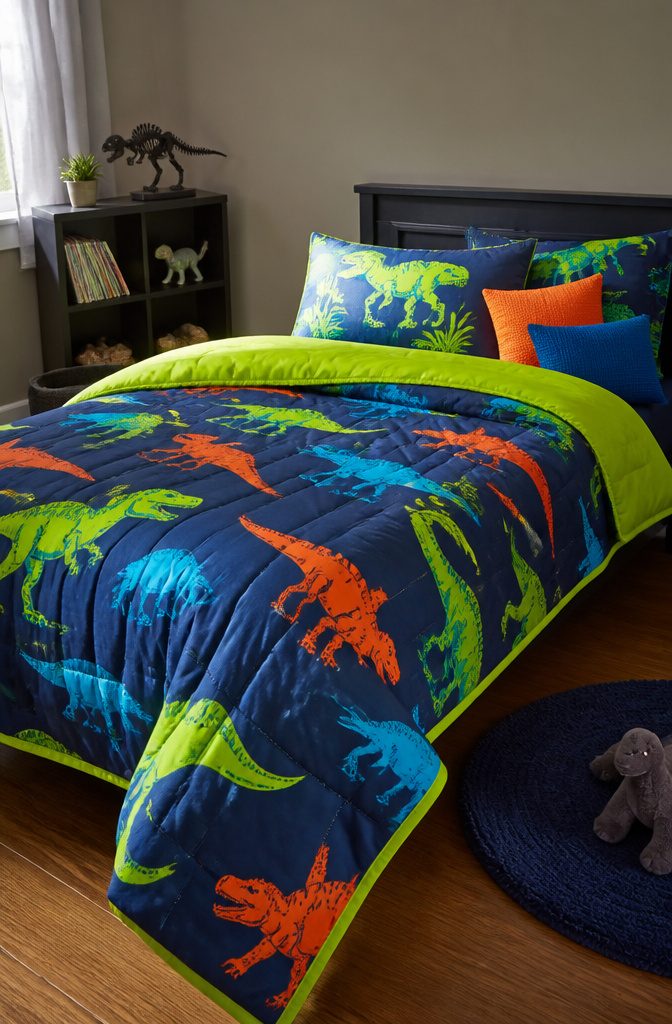
New bedding is the fastest way to reset a kid’s room without committing to anything permanent. Sheets, a comforter, or just a duvet cover swap can pull the whole space together for under $100, and you are done in the time it takes to make the bed.
This is exactly where I would put the bold color or busy pattern your kid is begging for. A neon dinosaur phase passes. A duvet cover with neon dinosaurs does not have to. When the obsession shifts to space or soccer or whatever comes next, you fold it away and grab something new.
I have learned the hard way that paint and wallpaper feel like bigger decisions than they are, but they still take a weekend and a drop cloth. Bedding takes a washing machine cycle and an online order. The visual impact is nearly the same from the doorway, and the risk is basically zero.

CALMING MINIMALIST DESIGN: Create a peaceful, grounding atmosphere in your home. This elegant canvas print features flowing, abstract waves in soft neutral tones of white, beige, cream, and warm tan, instantly adding a modern and relaxing touch to your wall decor.
Self-Priming formula - requires no sanding

Minimalist Moon Art Design – This wall art features a serene, minimalist design of a large, warm-toned moon set against a textured, neutral background. The soft, muted colors and simple composition create a calm, meditative atmosphere, perfect for modern and bohemian interiors.
4. Layer in Fun Pillows
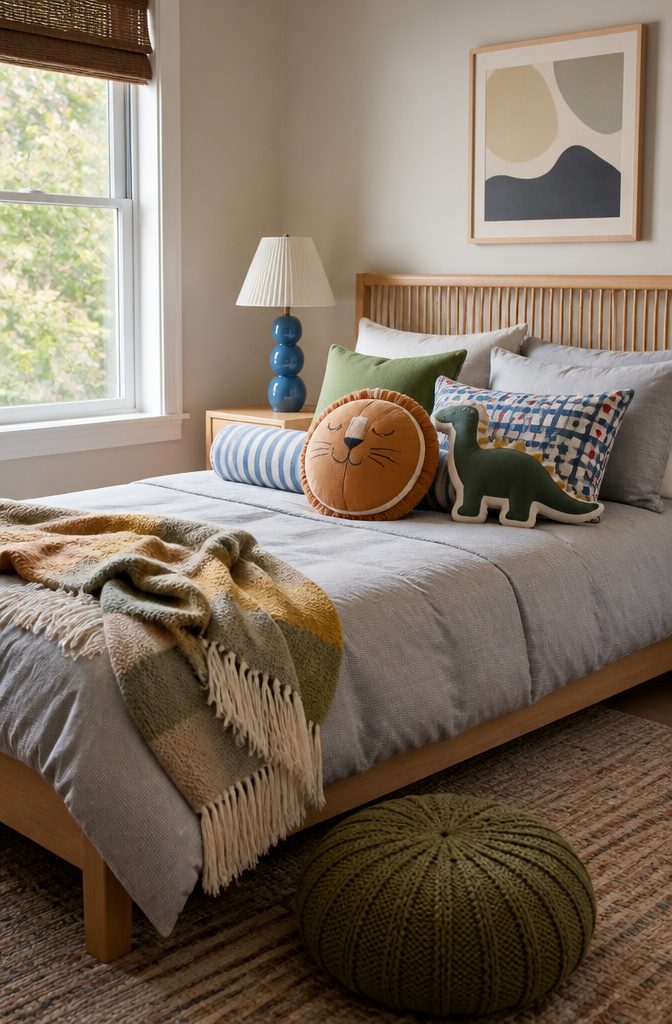
Pillows are the fastest way to add color and texture without touching a paint can. A few new covers, swapped in over a weekend, can pull from the rug, the bedding, or even a single framed print and make the whole room feel intentional.
For kids, shapes that aren’t standard squares do the heavy lifting: a round floor cushion, a bolster, or a character-shaped piece reads as playful without demanding a theme overhaul. Sizes around 16 to 20 inches work on beds and reading corners; smaller lumbar styles suit desk chairs. Materials matter more than pattern. Cotton canvas and outdoor-rated fabrics hold up to juice spills and fort-building better than anything delicate. I look for covers with zippers, not sewn-closed styles, since washing is inevitable.
The real trick is color repetition. If the curtains are mustard and the bedspread is gray, a pillow that mixes both ties them together without matching too hard. It is low-stakes experimenting: a $15 cover from Walmart or Target, and if the kid outgrows dinosaurs next year, the pillow rotates to the playroom instead of the trash.
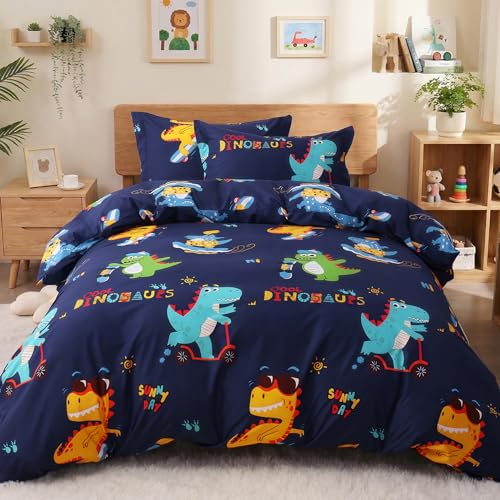
Twin Size Kids Duvet Cover Set - Package includes 1 duvet cover (68" x 86") and 1 pillow sham (20" x 26"). Search "JSD Kids Sheet Set"“JSD Kids Comforter Set" for a matching bedding set !

Colors and details may vary slightly from images due to screen display differences; actual product may appear slightly different

1.【WHAT YOU WILL GET】Colorful Dinosaurs White Base Queen Size Bedding Duvet Cover Set: 1* Duvet Cover (90"*90") + 2* Standard Pillowcase (20" x 30")
5. Build Stylish Storage
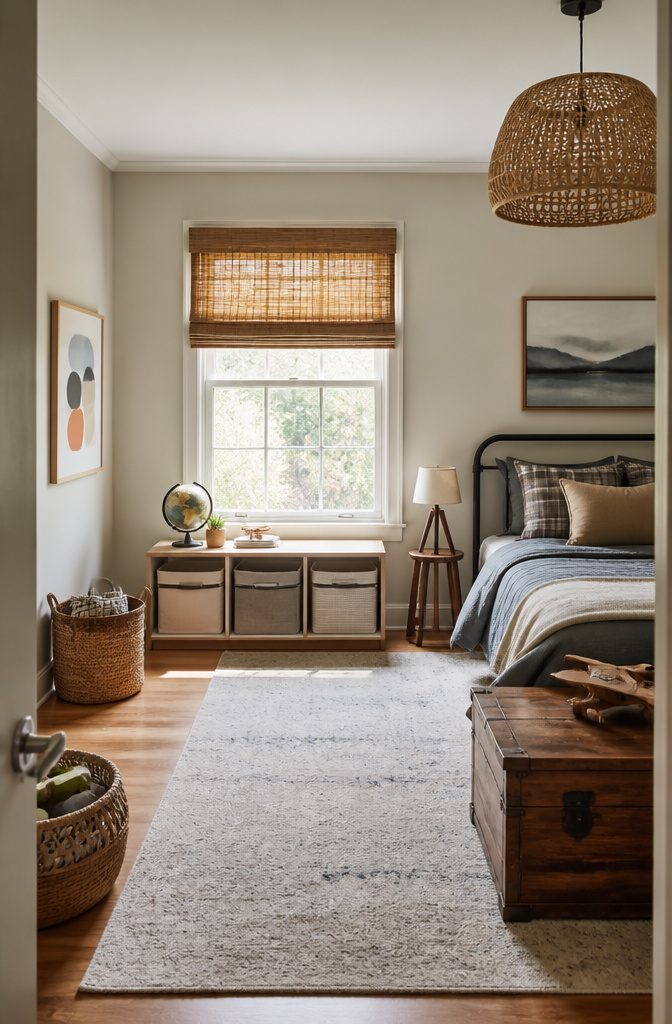
Storage benches and ottomans with lids hide a surprising amount without looking like toy boxes. I have seen a 4-cube organizer storage bench tucked under a window seat, and it reads as real furniture because it is real furniture. The same goes for trunks at the foot of the bed or a platform frame with drawers built in. Visible clutter undoes every other design choice you make, so the goal is keeping toys out of sight, not just out of the way.
Baskets and bins still have their place, especially for the stuff kids grab daily. Fabric cube storage bins slip into shelving units and come in enough colors and textures that they do not scream "playroom." The trick is choosing shapes and materials you would use in a living room. Once the storage itself looks intentional, the room stays calm even when the closet is full.

Black Wallpaper--Embossing Process- It can effectively reduce the generation of bubbles. The solid color gives the room a more advanced texture, and enhance the ambiance of any room with the stylish and understated matt luxury black finish. This dark textured walls sticker papers complements both modern and traditional decor styles elevates any room instantly

Fashion appearance: Simple and classic white color, coupled with the texture design of the surface, makes it more unique and simple, elegant, versatile and minimalist

Product Description: 15.7 inch X 118.1 inch, covering an area of about 12.9 square feet. Material is PVC with self adhesive backing. Size markings on the back for easy measuring and cutting
6. Pick Multi-Functional Furniture
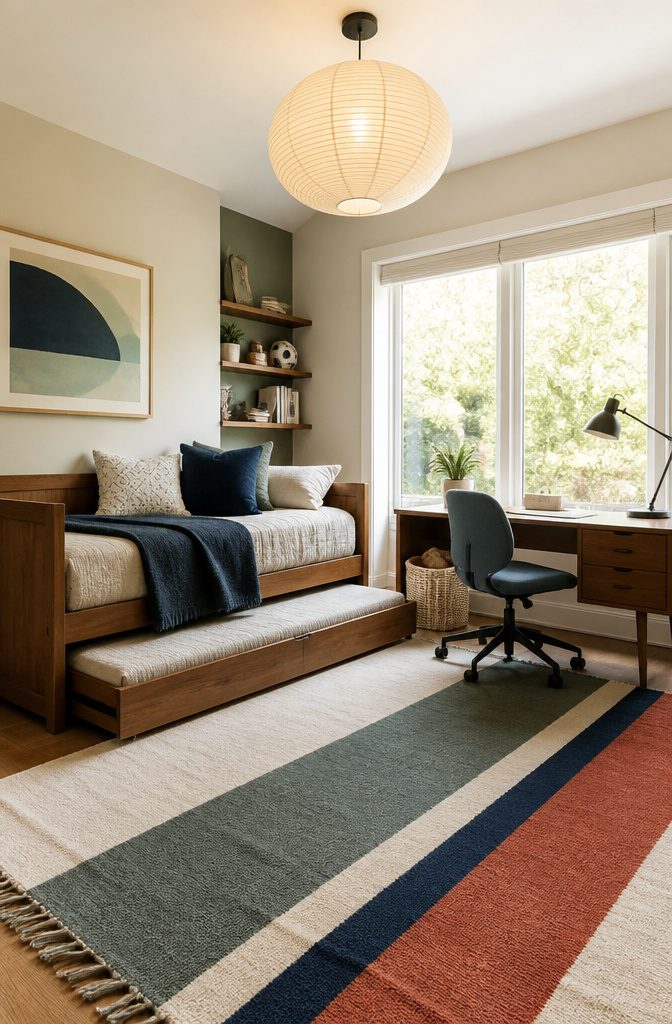
A trundle bed tucks an extra mattress underneath for sleepovers, then disappears by morning. The same footprint does two jobs instead of one. I have watched friends squeeze two kids into a room that barely fit one, and the families that made it work all chose furniture that pulled double duty.
A bed with drawers underneath replaces a separate dresser. A desk that adjusts from sitting to standing height buys years before you replace it. Storage benches hide art supplies or extra bedding without adding another boxy piece to the corners. These pieces cost more upfront than single-purpose furniture, but you buy fewer of them and the room stays walkable.
Small rooms and shared spaces are where this strategy pays off most. Every item that stores something or adapts as the child grows keeps the floor clear and your budget from ballooning.

➤ Roll Size & Material: Dinosaur wallpaper roll, 17.5"W x 276"L, 44.5 x 700 cm, covers about 33.4 sq.ft per roll. This dinosaur peel and stick wallpaper is durable vinyl wallpaper, safe to your family. Grid lines on back paper help precisely measure and cut.

JURASSIC PARK DESIGN - A Black colorway; highlights the Jurassic World Dinosaurs design; with recognizable Universal Studios collection details.

Creative Design: The dinosaur wall decals is a large size design, pet dinosaurs are friendly and adorable, pair it with footprints and tropical palm leaves, the visual experience is vibrant, for children, it is exceedingly captivating
7. Add Personal Decor
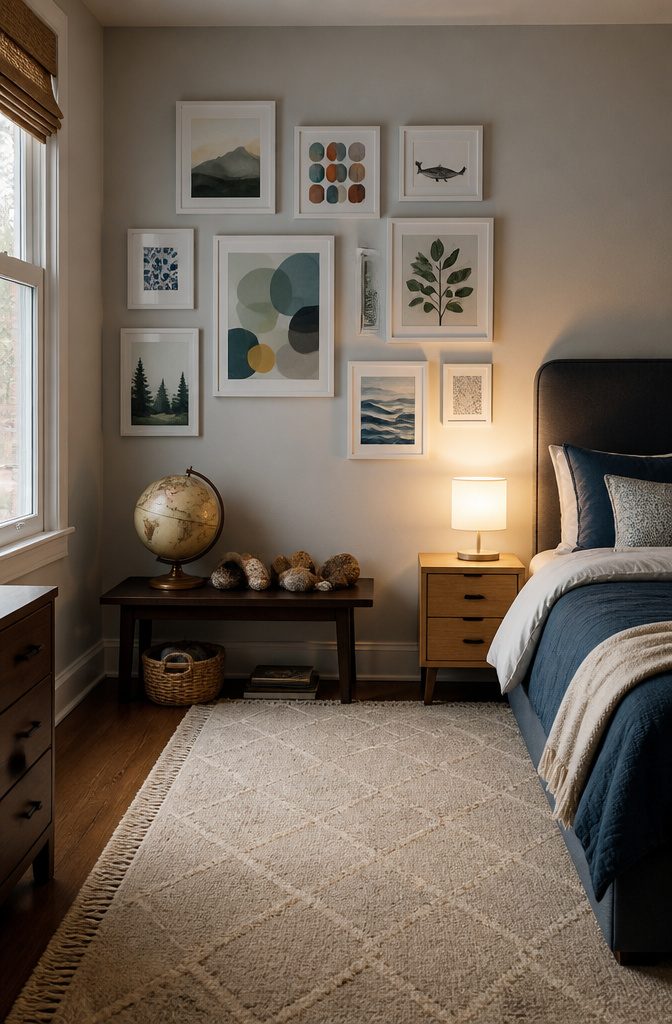
A room that looks designed for a child rather than by one starts with what they already love. I rotate my own kids’ drawings through simple frames that open from the front, so swapping a new watercolor in takes about thirty seconds. The frames keep the display from feeling like a refrigerator door exploded, and the kids notice when their work gets that gallery treatment.
Keep the frame style identical even when the art inside is pure chaos. A grid of matching white borders turns finger-paint abstracts into something that reads as intentional.
For collections, the trick is containment, not suppression. A single shadow box for rocks or a narrow picture ledge for Lego builds gives their treasures a home that ends at a clear boundary. My youngest’s shell phase lived in one glass jar on his dresser. When it filled, we agreed something had to go before something new came in.
Colors and themes shift fast at this age, so I stick to cheap swaps: a duvet cover in the current obsession, a pillow in the favorite color, a small rug that can roll up when dinosaurs give way to space. The bones stay neutral; the personality stays replaceable.

ARCH MAGNETIC CHALKBOARD FOR KIDS: This arch magnetic wall decal for kid, arch magnetic board firmly holds lightweight magnets, stickers and small accessories. Perfect for bedrooms, playrooms and study areas, it turns blank walls into an interactive magnetic space for learning and creative play.

VERSATILE SIZE - This unique chalkboard acrylic paint comes in an 8 oz, wide mouth jar - perfect for all your arts and crafts!

Turn Any Surface into a Creative Chalkboard: Vigorder chalkboard paint makes it easy to create a personalized chalkboard on multiple surfaces. Perfect for DIY labels, menu boards, kids’ drawing areas, family calendars, and décor projects—your ideas can show up anywhere
8. Create a Reading Nook
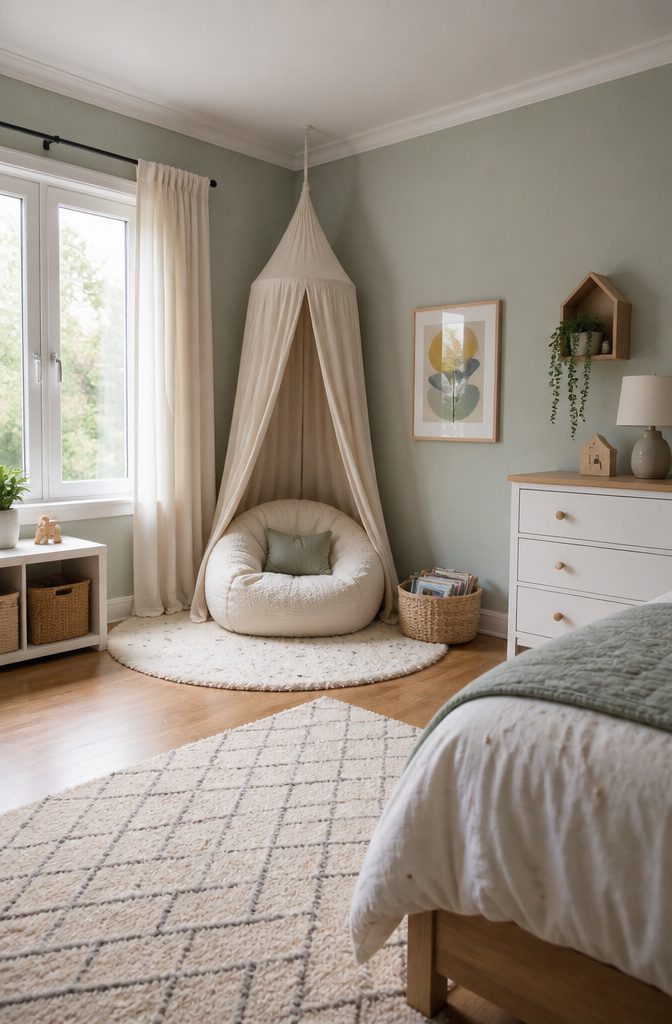
A reading nook works best when it feels like its own little room within the room. I start with the seat: a beanbag or floor cushion tucked into a corner, something a kid can really sink into. A small rug underneath defines the space and keeps it from bleeding into the rest of the bedroom.
Light matters. Position the nook near a window if you can, since natural light is easiest on young eyes and makes the space inviting during daylight hours. Add a soft lamp nearby for evening reading.
Books stay within arm’s reach in a low basket or bin on the floor. Open storage beats a tall bookcase here; a child can see the covers and grab what they want without climbing or asking for help.
A canopy or curtain hung from the ceiling turns three walls and a corner into a private retreat. It signals to siblings and parents alike that this spot is for quiet time. The enclosed feeling helps some kids settle into a book, though others do fine with just the rug and a pillow. Either way, the nook should feel separate from sleep and play zones, a calm corner that draws them in.

[Framed Wall Art]: A set of 3 pieces contemporary 3d textured framed contemporary minimalist neutral abstract wall art, each with a size of 16" W x 24" H. The total size when the 3 pieces are hung is 24" H x 48" W. Each painting comes with a 1.38 inches thick solid wood frame

Graceful white roses arranged in a softly reflective vase create a refined floral still-life composition. Warm beige tones, deep green leaves, delicate highlights, and painterly details give the artwork a calm vintage-inspired character with an elegant, romantic atmosphere.

Boho Sun Design With Artistic Texture – Featuring a radiant sunburst design in soft white, warm gold, and neutral tones, this hand-painted canvas brings depth and visual interest to your walls. The textured finish adds a handcrafted artistic feel that complements boho, minimalist, modern, and organic home styles.
9. Use Wallpaper or Wall Decals
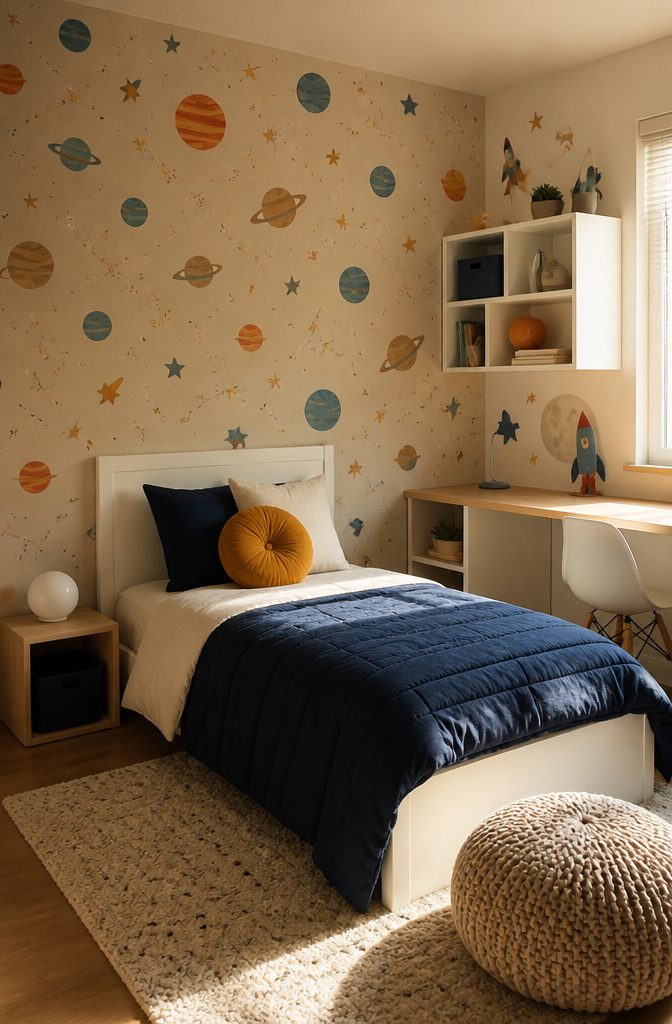
Peel and stick wallpaper is the friendliest option if you rent or tend to second-guess yourself. It goes up faster than two coats of paint, wipes clean with a damp cloth, and peels back off when the lease ends or the phase passes. The vinyl holds up to kid life better than you’d expect. Textured walls are the catch: the adhesive needs a smooth surface, so run your hand across the plaster first.
Decals work best as punctuation, not paragraphs. A few oversized shapes above the bed or desk give personality without turning the room into a daycare. I usually stop at one wall or the upper third of it; full-room patterns can overwhelm unless the print is quiet and the furniture is simple. Designer Meta Coleman wallpapered floor to ceiling in a bold squirrel-and-sunflower print, but she did it to soften odd angles in an old house. Most rooms need less.
If you’re hesitant, start behind the headboard or inside a reading nook. Live with it for a weekend. The good peel-and-stick brands lift and re-stick once or twice without tearing, which is more forgiveness than traditional pasted paper ever gave.

Made Of 100% COTTON Percale 200 Thread Count - Percale weave cotton is the benchmark for comfortable and breathable bedding. Touch thicker. Keep warm, particularly suitable for people with high environmental requirements for their skin. Suit for all year round.

PREMIUM COTTON FABRIC: The cute dinosaur duvet cover set is made of 100% cotton, comfortable, skin-friendly and breathable. Keep your child comfortable and cozy sleeping all night. Suitable for all year round.
Colors and details may vary slightly from images due to screen display differences; actual product may appear slightly different
10. Make a Cozy Floor Corner
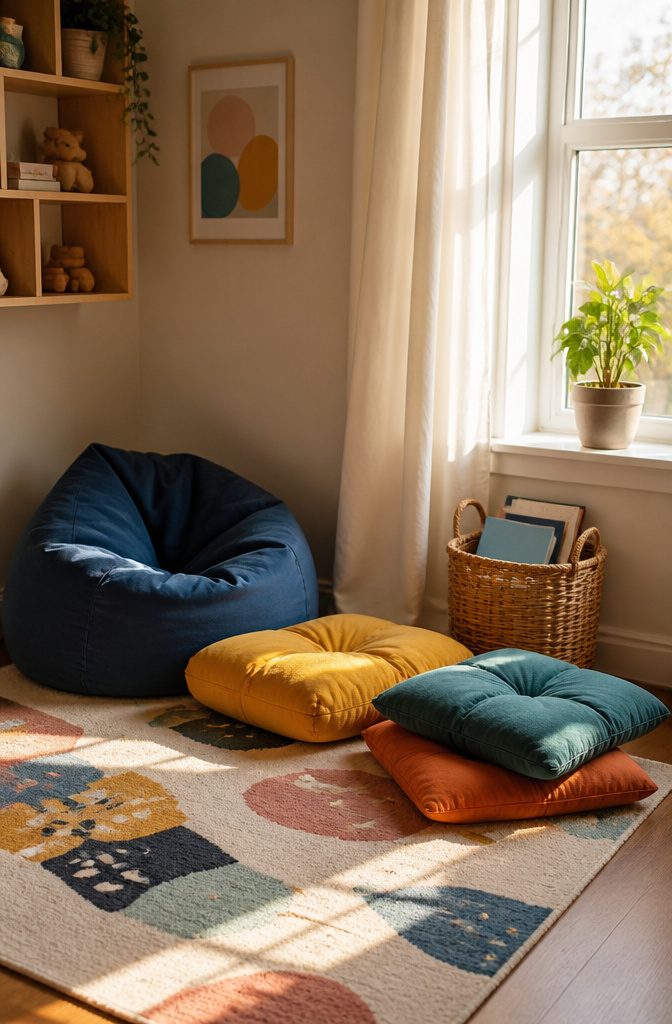
A floor corner with a beanbag or a couple of floor cushions pulls a kid’s room together in about ten minutes. It gives them a spot that isn’t bed and isn’t desk: just somewhere to flop with a book, stack of comics, or a friend who came over after school. I like that it moves. Drag the pouf nearer the window for morning light, or into the middle of the room when a group shows up.
You don’t need a built-in anything. A cushioned rug underneath keeps the edge off hardwood, and a basket nearby for books finishes it. The whole setup costs less than a desk chair and survives being kicked around for years. A beanbag and a floor basket are the kind of pieces that still work when the room changes from picture books to whatever comes next.

Authentic Distressed Look Design : The realistic appearance and gray-white tone of white wooden wallpaper,showcases a wood texture with natural imperfections,that captures the timeless beauty weathered wooden planks

【SIZE&MATERIAL】17.3In X118.In=14.16sq.ft.Floral wallpaper,upgrading and thickening. Adopt vinyl and the latest removable glue,wallpaper sticks to any smooth, flat ,clean surface,No residue after removal.

【Pattern Design】The design is inspired by nature, with a dark base, highlighting the colorful flowers and birds. Flowers and birds are distributed freely, without fixed rules, adding a sense of natural randomness, and the overall design is full of retro charm, adding an artistic atmosphere and beauty to the living space.
11. Bring in Natural Elements
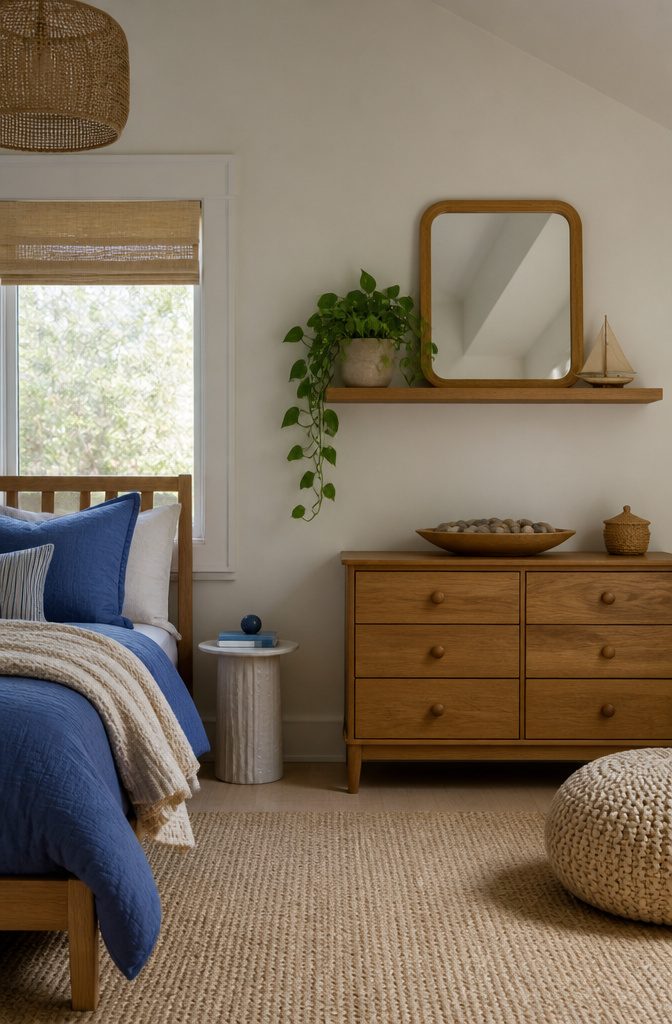
Synthetic colors dominate most kids’ bedrooms, and that bright plastic energy wears on everyone after a while. Natural materials pull the room back from the edge without killing the fun. A low-maintenance plant like a pothos or snake plant survives the neglect a kid’s room dishes out, and the green reads as a color without being another primary red or blue. Wood textures do the same work. A simple pine stool or an unfinished shelf brings in warmth that balances whatever neon bedding or character lamp you’re stuck with.
Stone or shell collections cost nothing if you start them on a beach trip, and they give kids something to curate that isn’t plastic. A small bowl of smooth river rocks on a dresser beats another figurine. Natural fiber rugs, especially jute or sisal, ground the space in something tactile and real. They hide crumbs better than synthetic pile too, which matters more than most people admit. The mix doesn’t have to be expensive or perfect. One or two natural pieces against the manufactured stuff is usually enough to make the room feel like someone thought about it.
12. Hang a Gallery Wall
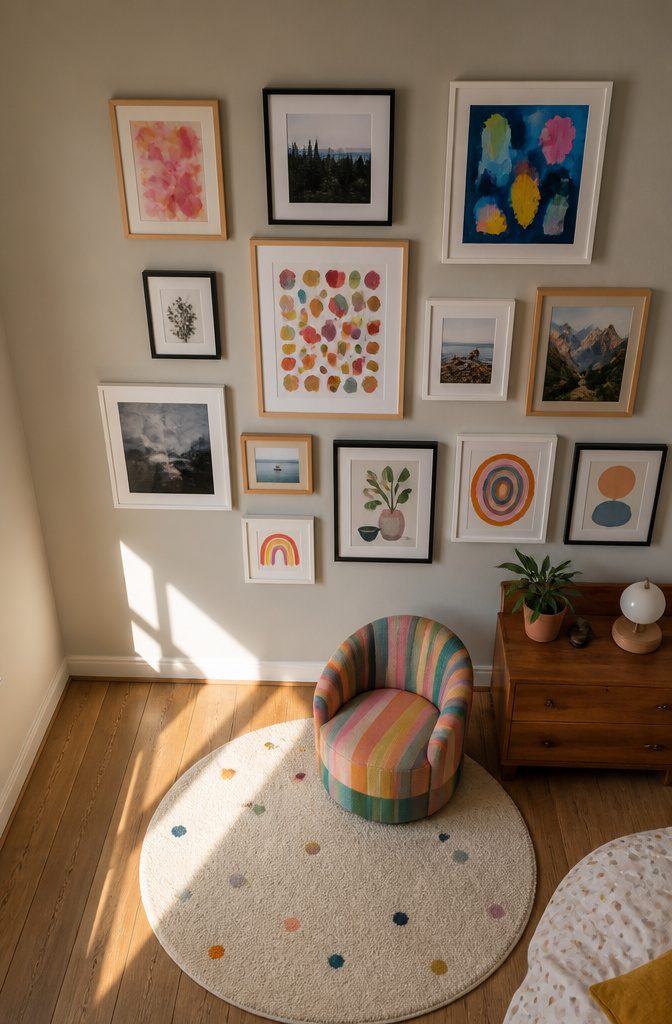
A gallery wall works best when it looks like it grew over time, not like it was plotted on a spreadsheet. I start with one piece the kid actually cares about, a drawing they are proud of or a photo from a trip they still talk about, and build outward from there. The frames do not need to match. In fact, two or three finishes, like natural wood, white, and a thin black metal, keep the eye moving so nothing feels like a museum display.
Spacing matters more than frame style. Two inches between pieces is tight enough to read as one unit, loose enough that each item still gets its own moment. I mix sizes by putting the largest piece slightly off-center, never dead middle, then clustering smaller ones around it like satellites. The biggest mistake is treating every slot as equal; a grid of identical frames feels rigid in a kid’s room, where the whole point is personality that shifts month to month.
This is where you hand the curating to them. My niece swaps in a new watercolor every few weeks, and the wall changes with her. The frames stay put; she just lifts the backing and tapes up what matters right now. It costs nothing, and the room stays current without another trip to the store.
13. Install Playful Lighting
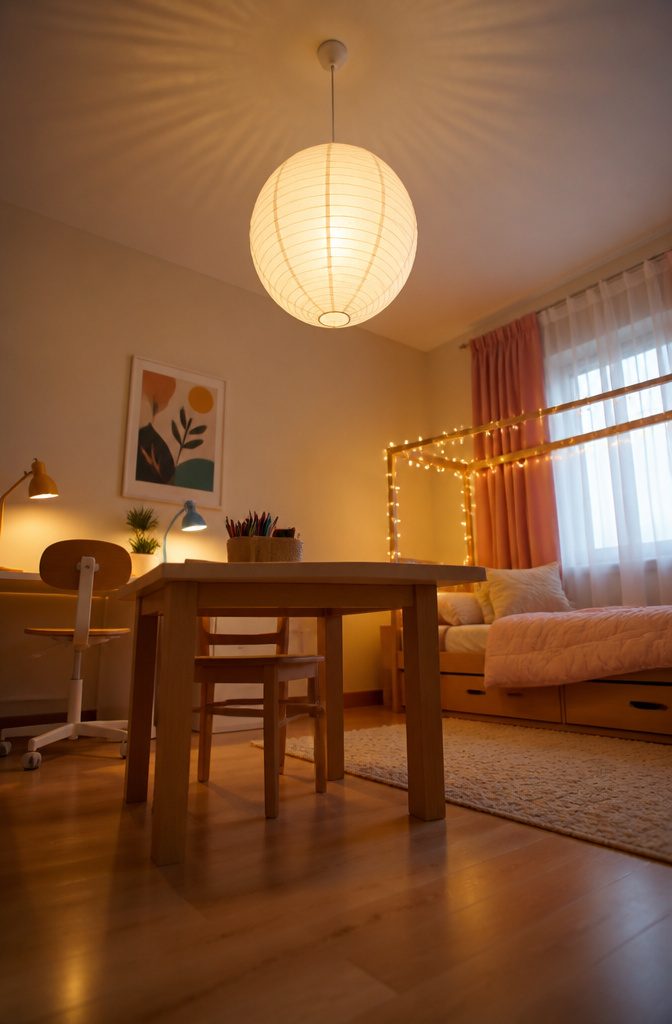
Lighting does more in a kid’s room than chase away monsters. The right fixtures turn bedtime into something they actually look forward to.
A paper lantern pendant or an oversized geometric one overhead gives the whole space a center of gravity. String lights along a headboard or across a reading corner add that whispery, soft glow kids gravitate toward without the harshness of ceiling cans. Bedside lamps with some personality, a fun shape or a textured base, let them feel in control of their own space.
For the homework zone, task lighting matters more than you think. A focused lamp on that desk keeps them from squinting through worksheets and trains their brain that this spot is for focus, not play. When it’s time to wind down, a dimmer or a low-wattage bulb lets you step the room down gradually instead of flipping from bright to black.
One non-negotiable: secure every cord and check that lamp bases won’t tip. A string light strand within reach of a toddler bed is a hazard, not a feature. Wall-mounted pendants and weighted lamps are worth the extra few minutes of install.
14. Set Up a Homework Zone
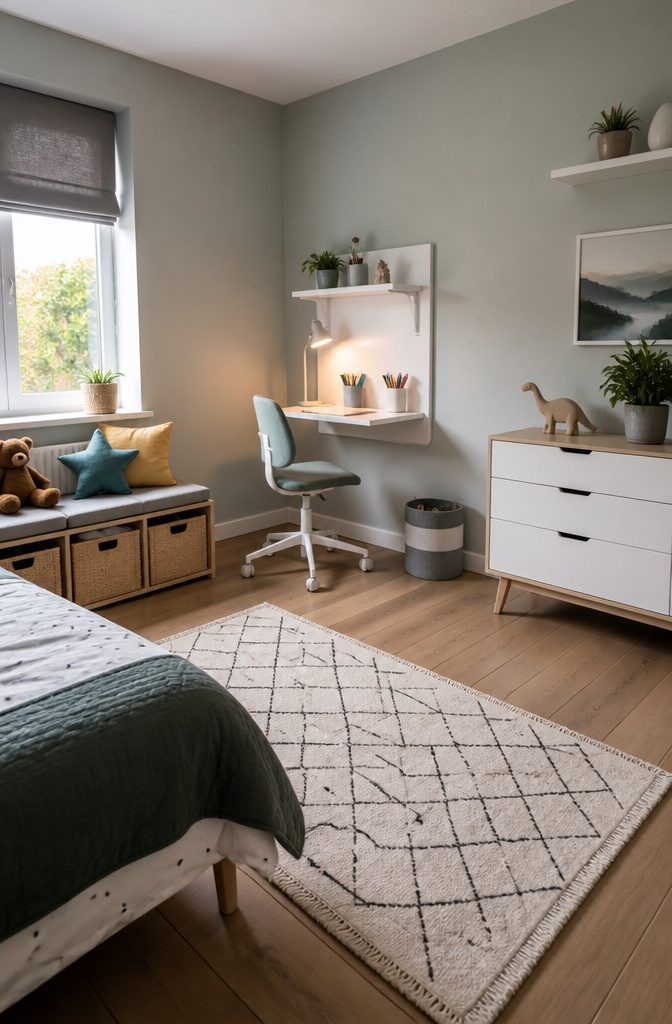
A homework zone only needs four things: a surface, a chair, light, and a place for supplies. That is it. I have seen kids spread notebooks across their bed and lose an hour to discomfort and distraction before they even start the math. A real desk changes that.
The surface does not need to be large. A wall-mounted desk folds flat when schoolwork ends and takes zero floor space, which matters in a room where a bed and dresser already fought for territory. Pair it with a chair that lets feet rest flat, and your kid might actually sit through a worksheet without fidgeting.
Light should hit the page, not glare off it. A simple lamp on the left side for right-handed writers, or the reverse, keeps shadows off the work. For storage, a cup for pencils and a bin for paper keeps clutter from migrating to every flat surface in the room. Contain the school stuff to one spot, and the rest of the bedroom stays calmer for it.
This setup also trains a useful habit: when they sit there, brain knows it is time to focus. When they leave, the school day is physically over. That boundary helps kids as much as any color scheme or wall decal ever will.
15. Mix Patterns with a System
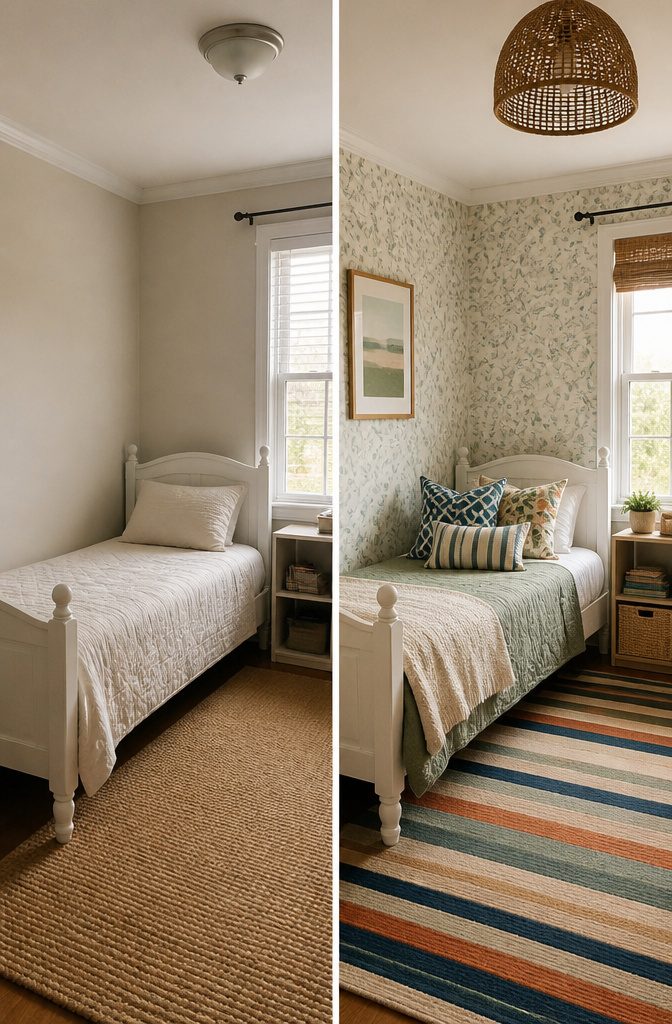
Stripes, florals, geometrics, and character prints can live in the same room without fighting, but only if you give them a system. I start with scale: pair one large pattern with one medium and one small, so your eye lands somewhere instead of bouncing everywhere. A chunky geometric on the curtains, a medium floral on the bed skirt, and tiny stripes on a throw pillow already know their places.
The color palette does the real work of holding them together. Three patterns is the practical ceiling for what’s visible at once; go past that and the room starts to feel like a clearance rack. I keep the base colors identical across prints and let the accent shades vary slightly. Same navy ground in the stripes and the florals means the dinosaur print on the third pillow reads as playful, not random.
Character prints are the trickiest because they read loud even when they’re small. I treat them as the one "fun" exception and keep everything else calmer. A shared palette still saves it: if the superhero red matches the red in your geometric, the room holds together. Without that link, even two patterns start to look like a mess.
16. Add Symmetry Where It Helps
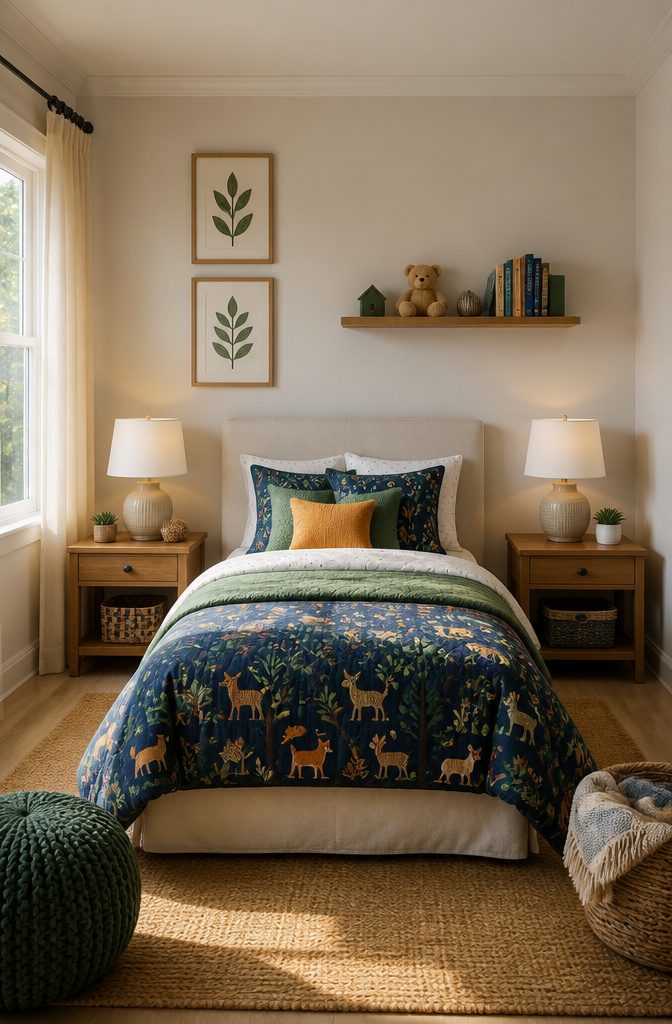
Balanced layouts settle a busy room faster than almost anything else. Two matching nightstands flanking a centered bed give the eye an obvious place to land, which matters when toys and clothes are already competing for attention. The same principle works with paired shelves or twin lamps: symmetry reads as intentional, and intentional reads as calmer.
But a room that mirrors itself too perfectly can feel like a furniture showroom. I break the pattern on purpose once the bones are in place: a single mismatched chair, one extra pillow in an odd shape, or a wall hanging shifted slightly off-center. The trick is one deliberate asymmetry, not three. That single move keeps the space from feeling staged while the underlying structure still does the quieting work.
17. Use Vintage or Heirloom Pieces
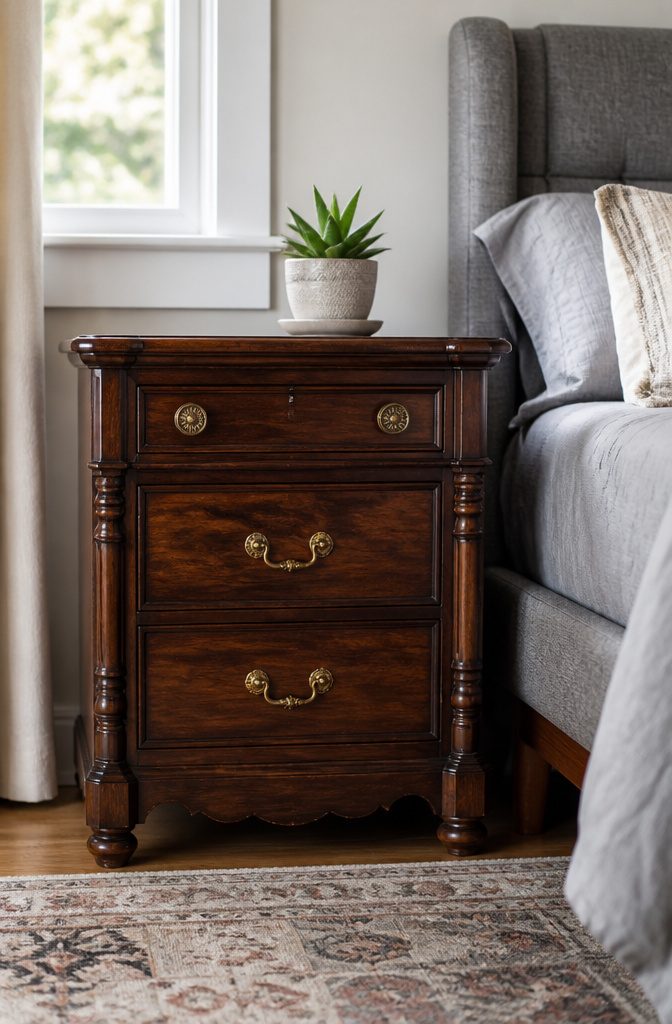
One older piece in a room of new purchases does what matching sets cannot: it gives the eye a place to rest and the room a sense that someone actually lives there. I have watched a hand-me-down nightstand from a grandparent’s attic anchor a space otherwise filled with flat-pack furniture, and the difference is immediate. The wood has depth, the hardware has weight, and the story writes itself without a plaque.
Safety comes before character. Check that any vintage piece going into a kid’s room has stable joints, no wobble, and hardware that cannot be pried loose. If the finish is chipped or you suspect lead paint underneath, strip it properly or seal it with a modern water-based topcoat. A quick swipe with a damp cloth should not pick up color; if it does, the piece needs more work before it goes near small hands.
Mixing eras works when you repeat one element. The warm tone of an old wood dresser can pull forward in a modern rug or a few picture frames. Keep the scale similar, let the vintage item be the heaviest visual weight in the room, and stop before the space turns into a flea market stall. One story is enough.
Why Color Palette Comes First
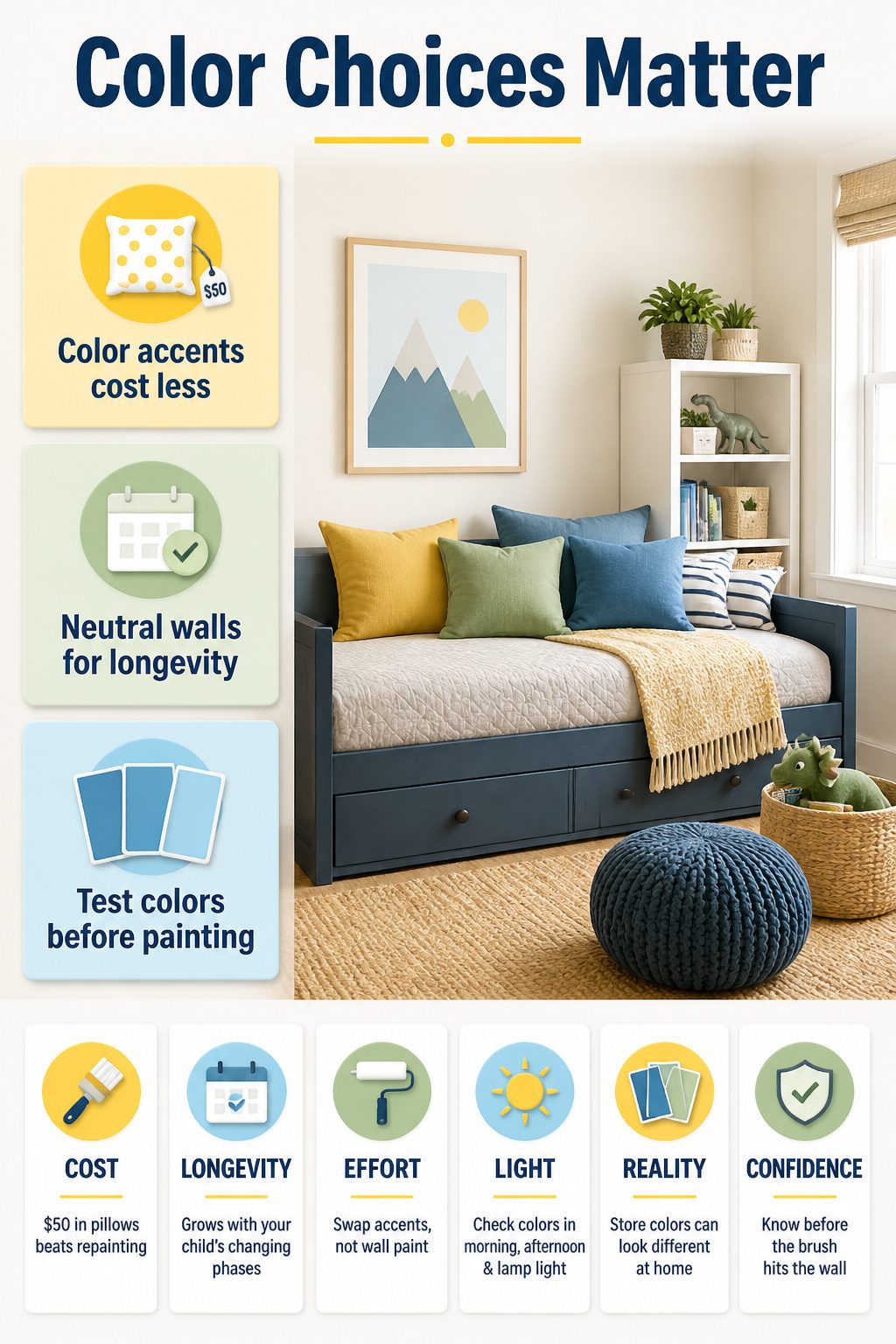
A neutral base with colorful accessories is the thread that runs through almost every item in this list, and there is a reason for that. Paint the walls a soft white, a warm gray, or a muted pastel, and you have a room that still feels right when your six-year-old is suddenly twelve and embarrassed by the dinosaur phase. The furniture stays, the wall color stays, and the swap costs you fifty dollars in new throw pillows instead of a weekend with a roller and a drop cloth.
I learned this the hard way with a navy accent wall that felt perfect until it did not. Two years later I was patching and priming while my kid watched, bored, from the doorway. Keep the big stuff quiet and let the small stuff shout. That is the whole trick for budget and longevity in the same breath.
If you are not sure what your child will actually live with, test before you commit. Paint a poster board and lean it against the wall for a few days. Watch it in morning light, afternoon light, and the lamp they actually use for reading. A color that looked charming at the hardware store can turn prison-yard bleak by dusk, and you want to know that before the brush hits the wall.
How to Let Kids Help Decide
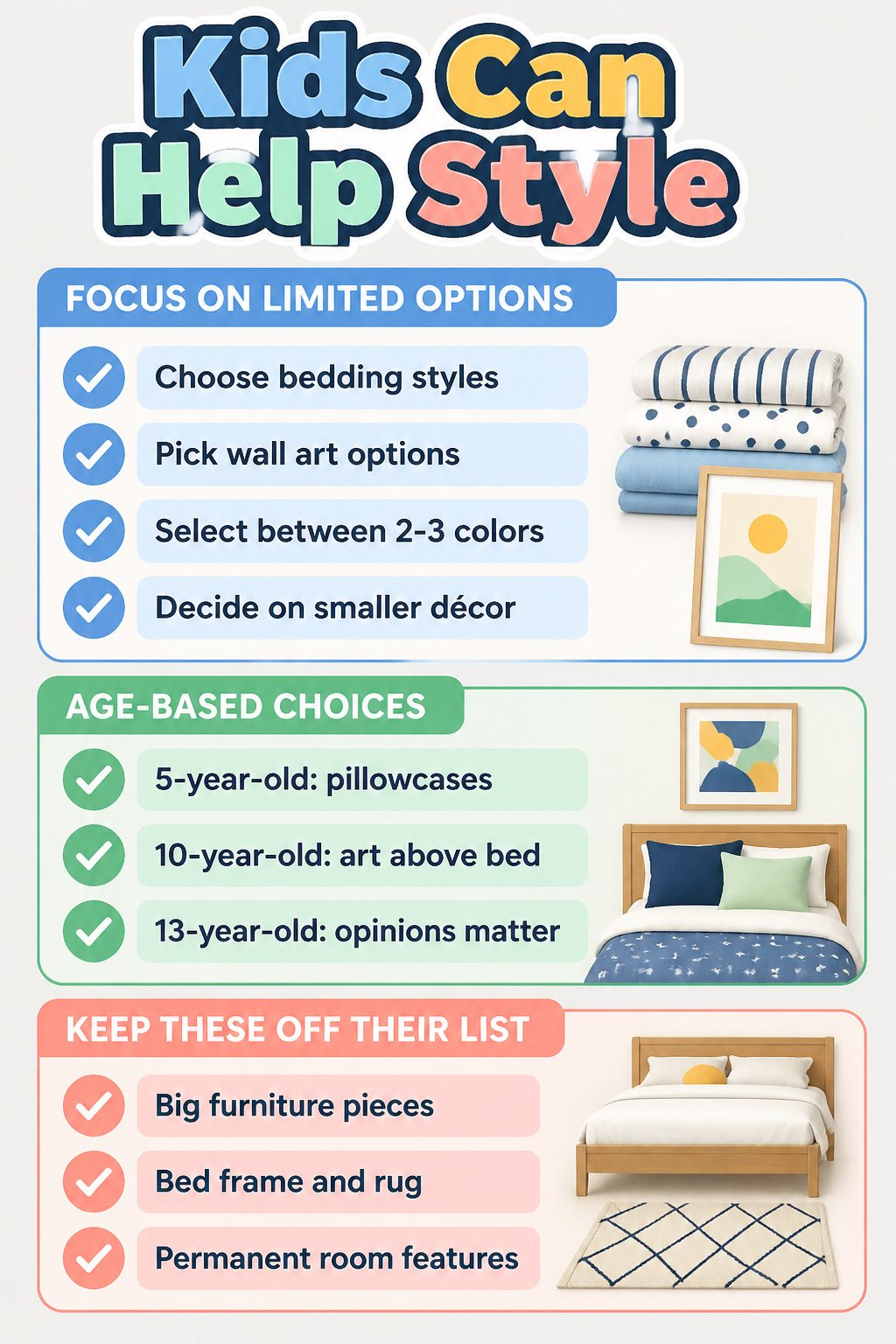
Kids are surprisingly good at picking between two or three things you already like. I learned this the hard way after letting my nephew choose "anything blue" for his walls, then spending two years under a ceiling the color of a swimming pool. The trick is offering limited options: this warm gray or that soft sage, this striped duvet or that dotted one. They feel heard, you keep the room from looking like a cereal box exploded.
Age changes what control looks like. A five-year-old gets to choose between pillowcases. A ten-year-old might pick the art above the bed. By thirteen, they probably have opinions worth building around, especially if the furniture stays neutral enough to outlast a skateboard phase that becomes a music phase six months later.
The hardest part is knowing where to draw the line. Let them choose the removable stuff, the bedding and the prints and the desk lamp. Keep the big pieces, the bed frame and the rug, in your hands. That way the room grows without a full redo every birthday, and they still see themselves in it.
Storage That Looks Like Furniture
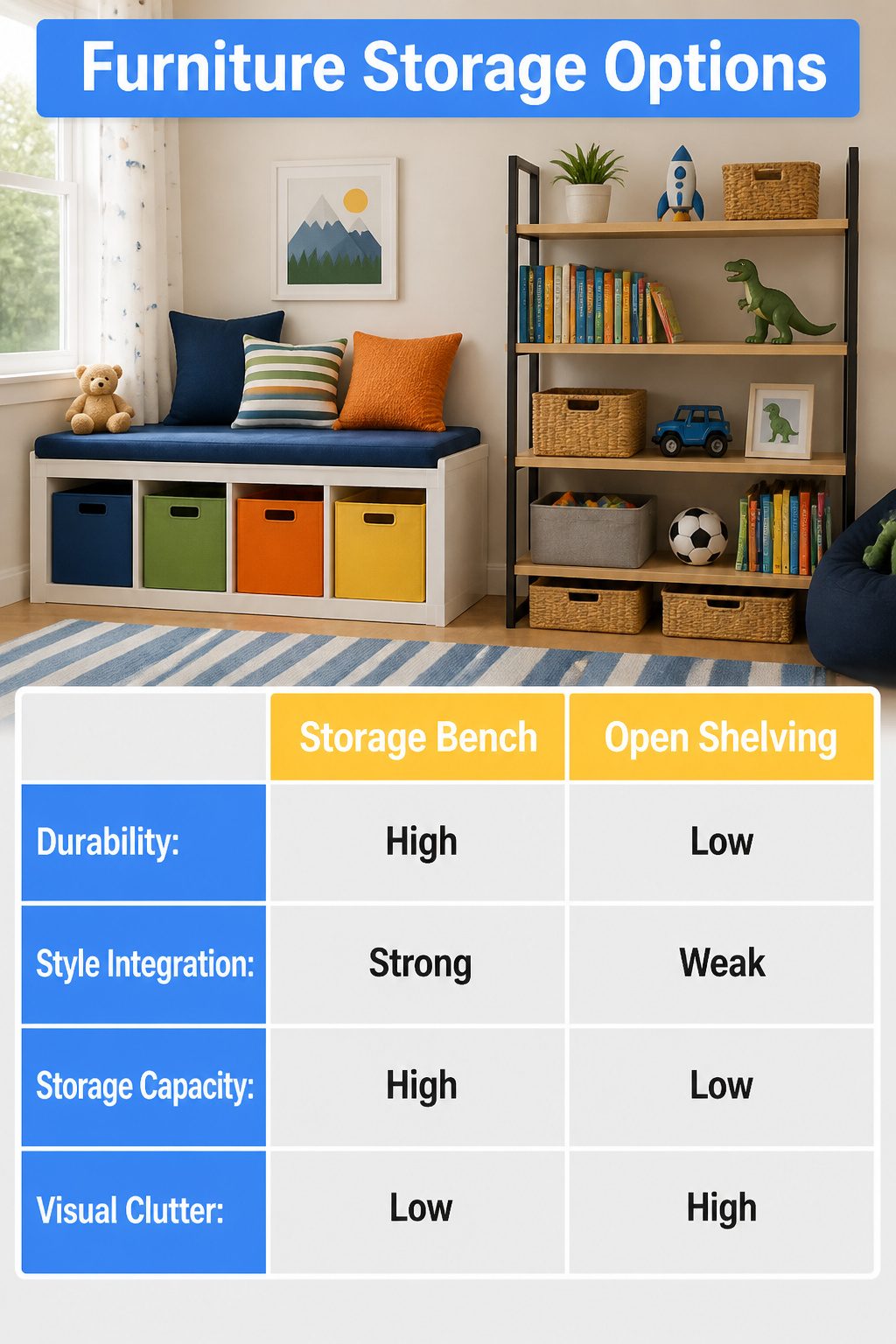
A storage piece earns its floor space only if it solves two problems at once. I look for sturdy materials that will last through the teenage years, because a particleboard cube that bows after one winter is just delayed clutter. Built-in storage beneath a bed or bench saves the open floor kids actually play on, and cleanup stays realistic when toys slide out of sight in one motion.
Open shelving looks tidy for about a day in a kid’s room. Baskets and bins inside a closed unit hide the daily chaos without adding another visual layer to manage. The Better Homes & Gardens 4-Cube Organizer Storage Bench works because it reads as seating first and storage second; the fabric cube bins that fit inside come in enough colors that you are not locked into one look as tastes shift.
Vertical stacking beats spreading out when square footage is tight. Wall-mounted shelves or tall bookcases keep the center of the room clear for sleepovers and fort-building. The test is whether the piece still functions when the current toy obsession is replaced by something you cannot predict yet.
Small Room Tactics
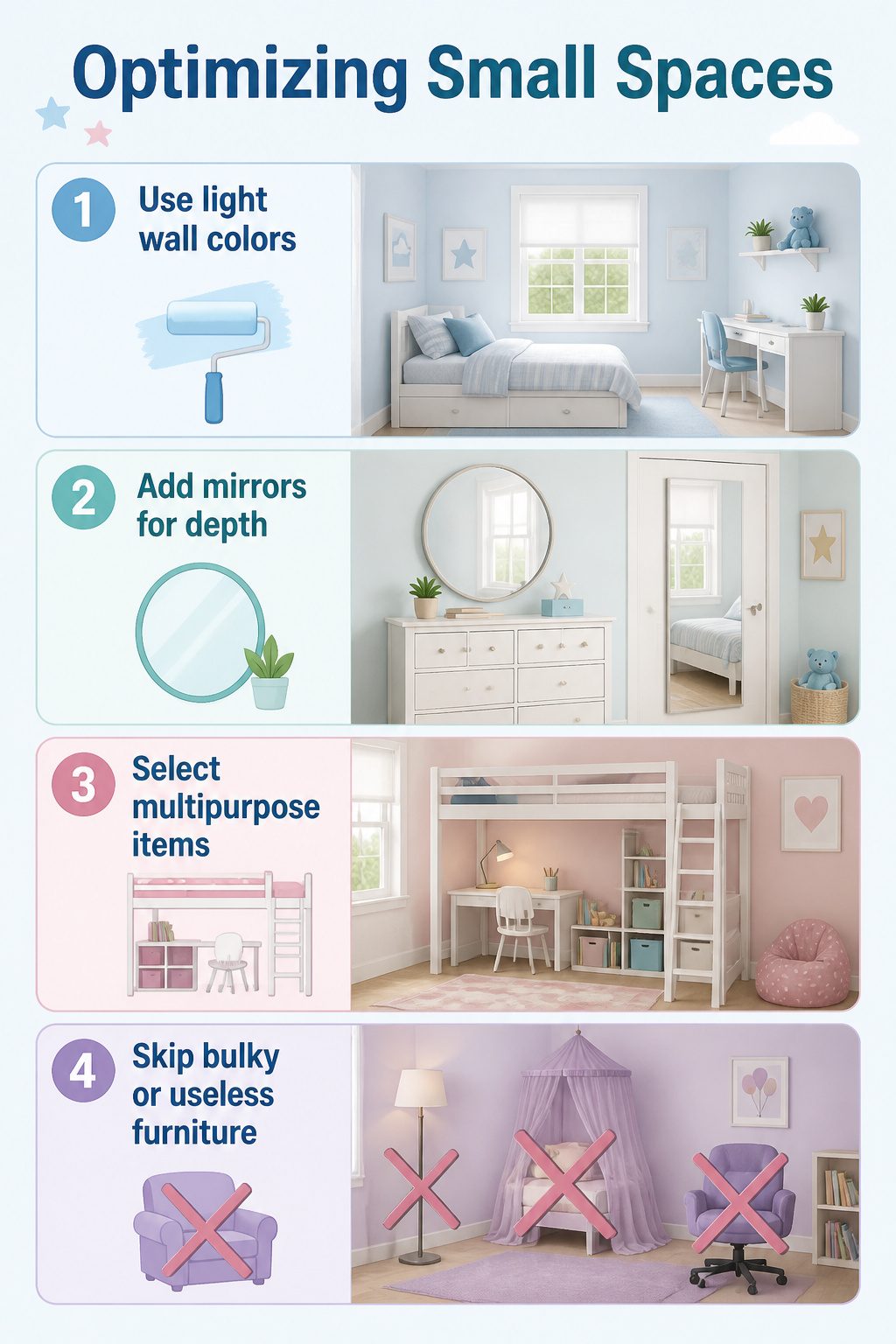
Light colors on the walls and ceiling do the heavy lifting in a cramped kid’s room. A soft white or pale blue bounces daylight around and keeps corners from feeling like they’re closing in. I’ve seen a room with north-facing windows go from cave-like to airy with just a coat of paint and no other changes.
Mirrors placed opposite that light source double the effect without adding clutter. A simple round mirror above the dresser or a full-length panel on the closet door works harder than any wall art for opening up the space.
Skip the bulky furniture sets marketed to parents. One drawer under the bed beats a freestanding dresser that eats floor space. The multi-functional pieces already mentioned, like a storage ottoman or a desk that folds flat, earn their keep here. Wall-mounted shelves replace nightstands. A loft bed frees up the entire footprint below for play or study.
What to leave out: anything that serves a single purpose and anything that juts into the walking path. Floor lamps, elaborate canopies, and chairs that swivel all steal inches you do not have. Keep the center of the room clear; kids need that open stretch more than they need another piece of furniture.
Mood Boards Before You Shop
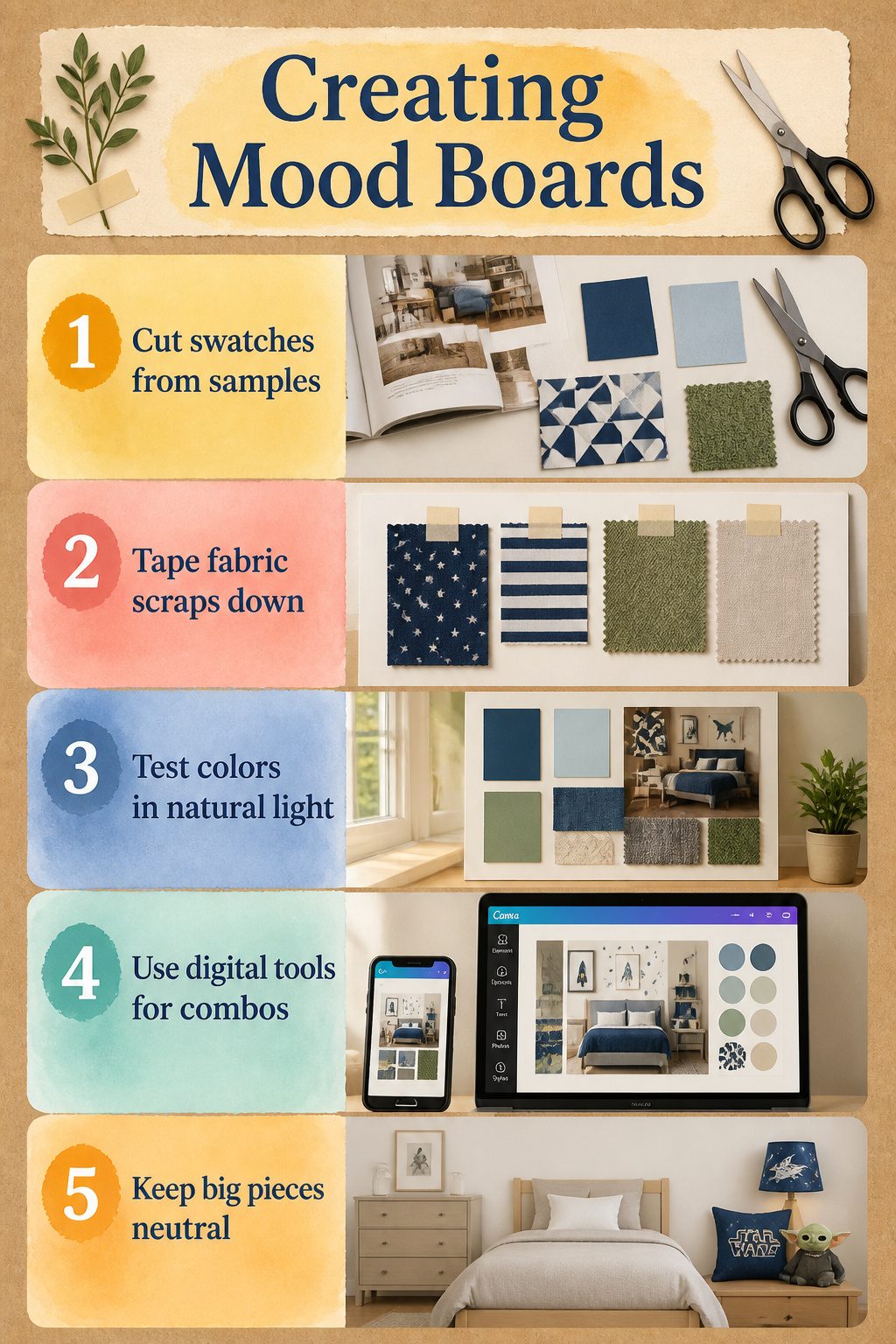
A quick mood board saves a kid’s bedroom from becoming a graveyard of impulse buys. I have watched too many parents, myself included, snap up a cute lamp or printed duvet only to realize nothing speaks the same language once it is all in the room. Five minutes with scissors and a piece of poster board fixes this before money leaves your pocket. Cut swatches from old magazines, tape up fabric scraps or paint chips, and lay them out where morning light hits them. If the blues clash or the dinosaur theme suddenly feels juvenile next to the geometric you also grabbed, you see it now and not after the return window closes.
Free tools work just as well if you prefer digital. Canva costs nothing for a basic account, and dragging saved images into one canvas lets you test combinations from your phone while waiting in the car line. The same rule applies whether paper or pixel: keep the big pieces, walls and furniture, neutral and let the themed accessories do the heavy lifting. A Star Wars lamp or unicorn pillow can exit later without a repaint.
Frequently Asked Questions
How do I create a cozy reading nook?
Start with a beanbag or floor cushion tucked into a corner, then lay a small rug underneath to define the space. Position it near a window for natural light, and add a soft lamp for evening reading. Keep books in a low basket or bin on the floor so they stay within easy reach without requiring climbing or help.
What color should I paint my child’s room?
Choose a neutral wall color like warm whites or soft greiges that stay calm at 7 a.m. and still look pulled together when toys cover the floor. White Dove by Benjamin Moore or Half Moon Crest by Benjamin Moore both work well. Neutral walls let you swap bedding and accessories later without losing a weekend to repainting.
How can I personalize my child’s bedroom?
Rotate their own drawings through simple front-opening frames that make swapping fast, and keep the frame style identical so finger-paint abstracts read as intentional. Give collections a clear home, like a single shadow box or a narrow picture ledge, with a boundary that keeps treasures from taking over. Let them choose removable items like duvet covers and pillows while you keep the big pieces neutral.
What are some effective storage solutions for kids’ rooms?
Use storage benches and ottomans with lids that hide clutter without looking like toy boxes, and tuck fabric cube storage bins into shelving units in colors and textures you would use in a living room. Multi-functional furniture pays off most in small rooms: a bed with drawers underneath replaces a separate dresser, and a wall-mounted desk folds flat when homework ends. The goal is keeping toys out of sight, not just out of the way.
How can I make a small bedroom feel bigger?
Pick furniture that pulls double duty so you buy fewer pieces and the floor stays walkable. A trundle bed tucks an extra mattress away by morning, a bed with built-in drawers replaces a dresser, and a wall-mounted desk takes zero floor space. Light colors on walls and keeping furniture minimal to only what stores something or adapts as the child grows keeps the room walkable and open.