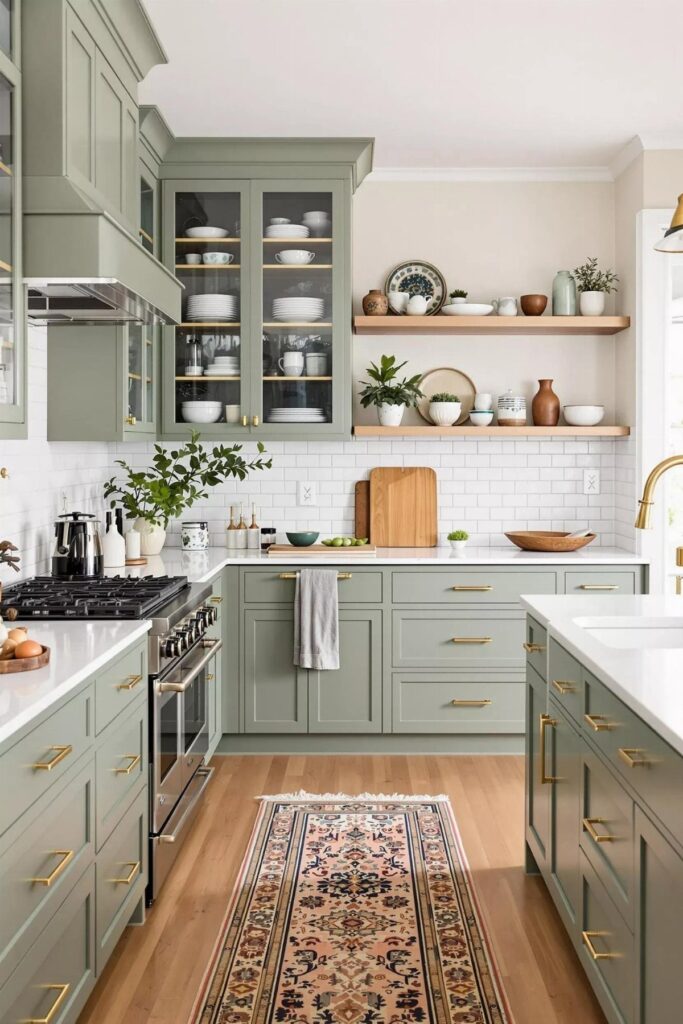

Storage behind closed doors keeps counters clear and dust off your dishes, and the range here runs from stick-on door racks to built-in pantries that need a carpenter.
Pick based on what you’re storing and where you have room: tall pantry cabinets fit narrow gaps, pull-out drawers work in base cabinets where you can’t see the back, and tambour or pocket doors tuck away when you don’t want them swinging into traffic.
I like vertical dividers for baking sheets and spice racks that let you read every label at once.
1. Door-mounted Storage
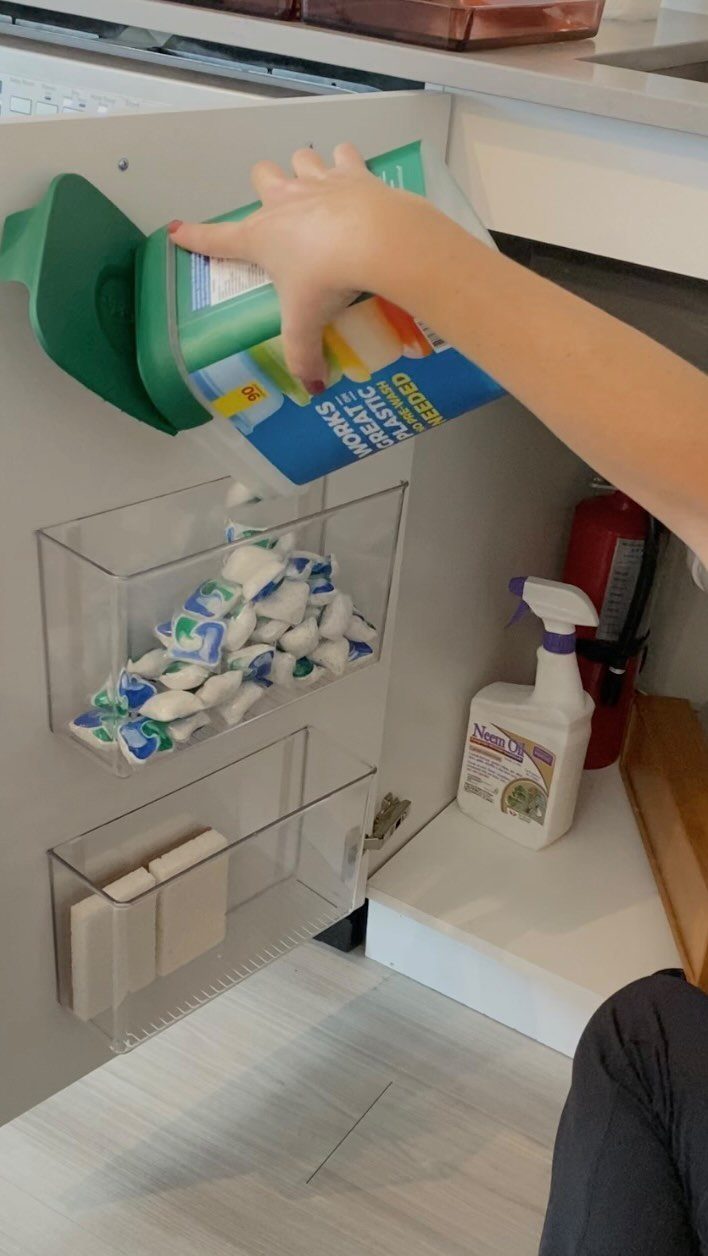
Attach bins or racks to the inside of cabinet doors to hold smaller kitchen items like sponges, dish soap, or cleaning supplies. This keeps them off the counter and out of the way while still easy to grab.
Clear bins work well because you can see what’s inside without opening every container. Metal or plastic racks are another option if you prefer something that holds heavier items.
Most stick-on or screw-in organizers are cheap and fast to put in, so this is a good choice if you’re renting or just want a quick fix.
2. Pull-out Storage
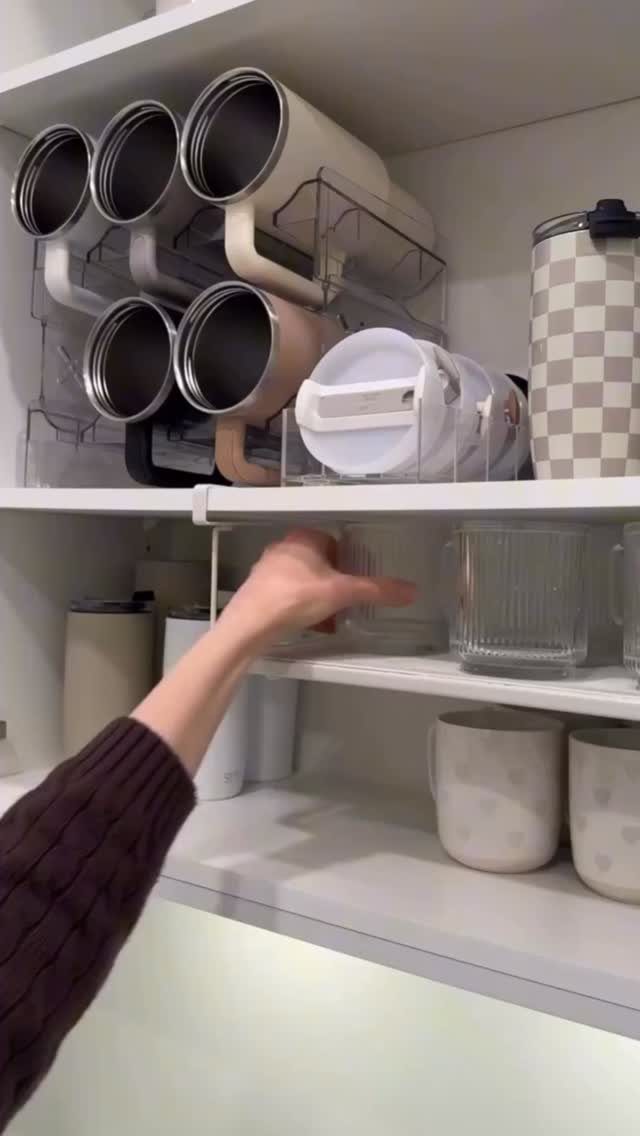
Sliding trays or wire racks let you pull stored items toward you instead of reaching into the back of a cabinet. This lets you see what you have without digging around.
I’d use these for mugs, glasses, or dry goods that tend to get lost in deep cabinets.
Most pull-out organizers fit standard cabinet widths and install with a few screws, though some slide in without tools.
3. Tall Pantry Cabinet
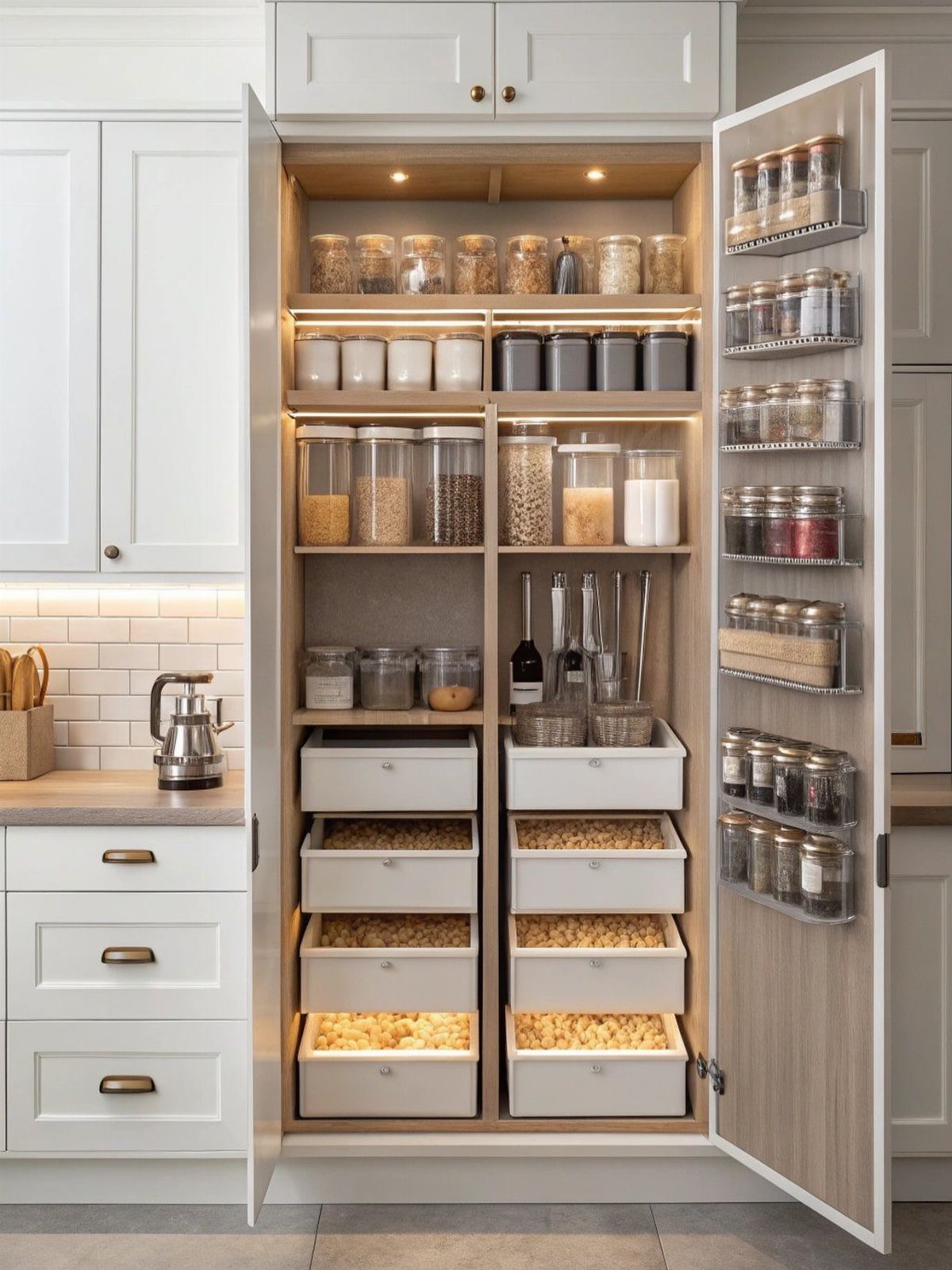
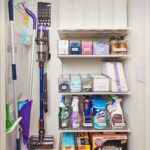
A tall freestanding cabinet with doors gives you extra pantry or storage space without renovating. These are tall and fit in corners, next to the fridge, or wherever you have a narrow gap.
I like the ones with adjustable shelves inside so you can fit taller bottles or small appliances. Door racks add even more storage for spices, snacks, or cleaning supplies.
Look for cabinets with doors that close fully so dust and cooking grease stay out.
4. Glass-front Cabinets
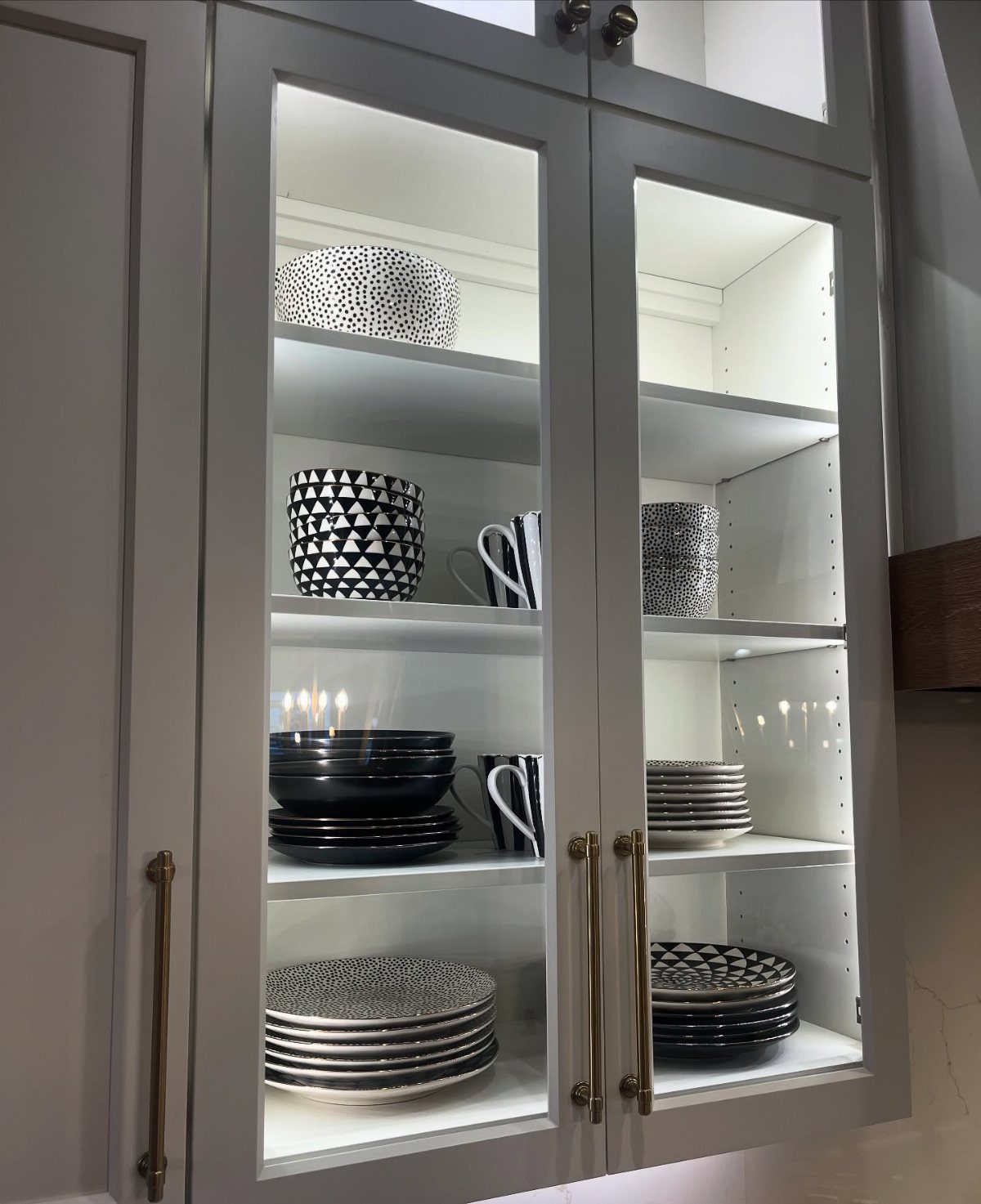
Glass-paneled cabinet doors let you display dishes, glassware, or bowls while keeping them behind closed doors. This works well if you have matching dinnerware or want to break up a row of solid cabinets.
Everything inside stays visible, so you’ll want to keep the shelves tidy. I’d use these for items you actually like looking at, not random containers or pantry overflow.
Glass inserts can be added to existing cabinets if you don’t want to replace the whole door. Interior lighting makes the display even more visible.
5. Pocket-door Cabinets
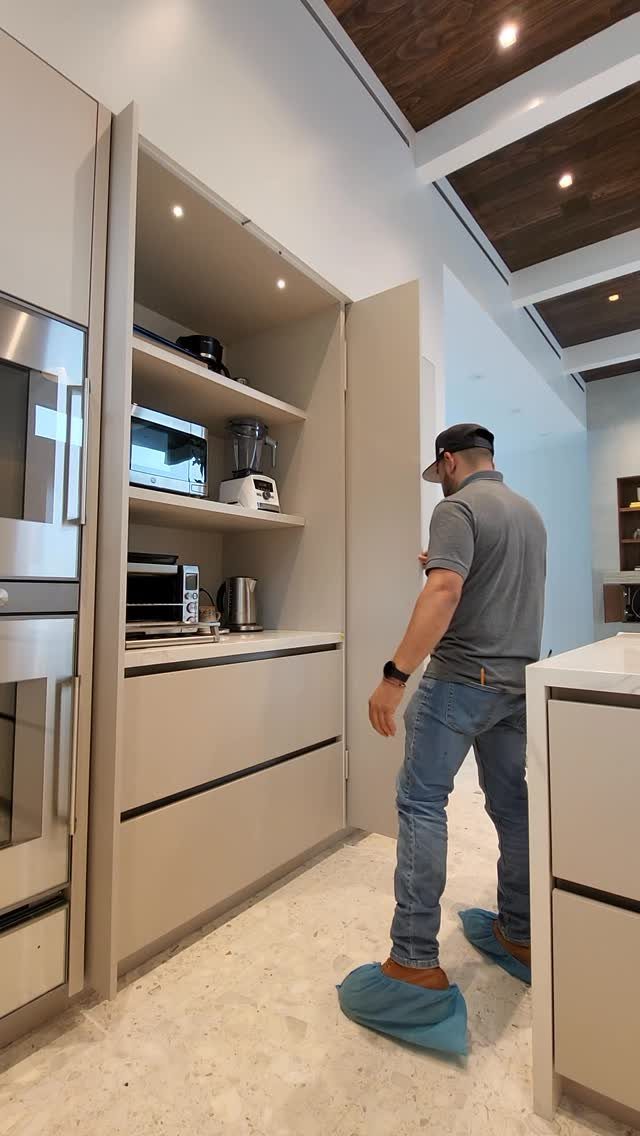
Doors that slide or fold back into the cabinet hide appliances or storage without swinging out into the room. This works well in narrow kitchens where a traditional door would block traffic.
I’ve seen these used to conceal microwaves, coffee stations, or pantry shelves that you want out of sight when not in use. The doors tuck away completely, so the inside stays accessible while you’re cooking.
Installation usually requires a carpenter unless you’re replacing existing cabinets.
6. Hidden Pantry
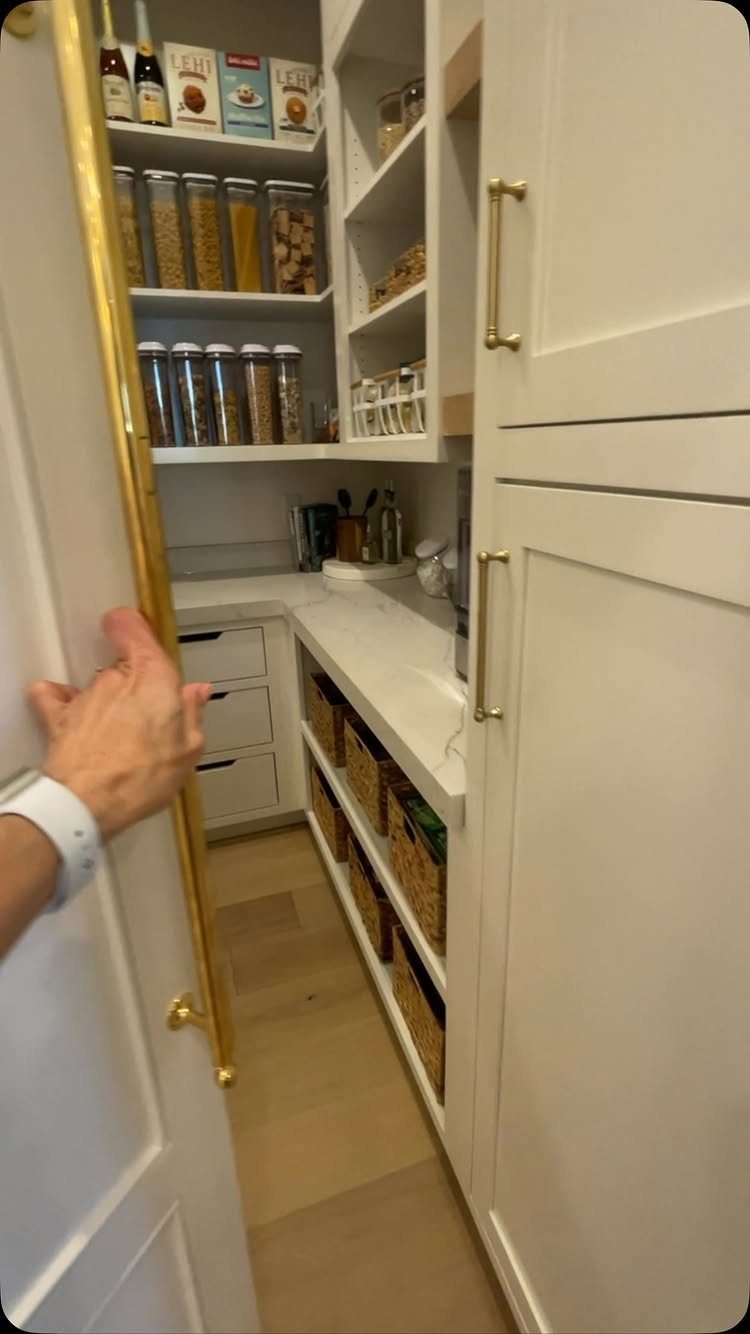
A full pantry concealed behind a cabinet-style door blends into the rest of your kitchen while holding a lot of food and supplies. I like these when you have a narrow wall or corner.
The door usually matches your other cabinets, so the pantry doesn’t stand out. Inside, shelves hold dry goods, baskets, and appliances just like a walk-in pantry, only smaller.
I like this option if you want pantry storage but don’t have room for a separate closet or freestanding piece. Most need to be built in or ordered custom to fit your space.
7. Tambour Sliding Doors
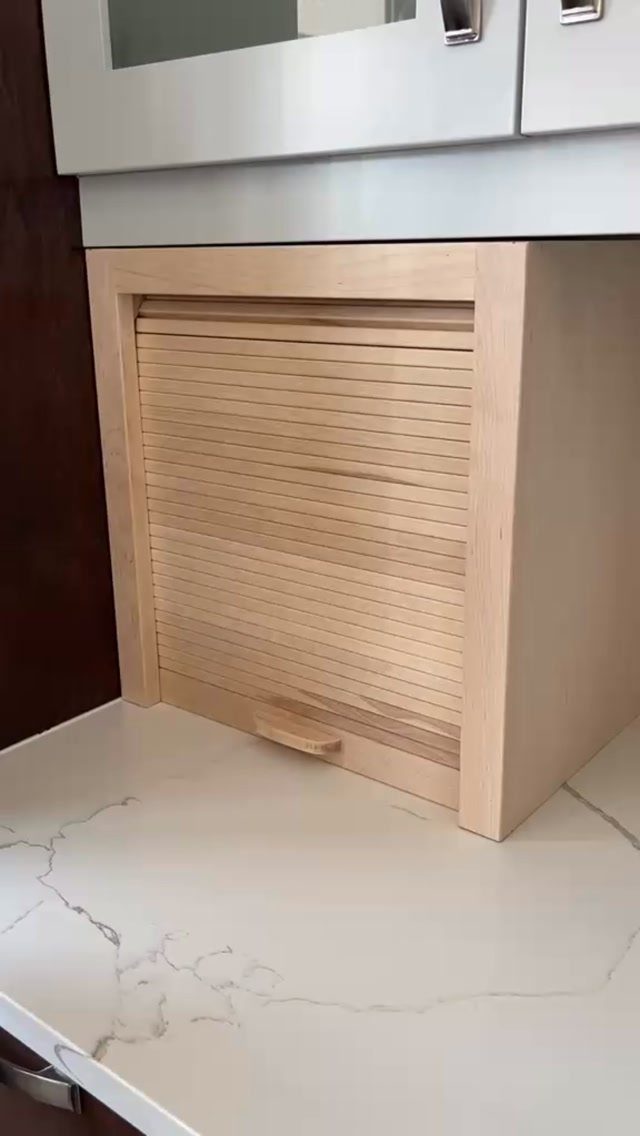
Slatted wood doors slide open sideways instead of swinging out, so you can tuck a pantry or appliance into a tight spot without losing walkway space.
The slats let a little air through, which helps if you store produce or baked goods that stay fresher with some ventilation.
I like this in a narrow galley kitchen where a swinging door would hit the opposite counter or fridge. The texture breaks up flat cabinet fronts without adding color or pattern.
Most tambour doors are custom or semi-custom, so expect to order through a cabinet shop if you want one built in.
8. Rattan Mesh Doors
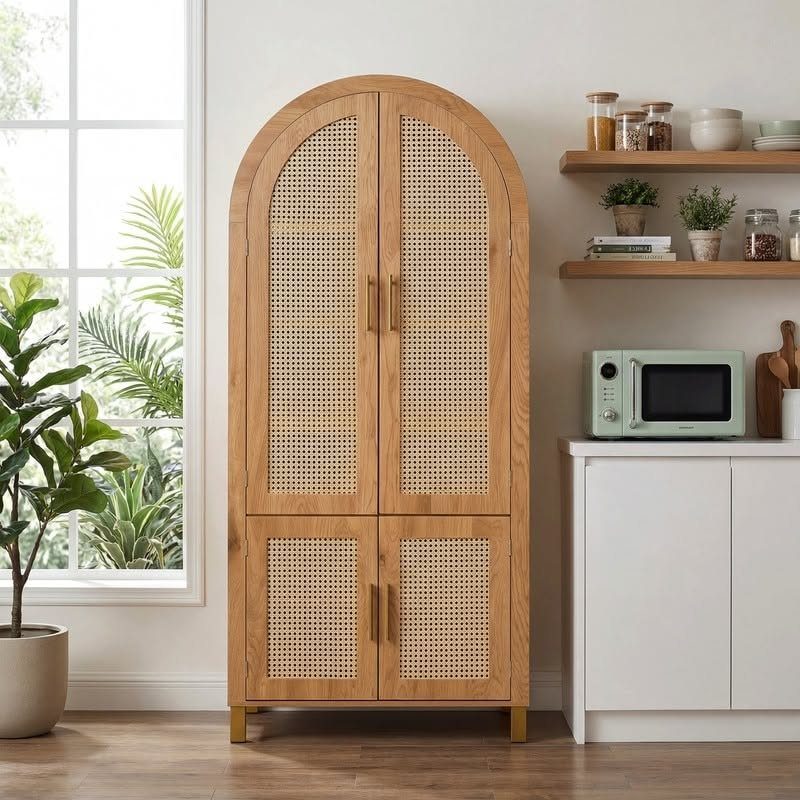
Woven rattan inserts replace solid wood or glass in cabinet doors, giving you a textured surface that hides what’s inside without making the kitchen feel heavy.
I’d use these for dish storage or pantry shelves when you want things enclosed but not hidden behind solid paint.
The weave is tight enough that you can’t see individual items, but loose enough that light passes through. Arched doors add a little more shape than rectangular ones.
Rattan inserts can be added to existing cabinet frames if you’re updating doors rather than replacing whole cabinets.
9. Vertical Baking-sheet Storage
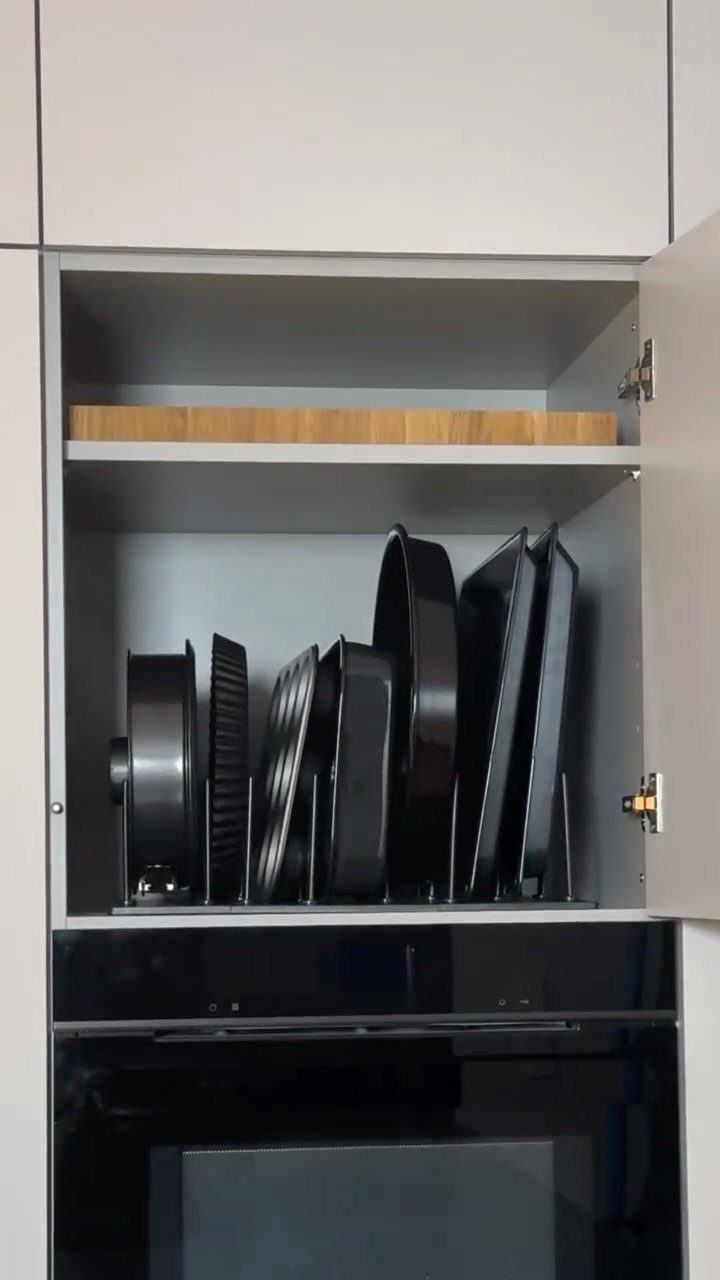
Vertical slots keep baking sheets, cutting boards, and sheet pans upright so you can pull one out without lifting the whole stack. I find this setup faster than storing them flat, especially when you need the one at the bottom.
Metal or wood dividers fit inside most base cabinets, and adjustable ones let you set the spacing for different pan widths. Some slot organizers sit on the cabinet floor, others attach to the side walls.
Measure your tallest pan before buying so everything fits standing up with the door closed.
10. Spice Rack
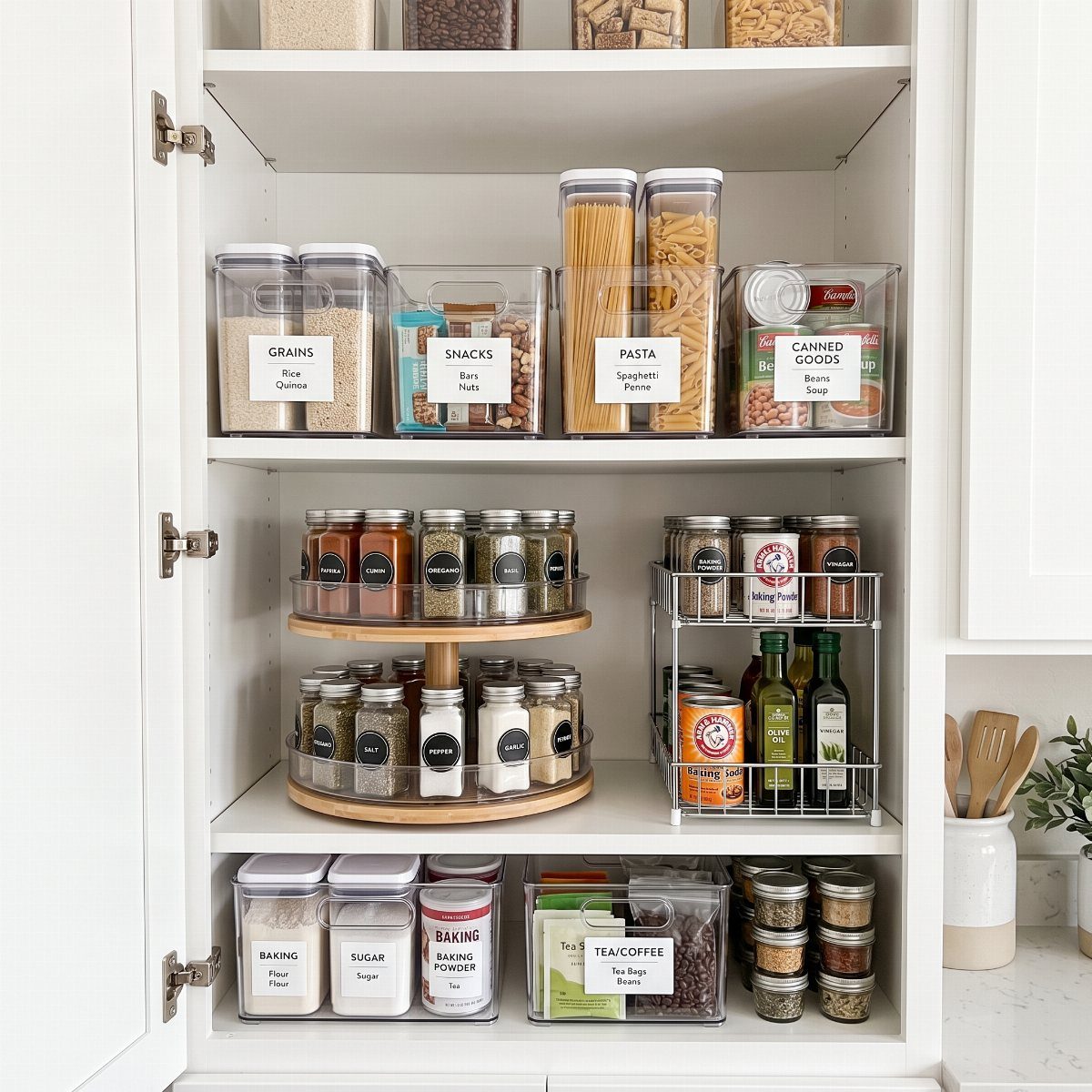
A small rack mounted to the inside of a cabinet door or set on a shelf keeps spice jars visible and easy to grab.
I prefer these over storing spices in a drawer because you can see the labels at once instead of digging through layers.
Tiered racks work better than flat trays if you have more than a dozen jars, since the back row stays visible. Rotating carousels fit well in corner cabinets where a fixed shelf would waste space.
Check the dimensions against your bottles or tins before you buy.
11. Shelf Risers
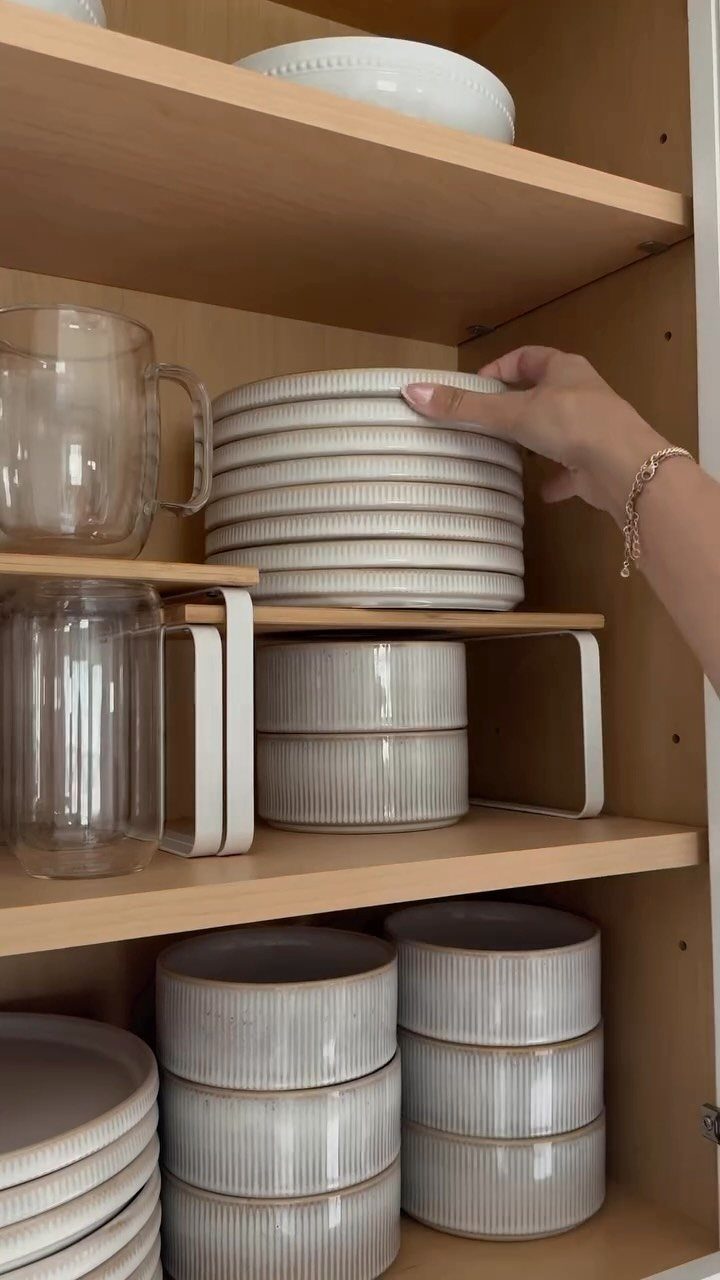
A riser sits on the existing shelf and adds a second level above it, so you can stack plates or bowls two high without losing track of what’s underneath. This doubles your usable space without installing new shelves.
I use these for dishes I grab often, since both levels stay visible and within reach. Metal or acrylic risers hold more weight than plastic ones, which matters if you’re stacking dinner plates or serving bowls.
12. Plate Dividers
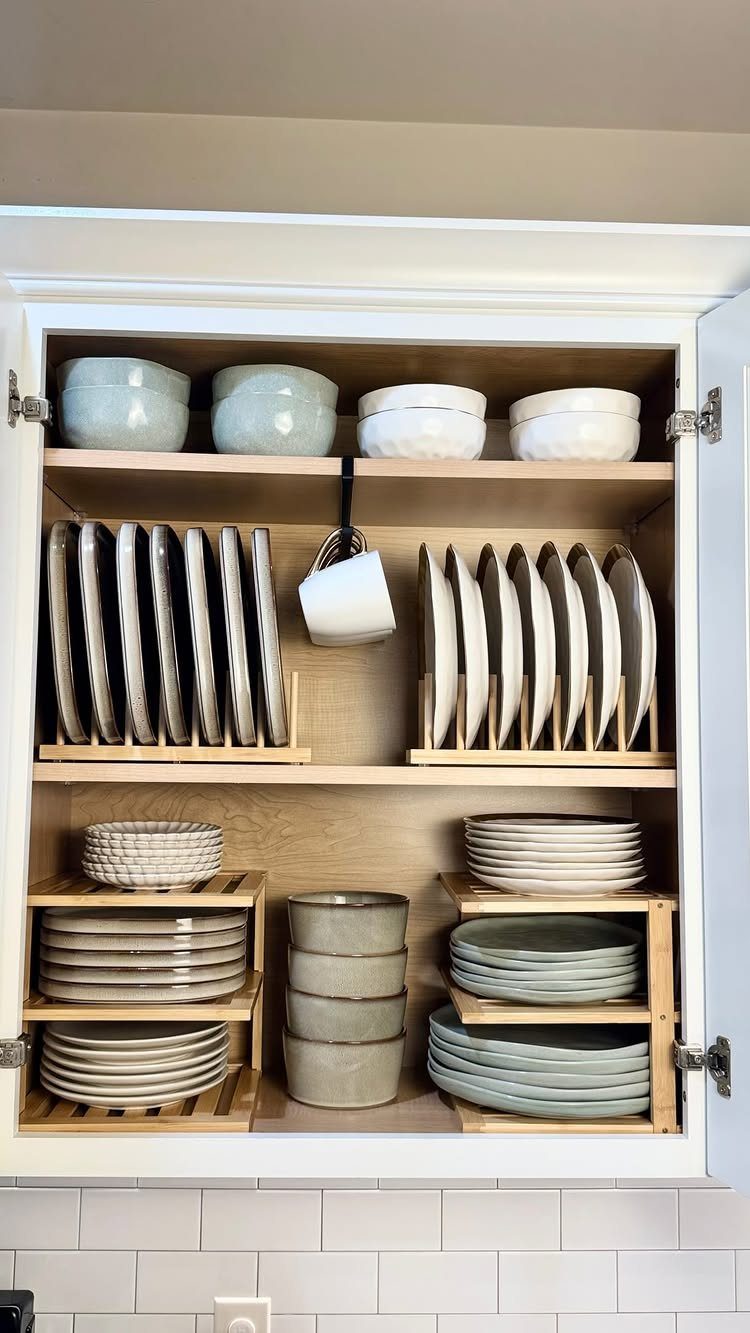
Plates stay protected and you can pull out the one you want without digging.
I like storing dinner plates, salad plates, and bowls in separate sections so you’re not sorting through mixed stacks.
Most dividers rest on the shelf without mounting, so they’re easy to reposition or remove if your dish collection changes.
13. Under-shelf Baskets
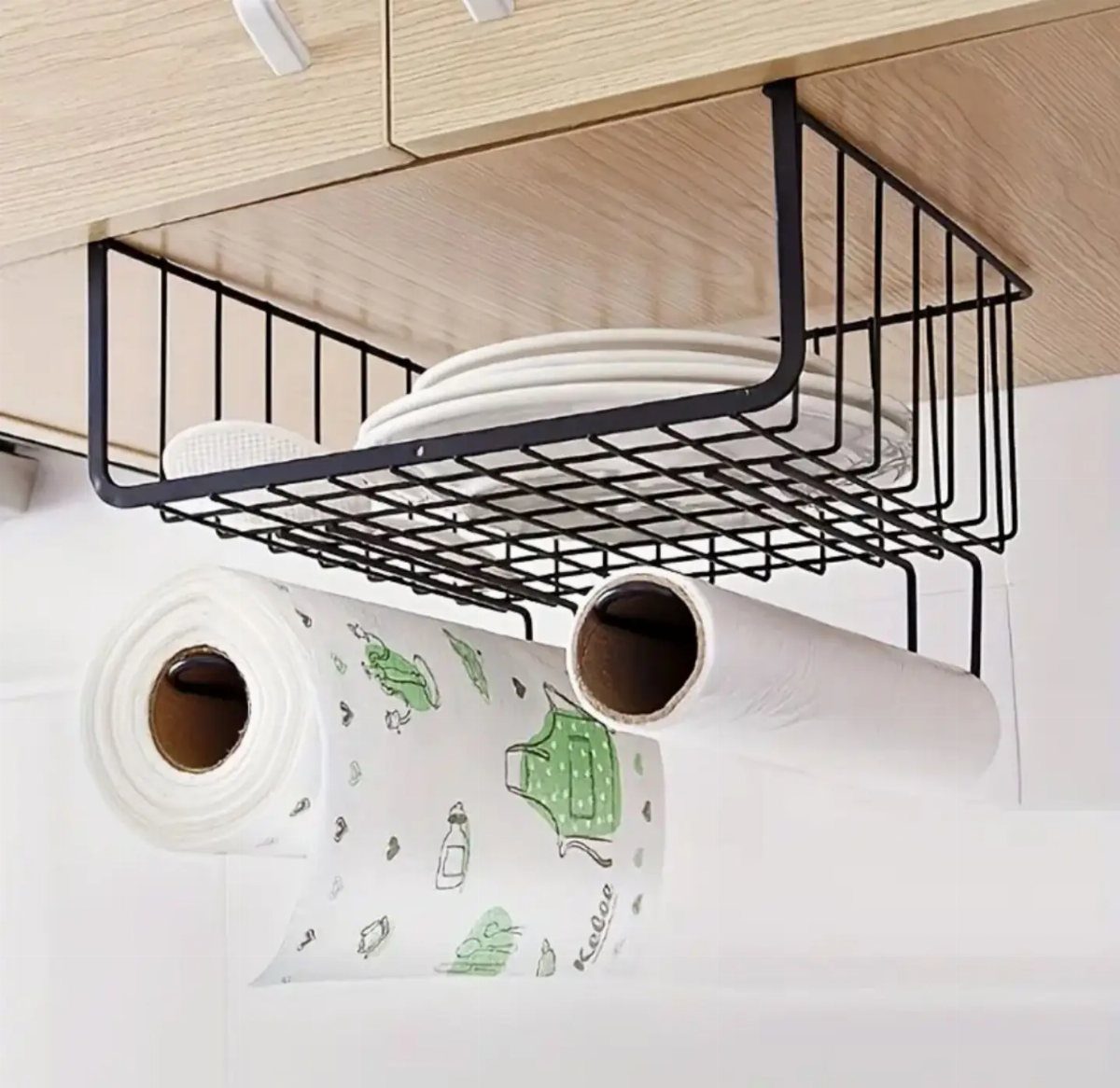
Baskets that hook onto the underside of a shelf add storage below your dishes or pantry items without building new shelves. They fit most cabinet shelves and hold lighter items like paper towels, napkins, or snack bags.
I’d use these in pantries or upper cabinets where there’s a gap between what’s on the shelf and the shelf above it. The basket hangs down a few inches, so measure first if your cabinet is packed tight.
Most clip on without tools and come in wire or mesh so you can see what’s inside.
14. Pull-out Cabinet Drawers
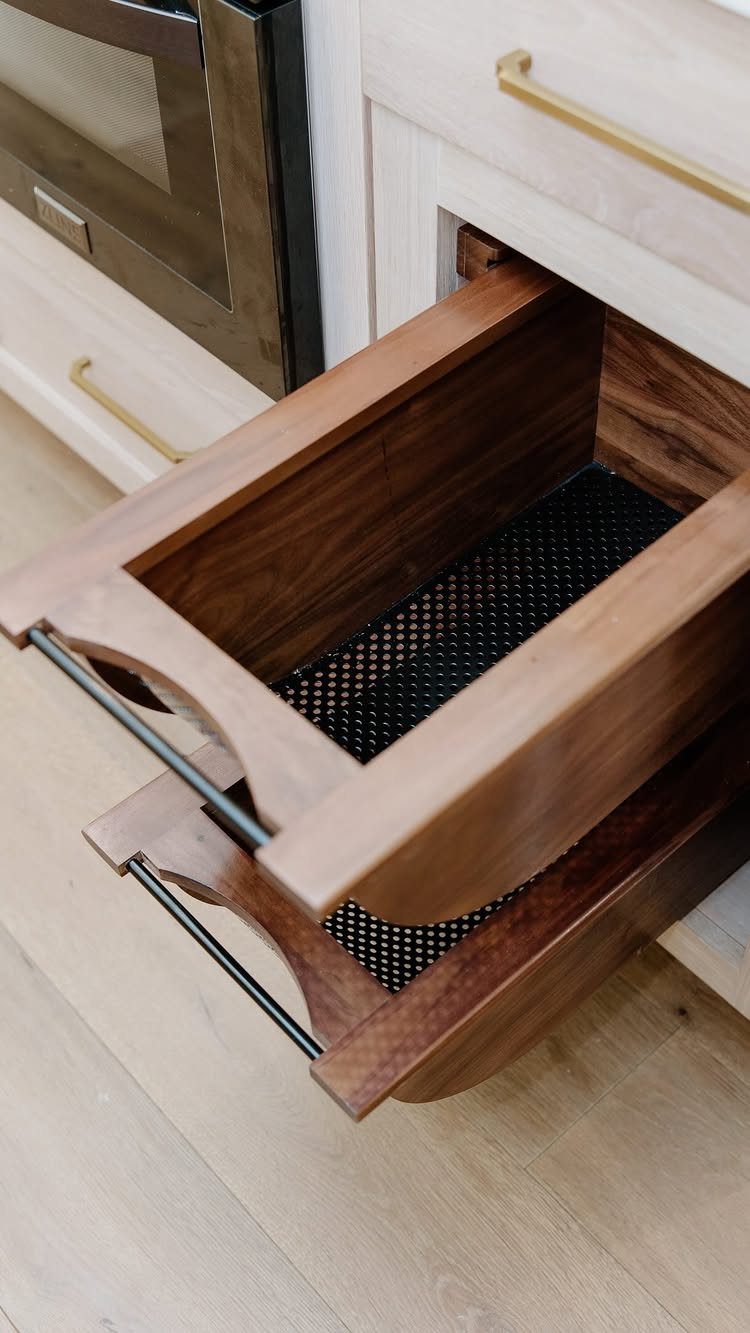
Sliding drawer boxes fit into existing cabinets and pull out like a regular drawer, so you can reach items at the back without kneeling or stretching.
I find these faster than fixed shelves in base cabinets, where things tend to get shoved to the back and forgotten.
The wood or metal frame sits on slides mounted to the cabinet sides. Most kits include the hardware, though you’ll need a drill to install them.
Measure your cabinet width and depth before ordering so the drawer clears the door when it’s closed.
15. Wire Cabinet Baskets
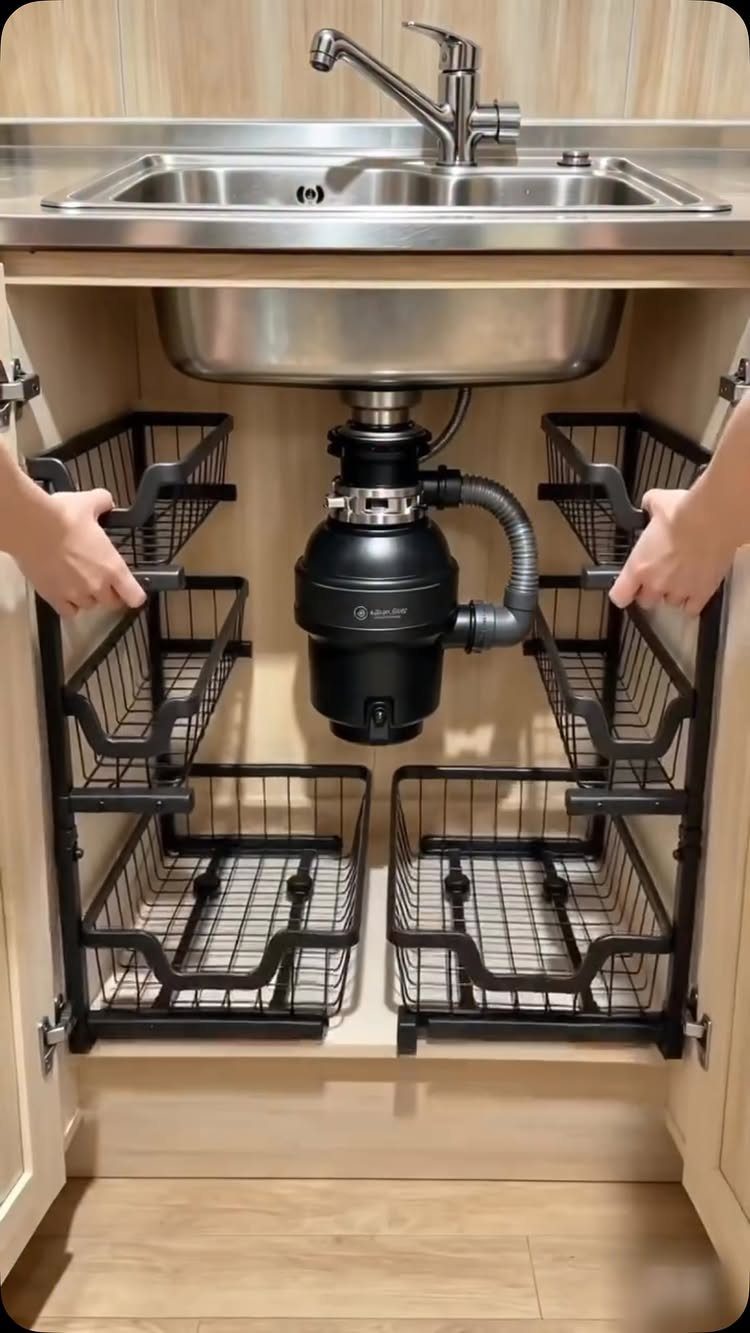
Wire baskets on slides keep cleaning supplies, dish soap, or sponges grouped together and easy to reach. I prefer these under the sink where pipes take up space and a fixed shelf wouldn’t fit.
The open wire lets air through, which helps if you’re storing damp cloths or partially used bottles that might leak. Most baskets pull out fully so you can grab what’s in the back without moving everything in front.
Installation takes a drill and a few screws.
16. Cabinets with Open Shelving
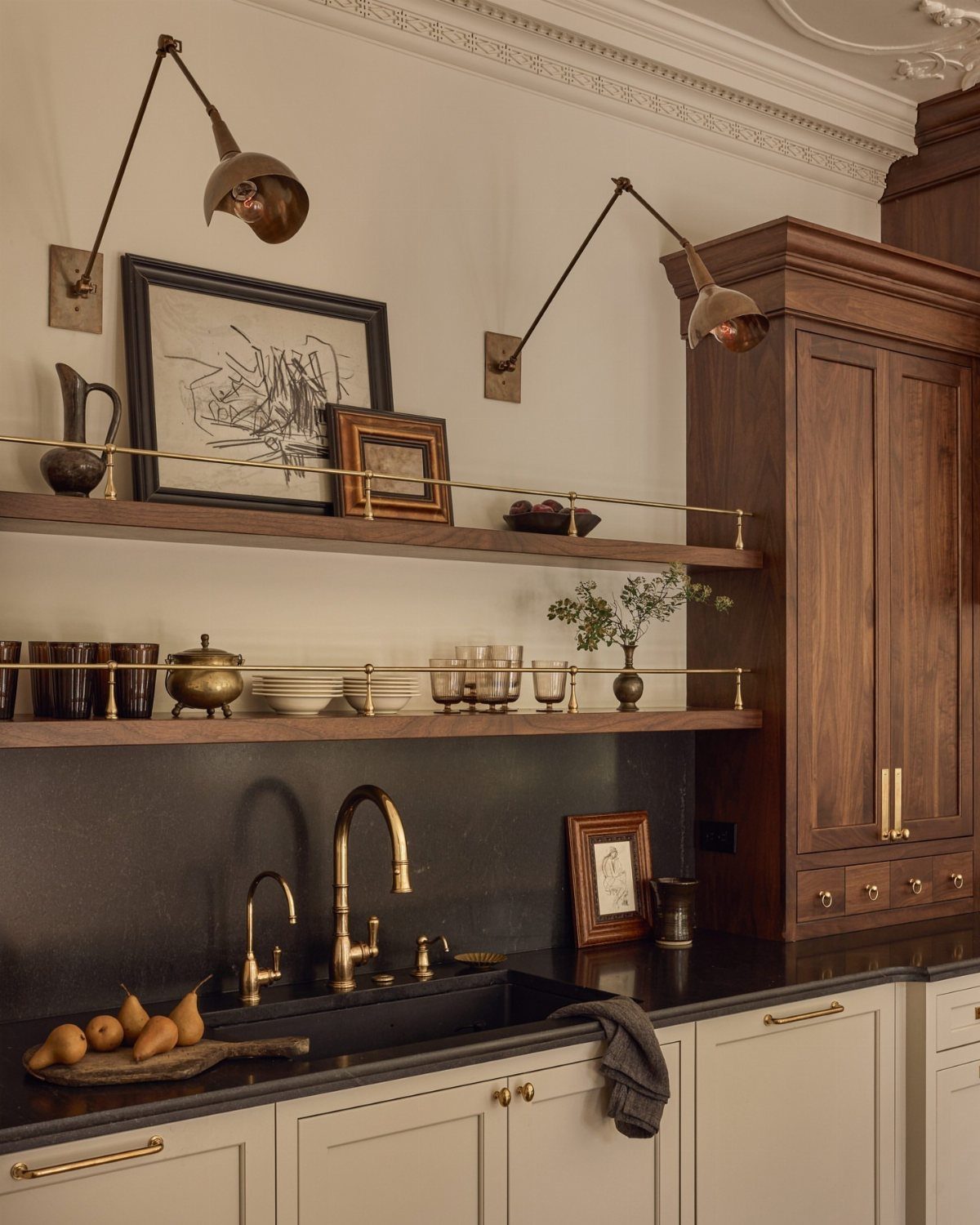
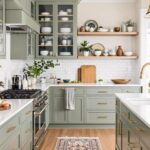
Pairing solid cabinet doors with open shelves lets you hide clutter while keeping everyday dishes or glassware within reach.
I’d put closed storage below for pantry items or appliances and leave shelves open for mugs, plates, or bowls you use daily.
The rail at the front keeps items from sliding off, which matters if you’re storing dishes near a busy prep area.
This setup works well in kitchens where you don’t have room for a full wall of cabinets but still need some concealed storage.
17. Top-of-cabinet Storage
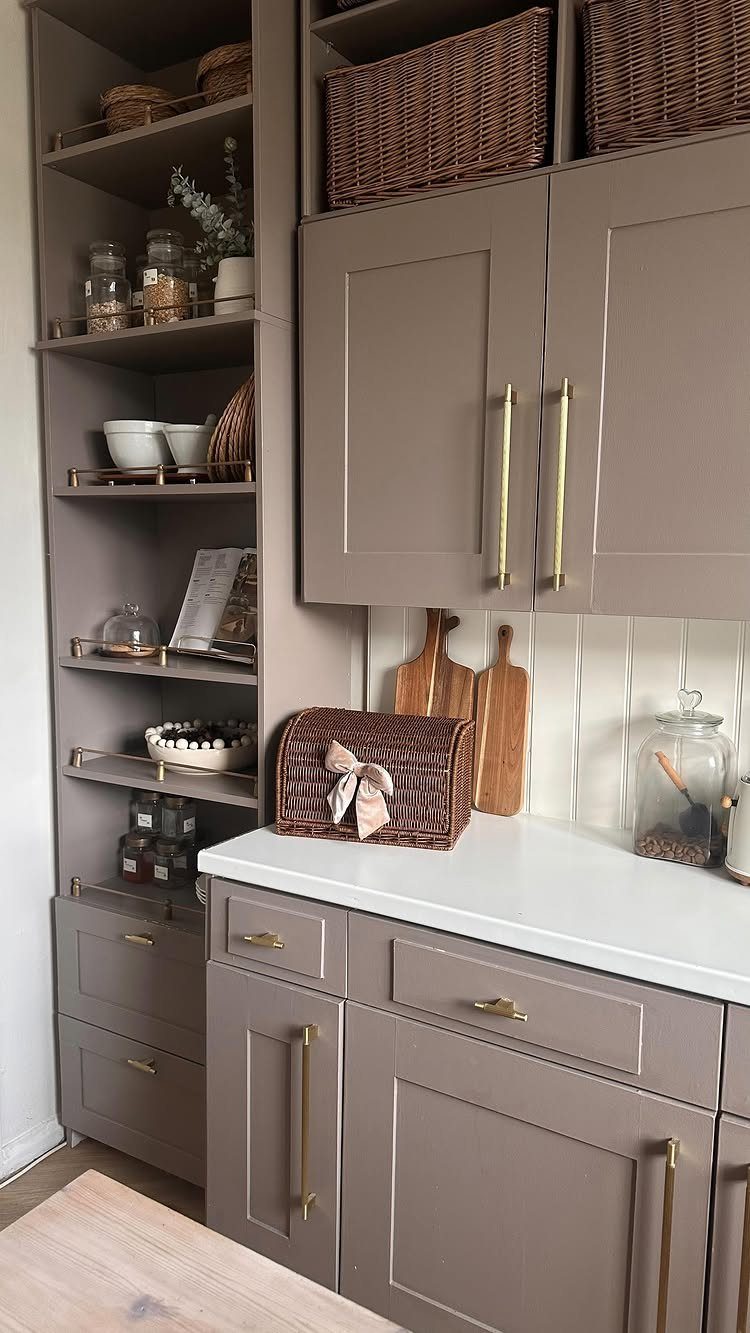
If there’s a gap between your upper cabinets and the ceiling, you can set baskets or bins up there for things you don’t need often.
I’d store seasonal serving pieces, extra dish towels, or small appliances that only come out a few times a year.
Wicker or fabric bins soften the look up there, so it feels intentional instead of like overflow storage. You’ll need a step stool to reach what’s up there, so this isn’t the spot for items you grab every week.
Make sure whatever you put up there won’t topple if the cabinet door swings open hard.
18. Freestanding Kitchen Hutch
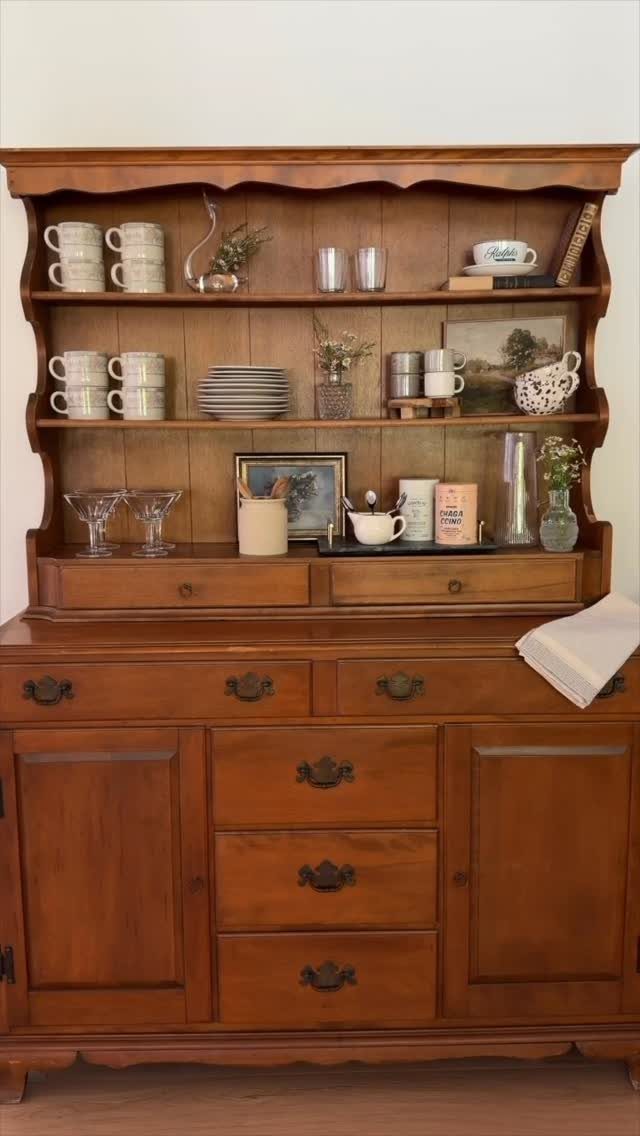
A freestanding hutch adds counter space and closed storage without renovating or mounting anything to the wall. I like these when you need more room for prep work or serving but don’t have space for a full island.
The top usually holds a coffee maker, mixer, or cutting board, and the lower cabinets hide pantry items, serving dishes, or small appliances. Some have drawers for utensils or dish towels between the countertop and the cabinets below.
Look for one that matches your kitchen height so the counter lines up with your other surfaces, or plan to use it as a separate station.
19. Cabinet with Charging Station
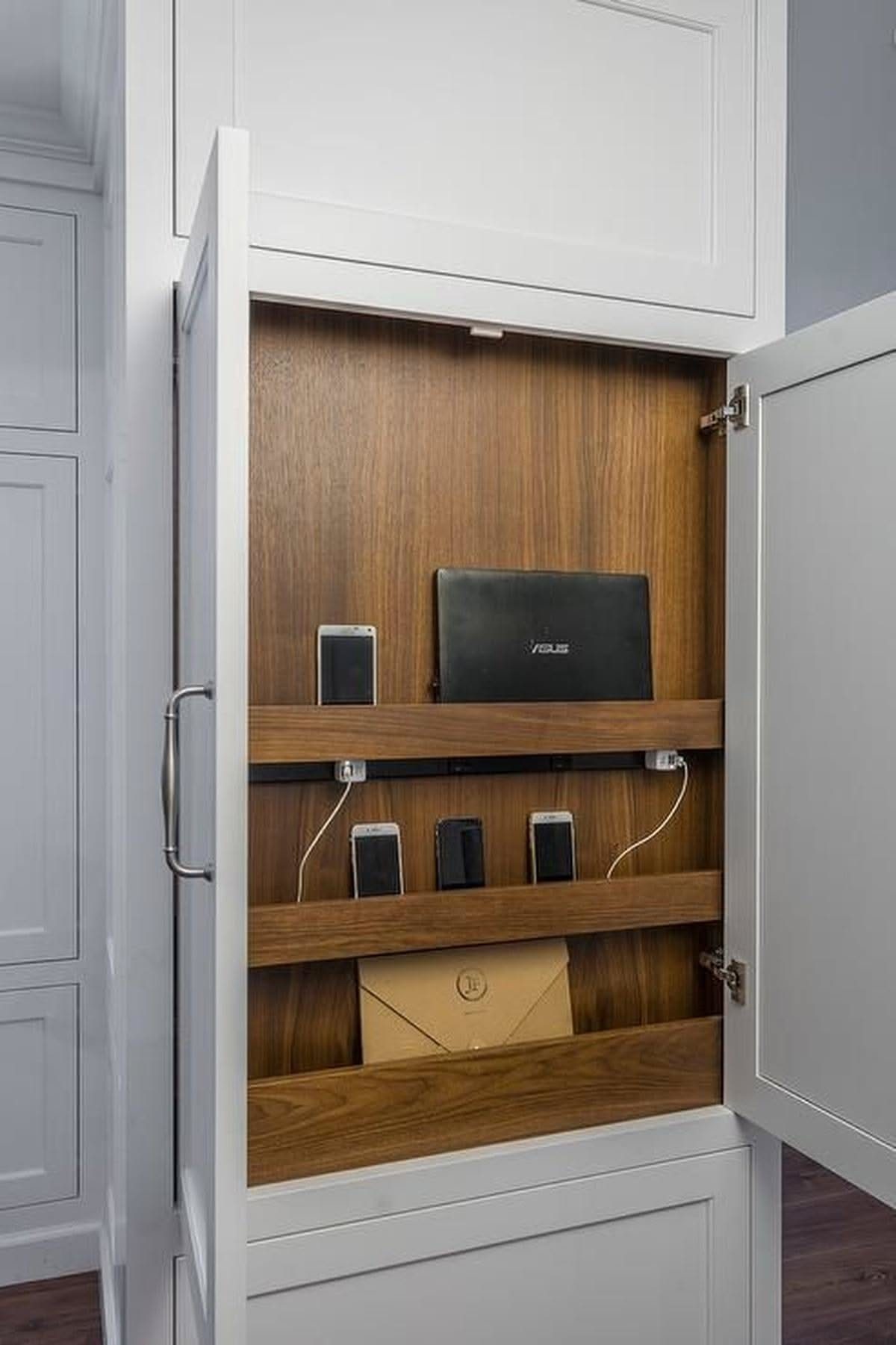
A cabinet with built-in power outlets keeps devices charged and tucked away instead of sitting on the counter. I’d put this near the kitchen desk or wherever you handle meal planning and shopping lists.
The outlets sit inside the cabinet, so cords stay hidden when the door closes. Some versions include a shelf or cubby for the devices themselves so they’re not just dangling from the outlet.
I’d add this if you need a cabinet in that spot anyway, not if you’re only installing one for the outlets.
20. Metal Pantry Cabinet
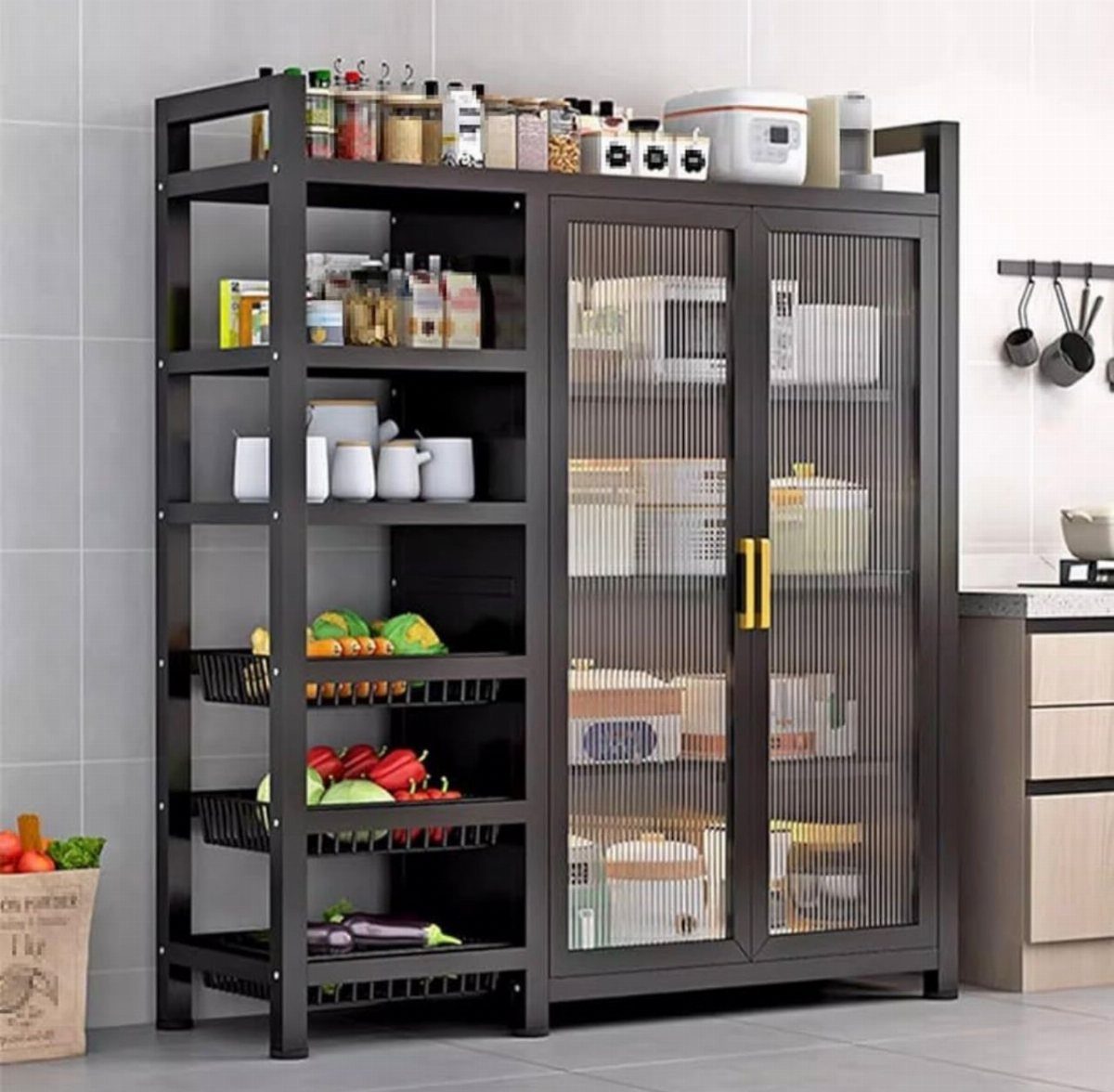
A metal cabinet with glass or mesh doors holds pantry items or dishes while taking up less visual weight than solid wood. I like these in small kitchens where a heavy piece would make the room feel closed in.
Metal finishes clean easily and hold up in humid kitchens better than painted wood.
Glass or mesh fronts show you what’s inside at a glance, which cuts down on opening and closing when you need something you reach for a lot.
Most of these are freestanding, so you can move them if your layout changes.
21. Built-in Pantry Cabinet
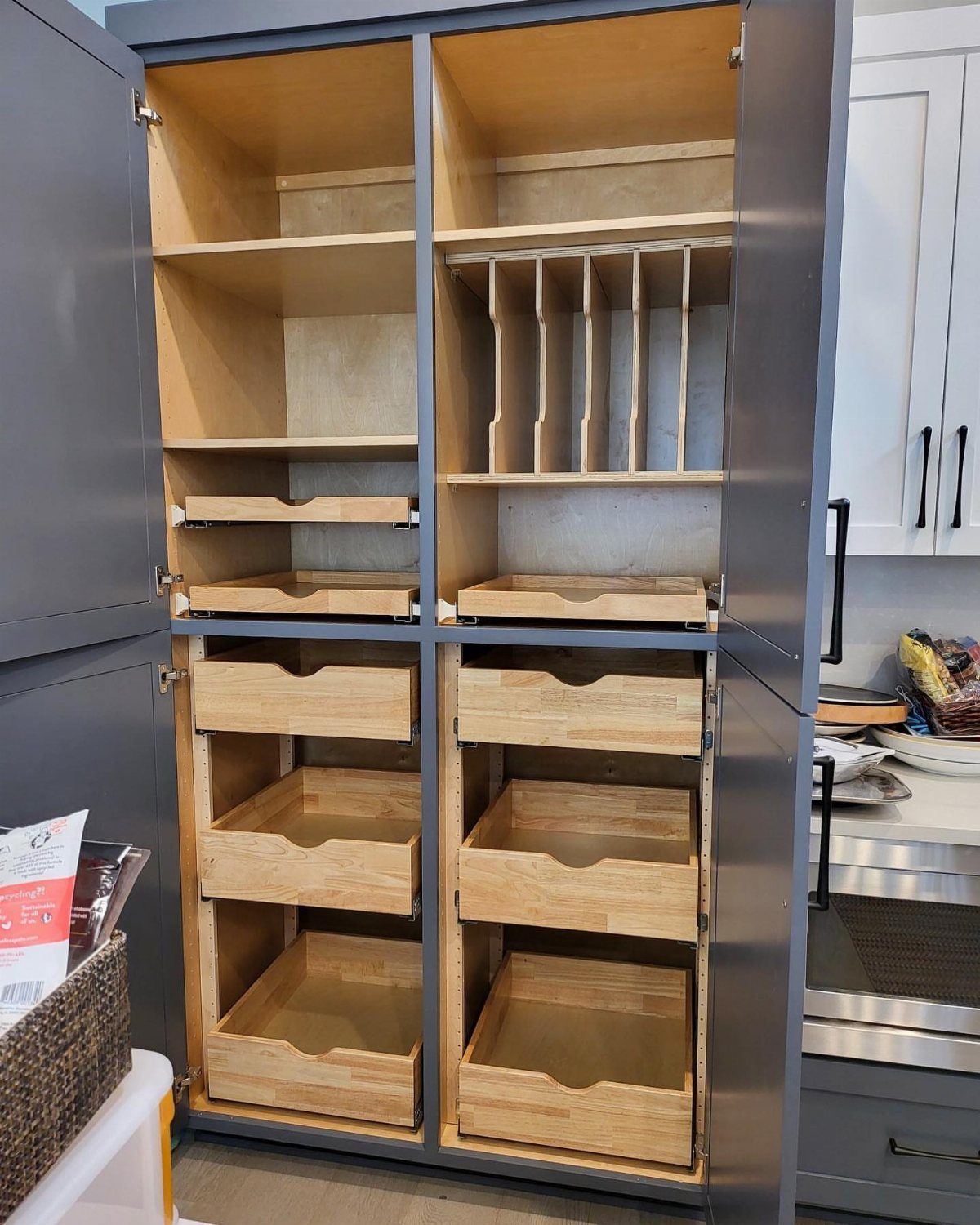
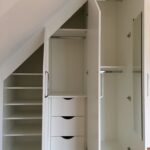
A built-in cabinet with interior shelves and drawers keeps all your pantry items behind one set of doors, and the shelves adjust to fit tall bottles or small jars.
I find these more organized than a closet pantry because everything has a fixed spot.
Pull-out drawers or vertical dividers let you store baking sheets, cutting boards, or trays upright without stacking them. The wood or painted interior matches the rest of your cabinets, so it looks intentional rather than added on.
Most require a carpenter or custom cabinet order to fit your wall exactly.
22. Cabinet Drawer Organizers
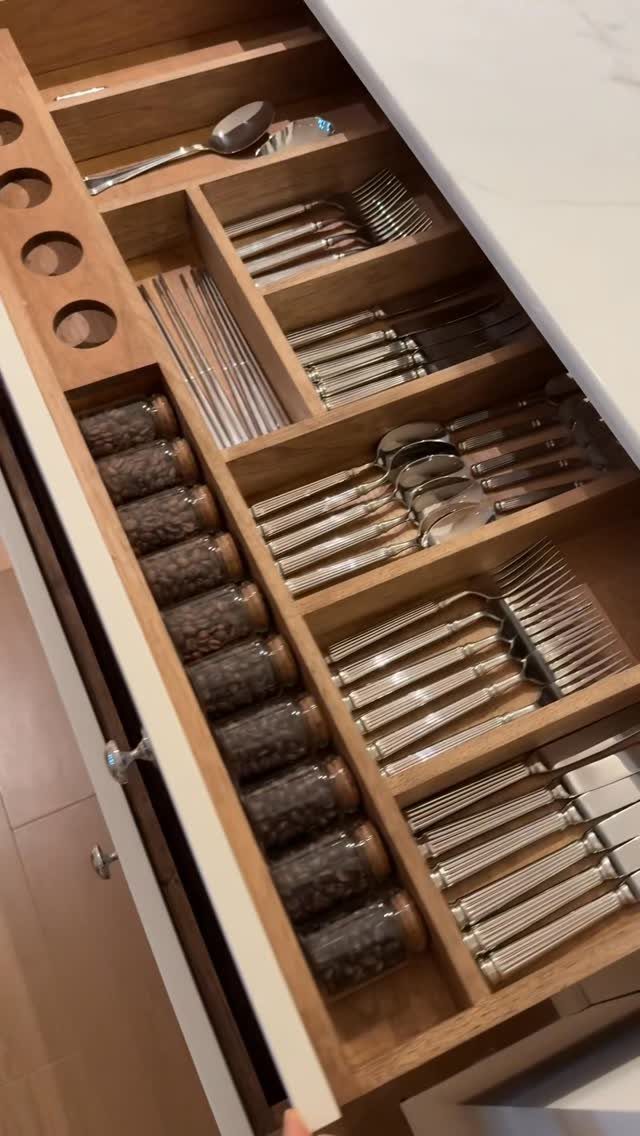
Dividers keep utensils, spice jars, or small tools separated so you’re not sorting through a mixed pile every time you open the drawer. I use these in drawers near the stove for items I grab while cooking.
Some have slots for knives or narrow sections for measuring spoons.
Measure your drawer depth before buying so the organizer sits flat and the drawer closes fully.
23. Clear Storage Bins
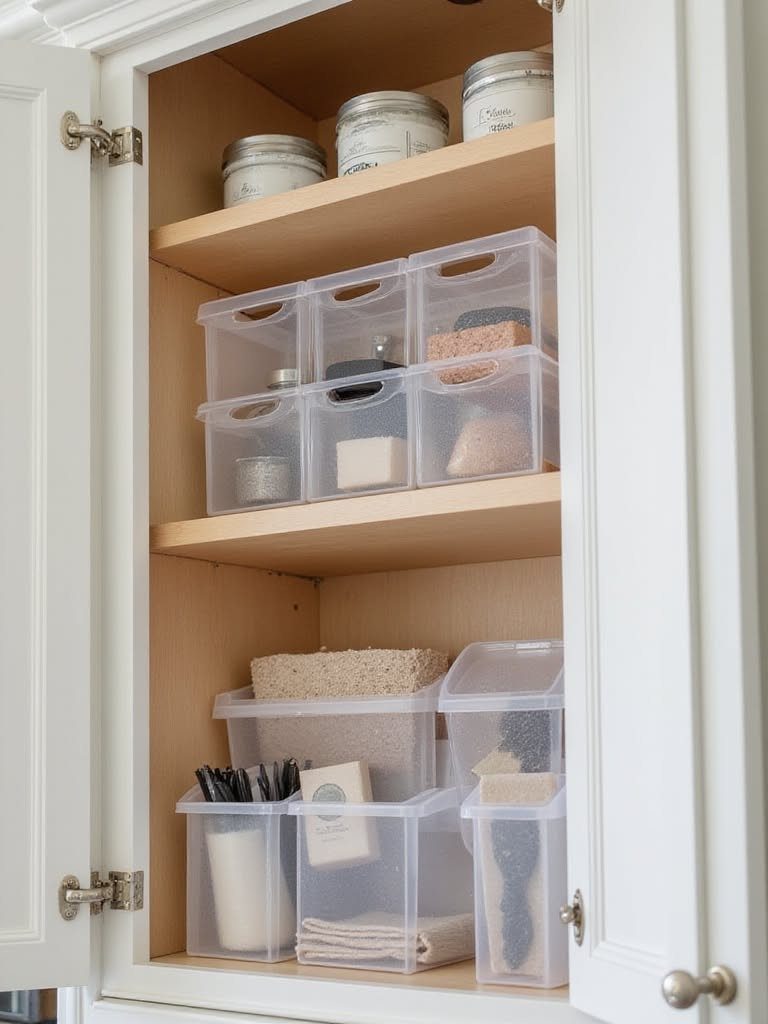
Clear bins group cleaning supplies, sponges, or dish soap so everything stays together and you can see what you have without pulling everything out. I prefer these under the sink or in pantry cabinets where small items tend to scatter.
The plastic wipes clean easily if something spills, and handles make it simple to lift the whole bin out when you need what’s underneath. Stackable bins fit more in a tall cabinet without wasting vertical space.
Label the front if you’re storing similar items in multiple bins.
24. Appliance Garage Behind Cabinet Doors
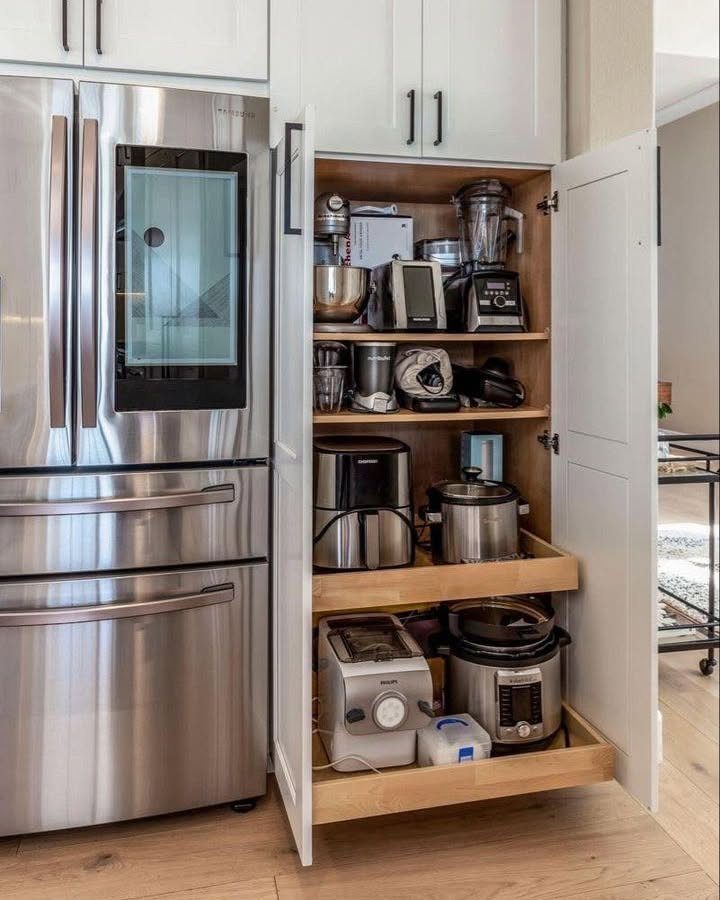
Cabinet doors that hide a shelf full of small appliances keep your counter clear while leaving everything plugged in and ready to use.
I like this for toasters, blenders, or coffee makers that you use daily but don’t want sitting out.
Some setups include a lift or roll-out shelf so you can pull the appliance forward without unplugging it.
This usually requires an electrician to add the interior outlet unless your cabinets already have one installed.
25. Cabinet Interior Lighting
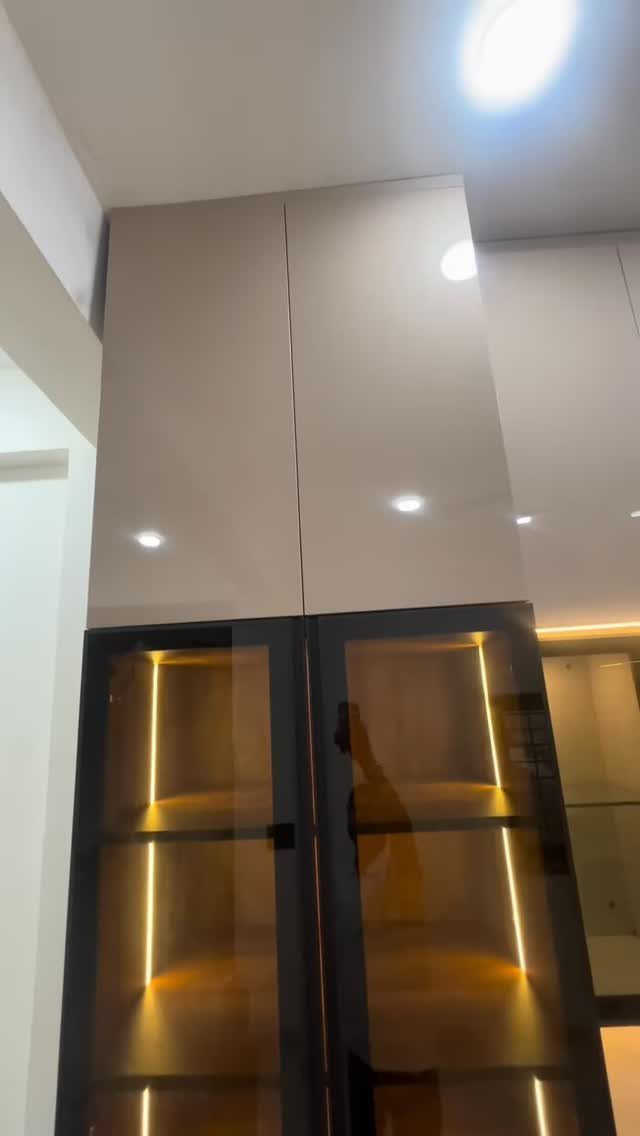
LED strips mounted inside a cabinet light up what’s behind the doors so you can see everything without opening them fully or turning on the overhead lights.
I’d add these to glass-front cabinets where you want to show off dishes or to solid-door pantries where you’re always squinting at labels.
Most strips stick to the inside top or sides and plug into an outlet inside the cabinet, though some run on batteries if you don’t have power nearby.
Motion sensors let the lights turn on when you open the door and shut off a few seconds after you close it.
26. Drawer Spice Rack
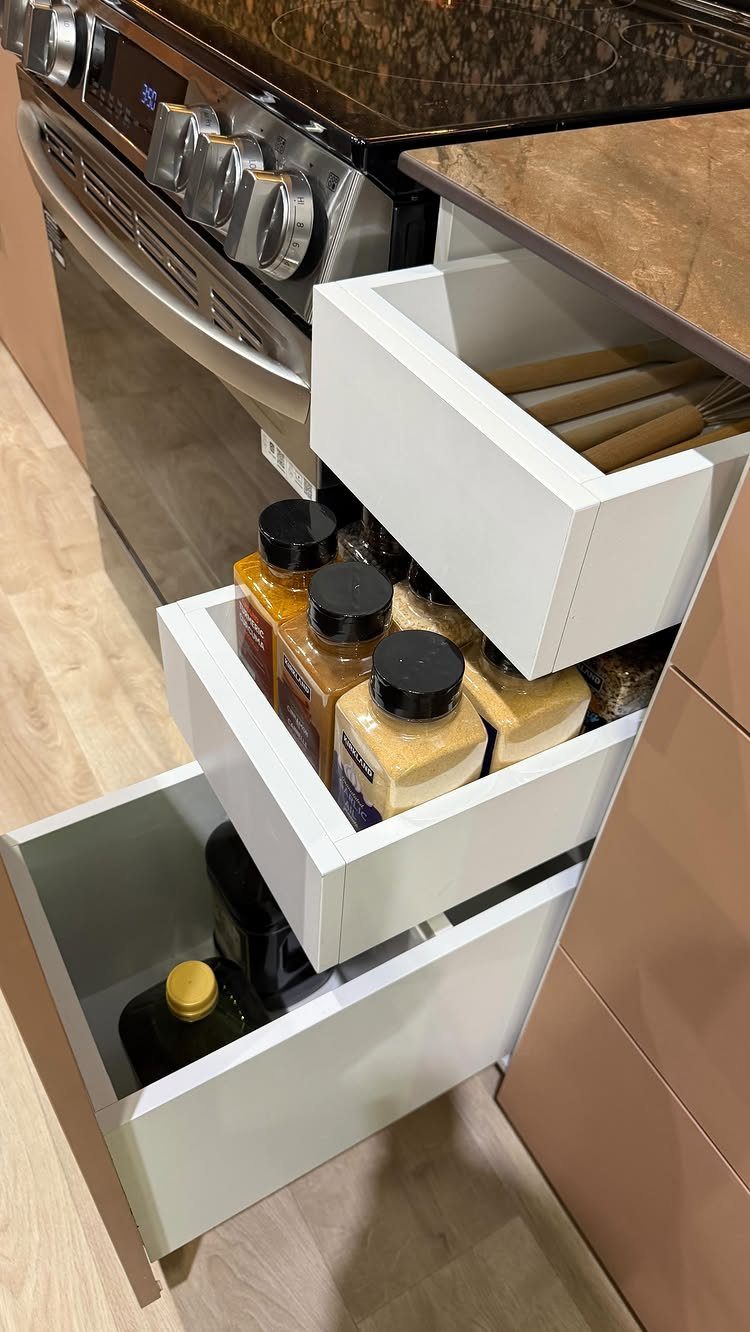
A pull-out drawer with tiered inserts keeps spice jars at different heights so you can read every label without moving anything.
I prefer this over a cabinet rack when you have deep drawers next to the stove, since everything stays within arm’s reach while you’re cooking.
The angled tiers hold bottles upright, and most fit standard spice jars without adjusting the slots. Some drawers include a second level for oils or vinegar so all your cooking liquids stay together.
Measure your drawer height before ordering so the tallest bottles clear when the drawer closes.
Frequently Asked Questions
What are the best kitchen cabinets for storage?
Tall pantry cabinets or built-in pantries hold the most because they use full wall height and let you adjust shelves to fit what you actually store.
Pull-out drawers in base cabinets make better use of depth than fixed shelves since you can reach everything without digging. Tall cabinets hold dry goods and canned food, deep drawers fit pots and small appliances.
What are some good storage cabinets for kitchens with doors?
A tall freestanding pantry cabinet fits in narrow gaps and keeps food or supplies closed off from dust and grease.
Metal cabinets with mesh doors work well in small spaces because they show what’s inside without feeling heavy. Built-in pantries with adjustable shelves and pull-out drawers keep everything organized behind matching cabinet doors that blend into your kitchen.
Are kitchen storage cabinets worth the cost?
They’re worth it if you’re out of space and don’t want to renovate, since a freestanding cabinet adds storage without tearing into walls.
Built-in versions cost more but make better use of awkward corners or narrow walls where a regular cabinet wouldn’t fit. I’d skip them if you have enough cabinet space already and just need better organizers inside what you have.
How to organize a small kitchen with limited cabinets?
Mount racks or bins to the inside of cabinet doors for cleaning supplies, spices, or dish soap so you free up shelf space. Use under-shelf baskets to add a second level below existing shelves without installing new ones.