
A closet works when you can see what you own and reach it without moving other things first.
The right organizer depends on what takes up the most space and where you lose things now: hooks and multi-clip hangers fit small wall areas, shelf dividers and bins use vertical space, and a built-in system fills the whole closet when you have the budget and the room to install it.
Woven baskets, acrylic holders, and pegboard walls all show up in the list below, along with storage that mounts on doors and rods.
1. Hooks for Accessories
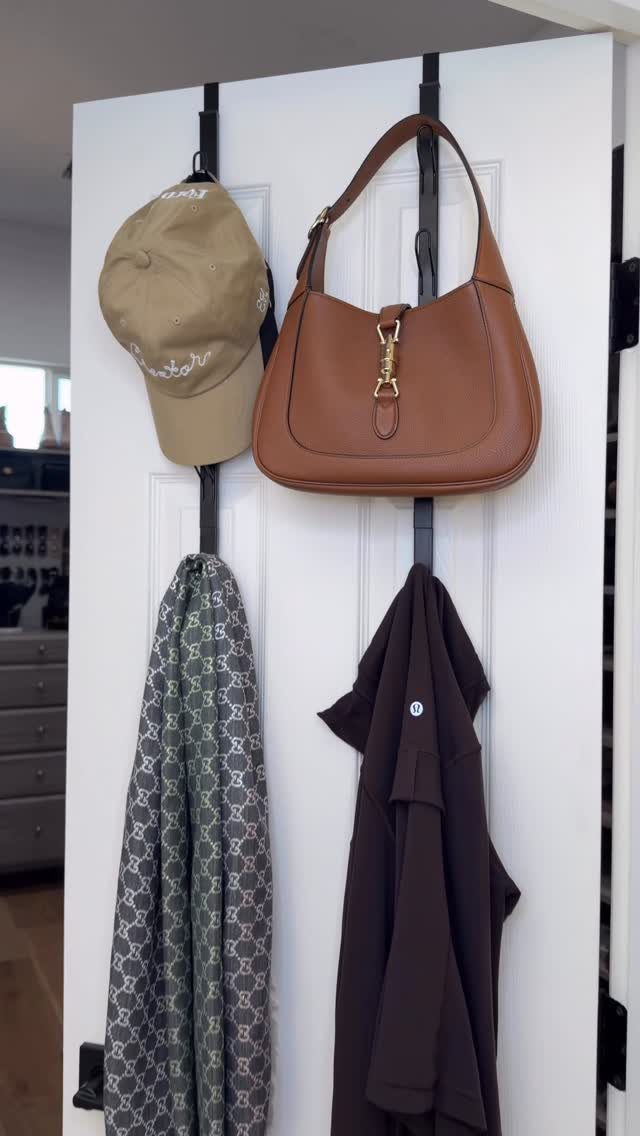
Hooks give scarves, hats, bags, and belts a place you can see and reach in seconds. You can mount them on a wall, hang them inside a door, or clip them onto a closet rod.
If you hang one item per hook, everything stays visible. Pile too many things on one hook and you’re back to digging through a stack.
A savvy organization system is completely within reach and the days of simply hiding everything behind a closet door are over.
2. Clothes Grouped by Category
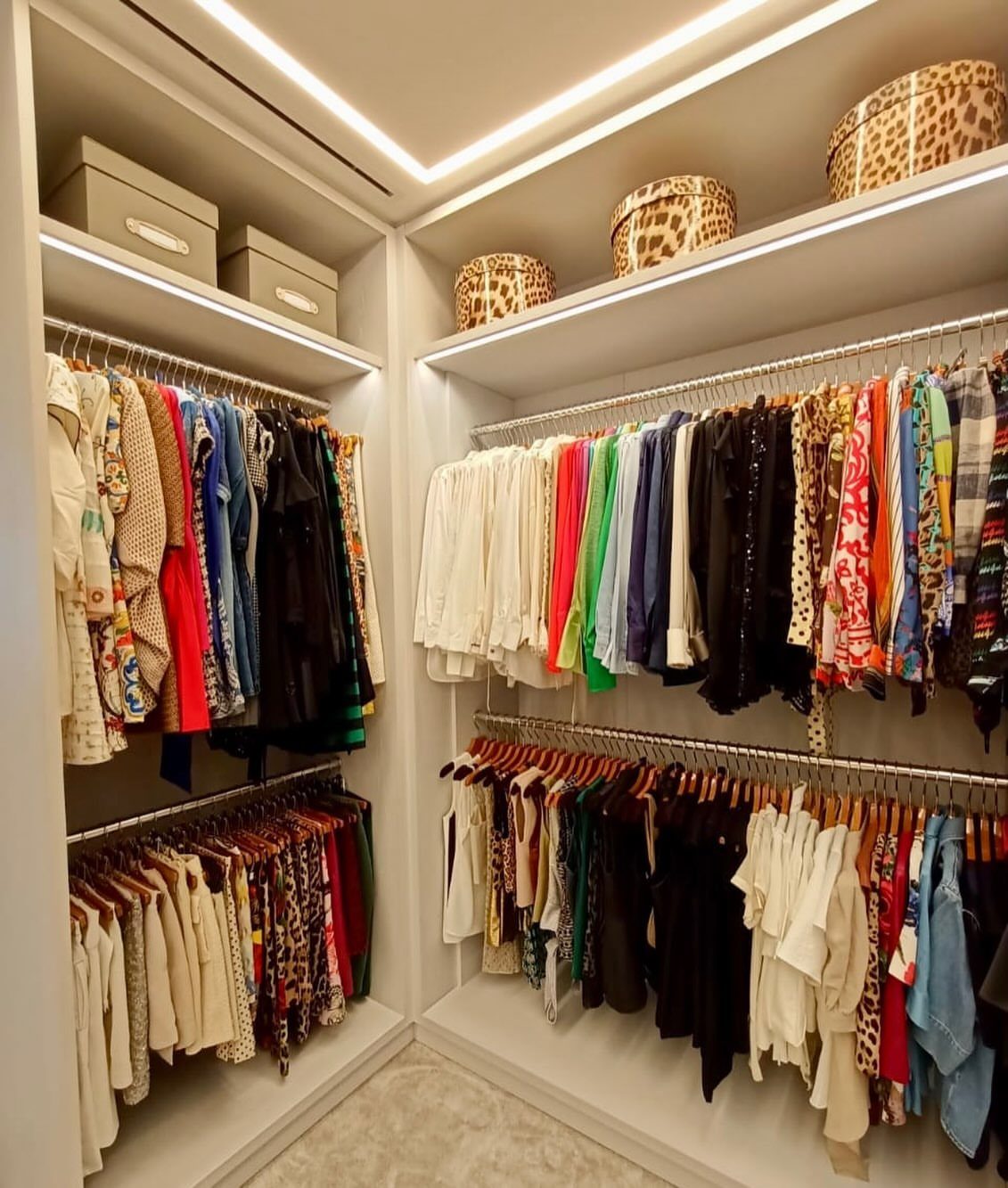
Group clothes by type so you know where everything lives. Pants together, dresses together, shirts together.
Once you have categories, you can sort within each one by color or by how often you wear it.
This method works in any closet. You can sort what you already have in a few minutes without buying matching hangers or adding shelves.
3. Closet Door Storage
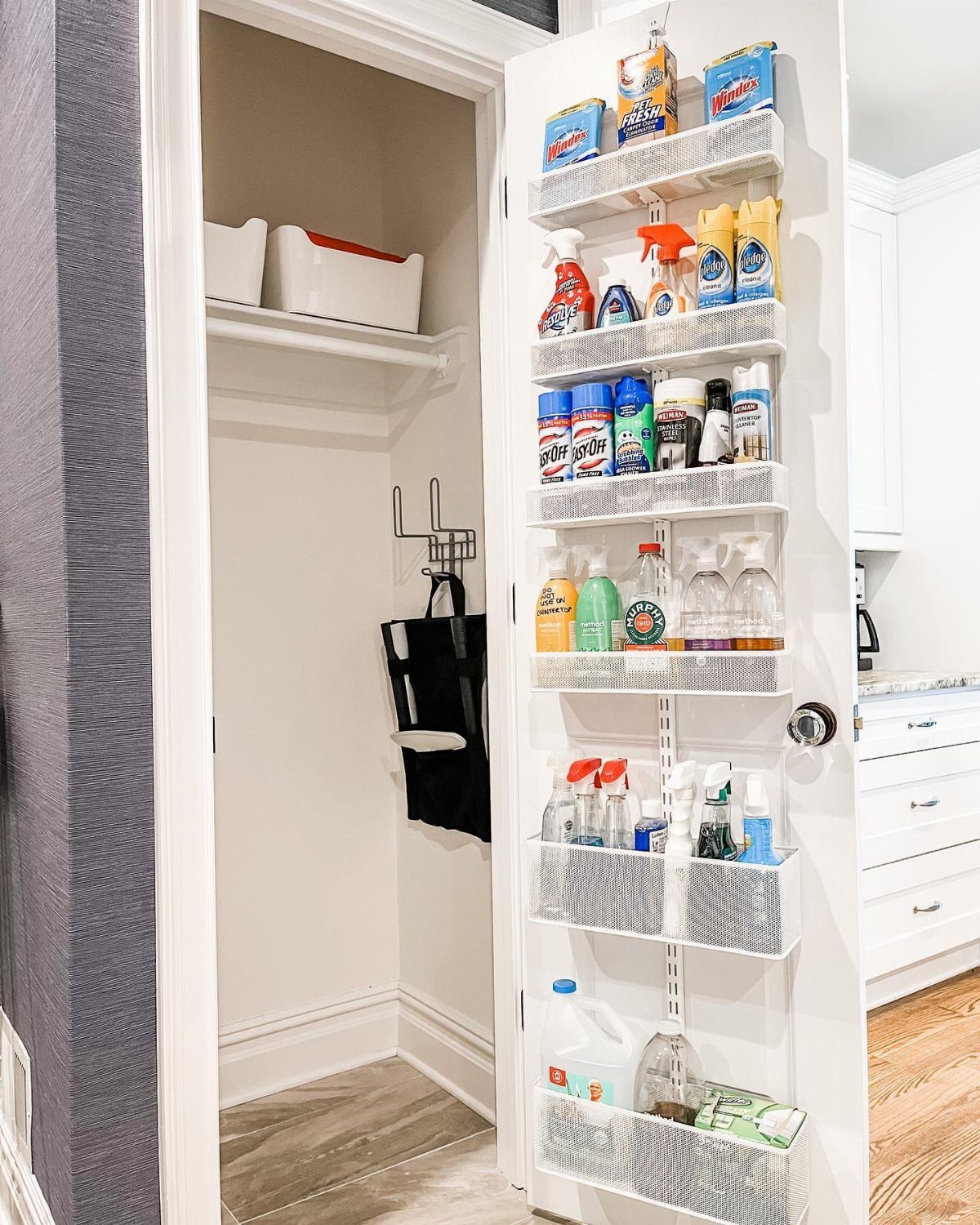
The back of a closet door is blank space you can use without adding furniture or taking up floor room. An over-the-door rack holds cleaning supplies, toiletries, shoes, or small folded items.
Most racks hook over the top of the door without tools or screw holes. The door still closes, and everything stays out of sight until you open it.
Pick a shallow rack if the door swings into a tight space.
4. Shoe Storage Systems
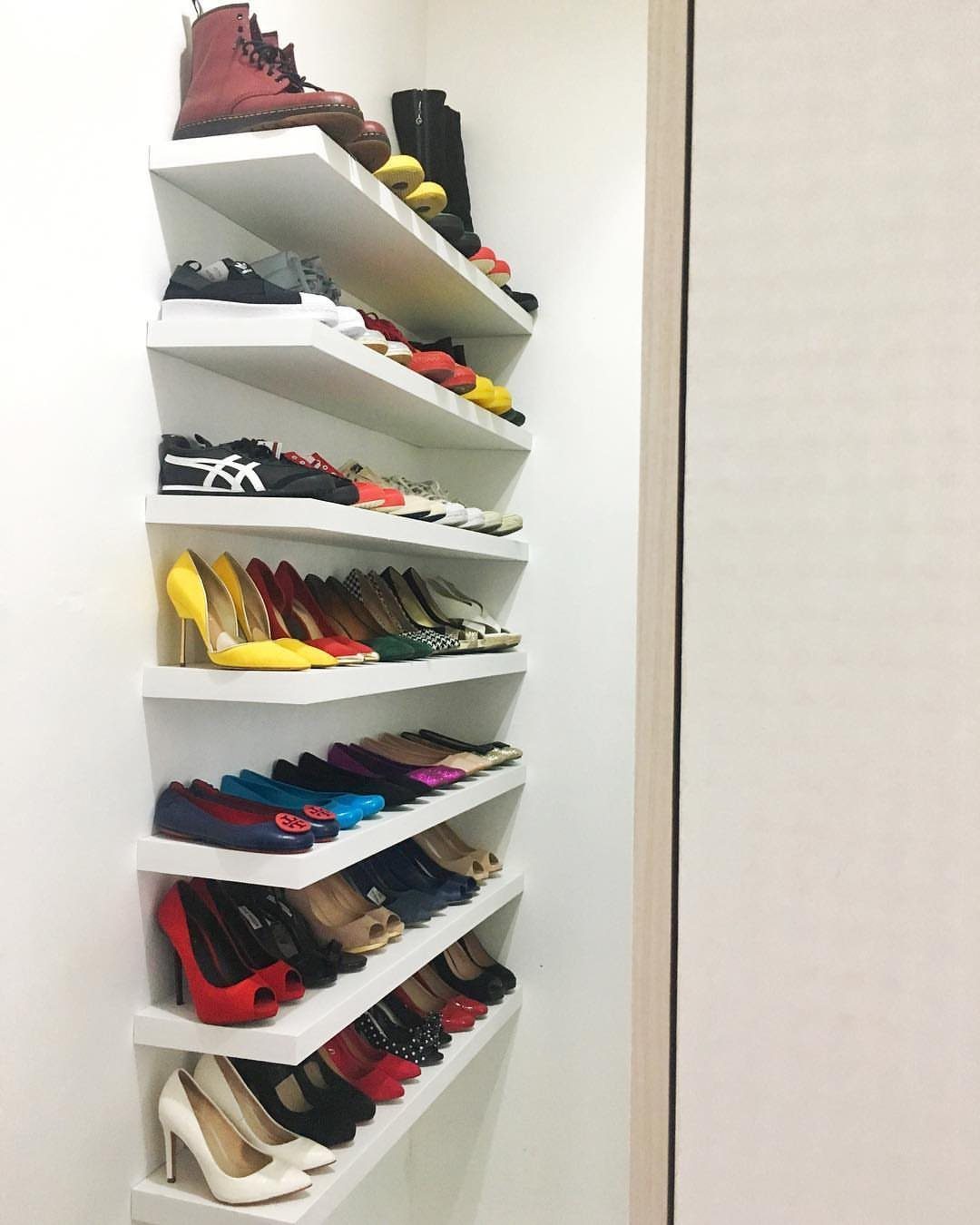
Shoes pile up fast, and a storage system gives each pair a spot instead of leaving them in a heap on the floor. Shelves, racks, cubbies, and stackable boxes all work.
Shoe racks with adjustable brackets mount on the wall at whatever height and spacing you need.
If you have more floor space than wall space, a shoe rack or a low cubby unit does the same job without drilling.
5. Label Storage Spaces
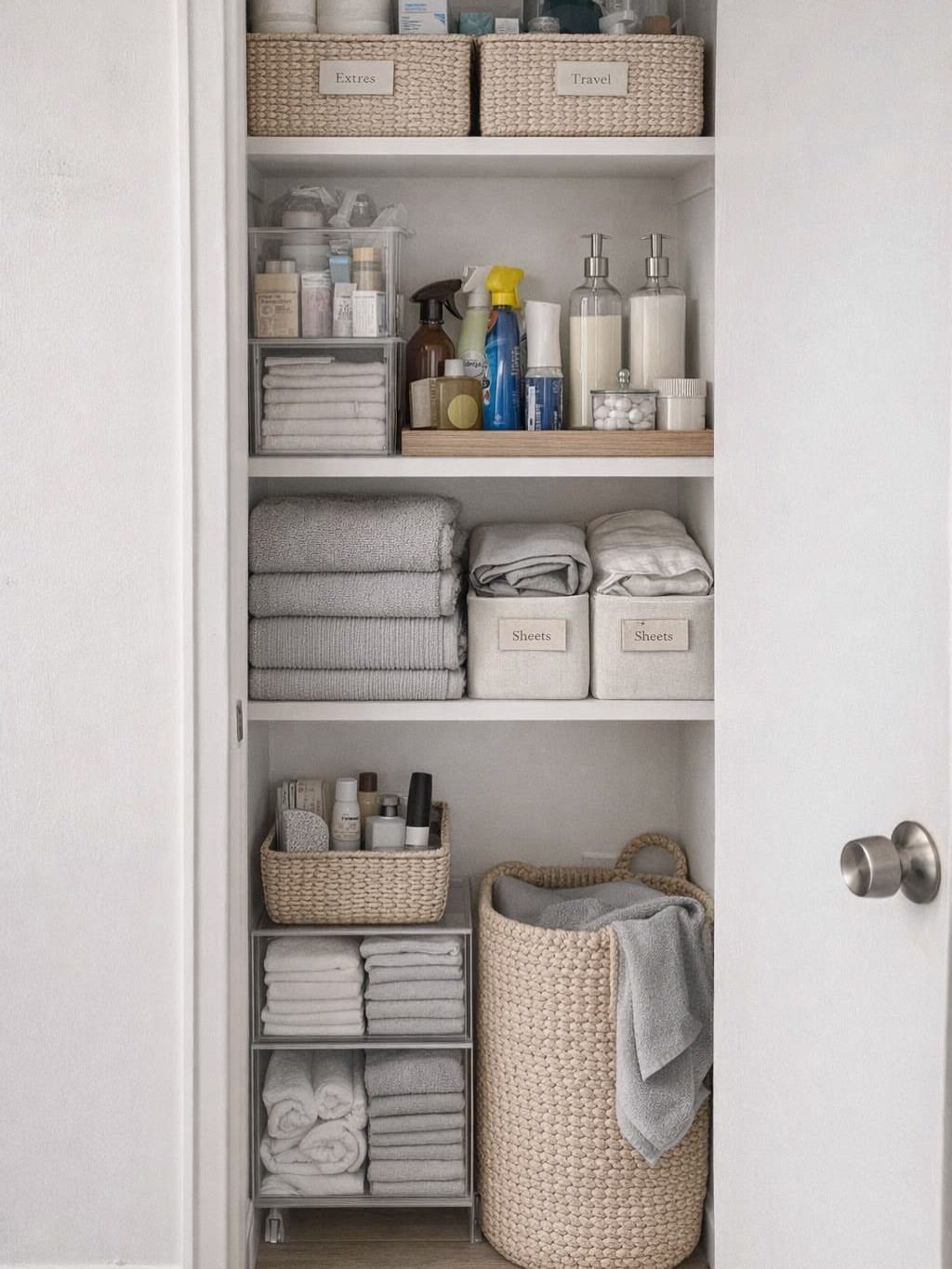
Labels tell you what belongs in each bin, basket, or shelf so you don’t have to guess or dig.
They make it easier to put things back in the right spot, and they keep other people in the house from mixing everything up.
You can use a label maker, printable stickers, or a marker and masking tape. The method doesn’t matter as long as the label is easy to read.
Start with the categories that confuse you most. If your sheets and towels end up mixed, label those first.
6. Hanging Accessories
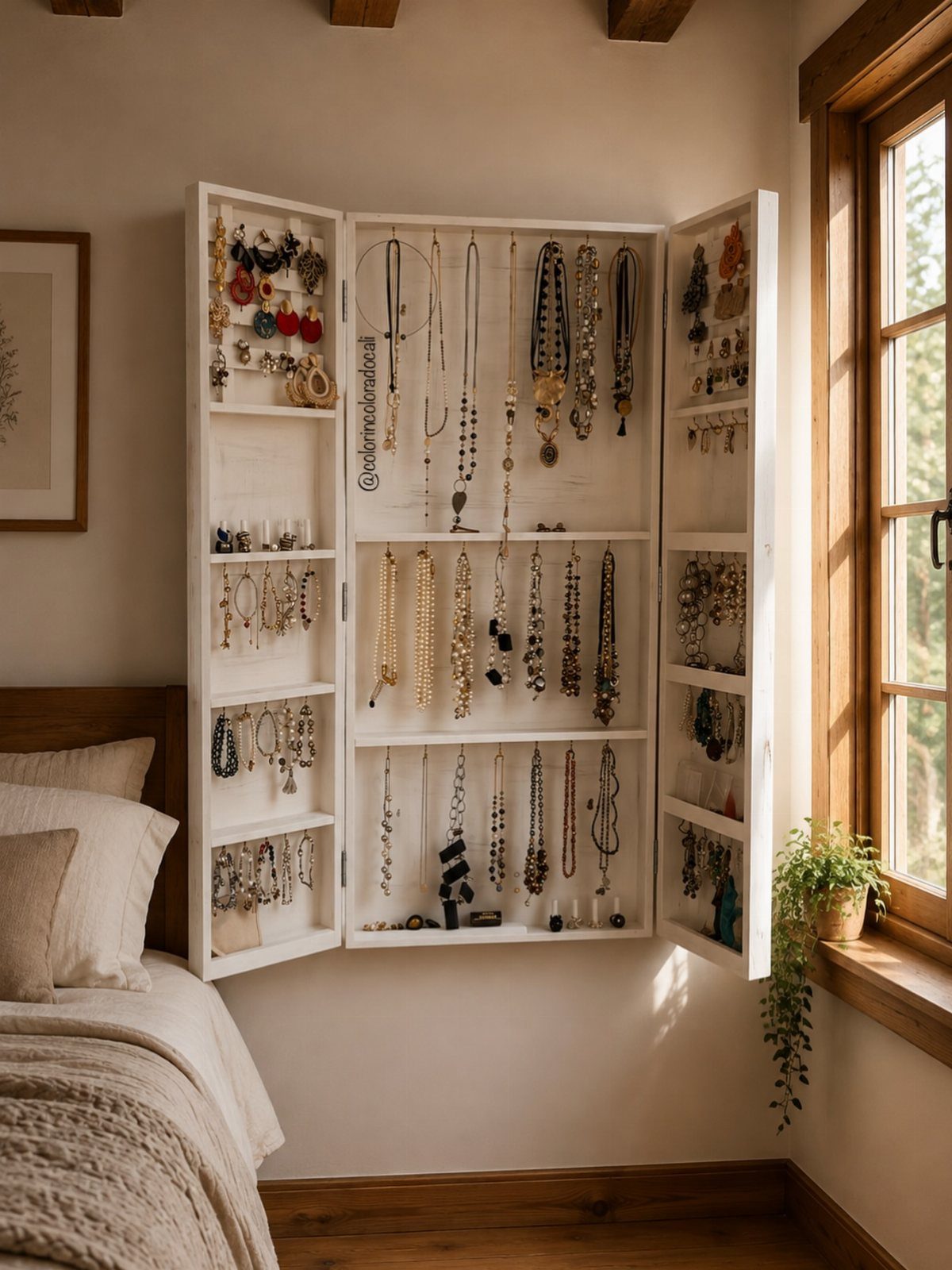
Small accessories like jewelry, sunglasses, and hair ties get lost in drawers. A hanging organizer or a wall-mounted cabinet with pockets keeps them sorted and visible.
Necklaces hang on hooks, and earrings sit in slots or on a mesh panel.
If you don’t want to mount anything, a hanging fabric organizer with clear pockets works the same way and hooks over a closet rod.
7. Shelf Dividers
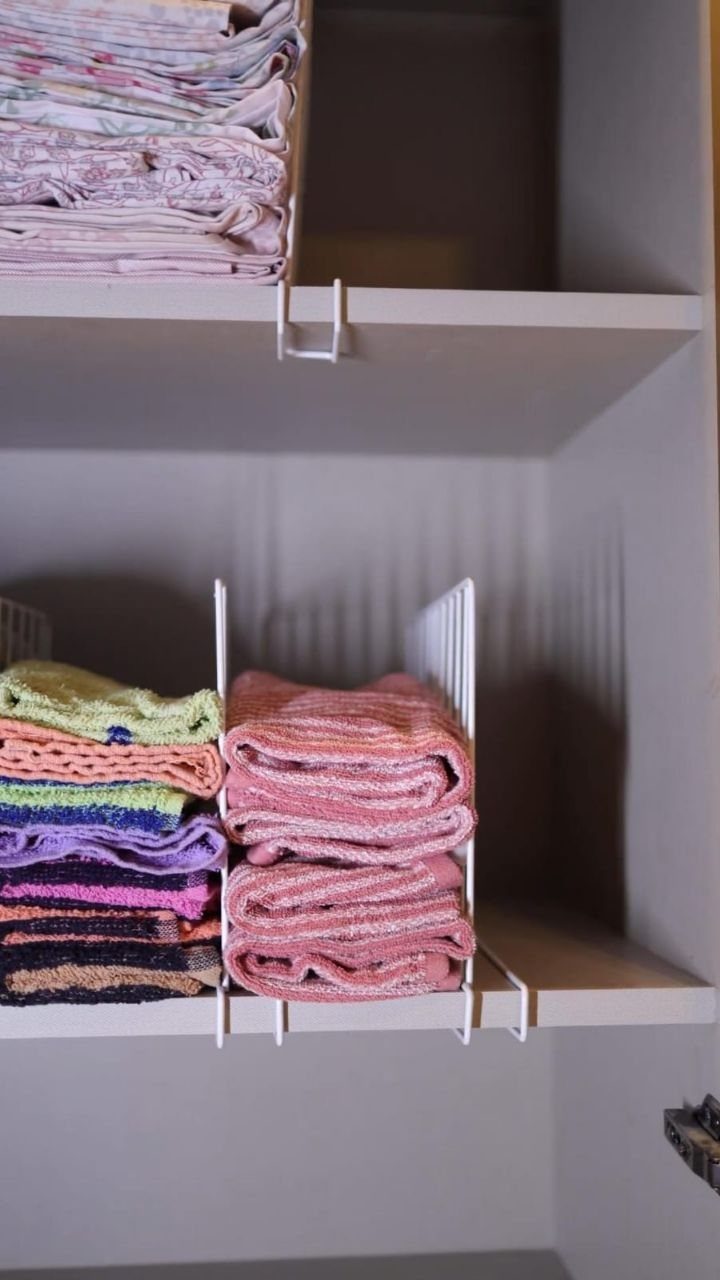
Shelf dividers stop stacks of clothes, towels, or linens from sliding into each other every time you pull one out. They sit upright on a shelf and create separate sections so each stack stays put.
Wire dividers slide onto most standard shelves without tools. If your shelf is solid wood or laminate, look for freestanding dividers that rest on the shelf surface.
Space them based on how wide your folded stacks are. Sweaters need more room than washcloths.
8. Purse Storage
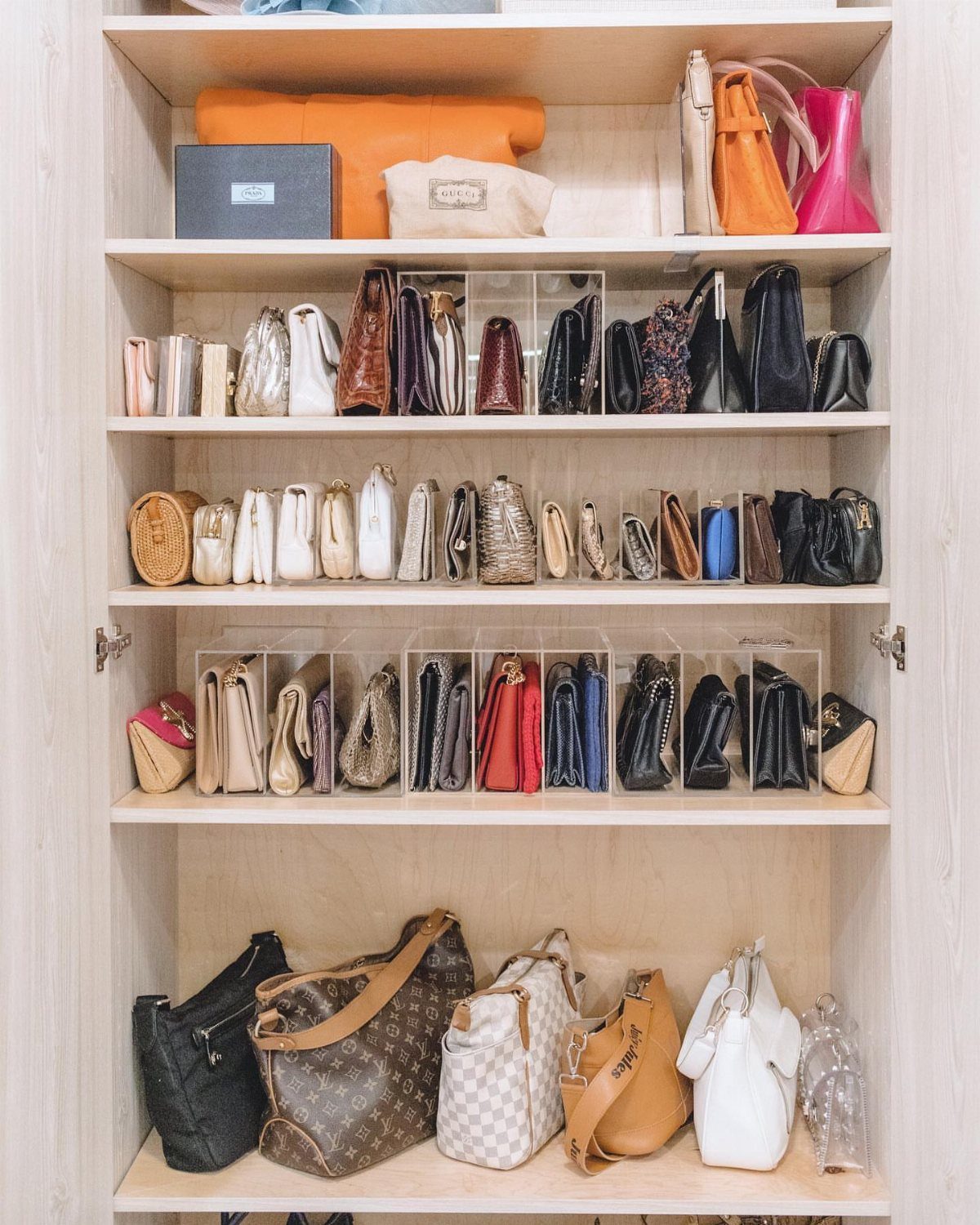
Purses take up a lot of space and lose their shape when you pile them. Store them standing upright on a shelf, in clear dividers, or hanging from hooks so you can see what you have.
Clear acrylic dividers keep bags from tipping over and make it easy to pull one out without disturbing the rest. Dust bags protect leather and suede, but if you can’t see through them, you’ll forget what’s inside.
If shelf space is tight, hang purses from hooks or S-hooks on a closet rod instead.
9. Storage Bins and Baskets
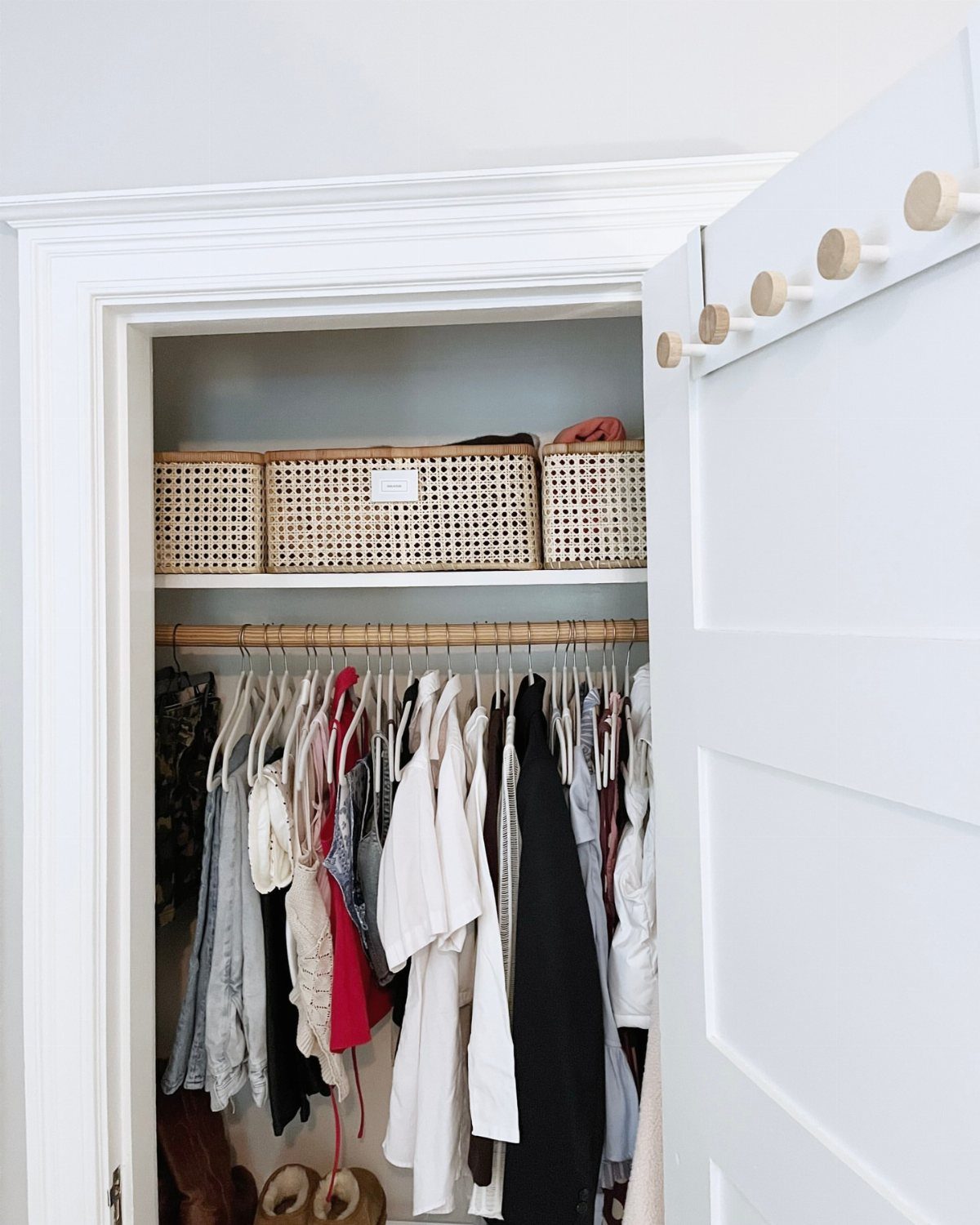
Bins and baskets corral loose items that don’t hang or fold neatly. Scarves, hats, workout gear, and out-of-season clothes all stay contained instead of ending up in a pile.
Woven baskets sit on shelves and look fine even when the closet door is open. Plastic bins with lids stack higher and keep dust out, but they’re harder to see into.
Match the bin size to what you’re storing. A bin that’s too big turns into a junk drawer.
10. Drawer Organizers
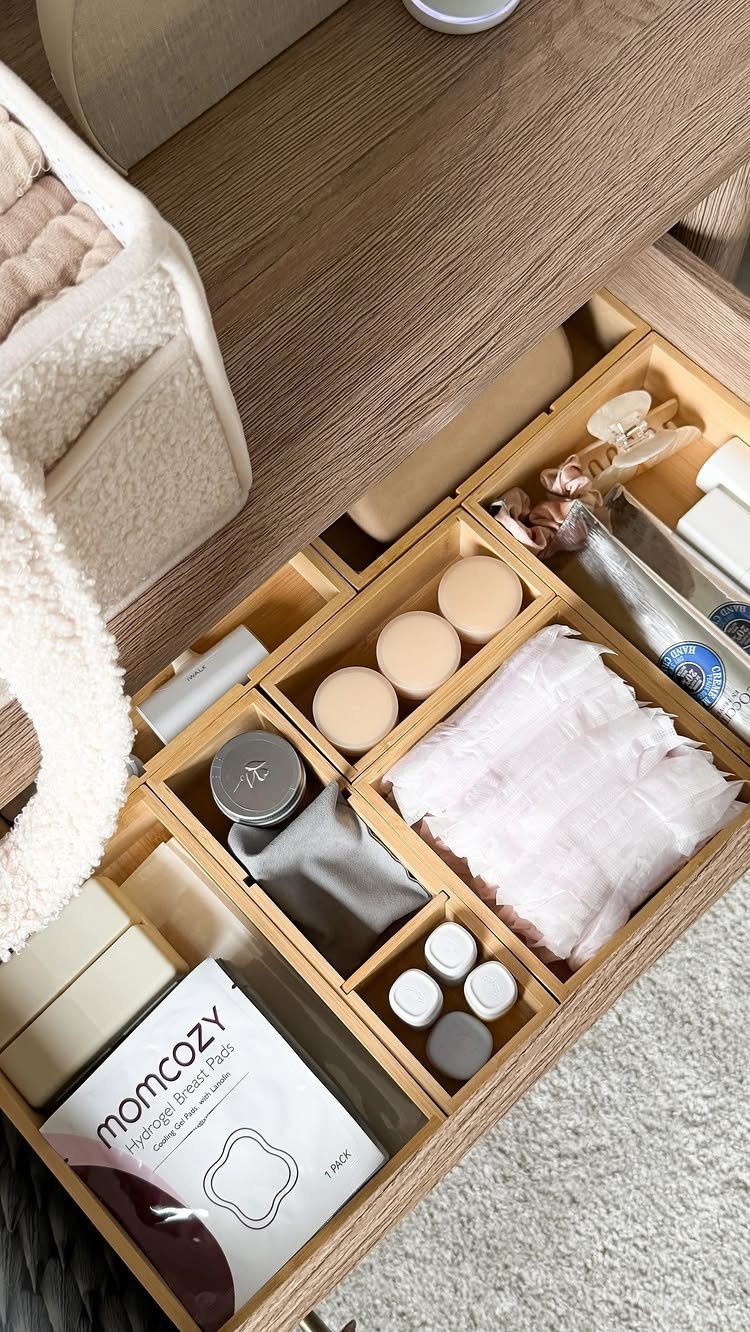
Small items like hair ties, jewelry, cords, and makeup get lost in a drawer unless you divide the space. Compartments let you give every type of clothing or accessory a home of its own.
You can buy drawer inserts that fit standard sizes, or use small boxes and containers you already have. Shallow compartments work better than deep ones because everything stays visible.
If the drawer is wide, use multiple organizers side by side to fill the space without leaving gaps where things can slide around.
11. Acrylic Accessory Holders
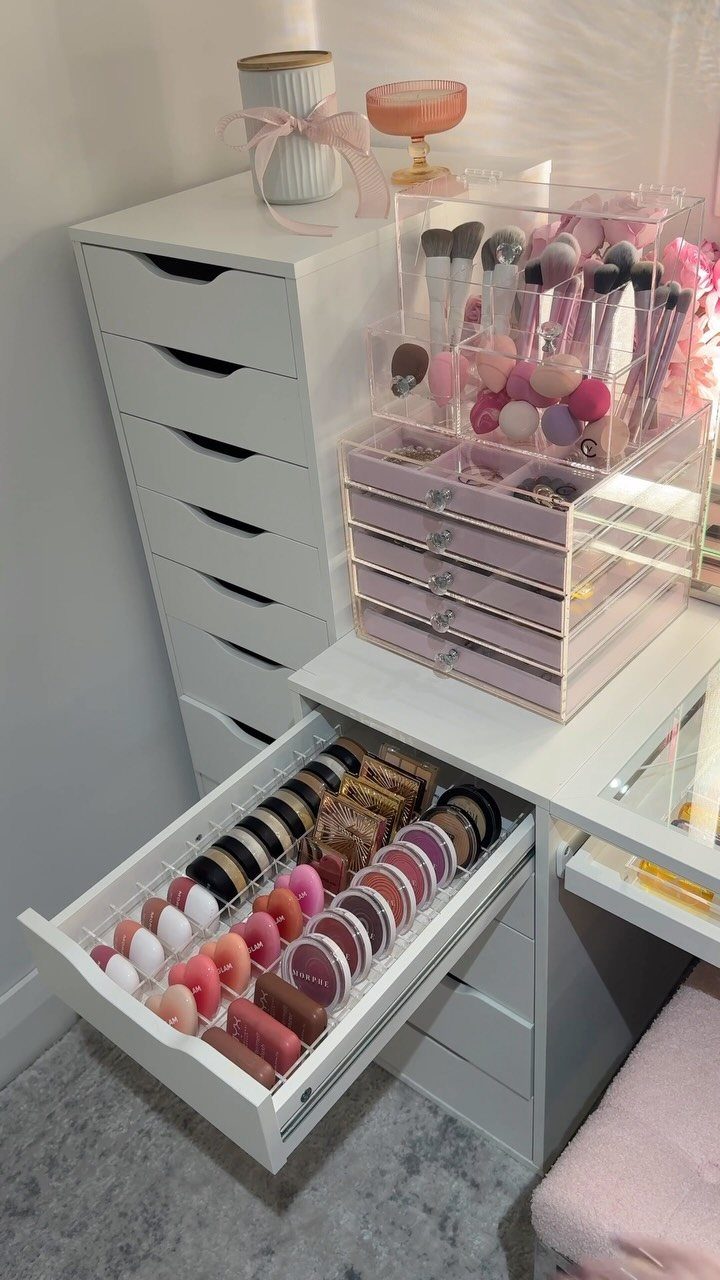
Clear acrylic containers let you see jewelry, sunglasses, makeup brushes, and other small accessories without opening anything. They sit on a dresser, shelf, or countertop and keep items sorted by type.
Stackable trays and boxes take up less space than spreading everything out. Tall containers with open tops work well for brushes and pencils, while shallow trays hold rings and earrings flat.
Acrylic shows dust and fingerprints, so wipe it down with a soft cloth when it starts to look cloudy.
12. Wall-mounted Mini Drawers
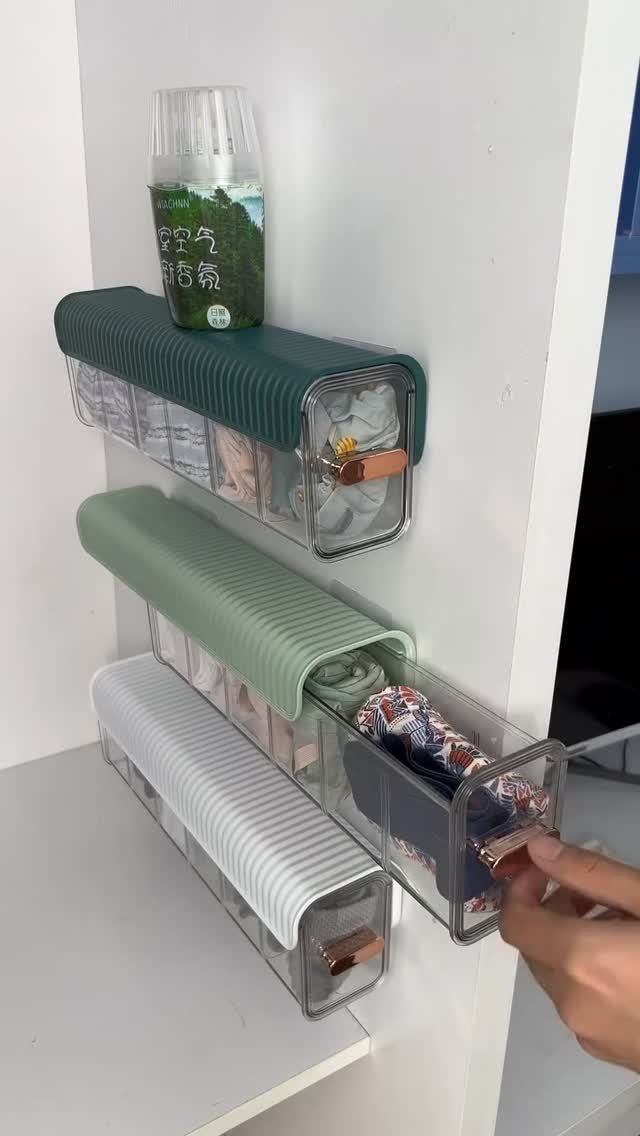
Small drawers mounted on a closet wall hold accessories, socks, underwear, or anything else that gets lost in larger spaces.
They take up vertical space instead of floor or shelf space, and you can mount them at whatever height makes sense.
Clear plastic drawers let you see what’s inside. Solid ones hide clutter but require labels.
Most wall-mounted drawers hold light items only. If you need something for heavier things like shoes or folded jeans, use a freestanding drawer unit instead.
13. Repurposed Household Organizers
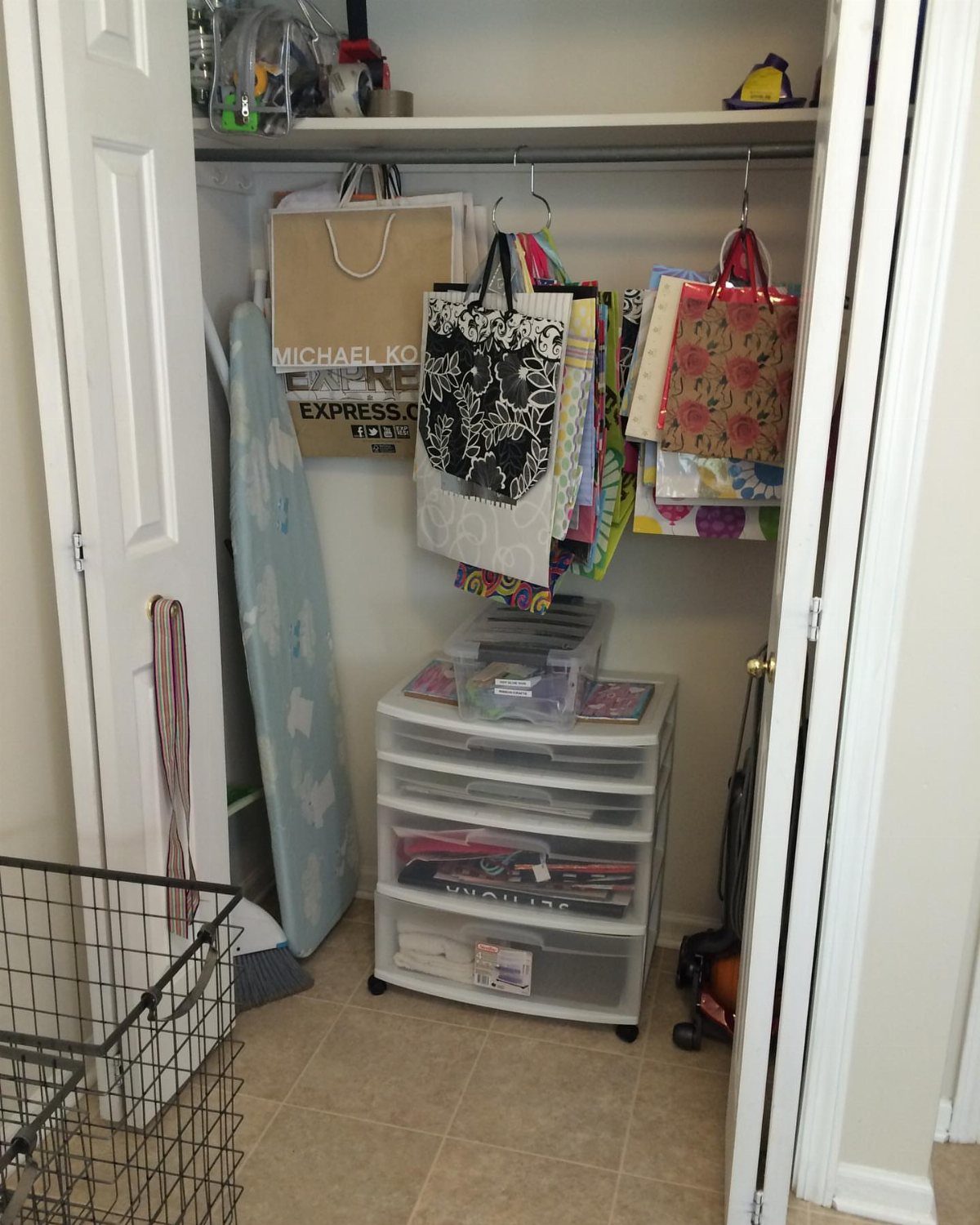
Shopping bags, plastic storage cubes, and boxes you already own can hold closet items without spending money on storage made for it.
A sturdy shopping bag with handles hangs from a closet rod and holds scarves, tights, or folded workout clothes.
Plastic drawer units meant for desks or bathrooms work just as well for socks, underwear, or accessories. The drawer fronts keep dust out, and you can stack them or slide them into a corner.
If the organizer holds what you need and fits the space, it doesn’t need to match the rest of the closet.
14. Built-in Closet System
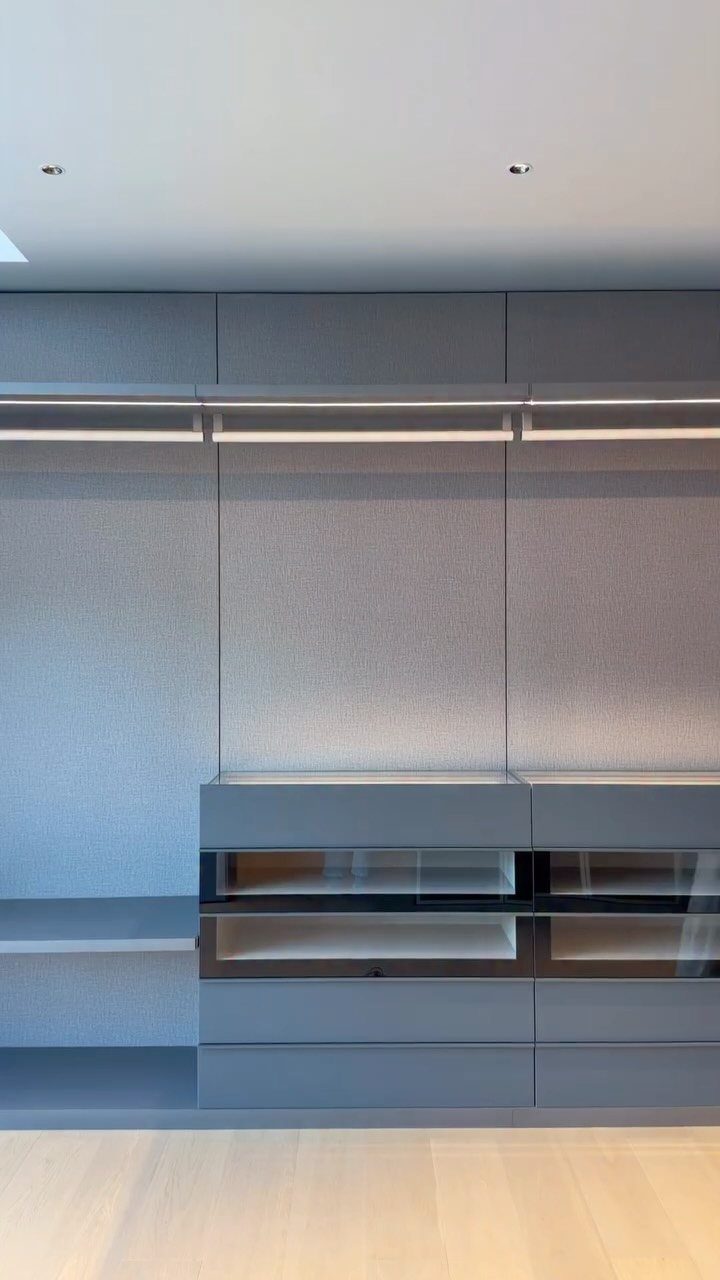
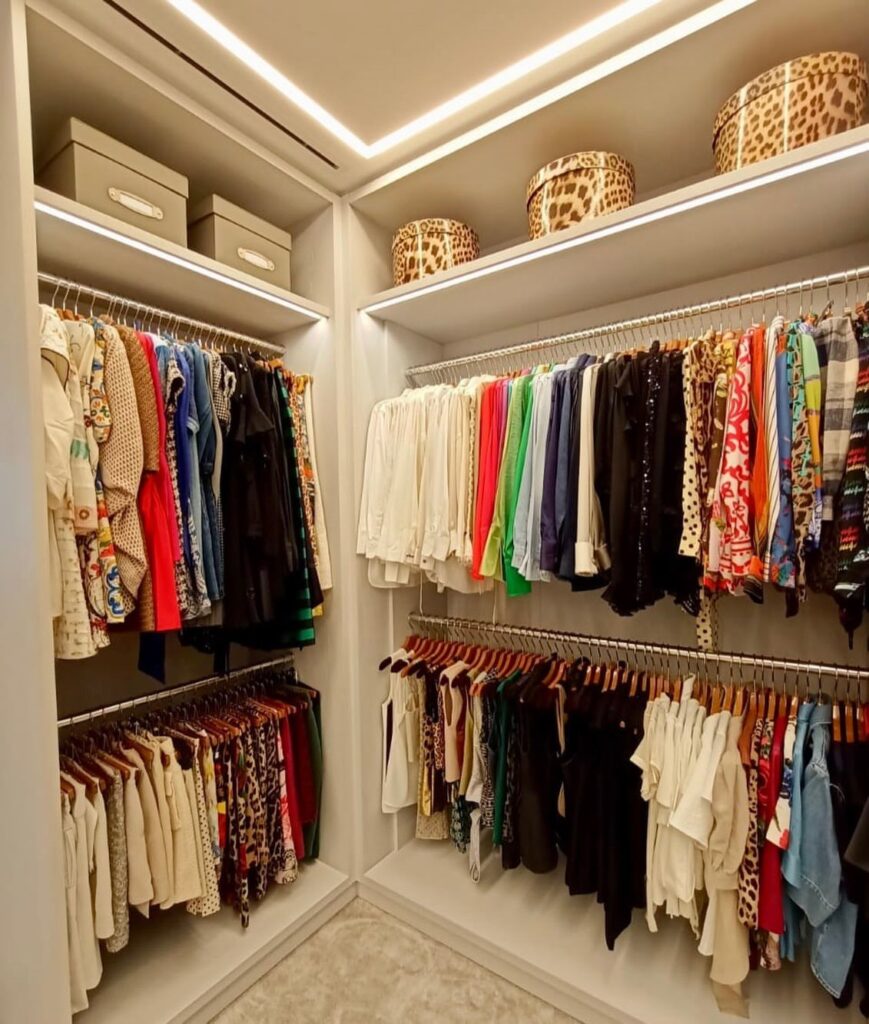
A built-in closet system uses the full height and width of the space with fitted shelves, hanging rods, and drawers that stay in place. Glass-fronted drawers let you see folded clothes without pulling them open.
Lighting built into the shelves or ceiling makes it easier to see dark clothing and accessories. You can adjust shelf heights and rod positions to fit what you store most.
This option costs more than freestanding furniture and usually requires professional installation, but it uses every inch of available space.
15. Open Closet with Mixed Storage
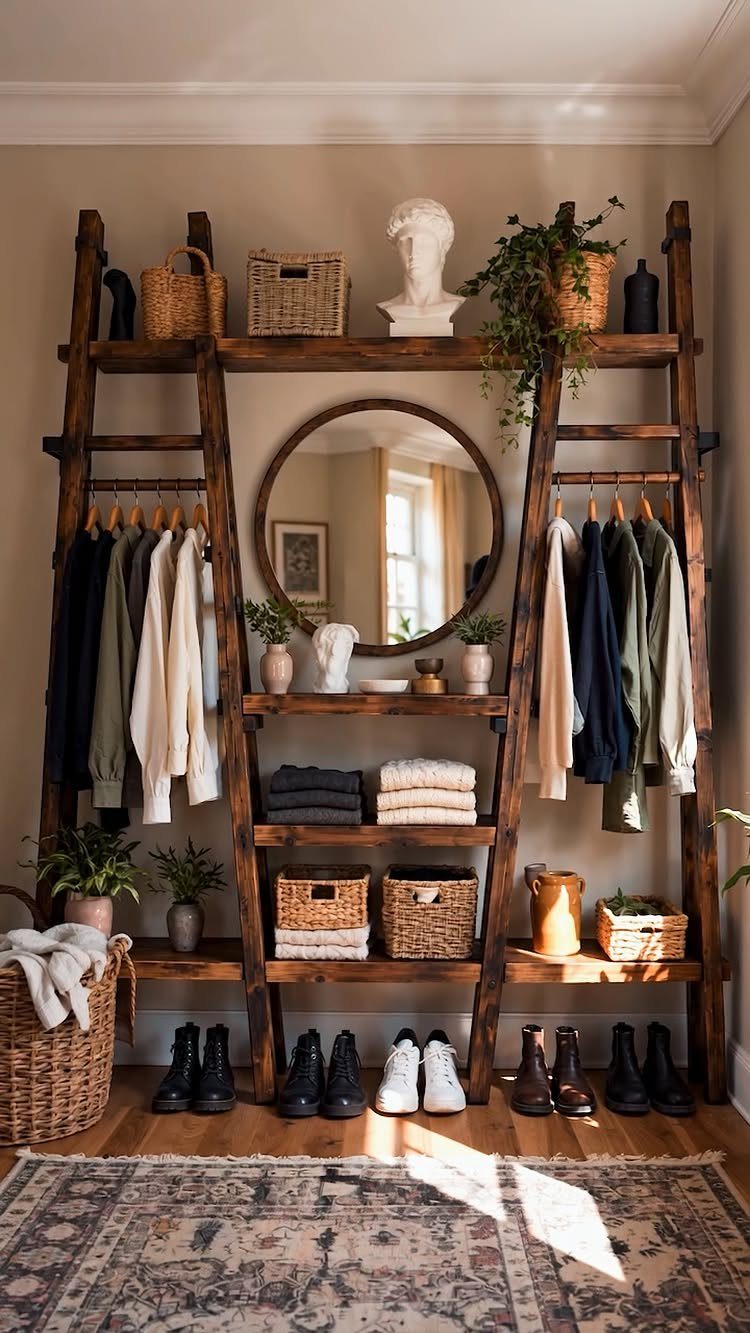
An open closet made from a wooden shelving unit holds hanging clothes on a rod, folded linens on shelves, and baskets for smaller items. Boots and shoes sit on the floor below the lowest shelf.
Without doors, everything stays visible, so you need to keep it tidy. The wood adds warmth to the room, and you can rearrange shelves or add more baskets as your storage needs change.
Put this in a bedroom or dressing area where the closet doubles as furniture.
16. Multi-clip Hanger
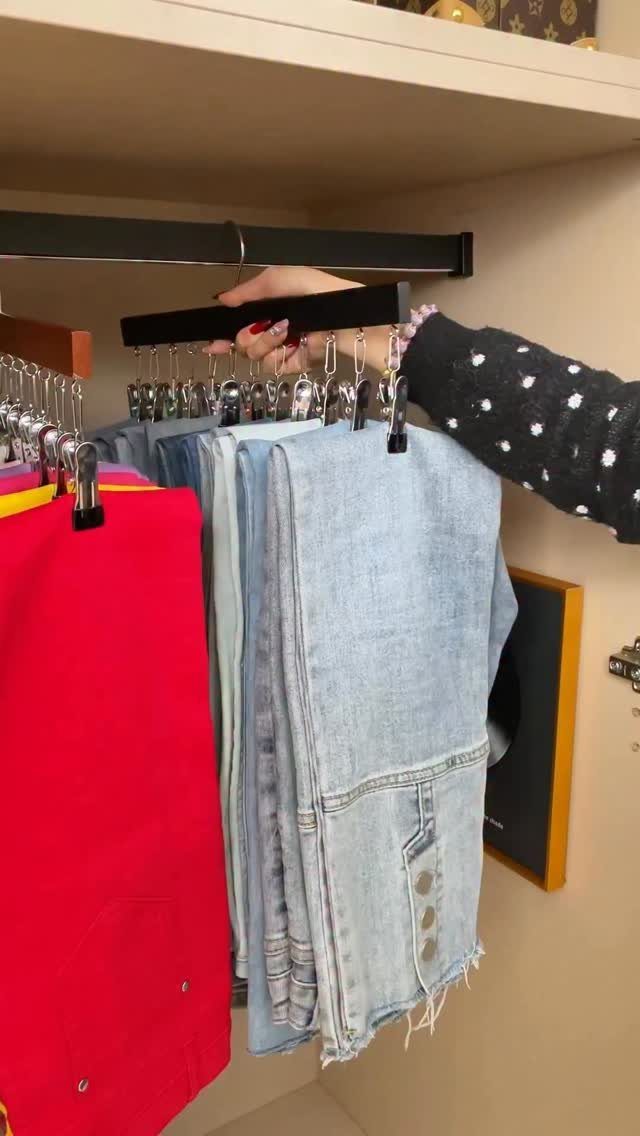
A hanger with multiple clips holds several garments on one hook, so pants, skirts, leggings, and caps take up less rod space. Each item clips on separately, and you can see what you have without unstacking anything.
Some multi-clip hangers rotate, which makes it easier to reach the item you want. The clips should grip fabric without leaving marks.
This hanger works best for bottoms and accessories. Heavier items like jeans can weigh down the hanger and make it harder to hang.
17. Cascading Garment Hangers
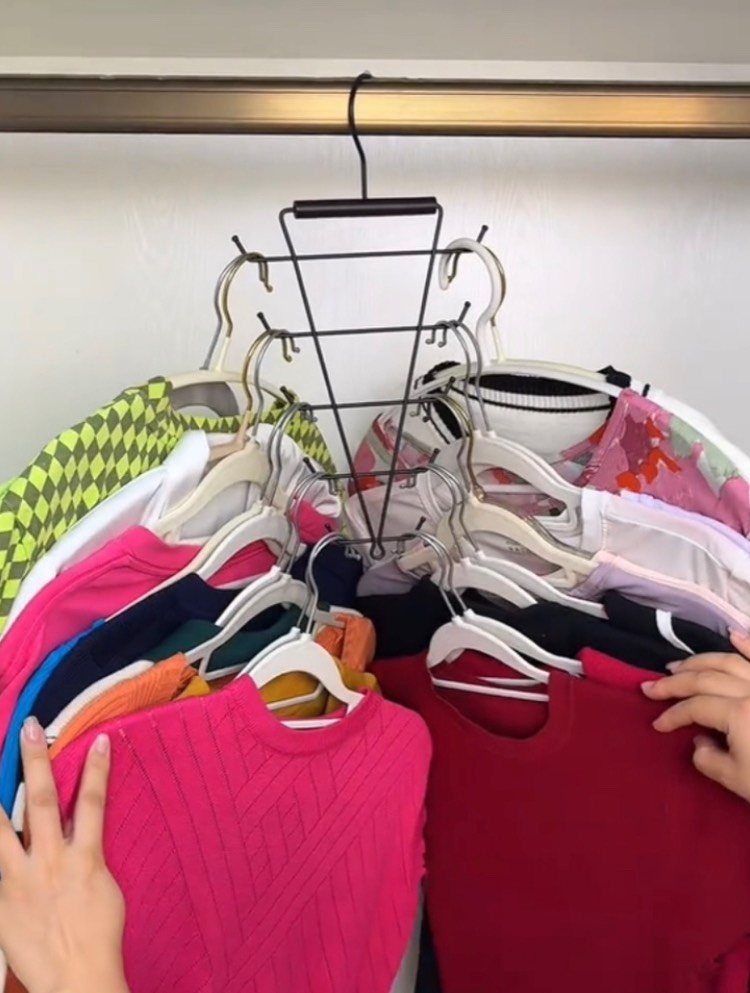
A cascading hanger connects several hangers vertically instead of side by side, so more clothes fit on the same length of rod. Each hanger hooks onto the one above it, and the whole chain hangs from a single rod space.
This setup frees up rod space without folding anything. You can’t grab one item without lifting the ones above it.
Cascading hangers work best for clothes you wear less often or for seasonal storage where you’re not pulling items out every day.
18. Hanging Pocket Organizer
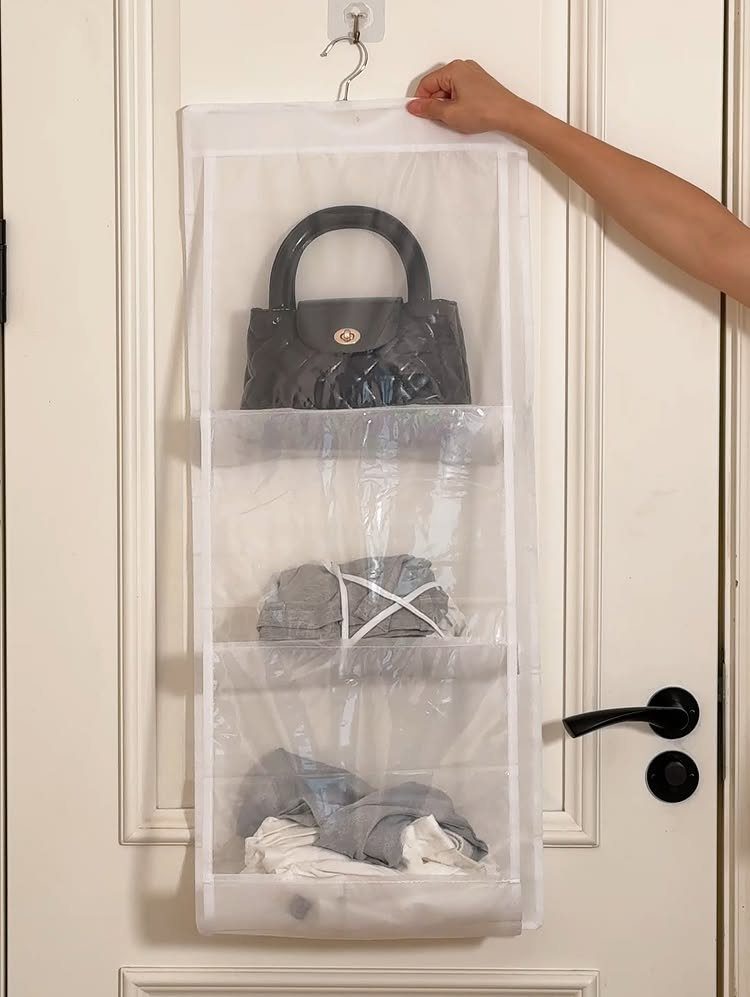
A hanging organizer with clear pockets stores folded clothes, small bags, and accessories on the back of a door or from a closet rod.
Each pocket holds one or two items, and the clear material lets you see what’s inside without opening anything.
Most hanging organizers hook over the top of a door without drilling. The pockets sit flat against the surface, so the door still closes.
This works well for items you reach for often, like a go-to bag or a folded sweater, and it keeps them off shelves and out of drawers.
19. Woven Closet Baskets
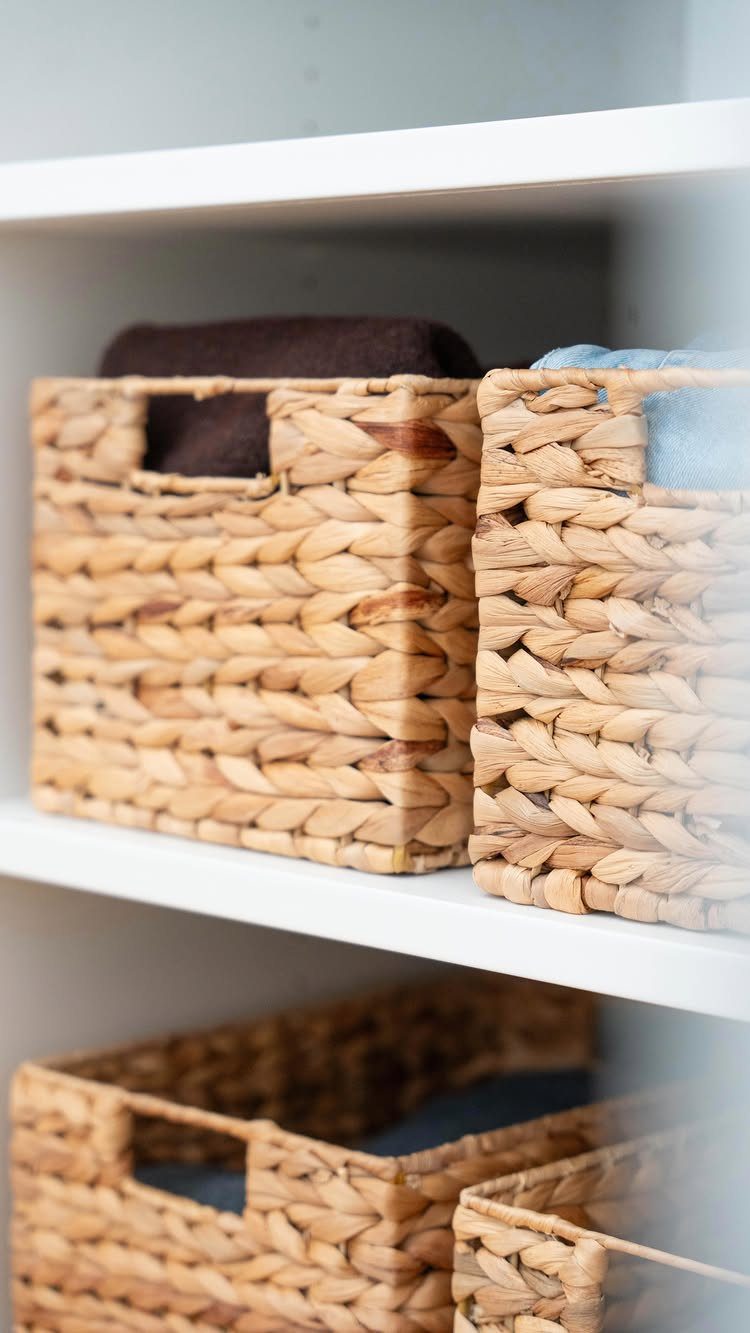
Woven baskets on a shelf hold folded clothes, towels, or out-of-season items in one contained spot. They keep stacks from toppling and add texture that softens the look of plain shelving.
Pick baskets that fit your shelf depth so they slide in and out without catching.
If you store items you reach for often, leave the tops open. For things you use less, a lid keeps dust off.
Measure your shelf height first. A basket that’s too tall won’t fit under the shelf above it.
20. Color-coordinated Hangers
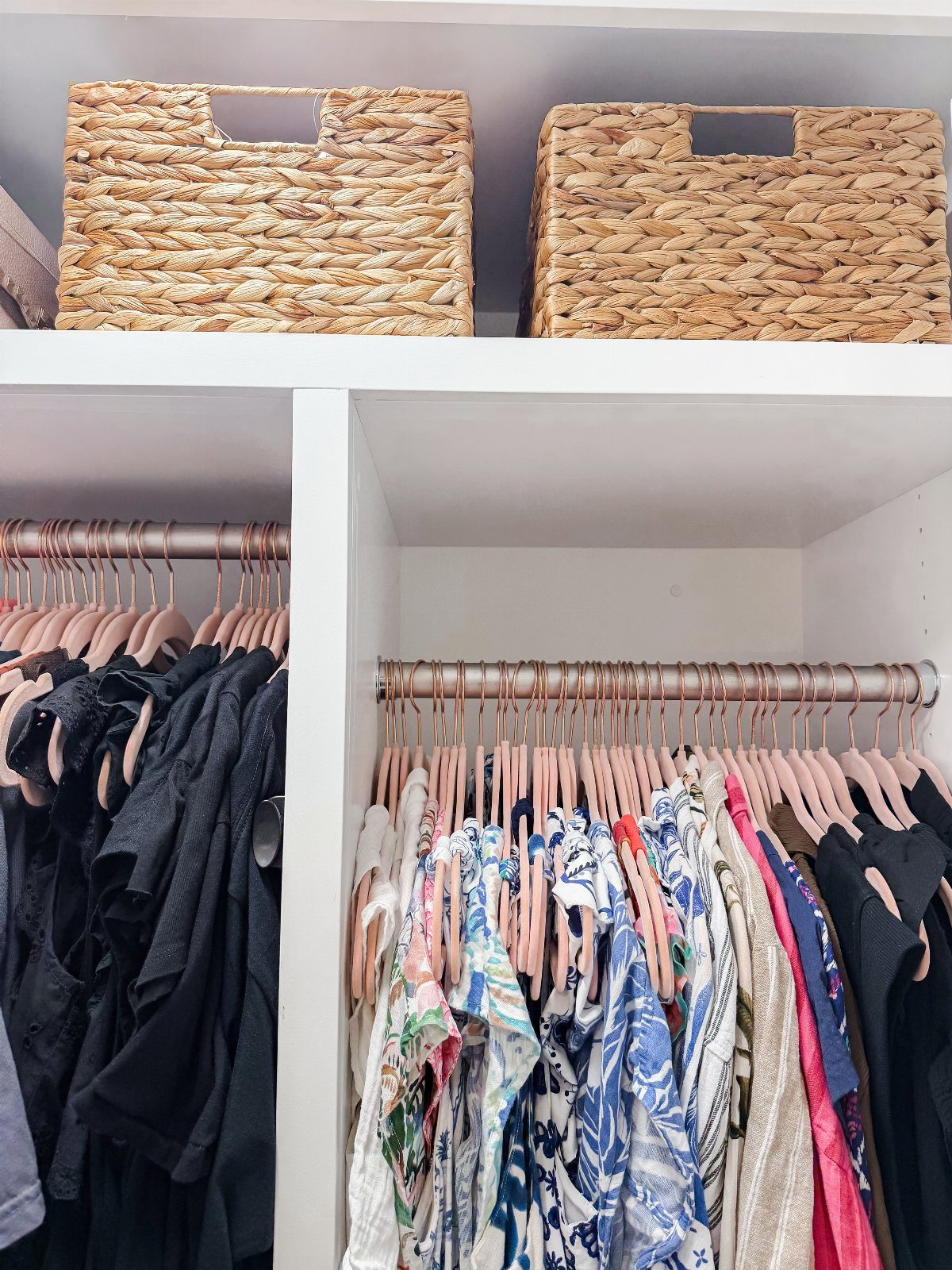
Matching hangers make a closet rod look cleaner, and when you sort clothes by color within each category, you can find what you need in seconds.
Velvet hangers grip fabric without slipping, and the thin profile fits more items on the same rod. Wood hangers hold heavier coats and jackets without bending.
Replacing every hanger at once is optional. Start with one type of clothing and work through the rest as old hangers break.
21. Pegboard Storage Wall
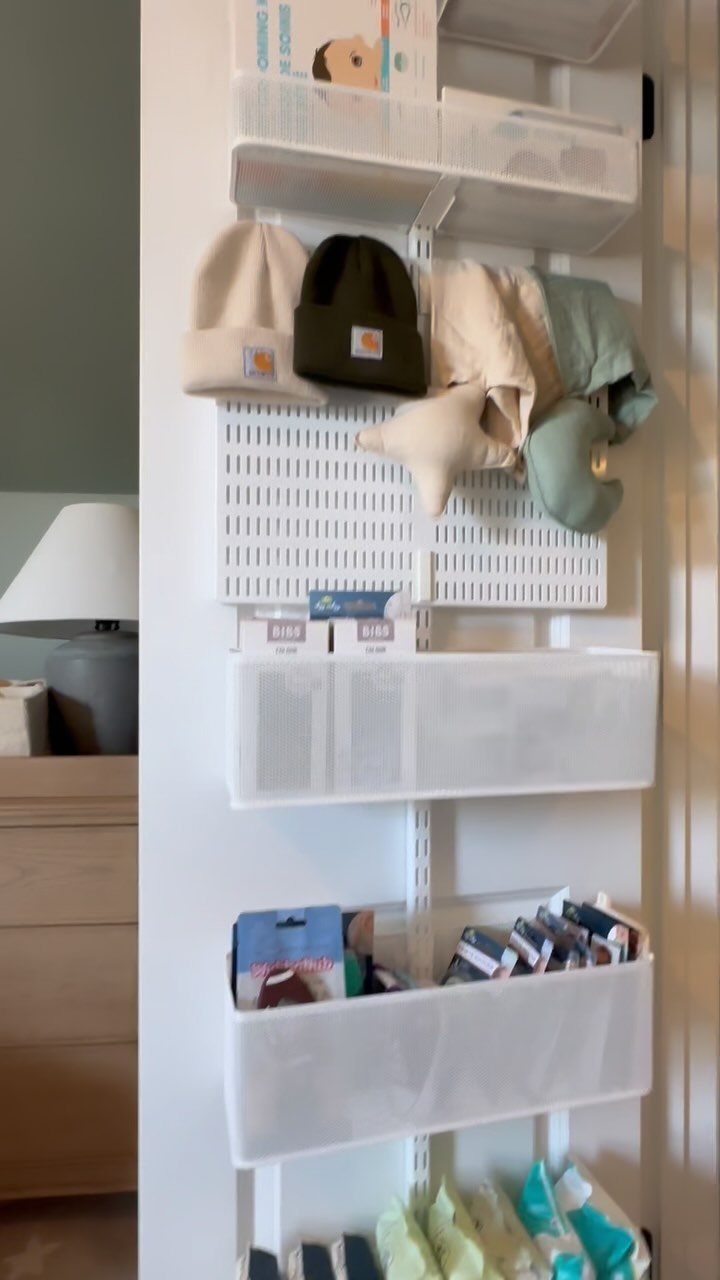
A pegboard mounted on a closet or nursery wall holds bins, hooks, and shelves wherever you need them. Small items like baby hats, socks, and pacifiers sit in bins you can lift off and carry.
Pegboard comes in sheets you cut to size and mount with screws. Paint it to match the wall or leave it white.
Rearrange hooks and bins as your storage needs change. The holes stay in a grid, so new accessories fit without drilling more holes.
Plan Around Closet Constraints
Measure the closet first. Width, depth, and height tell you what fits and what blocks the space.
Sliding doors cut off part of the closet at any given time, so you can’t reach both ends at once. Over-the-door racks won’t work because the door doesn’t swing.
Hinged and bifold doors need clearance to open. An organizer that sticks out too far will hit the door frame or block the walkway.
Note where you lose things now and what makes it hard to reach items.
A shelf too high means you need a step stool. A rod too low wastes the space above it.
Decide where each category goes before you start moving things.
Pants in one spot, tops in another, accessories in a third. That layout guides which organizers go where.
Closet Organization Benefits
An organized closet cuts the time you spend looking for clothes. When everything has a place and you can see what you own, you grab what you need and move on.
It also reduces decision fatigue. Fewer piles to dig through means fewer choices to make before you’re awake enough to think.
Seeing all your outfit options at once makes it easier to put together combinations you like. Clothes buried in a stack stay forgotten.
Proper storage helps clothing last longer.
Frequently Asked Questions
What is the best way to organize closets?
Sort everything by category first, so pants stay with pants and shirts stay with shirts.
Once you have categories, add storage that makes each one visible, like shelf dividers for folded stacks, hooks for bags and scarves, and bins for loose accessories.
Use the space you have, whether that’s vertical wall space, the back of a door, or unused shelf height.
What is the 333 closet rule?
You pick 33 pieces total (clothes, shoes, accessories) and wear only those for 3 months.
Pajamas, underwear, and jewelry you wear every day don’t count. It forces you to keep only what you actually use and makes shopping decisions simpler because you buy less.
What is included in the 333 rule?
Clothes, shoes, outerwear, and accessories that you don’t wear every single day all count toward the 33 items. If you switch it out or choose whether to wear it, it’s in.
What closet storage solutions work for seasonal clothes?
Bins with lids keep off-season clothes dust-free and stack high to use vertical space. If closet space is tight, vacuum-seal bags flatten bulky items and fit on high shelves or under the bed.
How do I declutter a closet like a pro?
Pull everything out and decide what you actually wear. If it doesn’t fit, doesn’t suit your life now, or hasn’t been worn in months, it goes.
Once you’re left with what you use, sort by category and add storage that keeps each type of item visible and easy to reach.