
Storage for garden tools ranges from a sand-filled bucket for hand trowels to a full outdoor shed for long-handled equipment and power tools.
Pick based on what you own and where you use it: if most of your tools are hand-sized and you work near a potting bench, a wall-mounted pegboard or a small rack with hooks keeps them within reach and leaves the floor clear.
If you store shovels, rakes and a mower, you need vertical racks or a shed tall enough to hold handles upright.
A 5-gallon bucket filled with sand keeps metal ends rust-free, and a pallet leaned against a fence costs nothing but still holds tools between its slats.
1. Wall-Mounted Tool Rack
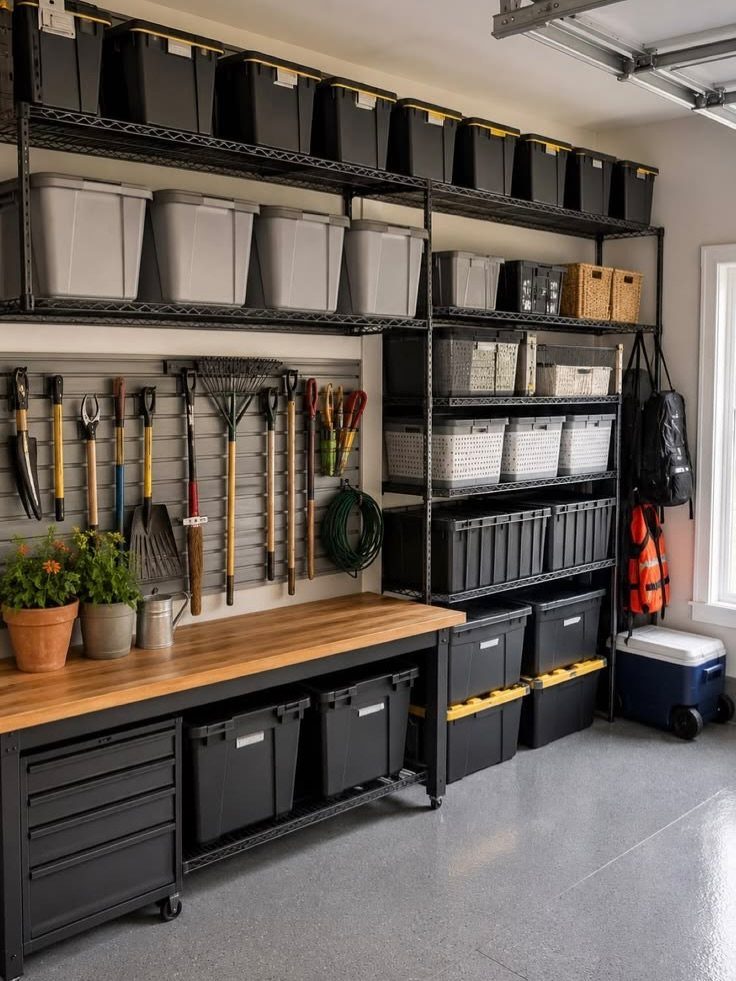
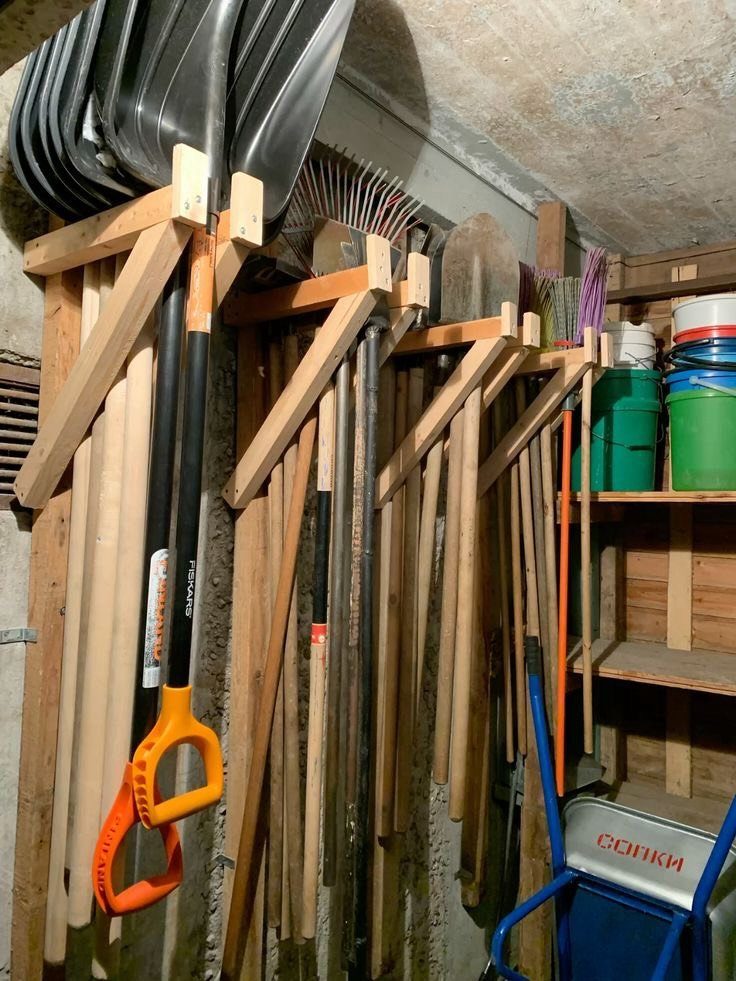
A wall-mounted rack holds shovels, rakes and other long tools upright, leaving floor space open for bins or a workbench below.
I like this setup because the slatwall accepts different hooks and brackets without drilling new holes each time you add a tool. The rack keeps handles visible, so you grab the right one without digging.
If your garage or shed wall can take the weight, this is one of the fastest ways to clear a cluttered corner.
2. Storage Shed
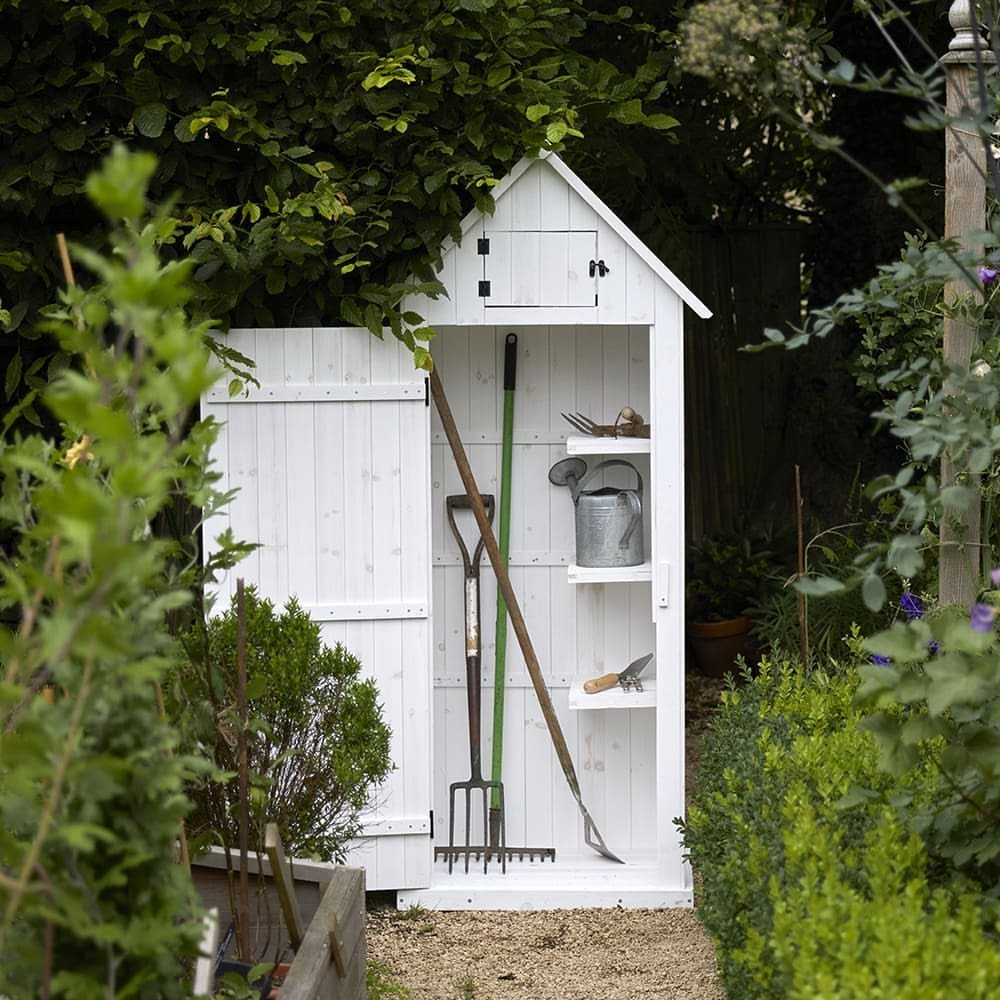
A small outdoor shed gives you a dedicated spot for shovels, rakes, watering cans and other tools you use in the yard.
This one is wood, painted white, with double doors that open wide enough to lean long-handled tools inside without forcing them. I like that a shed sits where you work, so you walk fewer steps when you need something mid-task.
Plan for ventilation if you store anything that rusts or holds moisture after use.
You can store shovels, rakes, a sledgehammer—any long-handled tools—conveniently up and out of the way. The unit holds up to 14 items, giving you more flexibility and storage capacity than nails pounded in the wall.
3. Pegboard Tool Organization
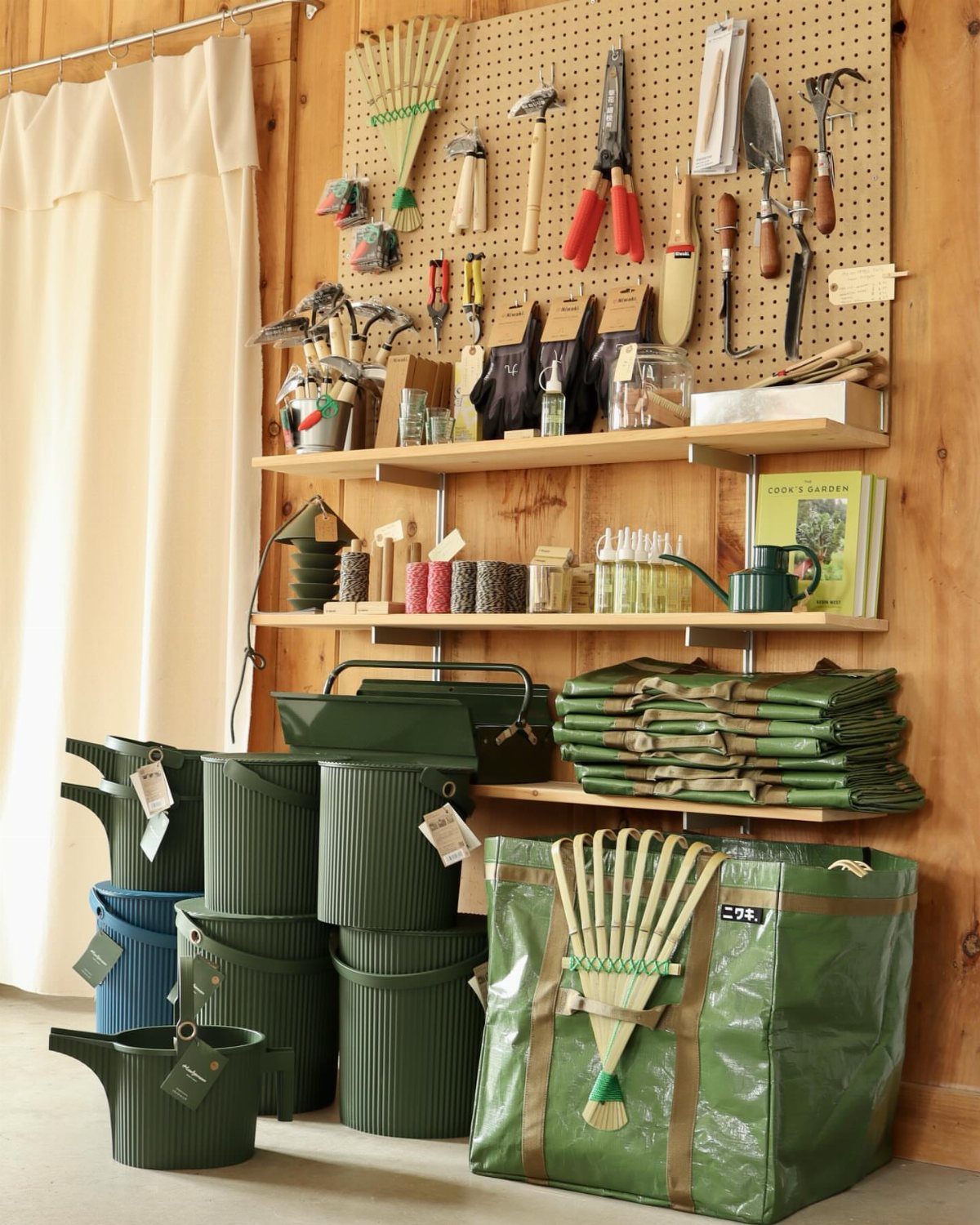
Mount a pegboard to a shed or garage wall and hang tools, gloves and small pots on metal hooks.
The board lets you rearrange hooks without new holes, so storage shifts when your tool collection does. I like pairing it with a shelf below for watering cans and heavier items the hooks won’t hold.
Pegboard comes in 2×4 or 4×8 sheets. The larger size covers more wall but costs more and needs studs or blocking behind it to stay secure.
4. PVC and 2×4 Tool Rack
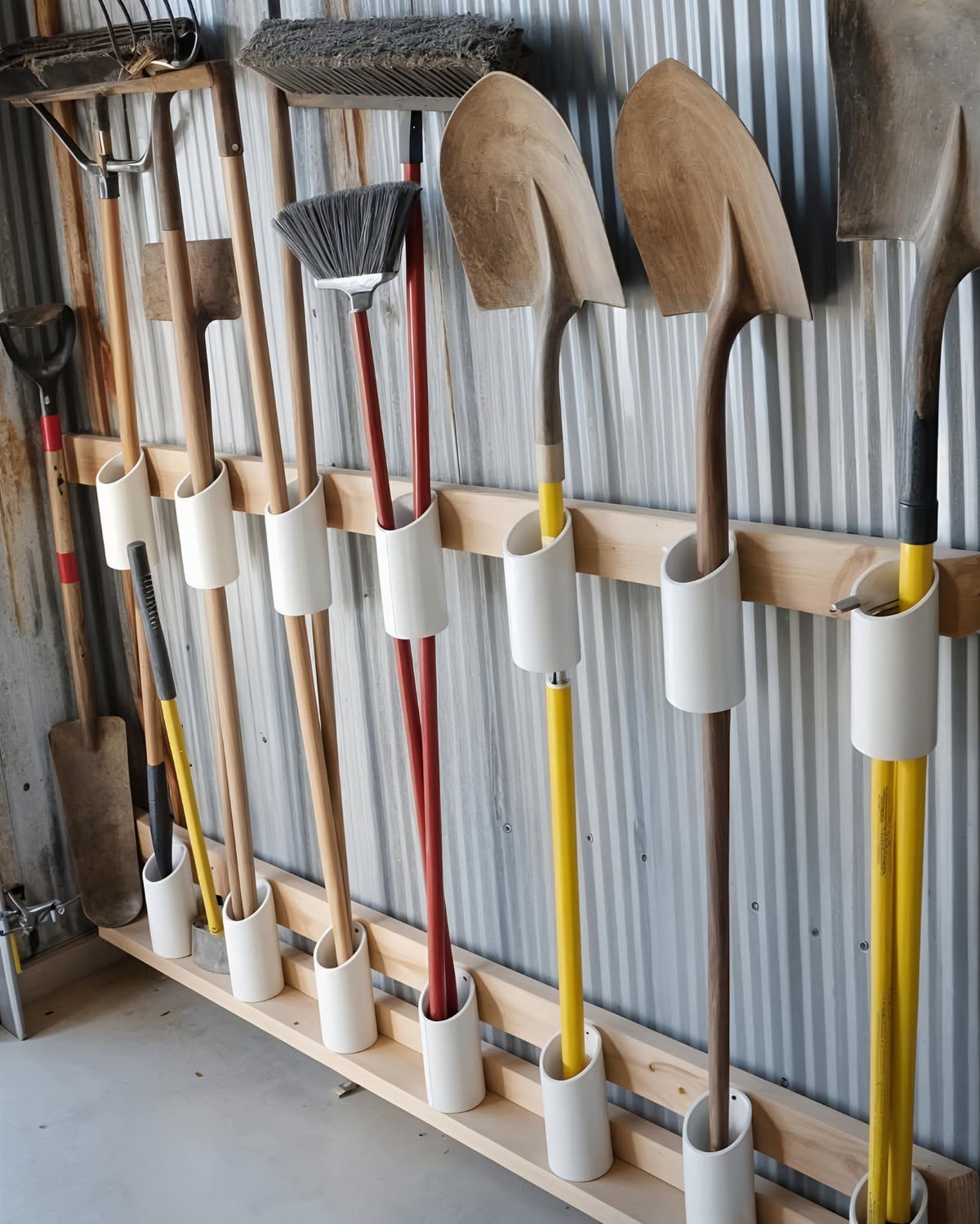
Cut short lengths of PVC pipe, mount them to a pair of horizontal 2x4s, and slide tool handles into the open ends.
This setup costs less than a metal tower and holds as many tools. I like that you can space the pipes to match what you own, fitting wide-handled shovels next to narrow trowels without wasted slots.
Screw the 2x4s into studs or shed framing so the weight of full tools doesn’t pull the rack down.
5. Pallet Storage Rack
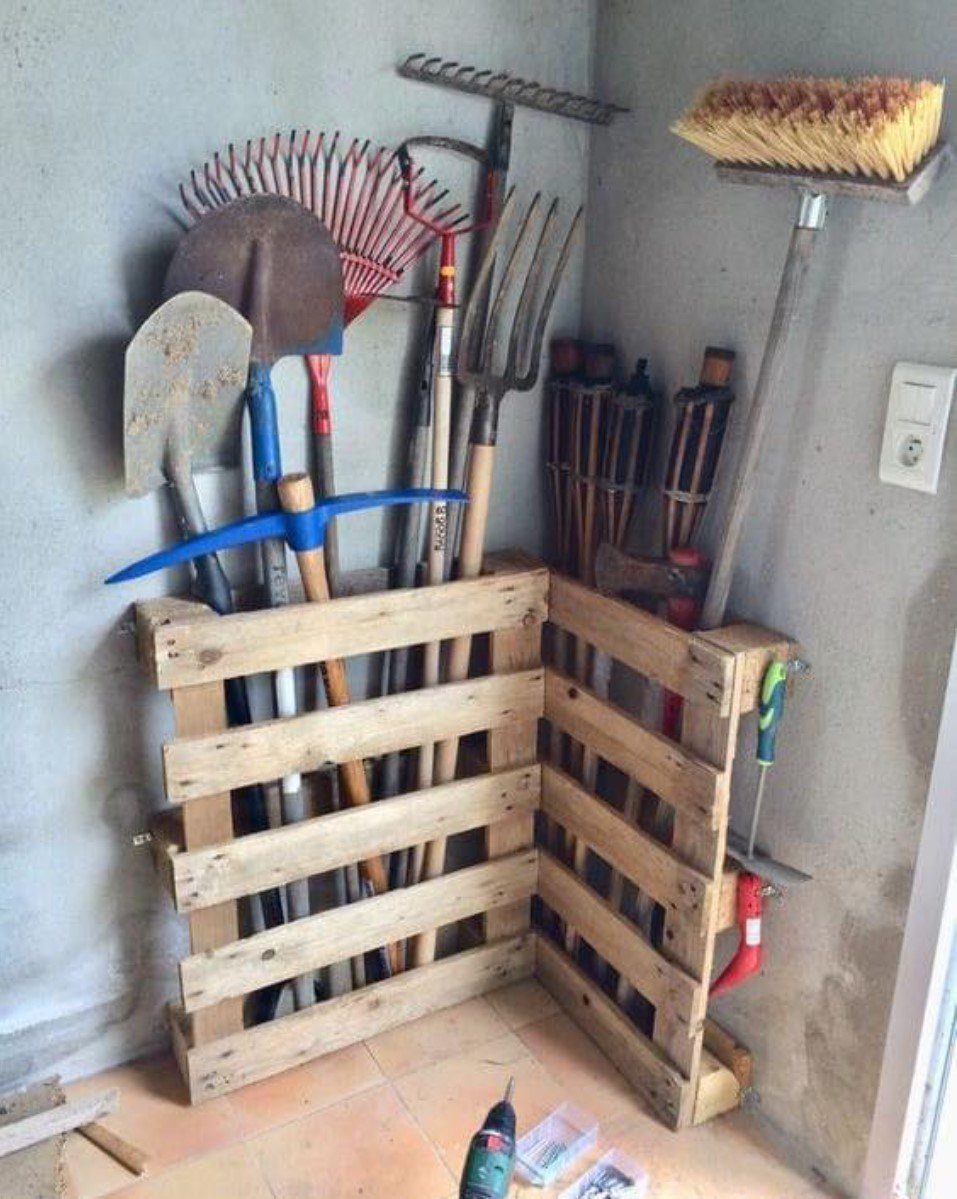
Lean a wood pallet against a shed wall or screw it flat to the surface, then hang tools between the slats.
The spaces between boards hold handles without added hardware, though I usually add a hook or two for smaller tools that slip through.
A pallet is free or close to it, and you can cut it shorter if your wall is low.
Sand rough edges before you hang anything, or splinters will catch on gloves and fabric tool handles.
6. Sand Tool Storage
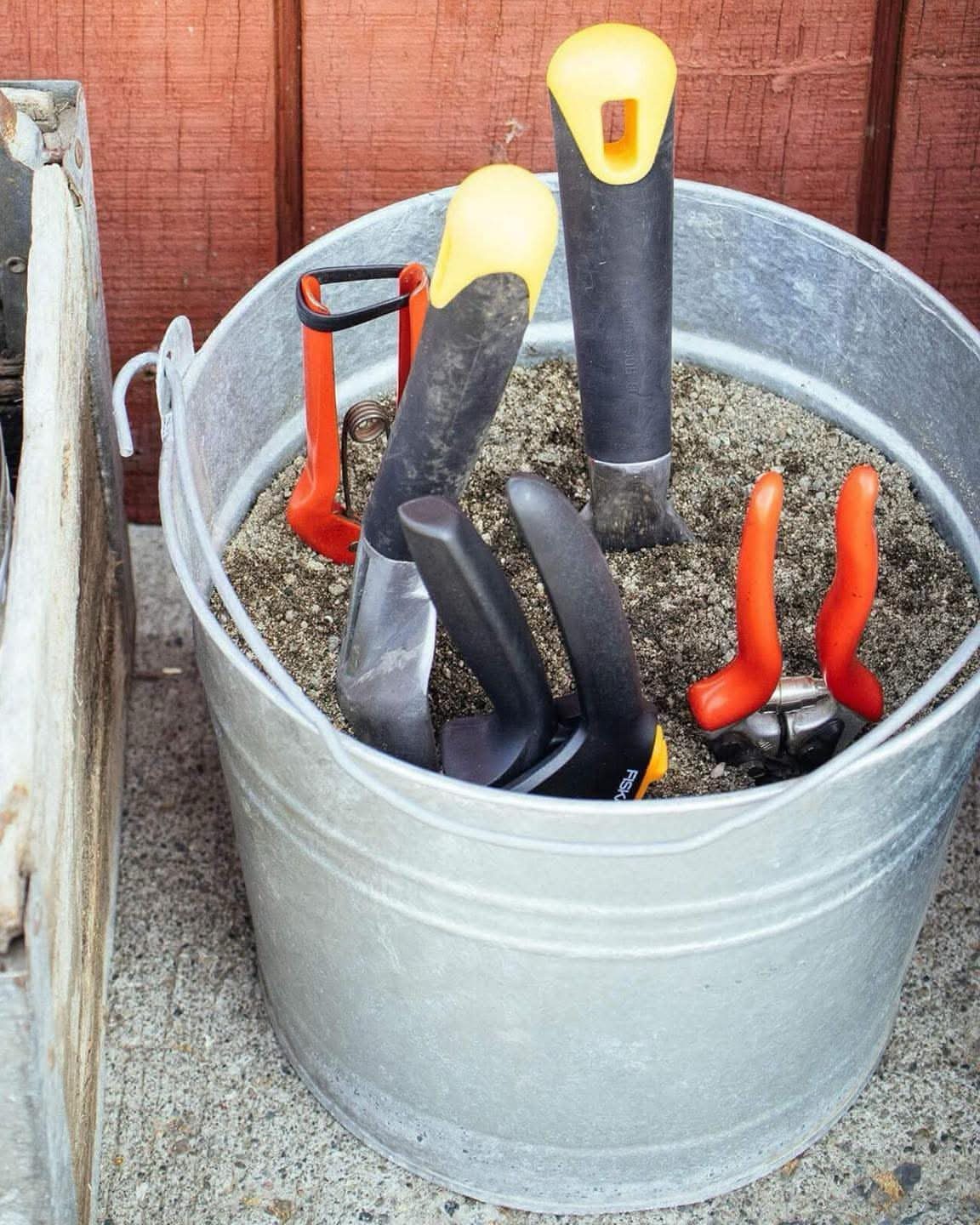
Fill a bucket with sand and push the metal ends of hand tools into it so they stand upright and stay rust-free.
Sand wicks moisture away from metal, which slows rust on trowels, pruners and small spades. I keep a bucket like this near the potting bench so tools stay in one spot instead of scattered across the work surface.
A 5-gallon bucket holds enough sand for hand tools without tipping when you pull one out.
7. Backyard Potting Table
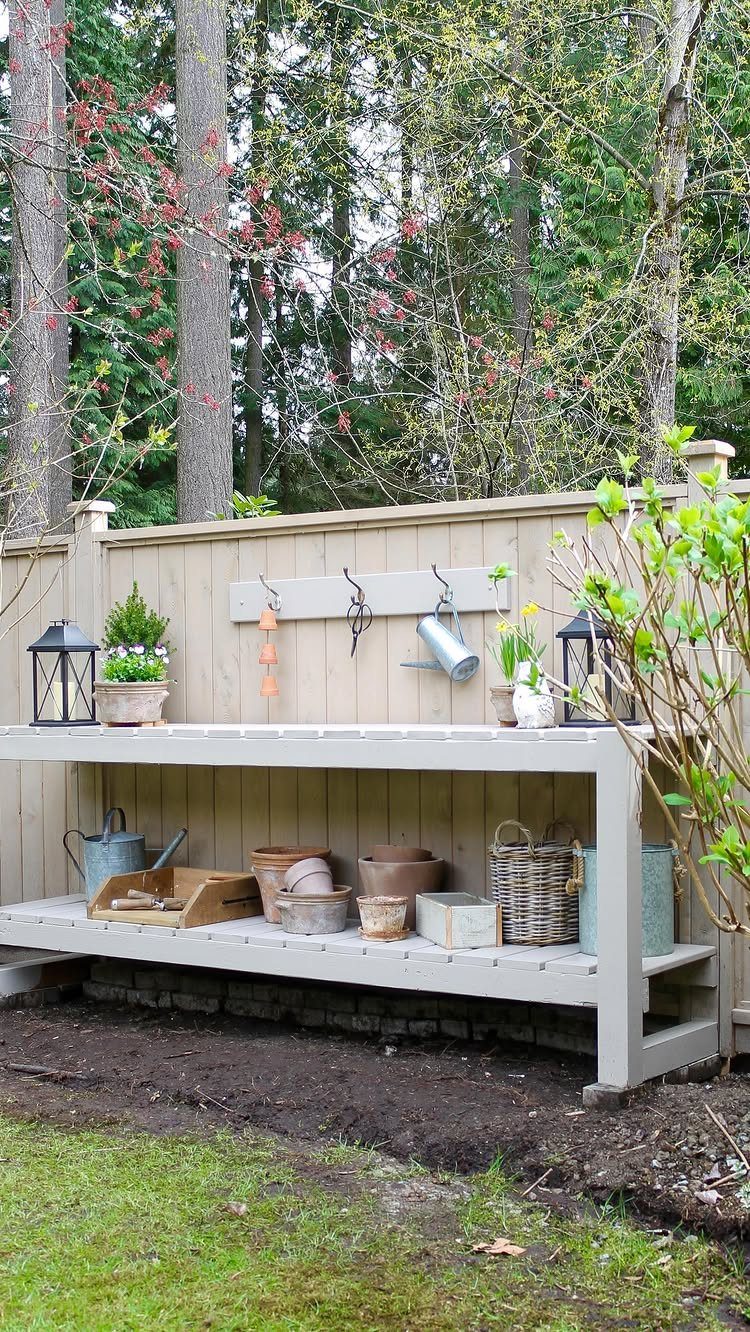
A potting table near your plants keeps soil, pots and hand tools close when you repot or transplant.
I like this setup because you work standing instead of kneeling, and the table holds everything you need for one task without trips to the garage.
The lower shelf stores extra pots, and hooks above keep pruners and twine within reach.
You can build one from 2x4s and plywood for around $100, or buy a ready-made version if you’d rather skip the saw work. Paint or seal the wood so it lasts through rain.
8. Custom Potting Table
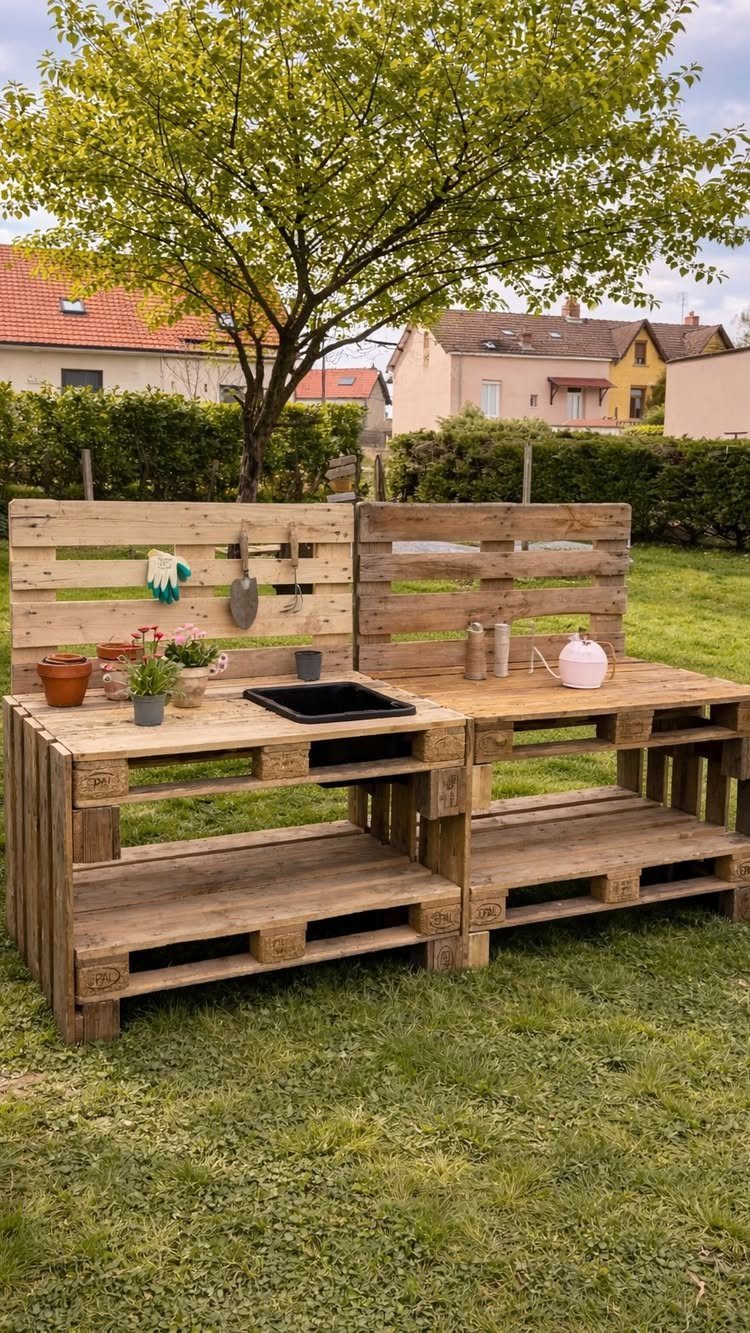
Build a potting table from reclaimed wood or pallets and add a sink basin if you have a hose nearby.
I like that you can size it to fit the corner of a patio or the side of a shed without paying for something pre-built.
Sand rough edges before assembly so splinters don’t catch on your hands or clothes.
9. Hand Tool Hanger
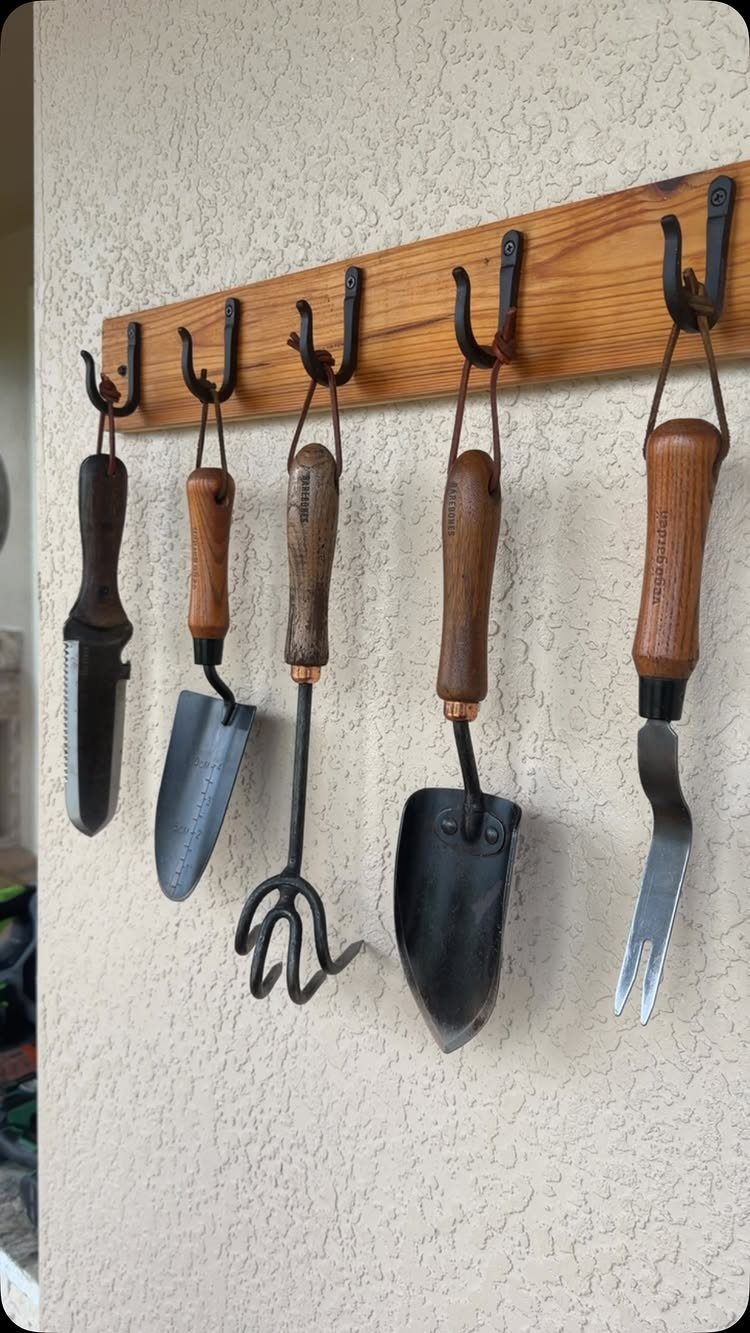
Screw a small wooden rack to your shed wall and hang trowels, pruners and hand forks from individual hooks.
The tools stay separated, so you can grab one without untangling handles. I keep one of these near the door so small tools don’t end up scattered across a bench or lost in a bin.
Space the hooks about 3 inches apart if your tools have wide grips.
10. Long-Handled Tool Rack
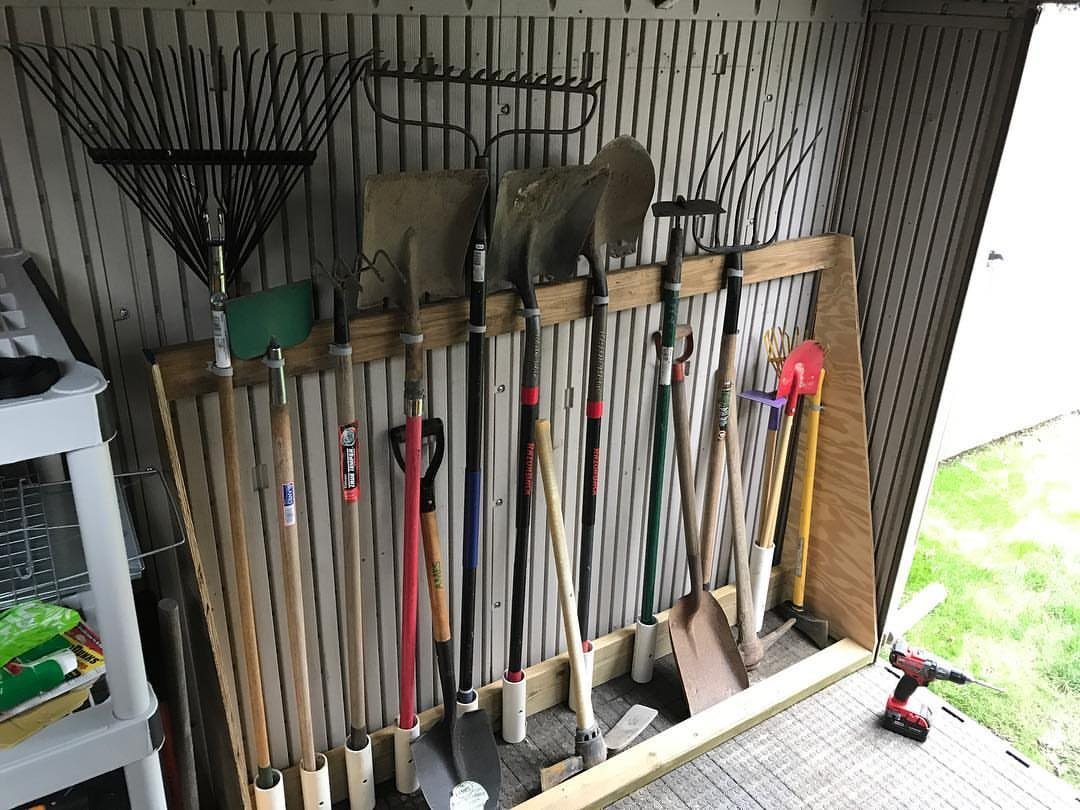
A narrow rack built from 2×4 scraps and mounted low keeps rakes, shovels and hoes upright against the wall.
The design keeps long handles off the floor and takes up less than a foot of wall depth, which matters in a small shed. I like that you can adjust the spacing between uprights to fit whatever tools you own.
Attach the frame to wall studs or blocking so it holds weight without sagging.
11. Vertical Storage Shed
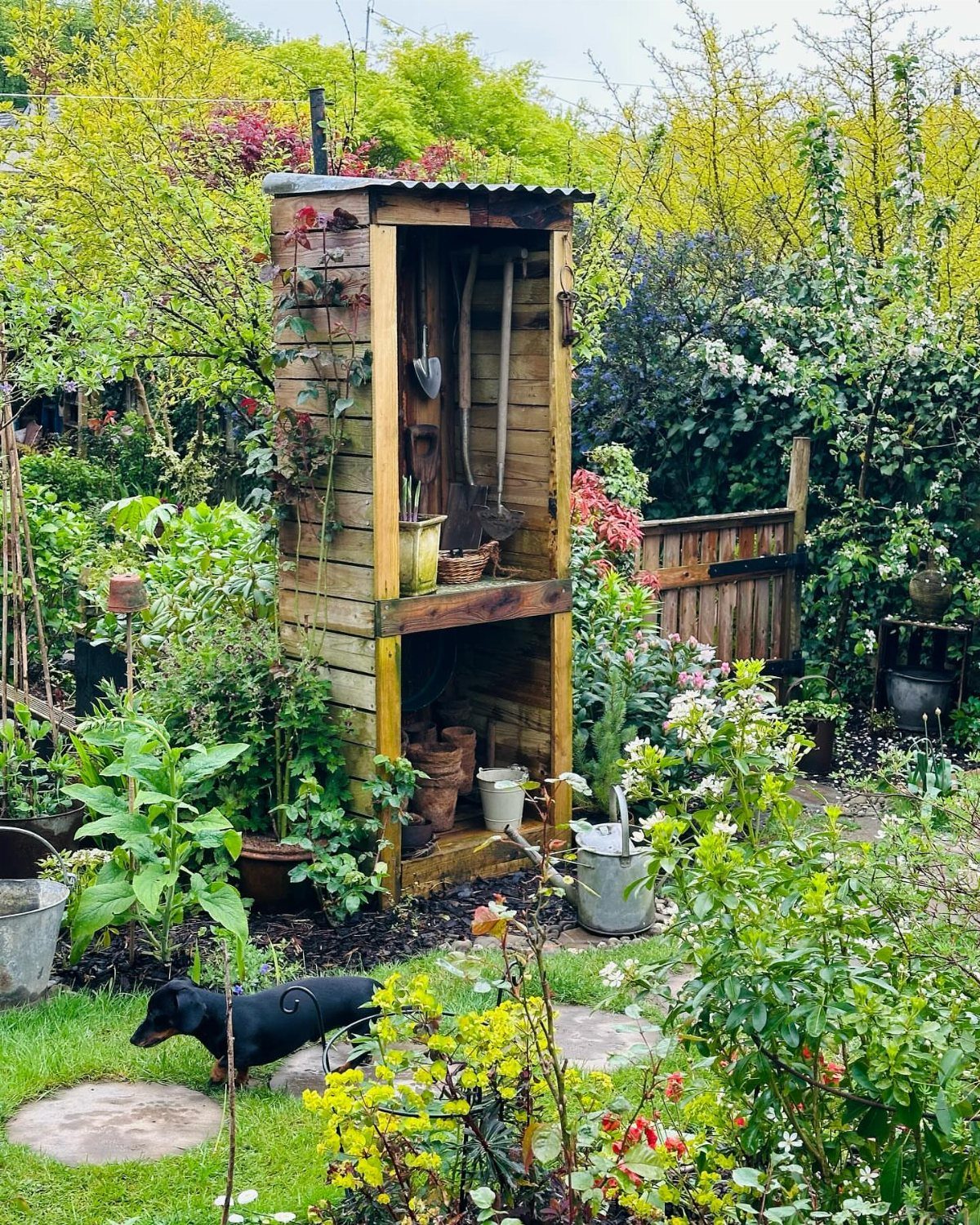
A tall, narrow shed fits into a tight yard or against a fence without blocking garden beds.
This style stores long-handled tools upright and keeps them dry, but the footprint is small enough to tuck between plants or behind a bench.
I like this option when you don’t have room for a full shed but need more than a wall rack can hold.
Check that the roof overhangs enough to shed rain away from the door.
12. Garden Tool Storage Cabinet
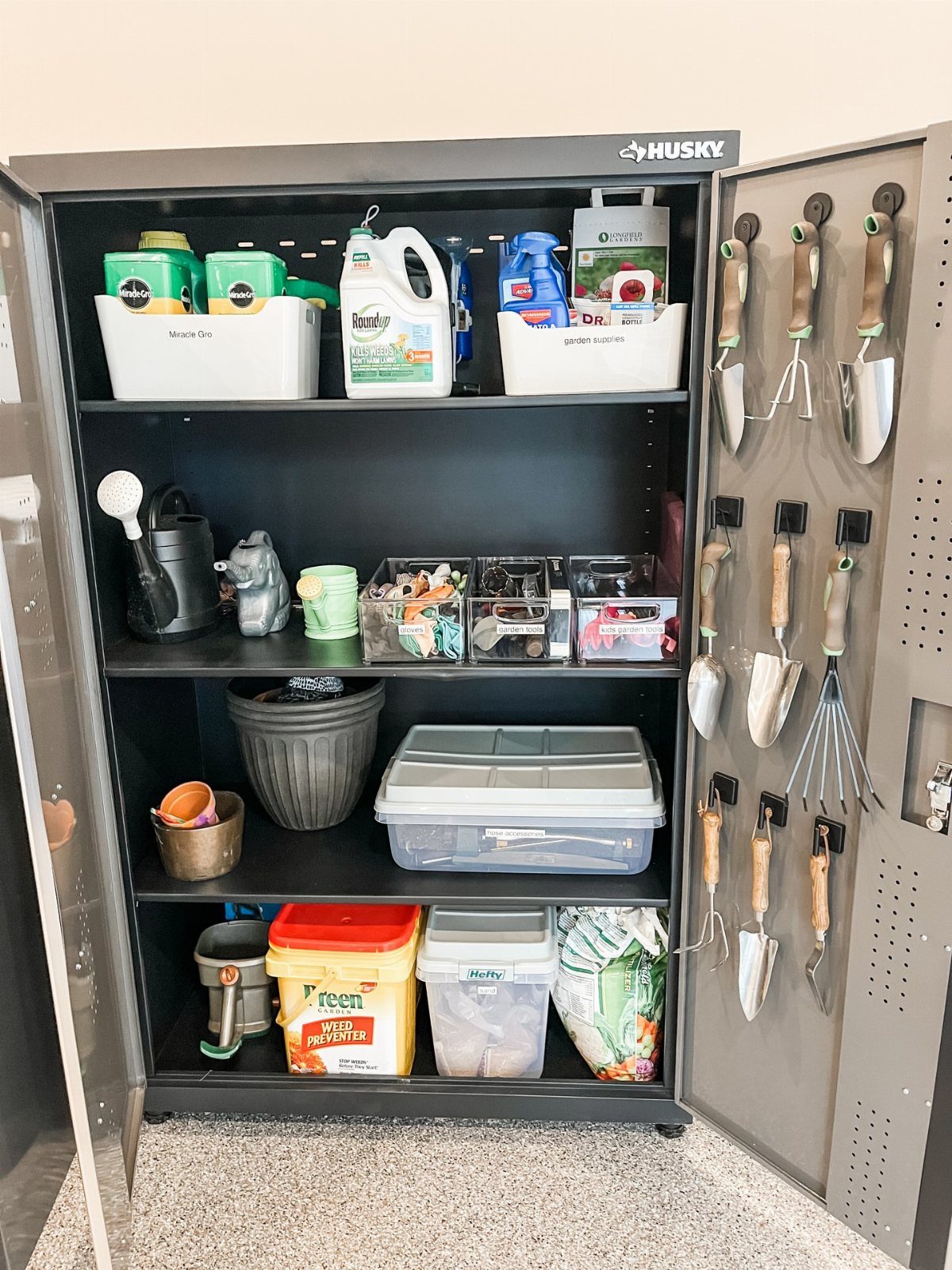
A metal cabinet holds small tools on door hooks and soil, pots and spray bottles on interior shelves.
The cabinet closes, so supplies stay dry and bugs stay out. I like this for a garage or covered patio where you want storage that looks finished instead of open racks and bins.
Look for a model with adjustable shelves if you store taller items like gallon jugs or stacks of seed trays.
13. Power Tool Ceiling Hooks
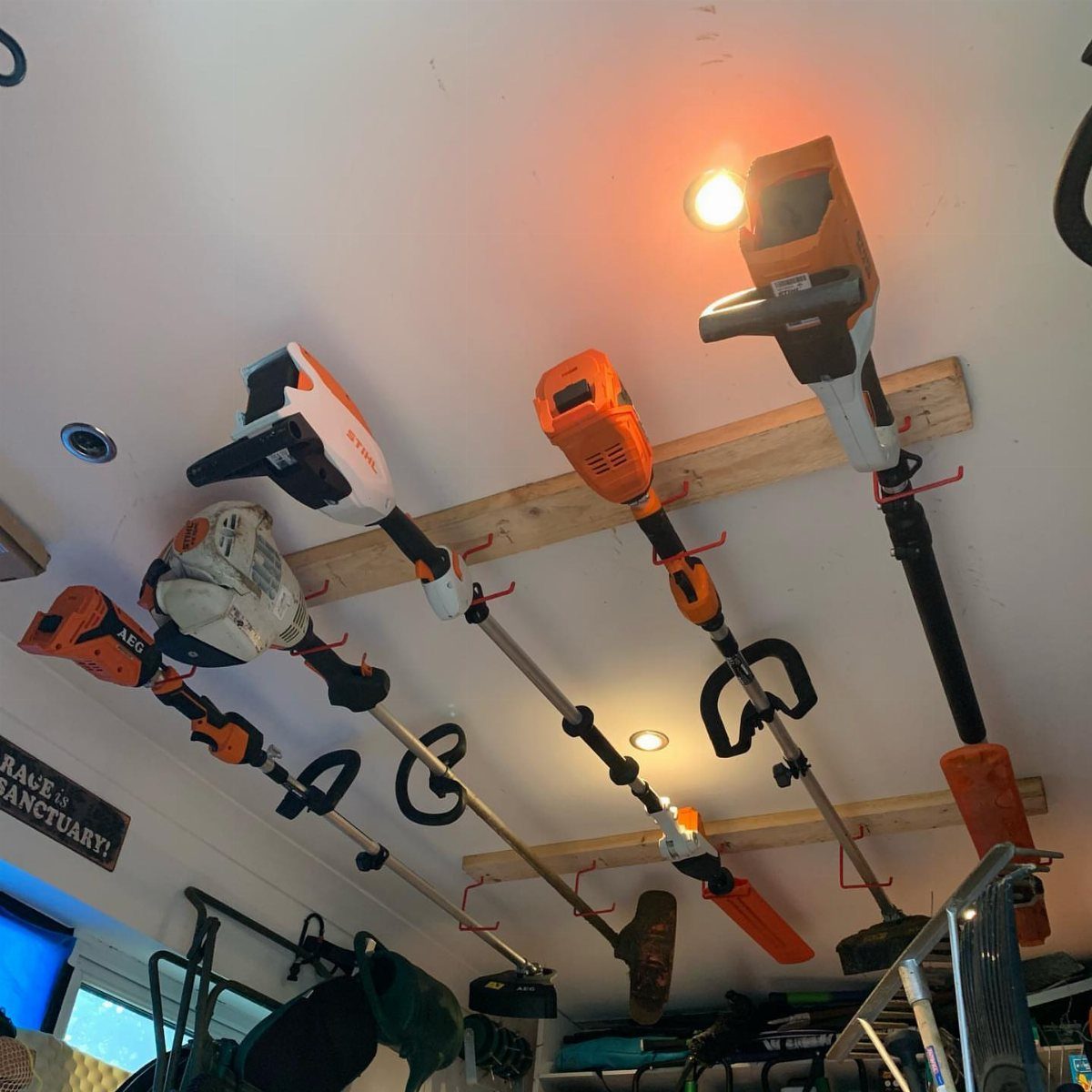
Hang power tools from ceiling hooks to free up floor and wall space in a garage where every surface already holds something.
I like this because blowers, trimmers and edgers stay out of the way but still within reach when you pull a step stool under them.
The tools hang by their handles, so you lift them straight down without dragging across anything.
Make sure the hooks screw into ceiling joists, not just drywall, or the weight will pull them loose.
14. Vertical Power Tool Storage
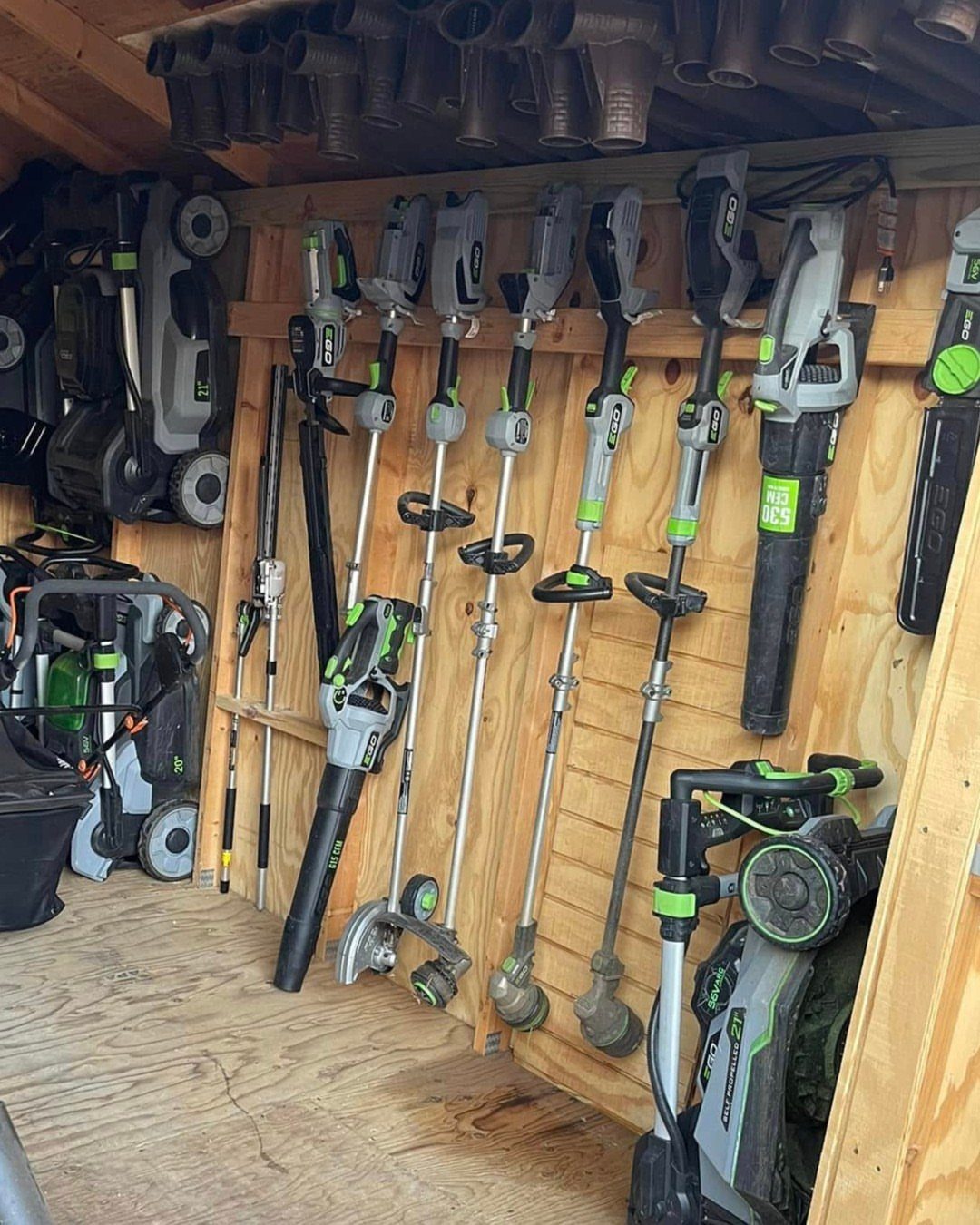
Stand power tools upright against a shed wall so batteries, chargers and extension cords sit on a nearby shelf instead of tangled on the floor.
The tools lean in a row, handles up, which keeps them stable and easy to grab. I prefer this to floor bins because you can see every tool without moving others out of the way.
If your shed floor slopes, add a low rail at the base to keep the tools from sliding forward.
15. Garden Hose Hanger
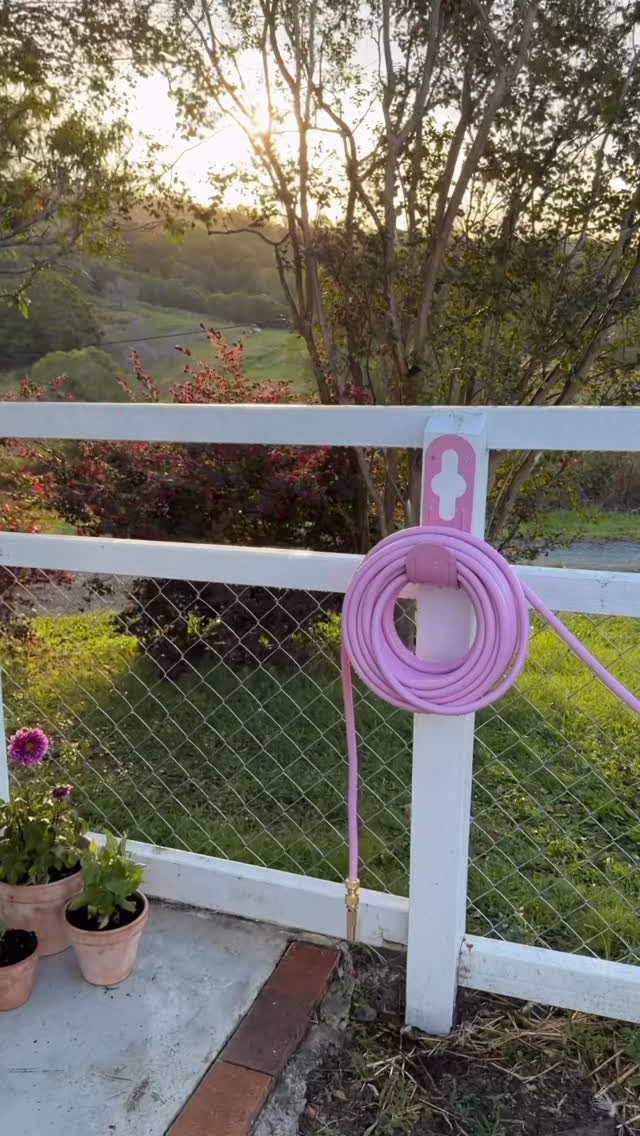
Mount a hose hanger on a fence or shed wall so the hose coils neatly instead of piled in a corner.
The hanger keeps the hose off the ground, which helps it dry faster and saves you from wrestling with it every time you unwind. I like that it takes one screw and costs less than most other hangers.
Hang it near a spigot if you can, so you store and fill from the same spot.
16. Portable Garden Tool Organizer
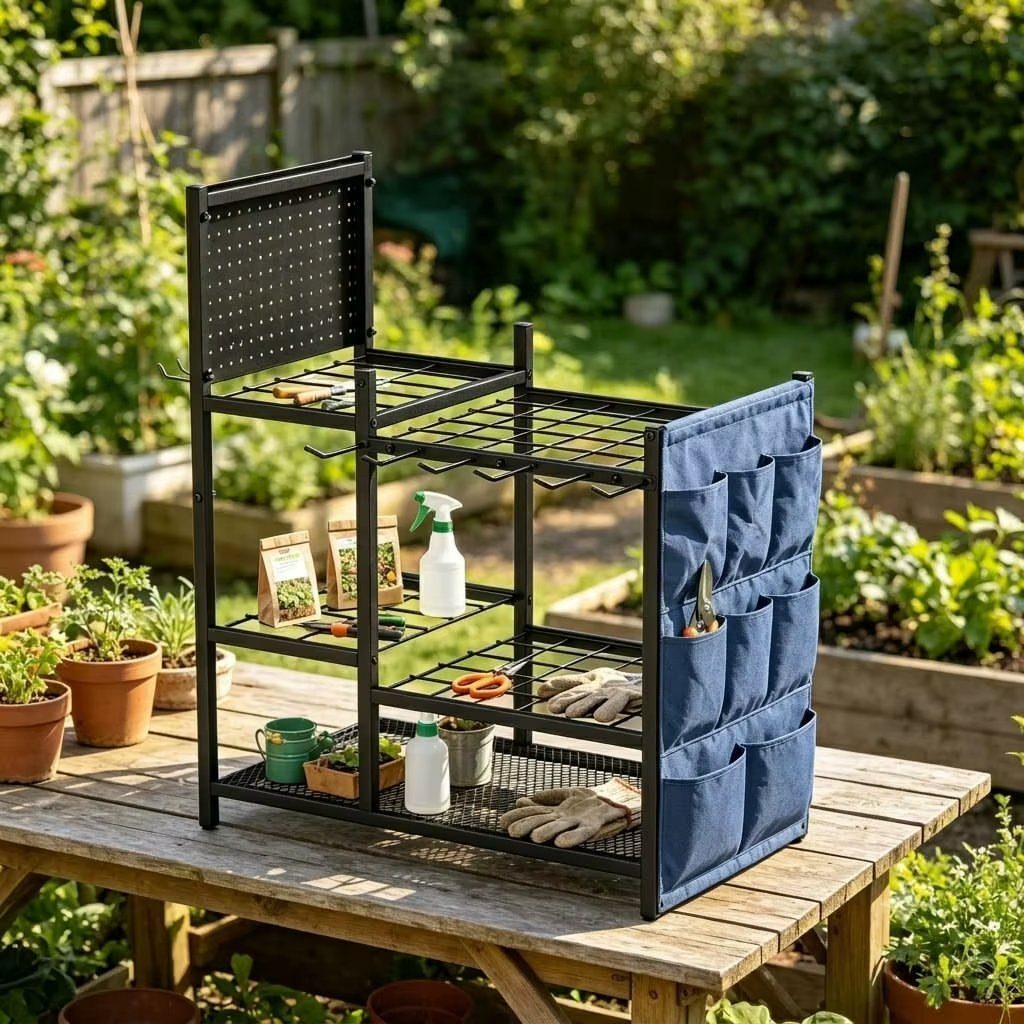
A portable organizer with shelves, a pegboard and side pockets holds tools, gloves and seed packets without wall mounting.
You can move it from the shed to the patio when you work outside, then roll it back under cover when rain starts.
17. Garden Tool Storage Van
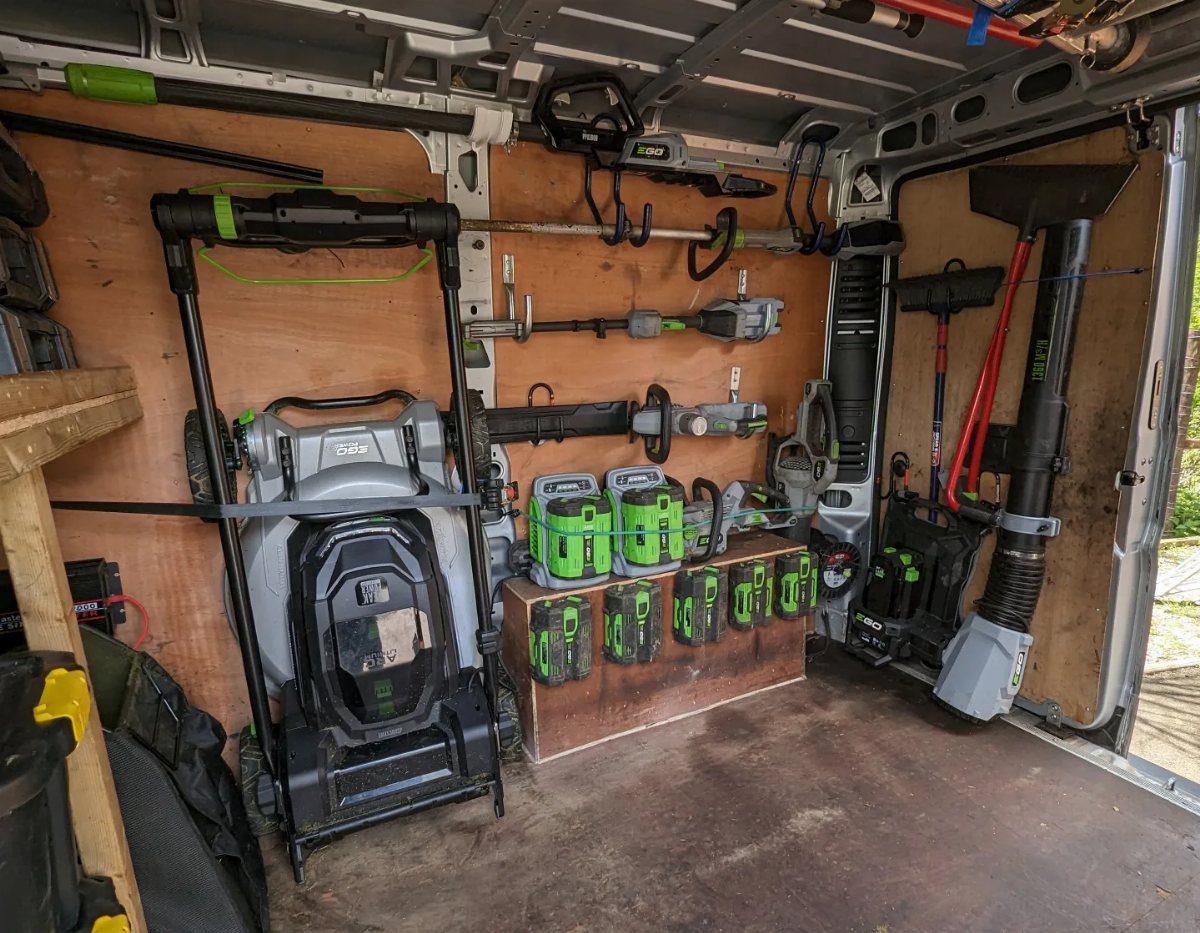
Mount wall racks inside a van to hold power tools and a lawnmower if you haul equipment between job sites or need mobile storage at home.
The tools hang within reach, and the mower straps to the floor or wall so it doesn’t shift when you drive.
I like this setup for a side business or a yard too small for a shed, where the van doubles as a workspace and storage.
Secure heavy items low in the van so the weight doesn’t shift your center of gravity on turns.
18. Garden Tool Storage Rack
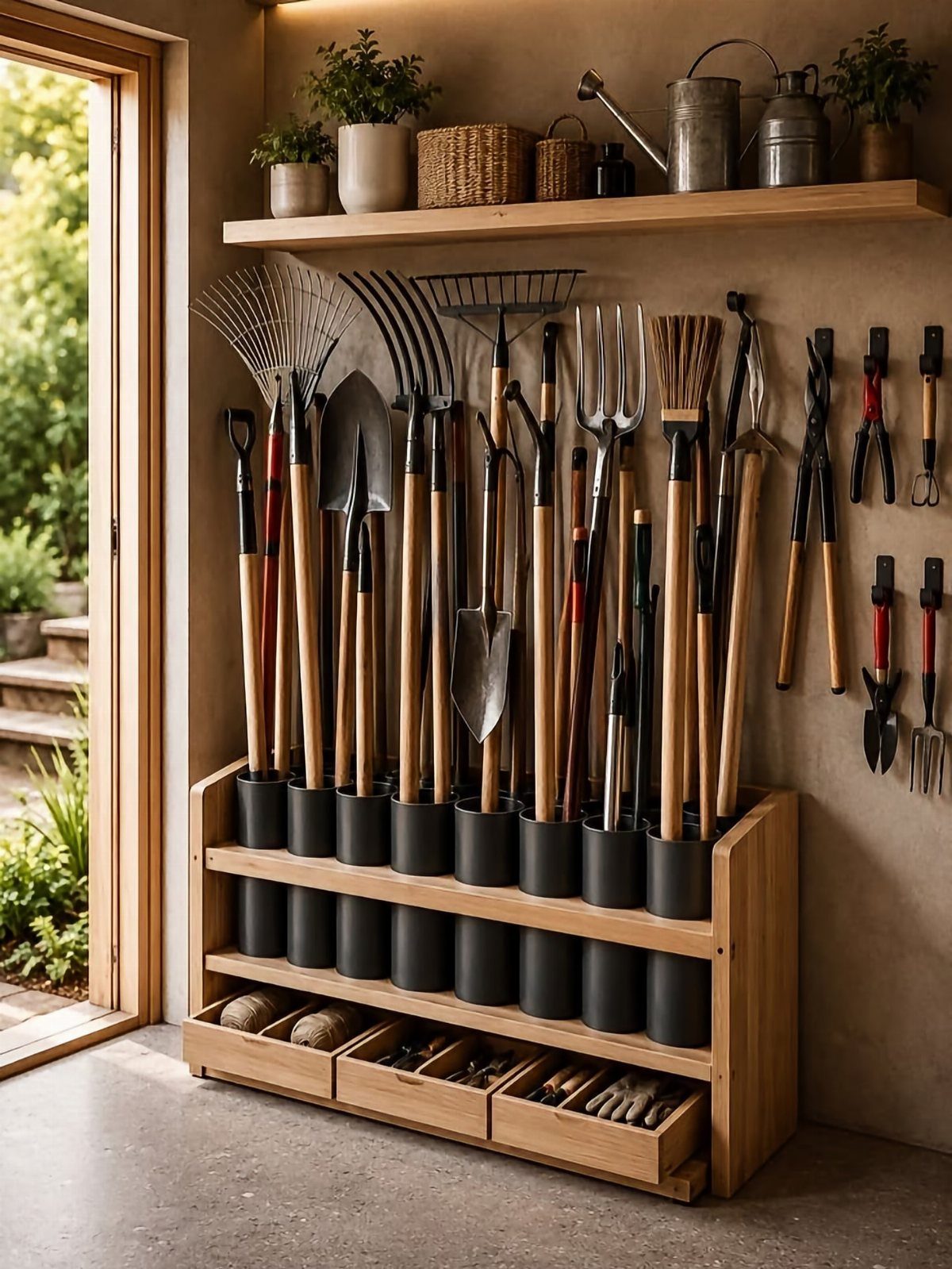
A freestanding rack with tool slots, a top shelf and lower drawers keeps shovels upright and gloves or seed packets sorted in one piece of furniture.
The rack fits near a mudroom door or inside a garage without wall mounting, and the drawers close so small items don’t scatter.
I keep one near the back entrance so tools don’t travel farther into the house when I forget to put them away immediately.
Look for a version with a sealed finish if the rack will sit where rain blows in.
19. Garden Tool Storage Wall
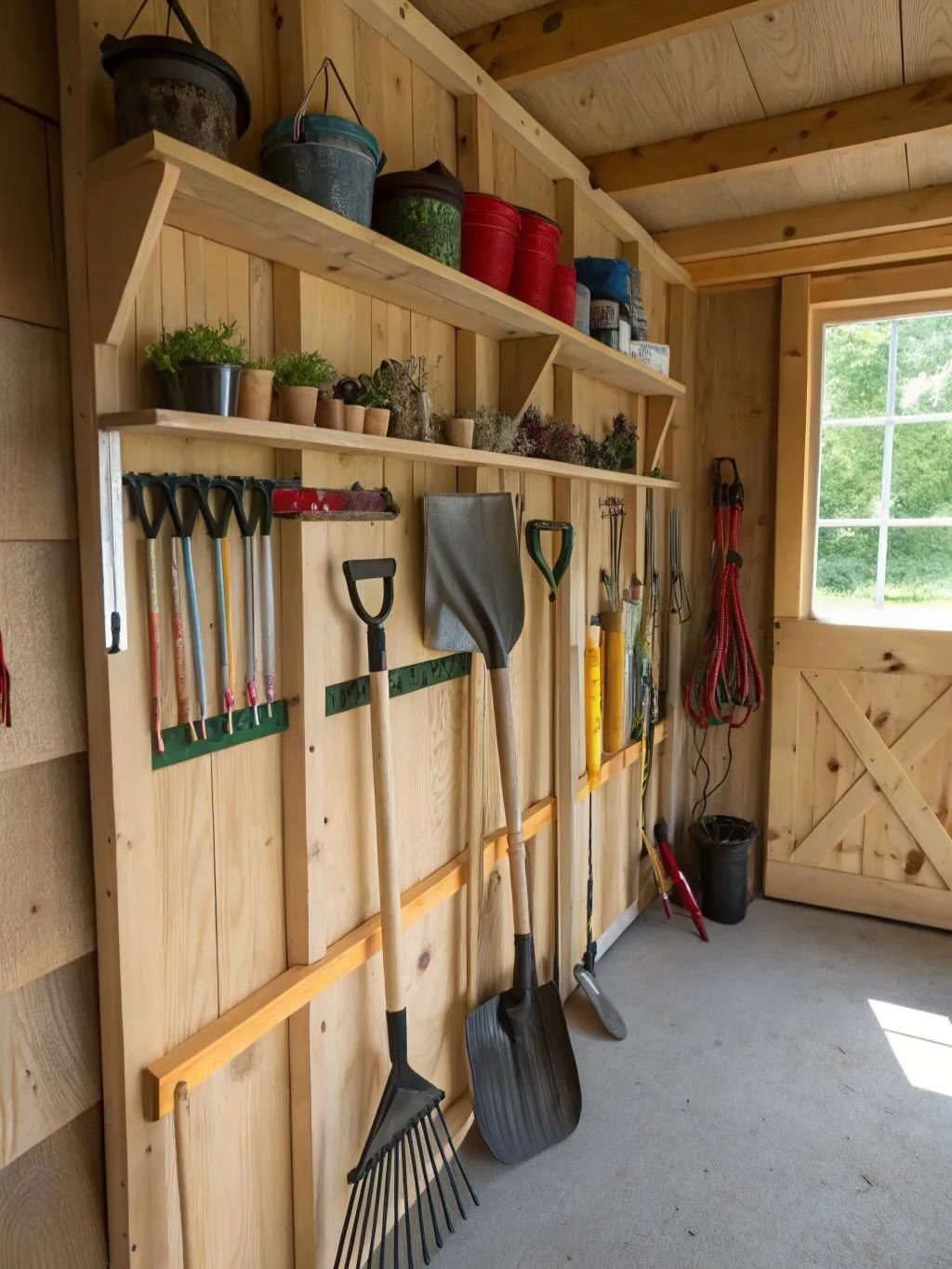
Hooks, brackets or slats keep shovels, rakes and pruners organized vertically on a shed or garage wall.
I like this because the tools stay visible and off the floor, and you can fit more into a narrow space than a freestanding rack would hold.
The rail system lets you hang tools at different heights without measuring exact spacing for each one.
Mount horizontal rails across at least 2 studs so the weight of full tools doesn’t pull the system loose.
20. Potting Bench Storage
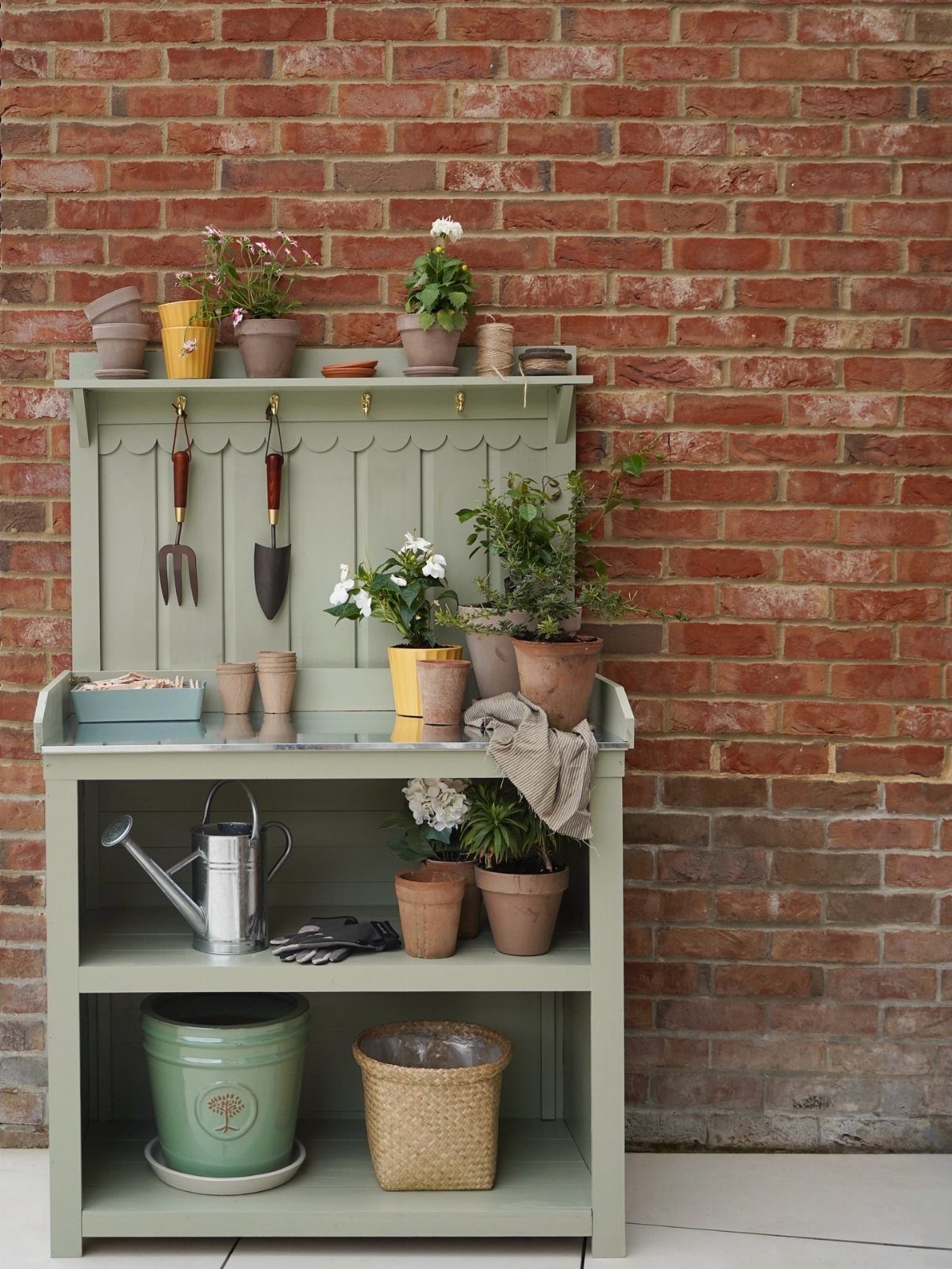
A potting bench with hooks above the work surface keeps hand tools, twine and pruners within reach while you transplant or repot.
The bench holds soil bags and pots on the lower shelf, so you work without stepping away mid-task. Keep one near the garden beds so you don’t haul supplies from the garage every time you need to plant something.
Paint or seal the wood if the bench sits uncovered, or rain will warp the surface within a season.
21. Pallet Pot Storage
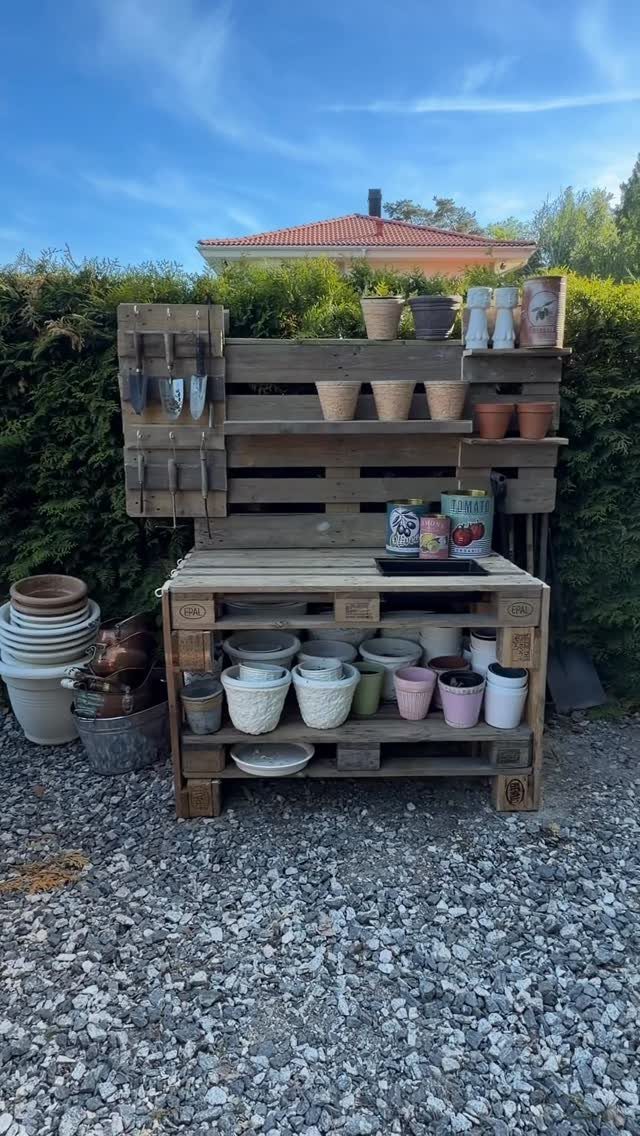
Stand a pallet upright outdoors and use the gaps between slats as open shelves for storing empty pots.
The pallet costs nothing or close to it, and you can lean it against a fence or shed wall without mounting hardware.
I like this for clay and plastic pots that need to drain after rain, since air moves through the slats and water doesn’t pool.
22. Rolling Garden Organizer
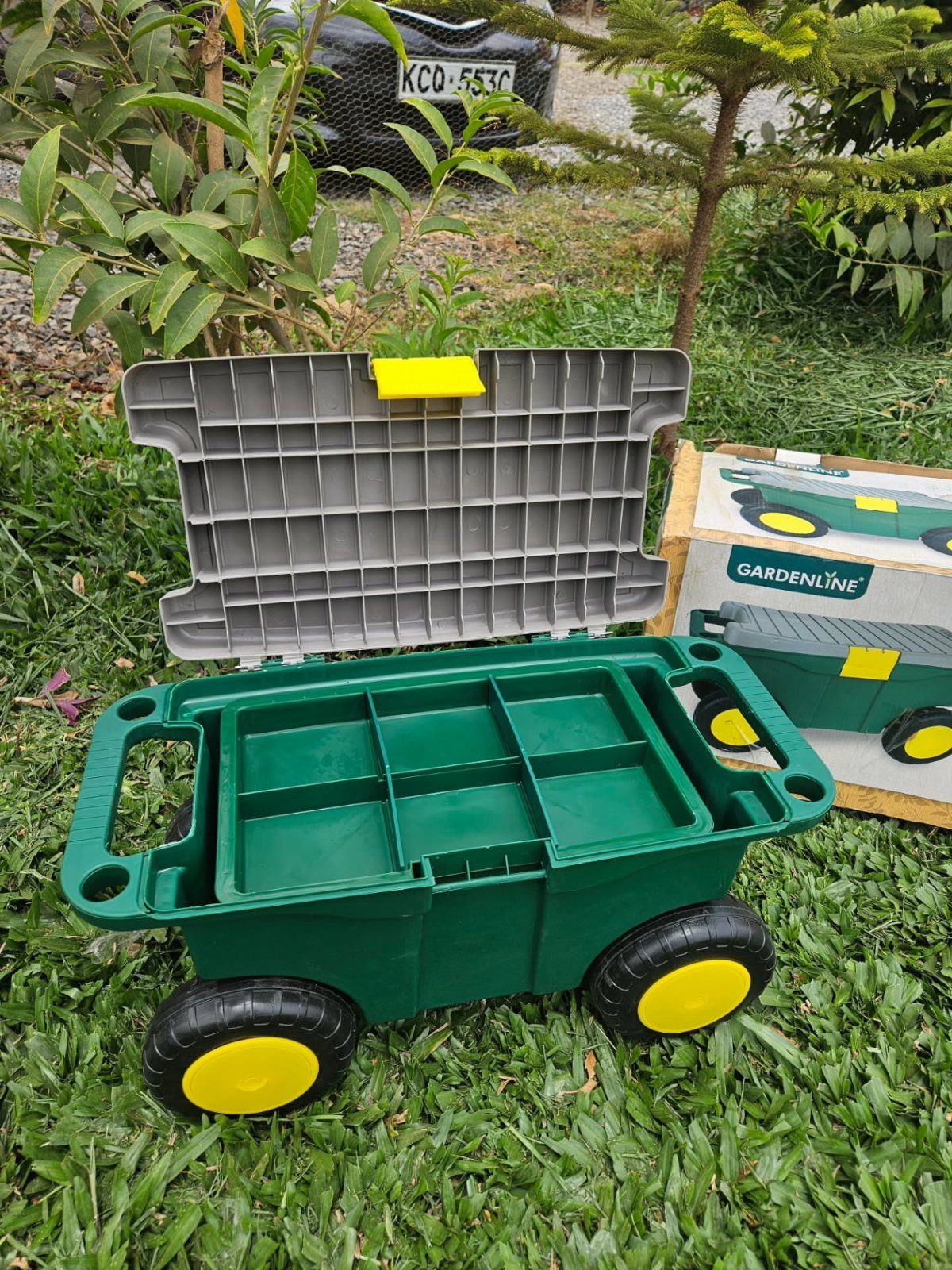
A wheeled plastic organizer with compartments and a tray lets you carry tools, gloves and seed packets from the shed to the garden bed without multiple trips.
The organizer rolls over grass and gravel, and the compartments keep small items separated so you don’t dig through one bin for pruners.
Look for a version with solid wheels if you move it over uneven ground often, or soft wheels will flatten and drag.
Choosing Storage for Your Needs
Consider what you actually need to store before you pick a system. A wall rack that fits 10 tools won’t help if you own 20, and a cabinet wastes money if hooks would hold everything.
Steel and aluminum hold up outdoors without rusting through. Plastic works if it’s thick enough not to crack when something heavy leans against it.
I look at how easy it is to reach what I use most. A system that puts hand tools behind a row of shovels means you move things twice every time you need pruners.
Measure your wall or floor space first. A rack that fits in theory but blocks the door in practice ends up returned or shoved in a corner.
If you need to lock supplies away from kids or animals, a shed or cabinet with a latch works better than open hooks.
Protecting Tools and Users
Sharp tools left loose on a shelf can cut you when you reach past them. Hanging blades up or storing them in a closed drawer keeps that from happening.
Power tools and anything with a battery should sit where water won’t reach them, or the electronics corrode and stop working.
Keep fertilizers, pesticides and anything else that’s labeled with warnings in a locked shed or cabinet if children or pets go near your storage area. A shelf they can’t reach isn’t enough if they climb.
Store hand tools dry so rust doesn’t eat through the metal. A bucket of sand works for small tools, and a roof overhang or enclosed shed keeps rain off larger ones.
Storage Location and Weather
Outdoor storage needs materials that rain and sun won’t destroy. Resin sheds resist water and UV damage without paint, and metal racks hold up if they’re coated to prevent rust.
Wood storage left outside needs a finish or it warps and splits within a season. I re-seal anything wood every couple of years if it sits uncovered.
Marine-grade vinyl and waterproof seals around doors and openings keep water out during heavy rain. Check that seals fit tight before you rely on them, or moisture creeps in at the edges.
Indoor storage in a garage or basement avoids weather entirely, but you give up the convenience of keeping tools where you actually use them.
Frequently Asked Questions
What are some creative ways to store garden tools?
A pallet leaned against a shed wall holds tools between the slats without added hardware, and a bucket filled with sand keeps hand tool metal ends clean while the tools stand upright.
Hooks above a potting bench keep pruners and twine off the counter and easy to grab. These setups cost little and fit into small spaces where a full shed won’t.
Which is better for my garden, a garden storage box or a shed?
A shed gives you dedicated space for long-handled tools and keeps them dry, while a storage box works if you only need to store small items or don’t have room for a full structure.
I pick a shed when I own enough tools to justify the footprint and need to walk fewer steps between storage and the yard. A box fits tighter spaces but won’t hold rakes or shovels upright.
What are some DIY, cheap storage ideas?
Short sections of PVC pipe screwed to a board make simple holsters for long handles.
A pallet propped upright catches handles between the slats, no mounting required. These projects use materials you can find free or close to it.
Is it necessary to have dedicated storage space for garden tools?
Dedicated storage keeps tools organized and protected from weather, but you can manage without it if you own only a few items.
I find that tools left loose get lost, rust faster, or end up scattered across a workspace instead of ready when you need them.
A wall rack or small shed pays off if you use tools often enough that hunting for them wastes time.
Should I store garden tools indoors or outdoors?
A garage or basement keeps metal and wood in better shape, but you walk farther every time you need something.
I keep long-handled tools outdoors in a shed or under a roof overhang, and hand tools indoors near the door so I can grab them without walking through the yard.
Anything outdoors needs to be resin, metal with a coating, or sealed wood.
Are there any tips for maintaining garden tool storage?
Check metal parts for rust and apply oil or paint as needed, and inspect wood storage for warping or splitting if it sits outdoors.
Wood loses its finish faster outside than you think, so plan to recoat it every other year. Wet metal rusts and wet batteries stop working, so both need a dry spot.
Are there any special considerations to make when storing sharp tools?
Hang blades up or store them in a closed drawer so you don’t cut yourself when you reach past them on a shelf.
Blades do better on their own hooks or in a separate bin where they won’t knock into other tools. Sharp tools left loose are a risk every time you grab something else from the same spot.
Is there a good way to protect garden tools from weather damage?
Store tools under a roof overhang or in an enclosed shed so rain doesn’t rust metal and sun doesn’t crack plastic handles. Resin won’t rot or fade, and powder-coated metal stays rust-free longer than bare steel.