
Most reach-in closets come with one rod and one shelf, which leaves about half the vertical space empty.
The right fix depends on whether you have more hanging clothes or more folded items. If most of what you own hangs, a second rod or a corner rod uses the walls you already have.
1. Double-hang Rods
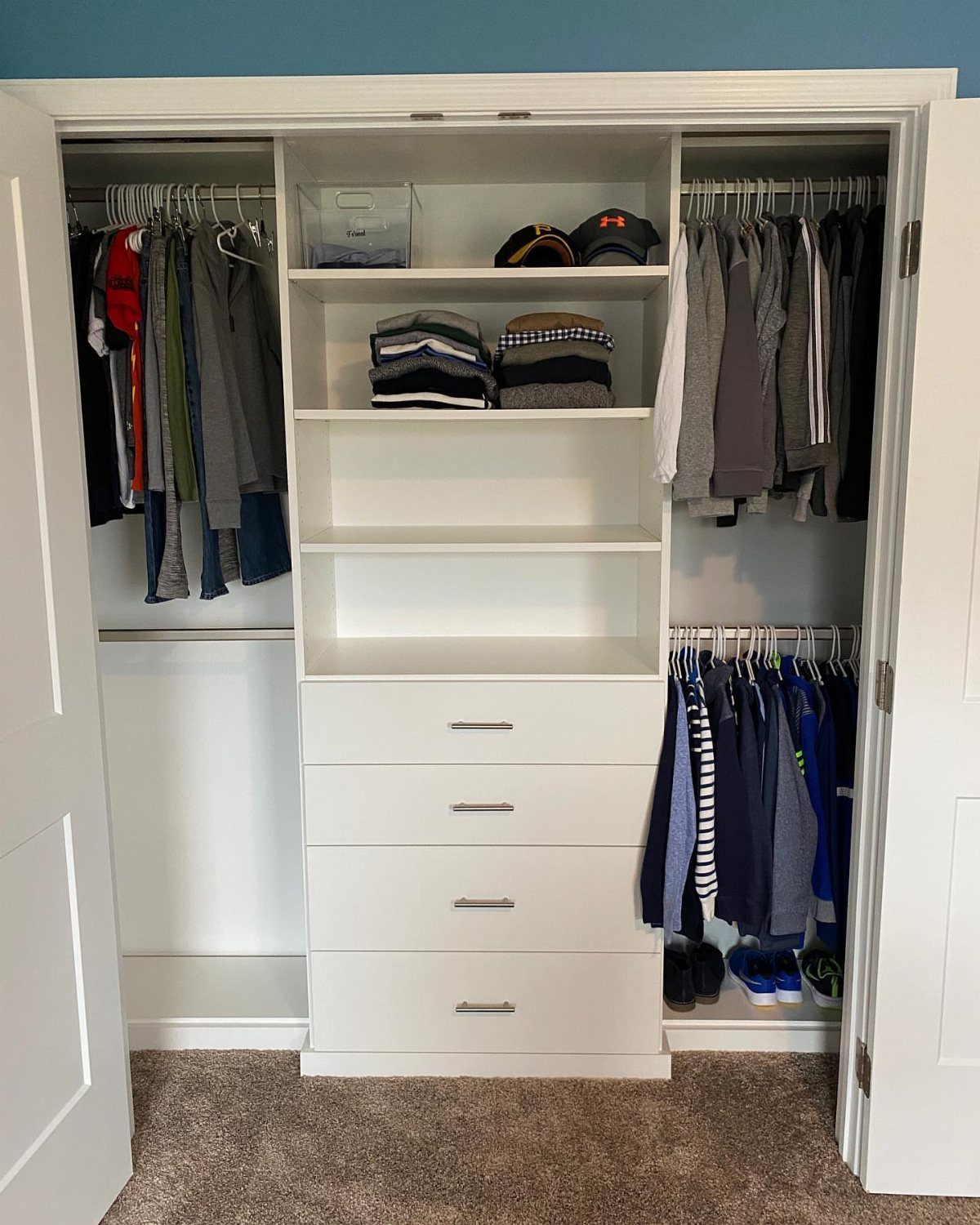
Hanging rods stacked one above the other let you fit twice as many short items in the same wall space.
Shirts, folded pants, and skirts take up less than half the height of a closet, so a second rod below the first uses what would otherwise be empty air.
Most closets come with one rod mounted high. Adding a lower rod is a matter of screws and brackets, or you can hang a second rod from the first with adjustable straps.
This setup works best when most of what you hang is short. If you need room for dresses or long coats, keep one section single-height and double the rest.
2. Custom-fit Closet System
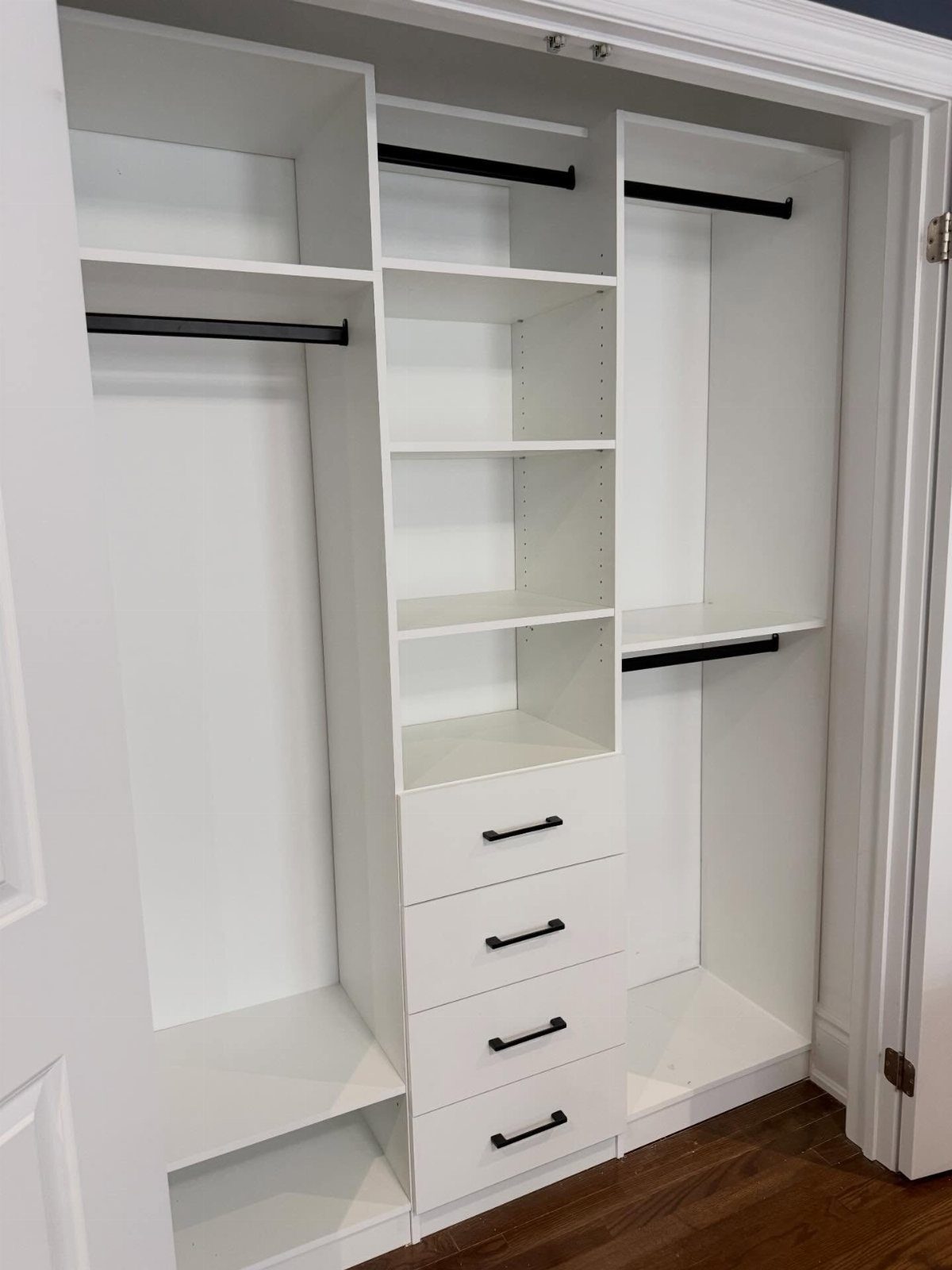
A system built to fit the closet replaces generic rods and shelves with sections sized for what you actually store.
Drawers, cubbies, and hanging rods go where they make sense, and everything gets a spot that keeps it visible and easy to reach.
You can buy modular kits that adjust to your measurements, or have a system cut and installed to match the space exactly. Either way, the layout follows your clothes and your routine, not just what a builder dropped in.
This makes the most sense if you plan to stay put for a while or if the closet feels frustrating to use as it is.
According to professional organizer Michelle Vig of Neat Little Nest, “When you have a small closet, it’s important to maximize your vertical space. This might mean getting additional shelving installed so you can use all the space to the ceiling.”
3. Storage Bins
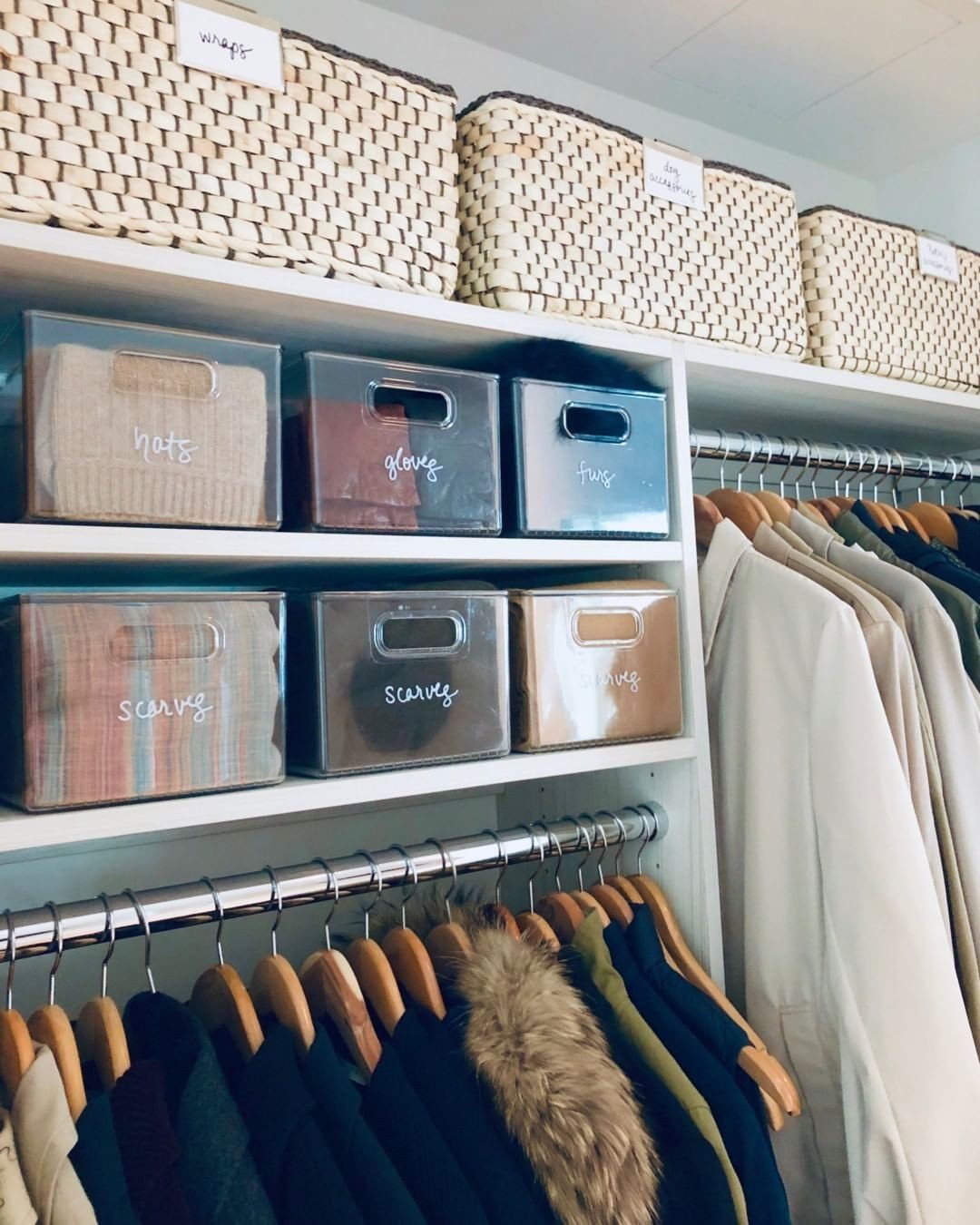
Bins corral the small stuff that tends to scatter on shelves: scarves, hats, gloves, belts, or anything seasonal. Clear plastic bins let you see what’s inside without opening them, and woven baskets hide things you don’t reach for often.
Labels keep things from migrating between bins, which matters more than it sounds like when you’re looking for one specific scarf on a weekday morning.
This idea works on any shelf you already have. Pick bins that fit the shelf depth so they don’t stick out past the edge or leave a wide gap behind them.
4. Closet Drawers
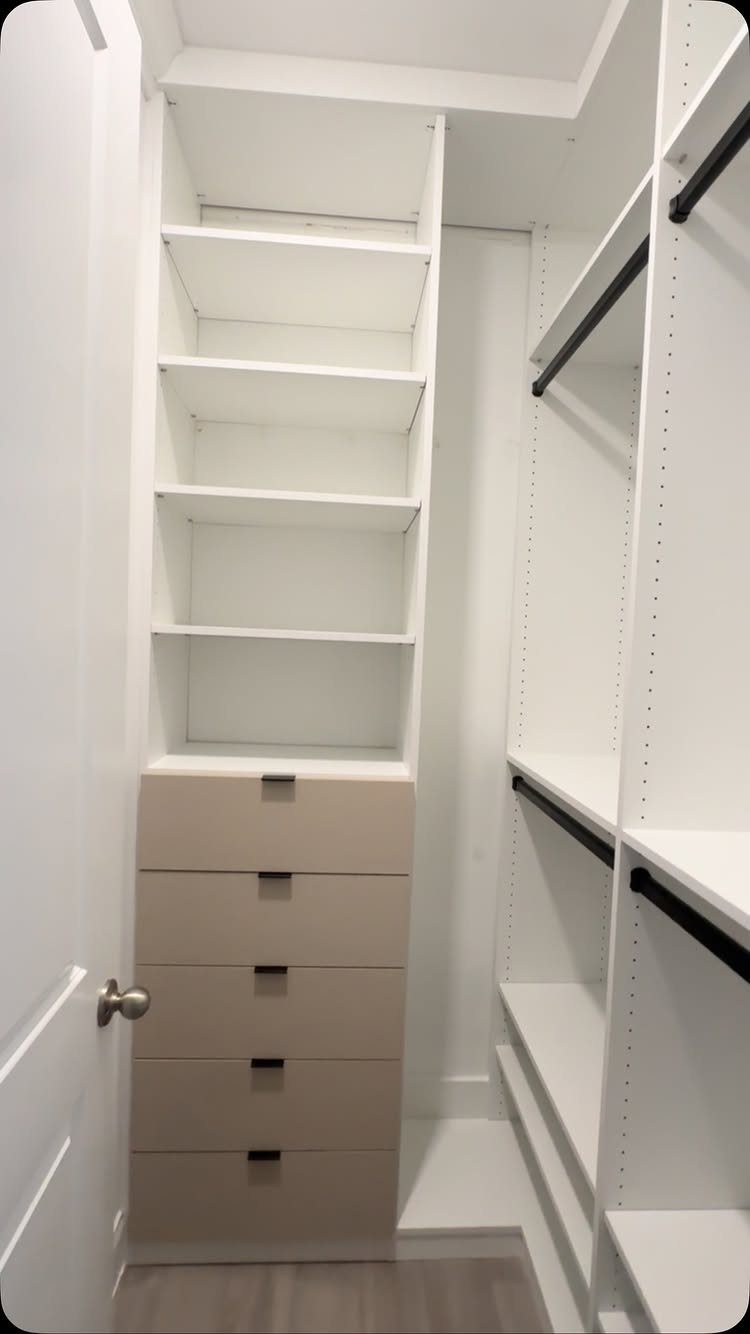
Drawers give small clothing and accessories a contained spot instead of a pile on a shelf or a bin you have to pull down and dig through. Socks, underwear, belts, and folded t-shirts stay sorted and easy to grab.
Built-in drawer units fit inside the closet frame and sit flush with shelves and rods. Freestanding drawer carts slide in if you don’t want to install anything.
Drawers take up more vertical space than open shelves, so this works best if you have enough height to stack them without losing hanging room where you need it.
5. Shoe Shelves
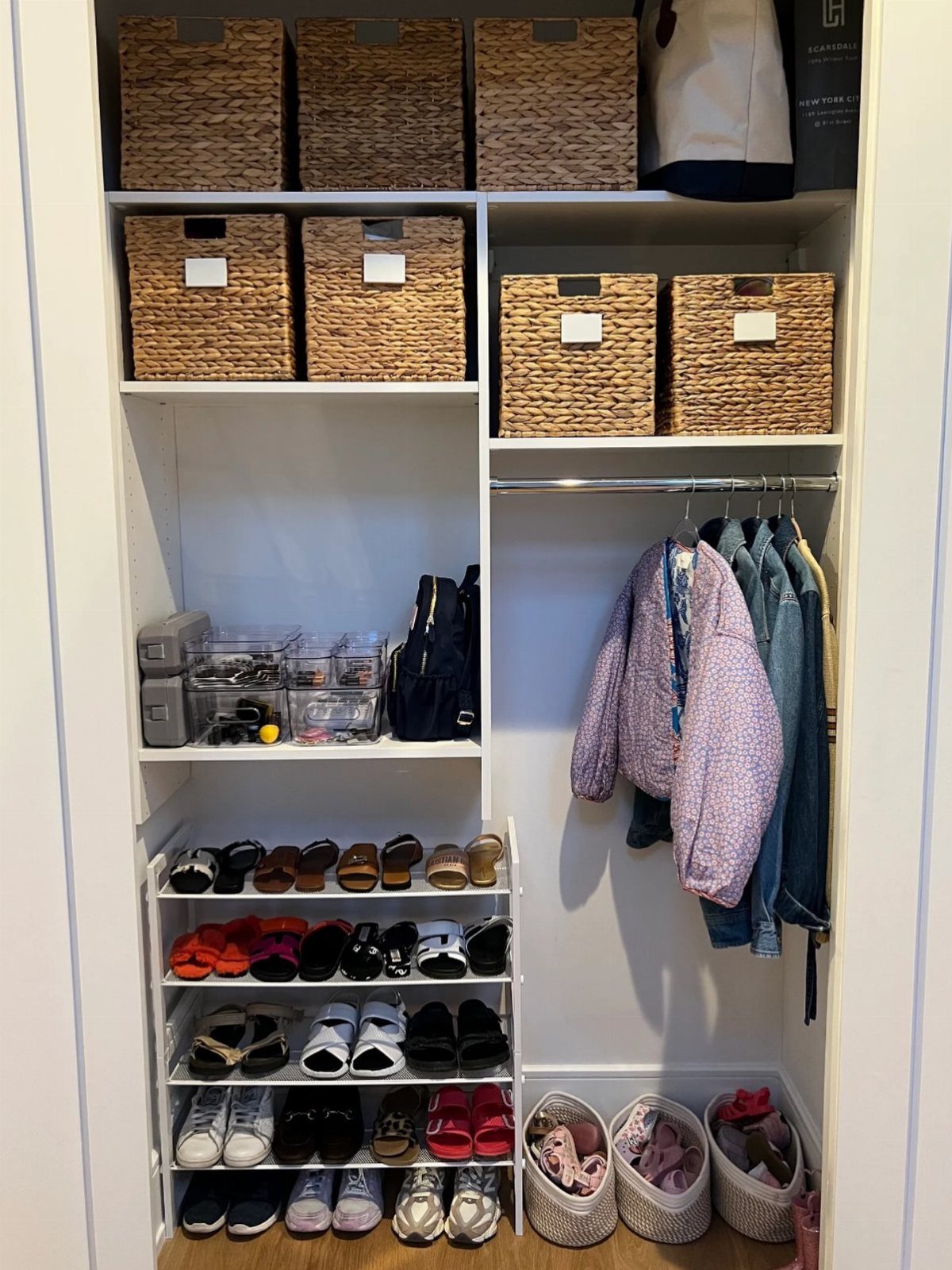
Shelves sized for shoes get pairs off the floor and make it easier to see what you have. A tiered rack or a set of narrow shelves holds several pairs in the space one shelf would normally take.
Angled shelves or racks that hold shoes heel-to-toe fit more pairs per square foot than flat shelves. If your closet is wide but shallow, a horizontal rack along the back or side wall keeps shoes visible without blocking hanging space.
This setup assumes you wear most of your shoes regularly. Off-season pairs can go in bins higher up to save the good shelf space for what you reach for every week.
6. Folded Clothes Shelves
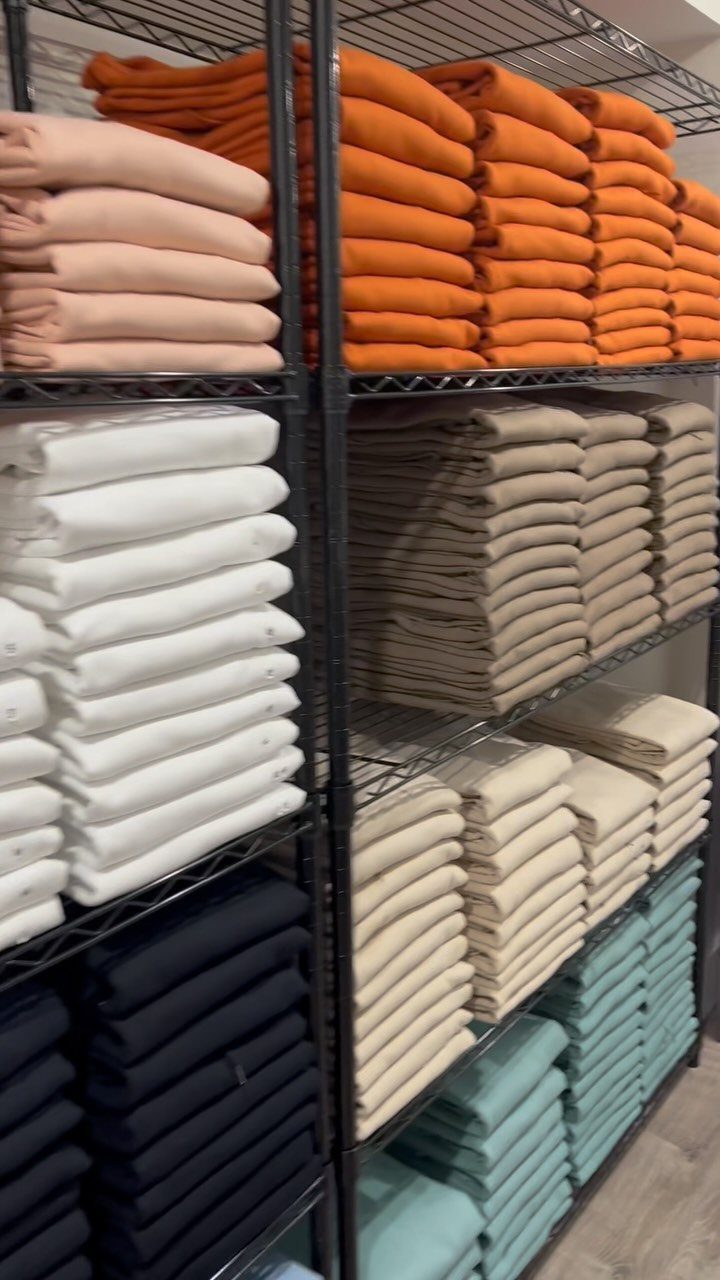
Folded clothes on open shelves keep everyday items visible and easy to grab without hanging or storing them in drawers. T-shirts, sweaters, jeans, and shorts stack neatly and take up less horizontal space than they would on hangers.
Wire shelving works well here because air circulates and you can see through to the back. Solid shelves are fine too, just make sure they’re shallow enough that stacks don’t get buried behind each other.
Fold items to the same width so stacks line up cleanly.
If a stack gets too tall, split it into 2 shorter stacks side by side so you don’t have to pull out half the pile to reach the bottom shirt.
7. Cubbies
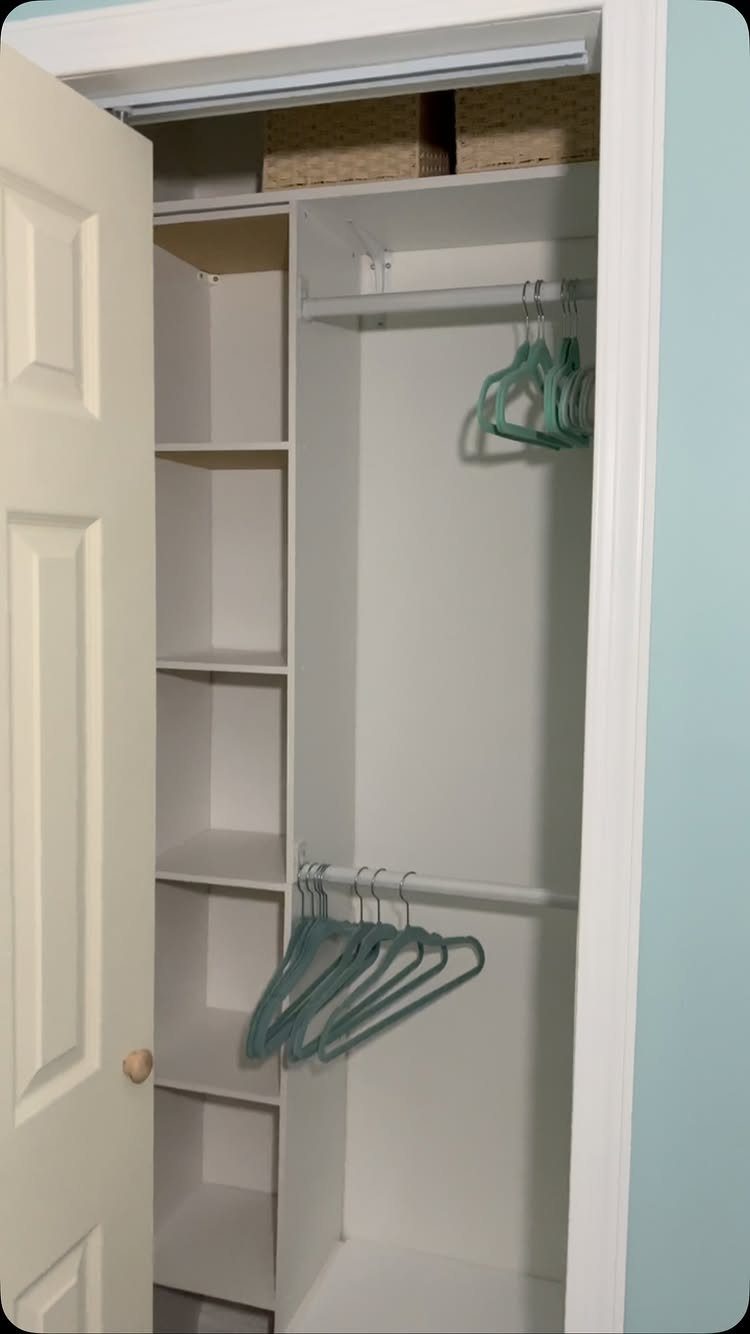
Individual cubbies keep small items sorted without the shifting and mixing that happens on open shelves. Each compartment holds one type of thing: a folded sweater, a pair of shoes, a stack of shirts, or a bin of accessories.
Wire or wood cubby inserts drop into existing closet frames, or you can stack modular cube units on the floor. Size the cubbies to what you’re storing so items fit without wasted space above them.
This works well for kids’ closets where toys and clothes need to stay separated, or for adults who want each category of clothing in its own spot.
8. Thin Hangers
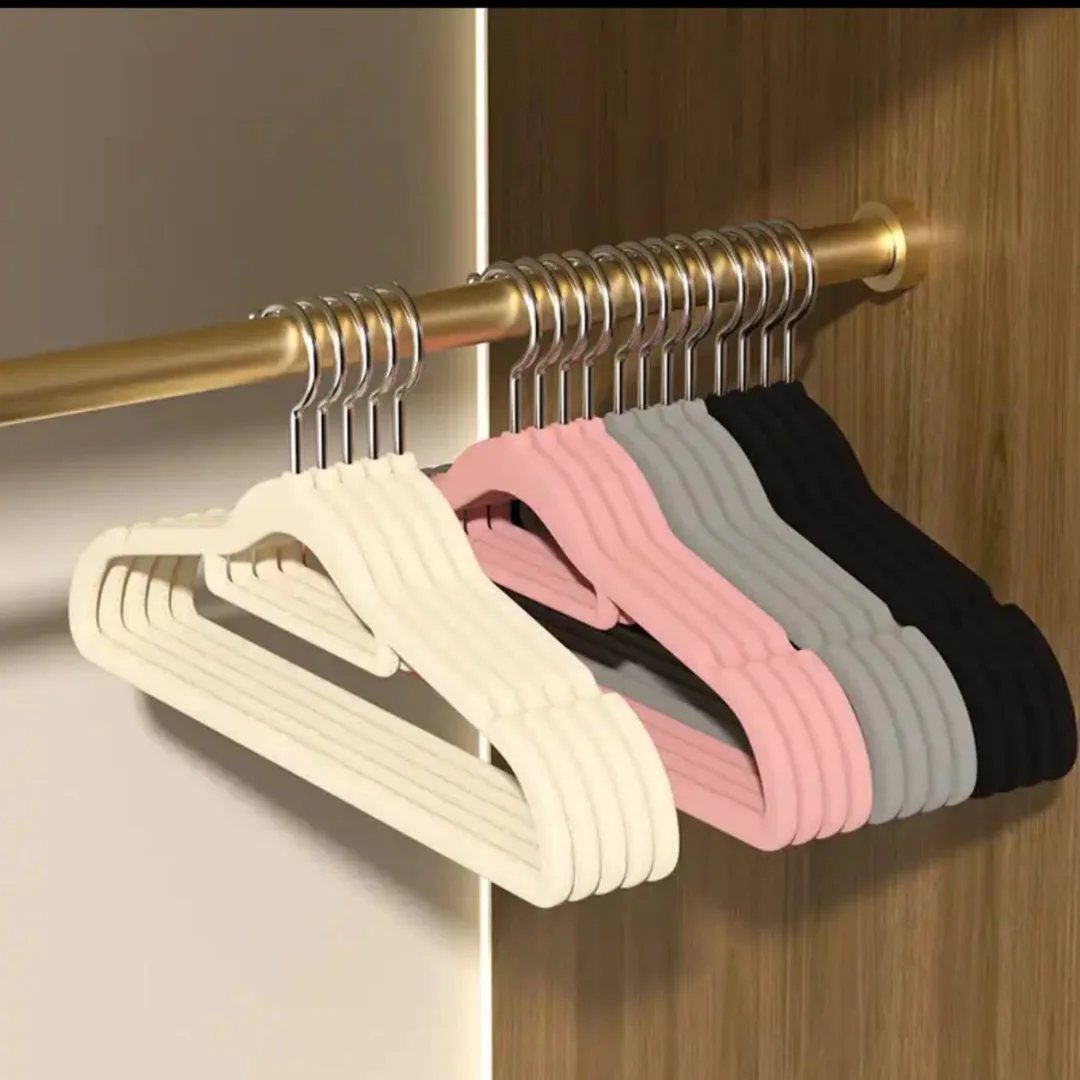
Velvet or flocked hangers measure about a quarter inch thick, compared to the inch or more that plastic and wooden hangers take up. Switching to slim hangers can double the number of items you can hang on the same rod.
The textured surface grips fabric so clothes don’t slide off, which matters more on a crowded rod where hangers sit close together. Metal hooks swivel to make hanging easier in tight spaces.
If you’re keeping some wooden hangers for coats or structured jackets, move those to one end and use slim hangers for everything else.
9. Solid Shelving
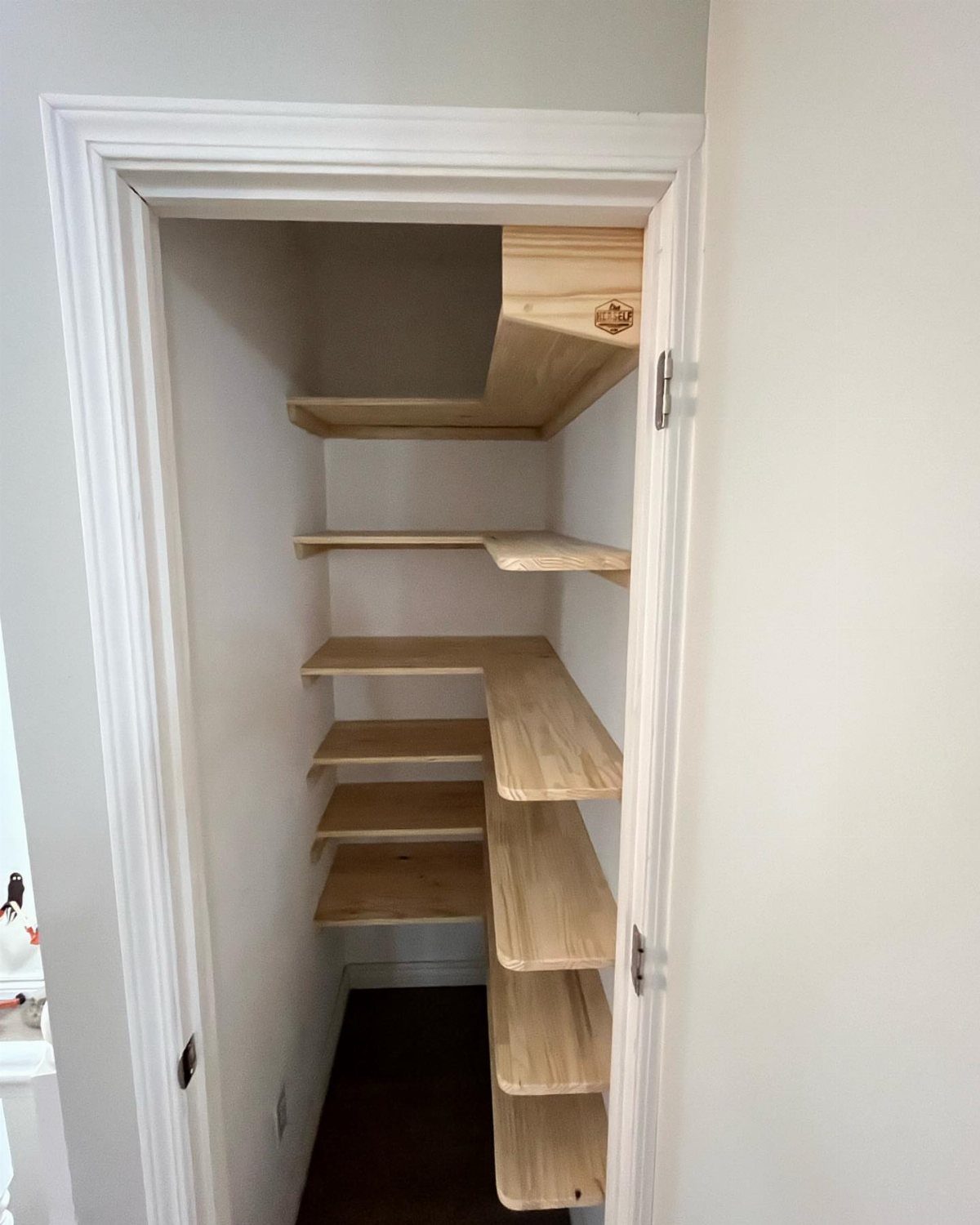
Wood or laminate shelves give you a flat surface that holds folded clothes, bins, and shoes without items tipping through the gaps the way they do on wire racks. Small things stay put, and stacks sit level.
Solid shelves also hide what’s behind them, which can make a closet look cleaner if you tend to pile things in the back.
Wire shelves let you see through to the wall, which either helps you find things or reminds you of the mess, depending on how you use the space.
This swap makes the most difference if you’re storing a lot of small folded items or accessories that currently fall through wire spacing.
10. Jewelry Display
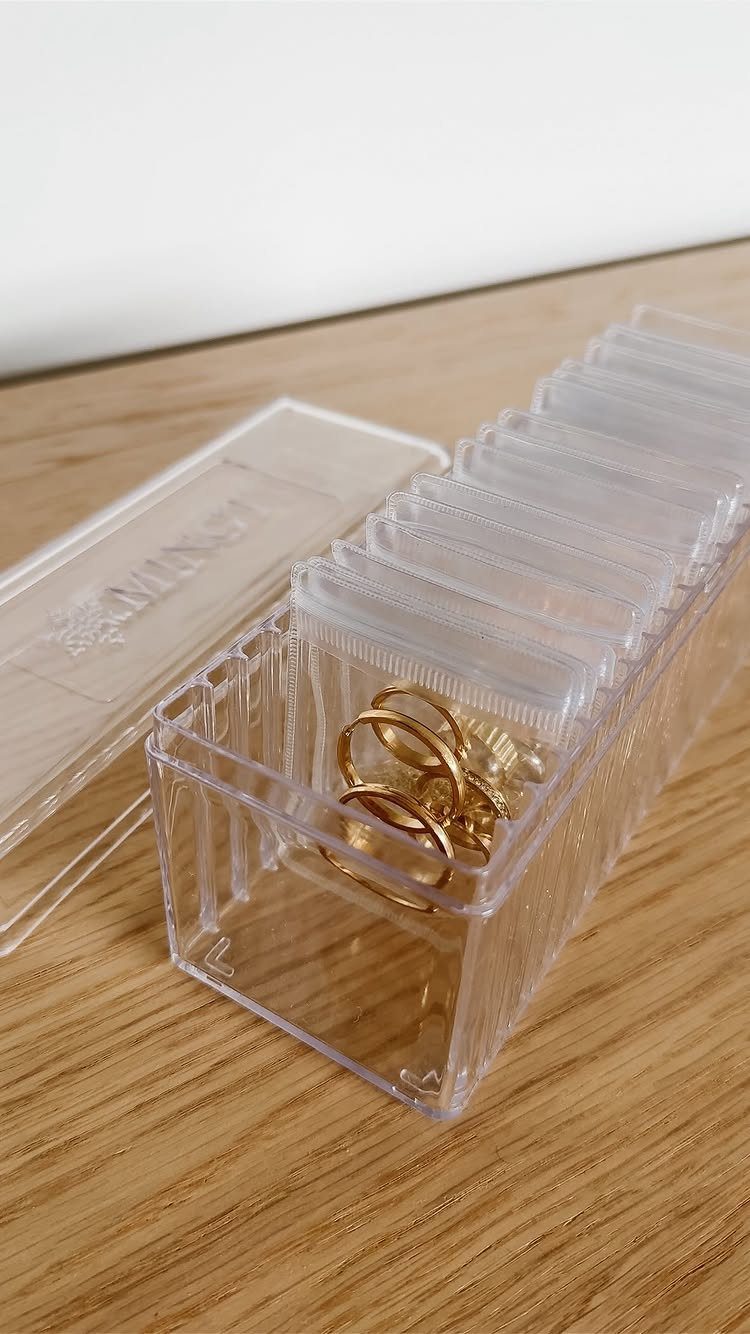
A clear tray or compartmented box keeps rings, earrings, and necklaces separated and visible at a glance instead of tangled in a drawer or scattered on a dresser.
Each piece gets its own slot or bag, so you can find what you need without sorting through everything.
Acrylic organizers fit on closet shelves or in shallow drawers. Some come with small zip bags for extra protection, which helps if you’re storing pieces you don’t wear every day.
This setup assumes you have a shelf or drawer to dedicate. If closet space is tight, a hanging jewelry organizer on the back of the door keeps accessories off the shelves entirely.
11. Perforated Storage Bins
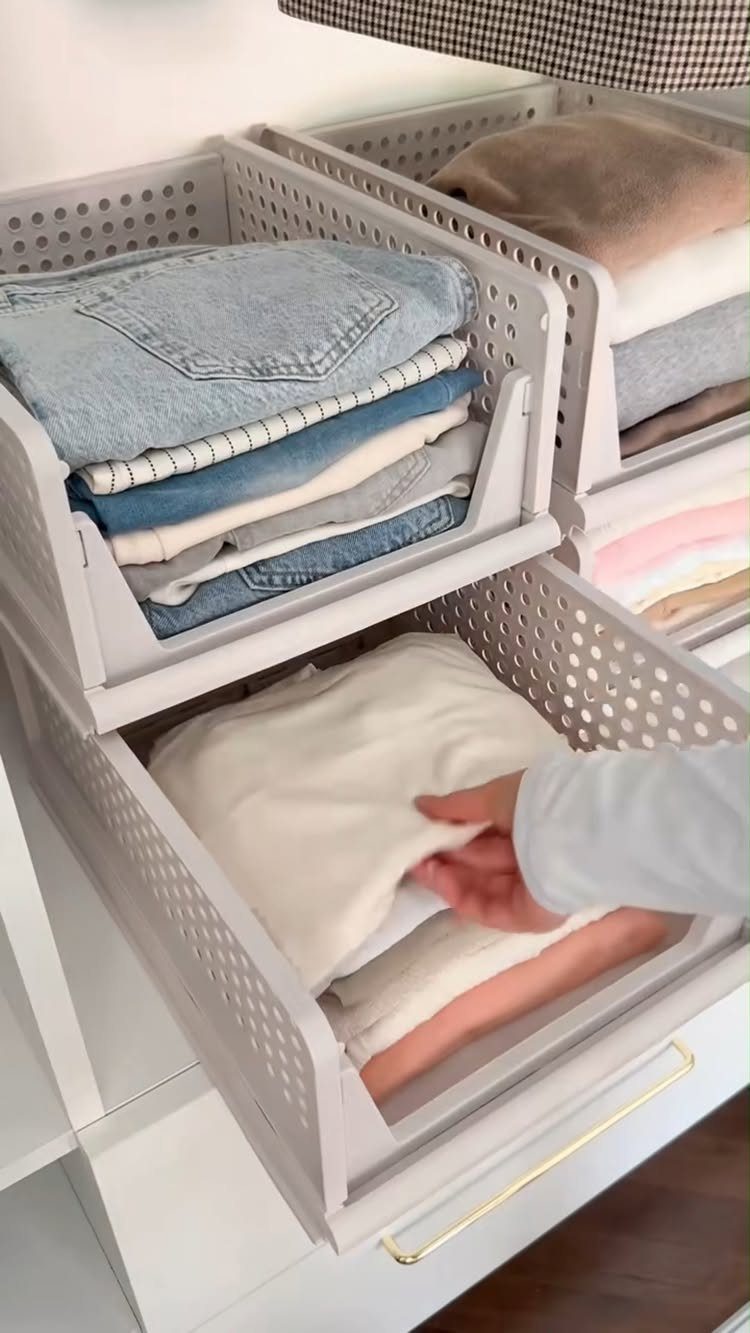
Bins with ventilation holes let air reach folded clothes so they don’t pick up that closed-in smell, and the holes also make it easier to see what’s inside without opening the lid.
Matching bins lined up on a shelf look cleaner than a mix of sizes and colors.
The perforations mean these bins work best for clean, folded items, not anything dusty or small enough to fall through the holes. Group similar items in each bin so you’re not digging through three bins to find one shirt.
This idea makes the most sense if you have several categories of folded clothes and want them separated but still easy to pull out and carry.
12. Closet Lighting
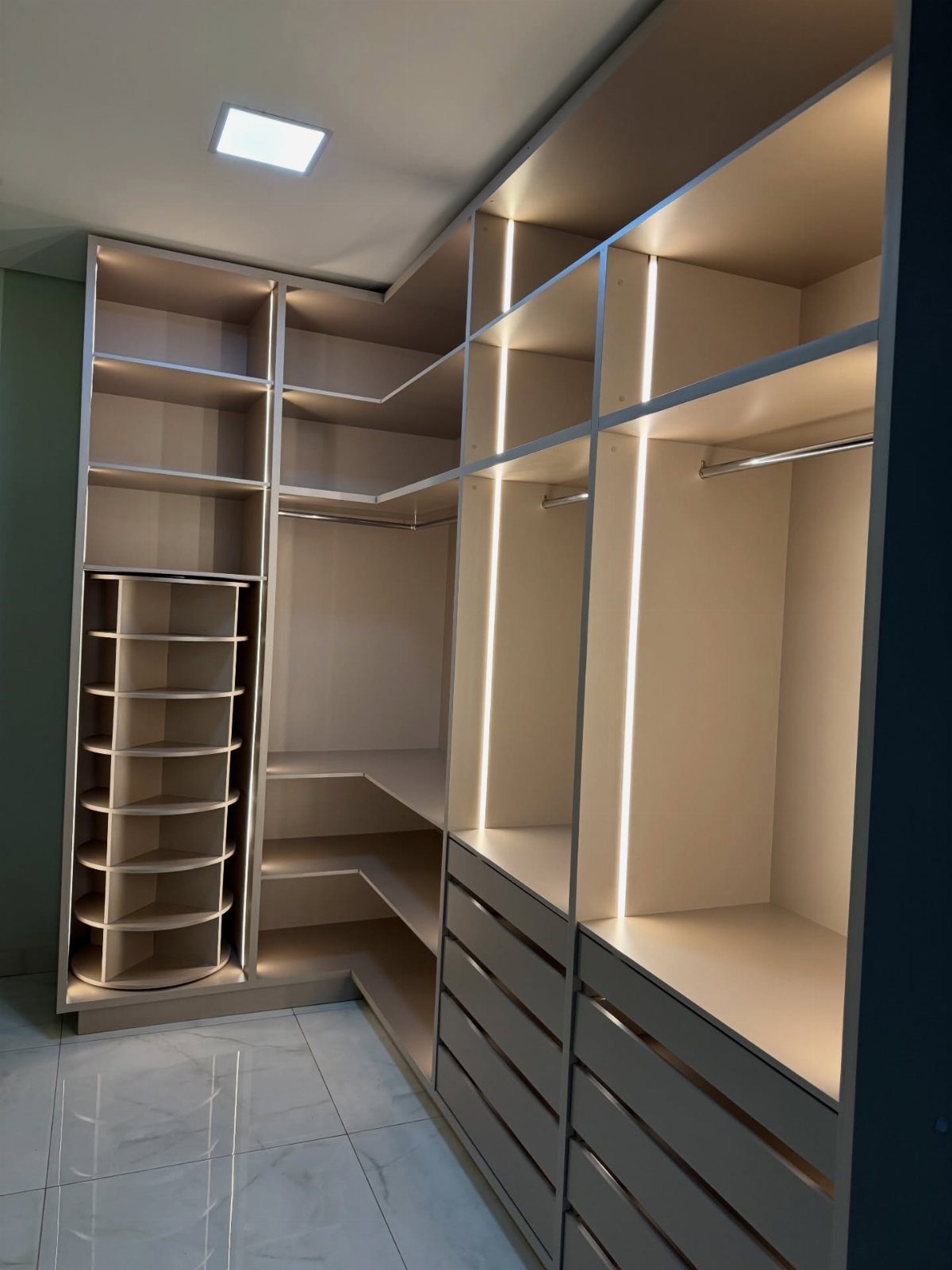
A light inside the closet lets you see what you’re reaching for without relying on the room behind you, which matters most in closets that don’t have windows or that sit in hallways with weak overhead lighting.
LED strips stick along the inside edge of shelves or down the side walls and plug into an outlet or run on batteries.
Motion-sensor options turn on when you open the door and off when you close it, so you don’t have to find a switch.
This addition takes a few minutes to install and costs less than leaving clothes you can’t see unworn because you forgot they were there.
13. Corner-spanning Hanging Rods
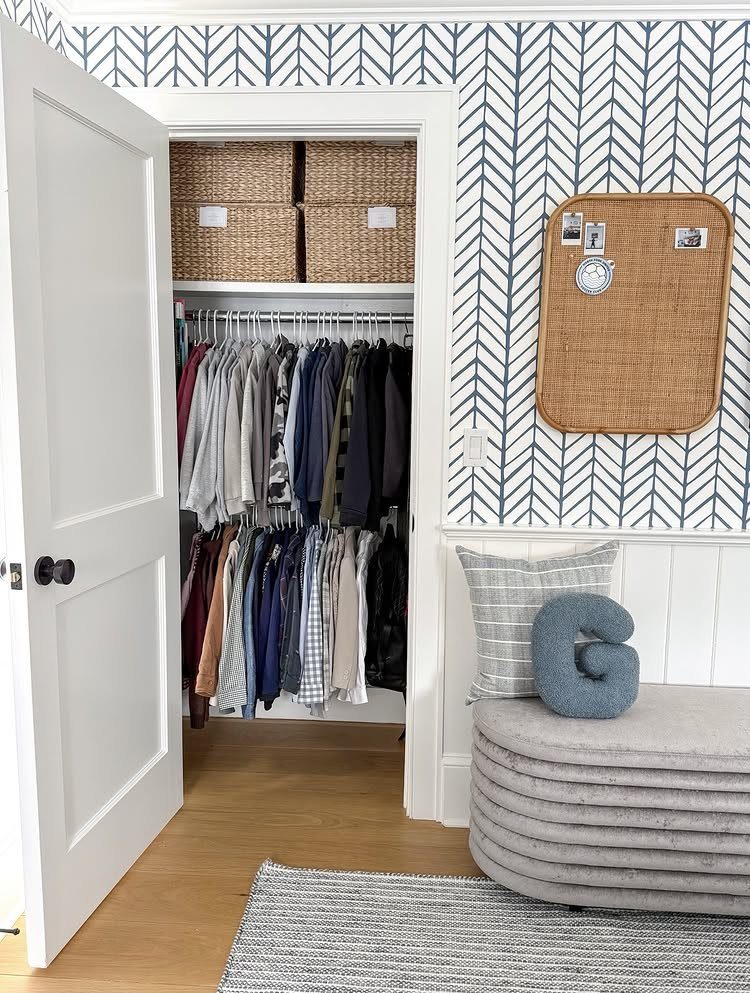
A rod that wraps around an inside corner uses wall space on two sides instead of just one, which matters in closets where hanging room is tight but the side walls sit empty.
The rod mounts to brackets on both the back wall and the side wall, turning the corner at a right angle.
This setup works if you can reach clothes hung on the side wall without bumping into the ones on the back wall.
Measure the depth of the side wall before you install the bracket. If it’s less than about 2 feet, clothes will crowd each other and this stops being useful.
14. Central Shelving Between Rods
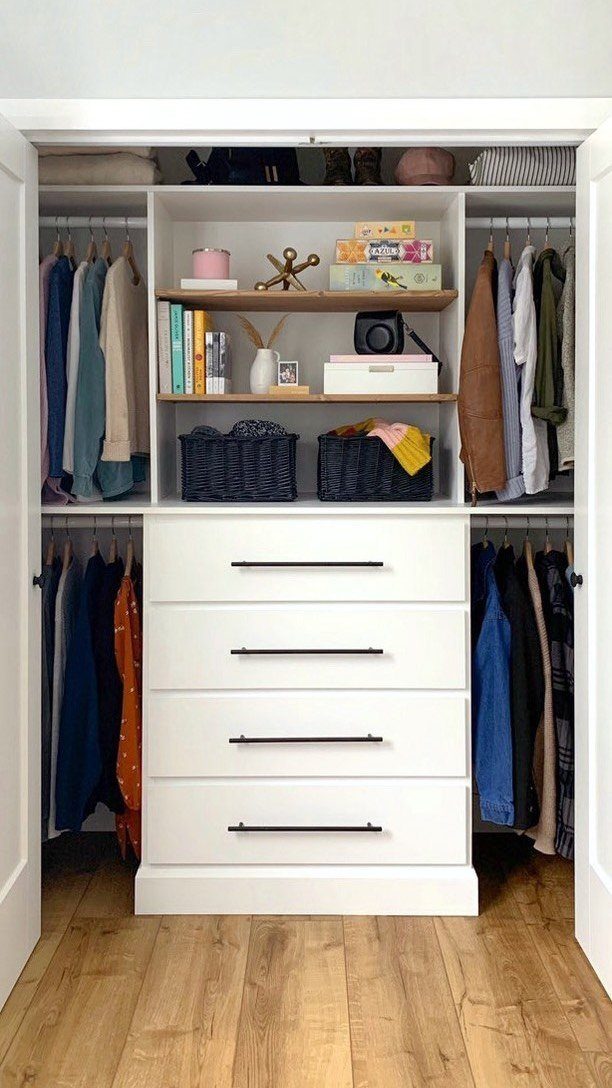
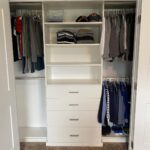
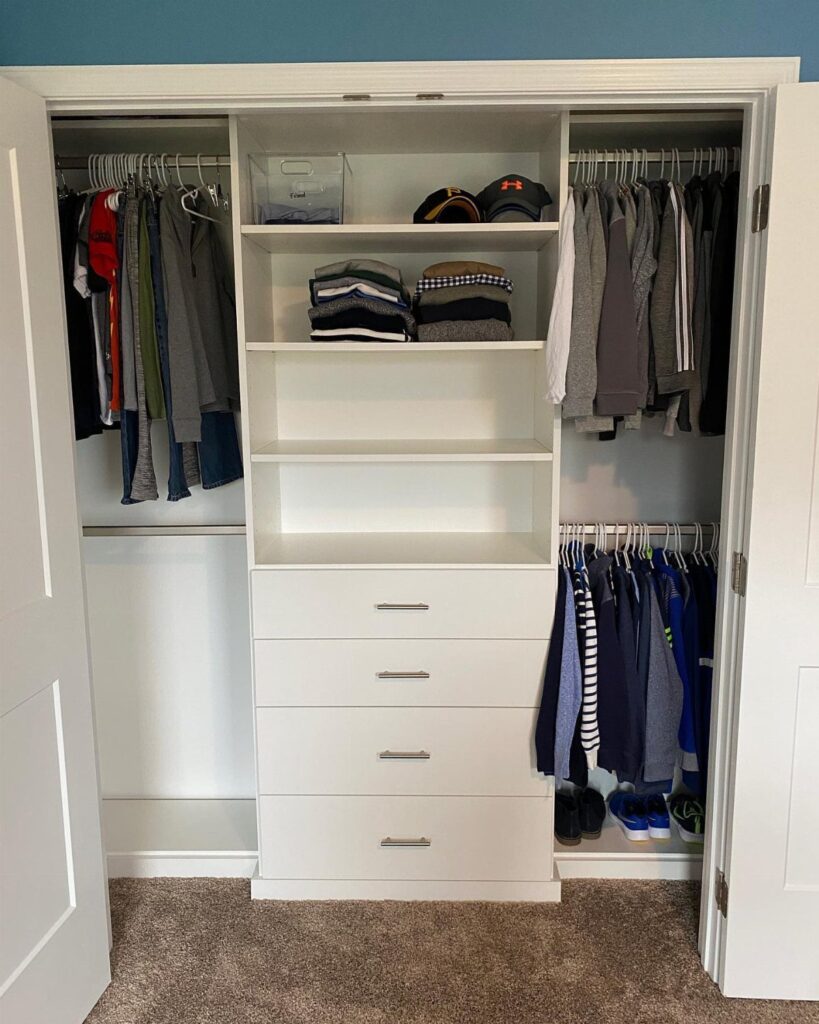
A tower of shelves and drawers down the middle splits the closet into two narrow hanging zones instead of one wide one.
Each side holds short items like shirts or pants, and the center holds folded clothes, shoes, or bins while leaving the floor clear.
This layout makes sense if you have more folded items than long hanging pieces. It trades some hanging width for storage that’s easier to see and reach than a single shelf above everything.
If your closet is already narrow, check that you can still reach hangers on both sides without the center unit blocking your arm.
15. Kids’ Clothes and Keepsakes
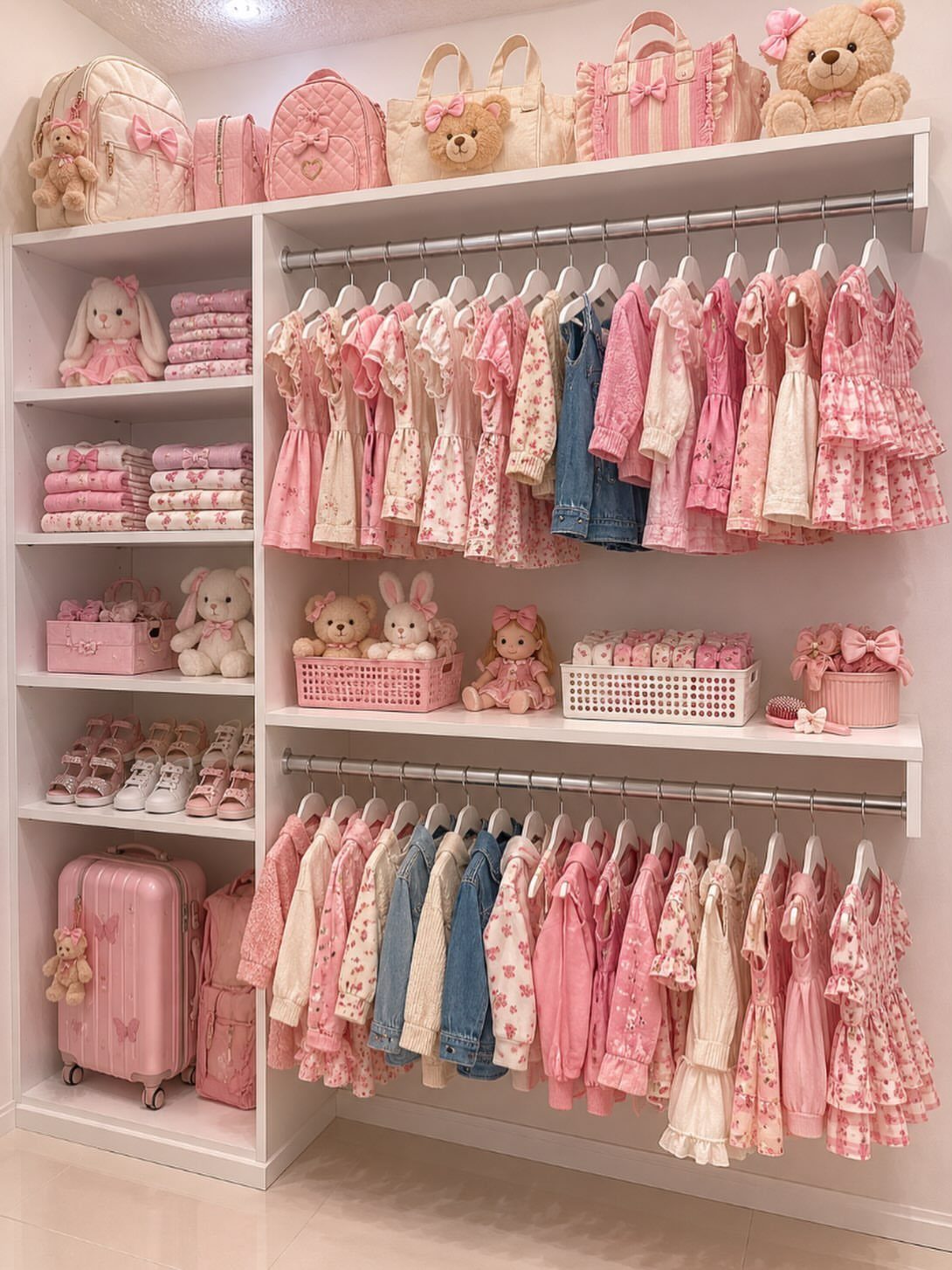
Lower rods and shelves sized for small clothes make it easier for a child to see what they have and put things back without help.
Bins or baskets at kid height hold shoes, toys, or folded pajamas, and higher shelves keep off-season clothes or keepsakes out of the way until they’re needed.
Adjustable brackets let you move rods and shelves up as the child grows, so the closet doesn’t need a full rebuild every couple of years.
This setup assumes the closet holds a mix of hanging and folded clothes. If most items are folded, cubbies or drawers take up less space than a rod.
Design Around Actual Use
Start by counting what you hang versus what you fold.
If most of your clothes are shirts and pants that hang, a double-rod setup or a corner rod will matter more than drawers. If you fold half your wardrobe, shelves and cubbies should get priority over a second hanging rod.
Look at what you reach for most mornings.
Those items belong at eye level or within arm’s reach, not on a top shelf you need a stool for. The things you wear once a season can go higher or farther back.
If kids use the closet, plan for the fact that their clothes will get bigger and their needs will shift.
A closet that works now but locks you into one layout will need a redo sooner than one you can reconfigure as things change.
Keep the Closet Usable
A closet stuffed completely full becomes harder to use.
You can’t slide hangers along the rod, stacks topple when you pull one item out, and anything shoved to the back stays there because reaching it means moving everything in front of it first.
Others recommend filling no more than 80 percent. Leave enough room that you can actually reach what you stored.
If the closet is already packed, pull everything out and sort it once a month.
Donate or toss what you haven’t worn in a year. A weekly pass through the closet catches things before they pile up.
Shelves that go all the way up add storage, but only if you can reach them without climbing. Keep a step stool nearby if the top shelf sits higher than you can comfortably lift a bin.
Frequently Asked Questions
What are some good ideas for a very small closet?
Double-hang rods, slim hangers, and shelves sized for folded clothes pack more into the same walls without requiring construction.
Bins and cubbies sort small items so you can see what you have instead of digging through piles. Go through it every few weeks and pull out anything that hasn’t been worn since last season.
How do you maximize storage in a small closet?
Combine double-hang rods with shelves and bins so short items use the full height and small things stay sorted.
Take shelves up to the ceiling if you can reach them, and keep a step stool nearby for the top. Space things far enough apart that you can grab one hanger without catching two.
What is the best way to organize a small reach-in closet?
Put rods where the long pieces hang, shelves where things fold flat, and small bins where the belts and scarves pile up. Put what you wear most at eye level and keep off-season items higher up or farther back.
Are custom closet systems worth it for small closets?
A fitted system puts storage exactly where your clothes need it instead of leaving gaps a standard rod can’t fill. Some kits let you adjust the layout yourself, or you can pay to have it measured and built in.
What should not be stored in a small closet?
Bulky items, things you rarely use, and off-season storage belong somewhere else so the closet holds what you reach for regularly.
What is the standard minimum depth for a reach-in closet?
You need 24 inches front to back or the hangers jam against the door. Less than that and you’ll need hooks or pull-out rods instead of a fixed rod.