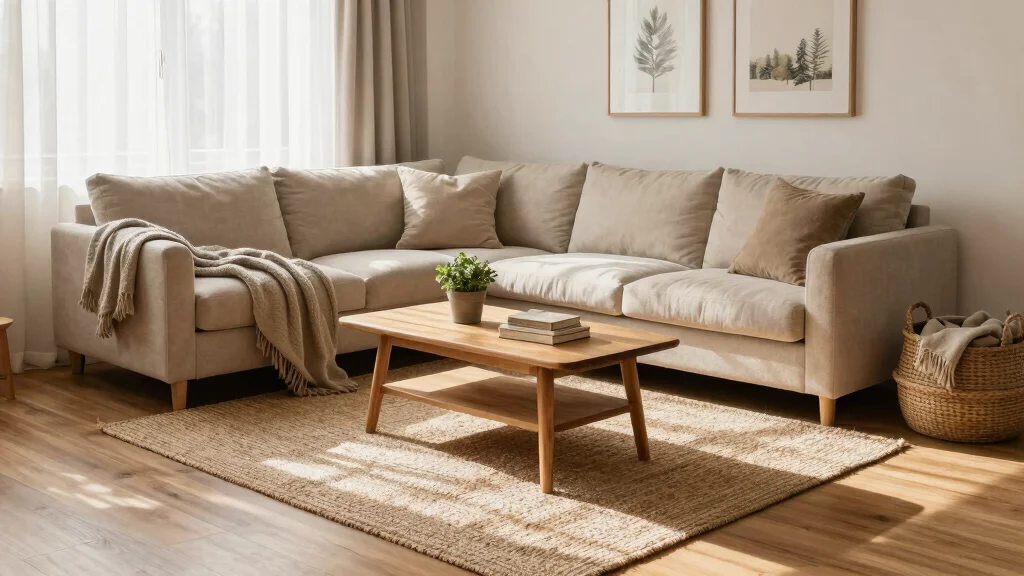

Creating a cozy living room is a dream for many of us, especially when the climate outside is chilly and uninviting. The right touches can make a space feel warm and inviting. One way to achieve that natural, rustic vibe is by incorporating rustic rugs into your design. These rugs not only add softness underfoot, but they also bring in texture and warmth that can transform your living room into a sanctuary. If you’re like me, you’ve been craving that perfect balance of style and comfort that only the right rug can provide.
This post is for anyone looking to refresh their living room with cozy living room decor, especially those interested in sustainable living. If you value eco-friendly choices in your home, you’ll find inspiration here that aligns with your lifestyle. I’ve gathered 16 creative ideas for rustic rugs living room designs that feature natural fibers and textures. You’ll discover ways to embrace the charm of farmhouse style interiors while also being kind to the environment.
From natural fiber rugs to textured area rugs, you’ll gain insights into how these options can enhance your space. By the end of this article, you’ll be equipped with practical tips to create a warm and inviting atmosphere that reflects your personal style. Let’s dive into the world of rustic rugs and explore how they can elevate your living room!
Key Takeaways
– Incorporate jute rugs for an eco-friendly and textured foundation that adds warmth to your living room.
– Choose wool rugs for their natural insulating properties, providing a cozy touch during colder months.
– Layer textured area rugs to create depth and interest, enhancing the rustic aesthetic of your space.
– Embrace farmhouse style by selecting rugs that feature classic designs, complementing other rustic home accents.
– Use natural fiber rugs to promote sustainability while achieving a relaxed and inviting atmosphere in your living room.
How I Use Rustic Rugs to Add Natural Texture and Warmth
When I decorate a living room with a rustic rug, I think of it as a grounding element rather than a statement piece. Rustic rugs work best when they support the room’s materials and textures instead of competing with them. Natural fibers, muted colors, and visible weave patterns help anchor the space and make it feel calm and lived-in.
The first thing I look at is material. Rustic interiors often rely on natural textures, and materials like jute, wool, and cotton blends align well with that goal. Textile studies consistently show that wool rugs provide better thermal insulation than many synthetic alternatives, which explains why they make living rooms feel warmer and more comfortable, especially in cooler climates. Jute and other plant fibers, on the other hand, add visual texture and breathability, making them suitable for warmer or high-traffic spaces.
Rug placement and scale are just as important as texture. In most living rooms, I aim for a rug size around 8×10 feet so that seating feels visually connected. Smaller rugs can still work, but they tend to feel more decorative than functional. Layering is another technique I use carefully. A flatwoven rustic rug layered under a softer textile helps balance durability with comfort, a strategy often recommended in farmhouse and bohemian interiors.
I also pay attention to color restraint. Rustic rugs usually look best in earthy tones like beige, taupe, muted browns, or soft grays. These colors reflect natural elements and reduce visual noise, which helps the living room feel cohesive rather than overly styled.
Budget, Materials, and Common Rustic Rug Mistakes I’ve Learned to Avoid
Rustic rugs vary widely in price depending on material and construction, but there are clear budget ranges that help set expectations. In my experience, natural fiber rugs like jute or sisal typically range from $150 to $300 for living room sizes. Wool rustic rugs usually fall between $300 and $700, depending on thickness and craftsmanship. Premium options, such as handwoven wool or silk-blend rugs, can exceed $1,000, but they’re best reserved for low-traffic areas.
Material durability plays a major role in long-term satisfaction. Research on rug performance shows that low- to medium-pile wool rugs hold up better under daily foot traffic than high-pile designs, which tend to flatten unevenly over time. Jute rugs are durable but sensitive to moisture, so I avoid placing them in rooms with frequent spills or high humidity.
One common mistake I’ve learned to avoid is choosing rustic rugs that are too rough for daily use. While heavy texture looks appealing, overly coarse fibers can feel uncomfortable underfoot in seating areas. Another issue is mixing too many rustic elements at once. When wood, stone, heavy textiles, and bold rugs all compete, the space can feel visually heavy rather than cozy.
I now evaluate rug material, pile height, foot traffic, and room function together. When those practical factors align, rustic rugs add warmth, texture, and authenticity without sacrificing comfort or usability.
1. Embrace Jute for Texture and Sustainability
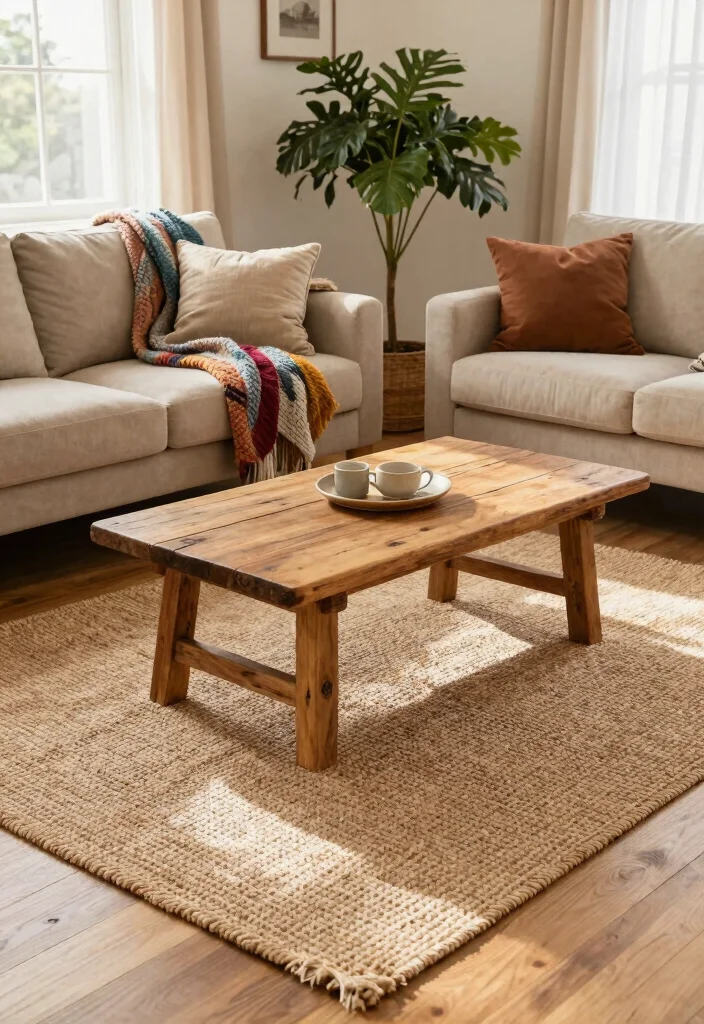
Jute rugs bring a unique blend of texture and sustainability to rustic living rooms. Their natural fibers offer an earthy tone that resonates with eco-conscious design choices. These rugs vary in weave styles, from chunky braids to sleek flat weaves, making them versatile and appealing for many decor themes. Pairing a jute rug with wooden furniture creates a harmonious space that feels both warm and inviting.
To enhance this look, consider placing a jute rug beneath a coffee table or using it as a statement piece near a fireplace. If you’re on a budget, look for jute options at local markets or online. Layering a softer rug on top can provide added comfort while keeping with the rustic aesthetic.
Consider these ideas to get started:
– Pair jute rugs with reclaimed wood furniture for a cohesive look.
– Layer with a plush throw rug for added softness.
– Use natural jute in neutral tones to maintain a calm atmosphere.
Incorporating a jute rug sets the stage for a cozy living room, enhancing the overall aesthetic with its natural texture.
2. Go for Wool for a Warm Touch
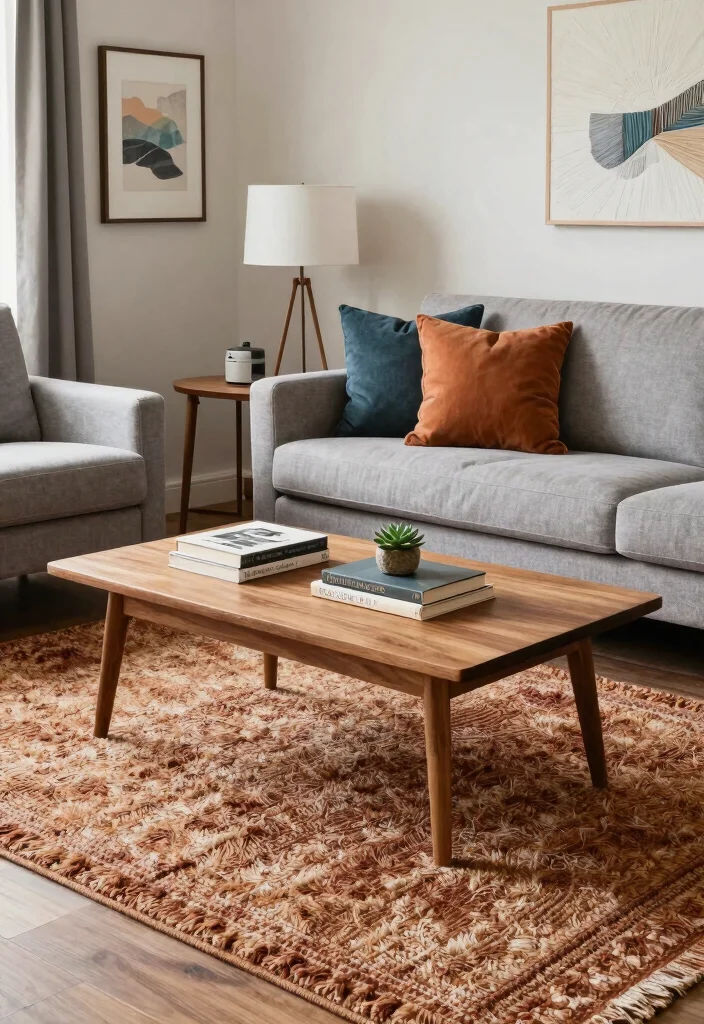
Wool rugs are the epitome of warmth and comfort, making them ideal for creating a cozy living room. The plush textures range from thick piles to flat weaves, allowing you to choose what fits your style best. Not only are wool rugs luxurious, but they are also naturally resistant to stains and moisture, perfect for busy households.
To maximize the impact of your wool rug, style it with darker wood furniture for a stunning contrast. If you’re looking for budget-friendly options, consider sourcing second-hand wool rugs. This material also acts as a natural insulator, helping to keep your space comfortable year-round.
Keep these tips in mind:
– Choose intricate patterns or solid colors that fit your decor.
– Select warm, earthy tones to enhance the rustic vibe.
– Look for sustainable wool options to align with eco-friendly values.
Choosing a wool rug not only enhances comfort but also elevates the style of your living area.
Fun fact: Wool rugs are naturally stain- and moisture-resistant, keeping your rustic rugs living room cozy even with daily spills. Pair a wool rug with dark wood for contrast; it’s budget-friendly, durable, and warm.
3. Textured Area Rugs for Layering
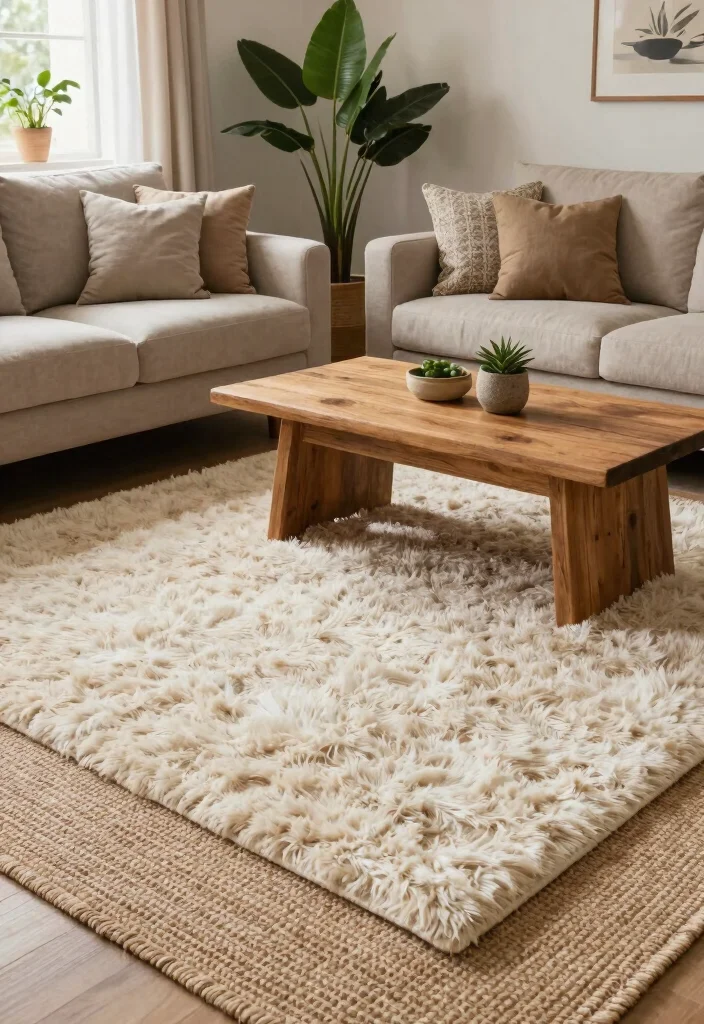
Textured area rugs can add layers of dimension to your rustic living room. From shag to sheepskin and woven designs, these rugs provide a plush feel underfoot while enhancing visual interest. Layering rugs creates a unique aesthetic and invites a cozy atmosphere.
For a modern take, try placing a large textured area rug underneath a smaller jute or natural fiber rug. This layered approach not only adds depth but also makes your space inviting and warm. Explore local thrift shops for budget-friendly textured options that can elevate your decor.
Consider these practical steps:
– Mix and match different textures for visual variety.
– Keep color palettes cohesive to maintain harmony.
– Prioritize comfort, especially in high-traffic areas.
Incorporating textured area rugs can significantly boost the coziness and charm of your living room.
4. Emphasize Farmhouse Style
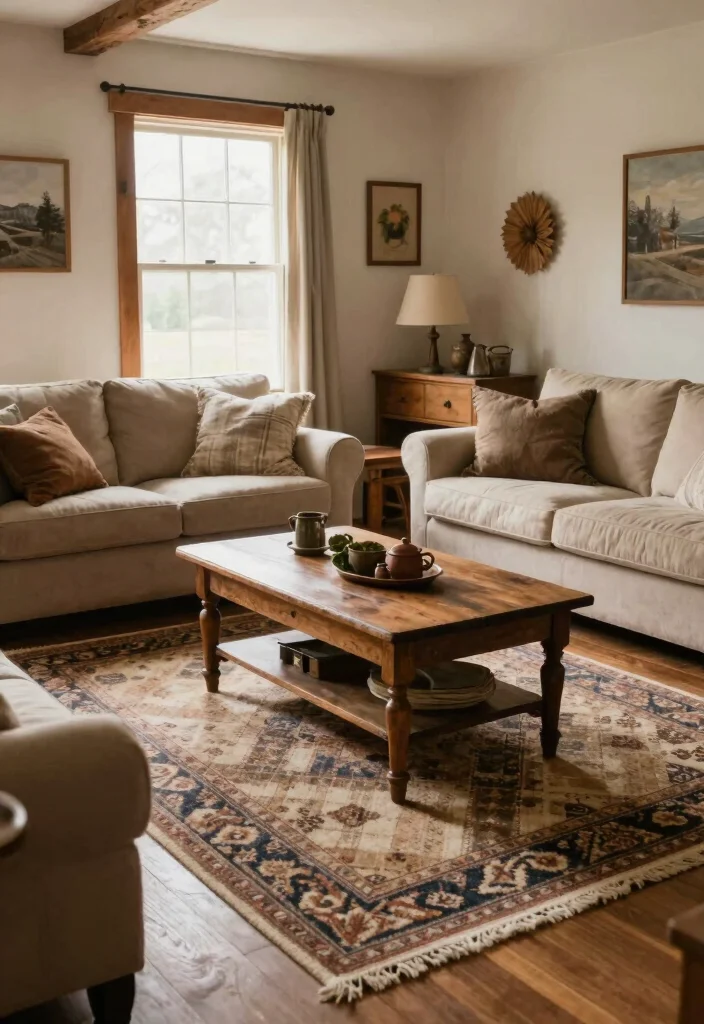
Farmhouse style exudes a relaxed charm, and rugs play a vital role in achieving this look. A patterned, durable rug can anchor your living room, enhancing the rustic theme. Look for muted plaid or checkered designs that evoke the simplicity of rural life.
To elevate your farmhouse aesthetic, use soft whites and earth tones for a cohesive look. Layer your rug with cotton or linen throw pillows and blankets to enhance comfort. You can even add metal and wood accents to create a welcoming atmosphere.
Here are some suggestions to try:
– Use soft, muted colors to complement your rug.
– Layer with natural textiles for added warmth.
– Incorporate vintage accessories to enhance the rustic feel.
A farmhouse-style rug ties your living room together, creating a stylish yet laid-back environment.
Embrace farmhouse charm: a durable, plaid-inspired rug sets the tone, while soft whites and earth tones keep the look calm. Pair it with cotton throws and rustic wood accents to create a cozy, eco-friendly rustic rugs living room you’ll actually love coming home to.
5. Introduce Natural Fiber Rugs
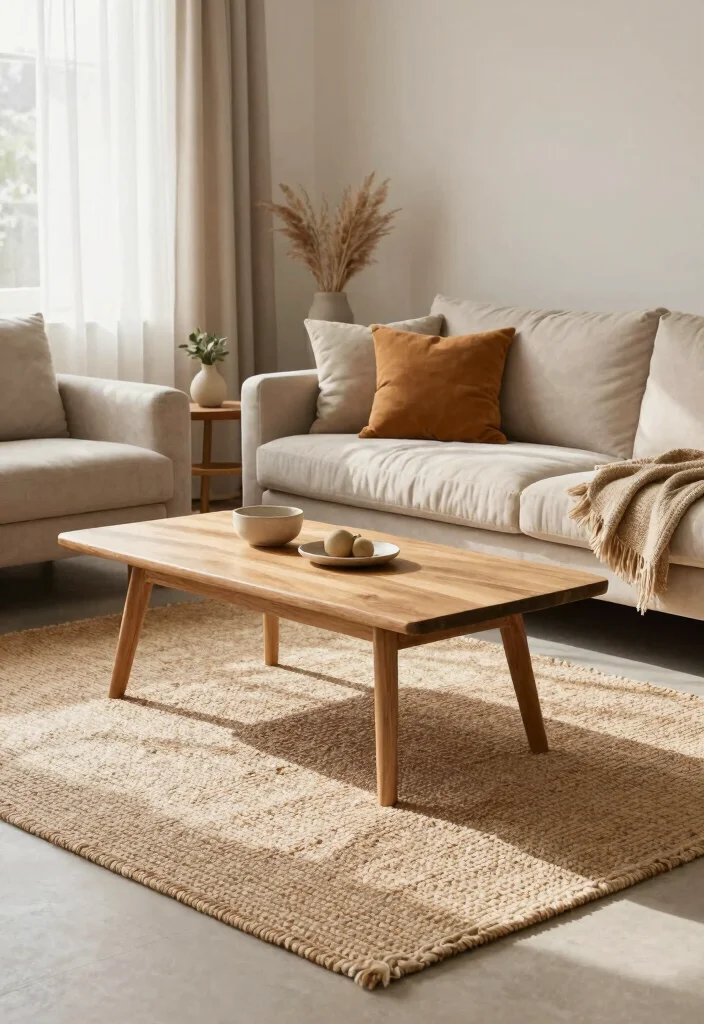
Natural fiber rugs such as sisal, hemp, and seagrass embody sustainability while adding a unique texture to your living room. These materials are durable and eco-friendly, perfect for high-traffic areas. A natural fiber rug can establish a crisp, organic feel, especially when paired with wooden furniture.
To incorporate these rugs, stick to earthy tones to maintain a calming atmosphere. You can also add colorful throws or cushions for contrast and warmth. Regular vacuuming and spot cleaning keep these rugs looking fresh and inviting.
Try these ideas for implementation:
– Choose neutral shades for a serene vibe.
– Layer with colorful textiles for added interest.
– Ensure easy maintenance for everyday use.
Incorporating natural fiber rugs into your decor ensures both style and sustainability in your living space.
How To Choose Rustic Rugs for Your Living Room
When you’re looking to enhance your living room with rustic rugs, you want to ensure you make the right choice. The right rug can add warmth, texture, and style to the space while reflecting your personal taste. Here are key criteria to consider when selecting rustic rugs for your cozy living room.
1. Consider the Size
Choosing the right size of the rug is crucial for your room’s layout. Measure your space to determine the ideal dimensions. A common rule of thumb is to leave at least 18 inches of bare floor around the edges of the rug. This helps create a balanced look. If you have larger furniture pieces, ensure they sit comfortably on the rug for a cohesive feel.
2. Choose the Right Material
The material of the rug significantly affects both its look and durability. Natural fibers like jute, wool, and sisal are great choices for rustic aesthetics. Jute adds a soft, earthy touch, while wool offers warmth and resilience. Consider how the material will hold up against foot traffic in your living room. For example, wool rugs are highly durable and perfect for a busy family space.
3. Think About Texture
Texture plays a vital role in creating a cozy atmosphere. Look for rugs that have a rich, textured feel to them. Textured area rugs with varying pile heights can add depth and warmth to your living room. Incorporating different textures can also enhance the rustic charm. Layering a flat-weave rug under a plush one is a popular option for achieving this look.
4. Match Your Style
Ensure the rug aligns with your existing decor. If your living room features farmhouse style interiors, opt for rugs with plaid patterns, muted colors, or distressed finishes. Alternatively, if you lean towards a more bohemian style, consider rugs with vibrant colors and intricate designs. Keep in mind that the rug should complement the overall aesthetic of your living room.
5. Color and Patterns
Colors can greatly impact the mood of your space. For a cozy living room, warm and earthy tones, like browns, greens, and creams, work well. If you want to introduce a pop of color, consider accent rugs that feature brighter hues. Patterns like stripes or geometrics can add visual interest without overwhelming the room. Try to choose patterns that echo the textures or colors present in your furniture and decor.
6. Budget Considerations
Set a budget to streamline your rug selection process. Prices for rustic rugs can vary widely based on size, material, and craftsmanship. Natural fiber rugs tend to be more affordable than handmade options. Explore sales or local retailers to find great deals. Remember, investing in a quality rug can pay off in the long run, as it will withstand wear over time.
Pro Tip: Always bring home fabric swatches or samples when shopping for rugs. This helps you see how the rug looks with your existing furniture and decor in different lighting throughout the day. Additionally, consider how the rug feels underfoot, as comfort is just as important as style.
With these guidelines in mind, you’re well-equipped to find the perfect rustic rug for your living room. Embrace the natural textures and cozy vibes that will transform your space into a warm and inviting retreat.
6. Add a Touch of Bohemian Style
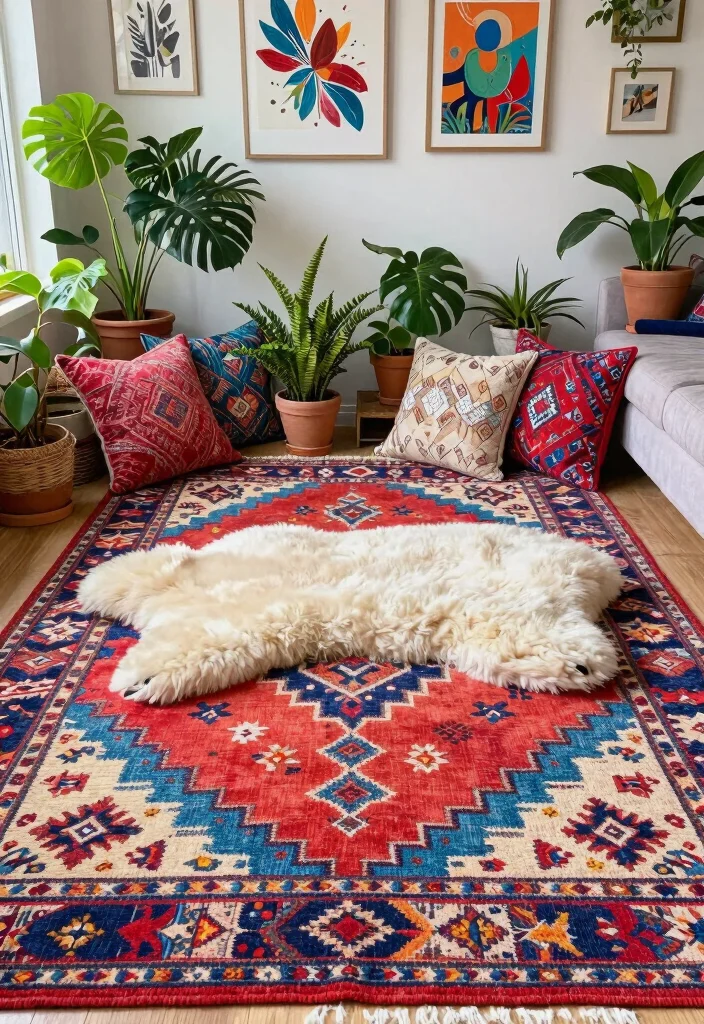
Bohemian style thrives on vibrant textures and patterns, making it a perfect complement to rustic rugs. This aesthetic encourages experimentation with colors and fabrics, creating a harmonious yet eclectic living room. A bright, patterned area rug can serve as a stunning foundation for other decor elements.
Embrace this lively style by mixing patterns and layering rugs of various textures. Adding plants and handmade decorations enhances the bohemian vibe, making your space feel inviting and carefree.
Consider these tips to fully embrace boho style:
– Mix different patterns for an eclectic look.
– Layer rugs in varied styles for depth.
– Accessorize with plenty of plants for freshness.
A bohemian-inspired living room can be a joyful and creative space, with rustic rugs acting as the perfect starting point.
7. Explore Vintage Charm
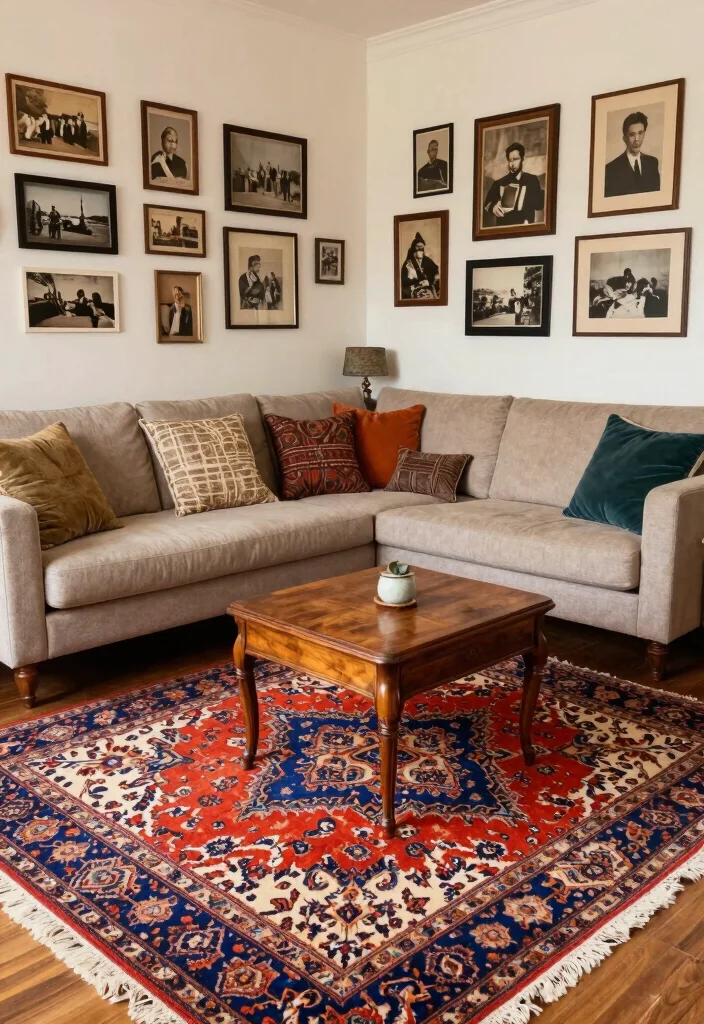
Embracing vintage charm adds a cozy, nostalgic feel to your rustic living room. Vintage rugs, rich in character with intricate designs, can serve as stunning focal points. These pieces tell a story and enhance the depth of your space with their faded colors and traditional patterns.
To incorporate vintage charm, seek unique rugs at flea markets or online stores that suit your style. Pairing vintage rugs with contemporary furniture creates a balanced aesthetic. Layering these rugs over a neutral base can add textural depth.
Here are some ideas to explore:
– Hunt for unique vintage finds to add character.
– Mix old and new designs for a fresh look.
– Layer rugs for added interest and texture.
Integrating vintage rugs into your decor enhances warmth and history, creating a cozy atmosphere.
8. Opt for Monochromatic Minimalism
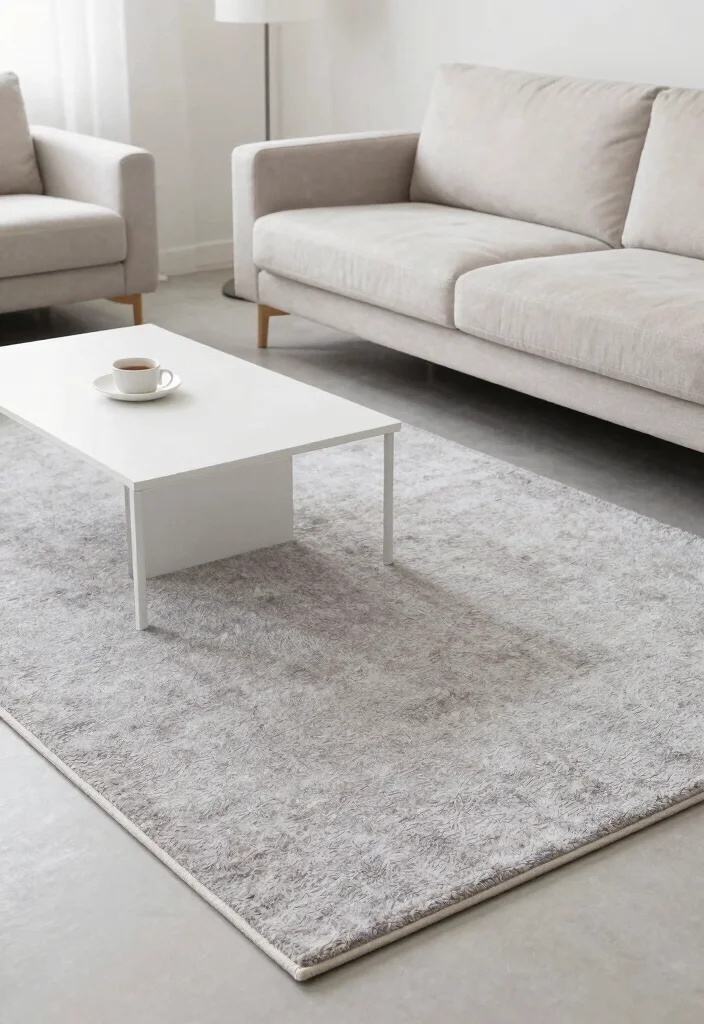
Monochromatic minimalism offers a clean, sophisticated vibe for your rustic living room. A single-hued rug in subtle textures can enhance the simplicity of your decor. This palette brings unity and calm, particularly with soft whites, grays, or earthy tones.
To achieve this look, select rugs with varying textures to maintain visual interest without introducing color. Keep furnishings minimal, allowing the rug to be the standout element in the room. Natural materials can help retain the rustic charm.
Here are some tips for success:
– Choose textured rugs to enhance visual appeal.
– Limit decor to let the rug shine.
– Incorporate natural materials to maintain a rustic feel.
A minimalist approach with a focus on texture creates an elegant yet cozy atmosphere in your living room.
9. Incorporate Geometric Patterns
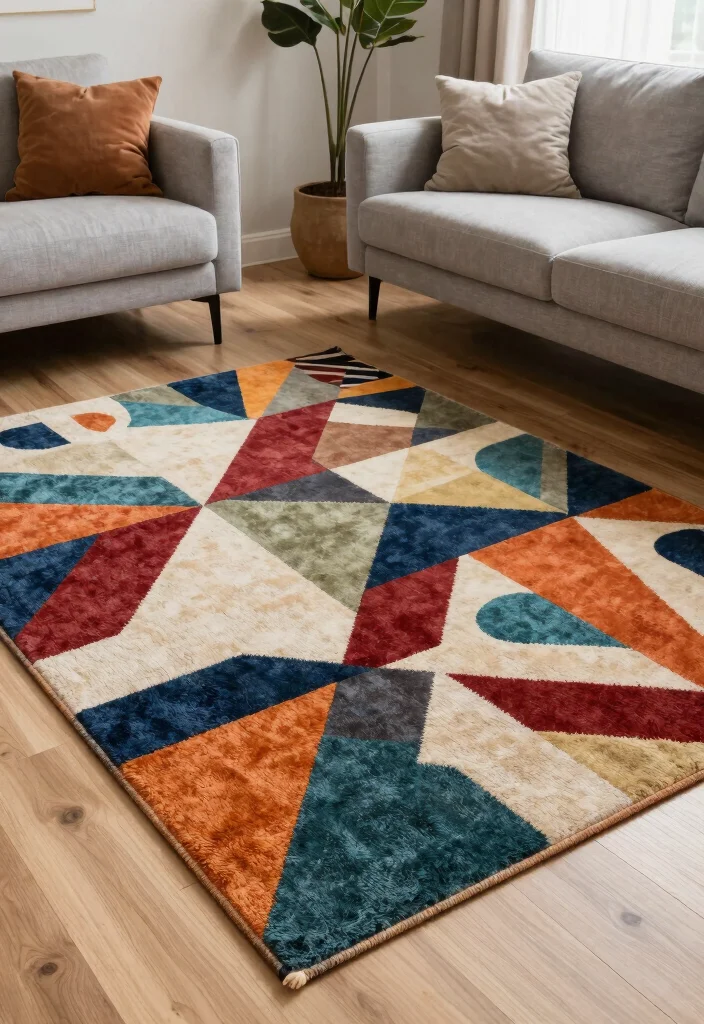
Geometric patterns can add a modern twist to your rustic living room while maintaining a cozy feel. Look for rugs featuring bold shapes that offer a contemporary contrast to traditional decor. These rugs can act as statement pieces, drawing attention and adding excitement to your space.
To effectively incorporate geometric patterns, choose colors that contrast with your existing decor. Balance the boldness of a patterned rug with simpler furniture designs, and feel free to mix different textures for an eclectic style.
Consider these suggestions:
– Select contrasting colors to make patterns pop.
– Balance patterns with minimalist furniture.
– Combine geometric rugs with various textures for a unique look.
Geometric patterned rugs can uniquely blend modern and rustic elements, transforming your living room into a stylish haven.
Fun fact: A bold geometric rug with two strong colors can be the room’s focal point, making a rustic living room feel up to 30% more contemporary. Pair it with simple furniture for lasting coziness and eco-friendly vibes.
10. Focus on Outdoor-Inspired Designs
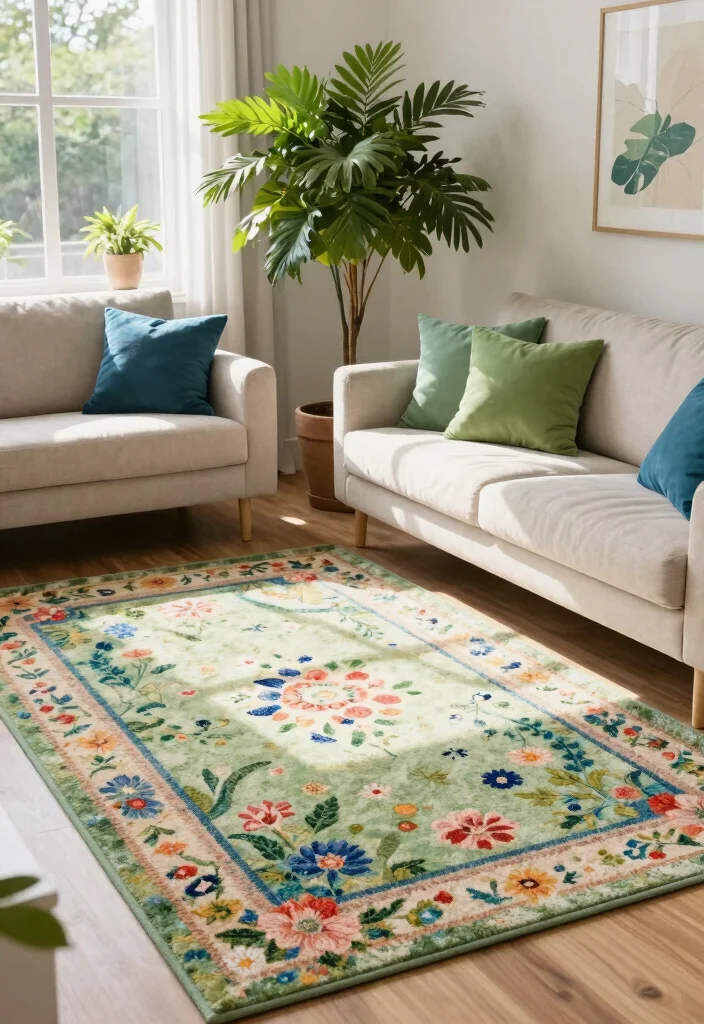
Outdoor-inspired rugs introduce a fresh, natural element to your living room, often featuring motifs like leaves and landscapes. These designs create an organic vibe that beautifully complements rustic decor. Typically crafted from durable, weather-resistant materials, these rugs are also easy to clean, making them suitable for high-traffic areas.
Embrace this trend by selecting colors drawn from nature, such as greens, browns, and blues. Layer your rug with wooden furniture or natural fabrics to enhance the theme. Choosing rugs that are easy to maintain will keep your space looking fresh and inviting.
Here are some practical ideas:
– Opt for nature-inspired colors for harmony.
– Pair with natural elements for a cohesive look.
– Ensure rugs are easy to clean for practicality.
Outdoor-inspired rugs can enliven your living area while aligning with a sustainable lifestyle.
11. Create a Cozy Reading Nook
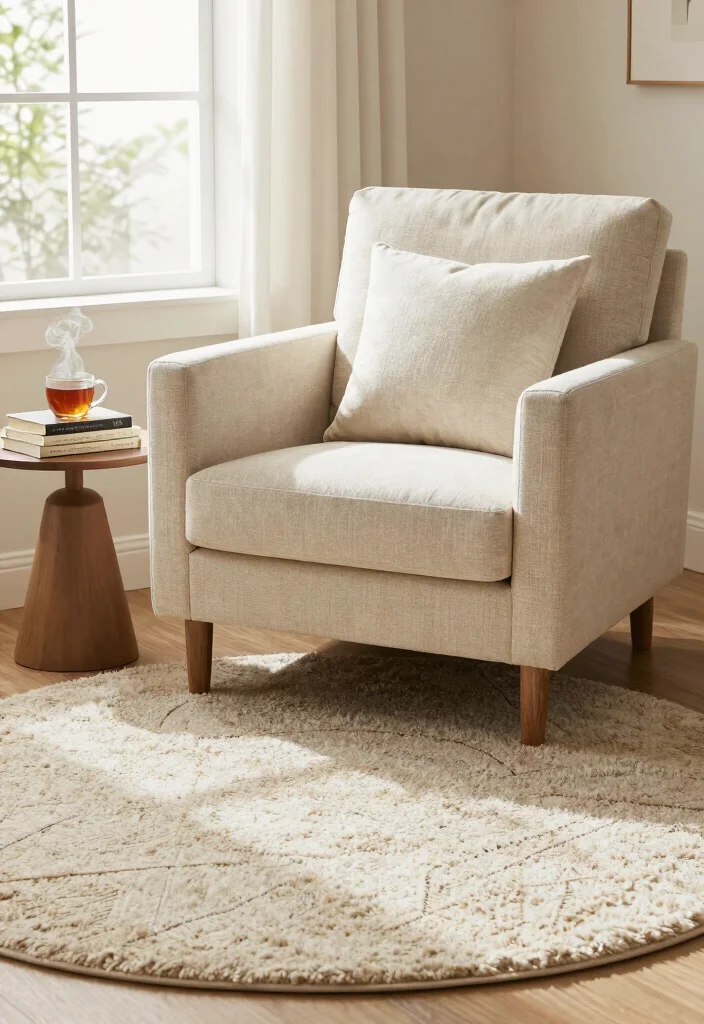
A cozy reading nook can become your favorite spot for relaxation, and a plush rug enhances this inviting space. Position a soft, oversized rug under a comfortable chair or sofa to create a dedicated area for curling up with a book. Personalize this nook with cozy throws and cushions, plus a small side table for your drinks.
To design your reading nook, choose soft-textured rugs that encourage you to linger longer. Good lighting, either from a soft lamp or natural sources, can make the nook feel even more inviting. Adding personal touches, like a small bookshelf or decorative items, can make it uniquely yours.
Consider these design tips:
– Select soft rugs for comfort underfoot.
– Incorporate good lighting for a warm ambiance.
– Personalize the space with meaningful decor.
Creating a cozy reading nook with a well-placed rug transforms part of your living room into a peaceful retreat.
12. Use Rugs to Define Spaces
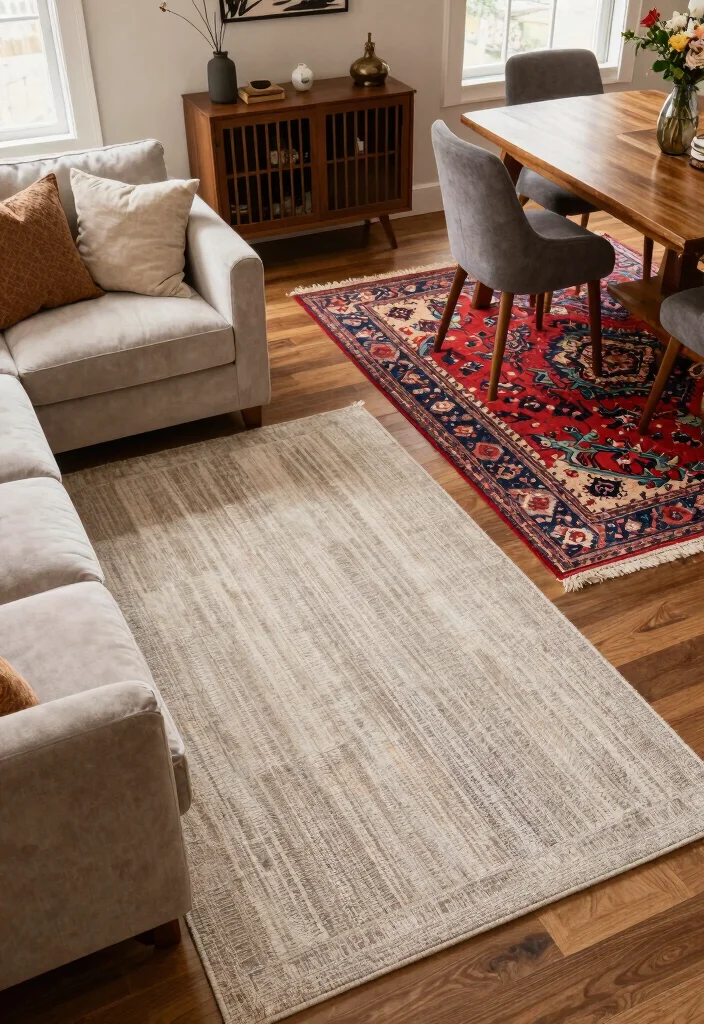
In open-concept living areas, rugs can help define different spaces, creating separation while maintaining a cohesive flow. Different rug textures and styles can enhance the rustic charm of your home. For example, a large neutral rug can define a conversation area, while a smaller patterned rug can delineate a dining or game space.
To define spaces effectively, ensure the colors of the rugs complement each other for unity. While styles may vary, aim for a cohesive theme throughout. Layering rugs can add depth and distinguish areas without harsh lines.
Here are some tips for success:
– Ensure color coordination among rugs.
– Maintain consistent styles for a unified theme.
– Use layering to create depth and distinction.
Using rugs to define spaces enhances both functionality and aesthetic appeal in your living room.
13. Add a Touch of Color with Accent Rugs
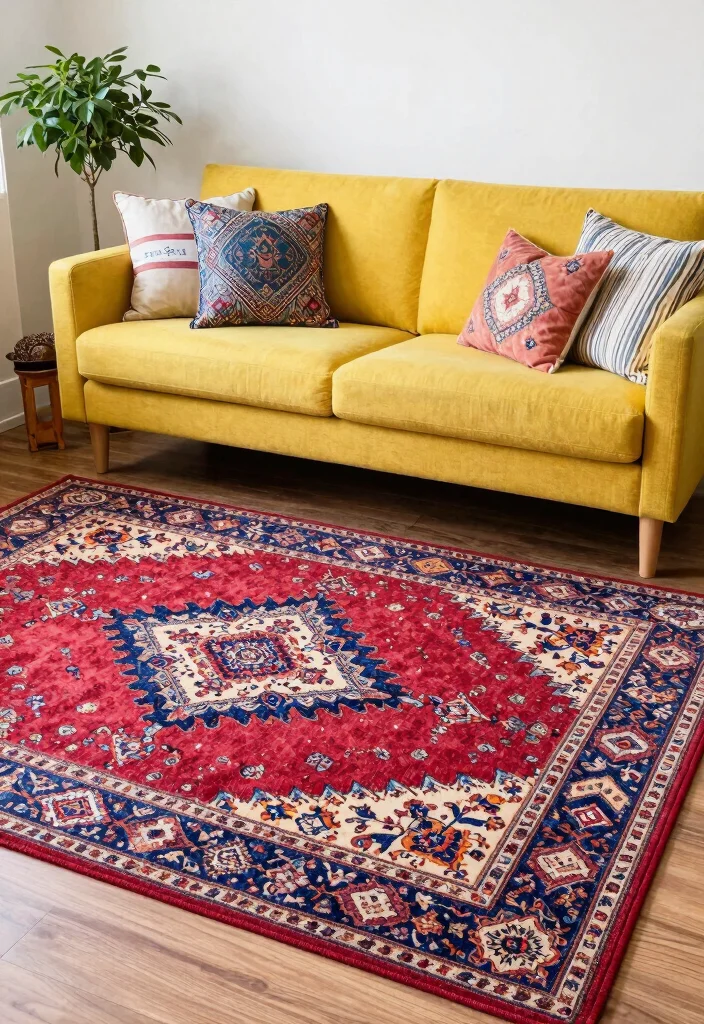
Accent rugs can infuse your rustic living room with color and personality, brightening the space without overwhelming it. A bold, colorful rug can serve as the centerpiece, elevating the visual intrigue of your decor. These smaller rugs are perfect for layering or as standalone pieces.
To maximize their impact, position accent rugs in high-traffic areas or under key furniture to draw attention. Pair vibrant rugs with neutral furnishings to keep the focus on the rug. Choosing patterns that reflect your personality can also enhance the overall decor.
Here are some practical suggestions:
– Strategically place accent rugs where they’ll stand out.
– Balance bright colors with neutral decor.
– Select patterns that complement existing designs.
Adding a touch of color with accent rugs creates a lively and unique atmosphere in your living room.
14. Explore Round Rugs for Softness
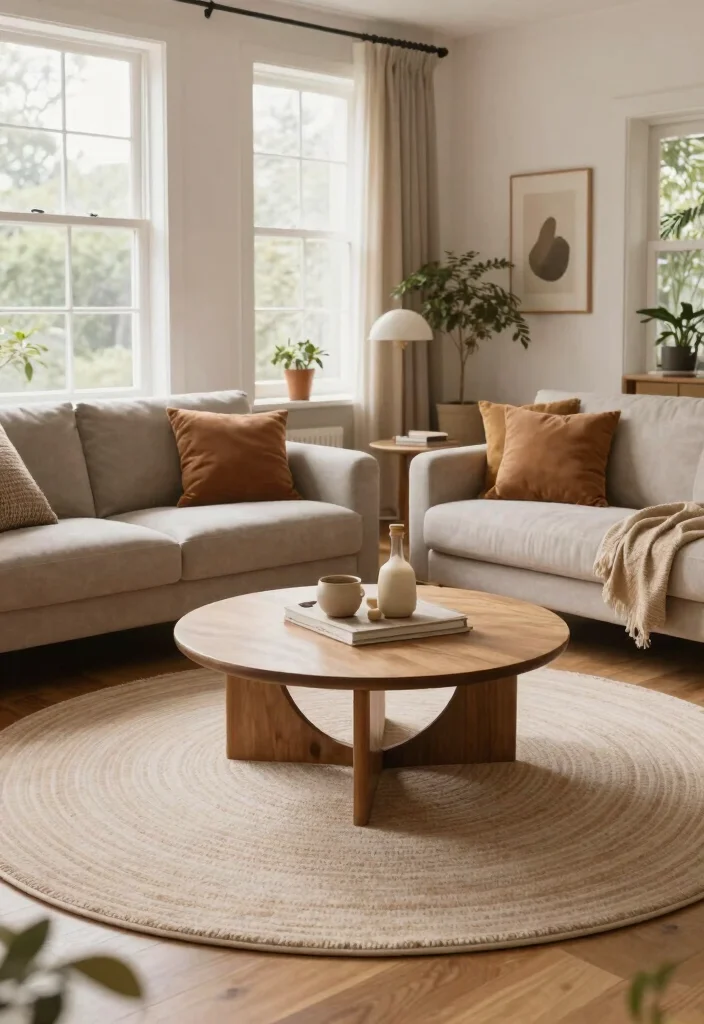
Round rugs soften the sharp lines of your living room, adding an interesting shape to your decor. Perfect for coffee tables or reading nooks, they bring a sense of flow and movement to the space. A round rug offers a unique twist to traditional rectangular designs, creating a focal point that draws the eye.
To make the most of round rugs, consider their proportions; they can make smaller spaces feel more open. Pair them with larger rectangular rugs for added texture and depth. Round rugs are beautifully complemented by circular coffee tables or ottomans.
Here are some tips to consider:
– Use round rugs in smaller areas for a spacious feel.
– Layer with rectangular rugs for depth.
– Accessorize with circular furniture for visual harmony.
Incorporating round rugs enhances the overall softness and warmth in your living room.
15. Cozy Up with Layered Textiles
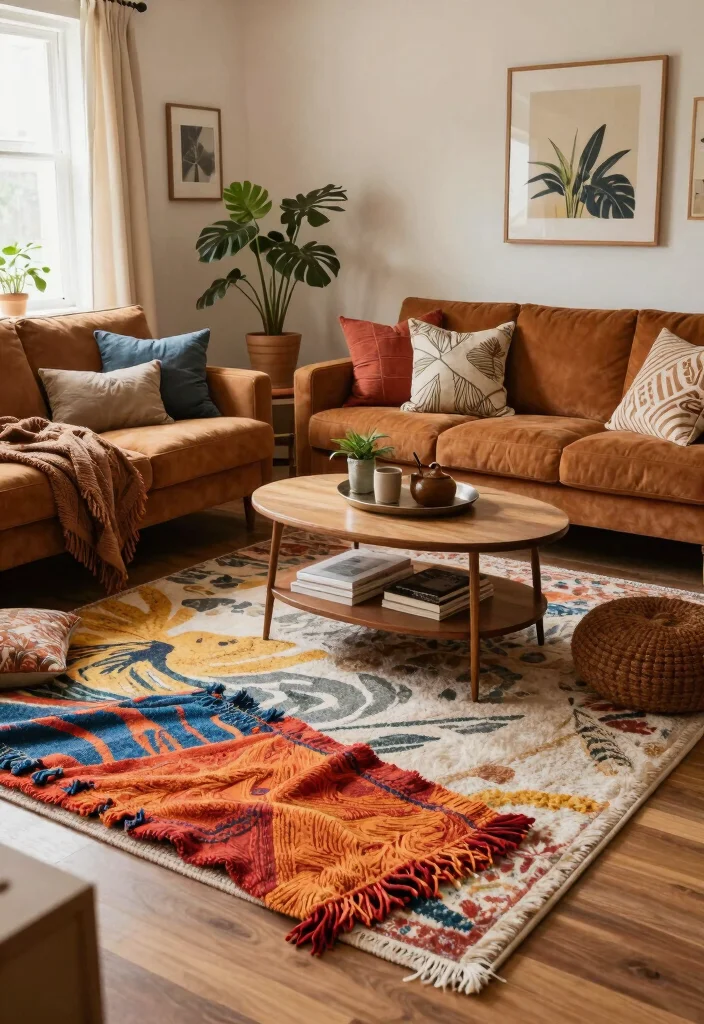
Layering textiles, including rugs, throws, and cushions, creates an ultra-cozy atmosphere in your living room. Start with a main rustic rug as a foundation, then build up with various textured throws and an array of pillows. This layered approach offers visual interest and enhances comfort, inviting you to snuggle up and relax.
Mix fabrics like cotton, wool, and linen for a rich tactile experience. Keeping a cohesive color palette while introducing different patterns can make the look more harmonious. Personal touches, such as handmade throws or vintage cushions, can add character to your space.
Here are some ideas to enhance layering:
– Combine various materials for a rich texture.
– Stick to a cohesive color scheme for harmony.
– Incorporate personal items to reflect your style.
Layering textiles and rugs transforms your living room into a warm, inviting sanctuary.
16. Incorporate a Touch of Luxury with Silk
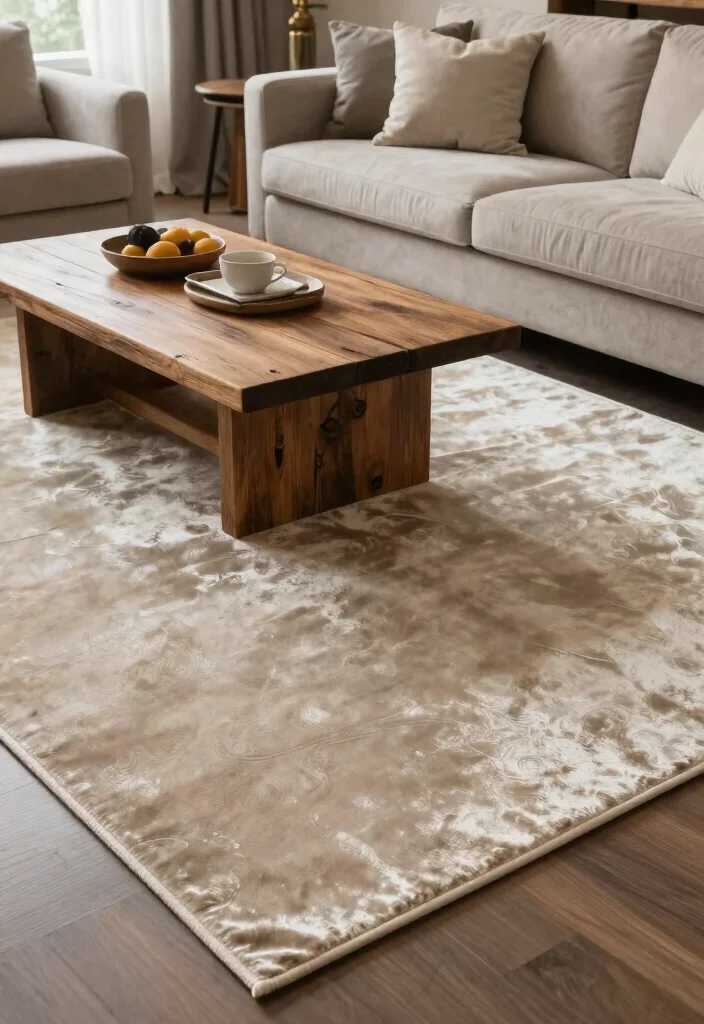
Silk rugs can introduce an element of luxury to your rustic living room, offering a beautiful sheen and softness that enhances any decor. While they may seem delicate, silk rugs blend beautifully with rustic elements, creating a striking balance. Opt for silk rugs with subtle patterns or muted colors to maintain a harmonious atmosphere.
Allow the silk rug to serve as a statement piece that contrasts elegantly with more rustic furniture. Use soft lighting to highlight the rug’s sheen, enhancing its luxurious feel. Pairing silk with natural elements like wood or stone maintains the rustic charm while adding sophistication.
Here’s how to incorporate silk effectively:
– Let the silk rug be a focal point in the room.
– Use soft lighting to showcase its beauty.
– Mix with natural materials to retain rustic appeal.
Adding a silk rug elevates your living room, introducing a touch of sophistication while ensuring warmth and comfort.
Conclusion
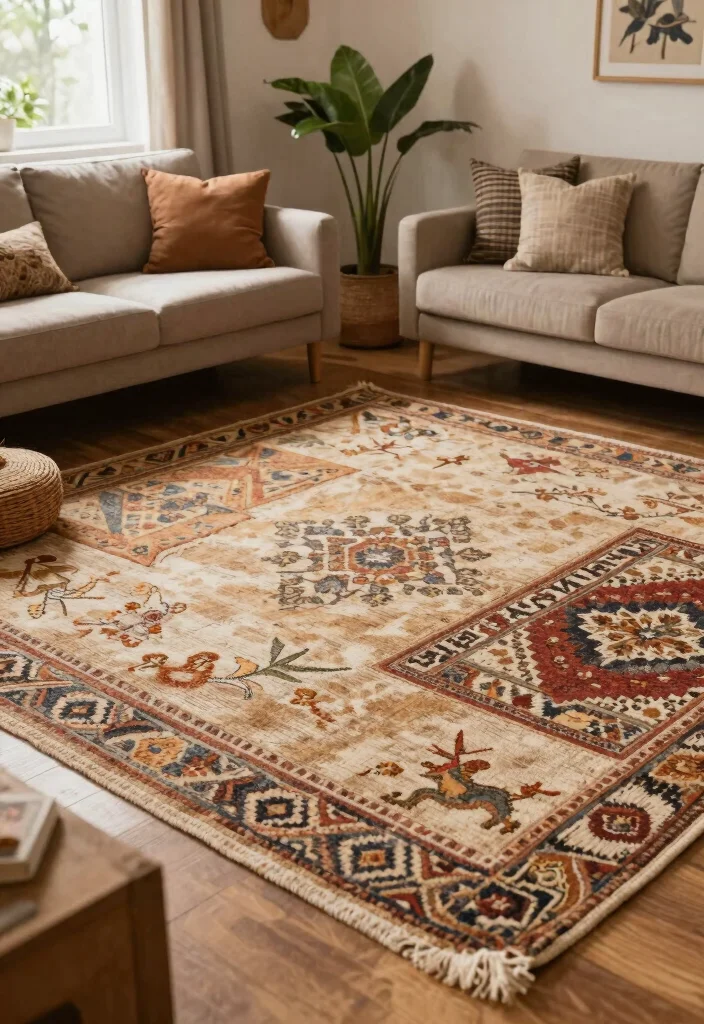
Rustic rugs can truly transform your living room, adding depth, warmth, and character to your space. Each idea presented showcases how versatile and beautiful these pieces can be while keeping sustainability at the forefront. From natural fibers to vintage charm, there’s a perfect rug style for everyone.
Now’s the time to choose a rustic rug that resonates with your personal style and enhances your cozy living area. Let these ideas inspire your next home decor project, creating a joyful retreat for relaxation and gatherings.
Frequently Asked Questions
Question: How Do Rustic Rugs Living Room Ideas Create a Natural, Cozy Look?
When you explore rustic rugs living room ideas, start with natural fiber rugs in earthy tones to create warmth and texture. Pair them with cozy living room decor pieces like woven throws and soft lighting for a natural, inviting vibe. Practical steps: choose fibers such as jute, sisal, wool, or organic cotton; keep a neutral base and layer with a second texture for depth; add a quality rug pad for comfort and durability; and favor brands that prioritize sustainability to keep the look eco-friendly.
Question: How Can I Choose Eco-Friendly Rustic Rugs for Farmhouse Style Interiors?
Go beyond looks and check for eco-friendly materials and ethical production. Look for natural fiber rugs like jute, sisal, or organic cotton, and consider wool for softness. Verify certifications (GOTS, FSC, OEKO-TEX) and transparent supply chains. Favor brands that minimize dyes and VOCs to keep your space in line with farmhouse style interiors. Add rustic home accents like reclaimed wood coffee tables and woven baskets to complete the look. Tip: measure your space carefully and choose a size that anchors the seating area rather than a small rug.
Question: What Maintenance Tips Keep Natural Fiber Rugs Looking Fresh in a Cozy Living Room Decor?
Regular care extends life: vacuum frequently with a brush attachment, rotate every few months to even wear, and keep natural fiber rugs away from moisture to prevent mold. Blot spills immediately with a clean cloth; avoid harsh chemicals. Protect high-traffic zones with a rug pad and position away from direct sunlight to prevent fading. Schedule professional cleaning at least once a year for deeper dirt extraction. These steps help your cozy living room decor stay fresh and durable.
Question: How Do I Style and Layer Textured Area Rugs with Rustic Home Accents Without Clashing?
Layering works best with a larger, neutral base rug, then add a smaller textured area rug on top. Choose complementary textures—wool, jute, and cotton—so they mix instead of clash. Bring in rustic home accents like woven baskets, distressed wood furniture, and metal lighting to tie the look together. Keep colors in the same family (earthy beiges, taupes, charcoals) and vary scale for interest. For farmhouse style interiors, add natural light and a simple palette to keep the space cozy and cohesive.
Question: What Size and Placement Best Suit Rustic Rugs Living Room in a Modern Farmhouse Space?
For a living room with a sofa and chairs, choose a rug large enough to fit under the front legs of all seating or at least the front legs. In open layouts, common sizes are 8×10 or 9×12 to balance with farmhouse style interiors. Leave about 8–24 inches of bare floor around the rug edge to frame the room. For anchoring a seating area, place the rug under the coffee table with the sofa and chairs arranged around it to create a warm, inviting space enriched by rustic home accents.
Related Topics
rustic rugs living room
cozy living room decor
natural fiber rugs
textured area rugs
farmhouse style interiors
eco-friendly decor
sustainable living
home accents
vintage charm
budget friendly
DIY home decor
seasonal styling