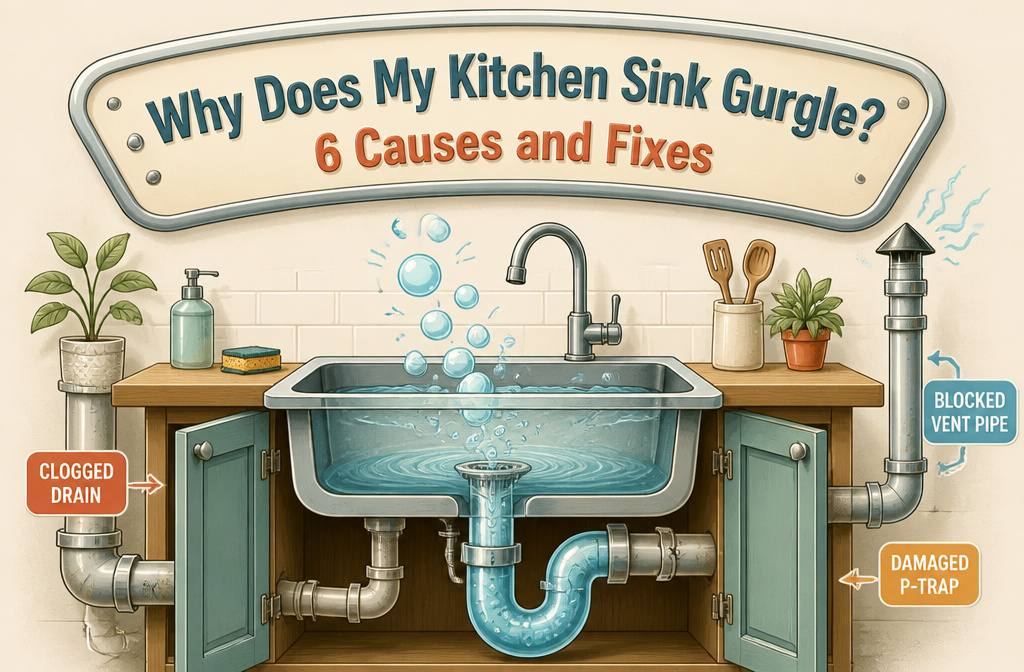

Your kitchen sink gurgles because air is trapped where it shouldn’t be in your plumbing, usually from a clogged drain, blocked vent pipe, or a damaged P-trap. The fix depends on which one you have: a drain clog lets you tackle it with a kettle of boiling water and a fifteen-dollar snake, but a blocked vent pipe means climbing onto the roof or calling a pro. If the gurgle only happens when your own sink drains, start under the cabinet; if it crosses rooms when the toilet flushes, the problem is shared infrastructure you probably cannot reach alone.
Why Your Kitchen Sink Gurgles
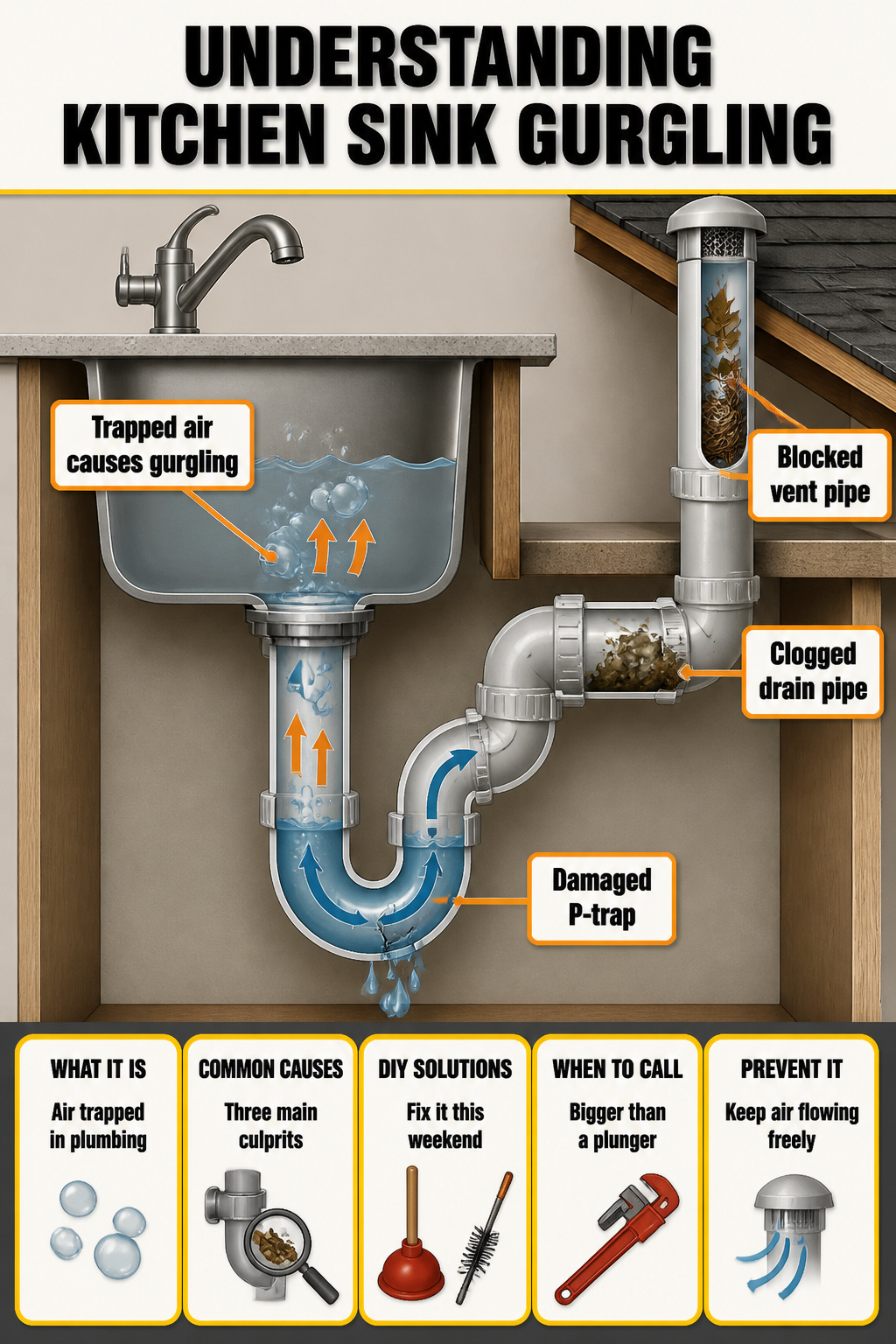
A gurgling kitchen sink is the sound of air trapped where it shouldn’t be in your plumbing. Your drain pipes are supposed to carry water out while vent pipes let air in to keep pressure balanced. When something blocks that airflow, air bubbles force their way through water in your P-trap, and that glug-glug noise is what you hear.
Three things usually cause this. A clogged drain pipe leaves water and air competing for the same narrow space. A blocked vent pipe, sometimes clogged with leaves or even a bird nest, stops air from entering the system at all. A damaged or improperly installed P-trap lets water seal too loosely or too tightly, so air slips through or gets stuck behind it.
The rest of this article walks through how to tell which culprit you’ve got, what you can fix on your own this weekend, and when the problem is bigger than a plunger and a ladder.
Clogged Drain Pipe
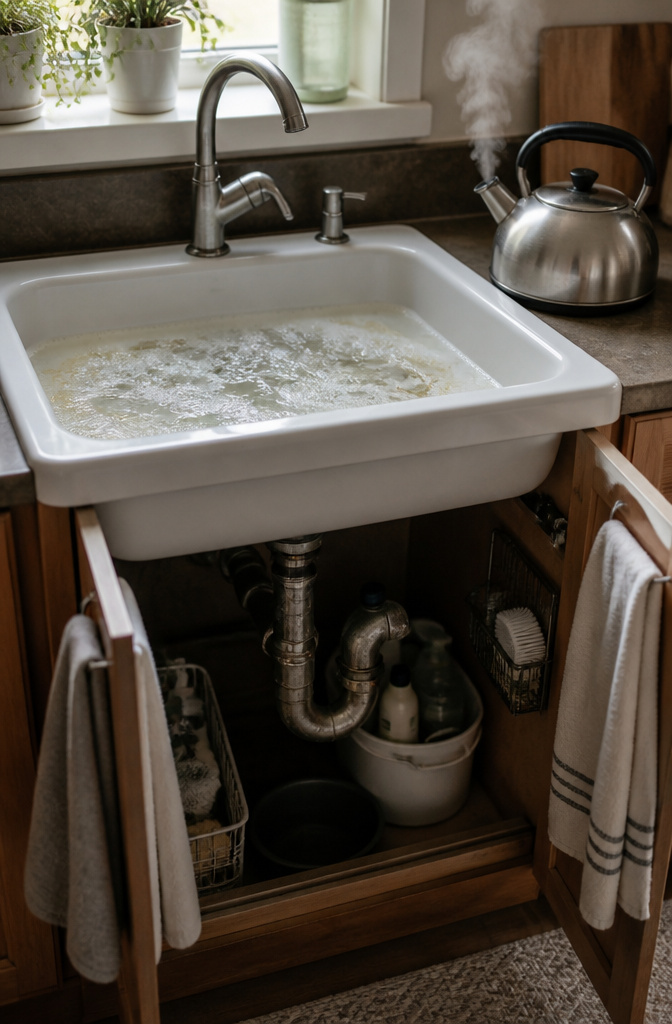
Kitchen sinks collect everything: grease from the frying pan, soap scum, bits of rice that slip through the strainer. Over time these layer onto the pipe walls and the opening narrows. Water still gets through, but it moves slower and traps air at the clog, which is what creates that gurgle you hear.
Bubbles rising with the dishwater are the clearest sign this is a drain issue, not a vent problem. Vent blockages tend to gurgle across multiple fixtures at once and do not usually show visible bubbling in one sink.
For a minor buildup, boil a kettle and pour it down in stages, letting the heat work between each pour. Follow with a cup of vinegar. The combo breaks down grease and soap scum without eating into older pipe material.
Skip the chemical drain cleaners. They are harsh on pipes and the damage they cause costs far more than the gurgle you are trying to fix.
Blocked Vent Pipe
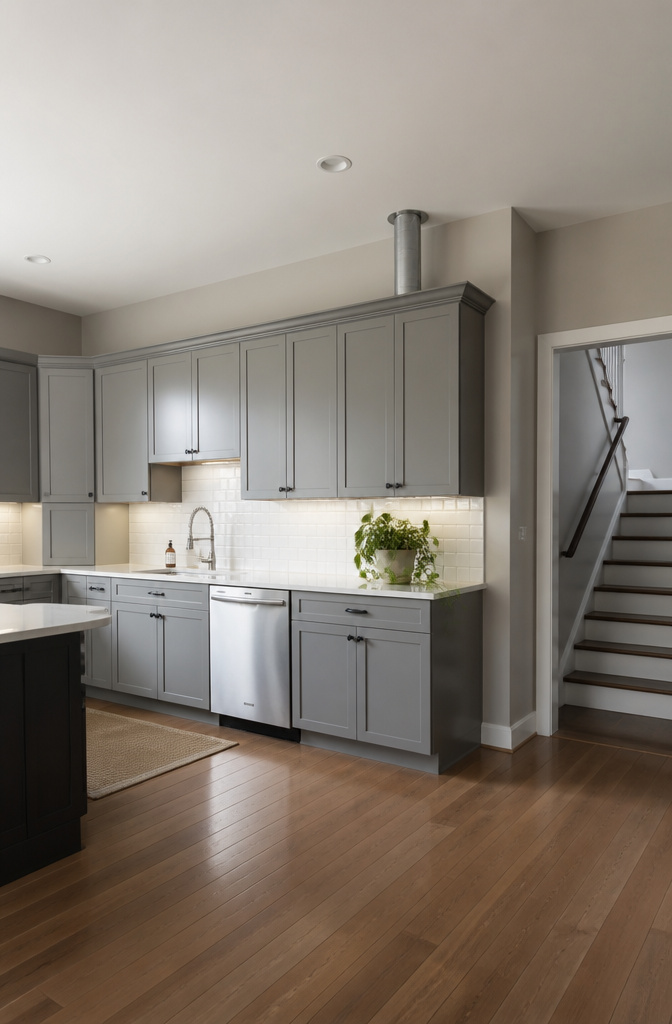
A blocked vent pipe creates the same gurgling sound as a drain clog, but the cause is completely different. Where a clog traps water, a vent blockage traps air that has nowhere to escape. Your plumbing system needs those vent pipes open so water can flow smoothly; when leaves, debris, or even a bird nest seals one off, negative pressure builds behind the drain water and pulls air through your sink trap instead.
The vent pipe runs upward and typically exits through your roof, so inspecting it yourself means climbing up there or calling someone who will. That roof access is why this fix often lands outside a casual weekend project.
You’ll know you’re dealing with a vent issue rather than a simple clog when flushing the toilet sends a gurgle through the kitchen sink. The toilet’s rush of water displaces air in a shared drain line, and with the vent blocked, that pressurized air bubbles up through the nearest opening, your sink trap, because it has no other path out.
Improperly Installed P-Trap
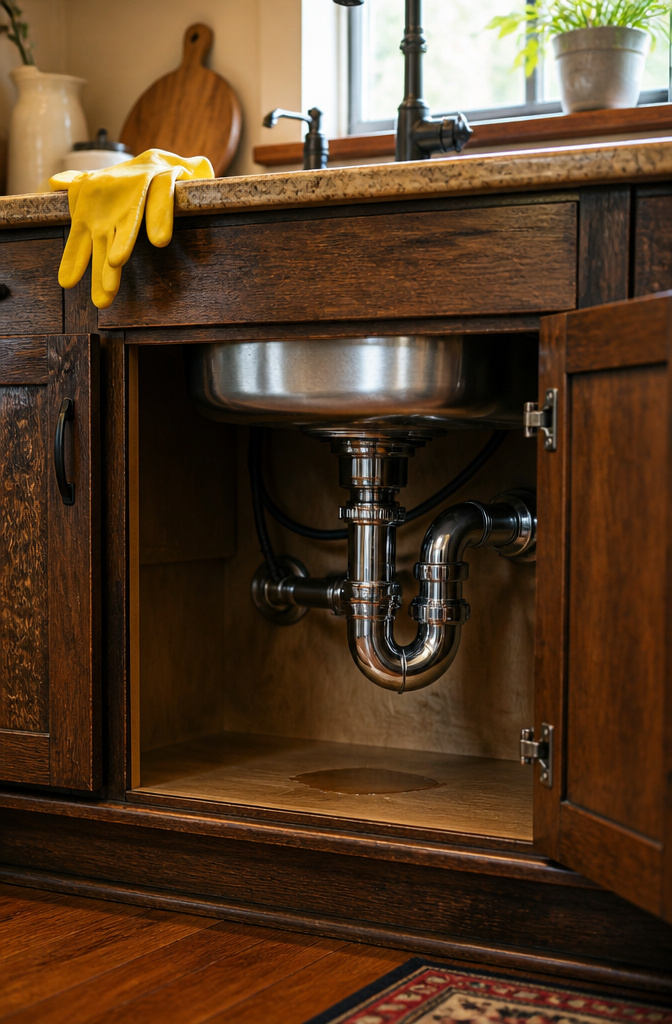
A P-trap is that U-shaped bend of pipe directly under your sink, and it does one job: it holds a small pool of water that acts as a seal against sewer gases. When it is installed wrong or the seal breaks, gurgling starts because air pushes through the water instead of staying where it belongs.
You can check yours in about thirty seconds. Open the cabinet, look at the trap, and ask two things. First, does water actually sit in that U-bend? A trap that is dry from evaporation or a slow leak has no seal left at all. Second, is the trap dripping onto the cabinet floor, or are the slip nuts wet to the touch? Either one means the components are corroded, over-tightened, or just fitted badly enough to let air sneak past the water.
A small puddle under the sink is not just a mess; it is a sign the trap is already compromised. In that case, tightening the nuts rarely fixes the root problem for long. You are usually looking at a disassembly to clean the threads, maybe replace a cracked washer, or swap the whole trap if the body is cracked or the threads are stripped. A new P-trap kit runs somewhere in the neighborhood of a fast-food lunch, and the swap itself is twenty minutes with a channel-lock and a bucket.
Sewer Line Issues
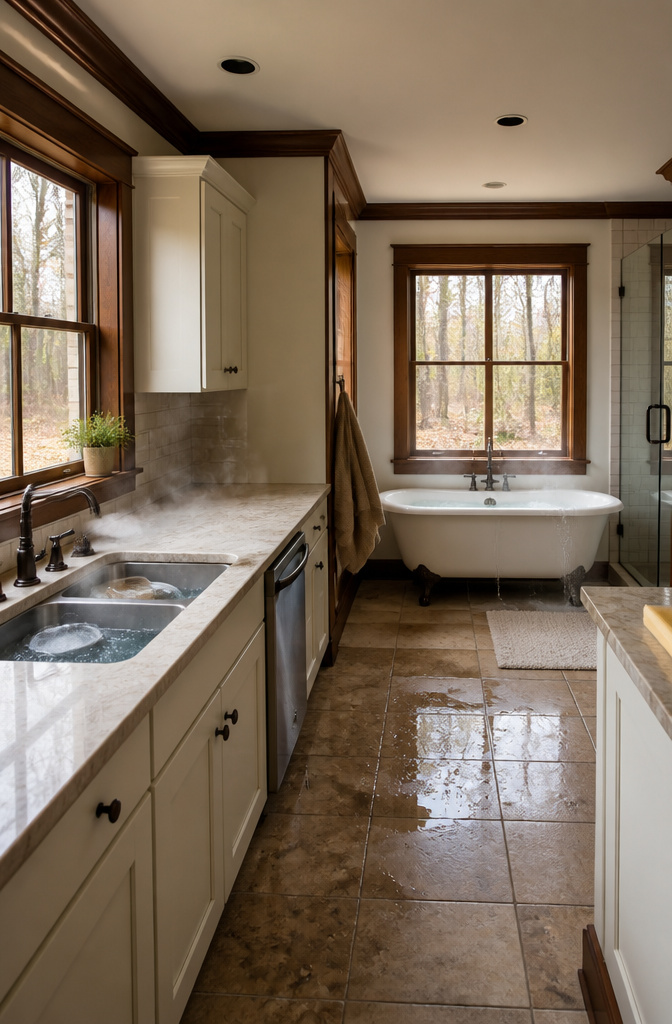
Sewer line problems are the point where a gurgling sink stops being a weekend fix and starts signaling something bigger. While a clogged P-trap or blocked vent usually traps one fixture at a time, the main sewer line serves your whole house. When it backs up or gets damaged, air gets forced back through multiple drains, so you’ll hear gurgling in the kitchen sink and the bathroom tub, or notice both draining slow at once.
Tree roots, grease buildup, or debris in that main line are common culprits. The smell is another tell: sewer gas backing up through several fixtures means the blockage is downstream of where your drains meet, not in any single pipe you can reach with a snake or wrench. I draw the line here personally. Clearing a P-trap or plunging a drain is one thing; diagnosing a main line takes a camera and the know-how to interpret what it shows without making the problem worse. If more than one drain is talking back at you, or if there’s any sign of water backing up where it shouldn’t, that is the moment to call someone who does this for a living.
Air Admittance Valve Failure
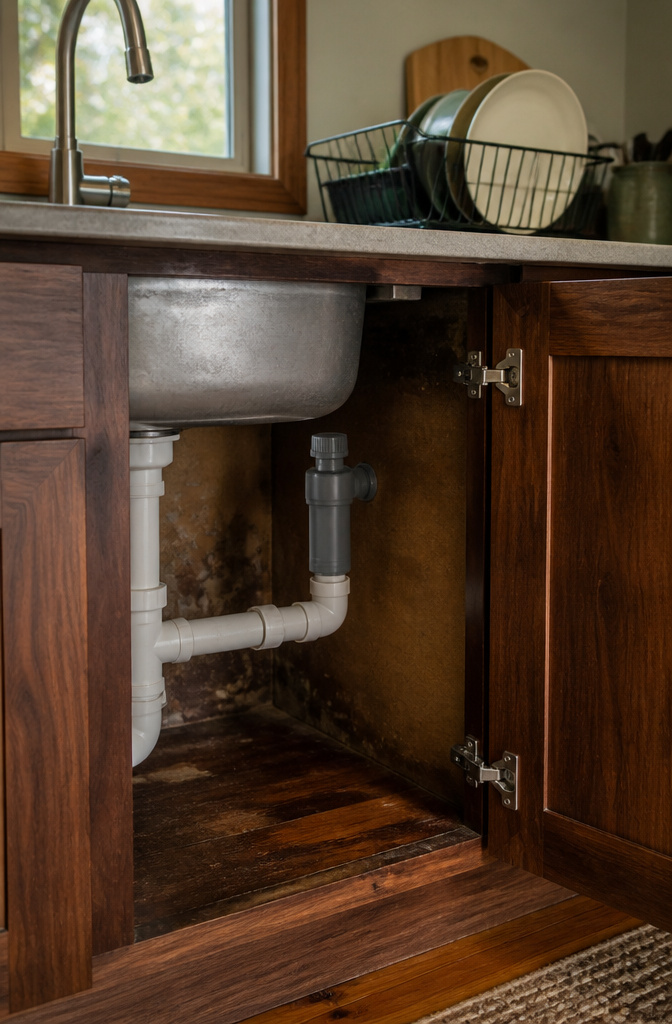
A kitchen sink drain needs air behind it to keep water flowing smoothly. In houses where running a traditional roof vent pipe would be impractical, builders sometimes install an air admittance valve, or AAV. It is a small, one-way mechanical vent that opens to let air into the drain line when water is running, then seals shut so sewer gases stay out of the room.
When that valve sticks closed, the drain pulls against a vacuum instead of a balanced system. You will hear the gurgle as water struggles past the airlock it creates. I have come across this explanation only occasionally while reading up on drain noise, which tells me it is not one of the more common culprits behind a gurgling kitchen sink. Still, if your setup uses one and the sound started after years of quiet operation, the valve is worth checking before you start dismantling pipes.
How I Figure Out Which One It Is
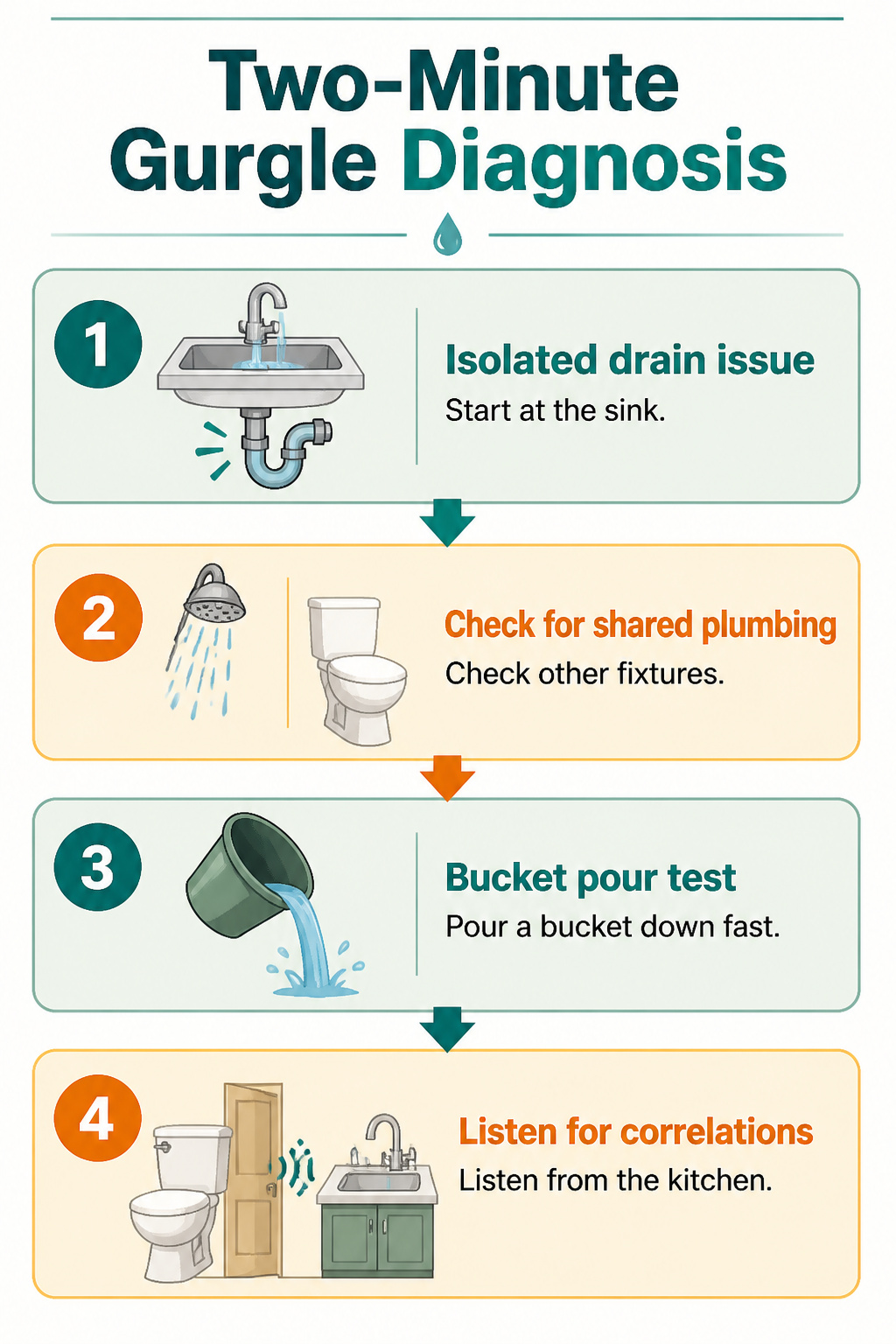
I spent a morning last month chasing a gurgle that turned out to be shared plumbing, not my sink at all. Here’s the two-minute test that would’ve saved me an hour.
If the gurgle only happens when your own sink drains, the problem is isolated to that drain, the P-trap, or the air admittance valve beneath it. Start there.
If you hear it while the shower’s running or the toilet’s flushing, the vent pipe or sewer line is the culprit. Those systems serve multiple fixtures, so symptoms spread.
Run a quick check: fill a bucket at the kitchen tap and pour it down fast. Note the sound. Then have someone flush a toilet in another room and listen from the kitchen. Gurgling that crosses rooms means shared infrastructure. You’ll clear the vent or call for a sewer line camera, not snake the kitchen drain.
The P-trap under your sink holds a water seal that blocks sewer gas. Vent pipes run to your roof to let air escape. When either fails, pressure pulls at that seal and you hear the glug. Multiple drains acting up points to the roof vent or the main line. One sink acting alone keeps the fix cheap and local.
Clearing the Clog Yourself
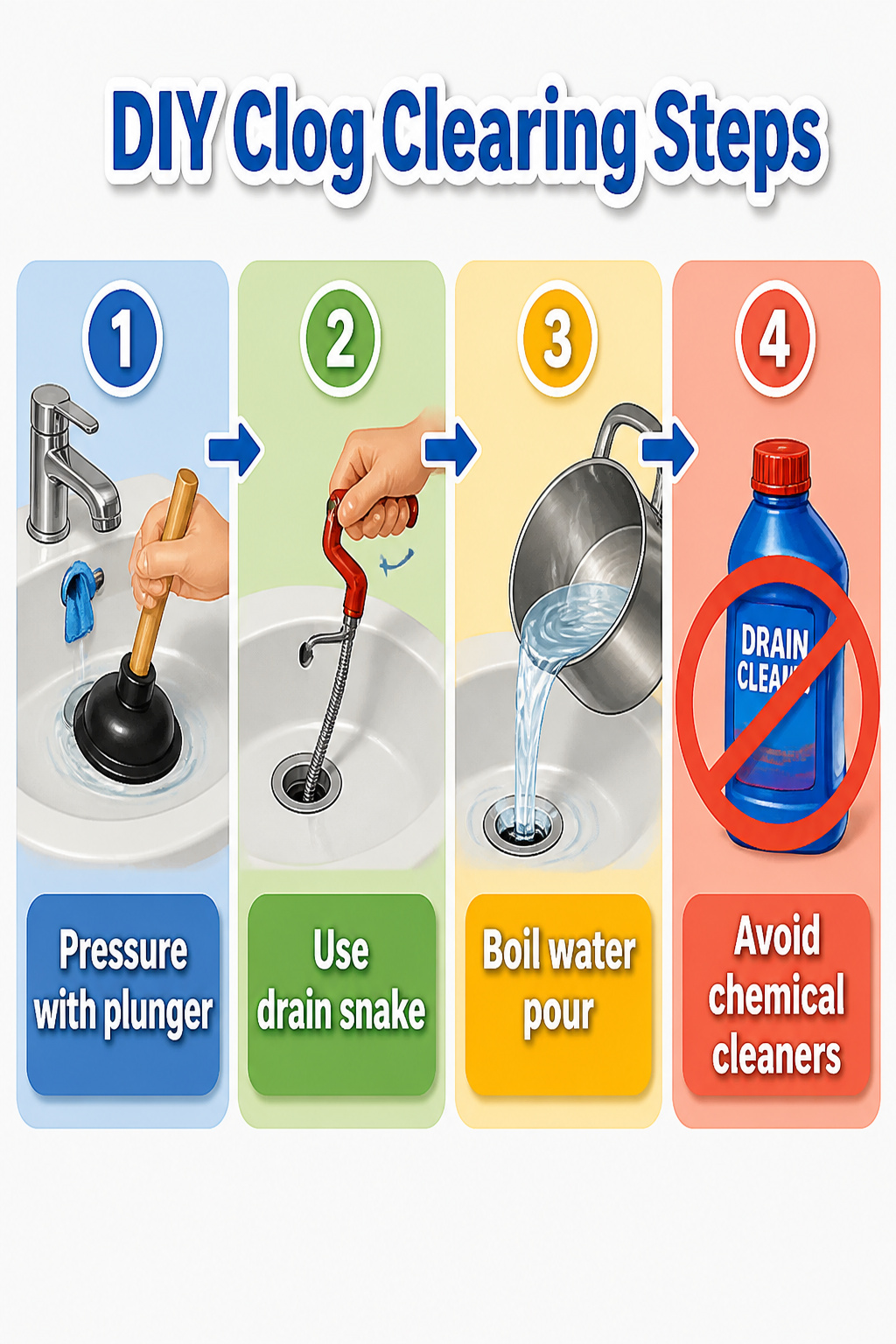
Here’s what I do first when the gurgling starts on a Saturday morning.
- Work the plunger with a rag stuffed tight over the overflow hole so the pressure stays where you want it. About a minute of plunging usually shifts a shallow clog.
- If the sound hangs around, I reach for a drain snake (sometimes called an auger). Feed the flexible coil in, twist the handle to grab or break up whatever is deeper in the pipe, then pull it back out. This is the move for hair or grease that has traveled past the first bend. The cheap kind costs maybe fifteen bucks and lives under my sink now.
- Boiling water down the drain dissolves grease clogs that are still soft. A mix of baking soda and vinegar fizzes through slower buildup. Neither one will hurt your pipes.
- Skip the chemical drain cleaners. I’ve watched landlords charge for pipe replacement after a tenant poured that stuff down a slow drain. The caustic formulas corrode metal and PVC alike, and a gurgling sink often means air is trapped somewhere the chemicals cannot even reach. The risk is not worth it.
Checking the P-Trap
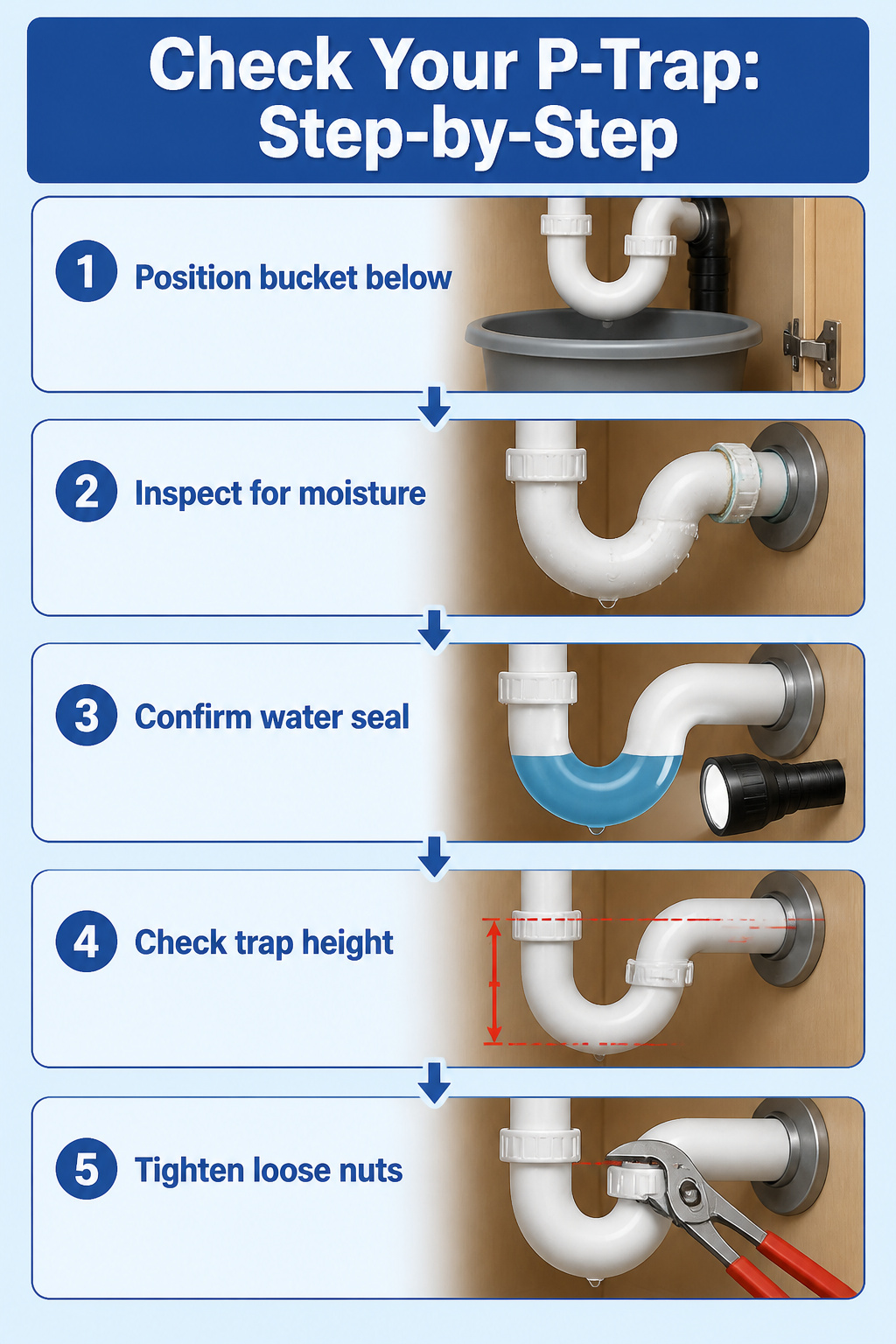
- Slide a bucket directly under the curved pipe beneath your sink so you don’t end up with water on the cabinet floor.
- Look for moisture, corrosion, or cracks on the P-trap’s surface. A small pool on the floor is worth catching early, since a leak there can pull small amounts of sewer gas into the room along with the gurgle.
- The P-trap needs to stay filled with water to block sewer gases. Run the tap for a few seconds, then shine a flashlight to confirm the curve still holds water after the flow stops. If it’s dry, the seal has failed.
- Check that the trap sits at the right height relative to the drain tailpiece and the wall pipe. A trap set too low or too high breaks the siphon and lets air slip past.
- Tighten any loose slip-joint nuts by hand first, then a quarter-turn with pliers if they still drip. Over-tightening cracks plastic and strips threads on metal.
- If the trap is cracked, corroded, or the angles look wrong after you study the connections, replacement parts run cheap at any hardware store. Installation that still looks off after a swap usually means the pipe routing itself needs correction, and that’s the point to call a plumber.
Vent Pipe Inspection
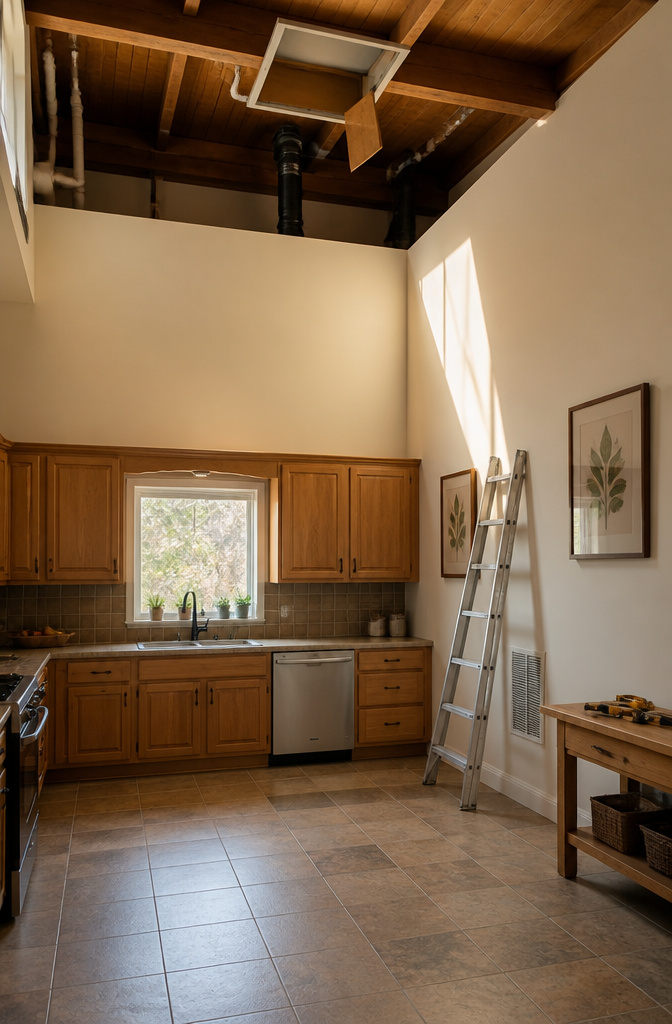
A vent pipe that is blocked keeps air from escaping your plumbing system the way it should. That trapped pressure forces air bubbles back through your sink, which is the gurgle you are hearing.
If you are comfortable on a ladder and your roof is safely accessible, you can check the vent pipe opening yourself.
- Find the vent pipe on your roof. It is usually a small, open pipe a few inches across.
- Look down the opening for obvious obstructions: leaves, packed debris, or bird nests.
- Clear what you can reach by hand or with a long tool, but do not force anything deeper into the pipe.
A vent pipe that runs inside walls or behind cabinets is not something you can inspect without cutting into finish surfaces. If the blockage is out of reach, or if you are not confident working at height, this is the point to call a plumber. They can run a camera or a snake and clear the vent without guessing where the clog sits.
When to Call a Plumber
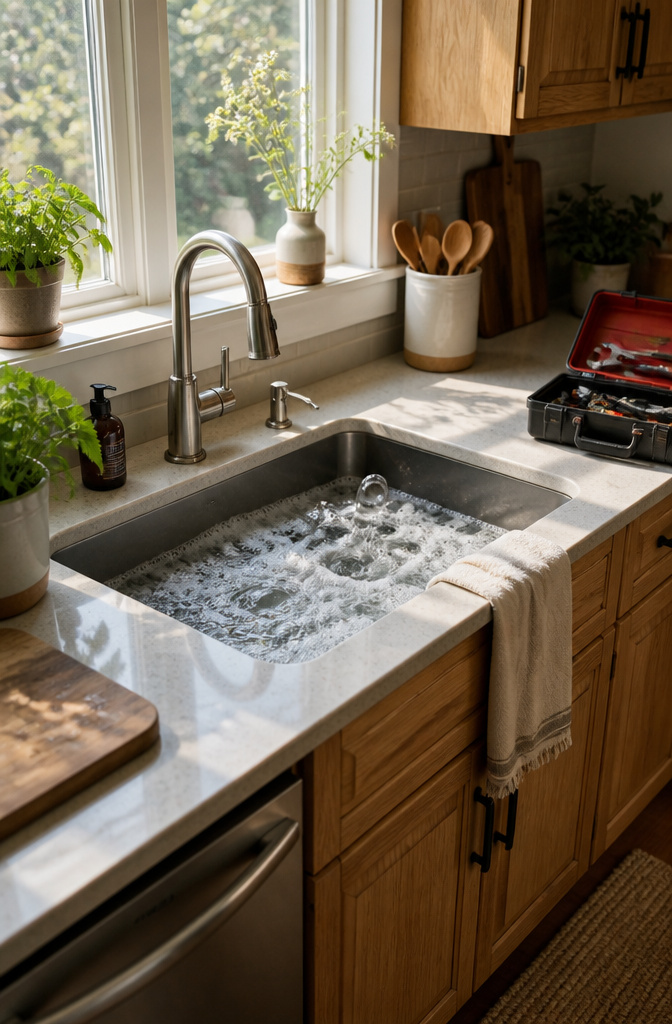
Persistent gurgling after you’ve tried the usual fixes is your signal to call a plumber. That noise means air somewhere in your system is still finding a path it shouldn’t, and the causes left at that point run deeper than a kitchen trap.
I learned reading through these that the real boundary isn’t persistence alone, it’s scope. One drain acting up usually stays local: a clog you haven’t fully cleared, a vent nearby that’s blocked. When the sound starts showing up in multiple sinks or your toilet bubbles along with it, you’re likely looking at a main sewer line blockage or a vent pipe problem that needs specialized tools. The same goes for any water backing up where it shouldn’t, or a foul smell that suggests sewer gas is making its way past the water seals meant to block it.
Plumbing vents and sewer lines aren’t weekend projects. A professional has cameras and augers that can pinpoint whether you’ve got a growing blockage, pipe damage, or something collapsed further down the line. They can clear it properly and check that your system is venting the way it should.
My own rule: if I’ve spent half a day on it and the noise is back by evening, I’m done guessing. That gurgle is the symptom, not the disease, and some diseases cost more to ignore than to fix early.
Clogged Drain vs. Blocked Vent
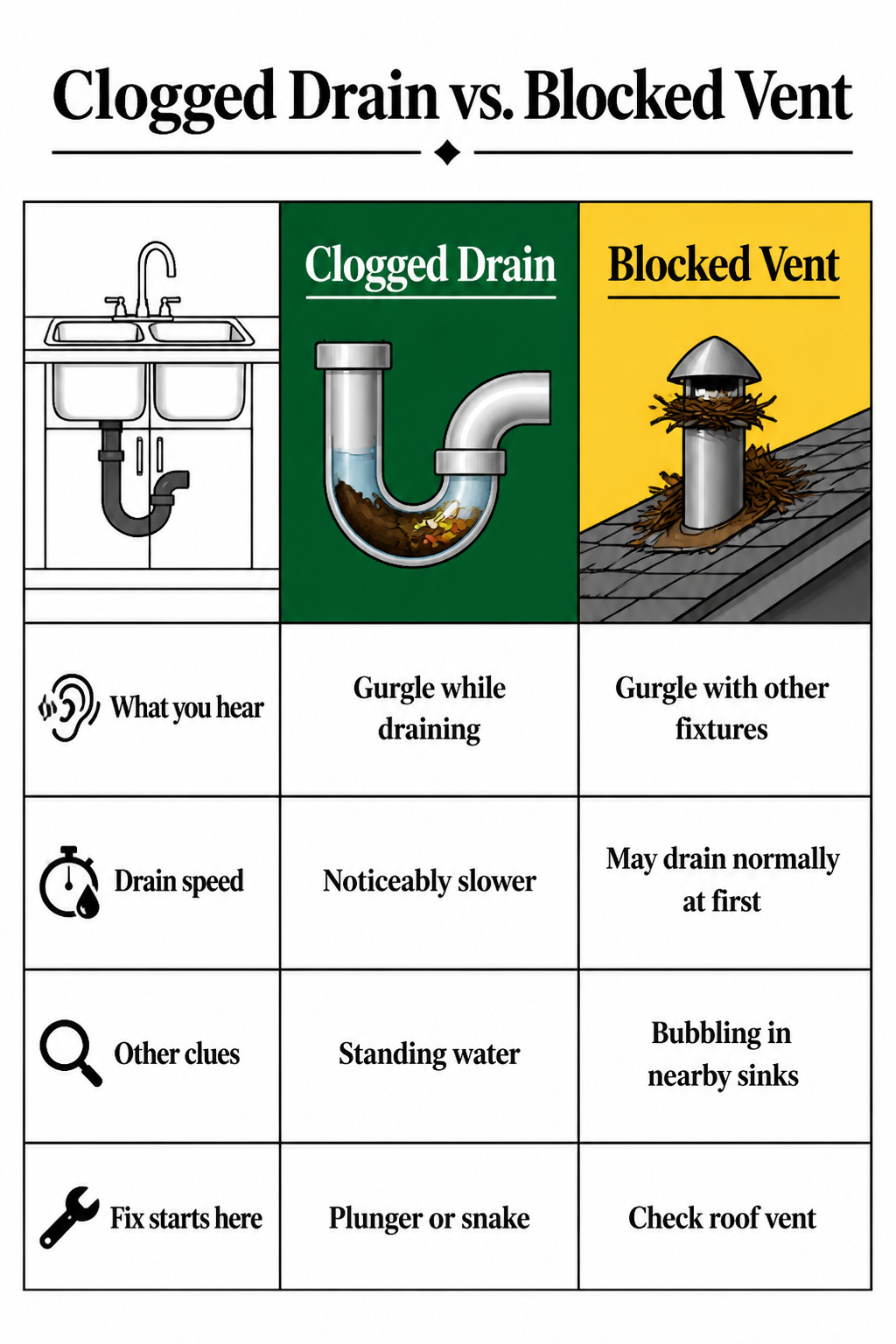
A gurgling kitchen sink means trapped air is fighting its way out, but where that air is trapped determines your fix. Water moving past a partial clog creates turbulence that sucks air through the P-trap, while a blocked vent forces the drain to pull air through the trap from below because the roof vent cannot supply it.
| Clogged Drain | Blocked Vent | |
|---|---|---|
| What you hear | Gurgle as water drains slowly | Gurgle during or after drainage, sometimes when other fixtures run |
| Drain speed | Noticeably slower | May drain normally at first |
| Other clues | Standing water, food debris | Bubbling in nearby sinks or toilets |
| Fix starts here | Plunger, snake, or trap cleaning | Check the roof vent for leaves, nests, or frost |
The kitchen sink is especially prone to partial blockages from grease and food scraps, which build up over time rather than stopping water all at once. A vent problem tends to show up after weather that could seal the roof opening, or in homes where an Air Admittance Valve has failed behind the cabinet. Running water in the bathroom while you listen at the kitchen drain can separate the two: if the gurgle only starts there, the clog is local. If it starts everywhere, the vent is the shared problem.
Frequently Asked Questions
Why is my sink gurgling?
A gurgling sink happens when air gets trapped where it should not be in your plumbing. Your drain pipes carry water out while vent pipes let air in to balance pressure; when something blocks that airflow, air bubbles force through water in your P-trap and make the glug-glug noise. The usual culprits are a clogged drain pipe, a blocked vent pipe, or a damaged or improperly installed P-trap.
How do I fix a gurgling sink?
Start with a plunger, stuffing a rag tight over the overflow hole so pressure stays where you want it. If that does not work, try a drain snake for deeper clogs, or pour boiling water followed by vinegar to break down grease and soap scum. Check the P-trap under the sink for leaks or a dry seal, and if you are comfortable on a ladder, inspect the roof vent pipe for leaves or debris.
Should I call a plumber for a gurgling sink?
Call a plumber if the gurgling persists after you have tried plunging, snaking, and checking the trap and vent. Also call right away if multiple drains are affected, your toilet bubbles when flushed, water backs up where it should not, or you smell sewer gas. Those symptoms point to a main sewer line blockage or vent problem that needs professional tools like a camera inspection.
What causes a gurgling sink when I flush the toilet?
This means your toilet and kitchen sink share a common vent or drain line, and the vent is blocked or the main drain is restricted. Water rushing from the toilet displaces air in the pipe, which then seeks escape through the nearest opening, often your kitchen sink trap, because it has no proper path out through the roof vent.