

Bathroom shelves range from adhesive metal strips you can stick up in minutes to built-in niches that require cutting into the wall during a renovation.
The right one depends on how much wall space you have and whether you can drill into tile.
Over-the-toilet units and floating shelves mount to the wall and keep the floor clear, while leaning ladder shelves and freestanding options sit on the floor without drilling.
1. Over-the-toilet Shelves
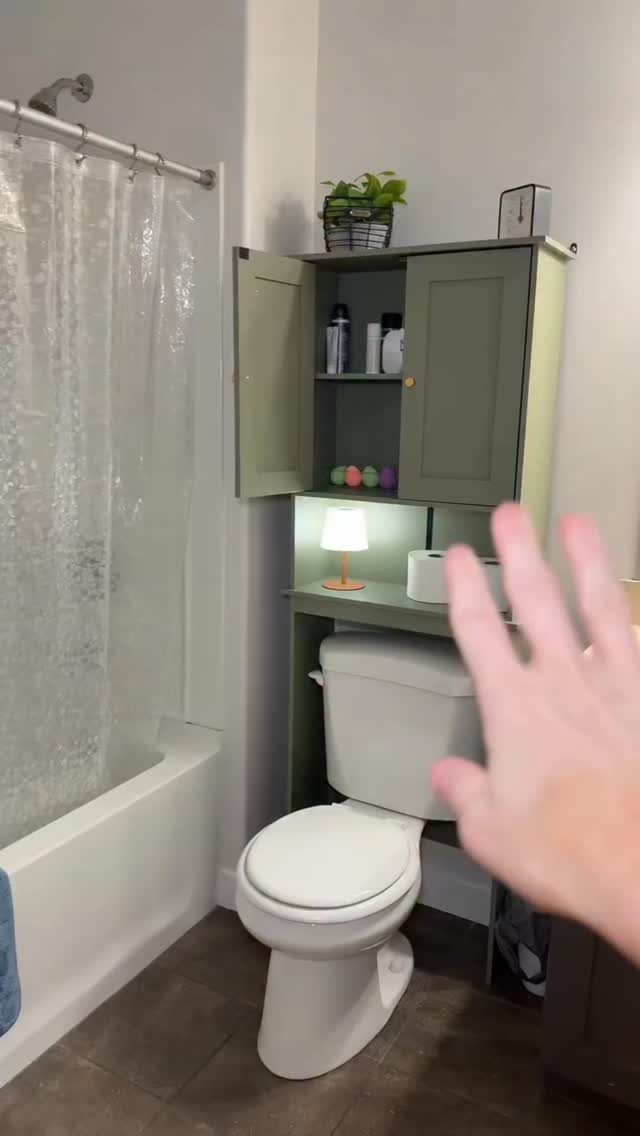
Over-the-toilet shelves sit in the vertical space above the tank, giving you storage without claiming any floor area. That matters in a small bathroom where every inch counts.
You can mount a shelf unit like this one to the wall or choose a freestanding frame that sits around the toilet. The freestanding version goes up without tools and moves with you if you rent.
I like this idea for holding extra towels, toilet paper rolls and the things you reach for daily but don’t want cluttering the counter.

Premium Quality: Our 3-tier wall mounted shelf organizer is made of high-quality bamboo, which is specially polished and exquisitely crafted by professional craftsmen, durable, smooth, stable, and easy to clean, able to serve you for lifelong time.

Display and Storage: This set of 2 floating shelves holds framed photos, small books, decor, plants, or spices while adding layered aesthetic to an open wall. The natural-colored, bamboo grain brings a warm look to everyday storage in living areas at home

Solid Paulownia Wood: Our floating shelves are crafted from 100% paulownia wood with a fine wood grain and attractive finish. Paulownia wood is naturally resistant to decay, warping, and pests, making these bathroom shelves perfect for wall decor in any living space.
2. Floating Shelves
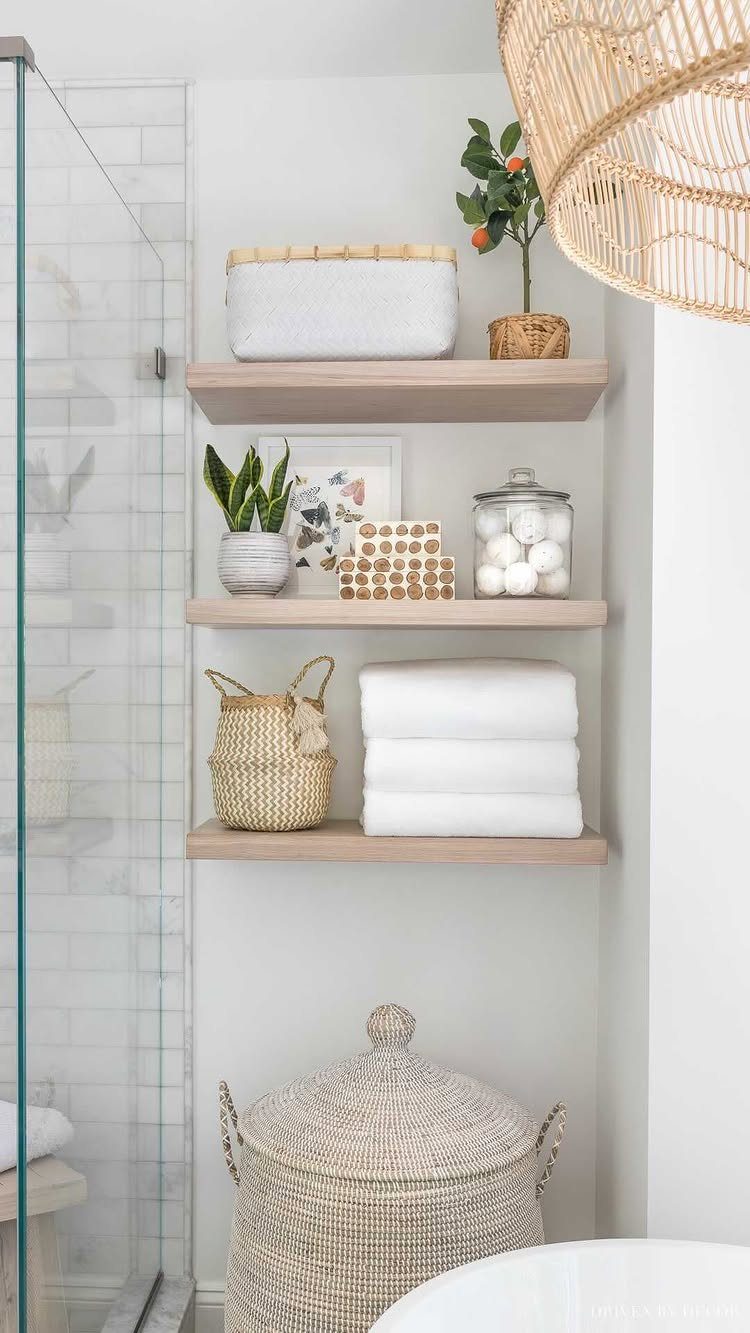
Floating shelves mount directly to the wall with hidden brackets, so they take up no floor space and keep the room feeling open.
That clean line works well in a small bathroom where a bulky unit would make the space feel cramped.
You can install them yourself with a drill and a level. Space them far enough apart to hold folded towels or baskets without looking crowded.
I like using a basket or two on the shelves to corral smaller items that would otherwise look messy sitting out in the open.
If you’re feeling handy, you can DIY floating shelves for about $20. All you need are stock boards found at your home improvement store, a drill, screws, and wood glue.

【3 Sizes of Reinforced Sturdy Wooden Crates for Heavy】✅Duty Use Each wooden storage crate is crafted with double-thickened reinforced corners and premium solid wood, ensuring exceptional sturdiness and durability for long-term use. Whether you’re transporting heavy farm produce, storing bulky household items, or organizing warehouse inventory, these heavy-duty wood crates can handle the load with ease—perfect for farm, home, garage, and commercial storage needs.

Set of 3 Wooden Crates: Package includes a value pack of 3 wooden crates. Outside measurements: Large: 15.75"L*11.8"W*6.25"H; Medium: 13.75"L*9.8"W*5.5"H; Small: 11.75"L*7.8W"*4.6"H. Three varied sizes offer multiple choices for holding different types of items
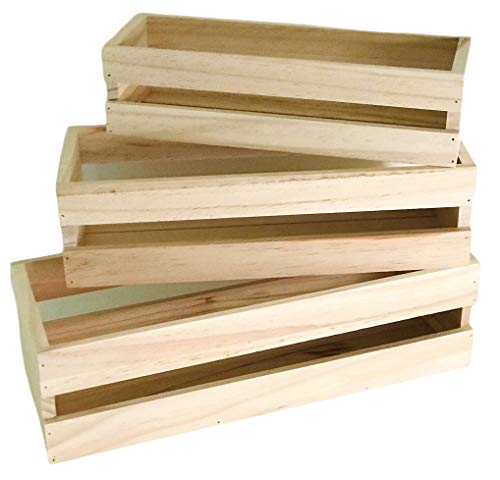
Versatile Nesting Design: Includes 3 wooden crates in varying sizes, perfect for organizing, displaying, or storing household essentials. The crates conveniently nest for easy storage when not in use. Pack of 3 DIY Project. Ready to be decorated with your creative test
3. Built-in Shelving
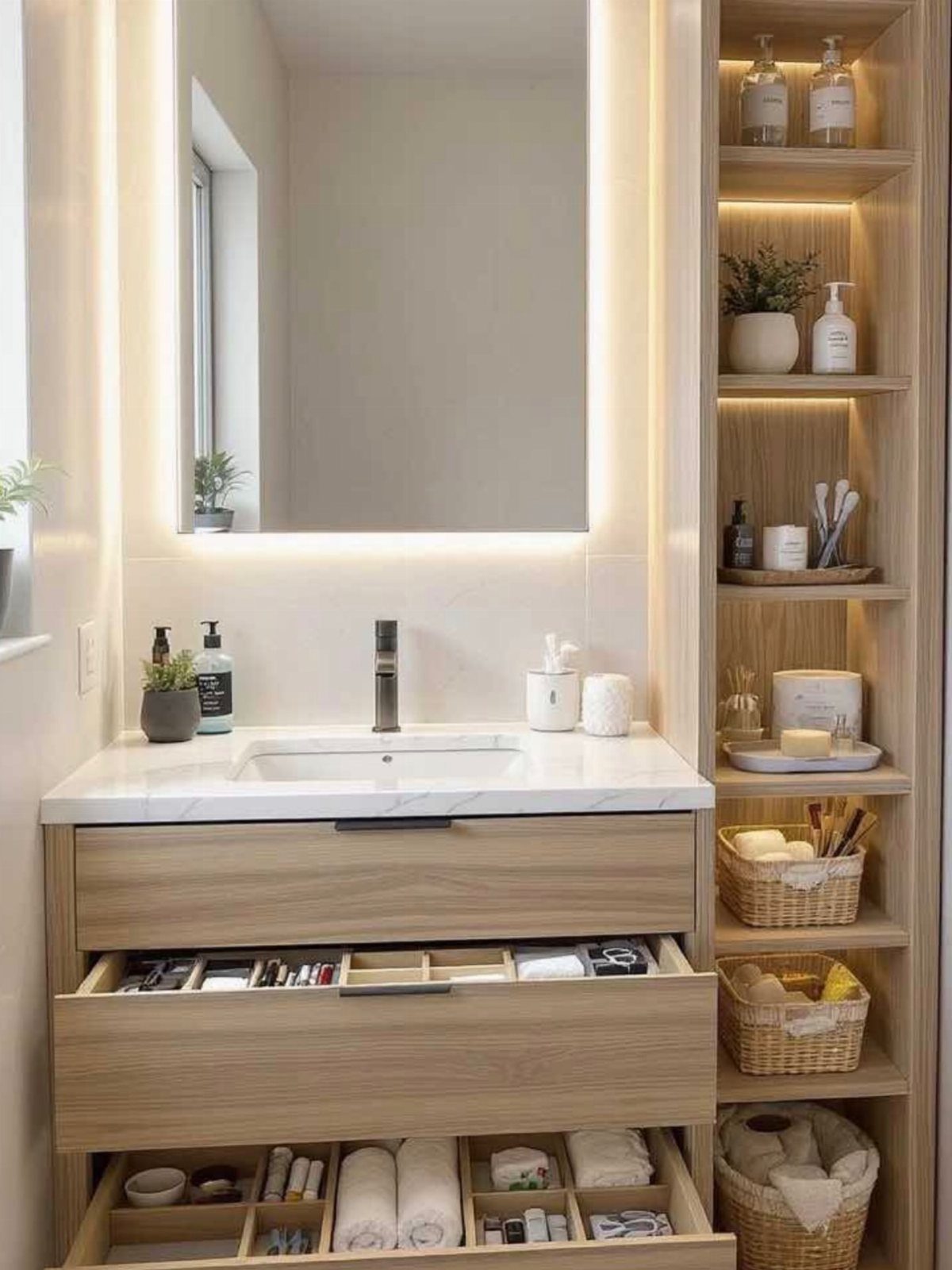
Built-in shelves are recessed into the wall or designed to fit a specific spot, so they give you storage without adding a piece of furniture to the room.
That makes them useful in a narrow bathroom or beside a vanity where a freestanding unit wouldn’t fit.
This version sits next to the sink and uses height instead of width, with integrated lighting to make everything on the shelves easy to see.
You’ll need a carpenter or contractor to build it, which makes this a bigger project than adding a shelf unit.
I think it’s worth it if you’re staying in the space long enough to get the use out of it.

Sturdy Construction. Made of high quality metal, this 2 Tier bathroom counter organizer can support heavy objects without breaking. Perfect way to declutter a small counter

👑【Space-Saving 90-degree Design】Elevate your space with our elegant 3-tier bathroom countertop makeup organizer. Featuring a smart 90-degree design, this corner vanity organizer maximaze your usually underutilized corner space. The perfume holder is versatile for not only bathroom but your kitchen, bedroom, or dresser. Bid farewell to cabinet chaos

4. Arched Built-ins
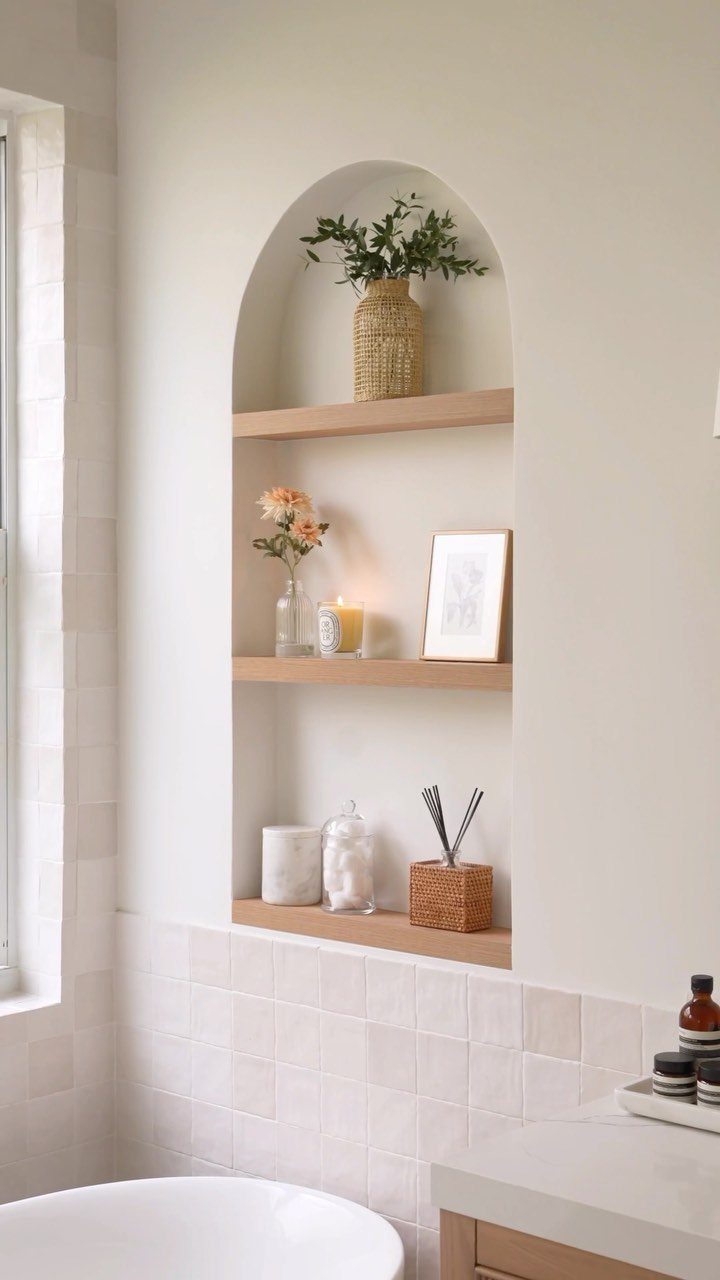
Arched built-ins add a curved detail to the usual recessed shelf. The arch softens the look and gives the alcove a more finished, intentional feel than a plain rectangular cutout.
You’ll need to frame and finish the opening, which means this is a project that involves cutting into the wall. It works best if you’re renovating or if the wall doesn’t hold plumbing or wiring in that spot.
I like the arch shape for holding a few decorative items or everyday toiletries, where the detail makes the storage feel like part of the room instead of an afterthought.

Bathroom Towel Storage: If don't have a linen closet in your bathroom, don't have any place put towels, this towel shelf was what you have been looking for. Makes use of wall space to storage towel. A top shelf for bathroom essentials, rolled towel rack Can Holds 6 Large Towels. Space saving, ideal for small bathroom towel storage

Large Size Bathroom Organizer: Size: L15.7“ x W 5.3” x H 31", 5.3 inches from the wall, Bathroom Towel Rack can hold 6-50 towels, Upgraded Top Basket Design for 3-5 Rolls of Toilet Rolls and All Toiletries, Easy Storage for All Bathroom Supplies,Ideal for use in apartments, dorm rooms, RV and campers

This bathroom storage shelf is designed to solve your bathroom clutter woes without creating new problems. Its space-saving design maximizes your bathroom's potential, providing ample storage for towels, toilet paper, and other essentials while keeping everything organized and within reach. Perfect for small spaces, it seamlessly integrates into your bathroom without taking up extra room, ensuring a clean and tidy environment.
5. Shower Niches
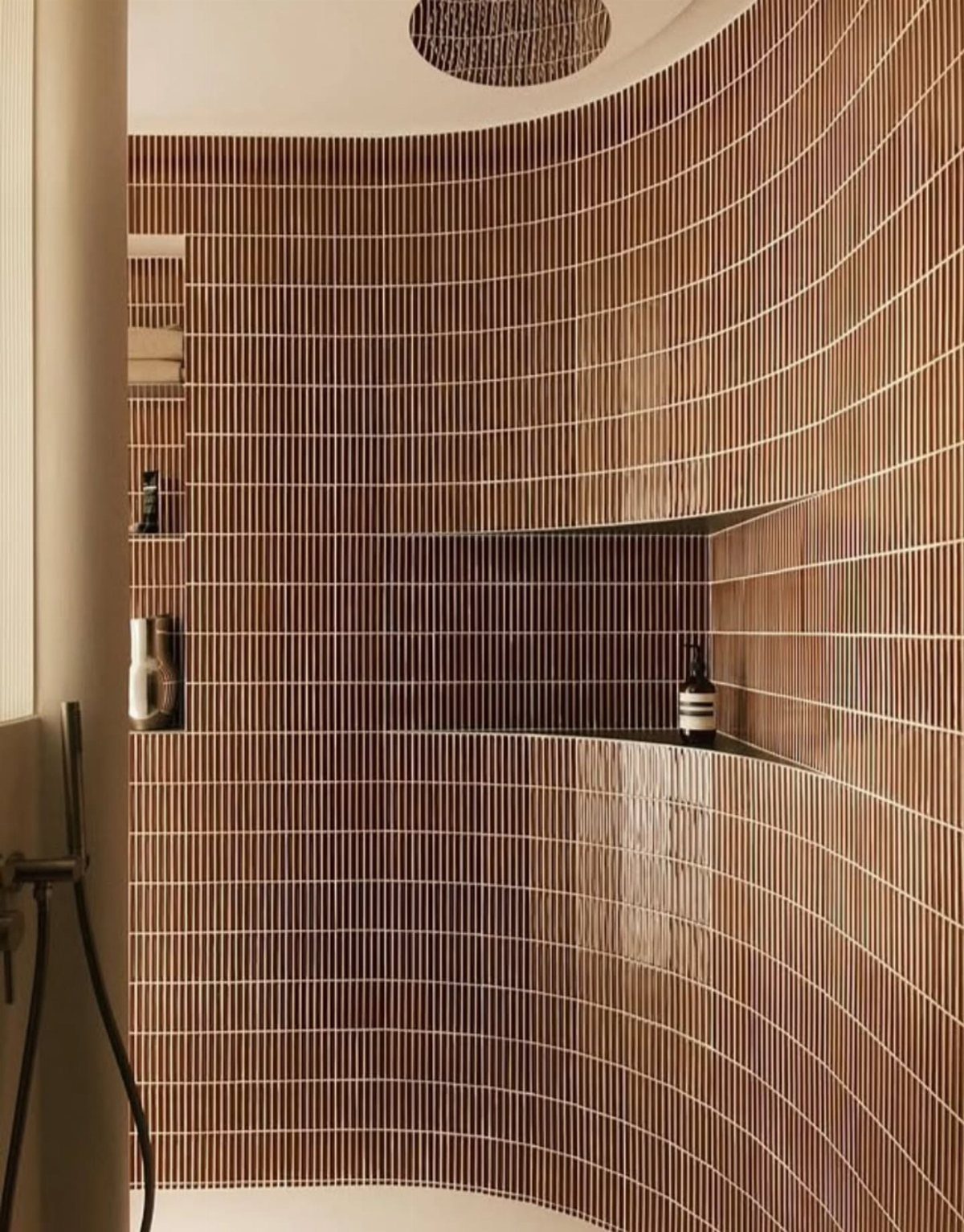
Shower niches are recessed into the shower wall so they hold shampoo, soap and other bathing products without sticking out into the spray zone.
That keeps bottles off the floor and gives you storage that doesn’t interrupt the clean tile lines.
Building one means planning it during a renovation or new build, since you’re cutting into the wall and waterproofing the interior before tiling around it. You can’t add a niche to an existing tiled shower without redoing the wall.
I think it’s worth doing if you’re already tiling, since it solves the storage problem without adding a caddy or corner shelf later.

✓ HIGH-QUALITY METAL MATERIALS: Our shelf support is made of thick and heavy duty iron materials.Features a thick black matte surface coating that delivers enhanced water resistance and effective anti‑rust performance for long‑term daily use.

For 3-15MM Thick Shelf, Glass or Wooden

100% TEAK WOOD FLOATING SHELVES FOR WALL --- These floating shelves are handcrafted from 100% teak wood. Teak wood is naturally water-resistant and physically very strong and durable. The oils in teak are what make it weather-resistant and it requires basically no care when placed in high humidity areas.
6. Glass Shelves
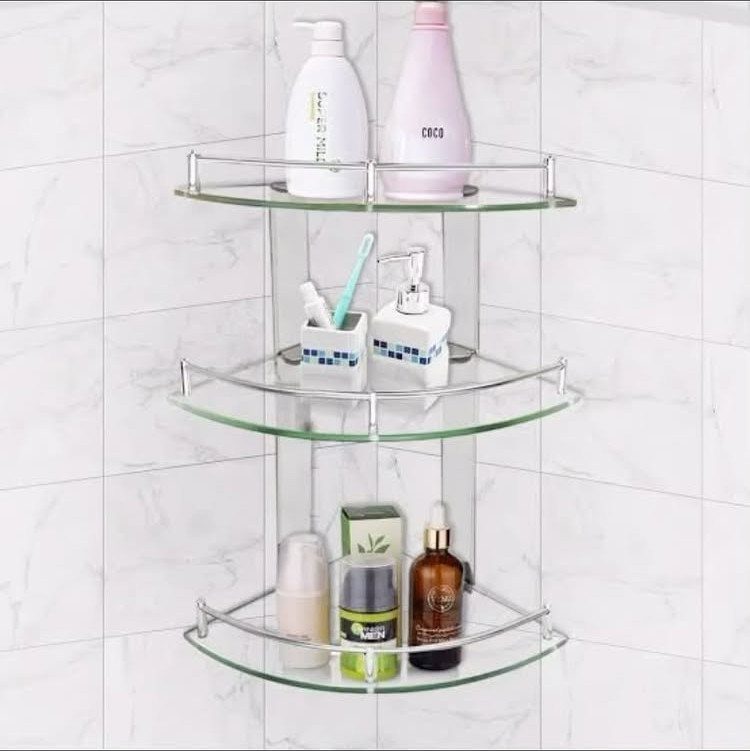
Glass shelves let light pass through, so they hold your toiletries without making the wall feel heavy or blocked off. That transparency works well in a small bathroom where a solid shelf would close in the space.
Tempered glass is the safer choice since it breaks into small, less sharp pieces if it ever cracks.
I like glass shelves for items you use daily, where you want them visible and easy to grab without adding visual weight to the wall.

Multi-functional Design: This shelf consists of a towel rack and three laminated panels. You can use a towel rack to hang your towels, which will dry them faster. And the laminate can hold the bottles and cans

【Natural Bamboo Decor】The floating bookshelves feature a natural bamboo finish with a clean and warm look. The front guard rail helps keep books and small items in place. The kids bookshelves can hold books, plush toys and small plants, great for nursery, kid room and reading nook decor.

Maximize Your Space: 6.7"D x 15.7"W x 1.5"H. 6.7" depth, ideal for books, baskets, toilet paper, or towels. Includes 2 shelves for optimal use of space
7. Cabinet Shelves
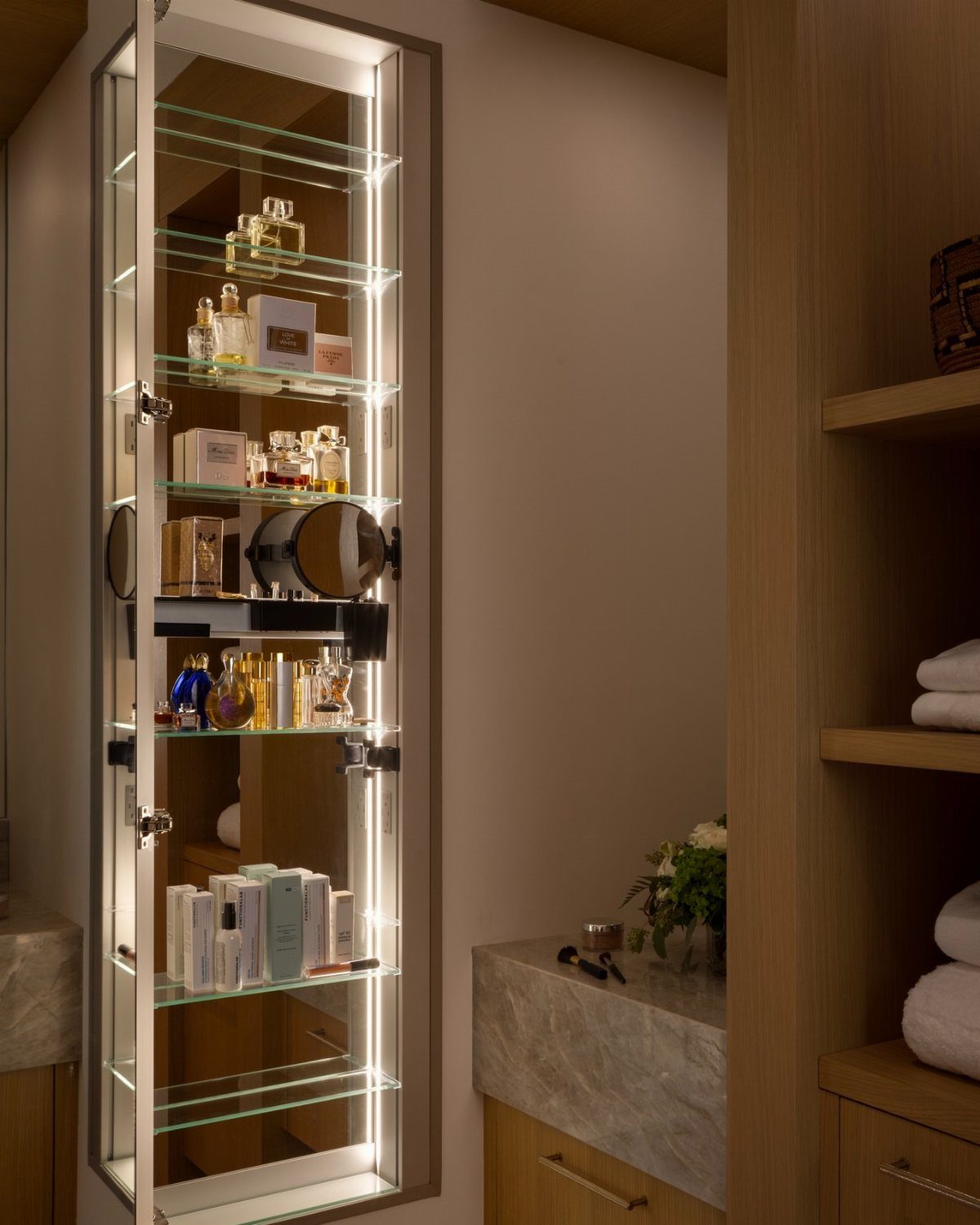
Cabinet shelves keep items behind a door, which protects towels and linens from the steam and moisture that builds up in a bathroom.
Lighted shelves inside the cabinet make it easier to find small items without digging through stacks. Glass shelves work well here since the light passes through to reach lower levels.
I like this setup for things you use every day but don’t want sitting out where they collect dust or look messy.

【Retro Style】Helsin 2 Tier Small Rustic industrial pipe shelf in bronze finish. Iron pipes and wood composition in vintage style. great for storage and decorations. It can also be used outdoors. Extensively anti-rust treatment.

5 Sizes Wooden Crates: These versatile nesting wood crates come in 5 different sizes, namely about 16''X12.4''X6.3''; 14.5''X11''X5.3''; 12.5''X9.5''X4.7''; 10.5''X7.5''X4.4''; 9.1''X6.3''X3.8''. Five varied sizes offer multiple choices for holding different types of items

CHARMING BOHO TOUCH –With a stunning distressed look and a variety of textures and colors, our wooden storage boxes create a vintage boho charm for your home. It is a unique and beautiful scenery wherever you place them, you will certain to get plenty of compliments.
8. Open Shelving
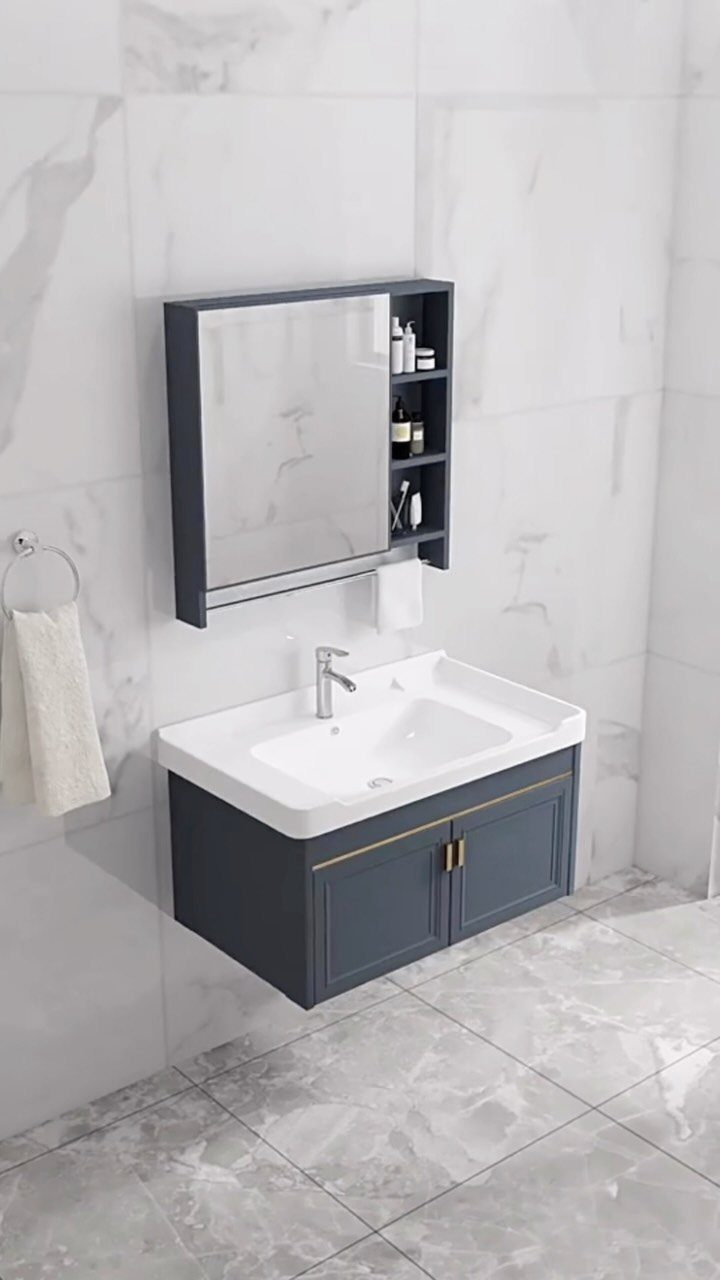
Open shelves built into or beside a vanity give you storage that stays visible, so you grab what you need without opening a door. That speed matters when you’re moving through a morning routine.
Everything on the shelf is out in the open, so it works best for items that look fine grouped together or for baskets that hide smaller things.
I’d use this for folded towels or a few containers that match, not for the random bottles that pile up over time.

Space-Saving Countertop Organizer: Compact 7.8 x 7.8 x 9.25 in 2-tier Corner Bathroom Counter Organizer fits tightly into counter corners to reclaim wasted space. Curved trays expand storage without taking extra room, ideal for small cluttered bathroom, vanity and kitchen countertops

RELIABLE NON-TIPPING DESIGN: Made of stable construction, each shelf has high weight capacity, can hold large shampoo bottles up to 20lbs. Adjust the shelf height in just 2 seconds through clip buckle. The top telescoping pole can make the shower shelf more stable and avoid loosening or sliding. Never worry about the falling issues

2-in-1 40LBS Heavy Duty Shower Rack: Includes 2 shower shelves, 4 adhesive stickers and 2 hooks. For soap holders and toothbrush holders, please check our 3-pack and 5-pack sets
9. Shower Wall Shelves
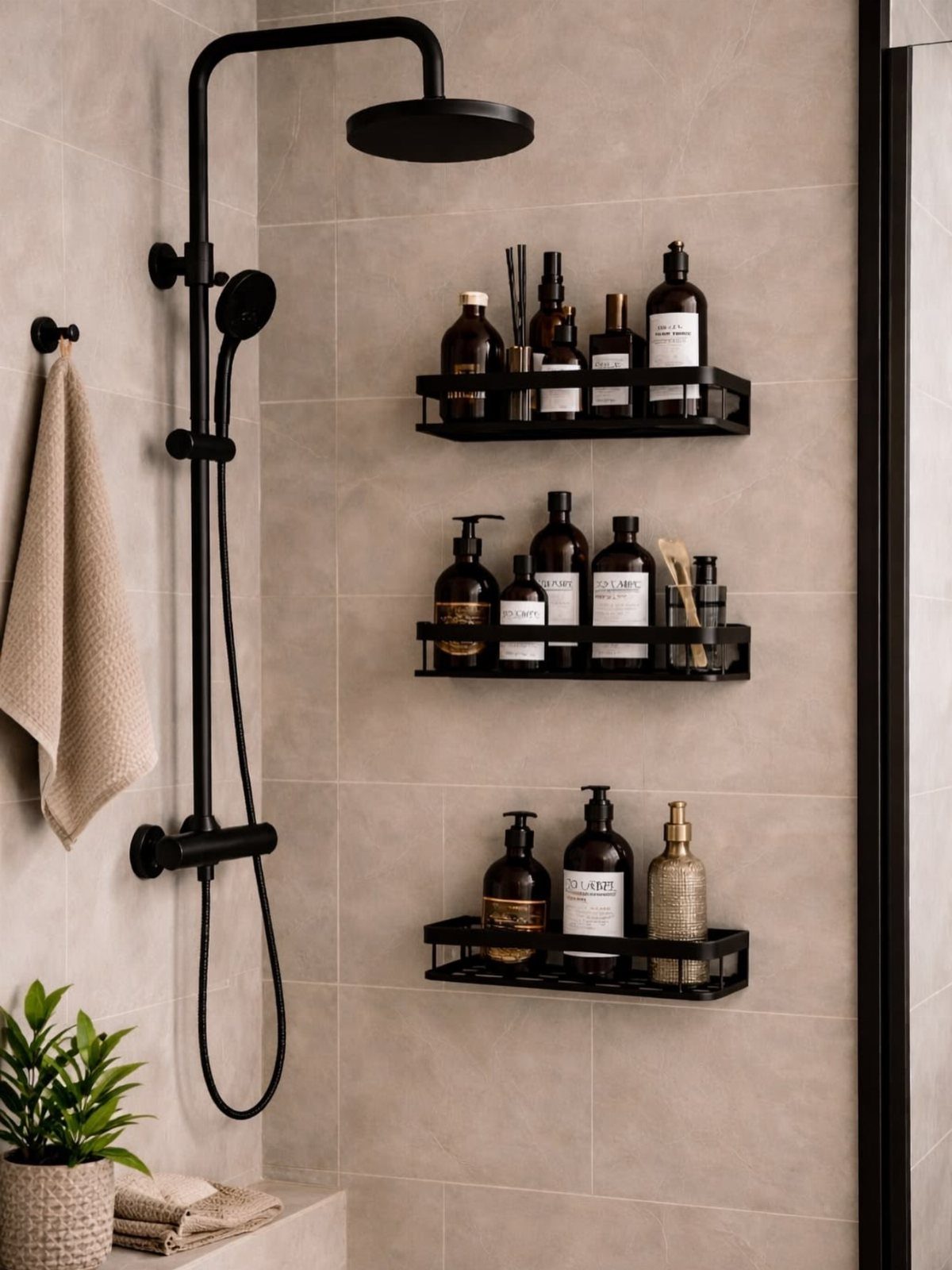
Shelves mounted on the shower wall hold shampoo, conditioner and body wash right where you reach for them, without taking up floor space or hanging from the showerhead.
That keeps the floor clear and the bottles off a corner ledge that never quite fits everything.
Look for shelves made from rust-resistant materials like stainless steel or coated metal, since constant water exposure will corrode anything else.
I prefer wall-mounted shelves to a caddy because they stay put and don’t slide down or tip over when you pull a bottle off.

Material: Medium Density Fiberboard, outlasts wood in damp bathroom environments

Wide Use Scenes - Our floating shelves for wall not only can be used in the living rooms, bedrooms, but also the bathrooms and kitchens. Perfect for displaying and holding collectibles, small plants, frames, and more.

Multifunctional Storage - Towel rack wall mounted maximizes the use of unused wall space to store a variety of Bath Sheet, Bath Towel, Hand Towel, Face Towel, especially suitable for small bathrooms, apartments, campers and RVs where space is limited.
10. Corner Shelves
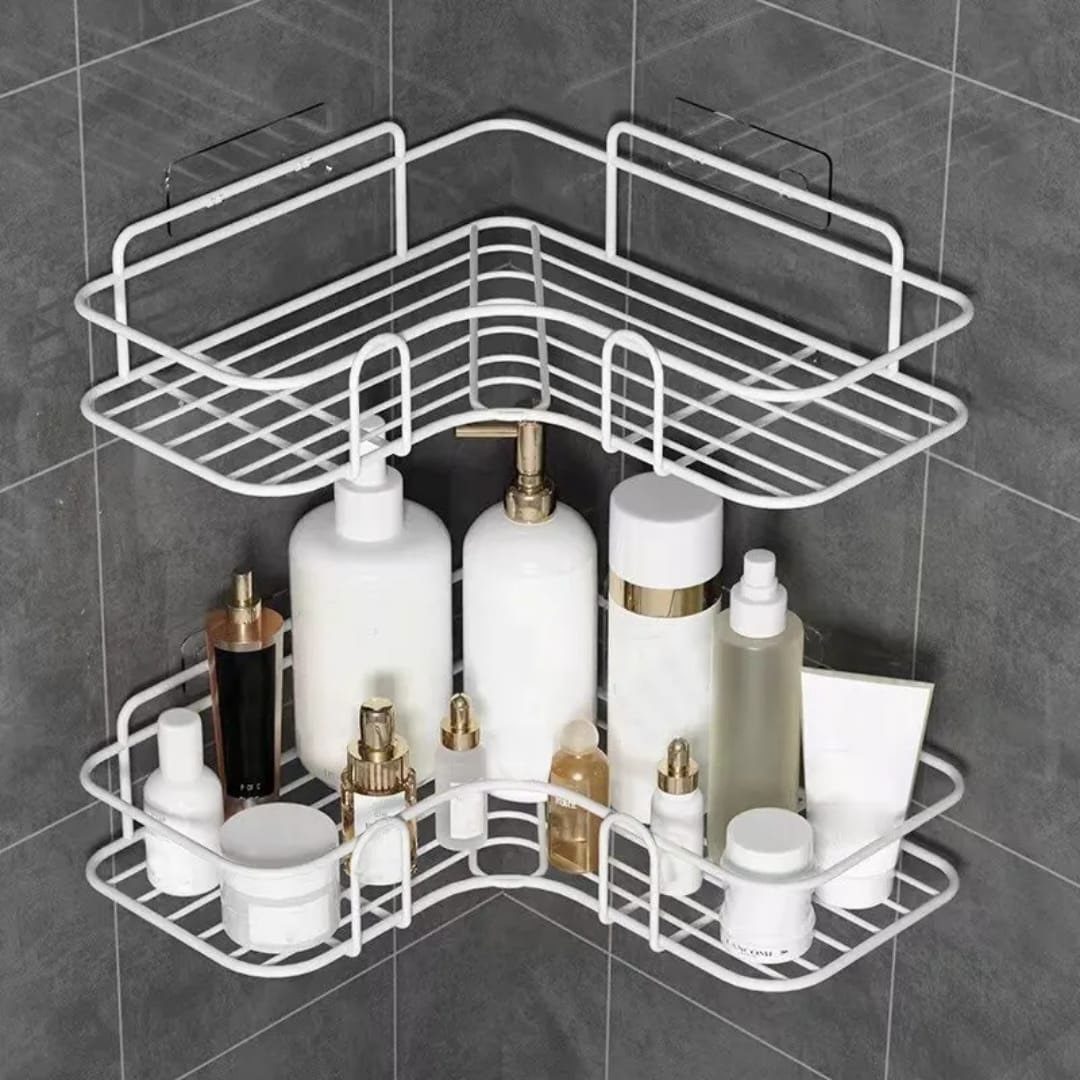
Corner shelves fit into the angle where 2 walls meet, using space that would otherwise sit empty. That placement works well in a small bathroom where wall space is limited and you can’t spare room for a wider shelf.
Wire or slatted corner shelves drain water if you’re using them in the shower, which keeps bottles from sitting in a puddle.
I like corner shelves for holding a few bottles or jars without blocking the wall or making the room feel more crowded than it already is.

【Heavy Duty Iron & Anti-Rust Coating】 These shelf brackets are crafted from thick, heavy-duty iron, stamped and bent in one piece with no welds. Each floating shelf bracket delivers superior toughness and can hold up to 150 pounds per pair. Our floating shelf brackets feature a thick, rust-resistant coating that protects against moisture in any environment. Every shelf bracket is designed to increase friction for added stability. These shelf brackets won't break even after extended use, and the durable finish keeps your shelf secure for years to come.

【Safe Rounded Tempered Glass】Our floating shelves use 7mm tempered glass with smooth rounded corners — far stronger and safer than standard glass. When shattered, it breaks into harmless blunt particles, not sharp shards. Ideal for bathroom shelves in homes with kids

[Heavy-Duty Support Without Drilling] Each adhesive shelf bracket supports up to 20kg when properly installed.These heavy duty shelf brackets are the ultimate shelf hardware solution, providing robust support for your shelving brackets without a single screw. Perfect as shelf supports.
11. Freestanding Shelves
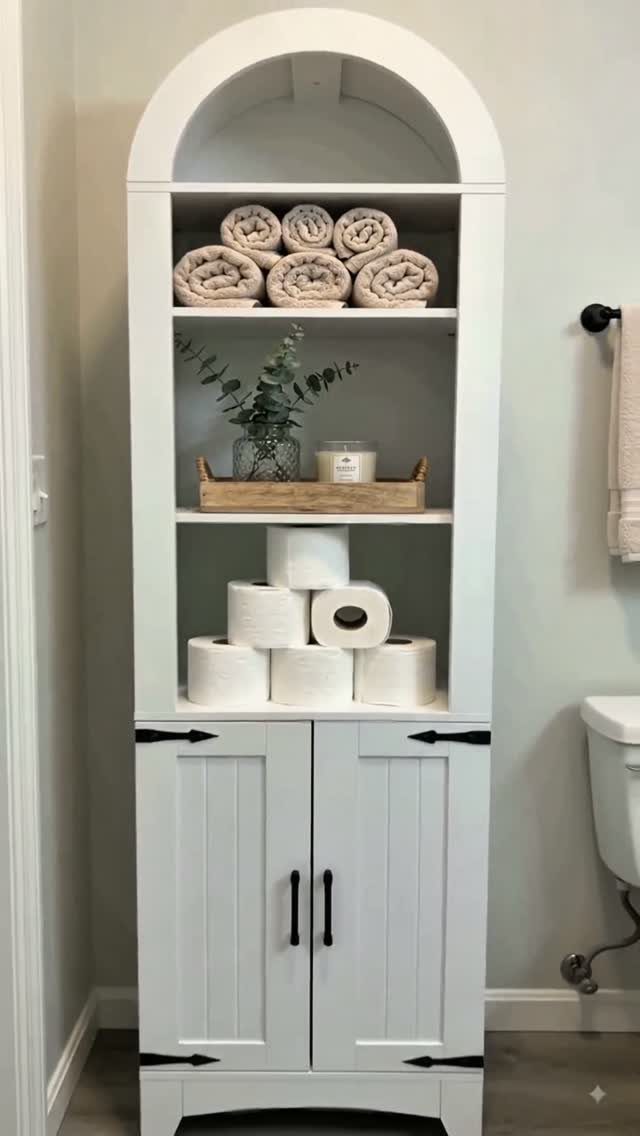
A freestanding shelf unit sits on the floor and leans against the wall, so you can move it or take it with you without patching screw holes.
That flexibility matters if you rent or if you’re not ready to drill into tile.
This version has open shelves on top and a cabinet below, which gives you a place to tuck away backup supplies or cleaning products while keeping towels visible.
I think freestanding units work best in a bathroom with a bit of floor space to spare, since they do take up more room than a wall-mounted shelf.
12. Wooden Shelves
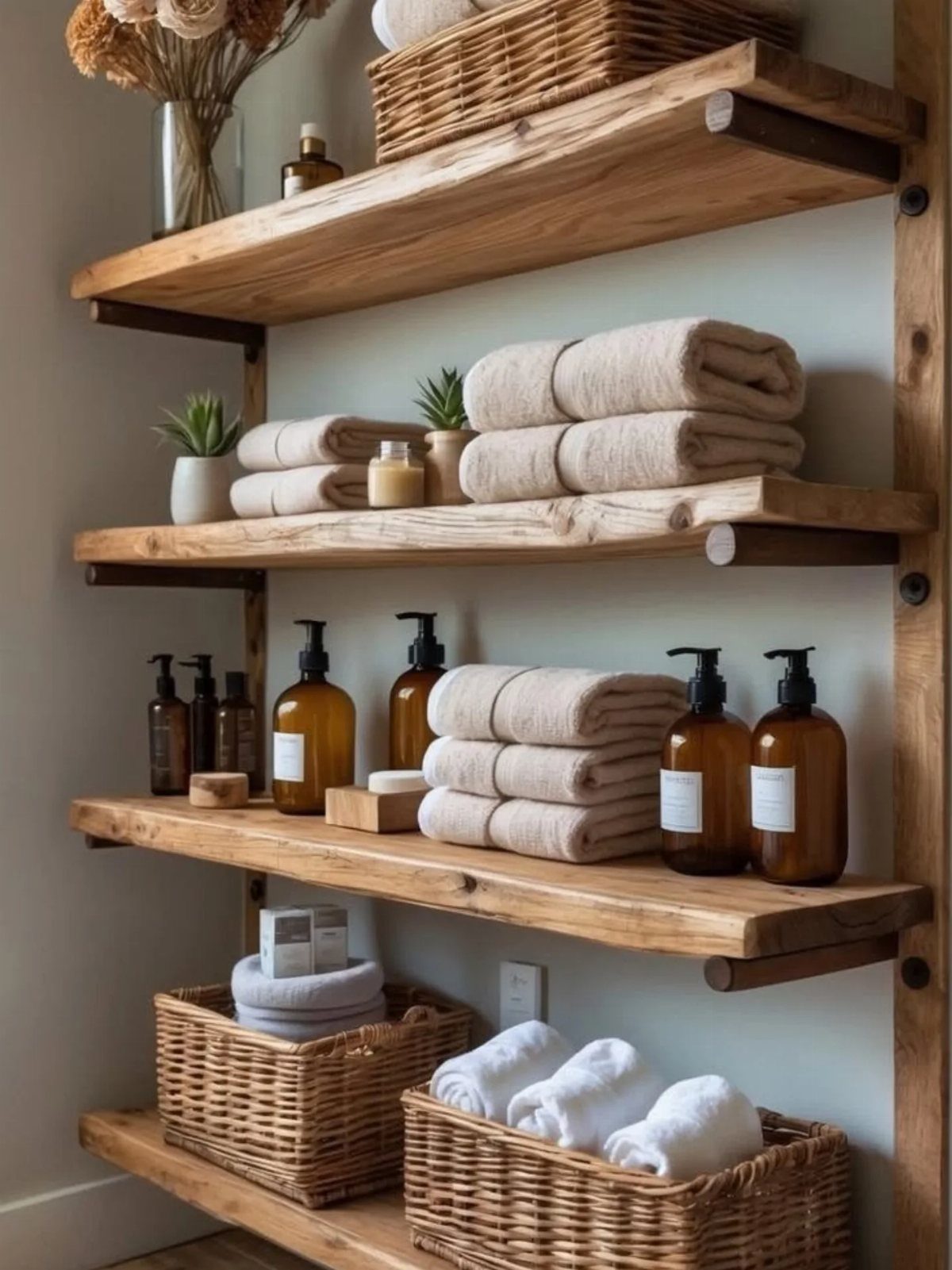
Wood shelves add warmth to a bathroom that might otherwise feel cold with all the tile and porcelain. The natural grain and texture break up the hard surfaces without requiring paint or pattern.
Seal or finish the wood to protect it from moisture, especially if the shelves sit near the shower or tub. Unsealed wood will warp or develop water stains over time.
I like wood shelves for holding rolled towels or baskets, where the organic material softens the look without making the room feel too rustic.
13. Cage Shelves
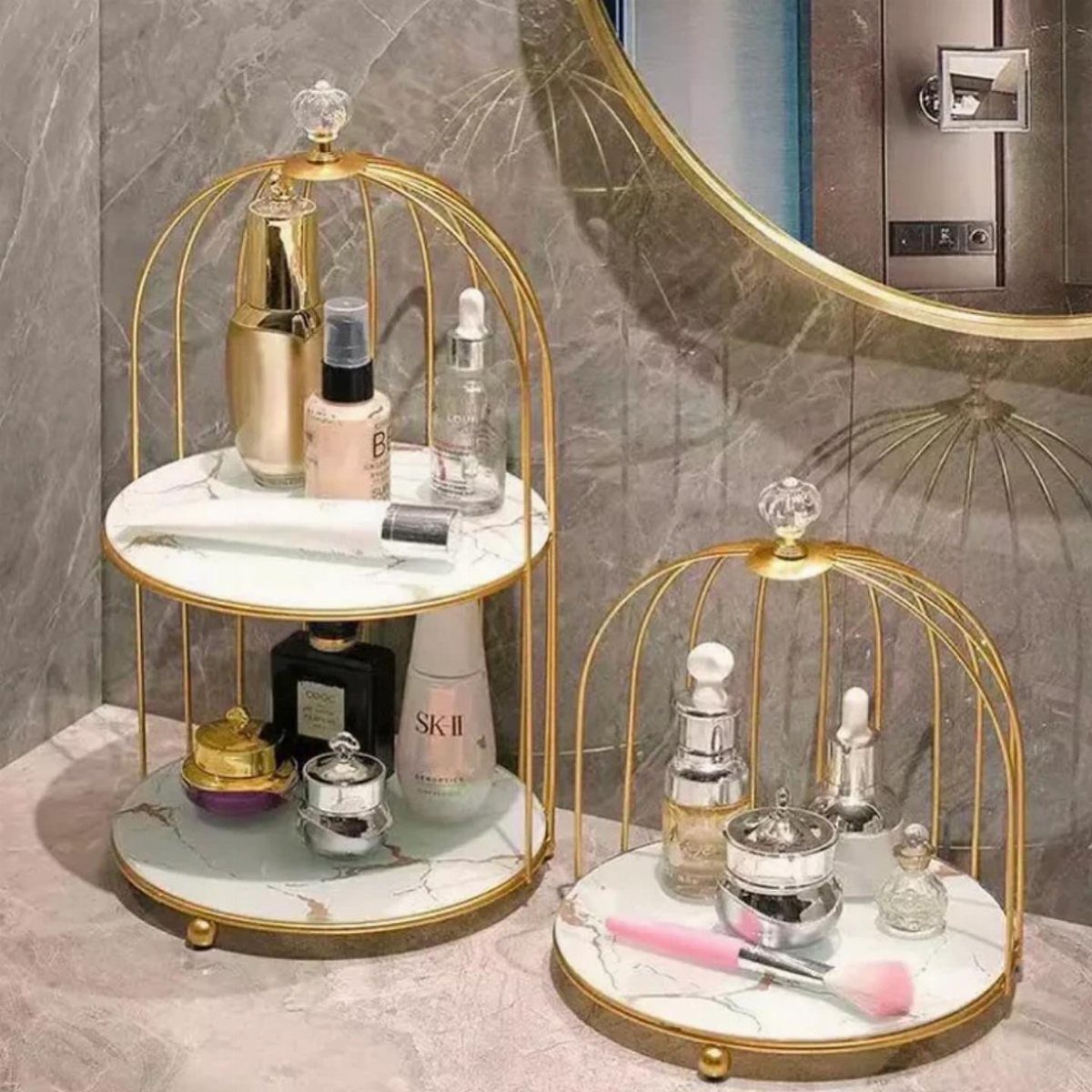
Metal cage shelves have a frame that wraps around each tier, giving you an industrial edge without losing the open look. The structure keeps bottles and jars from sliding off while the gaps let you see what’s on the shelf.
This version uses marble tops, which makes the metal feel less workshop and more like something that belongs in a bathroom. You can find cage shelves in brass, black or chrome to match your fixtures.
I like them for holding a small rotation of products you use daily, where the frame acts as a guardrail without blocking the view.
14. Leaning Ladder Shelf
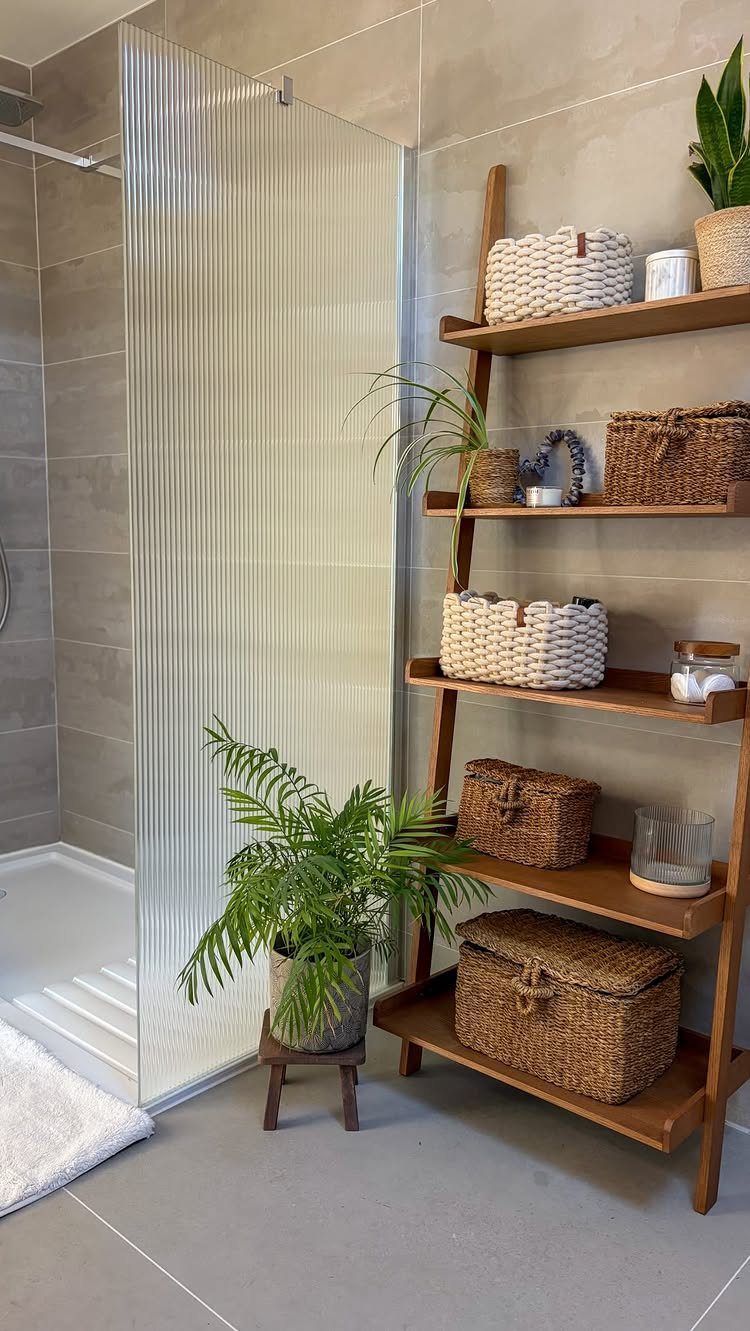
A leaning ladder shelf rests against the wall at an angle and holds baskets or toiletries across several tiers.
The lean means you don’t drill into tile, which matters if you rent or if the wall behind the shelf is tricky to mount into.
Wood rungs add warmth to a tiled bathroom and give you vertical storage without taking up much floor width.
I’d use baskets on most of the shelves to keep smaller items contained, since everything sits on a slant and loose bottles can tip forward more easily than they would on a flat surface.
15. Adhesive Metal Shelves
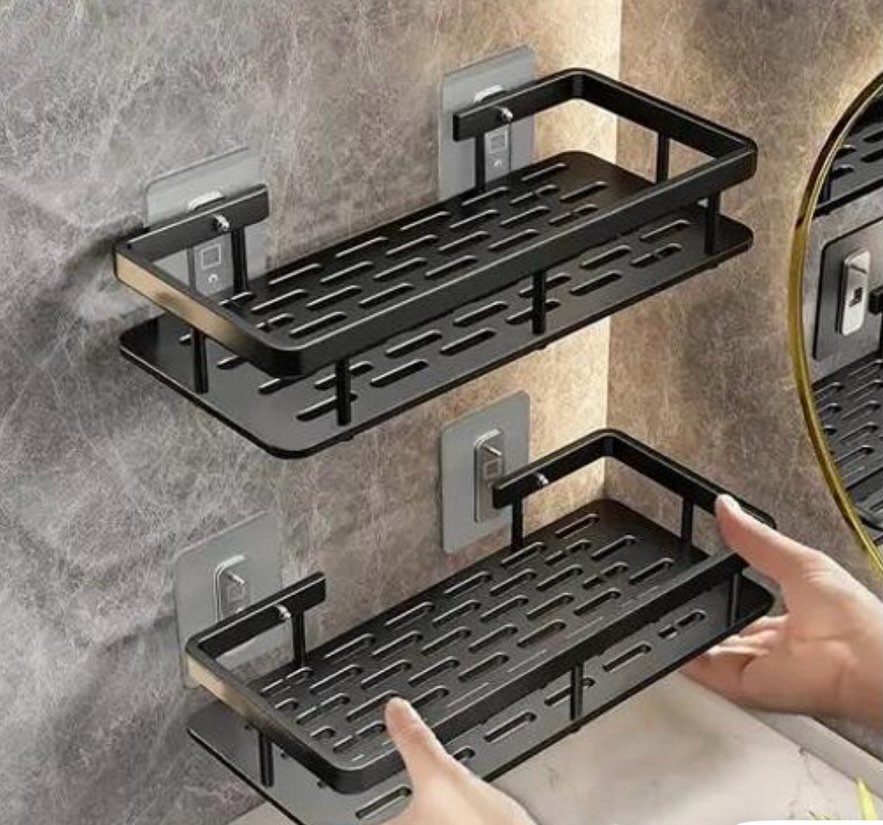
Adhesive metal shelves stick to the wall with strong backing instead of screws, so they go up without drilling into tile or damaging the surface underneath.
That makes them useful in a rental or if you don’t want to patch holes later.
Check the weight limit before loading them up, since adhesive holds less than a screw-mounted bracket and you don’t want a shelf full of glass bottles coming loose.
16. Toilet Paper Holder with Shelf
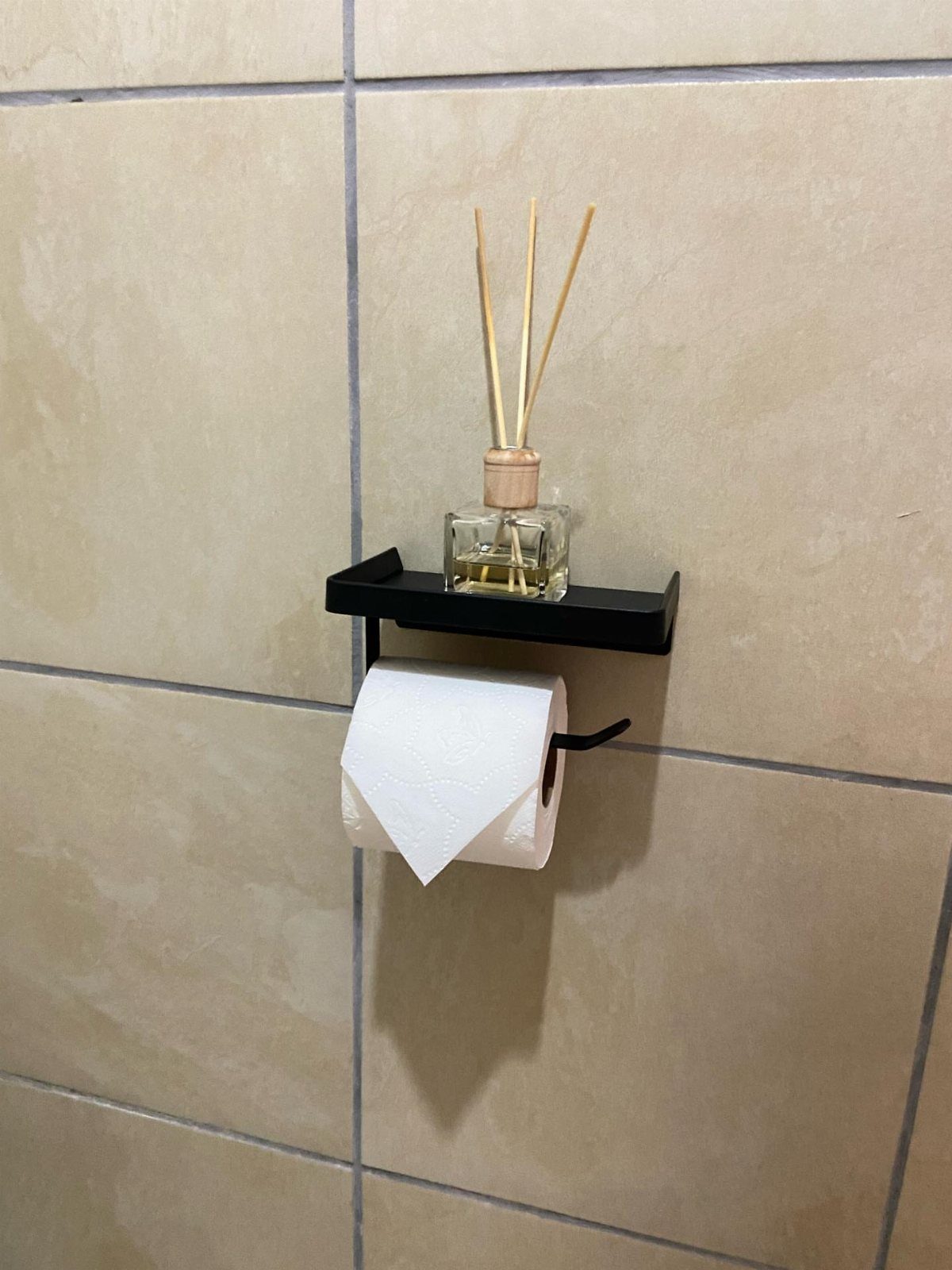
A toilet paper holder with a small shelf above it gives you a place for one or two items without adding a separate piece of hardware.
The shelf sits high enough to stay dry and holds a candle, a plant or a small bottle.
This setup mounts to the wall with screws, so it’s more secure than an adhesive option and works well if you’re replacing an existing holder anyway.
I think it’s a smart use of that spot, since the wall beside the toilet usually goes empty and this gives you storage and function in one mount.
17. Tension Pole Shower Caddy
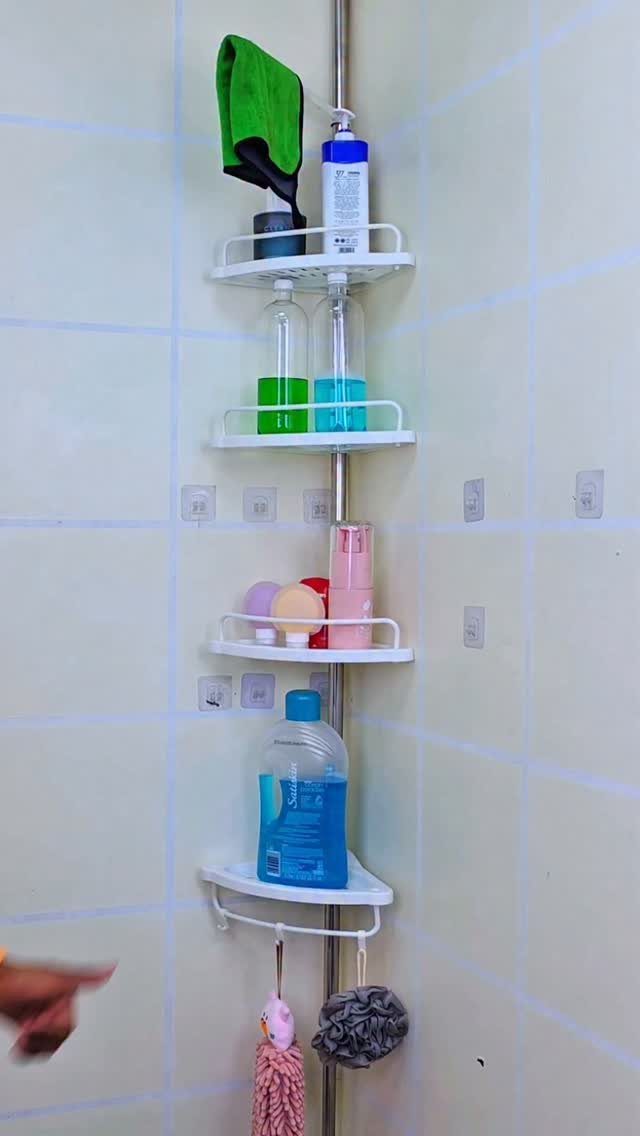
A tension pole caddy wedges between the floor and ceiling with spring-loaded pressure, so it stays up without screws or adhesive. The pole holds 3 or 4 shelves that sit in the corner of the shower and keep bottles off the floor.
Adjust the shelves to different heights depending on what you’re storing, and make sure the pole is tight enough that it won’t slip when you pull a bottle off.
This works well in a rental or if you don’t want to drill into tile, though you’ll need enough ceiling height for the pole to extend and lock into place.
Choose Materials for Moisture
Bathrooms stay damp, so the material you pick needs to handle moisture without warping or breaking down.
Wood shelves look warm, but they need a coat of sealant or lacquer to keep water from soaking in and causing rot. Skip wood altogether if the shelf sits inside the shower.
Glass works in most spots and looks clean, but it can shatter if something heavy hits it and it won’t hold as much weight as other materials.
Acrylic gives you the same clear look without the risk of breaking into sharp pieces.
Uncoated metal will corrode once it’s exposed to steam and water every day.
Style Shelves Without Clutter
A shelf that holds only bottles lined up in a row looks more like a stockroom than a bathroom.
Mix in a few things that aren’t purely functional: a small plant, a candle or a piece you like the look of.
Vary the height of what you put on the shelf so your eye moves instead of scanning a flat row.
Pair a tall bottle with a short jar or stack, and leave at least 2 inches between items so the shelf doesn’t look packed.
A mix of everyday essentials and a few decorative pieces keeps the shelf from feeling cluttered without making you dig through a closed cabinet every morning.
Frequently Asked Questions
How to organize bathroom shelving?
Start by clearing out what you don’t use, then arrange what’s left so taller items sit next to shorter ones and you’re not looking at a flat row.
Corral loose tubes and small bottles in a basket so they don’t turn into visual noise. Mix in a candle or a plant with your everyday bottles so the shelf feels like part of the room instead of just storage.
What can you display on bathroom shelves?
Mix what you use every day with a few things that just look nice, like a trailing pothos or a jar candle.
Place tall and short items next to each other so the line isn’t flat all the way across. Give each item room to breathe instead of lining things up edge to edge.