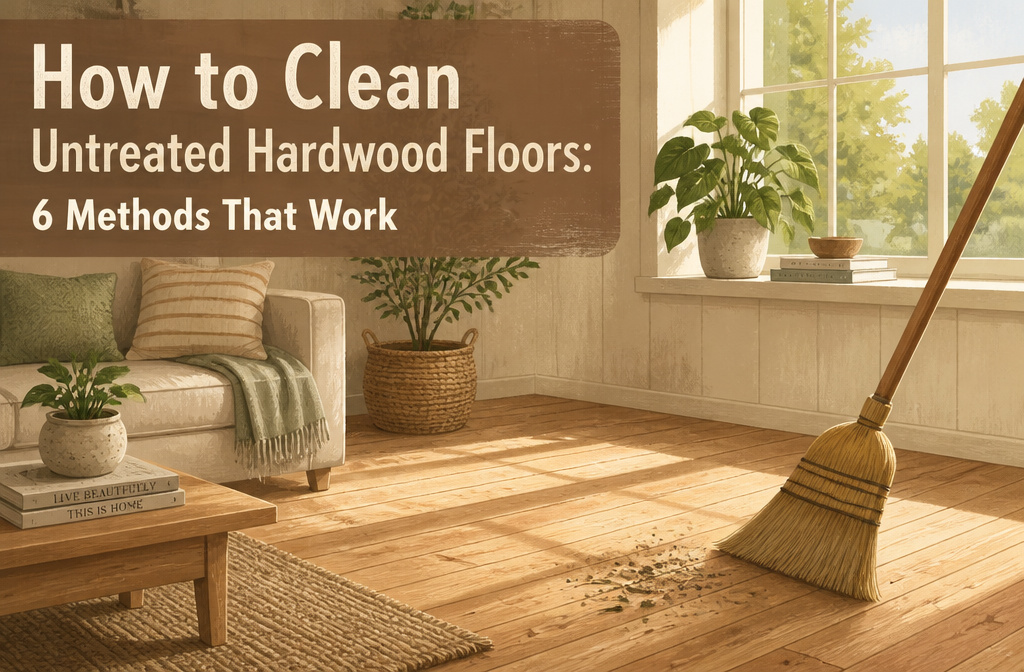

Cleaning untreated hardwood floors properly takes about five minutes of daily dry sweeping and the discipline to keep water off the surface unless you are addressing a specific mess. The mistake most people make is treating raw wood like sealed flooring, reaching for a wet mop on a weekly rhythm that warps the grain within months.
The condition that changes everything is the open grain itself: without a sealant layer, water sinks straight in and leaves dark spots that take days to dry, while every speck of grit becomes sandpaper underfoot. The half-cup of white vinegar per gallon of water ratio works precisely because that dilution drops the acid low enough to disinfect without stripping the wood.
1. Dust and Debris Removal

Dirt and grit are the real enemies of untreated hardwood. Without a seal coat to protect the surface, every grain of sand acts like sandpaper under your shoes, grinding into open grain with every step. That damage piles up fast and no cleaning method can undo a scratch once it is there.
I sweep my kitchen and entryway every evening, and the rest of the house gets attention every few days. High-traffic spots need daily care; low-traffic corners can wait a week. A soft-bristle broom works fine, or a vacuum set to hard-floor mode with the floor brush attachment. The beater bar is the part to watch out for, since it can gouge unprotected wood. A dry microfiber mop or dusting pad will catch the smaller particles a broom misses, so I keep one handy for a quick pass after cooking.
2. Spot Cleaning Stains
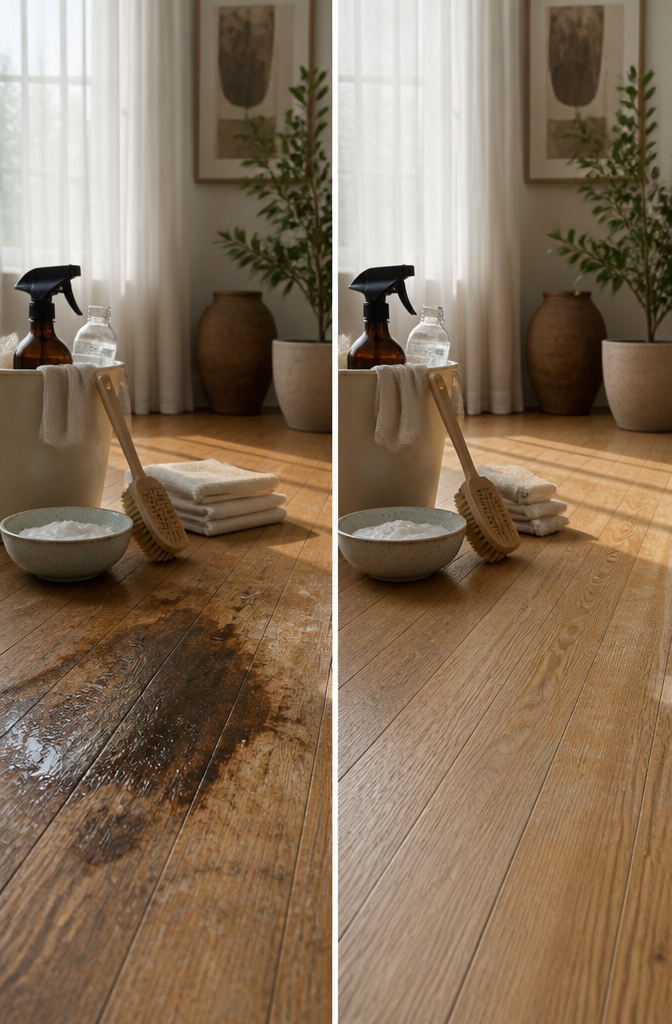
Trisodium phosphate is heavy artillery for a stain on wood that drinks up liquid like a sponge. I mix it sparingly, work it into the spot with a soft-bristle brush, and rinse immediately. The chemical is harsh enough to etch or discolor bare wood left unwatched, so the moment the stain lifts I wipe the area bone-dry.
For lighter or more specific marks, baking soda paste does the gentler job. Mix it one part powder to three parts water, rub it over the residue, let it sit one minute, then wipe. It won’t match TSP’s muscle on deep-set stains, but it also won’t punish the grain if you’re slow with the towel.
3. Damp Mopping

The mop should be barely damp, not wet. That single distinction is where most damage to untreated hardwood happens, because unsealed wood drinks up water fast and warps just as quickly.
A vinegar-water mix works fine for this: half a cup of white vinegar per gallon of water. The mild acidity cuts grime without leaving residue, and the smell vanishes as it dries. A mild soap solution is another option if you prefer. Either way, wring the microfiber mop until it feels almost dry to the touch before it hits the floor.
So can you mop unsealed wood floors? Yes, but only like this. Work in small sections with the grain, and if you spot any visible wet patches, towel them dry immediately before moving on. No rinsing needed. The real risk isn’t the cleaning agent you chose—it’s the water you didn’t wring out enough.
4. Drying

Untreated hardwood has no sealant blocking the grain, so it pulls water in fast. That moisture sits there against rules: no standing water, no puddles left behind, no "it’ll air-dry fine." I keep a stack of clean cotton rags for this step alone, and I use them the minute the mop leaves the floor. Wring your mop until it barely dampens the wood, then dry the surface immediately with a dry towel; the grain structure softens and warps once water gets inside.
Work in small sections so you’re never mopping ahead of your drying hand. A vinegar-water mix, about half a cup to a gallon, lifts dirt without leaving residue that would need another rinse and another wait. Sunshine helps afterward, one to two hours if the weather allows, but the towel does the real work. Mold starts in the gap between "done mopping" and "actually dry," and that gap is where renters lose their security deposits.
5. Conditioning

A monthly oil treatment keeps untreated hardwood from looking parched without the risks that come with water. I like to work with either linseed or jojoba oil for this step. Linseed is the traditional choice; it sinks deep into raw wood fiber and has been used on unfinished floors for generations. Jojoba is lighter and dries faster, which makes it a practical pick for regular upkeep since it will not leave heavy buildup over time.
The method is straightforward. Pour a small amount of oil onto a microfiber cloth or a flat mop finish applicator and work it across the floor in thin, even passes. Let it sit for 10 to 15 minutes so the wood has time to drink it in and so the oil can loosen any grime that sweeping did not catch. Then go back over the surface with a dry mop or clean rag to pick up the softened dirt and wipe away whatever oil remains on top.
The real advantage here is moisture control. Water-based cleaners seep into unsealed grain, swelling the wood and raising fibers you will feel as rough patches later. Oils condition the surface instead of wetting it, so you get the clean look and subtle sheen without that damage risk. Skip olive oil entirely; it turns rancid inside the wood and leaves both odor and stickiness behind.
6. Regular Maintenance
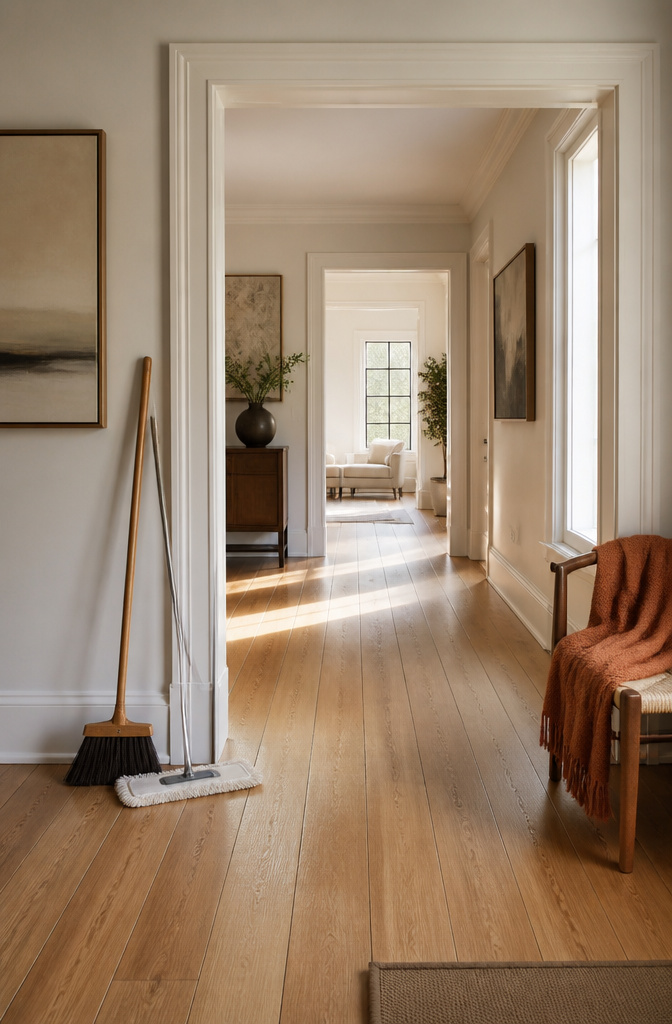
A soft-bristle broom or static dust mop is your daily workhorse for untreated hardwood. In high-traffic spots like kitchens, hallways, and entryways, I sweep every single day; grit acts like sandpaper underfoot, and on raw wood that damage shows fast. Bedrooms and other low-traffic rooms can wait two or three days between passes.
Dry tools come first, always. A vacuum on a dedicated hard floor setting works too, but only if you can disable the beater bar. That brush roll will chew up untreated boards over time, and the fix isn’t worth the shortcut.
Mopping with liquid is not a weekly habit on these floors. I spot-clean when something actually needs it and save any damp approach for deeper cleans, which means sweep daily in high-traffic areas, and keep water off the floor unless you are addressing a specific mess. This rhythm takes maybe five minutes a day and prevents the kind of buildup that forces a major intervention later.
7. Daily Dry Sweeping

Grit is the real enemy of untreated hardwood, and it settles in faster than you would think. Without a sealant layer to absorb the wear, every speck of dirt becomes sandpaper against open grain. The scratches that show up a year from now usually started as dust someone walked across twice a day.
I reach for a soft natural-bristle broom or a dry microfiber flat mop, and I run it across the floor every single morning in the paths that see the most shoes. A vacuum works too, but only on hard floor mode with a floor brush attachment — a beater bar will gouge raw wood before you notice the sound change.
If daily feels impossible, hit the high-traffic lanes daily and loop back to the quieter corners once a week. The time you spend now is what saves you from sanding something you cannot replace on a Saturday budget.
8. Vinegar-Water Solution

White vinegar breaks down surface bacteria and mild grime on unsealed wood without leaving chemical residue behind, and it evaporates cleanly so moisture exposure stays minimal. The ratio that works is 1/2 cup of white vinegar per gallon of water — any stronger and you’re flirting with damage.
I have read enough floor-care threads to know the vinegar safety question comes up constantly. The short answer is yes, but dilution is what makes it safe. At 5% acidity (the standard grocery-store concentration), that half-cup in a gallon of water drops the acid level low enough to disinfect without stripping the wood. What you do not want is straight vinegar or a heavy pour sitting on the boards.
Wring your mop until it is barely damp before each pass, and mop with the grain to avoid streaking. Work in small sections and dry each one immediately with a fan or a dry cloth — pooled liquid on unsealed wood is a warping risk you can prevent with this much attention. Skip this method entirely if your floor has an oil finish, since even diluted vinegar can strip that protection over time.
9. Natural Oils

Linseed oil and jojoba oil clean untreated hardwood by penetrating the raw wood fiber itself, loosening grime that sweeping leaves behind while conditioning the surface in the same pass. The moisture risk of water-based methods disappears entirely because these oils carry no water to swell or warp the grain.
I reach for oil instead of vinegar when the floor feels dry or looks gray, not dirty. Vinegar lifts surface residue well enough, but it does not feed the wood. Linseed sinks deepest and has been the traditional choice for unfinished floors for generations. Jojoba stays lighter, dries faster, and works better as a monthly habit because it will not build up heavy residue over time.
Apply either oil with a microfiber cloth, let it sit for about fifteen minutes so the grime can loosen, then run a dry mop to pick up the dirt and any oil the wood did not absorb. Skip olive oil entirely; it turns rancid inside the fibers and leaves both odor and stickiness behind.
10. Trisodium Phosphate

Trisodium phosphate sits on my shelf as the heavy-duty option I pull out only when gentler methods have failed. It’s a harsh chemical, so I suit up with waterproof gloves, long sleeves, and eye protection before I even open the container. The stuff comes in granules you can find at pretty much any hardware store.
For application, I work a small amount into the stain with a soft-bristle brush, then rinse immediately with warm water. This is the single moment I allow significant water contact with untreated wood, and I keep it tight to the stained area only. A towel mops up every drop of rinse water right away; letting it sit is how you invite water damage.
I reach for this when I’m facing a stain that laughs at vinegar solutions and baking soda pastes, something that has set into the grain and refuses to budge. If the trisodium phosphate still doesn’t lift it, 100-grit sandpaper becomes my last resort, though I sand briefly and lightly. Too much sanding leaves the floor uneven, and on untreated wood that unevenness doesn’t hide under any finish.
11. Baking Soda Paste

Baking soda paste is the gentler cousin to trisodium phosphate when I need to break down sticky residue on raw wood. Mix one part baking soda with three parts water and rub it gently over the stain. I’ll let it sit for about a minute, then wipe it away with a barely-damp cloth.
I keep this method in reserve for spots that refuse to lift with lighter treatment, but I still don’t reach for it often. The paste is milder than TSP, yet it’s still alkaline sitting on porous wood grain that has no protective seal to block absorption. One pass on a small area is usually enough.
If grease or wax buildup is the real problem, mineral spirits on a cloth tested in a hidden corner tends to work faster. The baking soda route is safer for someone nervous about bringing solvents into a rental, though.
Understanding Untreated Wood

Untreated hardwood has no sealant layer, which means the grain stays open and absorbs water, stains, and oils on contact. That single difference changes every cleaning move you make.
I learned this the hard way with my first apartment’s bedroom floor. A drop of water didn’t bead and roll; it sank straight into the wood and left a dark spot that took days to dry. That’s the water-bead test in action: if water sits on the surface, you’ve got a sealed floor. If it disappears within a minute, the grain is unprotected.
The same open porousness makes untreated wood feel slightly rough underfoot and look matte rather than glossy. It also means the cleaner you instinctively grab for finished floors, like Murphy’s Oil Soap, can discolor or erode the surface because there’s no barrier to stop the chemicals from penetrating. Scrubbing with wet bristles can actually carve into the soft wood.
Every method that follows has to work within that constraint: minimal moisture, gentle contact, and products that won’t react once they soak in.
Safe Cleaning Products

Most pH-neutral wood floor cleaners are safe, but only if the label explicitly says so for unfinished surfaces. Dilute them exactly as directed and treat them like you’d treat vinegar: damp cloth, not a soaking mop.
I keep two things under my sink for my own untreated floors. The first is a gallon jug of half-cup-per-gallon white vinegar mixed fresh when I need it. The second is linseed oil for when the wood looks dull after cleaning. That’s it.
Ammonia, bleach, and anything with strong surfactants are banned from my house. They don’t just risk the finish; there is no finish. The chemicals absorb straight into the raw wood fiber and break it down from inside.
If the vinegar smell bothers you, odorless versions exist, or a few drops of essential oil in the bucket helps. Some people swear by lemon water for light grease or spots; the citric acid cuts surface grime without the chemical aggression. I have not bothered since the vinegar mix handles my traffic areas fine, but it is a workable option for small sections.
When I am unsure about a new bottle, I spot-test on a hidden floorboard and wait. If the wood darkens or feels tacky, that cleaner stays in the garage.
Drying Techniques

Unguarded wood draws moisture straight into its grain. What starts as a damp footprint can swell the fibers, raise the edges above the board center in that cupped shape that’s visible from across a room, and in a bad case bow the boards permanently. Mold gets a foothold too once the humidity sits inside. The repair means sanding down to flat wood and refinishing, and that is not a weekend job. Every drop you leave behind is a problem you have invited.
I dry as I go, section by section, working backward toward the door so I am never mopping myself into a wet corner I have to cross again. A dry microfiber towel follows immediately behind the damp mop, usually the same cloth once I have wrung it out completely. It picks up what the mop left, which is almost always more than I expected. In a larger room I drop a second dry towel every few feet and shuffle them forward as I move, so there is always something absorbent under my hand before the sheen of moisture has a chance to vanish into the wood.
Frequently Asked Questions
Can you mop unsealed wood floors?
Yes, but only with a barely damp mop, not a wet one. Wring the microfiber until it feels almost dry to the touch before it touches the wood, and dry each section immediately with a clean towel. Unsealed wood drinks up water fast and warps just as quickly, so visible wet patches should be toweled dry before you move on.
What is the best cleaner for unsealed wood floors?
Natural oils like linseed or jojoba, or a diluted vinegar-water solution at half a cup of white vinegar per gallon of water. Oils condition the wood without any moisture risk, while the vinegar mix cuts grime and evaporates cleanly. Skip ammonia, bleach, and strong surfactants entirely; they absorb straight into raw wood fiber and break it down.
How often should you clean unsealed wood floors?
Sweep daily in high-traffic areas like kitchens, hallways, and entryways; low-traffic corners can wait two or three days between passes. Keep water off the floor unless you are addressing a specific mess, and save damp mopping for deeper cleans rather than making it a weekly habit. This daily rhythm takes about five minutes and prevents the buildup that forces major intervention later.
Can you use vinegar on untreated wood?
Yes, when diluted to half a cup of white vinegar per gallon of water. At that ratio, the mild acidity disinfects and cuts grime without stripping the wood. Do not use it straight or in a stronger mix, and skip it entirely if your floor has an oil finish, since even diluted vinegar can strip that protection over time.