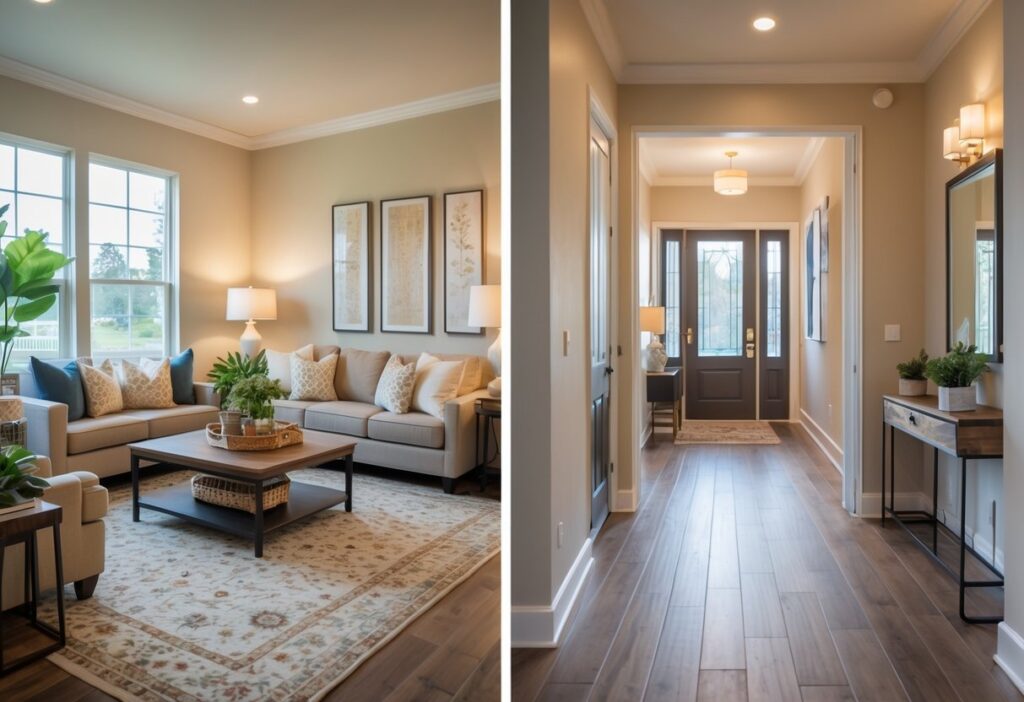

You want to know whether a living room and a hall are the same—and how that choice changes how you use and design your home. A living room is usually the main family space for relaxing and entertainment, while a hall is more of a passage or entry area that can connect rooms or welcome guests. That simple split will guide the rest of the post.
This guide shows how purpose, layout, and furniture make each space feel different. You’ll see easy ways to decide which space to prioritize, and practical tips for turning a hall into something useful or keeping a living room cozy and functional.
Key Takeaways
- The living room serves daily life and entertainment, while the hall mainly connects spaces or greets guests.
- Design choices and furniture define how each space feels and works.
- You can adapt either area to fit your needs with simple layout and decor changes.
Defining Living Room and Hall
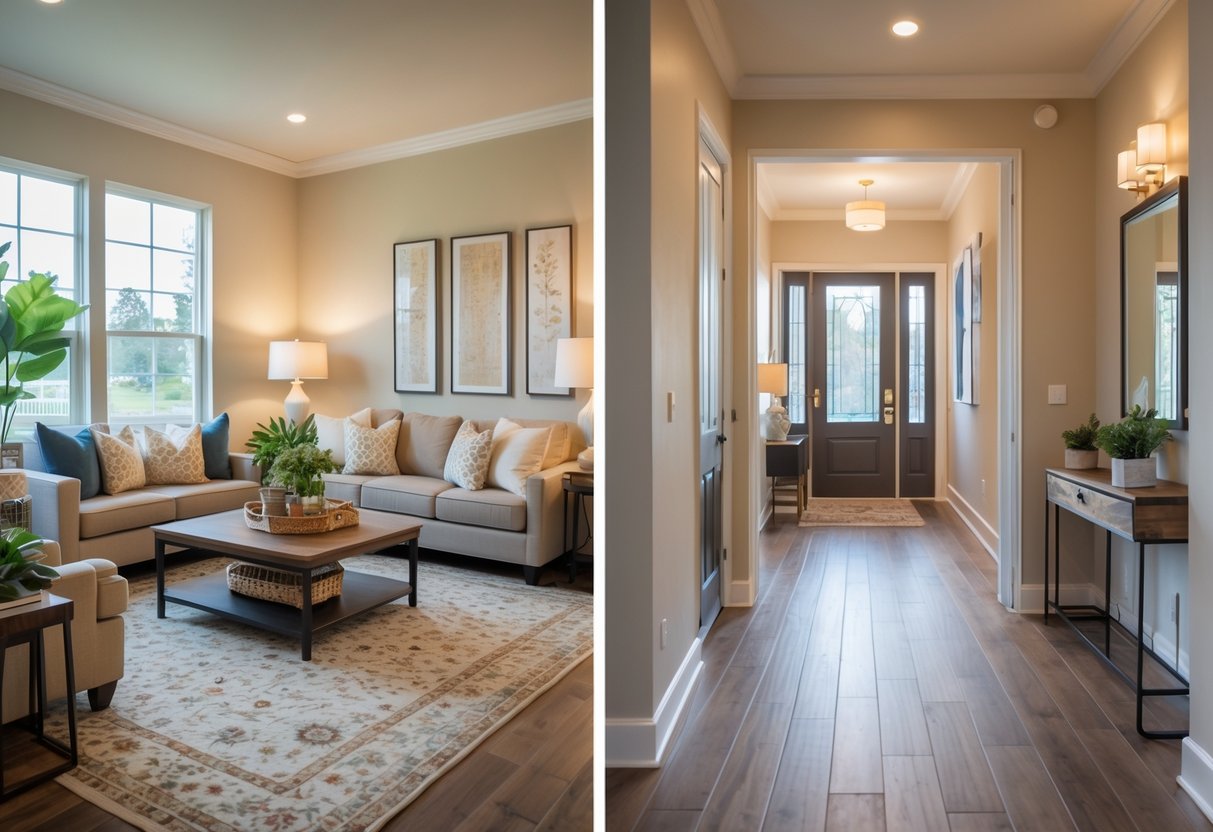
This section explains key differences in how people use and name these spaces, and how design and culture shape them. I focus on practical meanings, historical roots, and regional naming so you can tell a living room from a hall in a specific home.
Origins and Meaning
A living room is defined as a living room as a private space in a home for daily life. It usually holds seating, a TV, and storage for family activities. The living room grew from older “parlors” and “sitting rooms” where families relaxed and hosted close friends.
A hall is described as a hall as either an entry corridor or a large communal room. The corridor-type hall connects bedrooms and bathrooms, while the large-hall form historically hosted gatherings and ceremonies. The word “hall” also appears in public buildings for events.
The key distinction is function and layout as the main differences. Living rooms center on comfort and leisure. Halls emphasize circulation or public gatherings. These roles guide furniture choice, lighting, and decor.
Cultural Differences
It is important to note that language and tradition change how people use each space. In some cultures, a formal reception room exists for guests only, separate from the family living room. That formal room may be called a hall, drawing room, or sitting room.
A hall is described as how homes in other regions merge these functions. For example, apartments with open plans often use one large room for both greeting guests and daily life, blurring the hall/living room split. In some countries, the term “hall” refers to what English speakers call a living room; people in Iran often use “hall” this way.
I emphasize etiquette and use: some households keep the formal space tidy for visitors, while the family living room stays informal. Those habits affect layout, cleaning routines, and where people place valuables or display items.
Common Usage in Different Regions
The following list outlines simple regional patterns to help readers recognize terms.
- United States & Canada: “Living room” or “family room” for daily use; “hall” usually means corridor or public event space.
- United Kingdom & Australia: “Lounge,” “sitting room,” or “living room” for family space; “hall” often means entry corridor or a large public room.
- South Asia & Middle East: “Hall” can mean the main living area used for family and guests, not just a corridor. This creates naming overlap with Western “living room.”
Practical tips include for reading floor plans. If a labeled “hall” shows seating and media, treat it as a living room. If a “living room” sits between bedrooms as a narrow passage, it functions like a hall.
Key Differences Between Living Room and Hall
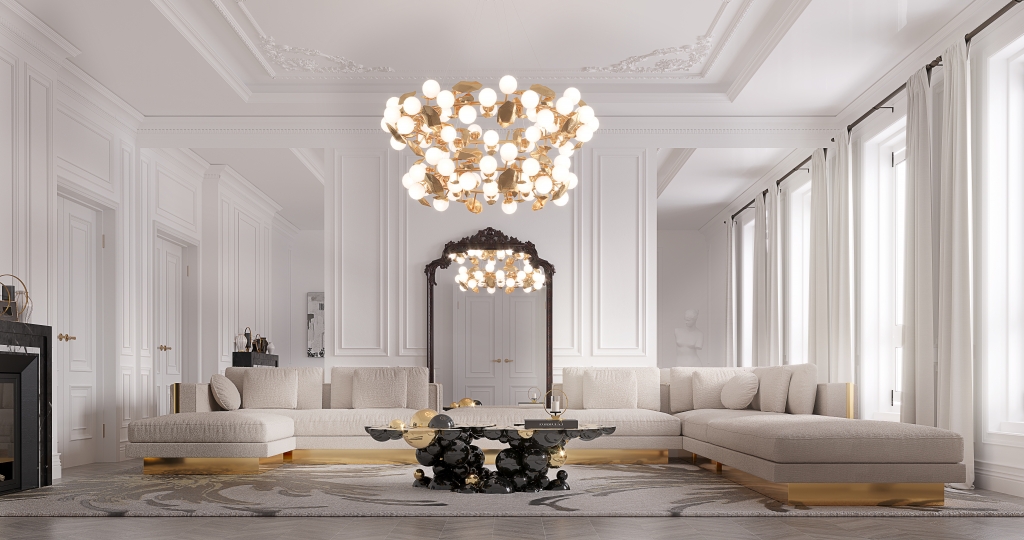
The focus is on clear, practical differences you can use when planning or decorating. I compare what people do in each space, how they are shaped, and how much room they usually need.
Function and Purpose
The living room is used for sitting, relaxing, and entertaining guests. It usually holds a sofa, TV, coffee table, and sometimes a bookshelf or small desk. The living room aims for comfort and long stays — watching shows, talking, or hosting friends.
Halls are typically as movement spaces or entry points. They connect the front door to other rooms or link bedrooms and bathrooms. Halls may hold a console table, coat hooks, or shoe storage but are not meant for long stays.
Living rooms are treated as activity centers and halls as circulation paths. That difference affects where I place lighting, outlets, and seating. In a living room I add layered lighting and more power points. In a hall I add clear sightlines and simple task lighting.
Layout and Design
Living rooms are arranged with a clear focal point: a TV, fireplace, or view. Seating faces that focal point and creates conversation zones. I balance traffic paths so people can move without cutting through seating.
Halls follow a linear layout. They prioritize width and a straight or gently curved path. I keep furniture slim and only add items that don’t block movement, like narrow benches or wall shelves.
Living rooms are designed with softer boundaries: rugs, bookcases, or partial walls. I design halls with continuous sightlines and durable finishes because they receive more foot traffic. If a hall doubles as an entry, I include a mat and storage near the door.
Size and Dimensions
Living rooms are generally to vary but usually be larger than halls. Typical living rooms often range from about 150 to 300 square feet in many homes, depending on layout and use. That size gives room for at least a three-seat sofa, two chairs, and a media cabinet.
Halls are narrower and longer. A comfortable hall width is often 36 to 48 inches for single passage, and 60 inches or more for two-way traffic or added furniture. Length depends on how many rooms it connects.
Dimensions should be chosen based on furniture and movement needs. For seating zones I allow at least 30–36 inches of walk space between pieces. In halls I keep clearance at 36 inches minimum to allow clear passage and avoid cramped layouts.
Living room planning tips: place seating 8–12 feet from a TV for medium screens, use area rugs to set zones, and leave 30–36 inches for walking paths.
Hall planning tips: keep door swings clear, avoid deep furniture that cuts width, and use wall-mounted lighting to save space.
Home Design Considerations
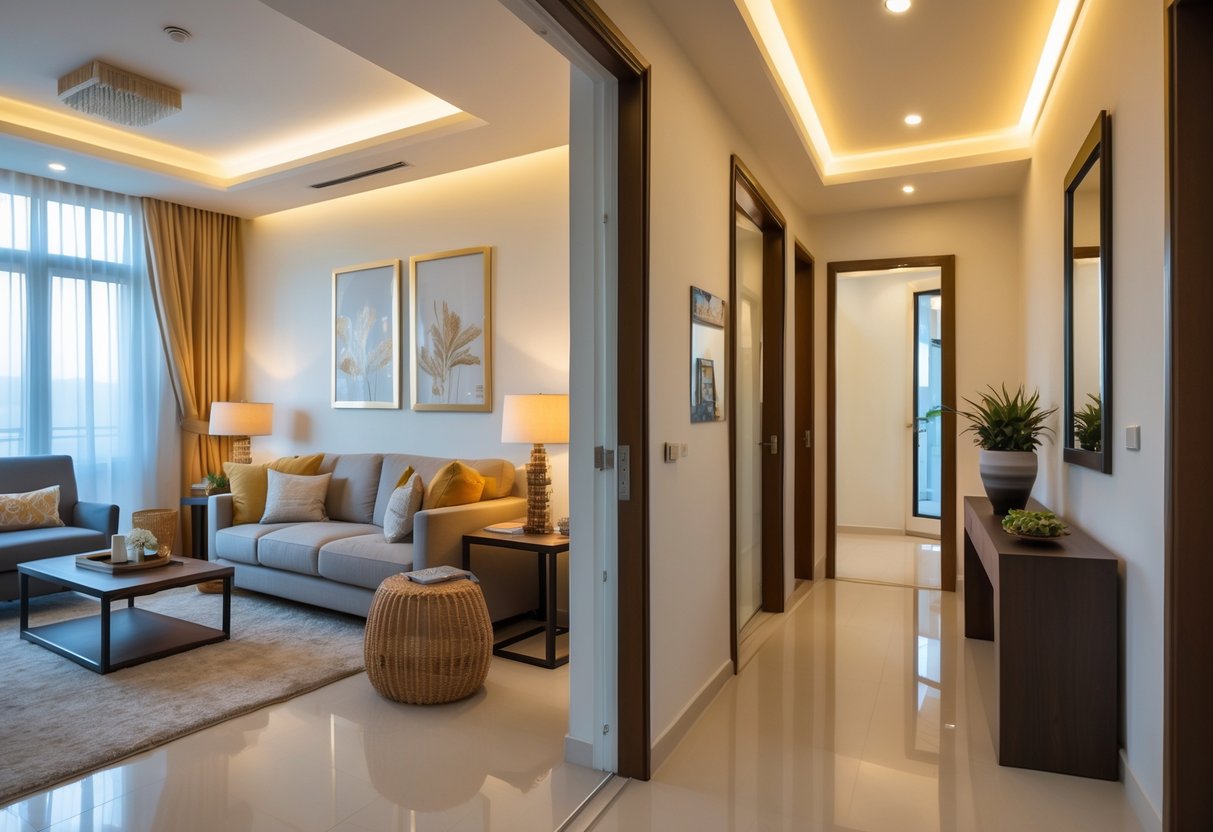
The focus is on how people use a space and what makes it comfortable and useful. That means thinking about size, flow, and how furniture and decor support everyday life.
Furniture Choices
Furniture should fit that fits the room dimensions and how we live there. For a living room, I prioritize a comfortable sofa, an armchair, and a media console placed so sightlines to the TV and windows stay clear. In a hall I choose slimmer pieces: a narrow bench, a console table, or a slim cabinet that leaves at least 90 cm (3 ft) of walking space.
Scale and function should be balanced and function. I prefer modular sofas or sectionals for family rooms and smaller, two- or three-seat sofas for formal living rooms. For halls, I use furniture with built-in storage or hooks to hide clutter. I also pick durable fabrics—stain-resistant weaves for high-traffic living rooms, and easy-clean finishes for hall surfaces.
Décor and Ambiance
The mood is set with layered lighting. In living rooms, I combine overhead lighting, floor lamps, and table lamps. That gives me task light for reading and soft light for relaxing. In halls I add a statement pendant or wall sconces to brighten the path and highlight artwork.
Colors and rugs are chosen and rugs to define zones. A rug under the seating anchors the living room and sets the scale for furniture. In a hall, I pick runner rugs that protect floors and guide movement. I add mirrors in narrow halls to reflect light and make the space feel wider. Finally, I use a few personal pieces—one large artwork or curated shelf—to keep the space inviting without clutter.
Usage in Modern Homes
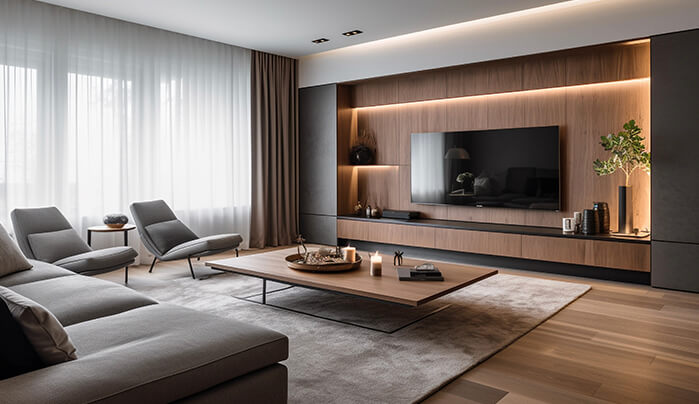
A hall is described as how people use these spaces every day and how each space supports different activities. The living room often centers on comfort and media, while a hall focuses on flow, display, and entry functions.
Daily Life Applications
The living room is used for relaxed daily routines: watching TV, reading on the sofa, and charging devices on the side table. I place a TV stand, a lamp for reading, and a low shelf for kids’ toys so the room stays practical and tidy. Soft rugs and throw pillows help reduce noise and make sitting more comfortable.
In contrast, I treat a hall as a transition zone. I add a narrow console table, coat hooks, and a shoe rack to keep entry clutter under control. A runner rug and wall mirror help with quick checks before leaving. Halls often act as short-term storage and circulation space rather than a place to linger.
Family Activities
The living room is arranged to support family time: a sectional sofa facing the TV, a coffee table for board games, and open floor space for play. I keep media equipment and game controllers in labeled baskets so everyone can find them. Lighting layers—overhead plus lamps—let us shift from bright homework time to dim movie mode.
The hall plays a smaller role in family activities but still contributes. I use the hall wall for a family photo gallery and a narrow bench for putting on shoes. During parties, I move extra folding chairs into the hall to increase seating capacity without crowding the living room. The hall can also hold a compact bookcase for quick access to kids’ picture books.
Entertaining Guests
When hosting, the living room becomes the main social hub. I clear floor space, place coasters and side tables near seats, and set up a small drink station on a console. I choose seating arrangements that allow eye contact for conversation and keep the TV off unless guests want to watch something. Soft background lighting creates a comfortable mood.
For guests who need a brief stop, the hall helps manage arrivals. I provide a visible coat rack and a tray for keys near the door. If I expect many visitors, I use the hall to stage appetizers on a slim table so guests can grab snacks while the living room remains open for sitting and talking. A tidy hall makes the whole home feel organized and welcoming.
References: I based practical details on common interior design practices and examples like linked guidance on hall and living room design.
Popular Trends for Living Rooms and Halls
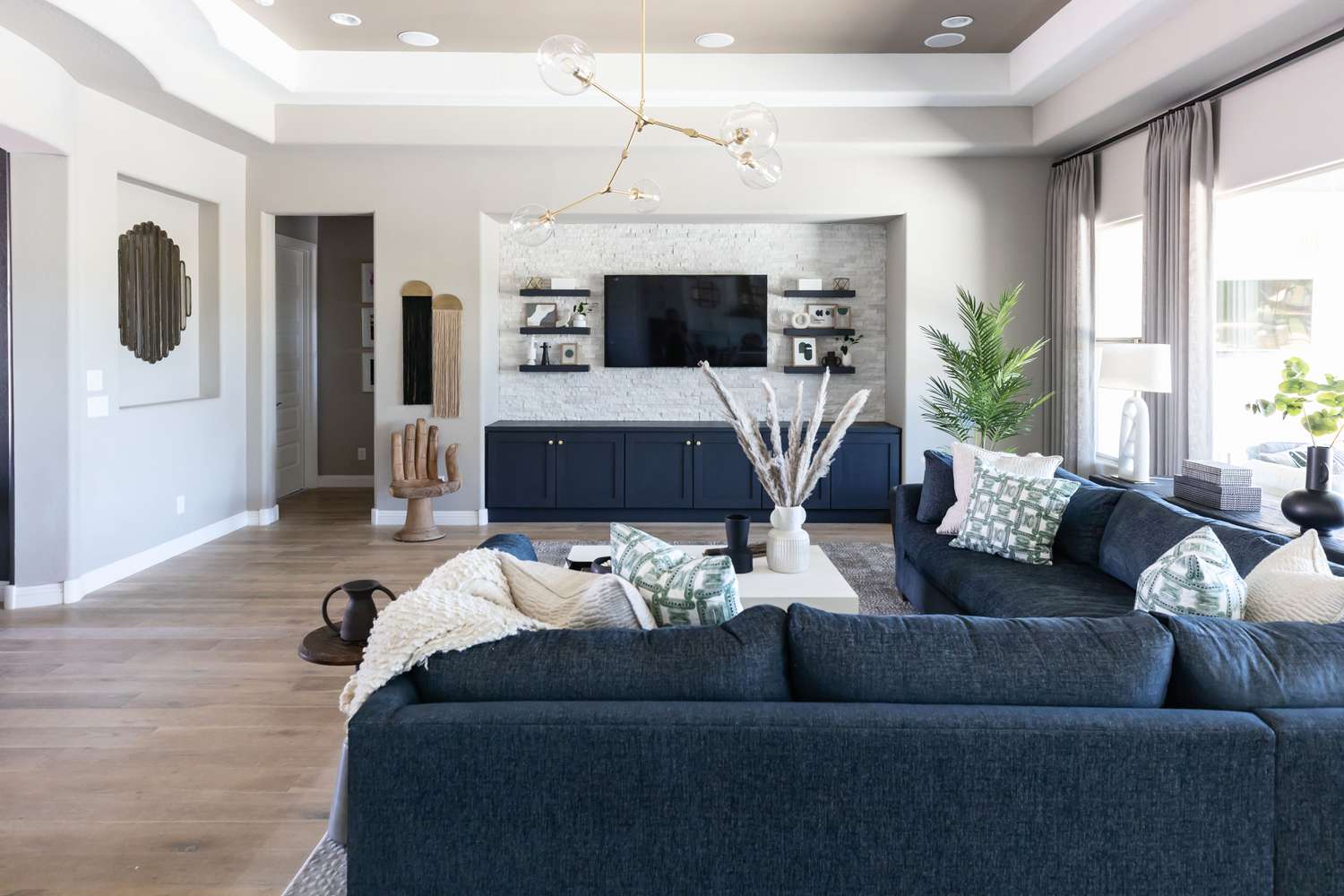
The focus is on changes that make spaces feel larger, work harder, and look current. Practical moves like removing walls or adding built-in storage often give the biggest payoff.
Open Concept Spaces
Homeowners often removing partial walls or replacing doors with wide openings to connect the living room and hall. This creates a clear traffic path and lets natural light flow from windows at one end to the other. I recommend keeping a visual anchor, such as an area rug or a console table, so the hall still reads as a distinct zone.
Color and materials help define areas without closing them off. I like using the same flooring across both spaces, then shifting paint or wallpaper on the hall wall to signal a change. Lighting matters: track or recessed lights in the living area plus a statement pendant in the hall keeps both spots functional and stylish.
Multi-Functional Areas
Furniture is arranged and storage so a single room serves several needs—TV viewing, reading, homework, and entry storage. I pick modular sofas and compact desks that tuck against a wall when not in use. Built-in shelves with closed lower cabinets handle shoes, papers, and media gear without cluttering sightlines.
Small changes boost usefulness: a dedicated charging drawer in a console, a bench with hidden storage, and hooks at kid height in the hall. I prefer pieces that perform two jobs, like a credenza that holds keys and doubles as a media console, because they save space and keep the layout calm.
Choosing the Right Space for Your Needs
Start by listing what I need the space to do. Do I want a spot for TV and family time, or a formal area to greet guests? Writing these priorities helps me choose between a living room and a hall.
Consider how people move through my home. A hall usually acts as a pathway and feels more open. A living room is a place to sit, relax, and stay for longer periods.
Check size and layout next. If I need seating and storage, a living room fits best. If I only need a clear route and a small console table, a hall will work.
Consider privacy and noise. I pick a living room when I want a quieter, cozier area. I pick a hall when I want a public, high-traffic space.
Compare design flexibility. A living room lets me add sofas, rugs, and media. A hall invites slim furniture, hooks, and gallery walls.
Use a short checklist to decide:
- Purpose: family time or passage?
- Traffic: high or low?
- Furniture: bulky or minimal?
- Privacy: private or public?
Also consider lighting and storage options. Good light and built-in storage can make either space more useful for my daily routine.
If you still can’t decide, I try a temporary layout. Moving a few pieces lets me test how the space feels before I commit.
Conclusion
This article examined how halls and living rooms serve different needs in a home. The hall greets people and connects spaces, while the living room hosts daily life and social time.
It is recommended to think about function first. Pick durable materials and clear layouts for halls, and comfortable seating and flexible zones for living rooms.
It is often found that simple changes can help both spaces work better. A runner or hooks improve a hall instantly. Rugs and layered lighting make a living room cozier and more useful.
Match design to how you live. to match design to how you live. Use your hall to manage traffic and storage. Let your living room reflect how you relax and gather.
One guiding rule is to when I plan these rooms: make each space earn its purpose. That keeps the home tidy, welcoming, and easy to use.