
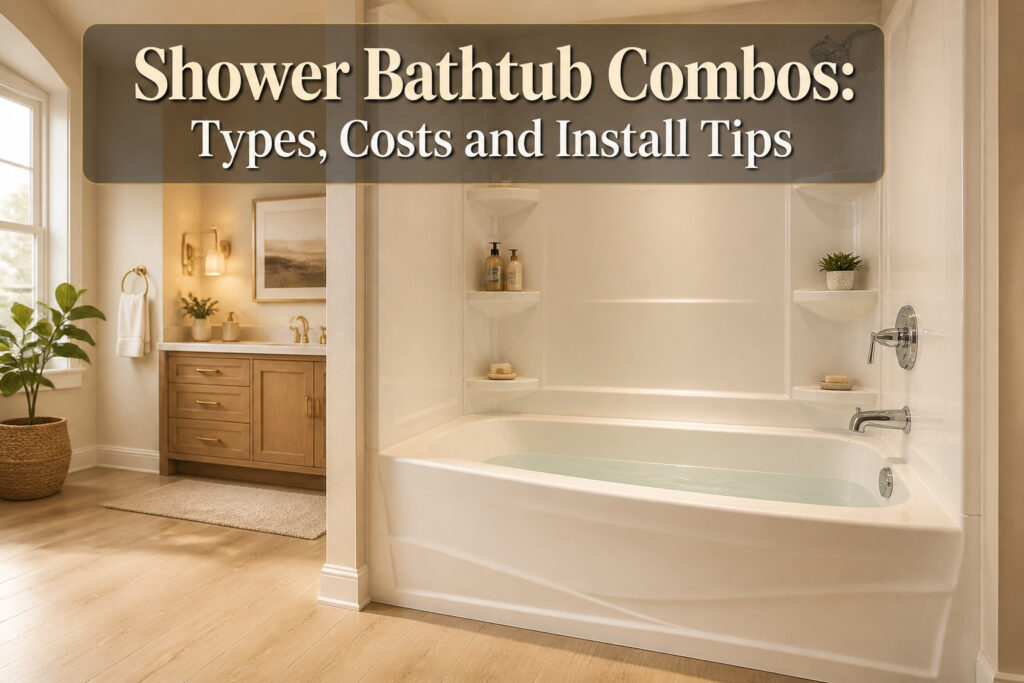

A shower bathtub combo is a single fixture that gives you both a standing shower and a full soak in one footprint. The catch is weight: a cast iron unit holds heat for the long soak but may need floor reinforcement, while acrylic keeps the install light and solo-friendly at the cost of faster cooling. At $1,346 for an entry-level alcove unit, the price range alone tells you which material matches your weekend skill level.
1. Alcove Tub-Shower Combos
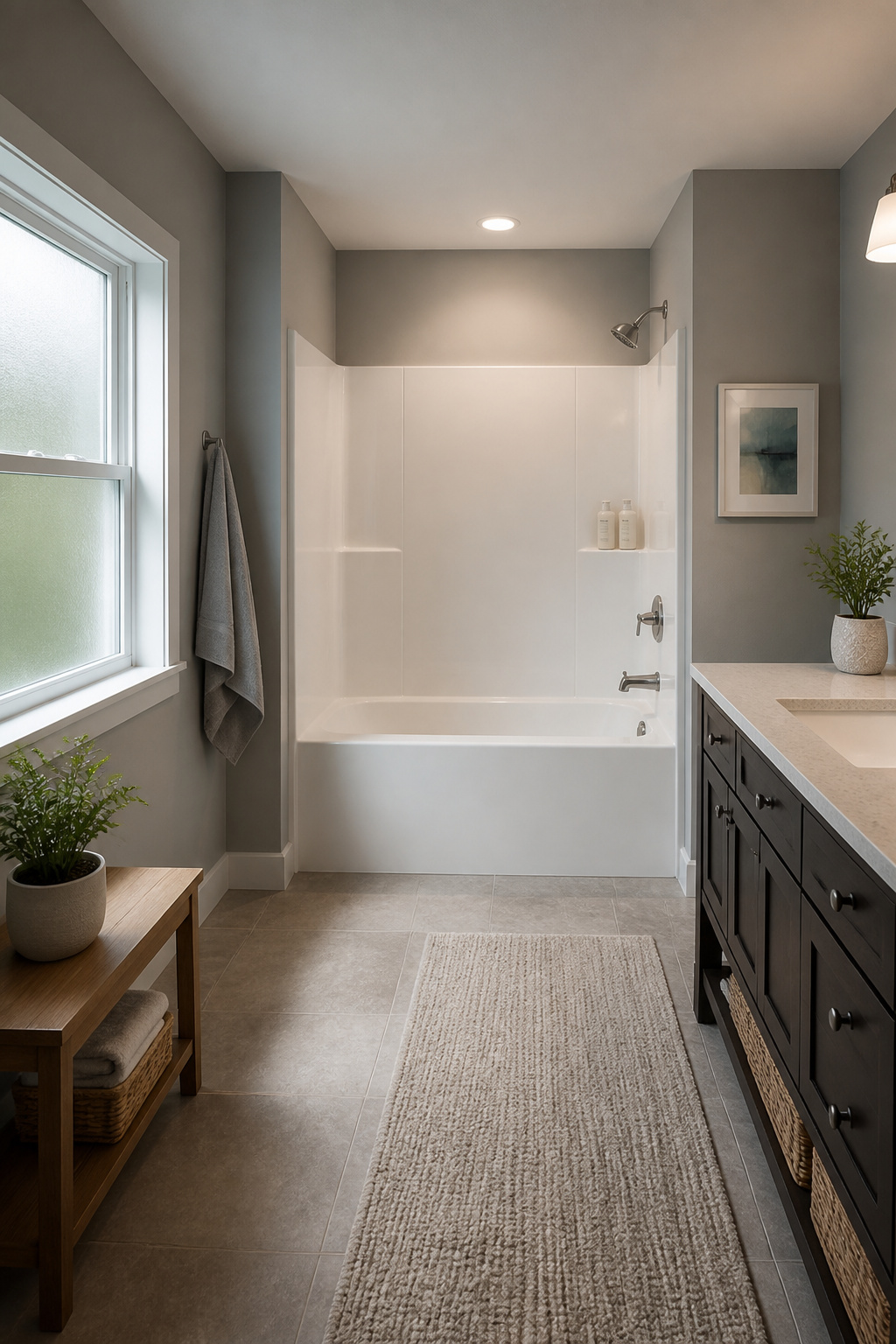
The alcove tub-shower combo tucks into three walls, which is why it still owns the small-bathroom market. The standard footprint runs 60" × 31 1/4" × 74 1/4, a size that slides into most existing rough openings without reframing. That matters when you’re working with a dated floor plan and a weekend.
Prices start at $1,346.00 MSRP for a one-piece acrylic unit, putting it well inside the first-home budget. The real win for solo renovators is the PIN system: alignment pins and matching holes let one person lock the sections together from the front, no helper wrestling the surround into place. You get a tight, square fit without the usual back-and-forth.
I see this combo most often in 5-by-8-foot baths where swinging a separate shower and tub into the layout would mean moving plumbing walls. The alcove design keeps your wet wall where it is, saves the demo cost, and still gives you full soaking depth. For a rental refresh or a starter home, that’s usually the right call.
2. Freestanding Tub-Shower Combos
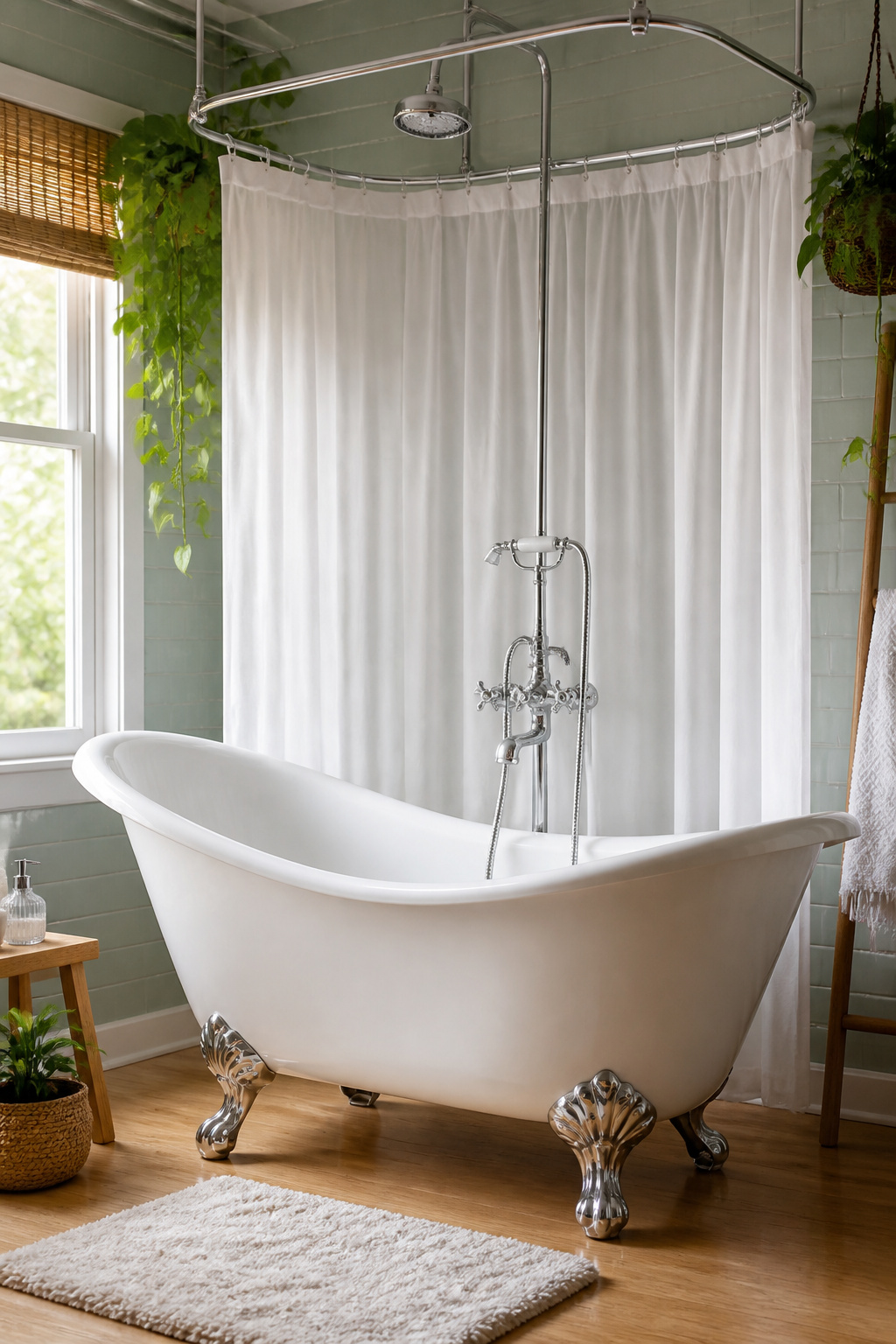
A freestanding tub-shower combo lets you place the fixture almost anywhere the plumbing reaches, which changes the whole feel of a bathroom that is otherwise just a box of tile. The 67-inch acrylic slipper clawfoot tub sits as a real centerpiece, high enough at one end to lean back comfortably without losing the shower function above it.
I have always liked the idea of a statement piece that still earns its keep. These packages run about $2,106.99 for a complete clawfoot setup with feet and fixtures in chrome, which is not cheap but puts you in the range of a mid-market vanity once you factor in that you are skipping a separate shower stall. The shower ring wraps around the tub rather than building into a wall, so you keep that open, furniture-like silhouette.
For a renter or first-time owner doing one major project a year, this is the option that makes guests ask where you found it. The catch is floor space; you need enough room to walk around all sides or it stops reading as intentional and starts looking stranded.
3. Walk-In Tub-Shower Combos
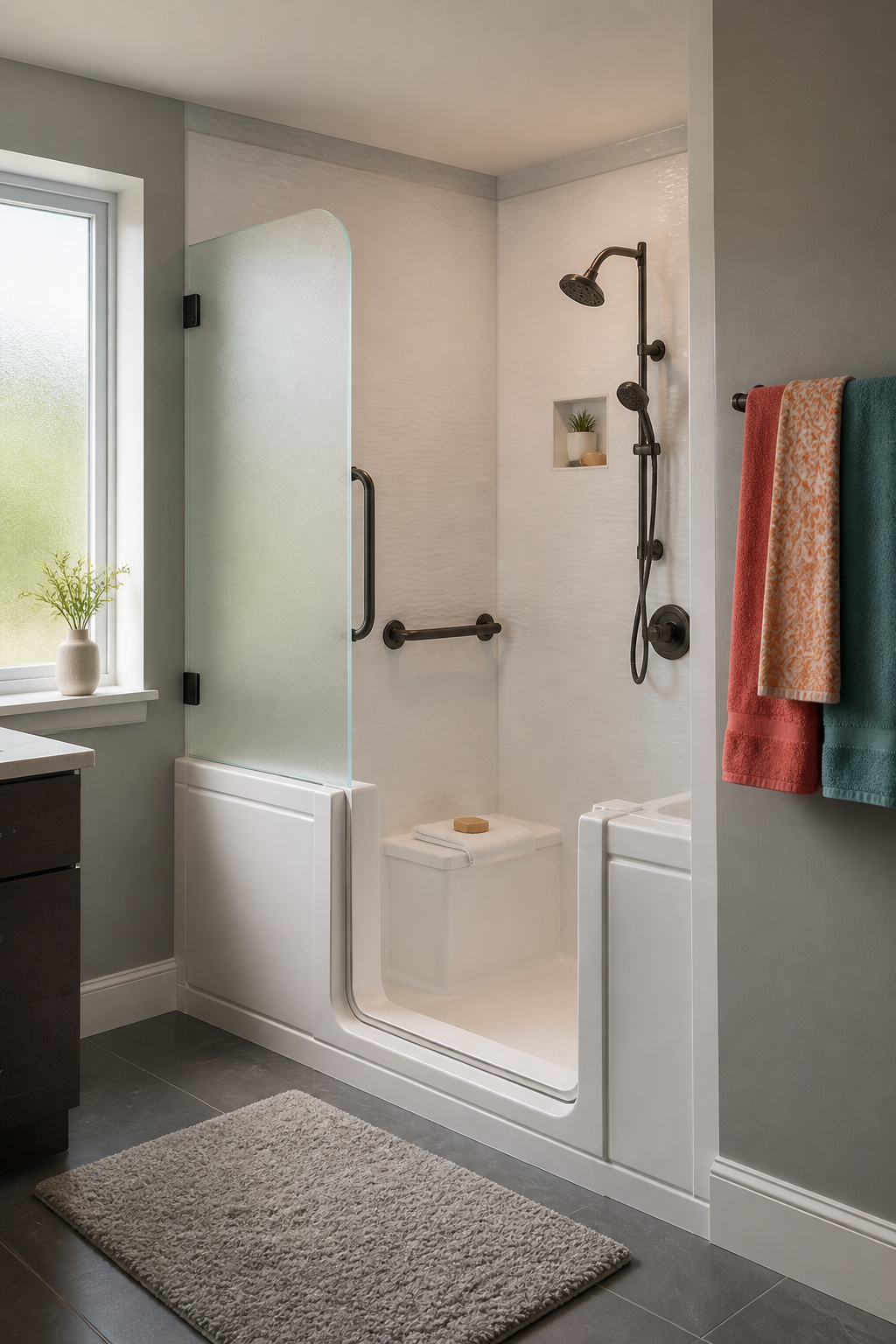
Walk-in tub-shower combos swap the high wall of a standard tub for a low threshold you step over without lifting your knee past hip height. A side door seals shut once you are seated, so the water stays in while you bathe. Built-in seating means you are not lowering yourself to the tub floor, and grab bars give you something solid to grip when you stand.
These setups suit two situations: aging in place, where you want to stay in your home as your mobility changes, or anyone already managing joint pain, balance issues, or recovery from injury. The textured floor surface adds grip underfoot, and wall reinforcements behind the surround let you add more support hardware later without opening up the wall.
I would not put one in a primary bath shared by young kids. The door seal adds a step to every bath, and the seated position is awkward for washing a toddler. But for a guest bath or a master suite you are updating for the long haul, the tradeoff makes sense: you lose a few inches of tub length, you gain years of safe use without a full renovation down the road.
4. Clawfoot Tub-Shower Packages
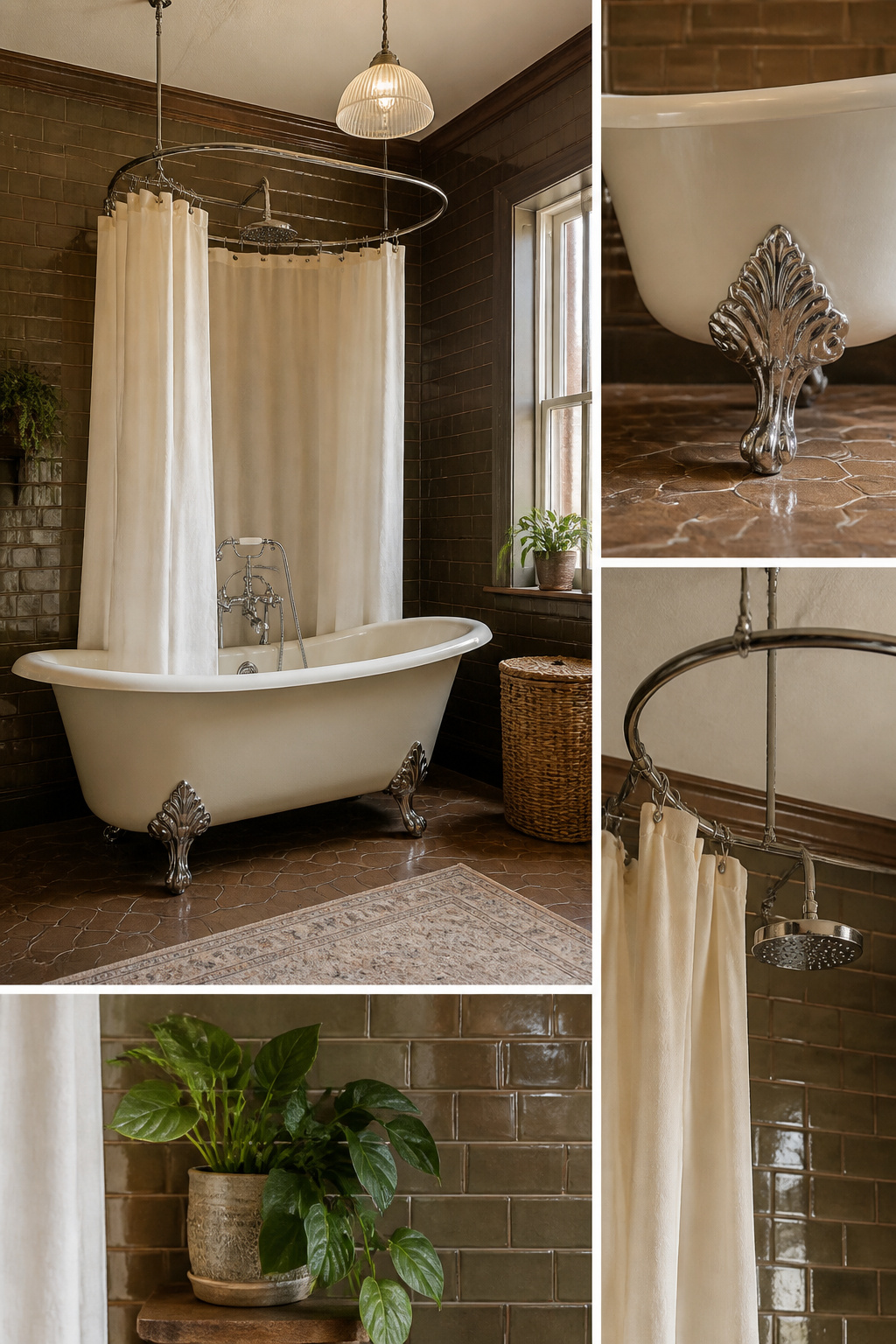
A clawfoot tub with a shower ring around it brings the old parlor-bathroom look into a house that still needs to rinse off fast in the morning. The ring mounts to the ceiling and drapes a curtain all the way around the tub, so you get an enclosure without building a wall. Chrome fixtures are usually part of the deal, which keeps the finish consistent from the feet up to the showerhead. At $2,106.99 for a full package, this sits at the higher end of what most weekend renovators spend, but it is the only option here that earns back its cost in resale charm if you ever sell. The freestanding footprint needs more floor space than an alcove combo, so measure twice before the truck arrives.
5. Acrylic vs. Cast Iron Tubs
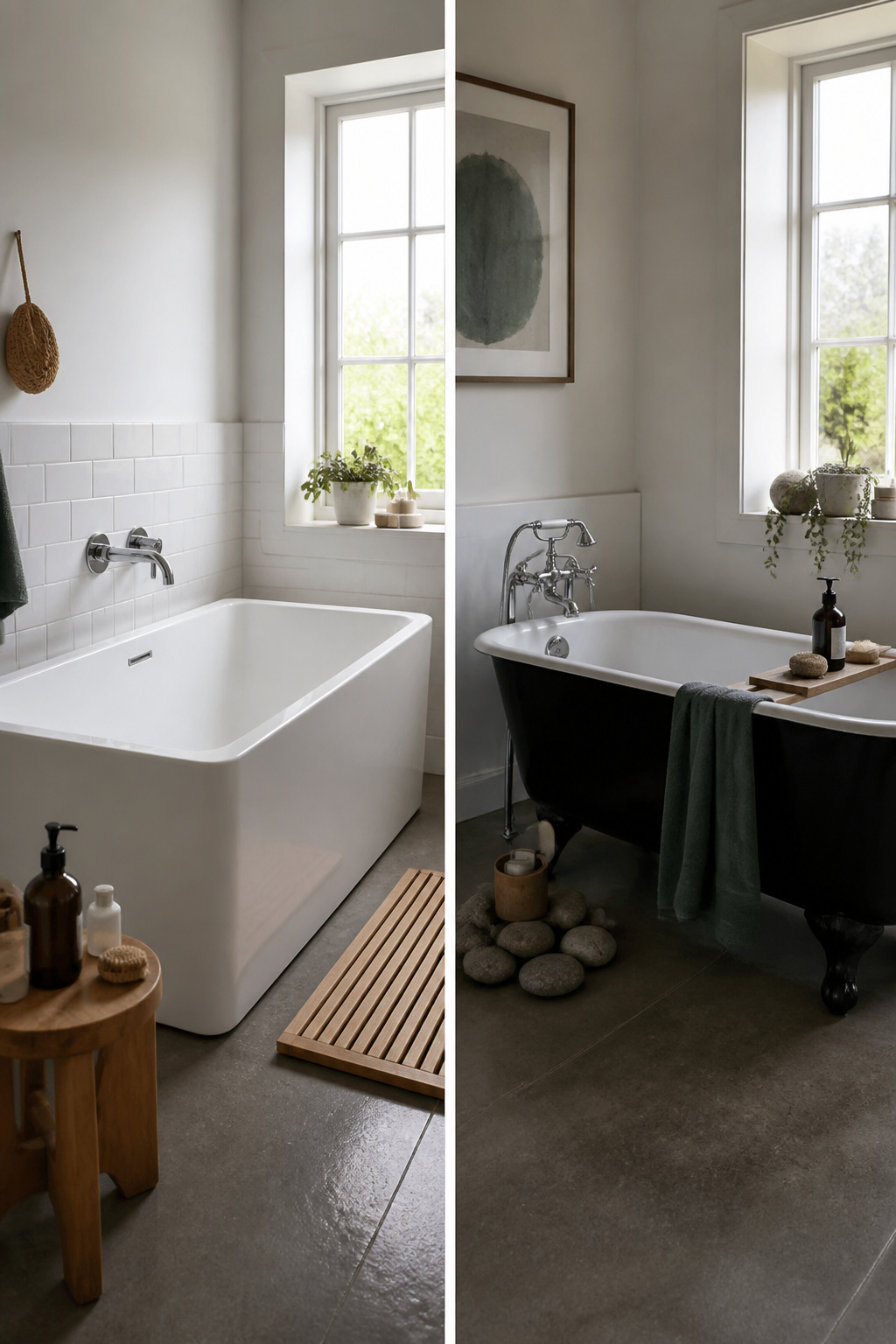
Acrylic and cast iron are the two materials worth comparing for a shower bathtub, and the difference matters most on install day and ten years from now.
Acrylic weighs almost nothing by comparison, which means one person can wrestle it up a staircase and into place without hiring help. That lightness keeps the upfront cost down too, and it is why acrylic shows up in so many budget-friendly tub packages. The downside is heat: the water starts cooling faster than you would like on a long soak.
Cast iron is the opposite problem. The material holds heat for a long stretch, so your bath stays warm start to finish. It also resists chips and cracks year after year. But the weight is serious, the floor may need reinforcement, and you will pay more for the tub and the labor to set it.
For a weekend project with a few hundred dollars, acrylic is usually the smarter call. Cast iron pays off if you are soaking weekly and planning to stay in the house long enough to feel that warmth.
Water Use and Cost to Run
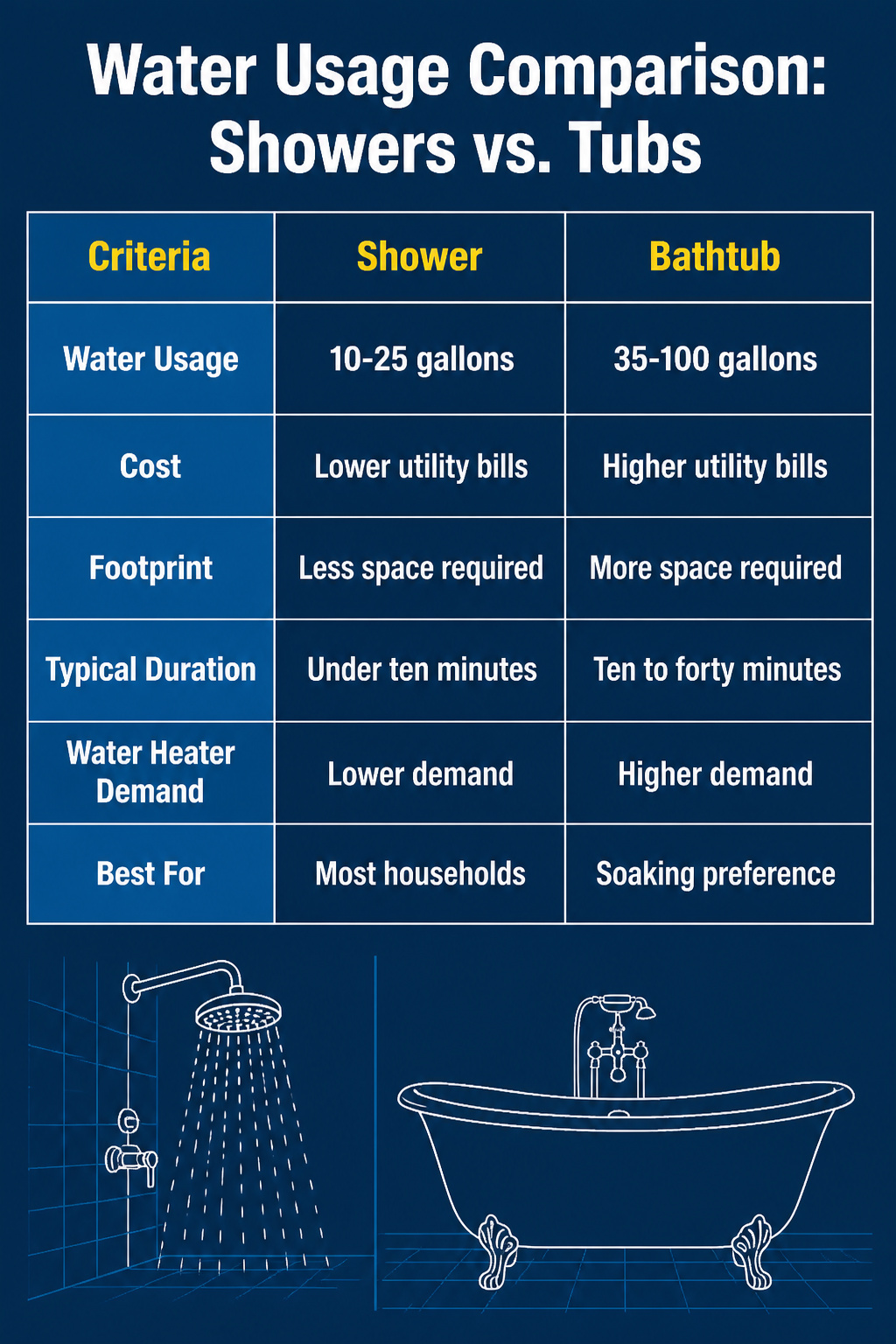
A standard bath holds about 35 to 50 gallons, and you use every drop whether you soak for ten minutes or forty. A shower with a low-flow head runs closer to 10 to 25 gallons, assuming you are out in under ten minutes. That is roughly two-thirds the water of even a modest fill.
The gap widens fast if you have a deep soaker or whirlpool tub. Those can climb to 80 or even 100 gallons, and your water heater needs to keep up. I have seen friends install a big tub only to realize their tank could not deliver a full hot fill in winter.
A tub also punishes long showers. If you are the type who stands there until the hot water runs out, you might actually use less in a bath. For most households, though, the shower wins on both the bill and the footprint.
Installation Cost and Effort
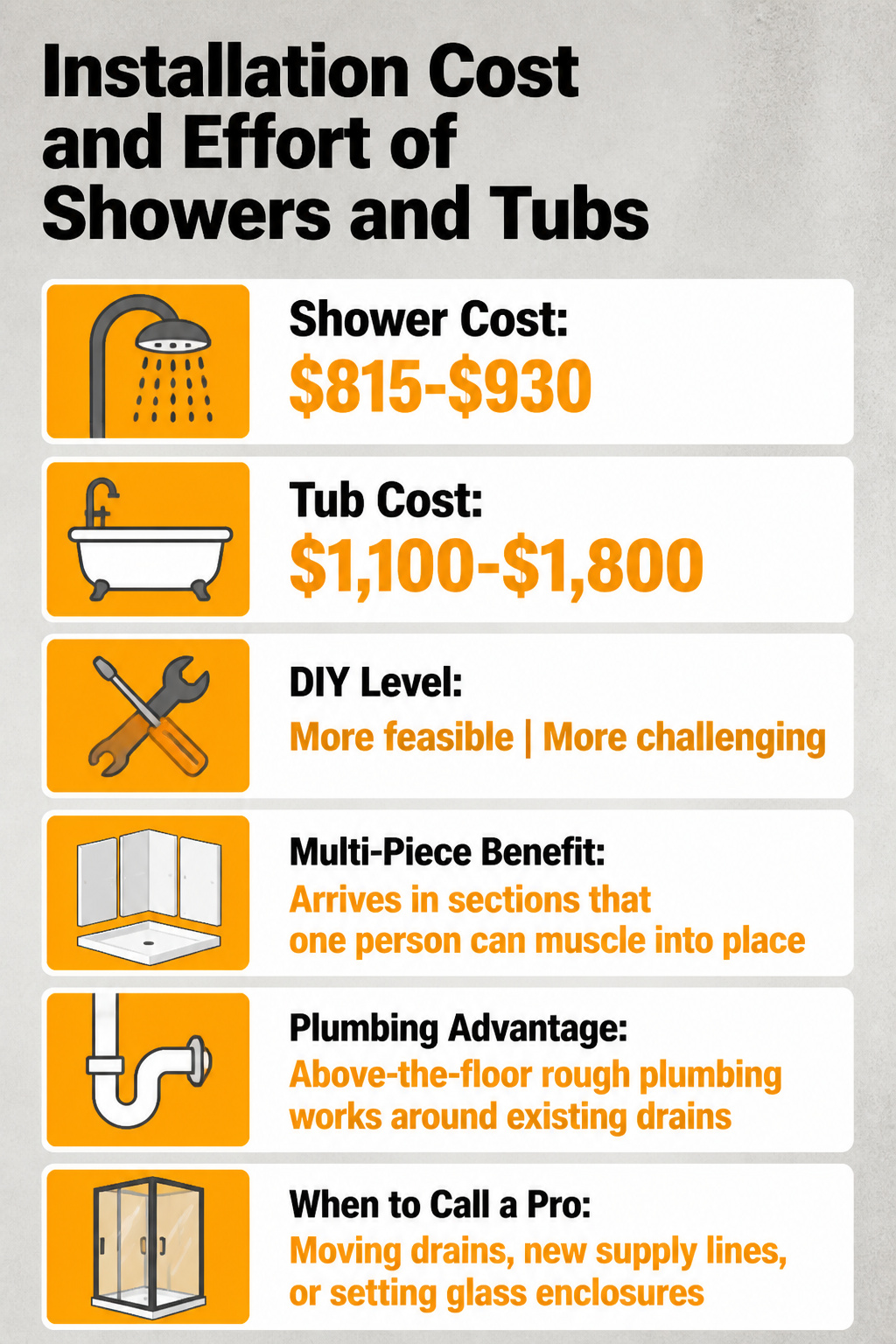
Showers run $815–$930 to install, while tubs sit higher at $1,100–$1,800. That gap matters when you are already paying for tile, valves, and a weekend of takeout because your kitchen is torn up too.
Multi-piece units change the math. Lightweight tub-shower combos arrive in sections that one person can muscle into place, and some come with above-the-floor rough plumbing that lets you work around existing drains instead of cutting concrete. I have watched enough friends stall out mid-project to know that "one-person job" on the box actually means something.
Where DIY ends is mostly about water behind your walls. Replacing a like-for-like unit where the plumbing already lines up is within reach if you are handy. Moving drains, running new supply lines, or setting glass enclosures is where you call a plumber. Poorly set glass fails slowly, then all at once, and the savings from doing it yourself evaporate into drywall repair.
Space and Accessibility Tradeoffs
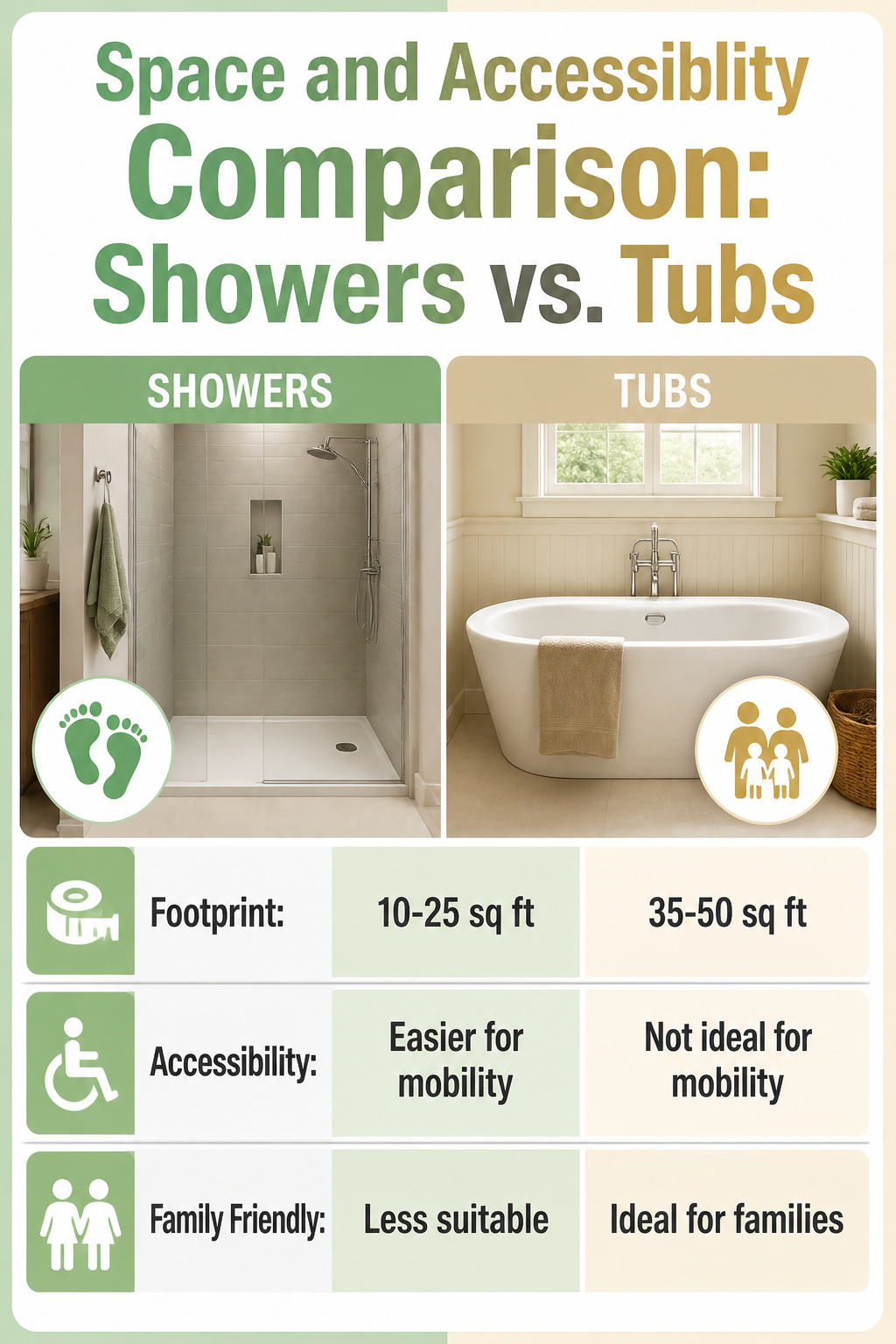
A walk-in shower needs less floor space than any tub, usually ten to twenty-five gallons of water per use against a tub’s thirty-five to fifty. That’s why swapping a tub for a shower works in a small bathroom where every inch counts.
Tubs take up more room, but they serve families with small children in ways a shower can’t. If you have more than one bathroom, leave at least one tub for guests with kids and focus the master on how you’ll actually use it day to day.
Walk-ins add real accessibility for anyone with limited mobility. The best choice isn’t universal; it depends on your household and the layout you have. Measure your floor space, note where the plumbing sits, and decide which tradeoff you’re willing to make.
Maintenance and Resale Value
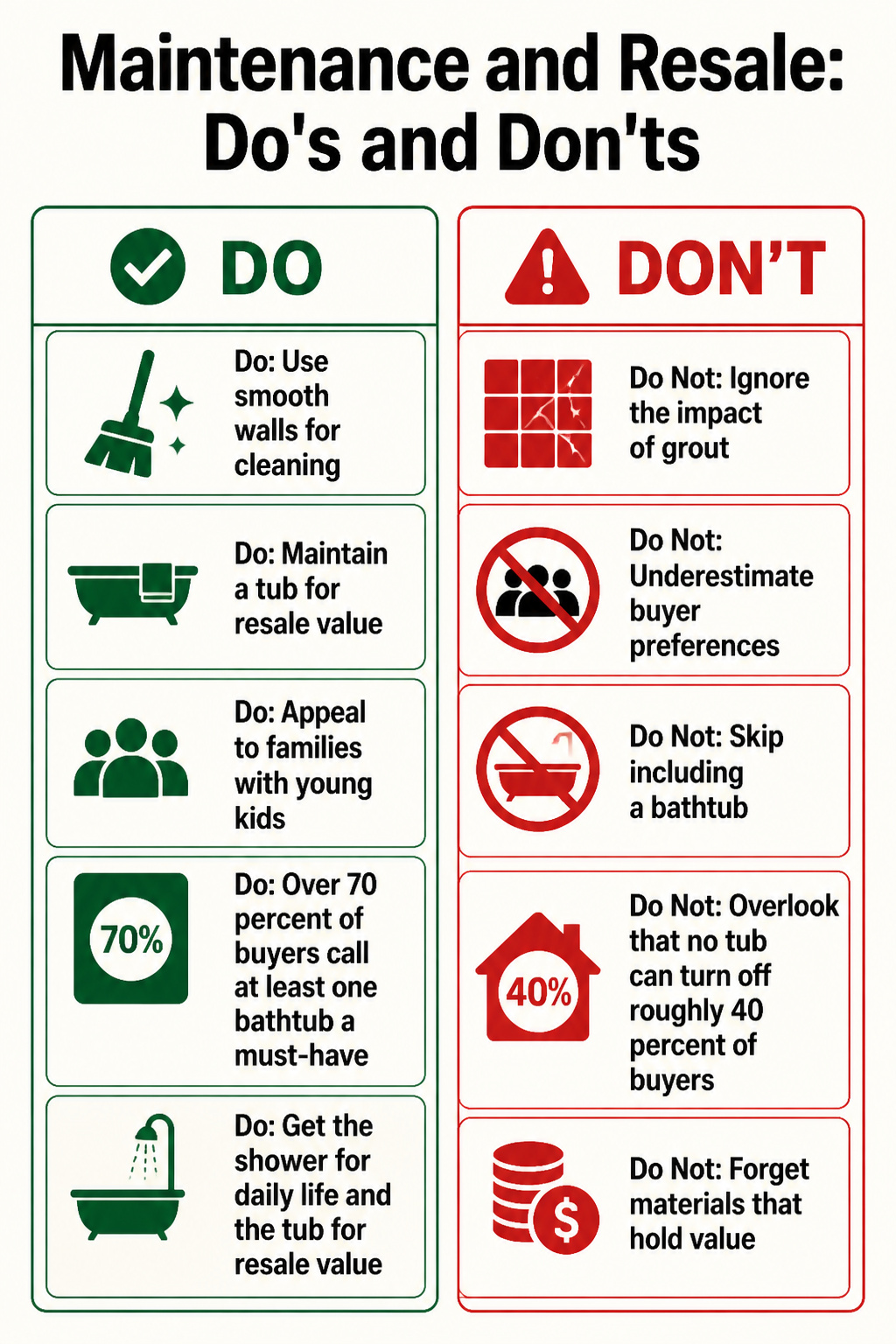
A shower bathtub combo is the sweet spot for keeping both daily life and resale value intact. Showers win on scrubbing time. A quick squeegee after use and a weekly pass with your cleaner of choice is usually enough, especially if you skip traditional tile grout. Grout stains, cracks, and gives mold a place to hide. Engineered stone wall panels or a solid acrylic surround fix that. They are smooth, nonporous, and cut the work way down.
Tubs still matter if you might sell. Over 70 percent of buyers call at least one bathtub a must-have, and that number climbs for families with young kids. A home with no tub can turn off roughly 40 percent of buyers, particularly when it is the only full bathroom. If you are choosing materials with resale in mind, acrylic and cast iron both hold up well. Cast iron keeps heat longer. Acrylic is lighter and easier on the wallet. Either way, the combo setup gives you the shower for busy mornings and the tub for the market later.
Safety Features Worth Adding
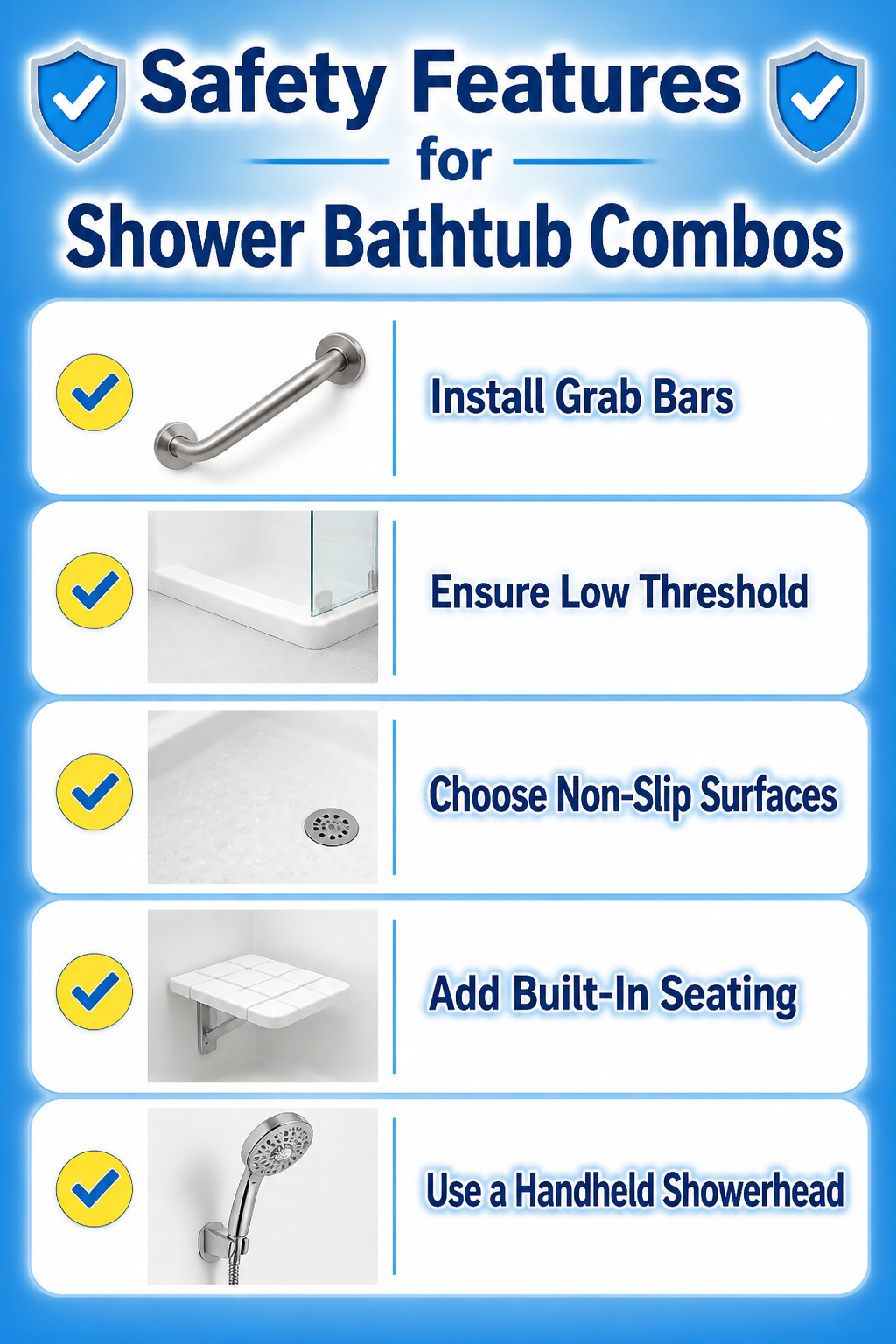
Safety features on a shower bathtub combo matter most when your knees or balance are not what they used to be. The good news is most of these retrofit onto a standard unit without tearing out walls.
- Grab bars are the single most important add-on for anyone with balance concerns. Look for ones that anchor into wall reinforcements, not just suction cups or adhesive.
- A low threshold or step-in height removes the high ledge that makes standard tubs a tripping hazard for seniors. Walk-in and barrier-free designs eliminate the lift entirely.
- Non-slip surfaces, usually textured floors built into the unit, reduce the slick-surface risk that comes with soap and water. These matter on both the tub floor and the shower entry.
- Built-in seating lets a user wash without lowering themselves all the way down or standing the entire time. A fold-down bench works too if the combo did not ship with one.
I would put grab bars and a low threshold at the top of the list for elderly users. A handheld showerhead paired with the seat helps even more, since it keeps the water where the person actually is.
Design Trends That Last
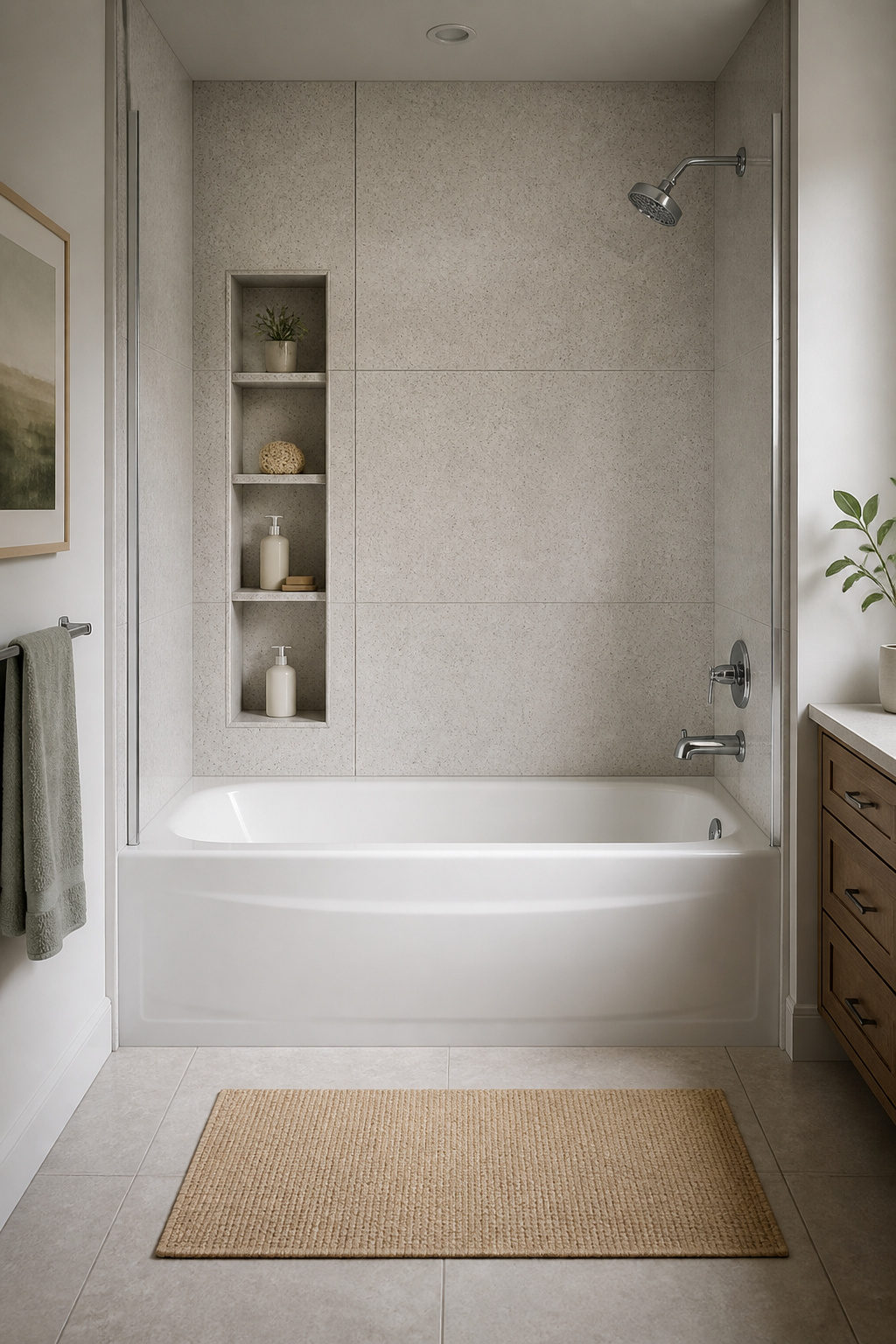
Engineered stone and acrylic surrounds are where my eye lands first, because they bridge the gap between what photographs well and what survives a real weekend budget. Acrylic is lightweight and affordable, which matters when you’re hauling pieces up a rental stairwell or tiling around a first-home loan. Cast iron holds heat longer, sure, but the weight alone turns a Saturday project into a two-person ordeal.
Fixtures that split the difference, traditional and modern, are the safest bet for resale. The numbers back this up: 80% of buyers want a tub-shower combo in the master bath, and 30% would reject a home without one. A clean-lined faucet on a simple surround reads updated without screaming trend, so it still looks right in five years when you list.
Integrated storage helps too. Built-in niches or ledges keep the visual clutter down, which is half the battle in a small bathroom photograph. I look for pieces that install in one piece, since every seam you avoid is a grout line you will not be scrubbing later.
Frequently Asked Questions
What are the benefits of a shower vs. a bathtub?
Showers win on speed and water efficiency, using about 10 to 25 gallons with a low-flow head versus 35 to 50 gallons for a standard bath fill. Baths give you full-body immersion and relaxation, which matters if you soak to unwind. For most households, the shower keeps both the water bill and cleaning time lower.
What is a tub-shower combo?
A tub-shower combo is a single fixture that handles both bathing and showering, which saves the floor space you would need for separate units. It keeps your wet wall in place so you avoid moving plumbing, and it still checks the bathtub box for buyers later. The alcove style slides into a standard 60-inch rough opening, while freestanding versions work as a room centerpiece.
How much does it cost to install a shower?
Installing a shower runs $815 to $930 on average, while a tub runs higher at $1,100 to $1,800. Lightweight multi-piece tub-shower combos can cut labor because one person can muscle the sections into place, and some units work with above-the-floor rough plumbing to avoid cutting concrete. Moving drains or running new supply lines pushes the job into plumber territory.
What are the best materials for tubs?
Acrylic and cast iron are the two materials worth comparing for a shower bathtub. Acrylic is light enough for one person to haul upstairs and costs less upfront, though water cools faster on long soaks. Cast iron holds heat start to finish and resists chips for decades, but the weight may need floor reinforcement and the price runs higher for both the tub and the install.
How do I choose between a shower and a bathtub?
Base the choice on who uses the bathroom and how. A walk-in shower needs less floor space and less water per use, so it fits tight layouts and quick routines. Keep at least one tub in the house if you have kids or might sell, since over 70 percent of buyers call a bathtub a must-have. For aging in place, a walk-in tub-shower combo with a low threshold and grab bars keeps the room usable longer.