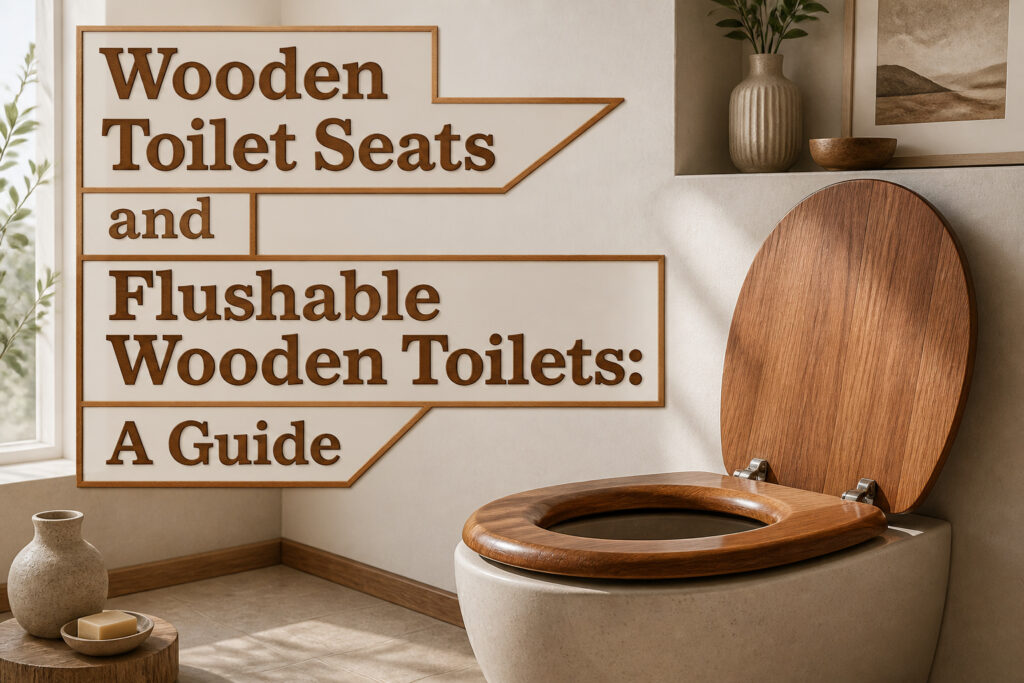

A wooden toilet seat is a bathroom fixture made from solid hardwood, composite fibers, or enameled wood, fitted to a ceramic toilet bowl. The catch is that most "wooden" options are actually coated composites, not real timber, and the one true flushable wooden toilet on the market costs $825 and requires professional installation. The Woodio Block, built from 80 percent wood chips by volume, is the only full toilet in this category you can actually buy.
Elongated Wooden Toilet Seats
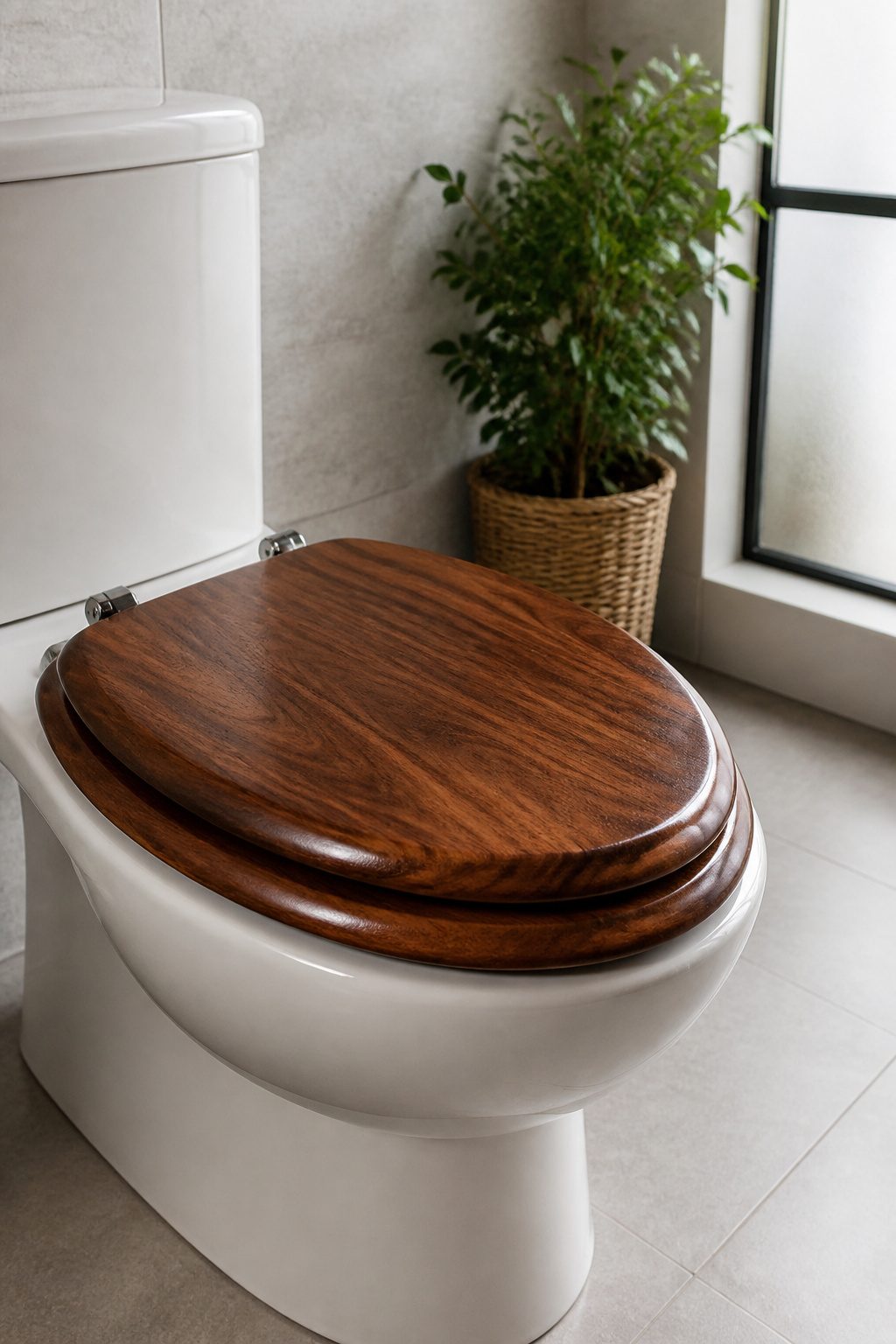
Most bathrooms built after the 1990s use elongated bowls, so an elongated wooden toilet seat is the shape you’re probably shopping for. The seat itself usually runs about 17-1/4" to 17-3/4" across at its widest point, which gives a little more room than the older round style.
Premium solid-wood seats start around $166.99. At that level you’re getting slow-close hinges that keep the lid from slamming at midnight, plus a finish smooth enough to wipe down fast. Enameled options cost less, sometimes down near $30, but the tradeoff is a coated surface that can chip over years of use.
I look for the easy-clean finishes on any wood seat now. A porous or rough surface in a bathroom is just more scrubbing I’ll have to do later. The slow-close feature matters less to me personally, though I’ve heard enough complaints about slammed lids from friends with kids that I get why it’s become standard on mid-range and up.
Before you buy, check your bowl’s bolt spacing. Most elongated seats fit most elongated bowls, but "standard" covers a wider range than you’d think.

SLOW CLOSE SEAT & LID: Closes gently and quietly to prevent slamming and protect little fingers from getting pinched keeping your home safe and quiet; install seat first to activate slow close feature

Quiet-Close elongated toilet seat slow close lid and seat prevents slamming
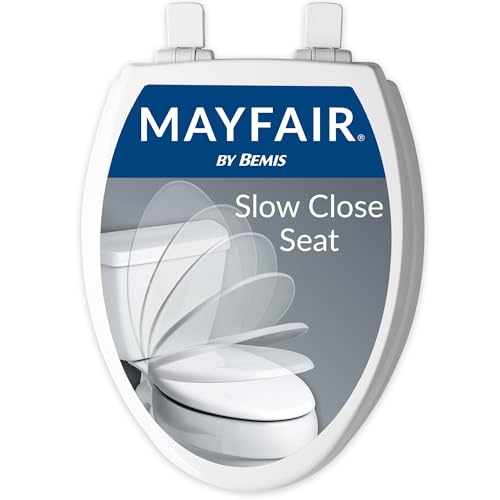
SLOW CLOSE SEAT & LID: Closes gently and quietly to prevent slamming and protect little fingers from getting pinched keeping your home safe and quiet; install seat first to activate slow close feature
Round Wooden Toilet Seats
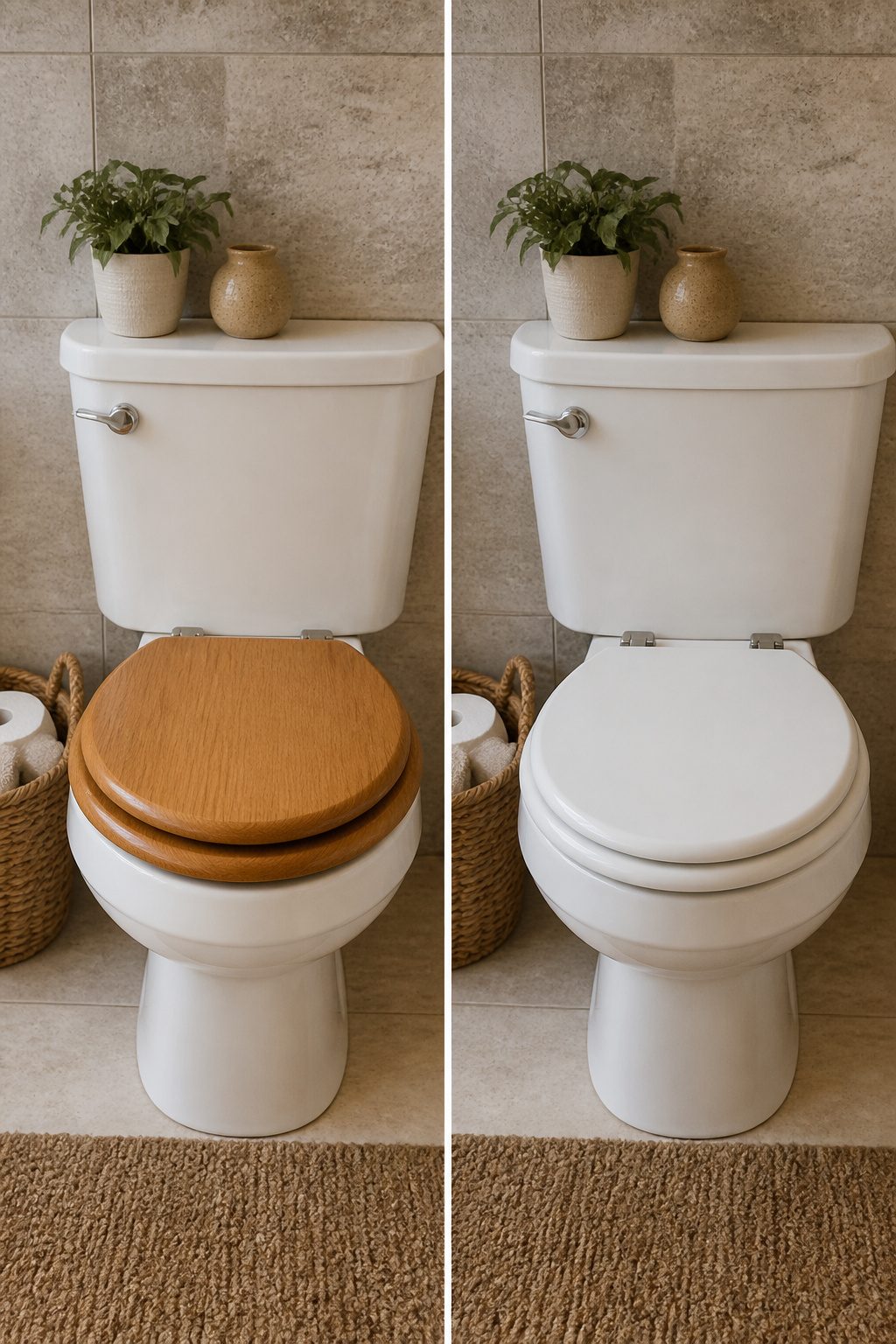
Round wooden toilet seats fit the compact bowls you’ll find in older homes and half baths where every inch matters. The shape is easy to spot: the front edge curves in a near-perfect circle, unlike the oval stretch of an elongated seat. Prices start around $30, with the Round Retro Wood Toilet Seat in white hitting that mark exactly. You get the same choices in hinges and finishes as the larger seats, including standard metal hardware that matches your bathroom’s existing fixtures. Before you buy, measure your bowl from the mounting holes to the front edge. Round bowls typically run about 16.5 inches, while elongated bowls push closer to 18.5 inches. If your toilet tank sits close to the wall, that’s another clue you’re working with round.

FEATURES THAT ENHANCE YOUR HOME: Soft close seat for a safe and quiet bathroom experience, easy clean hinges quickly release for deeper cleanings, bolts never loosen for a secure toilet seat, and seat adjusts front to back for a clean, custom fit

HINGES: Plastic Top-TITE hinges installs seat easily from above the bowl

FEATURES THAT ENHANCE YOUR HOME: Easy clean hinges quickly release for your deeper cleanings
Enameled Wood Toilet Seats
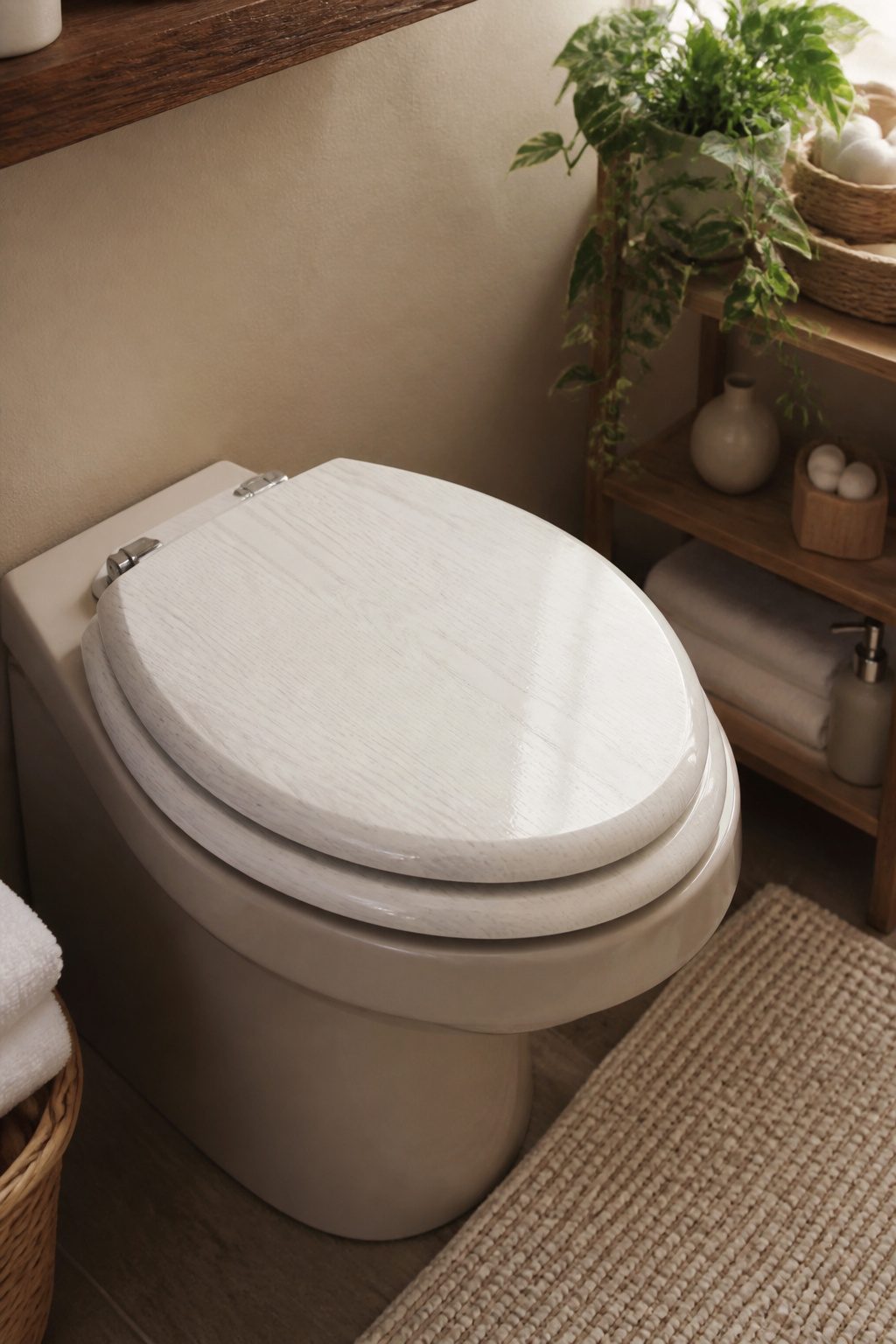
Enameled wood toilet seats give you the warmth of a wooden look without the upkeep of solid hardwood. A baked-on coating covers a wood composite core, which means you get that grain pattern people recognize but you are not sealing actual wood against bathroom humidity every few months.
Solid hardwood sits at the top on price and needs the most care. Plain composite without the enamel layer costs less but reads as plastic and stains more easily. Enameled wood lands in the middle, and that middle spot is where most weekend projects end up: not cheap enough to replace yearly, not pricey enough to baby.
The enamel layer matters for cleaning. Wiping down actual wood takes gentler products and more attention to drying time. The coated surface handles normal bathroom cleaners without the same risk of water marks or lifting grain. Over years the enamel can chip at the edges or wear thin where the seat hits the bowl rim, so it is not forever hardware, but it outlasts uncoated composite in most houses.
For a renter or a first homeowner doing one bathroom refresh, this is usually the practical pick. You get the aesthetic people pin without the maintenance they forget to budget for.

NO MORE WIGGLE: With the STA-TITE Fastening System your seat will never come loose

FEATURES THAT ENHANCE YOUR HOME: Easy clean hinges quickly release for your deeper cleanings

SLOW CLOSE SEAT & LID: Closes gently and quietly to prevent slamming and protect little fingers from getting pinched keeping your home safe and quiet; install seat first to activate slow close feature
Flushable Wooden Toilets
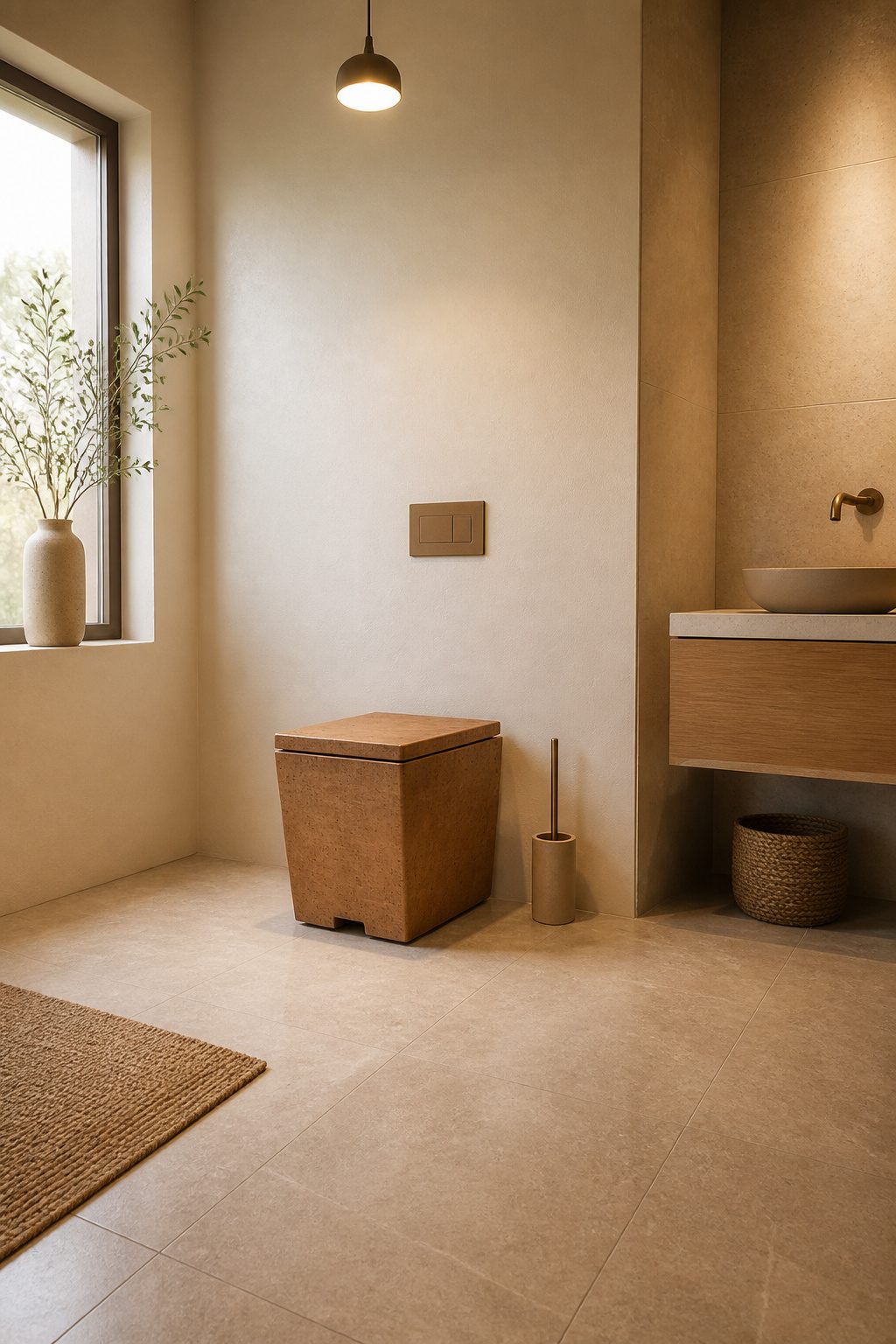
A flushable wooden toilet is a different category entirely from a wooden toilet seat. The Woodio Block is the only one I have seen actually brought to market. It is a whole toilet, not a seat you swap in ten minutes.
The Block is built from 80 percent wood chips by volume, held together with 20 percent polyester and bioplastic resins. That composite keeps it waterproof and splinter-free. It comes in earth-toned, speckled finishes and starts at $825.
This is not a weekend project. Installing a full toilet requires plumbing work, a new flange, and usually a pro. For a quick rental refresh or a budget bathroom update, stick with a wooden seat. The Block fits a full gut renovation where you are already pulling the old toilet and want something lower-emission than fired ceramic. Woodio claims 99 percent fewer emissions than porcelain because its material skips the high-heat kiln entirely.
Since the first toilets appeared around 5,000 years ago, humans have built them out of stone, porcelain, and solid gold. The Block toilet from Woodio is purported to be the first flushable toilet made from wood chips.
That history puts the Block in context: it is a novelty, not a default. One catch worth weighing is end-of-life disposal. The resins mean it cannot be recycled or composted, so it lands in a landfill or incinerator. Woodio has said it plans to switch to 100 percent bio-based resins once production scales up, but that is not the product today.

DECORATIVE CHROME HINGES: Stylish seat with a metal hinge in a modern chrome finish that complements your bathroom décor or hardware beautifully; this seat adds practical functionality while elevating the look of your space

Pair of hinges for regular size wood seat

🔩 【Premium Chrome-Plated Metal】Crafted from solid zinc alloy with advanced chrome plating, these hinges resist rust, corrosion, and daily wear. Includes stainless steel screws that won’t strip or break during installation.
Hardwood vs. Composite Materials
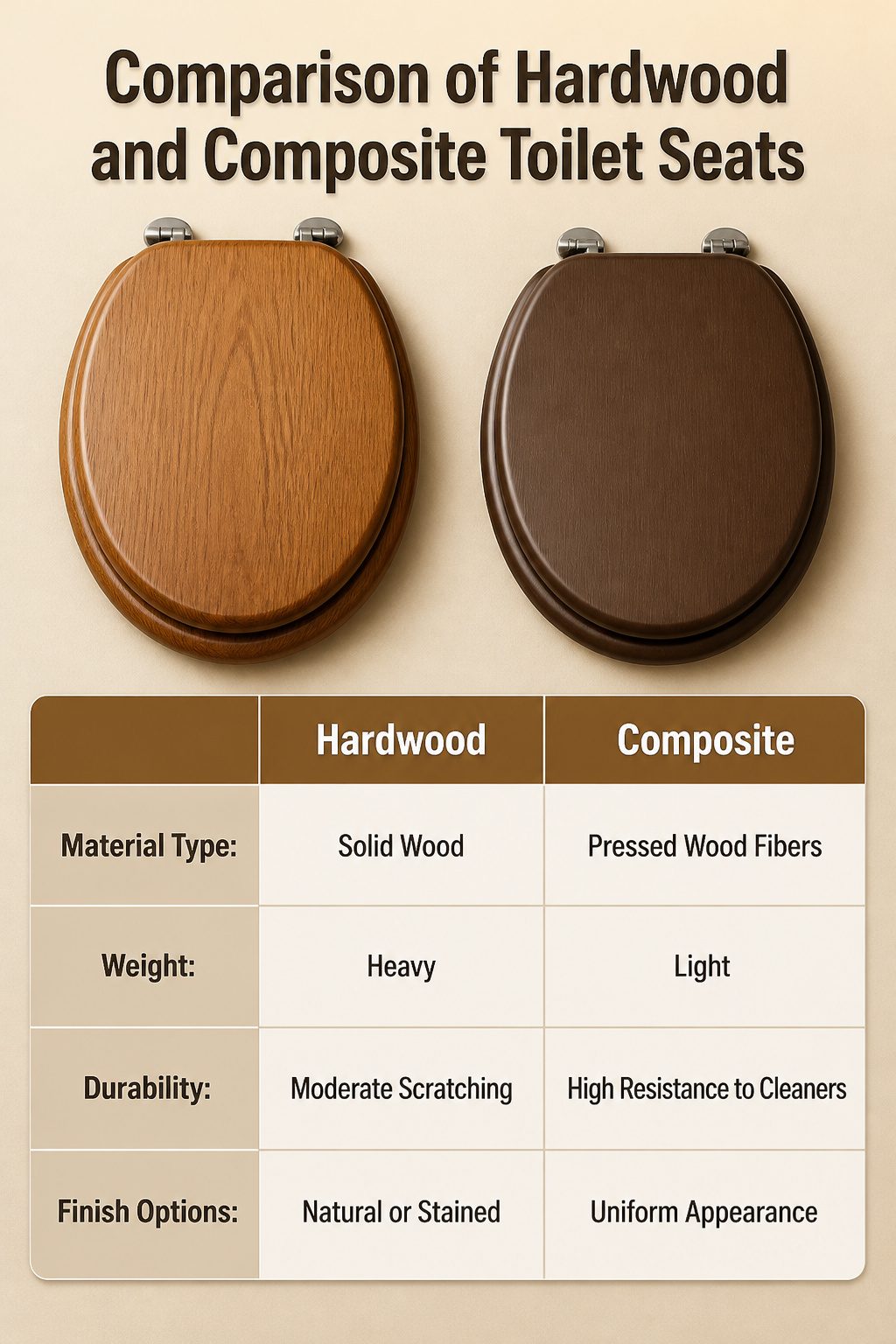
Solid hardwood toilet seats are exactly what the name says: a single piece of real wood, usually oak or maple, that gets sanded and sealed. The weight alone tells you what you are holding, and that heft matters when you are lowering the lid at midnight. You can find them in natural finishes that let the grain show, or stained to match cabinetry.
Composite seats start as pressed wood fibers, the same material you will see under the enamel on painted "wood" seats. The manufacturing presses those fibers into a uniform density, which means no weak spots and no surprise cracks along a grain line. Some brands now use reclaimed sawdust or sustainably harvested cores, though the eco-friendly claims vary more than the seats themselves do.
I would pick solid hardwood for a half bath where guests notice details, and composite for the busy bathroom that sees real traffic. The composite holds up to bleach cleaners better, while hardwood scratches if you are not careful. Both feel warmer than plastic on winter mornings, which is probably why you searched "wooden toilet" in the first place.

Start with LRVAE: Start the DIY journey with LRVAE. Master loose toilet seat repair from beginner to expert, achieving results beyond professional services.

Including: 2 plastic bolts, 2 plastic washers and 2 nuts; Meet the need for replacement parts and enrich your inventory.
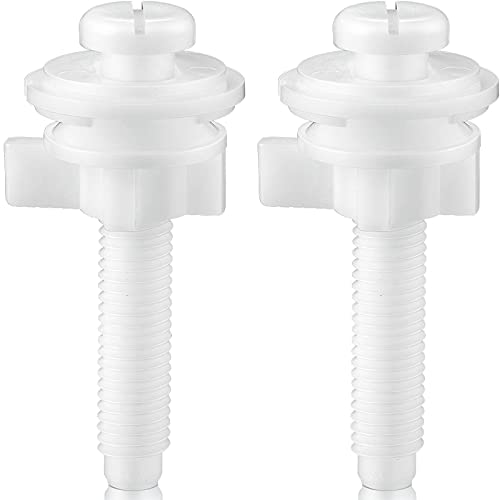
Reliable Replacement Solution: Toilet seat screws replace worn or loose toilet seat hardware, helping restore a secure and stable connection without replacing the entire toilet seat
Slow-Close and Easy-Clean Features
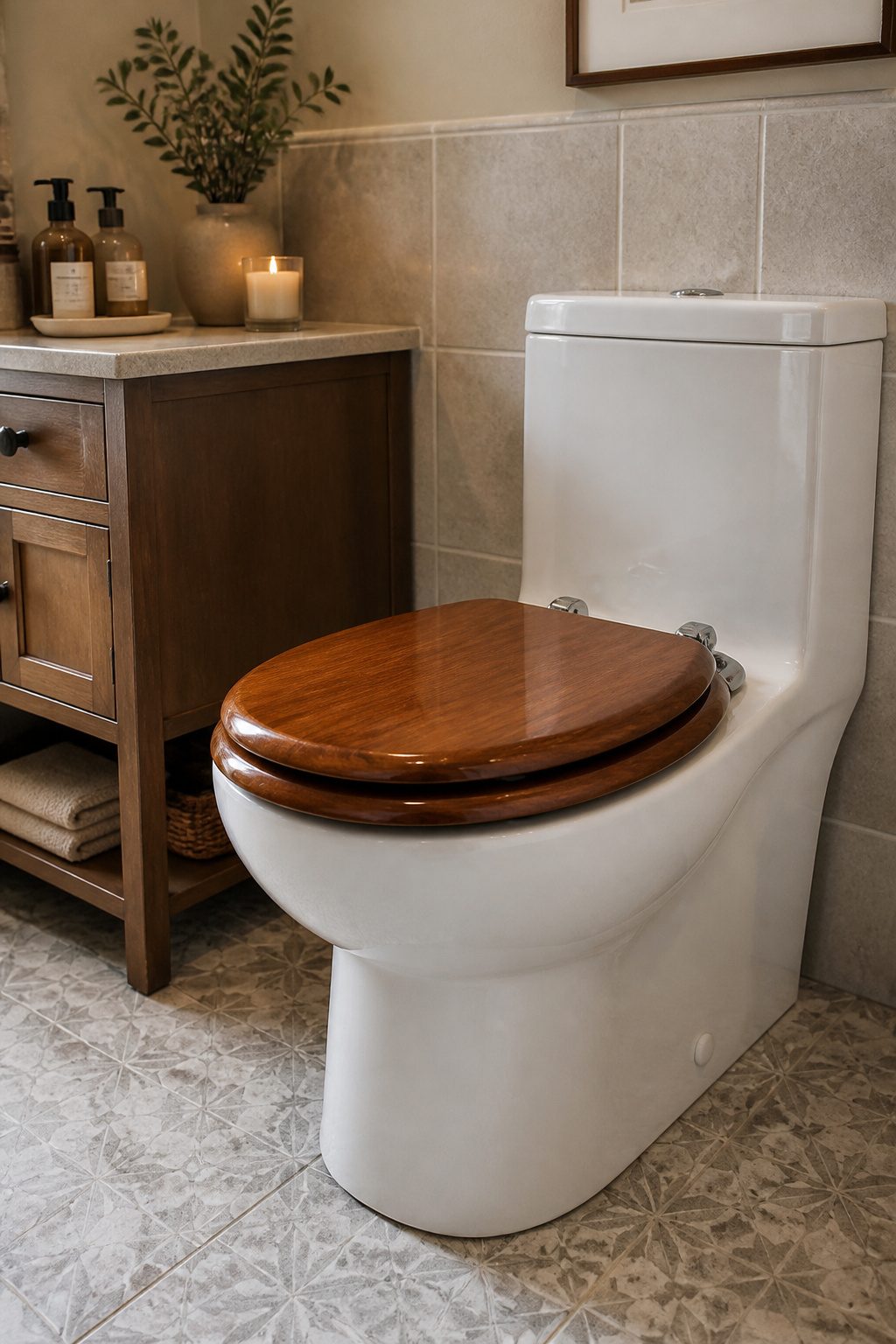
A wooden toilet seat without slow-close hinges will wake the house at 2 a.m. The ones worth buying drop gently on their own, no hand required, and the hardware matters more than the wood itself. Metal hinges look sharp against chrome or matte black bathroom fittings, and the better seats let you pop the whole thing off in seconds to wipe around the bolts. That quick-release feature is what separates a seat you clean from one you eventually replace.
The finish is the other daily-use detail. Enameled wood seats carry a high-gloss coat that grime slides off of; raw or poorly sealed grain catches everything. I look for the same smooth surface when I compare options, because a weekend project should not include scrubbing toothbrush tracks out of oak pores. Sta-Tite fastening, which keeps the seat from shifting after a few months of use, rounds out the practical checklist.

【ELONGATED SIZE】Please measure your toilet bowl to confirm you need ELONGATED size. Our toilet seats FIT ALL AMERICAN TOILET BRANDS including Crane, Universal Rundle, Eljer, Delta, Bemis, Caroma and Gerber ETC...

Whisper-soft closing: Quiet-Close technology lets the elongated lid and seat lower gently and silently, eliminating slamming for a calmer, more serene bathroom

FEATURES THAT ENHANCE YOUR HOME: Soft close seat for a safe and quiet bathroom experience, hinges that never loosen and extra bumpers for a secure toilet seat that won’t wiggle, adjusts front to back for a clean, custom fit
Installation and STA-TITE Systems
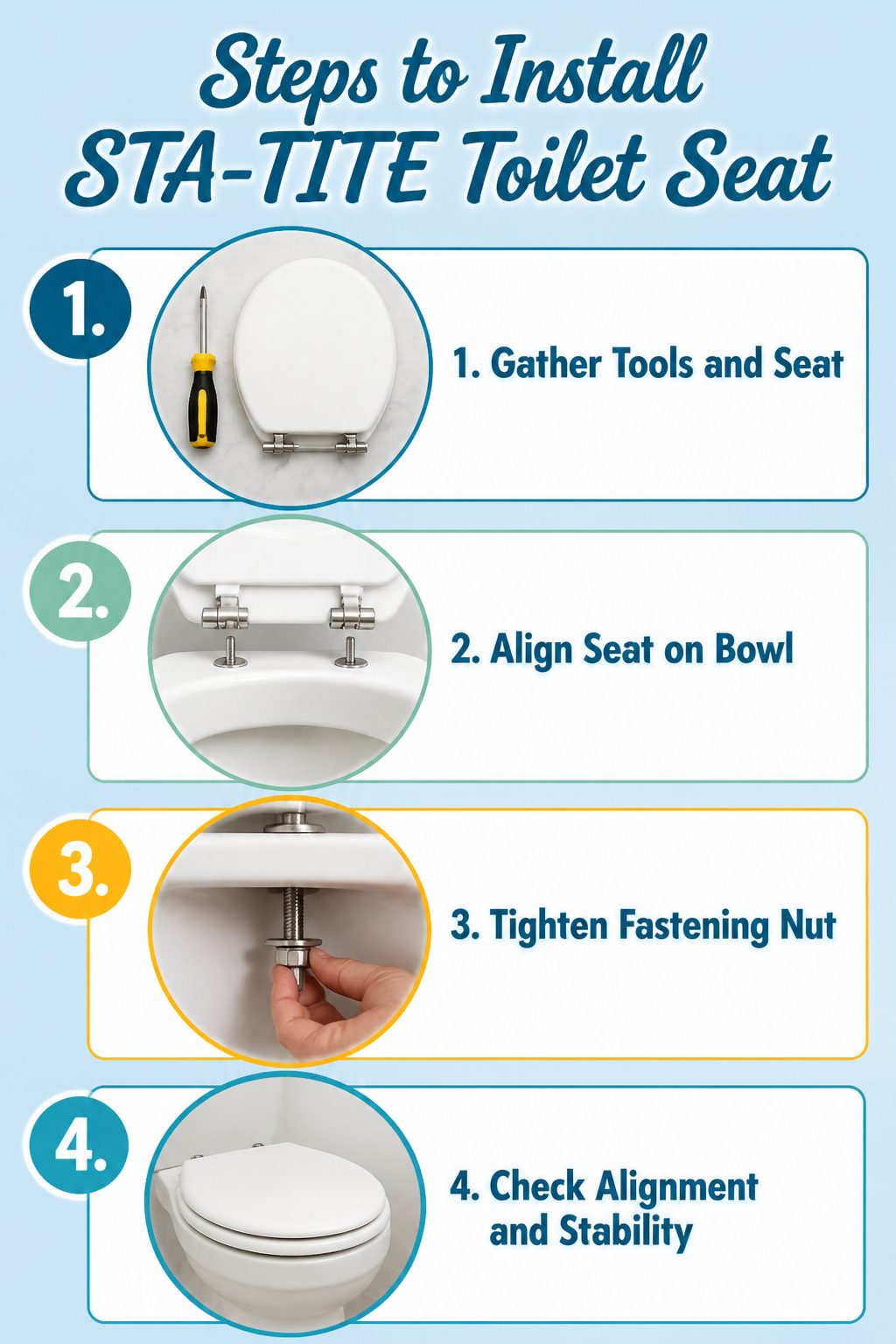
The STA-TITE fastening system is what keeps a wooden toilet seat from doing that slow slide to the left every few months. Bemis uses it across their enameled wood line, and after reading through the install details, I get why it matters: a nut on the underside of the bowl tightens from the top and locks in place, so the seat stays centered and doesn’t loosen over time. No reaching under the rim with a wrench you can’t see.
Most seats with this system go on in about ten minutes with a screwdriver. The metal hinges on some models also let you match existing bathroom hardware, which is a nice touch if you’re already swapping out towel bars or a faucet. For a weekend project that costs under $40, the Benton line runs about $34 MSRP and covers the basics without the wobble you’d get from a generic plastic hinge set.

EASY CLEAN: Designed for your convenience, this toilet seat comes with hinges that easily release the seat for deeper cleanings; use gentle cleaners to preserve your finish

ANTIMICROBIAL PROTECTION: Antimicrobial Toilet Seat features built in properties that inhibit stain & odor causing bacteria. Antimicrobial protection does not protect users against bacteria, viruses, germs, or other disease organisms. Always clean and wash this product thoroughly before and after each use.

FEATURES THAT ENHANCE YOUR HOME: Easy clean hinges quickly release for your deeper cleanings
Frequently Asked Questions
What makes a wooden toilet seat unique?
Wooden toilet seats feel warmer than plastic on cold mornings and add a natural look that painted finishes try to imitate. Solid hardwood shows real grain, while enameled wood gives the same warmth with less upkeep. Either way, you are getting something that reads as more intentional than standard white plastic.
Are wooden toilet seats easy to clean?
Enameled wood seats wipe down fast with normal bathroom cleaners because the baked-on coating seals the surface. Solid hardwood needs gentler products and more attention to drying time, since standing water can lift the grain or leave marks. I look for the easy-clean finishes on any wood seat now; a porous surface just means more scrubbing later.
Can I find an elongated wooden toilet seat with hinges?
Yes. Most manufacturers offer elongated wooden seats with metal hinges that match existing bathroom hardware, plus slow-close versions that keep the lid from slamming. The elongated shape runs about 17-1/4 to 17-3/4 inches at its widest point and fits most bowls built after the 1990s. Check your bolt spacing before buying, since standard covers a wider range than you would expect.
How durable are wooden toilet seats?
Solid hardwood lasts for years if you avoid harsh cleaners and standing water, though it can scratch. Enameled wood composite outlasts uncoated composite in most houses, though the coating can chip at edges or wear thin where the seat hits the bowl rim. STA-TITE fastening systems also help by keeping the seat centered and preventing the slow loosening that wears out hinges faster.