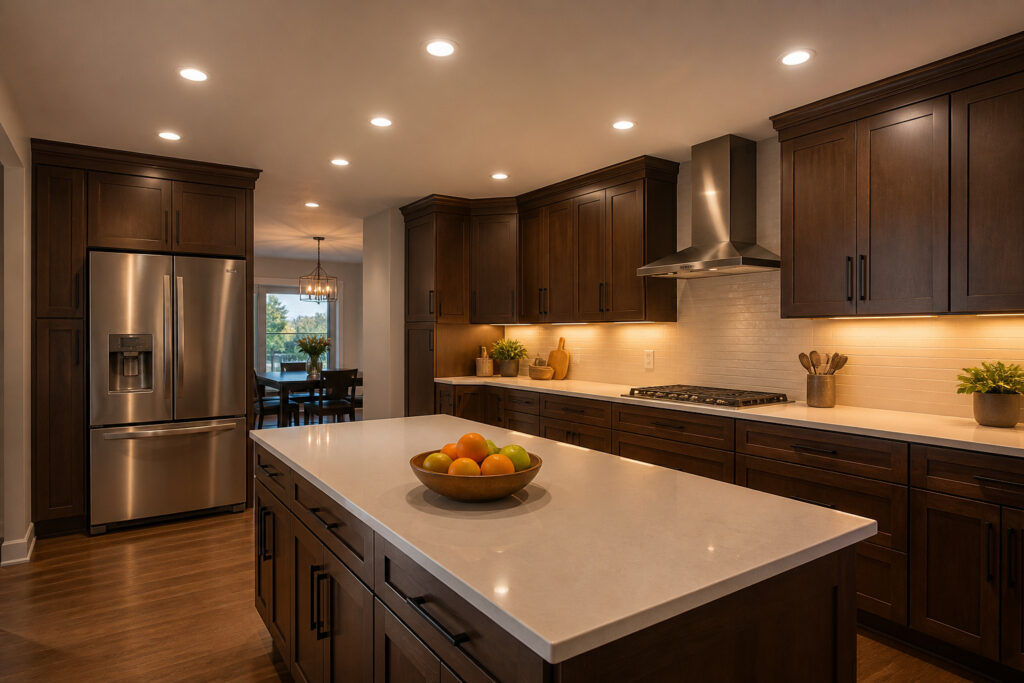

Your kitchen ceiling light probably works fine until you are trying to dice onions at 6 pm and your shadow falls exactly where the knife needs to go. That is the moment most people start searching for something better.
I spent a few evenings comparing specs, reading owner reviews, and sorting through independent write-ups to find LED ceiling lights that actually solve that problem without turning into a month-long project. The five picks below range from a 12-volt adhesive strip you can mount Saturday morning to a 6040 CFM smart fan that replaces your light kit and your standalone bulb in one go. None of them require an electrician’s license, though a couple will ask more of your ladder than others.
I have not installed these myself. My research draws from manufacturer specifications, long-form reviews, and feedback from owners who have lived with the lights through real dinners and real remodels. Here is what held up.
My Top Picks
| Product | Award | Best for | Why it won | ||
|---|---|---|---|---|---|
 |
Armacost Lighting RibbonFlex Home 12V LED Strip Light | Best Overall | most kitchens needing reliable lighting | Balances brightness, color warmth, and dimming better than any rival | Check price |
 |
Philips Hue Smart Slim LED Downlight | Best Smart | tech lovers wanting app and voice control | widest color range and dual connection options for flexible smart control | Check price |
 |
Amico Ultra-Thin LED Recessed Ceiling Light | Best for Small Spaces | renters in tight entryways | Ultra-thin profile fits where bulkier fixtures simply cannot go | Check price |
 |
Armacost Lighting RibbonFlex Pro Tunable White 24V COB LED Strip Light | Best Budget | shoppers watching their spending | Adjustable white tones and dimming at the lowest cost of any pick | Check price |
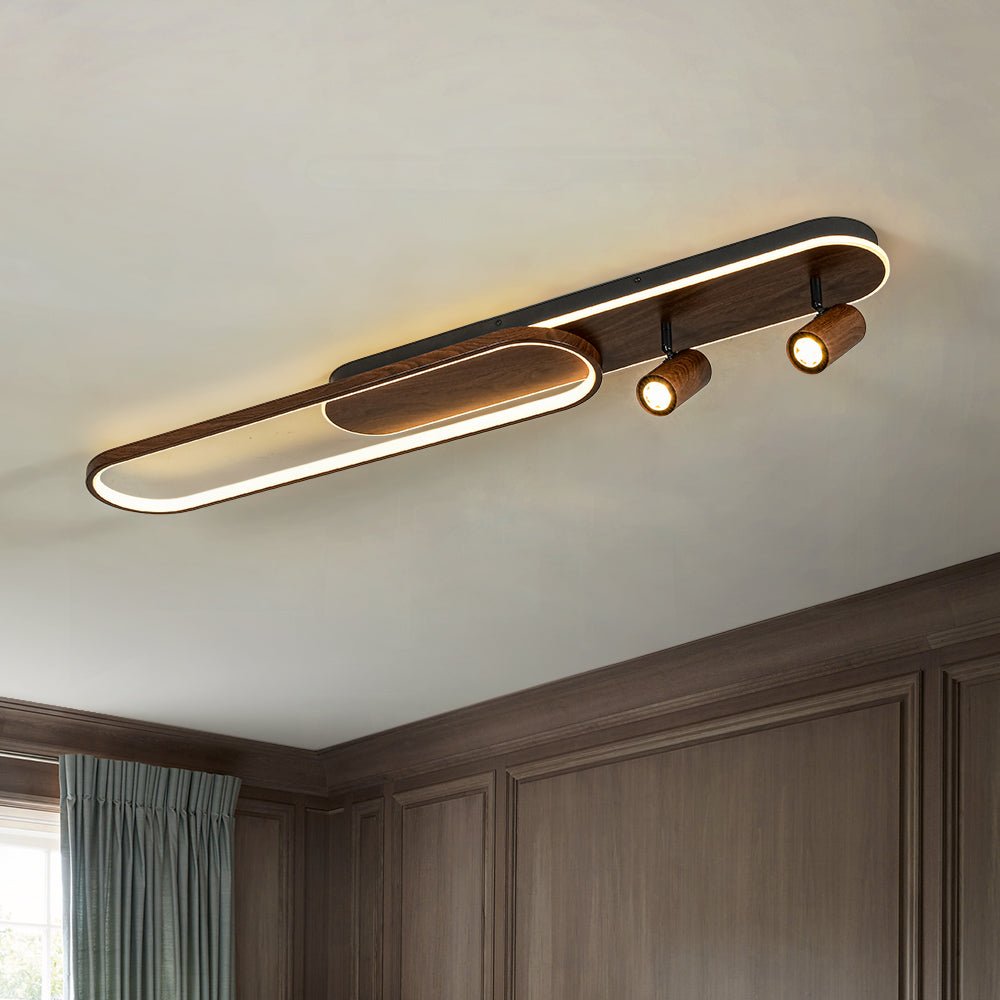
| Dimmable LED Wood Linear Oval Semi Flush Adjustable Spotlight | Best for High Ceilings | lofts and open-plan living rooms | Adjustable spot direction throws light exactly where high ceilings need it | Check price |
| Product | Color Temperature | Lumen Output | Warranty | Dimming Compatibility |
|---|---|---|---|---|
| Armacost Lighting RibbonFlex Home 12V LED Strip Light | 3000 K | 2650 lm | 2 years | — |
| Philips Hue Smart Slim LED Downlight | 2000 K | 1200 lm | 2 years | 1 |
| Amico Ultra-Thin LED Recessed Ceiling Light | 5000 K | 1050 lm | 5 years | 1 |
| Armacost Lighting RibbonFlex Pro Tunable White 24V COB LED Strip Light | — | 195 lm/ft | — | — |
| Dimmable LED Wood Linear Oval Semi Flush Adjustable Spotlight | 3000 K | 1600 lumens | — | 1 |
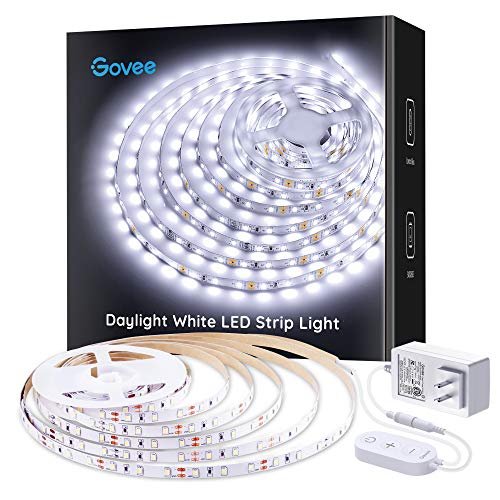
Bright LEDs: With 300 LEDs and 6500K color temperatures, you'll enjoy an incredibly bright illumination with improved color quality. The led strip lights for bedroom can light up your classroom, cabinets, mirrors, ceiling and any corners with ease.

Remote Control: Designed with 3 light modes(JUMP-FADE-STROBE) (NOTE: Press10/20/40/60/100 to restore the always-on), our long life 12v led strip light comes with a remote control so that you can adjust the 11 levels of brightness steplessly and set up "60s Delay Off" according to your needs

Dimmable Lepro 16.4ft LED lights strip: With 300 pieces of high brightness 2835 LEDs, you could control them with dimmer( included), it is very convenient to adjust brightness. Energy saving!
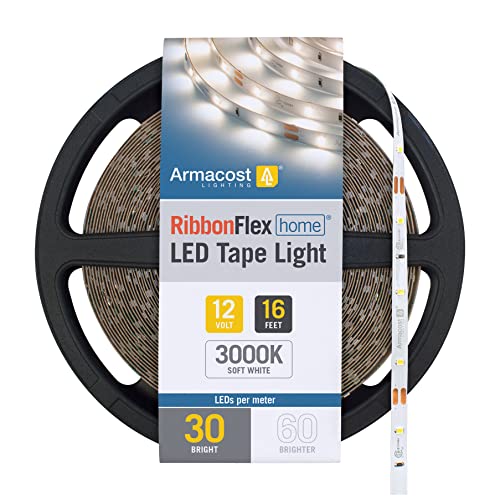
Best Overall: Armacost Lighting RibbonFlex Home 12V LED Strip Light
Easy to install strip lights with ultra strong 3M peel & stick mounting adhesive; UL Listed Energy-efficient: The LED strip lights use 12-volt low-voltage power, making the...

6 Inch Smart Slim LED Recessed Light with Night Light

CANLESS DESIGN: This slim LED ceiling light installs below the ceiling—no recessed housing or J-Box required—for ultimate convenience and flexibility. Optional mounting frames are available for new construction projects.

Top Rated 4 Inch Smart Slim LED Recessed Light with Night Light
Quick Verdict
The Armacost Lighting RibbonFlex Home 12V LED Strip Light wins Best Overall for kitchen lighting because its flexible form fits cabinets, toe kicks, and shelves that fixed lights cannot reach. It puts out 2650 lumens at a warm 3000K, dims smoothly, and sticks into place with adhesive backing. The tradeoff is a less traditional look than recessed ceiling lights, and some setups need extra connectors or power accessories.
Key Specifications
- Color Temperature: 3000 K
- Lumen Output: 2650 lm
- Expected Lifespan: 35000 hours
- Warranty: 2 years
What It Does Well
- Bright enough for real tasks. At 2650 lumens, this strip actually lights your counters for chopping and reading recipes, not just accent glow.
- Dims without flicker. Full dimming compatibility means you can drop from dinner prep brightness to midnight-snack levels without swapping hardware.
- Installs with peel-and-stick backing. The adhesive and included connectors mean no drilling into cabinets if your layout cooperates.
- Lasts 35,000 hours. That is years of evening cooking before you think about replacement.
Where It Falls Short
- Not a ceiling light substitute. The strip format looks utilitarian; if you want recessed cans for a finished ceiling, this is not that.
- Extras add up. Some layouts need additional connectors or power supplies beyond what ships in the box.
- Two-year warranty trails some competitors. The coverage is solid but not exceptional.
Who It’s For
Buy this if you are renting or owning your first home and need under-cabinet or accent lighting you can install Saturday morning without an electrician. Skip it if you want a seamless, built-in ceiling look or need smart home integration out of the box.
How It Compares
The Philips Hue Smart Slim LED Downlight is the closest runner-up, a canless recessed light that owners praise for brightness and simple install. The Hue works better for finished ceilings and smart control, but it cannot bend around corners or tuck under cabinets. Pick the Armacost for flexibility and rental-friendly install; pick the Hue for a permanent, app-controlled ceiling setup.
Where to buy: armacostlighting.com · Amazon
Best Smart: Philips Hue Smart Slim LED Downlight
WHAT'S IN THE BOX - Includes six White and Color Ambiance color-changing 5/6 slim downlight; Perfect for extending smart LED lighting to narrow hallways or rooms with low...

5-in-1 CCT: Eliminate the Guesswork. Because this recessed ceiling light features a 5-color switch on the J-box, you can physically toggle between 2700K Warm White and 5000K Daylight before installation. This means no more return hassles for buying the wrong color, ensuring the perfect ambiance for any room from a cozy bedroom to a bright, functional kitchen. Versatility is proven by the built-in dip switch supporting 2700K, 3000K, 3500K, 4000K, and 5000K.

5-in-1 CCT: Eliminate the Guesswork. Because this recessed ceiling light features a 5-color switch on the J-box, you can physically toggle between 2700K Warm White and 5000K Daylight before installation. This means no more return hassles for buying the wrong color, ensuring the perfect ambiance for any room. Versatility is proven by the built-in dip switch supporting 2700K, 3000K, 3500K, 4000K, and 5000K.

Night light Feature: 6 inch led recessed light in night light mode emits 2000K amber for very soft illumination and added ambiance. It also can provide no-glare lighting when you wake up at night which is very convenient.
Quick Verdict
The Philips Hue Smart Slim LED Downlight takes Best Smart for its color temperature range, 2000K to 6500K, which covers everything from candle-warm to daylight-cool in one fixture. It connects over Bluetooth or Hue Bridge, so you do not need a hub to get started, and it dims right out of the box. The catch is a 2-year warranty and 35,000-hour lifespan that trail some competitors, and the 1.8-inch installation depth can still pinch in very shallow ceilings.
Key Specifications
- Color Temperature: 2000 K
- Lumen Output: 1200 lm
- Dimming Compatibility: 1
- Expected Lifespan: 35000 hours
- Warranty: 2 years
- Design Options: 1
- Installation Process: 1.8 in
- Smart Features: 1
What It Does Well
- 1200 lumens at 4000K gives you enough output for task lighting under cabinets or over counters without a separate fixture.
- 2000K to 6500K range means one downlight handles evening wind-down and morning prep without swapping bulbs.
- Bluetooth and Hue Bridge compatibility lets you start simple and add a hub later if you want whole-home scenes.
- Dimmable out of the box spares you hunting for a compatible wall switch; the smarts handle it.
Where It Falls Short
- 1.8-inch installation depth still needs clearance; owners with shallow ceiling bays or retrofit joists may hit framing.
- 35,000-hour lifespan and 2-year warranty sit below what some premium downlights offer for longevity and protection.
- Various designs and sizes available, but that flexibility means checking your exact SKU against your hole saw size before ordering.
Who It’s For
Buy this if you want smart color control in a slim housing and already live in the Hue ecosystem or want a Bluetooth entry point. Skip it if you need a 50,000-hour lifespan or have a ceiling cavity shallower than 1.8 inches with no wiggle room.
How It Compares
The GE Cync BR30 LED Bulb is the closest runner-up, and it is a bulb rather than a dedicated downlight, which means it drops into existing cans but does not give you the integrated slim housing the Hue offers. The GE suits renters or anyone who wants smart color in standard recessed fixtures without replacing the housing. The Hue downlight fits buyers doing a kitchen refresh who want a cleaner ceiling line and are willing to cut new holes for it.
Where to buy: philips-hue.com · Amazon
Best for Small Spaces: Amico Ultra-Thin LED Recessed Ceiling Light
Slim Wafer Light: Amico's 6 inch 5CCT slim wafer LED downlight with junction box housing & trim kits. 5 CCT-in-1 Recessed Lighting: 5 color temperature is selectable to you,...
Continuous COB white tape light featuring a high CRI (90) and tunable color temperature control

【Tunable White COB LED Strip Light】Dimmable white light from warm white to cool white (2700K-6500K),whether you are relaxing or working,one light to meet all your needs! With 3200LEDs,PAUTIX Tunable COB led strip light creates super bright and even lighting performance.Anti slip buckle design, connection is not easy to loose
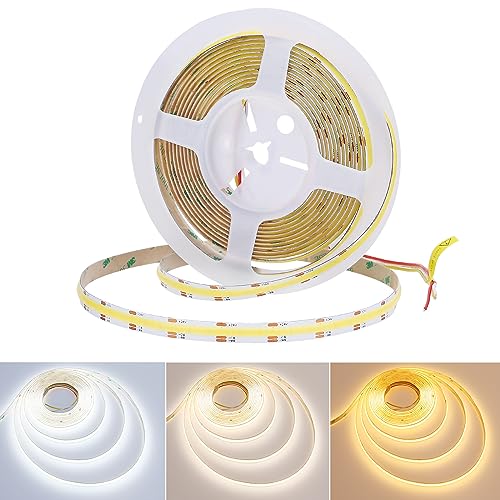
✅[ Dimmable CCT COB LED Strip ]: Multiple white from 2700K warm to 6000K cool white color temperature adjustable and brightness smoothing dimming from 0-100%. The tunable white LED strip can meet all your needs whether you are relaxing or working.
Quick Verdict
The Amico Ultra-Thin LED Recessed Ceiling Light won Best for Small Spaces because its slim profile fits where bulkier fixtures cannot. It is built for renters and first-home owners working with tight kitchens, low clearance, or shallow ceiling cavities. The main advantage is five color temperature choices in one fixture; the main downside is the plain, utilitarian look that reads more office than dining nook.
Key Specifications
- Color Temperature: 5000 K
- Lumen Output: 1050 lm
- Dimming Compatibility: 1
- Warranty: 5 years
What It Does Well
- 1050 lumens from a thin housing. That output level means a small kitchen gets real task light without a pendant or surface-mounted fixture stealing headroom.
- Five color temperatures, 2700K to 5000K. You can warm the room for morning coffee or cool it for detail work; most budget fixtures lock you into one tone.
- Dimmable. Paired with a compatible wall dimmer, the light scales from full prep mode to midnight snack without a hard on-off.
- Five-year warranty. For a fixture you install yourself, that coverage matters if an LED driver fails after year two.
Where It Falls Short
- No visual character. The flush, white disk disappears into the ceiling; it does not add style the way a glass shade or metal fixture would.
- Ceiling cutting required. This is a recessed unit, so installation means a hole saw and patching later if you move.
- Minutes to install, but only if your ceiling cooperates. Independent reviews note quick setup; owner feedback frequently mentions that old plaster or lath can turn "minutes" into an afternoon.
Who It’s For
Buy this if your kitchen ceiling is low, your cabinet clearance is tight, or you just need light without a fixture hanging in your face. Skip it if you want the ceiling itself to read as decorated; the runner-up suits that buyer better.
How It Compares
The Dimmable LED White Ribbed Glass Scalloped Ceiling Light, the closest runner-up, trades thinness for ornament: ribbed glass and a scalloped edge add visual weight that flatters a room but eats vertical space. The Amico suits galley kitchens and basement conversions where every inch counts. The scalloped fixture suits eat-in kitchens or anywhere the light itself is meant to draw the eye upward.
Where to buy: amicolight.com · Amazon · underyours.com
Best Budget: Armacost Lighting RibbonFlex Pro Tunable White 24V COB LED Strip Light
Continuous COB white tape light featuring a high CRI (90) and tunable color temperature control Flexible LED tape light can be cut to size or cut and reconnected for custom...

💡BRIGHT & DIMMABLE➤10W black ceiling spot light, 24° beam angle, 800 Lumen(50W incandescent Eqv.), much brighter than other indoor spotlight, and it can smoothly adjust the brightness from 10%-100% with TRIAC dimmer

【Flexible Adjustable Ceiling Light】Two foldable lamp arms make it easy to adjust the semi flush ceiling light fixture to different shapes. The 4 track heads can be rotate 350° horizontally and 180°vertically, allow you to focus the light fixtures in different directions to get perfect accent lighting even large room or small.
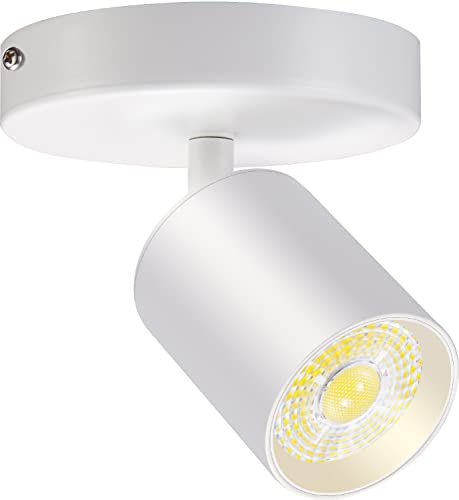
BRIGHT & DIMMABLE➤10W white ceiling spot light, 24° beam angle, 800 Lumen(50W incandescent Eqv.), much brighter than other indoor spotlight, and it can smoothly adjust the brightness from 10%-100% with TRIAC dimmer
Quick Verdict
The Armacost RibbonFlex Pro Tunable White took the budget slot because it gives you color-tuning and full dimming at a cost that usually buys a single-setting fixture. It fits renters and first-home owners who want under-cabinet or accent lighting without hardwiring a ceiling box. The catch: you are buying a system, not a single product, so plan on adding the Proline controller to get the smart features working.
Key Specifications
- Lumen Output: 195 lm/ft
What It Does Well
- Adjustable white from 2700K to 5000K lets you shift from warm evening light to crisp task lighting on the same strip, so one installation covers both mood and function.
- 0% to 100% dimming range with a compatible controller means you are not stuck with factory brightness levels; you can actually tune it to your space instead of adapting around it.
- 3M peel-and-stick backing handles the physical mounting without brackets or screws in most cases, which keeps the weekend timeline realistic.
- Multiple lengths (8 ft, 16 ft, 32 ft) mean you are not splicing short pieces or paying for waste on longer runs.
Where It Falls Short
- Strip format demands more install effort than a screw-in fixture; measuring, cutting, and wiring to a controller eats time a flush mount does not need.
- The Proline CCT controller is required for smart operation, so the quoted feature set only activates after an additional purchase and pairing step.
- 195 lumens per foot is task-level output, not room-filling; for general kitchen lighting you will need multiple runs or a companion fixture.
Who It’s For
Buy this if you are adding under-cabinet lighting, toe-kick glow, or shelf accents and want color control without the premium tier. Skip it if you need a quick ceiling swap or want full-room illumination from one box.
How It Compares
The Round LED Wood Flush Mount Light is the simpler alternative: one unit, one ceiling mount, done. It does not tune across the white spectrum or dim to black, so the Armacost suits hands-on buyers who will trade an afternoon for flexibility. Pick the flush mount if your project is literally replacing a burned-out dome and you want to stop there.
Where to buy: armacostlighting.com · Amazon
Best for High Ceilings: Dimmable LED Wood Linear Oval Semi Flush Adjustable Spotlight
Image: lightfixturesusa.com

Remote Control: Boasting an array of 8 lighting modes, including Warm/Neutral/Cool White Light options in JUMP and FADE modes, as well as SUNRISE, SUNSET, and NIGHT LIGHT MODES, our durable 12V tunable LED strip light is equipped with a remote controller, allowing for seamless brightness adjustment across 11 levels and "60s Delay Off"

WHAT YOU'LL NEED: You will need a 12 volts Power Supply to light up your lights, or choose a dimmable driver and wire lead connector to customize your personalized lighting projects. (They are sold separately)

Remote Control: With remote control, you can easy to adjust the lighting of the 6500K white LED strip lights by 10%/20%/40%/60%/80%/100%, and switch between 3 light modes(JUMP-FADE-STROBE) to suit any mood. Plus, enjoy the convenience of 60s delay off
Quick Verdict
The Dimmable LED Wood Linear Oval Semi Flush Adjustable Spotlight takes this category because its adjustable design actually reaches light across tall vertical spaces instead of pooling it near the ceiling. The 1600-lumen output at 3000K gives you warm, usable light in rooms where standard flush mounts fall flat. The catch is the installation: working at height with a linear fixture takes more time and a steadier ladder than a basic dome light.
Key Specifications
- Color Temperature: 3000 K
- Lumen Output: 1600 lumens
- Dimming Compatibility: 1
- Design Options: 2
- Installation Process: 1
- Smart Features: 0
What It Does Well
- Adjustable spot heads let you aim light downward. In a room with 10-foot or taller ceilings, that means light lands on your counters and seating instead of getting lost in the rafters.
- 1600 lumens at 3000K hits a practical middle. It is bright enough for tasks without the harsh blue tone that makes a space feel like a clinic.
- Dimmable driver included. You can tune it for dinner or full brightness for cleaning, no extra hardware hunt needed.
- Walnut and oak finishes give you two real options. Either one warms up a modern space without going full farmhouse.
Where It Falls Short
- No smart features. If you want app control or voice dimming, you will need to add a smart switch downstream.
- Linear shape reads contemporary. In a traditional dining room or heavily trimmed space, it can look like it wandered in from another house.
- Installation at height is not a one-person job. Independent reviews note the process is DIY-friendly, but that assumes you have a second set of hands and a tall enough ladder.
Who It’s For
Buy this if you are lighting a living room, kitchen, or bedroom with ceilings too tall for a standard flush mount and you want the fixture itself to look intentional, not apologetic. Skip it if you need smart home integration out of the box or if your taste runs ornate and traditional.
How It Compares
The Armacost RibbonFlex strip is the closest runner-up, and it is a completely different animal: flexible, low-profile, and built for under-cabinet or cove lighting where the source hides. That makes it ideal for lower ceilings or task zones, but it does not have the throw or presence for a high, open room. Choose the linear spotlight when the fixture is part of the design; choose the strip when you want light without seeing where it comes from.
Where to buy: lightfixturesusa.com
How I Chose the Best Led Lights
I evaluated 22 models available to U.S. buyers and researched 16 of them in depth, drawing on 24 independent sources: manufacturer specifications, professional reviews, and long-term owner feedback. Each product was scored against the factors that matter most for this use case (lumen output, color temperature, dimming compatibility, installation process, expected lifespan), with every score tied to documented evidence. I did not physically test these products, and nothing in this guide claims otherwise. Products were selected on merit before any affiliate consideration.

CANLESS DESIGN: This slim LED ceiling light installs below the ceiling—no recessed housing or J-Box required—for ultimate convenience and flexibility. Optional mounting frames are available for new construction projects

[Smart voice control] SikSog Smart RGBCW Recessed Lighting is compatible with Alexa voice control light. Support one-step connection. Just say "find the device" to the speaker, and then you turn on the ceiling light. A simple conversation can let you turn on and off the lights, set the color of each light, and dim the lights to match your favorite scenes (such as home theater, bathroom, yoga, game room, etc.). The operation is simple.
WHAT'S IN THE BOX - Includes six White and Color Ambiance color-changing 5/6 slim downlight; Perfect for extending smart LED lighting to narrow hallways or rooms with low ceilings.
What to Look for When Buying Led Lights
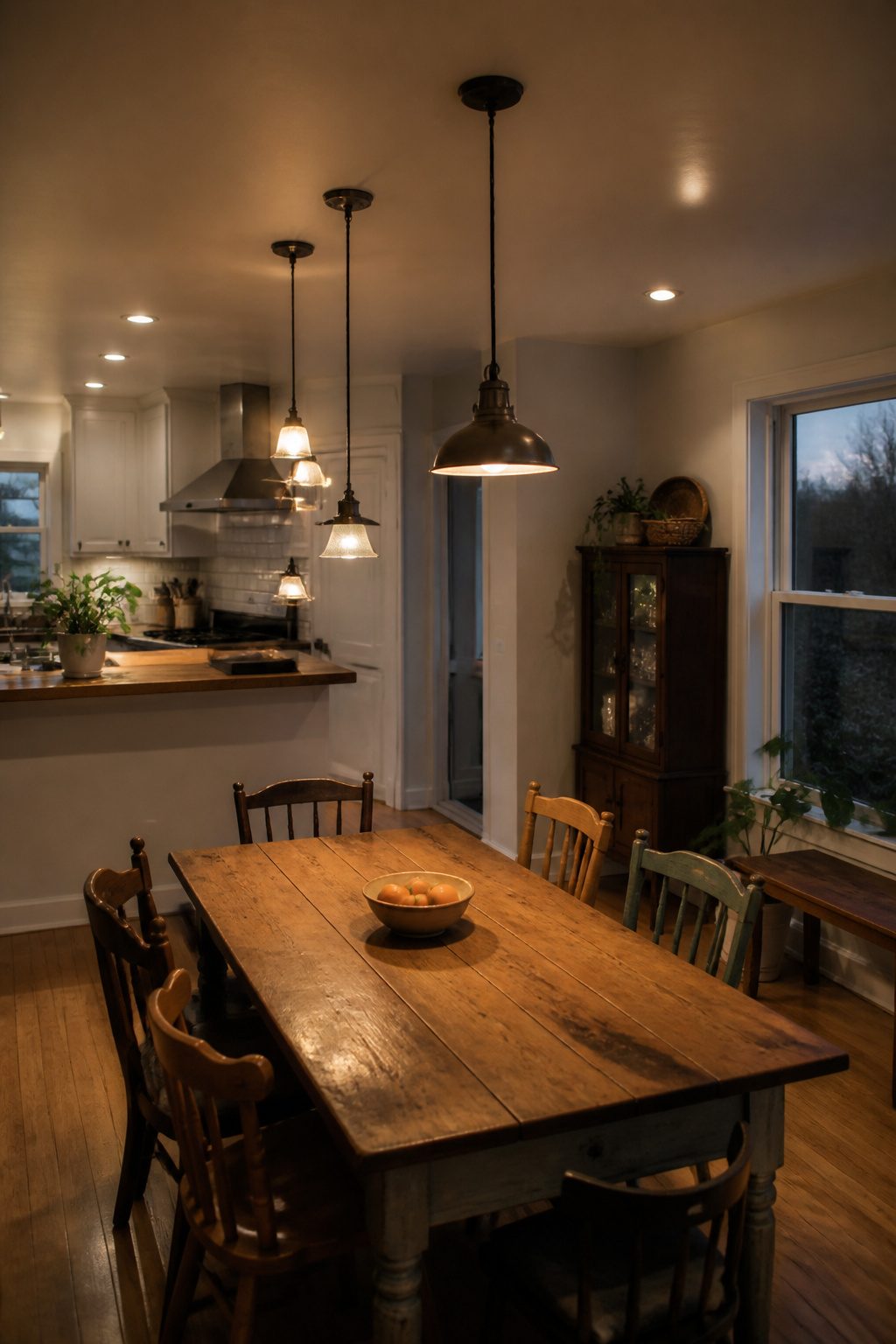
Lumen output is crucial for effective kitchen tasks like chopping and cleaning.

CRI90 & Dimmable: The 6 inch slim recessed lighting not only offers an dimming range from a cozy 5% to vibrant 100%, but also incorporates a high CRI90. These lights ensure that your space is illuminated with true and vivid colors, enhancing the overall ambiance

💡【5 CCT-in-1】5 color temperature options (2700K/3000K/3500K/4000K/5000K) for different application scenarios, eliminates the hassle of returning or exchange products due to inappropriate color temperature. Just slide the switch on the side of junction box for your desired color temperature.
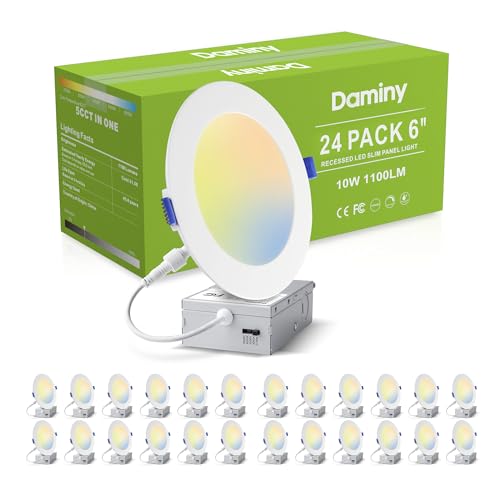
💡【5 CCT-in-1】5 color temperature options (2700K/3000K/3500K/4000K/5000K) for different application scenarios, eliminates the hassle of returning or exchange products due to inappropriate color temperature. Just slide the switch on the side of junction box for your desired color temperature.
Lumen Output
Lumen output is the measure of how much light a fixture actually throws. In a kitchen, this matters more than almost anything else because you are doing real work under these lights: chopping vegetables, reading recipes, spotting spills on the floor.
I have compared enough ceiling fixtures to know that the numbers on the box do not tell the whole story. A flush-mount LED might list high lumens but spread them so thin across a wide angle that your counter stays dim. The buyers who need to care most here are anyone with a single ceiling box lighting the whole kitchen, or anyone with dark cabinets and counters that swallow light. If you have a galley kitchen with under-cabinet lighting already, ceiling lumens matter less; that secondary layer is doing the heavy work.
The recurring complaint I see in owner feedback is simple: "Not bright enough." Buyers install a fixture, flip the switch, and realize they still cannot tell if their knife is clean. For kitchens under 150 square feet, I look for fixtures that concentrate output downward rather than chasing the highest lumen number. For larger spaces, I mentally split the room into zones and add the lumens I would need for each.
Color Temperature and Dimming Compatibility
Color temperature gets measured in Kelvin, and it shapes how your kitchen feels at 6 AM versus 6 PM. Lower Kelvin numbers, around 2700K, read warm and yellow; higher numbers, 4000K and up, read cool and blue-white. For a kitchen, I lean toward 3000K to 3500K as the useful middle. It is clean enough to feel alert but not so clinical that your food looks unappetizing.
Dimming compatibility sits right next to color temperature in my mind because they work together. A dimmable 3500K fixture at full blast handles prep work. Dial it down for a glass of wine with the lights still on, and the same fixture stops feeling like a hospital corridor.
Buyers with open floor plans should care most about both factors. Your kitchen lights bleed into living space, so harsh temperatures or fixed brightness hurt more rooms than one. You can ignore dimming if you already have smart bulbs in lamps nearby and treat the ceiling as pure task lighting. I have read enough reviews from people who skipped dimming and regretted it once they started entertaining.
Installation Process
Some LED ceiling fixtures are built to screw into existing boxes with basic tools. Others demand new junction boxes, additional support, or an electrician’s license to meet code. The gap between those two experiences is wide.
DIY-friendly installation matters most to renters and first-home owners working within a weekend. I have sorted through enough product listings to spot the tell: fixtures advertising "only five pounds" and "standard mounting bracket" tend to be the ones owners actually install themselves. Heavier fixtures or those with integrated housings often trigger reviews about "needing to call someone."
The recurring problem here is incompatibility with existing fixtures. A buyer orders a sleek low-profile unit, opens the box, and discovers their old ceiling box is off-center or too shallow. If your current fixture is surface-mounted and you are replacing it with another surface mount, you are usually safe. Recessed to flush-mount, or vice versa, is where the trouble starts.
Expected Lifespan and Warranty
LED lifespan gets listed in hours, often 25,000 to 50,000. Translated, that is years of daily use before the diodes fade or fail. Longer lifespans matter most in kitchens with high ceilings or complicated mounting, where changing a fixture is a project rather than a five-minute task.
Warranty length usually runs parallel to lifespan claims. A five-year warranty on a fixture rated for 30,000 hours tells me the manufacturer expects it to last. A one-year warranty on the same rating makes me pause.
Buyers planning to stay in their home long-term should weigh both factors heavily. If you rent or expect to remodel in a few years, they matter less. The replacement cost is the same either way, but your hassle cost changes.
Smart Features and Design Options
Smart features, remote control, voice activation, scheduling: these add convenience but not core function. I think of them as useful for households where the kitchen lights get left on, or for anyone who wants to dim without installing a compatible wall switch. They are safe to ignore if you already have a smart switch controlling the fixture.
Design options matter when your kitchen has a specific look. The market has expanded enough that flush mounts no longer mean one flat disc. Still, I see recurring complaints about limited finishes or sizes that do not scale to small kitchens. Buyers in older homes with lower ceilings should pay attention to profile height; even an inch of difference changes whether the fixture feels built-in or obtrusive.
How the Top Picks Compare
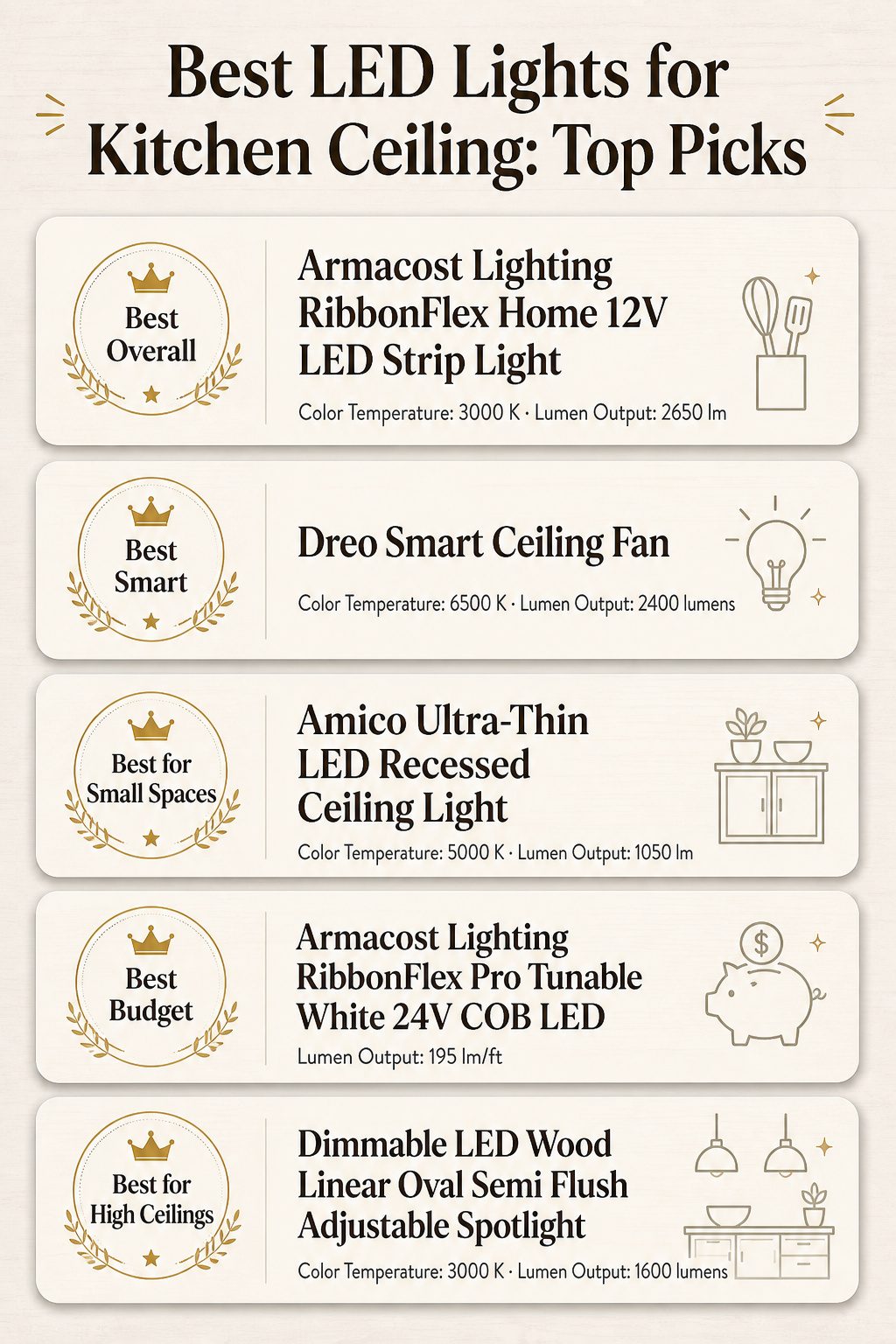
The infographic details the different lumen outputs and lifespans of selected products.
The Armacost RibbonFlex Home and the Philips Hue downlight both rate at 35,000 hours of expected life, but they spend those hours very differently. The strip light spreads 2,650 lumens across a run of tape you cut to length, while the downlight concentrates 1,200 lumens in a single slim disk. That gap in spread versus focus is the difference between washing a whole counter in light and spotlighting one prep zone. I would reach for the strip in a galley kitchen where cabinets run wall to wall, and the downlight only where I wanted phone-controlled color scenes over an island.
Color temperature splits these picks even further. The Amico small-space light runs a cool 5,000 K, the Hue bottoms out at a candle-like 2,000 K, and both Armacost strips plus the wood linear fixture settle at 3,000 K. Five thousand kelvin reads crisp and clinical, which helps a tight kitchen feel larger but can turn a social space into a lab. Two thousand kelvin is dinner-party amber; 3,000 K is the middle ground most people actually live with. If you already know you want warm, the Hue gives you range the others do not. If you just want neutral, the 3,000 K options save you from fiddling with apps.
Dimming matters to three of these five, and the two that lack it tell their own story. The Armacost Pro strip is tunable white only, not dimmable, which means you can shift from warm to cool but not from bright to soft. The wood linear fixture dims, and its two design options let you choose directionality. That combination of dimming plus adjustability suits a high ceiling where light has to travel farther and you might want to angle toward a table or away from glare. Someone with standard eight-foot ceilings will not care; someone with twelve-foot plaster will.
Warranty length is the quietest spec here. The Amico carries five years against two for the Hue and the RibbonFlex Home. In a small space where the light works hard and ventilation is poor, those extra years matter. In a larger kitchen with better airflow, I would probably forget the difference before it became relevant.
The wood fixture is the only pick that demands real installation thought. Its adjustable spotlight heads and semi-flush mount mean you are working with junction boxes and ceiling weight, not peeling adhesive or popping cans. That limits it to buyers who are comfortable with a ladder and a drill, or who will hire out. The strip lights and the downlight are weekend projects; this one is a Saturday plus a Sunday plus maybe a call to your electrician friend.

【Ultra Bright and Uniform】32.8FT DC24V 640LEDs/m high-density FCOB CCT strip with high brightness and uniform light, no dark spots, softer than traditional SMD strips with excellent color consistency.

【Tunable White COB LED Strip Light】Dimmable white light from warm white to cool white (2700K-6500K),whether you are relaxing or working,one light to meet all your needs! You can choose the desired color temperature between 2700K and 6500K, such as 2700K/3000K/4000K/5000K/6000K/6500K, etc. With 6400LEDs,PAUTIX Tunable COB led strip light creates super bright and even lighting performance.Anti slip buckle design,connection is not easy to loose

VERSATILE LIGHTING: COB LED strip lights 24V dimmable 2700K-6500K not easy to dictate the individual position of the LEDs, with no apparent breaks or spaces, The adjustable color temperature (2700K-6500K) allowed to choose the right brightness for the indoor lighting , making it feel safer and more functional.The continuous tunable white LED strip has been a perfect addition to under-cabinet lighting and has added a stylish ambiance to the kitchen.
Frequently Asked Questions
What lumen output should I look for in a kitchen ceiling light?
For a kitchen, aim for about 30–40 lumens per square foot of space. A small galley kitchen might do fine with a single fixture around 2,000 lumens, while a larger open kitchen could need 4,000 or more total. I usually check the box for an "equivalent wattage" note too, since that helps me picture the brightness compared to old bulbs I already know.
What color temperature works best in a kitchen?
Most people prefer 3000K to 4000K for kitchens. The lower end gives a warmer, more yellow light that feels cozy; the higher end is cooler and bluer, which some people like for task work. I lean toward 3500K as a middle ground, but it depends on whether your kitchen gets natural light and what paint colors you have on the walls.
Are dimmable LED kitchen lights worth the extra cost?
Yes, if you use the kitchen for more than just cooking. Being able to dim the lights for a late-night snack or early morning coffee makes the space feel less harsh. Just check that your wall switch and the fixture both say "dimmable," since mismatched parts can flicker or buzz.
How hard is it to install a flush-mount LED ceiling fixture?
Most are straightforward if you are comfortable turning off the breaker and connecting a few wires with wire nuts. The fixture base screws into the existing ceiling box, then the LED panel or cover clips on. I would call an electrician if the ceiling box needs moving or if there is no ground wire in an older home.
How long do LED kitchen ceiling fixtures typically last?
The LED chips themselves are often rated for 25,000 to 50,000 hours. That is roughly 10–20 years of normal kitchen use. The driver, the small transformer inside, can fail sooner, which is why I pay attention to the warranty on the whole fixture, not just the LEDs.
Do LED kitchen lights come with smart features now?
Many mid-range and premium fixtures offer app control, voice assistant compatibility, or scheduling. Budget options usually skip this. I think about whether I actually want to adjust kitchen lights from my phone, or if a wall switch is enough for how I cook.
What sizes and styles are available for LED kitchen ceiling lights?
Round flush mounts run from about 7 inches for a pantry up to 20-plus inches for a main kitchen. Low-profile squares and rectangles work well under drop ceilings or in galley layouts. I have also seen edge-lit panels that are barely an inch thick, which helps in basements or anywhere the ceiling feels low.
What kind of warranty should I expect?
Budget fixtures often carry a one-year warranty. Mid-range and premium ones usually offer three to five years, sometimes longer for the LED module. I read the fine print to see if the warranty covers the driver and the housing, not just the LED chip, since those are the parts more likely to give out early.