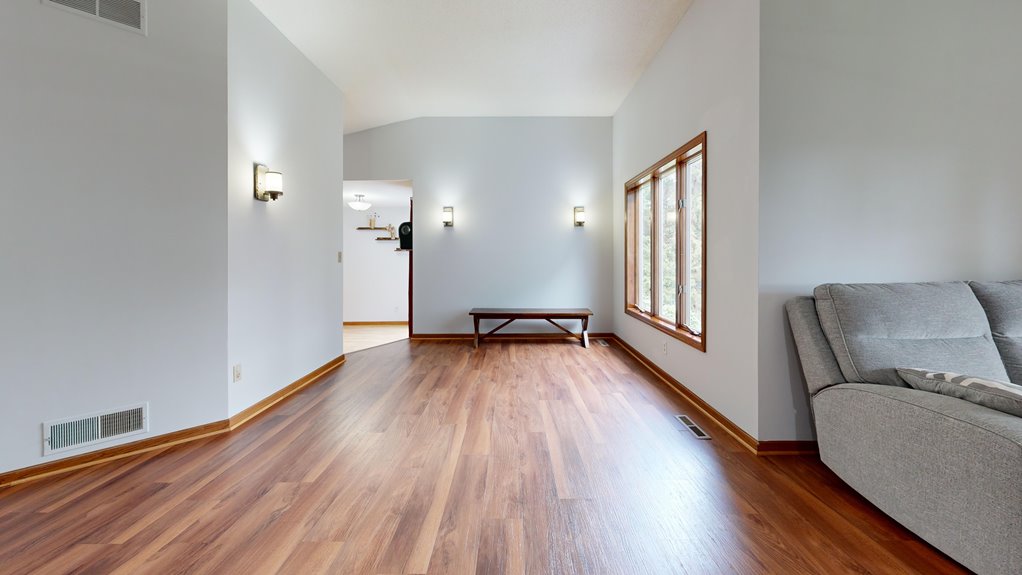

You can put a couch over a floor vent, but you should avoid completely blocking it.
Partial obstruction is acceptable if you leave about 6 to 12 inches of space for airflow.
Full blockage forces your HVAC system to work harder, increases your energy bills, and can trap moisture that damages wood or causes mold.
The real impact depends on your vent size, how many vents you have, and your system’s design.
Smarter solutions include open-leg furniture or vent extenders, which allow your system to operate efficiently.
Can You Put a Couch Over a Floor Vent? The Short Answer
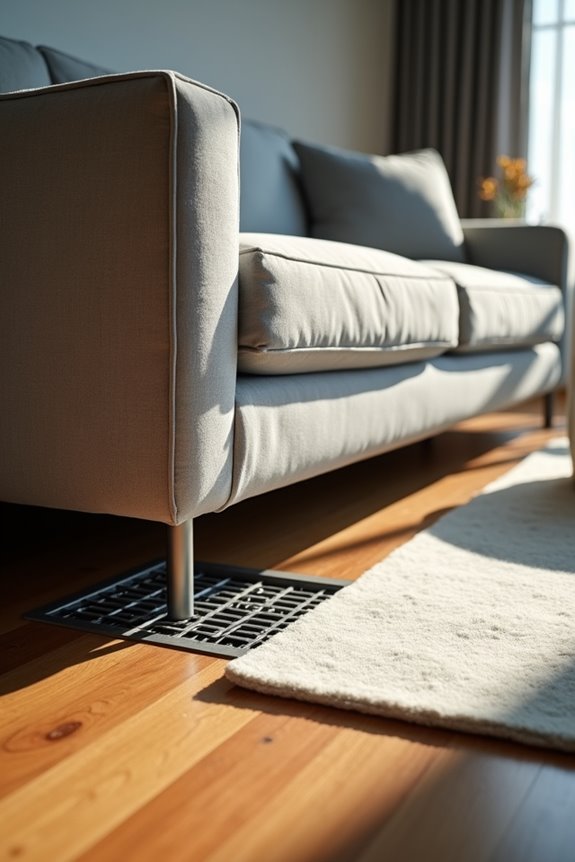
So, can you actually put a couch right over a floor vent? Not really—I wouldn’t recommend it. Most HVAC experts agree that completely blocking vents causes real problems. Your heating and cooling system has to work much harder, which reduces your efficiency and costs you money.
You don’t have to avoid vents entirely. If you leave some space, ideally 6 to 12 inches, air can still flow underneath your furniture. The more breathing room you give, the better your system performs. Partial obstruction is manageable, but total coverage creates serious problems. Strategic placement matters significantly.

OPTIMIZE COMFORT: Easily redirect airflow from those tricky vents under furniture, ensuring efficient heating or cooling. Redefine interior design with the balance of aesthetics and function
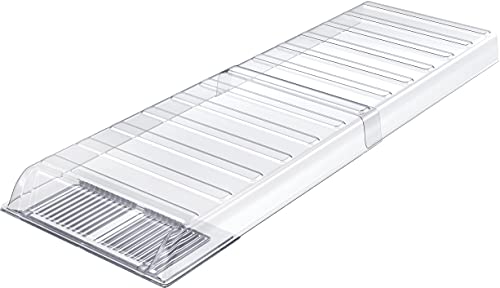
Redirects cool and warm vent air from under your bed, chair or sofa and into the room for your comfort. Low profile design being 1.5" Tall, it will fit under almost any piece of furniture

Enhance Comfort & Energy Efficiency: Redirects the airflow from the bed, couch, curtains, closets, floors into your desired place instead of limiting the airflow. Design for higher energy efficiency and saving money, dealing with uneven room temperatures
Why Blocking a Floor Vent Is a Problem
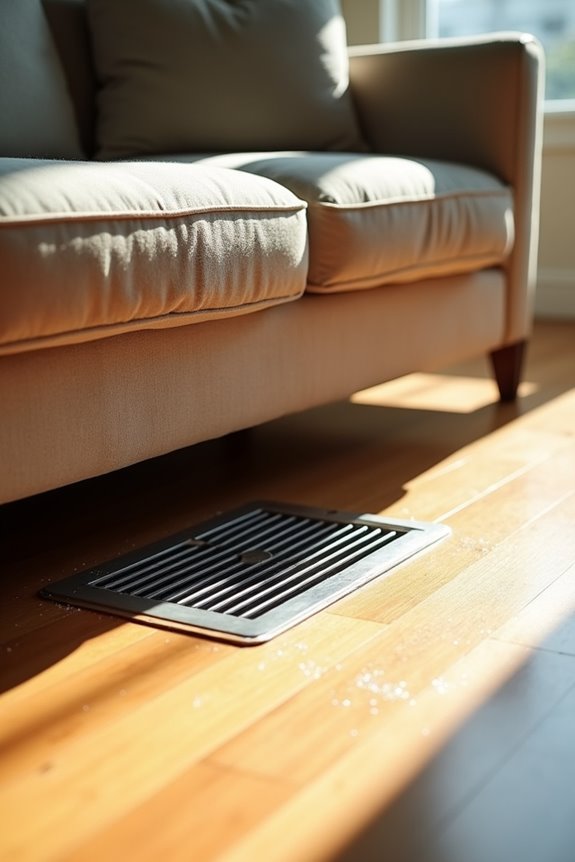
Now that you know partial blocking is manageable, let me explain why completely covering a vent becomes such a headache. When you fully block airflow, your HVAC system has to work much harder to push air through other vents, which reduces your energy efficiency. Trapped heat and moisture create conditions that cause significant damage. Wood warps and swells, metal rusts, and mold and mildew thrive in these environments. Your system itself takes a beating too, wearing out faster than it should. Complete blockage creates unnecessary strain on your equipment. The solution is to use smart alternatives that let you keep your couch while maintaining proper airflow.
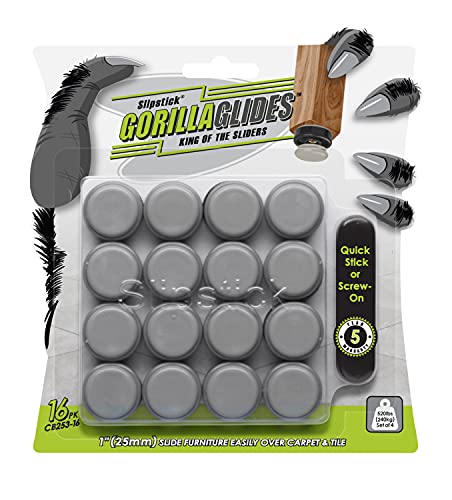
Chair leg floor protector glides - Ideal furniture sliders for chairs, bar stools, armchairs, dining chairs, coffee tables and furniture feet that are 1 inch to 1-1/2 inches in diameter at foot. Not for use on furniture legs smaller than 1” diameter at foot - see GorillaGlides CB193 3/4" round furniture sliders. For furniture legs larger than 1-1/2" wide at base see CB323 1-1/4" and CB503 2" GorillaGlides.

Package Included: 4 x Black Hairpin Leg Feet Caps fits for Fit for 3/8" to 1/2" hairpin furniture leg, 1 x Clear Plastic Storage Case (Size: 125*55*15mm).

【INNOVATIVE 15°-25° SLANTED FIT】 Specifically designed as angled chair leg floor protectors, our unique 15°-25° incline base ensures 100% flat contact with the floor. As high-quality chair leg caps for slanted and angled legs. These custom-molded protectors provide a flawless, tailored fit for mid-century modern furniture, provide a snug, secure fit without the warping common in ordinary furniture pads.
Key Factors to Consider Before Placing a Couch Over a Vent
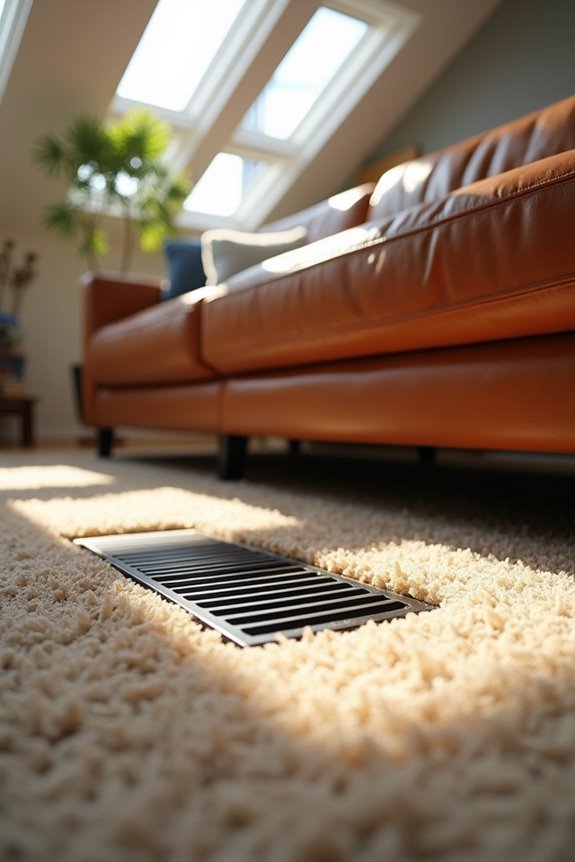
Before you push that couch over a floor vent, consider what you’re actually dealing with: the vent’s size, how many you’ve got in the room, and whether your HVAC system’s designed to handle some blockage. If you’ve got a smaller vent or just one doing all the work, covering it will significantly impact your system more than if you’ve got multiple vents spread around. The layout of your room’s airflow matters too, because a well-designed space accounts for some furniture getting in the way, but not complete coverage.

WALL OR CEILING VENT: This rectangular return air grille is designed for a 14 in. x 6 in. duct opening; overall dimensions are 15-3/4 in. x 7-3/4 in; grille has 2 vent rows and fits most standard wall or ceiling return air setups

WALL OR CEILING VENT: Air vent deflectors feature a duct opening that measures 12 x 6 inches, and can be used for wall or ceiling mount. The overall dimension measures 13-3/4 x 7-3/4 in inches (WxL) and features 2 vent rows
![Fits 20x20 Duct Opening | Steel Return Air Filter Grille by Handua [Removable Door] for 1-inch Filters | Vent Cover Grill | White | HVAC Cold Air Intake Grille | Out Dim: 22 5/8"W X 22 5/8"H](https://m.media-amazon.com/images/I/51PBEE8uHFL._SL500_.jpg)
❗⚠️ [𝗜𝗠𝗣𝗢𝗥𝗧𝗔𝗡𝗧] ⚠️❗HOW TO MEASURE - Always measure the wall opening to determine which size you should order. Wall Opening Size = Listed Size. If the duct opening on the wall is 20" W x 20" H please order 20x20 size option. Handua return air filter grille used for sidewall or ceiling openings. This grill uses a 1" thick filter (not included).
Size and Type of Vent
Not all vents are created equal, and this distinction significantly affects whether your couch can safely be positioned over one. The size and type of your vent matter when deciding on furniture placement.
Consider these factors:
- Large vents handle obstruction better than smaller ones, since they’ve got more surface area for air to escape around your couch
- Return air vents (pulling air back in) are often more forgiving than supply vents (pushing conditioned air out)
- Duct size and system design determine how sensitive your HVAC is to blockage
If you have a smaller vent or a tight system, even partial coverage causes problems. Larger vents are more forgiving. Check your specific vent configuration before positioning furniture over it.
Airflow of the Room
Understanding your room’s airflow is essential before positioning your couch. Rooms with multiple vents offer more flexibility, while single-vent spaces require different considerations.
| Setup Type | Flexibility | Best Action |
|---|---|---|
| Multiple vents | High | Cover secondary vents only |
| Single vent | Low | Keep it mostly open |
| Well-designed system | Moderate | Some coverage acceptable |
Assess how air currently circulates through your space. Does it feel stuffy in corners? Does temperature stay consistent? Centralized systems with remote thermostats are sensitive to blocked vents because they cannot adjust as easily. Map out your room’s air patterns first, then position your couch accordingly.
Practical Solutions When Your Couch Has to Go Over a Vent
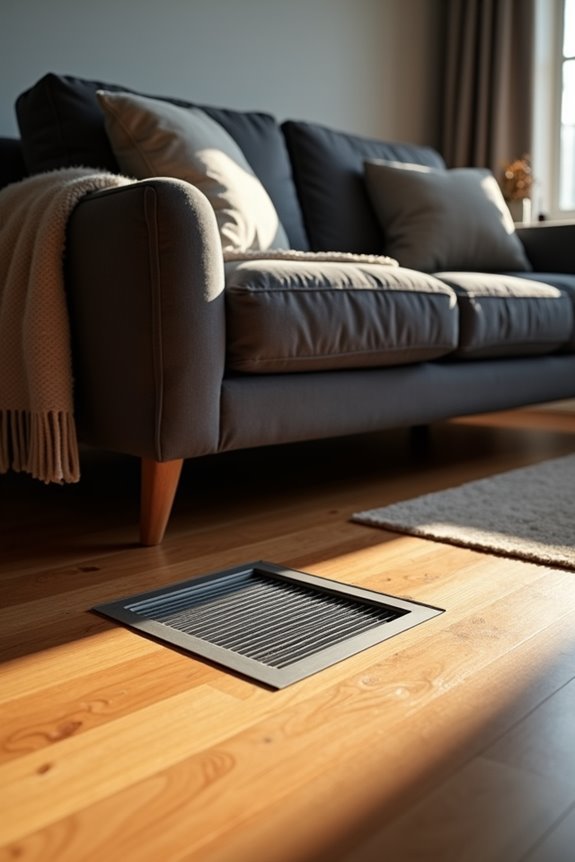
Sometimes life happens. Your living room layout just doesn’t cooperate, and that perfect spot for your couch is right where a floor vent lives. I have practical solutions for you.
First, consider your furniture choice carefully. Low-profile couches with open legs let air flow underneath, which makes a significant difference. Raised beds at least 18 inches high with an open base work similarly well.
What actually helps:
- Choose open-leg furniture over solid bases to maintain airflow
- Use fans strategically to push cooled or heated air where you need it
- Try vent extenders as an alternative solution
I’d also suggest arranging seating a few feet away when possible, reducing that harsh air velocity hitting you directly. Chat with an HVAC professional about your specific situation. They’ll give you personalized advice based on your home’s actual specifications.

WALL OR CEILING VENT: 3-way air deflector fits a 12 in. x 6 in. duct opening; overall dimensions measure 13-3/4 in. x 7-3/4 in; inner grille will be about 1/4 to 1/2 in. smaller for a proper fit

WALL OR CEILING VENT: Two-way deflector fits a duct opening size of 12 in. x 6 in; overall dimensions are 13-3/4 in. x 7-3/4 in; inner grille will be approximately 1/4 to 1/2 in. smaller for a proper fit
![12 x 6 Inch [Duct Opening] Air Vent Covers for Wall or Ceiling - High Airflow 2 Way Steel Ventilation - Adjustable Wall/Ceiling Register, 13-3/4 Inch x 7-3/4 Inch [Overall Dimensions]](https://m.media-amazon.com/images/I/31v2f91LgOL._SL500_.jpg)
Premium Quality Materials: Constructed from premium, high-durability steel, our air vent cover features an 12 x 6 inch duct opening and overall dimensions of 13-3/4 x 7-3/4 inches for a perfect, seamless fit. The rustproof metal, coated with a white powder finish, ensures long-lasting performance and resistance to heat and cold, without warping over time.
How to Maintain Proper Airflow With Furniture in the Way
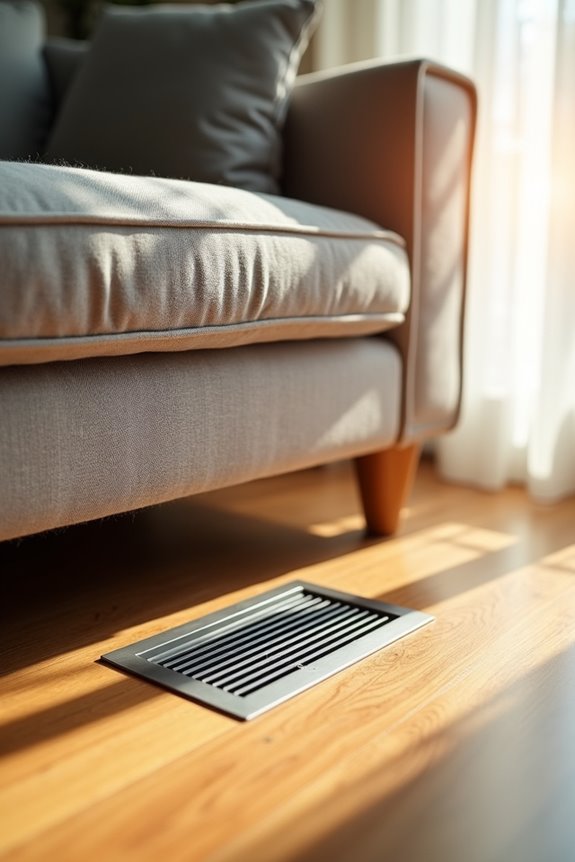
Even with your couch positioned over a vent, you have real options to keep your HVAC system running smoothly. I’d recommend arranging your seating a few feet away from vents when possible. This reduces how hard the incoming air hits you, which also feels more comfortable. If you can’t move things around, position your furniture at least 6 to 12 inches from floor vents to make a measurable difference. If you’re stuck with total coverage, contact an HVAC professional who can assess your specific situation. They’ll help you find solutions that work for your home’s unique layout and comfort needs.

Sleek, Flush Design: Features a minimalist profile that sits completely flush with your floor, creating a seamless and integrated look that enhances any modern space

【Durable Powder-Coated Metal】Crafted from durable metal with a smooth powder-coated finish in uniform brown, these floor vent covers offer strong performance and a refined appearance that complements various interior styles.

FIT SIZE: Specifically designed for 4 × 10 inch floor opening—vent cover surface dimensions are 11.7 × 5.7 inches, with back dimensions of 9.8 × 3.9 inches. The 4 × 10 floor register refers to the dimensions of the opening in the vent duct. Measure your floor opening size before ordering to ensure proper fit