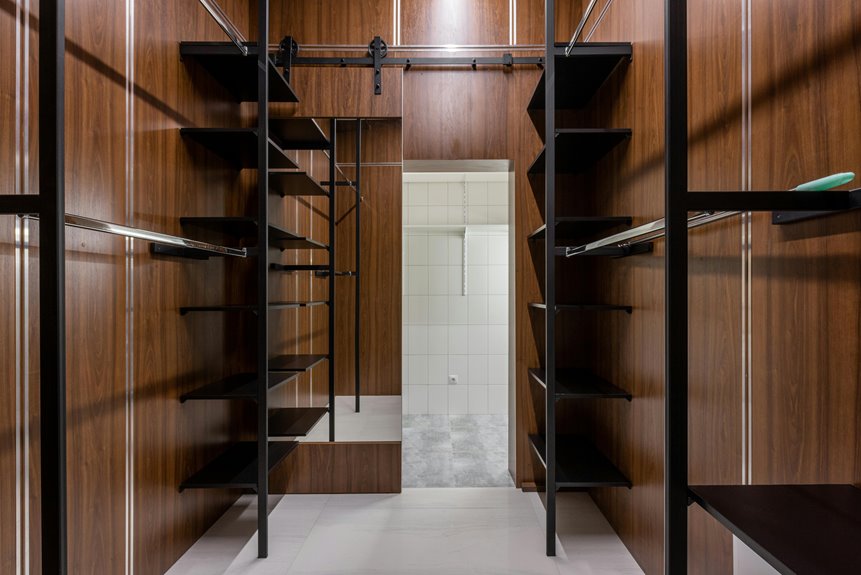

Standard closet shelves typically run 12 inches deep for reach-in closets, while walk-ins accommodate 14–20 inches.
I’d recommend 10–12 inches for shoes to keep everything visible, but go deeper (around 14–16 inches) for towels and bulky sweaters. Don’t go so deep that items disappear into the back.
Adjustable shelves let you mix depths throughout your closet, preventing those frustrating dead zones.
Your specific needs depend on what you’re actually storing.
Standard Closet Shelf Dimensions
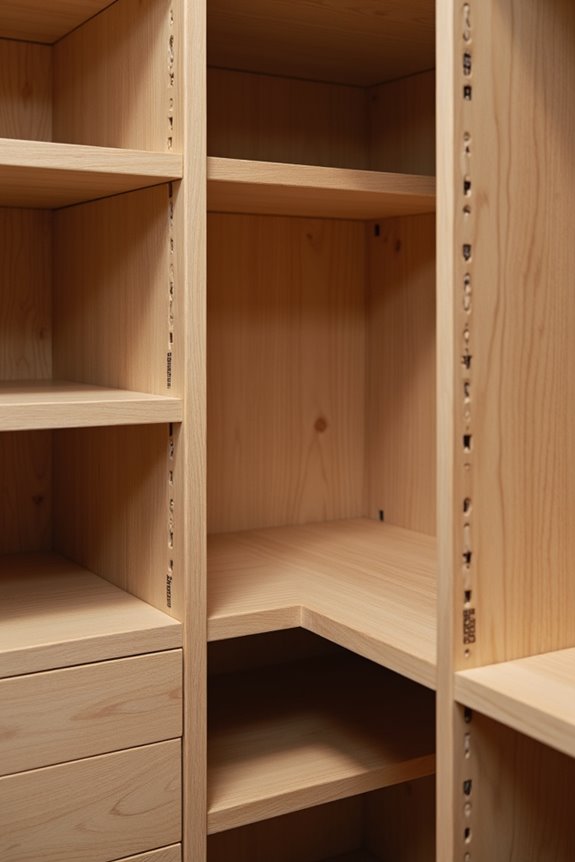
When discussing closet shelf depth, you’re referring to how far the shelves extend from the wall. This measurement differs from the overall closet depth. The standard for reach-in closets is 12 inches, while walk-in closets typically range from 16 to 20 inches, depending on storage needs. Selecting the correct shelf depth is essential for creating a functional closet that meets your storage requirements.

CONTINUOUS SLIDE DESIGN: SuperSlide shelving allows hangers to continuously slide without interruption
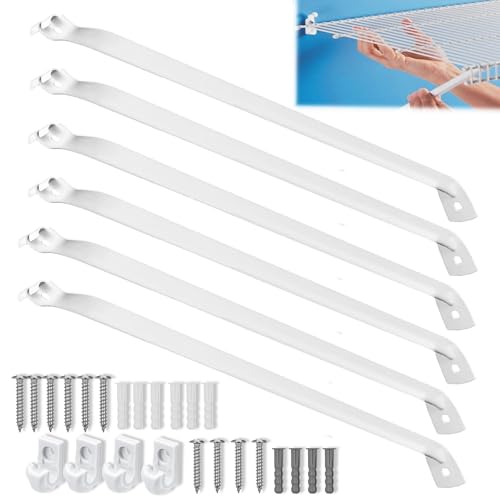
Kit: You’ll receive Ojeemii 6 PCS 12 inch wire shelf brackets and 4 PCS shelf clips, along with all necessary hardware for quick and easy installation
12-inch standard for reach-in
The 12-inch shelf is the ideal choice for reach-in closets because it works brilliantly for practical reasons. First, they provide ample elbow room, so you’re not constantly bumping your arms or struggling to grab items from the back. Standard reach-in closets are only about 24 to 26 inches deep anyway, so 12-inch shelves fit perfectly without creating dead zones where belongings disappear. They also work well with sliding doors and header clearance, which are important considerations for daily closet use. Clothes don’t hang over the edges either. They’re the standard choice for most people.
16–20 inch range for walk-in
Why jump to deeper shelves once you’ve got a walk-in closet? You finally have the room to breathe. The 16–20 inch range works well for walk-ins because it lets you stack bulky sweaters, display handbags upright, and organize bins without creating dead zones. The extra depth provides significant storage benefits. You’re not cramming things so tight that you can’t find anything. Go deeper than 20 inches and things disappear into the abyss. The ideal depth is around 18 inches. It gives you serious storage flexibility for everything from folded clothes to seasonal storage bins, providing functionality without accessibility headaches.
shelf depth vs. closet depth distinction
Your closet’s total depth and your shelf’s depth aren’t the same thing, and mixing them up will leave you with storage that just doesn’t work. Your closet might be 24 inches deep overall, but that doesn’t mean your shelves should be 24 inches deep. Your shelves need breathing room so clothes actually hang properly in front of them, and so you can actually reach what you’ve stored. A reach-in closet that’s 24 inches deep requires 12-inch shelves, not the full depth. Walk-ins have more flexibility, so you can push those shelves deeper. The key is subtracting space for your hanging clothes, your arms reaching in, and making sure nothing blocks your door.
industry-standard numbers at a glance
Now that you’ve got the closet depth versus shelf depth distinction down, here’s what actually works in the real world.
12 inches is the standard for most situations. It’s the sweet spot that works in reach-in closets and keeps things accessible. For walk-ins, you can push it to 14 to 20 inches and still grab what you need. For specialized storage, use 10 to 12 inches for shoes, 12 to 14 inches for clothes, and 14 to 16 inches for linens. Match your shelf depth to what you’re actually storing. Going too deep creates dead zones where items become inaccessible, while too shallow limits your stacking options. The right depth prevents wasted space and maximizes usable storage.
depth vs. width vs. height overview
When you’re planning closet shelves, depth gets all the attention, but thinking about all three dimensions together is what actually makes a closet work. Depth determines what fits on your shelf, width tells you how much horizontal space you’ve got, and height affects how you organize everything vertically. A shallow shelf might be perfectly deep enough for shoes, but if it’s only two feet wide, you’re cramming everything together. Height matters because putting heavy items up high creates accessibility problems. Balance all three dimensions for optimal function. Deep shelves with generous width and smart vertical spacing create a closet that works the way you need it to.
Types of Closets and Recommended Shelf Depths
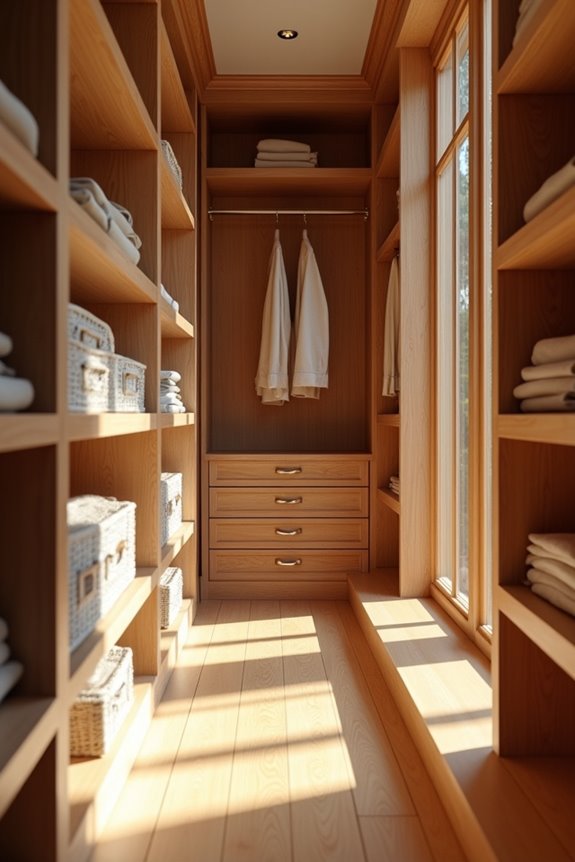
Different closet types need different shelf depths, and it’s not one-size-fits-all. What works for a tiny reach-in won’t work in a sprawling walk-in, and deep shelves in shallow spaces create chaos. Here’s what works best for each setup:
| Closet Type | Recommended Depth | Why It Works |
|---|---|---|
| Reach-in | 12 inches | Fits header clearance and sliding doors without dead zones |
| Walk-in | 14–20 inches | Handles bulky items, handbags, and stacked bins easily |
| Linen | 12–15 inches | Lets you stack towels and bedding without losing access |

Features: This shelf is designed with metal mesh baskets to prevent items from falling, each layer height is adjustable to accommodate items of different sizes, and it with wheels for easy mobility.

Complete Package: delight in value for money convenience with these silver shelf brackets; Each package contains 10 pack 14 inch brackets, providing you with the necessities for your shelf installation needs; This offer ensures you that you have spare brackets for replacements or additional shelf installations

High Load Capacity - Built to hold up to 700 lbs total (350 lbs per shelf when evenly distributed), this shelving unit is designed to support bulky items, heavy boxes, and equipment with confidence, helping prevent bending or sagging during everyday use.
reach-in closet depth range
How much space do you actually have to work with in a reach-in closet? Most reach-in closets run about 24 to 26 inches deep, and that’s the sweet spot for practical storage. I’d recommend sticking with 12-inch shelves for this setup. You’re dealing with header clearance issues and sliding doors that eat up your accessible space. Deeper shelves just create dead zones where stuff disappears, and you’ll struggle reaching anything in back. With 12-inch shelving, you get the elbow room you need and avoid that frustrating unreachable abyss. Shallower shelves make reaching your everyday items significantly easier.
walk-in closet deeper shelf options
Unlike reach-in closets with their tight constraints, walk-in closets give you the luxury of going deeper with your shelving. You can store significantly more when you have the space to work with.
Here’s what I’d recommend for your walk-in situation:
- Go for 14 to 20-inch depths—that’s your sweet spot
- Use deeper shelves for handbags, which you can display upright
- Stack bulky items like sweaters and jeans without worry
- Keep bins organized on upper shelves for off-season gear
Deeper shelving eliminates those frustrating “dead zones” where items become inaccessible. With adequate room, deeper shelves keep everything visible and reachable, making your closet genuinely functional and well-organized.
wardrobe/armoire shelf sizing
When you’re working with a standalone wardrobe or armoire, those beautiful furniture pieces that act like closets, you’ve got different rules to follow than walk-in or reach-in setups. Keep shelves around 10 to 14 inches deep for these pieces to close properly. Deeper shelves prevent doors from shutting, which defeats the whole purpose. You want everything accessible without stuff sticking out awkwardly. Shallower shelves work better for folded clothes, sweaters, and accessories. They prevent that annoying overhang problem. Going too deep creates wasted space inside; items disappear toward the back where you can’t reach them. Shallow shelving maximizes functionality and maintains the piece’s aesthetic appeal.
linen closet shallow-shelf standard
Linen closets sit in this sweet spot where you’re storing towels, sheets, and bedding, stuff that’s bulky but needs to stay organized and accessible. Shelves between 12 to 15 inches deep work well here. You can stack towels and linens without them disappearing into the back, and you’ll actually reach what you need without frustration.
Go too deep, and your linens get lost in that dark back corner. Keep them shallow enough, and everything stays within arm’s reach. Stack items in neat piles, rotating them so nothing gets crushed under months of weight. A 12 to 15-inch depth gives you the perfect balance between storage capacity and usability.
entryway/mudroom closet variability
What makes entryway and mudroom closets tricky is that they’re doing double duty, storing everything from coats and shoes to bags, umbrellas, and seasonal gear all at once. There’s really no one-size-fits-all depth, and that’s acceptable. You might need deeper shelves, around 14 to 16 inches, if you’re stacking bins or storing bulky winter coats. But if you’re mainly hanging jackets with just a few shelves for shoes and accessories, shallower 10 to 12-inch shelves work well. The key is thinking about what you actually use daily versus what gets stored seasonally. Measure your space and consider your real storage needs first.
Closet Shelf Depth by Purpose
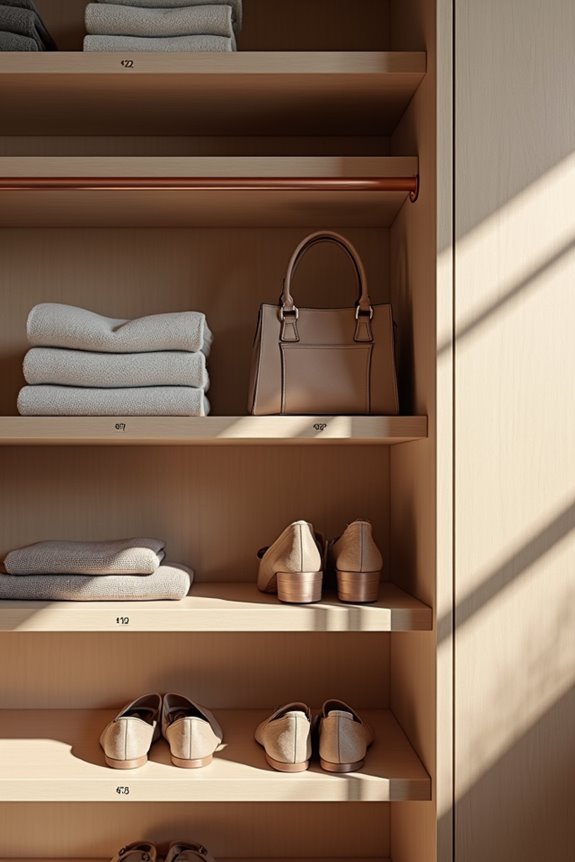
Now that I’ve walked you through closet types, I want to show you how shelf depth really changes depending on what you’re actually storing. Shoving clothes, linens, and cleaning supplies all on the same shelf depth creates organizational problems. Different items need different amounts of space: your folded sweaters require one depth, your towel stacks require another, and your cleaning supplies have their own requirements entirely. This breakdown will help you build shelves that work for what you’re keeping.

MODERN MINIMALIST DESIGN: This 3-tier closet organizer uses a clean open-shelf layout to enhance closet organizers and storage in wardrobe closets, bedrooms, and living spaces, making the closet organizer practical and space-saving

CUSTOM DESIGN: Wood shelf designed exclusively for use with the Closet Culture modular closet system

MODERN MINIMALIST DESIGN: This 5-tier closet organizer uses an open-shelf vertical tower to add closet organizers and storage in a wardrobe closet, bedroom, or living room, making the closet organizer both versatile and space-friendly
Shelves for Clothes
When you’re folding up your everyday wear and stacking it on a closet shelf, you need to think differently than you would for shoes or linens. A 12 to 14 inch depth is optimal for clothes. Shelves this deep allow you to stack sweaters, jeans, and t-shirts without them toppling over or getting squished. This depth also prevents items from hanging off the front edge. Shelves deeper than 14 inches create a problem; your favorite shirt ends up lost in the back. Shallower shelves work if you have limited space, but you’ll sacrifice stacking room. The key is finding the balance between accessibility and storage capacity that fits your specific closet situation.
Shelves for Linens and Towels
How you stack your linens differs significantly from folding clothes, and shelf depth makes a critical difference here. For towels and bedding, opt for 14 to 16 inches deep. This depth allows you to stack bath towels, fitted sheets, and pillowcases without them toppling over constantly. Shallow shelves lack sufficient capacity for linens before things become disorganized. Conversely, shelves that are too deep create dead zones where items get lost and forgotten in the back. Place your most-used towels at eye level for easy access, then store seasonal bedding higher up. This depth range provides practical functionality without sacrificing visibility or accessibility.
Shelves for Cleaning Supplies
What depth works best for your cleaning supply closet? I’d recommend 10 to 12 inches as the optimal size for storing bottles, sprays, and small containers without creating wasted space. Most cleaning supplies are compact, so shallow shelves keep everything visible and accessible.
Deeper shelves invite clutter, letting bottles hide behind each other where you’ll forget them. With these shallower depths, you can easily see what you have and grab what you need without digging around. The smaller footprint also means you’re not struggling to reach items in the back.
Stack your supplies strategically: heavier bottles on lower shelves, lighter items up top. This depth makes maintaining an organized cleaning closet manageable.
Closet Shelves for Shoes and Accessories
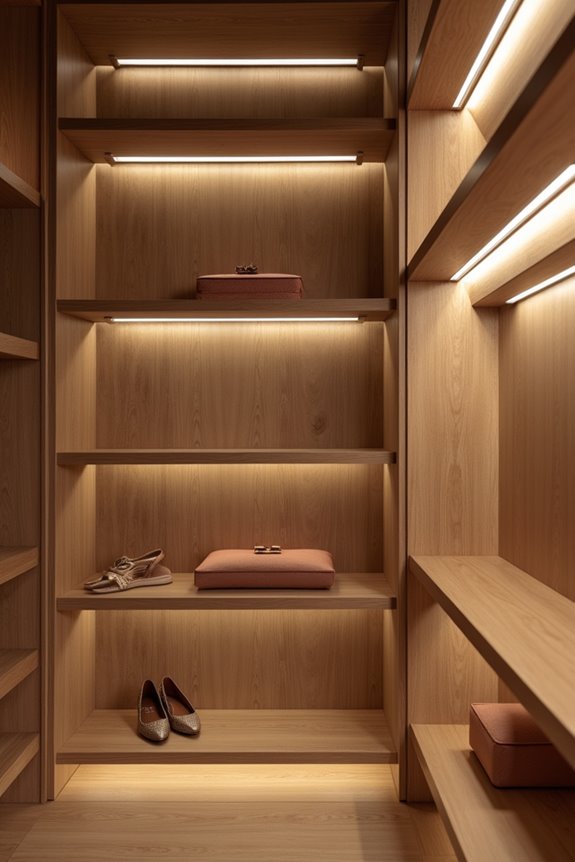
I’ve found that shoes and accessories need their own special consideration because they’re so different from folded clothes. You’ll want shelves around 10 to 12 inches deep for shoes. This depth keeps everything visible and accessible without creating dead zones. Handbags, hats, and smaller accessories perform well on these shallower shelves, especially when you have limited closet space and need every inch to function efficiently.

SHELFTRACK BRACKET: Exclusively designed for ClosetMaid ShelfTrack hang track and standard system for adjustable shelving

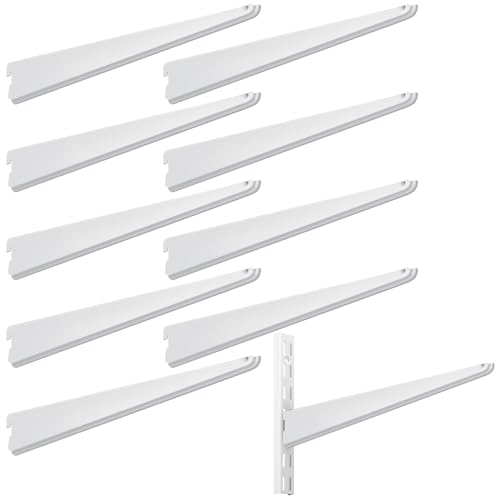
Comprehensive Package: our package consists of 10 adjustable shelving brackets, easy installation without tools, designed to cater to your extensive storage or display needs, ensuring you have adequate brackets for multiple shelves
How Deep Should Shoe Shelves Be?
When you’re organizing shoes and accessories, shelf depth becomes critical to functionality. A depth of 10 to 12 inches is optimal. This depth keeps everything visible and within easy reach, so you’re not digging through layers to find that one pair you wanted. Shallower shelves work better for shoes because they prevent the “dead zone” problem where items disappear in the back. You’ll see your whole collection at a glance, which makes getting dressed faster. If you go deeper than 12 inches, shoes tend to hide, and you’ll forget what you own. Keeping shelves compact at this depth ensures you’ll actually wear everything you store.
Depth for Handbags, Hats, and More
Beyond shoes, you’ve got other accessories that need their own shelf strategy and deserve more breathing room than footwear. I recommend going deeper here. 14 to 20 inches works great for handbags, hats, and bulky items because handbags look impressive displayed upright, and that extra depth keeps them from toppling over.
Hats need space too, whether you’re stacking them or letting them breathe individually. Shallower shelves create frustration when you’re trying to fit larger accessories. Don’t go overboard though; too deep and you’ll lose things in the back.
Eye-level shelves work well for daily accessories you actually use. Stack your everyday handbag front and center, tuck seasonal ones toward the back. This approach balances accessibility with style.
Factors to Consider When Choosing Closet Shelf Depth
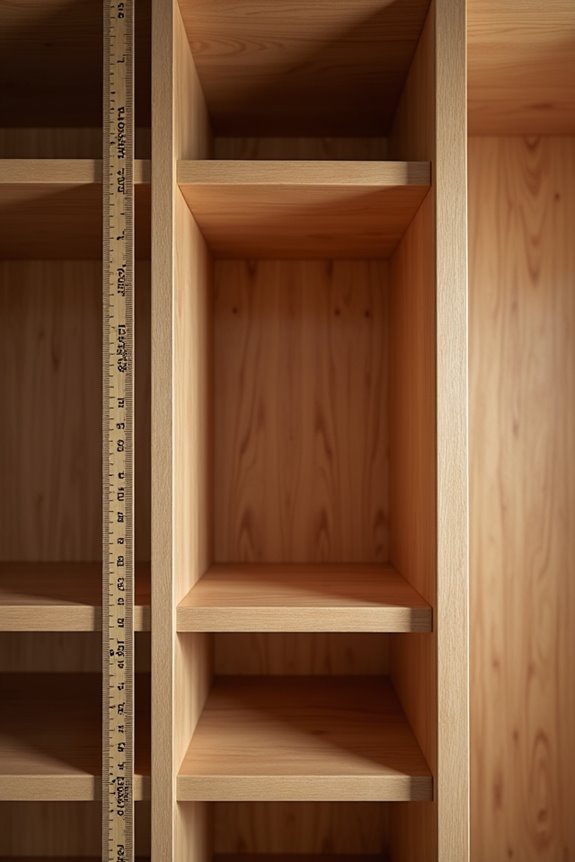
When selecting your shelf depth, the items you’re storing significantly impact your choice. Bulky sweaters require different space than shoes, and bins need room to slide in and out without getting stuck. You must also consider your closet’s footprint, whether doors swing open or slide, and how far you can comfortably reach without items becoming inaccessible at the back.
Adjustable shelving provides greater flexibility to experiment and modify your setup as your needs change, while fixed shelves lock you into a single configuration.

Maximizes Vertical Closet Space: 10-tier design with 20 cubbies for you to make full use of closets or storage areas; helping you organize shoes, clothes, and other items without taking up floor space

SPACE-SAVING DESIGN: This narrow closet organizer features an 10-tier slim tall open shelves design that suits bedrooms, dorms, living rooms, and offices, making the closet organizer suitable to any room setting
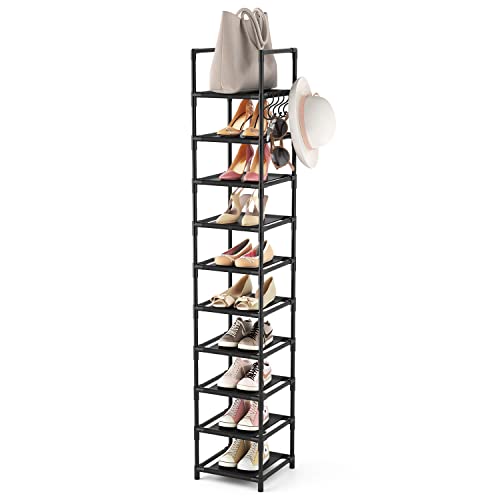
[Space Saving and Large Capacity] Dimensions of vertical shoe rack: 11.5"L x 11.5"W x66.93"H. Closet shoe organizer can store up 10-15 pairs of shoes and boots, the shoe rack organizer weighs 3.5 lbs, easy to move. This is a narrow and tall shoe stand, ideal for small spaces and large storage capacity, becoming an ideal storage solution for any narrow or tiny space, such as closets, entryways, dorms, bedrooms, hallways, corners, garages, etc.
type of items being stored
How you’ll actually use your closet shelf matters way more than you might think when considering the specific stuff you’re stacking up there. If you’re folding clothes, I’d recommend 12 to 14 inches deep. But shoes need way less space, so 10 to 12 inches works perfectly. And if you’re storing linens like towels and bedding, bump it up to 14 to 16 inches, they stack nicely without toppling over. For bulky items or handbags, deeper shelves between 14 to 20 inches keep everything organized and accessible. Going too deep creates those frustrating dead zones where stuff disappears. Going too shallow means you can’t stack anything worthwhile. Match your shelf depth to what actually lives there, and you’ll genuinely use your closet better.
available closet footprint
Your closet’s actual footprint, the space you’re actually working with, is your biggest reality check when picking shelf depth. A tiny reach-in closet demands different thinking than a sprawling walk-in. With limited square footage, go shallower, think 12 inches, because it keeps things accessible without creating those frustrating dead zones where stuff vanishes. If you’ve got a generous walk-in, you can absolutely push toward 14 to 20 inches, and everything stays organized and within reach. Matching your shelf depth to what you’re actually dealing with space-wise is essential. Measure twice, because cramming oversized shelves into a compact closet leaves you frustrated and your clothes inaccessible.
door swing and clearance
Once you’ve nailed down your available space, the way your door actually opens will significantly impact your shelf choice. Sliding doors in reach-in closets restrict access to the center, which means shallower shelves work better. You need adequate clearance to grab your stuff without contorting yourself. Swing-out doors give you more flexibility, but you still need to consider what clears the opening, including bins, hangers, and your own arms maneuvering through. Going too deep creates dead zones where items get lost behind the door swing. Going too shallow limits what you can stack or store. The optimal depth balances accessibility with storage capacity for your specific space and movement patterns.
accessibility and reach distance
Can you actually reach what you’re storing? I’ve learned this the hard way. Deep shelves create dead zones where stuff just disappears. When I go too deep, I can’t access items in the back without pulling everything forward first, which is incredibly frustrating.
That’s why I recommend thinking about your arm’s reach. Standard 12-inch shelves work great because I can grab items easily without stretching or climbing around. But if you’re storing bulky items like sweaters or handbags, deeper shelves between 14 to 16 inches give you flexibility. Just place frequently used items toward the front.
Accessibility beats storage capacity every time. You’ll have less stuff you can actually find rather than mountains of forgotten items lurking in the back.
adjustable vs. fixed shelving
When you’re planning your closet setup, one of the biggest decisions you’ll make is whether to go with adjustable or fixed shelving. This choice significantly impacts how functional your space becomes. Adjustable shelves let you customize depths based on what you’re actually storing. Need 12 inches for folded clothes one month, then 16 inches for bulky bins later. You can make that adjustment. Fixed shelving works well if you’ve got a solid plan and don’t anticipate changing things. Adjustable options provide flexibility without requiring major renovation work. Choosing adjustability means you’re investing in a closet that accommodates your changing storage needs over time.
Maximizing Storage with Adjustable Shelves
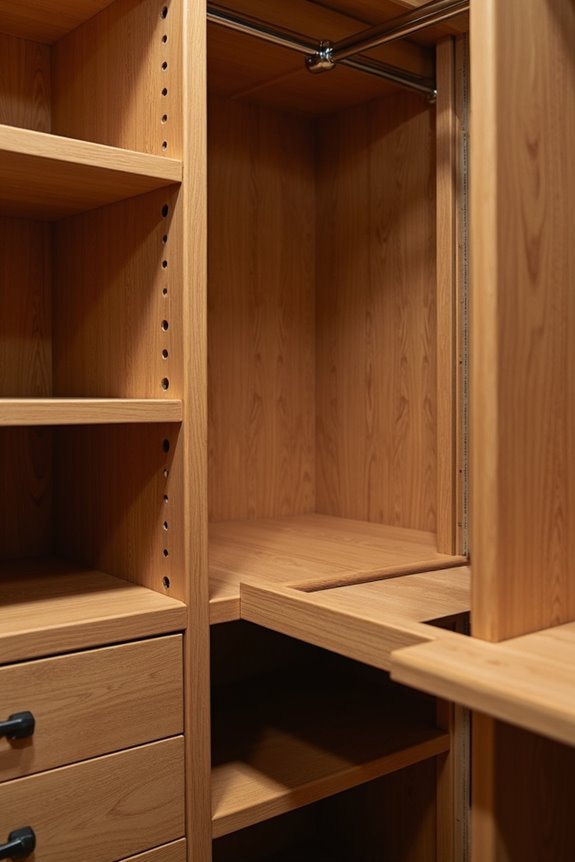
I’ve found that adjustable shelf pin systems give you serious flexibility. You can mix different depths on the same wall, pairing shallow 10-inch shelves for shoes with deeper 16-inch shelves for bulky bins, all based on what you’re actually storing. Combining a double-hang rod with shelving above or below lets you maximize vertical space while keeping folded items separate from hanging clothes, which significantly increases storage capacity. The beauty of modular setups, whether adjustable or semi-permanent, is that you can experiment with spacing and depths until you find what works for your closet instead of forcing yourself into one standard depth that might leave you with dead zones or overstuffed shelves.

HIGH-QUALITY MATERIAL – HAUSHOF wire shelves are made from Q235 carbon steel, which can reach a maximum load capacity of 40 LBS. Wires are sprayed with white 80-120µm coating, thus avoiding corrosion, rust, and damage to your hands/clothes

**Premium Heavy-Duty Construction** – Made from high-quality epoxy-coated steel, these wire shelf brackets offer exceptional strength and durability, supporting heavy loads without bending or warping for long-lasting use.

Prevents small items from tipping or falling through wires
adjustable shelf pin systems
Why stick with fixed shelves when you can customize your closet to match exactly what you’re storing. Adjustable shelf pin systems offer genuine flexibility. You get to decide your shelf depths and heights, shifting them around as your needs change. No more wasted space or awkward gaps.
Here’s what works best: those little metal or plastic pins slide into pre-drilled holes, letting you reposition shelves in minutes. This flexibility means you’re not locked into one depth forever. Need 12 inches for folded clothes this season. Adjust to 16 inches next year when you want to stack bins differently.
The key advantage is that your closet finally works for you, not against you. You gain control over your storage configuration and can adapt it as your belongings and preferences shift.
mixing depths on same wall
Once you’ve got adjustable shelves in place, you release something powerful: the ability to mix different depths on the same wall. Mixing depths lets you customize your closet to exactly what you’re storing. Use shallower 10-inch shelves for shoes and accessories up front where you can grab them easily. Then go deeper, 14 to 16 inches, above for bulky sweaters or handbags stacked behind. This combo prevents those frustrating dead zones where stuff gets lost. You’re maximizing every inch without creating unreachable backs or cluttered overhangs. It’s like solving a puzzle that actually works for your life. Mixing depths on the same wall lets people organize their closet space with intention and practical efficiency.
double-hang rod and shelf combo
How much more can you fit in your closet when you think vertically? Combining a double-hang rod with shelves above or below it creates significantly more storage capacity. You get hanging space for shirts and pants, then shallow 10 to 12-inch shelves sitting right above for folded sweaters, bags, or bins. Those shallower shelves work perfectly in this setup because they won’t interfere with your hanging clothes below. Pairing deep 14 to 16-inch shelves on upper sections with narrower shelves near the rods keeps everything accessible and organized. You maximize every inch without creating dead zones. This approach delivers efficient storage that aligns with how you actually dress.
shelf spacing for folded vs. hanging items
Getting that double-hang setup right is awesome. Your shelf spacing needs to match what you’re actually storing. Folded clothes need different breathing room than hanging items do. For folded sweaters, jeans, and shirts, space shelves about 10 to 12 inches apart. This provides enough room so you’re not crushing anything and can actually see what’s underneath. If you’re mixing in hanging items below those shelves, you’ll want more clearance, maybe 14 to 16 inches or more depending on your garment length. Adjustable shelves are your best friend because you can tweak spacing as your storage needs shift. This flexibility keeps everything accessible and prevents the frustrating situation where nothing quite fits right anymore.
modular vs. built-in flexibility
When you’re planning your closet setup, the choice between modular shelving and built-in systems shapes how flexible you’ll be down the road. Modular shelves give you the freedom to adjust depths and heights as your needs change. For example, you might start with 12-inch shelves for clothes, then swap in deeper 16-inch ones when you need extra storage. Built-in systems offer a polished, permanent look that maximizes your specific space, but they’re locked in place. If your lifestyle shifts or you want different organization later, you cannot modify them. Choose modular if you value adaptability and enjoy adjusting your setup. Built-ins work best when you’ve determined exactly what you’re storing long-term and won’t need to change it.
Closet Shelf Depth Mistakes to Avoid
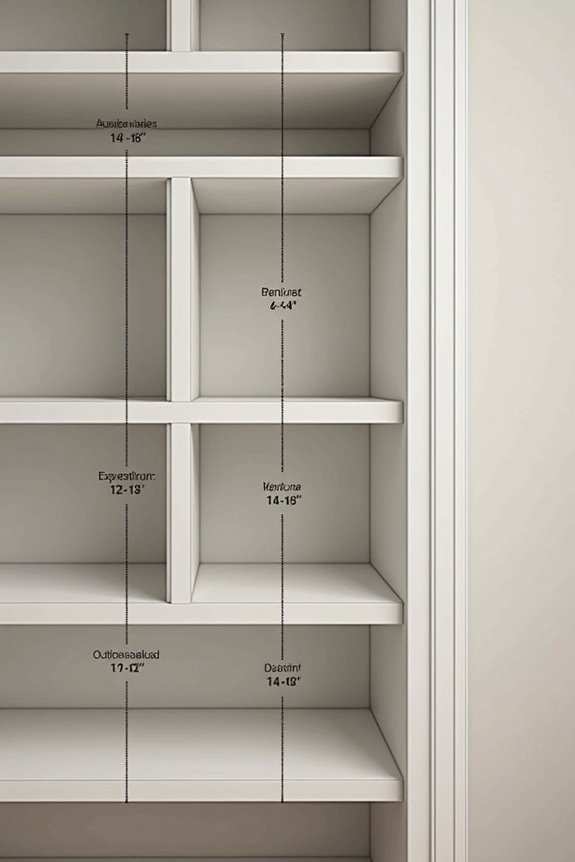
I’ve made plenty of shelf depth mistakes myself, and I want to help you skip the headaches like going too deep and watching your stuff vanish into the back, or ignoring whether your doors actually close without banging into bins. You’d be surprised how many people install uniform shelf depths everywhere when really, your hanging zone needs different spacing than your shoe shelf, and skipping measurements before you buy means costly returns and wasted time. A little planning upfront, checking door clearance, considering airflow around folded items, and actually measuring your space, saves you from creating those frustrating dead zones where nothing’s reachable.

Adjustable storage shelves ,metal shelving unit can be adjusted,you can adjust each shelf heigh as your need

【Heavy Duty Shelves with 1250 LBS Weight Capacity】This wire rack is made of alloy steel, with a strong and enduring structure composed of thicker metal wire and metal rods. The total weight capacity of 5 shelves is up to 1,250 lbs, with each shelf supporting up to 250 lbs. It can remain stable even when fully loaded for a long time. In addation, the kitchen shelves come with 4 leveling feet that allow you to adjust the height of each leg to ensure the stability of the wire shelves

【High Quality Steel Construction】Built with commercial-grade steel and reinforced wire grids, this 3-tier wire rack shelving supports 265 lbs per shelf (795 lbs total), ensuring exceptional strength and long-lasting stability. Its powder-coated finish adds reliable rust resistance making it suitable for indoor or covered outdoor use. Ideal for holding pantry bulk items, heavy boxes, large kitchen appliances, heavy garage tools, or household essentials in home, garage, office, or industrial storage
shelves too deep causing lost items
Why do deep closet shelves feel like they swallow your stuff whole? Going too deep creates what I call the “abyss effect.” You stick something toward the back, and it disappears from memory. We’ve all lost sweaters and bags in those dark corners.
Deeper shelves, typically 18-20 inches, cause items to vanish from your sight line. The real issue is you can’t easily reach what’s back there without emptying everything in front. Shallow shelves keep everything visible and accessible. Your stuff shouldn’t feel lost in your own closet. Shallow shelves outperform deep ones when it comes to actually using what you own.
ignoring door clearance
Most people don’t think about how their closet door actually swings or slides until it’s too late. I’ve seen folks install gorgeous deep shelves, only to realize their doors won’t open all the way. It’s such a frustrating mistake.
Your shelf depth has to work with your door, not against it. In reach-in closets, sliding doors restrict what you can actually access. Going too deep creates zones you literally can’t reach. And if you’ve got a swing-out door, deep shelves mean items stick out, blocking the opening entirely.
Measure your door clearance first, then choose shelf depth accordingly. Taking five minutes upfront saves you from expensive reinstalls later.
overlooking ventilation needs
Your closet needs to breathe. When you cram shelves too deep or pack them too densely, you’re trapping moisture and stale air inside. Closets develop musty smells and mildew when air can’t circulate properly around stored items.
Proper ventilation keeps your clothes fresh, prevents odors, and protects fabrics from damage. Deeper shelves can block airflow, especially if you’re stacking bins or bulky items back-to-back. Leave some breathing room between your shelf back and the wall; even a small gap helps.
You don’t need to sacrifice storage to achieve this. Space items thoughtfully, avoid overloading shelves, and consider open shelving sections. Your clothes will last longer with proper air circulation.
uniform depth across all zones
Assuming your entire closet has the same shelf depth everywhere might feel efficient, but it’s actually one of the biggest mistakes I see people make. Different zones need different depths. Your shoe shelves work best at 10 to 12 inches, but that same depth won’t cut it for bulky sweaters or handbags. If you’re stacking linens, you’ll want 14 to 16 inches so everything stays accessible. Mix depths strategically throughout your space. Lower shelves for daily essentials benefit from slightly deeper storage, while upper shelves for seasonal bins can go shallow. By tailoring each zone to what you’re actually storing, you’ll maximize space and prevent items from getting lost in the back.
skipping measurements before buying
Why do so many people eyeball their closet space and hope for the best? I’ve seen it happen: you buy shelves that seem right, install them, and suddenly nothing fits properly. Skipping measurements before buying is a mistake that costs you time and money.
I always grab a tape measure first. Measure your closet’s actual depth, account for hanging rods, and check door clearance. Don’t forget about those awkward angles or obstacles hiding in corners. Most people skip this step entirely, assuming standard depths work everywhere.
Every closet is different. Your reach-in isn’t like your walk-in. Taking ten minutes with measurements saves you from returning shelves, reinstalling hardware, and wasting shelf space on items that don’t fit.