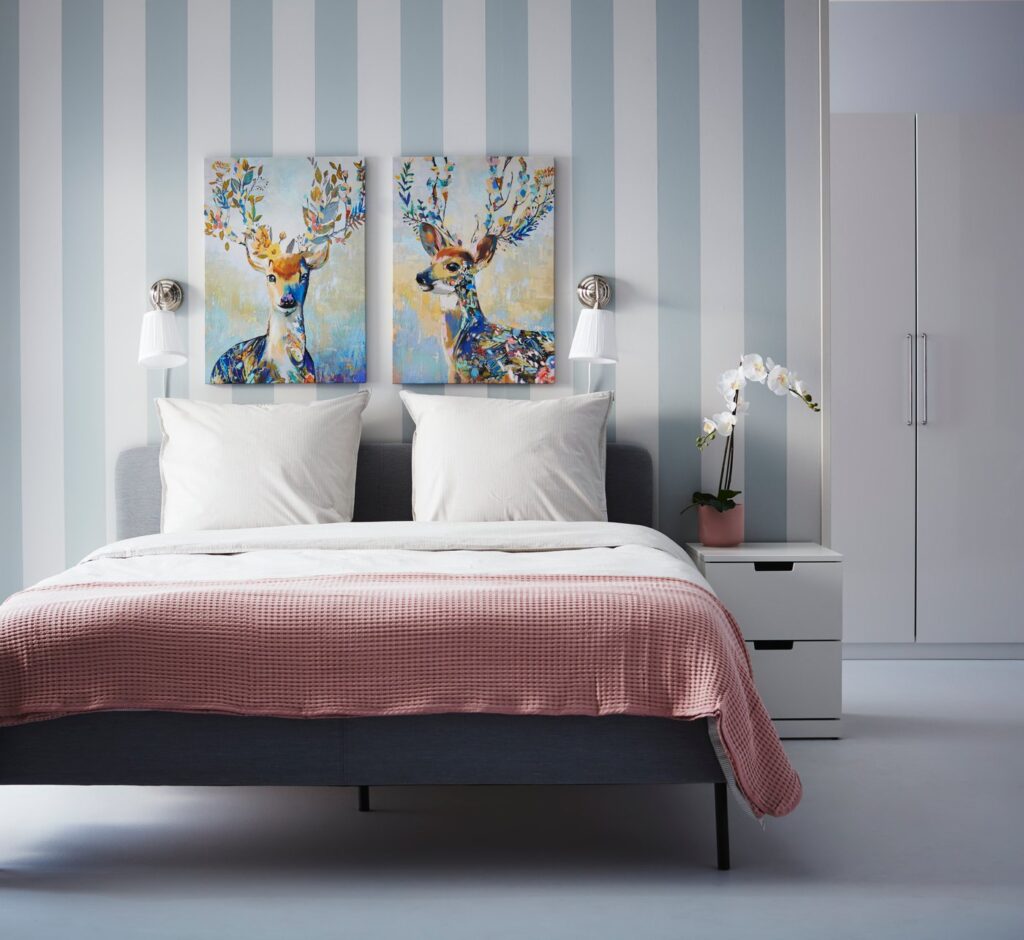

You can make your bedroom feel like your own calm space without a big budget or major work. I’ll show simple choices—paint, art, textiles, and shelves—that change the room’s mood and show off your style. Start by picking one clear idea (color, a focal artwork, or a texture) and build the rest around it so your walls look planned and relaxed.
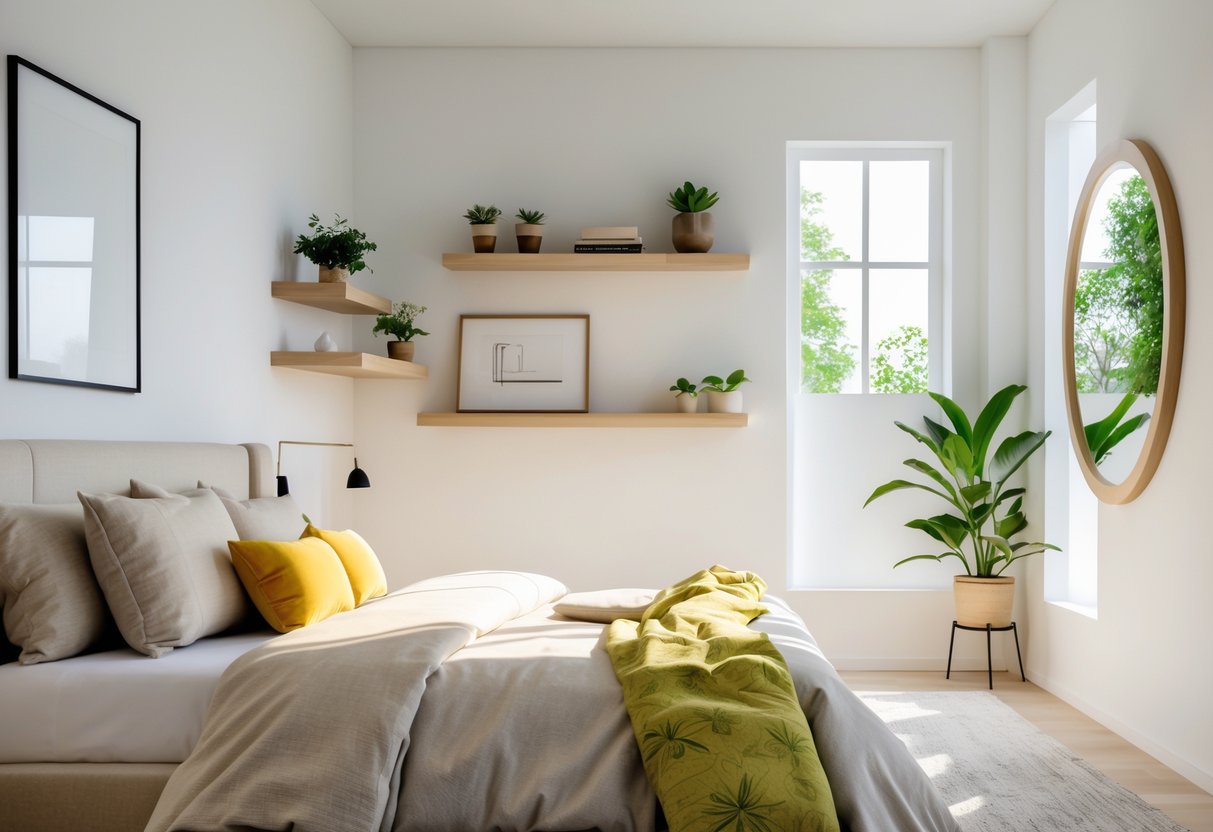
I’ll walk you through how to choose the right wall color, pick artwork that fits your vibe, use textiles and unique decor to add depth, and create personal displays that tell your story. Follow these easy steps and you’ll turn blank walls into a cozy, stylish room you enjoy.
Step 1: Choosing the Right Wall Color
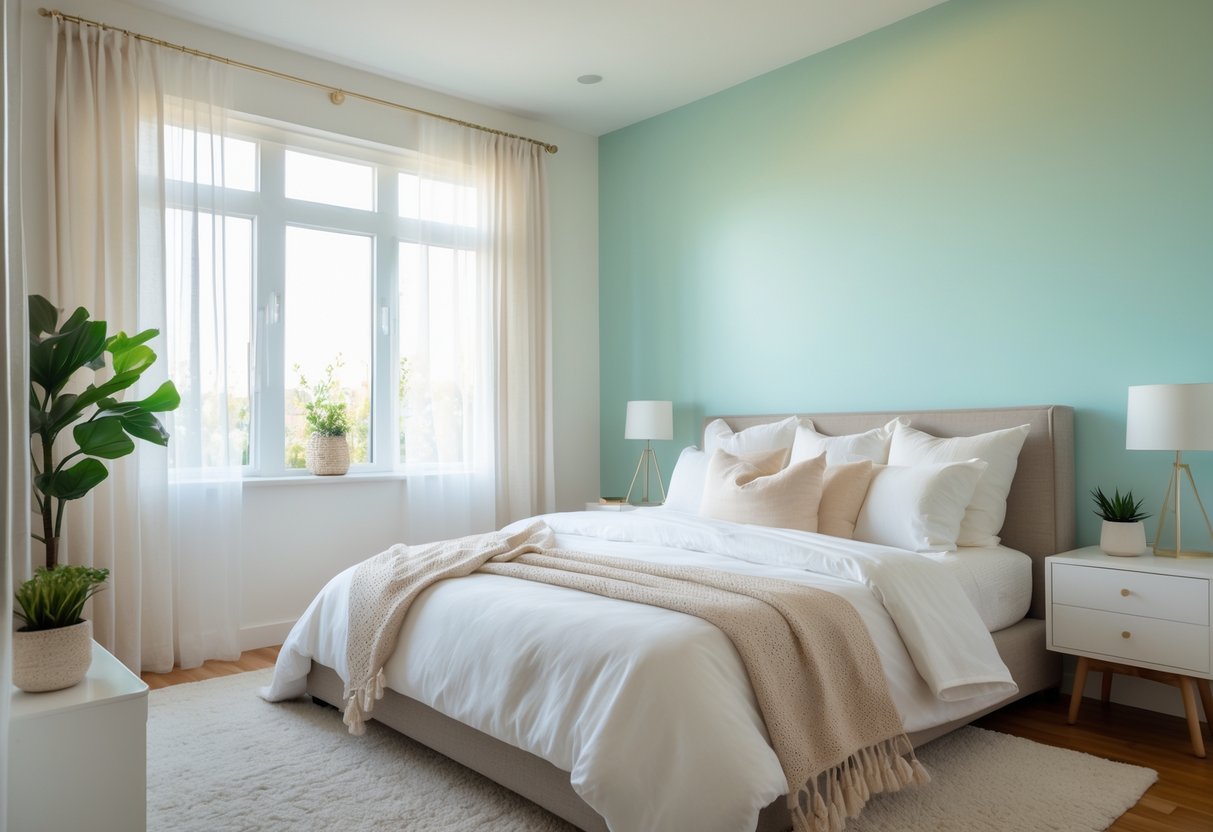
I pick colors that help the room feel calm, bright, or bold depending on how I want to use the space. I focus on light reflection, mood, and how the color works with my bed, curtains, and floor.
Selecting a Color Palette
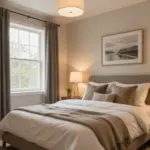
I start with a base color, usually a soft neutral like warm beige, pale gray, or off-white. These tones make small rooms feel bigger and let other items stand out.
Next, I add two supporting tones: one mid-tone for scale (for pillows or a rug) and one darker tone for depth (for a throw blanket or lamp). I test samples on three walls and view them at morning and evening light before deciding.
Quick checklist:
- Test 6×6 inch samples on different walls.
- Observe color in daylight and with bedside lamps.
- Choose cooler tones for a restful feel, warmer tones for coziness.
Accent Walls and Feature Colors
I use an accent wall to add personality without overwhelming the room. I pick the wall behind the bed or the longest wall for the biggest effect. Deep navy, forest green, or charcoal create contrast; muted terracotta or dusty pink add warmth.
When I choose an accent, I balance it with simpler bedding and art. I keep one strong accent and repeat that color in two small accessories for unity, like a lamp and a cushion. If I want texture instead of paint, I consider wallpaper, wood panels, or a painted mural for visual interest.
Quick tips:
- Accent on one wall only for small rooms.
- Match mattress headboard height to accent start for proportion.
- Use matte finishes to hide imperfections.
Coordinating With Furniture
I measure wood tones, metal finishes, and upholstery before choosing paint. Cool grays pair well with light oak and chrome. Warm greiges match walnut and brass. I place a paint chip next to a dresser to confirm harmony.
I also set rules for contrast: at least one value-step (light vs dark) between wall and major furniture so pieces don’t vanish. If my furniture is dark, I favor lighter walls; if my furniture is light, I can choose a richer wall color. Finally, I use a small mood board—fabric swatches, paint chips, and photos—to be sure everything reads as one room.
Step 2: Inspiring Wall Art Ideas
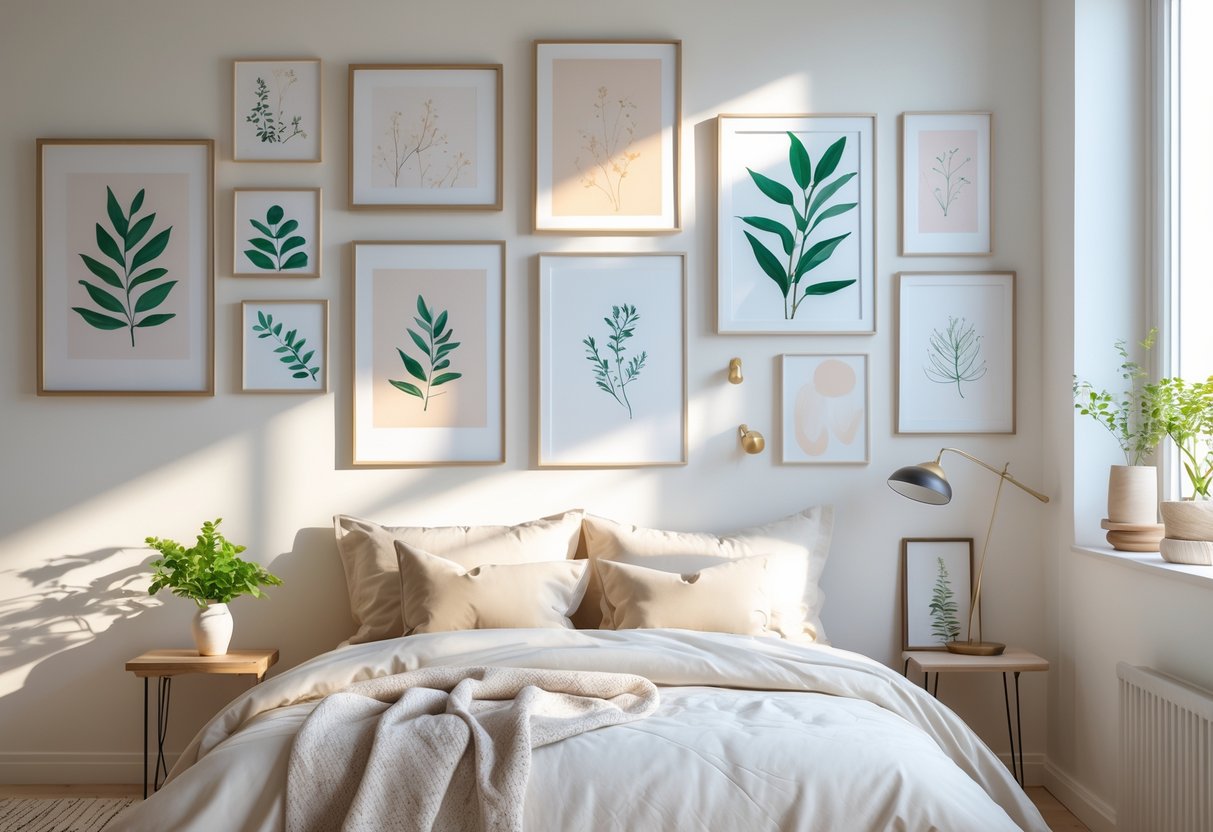
I pick art that fits the room’s size, light, and my taste. I focus on pieces that add color, texture, or a clear focal point so the wall feels intentional and not cluttered.
Gallery Wall Arrangements
I start by choosing a main piece that anchors the layout — a large print, mirror, or framed photo. Around it I mix smaller frames, shelves, and a couple of sculptural pieces. I lay everything out on the floor first, then trace outlines on butcher paper to test spacing before nailing the wall.
I use a simple grid for a clean look or staggered spacing for a casual feel. I keep frame colors consistent or intentionally varied for contrast. For balance, I place heavier or darker pieces lower and lighter ones higher. I hang at eye level for the center of the arrangement, about 57–60 inches from the floor.
Framed Prints and Posters
I pick prints that match my room’s color palette and mood: calming landscapes for rest, bold abstracts for energy. I buy frames in standard sizes to save money and make swapping art easy. I use mats to give small prints more presence on a large wall.
I hang single large prints above the bed or dresser as a focal point. For posters, I prefer low-cost frames with glass or acrylic and secure the back with simple hardware. If I change styles often, I use picture ledges so I can lean prints instead of rehanging them.
DIY Artwork and Crafts
I make simple canvases with three-block color fields or minimalist brush strokes to match my bedding. I also use fabric scraps stapled to a frame for texture, and pressed flowers in glass frames for a natural touch. These projects take an afternoon and cost less than store art.
I try mixed-media pieces: paint plus stenciled words, or small wooden panels with metallic leaf accents. For a personal gallery, I print my own photos on matte paper and vary frame widths. I seal and hang DIY work with proper backing to keep it safe and flat on the wall.
Step 3: Creative Use of Textiles
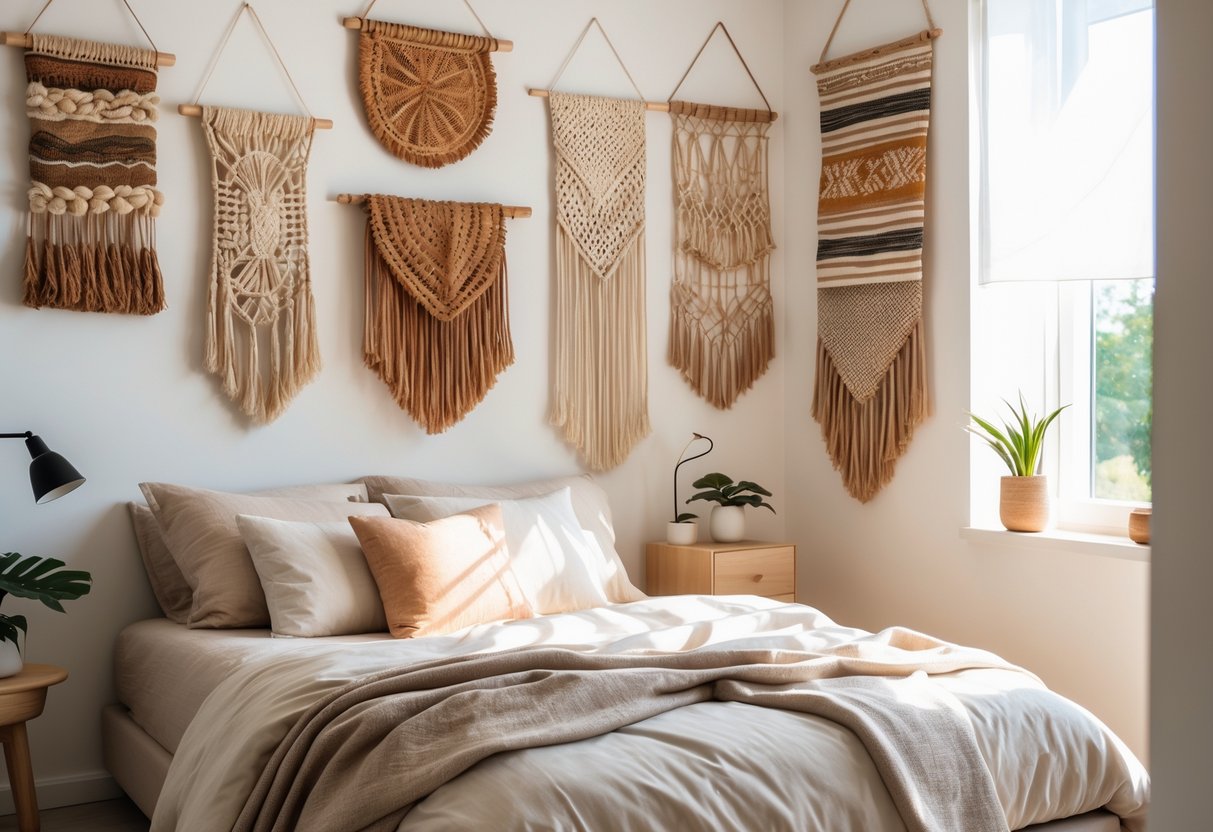
I like using fabric to add warmth, color, and sound dampening to a room. Small swaps like a tapestry or a wall rug can change the mood without painting or patching.
Hanging Tapestries and Fabric Art
I hang tapestries with a simple rod or decorative dowel so the fabric hangs flat and looks tidy. Choose a tapestry size that clears the bedhead by 4–6 inches on each side for balance. Lightweight cotton or linen works well for printed designs; heavier woven tapestries add texture and hide imperfections in the wall.
Mounting options I use:
- Command picture-hanging strips for renters.
- A slim wooden rod and brackets for a more finished look.
- Velcro sewn to the top edge for easy swapping.
Care tips: vacuum with a brush attachment or spot-clean with mild detergent. If the fabric wrinkles, I steam it while it’s hanging to avoid creasing.
Decorative Wall Rugs
I treat wall rugs like big art pieces. Persian-style or kilim rugs create a focal point and bring pattern into a neutral room. Pick a rug with colors that repeat elsewhere, such as pillows or curtains, to tie the room together.
Installation methods I recommend:
- Sew a fabric sleeve to the top of the rug and slide a rod through it.
- Use heavy-duty hanging clips or rug tape on a backing board for uneven rugs.
- For a clean look, mount the rug on a stretched canvas frame.
Maintenance is similar to floor rugs: rotate occasionally, vacuum gently, and handle fringe with care. If the rug is heavy, anchor it to studs for safety.
Step 4: Use unique Decorative Elements
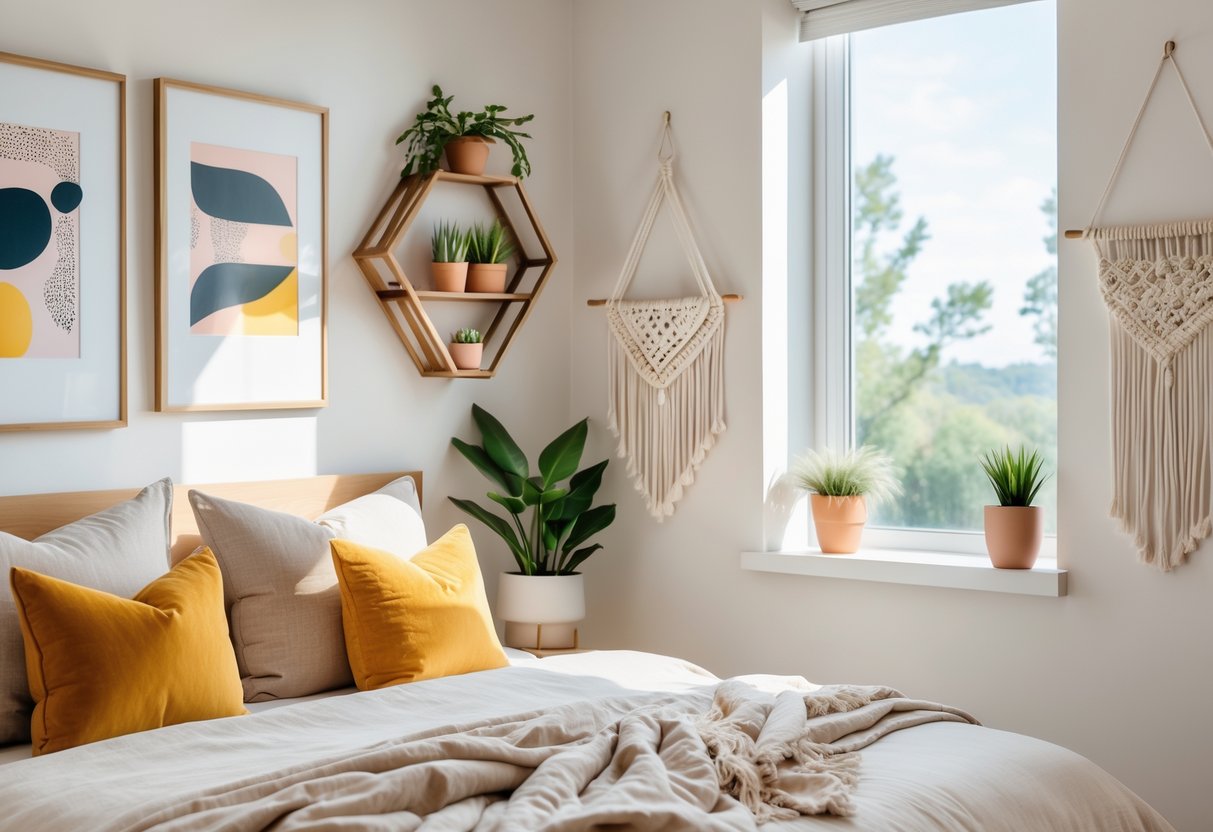
I pick pieces that add personality and help the room feel larger, brighter, or more tactile. Below I cover simple, budget-friendly options and more permanent upgrades you can
Step 5: Personalizing With Display Shelves
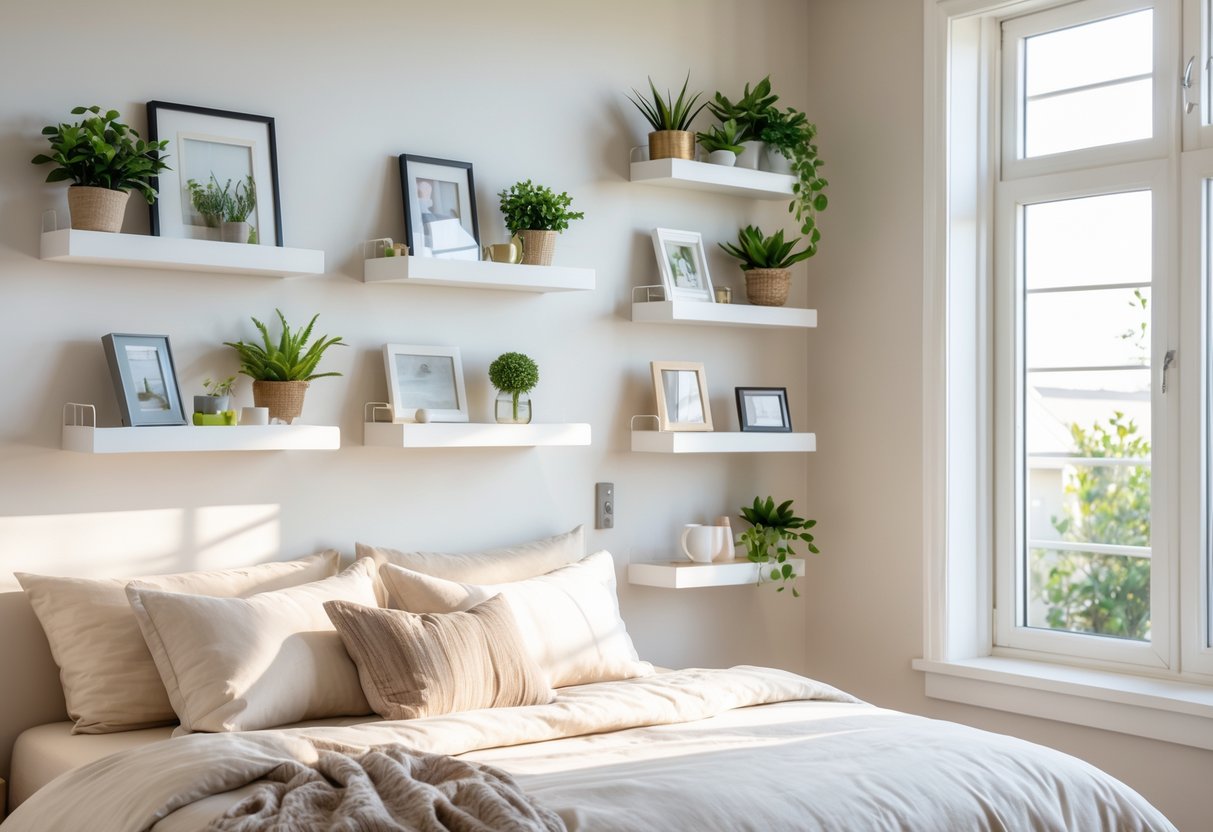
I use shelves to show what matters to me and keep things tidy. Small groupings, plant spots, and varied heights make the wall feel lived in without looking messy.
Arranging Keepsakes and Souvenirs
I group keepsakes by theme, size, or color to make the display look intentional. For example, I place travel souvenirs together on one shelf: a small wooden box, a postcard in a simple frame, and a ceramic magnet. I leave empty space around each item so nothing feels crowded.
I mix tall and short objects to add rhythm. A stack of two paperback books under a small sculpture lifts it and creates layers. I anchor the group with one item that catches the eye, like a photo in a bold frame.
Use trays or small risers to protect fragile pieces and make rearranging easier. I swap items seasonally to keep the display fresh without starting from scratch.
Floating Shelves for Plants
I choose sturdy floating shelves rated for the weight of pots and soil. I use lightweight pots and saucers to avoid putting strain on the wall. For narrow shelves, I pick trailing plants like pothos or string of hearts so stems can drape down.
I position shelves where plants get the right light. East- or west-facing walls work well for most houseplants. If natural light is low, I add a small grow light clipped to the shelf.
Rotate plants every few weeks so growth stays even. I group plants with similar watering needs together and place a small tray beneath pots to catch drips. This keeps the shelves neat and helps plants stay healthy.
Frequently Asked Questions
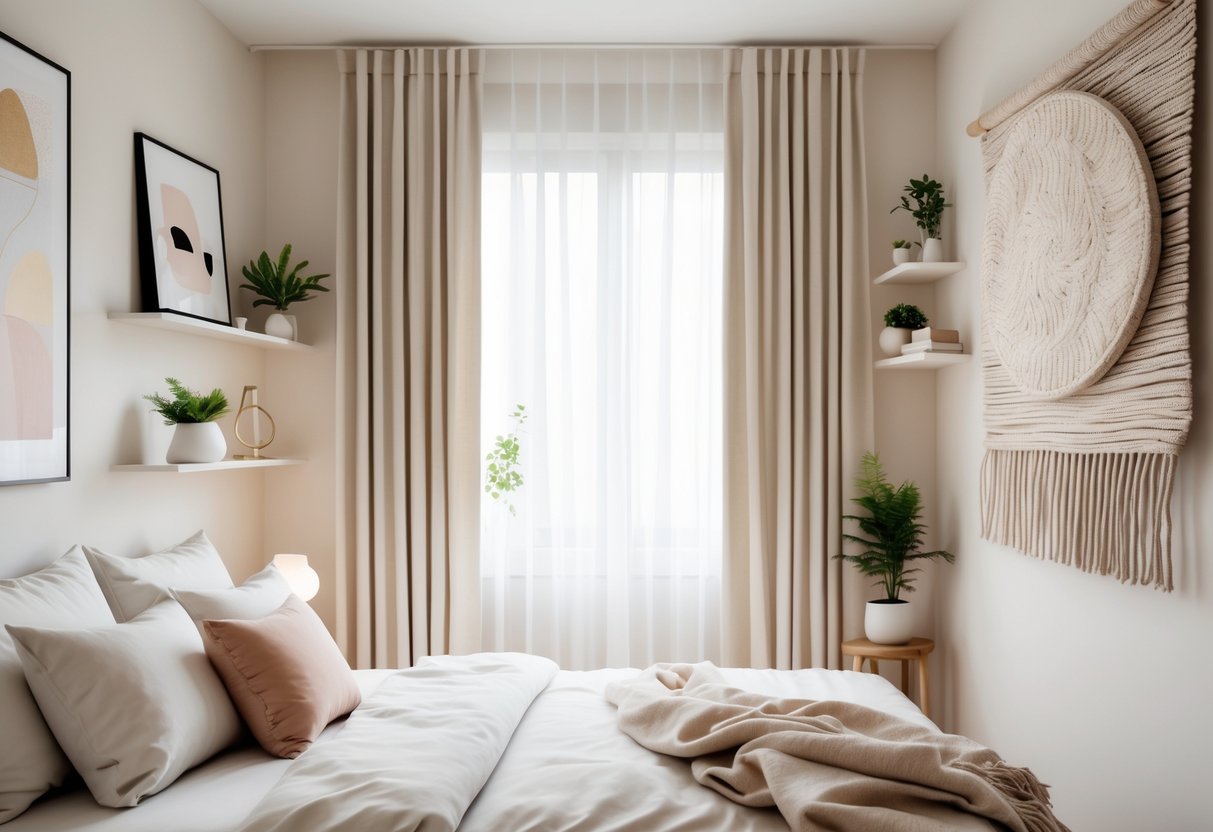
I break down simple, practical ways to update walls with color, art, and budget-friendly projects. I focus on choices you can make quickly, like paint accents, gallery layouts, and easy DIYs.
What are some creative ideas for wall decor in a bedroom?
Try a gallery wall of mixed frames and prints above the bed to create a focal point.
Install a narrow shelf to display plants, small sculptures, and rotating photos.
Use a large textile or tapestry behind the bed for texture and color.
Hang an oversize mirror to reflect light and make the room feel larger.
How can I choose the right color scheme for my bedroom walls?
Start by picking one calming base color, such as soft gray, warm beige, or muted blue.
Add one accent color for pillows and art to keep the palette simple and cohesive.
Test paint samples on the wall and view them at night to see the true tone under lamps.
Match wall color to your largest pieces of furniture so the room feels balanced.
What are cost-effective ways to add style to my bedroom walls?
Paint an accent wall instead of the whole room to save time and money.
Use framed prints or posters with inexpensive frames for big visual impact.
Install peel-and-stick wallpaper on just one wall for pattern without professional help.
Repurpose thrifted frames and spray-paint them to match your decor.
How do I select artwork for my bedroom that complements the space?
Choose artwork that repeats one or two colors already in the room to tie things together.
Scale artwork to the wall and furniture—large pieces over a bed, small pieces above a nightstand.
Mix mediums like photos, prints, and textiles for variety without clutter.
Consider sentimental pieces, but reframe or mat them so they look intentional.
What DIY projects can personalize my bedroom wall space?
Create a framed fabric panel using a favorite cloth or scarf for an easy custom piece.
Make a photo grid with uniform frames for a neat, personal display.
Paint a simple geometric accent or stripe with painter’s tape for a clean, modern look.
Build a floating shelf from plywood and stain for a low-cost, useful feature.
How can I use wall decals or stickers in bedroom decorating?
Choose high-quality, removable decals so they peel off cleanly without paint damage.
Use decals to add pattern or a simple mural on one wall without long-term commitment.
Place decals low on the wall in a child’s room for playful scenes, or use subtle botanical designs in adult spaces.
Combine decals with framed art to create layered interest without heavy investment.