

A full closet cleanout runs 30 minutes to a weekend depending on how much you own and how long you waited. Most people stall at the sorting stage, where every piece you pick up asks whether it still fits your life.
The one-year rule cuts through most of those decisions fast: if you haven’t worn it in 12 months, you won’t wear it again.
1. Schedule a Block of Time and Gather Supplies
Pick a day when you feel energized and ready to make decisions, because a closet cleanout takes anywhere from 30 minutes to a full weekend depending on how much you own and how long you have been putting this off.
I find working in focused blocks of 30 minutes to two hours keeps the process from turning into an all-day slog, but if you want to finish in one go, clear your calendar and commit to it.
Stop halfway through and you will wake up to piles on the floor and a half-empty closet staring at you for weeks.
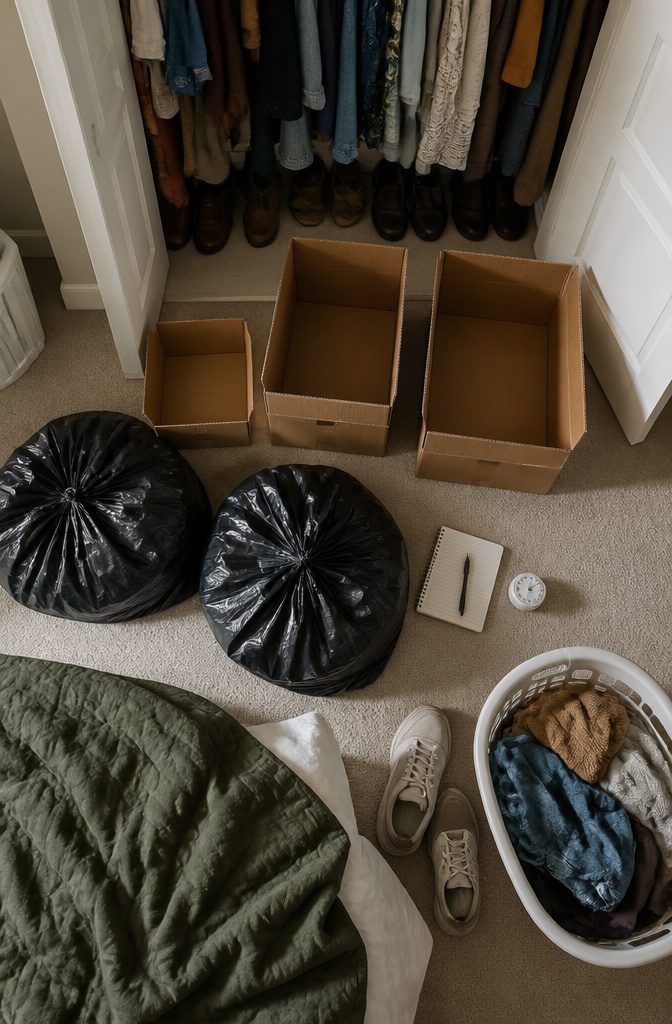
Before you touch a single hanger, get your supplies together: garbage bags or boxes labeled donate, sell, and repair, plus a notebook if you want to track what you are getting rid of.
Ask yourself what you are actually trying to do here—build a smaller wardrobe, make room for new pieces, or just see your floor again. That goal will guide every choice you make once the sorting starts.
2. Empty the Closet and Clean the Space
Pull everything out so you can see what you actually own. That means all the clothes on hangers, everything folded in drawers, and whatever you stuffed on the top shelf or shoved into bins.
If you have clothes stashed somewhere else because the closet ran out of room, bring those in too.
Clear your bed or bedroom floor first so you have space to lay things out. A big pile on one surface shows you duplicates and reminds you what you forgot about.
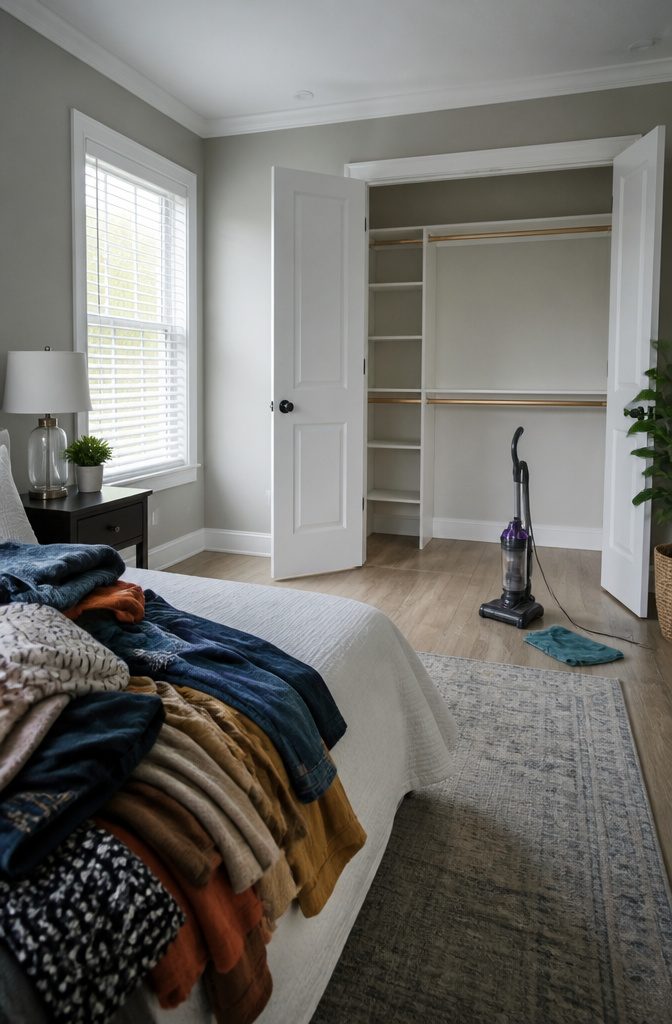
While the closet sits empty, wipe down the shelves and hanging rods, then vacuum or sweep the floor.
Dust settles fast in there, and you want the space clean before anything goes back in. Leave the door open so it airs out while you work through the pile.
3. Sort Into Categories and Assess Each Item
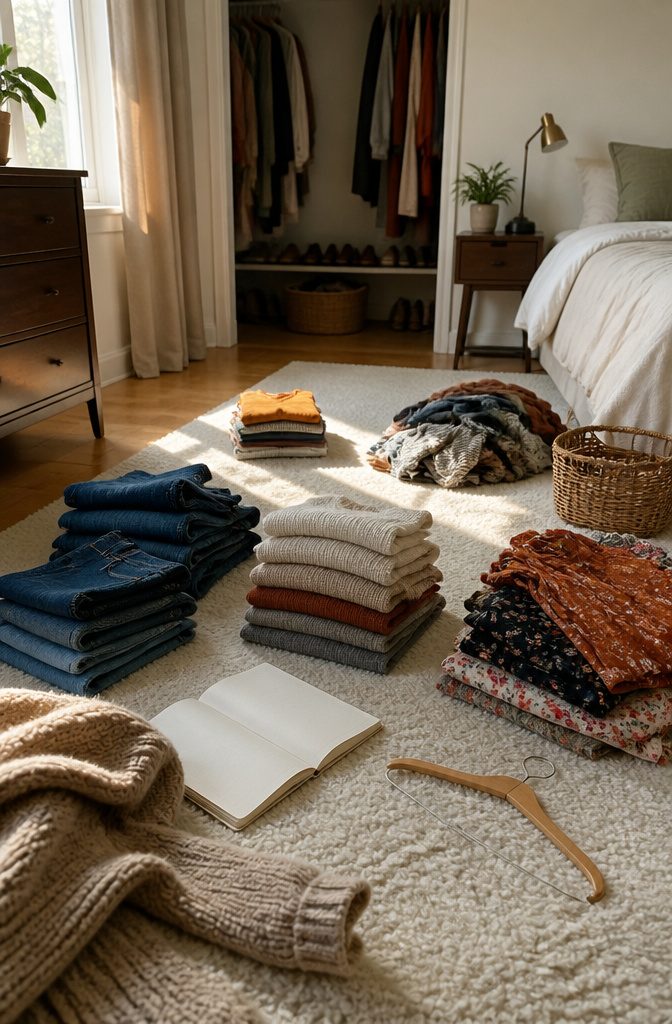
Once everything is out of the closet, group clothes by type or season so you can see how much you actually own.
Jeans in one pile, sweaters in another, dresses together. This makes it easier to spot duplicates and notice what you are not wearing.
Now pick up each piece and ask yourself a few questions.
Does it fit properly? Have you worn it in the last 12 months?
Is it in good condition? Does it match your current style?
Would you buy it today if you saw it in a store? If the answer to any of those is no, the item probably does not belong in your closet anymore.
Do not second-guess yourself once you have made a choice.
Put the piece in a keep pile or a remove pile and move on. Going back and rethinking every decision kills your momentum.
If you are stuck on a piece, wear it three times in the next week. If you cannot find a way to style it or you do not feel good in it, that is your answer.
4. Keep What Fits Your Life Now and Remove the Rest
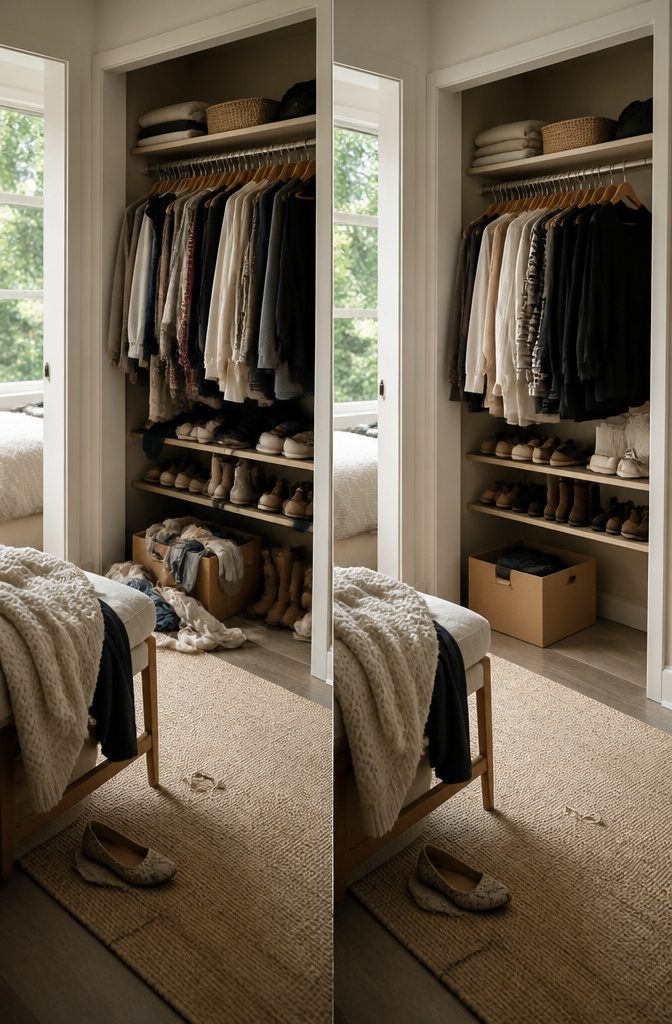
The question in front of you now is simple: would you wear this piece today, or would you reach past it for something else?
If you haven’t worn it in the last year, you probably won’t ever wear it again. That’s the one-year rule, and it cuts through most of the maybes fast.
For clothes that sit closer to the line, try the 90/90 version: did you wear it in the last 90 days, or will you actually wear it in the next 90?
Once you know what gets worn, the rest sorts itself.
Duplicates go first. If you own three black cardigans and they all do the same job, keep your favorite and let the others go.
Same for anything that no longer fits, anything you used to like but now skip over, and anything that doesn’t match the rest of your wardrobe.
The pieces that can’t be styled with what you already own just take up room.
If you can’t decide on a few items, give them a trial.
Turn all your hangers backward, then wait a month. The hangers that haven’t turned are the ones you didn’t reach for, and that tells you what you need to know.
5. Donate, Sell, Recycle, Repair, or Discard
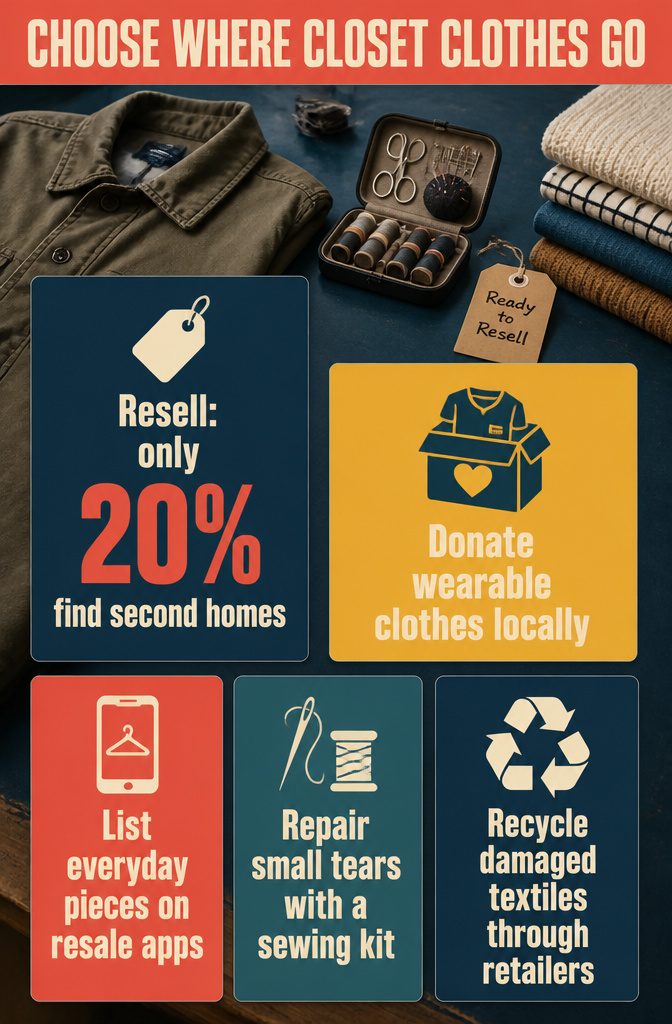
Once you know what is leaving, where it goes next actually matters. Clothes in good shape can be donated to a local thrift store or shelter, but I lean toward selling first when I can.
Only 20% of donated items find a second home, and reselling guarantees someone actually wants it while you recover part of what you spent.
Reselling is actually the best way to responsibly deal with things you no longer want to wear.
— GQ
You have options now. eBay and Facebook Marketplace work for most things, and apps like Poshmark, Mercari, and Thredup make it fast to list clothing.
High-end pieces do better on The RealReal or Vestiaire Collective, where they handle authentication and shipping so you skip the line at FedEx.
Damaged or stained pieces that can’t be worn again can go to retailer recycling programs. H&M, Madewell, Levi’s, Nike, Marine Layer, and Trashie all take textiles back, either in-store or through prepaid mailers.
Before you toss something with a small tear or missing button, repair it right there with a basic sewing kit. Anything beyond that goes to a tailor.
6. Put the Keepers Back Using a System
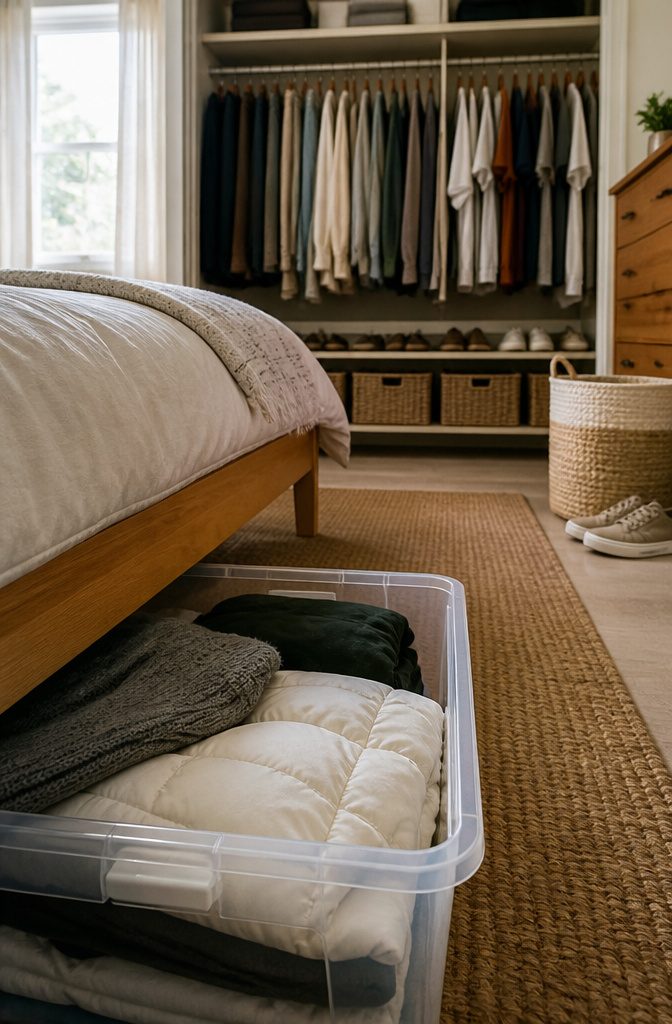
Now you’re refilling the closet, and this is where most people either build something that sticks or slide back into the same pile they just cleared. Group like items together as you hang and fold.
All pants in one section, long-sleeve tops in another, short-sleeve in another, then sort by color within each group. That setup makes getting dressed faster because you’re not hunting through four different spots for the black jeans.
Put the things you wear most often at eye level or within easy reach.
Work clothes and daily basics get the prime real estate. Weekend clothes, special occasion pieces, and anything sentimental can live higher up or farther back where you won’t need to grab them in a rush.
If you’re tight on space, move out-of-season clothing somewhere else. That winter coat doesn’t need a hanger in July.
Pack seasonal items into plastic storage containers or vacuum-sealed bags and slide them under the bed or into the basement. You’ll rotate them back when the weather shifts, and in the meantime your closet breathes.
7. Build Habits That Keep the Closet Clear
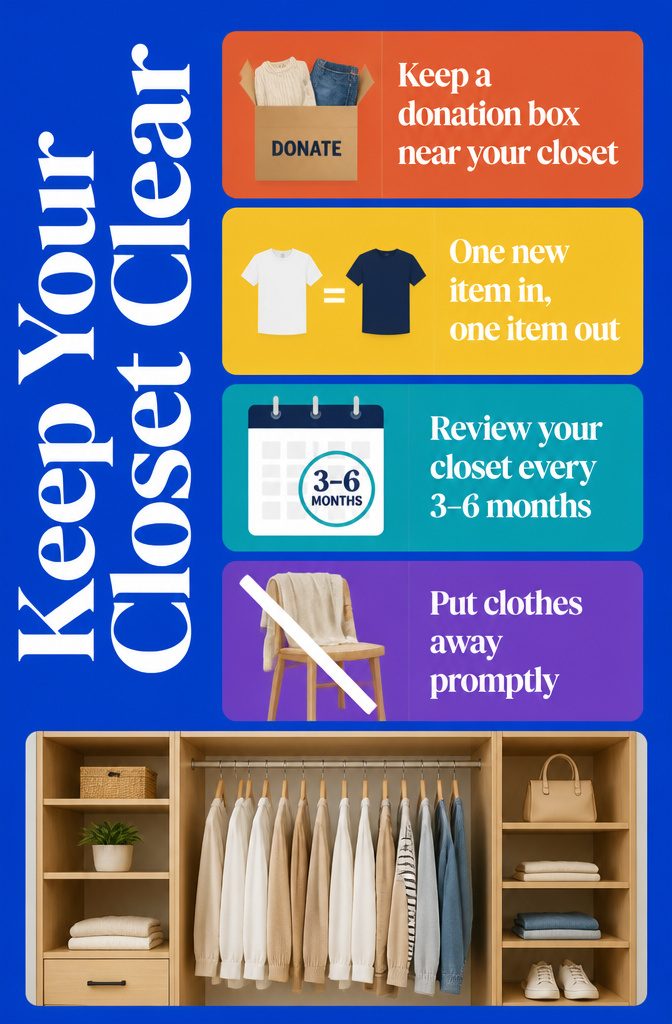
The cleanout is done, but the real work is keeping it that way.
Keep a donation box in or near your closet so you can toss in clothes the moment you realize you’re done with them. No need to wait for another big purge.
I follow the one-in, one-out rule: buy a new shirt, and something else has to leave.
It sounds strict, but it keeps the closet from swelling back to where you started. If you skip it, you’ll be back here in six months wondering what happened.
Do a quick review every three to six months to catch things you stopped reaching for.
Some people go through the closet every season, others twice a year. Either works.
The hanger trick helps: face all your hangers one way, then flip them after you wear something. Three months later, anything still facing the wrong way probably belongs in the donation box.
Put clothes back promptly instead of draping them over a chair, and think hard before you buy something new. That keeps the mess from starting in the first place.
How to Decide When You Are Unsure About an Item
Sometimes an item looks you straight in the eye and you still can’t call it.
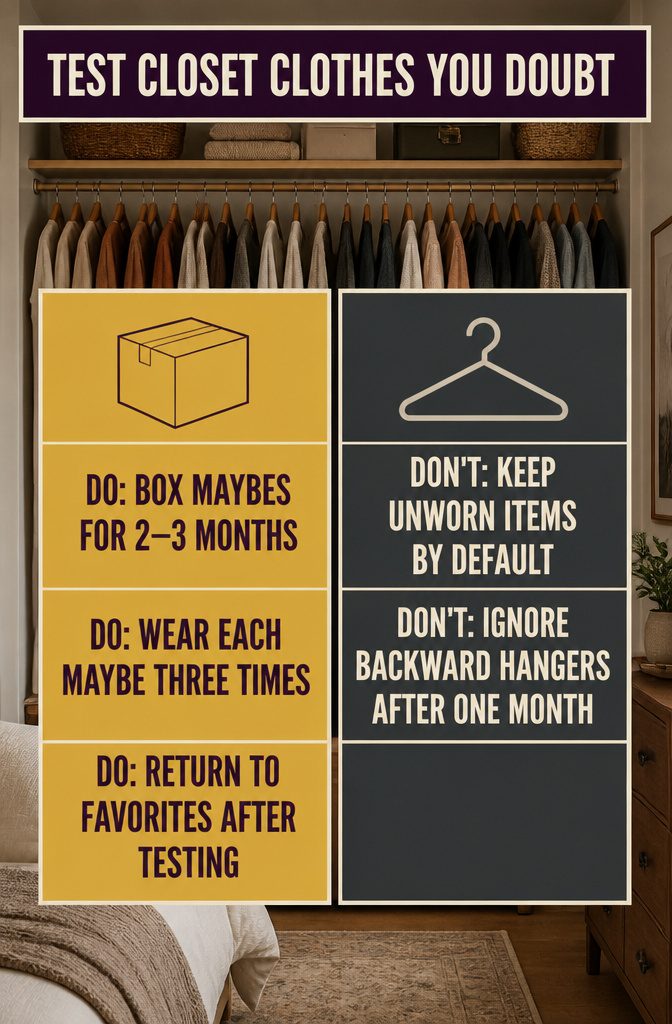
Box those pieces up for two or three months, then check in. If you forgot you owned it, you know the answer.
Another way in: commit to wearing the maybes three times this week.
Style them different ways. If you can’t find a third occasion or you feel flat every time you put it on, that’s the verdict.
Or flip the test around. Wear only your absolute favorites for a couple of weeks.
The ones you reach for without thinking. Then pull the box back out.
What you miss comes back in. What you don’t misses you even less.
The hanger trick runs longer but asks for nothing. Turn all your hangers backward when you hang things up.
After you wear something, the hanger goes back the normal way. Wait a month, then scan the rod.
Everything still facing backward gets a second look. Some people wait six months or a full year, but a month usually tells you enough.
What to Do With Sentimental Pieces and Other-Size Clothes
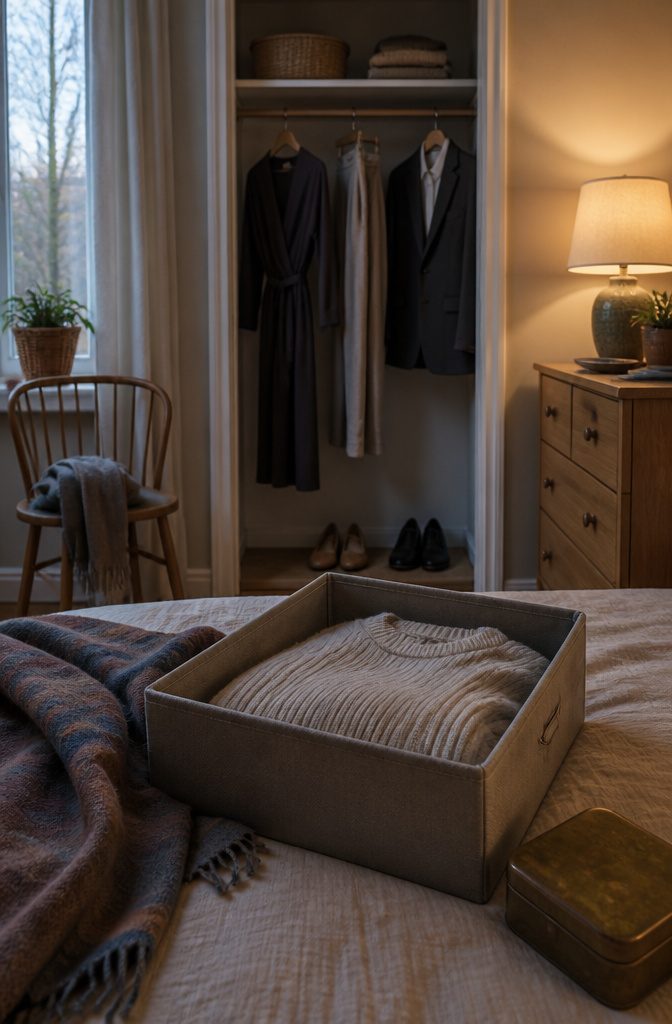
Sentimental pieces are the hardest to let go.
If you have multiple items from the same person, keep one representative piece and release the rest. Four sweaters from your grandmother?
Choose your favorite and donate the other three. That one piece holds the memory just as well as all four.
Weight fluctuation is normal, and if your size changes regularly, you can prepare for it.
Keep a few pieces in one size up and a few in one size down. That’s different from hanging onto goal clothes that are four sizes too small.
If you haven’t been that size in the past couple of years, let them go. You can also lean on adaptable styles like wrap dresses or elastic waist pants if you fluctuate more than average.
Formalwear sits unworn for months, but you still need something for weddings and funerals.
Keep one or two outfits that work for those events and let the rest go. If you don’t wear it regularly and it doesn’t serve that narrow purpose, it’s taking up space you could use better.
And don’t let the price tag decide whether something stays. What you spent doesn’t matter if you never wear it.
Frequently Asked Questions
How long does it take to clean out a closet?
A closet cleanout takes anywhere from 30 minutes to a full weekend depending on how much you own and how long you have been putting it off.
Working in focused blocks of 30 minutes to 2 hours keeps the process manageable. If you stop halfway through, you will wake up to piles on the floor for weeks.
How often should I clean out my closet?
Do a quick review every 3 to 6 months to catch things you stopped reaching for.
Some people go through the closet every season, others twice a year. Either works as long as you stay consistent.
What is the best way to clean out a closet?
Pull everything out so you can see what you actually own, including clothes on hangers, in drawers, and stuffed on shelves.
Group clothes by type or season, then assess each piece by asking if it fits, if you have worn it in the last 12 months, and if you would buy it today.
While the closet sits empty, wipe down the shelves and vacuum the floor.
How do I start cleaning out my closet?
Pick a day when you feel energized and ready to make decisions, then gather your supplies: garbage bags or boxes labeled donate, sell, and repair.
Ask yourself what you are trying to do, whether that is building a smaller wardrobe, making room for new pieces, or just seeing your floor again. That goal will guide every choice you make once the sorting starts.
What should I keep in my closet?
Keep pieces that fit your life now and that you would wear today rather than reach past for something else.
Use the one-year rule: if you have not worn it in the last year, you probably will not wear it again. Keep your favorites, everyday staples, and versatile pieces that match the rest of your wardrobe.
How can I keep my closet clean?
Keep a donation box in or near your closet so you can toss in clothes the moment you realize you are done with them.
Follow the one-in, one-out rule: buy a new shirt and something else has to leave. Put clothes back promptly instead of draping them over a chair.