
Most of these ideas take a weekend or less to install.
If you have high ceilings and rarely-used gear, overhead storage clears the floor fast. If you need to see and grab tools daily, pegboard and slatwall let you hang everything in plain sight and rearrange hooks without new holes.
Propane tanks stay outside, paint doesn’t hold up in extreme heat or cold, and an ABC fire extinguisher should sit somewhere you can reach it in seconds.
1. Overhead Storage
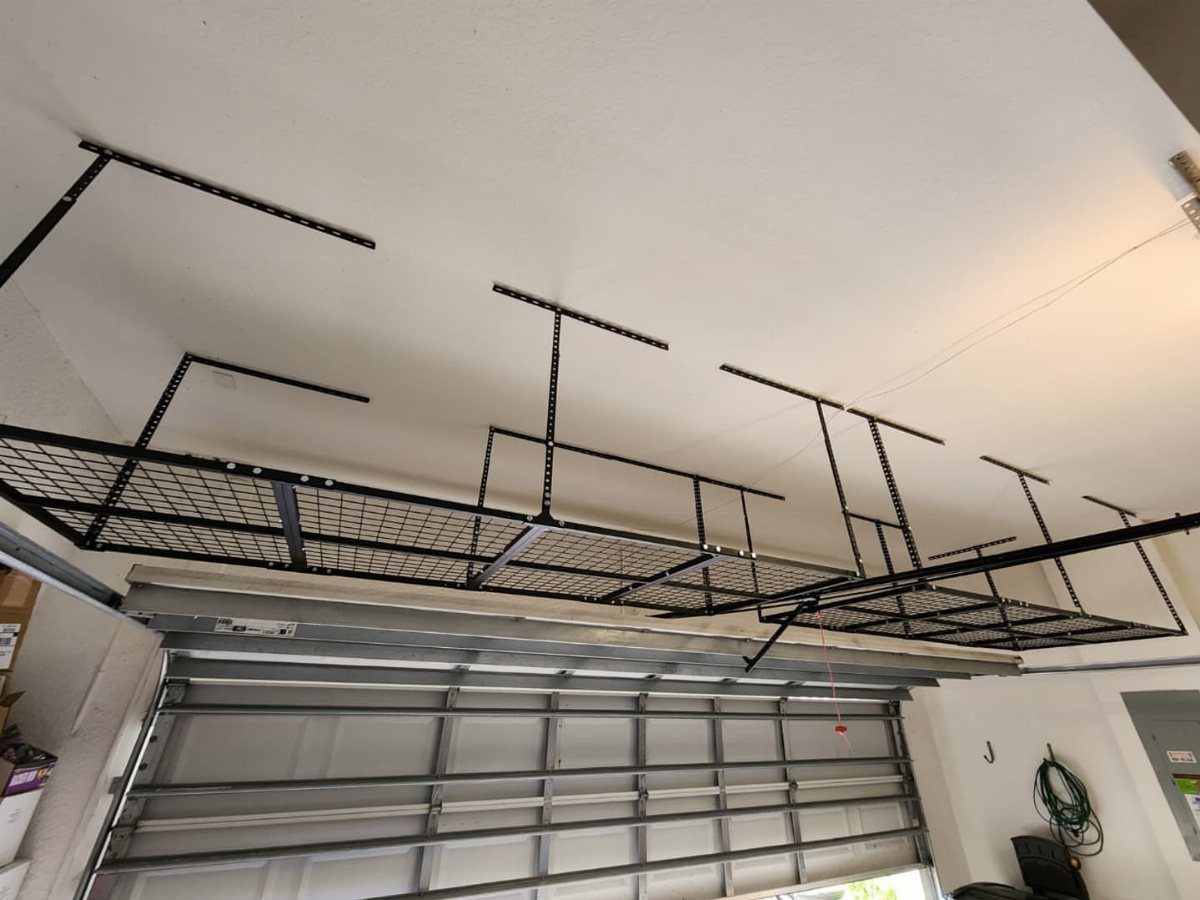
Ceiling racks use the vertical space that sits empty in most garages. Mount them to joists or rafters, and you can store holiday decorations, camping gear, or anything else you only pull down a few times a year.
Metal mesh racks let you see what you stored without dragging out a ladder.
Anchor the system properly and check the weight rating. Measure the height of your garage door when it’s open to make sure the racks won’t block it.
2. Pegboard Storage
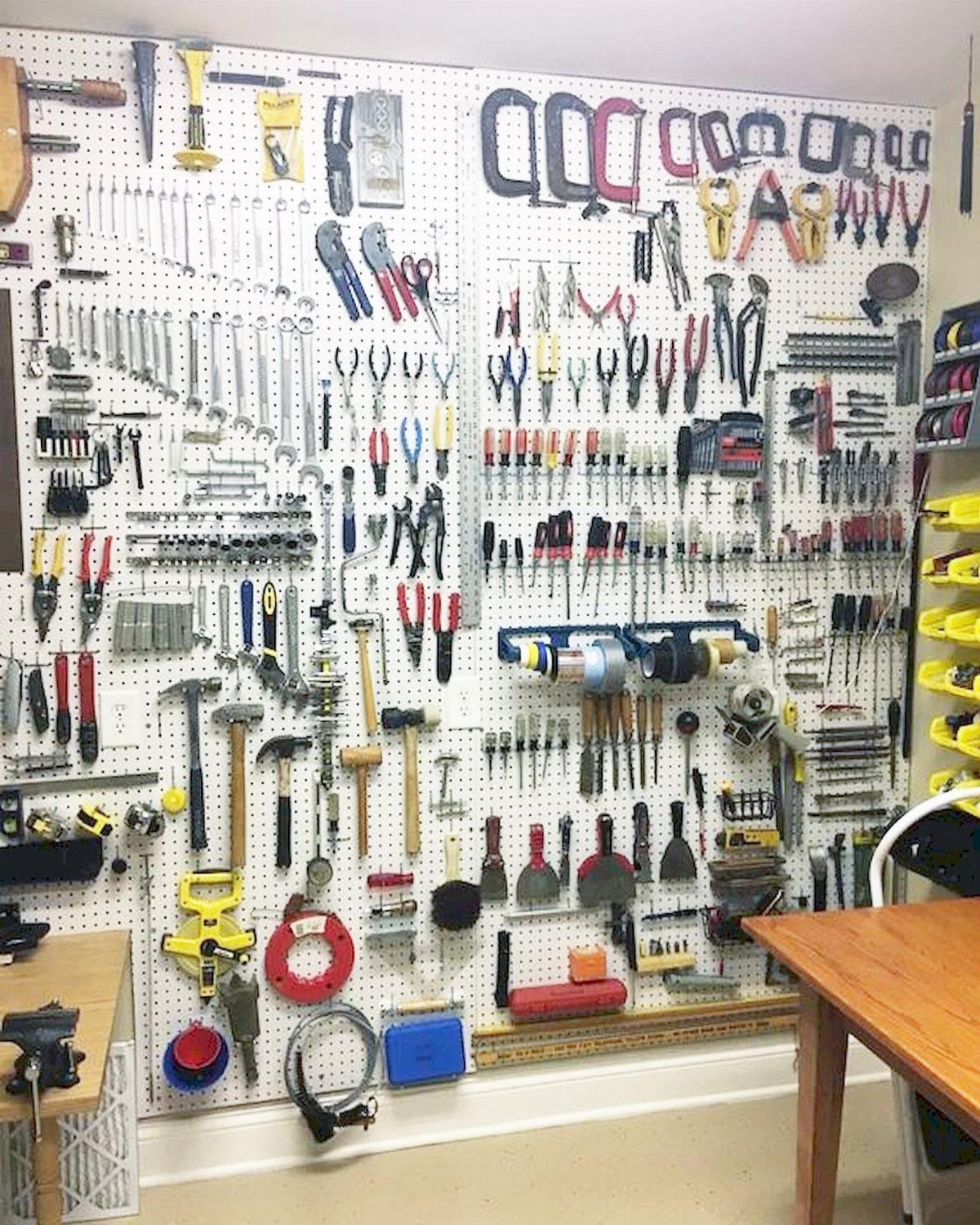
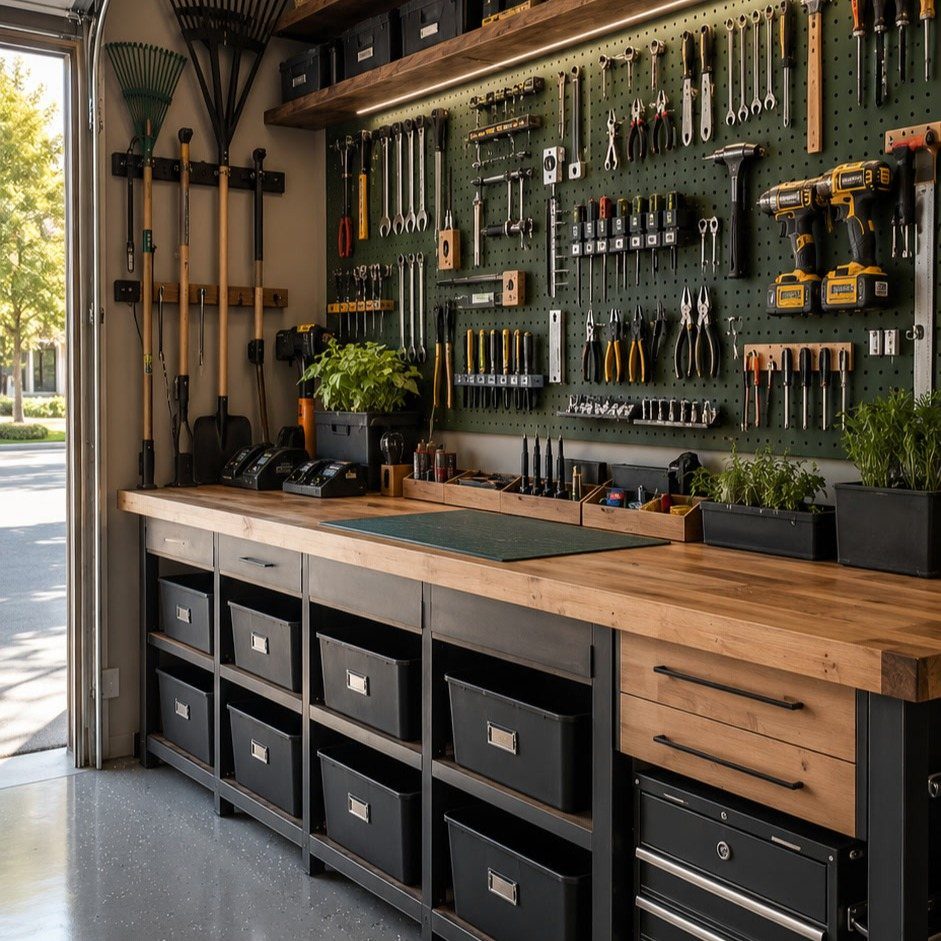
A pegboard lets you hang tools where you can see them and grab them fast.
The board itself mounts to the wall, and the hooks drop into the holes wherever you need them, so you can rearrange as your tools change.
I like pegboard for anything lightweight: screwdrivers, pliers, tape measures, scissors.
Heavier items like drills or saws belong on a shelf or in a drawer. Paint the board a light color if the wall behind it is dark, otherwise the holes disappear and the hooks are hard to place.
3. Storage Cabinets
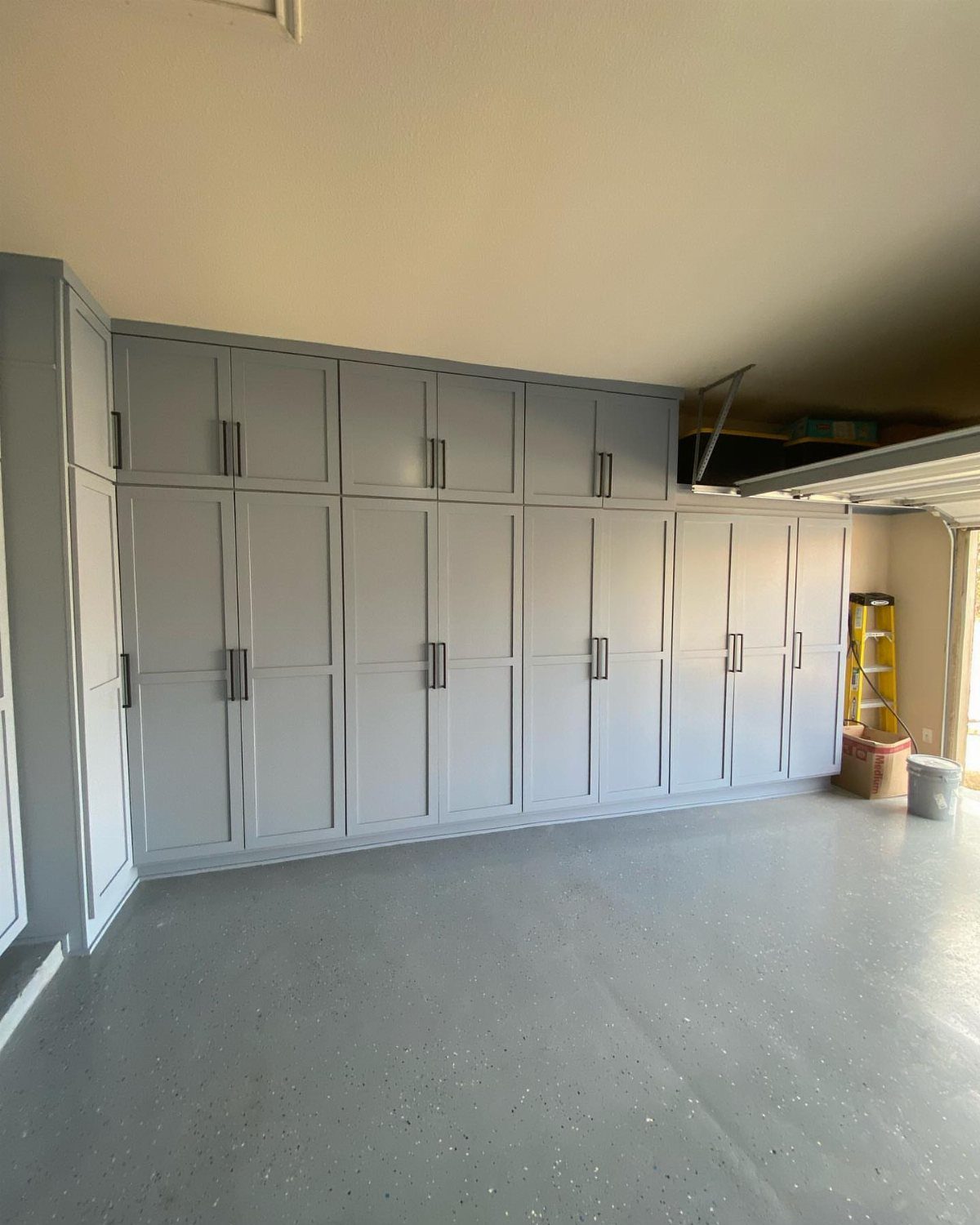
Cabinets hide clutter and keep dust, moisture, and pests away from whatever’s inside. They work especially well for paint, chemicals, or anything you want out of sight and out of reach of kids or pets.
Built-in cabinets like these fit the wall exactly, but freestanding units are easier to install and move if your needs change.
Metal cabinets hold up better in damp or unheated garages than wood or laminate. If you’re starting from scratch, map out the layout so the doors can open all the way.
4. Storage Bins
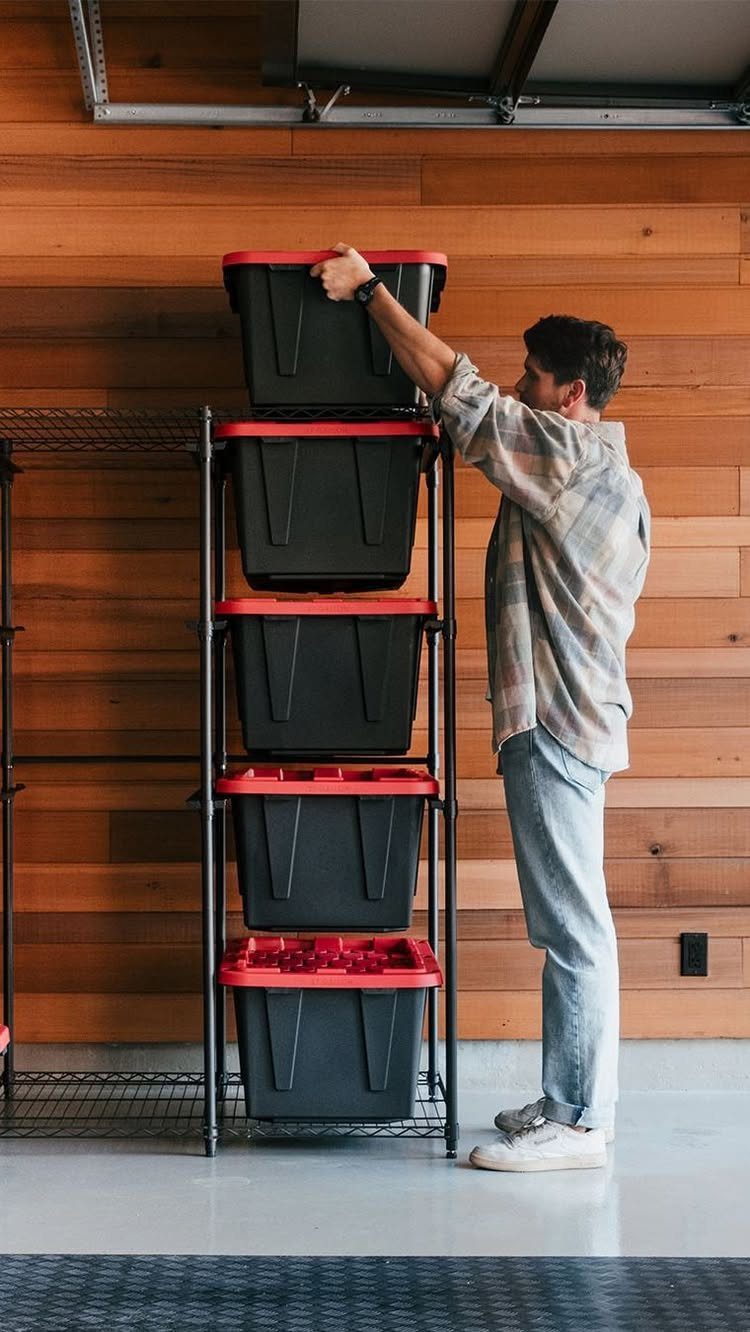
Bins make it easy to group similar items and stack them when floor or shelf space is tight.
Clear plastic lets you see what’s inside without opening the lid, but solid bins in dark colors hide stains and scuffs better over time.
Look for bins with lids that snap or latch shut if you’re stacking them more than two high, otherwise the weight can pop the top off.
If you’re storing anything heavy, smaller bins are easier to lift than one large one.
A recent survey of 1,000 homeowners revealed just how dangerous cluttered garages can be: 39% reported tripping over items, 27% hit objects when opening vehicle doors, and 22% accidentally hit something when parking.
5. Garage Zones
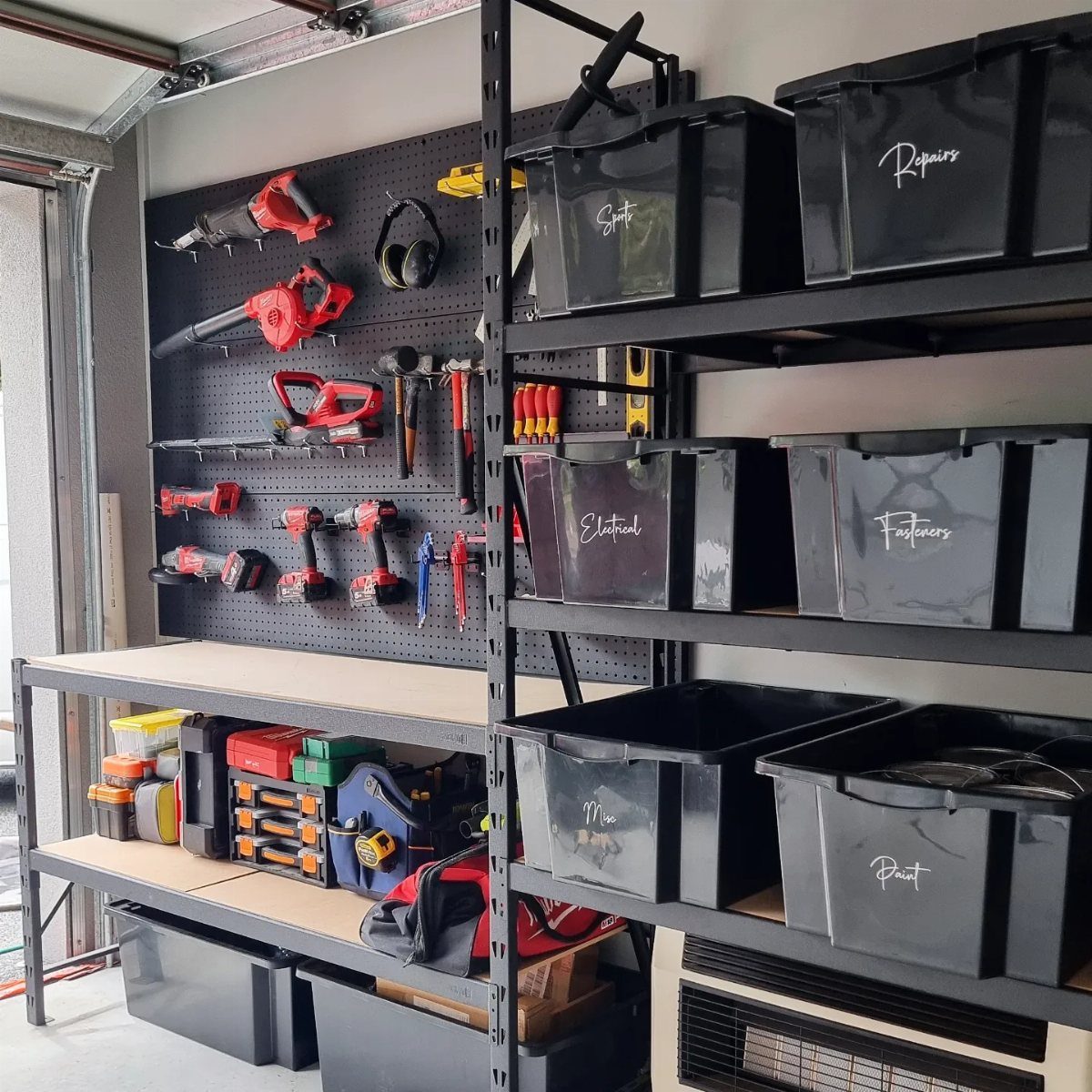
Grouping like items in zones cuts down how long you spend hunting for what you need. One zone for sports gear, another for tools, a third for seasonal decorations, and so on.
I find it helps to put the things you use most often closest to the door and the things you rarely touch toward the back or up high.
Mark each zone with a label or a strip of tape on the floor if the boundaries aren’t obvious.
6. Labelled Storage Bins
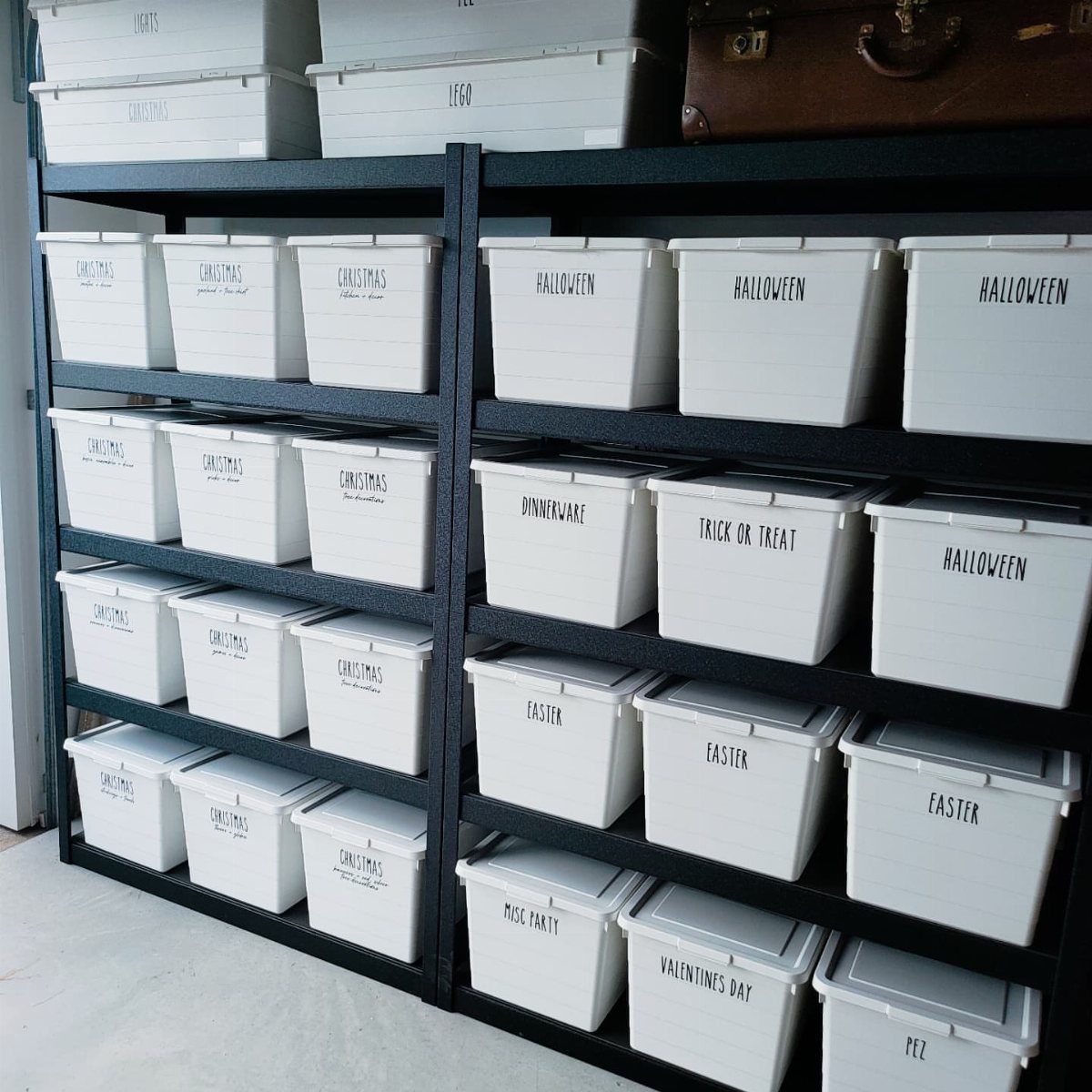
Labels save you from opening every bin to find what you need. Write directly on the bin with a marker, print a label on paper or vinyl, or use chalkboard paint if you swap contents often.
I also label by category for things like camping gear, pet supplies, or kids’ toys. If you’re stacking bins, put the label on the end or the front so you can read it without moving the whole stack.
7. Small Parts Storage
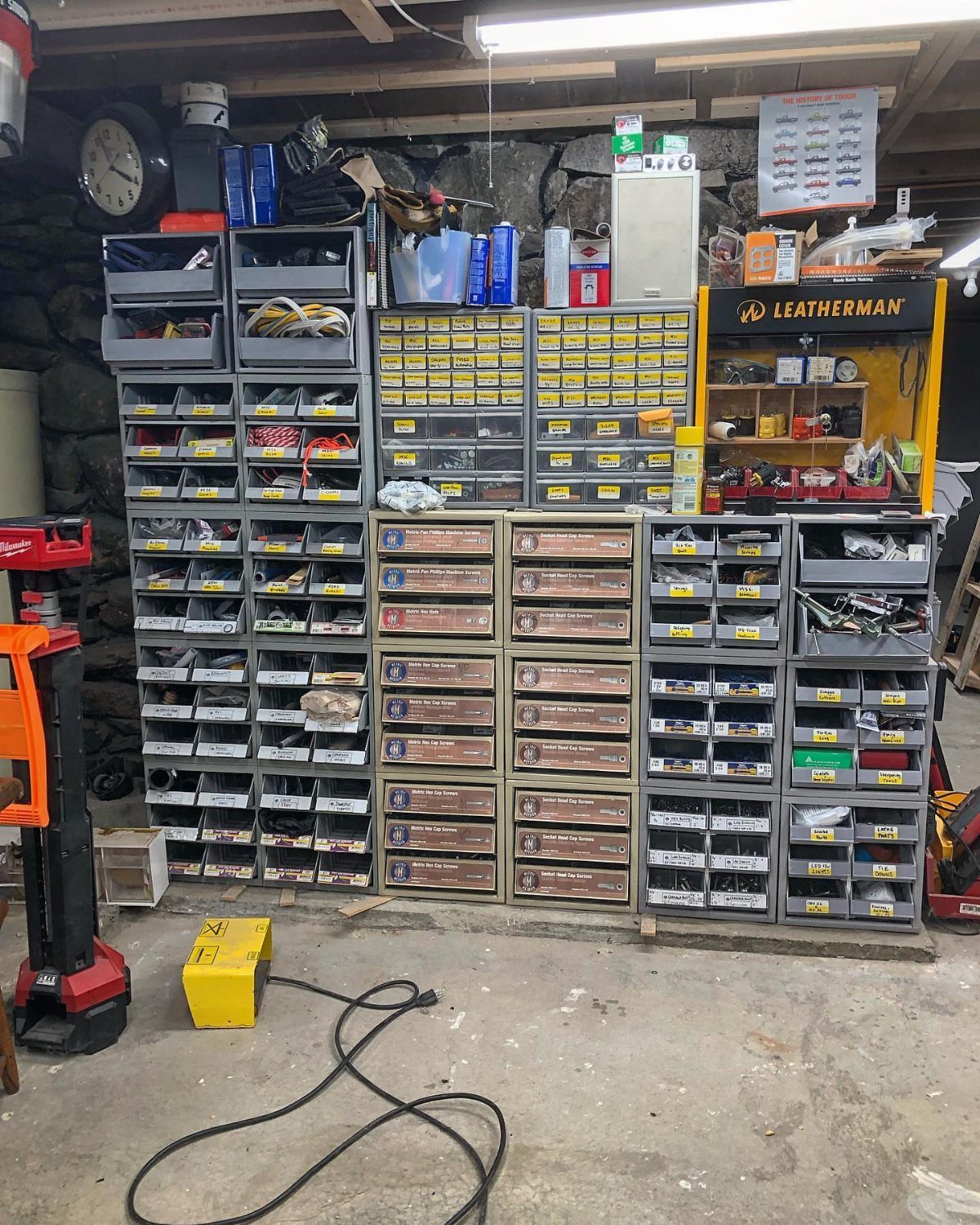
Small plastic drawer units or bin organizers keep screws, nails, washers, and bits from mixing into one unusable pile.
Each drawer or compartment holds one size or type, so you can find what you need without dumping everything on the bench.
Wall-mounted bins stay visible and take up no counter space.
Stackable drawer units sit on a shelf or under the workbench. If you work with a lot of fasteners, label each drawer so you don’t have to open six to find the right one.
8. Bike Storage
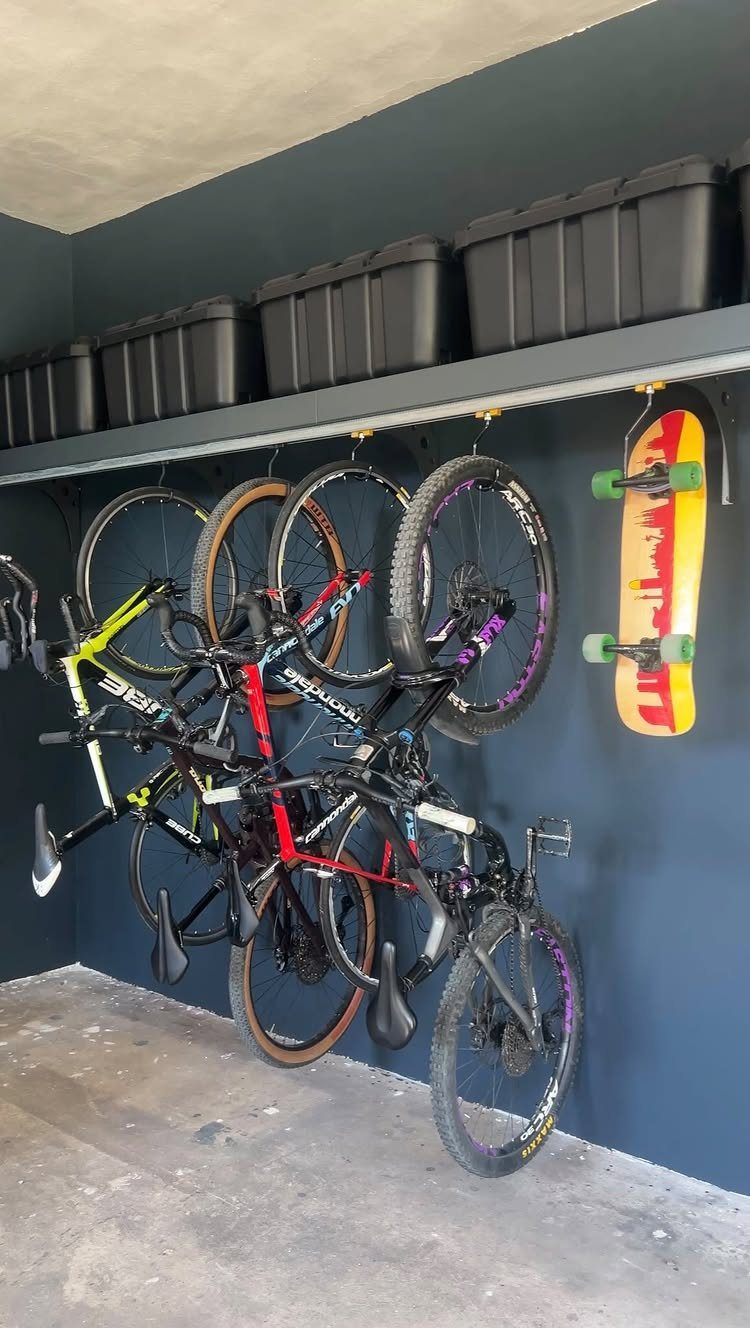
Wall mounts or vertical hooks get bikes off the floor and out of the way.
Hang them by the front wheel, or use a horizontal arm that holds the frame. Either way, you’ll reclaim floor space and stop tripping over pedals.
Vertical storage works well in garages with high ceilings but narrow walls.
Horizontal arms take more wall width but less height. If you have more than 2 bikes, line them up on the same wall so you’re not hunting all over the garage.
9. Workstation or Workbench
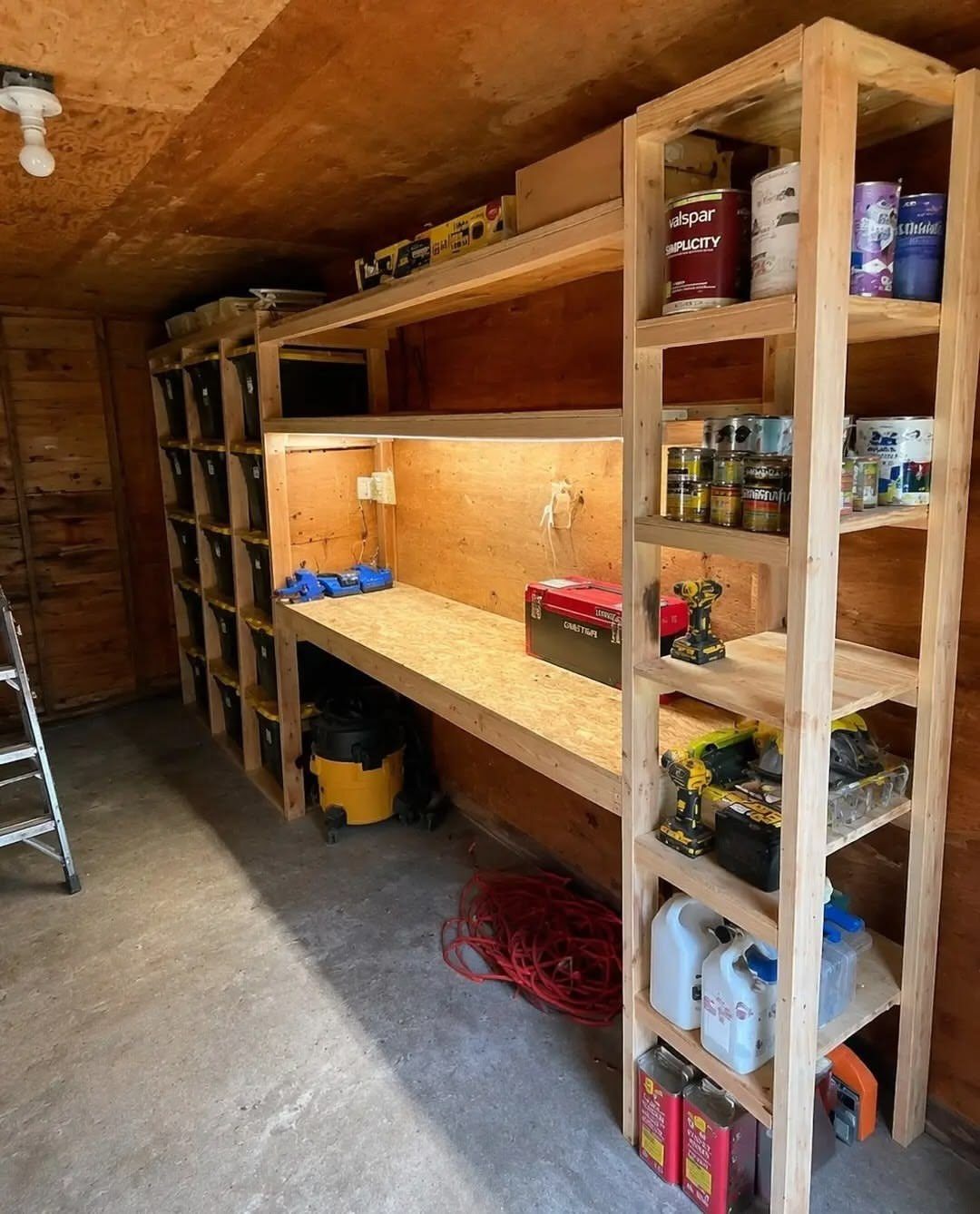
A workbench gives you a flat surface for projects and a place to keep your tools within reach. Add a shelf or pegboard above it, and you can store everything you use regularly without digging through bins.
A solid wood or plywood top handles hammering and cutting better than particleboard.
If you’re building your own, anchor the legs so the bench doesn’t wobble when you’re working. Keep the height comfortable for standing work without having to lean.
10. Seasonal Storage Bins
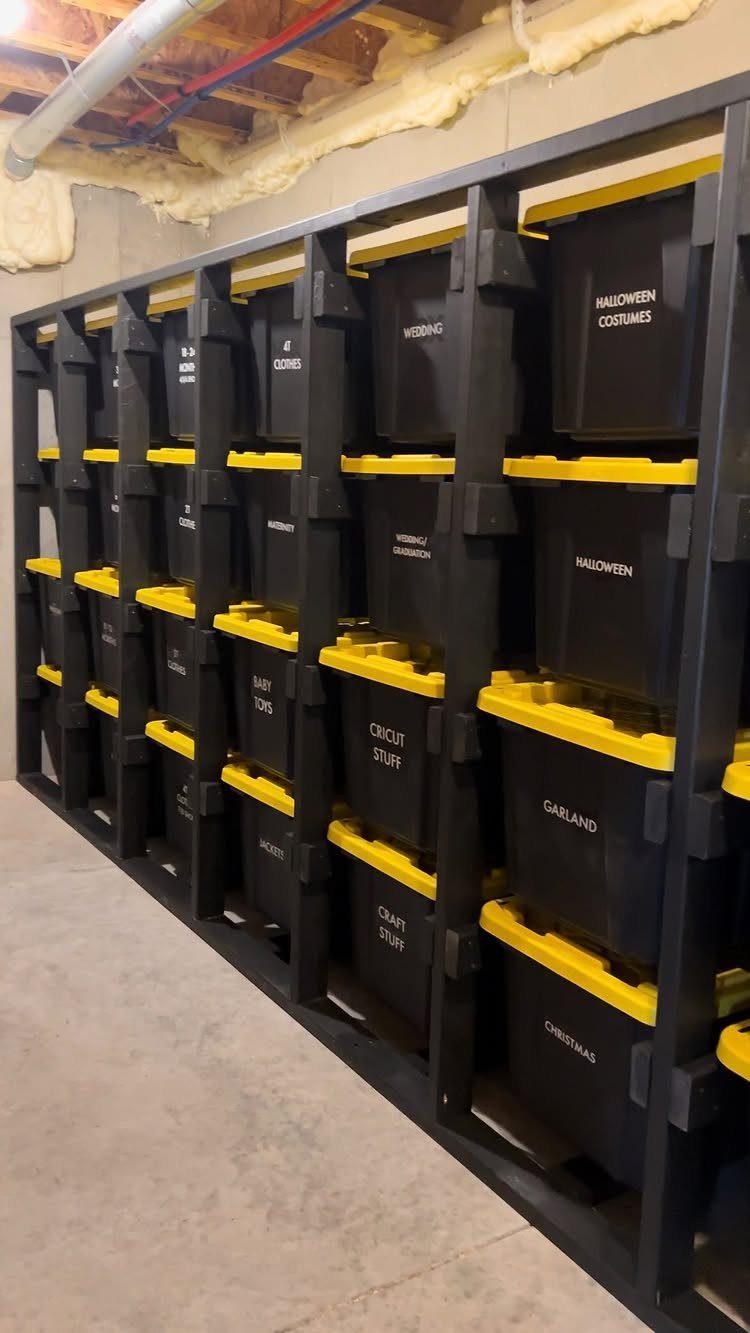
Bins for holiday decorations or camping gear keep seasonal items together until you need them again. Stack them on a high shelf or in a corner so they’re not blocking everyday tools.
Label each bin by season or holiday so you’re not pulling down three to find the one you want.
Solid bins in matching colors look cleaner if they’re staying out in the open, but clear bins let you double-check what’s inside without opening the lid.
11. Wall-Mounted Storage
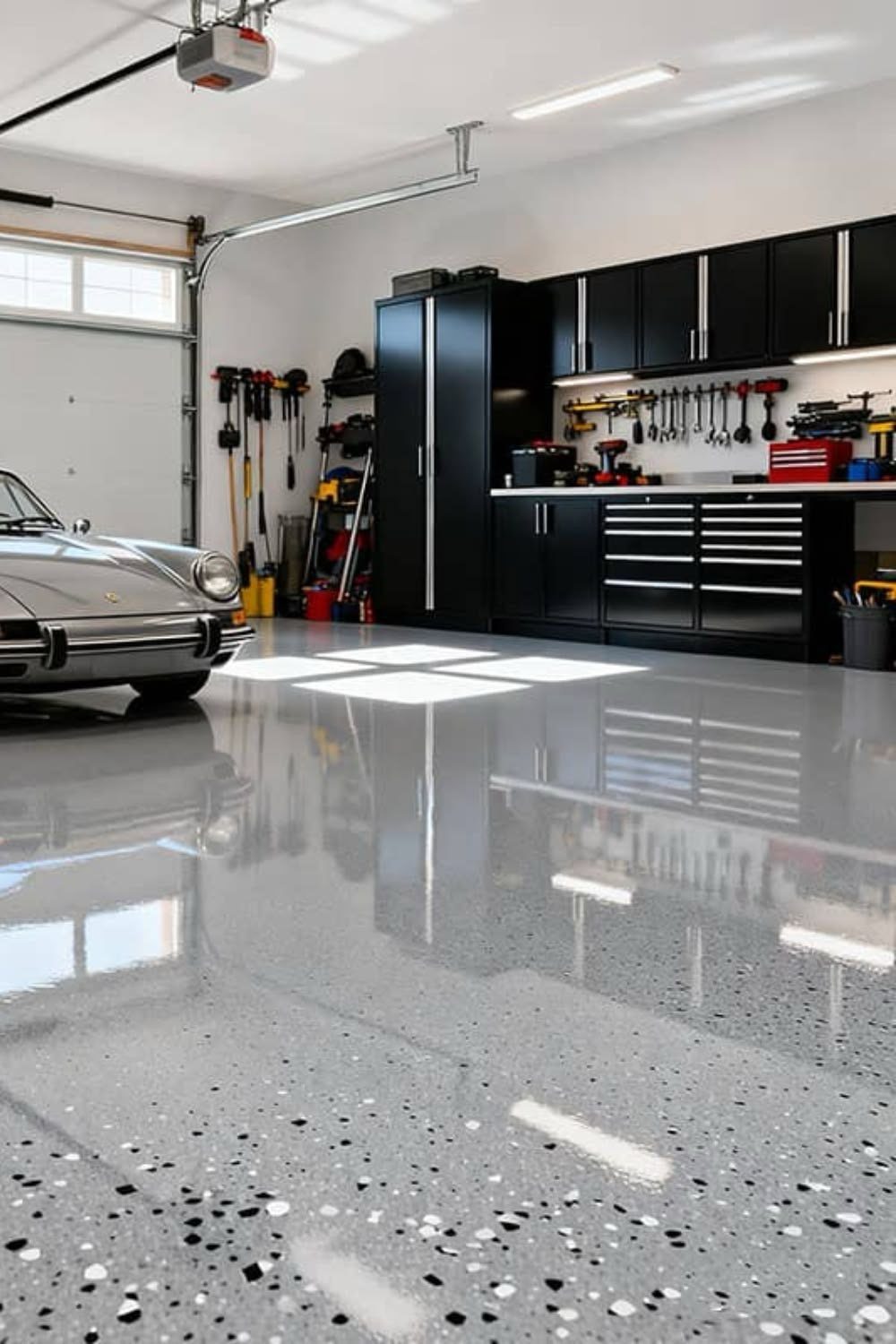
Mounting storage on the wall keeps the floor clear for your car and gives you more usable space in a small garage. You can hang hooks, shelves, cabinets and racks in any combination that fits your gear.
Start by mounting the heaviest items first, like cabinets or metal shelving, so you know where your wall studs are.
Then fill in with lighter hooks or bins. If you’re renting, look for systems that mount to a track or slatwall instead of driving screws directly into drywall.
12. Garden Tool Storage
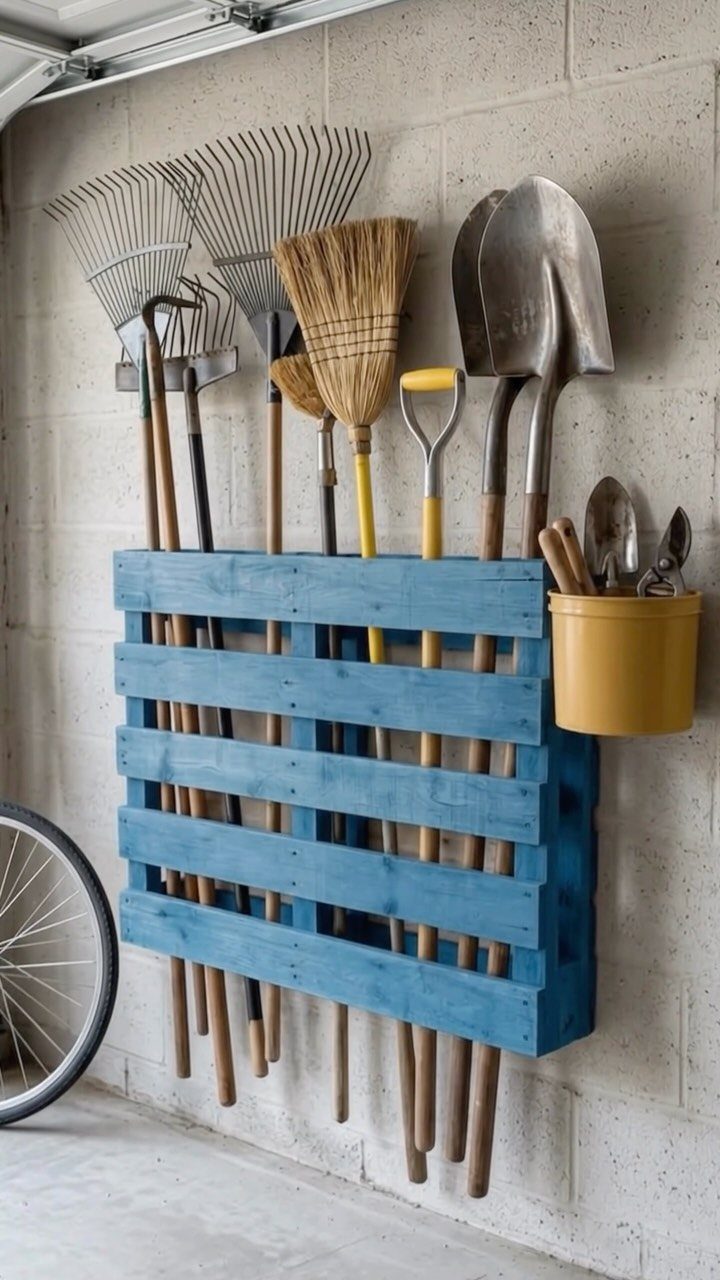
A wall rack or repurposed pallet keeps shovels, rakes, and hoes upright and easy to grab. Hang them by the handle or slide the heads into slots so they don’t tip over or lean against the wall.
Small hand tools like trowels and pruners fit in a bucket or caddy hung on the same wall. If you store fertilizer or seed packets nearby, keep them in sealed bins so moisture or pests can’t get in.
13. Open Shelving
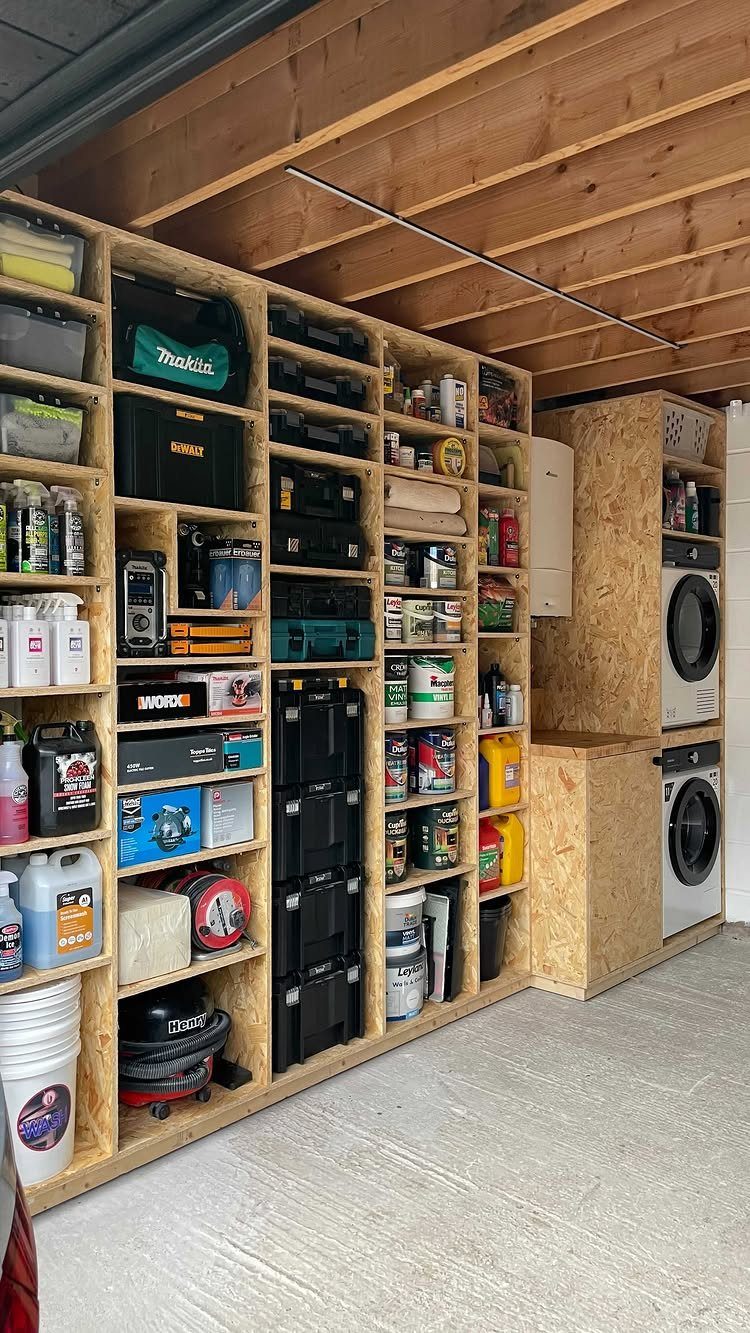
Open shelves let you see everything at once instead of guessing what’s in a closed cabinet. They work well for bins, toolboxes, and anything you grab regularly.
Wood shelves are easy to build and adjust to fit your wall, but metal shelving holds more weight without sagging. If you’re building your own, space the shelves so bins and boxes fit without wasting vertical room.
14. Sports Gear Storage
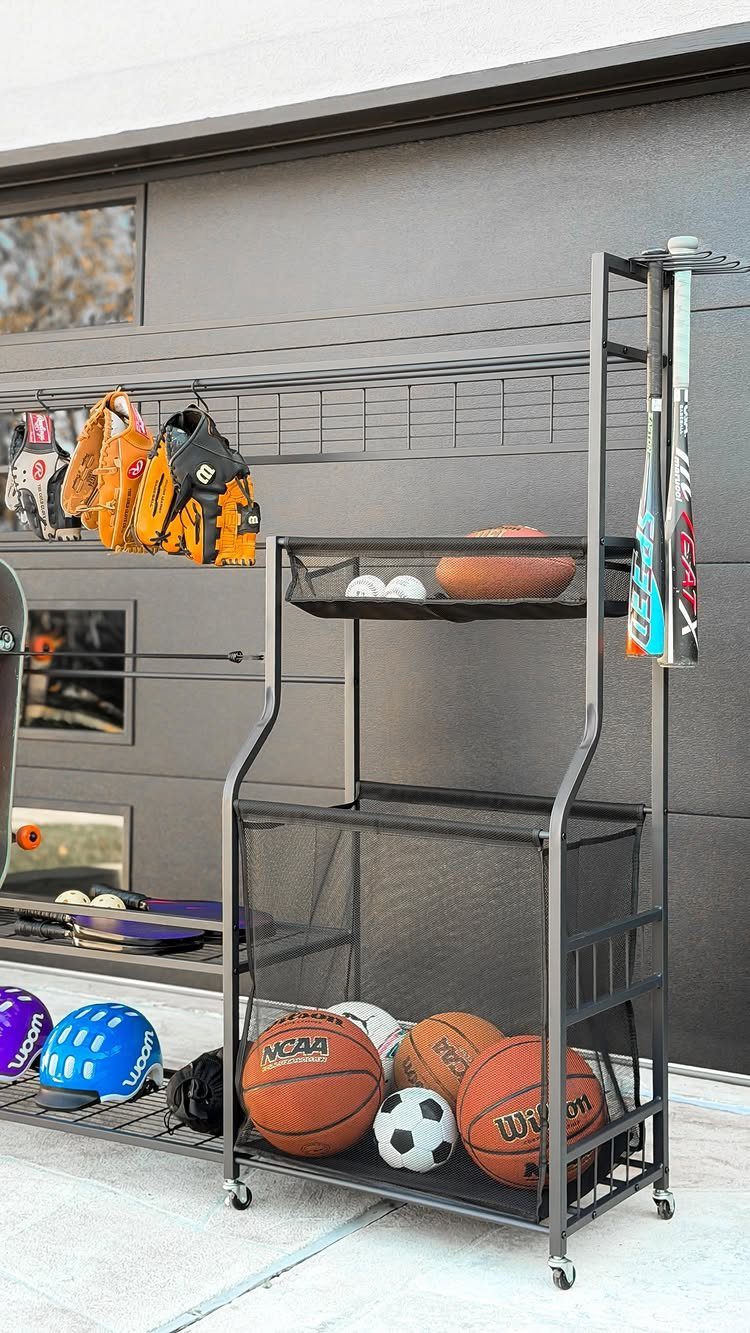
A dedicated spot for balls, bats, helmets, and pads keeps them from rolling under the car or piling in a corner. A rack or bin keeps everything together so you can grab what you need and go.
Rolling racks move between the garage and the car when you’re loading up.
Wall hooks or mesh baskets work if floor space is tight. Store smaller items like shin guards or gloves in a bin so they don’t get lost.
15. Rolling Storage
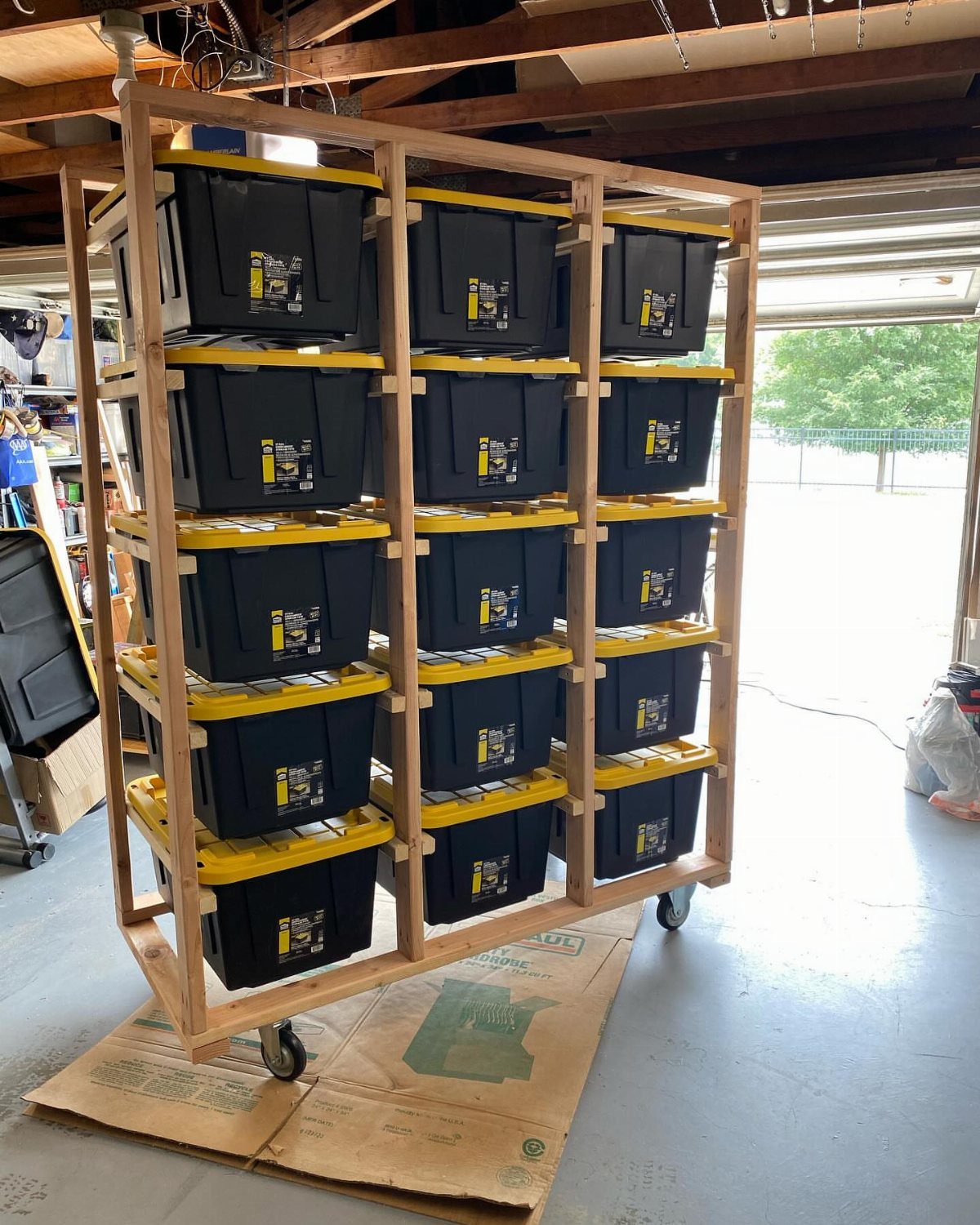
Rolling shelves or carts move wherever you need them, then roll back out of the way when you’re done. Casters let you shift heavy bins or tools without lifting them off the shelf.
Lock the wheels once the unit is in place so it doesn’t roll when you’re pulling something off a high shelf.
If you’re building a rolling shelf, use plywood or solid wood for the shelves so they don’t flex under weight.
16. Freestanding Shelving
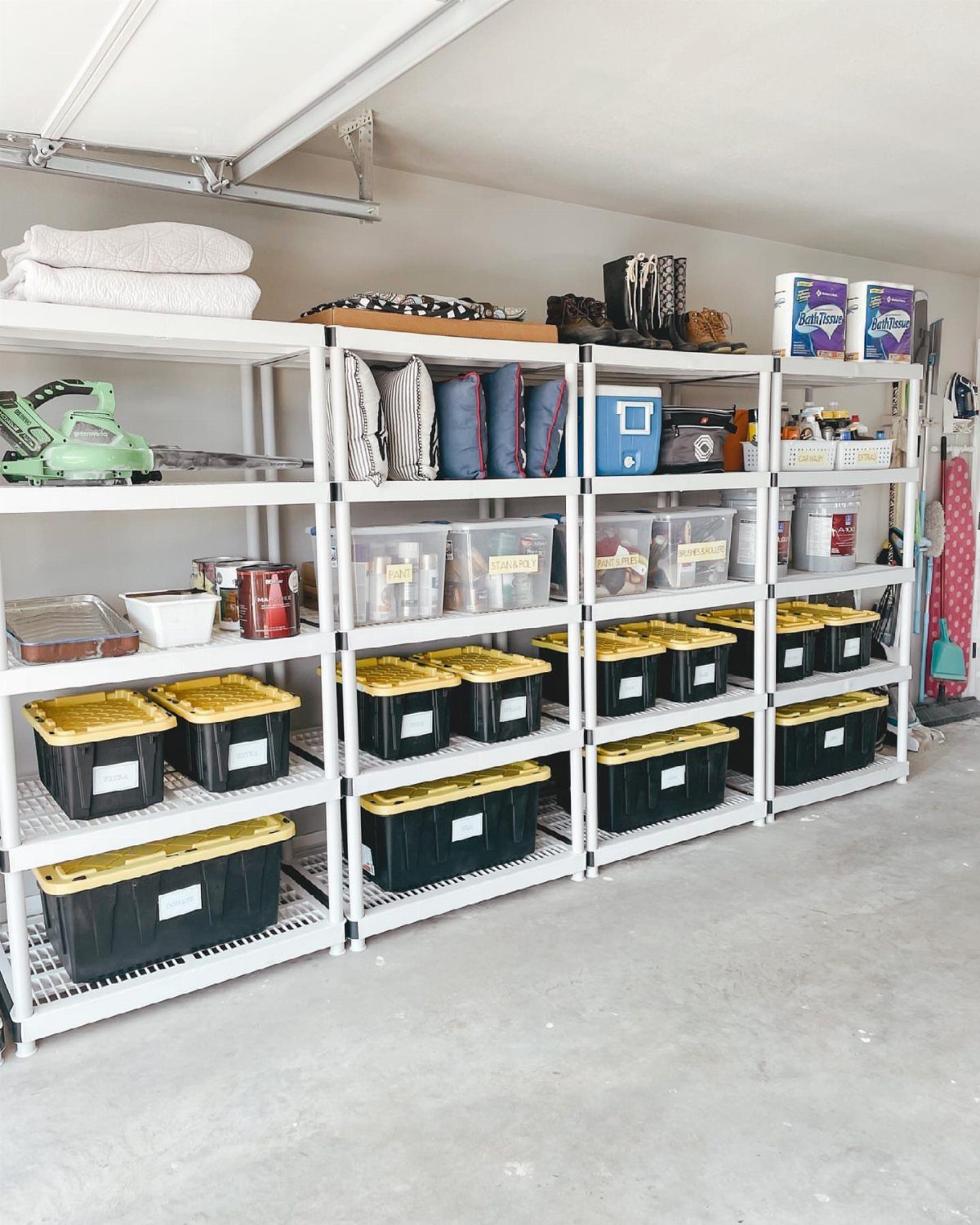
Freestanding shelves sit on the floor without drilling into walls, so you can move or swap them as your storage needs change.
Metal units hold the most weight, and wire shelves let you see what’s on each level from the side.
Plastic shelves cost less but sag under heavy bins. If the floor is uneven, level the unit with shims so the shelves don’t tilt and spill what’s stacked on them.
17. Slatwall Storage
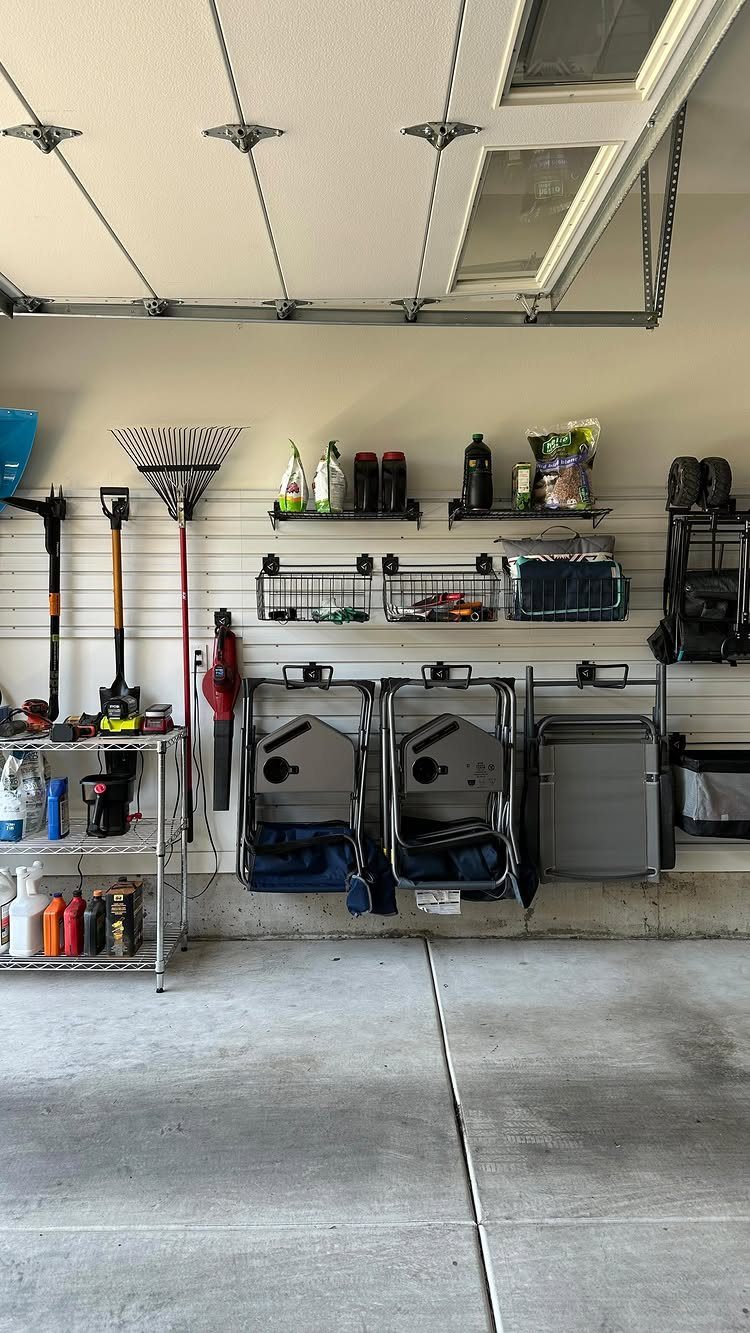
Slatwall panels give you a wall full of slots where hooks, shelves, and baskets snap in and move around as your needs change. Accessories drop into the grooves without tools, so you can rearrange everything in minutes.
PVC slatwall holds light items like rakes and hand tools, but metal or MDF panels support heavier gear. Measure the slot spacing first so the hooks fit the panel you installed.
Safety and Hazardous Storage
Store propane tanks outside, not in the garage. If a tank leaks, the gas can build up in an enclosed space and ignite.
Paint doesn’t hold up well in extreme heat or cold, so if your garage isn’t climate-controlled, find another spot. The same goes for paper goods and pet food, which draw moisture and pests.
Lock away anything hazardous if kids or pets can reach it. Pesticides, antifreeze, and cleaning chemicals all belong behind a cabinet door that latches.
Gas-powered equipment like lawn mowers and generators should stay outside when they’re running.
If you need to store them inside, let the engine cool completely first. A carbon monoxide detector adds a layer of safety if you’re working with engines in the garage.
Mount an ABC fire extinguisher somewhere you can grab it fast, and check the pressure gauge once a year to make sure it still works.
Garage Cleanout Process
Block out a full day or more for the cleanout. You’ll need the time to pull everything out, sort through it, and put it back where it belongs.
Empty the garage before you organize. Once the floor and shelves are clear, you can see what space you actually have and where the best spots are for each category.
Sort everything into 3 piles: what stays, what gets donated, what goes in the trash. Anything sitting untouched for a full year can probably leave.
Take donations to a charity drop-off or schedule a pickup service to get them out of the garage quickly. The longer they sit, the more likely they are to end up back on a shelf.
For sweeping up dust, use sweeping compound or damp coffee grounds to catch the fine particles instead of pushing them around.
Protecting the Garage and Home
Check the seam where the garage meets the house for gaps. Sealing them keeps conditioned air inside and blocks drafts.
Inspect the cables and springs on the garage door once or twice a year. If a cable is frayed or a spring looks stretched, call someone to replace it before it snaps.
Put a block of wood under the door once a month and check that the opener reverses when it hits. If the door doesn’t reverse when it touches the block, the sensor needs adjusting.
Disconnect the opener and lift the door by hand.
It should move smoothly and stay open around 3 or 4 feet off the floor without help. If it slams shut or takes effort to lift, the springs need attention.
Frequently Asked Questions
What should not be stored in a garage?
A propane tank that leaks in an enclosed space can ignite, so store it outside.
Paint, paper goods, and pet food don’t hold up well in garages that aren’t climate-controlled. Lock up pesticides, antifreeze and harsh cleaners if children or animals can get into the garage.
Is it cheaper to buy or build garage shelves?
Building your own shelves costs less if you already have basic tools like a saw and drill.
You can use 2x4s and plywood to build shelves that fit your exact space and hold the weight you need. Buying freestanding metal shelves is faster and easier if you don’t want to measure, cut, and anchor everything yourself.
Where to start when organizing a garage?
Empty the garage completely before you organize so you can see what space you actually have and where the best spots are for each category.
Set aside a full day or weekend because you need hours to empty the garage, sort what you find, and put it all back. Make 3 piles as you go: keep, donate, throw away.
Should you store clothing in the garage?
Soft items like clothes and bedding can invite animals like skunks and raccoons to settle in, even when stored in bins.
Most garages aren’t climate-controlled, so moisture and pests can damage fabric over time. Clothes and linens belong indoors in a closet or bin, not out in the garage.
Can you store canned food in a garage?
Canned goods go bad faster in a garage because the temperature swings between hot and cold.
Heat can spoil what’s inside the can, and freezing ruins the texture even after it thaws. A pantry or cupboard inside the house keeps canned goods stable longer.
Does organizing your garage make it easier to clean?
Yes, organizing clears the floor and gives you more room to sweep and move around.
You’ll also be able to reach your cleaning supplies faster and dust or wipe down items without digging through piles. Less clutter means less time spent moving things out of the way before you can clean.