
Most of these ideas use bins and labels, but what makes sense in your fridge depends on how many people use it and whether you cook in batches or shop meal by meal.
A turntable keeps condiments easy to reach, stackable containers make use of vertical space, and a dedicated snack drawer answers the question before anyone asks.
Store raw meat on the bottom shelf so drips do not land on food you will eat without cooking, and set the crisper drawer to high humidity for leafy greens and low for fruit.
1. Clear Food Grouping Bins
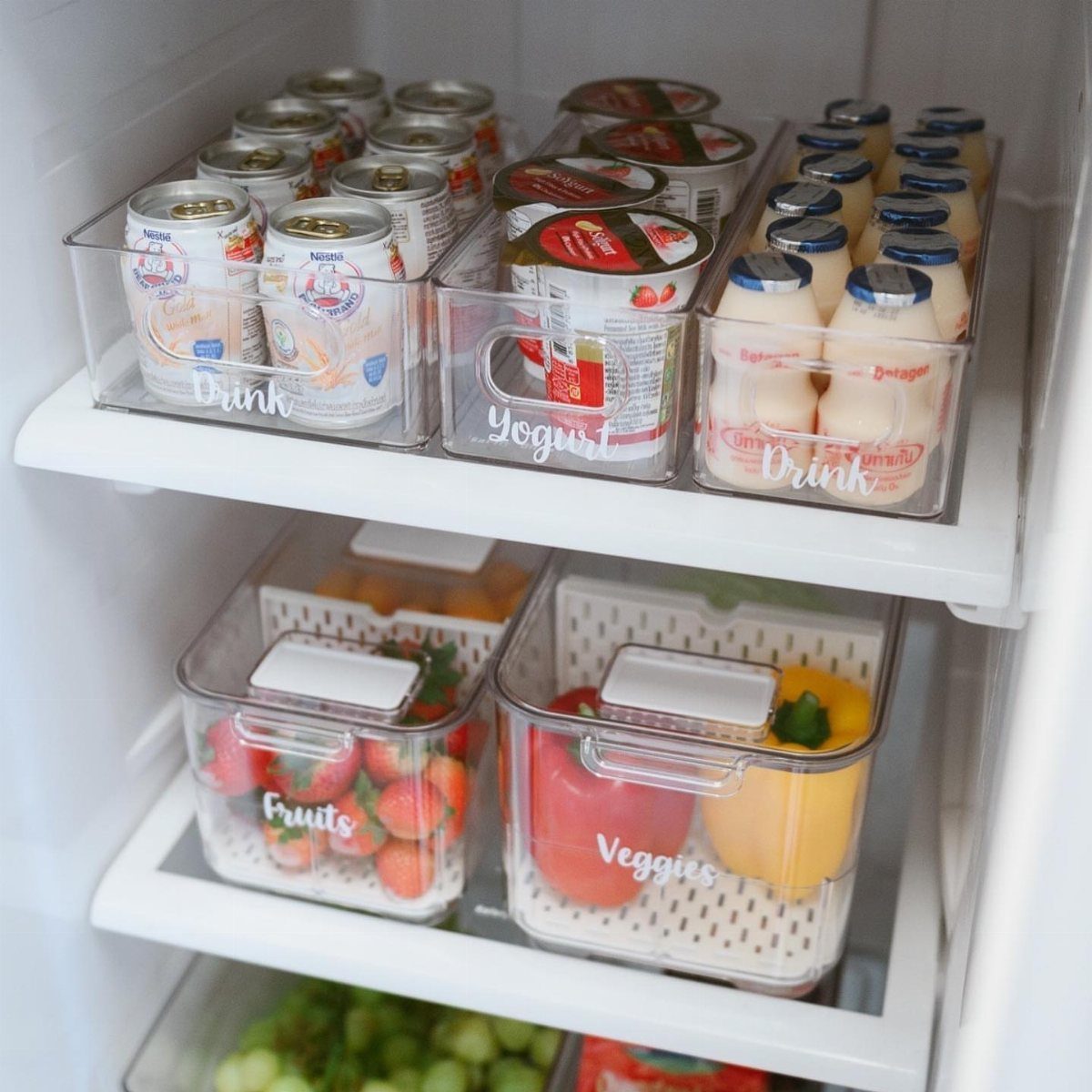
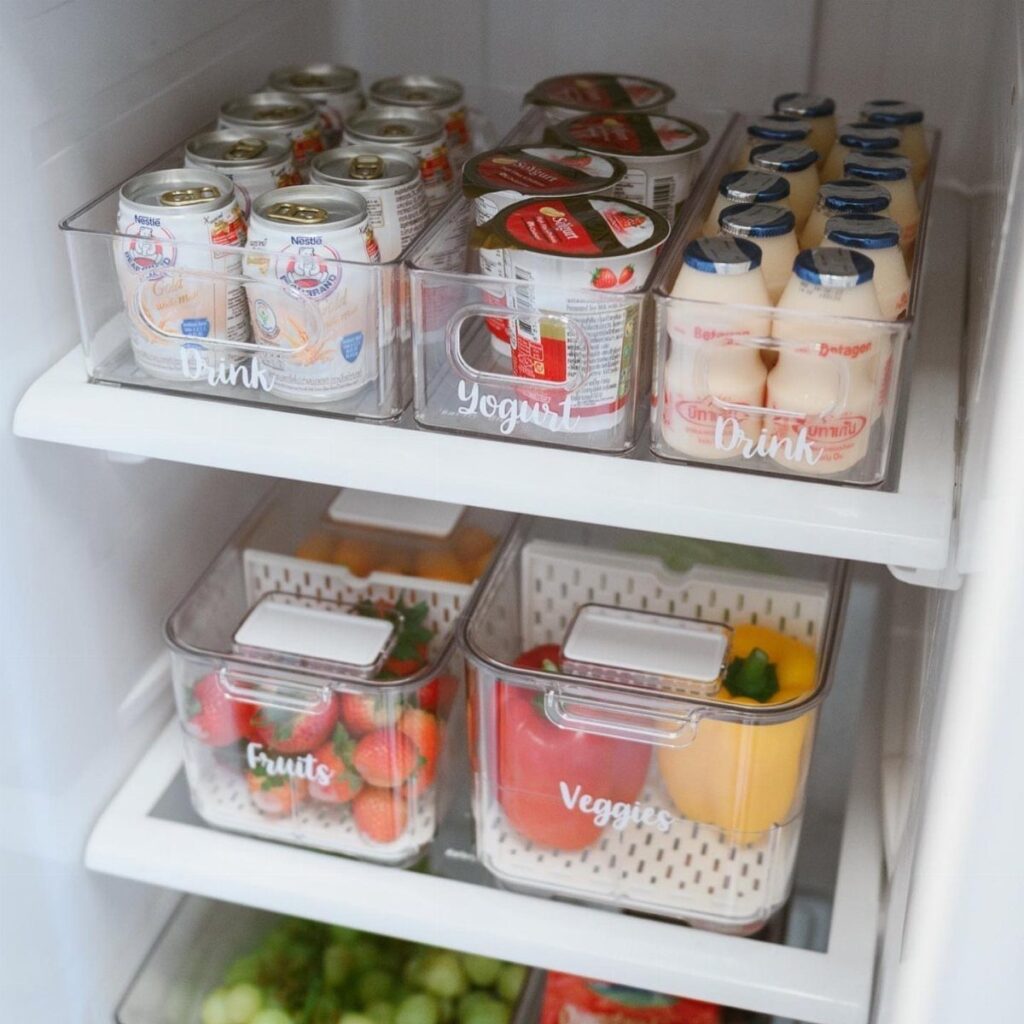
Group similar foods in clear bins so you can see what you have and grab what you need without digging. A bin for drinks, one for yogurt, another for fruit keeps everything in its place and makes restocking straightforward.
Label each bin if you share the fridge with others. Once you put things back where they belong the first time, everyone else follows.
2. Use Clear Bins
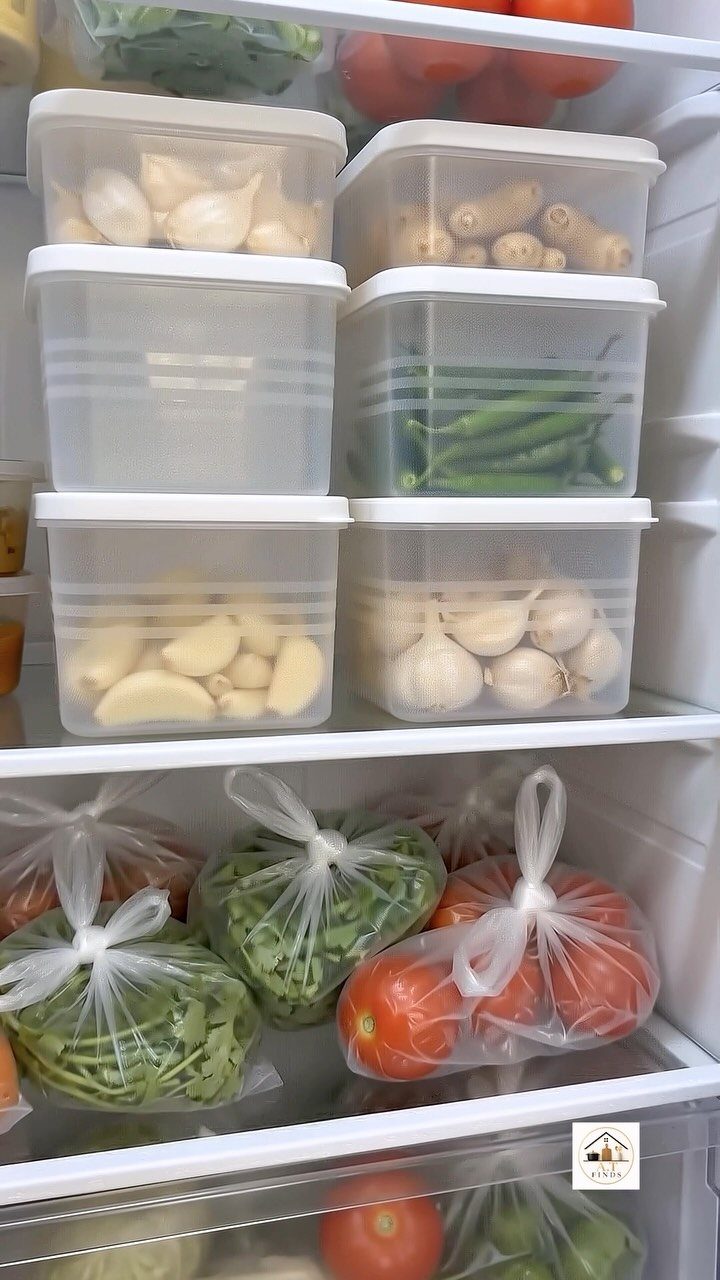
Clear bins corral small items that otherwise roll around or get buried. Garlic, ginger, chilies and other loose produce stay visible and easy to reach when they sit in a container instead of loose on the shelf.
Stack bins to use vertical space. You can lift the top one to see what is underneath without unpacking half the fridge.
As professional organizer Liza Zaslow of Gotham Organizers puts it, creating vertical space is “a great way to make your stuff more accessible and also maximize your space.”
3. Make a Snack Zone
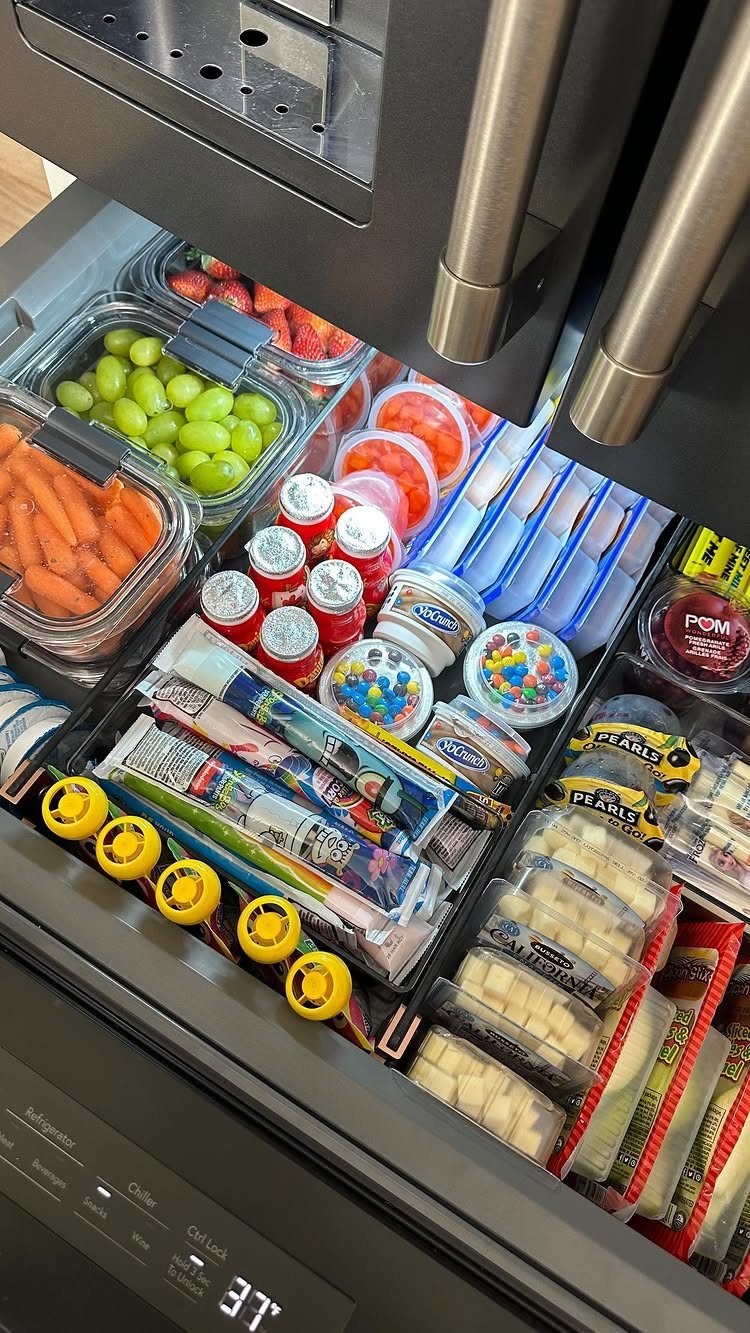
Put ready-to-eat snacks in one drawer or on one shelf so anyone looking for something quick knows where to start. Pre-portioned fruit, cheese, yogurt and vegetables in small containers make it easy to grab and go.
Kids can help themselves without asking, and you spend less time answering "what can I eat?" A consistent spot also makes it easier to see when you are running low.
4. Use a Lazy Susan
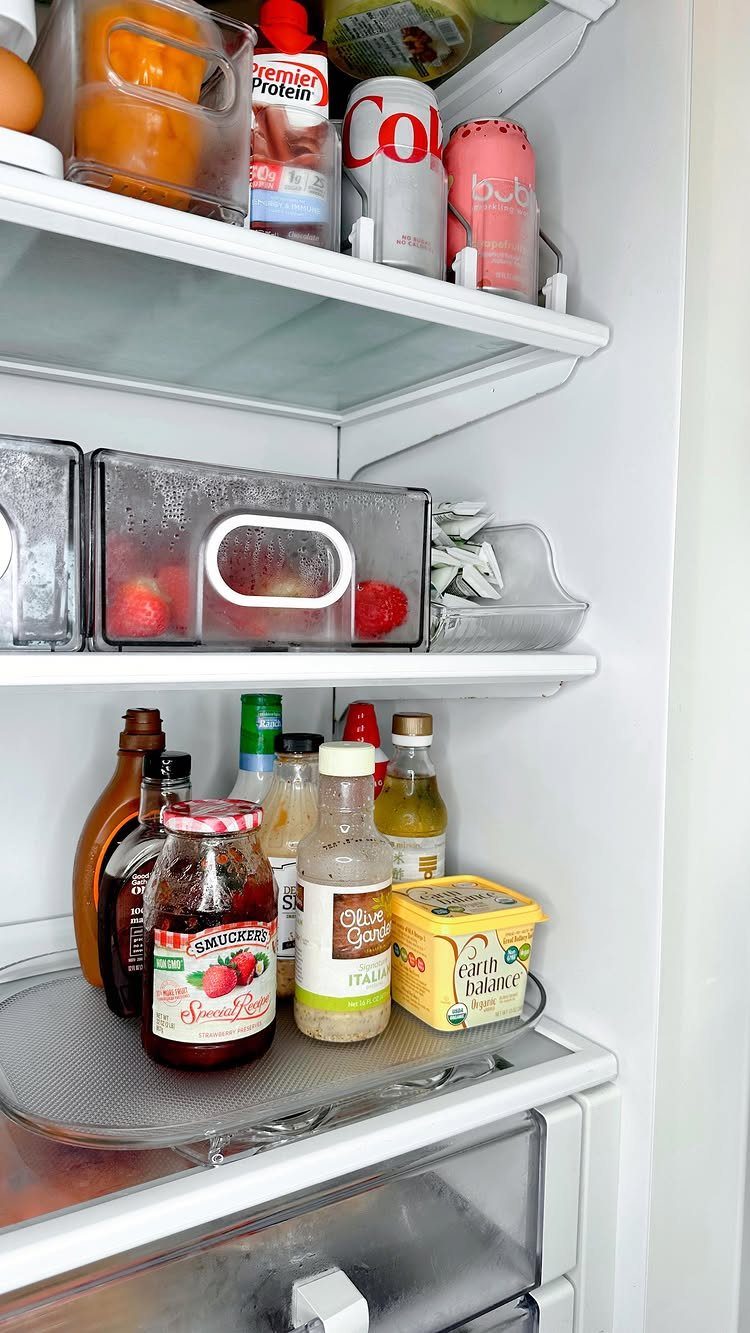
A turntable lets you spin jars and bottles to the front instead of reaching behind taller items. It works well for condiments, salad dressings and spreads that you use often but do not need much space for.
Choose a turntable that fits your shelf depth. A 9-inch diameter works in most fridges without blocking access to other shelves.
5. Organize the Door
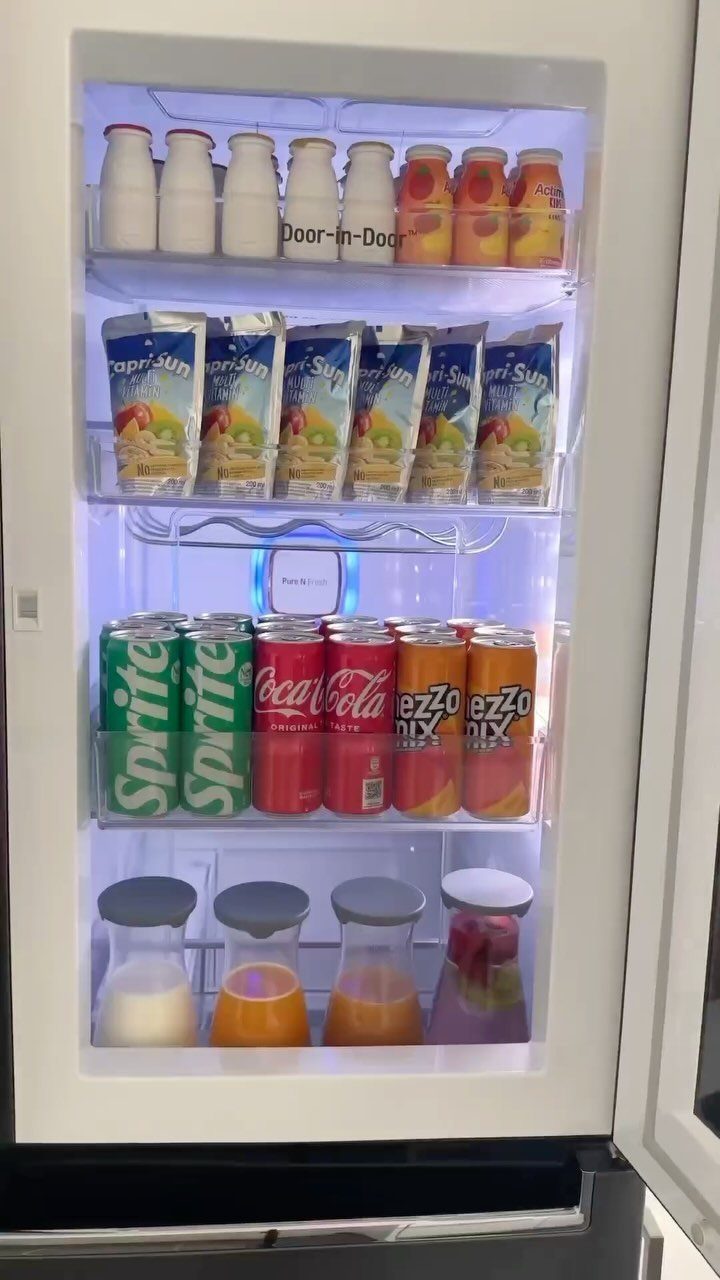
Assign each door shelf a category instead of filling them randomly.
Door shelves are the warmest part of the fridge, so they suit drinks and condiments better than dairy or eggs. Keep the most-used items at eye level where everyone can reach them.
6. Use Produce Drawers
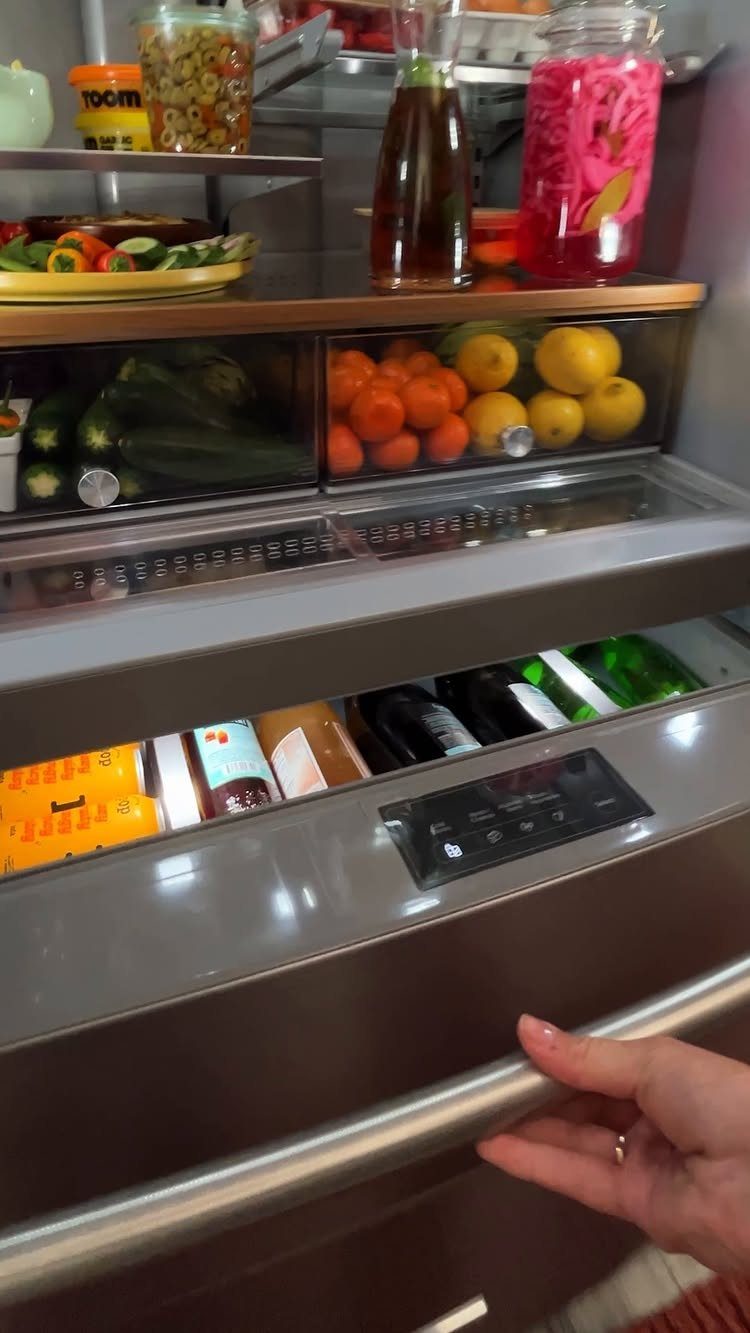
Produce drawers control humidity better than open shelves, which keeps fruits and vegetables fresh longer. Most fridges have a humidity setting on each drawer: high for leafy greens and vegetables, low for fruit.
Keep produce in clear bins inside the drawers if you want to separate types or contain smaller items like lemons and limes. You can see what you have without pulling the whole drawer out.
7. Stackable Food Containers
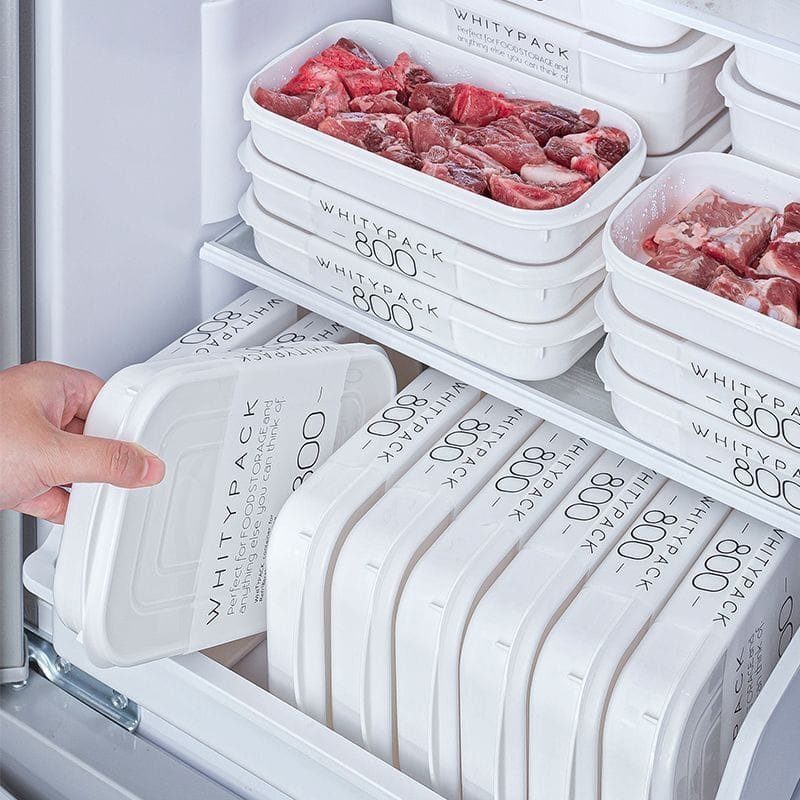
Stackable containers let you use shelf height instead of spreading food out. Square or rectangular shapes sit flush against each other and waste less space than round containers.
Pick containers that seal well if you store raw meat or marinated ingredients. A tight lid keeps drips contained and odors from spreading to other food.
8. Prepped Meals in Glass Jars
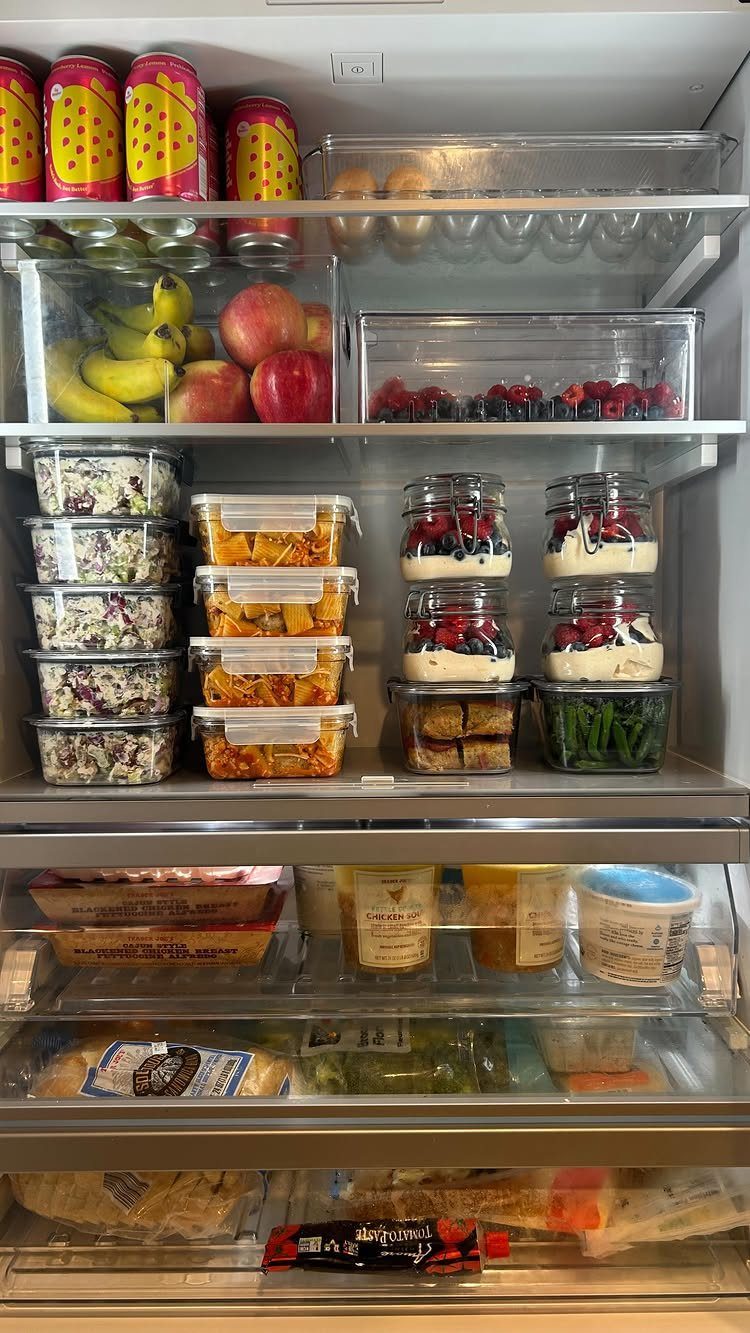
Prepped meals in jars and containers sit ready to grab when you need them. Glass jars work well for layered salads and parfaits because you can see each ingredient and they hold up in the fridge for days.
Fill jars the night before or batch-prep for the week. Dressing goes in first for salads so greens stay crisp, and heavier ingredients like yogurt go on the bottom for parfaits.
9. Organize Eggs in a Bin
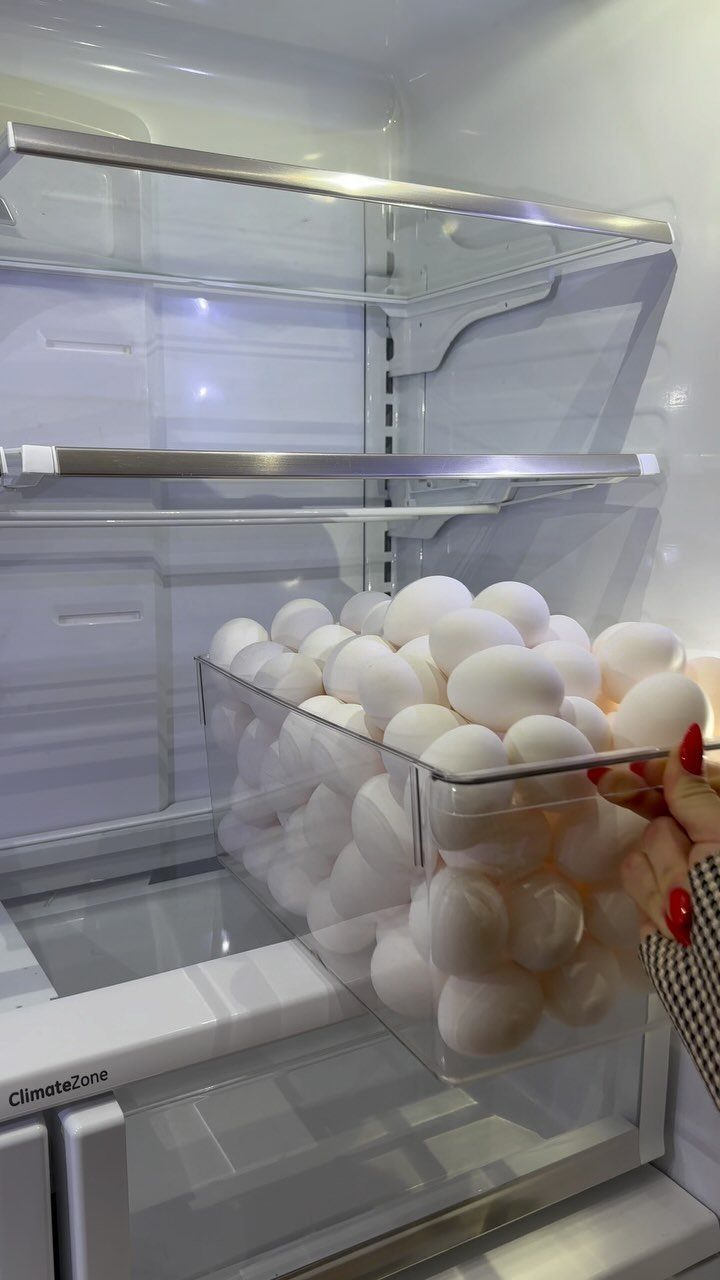
A bin keeps eggs together on a shelf instead of taking up door space, where temperature swings can shorten how long they last. You can stack a second bin on top or slide it out to reach items behind it.
Pick a bin that fits your usual egg supply. Clear plastic lets you see when you are running low without opening the bin.
Organizing Can Reduce Waste
A clear fridge makes it easier to plan meals because you can see what you already have before you shop. When ingredients sit visible instead of buried, you use them before they spoil.
Label containers with dates if you batch-cook or store leftovers. Knowing when something went in helps you eat it while it still tastes good.
Group ingredients by meal or recipe if you prep in advance. A bin for taco night or stir-fry ingredients keeps everything together and cuts down the time you spend searching when you cook.
Check the fridge before you make a grocery list. Seeing what you have left prevents buying duplicates and helps you plan around food that needs to be used soon.
Food Safety Shelf Order
Store raw meat on the bottom shelf so drips do not land on food you will eat without cooking. Ready-to-eat items like leftovers, cheese and yogurt go on upper shelves where they stay clear of anything that could contaminate them.
Foods that need higher cooking temperatures belong lower. Raw chicken sits lowest because any drips carry bacteria that need the highest heat to kill, then beef or pork above it, then fish.
Use a tray or container under raw meat to catch any liquid. If something does drip, you wipe out one container instead of scrubbing the whole shelf.
Humidity and Produce Storage
Set the crisper drawer to high humidity for leafy greens, broccoli and vegetables that wilt. Low humidity suits apples, grapes and fruit that rots instead of wilting.
Some produce does better on the counter. Tomatoes, avocados and stone fruit lose flavor in the fridge, and cold temperatures stop them from ripening properly.
Keep ethylene-producing fruit like apples and bananas separate from vegetables if you can. The gas speeds up ripening and can make nearby produce spoil faster.
Frequently Asked Questions
How do I properly organize my fridge?
Cooked food and dairy go on the top shelves, raw meat stays at the bottom, and anything in a jar or bottle can live in the door.
Group similar items in clear bins so you can see what you have, and use the crisper drawers for produce with humidity settings matched to what you store.
Where should milk be stored in the fridge?
Store milk on an upper or middle shelf, not in the door. The door is the warmest spot in the fridge because it opens and closes often, and dairy needs consistent cold to stay fresh longer.
What to store in a fridge door?
The door is the warmest spot, so it gets condiments, drinks, and anything else that can handle a few degrees of flux.
Temperature swings from opening and closing make it a poor choice for dairy or eggs, which need steadier cold.
What are the best containers for refrigerator organization?
Clear bins work best because you can see what is inside without opening them. Square or rectangular stackable containers use shelf space better than round ones, and containers with tight seals keep raw meat drips and strong odors contained.
How to organize fridge shelves?
Tall things go in back, short things in front, and you can scan what you have without playing Tetris every time you need milk.
Keep food that spoils quickly in the coldest areas, usually the back of upper shelves, and group similar items in bins.