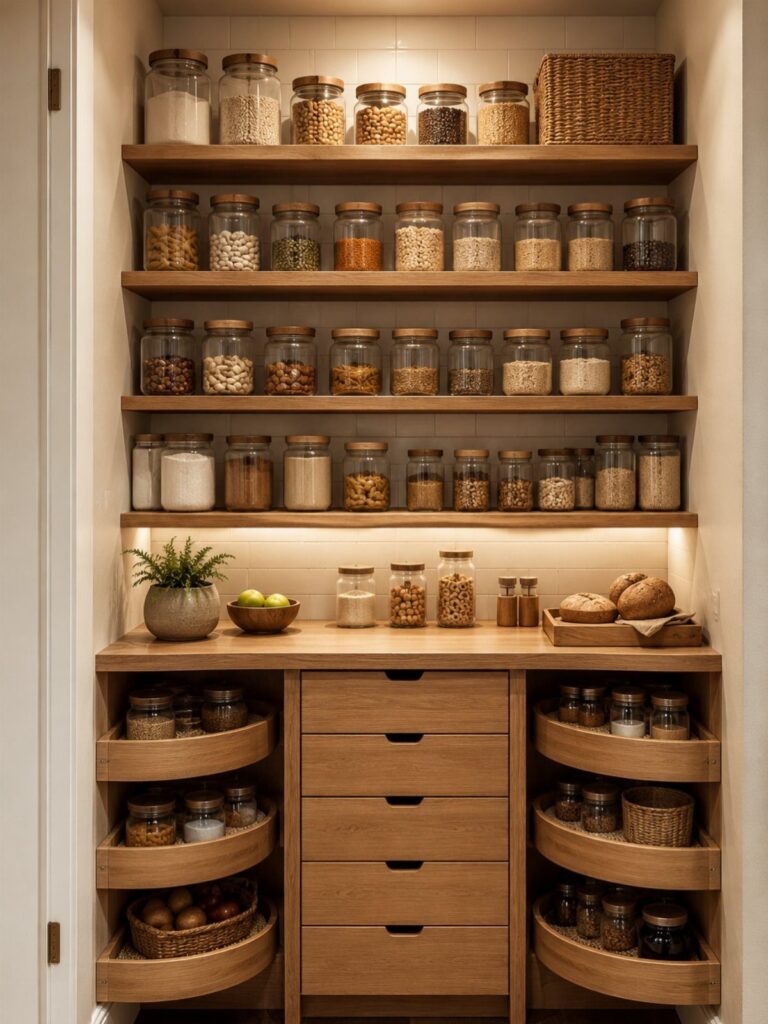

Kitchen storage cabinets range from pull-out shelves you retrofit with hardware kits to floor-to-ceiling units that add an entire row of shelves.
Pick based on what you store most and where you stand when you reach for it: pull-out trash near the prep area, spice racks next to the cooktop, deep drawers for food containers where you can see what sits on top.
A slim pull-out pantry fits a gap as narrow as the space beside the refrigerator and holds canned goods stacked from floor to ceiling once you slide it forward on full-extension rails.
1. Pull-Out Shelves
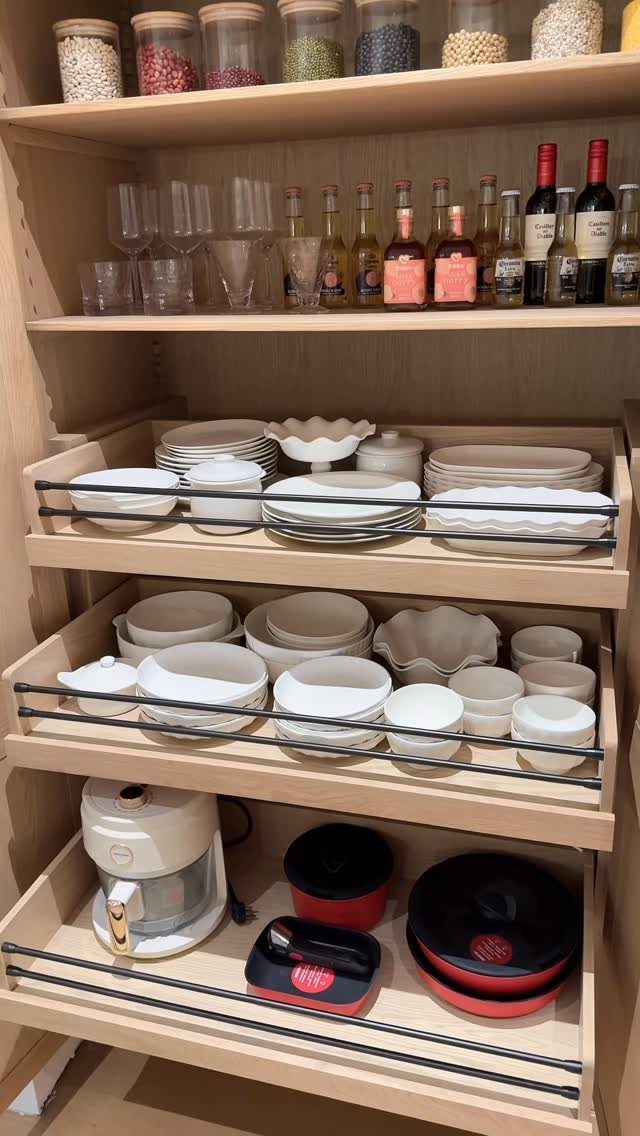
Pull-out shelves slide the cabinet’s entire depth forward, so you can reach what sits at the back without bending in or lifting items over each other.
Retrofitting them into an existing cabinet takes hardware and mounting, but kits sold for standard cabinet widths let you install them yourself. You measure the opening, pick the depth and buy rails that match.
I prefer them in lower cabinets where I keep heavy bowls or appliances. The slide brings the weight out to you instead of making you lift from a crouch.
2. Corner Cabinet Organizers
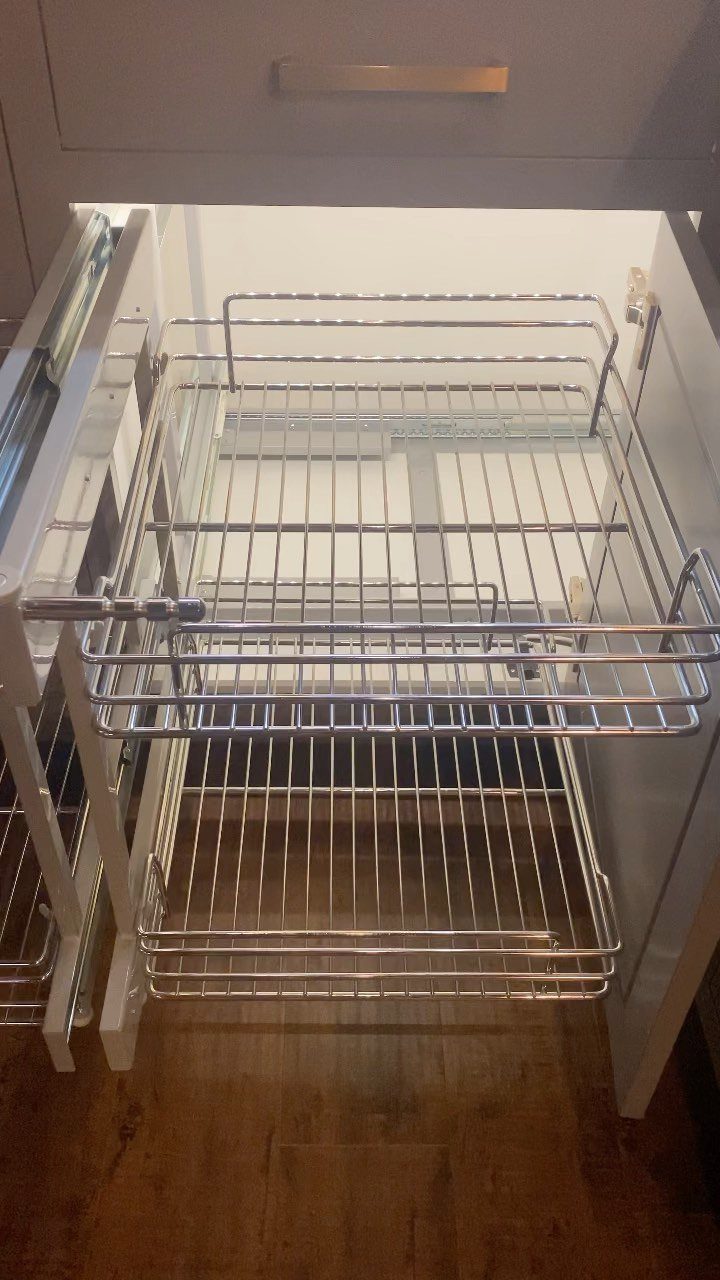
Corner cabinets usually waste space because you cannot see or reach what goes in past the first row. A corner organizer pulls that space out to you or spins the contents into view.
The two-tier pull-out style slides forward in sections, so items on both levels come out at once.
A rotating lazy Susan keeps everything in reach as you spin it. Both fit cabinets with a 15- or 18-inch opening, 21 inches of height and about 20 inches of depth.
I like the pull-out better than the lazy Susan. It brings things closer and you can grab what you need without spinning through half the cabinet.
3. Vertical Tray Dividers
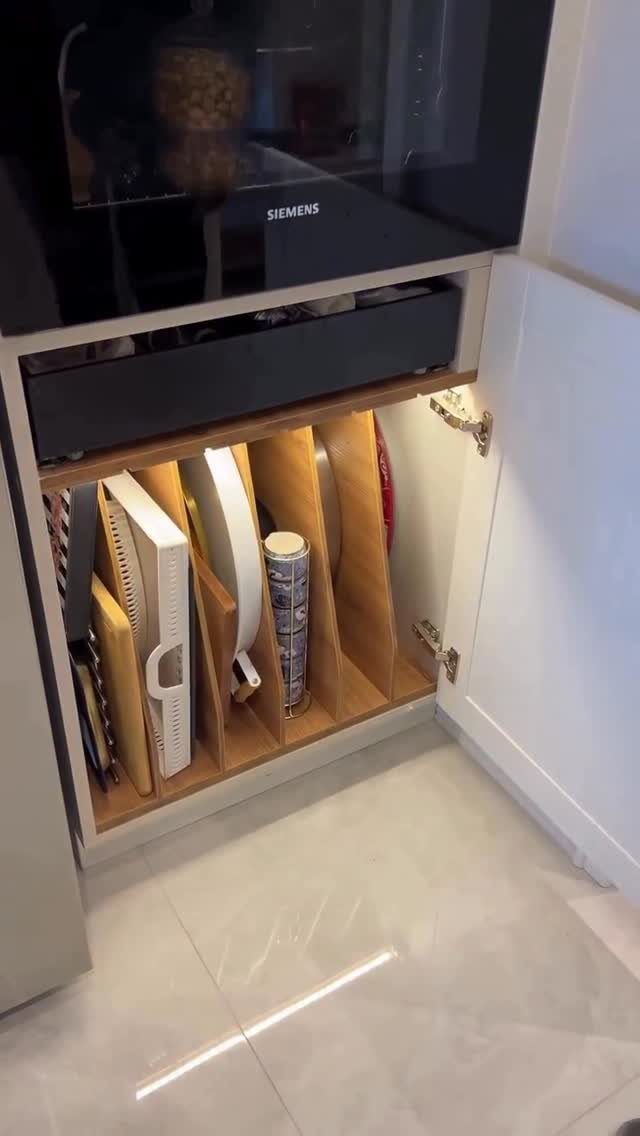
Vertical dividers hold sheet pans, cutting boards, platters and lids upright in separate slots. You pull one item out without unstacking or sliding the rest aside.
Install them inside a cabinet by screwing adjustable pegs or thin dividers to the base and top. Some cabinets come with dividers already built in as part of a drawer system.
I keep mine in a lower cabinet near the stove so the pans I reach for most sit close to the cooktop.
Storing them vertically means I use the full height of the cabinet instead of stacking flat and losing half the space.
4. Toe-Kick Drawers
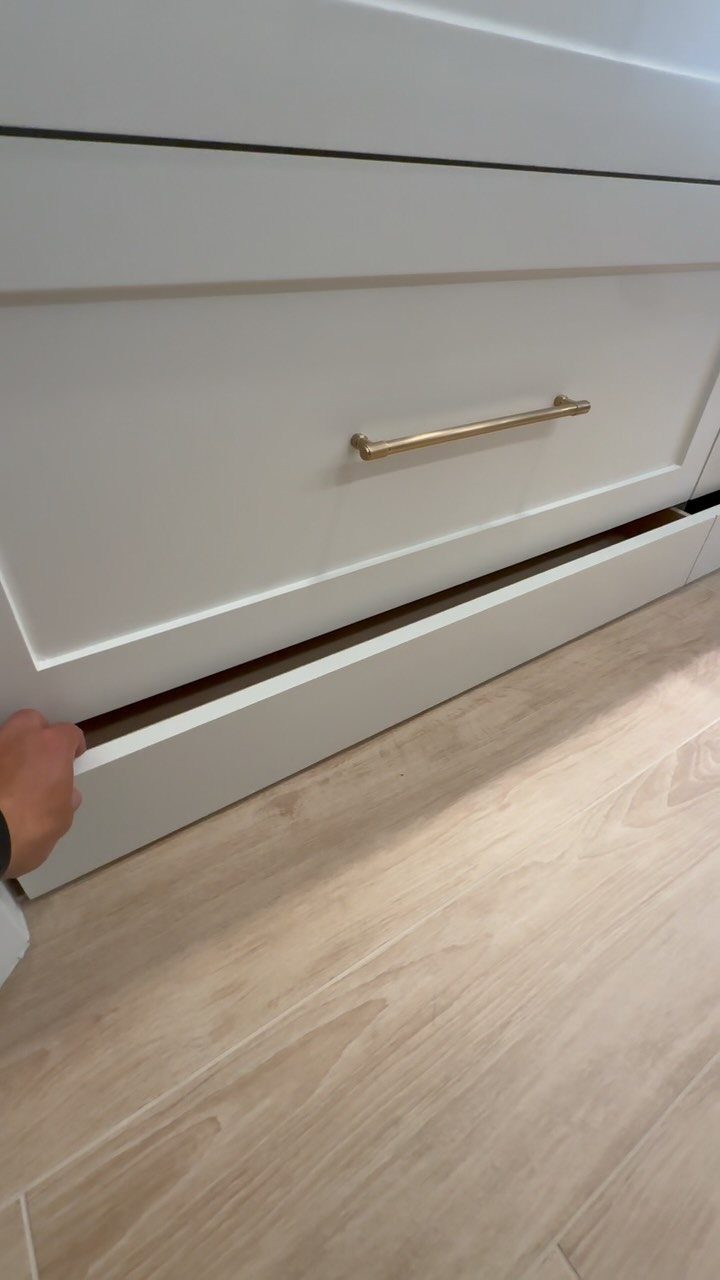
Toe-kick drawers fit into the recessed strip beneath lower cabinets, the space that normally goes unused. The drawer pulls out shallow and runs the width of the cabinet.
Use them for flat items you do not reach for often: baking sheets, cooling racks, cutting boards, placemats. The drawer sits close to the floor, so bending down is part of the deal.
I would not put anything heavy in one. The drawer rides low and you are lifting from a squat every time you open it.
5. Under-Sink Storage
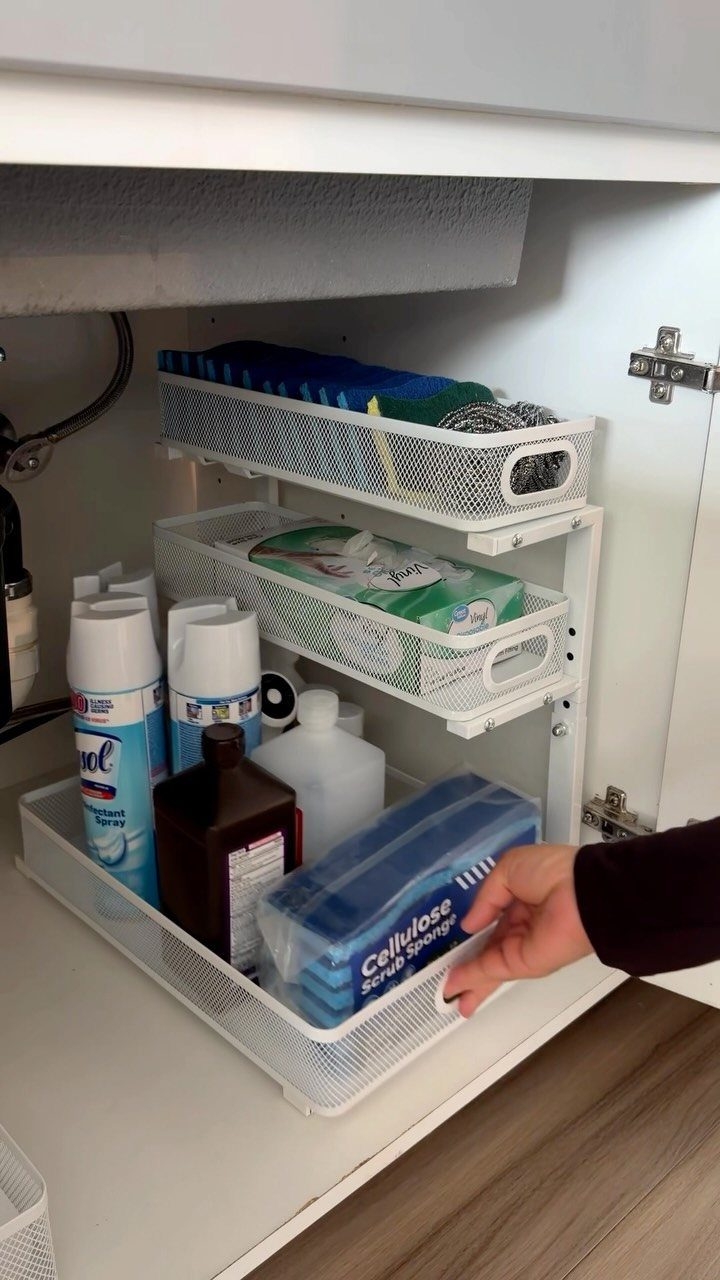
The cabinet under the sink works around plumbing, so organizers for it need to fit a U-shaped pipe and leave room for the disposal if you have one.
Tiered pull-out units and stacking shelves sit on either side of the pipes and hold cleaning bottles, sponges and trash bags upright where you can see them. Some pull-out caddies hang from the cabinet door to use that inside surface.
I keep a small bin on one side for rags and a second pull-out tray on the other for spray bottles. The vertical tiers mean I am not digging under a pile to find dish soap.
6. Slim Pull-Out Pantry
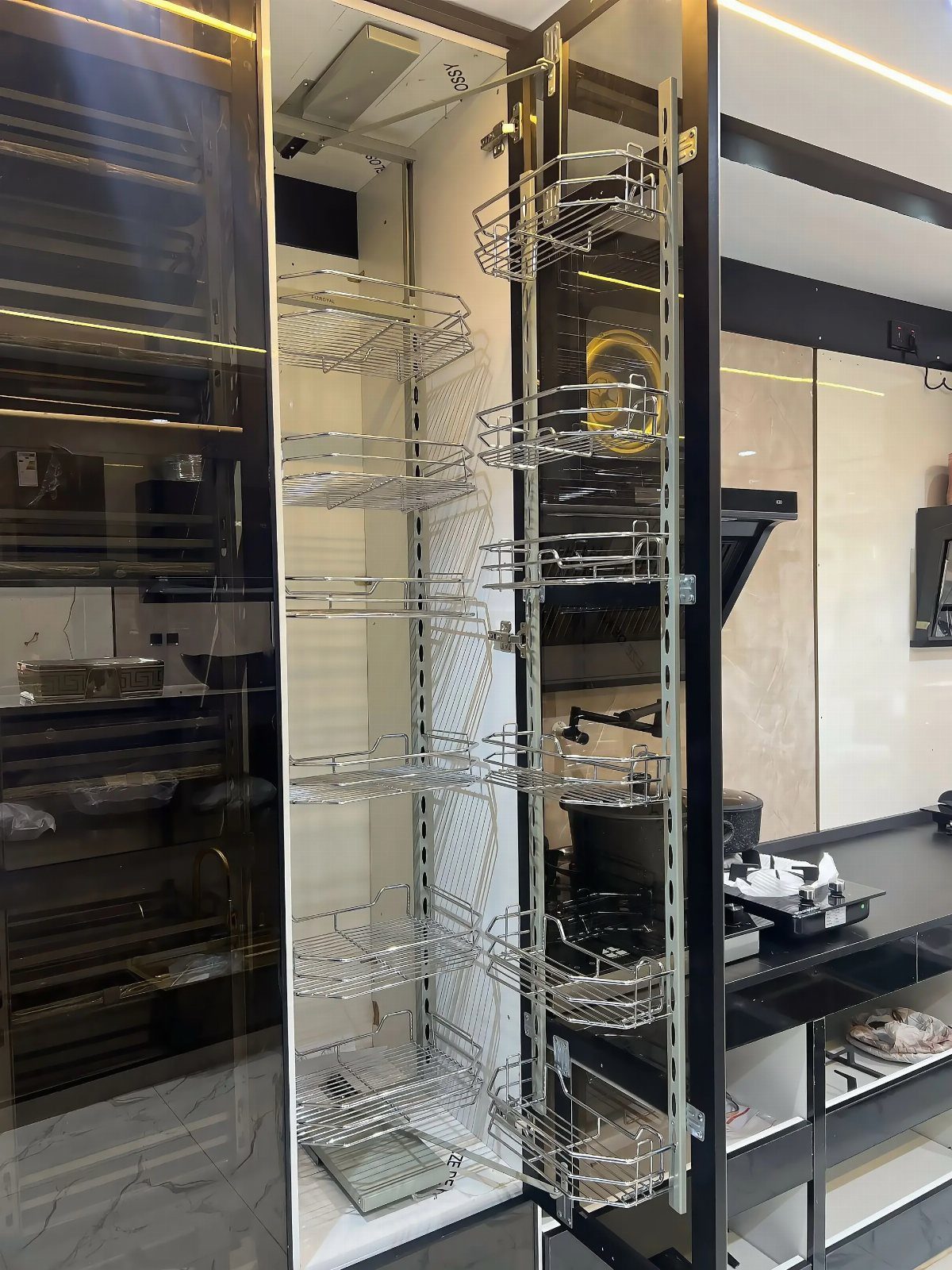
A slim pull-out pantry fits a narrow gap beside the refrigerator or stove. The cabinet is tall, shallow and slides out on full-extension rails to show wire or solid shelves stacked from floor to ceiling.
Stock it with canned goods, spices, oils or boxed items that do not need deep storage. The shelves are visible from the front once you pull the unit out, so you can scan what you have without moving anything aside.
I would put this in any kitchen with a gap too narrow for a standard cabinet. It turns dead space into storage that holds more than it looks like it should.
7. Deep Drawer Storage
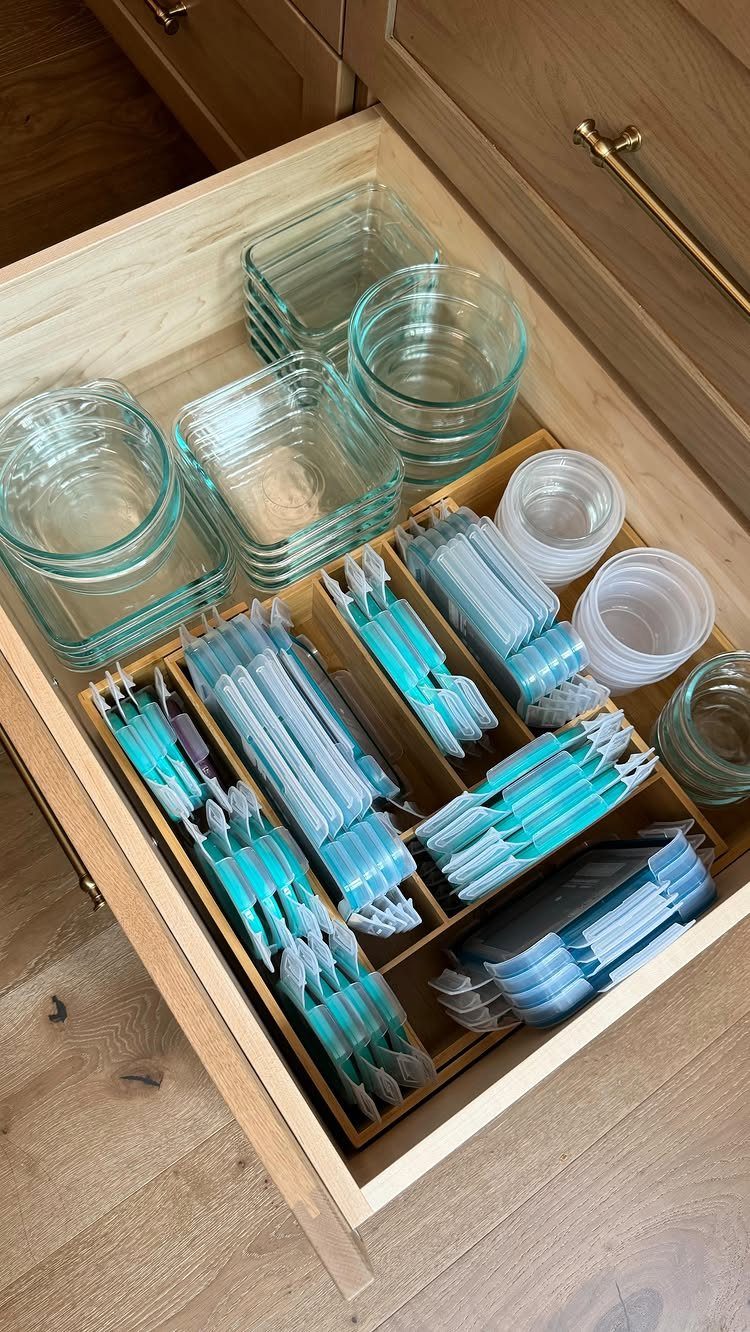
Deep drawers let you stack containers, bowls or small appliances upright so you can lift one out without shifting everything else. The extra height means you can store bulky items that do not fit on a standard shelf.
Add dividers to keep lids separate from containers or to section off utensils from storage bags. Without dividers, items slide around every time you open the drawer.
I use deep drawers for food storage sets because I can see what sits on top and pull it out without unstacking.
8. Device Charging Drawer
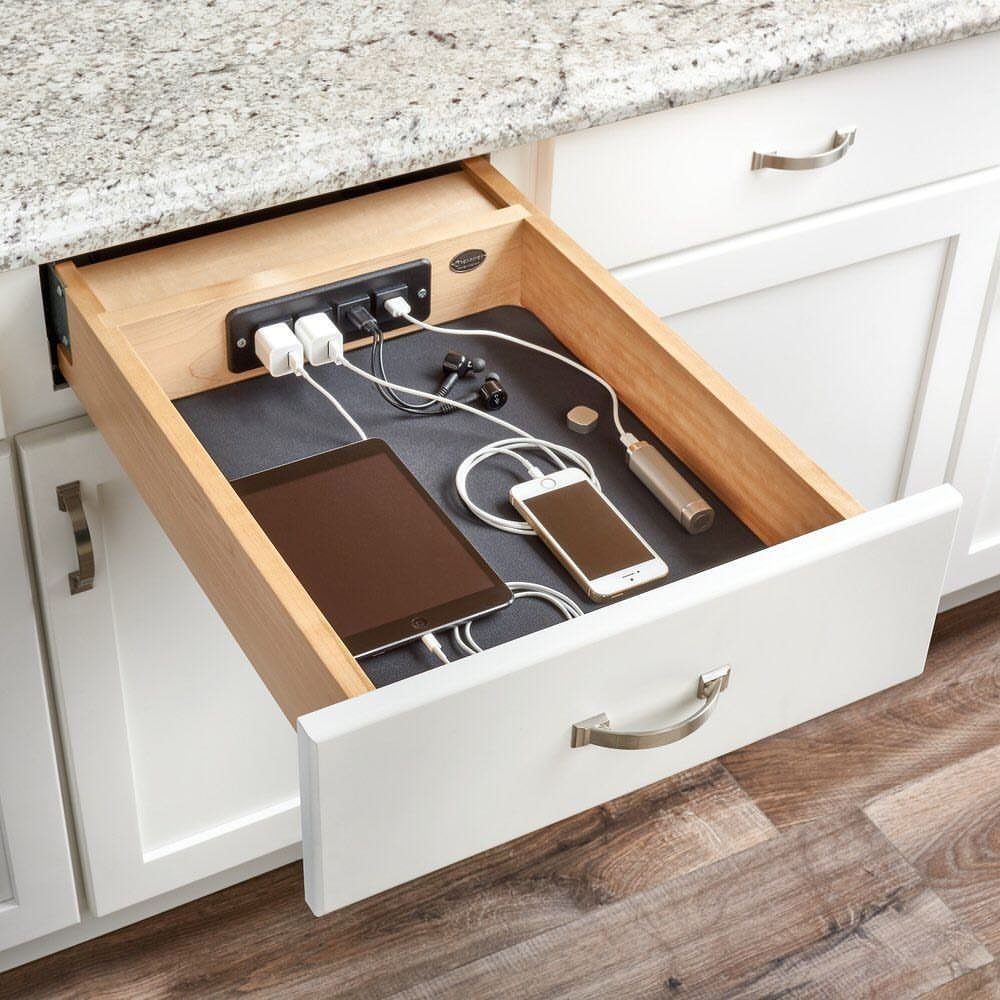
A charging drawer hides phones, tablets and cords behind a cabinet door while they charge.
Mount a power strip inside the drawer, drill a hole in the back for the cord, and plug devices in without leaving them on the counter.
The drawer stays shallow so it does not take up space you would use for pots or dishes. Keep it near an outlet so you are not running an extension cord through the cabinet.
I like this better than a charging station on the counter. Devices stay out of sight and you can close the drawer while they charge.
9. Pull-Out Trash Cabinet
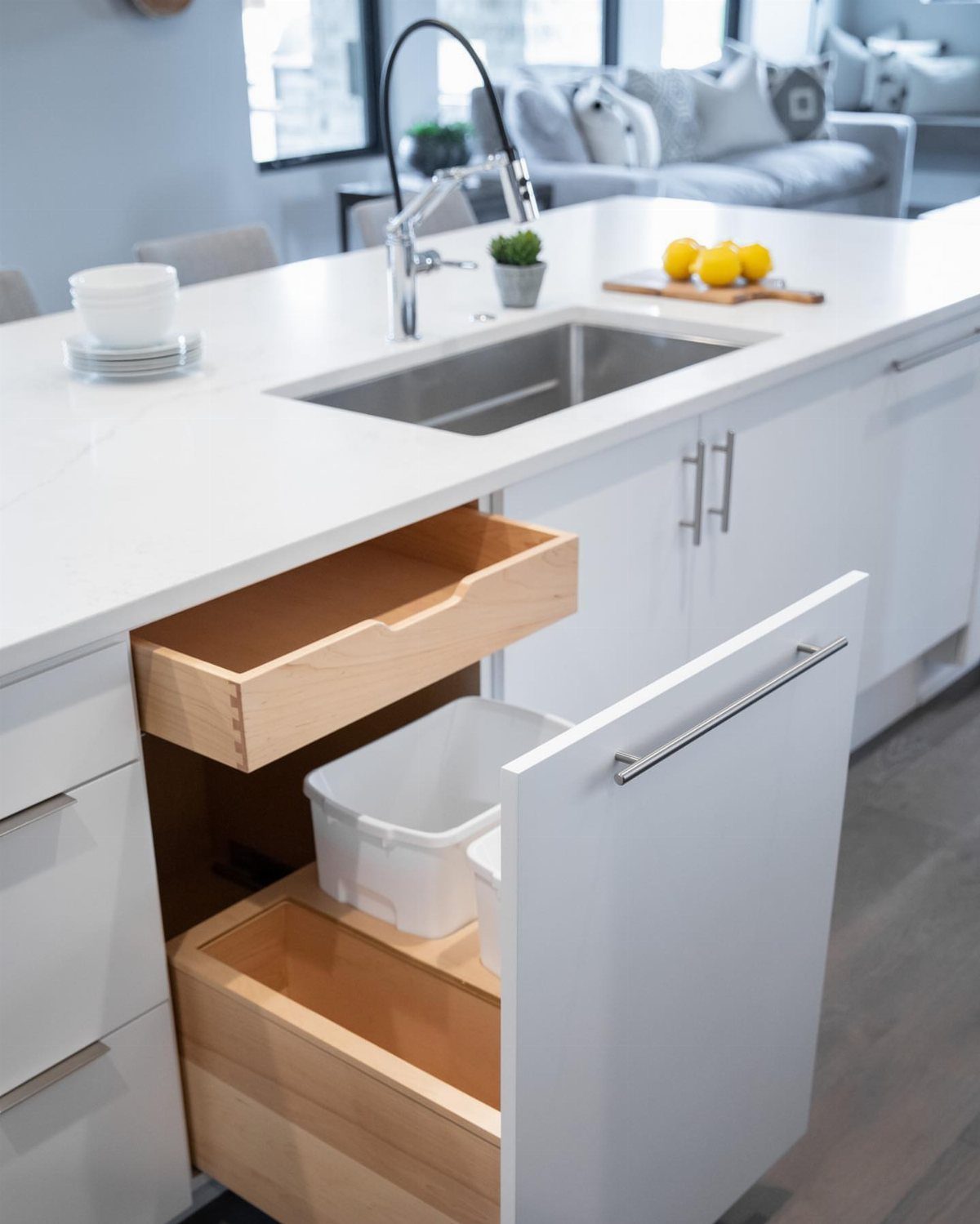
A pull-out trash cabinet slides the bin forward on rails so you drop waste in without opening a door or lifting a lid. The cabinet hides the bin and keeps odors contained.
Measure the bin height before you install the pull-out.
The cabinet needs enough clearance for the bin and the drawer mechanism. Some units hold 2 bins side by side for trash and recycling.
I would put this near the prep area so scraps go straight into the bin. The pull-out keeps the bin accessible without giving up counter or floor space.
10. Hidden Appliance Storage
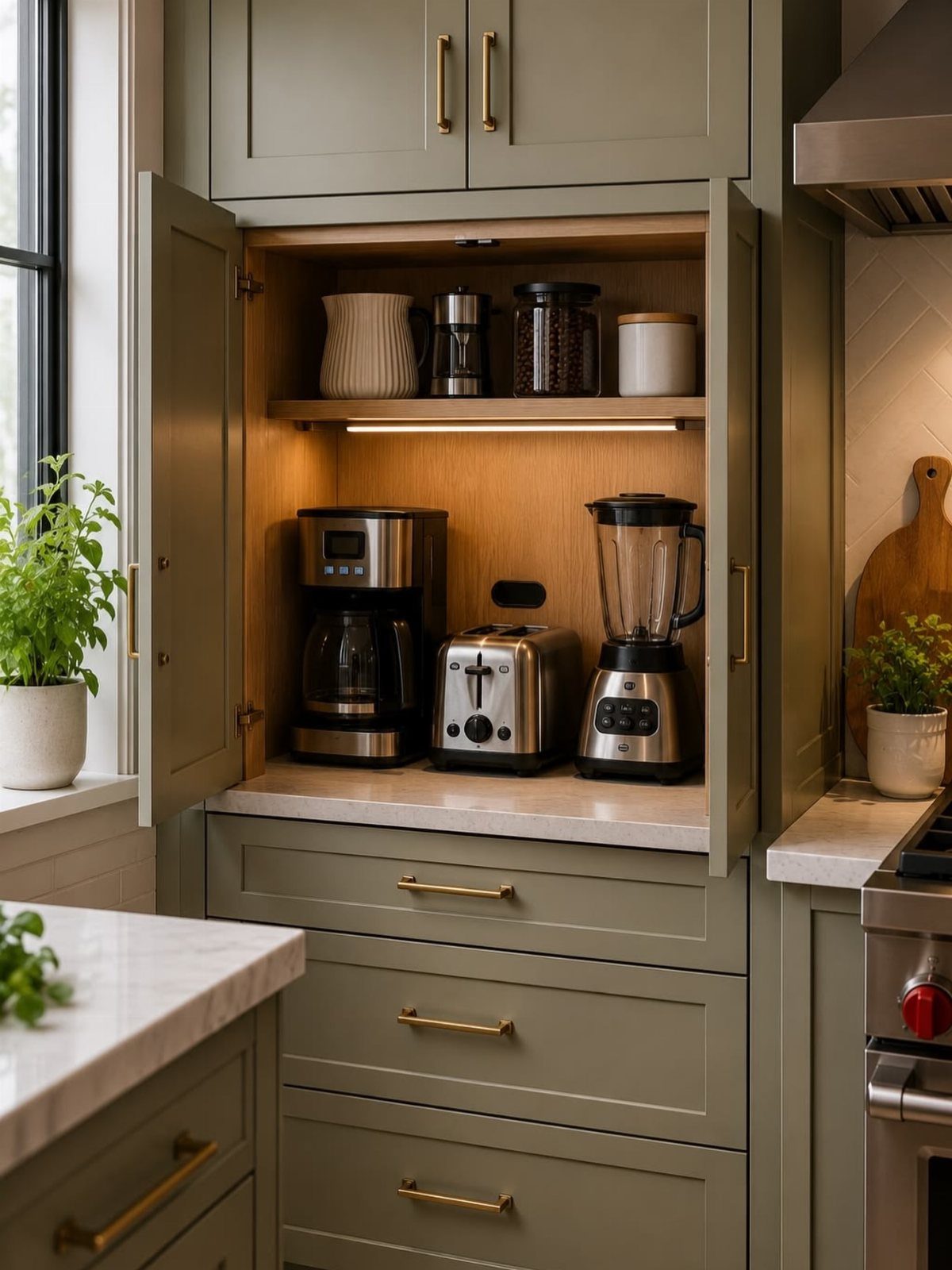
Appliance storage behind cabinet doors keeps the counter clear while leaving coffee makers, toasters and blenders plugged in and ready to use. The cabinet stays open while you use the appliance, then closes to hide it.
You need an outlet inside the cabinet or directly behind it.
Cut a notch in the back panel so the cord can reach the outlet. The shelf should sit at counter height or slightly below so you can lift the appliance out without reaching up.
I use this for appliances I run every day but do not want sitting out. It saves counter space without adding steps.
11. Hanging Pots and Pans
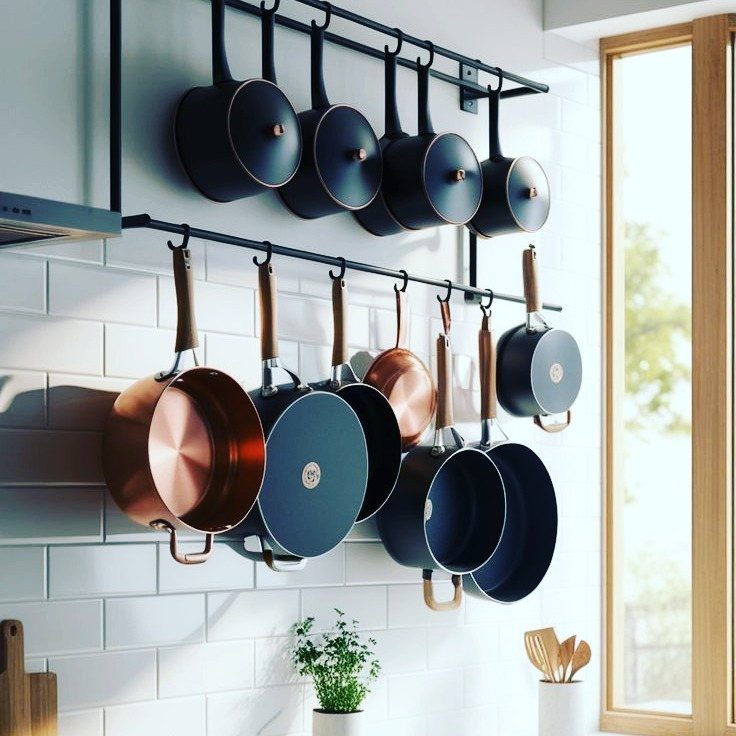
Hanging pots and pans on a wall or rail keeps them in reach and frees up cabinet space for items you cannot hang. Mount a rail or individual hooks, then hang cookware by the handle.
The rail needs to go into studs or use anchors rated for the weight. Space hooks far enough apart that handles do not overlap when pans hang.
I prefer this to stacking pans in a cabinet. You grab what you need without moving 3 other pieces, and cast iron or copper stays where air can reach it.
12. Narrow Pull-Out Spice Rack
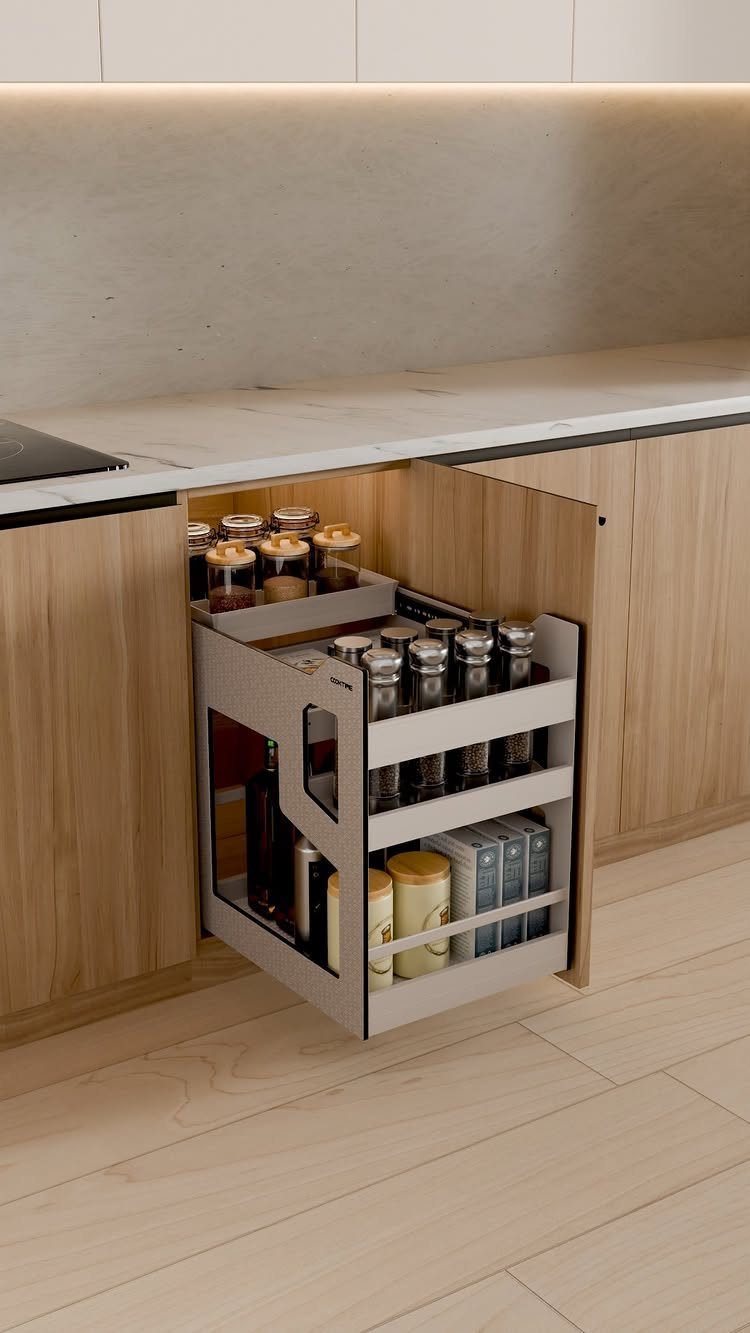
A narrow pull-out spice rack fits into a gap beside the stove or refrigerator and holds jars in tiered rows so you can read every label when you slide it out.
The rack mounts on full-extension rails and pulls the entire depth forward.
Install it in a narrow cabinet that would otherwise sit empty.
The tiers sit shallow enough that standard spice jars fit without tipping. Some racks screw into the cabinet sides, others mount to the door.
Put it next to the cooktop so you can reach spices without crossing the kitchen. Spices stay upright and I do not dig through a drawer to find what I need.
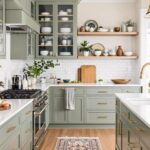
13. Glass-Front Cabinets
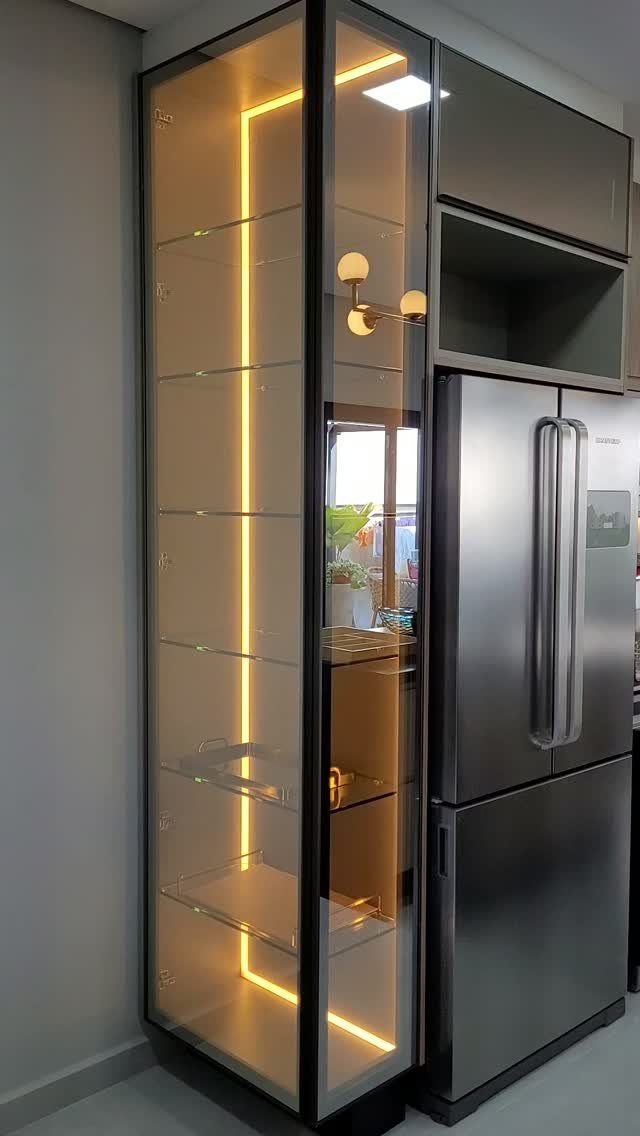
Glass-front cabinets let you display dishes or glassware you want visible while keeping dust off. The glass fits into the door frame exactly where a solid panel would go.
I like them for items I use often enough to keep close but want to look at: a set of white dishes, colored glassware, or a few pieces that match the kitchen.
If what sits behind the glass does not look intentional, the cabinet draws attention to clutter instead of hiding it.
14. Pantry Storage Bins
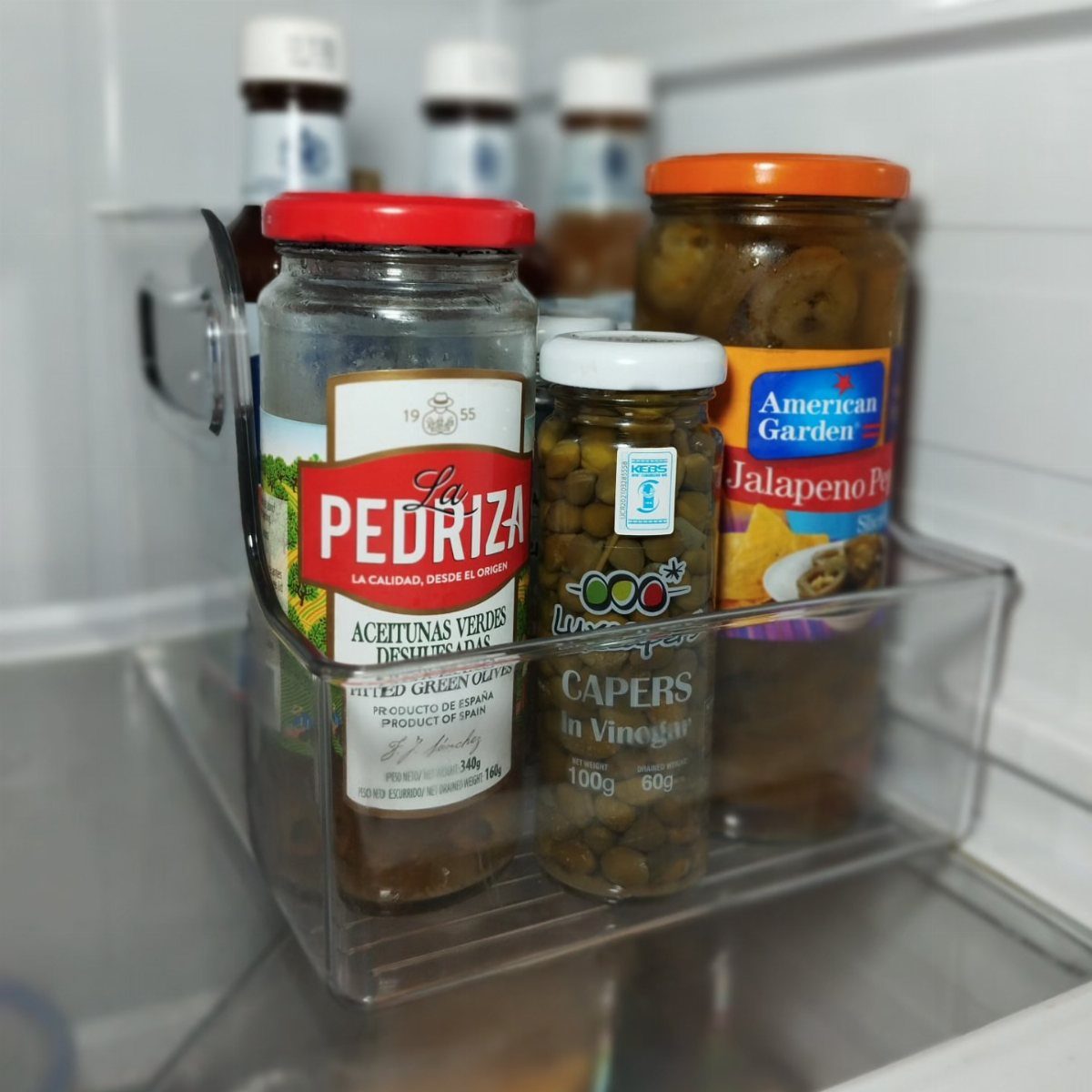
Bins corral loose items so you can pull the whole group forward instead of reaching past jars and boxes to find what sits in back. Use clear plastic so you can see what is inside without opening the lid.
Group by type: snacks in one bin, baking supplies in another, or condiments together. The bin keeps small jars from tipping and spreads the cabinet’s depth into rows you can pull out one at a time.
I use them in deep cabinets where items migrate to the back. The bin brings everything forward at once.
15. Floor-to-Ceiling Cabinets
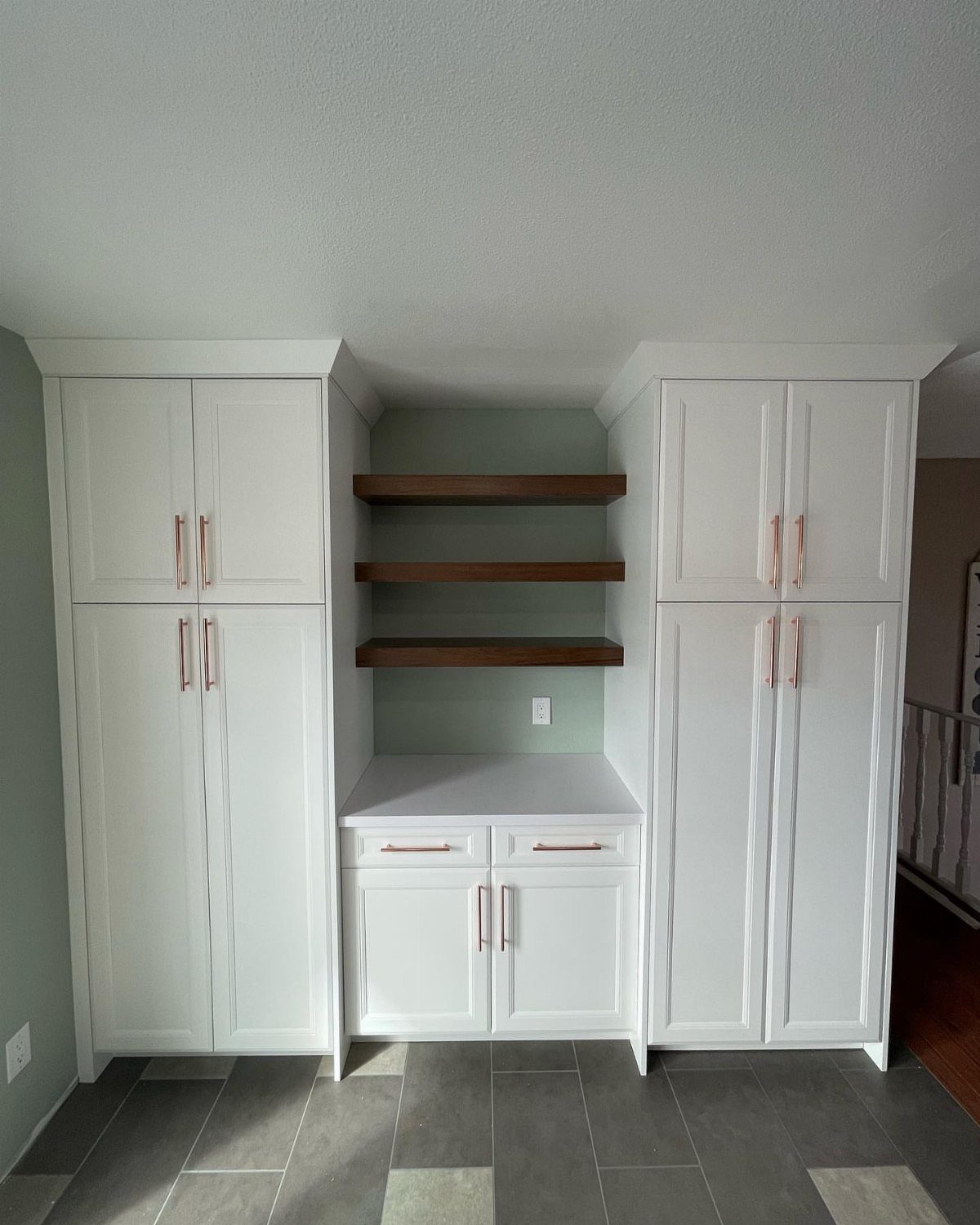
Floor-to-ceiling cabinets use the full wall height for storage instead of stopping at the standard upper cabinet line. The extra height adds shelves for items you do not reach for daily.
Install them where you have the ceiling clearance and want to store seasonal dishes, serving platters or bulk pantry items.
The top shelves sit high, so keep a step stool nearby or put things up there you only pull down a few times a year.
I would use the lower shelves for everyday items and the upper ones for overflow.
16. Rounded Cabinets
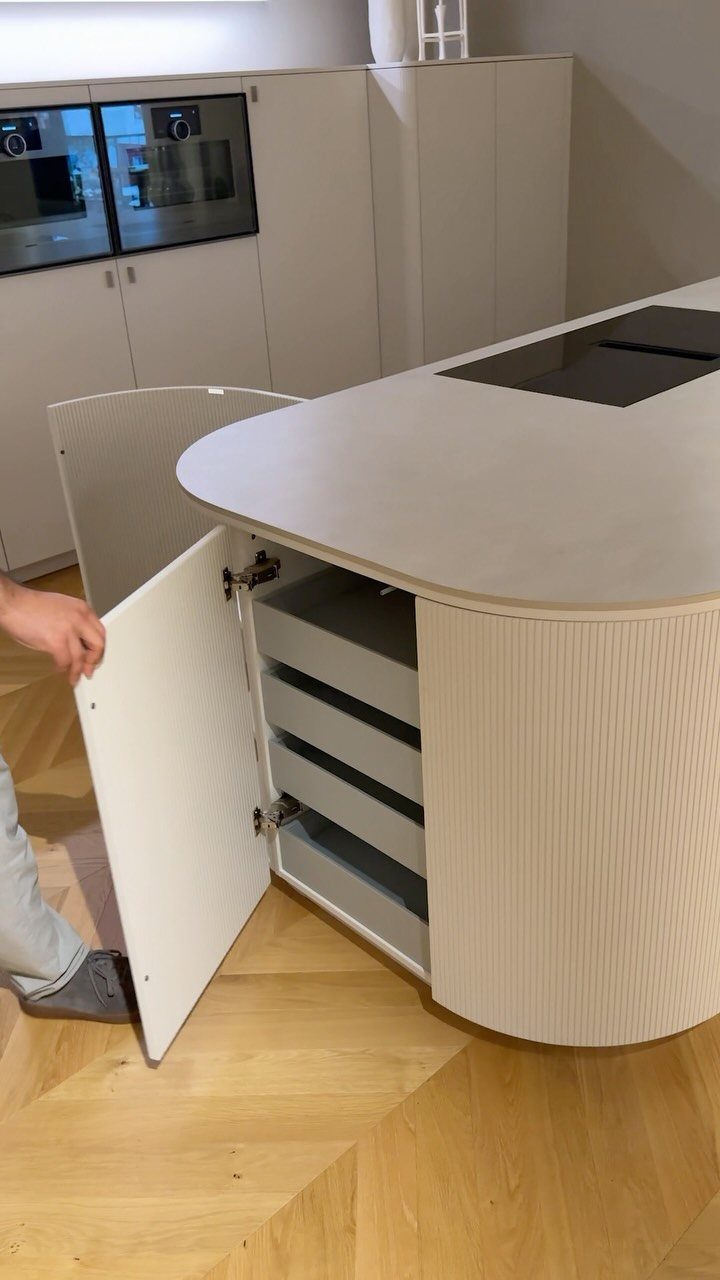
Rounded cabinets follow a curved counter or island edge so you do not catch your hip on a sharp corner when you move through the kitchen. The cabinet door curves to match the counter’s radius.
They fit kitchens with curved islands or peninsulas. The rounded edge softens the layout and opens up walking space, but the cabinet interior loses some depth compared to a square corner.
I prefer the rounded edge in a kitchen where traffic flows around the island. The tradeoff in storage is small and the movement feels easier.
17. Mixer Lift Cabinet
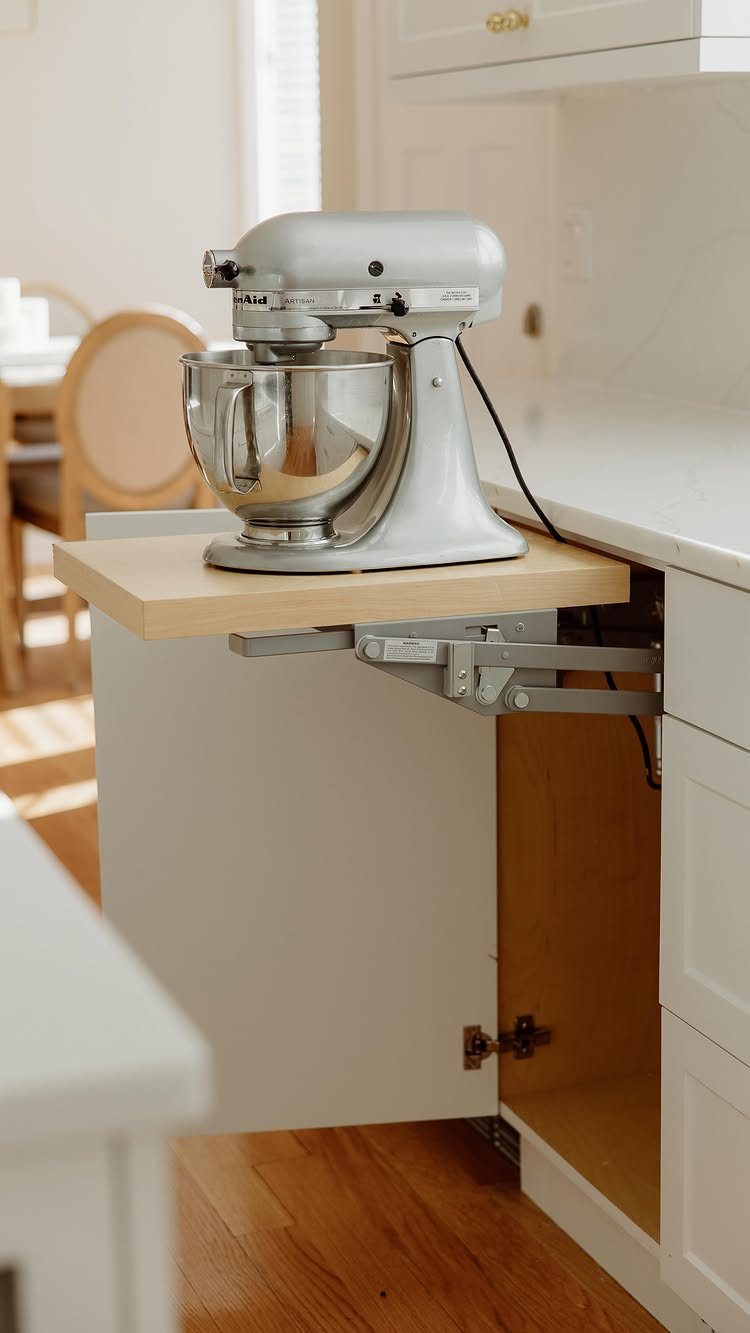
A mixer lift raises a stand mixer from inside a lower cabinet to counter height on a spring-loaded or pneumatic platform. Press down and the platform lowers the mixer back into the cabinet.
Mount the lift in a base cabinet near your prep area. Measure your mixer first so you buy the right lift size.
I would install this only if I use the mixer often enough that pulling it out of a cabinet every time gets old. The lift saves your back but takes up a full cabinet.
18. Pull-Out Sink Caddy
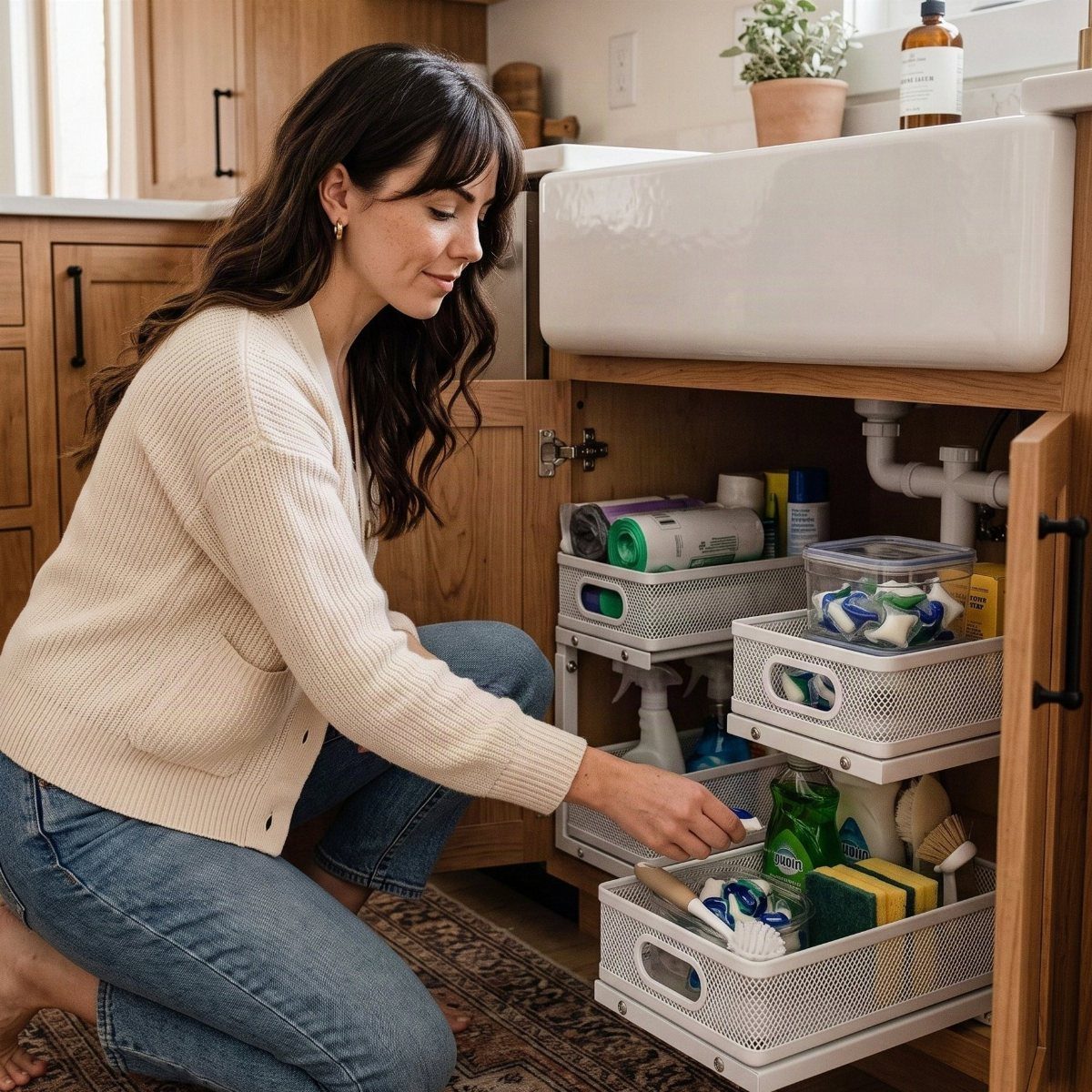
Pull-out sink caddies sit on rails under the sink and slide forward so you can reach cleaning supplies without leaning in past the pipes. The baskets sit shallow and wide to fit around plumbing.
Mount them on the cabinet floor or hang them from the door. Mesh or wire baskets drain if something leaks, and you can see what sits inside without pulling the whole thing out.
It holds dish soap, sponges, trash bags and anything else that lives under the sink.
19. Water Bottle Rack
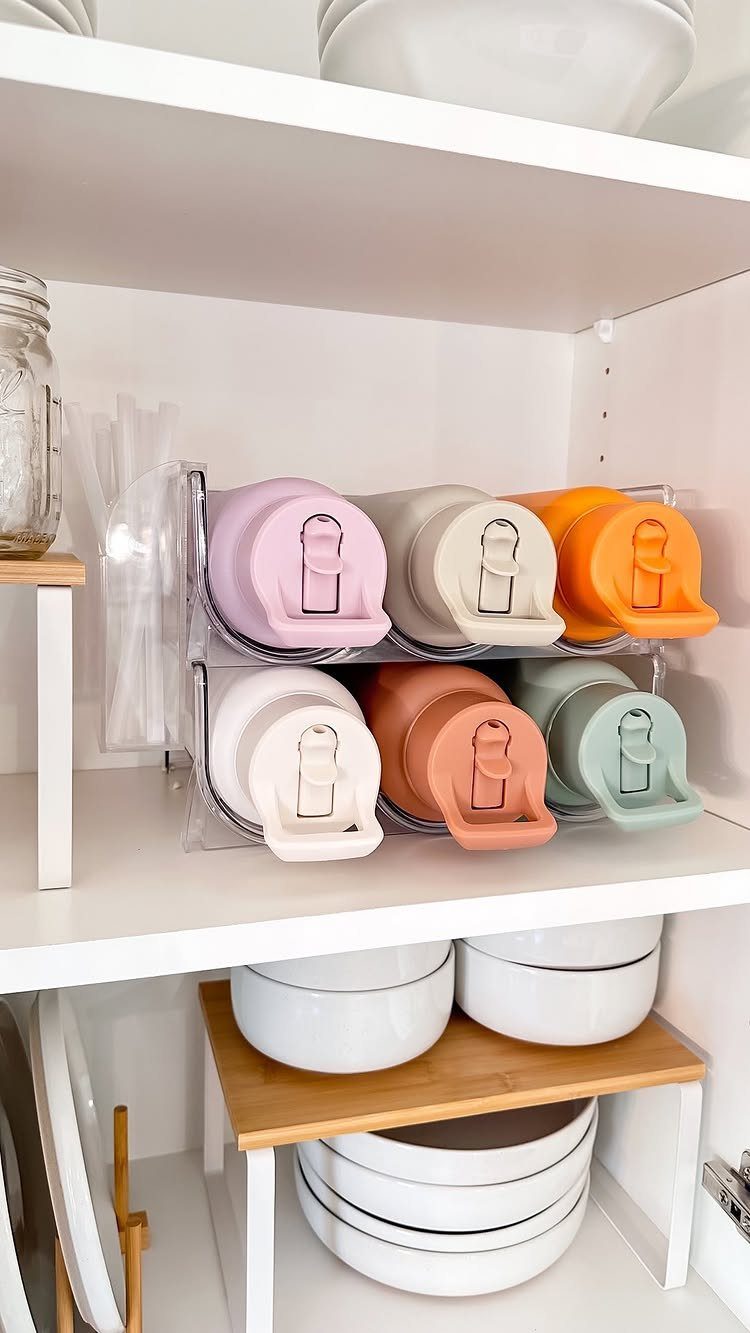
A water bottle rack holds reusable bottles horizontally in tiers so you can see every one and pull it out without knocking the rest over.
The rack sits on a shelf inside a cabinet and stacks bottles one or two deep.
Use it in a cabinet near the sink or fridge where bottles go after you wash them. Acrylic or wire racks work best because you can see through them to the bottles behind.
Upper cabinets work well for these. I can grab one without digging through a pile.
20. Adjustable-Peg Dish Drawer
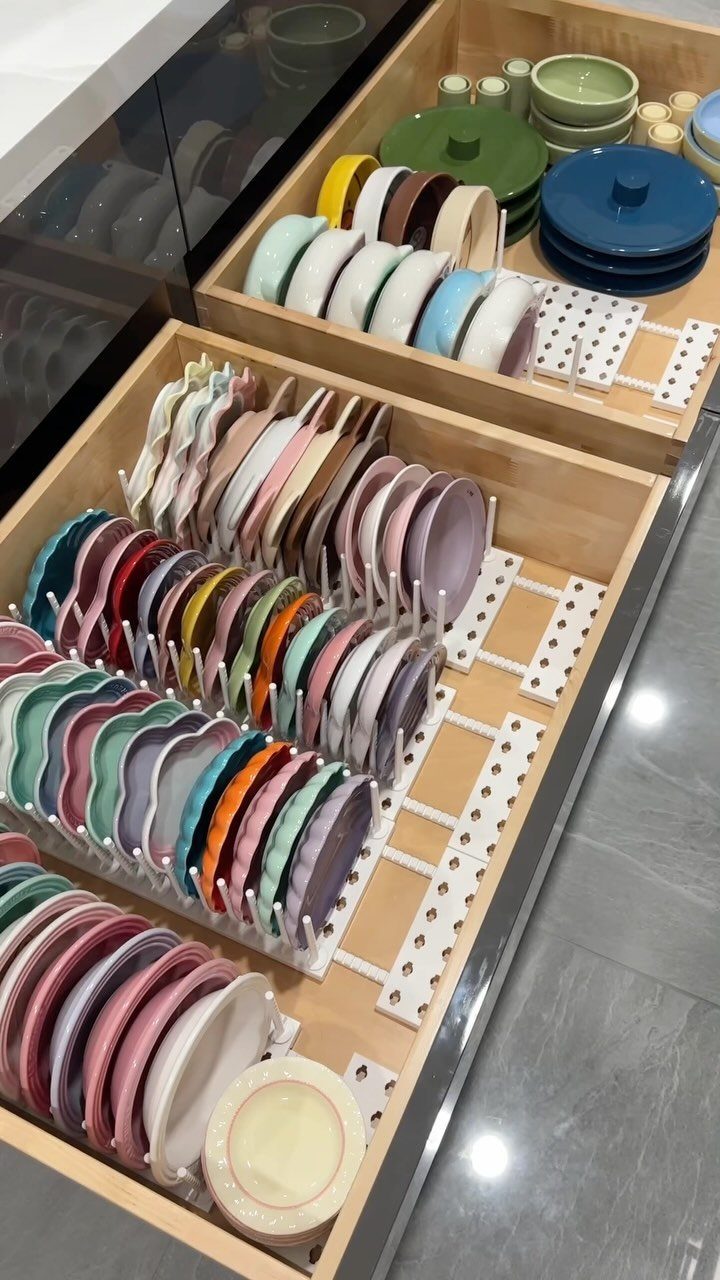
Adjustable pegs fit into holes drilled in a drawer base and hold dishes upright in rows so they do not slide or chip when you open the drawer.
Move the pegs to fit different plate sizes or stack bowls between them.
The pegs screw into pre-drilled holes spaced an inch or two apart. Some drawers come with the holes already in place, others you drill yourself using a template.
Store everyday dishes in a lower drawer near the dishwasher so you can unload straight into it. The pegs keep plates from shifting and I can fit more in one drawer than I could stacking them flat.
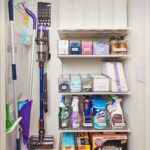
21. Broom Closet Pantry
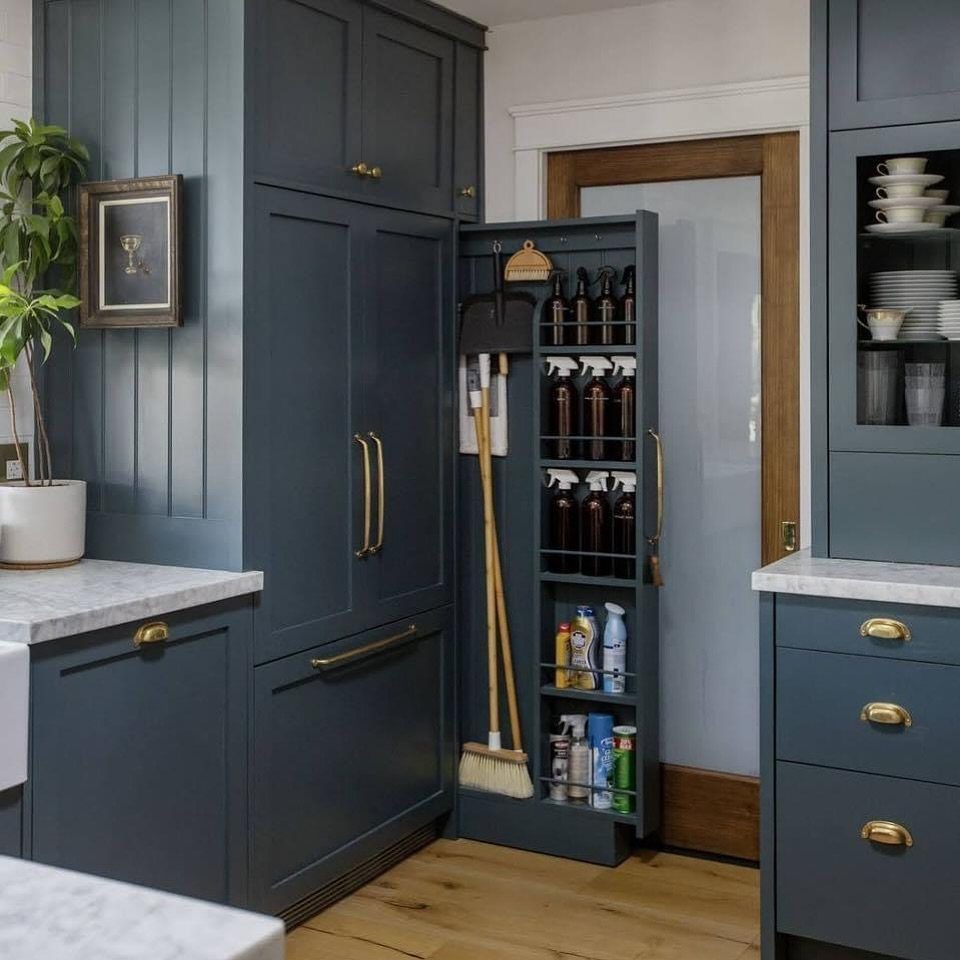
A narrow cabinet that held a broom and mop can hold pantry items or cleaning supplies on shallow shelves instead. The cabinet stays tall and slim, and the shelves sit close together to fit canned goods, spices or bottles upright.
Pull out the broom holder if one is mounted inside, then add fixed or adjustable shelves. Some cabinets let you keep the broom on one side and add shelves on the other.
Put pantry items you reach for often on the middle shelves and cleaning supplies on the bottom where spills stay contained.
22. Floating Shelves
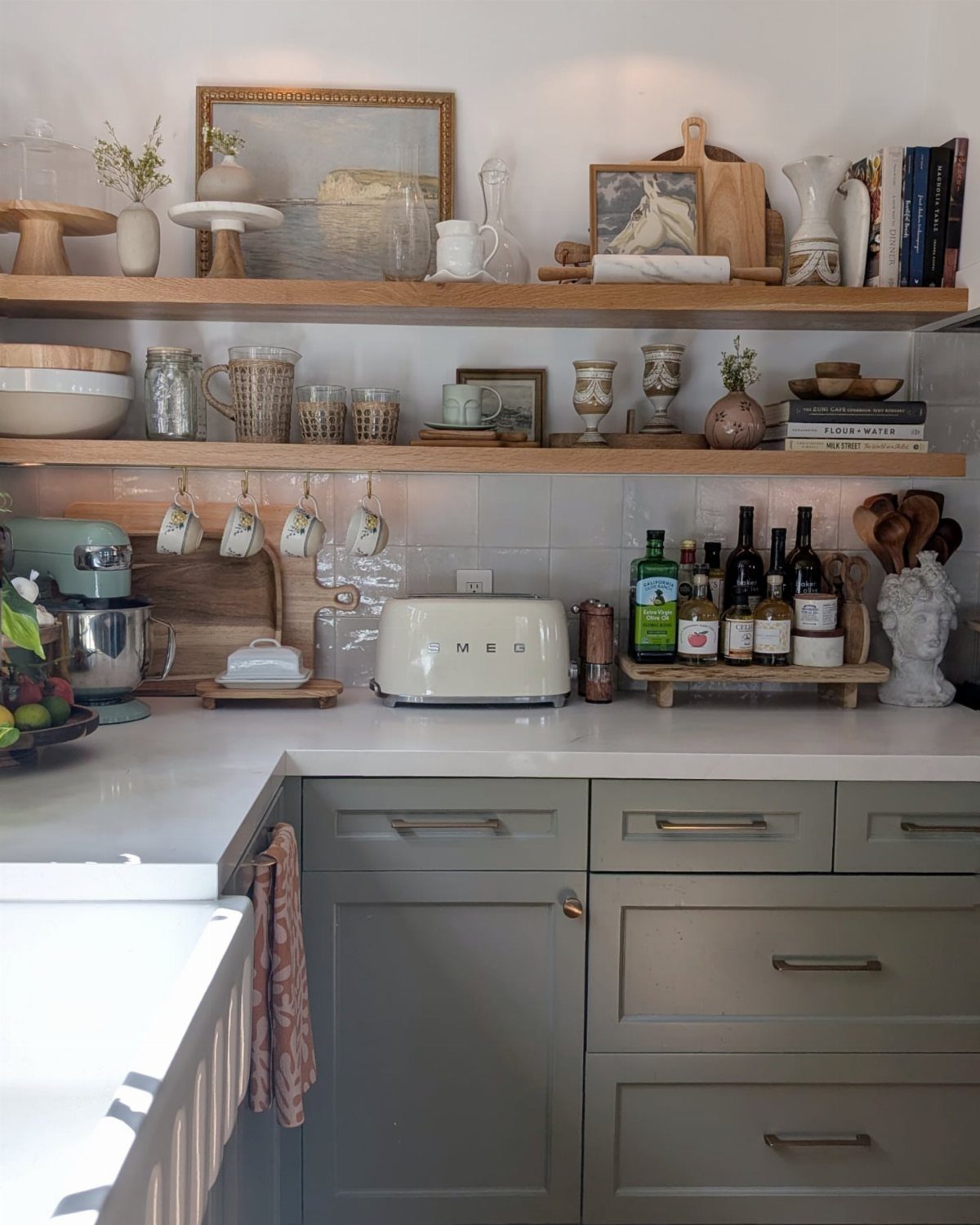
Floating shelves mount directly to the wall without visible brackets and hold dishes, glassware or small appliances you use often enough to keep in reach. The shelves sit open so you can grab what you need without opening a door.
Space shelves far enough apart so you can fit dinner plates or mugs without crowding.
I use them for items I want visible and do not mind dusting. They open up a kitchen that feels closed in by upper cabinets.
Storage Reduces Kitchen Clutter
Cabinet storage keeps counters clear for prep work and puts cookware where you can reach it without opening three doors to find one pan.
I put cutting boards, sheet pans and lids in vertical dividers so I can pull one out without moving the stack.
Heavy bowls go in pull-out shelves so I am not lifting from a crouch. Spices sit in a narrow rack next to the stove.
The more you can see without bending or digging, the less time you spend hunting for what you need.
Storage that brings items forward or holds them upright means you use what you own instead of forgetting it sits in the back.
Smart storage and some savvy kitchen organization ideas can maximize efficiency and even save you precious meal prep time.
Custom Cabinetry and Space
Custom cabinets fit the exact dimensions of your kitchen and use spaces standard units leave empty.
A cabinet maker measures the room, then builds storage that fills gaps beside the refrigerator, fits around pipes under the sink, or uses the height between the counter and ceiling.
Personalized layouts put drawers, shelves and pull-outs where you need them instead of where a stock cabinet puts them.
A designer can plan storage around how you cook and where you keep appliances, so everything sits within reach of where you use it.
Narrow spaces at the end of a cabinet run, the area under the sink, or a recess in the backsplash can hold pull-outs, charging drawers or built-in niches when planned from the start.
Plan Storage Around Daily Use
Plan storage around what you reach for most and where you stand when you use it.
Put deep drawers near the stove for pots and sheet pans. A narrow pull-out for spices works best next to the cooktop, not across the kitchen.
Charge devices in a drawer near an outlet so cords stay short and hidden.
Built-in organizers, pull-outs and custom dividers need to be part of the design before cabinets go in. Decide where storage fits and what it holds before the cabinet maker cuts the openings.
Frequently Asked Questions
What are some effective storage solutions for cupboards?
Slide-out trays and stepped risers mean nothing gets lost in the back corner.
Corner cabinets work better with lazy Susans or two-tier pull-outs that bring items forward instead of leaving them hidden. Clear bins group loose pantry items so you can pull the whole bin out at once.
What are the types of storage cabinets?
Base cabinets hold heavy cookware and appliances in deep drawers or on pull-out shelves, while upper cabinets store dishes and glassware within reach.
Pantry cabinets run floor to ceiling for bulk items and seasonal dishes. The deep ones with a blind corner stay half-empty unless you install a lazy Susan or a pullout rack.
How do I organize kitchen cabinets for maximum storage?
Store items where you use them: pots near the stove, dishes near the dishwasher, spices next to the cooktop.
Standing baking sheets and pot lids on edge in a divider saves the full height of the cabinet. Gliding shelves and stair-step risers mean you can see and grab anything without moving what’s in front.
Do I have enough kitchen storage?
When appliances pile up on the counter and reaching the back of a shelf means unloading the front, the fix is usually better organizing, not more cabinets.
Pull-out shelves, vertical dividers and drawer organizers let you use the full depth and height of cabinets you already have. Custom cabinets fill gaps beside the refrigerator or under the sink that standard units leave empty.