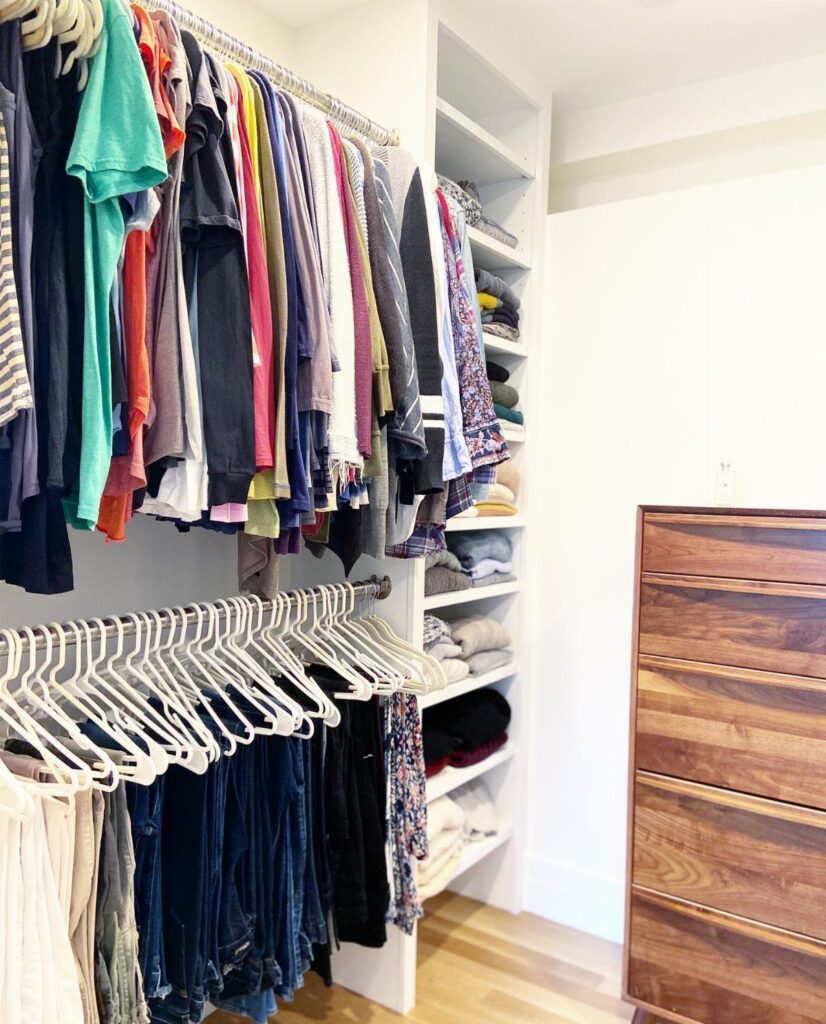

A second rod under the first one doubles your hanging space when most of what you own is short, and pull-out racks slide forward so you can reach clothes at the back without pushing other hangers aside.
Pick ideas that match how much floor and wall area you have to work with: a cube unit or a dresser needs clearance under hanging clothes, while pegboard, wall-mounted rods and hooks use vertical space when the floor is already full.
Stick-on LED strips under shelves make it easier to see folded stacks and bins in a dark closet, and file folding stands clothes upright in a drawer so you see everything at once.
1. Double Hanging Rods
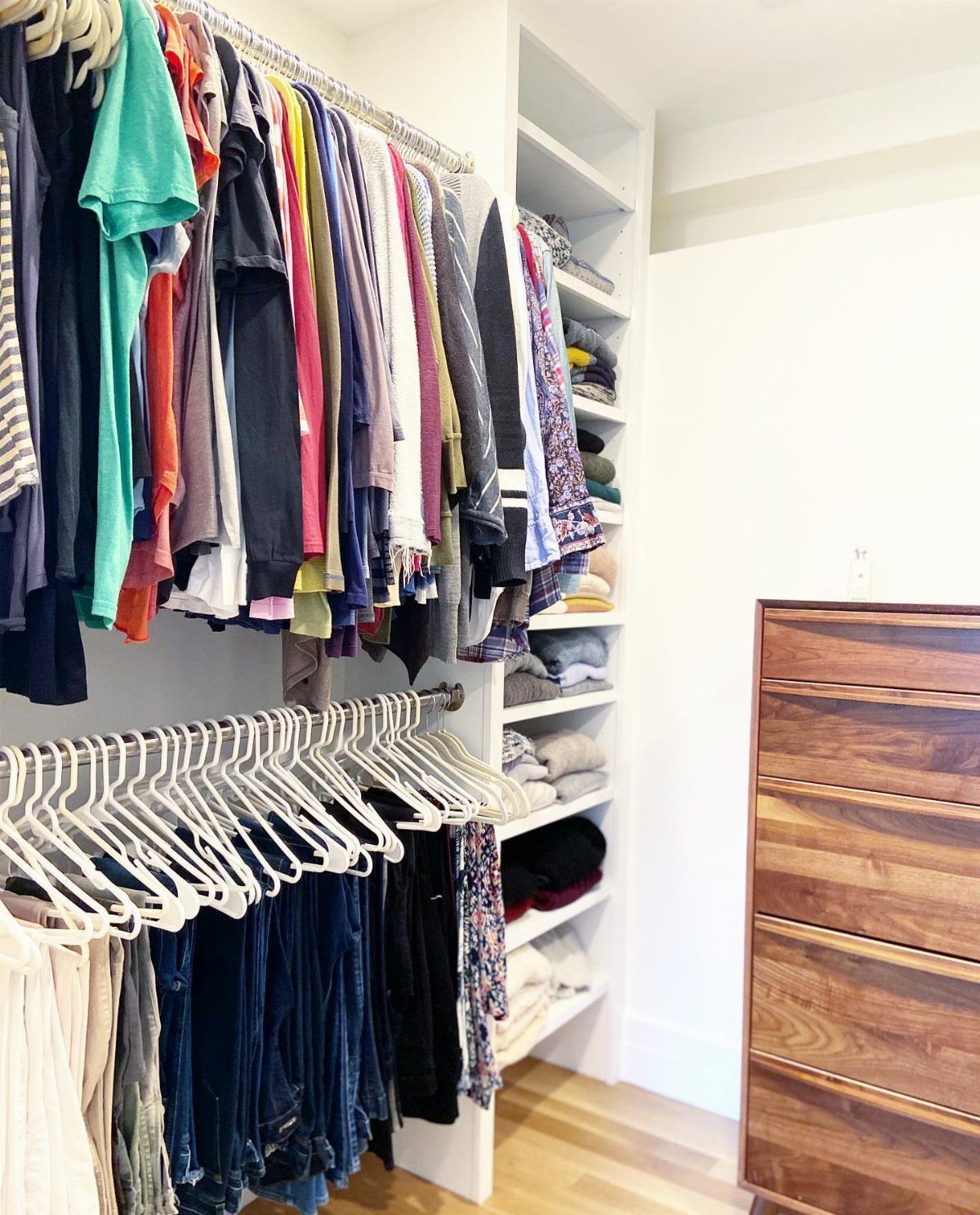
A second rod below the first lets you hang shirts over pants or skirts over blouses, doubling what fits on one wall.
Most closets come with a single bar set high, which leaves a lot of empty air below short clothes.
You can add a lower rod with a tension bar, brackets screwed into the side walls, or a drop-down rod that hangs from the upper bar. Measure the depth of your hanging clothes first so both levels clear each other.
You get the most out of it when most of what you own falls into the short category. If you hang a lot of dresses or long coats, save one section for full-height hanging and double up the rest.
Godding’s favorite product to double the amount of hanging space in the closet is what she calls a “ closet rod doubler ” because “the sides can be adjusted up and down depending on length.”
2. Seasonal Storage
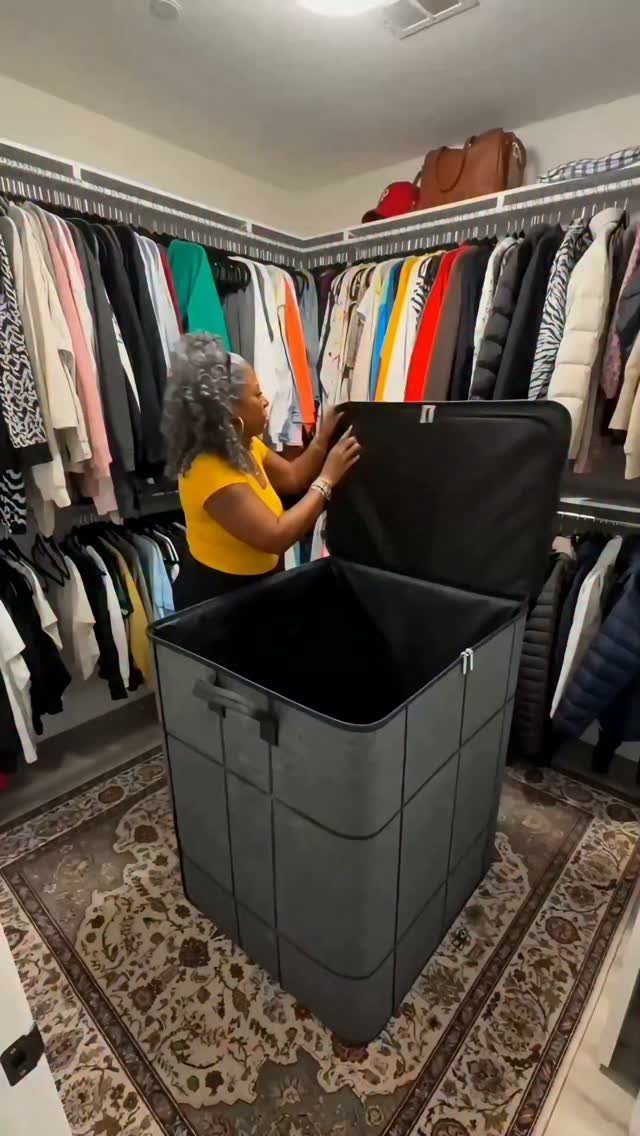
Pack away the clothes you won’t wear for months and you’ll free up half the closet.
Winter coats, bulky sweaters, and boots can sit in bins under the bed or on a high shelf until fall, and summer dresses and sandals can go into storage once the weather turns.
Fabric bins with lids keep dust off and stack easily. I like the kind with a clear window so I can identify what’s in there before I open it.
Label each bin by season or category. When it’s time to swap, you pull one bin down and put the other up, and the whole closet resets fast.
3. Add Shelves
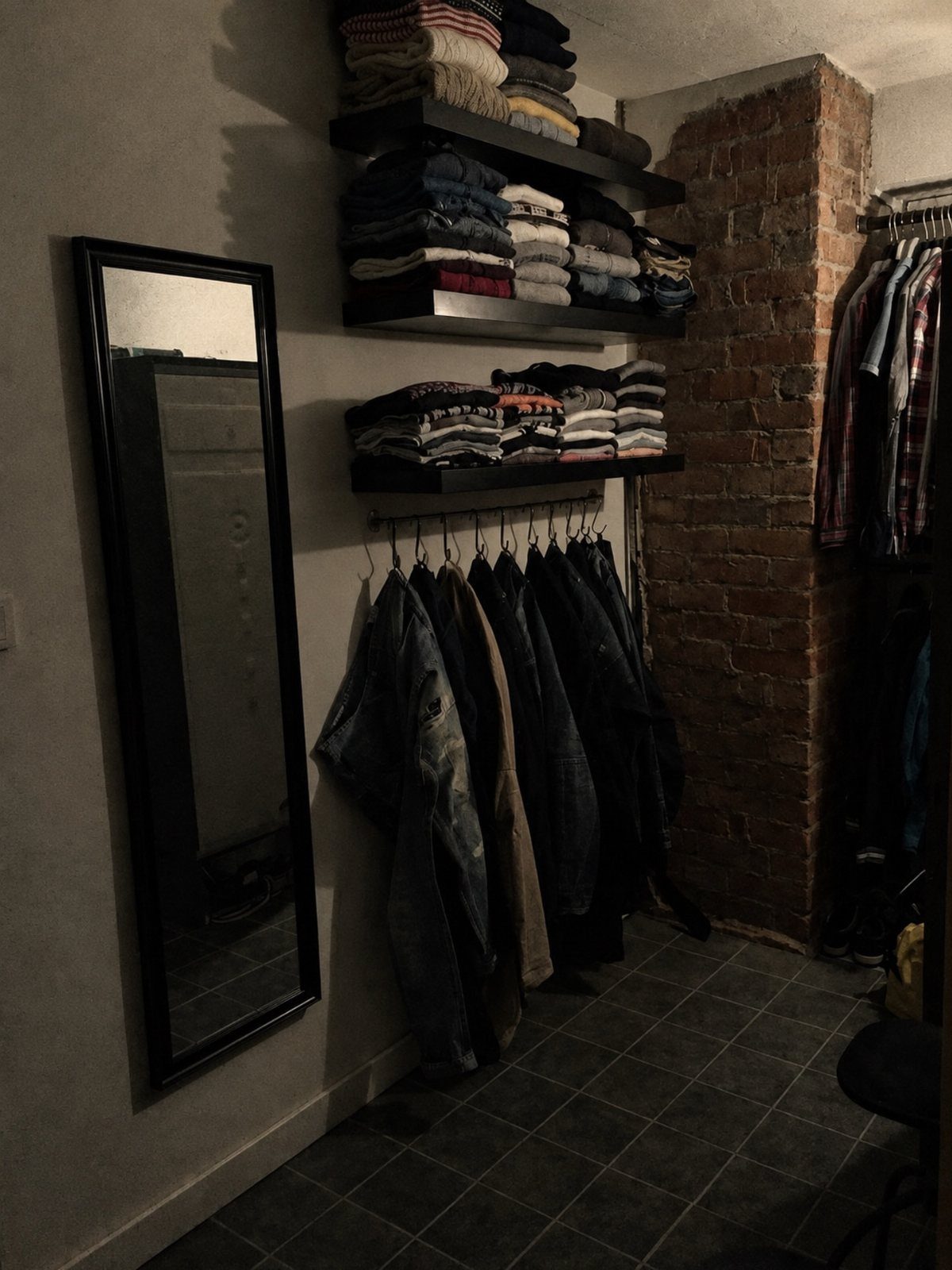
Shelves turn vertical wall space into surfaces for folded sweaters, jeans, bags, or bins. Most closets waste the area above the hanging rod or beside it, and a few shelves fill that gap and leave the floor clear.
Floating shelves go up with brackets, and adjustable track systems let you move the height as your needs change.
Stack folded items no more than a few high so you can pull one out and the pile stays upright. Bins on the shelves keep smaller things like scarves or belts from sliding around.
4. Use a Dresser
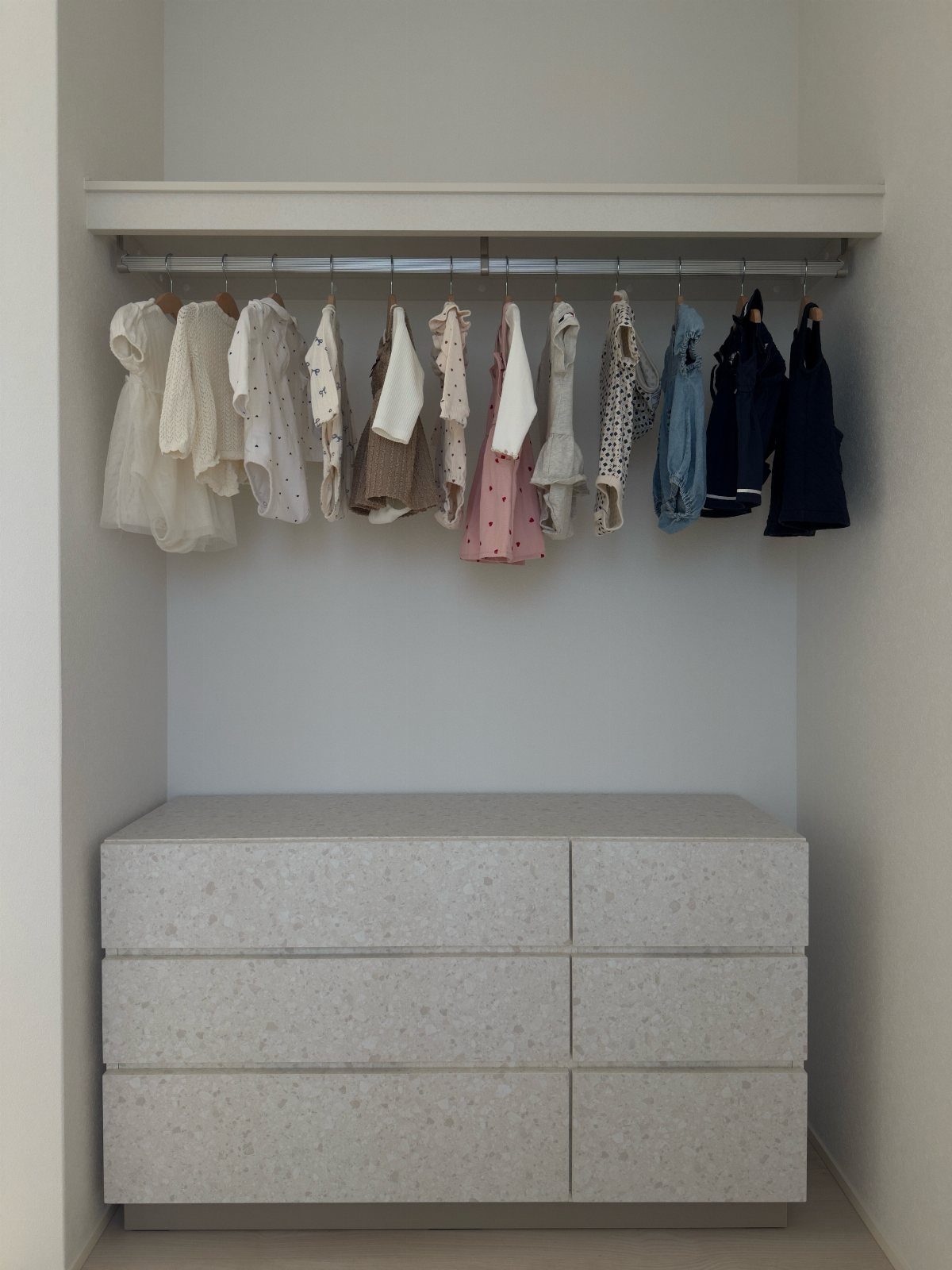
A dresser inside the closet gives you drawer space and keeps the bedroom floor clear. If the closet is wide enough, you can slide a low dresser under the hanging rod and still have clearance above it.
It fits a reach-in closet where the door opens wide and you can pull the drawers all the way out. Measure the depth of the closet first so the dresser doesn’t block the door or jam against the back wall.
Use the top of the dresser for folded stacks, a tray for jewelry, or a basket for things you grab on the way out. It’s extra surface space you wouldn’t have if the dresser sat in the room.
5. Behind-door Storage
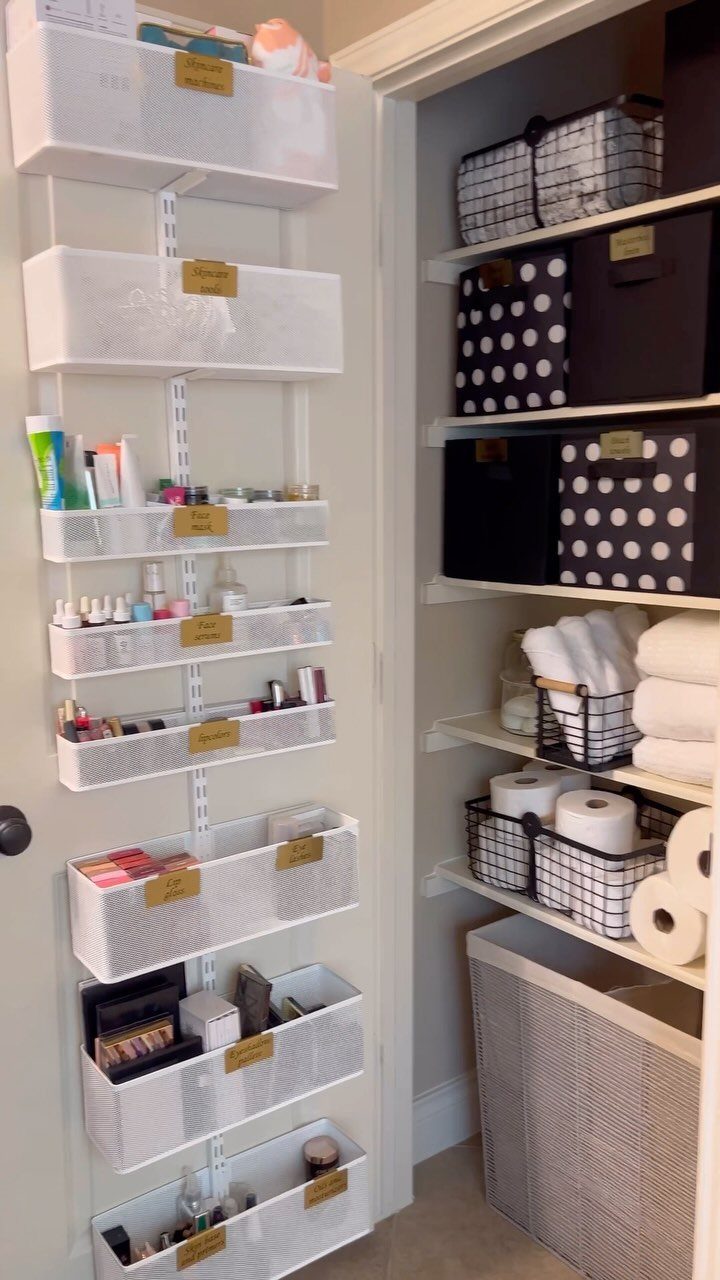
The back of a hinged door is a flat surface that holds an organizer without touching the closet walls. Hang an over-the-door rack with pockets for shoes, a grid for belts and scarves, or hooks for bags and hats.
Over-the-door organizers slide onto the top edge of the door and need no tools.
The person who set up this one has been using it for 3 years and it still works. Check the clearance between the door and the frame so the organizer doesn’t jam when you close it.
Keep the things you reach for every day here. If you load it too heavy, the door won’t swing smoothly, so save it for lightweight items like accessories or toiletries.
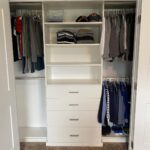
6. Install a Closet System
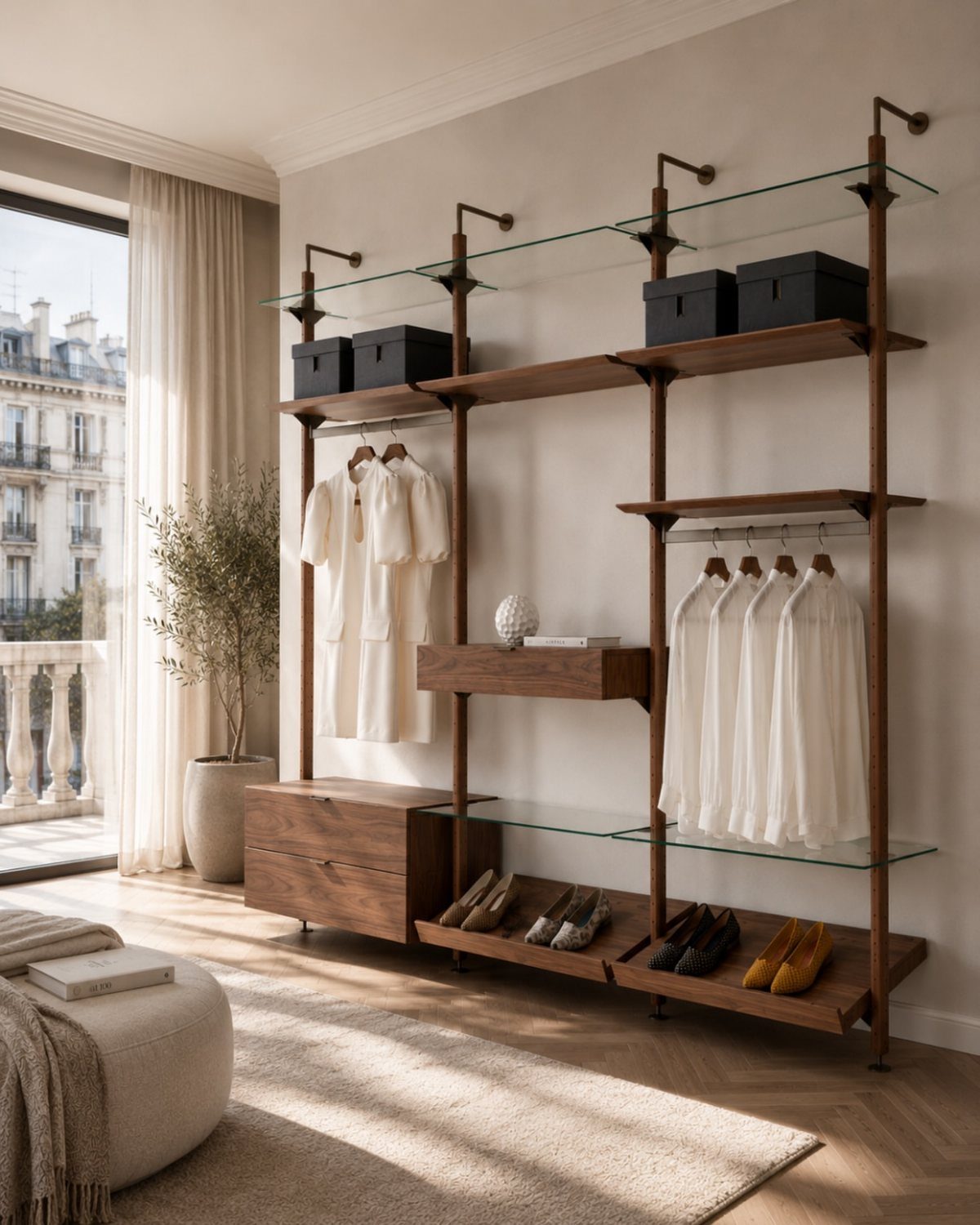
A closet system gives you adjustable shelves, multiple rods, and compartments sized to what you actually own. You can set the height of each shelf, add or remove hanging sections, and build in cubbies for shoes or folded clothes.
Modular systems come in kits you assemble yourself, and custom systems are built to fit the exact dimensions of your closet. Both options let you change the layout later if your storage needs shift.
Measure the closet width, depth, and height before you shop so the system fits without gaps or overhang. If you rent, look for freestanding units that don’t require drilling into the walls.
7. Use Labeled Bins
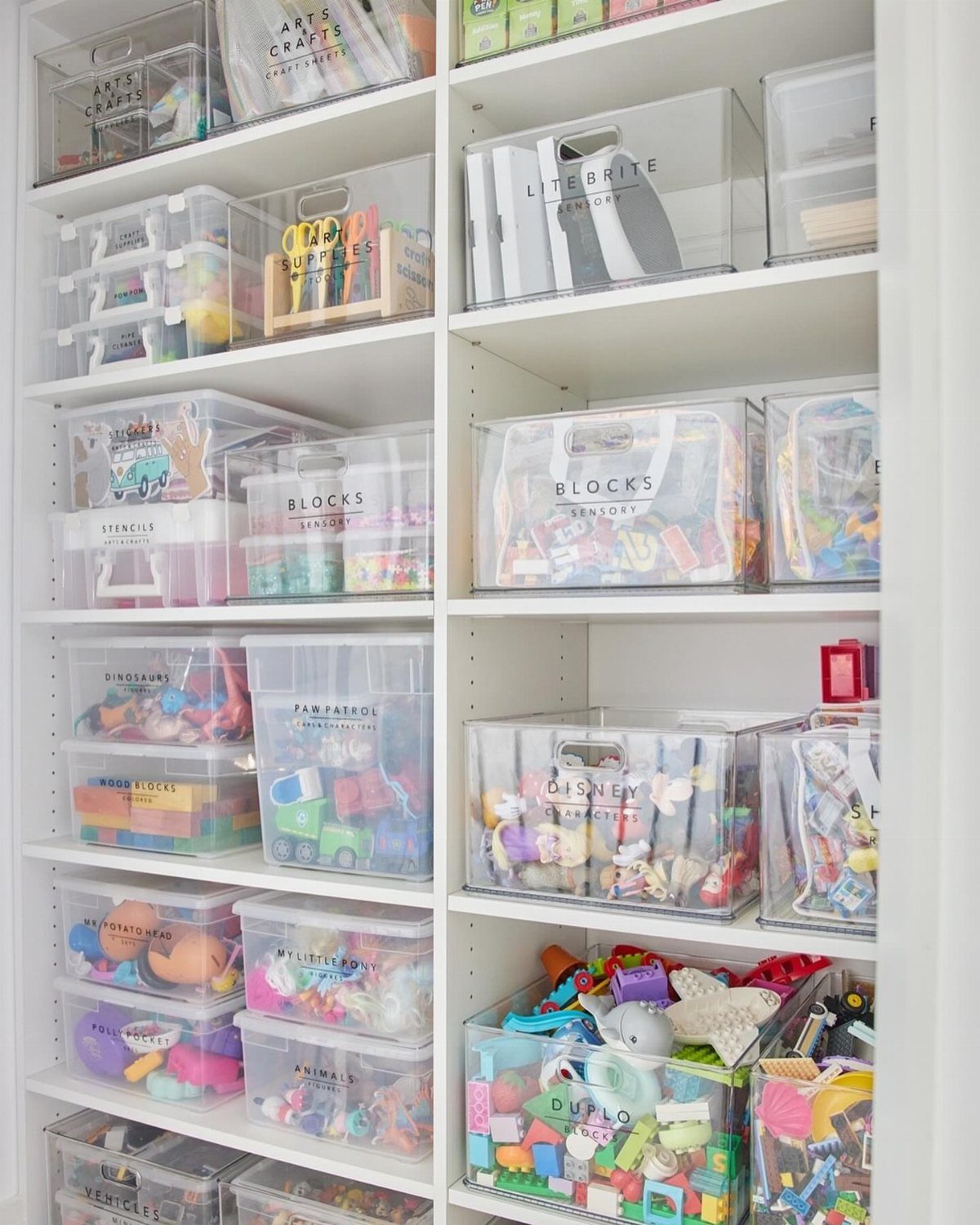
Bins with labels let you find things fast without opening every container. Write the category on a label or use a label maker, stick it on the front, and you know what’s inside from across the room.
Clear bins show the contents, but opaque bins keep things looking uniform if the closet is visible from the bedroom. Either way, the label does the work so you don’t have to remember which bin holds what.
Group similar items together.
One bin for scarves, one for workout clothes, one for out-of-season accessories. When everything has a place, it goes back to that place.
8. Hanging Shelves
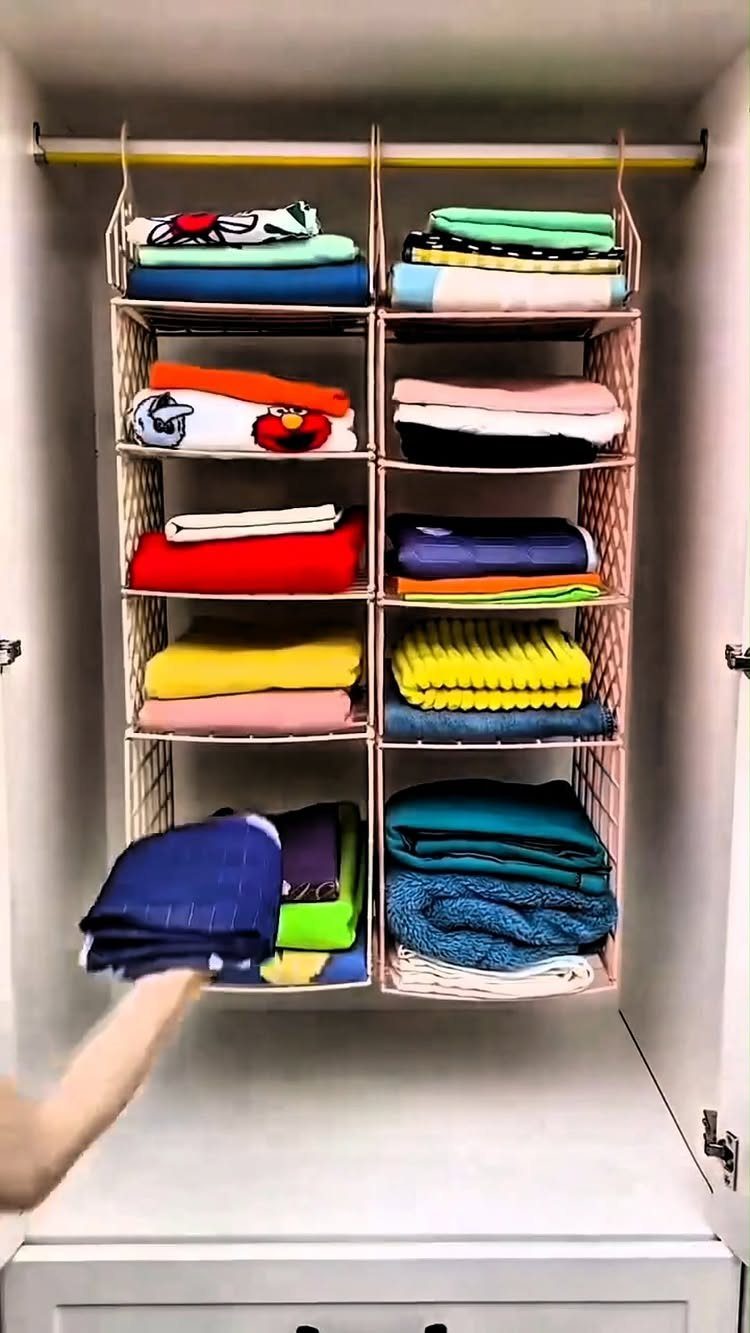
A hanging shelf organizer drops from the closet rod and gives you cubbies for folded clothes, bags, or shoes while the floor stays clear.
Each compartment holds a few folded items, and everything sits in view instead of buried in a drawer.
Fabric ones are lightweight and fold flat when you’re not using them. Some come with a stiff backing that keeps the shape even when the cubbies are empty.
Hang it between 2 sections of clothing so the sides stay clear and you can reach into each cubby. It works best for things you grab often, since pulling from a middle compartment can be awkward if it’s packed tight.
9. Stackable Storage
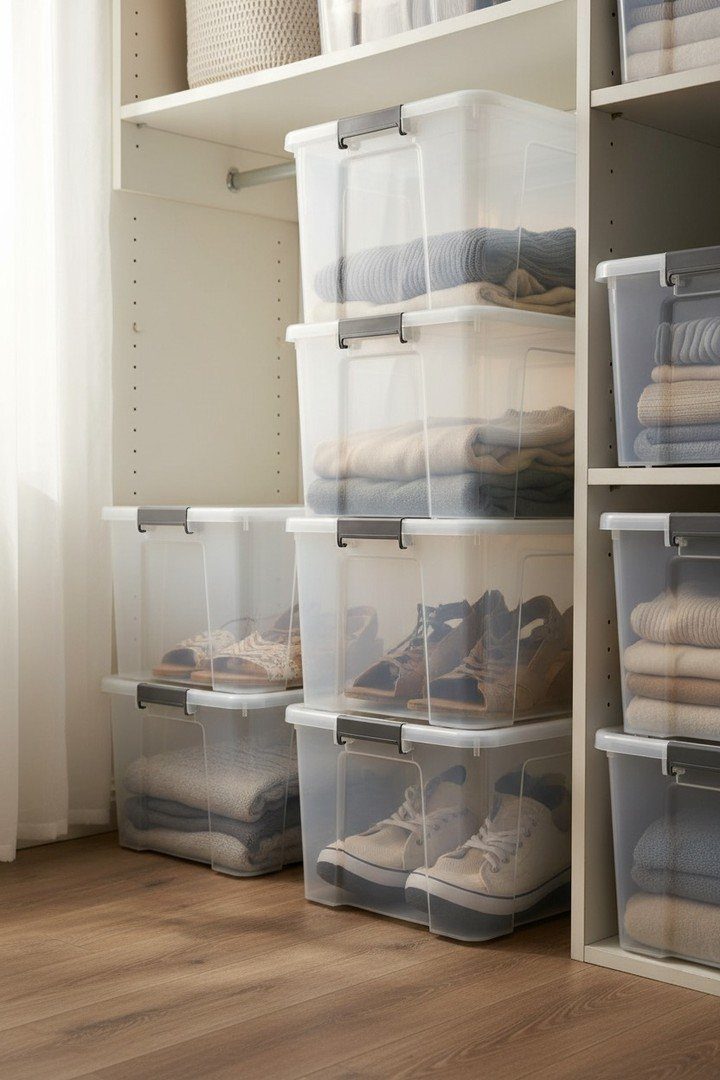
Stackable bins or boxes let you build up instead of out, and you can add another level when you need more storage.
They sit on shelves, on the floor, or in a corner, and each one holds a category so you’re not sorting through a mixed pile.
Clear sides help you see what’s in each level without unstacking the whole column.
Keep the things you use most in the top bin. If you stack more than three high, you’ll need to pull the tower apart every time you want something from the bottom, and that gets old fast.
10. Use a Shoe Rack
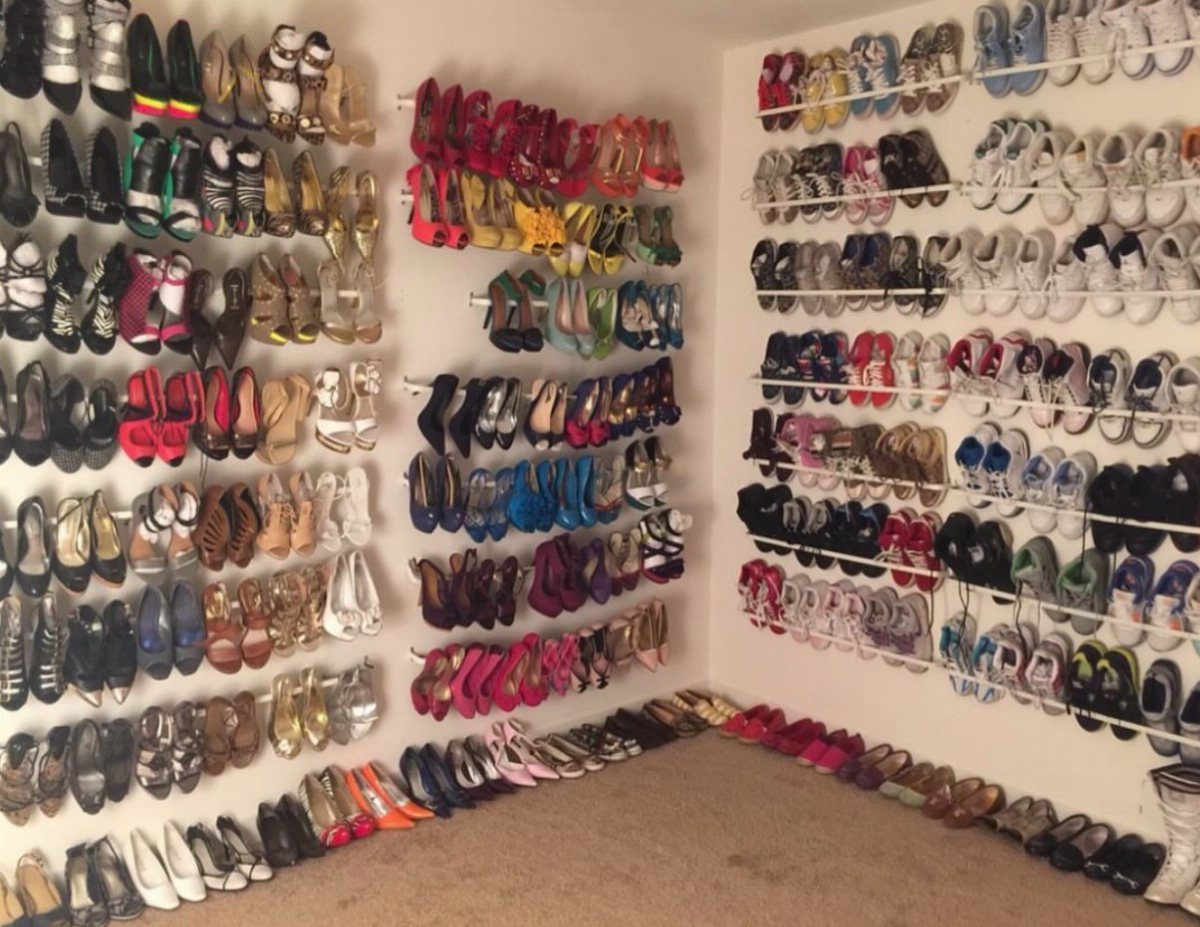
A shoe rack lifts shoes off the floor and keeps pairs together so you’re not hunting for the other one.
Racks come in tiers that sit on the floor, wall-mounted versions that hold shoes horizontally, or over-the-door models that hang pairs in pockets.
Floor racks work in a reach-in closet if you have space along the bottom. Wall-mounted racks free up floor space and keep shoes at eye level, but they need screws or anchors to hold the weight.
Match the rack size to how many pairs you actually wear. A rack that holds more pairs than you own leaves empty space taking up room.
11. Use a Wardrobe Closet
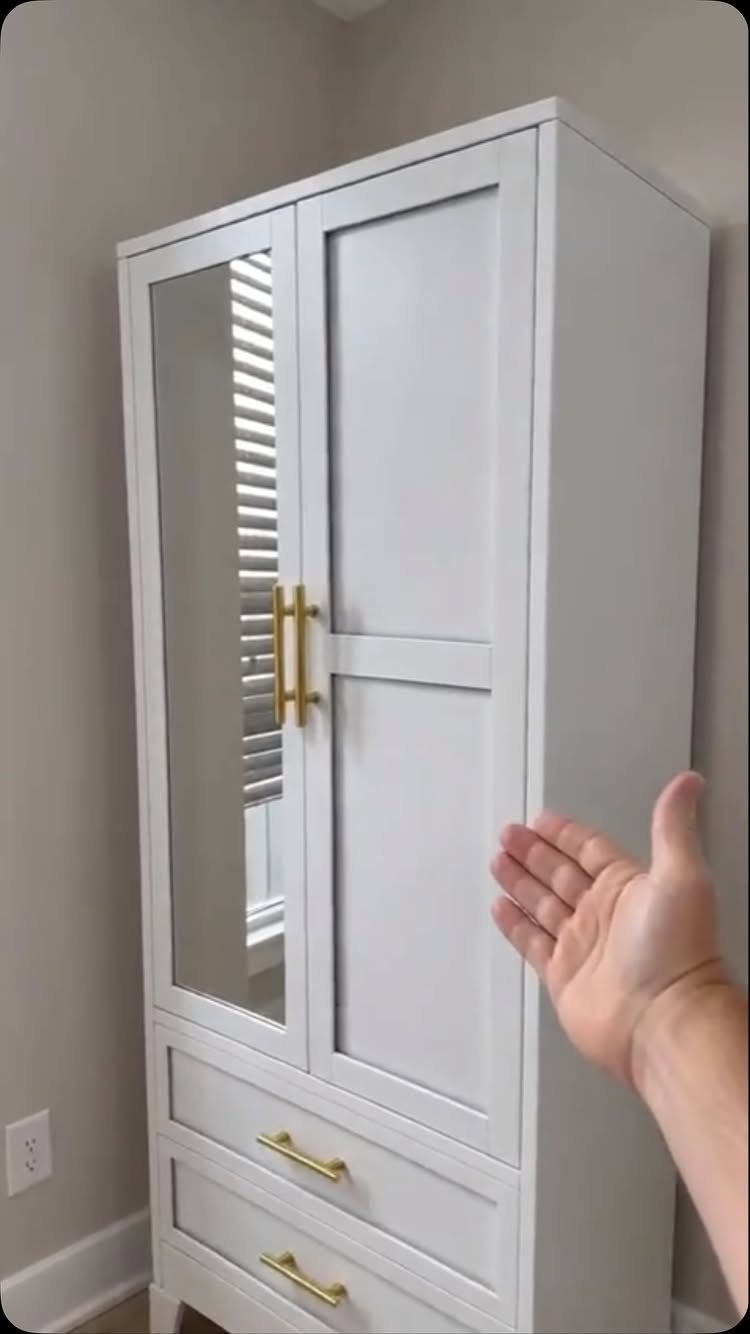
A freestanding wardrobe gives you hanging space and shelves when your place doesn’t have a built-in closet or when you need overflow storage.
It sits against a wall, moves with you when you relocate, and some styles look finished enough to sit in a bedroom without feeling temporary.
Look for one with a rod for hanging, a shelf or two above or below, and doors that close so the contents don’t sit out in the open.
The depth matters if you’re hanging coats or dresses; measure your longest pieces first so they don’t brush the back panel.
It takes up floor space, so it suits a room with an open wall or a corner that isn’t already holding furniture.
12. File Box for Household Papers
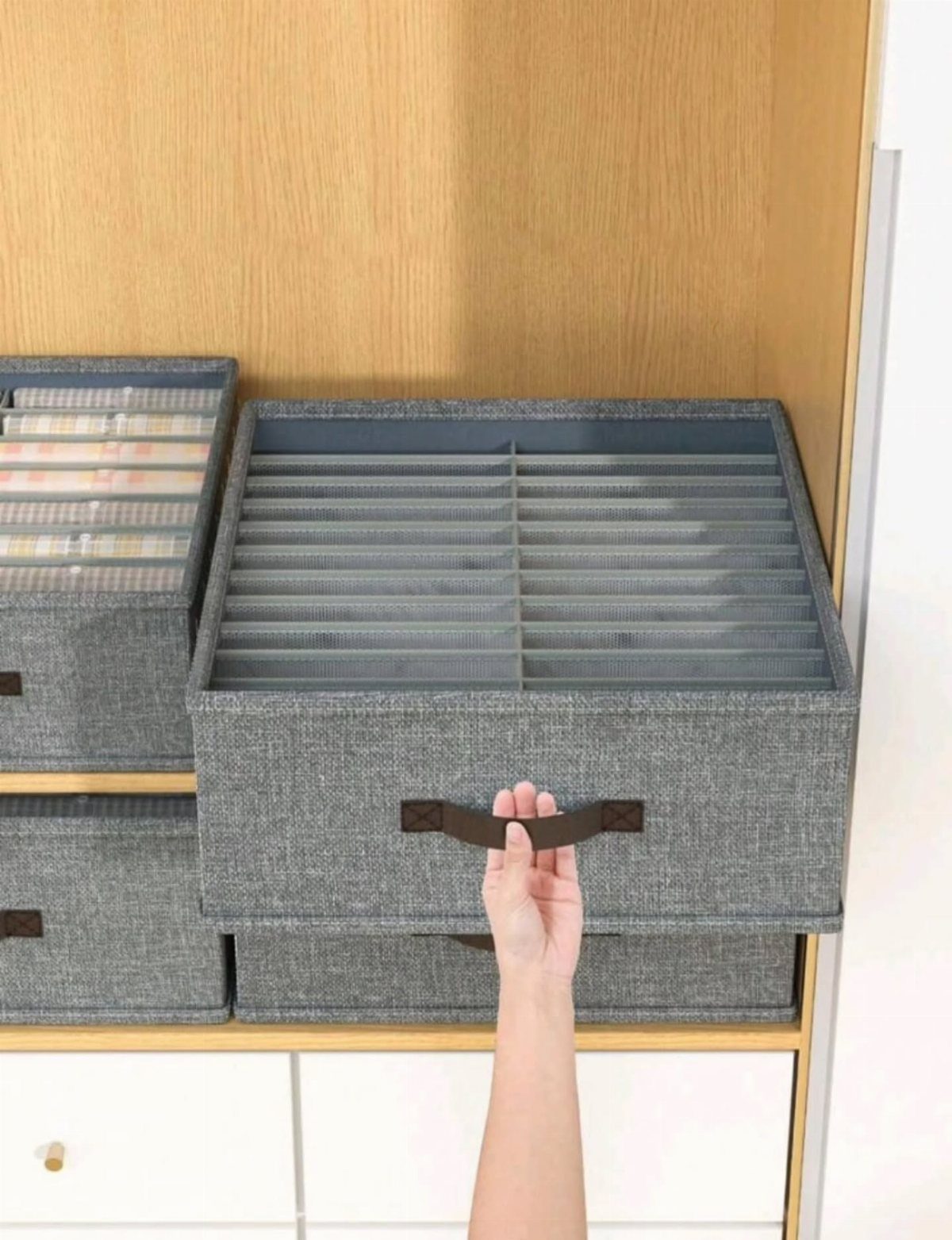
A file box keeps bills, warranties, receipts, and household papers in one place instead of scattered across the kitchen counter or stuffed in a drawer.
Some boxes sit on a shelf with dividers inside, and others mount on the wall with slots for categories like utilities, insurance, or tax documents.
Label each section so papers go back where they belong. A box with a lid keeps dust off if it sits on a high shelf or in a closet you don’t open every day.
Go through it once a year and toss what expired or finished. Old receipts and expired warranties pile up fast, and a file box only works if it’s not overflowing.
13. Coordinating Storage Bins
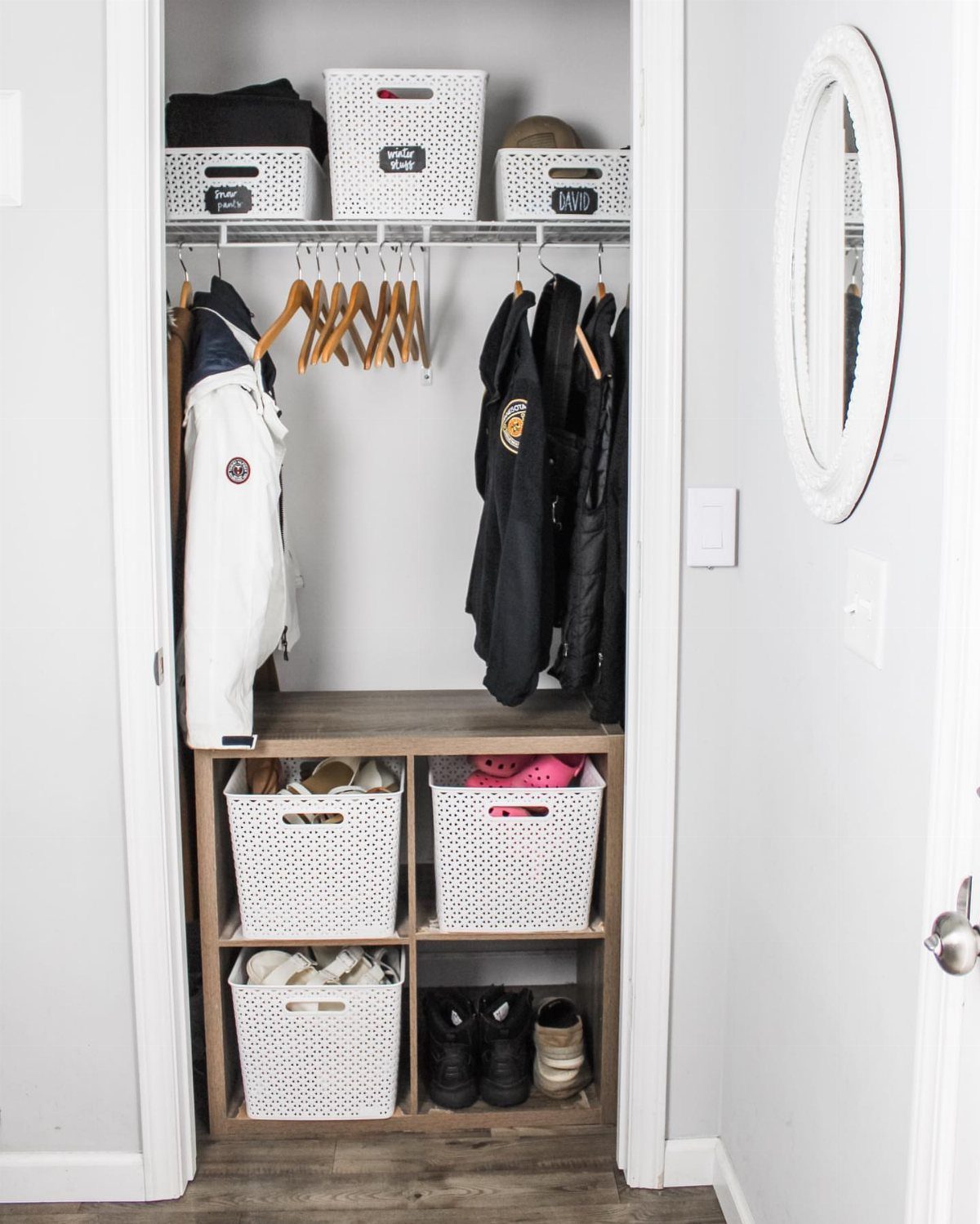
Matching bins in the same color and style make a shelf look intentional instead of like a collection of whatever you found. Pick one or two finishes and stick to them, whether that’s white plastic, woven baskets, or fabric cubes.
The repetition settles the eye, and when bins look alike you can swap them between shelves without the closet suddenly looking mismatched. It also makes it easier to add more later since you know what to look for.
14. Use a Pegboard
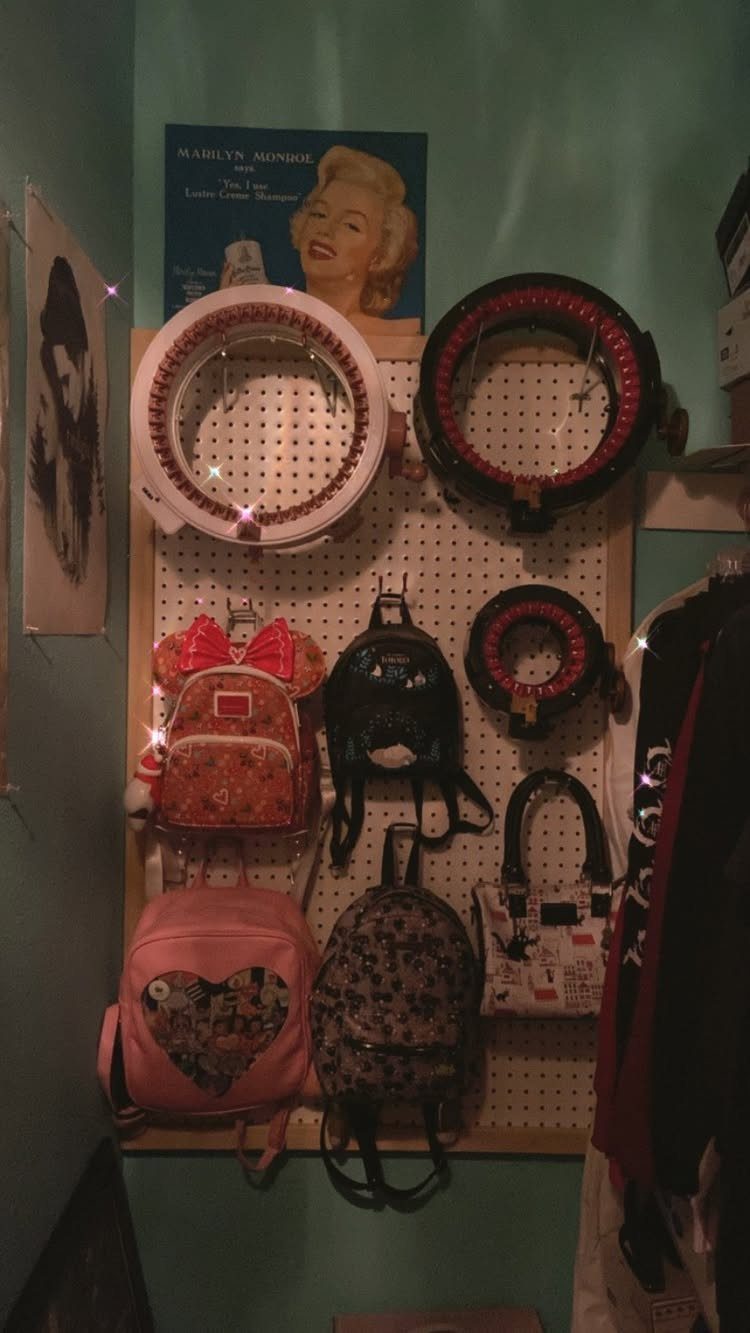
Pegboard turns a closet wall into adjustable storage you can rearrange whenever your needs change. Hooks slide into the holes and hold bags, hats, scarves, belts, or anything with a strap or loop.
Mount the board to the wall with screws or use a freestanding frame if you rent. The spacing of the holes is standard, so any pegboard hook fits any board.
Keep what you wear often at eye level. Hooks can hold more weight than adhesive strips, but don’t overload one hook or it’ll pull out of the hole.
15. Lighten the Closet
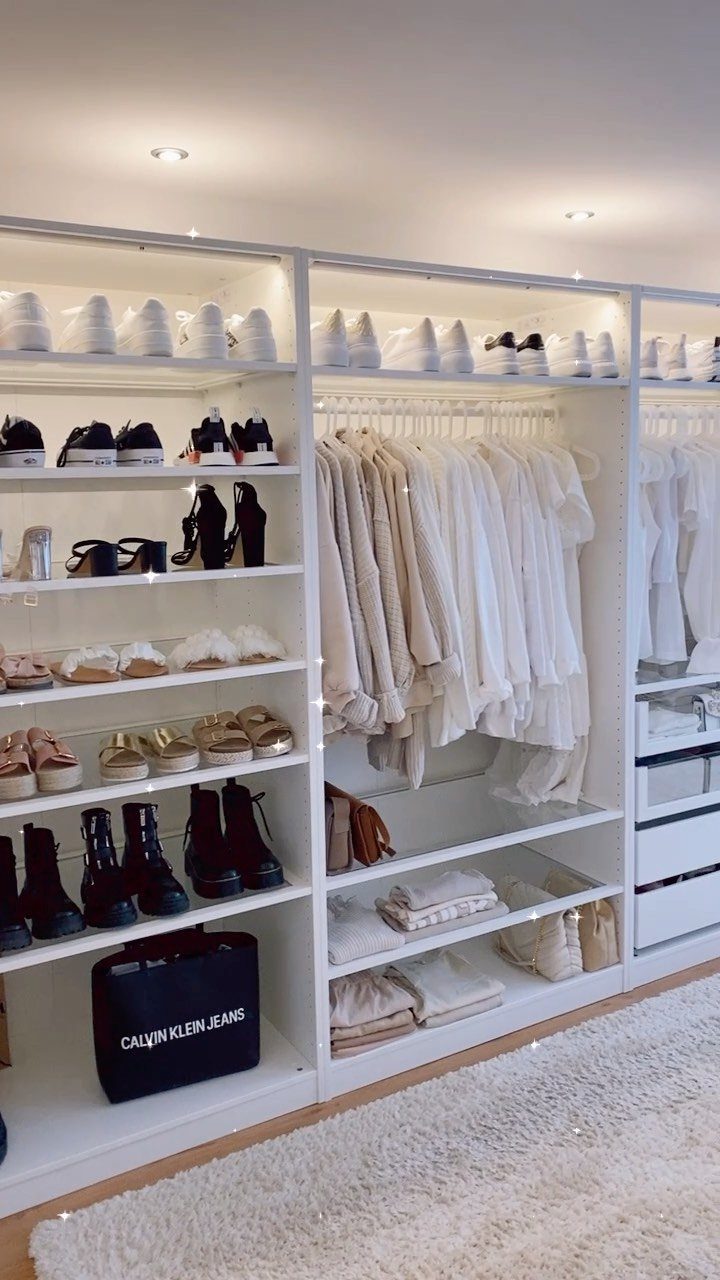
White paint brightens a closet so you can see what’s in there more easily. Dark closets make it hard to tell navy from black or find something in the back corner.
Most closets have drywall you can paint the same way you’d paint any room. Use semigloss or satin so the finish bounces a little light around.
If the closet doesn’t have a window or overhead light, white walls do more to help you see than any other color.
16. Add Peel-and-stick Wallpaper
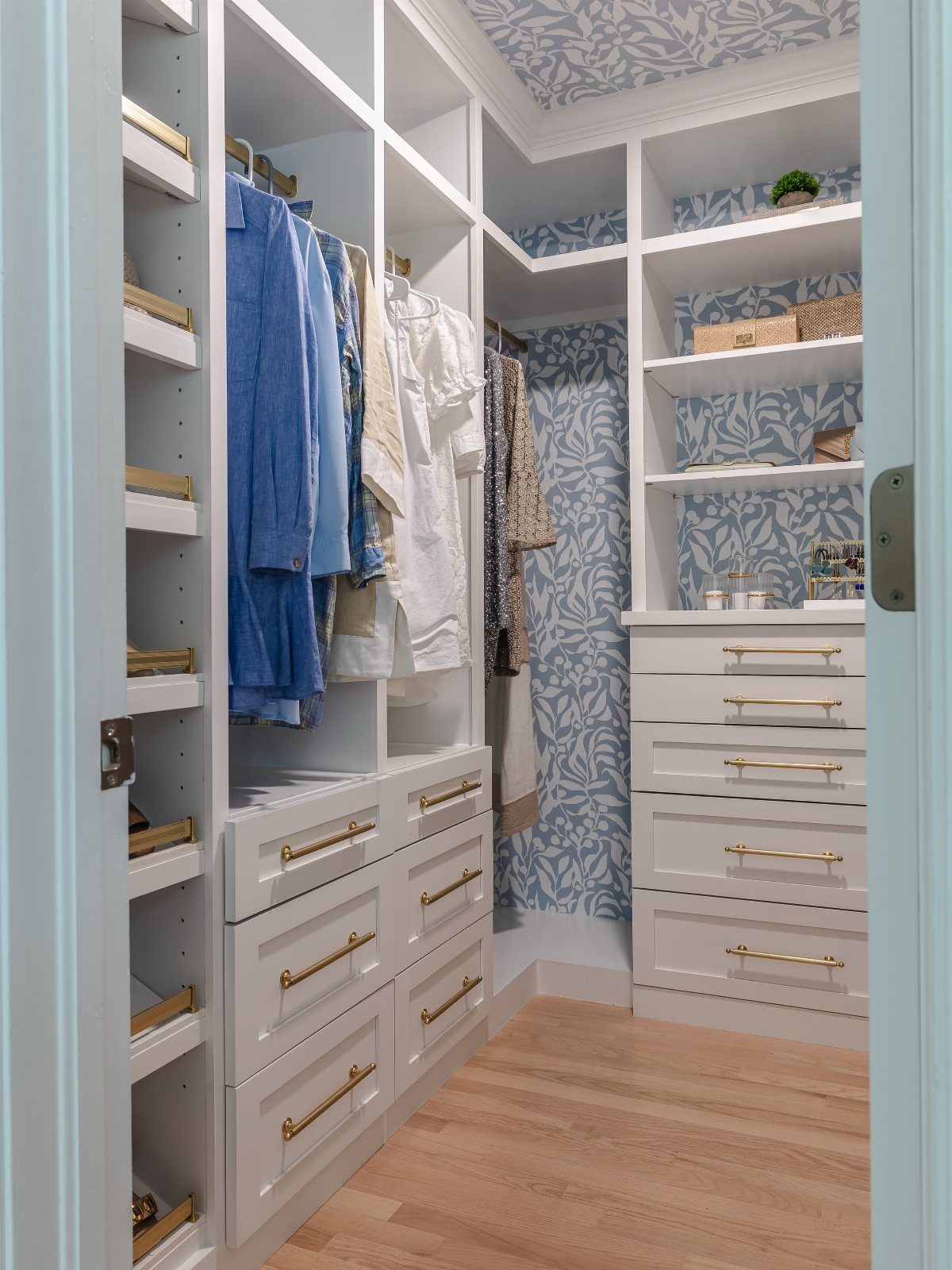
Peel-and-stick wallpaper covers the back wall of a closet and makes it feel less like a plain box. It goes up without paste or water, sticks to most painted surfaces, and peels off when you move without pulling the paint.
Measure the wall width and height, then order enough to cover it with a little extra for trimming. Rolls come in different widths, so measure your back wall and plan for a few strips side by side.
Line up the pattern at the seams if the design has one, and smooth each strip with a squeegee or credit card to push out air bubbles.
17. Fold Stretch-prone Clothes
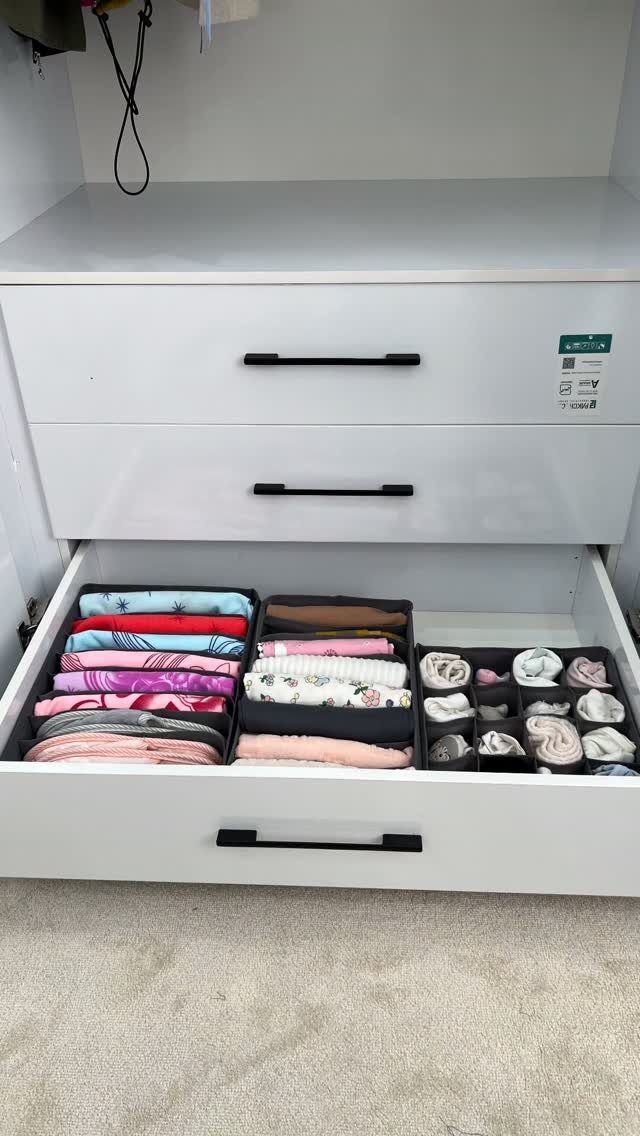
Sweaters, knits, and anything with stretch goes on a shelf instead of a hanger so the fabric doesn’t pull and sag at the shoulders.
Hanging stretches the fibers over time, and the weight of a wet sweater or a heavy knit can warp the shape for good.
Fold them flat and stack on a shelf or in a drawer. If the closet doesn’t have shelves, a hanging shelf organizer or a bin works just as well.
Lightweight tops and dresses without much stretch can hang, but if you see shoulder bumps or the neckline starts to droop, fold it.
18. Store Jewelry in Trays
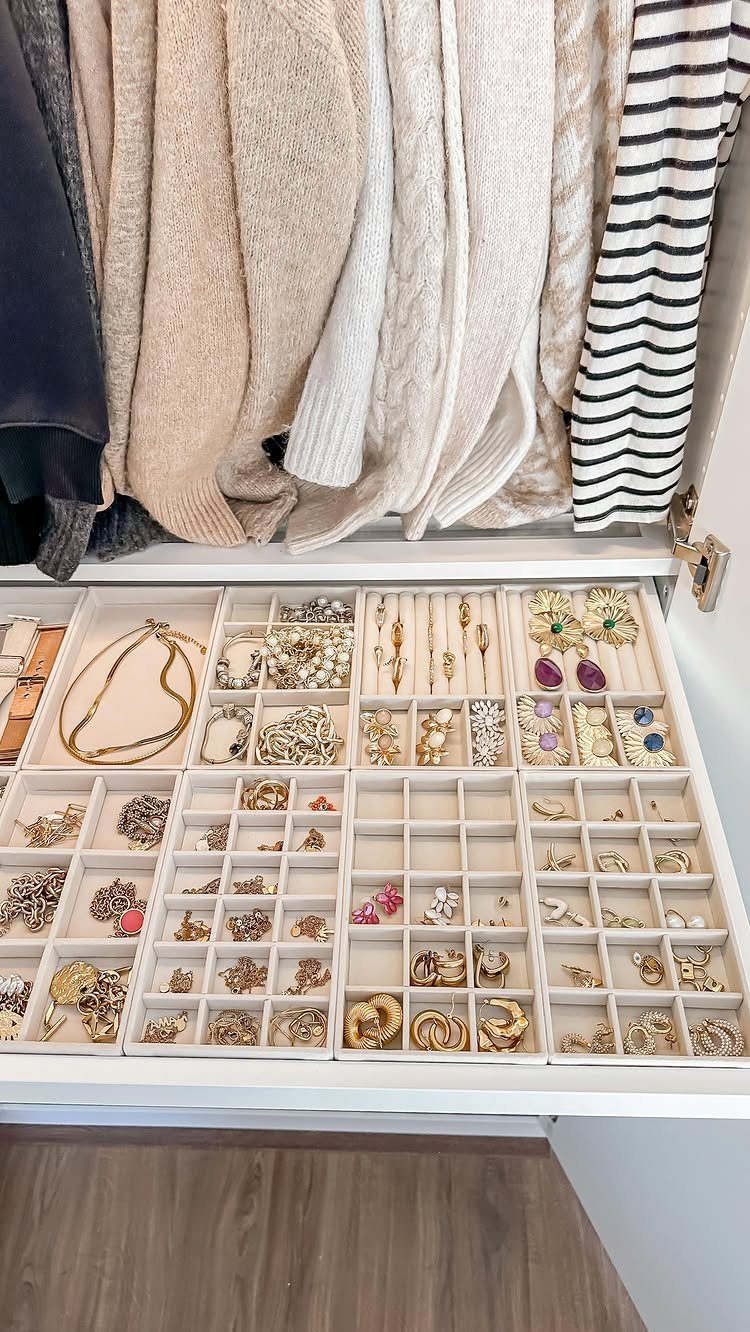
A tray with compartments keeps necklaces, rings, and earrings separated so they don’t tangle or scratch each other.
Line a drawer with a few trays, or set one on top of a dresser inside the closet if the drawer space is already full.
Velvet or felt lining protects metal and stones from getting scratched. Trays come in different grid sizes, so match the compartment size to what you own: small squares for rings, longer slots for bracelets.
A jewelry tree on the dresser top holds necklaces and bracelets in view, which works well if you reach for the same pieces every day and want them out where you can grab them.
19. Use File Folding
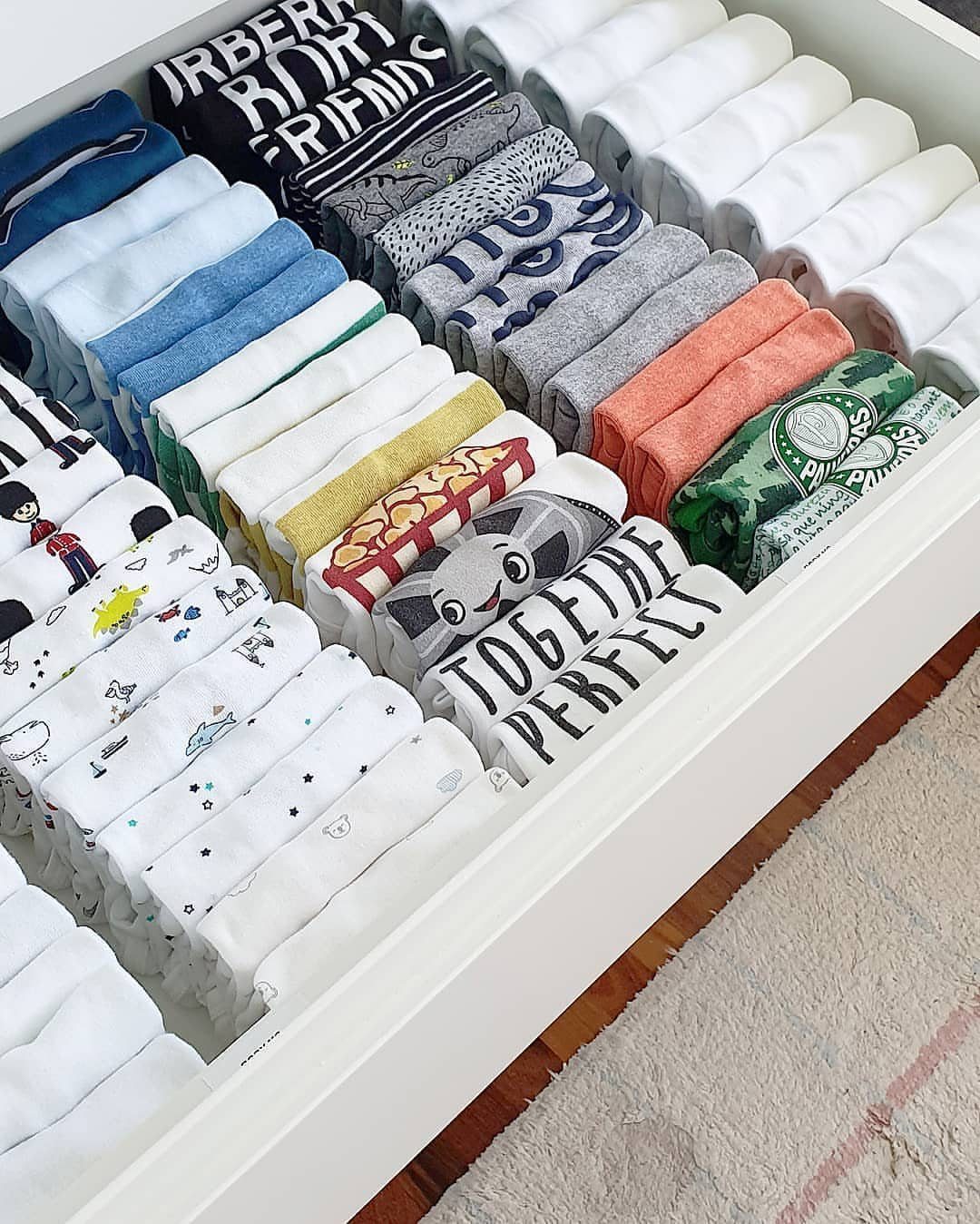
File folding stands clothes upright in a drawer so you see everything at once instead of lifting a stack to find what’s underneath.
Fold each piece into a narrow rectangle, then line them up side by side like files in a cabinet.
The method works for t-shirts, leggings, pajamas, and anything else that folds flat. Each item takes up less horizontal space than a flat stack, so more fits in the drawer.
You pull one piece without disturbing the rest. If the drawer is shallow, fold items shorter so they stand without flopping over.
20. Add a Cube Unit
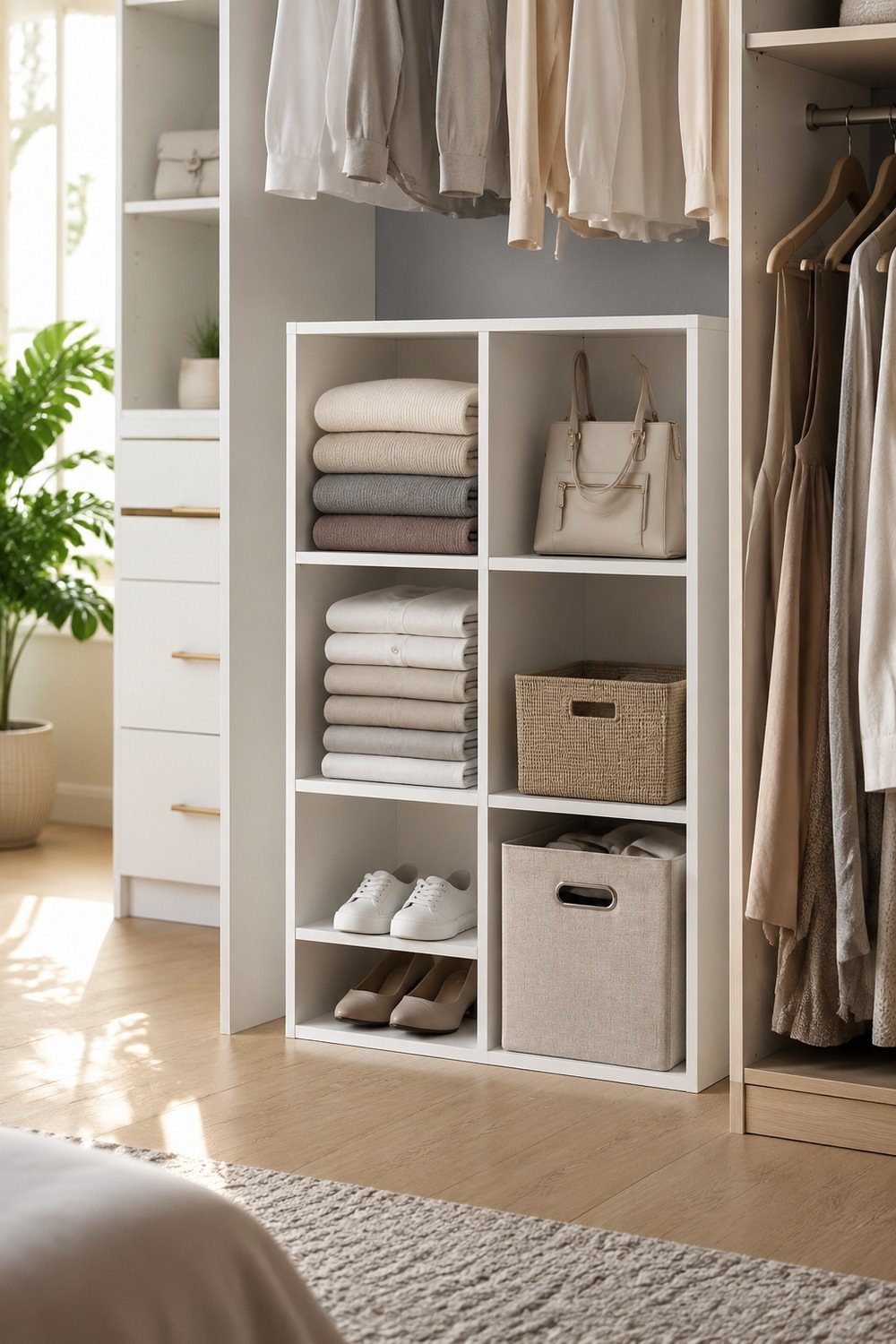
A cube unit underneath hanging clothes uses the floor space that would otherwise sit empty. It holds folded items, shoes, or bins, and the cubbies keep things separated so you’re not digging through one big pile.
Pick a unit that fits the width of your closet and leaves a few inches on each side for clearance.
Measure the height from the floor to the bottom of your hanging clothes so the unit fits without touching the hems.
Fill the cubes with folded sweaters, workout gear, or bags. If the closet has a sloped ceiling or odd corners, a cube unit fills that space better than a single shelf.
21. Add Closet Lighting
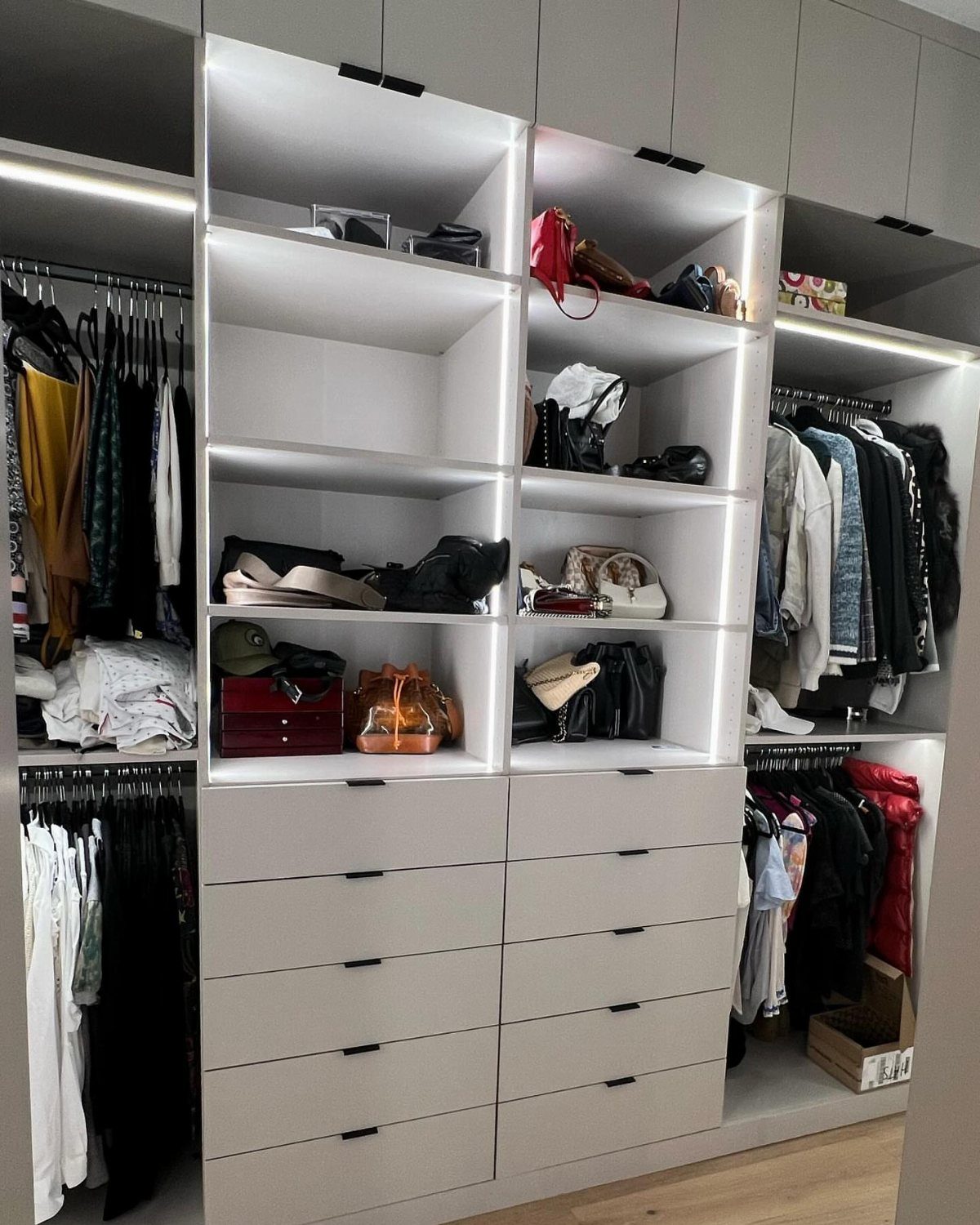
Lighting under shelves makes it easier to see folded clothes, bins, and shoes without leaning in or guessing. Stick-on LED strips run along the front edge of each shelf and plug into an outlet or battery pack.
Measure each shelf length before you buy so the strip fits end to end.
Some strips come with adhesive backing and peel right onto the underside of the shelf. Others need clips.
Motion-activated lights turn on when you open the closet door and shut off after you close it, so you’re not reaching for a switch in the dark.
22. Multi-tier Hangers
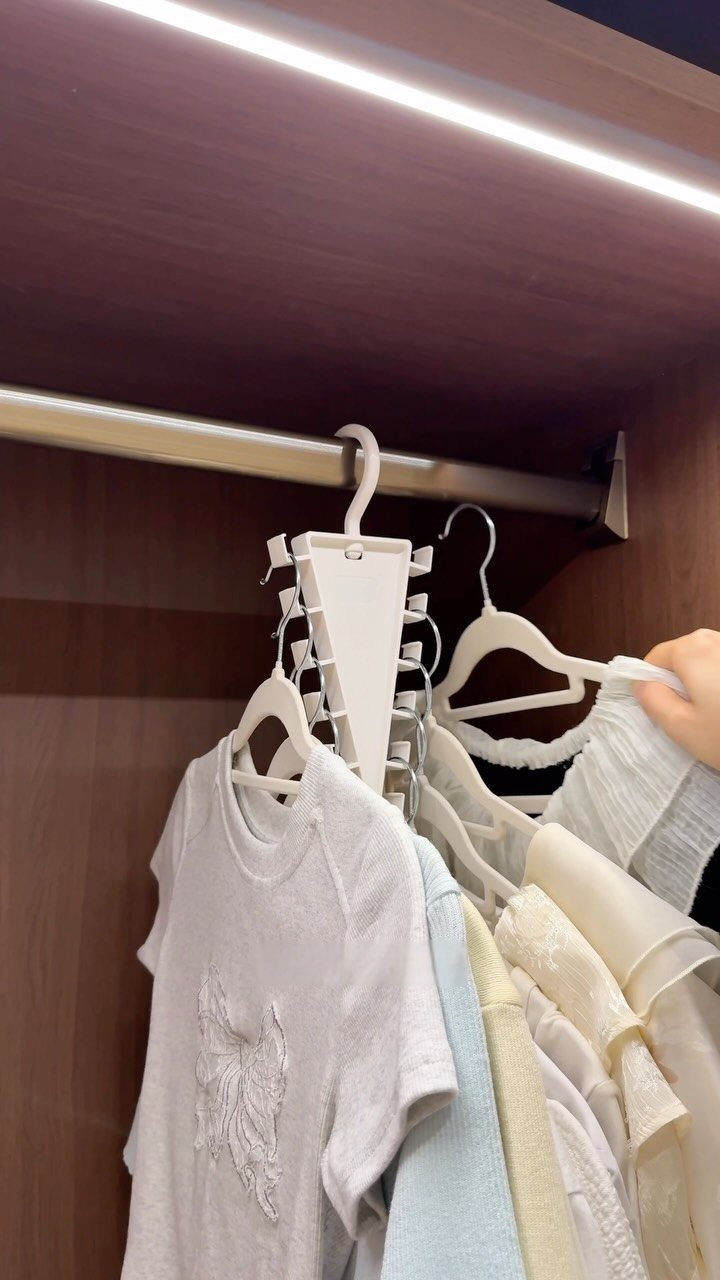
Multi-tier hangers hold several shirts on one hook, which frees up rod space for other items. Each tier drops below the one above it, so the shirts hang in a cascade instead of side by side.
Hang tops you wear together or similar pieces so you can grab the whole stack at once. The bottom shirt is harder to reach than the top one, so put your least-worn pieces there.
The hanger adds vertical drop, so make sure your closet rod is high enough that the bottom shirt doesn’t touch the floor or sit on a shelf below.
23. Pull-down Closet Rod
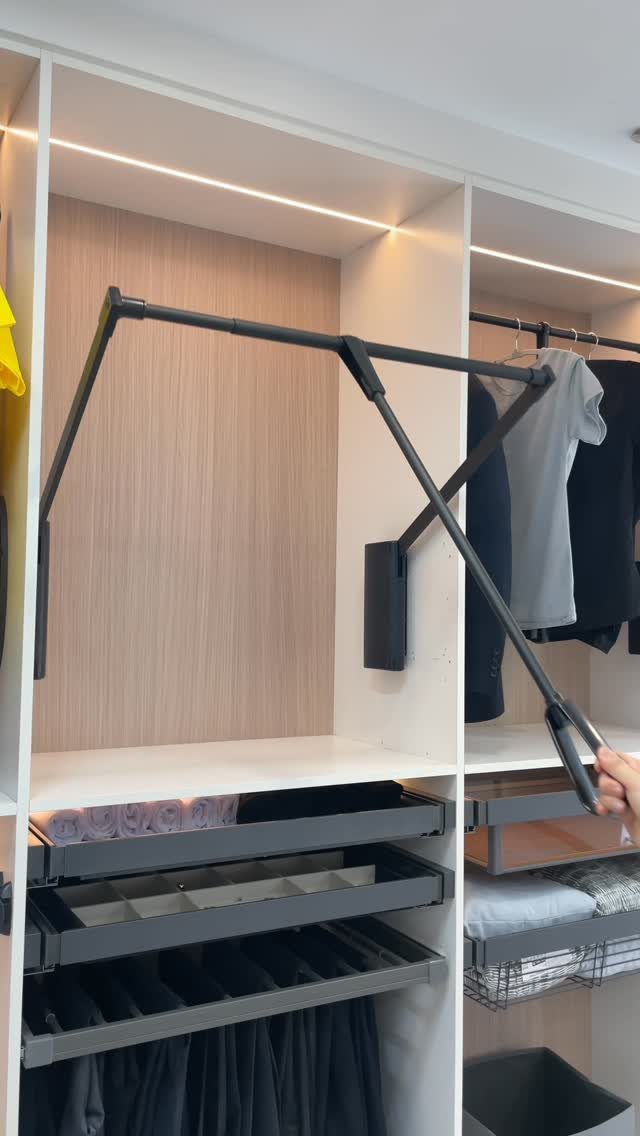
A pull-down rod brings clothes stored on a high rod within reach without a step stool. You pull the bar down, grab what you need, and let it lift back into place.
It suits closets with high ceilings where the upper rod would otherwise hold only off-season or rarely worn items.
The rod is spring-loaded or counterweighted, so it takes a light pull to bring it down and stays up on its own.
Installation needs screws into the closet sides or back wall.
24. Pull-out Hanging Racks
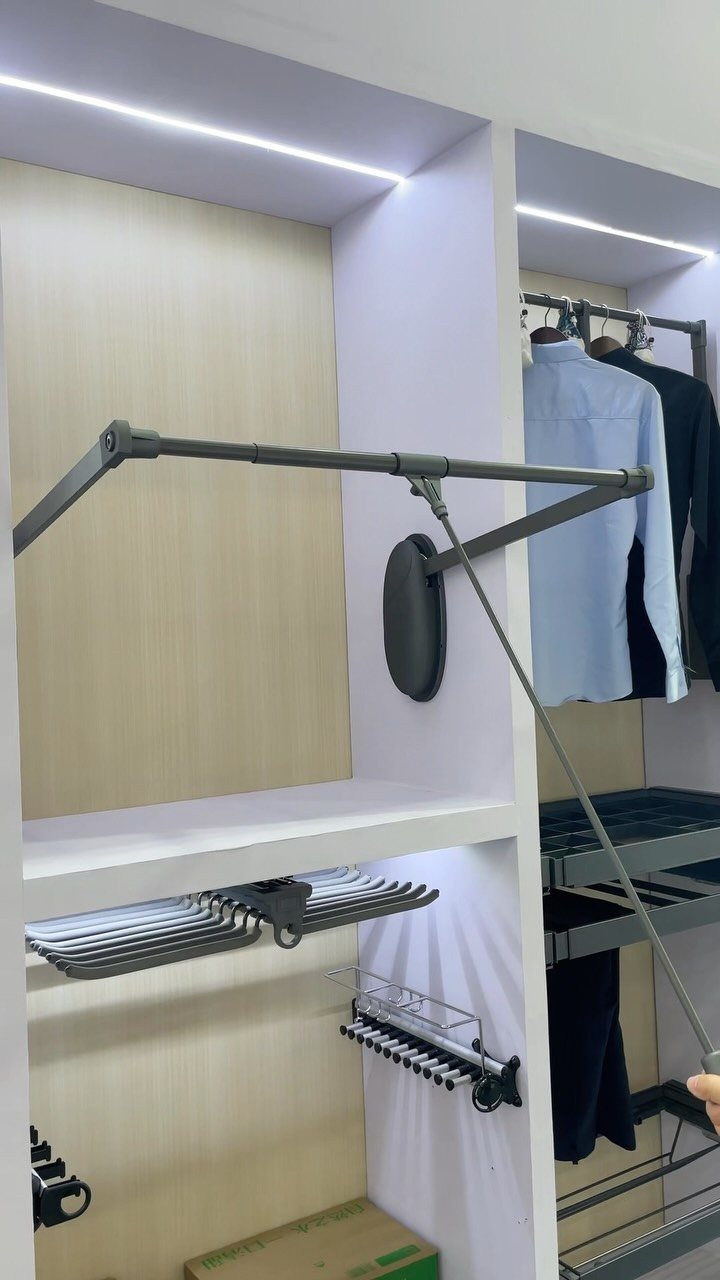
Pull-out racks slide forward on a track so hanging clothes and folded pants sit closer to you instead of pushed against the back wall.
The G15 wardrobe lift brings a high rod down, and a pant rack below it pulls out on its own track.
Both racks need mounting brackets screwed into the closet sides or a built-in frame. Measure the closet depth so the rack clears the door when it slides out.
You reach every hanger without leaning in or pushing other clothes aside. If the closet is narrow, a pull-out rack uses the depth better than a fixed rod.
25. Open Garment Rack
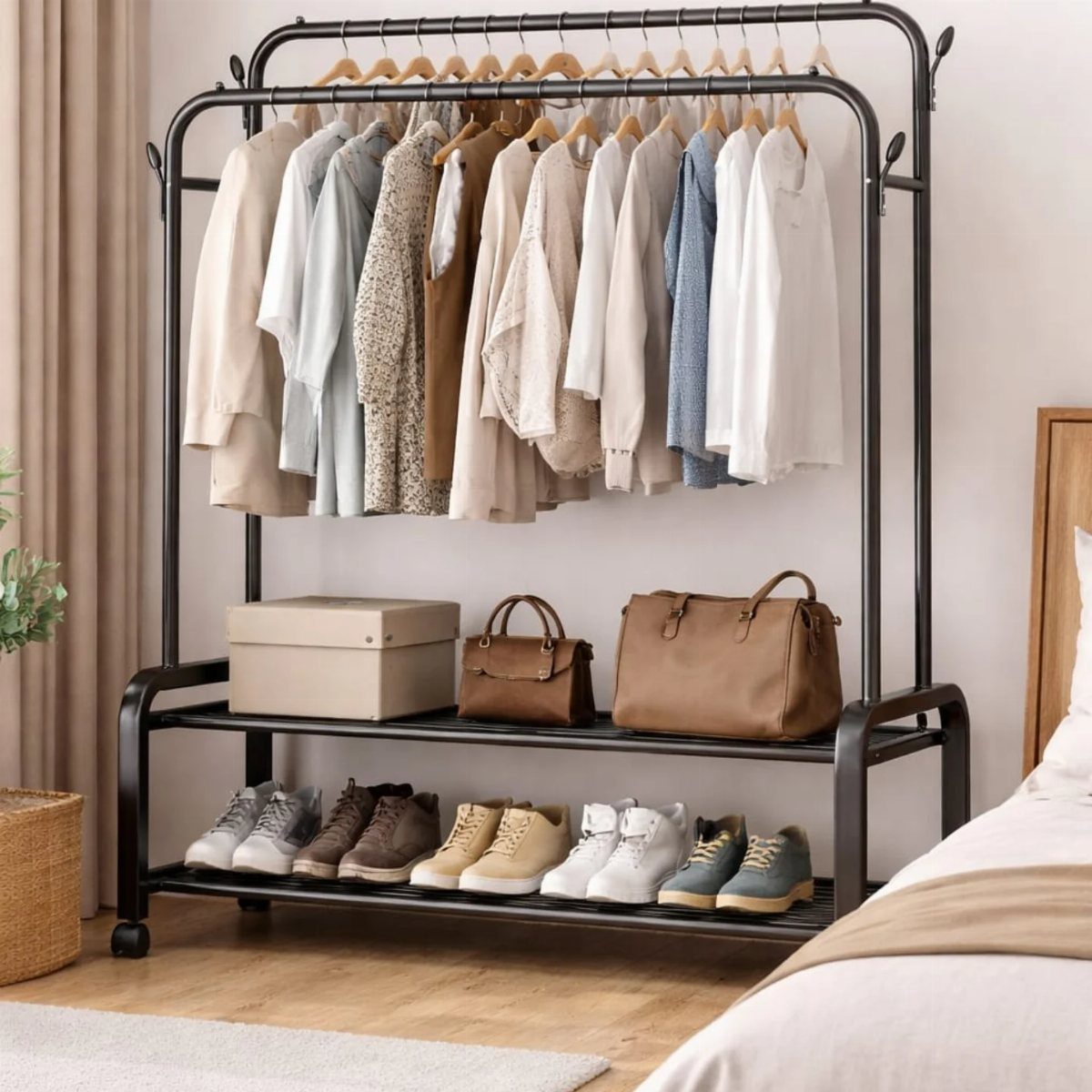
A freestanding rack holds hanging clothes on the top bar and uses the space below for shoes or bags on shelves. It sits in a bedroom or wherever you need extra storage without drilling into walls.
Pick a rack sturdy enough to hold the weight of your hanging pieces. Metal frames hold more than wood or plastic, and a wide base keeps it from tipping if you hang heavier coats on one side.
The rack stays visible, so if you want the closet to feel closed off this won’t do that. It works when you want to grab what you wear most without opening a door.
26. Slim Wall-mounted Rod
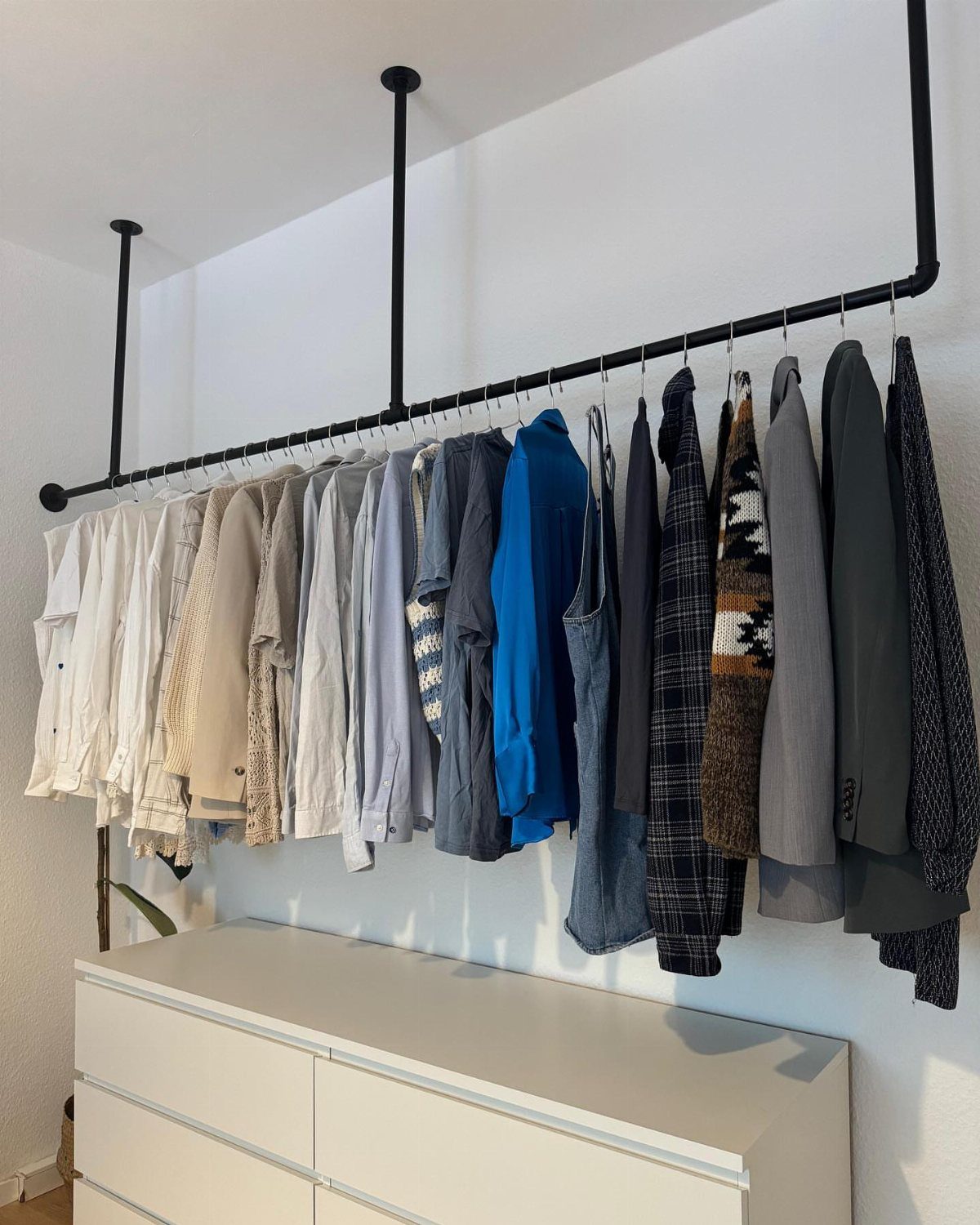
A rod screwed to the wall holds hanging clothes without a wardrobe taking up floor space. It mounts above a dresser or in a bedroom corner where a freestanding rack won’t fit.
Install it into wall studs or use anchors rated for the weight you plan to hang. Measure the span first so the rod sits level and holds clothes without sagging in the middle.
It leaves the floor open underneath for a dresser, bins, or nothing at all. If you rent, patching screw holes when you move is easier than hauling a wardrobe.
27. Organized Small Closet
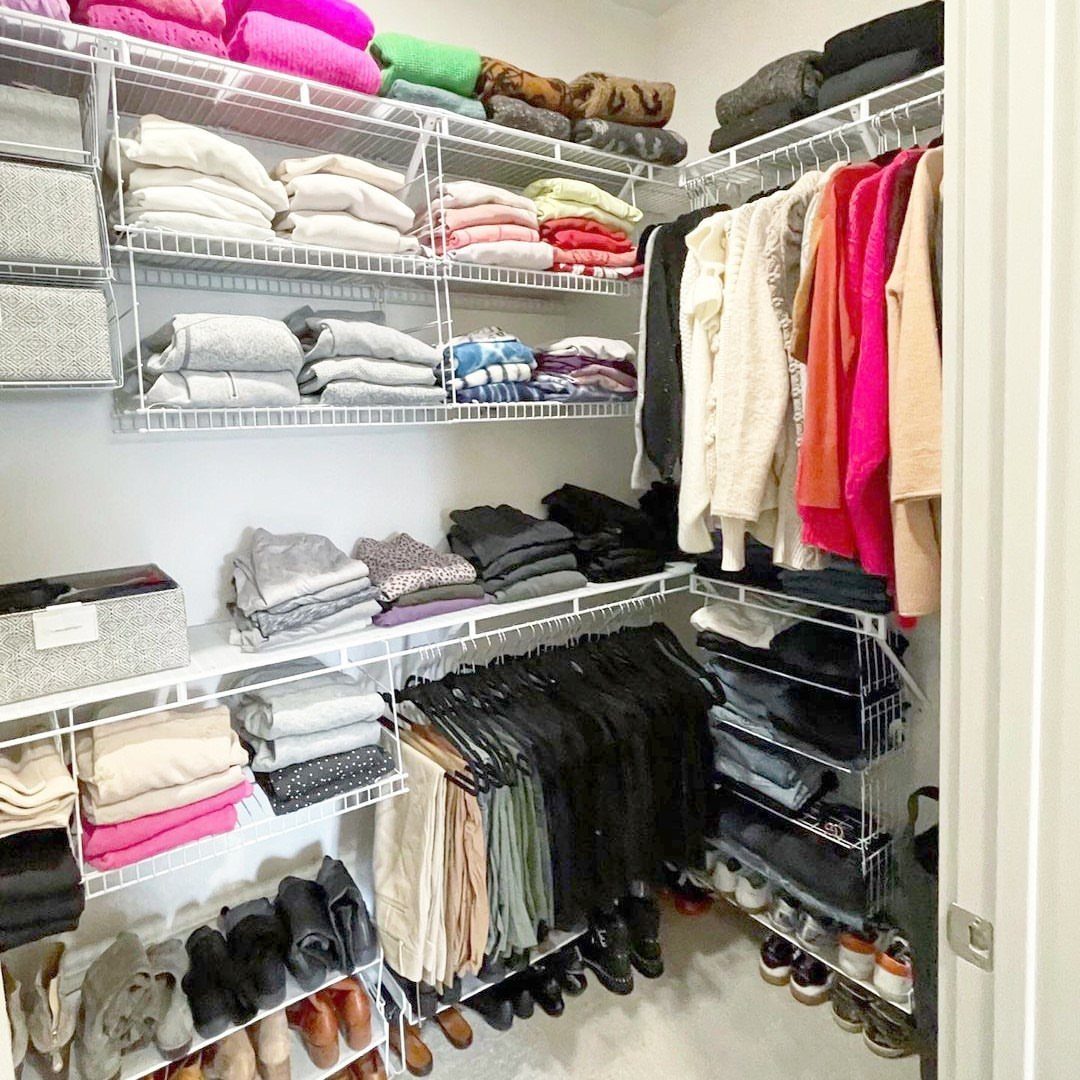
A compact closet fits everything when you split the space between hanging, shelving, and floor storage instead of leaving any area unused. Hang what needs a rod, fold what doesn’t, and put shoes and bins where they’re easy to reach.
Wire shelving works if you already have it or want to install a system yourself. Solid shelves keep smaller items from tipping through the gaps.
Leave enough clearance under hanging clothes so folded stacks or shoes on the floor don’t touch the hems. If the closet has no door, keep it tidy enough that you don’t mind seeing it from the room.
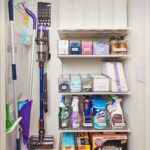
28. Slim Vertical Storage
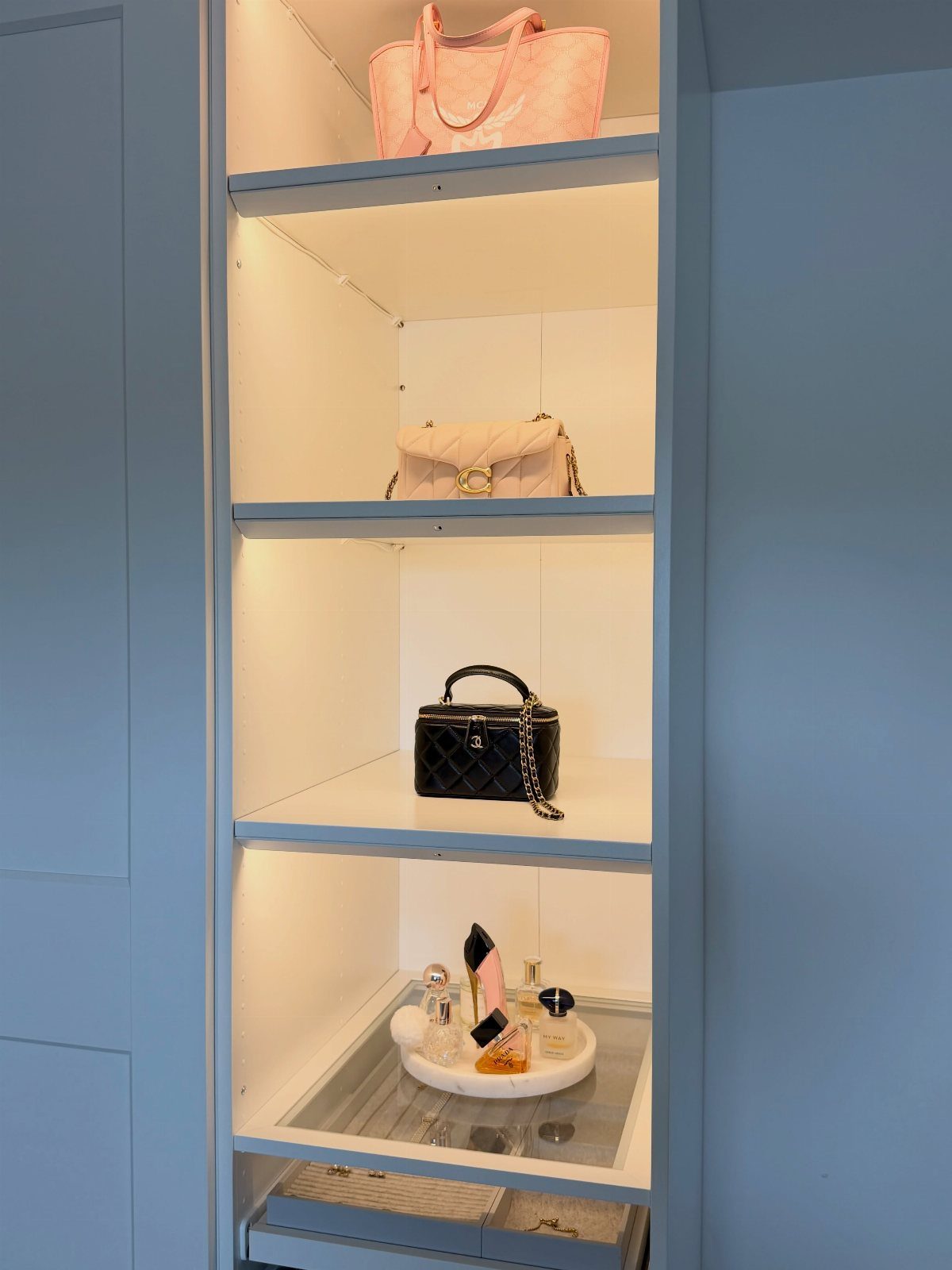
A narrow built-in shelf unit takes up wall space that’s too slim for hanging but wide enough for handbags, small bins, or bottles.
It runs floor to ceiling or fits between other closet sections where a deep shelf would jut out too far.
Built-ins need carpentry or a closet system with narrow components. Measure the gap first so the unit fits without blocking access to what’s next to it.
The shelves hold items you reach for but don’t need every day. If the closet has overhead lighting, the shelves stay visible without adding more fixtures.
29. Hooks for Baseball Caps
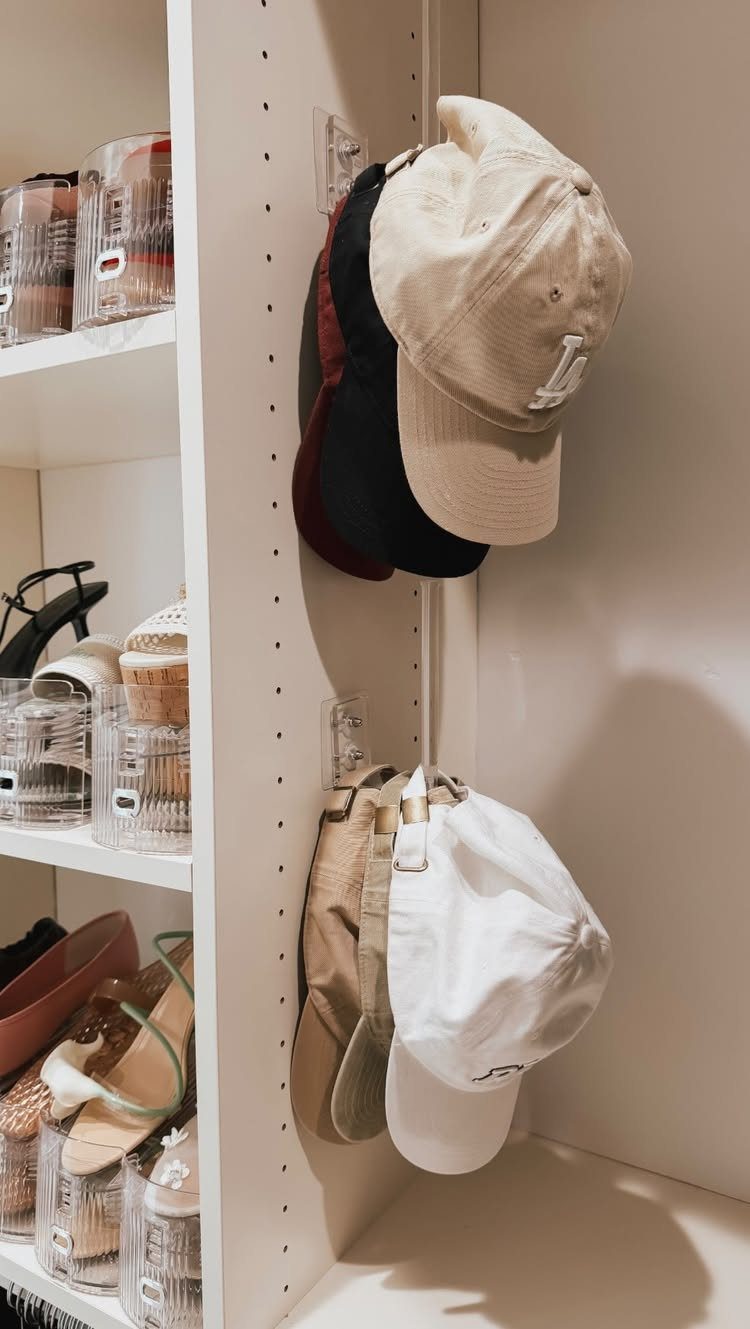
Hooks on the closet wall hold baseball caps so the brims don’t get crushed in a drawer or stacked on a shelf where the bottom ones flatten.
Mount them at eye level or higher where they don’t block access to shelves below.
Adhesive hooks work if the wall is smooth and you don’t plan to overload them. Screw-in hooks hold more weight and stay put if you hang several caps on one hook.
Hang caps you wear often where you can see them. If the closet wall already has shelves or a rod taking up space, mount hooks on the inside of the door instead.
30. Scarf Ring Hanger
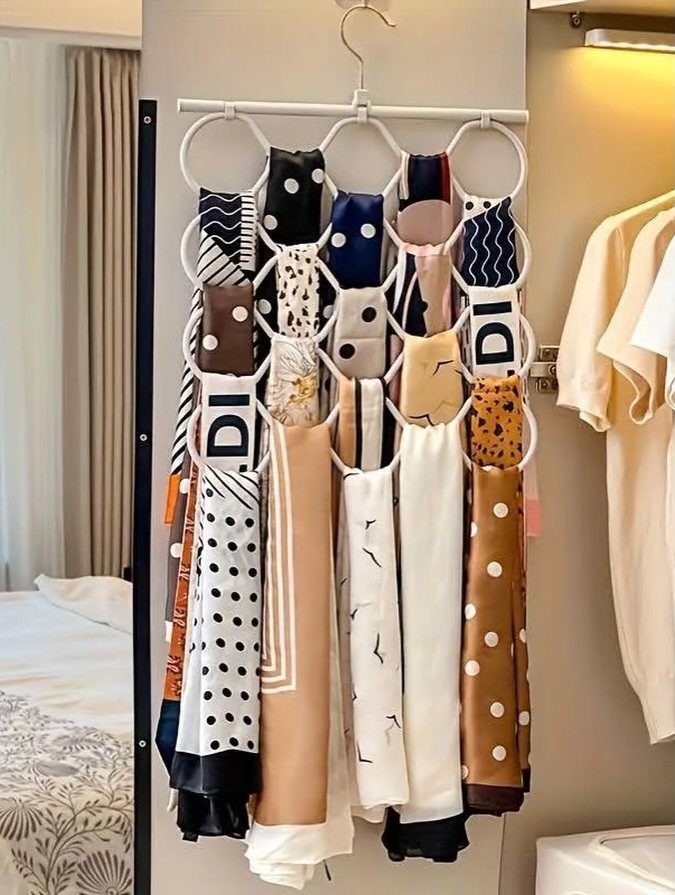
A hanger with multiple rings holds several scarves on one hook so they don’t take up a rod full of space. Each scarf loops through a ring, and you pull the one you want without taking the whole hanger down.
The rings slide or stay fixed depending on the design. Fixed rings keep scarves in place, and sliding ones let you adjust spacing if some scarves are bulkier than others.
Hang it where you can reach it easily. If the rod is crowded, this frees up room by stacking scarves vertically instead of spreading them across the bar.
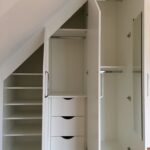
31. Custom Built-in Closet
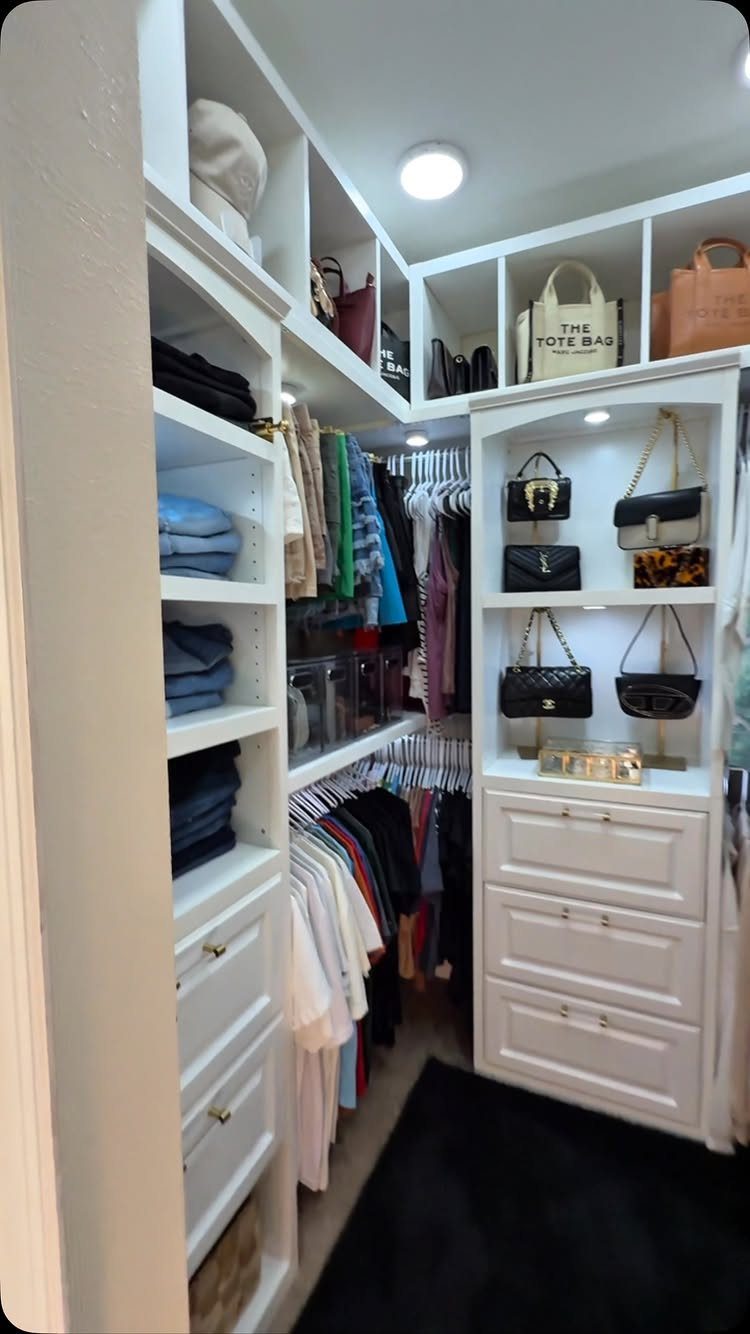
A built-in closet system fits shelves, drawers, and hanging space to the exact dimensions of the room so nothing is wasted. Rods hold what needs to hang, drawers keep folded items contained, and shelves stack bags or shoes in view.
Custom work needs a carpenter or a closet company to measure, build, and install. The system gets screwed or glued to the walls, so it stays when you move unless you take it apart.
If the closet is small or has odd angles, a fitted system uses those corners better than freestanding furniture.
32. Three-tier Hanging Rods
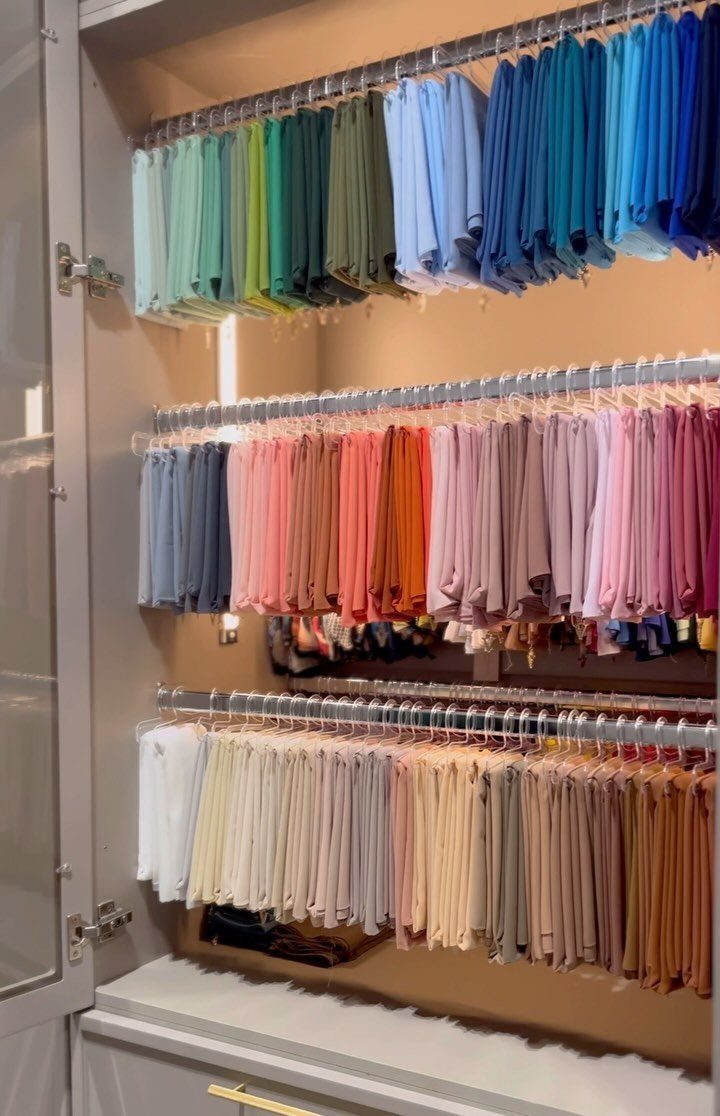
3 rods stacked vertically hold more hanging clothes in the same wall width by using the height instead of spreading items side by side.
Each tier sits above the one below it, so shorter items like scarves, folded pants, or tops fill the levels without dragging on the floor.
Measure the closet height and divide it so each rod clears the items below.
Install brackets into the closet sides or back wall to support each rod. The bottom tier should sit high enough that you can reach it without bending.
33. Pull-out Closet Drawers
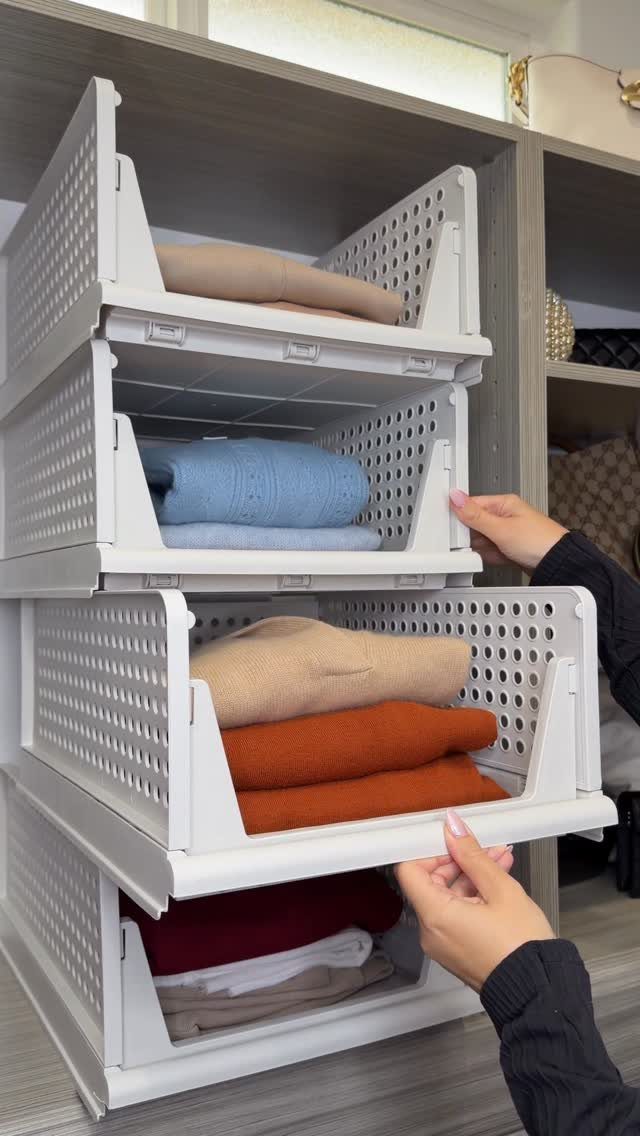
Drawers that slide out on tracks make it easier to see and reach folded clothes than lifting items off a fixed shelf. They fit inside a closet unit or wardrobe and pull forward so you’re not digging to the back.
Perforated plastic drawers let you see what’s inside without opening them, and the ventilation keeps clothes from sitting in stale air. Metal or wood drawers hold heavier items.
If the unit doesn’t come with tracks, you can add pull-out drawer frames separately.
34. Vertical Shoe Cabinets
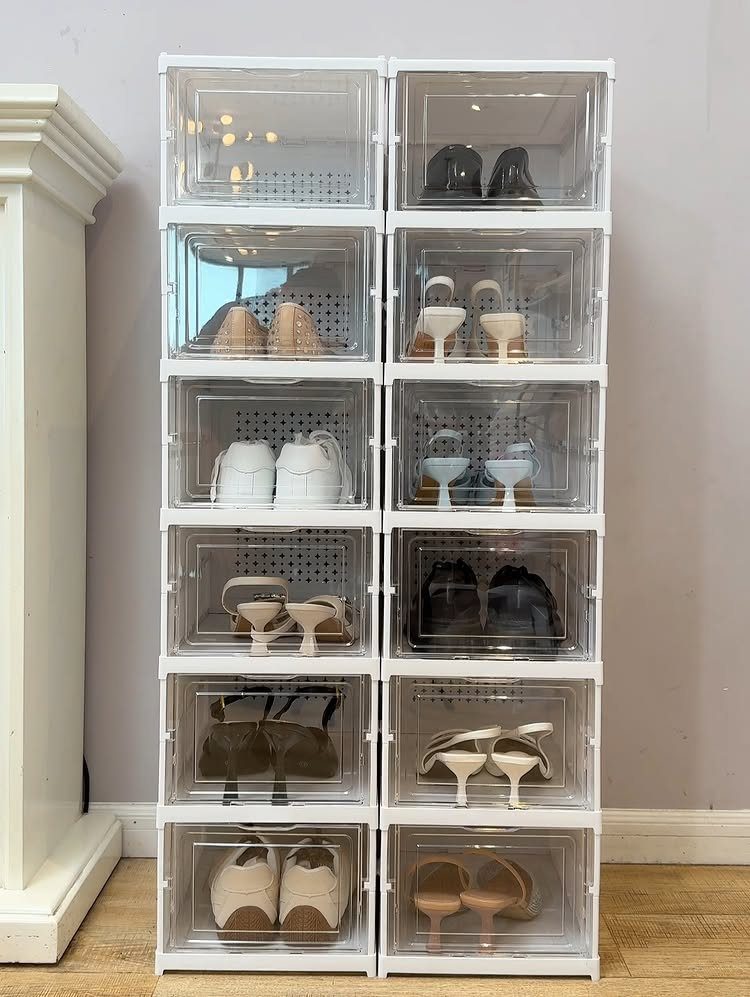
Stackable shoe bins sit in a tall column so they take up less floor area than spreading pairs in a row.
Each bin holds one or two pairs depending on the size, and clear plastic lets you see what’s inside without opening the lid.
Stack them as high as you can comfortably reach. The bins lift off individually, so you can pull the top one without unstacking the whole column.
The units work on a closet floor, in a bedroom corner, or next to a dresser. If the closet has no door, the clear plastic shows every pair, which looks fine if you keep them clean.
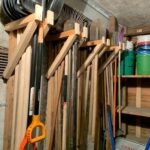
35. Gear-specific Closet Zones
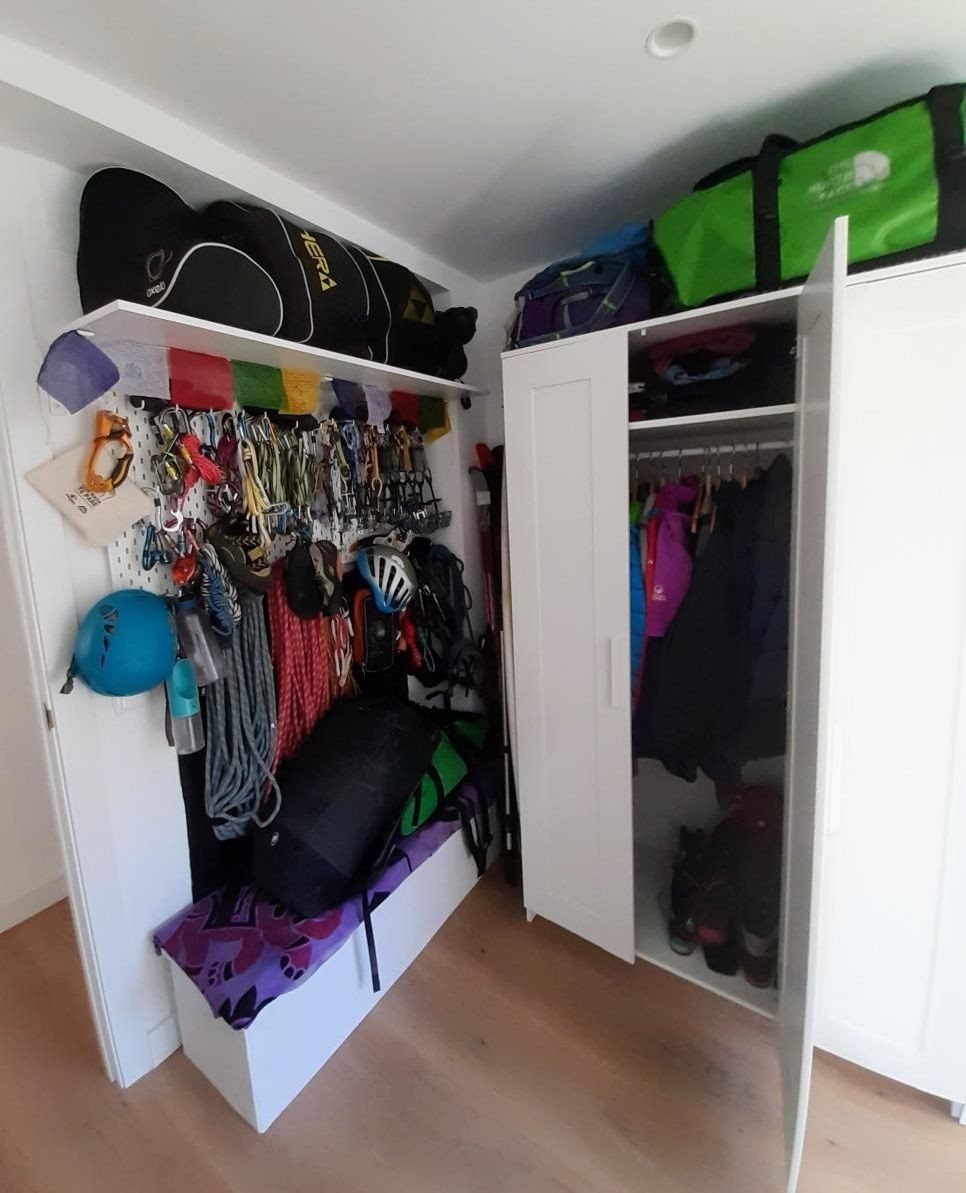
A section of the closet holds climbing gear on a pegboard so ropes, carabiners, and helmets hang in view instead of tangled in a bin.
Hang clothes and boots in the rest of the space so everything stays in one spot.
Mount the pegboard to the back or side wall and use hooks sized for the gear you own. Heavier items need sturdy pegs screwed through the board into the wall.
Mount it on the wall that’s left after you’ve placed your rod and shelves.
36. Wall-mounted Clothing Rack
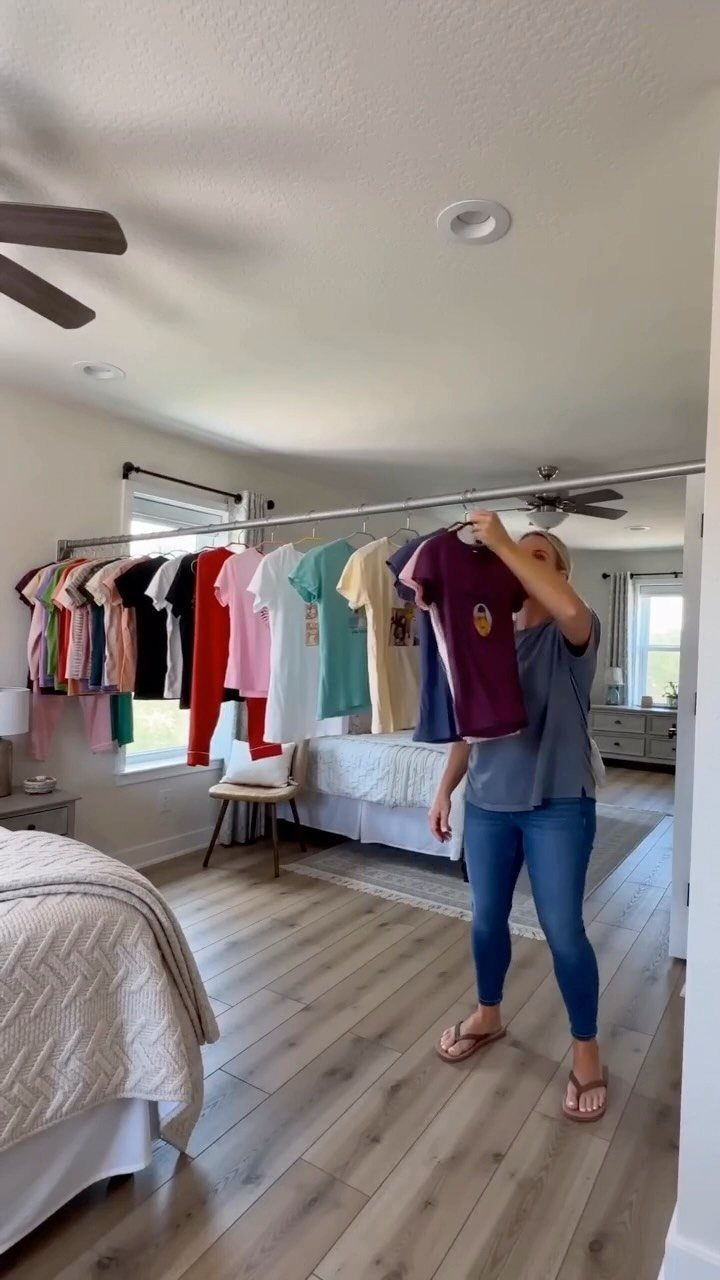
A metal bar screwed to the bedroom wall holds hanging clothes where a closet won’t fit or when the closet is full.
It mounts at whatever height works for what you plan to hang, and the floor underneath stays open for a dresser or shoes.
The rack stays visible, so it works best for clothes you wear often and don’t mind seeing all the time.
Measure Before Choosing Organizers
A basket or bin that looks like the right size online can sit too wide for the shelf, too deep for the space between the door and the back wall, or too tall to slide under hanging clothes.
Check where baseboards stick out, where door tracks run, and how far hinges swing. A drawer that needs more clearance than your closet is deep won’t open all the way.
Door-mounted organizers have to let the door close all the way. Measure the gap between the door and the frame, then check the thickness of the organizer before you hang it.
Wall-mounted shelves need a stud or an anchor that can hold the weight. Drywall alone won’t support a loaded shelf.
Match Storage to Belongings
Plan the layout around what you actually own and how often you reach for it.
If most of your clothes are short, you can double up the hanging rods. If you own a lot of long coats or dresses, you need full-height clearance on at least one wall.
Put the things you wear every day where you can grab them without moving something else. Keepsakes and off-season storage can go in the back or on a high shelf.
Sort by category first so you can see if you have three similar bags but only use one. That tells you what you need space for and what can go into long-term storage.
Shelves, drawers, and compartments should match the size and type of what you’re storing. Folded sweaters need a different setup than hanging blouses.
Frequently Asked Questions
How to organize a small bedroom closet?
Start by adding a second rod below the first to double your hanging space, then use the floor under short clothes for bins, a cube unit, or a dresser.
Put shelves on the side walls or above the rod to hold folded clothes, and keep off-season items in bins on the top shelf or under the bed.
Match your storage to what you actually own so you’re not leaving empty space or cramming things in.
What do you hang and what do you fold?
Hang coats, blazers, blouses, dresses, skirts, and dress pants. Fold sweaters, knits, T-shirts, sweatshirts, underwear, socks, and pajamas.
How can I make a small closet more functional?
Add a second hanging rod to double the space for short clothes, then fill the floor below with a dresser, cube unit, or shoe rack so that area isn’t sitting empty.
Use the back of the door for an over-the-door organizer that holds shoes, bags, or accessories without taking up closet space.
How can I organize my small closet without spending money?
Use bins and hangers you already own, and group similar items together so everything has a place.
Fold stretch-prone clothes like sweaters and stack them on a shelf or the floor instead of hanging them. If you don’t have bins, cardboard boxes work to corral accessories, scarves, or off-season items on the top shelf.
How can I keep my small closet clutter-free?
Label each bin so items go back where they belong, and use drawer dividers or trays to keep jewelry and small accessories separated. Go through the closet once a year and pull out anything you haven’t worn in months.
What are some creative ways to store shoes in a small closet?
Use an over-the-door organizer with pockets to hold pairs without taking up floor space, or put a tiered shoe rack along the bottom of the closet to keep them off the ground.
Wall-mounted racks hold shoes horizontally at eye level and free up the floor entirely. A cube unit under the hanging rod can hold shoes in the lower cubbies while folded clothes sit in the upper ones.