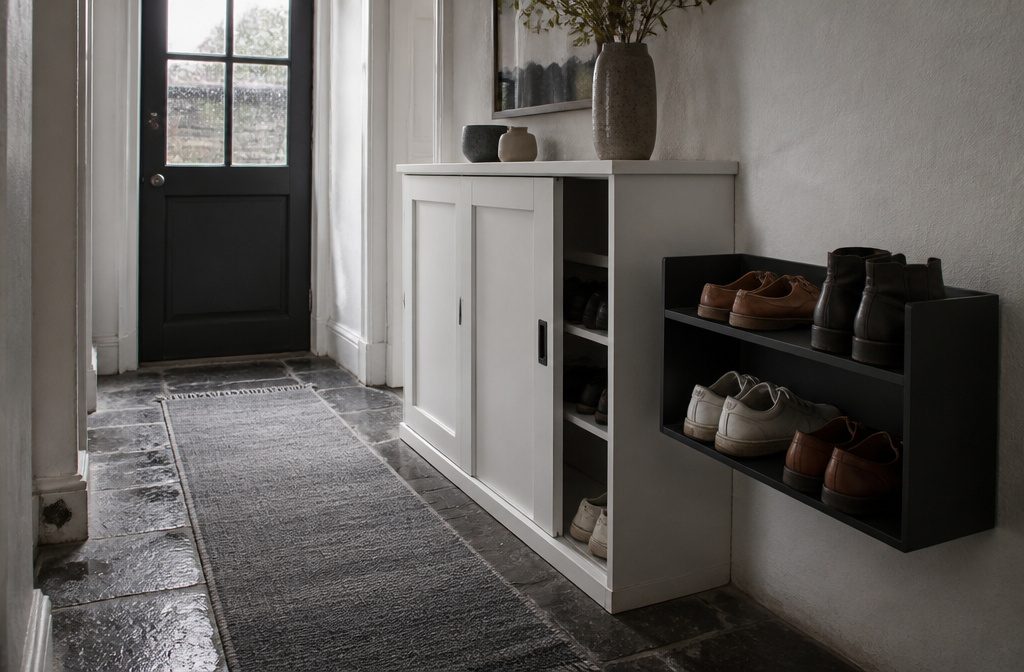

Shoe storage near the door runs from a £7 fabric box to a £399 console with built-in compartments and a mirror. The decision comes down to how much floor space you can spare and whether you want the shoes visible or hidden.
Closed cabinets fit narrow hallways without blocking the path — the Eloise sliding-door cabinet takes up 60cm wide by 38cm deep — while open racks and wall-mounted options keep the floor clear when width is the constraint.
1. Closed Cabinets and Cupboards
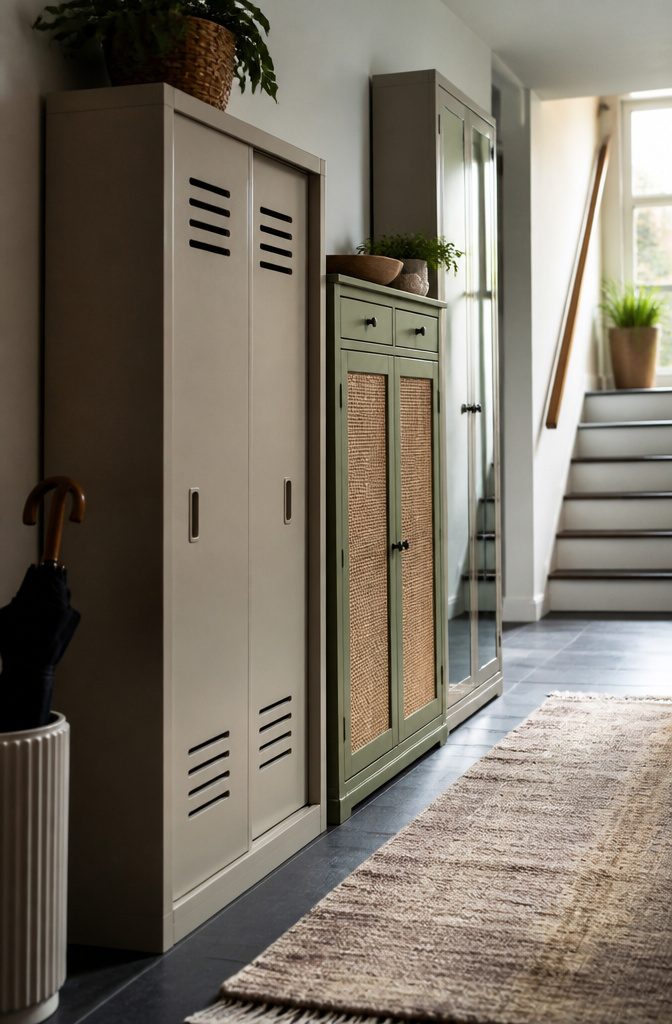
Cabinets keep shoes out of sight, which cuts down the visual clutter and makes a narrow hallway feel calmer.
If you have pets, closed doors stop shoes from becoming chew toys. Just make sure the cabinet has some ventilation so moisture does not build up and damage leather or fabric.
Slim vertical cabinets work well in tight spaces because they take up very little floor area.
The Eloise Sliding Shoe Storage Cabinet (£89, H100cm x W60cm x D38cm) has sliding doors instead of ones that swing out, so it fits into a narrow hall without blocking the path. Inside you get four shelves.
The Habitat Monica cabinet stores nine or more pairs in H87.5cm x W60cm x D33.5cm, which is about as compact as closed storage gets.
For something more decorative, the Oliver Bonas Tinta Green cabinet is handmade from mango wood with three shelves and rattan paneling (H133cm x W73cm x D34cm).
It is the most expensive option here, but the finish and the detail make it worth it if you want the storage to look less utilitarian.
Mirrored cabinets are a good pick for small entryways because the reflection makes the space feel bigger. Some people repurpose vintage trunks as shoe storage, which hides a lot and doubles as a seat or side table.
2. Benches with Shoe Storage
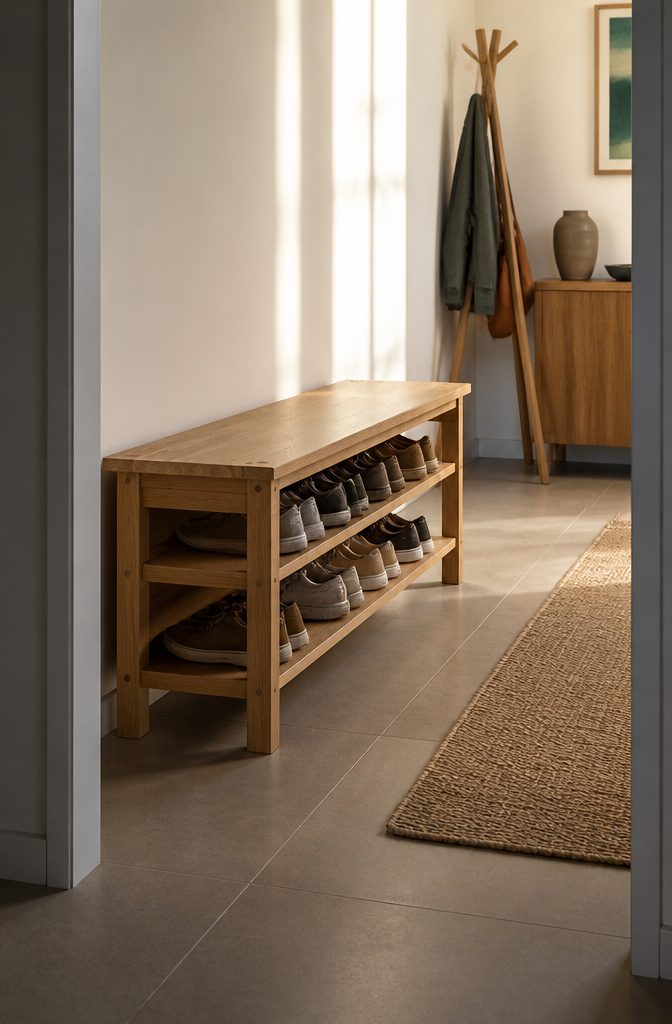
A bench that holds shoes underneath gives you a place to sit while you tie laces, and it solves the hopping-on-one-foot problem that comes with standing.
The Beatrice Storage Bench (£229, H50cm x W115cm x D37.5cm) fits narrow hallways and comes in four colors.
The Willingheart Shoe Bench Rack holds eight pairs on two tiers and supports up to 400 lbs, so you can sit without worrying it will buckle.
If you want the shoes out of sight, look for one with enclosed storage instead of open racks.
The Acro Wooden Entryway Shoe Storage Bench uses natural rubberwood and an embedded nut design that makes assembly easier than dealing with screws.
I like benches for small spaces because they do two jobs without taking up two footprints, and tucking shoes underneath keeps the floor clear.
3. Open Shoe Racks and Shelves
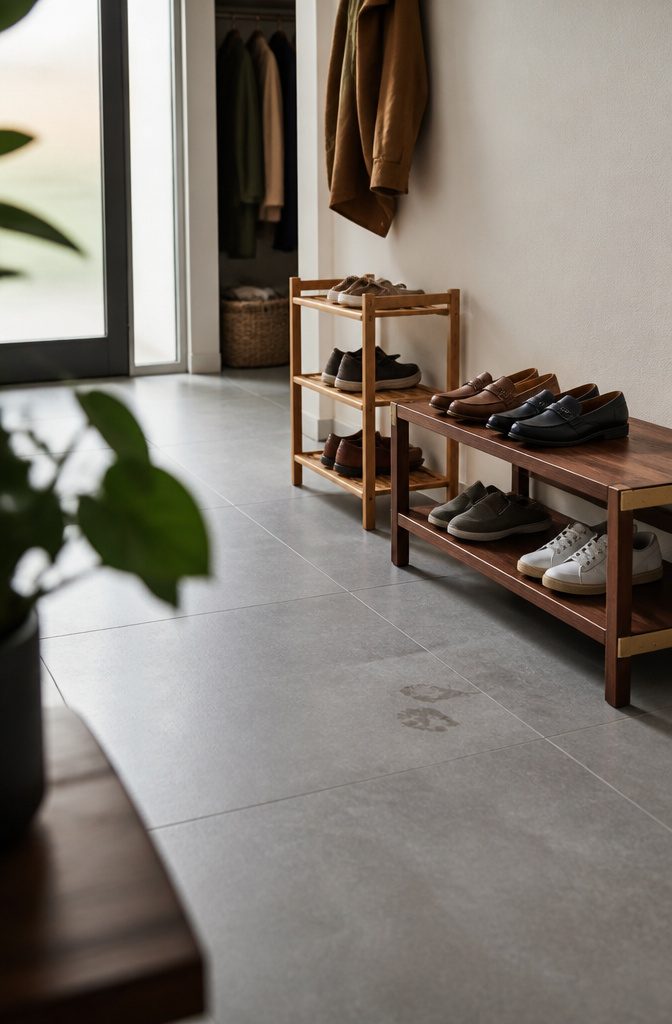
Open racks and shelves keep shoes visible and easy to grab, which matters most on busy mornings when you’re looking for a specific pair.
Freestanding tiered racks fit against a wall or inside a closet and slide out when you need something stored further back. Adjustable models let you change the shelf spacing for boots or high heels without buying a second piece.
Open storage also allows airflow, which helps prevent odor and moisture damage over time. Shoes dry faster after rain and stay fresher between wears.
The Glsety 3 Tier Folding Bamboo Shoe Rack runs £29 and folds flat when you don’t need it, so you can tuck it in a cupboard between seasons.
At H45.7cm × W49.5cm × D24.9cm, it holds about nine pairs without taking up much floor space.
For something more permanent, the Avery Shoe Rack is made from tropical hardwood and brass, with two shelves and a low profile that fits under a mirror or console. It’s £148 and looks more like furniture than storage.
Metal stackable racks, like the 7-Tier Stackable Metal Shoe Organizer, adjust to fit different shoe heights and can be built up as your collection grows. The open frame keeps everything in view, so nothing gets forgotten at the back.
4. Wall-Mounted or Floating Shoe Storage
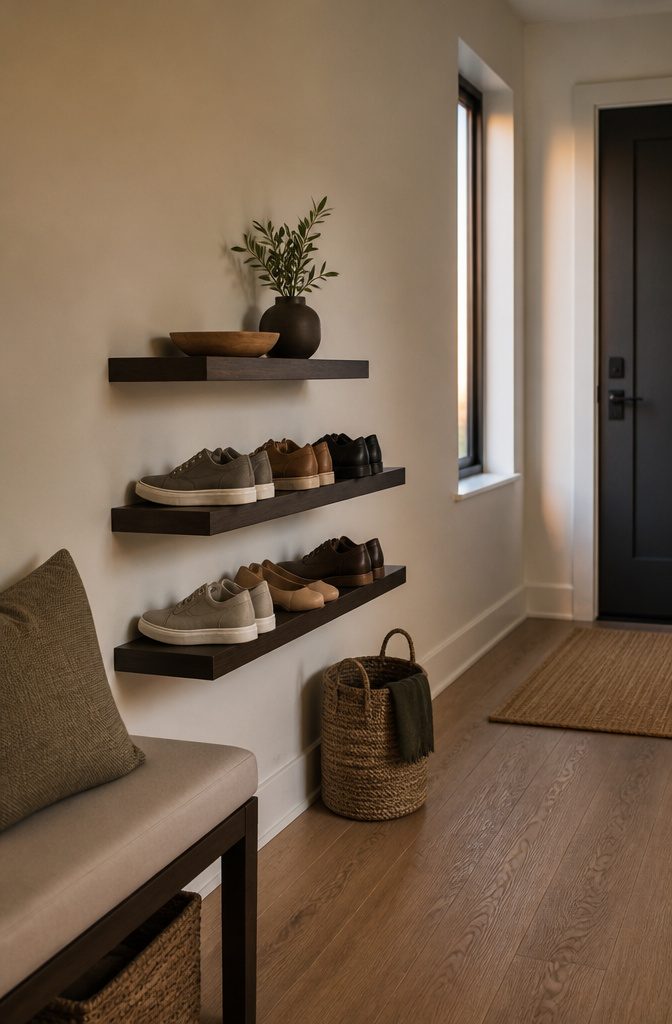
Wall-mounted shoe racks and floating shelves keep your floor clear, which makes a narrow hallway or small entryway feel more open.
When floor space is tight, the wall becomes your storage zone instead of letting shoes pile up where you walk.
The Tonks 10 Pair Shoe Rack comes as a set of two pieces. Each measures H23cm x W110cm x D9cm, and together they hold up to 20 pairs.
You can stack them vertically or line them up side by side, depending on your wall. They’re slim enough to mount behind a door without blocking the swing.
Pallet racks work the same way but sit higher on the wall if you want the lower section free for a bench or basket. I like that option when pets get into shoes left at ground level.
Floating shelves give you the lightest look.
The shoes sit on display without brackets showing underneath, so the whole setup reads clean and modern. Pair them with a second shelf above for keys or a small catch-all if you want everything in one vertical column.
5. Over-Door or Hanging Organizers
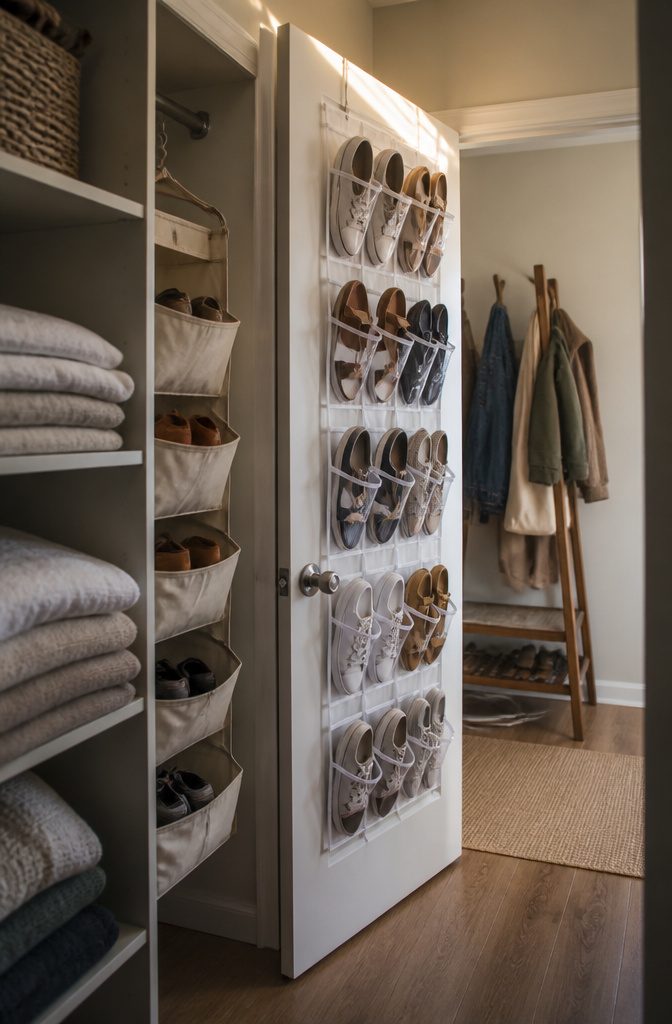
If you don’t have floor space but you do have a door, an over-door organizer gives you vertical storage without taking up an inch of the entryway.
The Whitmor White 36-Pair Over The Door Shoe Organiser holds up to 36 pairs in clear pockets and hangs right over the door frame—no screws, no holes.
It runs about $45 and measures 69 inches tall by 69 inches wide by 7.5 inches deep, so it fits most standard doors.
A 12-tier metal rack from The Container Store does the same job with felt pads that protect the door surface, and 10-tier canvas versions work if you want something softer that folds flat when you move.
I’d hang one behind a closet door or a bedroom door rather than out in the open.
It’s not pretty, but it solves the problem when you have more shoes than square footage. Apartment renters especially: this is the answer that doesn’t leave marks.
6. Baskets, Bins, and Shoe Boxes
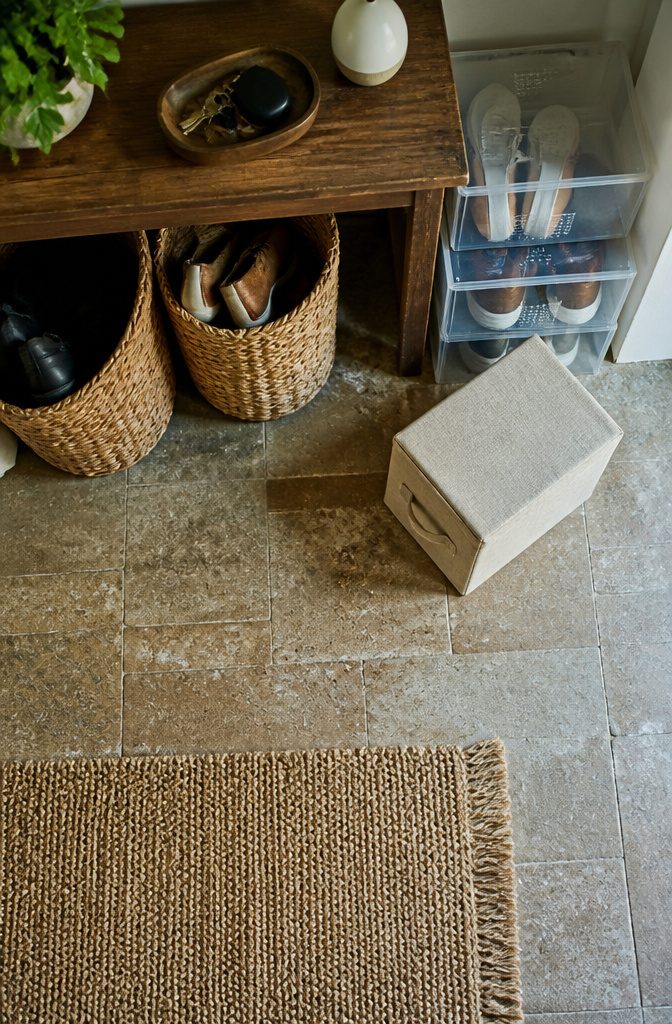
Baskets and bins let you toss shoes in fast, which keeps the floor clear even when no one has time to line things up.
Open bins give more airflow than closed ones, so they help cut down on odor buildup if anyone runs in sweaty shoes or wet boots.
I like transparent stackable boxes when I want to see what is inside without pulling everything out.
The Shoe Storage Organizer comes with six stacking organizers that have clear sides and ventilation holes, so you get both visibility and some air moving through.
For shoes you only wear part of the year, a fabric box works.
The Fabric Shoe Box from Dunelm (£7, 34cm long by 22cm wide by 16cm deep) wipes clean and folds flat when you are done with it, which matters if storage space shifts with the season.
Labeled baskets are useful when several people share one entry and you want each person to have a spot without needing the inside to look perfect.
Woven or decorative baskets tucked under a console table hide the clutter but still look intentional, and you can match them for a clean look or mix textures if you want something more relaxed.
7. Boot Trays and Floor Catch-Alls
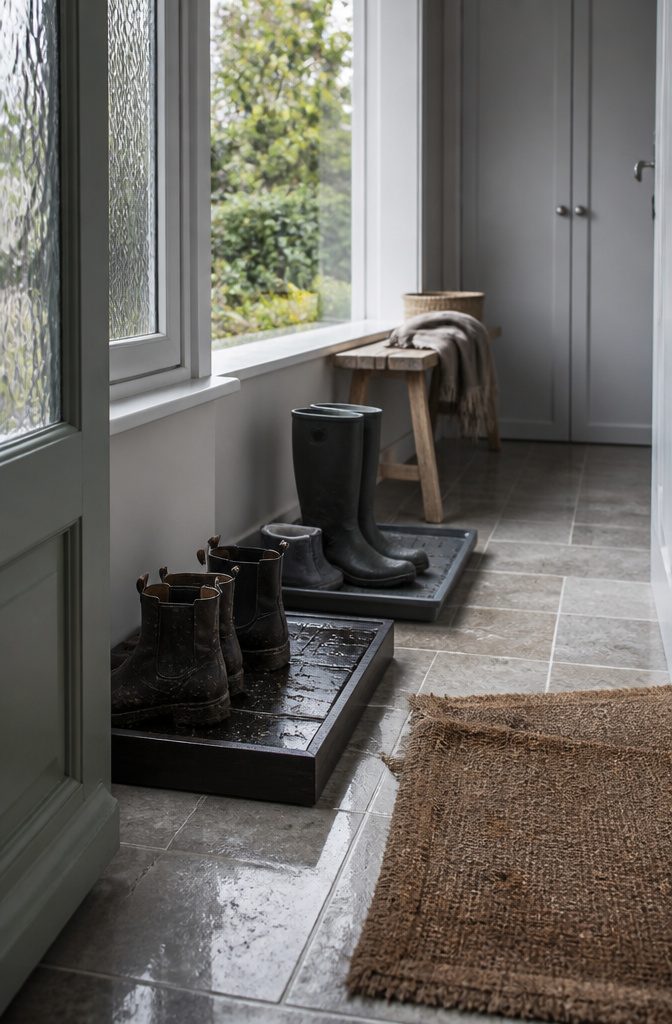
A boot tray gives wet or muddy shoes a dedicated place and keeps the mess off your floor.
I find they’re most useful in fall and winter, when footwear tracks in more moisture. Most trays are easy to wipe down, and they don’t eat up much square footage.
The Pine Boot Tray has a dark black stain over natural wood grain and wipes clean without much effort. It reads modern without trying too hard, and you can tuck it under an entryway bench if floor space is tight.
The Home Boot Tray is made from polypropylene, costs under $41, and cleans with a hose or in the sink.
That makes it easy to rinse and reset when things get sloppy. It’s proof that a tray doesn’t need to be expensive to do the job.
8. Cubbies and Compartment Storage
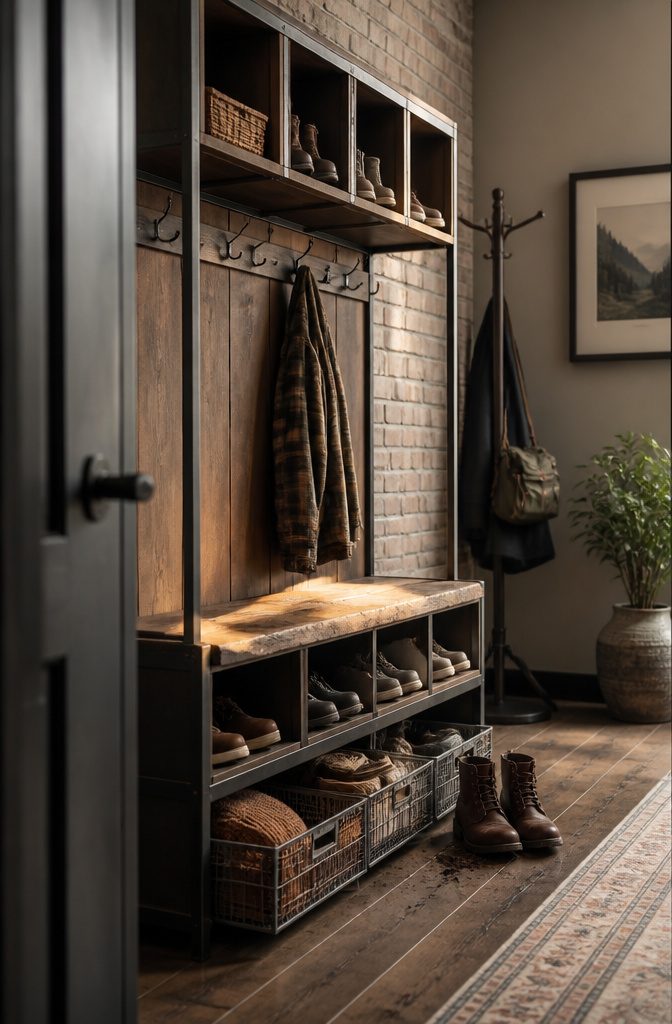
Cubbies give each person their own space for shoes and gear, and that separation alone cuts down on morning searches.
When everyone knows which compartment is theirs, shoes stay off the floor and arguments over missing sneakers disappear. I like designs that pair cubbies with pull-out baskets below for gloves or dog leashes, because grab-and-go items need their own layer.
The 3-in-1 Bench, Coat, and Shoe Storage fits a lot into one piece: shoe shelves at the bottom, a bench board sturdy enough to sit on while you tie laces, and overhead hooks for bags and jackets.
The vintage look works in industrial or farmhouse spaces, and the vertical stacking keeps the footprint narrow. For tighter entries or households with boots and heels, flexible organizers let you arrange compartments to match your layout.
The bottom row in most of these sits tall enough for riding boots or ankle booties, so winter storage does not force you into a second system.
9. Ladder-Style Shoe Storage
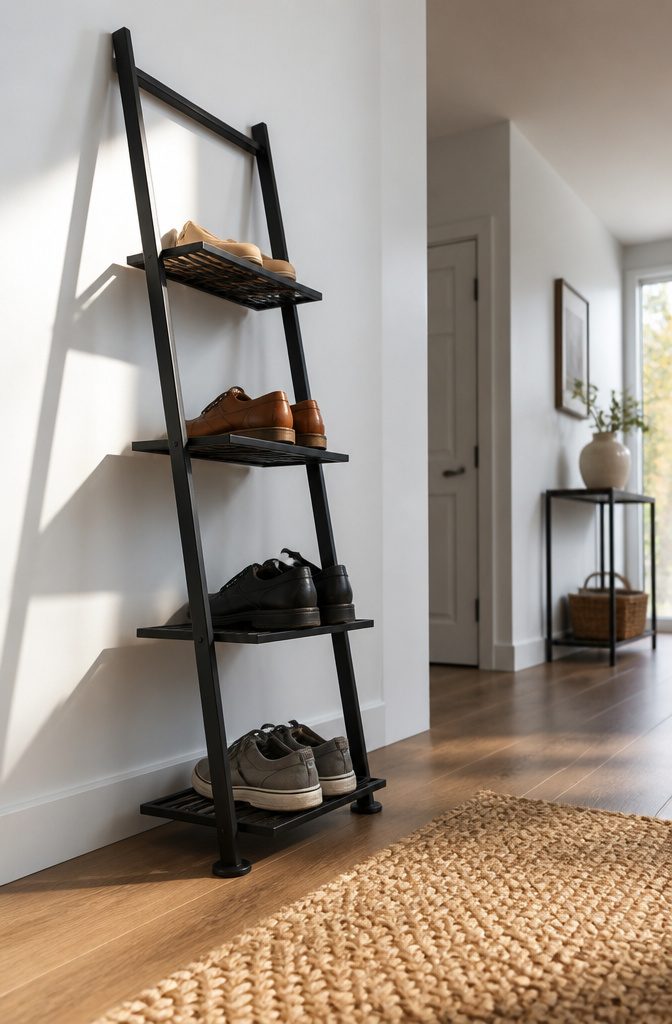
A ladder shelf leaning against the wall turns shoes into part of the entrance decor instead of tucking them out of sight.
The look is casual and a little unexpected, which is why I like it for spaces where you want something softer than a box or a cabinet.
The Enhomee Shoe Rack is a steel version with a matte black finish and four shelves.
It has an anti-slip pad on the bottom so it stays put. For something closer to the classic wood ladder, the Reibii Enhomee Shoe Rack comes in a range of colors and sizes and works well repurposed as shoe storage.
You give up capacity. A ladder holds fewer shoes than a rack with the same footprint, so this works best when you keep a small rotation at the door and the rest somewhere else.
If the entrance is more about how it looks than how much it holds, a ladder does that job without taking up much floor space.
10. Console Tables or Sideboards with Shoe Storage
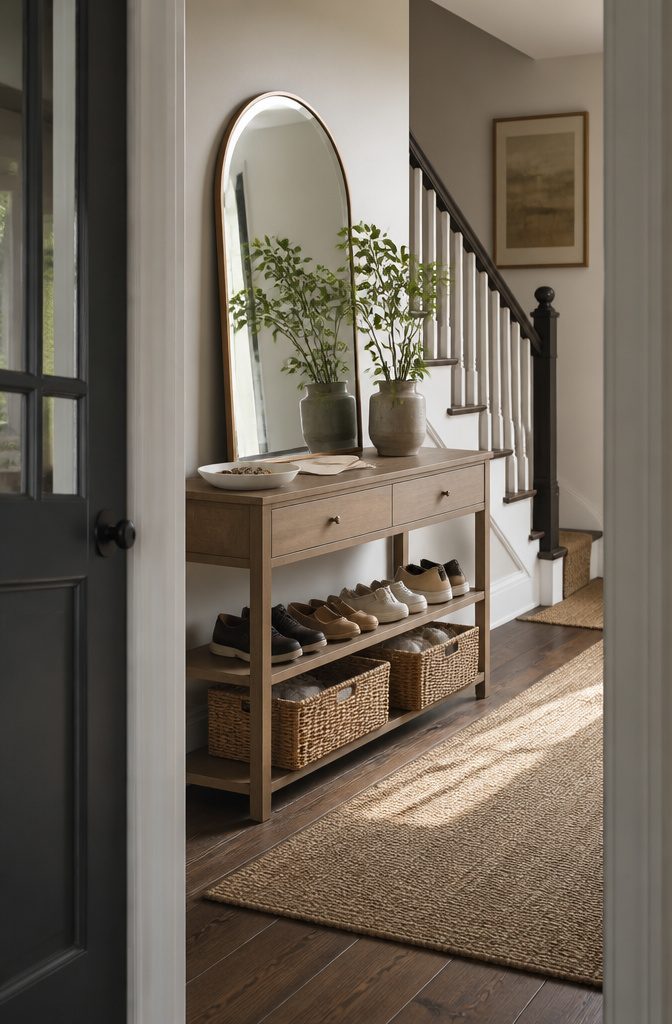
A console table with built-in shoe storage gives you two things at once: a surface for keys and mail, and a place to tuck away shoes.
The Emilie Hallway Mirror Console Shoe Storage (£399, 170cm tall, 58cm wide, 30cm deep) does both and adds a third: an arched mirror for last checks before you leave.
It has one drawer and two shelves, enough for a few pairs per person plus bags or smaller items.
The advantage here is the top surface. You can drop things when you walk in without creating a pile on the floor, and the shoe storage stays below eye level where it belongs.
If you want hidden storage, look for a console with closed compartments or slide baskets underneath.
Woven baskets work well for this and can hold a couple of pairs each. Match them for a neat look or mix textures if you prefer something more relaxed.
11. Hall Trees and Combined Coat-and-Shoe Units
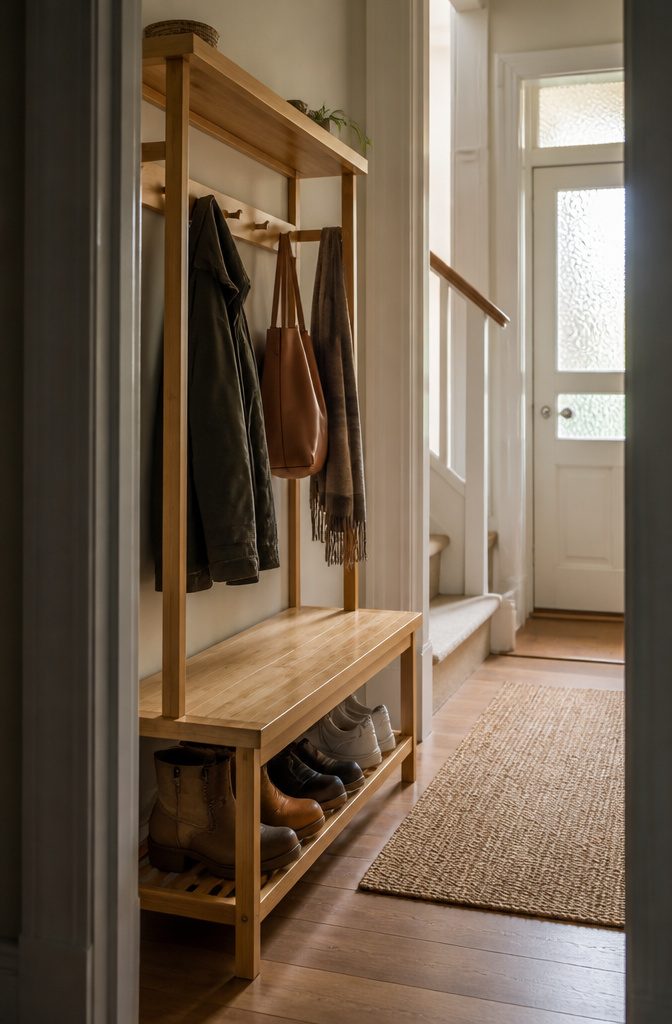
Hall Trees and Combined Coat-and-Shoe Units
A hall tree packs shoe storage, coat hooks, a bench, and sometimes a mirror or shelf into one piece.
That makes it a good pick when you need to handle shoes, keys, bags, and coats but don’t have room to spread them across separate furniture.
The bench gives you a place to sit while you tie shoes. The hooks above catch coats, scarves, and bags.
The shoe rack at the bottom keeps pairs off the floor. Some versions include a small shelf or drawer at the top for a key drop or mail.
I like these for small entryways where every inch counts.
You get multiple functions without committing floor space to three or four separate pieces. They also work well for renters, since you can move the whole unit out when you leave without touching walls.
Materials range from reclaimed wood with a farmhouse feel to bamboo with a natural finish that resists moisture.
Most stand between five and six feet tall and run less than three feet wide, so they tuck into narrow hallways without blocking traffic.
12. Modular or Stackable Storage
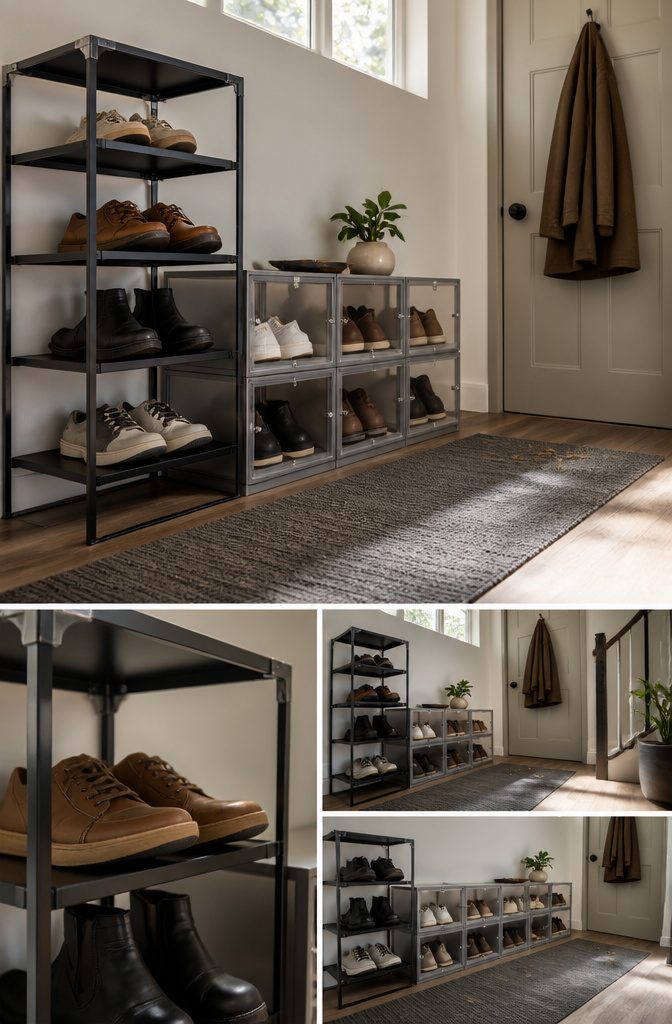
Modular systems let you start with what fits today and add pieces when you need more room or when the collection outgrows what you planned for.
The Yamazaki Home Adjustable Shoe Rack ($42, 4.5 stars from 349 votes) stacks to build upward when floor space is tight, and the open steel frame keeps the whole setup from looking like a wall.
If you need horizontal spread instead, the Yamazaki Home Expandable Shoe Rack ($48) adjusts width rather than height.
Stackable cube storage with transparent doors works the same way. You can add or subtract boxes without tools, and the clear fronts let you scan for the pair you want without opening every door.
Modular cabinets with interlocking connectors go together fast and fit corners or odd stretches of wall that fixed-width furniture can’t use.
I’d pick stackable metal if the shoes stay visible most of the time anyway, and enclosed cubes if dust is a problem or the entrance gets direct sun.
13. Ottomans with Shoe Storage
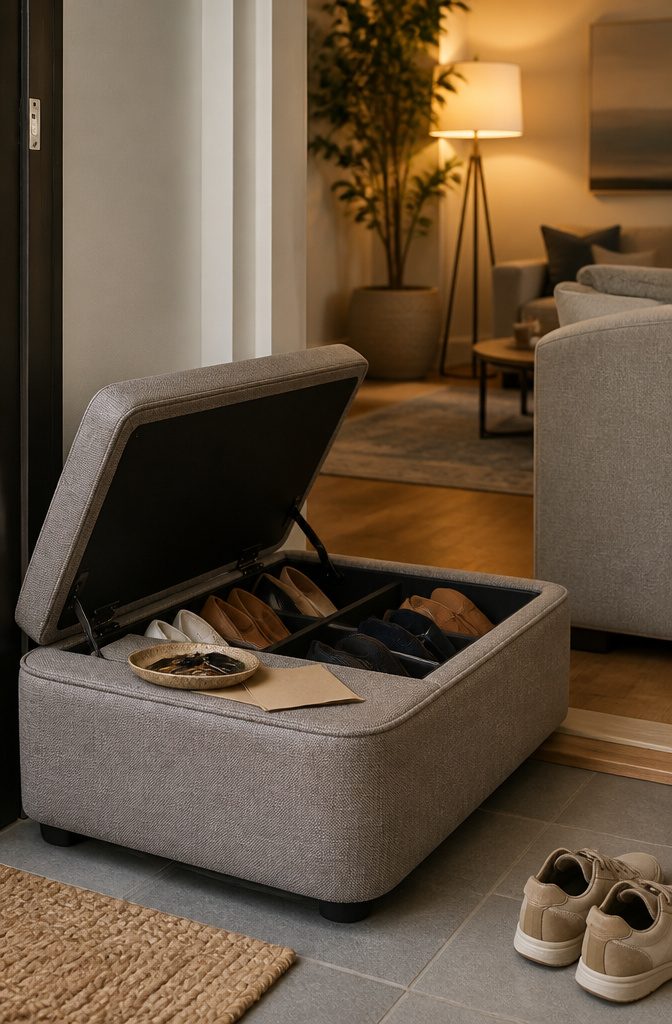
These double as coffee tables, and the hidden compartment gives you storage space you wouldn’t otherwise have.
The lid lifts to reveal rows inside, and the top doubles as a tray when you’re juggling keys and mail on your way in.
They work best when furniture has to do more than one thing, which in a small entrance usually means all of it does.
The soft materials make them look less utilitarian than a straight storage box, so they fade into a living room if your entry opens directly into one.
I’ve found they hold about six to eight pairs depending on the ottoman’s size and how you pack them, though that drops if you’re storing boots.
One near the door gives you a place to sit while you tie shoes without giving up floor space to a bench that only does that one job.
14. Under-Bed or Under-Sofa Shoe Storage
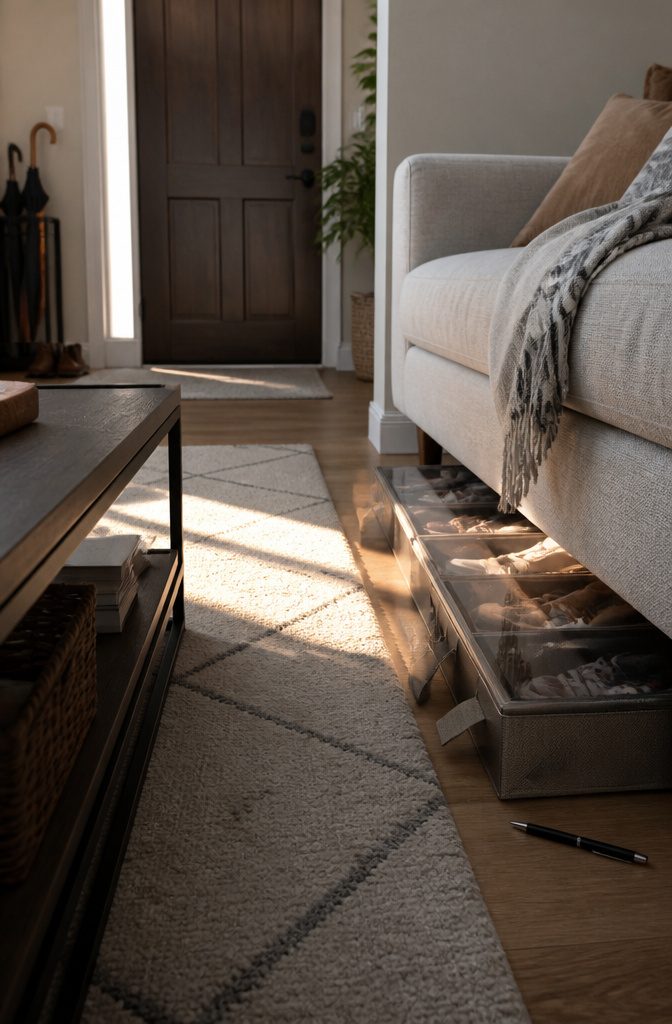
If you don’t have a hallway or your entryway footprint is already spoken for, shallow storage that slides under furniture keeps shoes out of sight without asking for a single inch of floor space.
The boxes sit flat enough to tuck beneath a sofa or console near the door, and most come with individual compartments so pairs stay organized instead of tumbling into a heap.
Handles make pulling the organiser out quick when you need the shoes inside.
I like this option because it turns dead space into working storage. The gap under a sofa usually holds dust and lost pens, so using it for shoes feels like found square footage.
If your sofa sits close to the entryway, the box stays within reach but completely hidden. You get the tidiness of a closed cabinet without actually buying one.
15. Repurposed Furniture or Materials
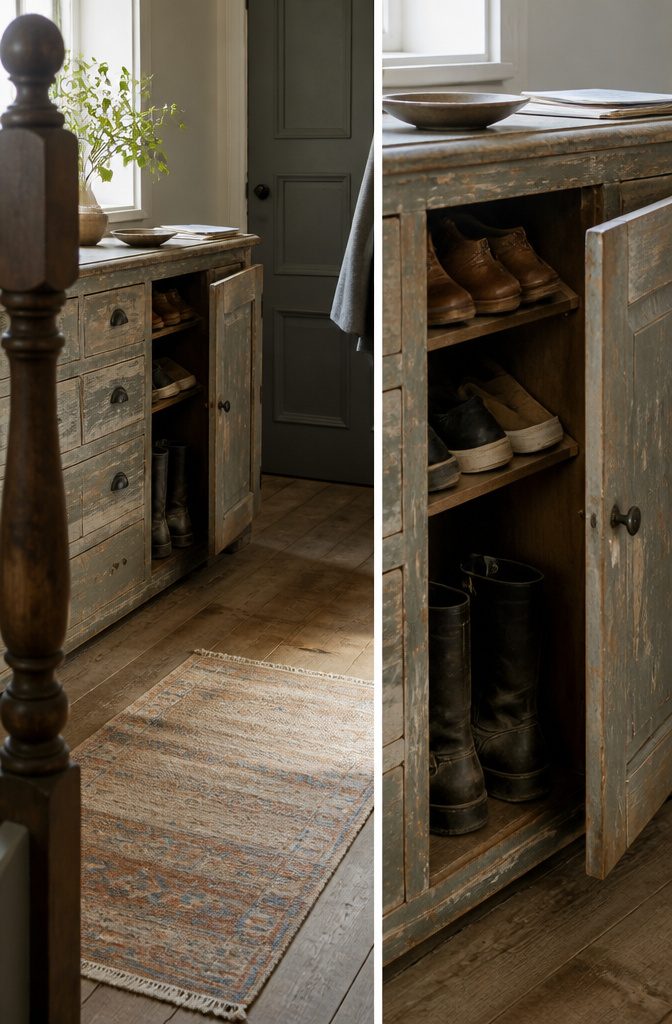
I have a dresser from a yard sale I cut the legs off, and for $15 I ended up with a low-profile shoe cabinet that holds fourteen pairs. The top became a spot for keys and mail.
If you already own something boxy with doors or drawers, you might not need to buy anything new. Old wardrobes work when you replace a few shelves with angled shoe racks.
Trunks sit low enough that they double as benches, and the country-style trunk from The Cotswold Company is shallow front to back, so it fits narrow hallways while still holding tall boots or wellies inside.
The IKEA Hemnes shoe cabinet shows up in a lot of DIY posts because people swap the stock pulls for leather straps or brass knobs, and suddenly it stops looking like it came from IKEA.
A trunk hides clutter completely, which makes a real difference if a messy pile of shoes raises your stress when you walk in the door.
I use one that belonged to my grandparents, and guests assume it is just decorative until I lift the lid.
16. Shoe Risers, Slots, or Holders
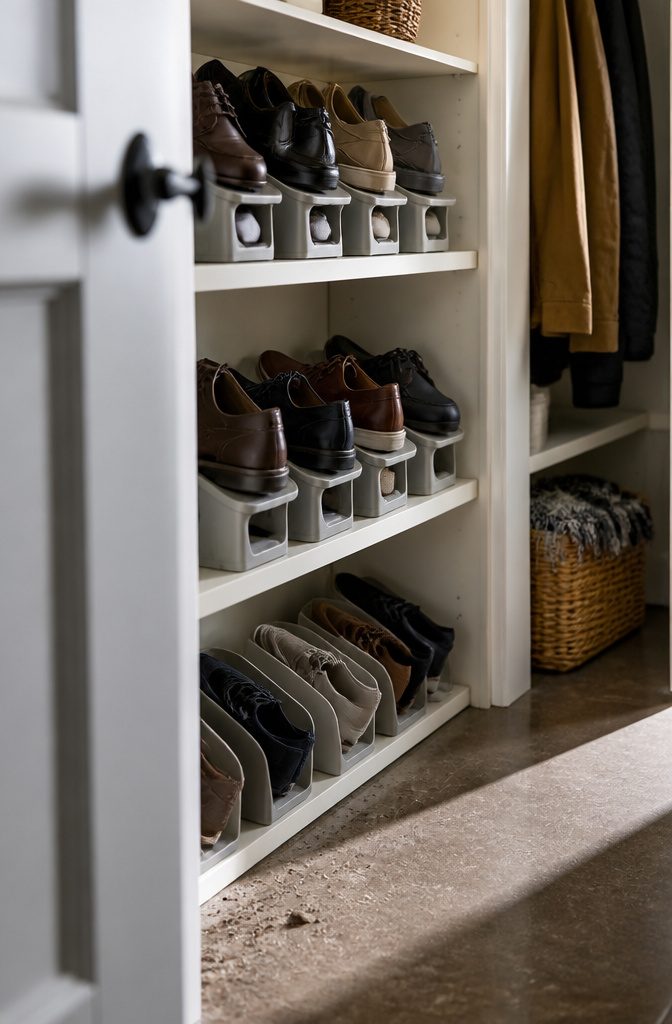
Shoe risers stack one shoe above the other so a pair takes up half the vertical space on a shelf or rack.
You slot the heel of one shoe into the riser and set the toe of its partner on the floor or shelf below. That doubles what fits in the same footprint.
Angled holders work the same way but tip pairs forward or back instead of straight up.
The angle cuts the depth each pair needs, so you can line up more shoes in a shallow closet or on a narrow rack. Most are sized for flats and sandals rather than boots.
Both are cheap fixes when you already have a rack or closet shelf and you just need more out of it.
I think risers are better for heels and anything with structure, while the angled slots handle ballet flats without letting them flop. Either way, you’re buying space without buying new furniture.
17. Rolling Shoe Storage
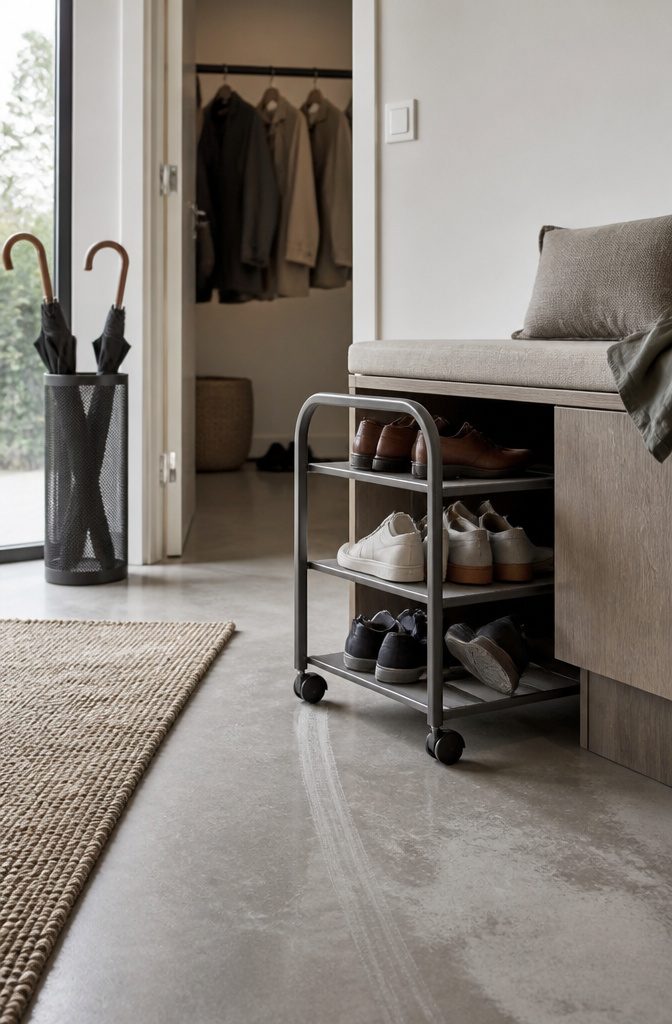
A rolling rack gives you shoe storage that moves when you need it to.
Slide it out to clean underneath, roll it into a closet when guests arrive, or shift it between rooms if your drop zone changes with the season.
The Yamazaki Home Upright 5-Pair Shoe Rack runs $88 and holds five pairs on a sturdy steel frame.
It has a handle for easy maneuvering and racks 4.6 stars from 340 votes. I like that it fits tight spaces without locking you into one spot.
Look for multi-tier designs in neutral colors so the cart blends rather than announcing itself. Rolling carts work best in busy homes where people come and go at different hours and shoes need to stay accessible without blocking the path.
They tuck under benches or into corners when not in use, which keeps the floor clear without sacrificing capacity.
18. Built-In Wall Storage
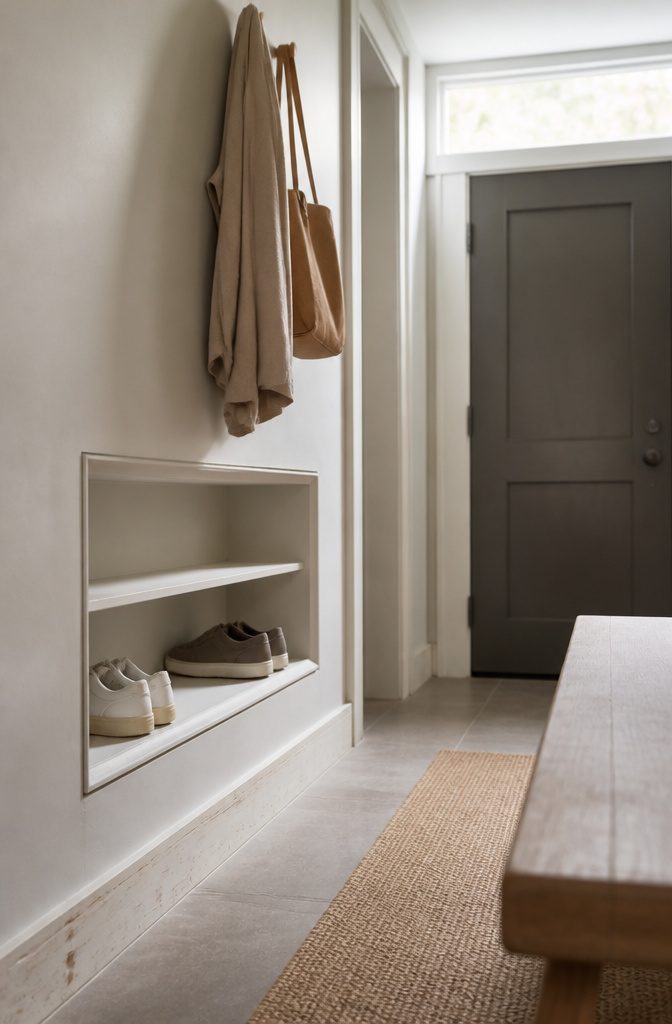
A wall niche is recessed storage that sits flush with the wall, and it works best if you are already planning a remodel or new construction.
I like the look because it reads as custom without eating up any floor space in a tight entrance.
The niche itself is built between wall studs during framing, so retrofitting one later means opening drywall and patching it back.
That makes it a bigger lift than most other shoe storage, but you get a sleek, tucked-away spot that does not stick out into the walkway.
If you go this route, adding hooks above the niche turns it into a mini mudroom setup. Jackets and bags hang right where you need them, and the shoes stay below in the recessed compartment.
Built-in storage like this can also help with resale value down the line, though that depends on how well it fits the next owner’s entrance layout.
Why Keeping Shoes Near the Door Works
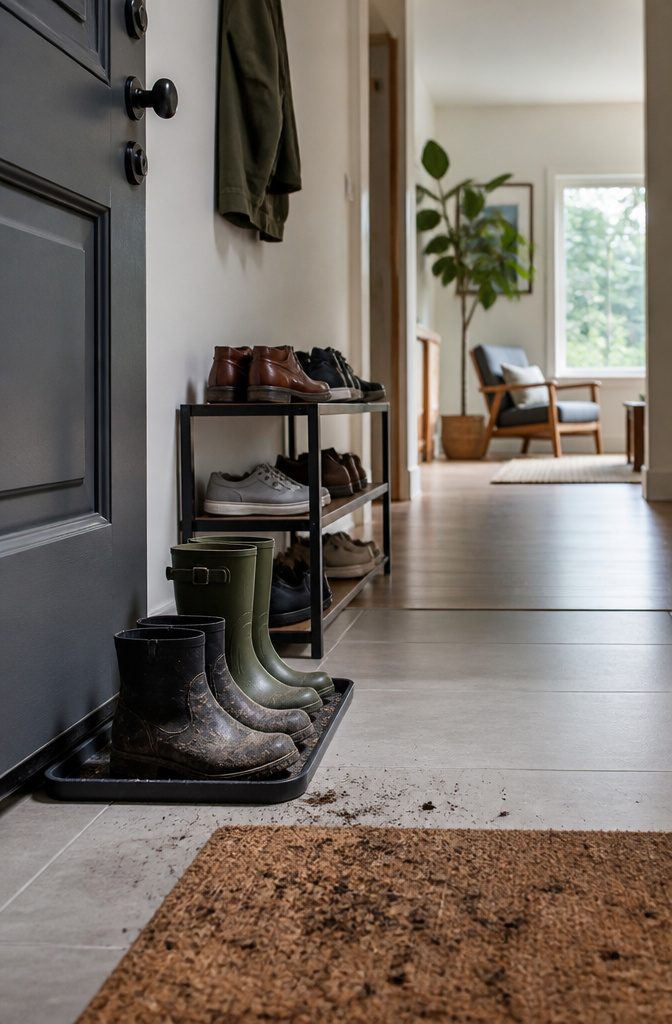
Keeping shoes right where you take them off saves you from tracking dirt through the house. Mud and street grime stay contained near the door instead of spreading to carpet and hardwood deeper inside.
I find it also solves the problem of scattered shoes creating visual clutter—no more hunting for a matching pair when you’re already late.
Banner Health notes that reducing clutter at home can lower stress, and shoes are one of the fastest things to pile up. It takes less than three seconds for shoes to become a mess when they’re left unorganized.
A designated spot near the entrance makes it easy to slip shoes off and find them again without digging around. The habit sticks because the storage is exactly where you need it.
Matching Storage to Your Space and Shoe Collection
Matching Storage to Your Space and Shoe Collection
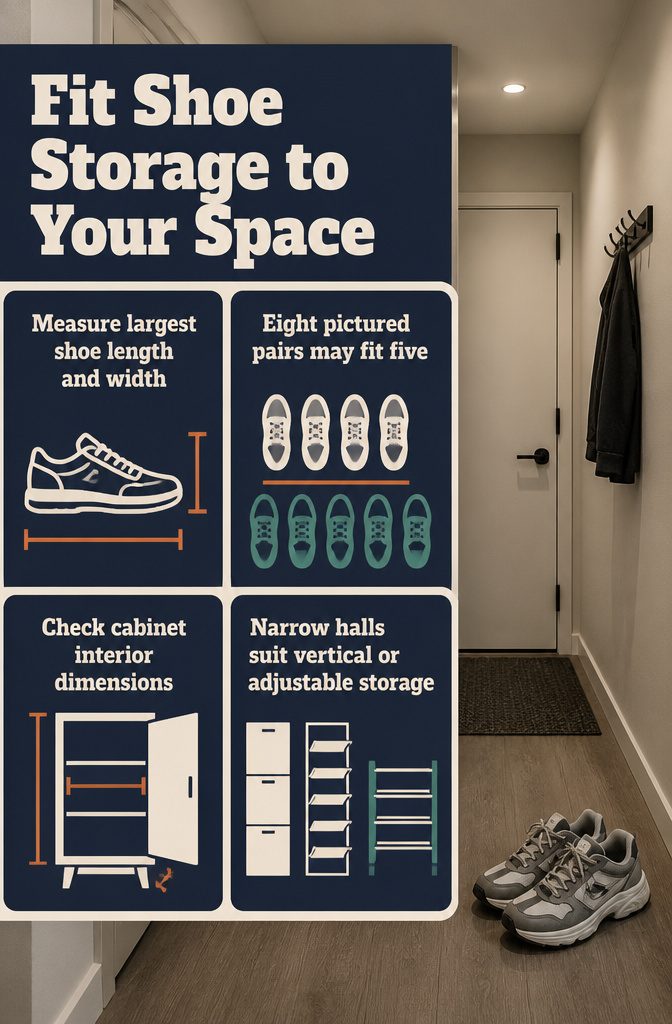
Measure the hallway and the shoes before you buy anything. I’ve learned this the hard way: many cabinets that look spacious online can’t actually fit men’s size shoes or bulky trainers.
Product photos tend to show smaller shoes than what most people own, so a cabinet that holds eight pairs in the picture might only hold five of yours.
Grab a tape measure and check the length and width of your largest shoes.
Then look up the interior dimensions of any cabinet you’re considering. Don’t trust the capacity claim on its own.
If your hallway is narrow or you’re working with a closet, lean toward vertical, wall-mounted, or adjustable storage.
Tall racks use the height you’ve got instead of eating up floor space. Expandable racks let you shrink or stretch the footprint to fit exactly what you have.
Slim vertical cabinets can tuck behind a door or stand against a short wall without blocking traffic. Pick storage that fits the room and holds what you actually wear, not what looked good in a photo.
How Storage Choices Change with Household Habits
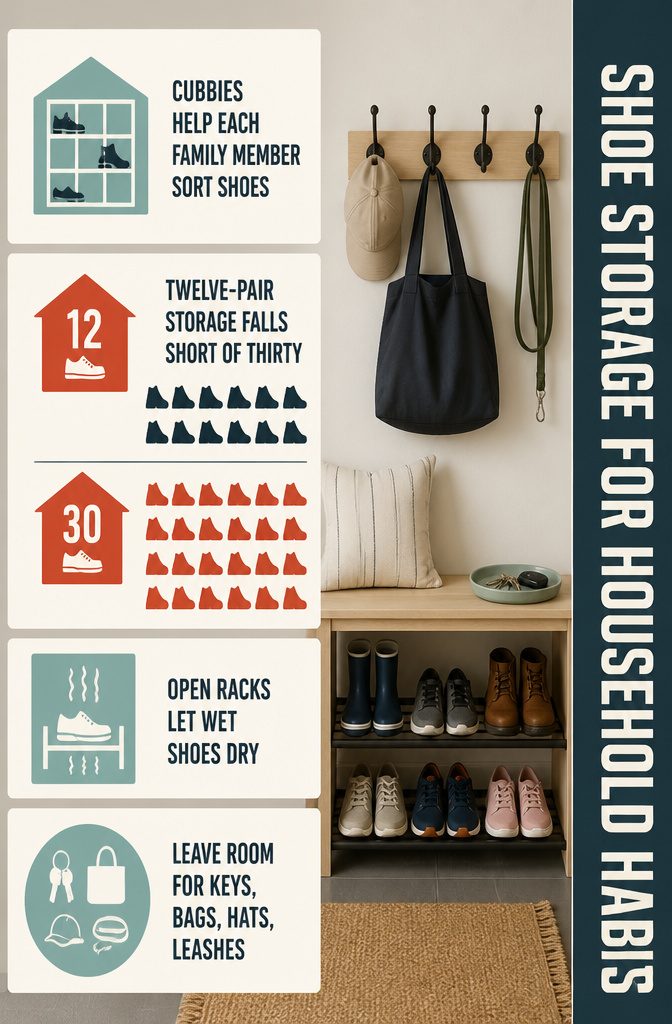
The storage setup that works for a household with two adults and three kids looks nothing like one built for a couple who mostly works from home.
Individual cubbies or bins make it easier for family members to find their own shoes without scattering the pile by the door every morning. That cuts down the mess and keeps things where they belong.
Capacity matters more than you’d think. If the system holds twelve pairs but the household owns thirty, shoes end up on the floor anyway.
Wet shoes in fall and winter need space to dry without soaking the ones next to them, so I look for open racks or trays that let air move.
And most entryways handle more than shoes. Keys, bags, hats, and dog leashes all land near the door, so the storage should account for those or at least leave room for a hook or shallow dish nearby.
Frequently Asked Questions
What are the benefits of shoe storage?
Shoe storage keeps pairs organized and easy to find, which saves time when you’re rushing out the door.
It cuts down visual clutter in the entryway, protects shoes from damage, and makes the space feel calmer and more welcoming. A tidy system also stops dirt from spreading through the house.
How do you store shoes when you don’t have a hallway?
Use under-bed or under-sofa storage that slides into the gap beneath furniture, or tuck an ottoman with hidden compartments near the door.
Hanging organizers that hook over closet doors, boot trays by the entrance, and baskets under console tables all work without needing a dedicated hallway.
Is it good to keep shoes at the entrance?
Yes, storing shoes near the door stops you from tracking dirt and mud through the rest of the house.
It takes less than 3 seconds for shoes to turn into a mess when left unorganized, so a dedicated spot at the entrance keeps them contained and easy to grab.
How do you organize a lot of shoes in a small space?
Go vertical with wall-mounted racks or stackable storage that builds upward instead of outward.
Clear stackable boxes let you see what’s inside without opening every lid, and over-door organizers turn unused vertical space into storage without taking up any floor area.
Shoe risers double the capacity of existing shelves by stacking one shoe above its partner.
How do you add storage to an entryway?
Pick furniture that does more than one job, like a bench with shoe compartments underneath or a console table with baskets tucked below.
Add wall-mounted shelves or hooks above to hold keys, bags, and jackets so everything lands in one vertical zone.