

You generally should not put a couch directly over a floor vent. Blocking it strains your HVAC system, drives up energy bills, and leaves the room with uneven temperatures. Six to twelve inches of clearance changes the equation entirely, letting air move freely enough to avoid those problems. Open-base furniture helps too, since air slips through legs or slats rather than hitting a solid wall.
1. Can You Put a Couch Over a Floor Vent
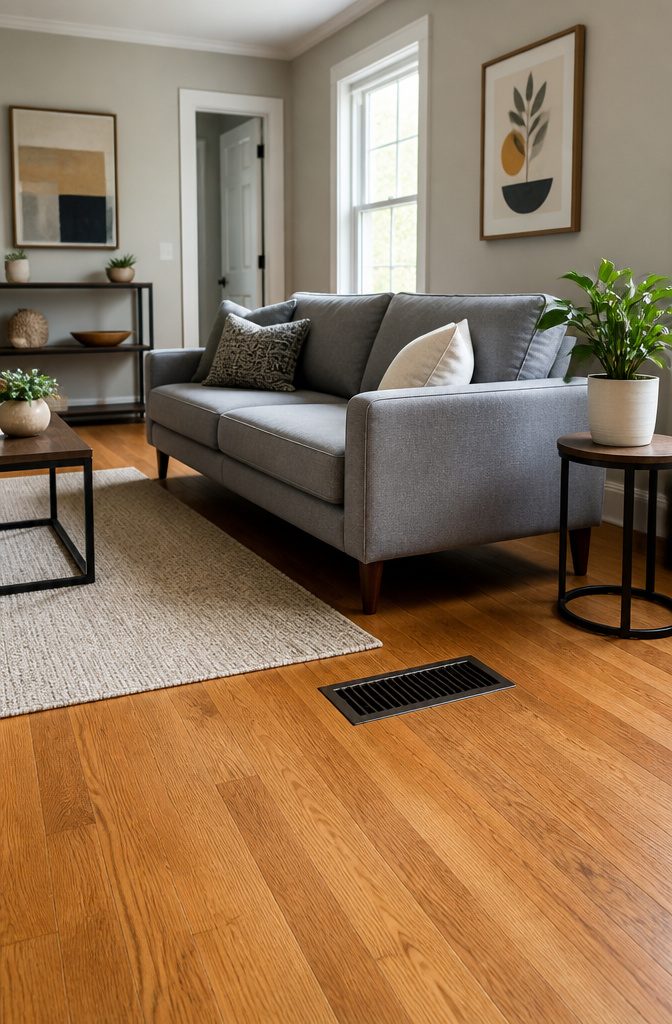
You generally should not place a couch directly over a floor vent. Blocking the vent restricts airflow, makes your HVAC system work harder, and leaves you with uneven temperatures across the room.
That said, 6 to 12 inches of clearance changes the picture. With that gap, air can move freely enough to keep the system from straining. Open-base furniture helps too, since air slips through legs or slats rather than hitting a solid wall. If your layout absolutely demands the couch sit closer, a vent deflector or extender redirects the air out from under the piece instead of letting it pool beneath.
The real risk is a sealed-off vent under something heavy and solid. That setup traps conditioned air, spikes your energy bill, and over time can damage the unit itself. Most of us with small living rooms have faced this exact squeeze, and the choice usually comes down to inches: either find those 6 to 12 somewhere, or spend twenty bucks on a deflector rather than forcing the couch flush to the floor.

【Air Vent Deflector Demensions】The Air Vent Extender measures is 11.5" in width and 1.50" in height, can be extended from 17" to 33" in length, suitable for most standard floor vents and under most furniture. You can detach the extension from a second set of air vent deflectors to meet your individual needs.
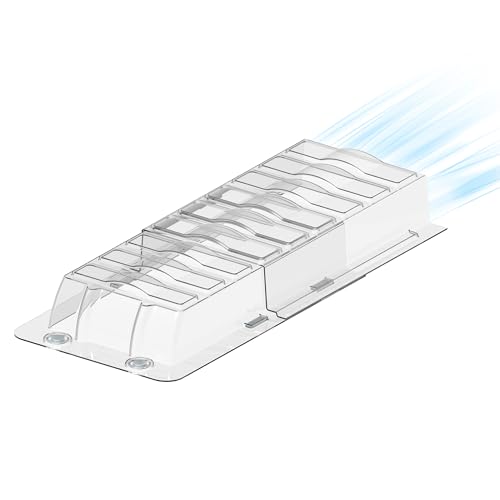
Versatile Design: This vent extender is designed to fit under furniture. such as sofa,dressers,chairs desk,bed and more, allowing for improved air circulation and distribution from vents. (Invention Patent Pending US19/390,657)

【OPTIMIZE COMFORT】 Effortlessly reroute airflow from those tricky vents under furniture, ensuring efficient heating or cooling. Redefine interior design with the ideal balance of aesthetics and function.
2. Why Blocked Vents Cost You
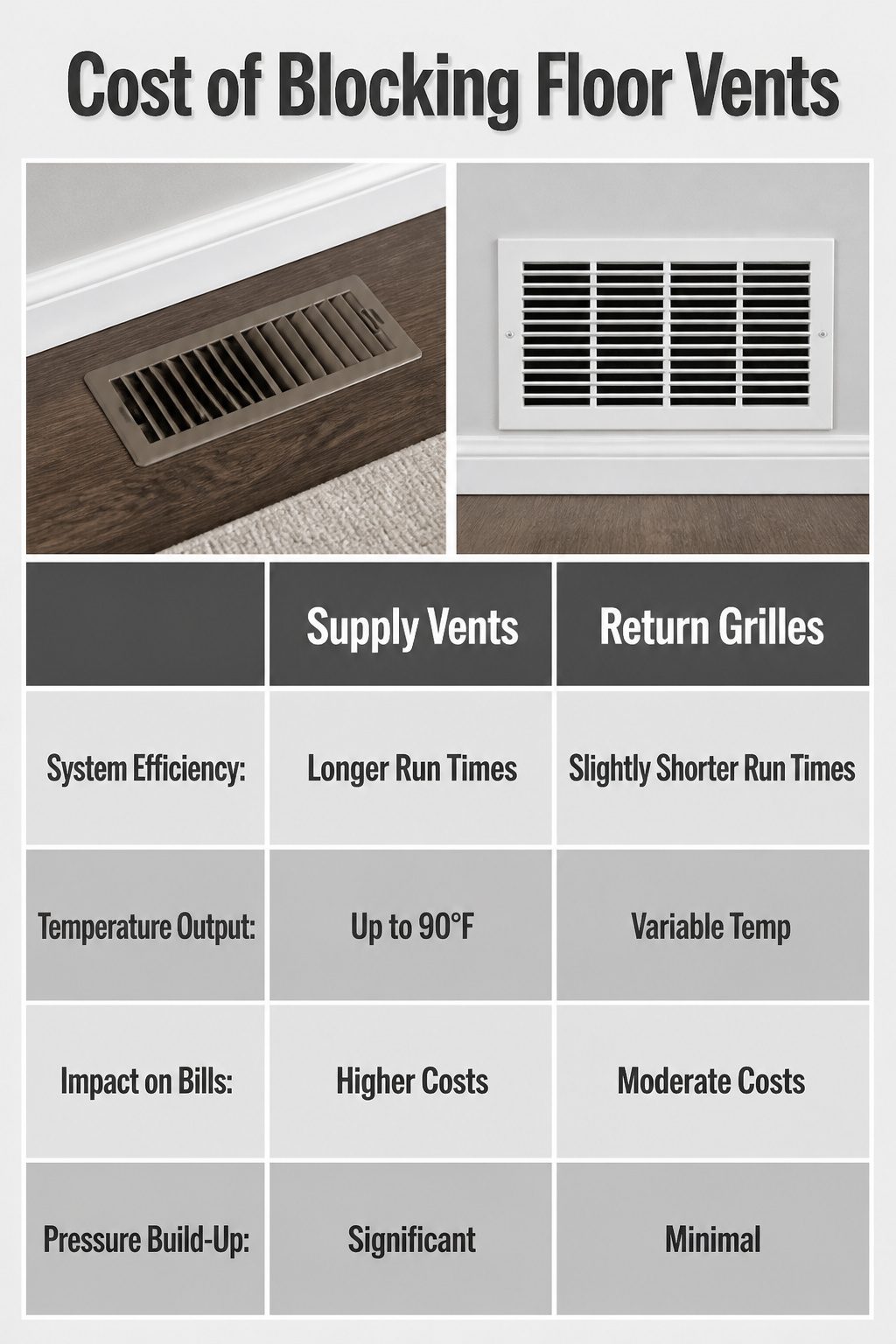
Blocking a vent does more than make one corner stuffy. Your HVAC system is sized and balanced around every outlet in the room, and modern thermostats assume that air is moving where the ducts were laid. When a couch sits on a supply vent, the system runs longer, your bills climb, and the rest of the room ends up unevenly heated or cooled.
The two types of vents work differently. Supply vents push conditioned air out, and they need the most careful clearance because backpressure builds in the duct when they are blocked. That pressure forces air out through leaks and joints instead of into your room, and the blower strains against the resistance. Return grilles pull air back in, so they are slightly more forgiving, but neither should be treated like a dead zone.
The air coming out of a supply vent can reach about 90°F in heating mode. Trapping that against upholstery or wood furniture is not just inefficient, it can warp finishes over time. The real cost is the slow one: a system that works harder, wears faster, and still leaves you with hot and cold spots you cannot fix by adjusting the thermostat.

OPTIMIZE COMFORT: Easily redirect airflow from those tricky vents under furniture, ensuring efficient heating or cooling. Redefine interior design with the ideal balance of aesthetics and function.

OPTIMIZE COMFORT: Easily redirect airflow from those tricky vents under furniture, ensuring efficient heating or cooling. Redefine interior design with the ideal balance of aesthetics and function.

BEFORE YOU BUY: (1) Ensure you have at least 1.6" of clearance under your furniture. (2) Width 14.5" x Adjustable length from 13" (Part A) up to 38" MAX length (Part A+B+C). Please measure the depth of your furniture to ensure 38" is long enough to clear the edge! (3) Not suitable for wall or ceiling vents - for floor vents only!
3. Clearance Distances That Actually Work
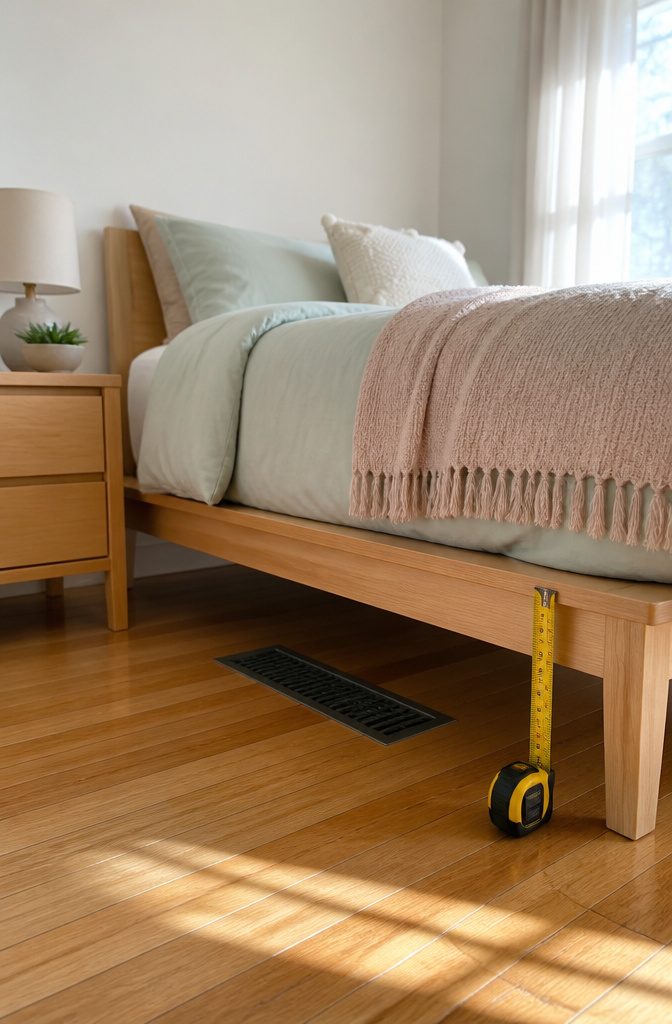
For most furniture, 6 to 12 inches of open space between the vent face and the nearest solid surface is what keeps air moving. That gap is your clearance, measured from where the air actually exits, not from the wall or the floor trim around it.
Beds are the exception. A mattress lying flat over a vent traps heat and moisture in a way a couch or chair doesn’t, and the weight of bedding compresses whatever airflow still exists. That is why the minimum jumps to 18 inches of vertical clearance with an open base underneath, plus that same 6 to 12 inches around the edges. A solid platform bed sitting six inches off the floor will not cut it, even with a short vent.
A bed base should be open and no lower than 18 inches above the vent.
For a renter measuring with a tape on Saturday morning, the practical check is simple: if you cannot fit a vacuum hose flat under the gap, you are probably too low for a bed. For a couch or dresser, a hand’s width is usually enough.

HOME COMFORT: Redirects cool and warm vent air from under your bed, chair or sofa and into the room for your comfort
OPTIMIZE COMFORT: Easily redirect airflow from those tricky vents under furniture, ensuring efficient heating or cooling. Redefine interior design with the balance of aesthetics and function

A Cat House Designed for Cat Instincts: An enclosed cat hideaway with a peek-out window gives curious cats a cozy place to rest, hide, stay alert, and feel safe.
4. Furniture That Lets Air Through
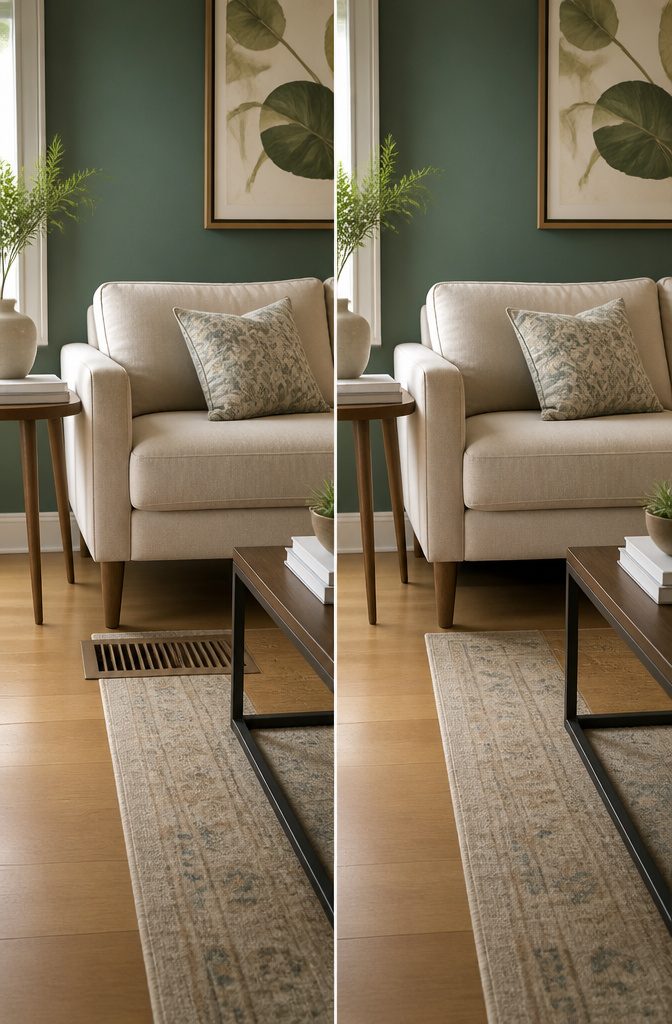
Some furniture plays nice with vents, and some just doesn’t. A sofa on legs leaves a gap underneath, so air can keep moving even when the piece sits close. Solid-base sofas, platform beds, and anything that sits flush to the floor are a different story. They seal the vent off unless you pull them back by 6 to 12 inches of clearance at minimum. Beds need more breathing room, ideally 18 inches or an open base frame. Dressers and cabinets are the worst offenders; they usually block the vent completely with no easy workaround.
If you’re in a small apartment with only one wall that fits the couch, you don’t have many layout options. In that case, a legged piece buys you the most flexibility. Open shelving on legs works too, though it’s less common for living rooms. Rugs are off the table entirely, even the thin ones. They smother the vent flat. I’ve arranged enough tight rooms to know the tradeoff: you either pick furniture that lets air through underneath, or you commit to keeping everything well clear and losing that wall space.

Upgraded Magnet Vent Cover: Designed to solve all your home floor vent woes with ultra-strong magnets that grip tight to metal surfaces, ensuring the flat vent cover stay sealed and firmly in place-no slipping, no sliding, no matter where you place the metal heater vent covers (sidewall or floor). The other side is a matte white PVC surface that is not easily scratched and is waterproof, which can effectively conceal the ventilation duct openings
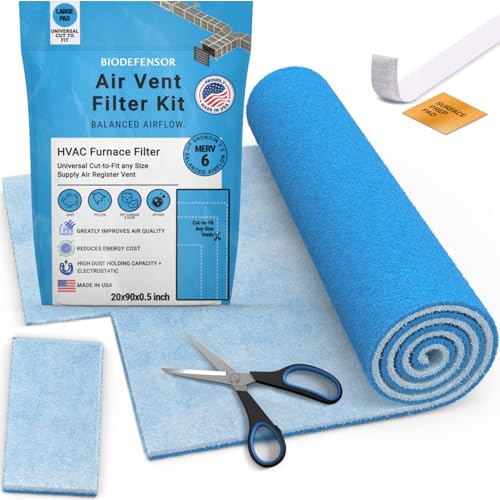
Cleaner, Safer Indoor Air - Breathe easy with our made in the USA, MERV 6 rated air filter roll. The advanced electrostatic polyester media attracts and traps most airborne particles like dust, dirt, smoke, and fur.

🧲 𝗦𝘁𝗿𝗼𝗻𝗴 𝗠𝗮𝗴𝗻𝗲𝘁𝗶𝗰 𝗛𝗼𝗹𝗱 𝗳𝗼𝗿 𝗙𝗹𝗼𝗼𝗿, 𝗪𝗮𝗹𝗹 & 𝗖𝗲𝗶𝗹𝗶𝗻𝗴 𝗩𝗲𝗻𝘁𝘀: Designed to stay in place, our magnetic vent covers fit snugly over metal registers on floors, walls, and ceilings — helping to block airflow with a secure seal and no slipping.
5. Vent Deflectors and Extenders
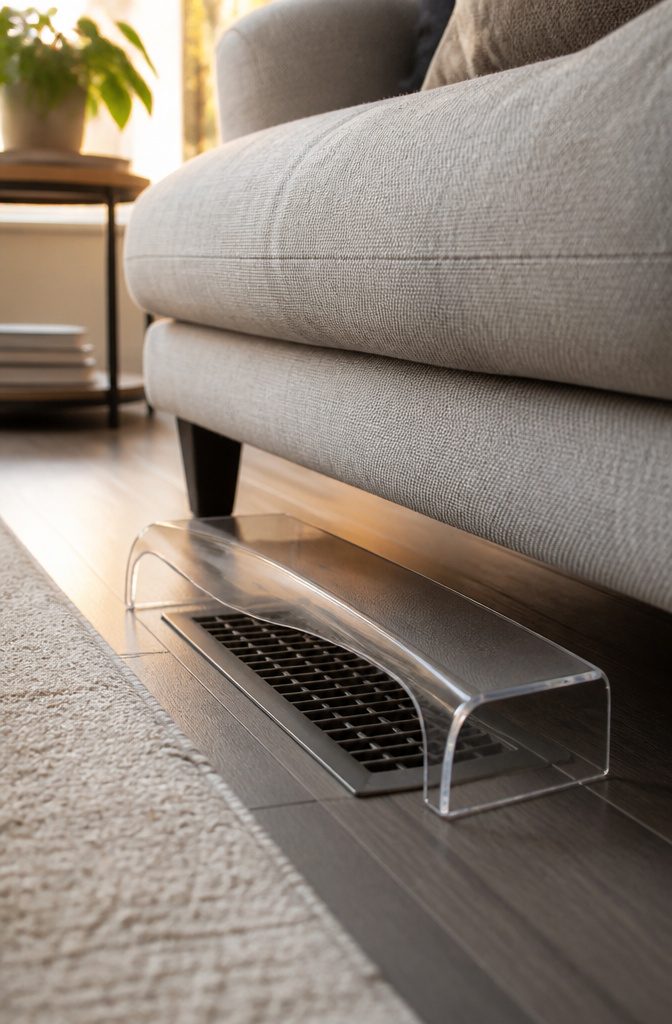
A vent extender sits on top of the register and creates a low tunnel that carries air out from under your couch, usually a few inches to a couple of feet. Most attach with magnets, so you pop it on, telescope the plastic to the right length, and let the edge sit just inside your sofa skirt. Basic ones run about $20, and that is the price point where this fix makes sense for a weekend project.
Vent deflectors work differently. They clip over the register and redirect the airflow horizontally instead of straight up, which helps when the couch sits close but not directly on top. Wall vents need deflectors rather than extenders, though either type can work on a floor register depending on which direction you need the air to go.
Both devices keep your system from building up static pressure behind furniture, and they buy you layout flexibility when the room’s shape does not give you many options. The catch is that they only solve the airflow problem, not the dust problem. Air still moves under your couch, and it will carry lint and pet hair with it. You still need to vacuum under there regularly, and if your vent sits in a high-traffic path, the plastic can shift or crack over time. For a rental or a first home where you are not cutting into floors, though, twenty dollars and five minutes of setup is a pretty reasonable trade.

How to Measure: The 20”x14” floor return air grille fits for 20" x 14" and 14" x 20" duct opening.The outer dimension of the grille usually wider than duct opening 1-3/4"----21 3/4"W×15 3/4"H

How to Measure: The 30”x12” floor return air grille fits for 30" x 12" and 12" x 30" duct opening.The outer dimension of the grille usually wider than duct opening 1-3/4"----31 3/4"W×13 3/4"H

How to Measure: The 30”x14” floor return air grille fits for 30" x 14" and 14" x 30" duct opening.The outer dimension of the grille usually wider than duct opening 1-3/4"----31 3/4"W×15 3/4"H
Long-Term Risks Worth Knowing
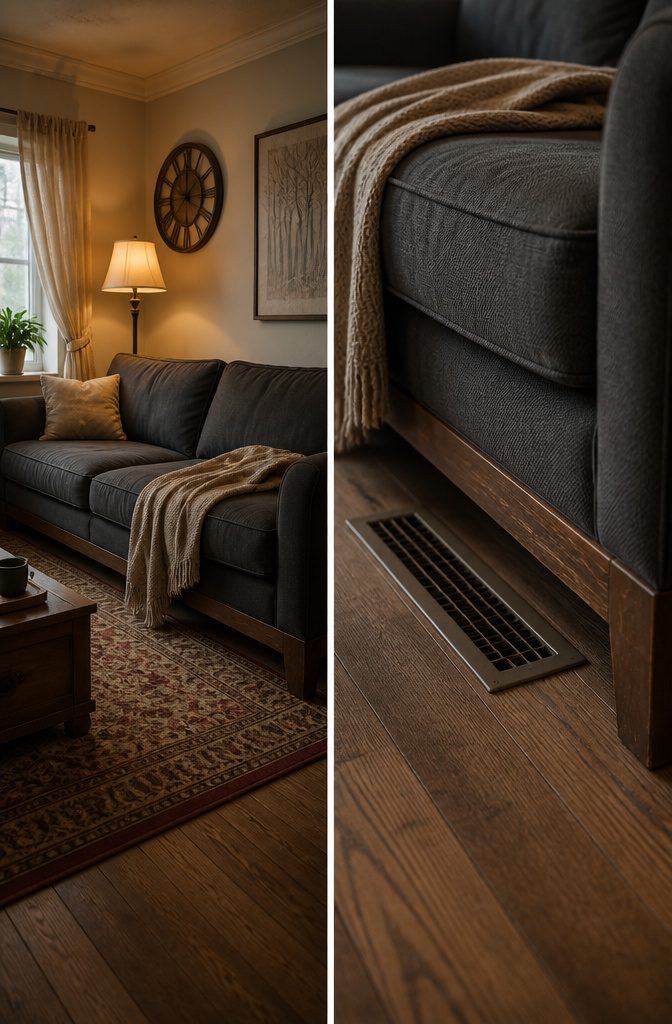
Trapped heat under a couch does more than make the room stuffy. The warm, moist air coming from a furnace vent can warp wood frames, discolor finishes, and create the damp conditions where mold and mildew take hold. Metal parts can rust too. Over months and years, that sustained exposure quietly damages furniture you’d hoped would last.
The HVAC system itself takes a hit. Backpressure builds in the ductwork when air can’t escape, so the blower motor runs longer and works harder to push against the blockage. Energy bills climb, rooms develop hot and cold spots, and the added strain can crack the furnace heat exchanger, a repair that runs into serious money. If the vent sits under a couch with flammable upholstery, trapped heat also becomes a fire risk you don’t want to ignore.

Perfect Material for Heat & Air Vent Deflector - Revolutionize your home comfort with DGQ MAGNETIC AIR VENT EXTENDER! Crafted from premium policarbonate material, it boasts high transparency, unbreakability and durability, with heat resistance up to 212°F / 100°C, ensuring long lasting performance.

BEFORE YOU BUY: (1) Your vent width must be 3" to 6" wide. (2) Ensure you have at least 1.6" of clearance under your furniture. (3) Adjustable length from 12" (Part A) up to 23" Max length (Part A+B) - please measure the depth of your furniture to ensure 23" is long enough to clear the edge!
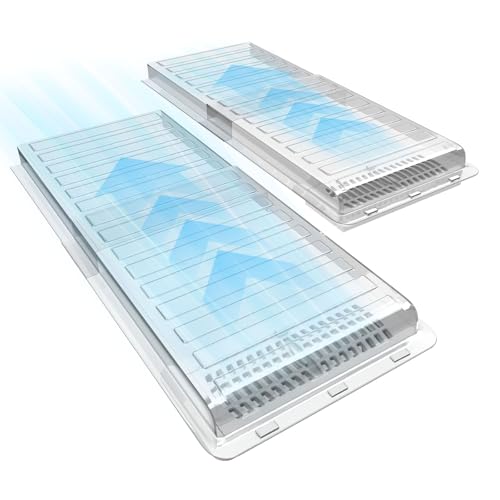
Enhance Comfort & Energy Efficiency: Redirects the airflow from the bed, couch, curtains, closets, floors into your desired place instead of limiting the airflow. Design for higher energy efficiency and saving money, dealing with uneven room temperatures
What I Check Before Moving Anything
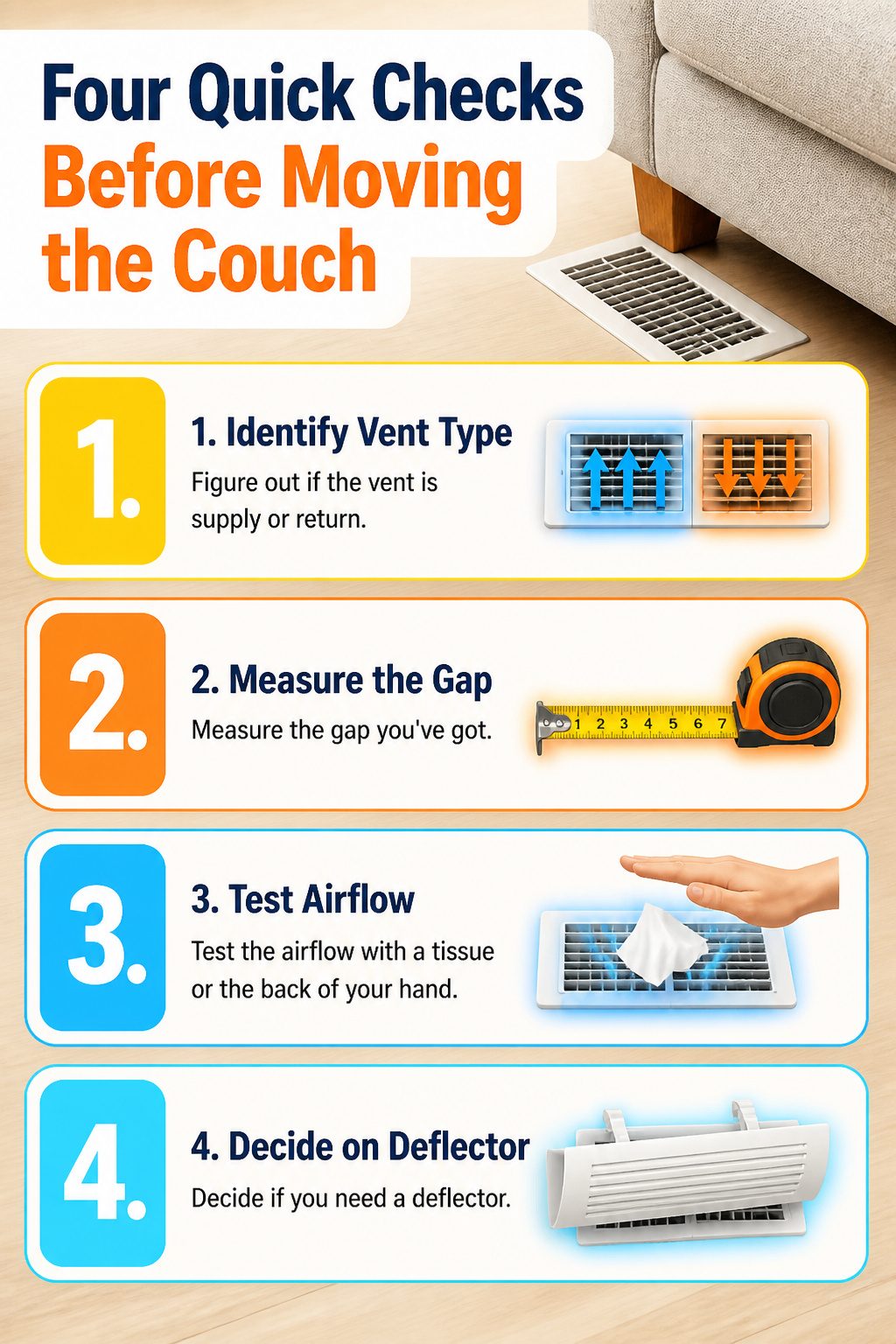
Before I move a couch over a vent, I run through four quick checks in about five minutes.
- Figure out if the vent is supply or return. Supply vents blow air out; return vents suck it in. Returns are more forgiving to cover lightly, but neither one likes being choked completely.
- Measure the gap you’ve got. The duct opening behind the cover is what matters, not the faceplate. Width first, height second, in inches. The cover itself usually runs about two inches larger than the opening.
- Test the airflow with a tissue or the back of your hand. If the air barely moves now, blocking it will only make things worse. Strong flow gives you more wiggle room.
- Decide if you need a deflector. A plastic vent deflector clips over the register and kicks air out from under the furniture into the room. It is cheap, it keeps your system’s static pressure in check, and it buys you layout flexibility without moving the couch again.

Optimized Airflow Direction: Our vent extender effectively channel and redirect air from floor vents, ensuring even and smooth airflow throughout the space, reducing energy waste and boosting overall room comfort

OPTIMIZED FOR UNDER FURNITURE: Expertly engineered to solve the problem of floor registers blocked by low-profile furniture. This air vent extender features a telescoping design that adjusts from 17" to 30" in length, effectively channeling warm or cool air out from deep underneath sofas, beds, dressers, and cabinets. Restore airflow efficiency to your living room without rearranging your heavy furniture.
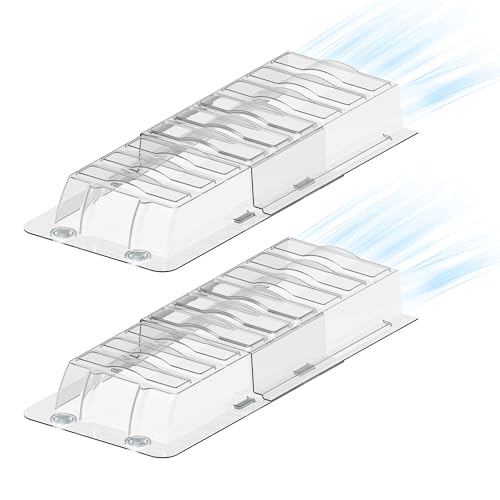
Versatile Design: This vent extender is designed to fit under furniture. such as sofa,dressers,chairs desk,bed and more, allowing for improved air circulation and distribution from vents.(Invention Patent Pending US19/390,657)
When to Leave the Vent Alone
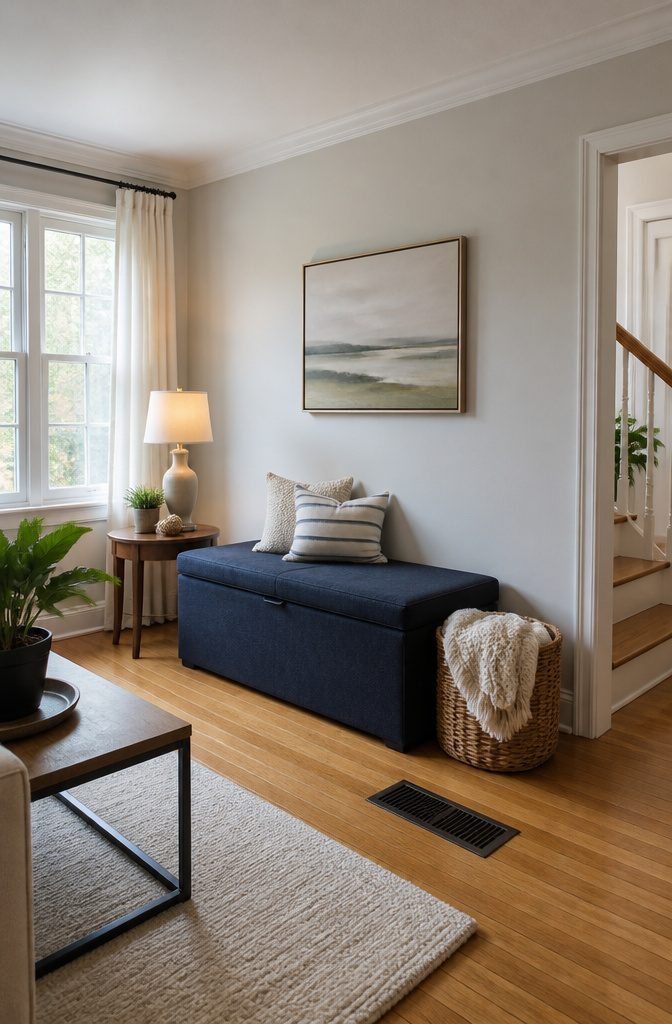
Some floor vents are doing too much work to hide under anything. If the vent is the only heat source in a room that already runs cold, blocking it is not worth the layout fix. Your HVAC system will strain, the room will stay chilly, and you will notice the difference on your utility bill before you notice the prettier sight line.
Solid, low-clearance pieces are another hard stop. A sleeper sofa or a storage ottoman sitting flat on the floor leaves no path for air even with the best intentions. The pressure builds behind the furniture, airflow drops, and the compressor runs longer without warming the room.
I have walked away from the "couch over vent" idea twice in my own rentals. Once in a basement bedroom with one register and once with a heavy mid-century piece that sat two inches off the carpet. Both times, moving the furniture won the argument. The vent stayed open, the room stayed comfortable, and I found another spot for the couch that did not fight the house.

EASY LENGTH ADJUSTMENT, 17" TO 29": This floor vent deflector features a smooth telescoping design that extends from 17" to 29". Its 1.5" low-profile height slides easily under sofas, beds, cabinets, and other low-clearance furniture. Designed to fit 10" and 12" wide floor vents

EASY LENGTH ADJUSTMENT, 17" TO 29": This floor vent deflector features a smooth telescoping design that extends from 17" to 29". Its 1.5" low-profile height slides easily under sofas, beds, cabinets, and other low-clearance furniture. Designed to fit 10" and 12" wide floor vents

STURDY CONSTRUCTION – A painted steel frame and 12mm thick MDF board offer reliable strength for daily use. The C-shaped design holds up to 22.05lbs, supporting laptops, books, snacks, and drinks without wobbling.
Frequently Asked Questions
Can you put furniture over a floor vent?
You can place furniture near a vent, but you should not seal it off completely. A floor vent needs open space so conditioned air can enter the room; blocking it forces your HVAC system to work harder, raises your energy bill, and leaves you with uneven temperatures.
How far should furniture be from a floor vent?
Keep furniture 6 to 12 inches away from a floor vent so air flows freely. That gap, measured from where the air actually exits the duct, is enough to prevent backpressure and keep your system from straining.
What happens if you block a floor vent?
Blocking a vent traps conditioned air, makes your HVAC run longer, and drives up your energy costs. Over time, the backpressure can damage the blower or crack the heat exchanger, and the trapped heat can warp furniture finishes or create damp conditions for mold.
Can you put a bed over a floor vent?
Only if the bed sits at least 18 inches above the vent with an open base underneath. A mattress lying flat traps heat and moisture in ways a couch does not, so the clearance rule is stricter than for other furniture.
Do vent deflectors work?
Yes. A vent deflector clips over the register and redirects airflow horizontally, while an extender creates a low tunnel that carries air out from under furniture. Either one keeps static pressure from building behind your couch and costs about $20 for a basic model.