

Studs make a significant difference in shelf installation. Shelves anchored into drywall alone frequently fail. Toggle bolts and wall anchors typically max out around 25-50 pounds and cannot match studs’ holding capacity. Wood studs can handle 100+ pounds when properly installed. For shelves bearing heavy loads such as books or substantial décor, anchoring into at least two studs is the optimal approach.
While careful planning and heavy-duty anchors can work without studs, the effort to locate studs yields better results. The following sections explain the specific installation methods.
Understanding the Role of Studs
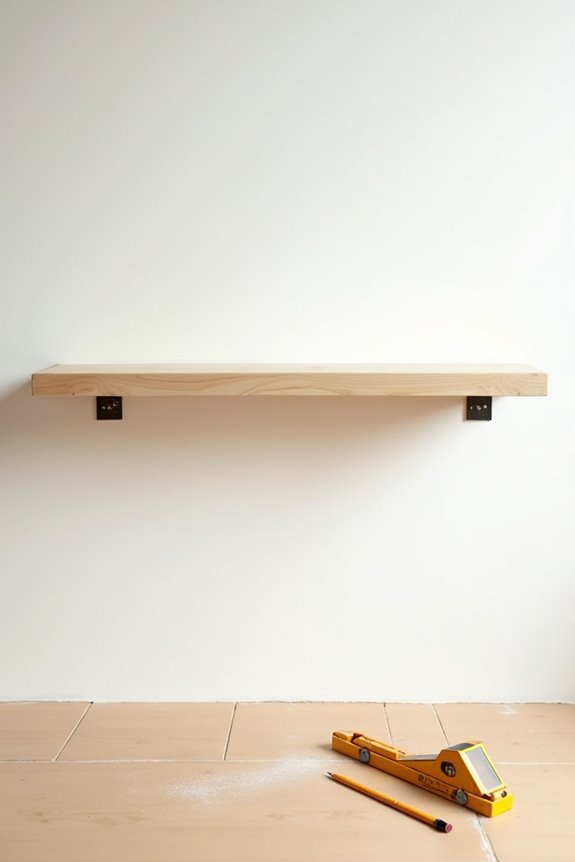
Why do studs matter so much when you’re hanging floating shelves? Wall studs, those wooden beams spaced 16 inches apart inside your walls, give you the strongest possible anchor point. They’re far more reliable than other options available.
Think of studs as your secret weapon. They’re built to handle serious weight without flexing or failing. Metal studs can’t match that strength; they’re too flexible and sometimes need extra reinforcement. Wood studs deliver superior performance.
When you’re planning your floating shelf project, knowing where those studs are located changes everything. It’s the first thing to check because it determines whether you’re building something that will last for years or creating a potential failure point.

✓ HEAVY DUTY CONSTRUCTION: Made from premium quality metal with reinforced design, each 6 inch shelf bracket supports up to 150 lbs, providing reliable strength for your floating shelves, kitchen shelves, bathroom storage, and home organization needs

The bracket has a 1.5" backplate and is designed for use with boards 2" thick or more. NOTE: The board thickness we refer to is the actual (not nominal) size.

The bracket has a 1.5" backplate and is designed for use with boards 2" thick or more. NOTE: The board thickness we refer to is the actual (not nominal) size.
When Studs Are Absolutely Necessary
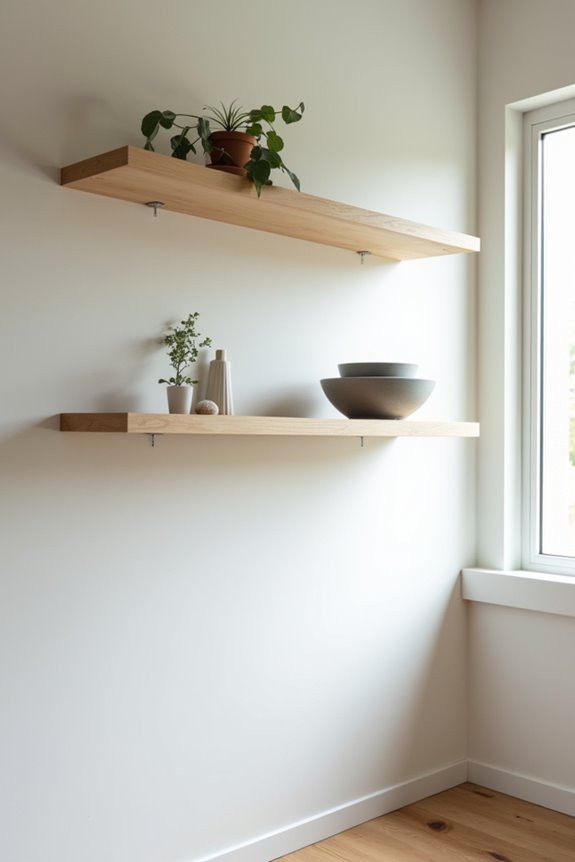
When should you really insist on finding those studs? If you’re planning to load your shelves with books, dishes, or heavy décor, studs become absolutely critical. You’ll want those brackets anchored into at least two studs, ideally more. Because studs give you the strongest possible support, sometimes holding over 100 pounds when properly installed.
Studs are your shelf’s best friends when you’re going heavy. Without them, you’re taking a real risk. Metal anchors alone just can’t compete with solid wood studs for serious weight-bearing capacity. If you’ve got substantial items in mind, don’t skip the stud-hunting step. The effort required to locate studs is worthwhile when dealing with heavy loads.

MULTIPLE SIZE OPTIONS – This heavy duty toggle bolt assortment includes 3 sizes (1/8 in, 3/16 in, 1/4 in) to help you choose the appropriate size for drywall anchor applications based on wall type and intended use. Suitable for selected hanging projects such as hanging pictures, curtain rods, and plants when used correctly. Please refer to the size chart and installation guidance before use.

COMPLETE KIT CONTENTS: This package includes 28PCS drywall anchors and wing nut kit with toggle bolts in 3 different sizes 1/4" 3/16" 1/8" for your choice according to your actual mounting and load bearing requirements
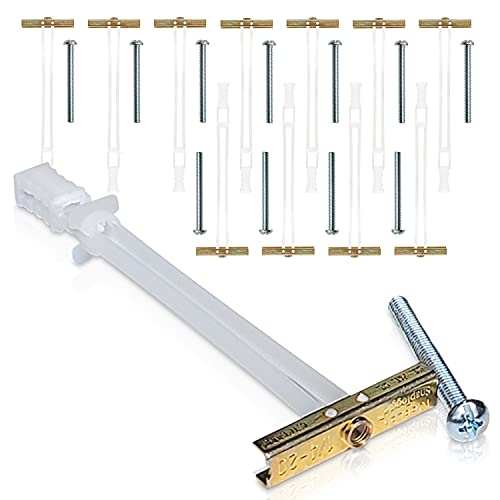
TOGGLER SNAPTOGGLE Drywall Anchor – 3/8"-16 UNC Zinc-Plated Snaptoggle Anchors – Holds 265 lbs on Drywall, 802 lbs on Concrete Block – Toggle Bolts for Mounting Cabinets and TV – 100 Pack (W/O Bolts)
Why Studs Are Stronger Than Anchors
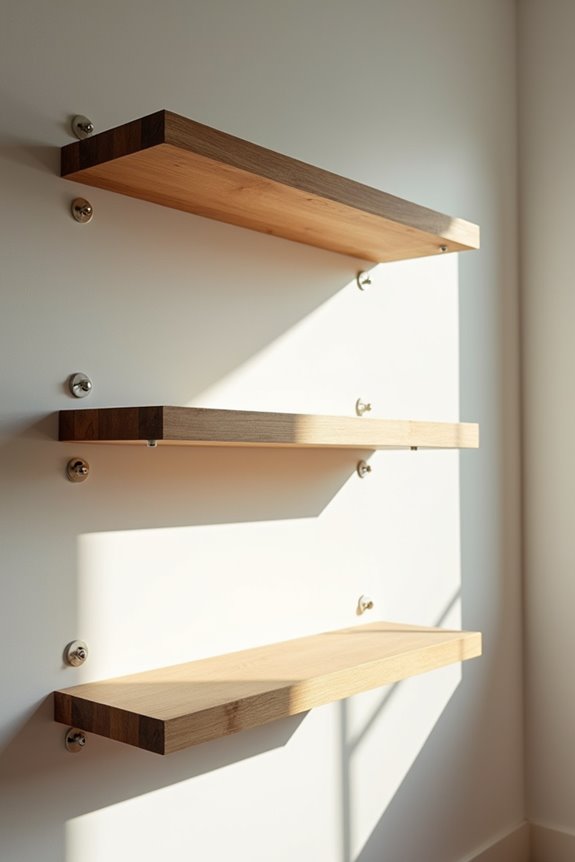
Studs beat anchors when it comes to keeping shelves secure. Wood studs can handle serious weight, around 100+ pounds when installed properly, while anchors like toggle bolts max out around 25 to 350 pounds depending on the system. Improper installation with anchors carries real risks because those bolts might not open right, or they could hit wiring hiding behind walls. Studs are the most reliable and powerful option, ensuring your shelves remain safely in place.

Works on wallpaper & fabric: depth range of ¾-in through drywall and works on surfaces covered in wallpaper and fabric

EASY TO USE: The StudBuddy is the world's simplest magnetic stud finder tool. The StudBuddy works with all drywall construction by using powerful magnets to locate the screws in the studs.
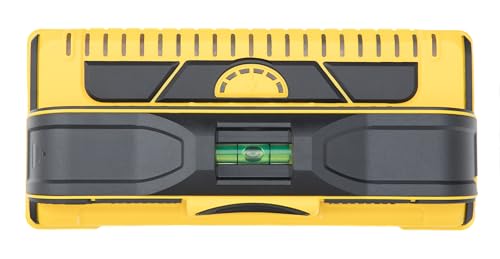
Higher accuracy, better technology: with 13 patented sensors, the M210 detects studs more accurately
Why Studs Provide Stability
Wood studs and anchors differ significantly in their load-bearing capacity. Wood studs are built into your walls, providing a rock-solid foundation that anchors cannot match. Metal studs are too flexible and cannot handle heavy loads like wood can. Anchors, even high-quality toggle bolts, rely on empty wall space for support. With studs, you anchor directly into the structural frame of your house, creating legitimate structural support.
Shelves mounted on studs remain stable without wobbling. The shelf will securely hold books and décor without risk of failure.
Risks of Improper Shelf Installation
Skip the anchors for anything heavier than a few picture frames, and you’re inviting disaster. I’ve seen what happens when people cut corners, and it’s not pretty. Studs matter significantly for these reasons:
- Wood studs hold 100+ pounds – anchors max out around 25-50 pounds
- Metal studs flex and bend – they’re weaker and sometimes need reinforcement
- Toggle bolts can miss wires – creating dangerous electrical hazards behind walls
- Improper installation causes shelf collapse – risking injury and damage to your stuff
- Anchors pull free over time – especially with vibration or weight shifts
The risk isn’t worth saving a few minutes of stud-finding. Hitting at least two studs, ideally three, ensures your shelves can safely support books, dishes, and décor without failure.
Alternatives to Studs: How to Hang Floating Shelves Without Them
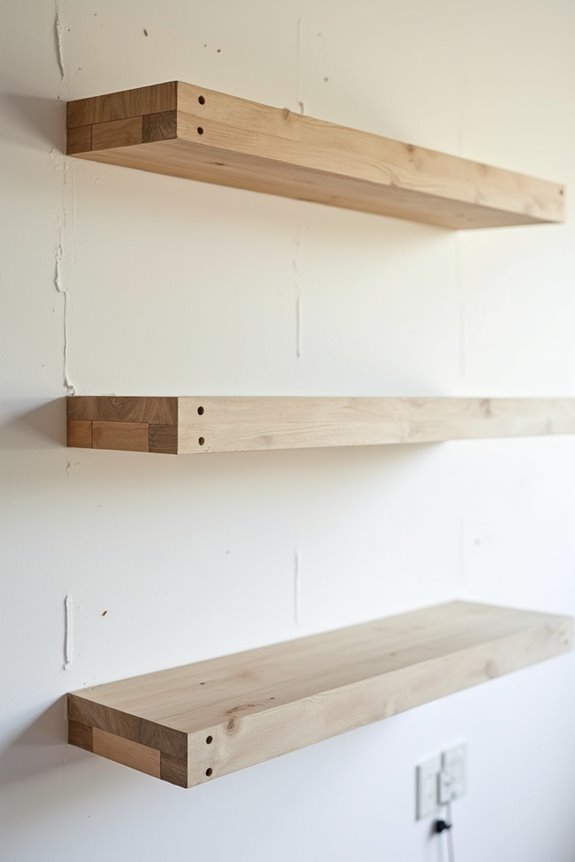
If you can’t find studs where you need them, you have options. I’ll walk you through the anchor alternatives that actually work, show you how they stack up against each other, and tell you exactly what weight each method can handle. Not all anchors are created equal, and understanding the differences between them is essential for a successful installation.

【Standard 90° bending】In order to ensure that each shelf bracket can be at 90° to the maximum extent possible, we add a rigorous picking process before the shelf brackets are packaged. The standardized 90-degree design is so important that it’ s the objective factor in ensuring that items remain level and do not tip over after being placed on the board(board is not included).

The bracket has a 1" backplate and is designed for use with boards 1.5" thick or more.NOTE: The board thickness we refer to is the actual (not nominal) size.
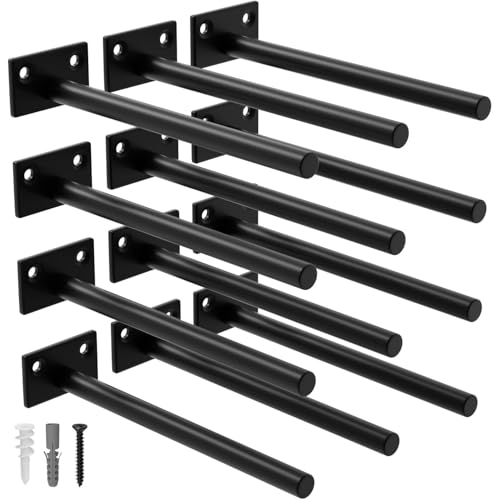
Superior Quality: Our floating shelf bracket is expertly crafted from premium steel, ensuring exceptional durability and an impressive weight capacity of 110lbs
How to Hang Floating Shelves Without Studs
What if you’ve found the perfect spot for a floating shelf, but there’s no stud backing it up? You can absolutely hang shelves without studs using the right hardware and technique.
- Toggle bolts create incredibly secure anchor points in drywall
- Heavy-duty wall anchors work great for moderate weight situations
- Drill carefully to avoid hitting hidden wires or pipes behind walls
- Use larger holes than you’d need for stud installation
- Match anchors to your shelf weight—they typically support 50 to 350 pounds
Without studs, you’re working with limits. Your shelf might hold only 25 pounds max if you use lower-quality anchors. Select the right hardware, follow instructions closely, and you’ll get a sturdy shelf that works beautifully in your space.
Anchor Comparison Table
Not all anchors are created equal. Toggle bolts and wall anchors can work, but they’re riskier than stud installation. You’re drilling larger holes, hoping those bolts open correctly behind the wall, and risking contact with hidden wires. This creates genuine safety concerns.
The weight capacity varies significantly depending on the anchor system. Some systems handle up to 350 pounds without studs. Weaker wooden shelves without stud support max out around 25 pounds. This variation depends entirely on what you’re hanging. If you’re mounting heavier items like books or décor, stud installation provides superior support and structural integrity.
Tools and Materials You’ll Need
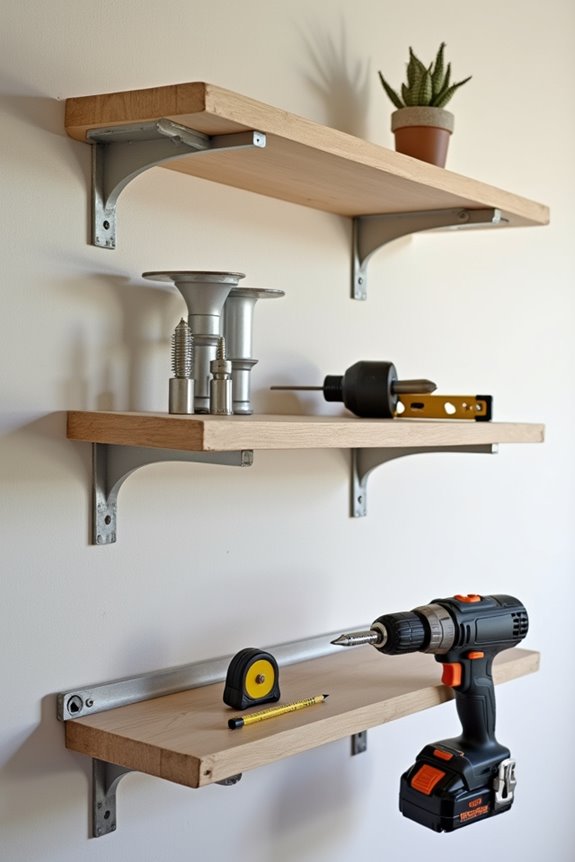
Before you grab your drill and start mounting, you’ll want to gather the right equipment. Being prepared reduces frustration and keeps the project moving forward.
Here’s what you’ll need:
- Stud finder – this tool locates wall studs accurately
- Power drill – makes installation fast and easier than manual options
- Level – ensures your shelves hang straight
- Screws and brackets – quality matters here, so don’t skimp
- Measuring tape – accuracy is essential for shelf placement
Grabbing a helper makes the installation process easier. Having someone hold the shelf while you drill prevents complications and saves time.

【Suitable For 2*4” Wood Studs】Goovilla hidden shelf brackets is desiged with a 1.57*1.38” backplane. The small size and 3 close together screw holes match the narrow 2×4 inch (actual size is 1.5*3.5” ) wood studs thoroughly.
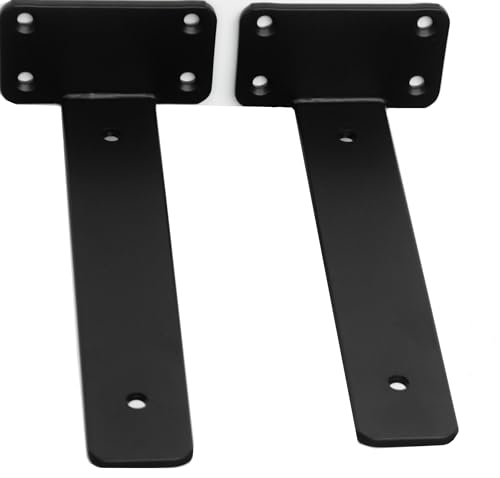
Heavy Duty design, maxium support weight of 100lb for a pair of this L bracket. Matte black powder coat finish. Creating a rustic, reclaimed, salvaged look,perfect for your home, office, garage, work space or anywhere else

Heavy Duty Shelf Brackets: This set of steel metal shelf brackets is 5mm thick and very strong and durable. Weight capacity of 150 lbs. per pair.
Step-by-Step Guide to Installing Floating Shelves
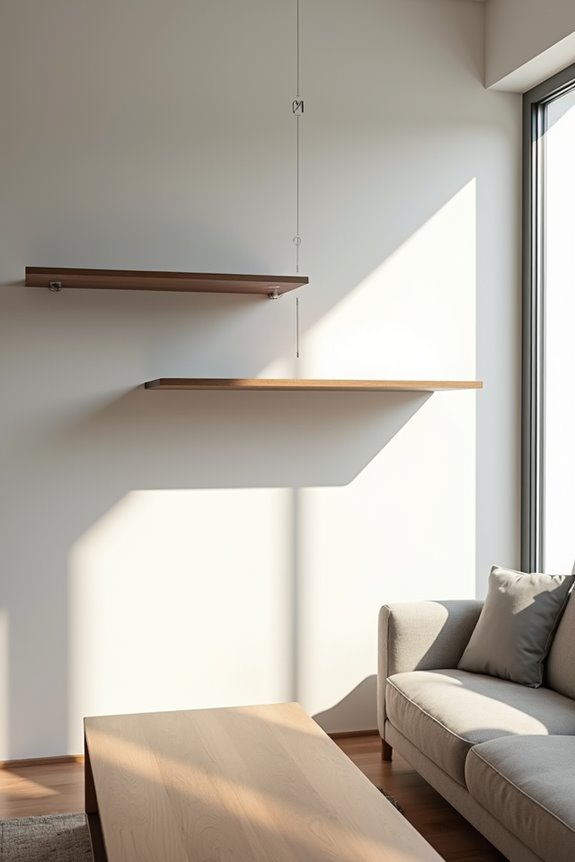
Ready to turn your prep work into action. I’ll walk you through this, step by step. First, locate studs using a stud finder. This is essential for heavy shelves. Mark them clearly with a pencil so you don’t lose track. Next, position the floating shelf brackets, making sure they hit at least two studs, ideally three or more. Pre-drill holes to prevent wood splitting, then drive screws in firmly. Ensure everything is level before fully tightening. Once brackets are secure, slide the shelf on and double-check that it’s stable. Doing this correctly means your shelf stays securely in place.
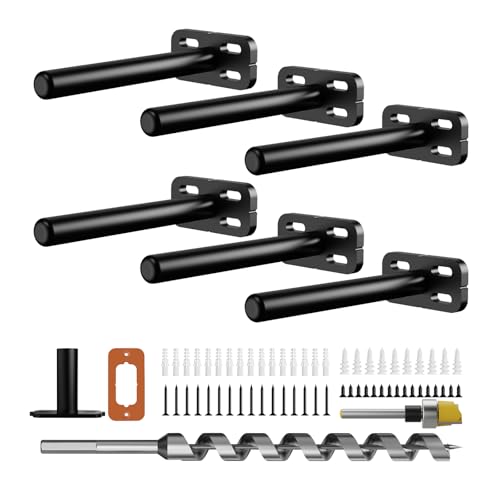
The bracket has a 1" backplate and is designed for use with boards 1.5" thick or more.NOTE: The board thickness we refer to is the actual (not nominal) size.

Features: Large Strengthened Tempered Glass Shelf (Each glass measures 15 inch x 11 inch x 4mm thick),supporting a maximum weight up to 8kg (17.6lbs) per shelf.
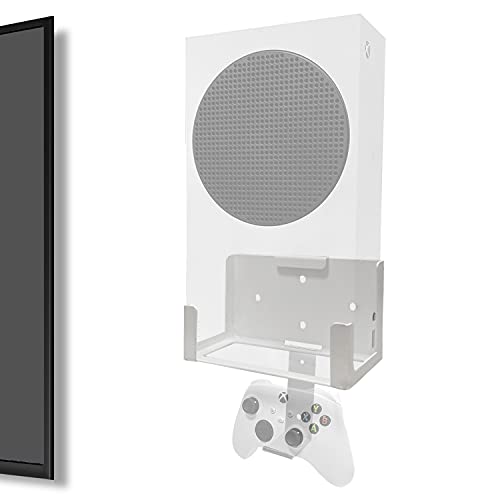
🎮DIFFERENT LOCATION🎮Locate Xbox Series S near TV (left side, right side) or behind TV and put the XSS console into wall mount with well fit
Safety & Weight Distribution
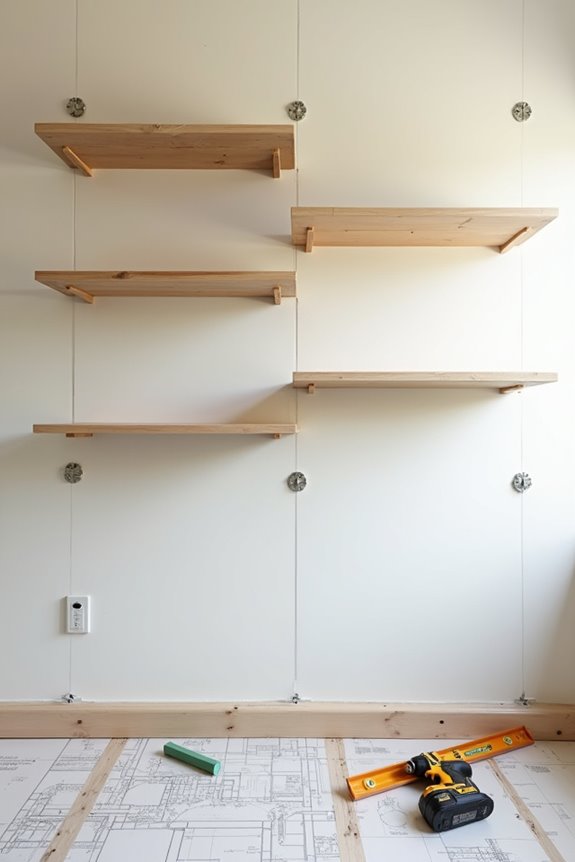
Once you’ve got those brackets firmly anchored into studs, the real work begins. I’m talking about how you actually load your shelves, which significantly affects their performance and safety. Here’s what matters:
How you load your shelves matters just as much as how you install them—weight distribution directly affects performance and safety.
- Distribute weight evenly across the shelf’s length, not just piling everything on one end
- Keep heavier items toward the center, closer to your wall brackets
- Don’t exceed your shelf’s weight limit. Studs provide structural strength, but they have finite load capacities
- Check your shelves regularly for any sagging or shifting over time
- Remember that depth matters too; deeper shelves handle weight differently than shallow ones
Your shelves will provide years of reliable support when you follow these guidelines. The careful distribution of weight prevents structural failure and ensures the safety of both your belongings and anyone nearby.

100PCS Complete Toggle Bolts and Wing Nut Kit - Includes 25 sets of toggle bolts in 3 most common sizes: 1/8", 3/16" and 1/4". Each wall anchor set comes with matching nuts, washers, and a drill bit, all neatly organized in a reusable storage case. No more running to the store mid-project, everything you need for drywall installations is in one box.

Toggle anchor installs behind 3/8"- to 3-5/8"-thick hollow materials including gypsum board, drywall, and concrete block to provide a secure hold from within the mounting material

TOGGLER SNAPTOGGLE Drywall Anchor – 1/4"-20 UNC Zinc-Plated Snaptoggle Anchors – Holds 265 lbs on Drywall, 802 lbs on Concrete Block – Toggle Bolts for Mounting Cabinets and TV – 20 Pack (With Bolts)
Common Mistakes to Avoid
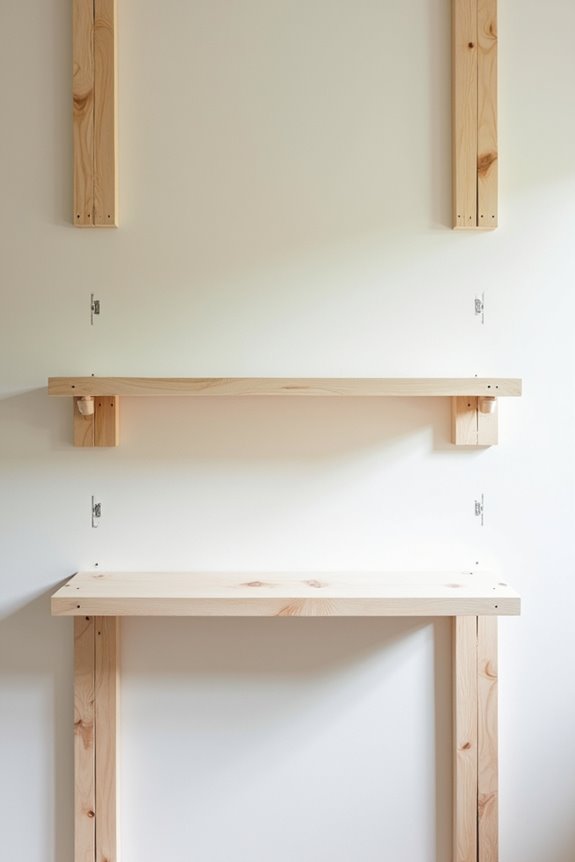
Even with perfect bracket installation, I see people make some surprisingly common mistakes that completely undermine all that hard work. The biggest one is using Command Strips for wooden floating shelves. They simply won’t hold up, and you’re setting yourself up for failure.
Here’s what else I notice folks getting wrong: they underestimate how much their shelf setup matters. The depth of your shelf, the number of support rods, and the quality of screws you choose all factor into strength. When you skip studs for anchors, you must be extra careful about drilling. Hitting electrical wires behind your walls is a real risk.
Bottom line: take your time, use quality hardware, and respect your shelf’s weight limits. This prevents accidents and property damage.

Center-find technology to easily find the center of the stud

ACCURATE: More sensors = More accuracy. Conventional stud finders have 1 or 2 sensors. The ProSensor M150 has 9, making it the most accurate stud sensing tool on the market.

Stud Finder Wall Scanner: Simple, easy-to-use electronic stud finder helps locate wood and metal stud edges behind drywall, giving DIYers a practical wall scanner for hanging pictures, mirrors, shelves, light fixtures and wall décor