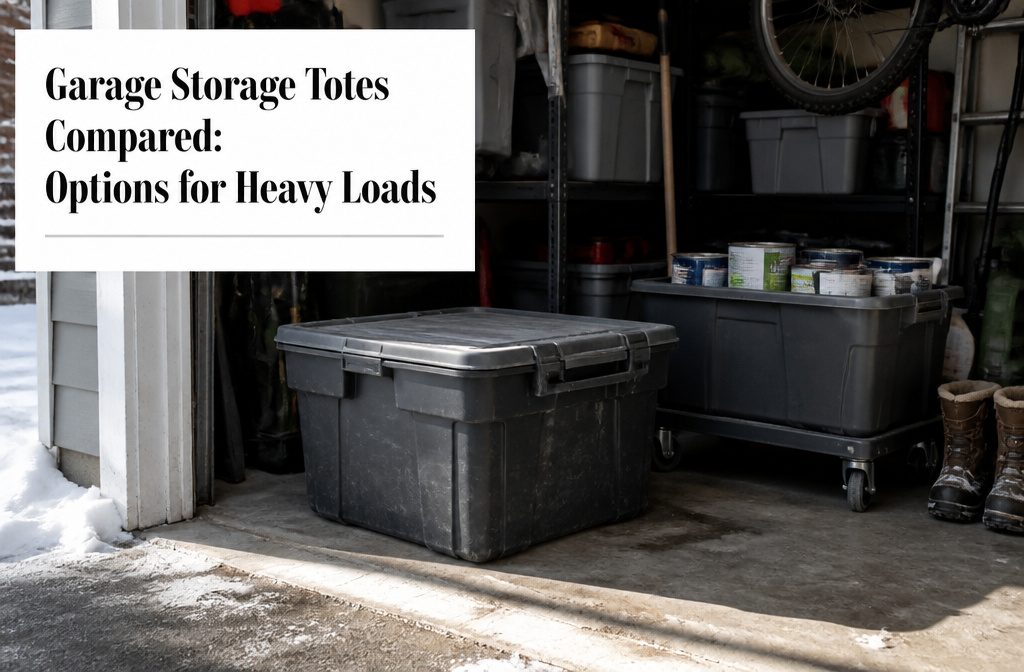

A garage storage tote is a heavy-duty bin designed to hold tools, seasonal gear, or bulk supplies in spaces where lighter containers would crack or warp.
The right one depends on whether you need weatherproofing, wheels for moving loaded bins across concrete, or just stackable volume that won’t buckle under weight.
The Rubbermaid Brute holds up through temperature swings that make cheaper polypropylene brittle, and the Sterilite 40-gallon wheeled base lets you roll paint cans or camping loads instead of carrying them.
1. Iris WeatherPro Storage Boxes
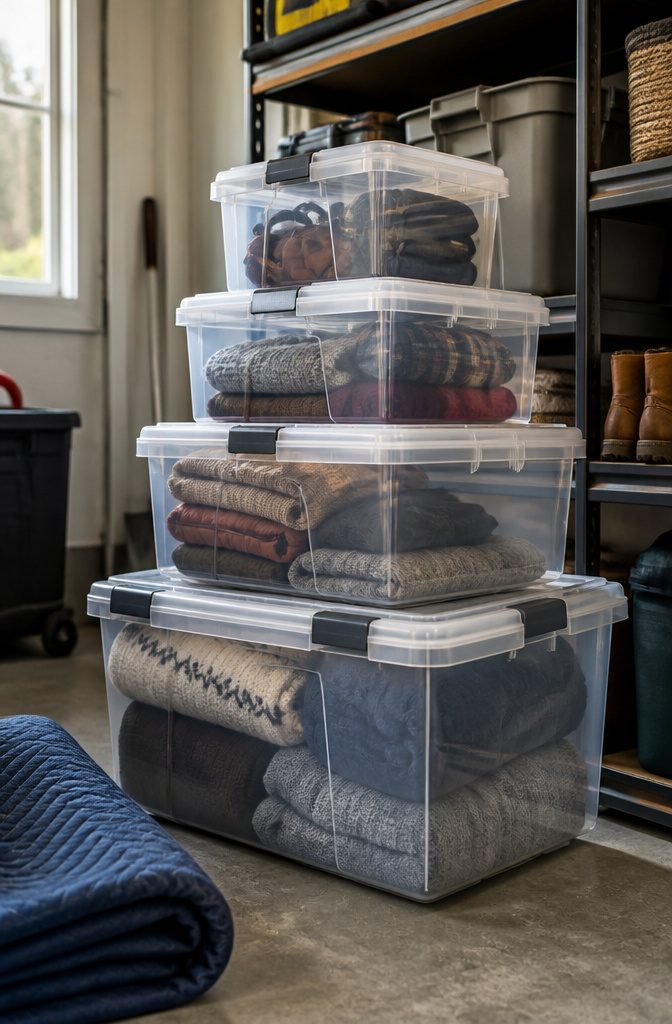
I really like these for indoor storage that moves to the garage when I need overflow space.
The containers are clear all the way around, so I can see exactly what I packed without popping the lid or reading a label. That saves time when I’m looking for something specific.
Iris makes the WeatherPro in 12 sizes from 6.5 to 156 quarts, which means I’m not forcing winter coats into a bin meant for sweaters or wasting space on a giant tote for three small things.
The sizing actually makes sense for how people store things.
These bins come in more sizes (12) than any others we’ve tested and in a design that maximizes usable space.
The seal is tighter than most clear bins. There’s a foam gasket in the lid and six latches total instead of the usual two.
I wouldn’t rely on these for true weatherproofing in an unheated garage, but they keep dust out and stack without sliding. Each bin sits into a groove on the lid below it, so the stack stays put.
2. Rubbermaid Brute Totes
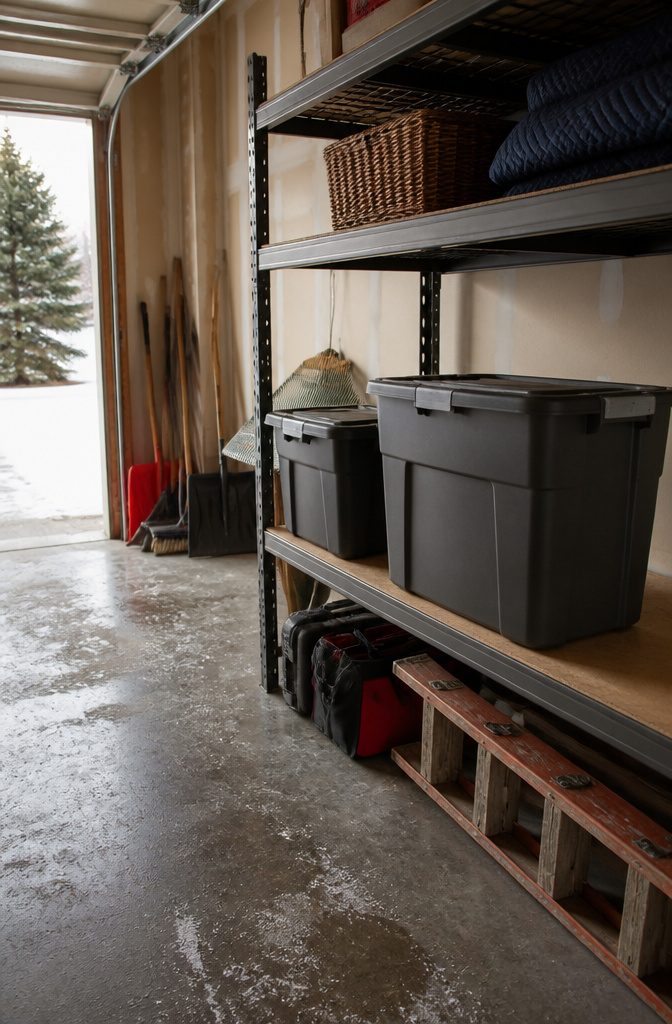
I’ve used Rubbermaid Brute totes in a garage that sees triple digits in summer and below freezing in winter, and they hold up better than cheaper polypropylene bins that crack when it gets cold.
The material is high-density polyethylene, which stays tough in temperature swings that make other plastics brittle.
The 20-gallon size is what I’d go with for most garage storage—it held eight throw blankets in testing, so you can pack bulky seasonal gear without the bin getting too heavy to move.
The lid sits deep enough that these stack securely, and the molded handles make them comfortable to carry even when you’ve loaded them near capacity.
One thing: the lids can be tricky to pop off when the bin is empty, and since they’re opaque, labels are a must if you don’t want to open three bins to find what you’re after.
A 14-gallon size is available if you need something smaller.
3. Home Depot HDX Tough Storage Tote
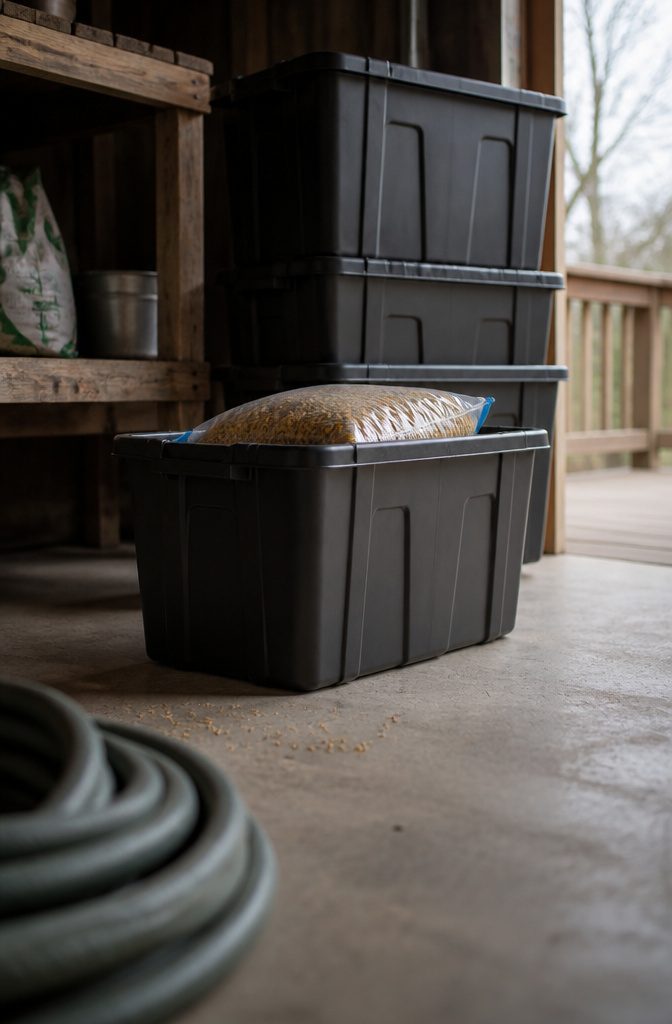
I’ve been using HDX bins in an unheated workshop for over three years, and they’re still holding up.
They won’t take freezing temperatures, but for most climates they do the job at a fraction of the cost. You can buy a dozen HDX totes for the same price as one or two of the heavier options.
The bins are made from polypropylene and come in five sizes: 12, 17, 27, 38, and 55 gallons.
The 27-gallon version holds 108 quarts, which is enough for bulky seasonal gear or animal feed bags. They stack cleanly, which matters when you’re storing a lot at once.
What makes these the budget pick is that you can walk into any Home Depot and see them in person before you buy.
That helps if you’re sizing bins for a specific shelf or trying to estimate how many you need.
They hold up fine outside under a deck with no weather damage after years of exposure. Mice stopped attacking my feed bags once I moved them into HDX bins, and the lids have stayed tight.
4. Sterilite 40 Gallon Wheeled Industrial Tote
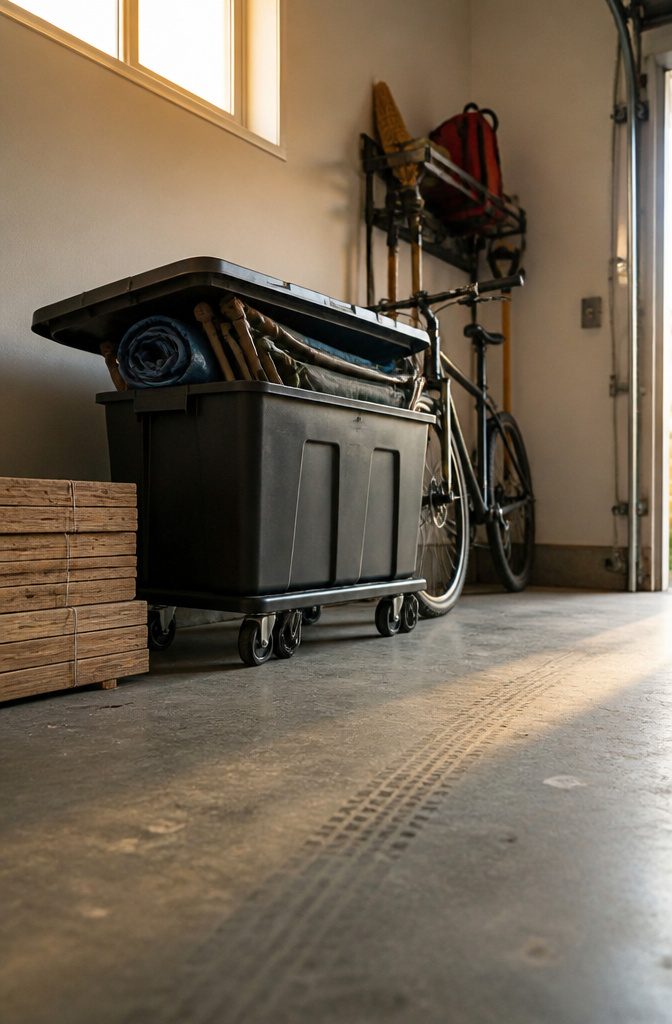
The wheeled base makes this tote the pick when you need to move heavy contents across a garage floor without lifting.
Forty gallons means the volume is there for paint cans, bundled trim or camping gear that would overflow smaller boxes, and wheels let you roll it to the car instead of carrying it in stages.
The shape works for items that refuse to fit neatly: rolled tarps, folding chairs, ski poles stacked at an angle.
I like it for seasonal loads that sit most of the year but need to move out fast when you clear space for a project.
One caution is floor clearance: wheels add height at the bottom, so check that stacked totes won’t block outlets or interfere with garage door tracks if you plan to stack them high.
5. Rubbermaid Action-Packer Storage Containers
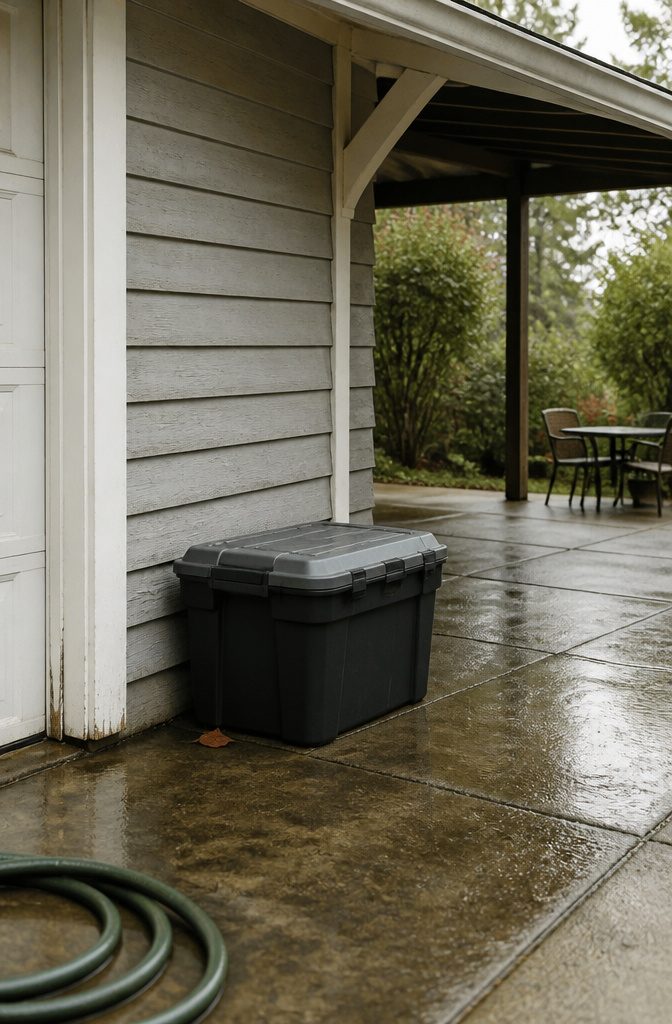
The Action-Packer from Rubbermaid is built for outdoor storage, which makes it the right pick if you’re keeping tools, fertilizer or camping gear in an uncovered corner of the garage or on a patio.
The lid latches down tight enough to keep rain out, and the polypropylene shell holds up through freeze-thaw cycles without cracking the way indoor-only totes do after a winter outside.
I’d use this for anything that needs to sit exposed to weather but doesn’t need to be opened often. The latches are stiff, which helps with weatherproofing but slows you down if you’re pulling things in and out daily.
For a bin that lives under an eave or next to the house and gets opened twice a year, that tradeoff works.
The construction is chunkier than what you’d use indoors.
It’s heavier empty and the walls are thicker, so you lose a little interior space compared to a standard utility tote of the same outer dimensions. That extra material is what keeps water and cold out.
6. Akro-Mils KeepBox Attached Lid Container
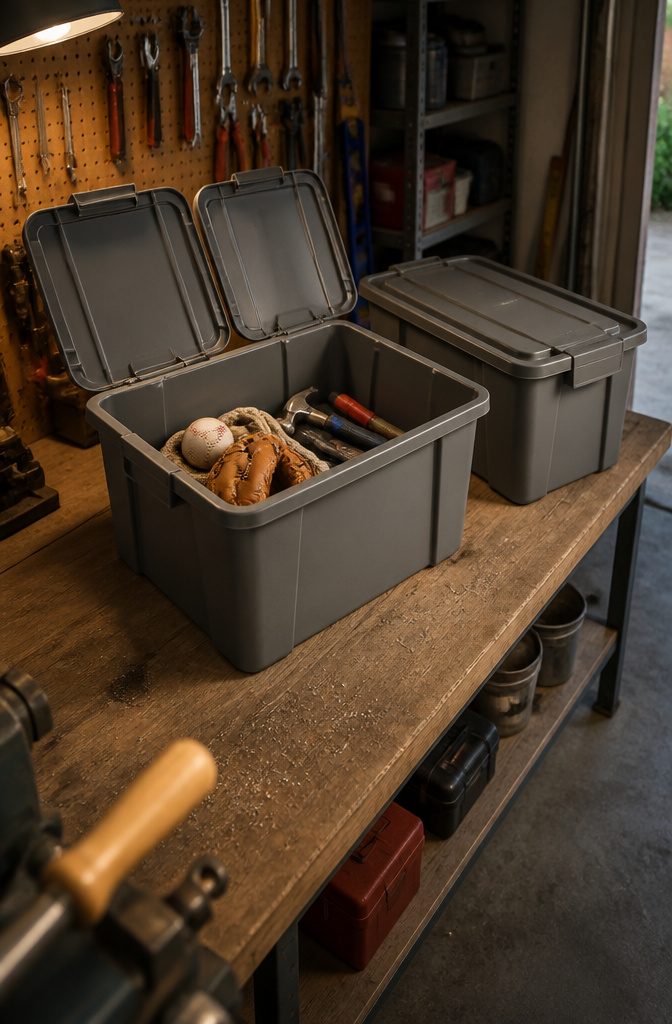
The butterfly lid on this one opens in two pieces that fold back and stay put, so you’re not wrestling a lid off with one hand while you dig with the other.
If you keep tools, sports gear or anything you grab often in the garage, that ease matters more than it sounds like it would.
The Brute bin I covered earlier is harder to open when empty, which is fine for archive storage that lives closed most of the year but annoying when you’re pulling weekend project supplies twice a week.
The lid stays attached, so you’re not setting it on a dusty floor or losing track of it behind the pile of things you just pulled out.
Akro-Mils makes these in 14- and 20-gallon sizes, both sized to hold heavier loads without buckling.
7. iWill Create Pro Storage Boxes with Zipper Lid
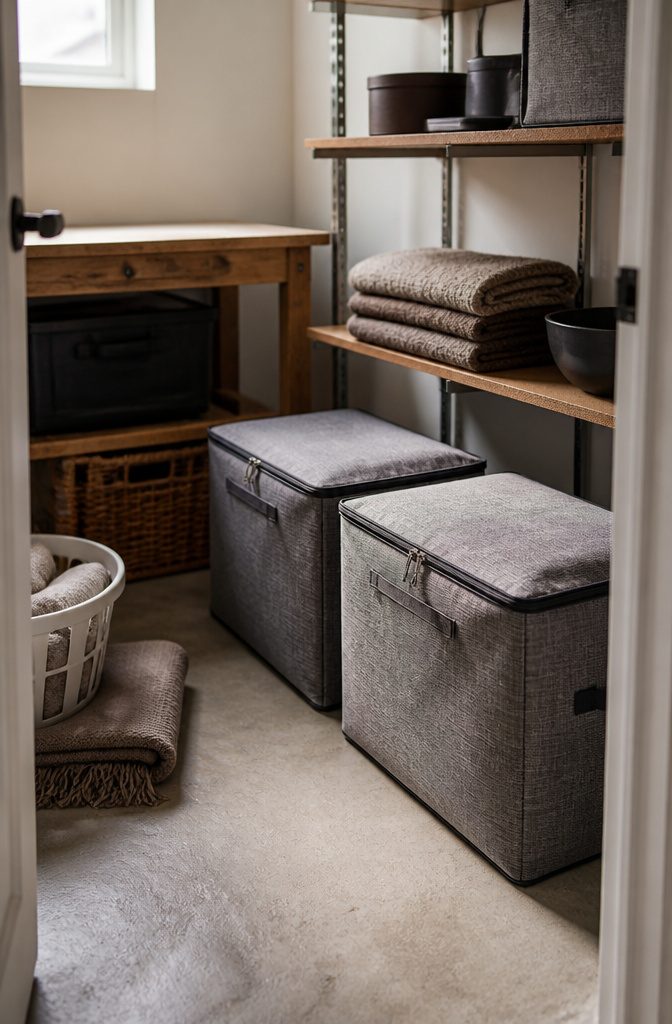
Cloth bins look out of place in most garages, but the iWill Create Pro Storage Boxes with Zipper Lid work when you’re storing seasonal clothes you don’t have room for inside.
The zippered lid keeps dust out better than a flap, and the reinforced fabric holds its shape when stacked.
I’d use these for bulky winter coats or a capsule wardrobe you rotate by season, not for tools or anything that might leak.
The fabric breathes, which matters for clothes you’re putting away for months. Plastic totes can trap moisture and leave stored fabrics smelling stale.
These won’t protect against a roof leak the way a hard-sided tote will, so they belong in a dry corner of the garage rather than anywhere near the overhead door or under a window.
For anything other than clothing, a plastic bin makes more sense.
Choosing Storage for Different Settings and Contents
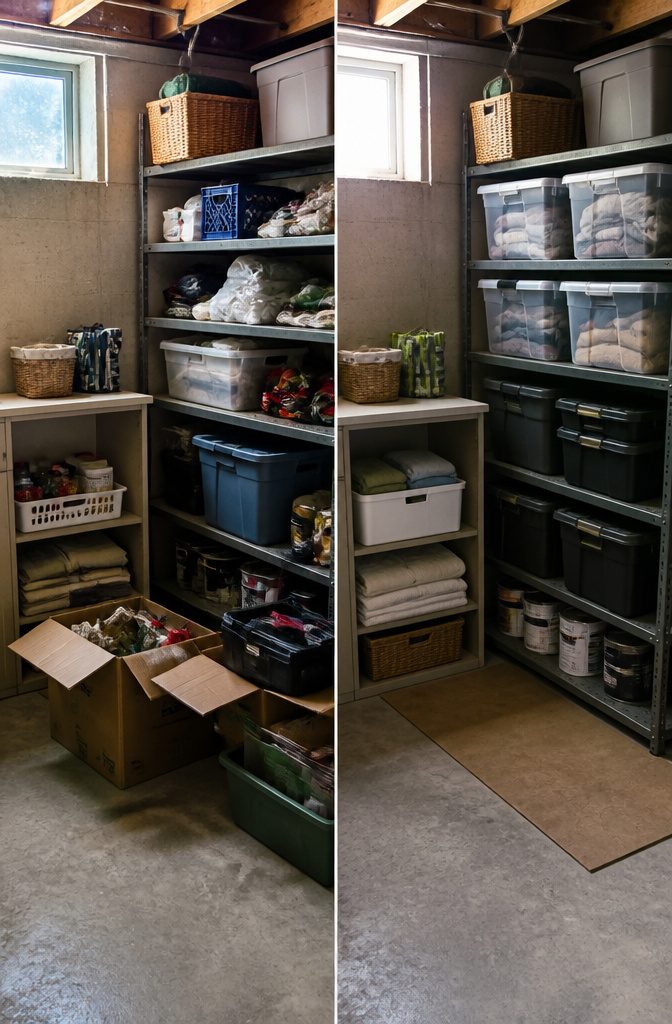
The tote that makes sense in your garage might be overkill in a bedroom closet, and one that works fine on a pantry shelf can crack after a winter out by the lawn mower.
Match the container to where it lives and what goes inside.
Clear bins with tight latches handle clothes and gear inside the house without the weatherproofing bulk you’d need in an unheated space.
Stackable boxes let you use vertical room on garage shelves or in a basement corner, and heavier-duty options take the weight of tools or paint cans without bowing.
If you’re storing seasonal items that won’t move often, a lid that seals matters more than wheels. For everyday pantry or closet use, lighter bins you can pull down one-handed beat something built for a fifty-pound load.
The garage usually calls for something tougher than the rest of the house, but a closet full of industrial totes wastes money and floor space you didn’t need to give up.
How I Make Storage Space Work
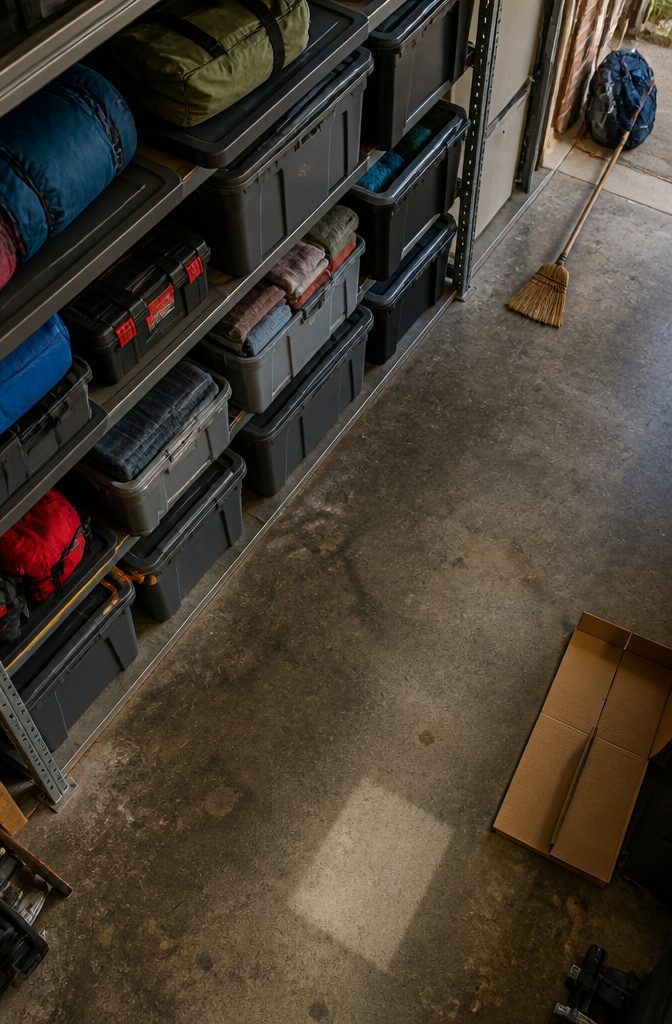
Here’s what works when you’re setting up totes in the garage.
- Choose square or rectangular totes instead of round bins. They sit tight against each other and leave less wasted space on a shelf or floor.
- Declutter before you buy. Only the things you actually need should earn a spot in a tote. If you’re storing books you haven’t opened in three years or clothes that don’t fit, pass them along first.
- Use shelving to take advantage of vertical space. A wall of shelves multiplies your storage without eating up floor area, and totes stack more safely on a shelf than piled high on concrete.
- Pick stackable totes if you’re going vertical. Look for reinforced lids that won’t buckle under weight, especially if you’re putting heavy gear on top.
I clear out at least one trip to donation before I organize anything. It makes the difference between needing six totes and needing three.
Frequently Asked Questions
Should you store clothes in boxes or plastic storage bins?
Plastic bins are the better choice. They hold up to weight without collapsing, seal out moisture that can leave fabrics smelling stale, and keep pests away from what you’ve stored.
Cloth bins with reinforced fabric can work for seasonal clothes in a dry garage corner, but they won’t protect against leaks or spills the way hard-sided plastic does.
What are some good storage containers for a garage?
Rubbermaid Brute totes handle temperature swings without cracking, Sterilite 40-gallon wheeled totes move heavy loads across the floor without lifting, and HDX bins from Home Depot cost a fraction of premium options while holding up in most climates.
For gear that sits outside or in unheated spaces, the Rubbermaid Action-Packer seals tight enough to keep rain and cold out.