


A standard bathtub holds 40 to 80 gallons, but the number that actually matters for your water heater is closer to 35 to 50 once body displacement and the overflow drain do their work. The 60-inch alcove tub in most rentals sits at the low end, while deep soaking models push past 90 gallons at full capacity. What the spec sheet calls capacity and what your body experiences are two different numbers, and confusing them is how you end up shivering in tepid water halfway through the fill.
1. How Many Gallons a Bathtub Holds
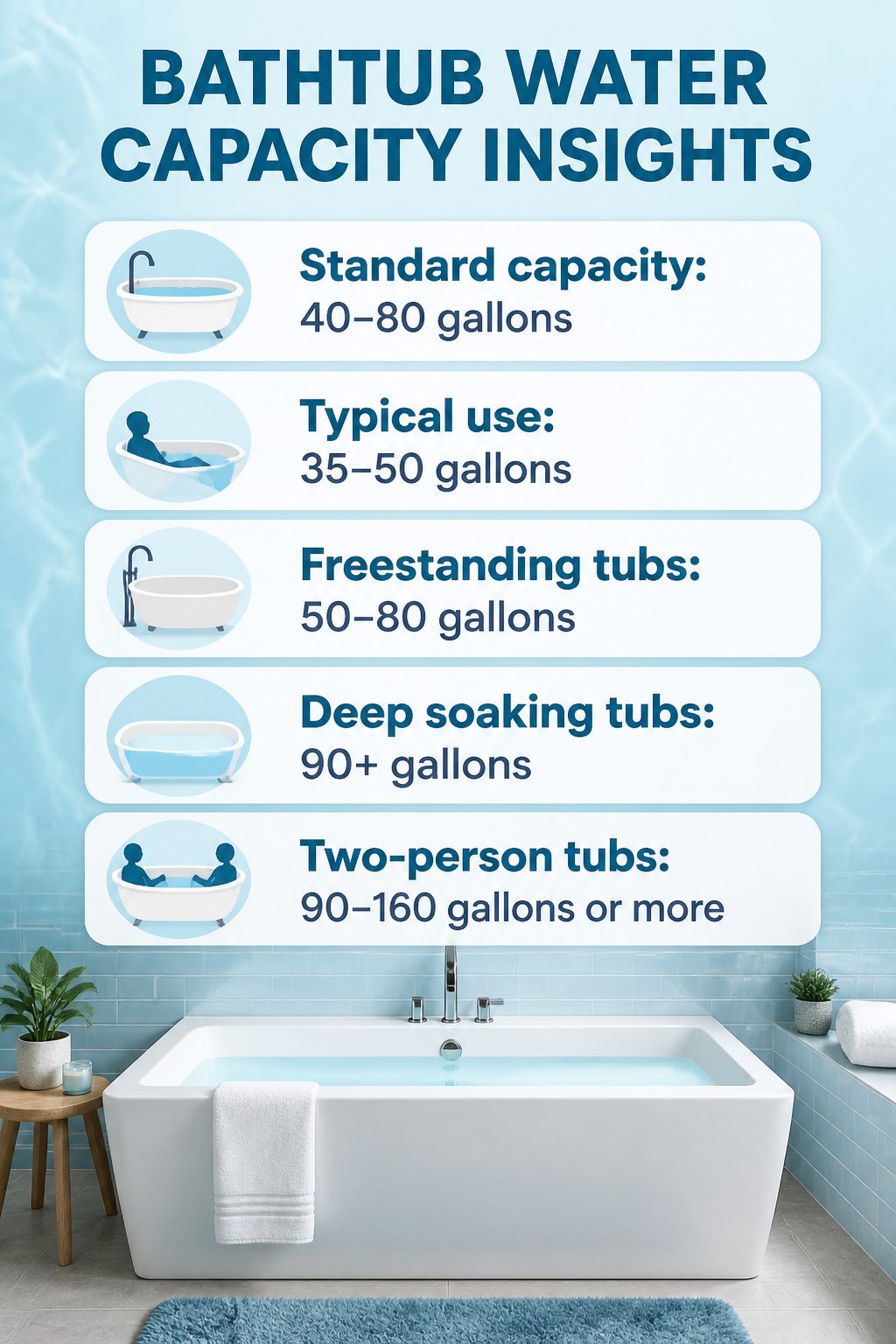
A standard bathtub holds 40 to 80 gallons depending on its size and type. Most people actually use 35–50 gallons once body displacement and not filling to the overflow are factored in.
The 60-inch alcove tub found in most rentals and starter homes sits at the lower end, around 40–60 gallons at full capacity. Freestanding tubs run wider, 50–80 gallons, while deep soaking or corner styles can push past 90. Two-person tubs top the list at 90–160 gallons or more.
What matters for your water bill and your hot water supply is not the tub’s maximum but the real-world number. Body displacement knocks off roughly 10–20% right away, and most of us stop filling below the overflow anyway. So that 70-gallon freestanding tub? Plan on 45–55 gallons of actual hot water needed.

Acrylic construction with fiberglass and resin reinforcement, three wall alcove installation with tile flange and integral tub apron | Drain kit is not included

Acrylic construction with fiberglass and resin reinforcement

Acrylic construction for strong durability
2. Bathtub Types and Their Gallon Capacities
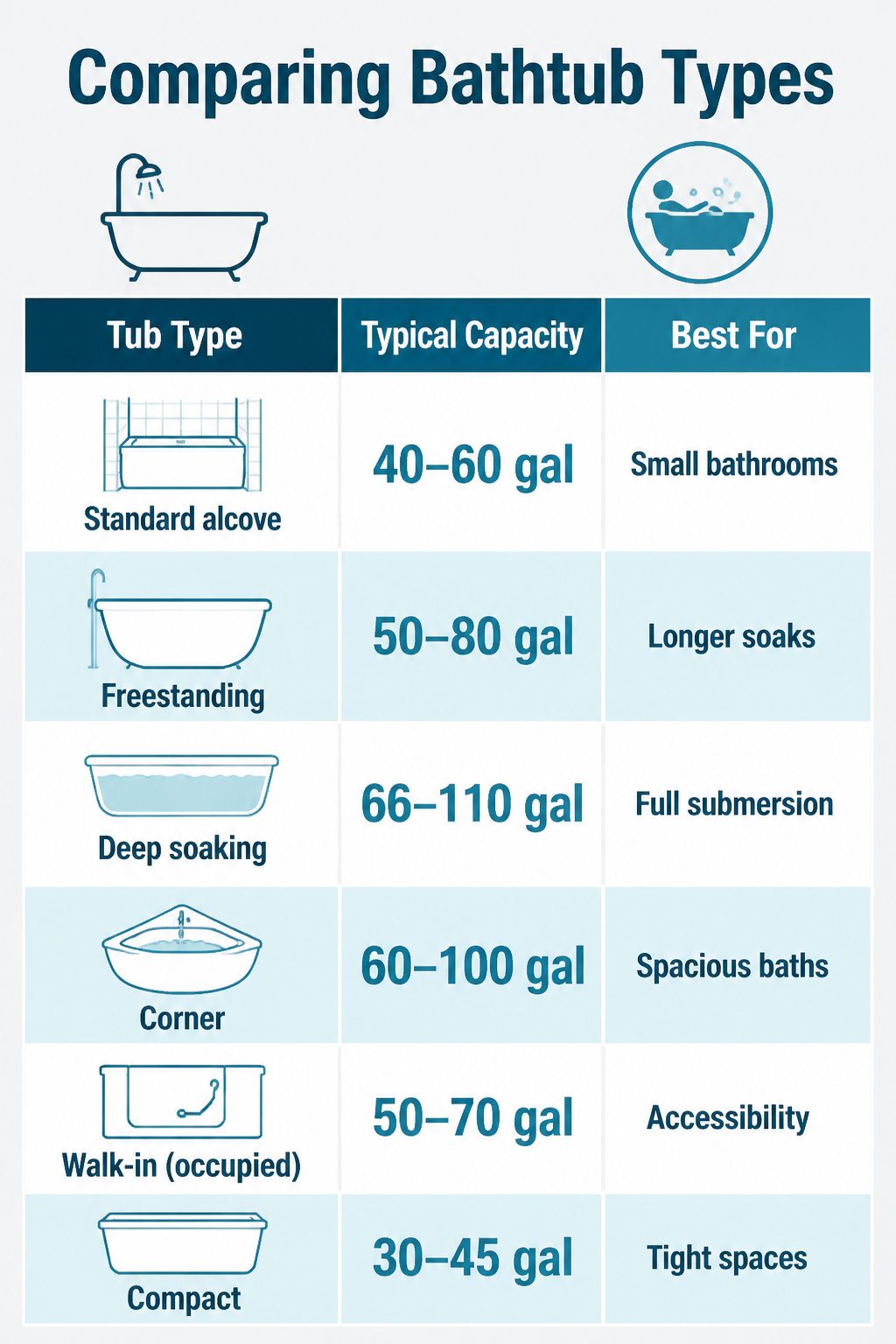
Standard alcove tubs, the kind tucked between three walls with a showerhead overhead, typically hold 40 to 60 gallons at full capacity. That is the baseline most people picture, but it is not where the story ends.
Freestanding tubs run larger, usually 50 to 80 gallons, with deep soaking versions stretching to 66–110 gallons. Corner tubs demand even more water, 60–100 gallons, thanks to their wider footprint. Walk-in tubs sit in a narrower band, about 50–70 gallons once you are actually inside, though an empty one takes closer to 85. Compact tubs, the apartment-friendly answer, scale down to 30–45 gallons.
| Tub Type | Typical Capacity | Best For |
|---|---|---|
| Standard alcove | 40–60 gal | Small bathrooms, daily showers |
| Freestanding | 50–80 gal | Statement piece, longer soaks |
| Deep soaking | 66–110 gal | Full submersion, taller bathers |
| Corner | 60–100 gal | Two-person or spacious solo baths |
| Walk-in (occupied) | 50–70 gal | Accessibility, aging in place |
| Compact | 30–45 gal | Tight spaces, guest baths |
Japanese soaking tubs are harder to pin down; reliable capacity figures for them are scarce in what I have found. If you are considering one, the manufacturer’s spec sheet is your only safe bet.

[DIMENSIONS AND SPECIFICATIONS]: Exterior Dimension: 71" Long x 31 1//2" Wide x 22 7/8" Deep, White Acrylic ( Chrome Drain/Overflow)

[DIMENSIONS AND SPECIFICATIONS]: Exterior Dimension: 55" Long x 31 3/4" Wide x 23" Deep

DIMENSIONS – Exterior size: 67" L x 28 1/4" W x 28 3/4" D with a 66-gallon effective soaking capacity, providing ample room while fitting most bathroom spaces.
3. Why Your Tub Fills Differently Than the Specs Say
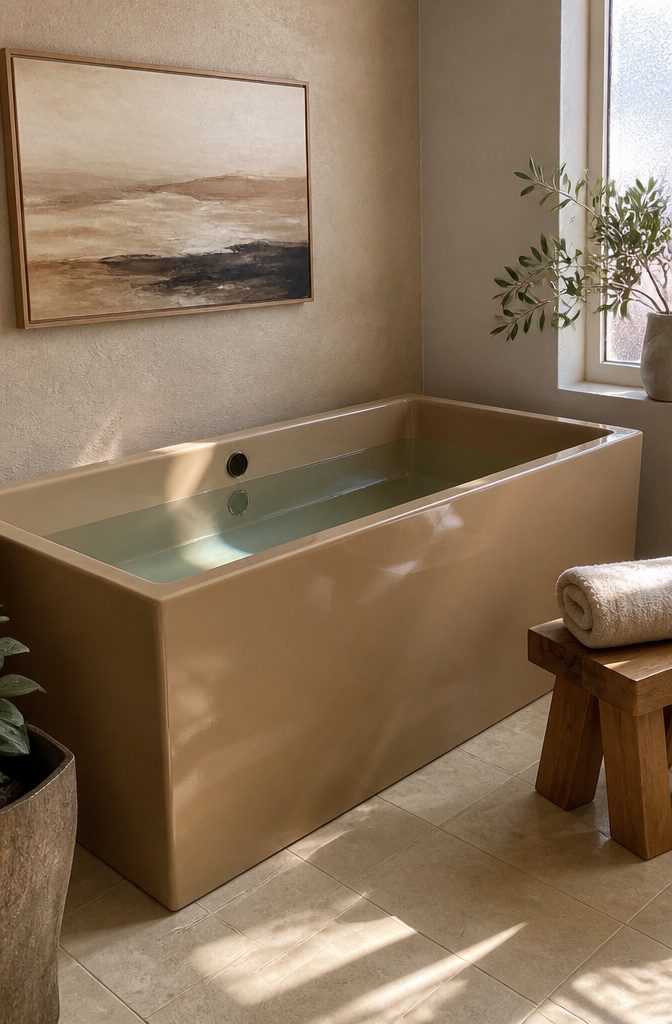
Body displacement is the first thing that eats into your usable water. A 190-pound person sinks in about 17 gallons once the water reaches roughly three-quarters up the body, so an 84-gallon tub suddenly behaves like a 67-gallon one. That is the number that matters for your water heater, not the sticker on the showroom floor.
The overflow drain sets the real ceiling. Water stops at that hole, which sits below the rim, so the height to the overflow is your true fill line, not the tub wall. A deeper basin with a low overflow can feel more cramped than a shallower one with the hole placed high.
Shape tricks you too. Straight walls hold more volume than sculpted sides, and a built-in seat or sloped backrest carves out space the specs do not show. Two tubs with the same length and width can feel totally different once you are in them.
To get practical capacity, measure inside length, inside width, and height to the overflow bottom in inches. Multiply them, divide by 231, then subtract roughly 17 gallons for displacement. That is your real-world number.
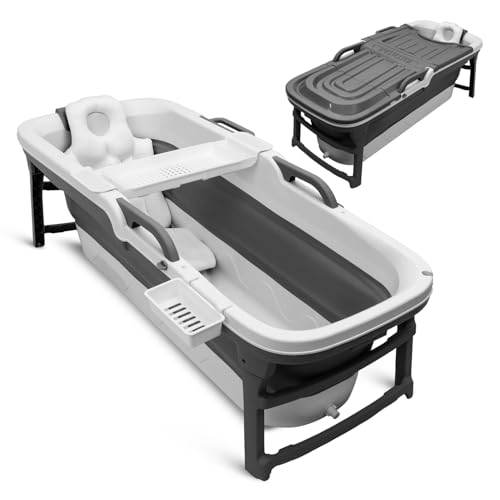
SPACE-SAVING FOLDABLE DESIGN: Perfect for small spaces, this portable bathtub folds flat to just 8.66" thick (59.06” x 23.62” x 8.66”). Easily store it in the included storage bag behind a door or in a closet, making it the ideal bath solution for apartments, RVs, or camping trips.

✅ [DIMENSIONS AND SPECIFICATIONS]: External Dimension:(L) 60" x (W) 30" x (H) 21-5/8",Internal Dimension:(L) 54-1/2" x (W) 24" x (D1)16-1/8" x (D2)16-7/8", Seating Area:(L) 41-3/4" x (W)17-3/4".Integral front skirt and tiling flange for easy installation.

Certified Safety & Durability: This cUPC certified bathtub meets rigorous safety standards, ensuring a high-quality soaking tub built to last with stain-resistant acrylic reinforced by fiberglass
4. Matching Your Tub to Your Water Heater
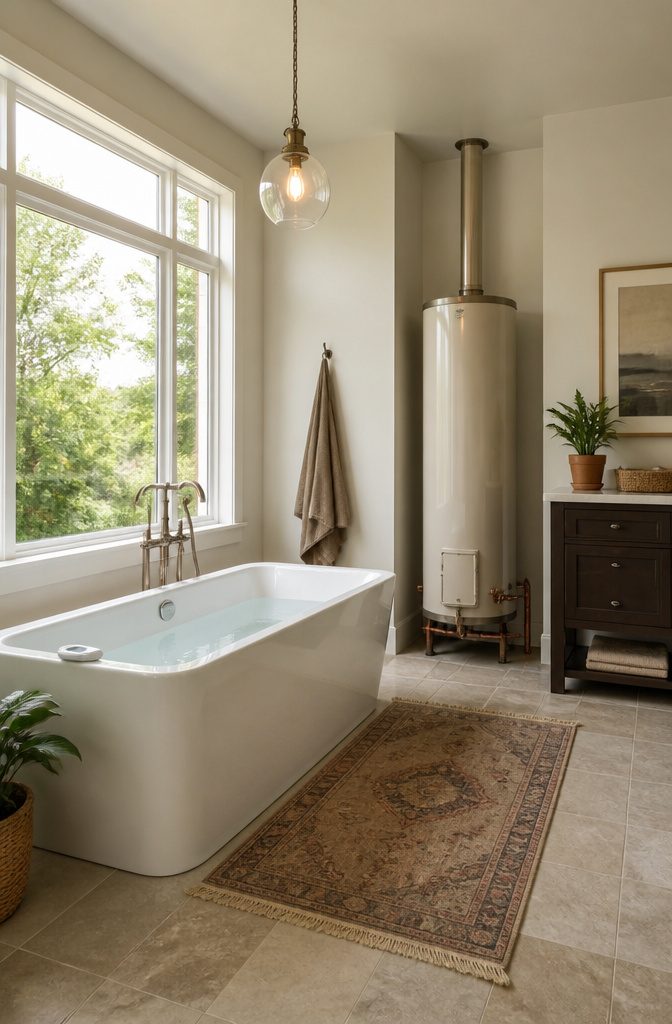
Standard water heaters hold 30 to 60 gallons, which is easy to forget when you’re staring at a 70-gallon soaking tub. I nearly made that mistake myself when I started pricing out a deeper model and never thought to check the tank in the closet.
The recovery rate matters just as much as the tank size. A 50-gallon heater can technically fill a 90-gallon tub if you mix in cold, but it will be running full blast the whole time and the next person in line gets a lukewarm shower. Running out of hot water mid-fill is the kind of surprise that turns a relaxing soak into sitting in tepid water while the tank catches up.
Two ways to avoid it: time your bath for when the dishwasher and washing machine are off, or pull the heater specs before you pull the trigger on a big tub. If your household runs multiple hot taps at once, a larger tank or tankless setup saves you from upgrading later. For most renters stuck with what’s there, a smaller tub or a shorter soak is the practical fix.

Dual-Person Hydrotherapy: Experience couples' relaxation in this corner tub featuring 10 strategically placed jets powered by a 1.0 HP UL-certified motor. The ergonomic 125° recline and targeted water-air massage relieve muscle tension, boost circulation, and promote deep relaxation.

750W Whirlpool Bathtub with 10 Jets: With careful placement of each water jet(Driven by 1.0 HP UL Certified motor),this corner whirlpool tub apply the right amount of pressure to muscle tissues,help pain relief,revitalize and unleash your best self.

HYDROTHERAPY MASSAGE SYSTEM: Equipped with 6 hydrotherapy massage jets and adjustable water flow control to provide a customized whirlpool bathing experience that helps relieve daily stress and body fatigue
5. Bath or Shower: Which Uses More Water
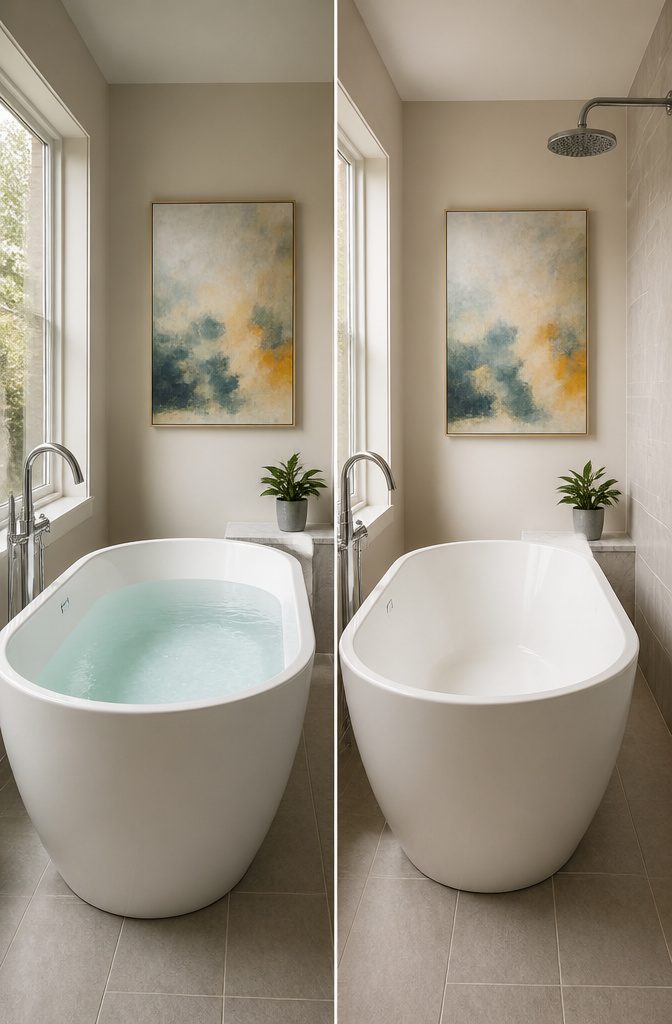
A typical bath runs 35 to 50 gallons to fill, while a 10-minute shower with a standard 2.5 gallon-per-minute showerhead uses about 25 gallons. Most days, the shower wins on water use. The gap narrows fast if you have a low-flow showerhead or a long shower habit; a 20-minute rinse under a standard head hits the same 50-gallon mark as a deep soak. WaterSense-labeled heads, capped at 2.0 gallons per minute, drop that 10-minute shower closer to 20 gallons and widen the advantage again. For anyone watching utility bills or just trying to tread a little lighter, the real question is not bath versus shower in the abstract but your actual fill level against your actual shower length. I keep mine under ten minutes most mornings and save the tub for when my shoulders actually need it.

EASY ENTRY SECURITY: Step in over a low threshold through an inward swinging door with a watertight pressure seal. Integrated grab bars, an ADA-compliant seat, and a slip-resistant floor add support in these walk-in soaking tubs with safety features.

Quick Fill & Drain: FerdY's Quick Fill and Drain design minimize wait time. The tub fills within 3 minutes, approximately 15 gallons per minute at 60 psi. Effortless drain system: simply turn the easy grip drain handle located beneath the showerhead to open and close. With the FerdY Fast-Drain system, water drains out in less than 2 minutes. (*Please consult a licensed plumber to ensure speedy and consistent filling and draining).

Quick Fill & Drain: FerdY's Quick Fill and Drain design minimize wait time. The tub fills within 3 minutes, approximately 15 gallons per minute at 60 psi. Effortless drain system: simply turn the easy grip drain handle located beneath the showerhead to open and close. With the FerdY Fast-Drain system, water drains out in less than 2 minutes. (*Please consult a licensed plumber to ensure speedy and consistent filling and draining).
6. Finding Your Exact Tub Capacity
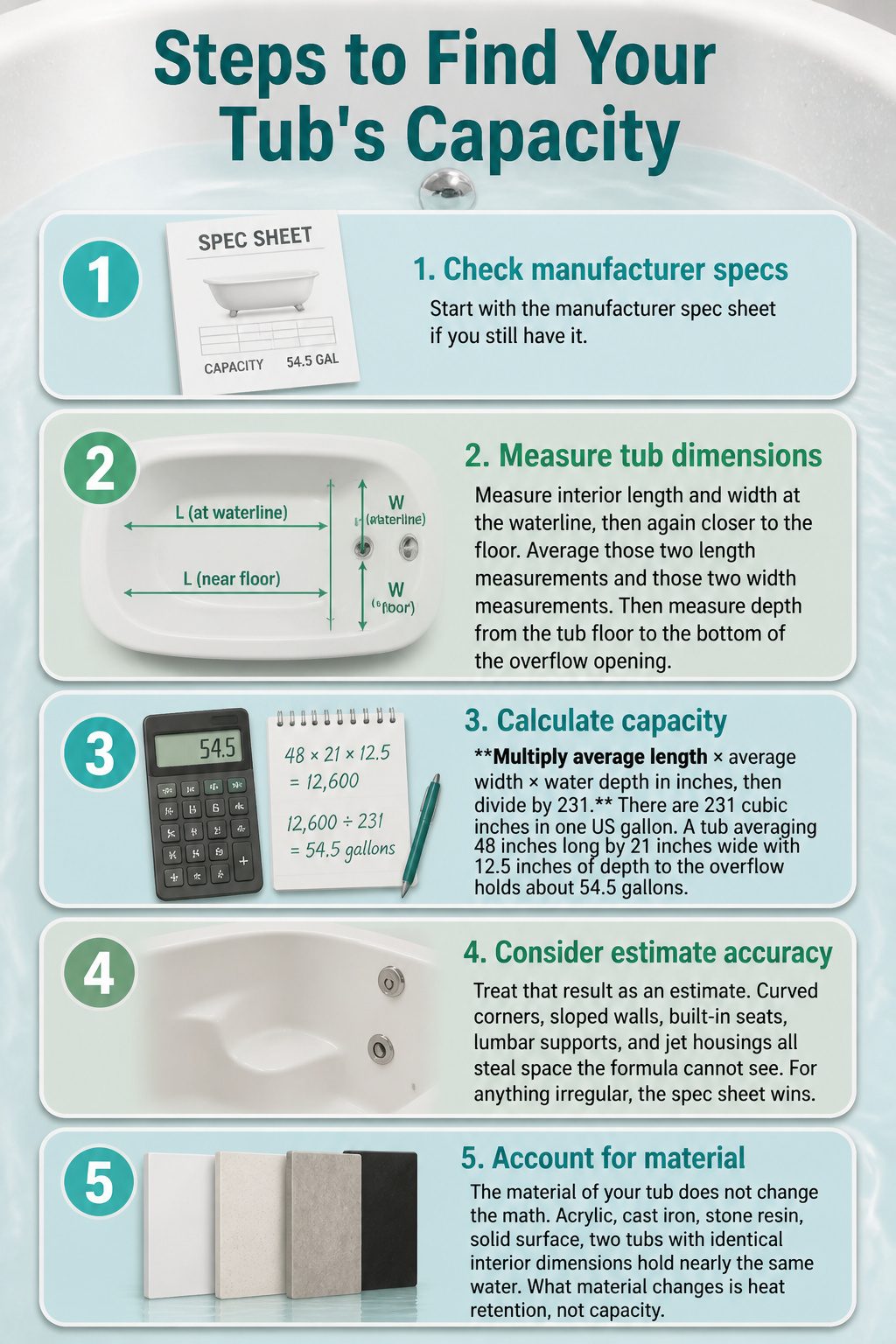
- Start with the manufacturer spec sheet if you still have it. The manual or product page lists the designed capacity in gallons, and that number is your cleanest starting point.
- If the paperwork is long gone, measure the inside of the tub yourself. Measure interior length and width at the waterline, then again closer to the floor. Average those two length measurements and those two width measurements. Then measure depth from the tub floor to the bottom of the overflow opening.
- Multiply average length × average width × water depth in inches, then divide by 231. There are 231 cubic inches in one US gallon. A tub averaging 48 inches long by 21 inches wide with 12.5 inches of depth to the overflow holds about 54.5 gallons.
- Treat that result as an estimate. Curved corners, sloped walls, built-in seats, lumbar supports, and jet housings all steal space the formula cannot see. For anything irregular, the spec sheet wins.
- The material of your tub does not change the math. Acrylic, cast iron, stone resin, solid surface, two tubs with identical interior dimensions hold nearly the same water. What material changes is heat retention, not capacity.

Acrylic construction with fiberglass and resin reinforcement, three wall alcove installation with tile flange and integral tub apron | Drain kit is not included

Premium Acrylic & Fiberglass Construction: Crafted from high-quality acrylic reinforced with multi-layer fiberglass, this soaking bath tub features excellent heat retention and a smooth, comfortable surface. The high-gloss finish is easy to clean, prevents yellowing, and maintains its brilliance over years of use.

Safeguard slip-resistant surface on bath floor.
What Changes How Much Water You Actually Use
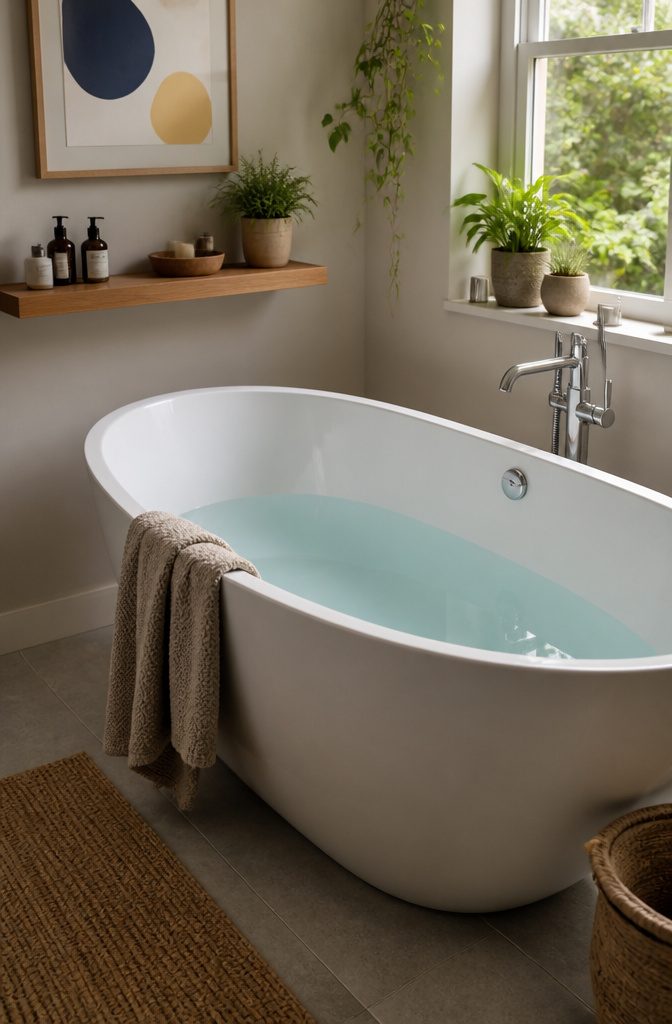
A standard tub might hold 40 to 58 gallons at the overflow, but the water you actually use sits closer to 40 gallons once your body is in it. I have seen the math on this: a 190-pound adult displaces roughly 17 gallons when about three-quarters submerged. That displacement works in your favor, lowering both the fill line and your water bill.
How full you run the bath matters just as much. Some people want only enough water to cover their legs for a quick warm-up; others fill to the chin for a long soak. The same tub can deliver either experience, and the difference between them is easily 10 to 20 gallons.
I tend to fill about halfway up the wall when I am in a hurry, which is most weeknights. On a slower Sunday, I might let it rise higher and stay in until it cools. Neither choice changes what the tub can hold, but both change what the meter records. That gap between rated capacity and real use is what actually shows up on your utility statement, and it is the number worth remembering when you are sizing a water heater or budgeting for a renovation.

GRACEFUL SHAPE: Our FerdY Bali freestanding bathtub offers gracefully sculpted curves that cradle your body as you settle in for a deep and restorative soak. The cast resin material allows for dynamic curvatures and for crisp, hand-finished details that are rich with character. FerdY gloss cast resin is lightweight and easy to clean, with a high-gloss finish that guarantees our product will last for years to come.

15-Inch Deep Soak with Ergonomic Support – Designed for comfortable full-body soaking, this 59-inch freestanding bathtub combines a 15-inch soaking depth with ergonomic back support, giving one bather generous room to stretch out and relax in its 45-gallon capacity

⭐【 Guarantee No Yellowing 10 Years】:The SYLONWILL bathtub is made of 100% new & pure PMMA (NO yellowing after 10 years) and reinforced with resin &fiberglass. The multi-layer construction makes our tub stronger and better insulated. Mirror-like glossy white finish resistant to kinds household chemicals and cosmetic products.You only need to use a mild cleaning agent and a soft cloth to wipe the bathtub, and minor scratches or stubborn stains, be easily repaired and removed with sandpaper.
When a Bigger Tub Needs Bigger Planning
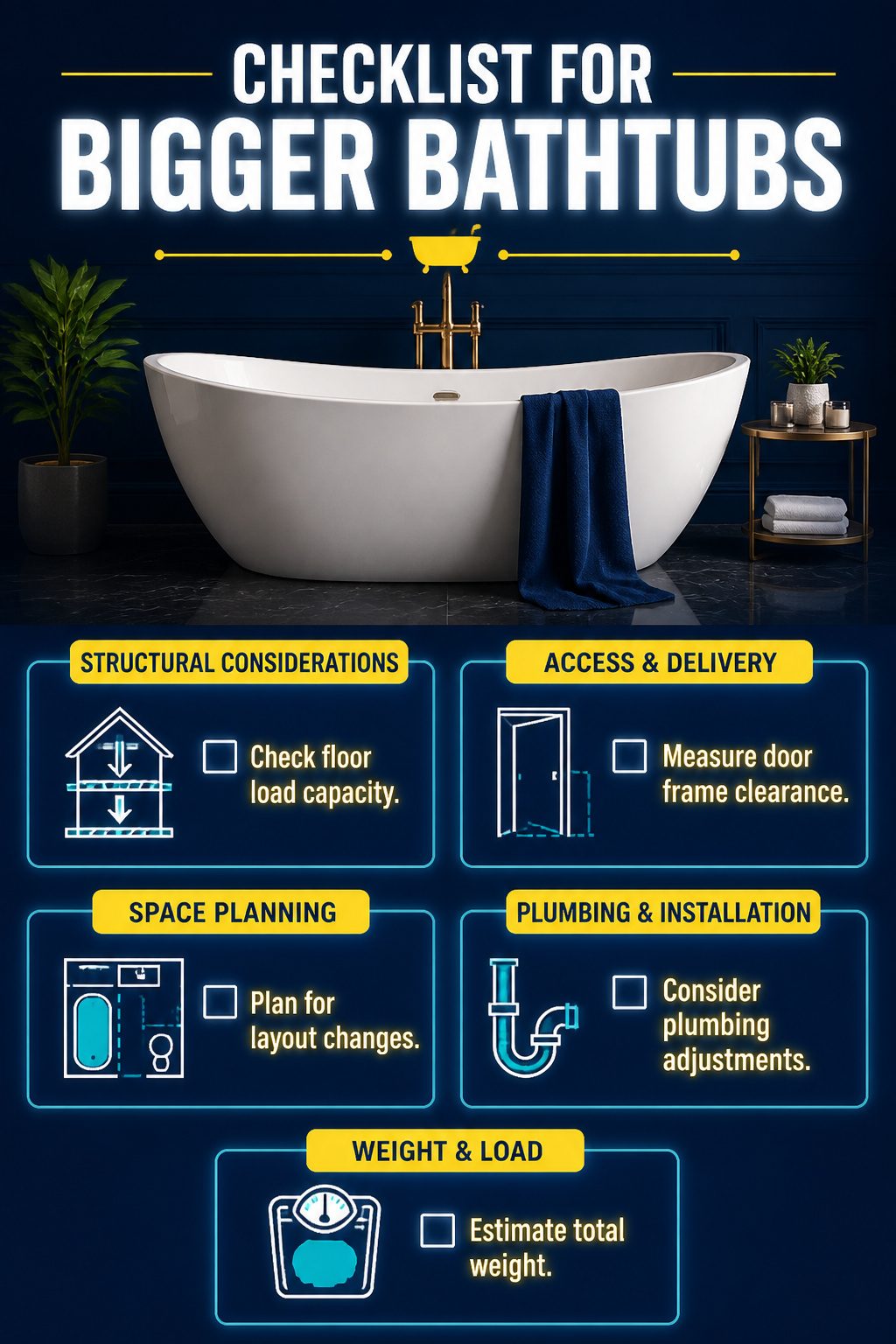
A tub over 70 gallons is not just a plumbing decision. Water weighs 8.34 pounds per gallon, so 80 gallons alone adds 667 pounds before you even step in. Add the tub itself and a bather, and a filled soaker can push past 1,000 pounds total.
Here is what to check before you buy:
- Floor load. Residential floors are commonly built to a 40 pounds per square foot live load under the 2021 International Residential Code. A concentrated load from a freestanding soaker over about 90 gallons, especially on an upper floor, may need review by a qualified contractor or architectural professional. Load distribution, joist direction, and installation method all matter.
- Door frame clearance. Freestanding tubs arrive as one solid piece. Measure every doorway, hallway turn, and stairwell between the street and your bathroom. A tub that clears the room may not clear the house.
- Layout changes. Swapping a standard alcove tub for a larger freestanding model often means moving the drain line, adding floor reinforcement, or losing nearby storage. Check what the footprint actually costs in usable space before committing.

Ideal for Your Bathroom: Style: Right Drain Design. The alcove acrylic bathtub measures 48" x 30" x 20" with a 10.8" soaking depth and a 29 gal/110 L capacity. Ideal for users up to 5'5" (165 cm), providing a full, relaxing soak without taking extra space

8 Insulated Layers, Built for Daily Use: reinforced PVC over a denser insulating core, with 8 layers where our standard model has 6. If you fill and drain this tub every single day, it keeps its shape and the rim stays firm.
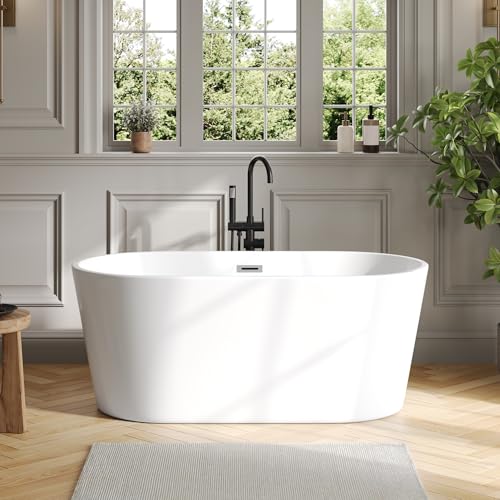
Compact Space-Saving Design: Free standing bathtub has a clean silhouette with a refined white finish enhances any bathroom. With a 55-inch overall length, the well-designed interior maximizes soaking space while maintaining a compact footprint—ideal for apartments, guest bathrooms, or smaller layouts.
Quick Reference: Gallons by Tub Style
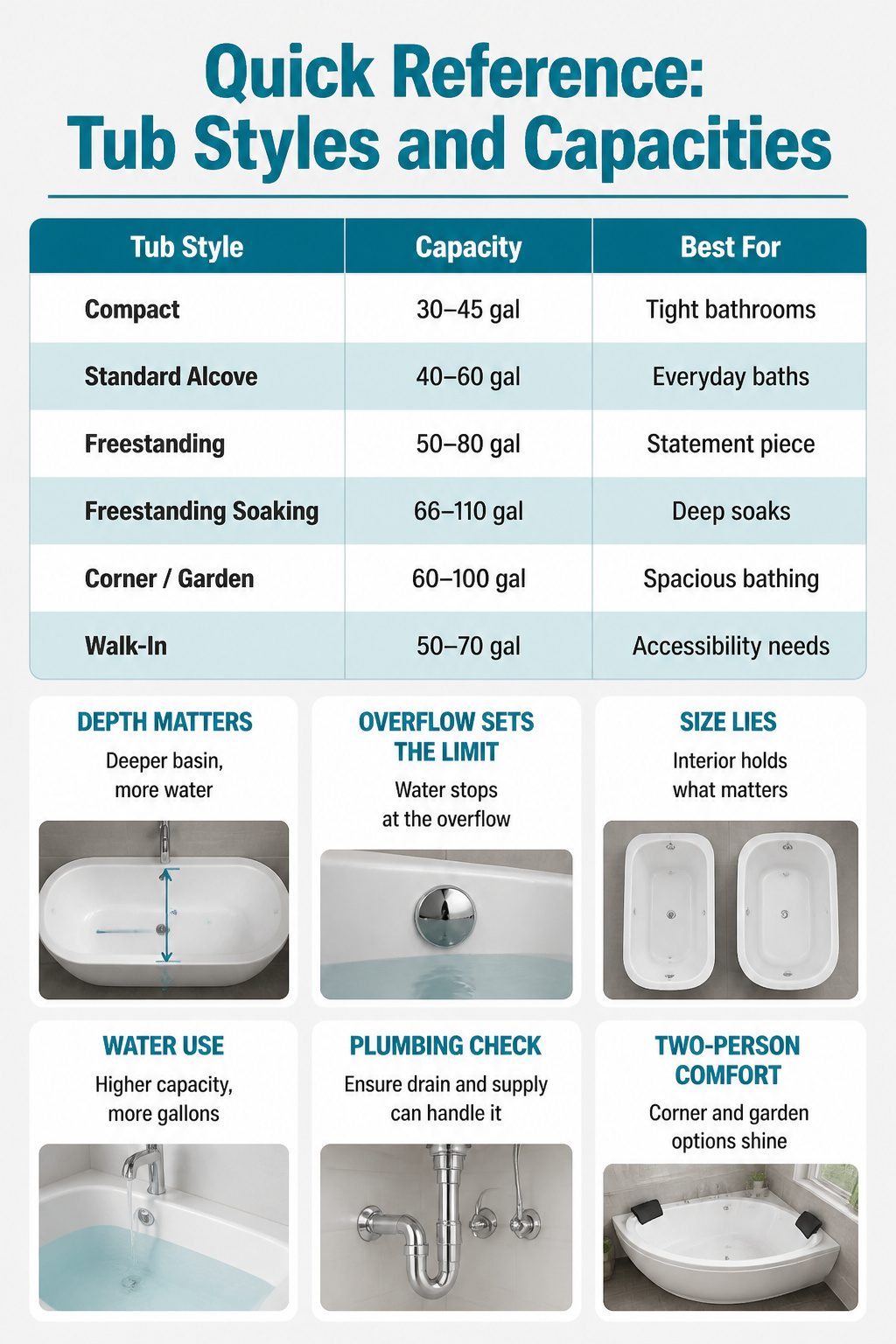
A standard alcove tub lands somewhere between 40 and 60 gallons, but that number shifts fast once you step outside the usual rectangle. I’ve pulled the ranges that actually matter into one place so you can scan and move on.
| Tub Style | Capacity to Overflow | Best For |
|---|---|---|
| Compact | 30–45 gal | Tight bathrooms, guest baths |
| Standard Alcove | 40–60 gal | Most everyday baths |
| Freestanding | 50–80 gal | Statement piece with standard depth |
| Freestanding Soaking | 66–110 gal | Deep, full-body soak |
| Corner / Garden | 60–100 gal | Two-person or stretched-out bathing |
| Walk-In | 50–70 gal | Accessibility needs |
One detail that caught me: a compact tub with a deep basin can hold more than a wide, shallow freestanding model. Exterior size lies. Always check the interior basin depth and where the overflow sits, because that determines where your water actually stops.

【Spa-Quality Massage for Sore Muscles】After a long day, your body deserves more than a simple soak. Our corner whirlpool bathtub features 6 strategically placed hydro massage jets driven by a powerful 1.0 HP motor. These jets deliver a precise blend of water and air to target tired muscles and ease tension throughout your back, neck, and legs. It transforms your daily routine into a professional-level hydrotherapy session right at home

Deep‑Tissue Hydrotherapy for Muscle Relief– Powered by a 1.0 HP pump, 6 strategically positioned water jets create steady whirlpool massage around your body to ease muscle tension after work, workouts or long‑tiring days. Simple deck‑mounted pneumatic controls allow easy adjustment in humid bathroom conditions. The generous soaking area comfortably fits two adults for shared relaxation.

【6 Hydro Massage Jets for Couples' Relaxation – 1.0 HP Powerful Motor】Designed as a true 2 person corner hot tub, our 59″ corner whirlpool bathtub features 6 precision water jets driven by a UL-certified 1.0 HP motor. Each jet applies the perfect water pressure to relieve fatigue, and promote restful sleep—ideal for sharing quality time.
What I Check Before Drawing a Bath
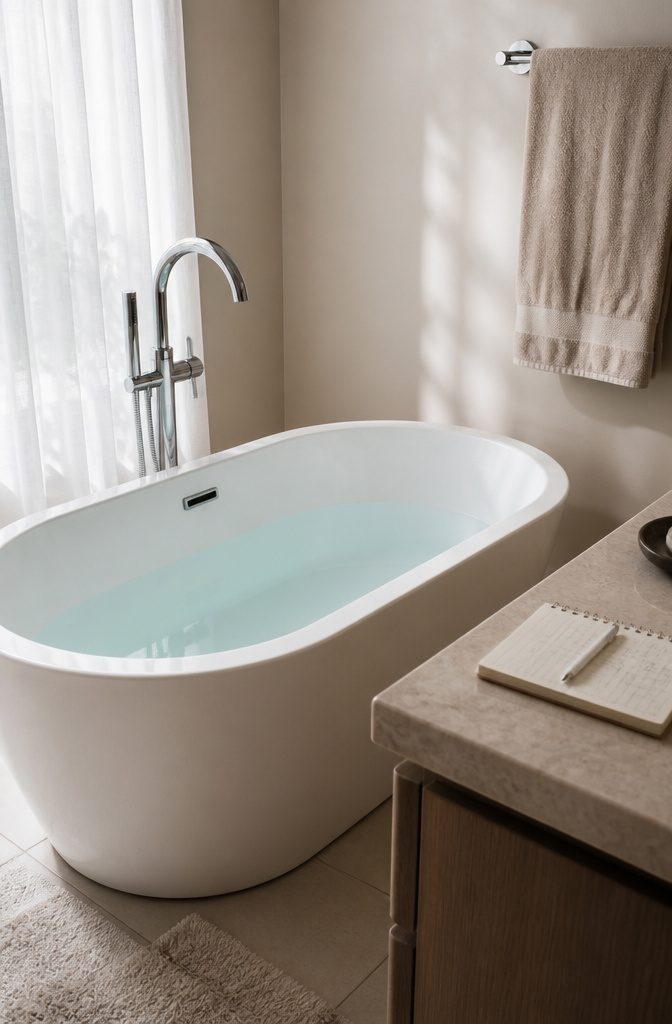
I learned my tub’s quirks the hard way after a string of lukewarm baths that never got comfortable. Now I run the water for a solid minute before I even think about stepping in. That first blast from the tap tells me whether the heater has recovered from the morning’s dishes and showers, and it saves me from sinking into water that chills halfway through the soak.
My overflow sits an inch and a half below the rim, which means the real capacity is a lot less than the tub’s total volume. I mark the true fill line with a small chip in the enamel I made by accident years ago. It is the only guide I trust, because the spec sheet does not account for my shoulders displacing water or the fact that I actually want to stay submerged.
I also wait ten minutes after anyone has run hot water anywhere else in the house. The heater needs that recovery time, and a bath that starts tepid never catches up. The fill point that matters is the one your body experiences, not the number printed on the manufacturer’s site.

ADA ACCESSIBLE DESIGN: The wheelchair accessible layout, low threshold entry, and ADA compliant seat make transfers smoother, while Safe Reach grab bars and slip-resistant flooring steady this tub for elderly and disabled bathers.

EASY ENTRY SECURITY: A low threshold and inward door with a watertight seal make step in tubs for seniors easy to enter. Safe Reach grab bars, an ADA seat, and a slip-resistant floor add support to these walk-in soaking tubs with safety features.
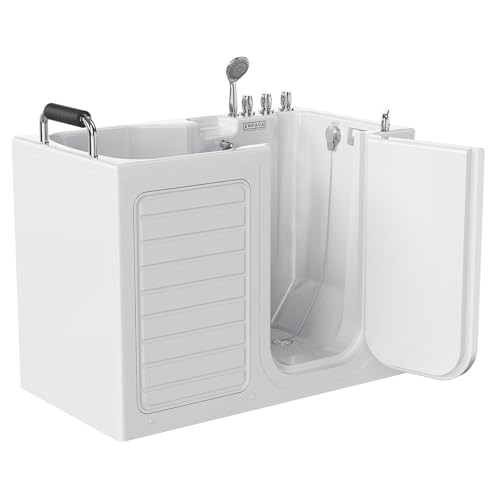
Effortless & Safe Entry – Designed for seniors and mobility-impaired users, this tub features an extra-wide outward-opening door (20% wider), a 3.3-inch ultra-low threshold, and a slip-resistant floor—making entry and exit secure and effortless
Common Mistakes When Estimating Tub Use
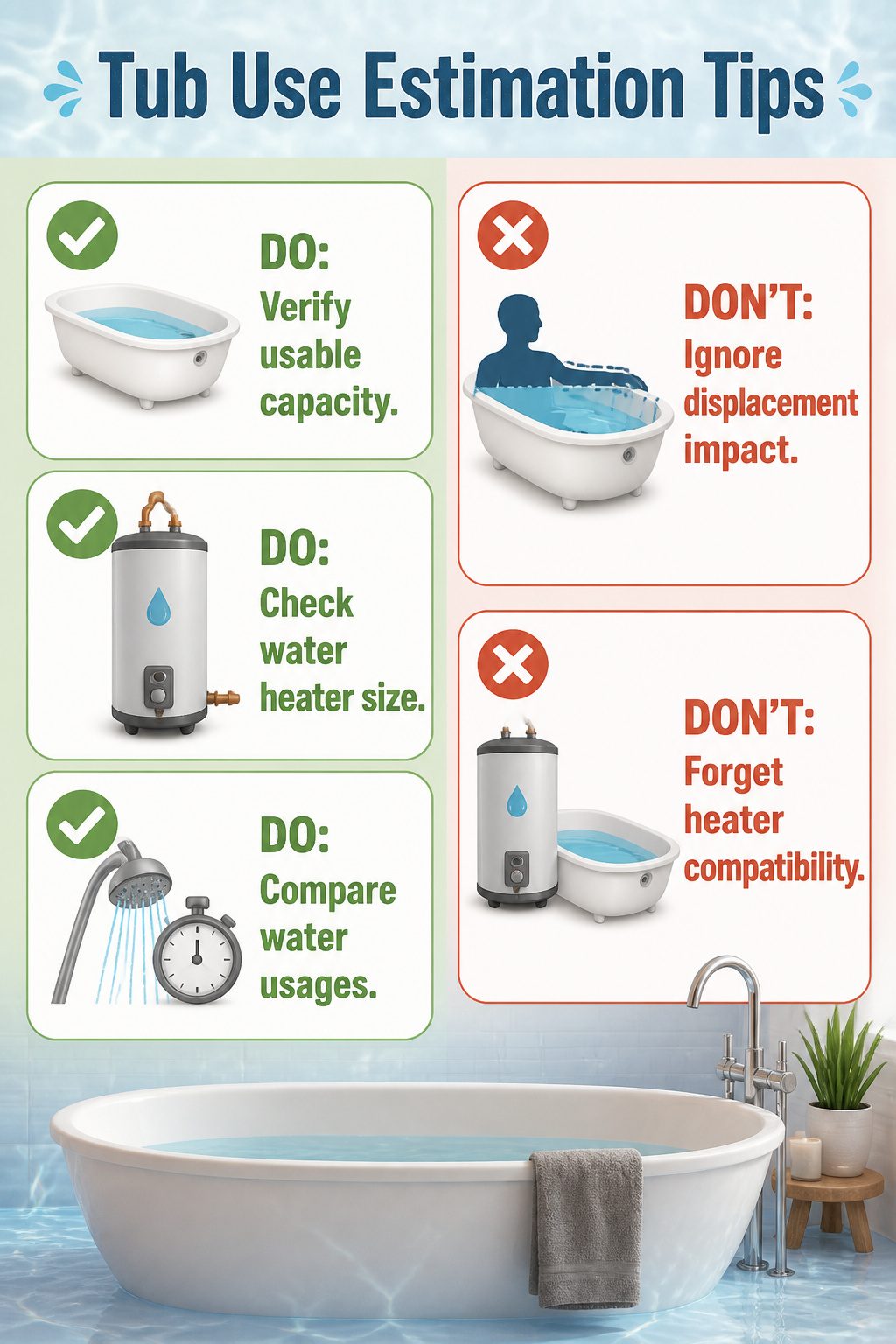
Most people overestimate how much water they’ll actually use, and a few assumptions turn a simple soak into a lukewarm letdown.
- Rated capacity is not usable capacity. A standard tub listed at 60 gallons only reaches that if filled to the rim. The overflow drain sits lower, and once you climb in, your body pushes water out too. An average adult displaces roughly 17 gallons at 75% submersion, so that 60-gallon tub ends up needing more like 40–45 gallons of hot water for a comfortable fill.
- Not checking your water heater before buying a big tub is a headache waiting to happen. A 40-gallon heater pairs fine with tubs up to 55 inches; a 60-gallon heater handles 59–67 inch tubs. Go bigger on the tub without upgrading the tank, and you’re mixing in cold or waiting between fills.
- Comparing bath time to shower time without doing the math misses the point. A standard showerhead flows 2.5 gallons per minute, so a 10-minute shower runs 25 gallons. A WaterSense head drops that to 20. Your actual tub fill, not the spec sheet number, is what belongs in that comparison.
Frequently Asked Questions
How many gallons does a standard bathtub hold?
A standard bathtub holds 40 to 60 gallons at full capacity. Most people actually use 35–50 gallons once body displacement and not filling to the overflow are factored in.
How much water does a freestanding soaking tub hold?
Freestanding soaking tubs hold 66 to 110 gallons to the overflow. Compact models start at the lower end, while two-person designs reach the top of that range.
Does a bath use more water than a shower?
A typical bath runs 35 to 50 gallons to fill, while a 10-minute shower with a standard 2.5 gallon-per-minute showerhead uses about 25 gallons. The gap narrows with longer showers or older fixtures; a 20-minute shower matches a deep soak.
How do I find my bathtub’s exact capacity?
Check the manufacturer spec sheet first. If that is gone, measure inside length, inside width, and depth to the overflow bottom in inches, multiply them, and divide by 231. Subtract roughly 17 gallons for body displacement to get real-world usable capacity.
How much water does a walk-in tub use?
A walk-in tub uses about 50 to 70 gallons when occupied, though an empty one takes closer to 85 gallons. The heater needs to handle that draw, so check your tank size before buying.