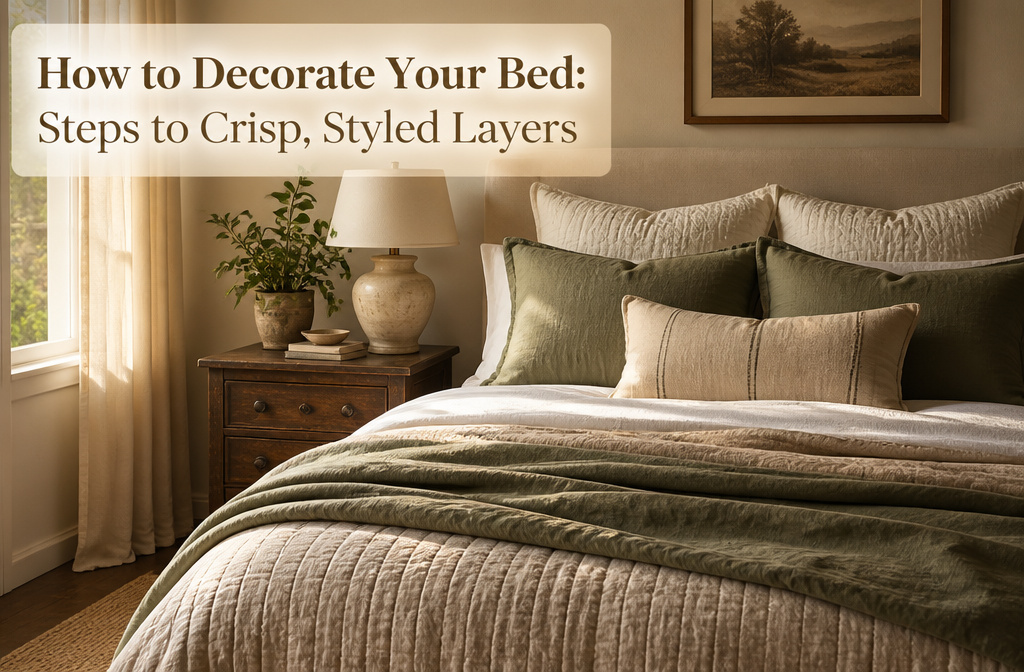

A finished, styled bed takes about ninety seconds with a minimalist build or several minutes with full layers, and most people get stuck on the middle layer where texture either builds the look or undoes it. The difference is whether you smooth that quilt flat or let it wrinkle. Cotton percale at 200 thread count holds up through regular washing, but linen lasts longer where you are not lying directly on the creases.
1. Start with a Clean Slate
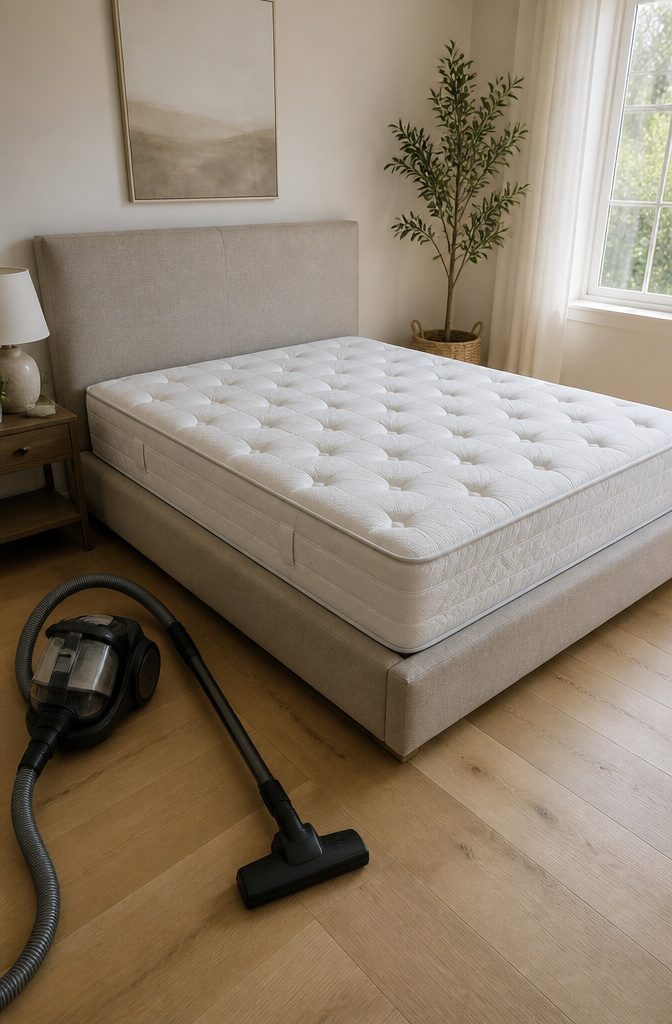
Strip every piece of bedding off the bed. All of it. Sheets, pillowcases, blankets, duvet cover, mattress protector if you have one. A bare mattress gives you a surface you can actually see and work with.
Vacuum the mattress with the upholstery attachment while the bedding’s in the wash. Five minutes of suction and fresh air on the bare mattress changes how the whole morning feels. The fitted sheet goes onto a clean surface, not onto yesterday’s dust and skin cells. That small pause, the mattress exposed to the room for a few minutes, turns what could be a rushed chore into something intentional. You notice whether the mattress has developed a dip where you sleep, whether the corners still hold their shape, whether it’s time to rotate it. That information shapes how you layer everything back on.
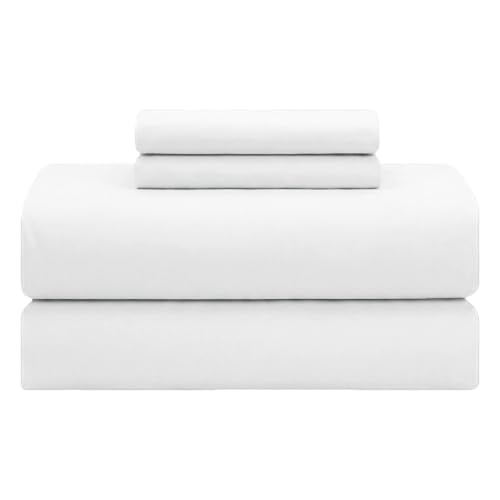
300 Thread Count Percale Weave: Crisp, Cool & Breathable for Comfortable Sleep

CRISP COTTON PERCALE COMFORT: Crafted from 100% cotton percale, this sheet set delivers a cool, breathable feel with lightweight durability and a smooth texture designed for comfortable year-round sleep.

100% COTTON SHEET SET. 100% Cotton Percale Weave Sheet Set brings the crispiness and longevity that is comparable to prestigious hotel. The sheets are weaved using high quality Long-Staple Combed Cotton yarns in India, to make it the valued crispy percale 200 TC sheets in the industry. Varied colors to match your solid or printed duvet, quilt or comforter set in white, ivory, sage, taupe, dark blue (navy blue), baby blue, silver, and charcoal.
2. Fitted and Flat Sheets
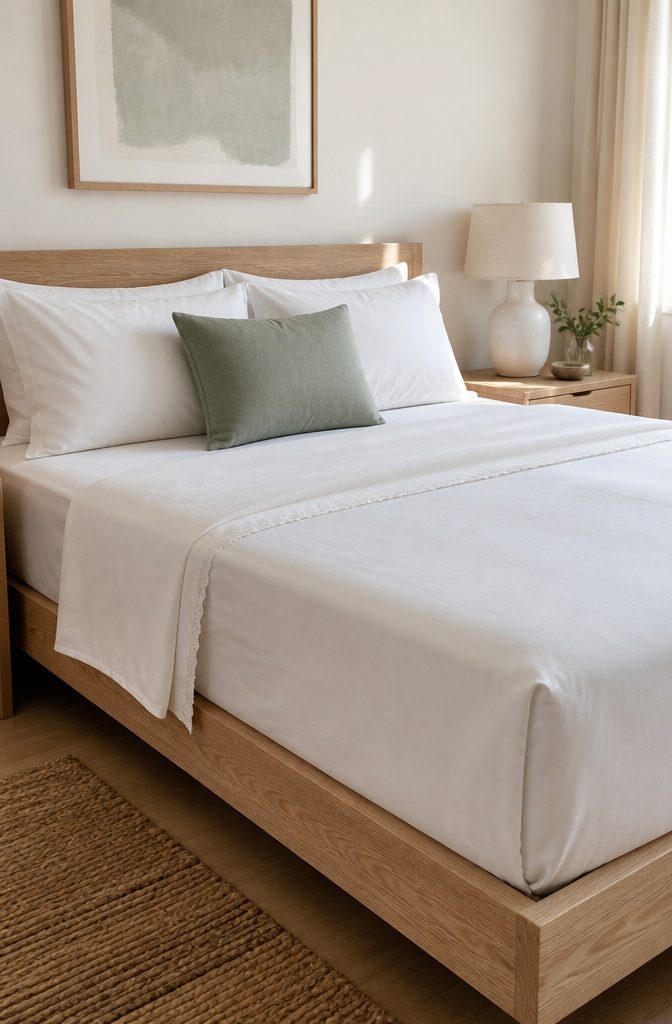
The fitted sheet goes on first, pulled tight over each corner so the mattress doesn’t shift underneath you. A flat sheet comes next, though about 70% of Americans still use one and the other 30% have quietly dropped it. I stopped sleeping with a flat sheet years ago because it simplified morning bed-making, but for a finished, styled look it still belongs in the stack.
If you are using one, lay the flat sheet with any decorative trim facing down so the right side shows when you fold it back. Tuck the sides under the mattress and smooth out the bumps with your hands. Hospital corners at the foot give that tight, hotel-bed finish, or leave the bottom loose if you prefer an easier drape.
Cotton percale should hit at least 200 thread count to hold up through regular washing. Linen starts out crisp and almost stiff, then softens noticeably after a few washes. Both materials breathe well across seasons, which matters more than chasing higher thread counts that mostly just raise the price.

Hospital Bed Fitted Sheets with Elastic All the Way Around: Sized 36 x 84 with a 12-inch pocket, the stretchy knit hugs the mattress for a snug, perfect fit that holds when the head or foot is raised; ideal for adjustable home care beds

Complete 3-Piece Bedding Set for Immediate Use: This set provides a full solution with 1x fitted sheet 36" x 80" +12", 1x flat sheet 60" x 105", and 1x pillowcase20" x 30". Perfect for those seeking convenient hospital bed sheets for home use, it offers everything needed to dress a care bed comfortably and neatly right out of the package.
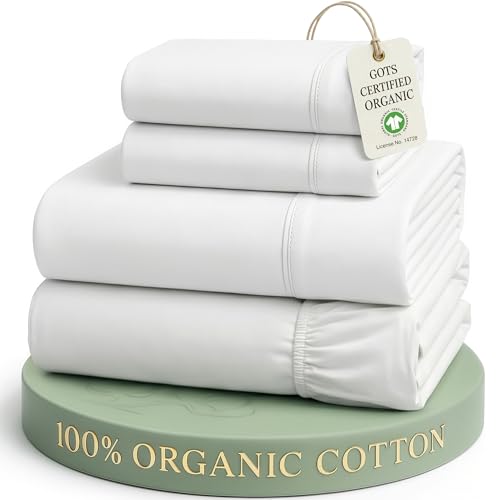
Naturally Cooling Organic Comfort : Stay cool and comfortable with Lane Linen 100% Organic Cotton Percale King Sheets, made from GOTS Certified organic cotton. The crisp percale weave and finer yarns create a lightweight, breathable feel that promotes airflow and balanced temperature for year-round comfort. Gets softer and smoother with every wash. Great as deep pocket King sheets, a cooling King sheet set, and breathable King size bed sheets.
3. Layer a Quilt or Blanket
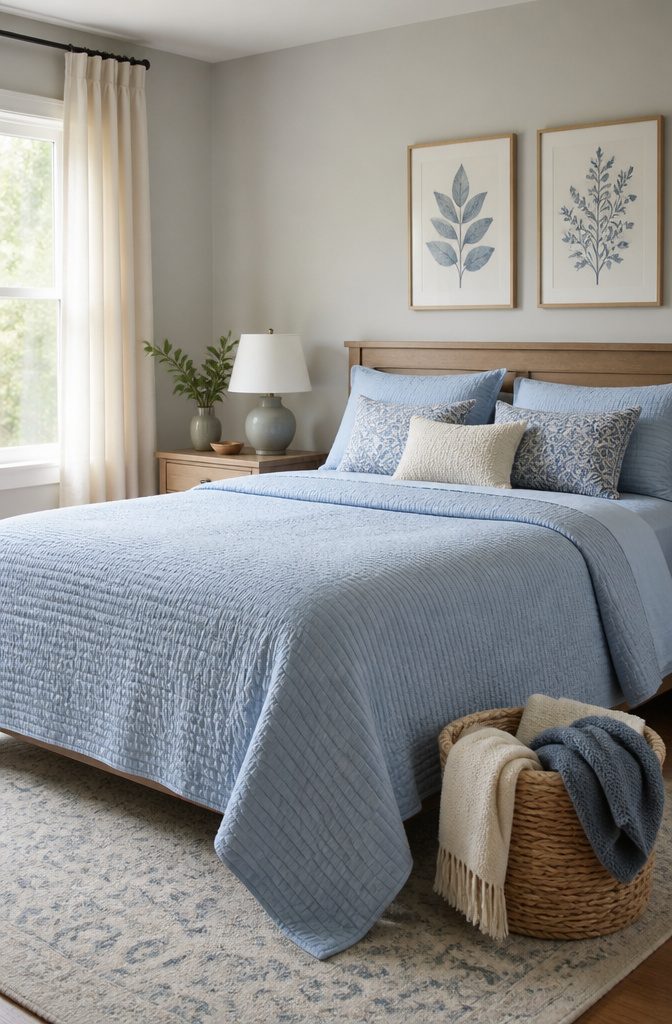
The quilt or blanket you choose covers the largest visible surface of the finished bed, so texture matters more here than anywhere else in the stack. Cotton quilts work year-round; linen breathes better if you run hot in summer. I like a lightweight matelasse or channel-stitched coverlet for this layer because it builds visual interest without the full commitment of a duvet’s warmth. You can still fold it back neatly or let it drape to the floor, depending on the look you’re after.
This is also where seasonal switching starts to make sense. Velvet or plush reads cozy in cooler months, while crisp cotton or a waffle weave keeps things feeling lighter when the heat kicks on. Whatever you pick, smooth it flat the same way you did the flat sheet underneath. A wrinkled middle layer undoes the calm you’re building.

Queen size (3Pcs): 1 quilt/coverlet 90*98 inch, 2 pillow shams 20*26 inch.(Quilt/Coverlet for Queen size bed, Bedspread for full size bed, this is not a oversized bedspread for a Queen size bed with high mattress )
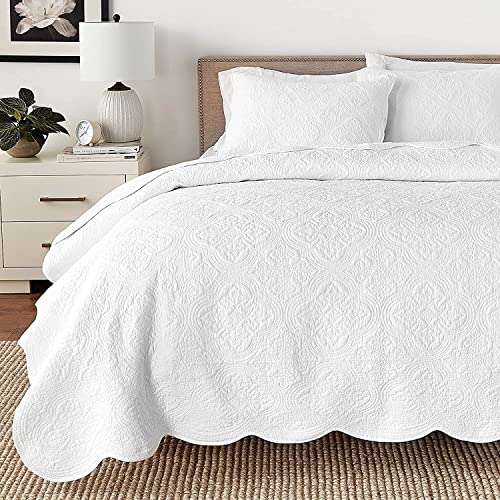
【Perfect Queen Size Fit – Complete 3-Piece Bedding Set】Includes 1 quilt (88" x 92") and 2 standard shams (20" x 26"). Generously sized to provide full coverage and a polished, tailored look for Queen beds.
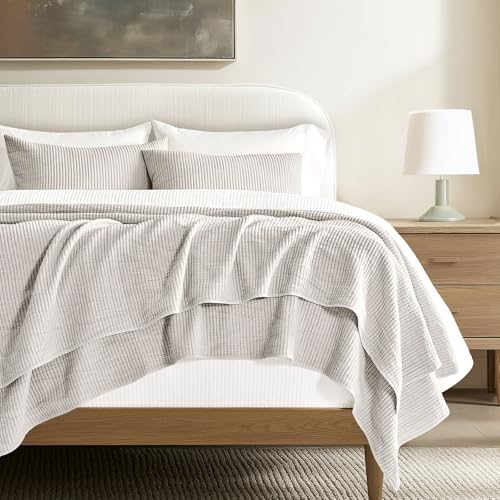
RELAXED & LIGHTWEIGHT - Our cotton coverlet bedding set features pre-washed cotton fabric shell on both sides. The skin-friendly cotton fabric ensures a relaxing touch, while its lightweight and breathable nature keeps you warm without overheating, allowing you to enjoy a restful sleep throughout the year.
4. Add a Duvet or Comforter
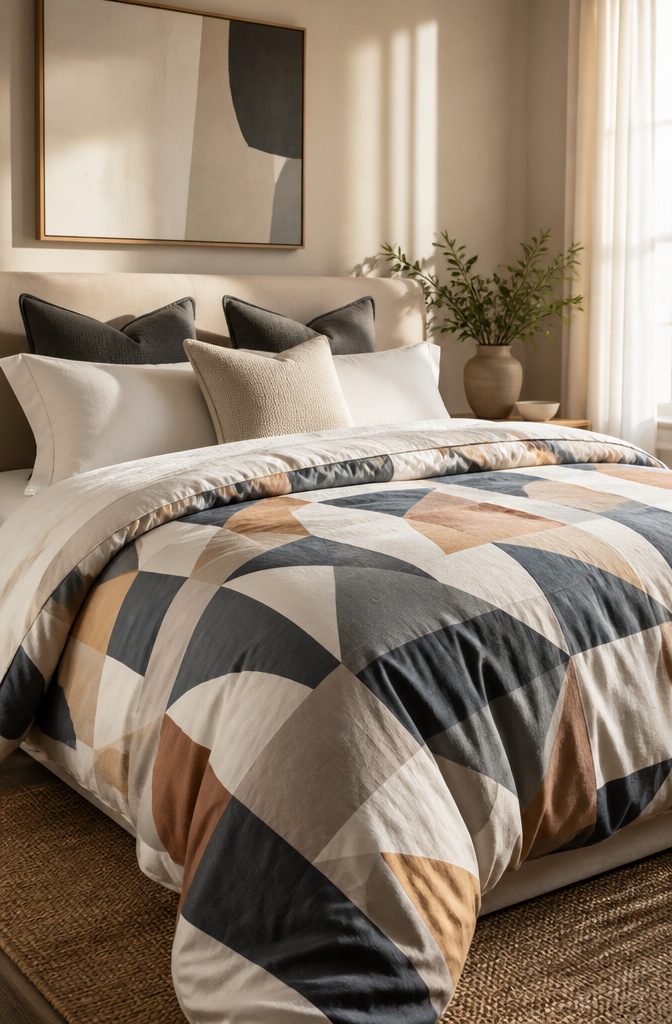
The duvet or comforter is what gives a bed its real height and presence. I lay mine on top of everything else, then fold it roughly one-third down from the head of the bed. That fold creates the volume you see in catalog shots; it also makes it easy to get in at night without wrestling the whole thing back.
Some people pull theirs straight across, but the tri-fold is what builds that fluffy, inviting profile. In summer, I move the whole fold to the foot of the bed instead. It still reads as styled, and you are not trapped under a heavy layer in July.
A duvet with a removable cover is the route I prefer for this layer. You get the loft of a down insert, and when you want a different color or pattern, you are buying a cover, not a whole new comforter. The swap takes two minutes and stores flat in a drawer.

EVER-STUNNING QUILT - RECYCO luxury velvet quilt sets present a sophisticated and chic look. With an ultra-plush soft texture, it creates a rich and inviting sheen that varies in shades of color depending on the angle and lighting. The classic channel stitch geometric pattern makes it an absolute must-have for adding a touch of elegance to any home decor.

The Madison Park Lola 6 Piece Reversible Cotton Printed Coverlet Set brings beauty and grace to your bedroom.

EVER-STUNNING QUILT - RECYCO luxury velvet quilt sets present a sophisticated and chic look. With an ultra-plush soft texture, it creates a rich and inviting sheen that varies in shades of color depending on the angle and lighting. The classic channel stitch geometric pattern makes it an absolute must-have for adding a touch of elegance to any home decor.
5. Arrange the Pillows
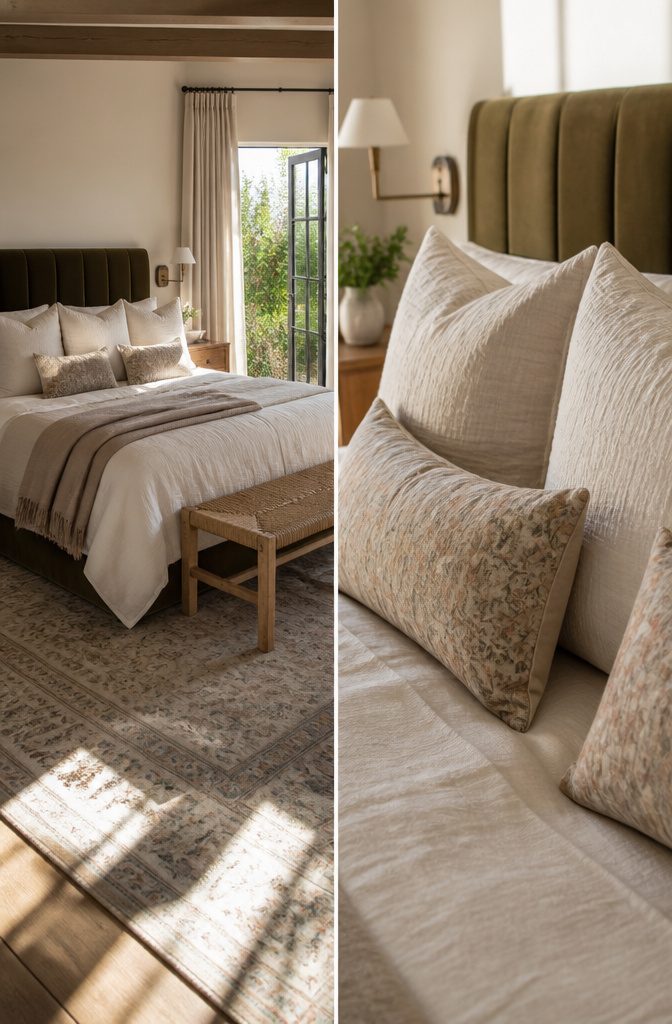
Sleeping pillows press flat against the headboard where they stay out of sight. In front of them, two 26-by-26-inch Euro pillows on a queen bed, three on a king give the arrangement its height and structure. One source doubles up inserts inside a single sham to keep them from going floppy, which is worth the extra ten dollars if your Euro pillows start to sag.
After the Euros, two smaller decorative pillows or one lumbar across the front finishes the stack. That brings the total to about seven pillows on a queen, eight or nine on a king. Stand them upright rather than laying them flat; the vertical line adds depth and reads finished from the doorway. More than that and you’re spending ten minutes every morning rearranging instead of making coffee.
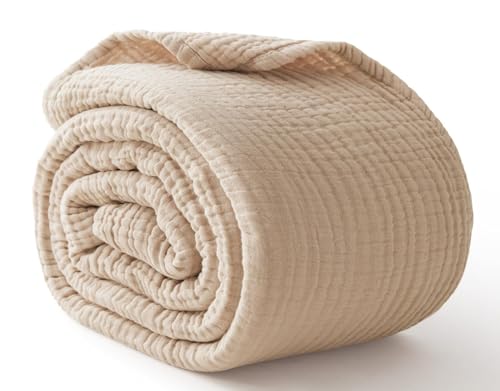
100% Cotton Muslin Blanket: Indulge in the gentle embrace of our cotton blanket; Designed with special waffle weaving techniques; These lightweight and softness gauze blankets ensure a cozy yet breathable feel; Cool blankets for hot sleepers; a versatile neutral blanket, ideal for sensitives; and perfect for co-sleeping with your little one

100% COTTON WAFFLE BLANKET - BREATHABLE AND SKIN-FRIENDLY: A 100% cotton waffle blanket with no polyester and nothing synthetic against your skin. Ringspun yarns are combed and twisted smooth, so the fabric feels soft rather than rough, and pure cotton breathes - it holds warmth on cool nights without trapping heat, comfortable across all four seasons. Perfect if you want cotton blanket for bed or waffle weave blanket.

Fine Herringbone: Give your space an air of timeless elegance by incorporating this fine herringbone weave blanket, which seamlessly blends with any home decor.
6. Finish with a Throw Blanket
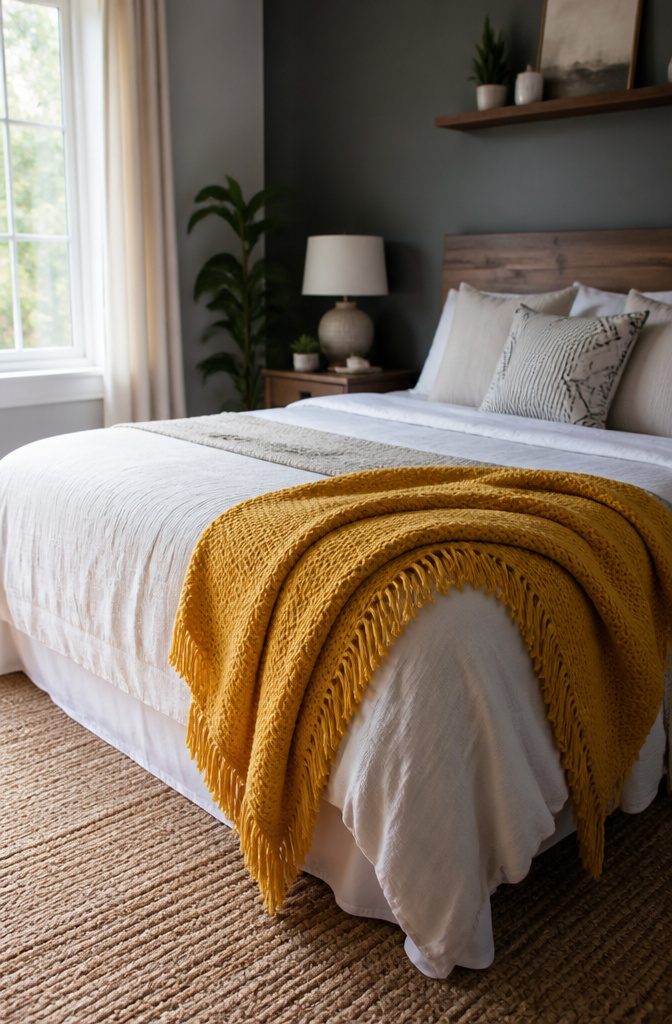
A throw blanket at the foot of the bed is the fastest way to change the whole mood of the room without buying anything else. Fold it lengthwise and lay it straight across, or drape it at an angle over one corner so it looks like someone actually lives there. I tend toward the casual drape myself; too much precision reads hotel, not home.
This is the piece to swap when you want a color shift or a heavier texture for winter. The rest of your bedding stays put, and you still get something that feels fresh. A fringe-trimmed or quilted cotton throw adds warmth you can see even when you do not need it for sleeping. It also hides rumpled sheets on mornings when making the bed properly is not happening.

CRISP COTTON PERCALE FOR COOL COMFORT: Crafted from 100% cotton with a 200-thread-count percale weave, this sheet set delivers breathable softness, lightweight comfort, and a cool crisp feel for everyday sleep

1. PREMIUM 100% COTTON PERCALE - HOTEL QUALITY Indulge in the crisp, cool, and breathable comfort of our 200 Thread Count Percale sheets. Woven from high-quality, long-staple combed cotton, this sheet set offers a matte finish and a signature crisp hand-feel that is durable, strong, and only gets softer with every wash. Experience the fresh, lightweight feel of luxury hotel linens in your own bedroom.

COOLING PERCALE FOR HOT SLEEPERS: Made from 100% cotton percale, these sheets are lightweight and breathable, allowing airflow to help reduce heat buildup during sleep. Ideal for hot sleepers, summer nights, and warm climates, delivering a cool and refreshing sleep experience.
Choosing Fabrics That Last
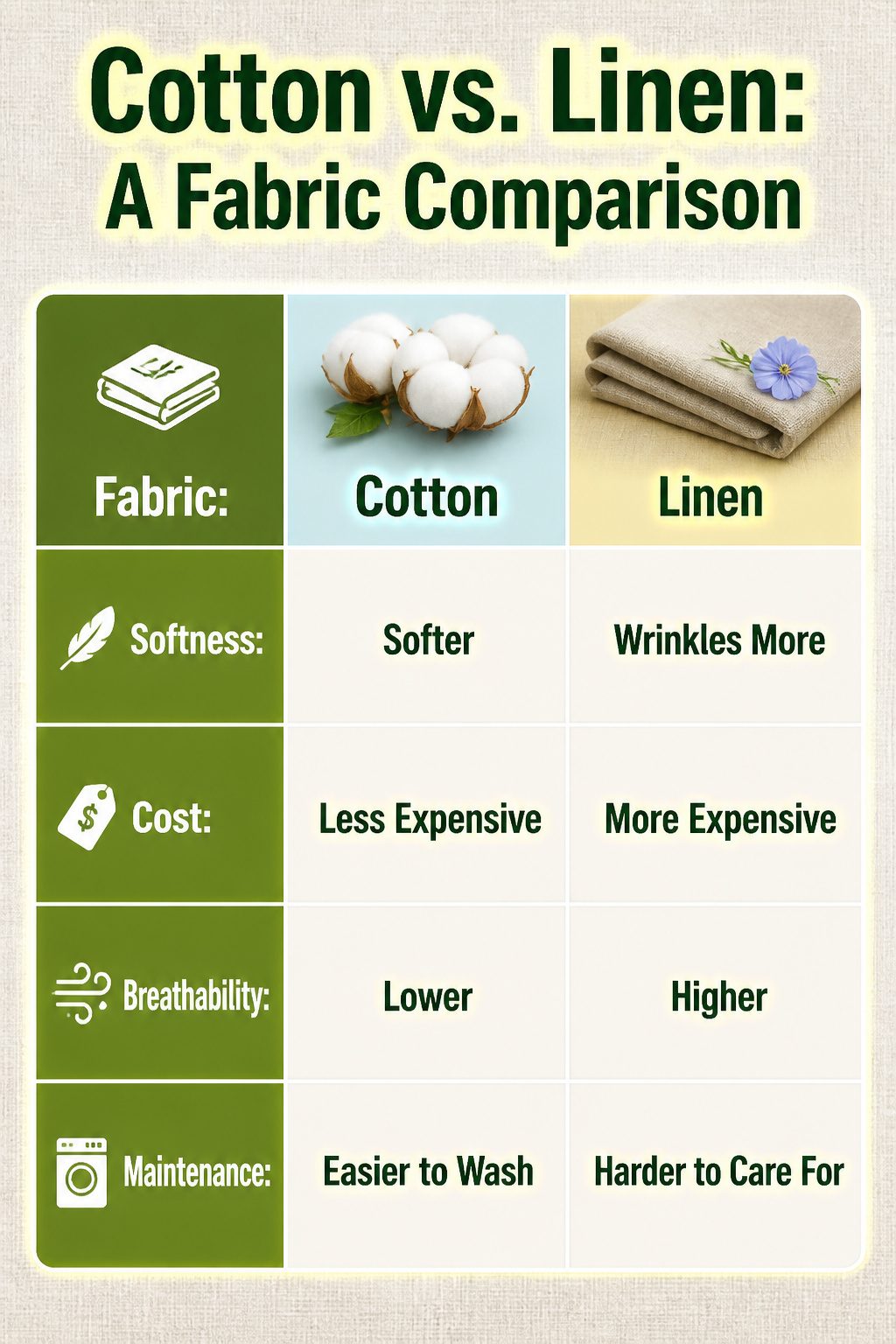
Cotton and linen are the two fabrics every source names, and they serve different jobs. Cotton is softer from day one and easier to wash, which makes it my default for fitted sheets and pillowcases, the parts I actually sleep against. Linen wrinkles more and costs more, but it lasts longer and breathes better, so I save that splurge for the duvet cover or a throw where the texture shows and I am not lying directly on the creases.
Percale is a weave, not a fabric, cotton percale feels crisp, sateen feels smoother. I pick percale when I want that hotel-bed snap, sateen if I am after something quieter against my skin. Polyester blends resist wrinkles and cost less, though they sleep warmer, fine for a guest bed, not my choice for August. Buy the best cotton you can afford for sheets you touch all night.
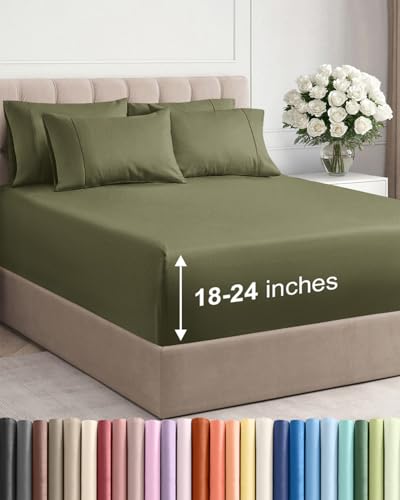
EXTRA DEEP POCKET QUEEN SHEETS / EXTRA DEEP FITTED QUEEN SHEETS: These bed sheets are for very deep pocket mattresses. They fit any mattress with pockets that are 18, 20, 21, 22 and 24 inches deep. There's stretchable elastic around the extra deep fitted sheet which stretches for a nice tug around your mattress. Perfect for extra tall & large mattresses in any room, including a kids room. Rest assured these oversized sheets will stay on tight & stay in place!
Naturally Cooling Organic Comfort : Stay cool and comfortable with Lane Linen 100% Organic Cotton Percale Queen Sheets, made from GOTS Certified organic cotton. The crisp percale weave and finer yarns create a lightweight, breathable feel that promotes airflow and balanced temperature for year-round comfort. Gets softer and smoother with every wash. Great as deep pocket Queen sheets, a cooling Queen sheet set, and breathable Queen bed sheets.

Pure Organic Comfort: Experience the luxurious comfort of our Lane Linen white sheets twin size, meticulously crafted from OEKO-TEX certified 100% Organic Cotton. The crisp percale weave provides a hotel-quality feel—soft, yet durable—offering breathability and supreme comfort.
Color Coordination Without Overthinking
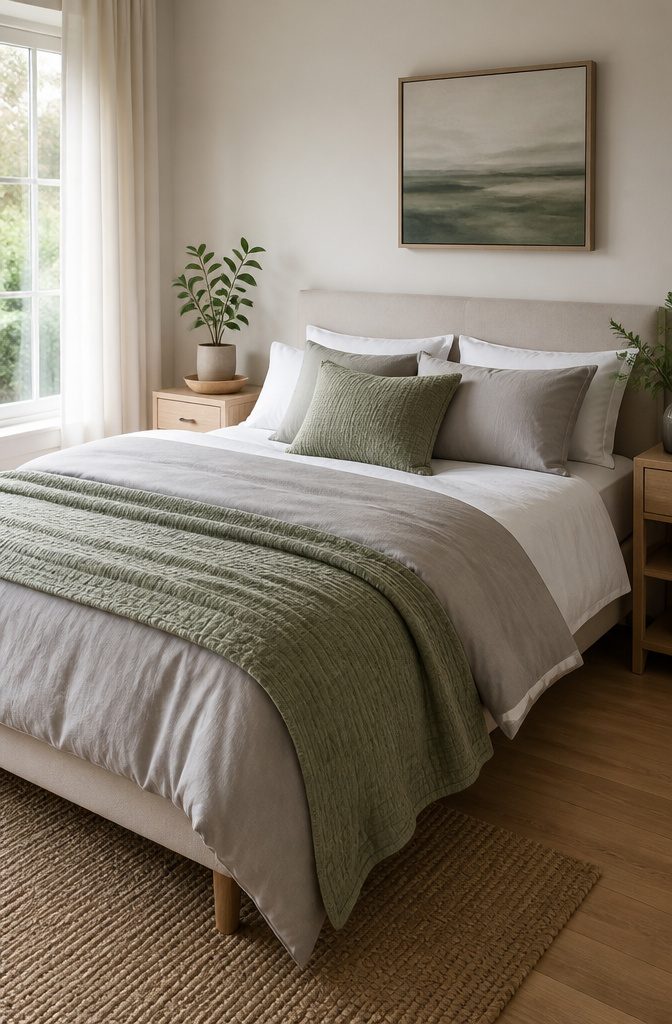
A neutral base is the safest bet when you cannot paint the walls or swap the bed frame. White, cream, soft gray, or pale blue sheets and duvet give you that settled, deliberate feeling without fighting what is already in the room. From there, color comes in through the quilt, the throw, and one or two decorative pillows, not five.
I keep to three colors total: one dominant, one secondary, one accent. The quilt usually carries the dominant tone, the throw brings in the secondary, and a single pillow or a small embroidered cover handles the accent. This holds whether you like a spare, minimalist look or something with more layers. Seven pillows on a bed, including the ones you actually sleep on, is the ceiling before you are rearranging every morning. More than that, and the bed starts to feel crowded rather than styled.
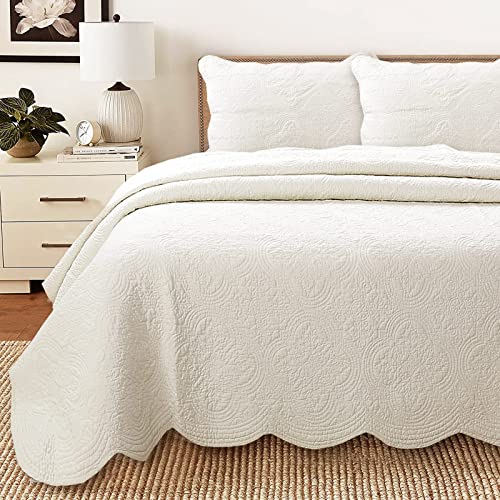
【Perfect Queen Size Fit – Complete 3-Piece Bedding Set】Includes 1 quilt (88" x 92") and 2 standard shams (20" x 26"). Generously sized to provide full coverage and a polished, tailored look for Queen beds.

Queen size quilt set(3PCs): 1 quilt/coverlet 90*98 inch, 2 standard size pillow shams 20*27 inch(A great QUILT/CPVERLET for your Queen size bed, dust ruffle needed not included)

CLASSIC MEDALLION QUILTING DESIGN - Elegant medallion stitching adds rich texture and timeless character to your bedding. The intricate quilting pattern brings a refined, heritage-inspired look while durable stitching keeps the cotton fill evenly distributed for lasting comfort and shape.
Two Layering Styles
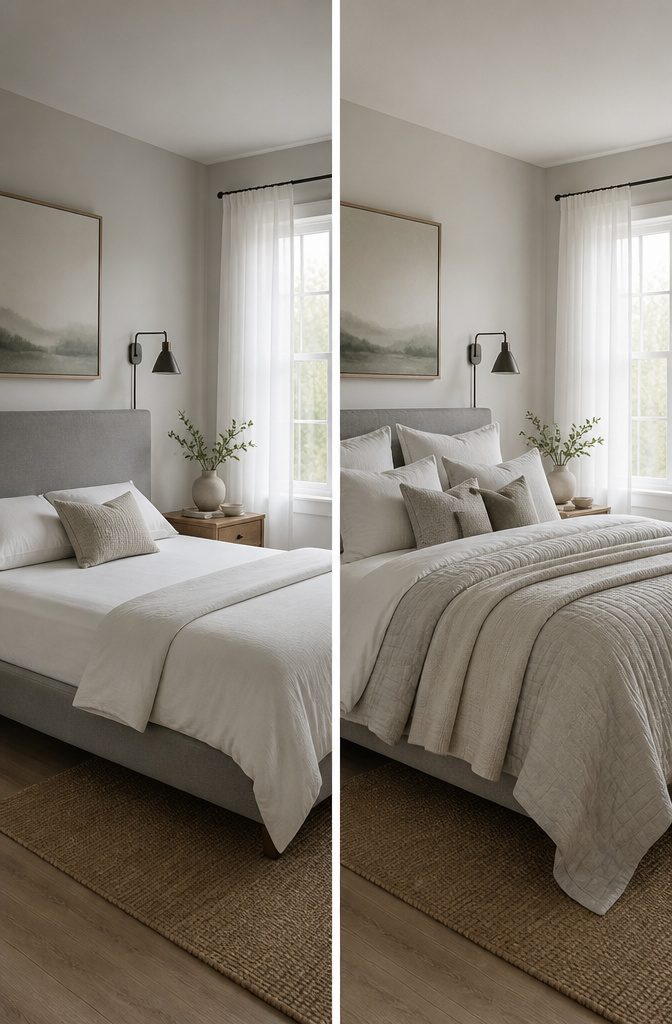
There are two ways to layer a bed, and the difference comes down to how much time you want to spend smoothing and fluffing each morning.
The minimalist build starts with a fitted sheet, folds the duvet at the foot, and stops at sleeping pillows plus one lumbar. It takes about ninety seconds to put together and still looks intentional. The maximalist route adds the flat sheet, a quilt, the full duvet standing tall against the headboard, Euro shams, two decorative pillows, and a throw folded at the foot. It reads more finished in photos and when guests are wandering through, but the daily upkeep is real.
I land somewhere between depending on the season and whether anyone’s visiting. Summer usually gets the paired-down version because I’m not wrestling a full duvet at 6 a.m. When my sister stays over, the bed gets every layer. Neither style is more correct; one just costs more in time than the other.

EVER-STUNNING QUILT - RECYCO luxury velvet quilt sets present a sophisticated and chic look. With an ultra-plush soft texture, it creates a rich and inviting sheen that varies in shades of color depending on the angle and lighting. The classic channel stitch geometric pattern makes it an absolute must-have for adding a touch of elegance to any home decor.

EVER-STUNNING QUILT - RECYCO luxury velvet quilt sets present a sophisticated and chic look. With an ultra-plush soft texture, it creates a rich and inviting sheen that varies in shades of color depending on the angle and lighting. The classic channel stitch geometric pattern makes it an absolute must-have for adding a touch of elegance to any home decor.
EVER-STUNNING QUILT - RECYCO luxury velvet quilt sets present a sophisticated and chic look. With an ultra-plush soft texture, it creates a rich and inviting sheen that varies in shades of color depending on the angle and lighting. The classic channel stitch geometric pattern makes it an absolute must-have for adding a touch of elegance to any home decor.
Seasonal Swaps
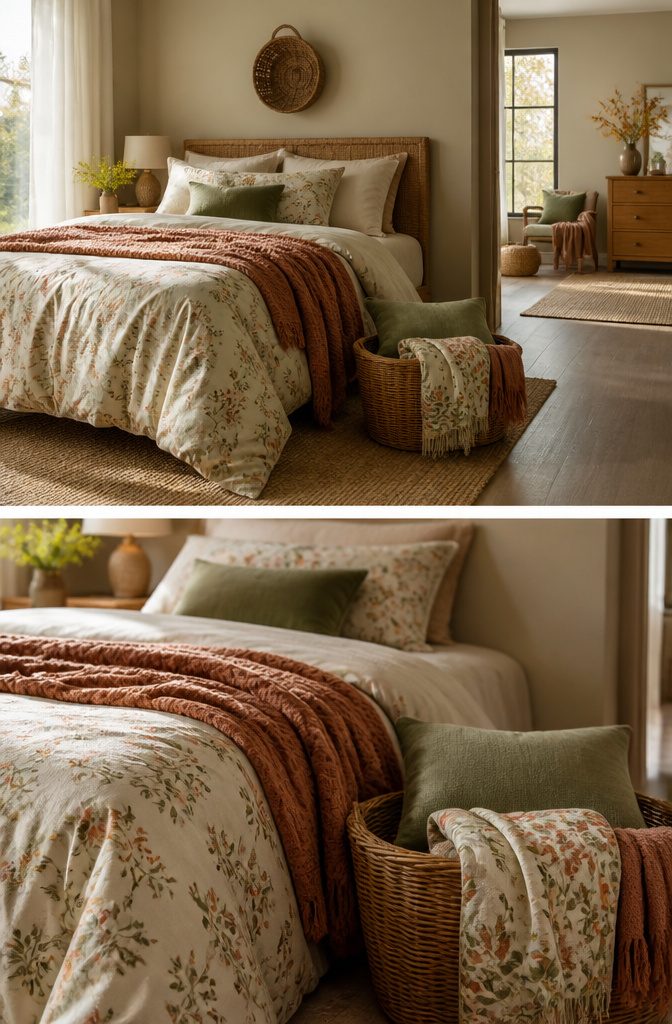
Summer bedding lives in the linen or cotton family for me, something that actually lets heat escape instead of trapping it against your legs. I fold the duvet at the foot of the bed or store it entirely once the nights stay warm past midnight. Come winter, that same duvet comes back with its full weight, and I add a heavier throw plus a flatter flannel sheet against the mattress. The pillow count does not change; only the texture and heft do.
Two complete bedding looks are worth it if your closet can spare the shelf. One versatile set is the smarter move in a small apartment with no storage to spare.
Fine Herringbone: Give your space an air of timeless elegance by incorporating this fine herringbone weave blanket, which seamlessly blends with any home decor.

PREMIUM SOFTNESS & TEXTURE WITH PURE COTTON HERRINGBONE BLANKET: If you love snuggling in the warmth of a cozy fall blanket, our soft heated throw blanket is the perfect choice for you. 100% natural long staple yarns are woven together forming a herringbone design to give you the ideal combination of smoothness and comfort in one.

100% COTTON WAFFLE BLANKET - BREATHABLE AND SKIN-FRIENDLY: A 100% cotton waffle blanket with no polyester and nothing synthetic against your skin. Ringspun yarns are combed and twisted smooth, so the fabric feels soft rather than rough, and pure cotton breathes - it holds warmth on cool nights without trapping heat, comfortable across all four seasons. Perfect if you want cotton blanket for bed or waffle weave blanket.
Budget and Timeline
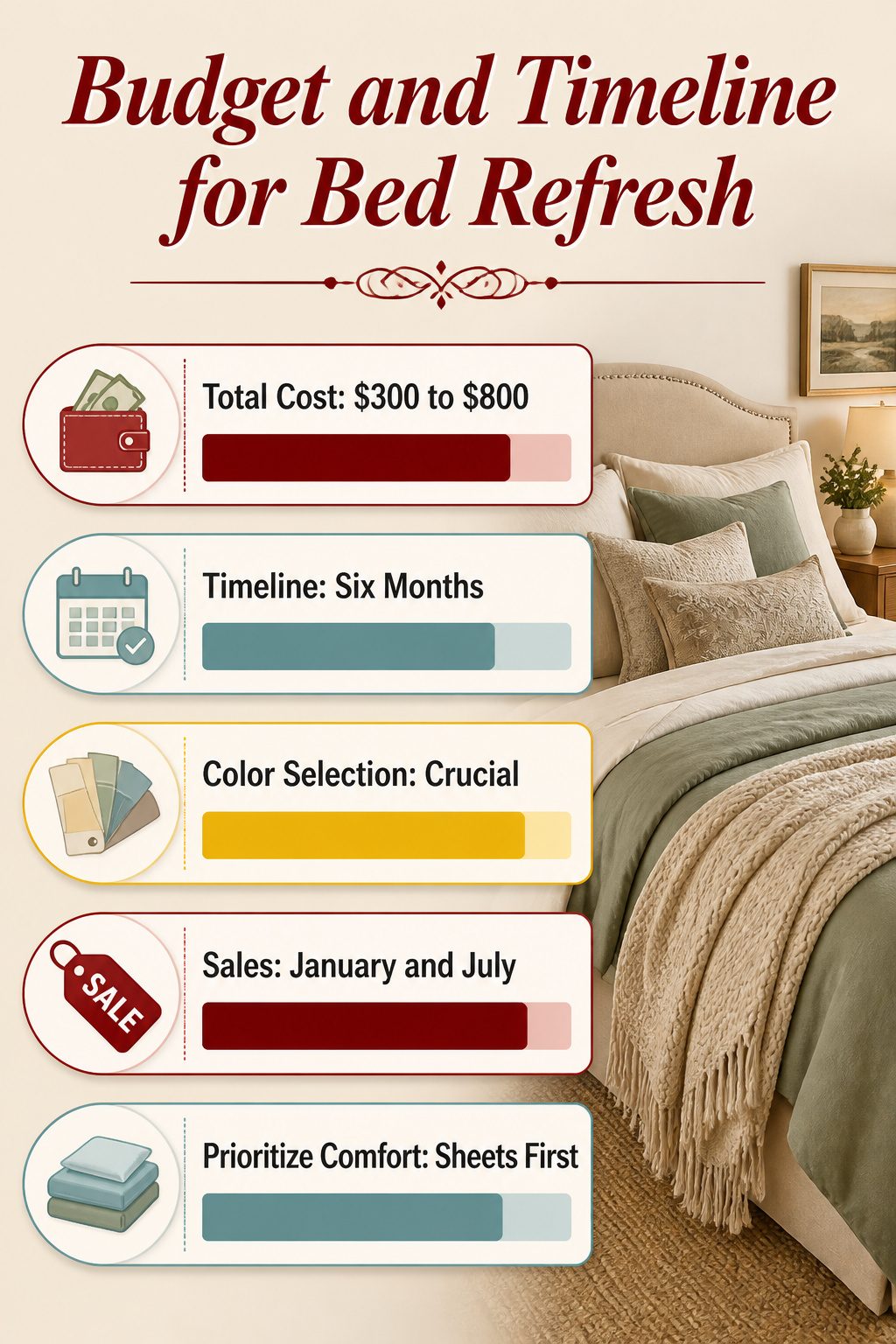
A complete refresh of a queen bed runs $300 to $800 if you stick with mid-range cotton and choose one piece to splurge on. I split mine across two weekends: sheets and pillows first, then the duvet and throw once I knew what colors I was actually working with. January and July sales are the ones to watch for bedding. My own bed took about six months to build because I replaced the worst pieces first, the ones that actually touched my skin, and waited on the rest until I found colors that did not fight each other.
What I Skip and Why
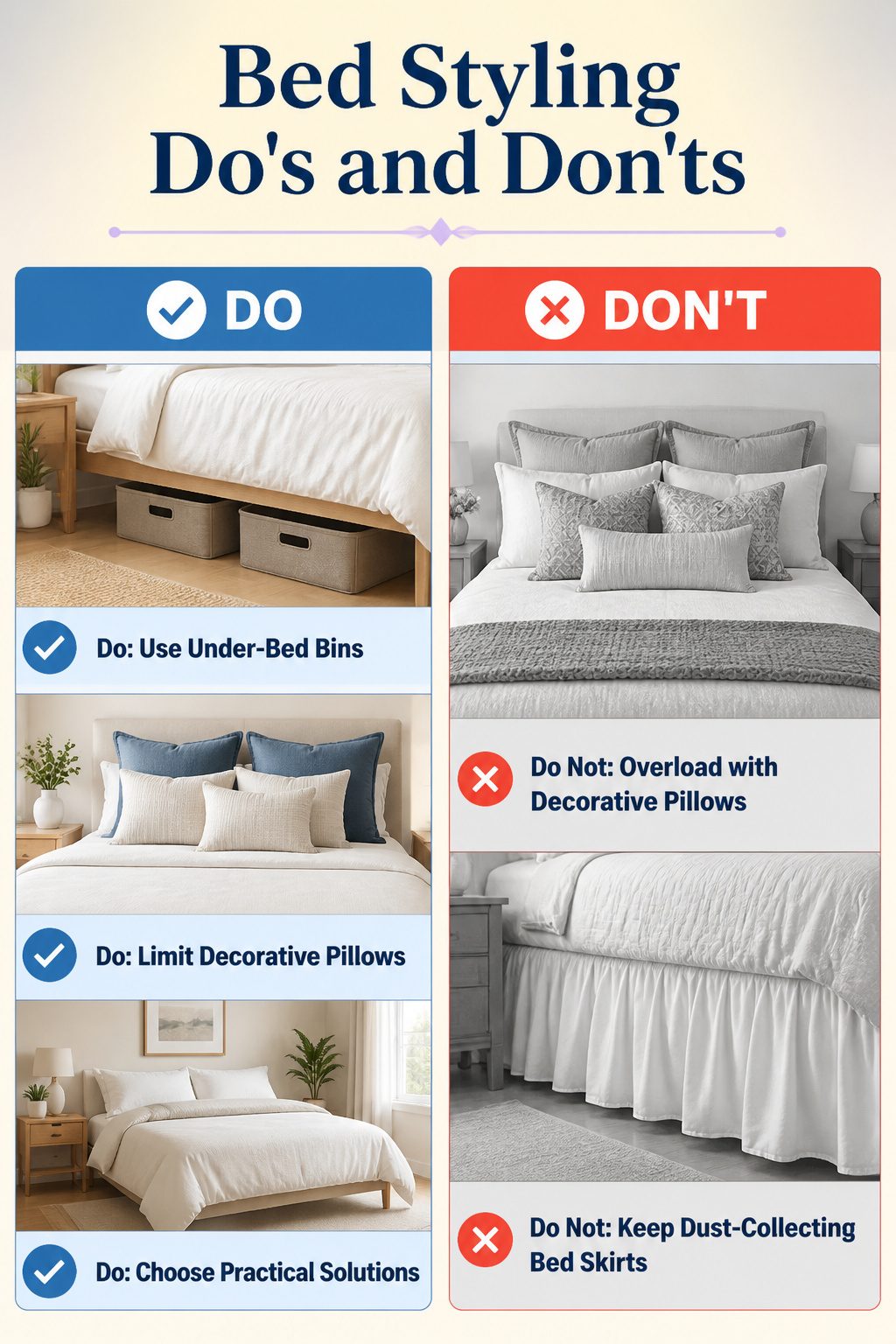
Bed skirts hide the storage under your bed, but they also collect dust and force you to lift the mattress every time you want to change or wash them. I switched to low-profile under-bed bins years ago and never looked back. The floor stays visible, the vacuum reaches everywhere, and nothing needs wrestling into place.
Bed skirts are known for their ability to add a bit of daintiness that doesn’t age or distract from the bed or room.
That refinement is real, but for a weekend project on a real budget, the practical cost usually wins.
Decorative pillow overload follows the same pattern. Those layered arrangements photograph beautifully and feel like a chore twice a day. I stopped at two small pillows plus the Euro shams; anything more hit the floor at bedtime and had to be rebuilt each morning. Half my friends have quit flat sheets too, and the other half would never sleep without one. There is no wrong choice, only what you will actually maintain. Try sleeping without one for a week and see which side you land on.
Frequently Asked Questions
How do I style my bed like a pro?
Start with a completely bare mattress, then build back up with fitted sheet, flat sheet if you use one, a quilt or blanket, a folded duvet, structured pillows, and a throw blanket at the foot. The fold in your duvet about one-third down from the headboard is what gives the bed that full, catalog-ready profile.
What type of sheets should I use?
Cotton percale at 200 thread count or higher holds up well and gets softer with washing. Linen costs more and wrinkles more, but it lasts longer and breathes better, so it works well for duvet covers where you are not lying directly on the creases.
How many pillows should I have on my bed?
About seven total on a queen bed, eight or nine on a king. That includes your sleeping pillows flat against the headboard, two or three 26-by-26-inch Euro pillows standing upright, and one or two smaller decorative pillows in front. More than that and you are spending every morning rearranging instead of living.
How do I layer my bedding?
Fitted sheet first pulled tight, then flat sheet with any decorative trim facing down if you use one, then a quilt or blanket smoothed flat, then a duvet or comforter folded one-third down from the head. The quilt handles the dominant color, the duvet gives height, and the fold is what builds visual volume.
What colors work best for bedding?
White, cream, soft gray, or pale blue for sheets and duvet creates a neutral base that works with almost any room. Bring in color through the quilt, the throw, and one or two decorative pillows rather than changing everything. Keep to three colors total: one dominant, one secondary, one accent.