

A sofa moves through six main stages from design to finished piece, but the timeline shifts dramatically depending on how hands-on the process is. Handcrafted frames of kiln-dried hardwood take two to six weeks; mass-produced models fed through automated systems finish in days. What struck me while reading through factory descriptions and custom shop blogs was how little the shopper actually sees, and how much the real lifespan hides in joints you’ll never inspect and foam density no tag explains well.
How Sofas Are Made
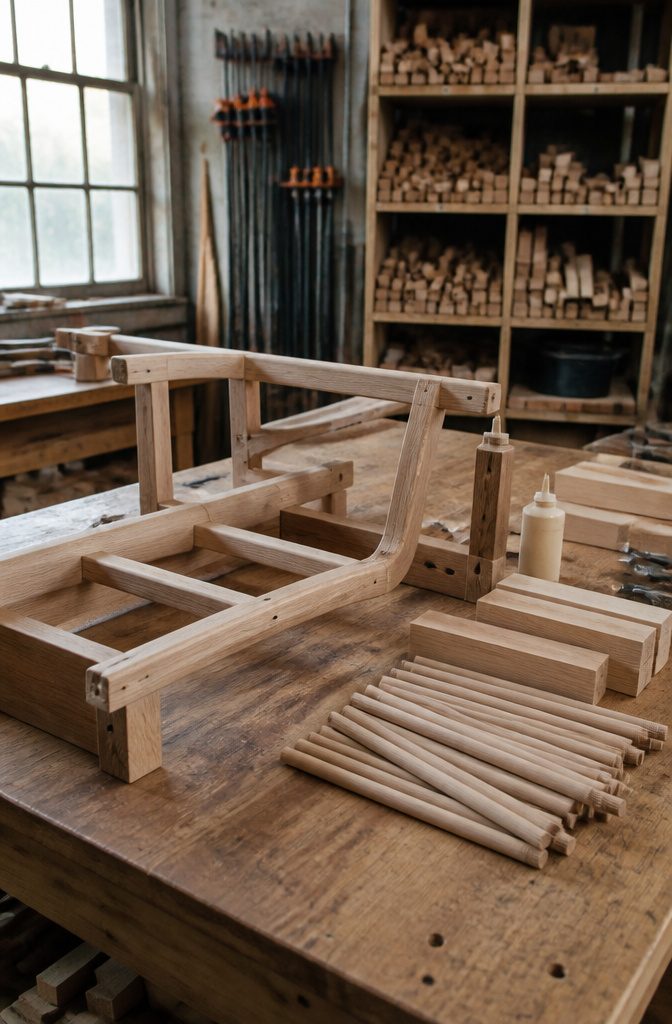
A sofa moves through six main stages from design to finished piece: frame building, suspension, cushion creation, upholstery work, stitching and detailing, and final assembly. The timeline shifts dramatically depending on how hands-on the process is. A handcrafted sofa takes two to six weeks, with craftspeople cutting kiln-dried hardwood by hand and fitting each layer deliberately. Mass-produced models finish in days, fed through automated systems that cut, staple, and sew on tight schedules.
I spent time reading through factory descriptions and custom shop blogs, and what struck me was how little the shopper sees. Color and fabric get all the attention, but the real lifespan of a couch hides in joints you’ll never inspect and foam density no tag explains well. The sections ahead walk through what actually happens at each stage, so you know what questions to ask before you buy.

Bench-made home furnishing products carefully hand built by experienced craftsmen and women

✅ 3 PCS Sofa Set: The 3-piece sofa set will be sent in 3 packages. Including an armchair, loveseat and a 3-seater couch, which can be freely combined and is very suitable for different living room spaces. 3 Seater Sofa Size: 76.3"L x 29.5"W x 32.2"H; Loveseat Size: 53.5"W x 29.5"D x 32.2"H; Armchair Size: 30.7"W x 29.5"D x 32.2"H.

Kiln-dried hardwood frame with reinforced corner blocks
1. Design and Dimensions
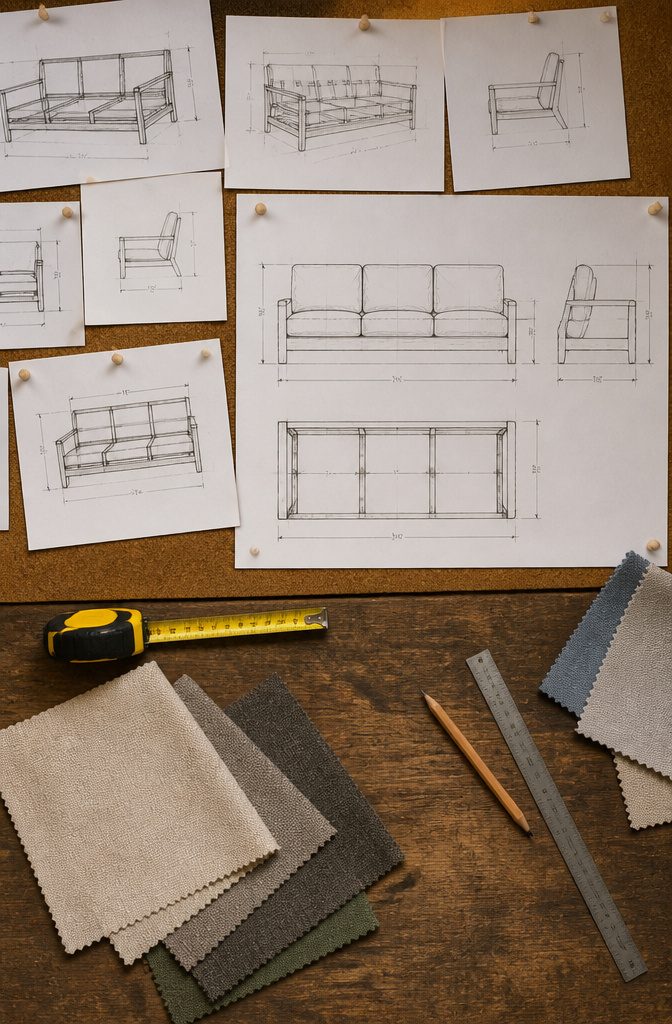
Every sofa starts as a conversation between how it looks and how it lives. I spent time puzzling over why two seemingly identical frames can feel completely different to sit in, and the answer usually sits in decisions made before a single board is cut.
A standard three-person sofa lands at roughly 85 inches long, 35 inches deep, and 35 inches high. The 85-inch ceiling is not arbitrary; go longer and you are wrestling with stairwells and door frames on delivery day. Depth stays fairly locked between 30 and 35 inches, while height drifts between 30 and 36 inches depending on what else lives in the room.
Seat height matters more than people expect. Most factory work settles around 18 inches from floor to cushion top, though I have seen ranges from 13 to 20 inches depending on whether the piece is meant for upright sitting or full collapse. Seat depth, the distance from front cushion to back cushion, typically runs 20 to 21 inches. The backrest from seat surface up usually measures about 15 inches, with armrests positioned to let shoulders drop rather than hunch.
Designers pull from current trends, historical shapes, whatever they saw in a gallery last month. The practical side is proportion: a back incline of 5 degrees reads formal, 15 degrees reads weekend nap. Arms, legs, and back profile get sketched together because changing one shifts the visual weight of the other two.
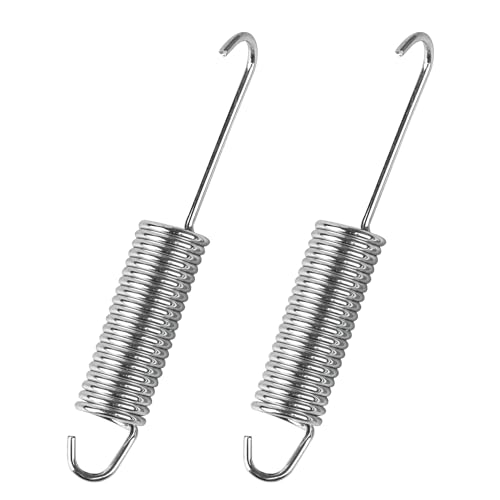
【Precision 4.5-Inch Design】: Total length of couch springs is 4.5 inches (114mm) with 3/4-inch coil diameter, 2mm wire gauge, and 20-turn high-density winding. Long neck hook fits major recliner mechanisms. Reinforced hooks prevent bending or slipping during use

Repair sofa zig zag springs from underneath
2. Frame Construction
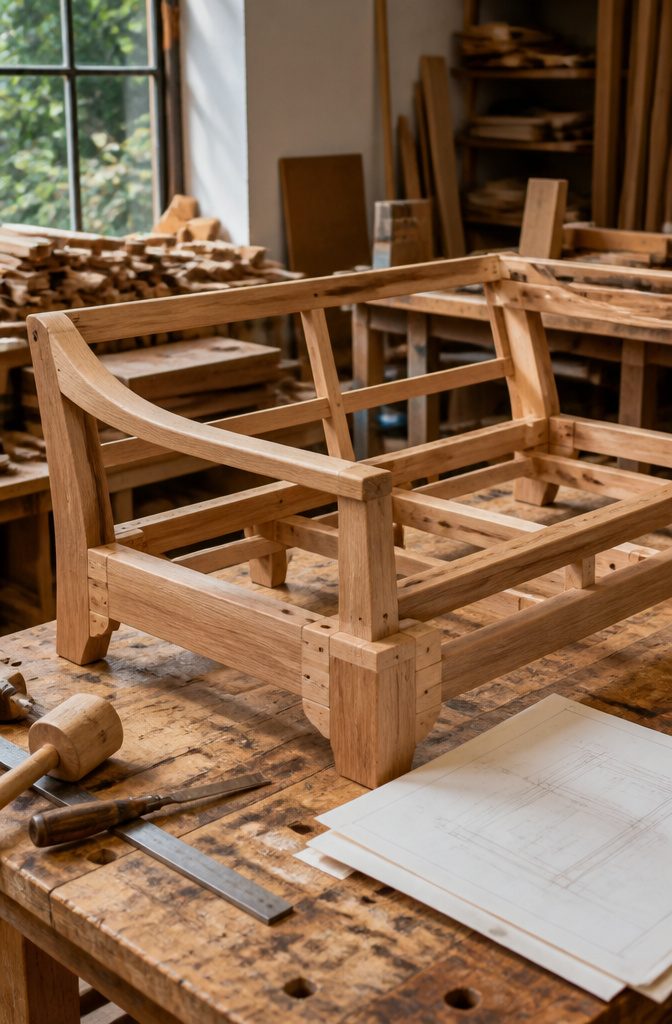
The frame starts with kiln-dried hardwood, usually oak or maple, cut to shape and joined with dowels, glue, and screws. Corner blocks add stability where the arms meet the base, and center legs help the span carry weight without sagging. A handcrafted frame can take weeks; mass-produced frames are knocked together in days, and the difference shows up in what’s actually inside the wood.
Cheaper sofas skip the solid wood and use plywood or engineered wood instead. It feels sturdy in the showroom, but a frame that isn’t real hardwood warps and loosens faster than you’d expect. Kiln-dried hardwood is the most durable choice and the one recommended for longevity; the drying process removes enough moisture to keep the boards from twisting once they’re inside your heated living room.

【Upgarded Memory Foam Cushion Inserts】Memory foam conforms to the body and relieves pressure points. A ventilated design helps to increase airflow through the memory foam layer. The heavier parts of the body that press farther into the memory foam are pressure points, and memory foam has the ability to soften and relieve those areas. Firm high density foam provides a supportive, durable base.

LONG-LASTING SUPPORT - Our sofa support for sagging cushions targets couch cushion sagging issues, effectively eliminating sag and collapse on sofas/armchairs from prolonged use. This sagging couch support under cushion adds extra cushioning support for drooping seats, restoring stable support and comfort for all-day cozy sitting.

[Curved to Hold, Sagging Controlled] HAVARGO loveseat cushion support is developped to improve sagging loveseat sofa seats so they become supportive as new. Our love seat cushions are measured 24*24 inches with a thickness of 2.4 inches in the middle and 1.2 inches on the edge, our cushion support is made of high-density foam that provides exceptional stability for your couch cushions.
3. Support System Installation
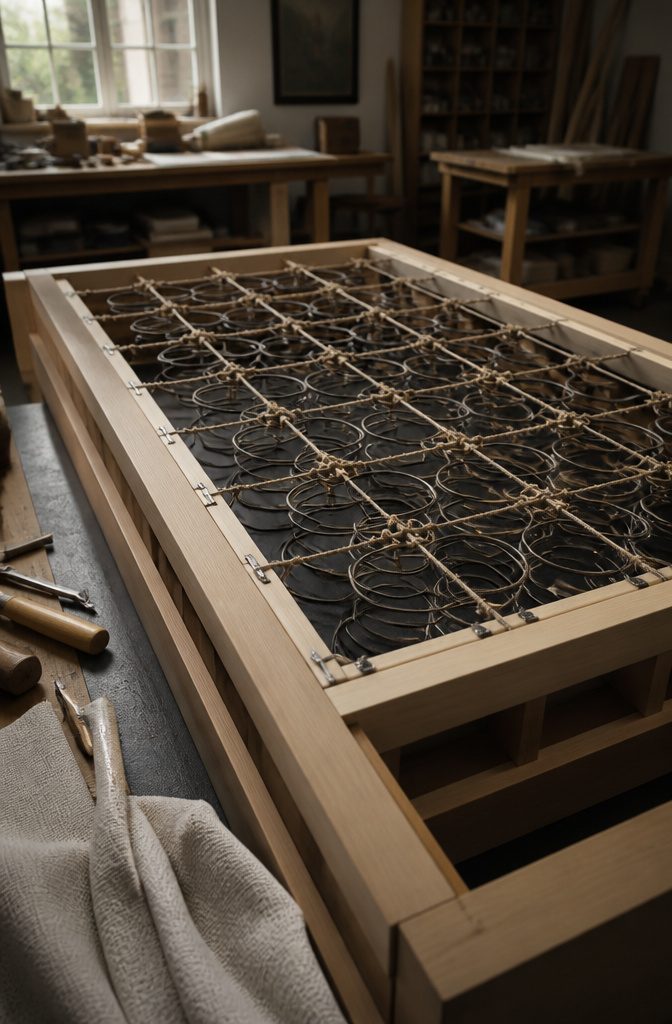
The support system underneath your cushions makes or breaks how a sofa feels five years in. Manufacturers attach one of three foundations to the frame: 8-way hand-tied springs, sinuous springs, or webbing.
8-way hand-tied coils are the gold standard for comfort and durability. Each spring gets tied to its eight neighboring coils with twine, so weight spreads evenly and the seat never bottoms out. The labor adds hundreds of dollars to the finished piece, and some makers now use drop-in units that look similar but lack the same responsiveness.
Sinuous springs, those S-shaped wires running front to back, cost far less and hold up just as long. They clip to the frame every few inches and suit lower, more modern profiles where hand-tied coils won’t fit.
Webbing is the simplest option: elasticized straps woven across the deck like basket reeds. It is inexpensive, quiet, and easy to replace, though quality varies sharply with strip width and count. Higher-end pieces use more strips with tighter spacing, and many manufacturers layer webbing beneath springs to get both give and longevity.

CHEMICAL GUYS LIGHTNING FAST STAIN EXTRACTOR (SPI_191_16) – Professional-strength stain remover formula penetrates deep into carpet, upholstery, and fabric to quickly break down and lift stains, dirt, and odors for a restored, like-new look

Upholstery Repair Sewing Kit: 8 x upholstery thread cord, 7 x hand sewing needle, 9 x big eye blunt needles, 1 x sewing awl, 1 x hook awl, 1 x inch tape measure, 1 x sewing thimble, 1 x needle bottle, 1 x yarn scissors, 2 x seam rippers. Rich combinations can meet your different needs

Perfect Heavy Duty Sewing Kit: This fully-packed sewing kit contains all the necessary tools to sew for most of your sewing needs. You will get: 25* Hand Sewing Needles, 12* Upholstery Thread, 1* Inch Ruler, 1* Scissors, 1* Thimble, 3* Awl Tool, 2* Seam Ripper, 1* Threader.
4. Cushion Creation
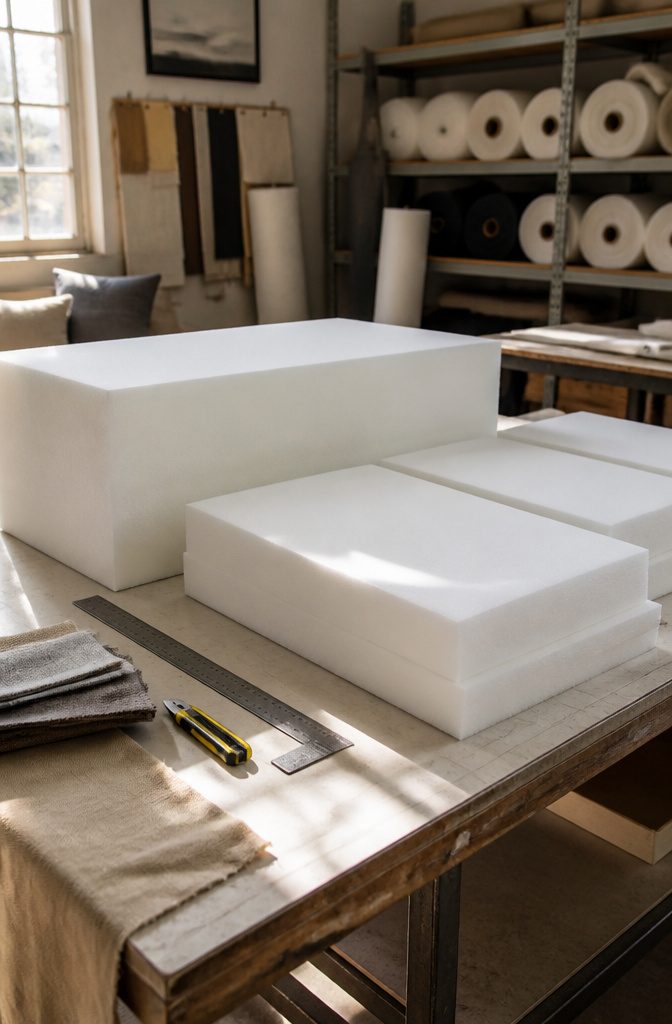
Foam arrives in massive blocks, and the first job is slicing it down to the cushion size the pattern demands. The most common foam density for US residential furniture is 1.8, a number that sounds technical until you learn what it means in practice. A four-inch core of 1.8 density high-resiliency foam typically holds its shape about two years with average use; bump that to five inches and you might get three. After that, the bounce-back fades, though the cushion usually stays usable awhile longer.
For a softer hand and fuller silhouette, factories wrap foam in Dacron polyester fiber, generally a half inch to inch and a half on top and bottom. That wrap adds two to three inches to total thickness but does not extend lifespan. Higher-end builds layer in down or down-blend over high-density foam for that sink-in feel, though the foam underneath still does the structural work. The cover itself, whether zippered for removal or sewn closed, slides on last and gets closed up before the cushion ever sees a sofa frame.

Size Fit:Sofa latch connector With a length of 120mm, it's suitable for most sofa frames, enabling free - form splicing, The design size is relatively large and not suitable for small spaces

The D ring recliner cable is reinforced with a black plastic sheath at the base of the handle for long-lasting use

【Specification】: Top Length: 13", bottom length: 14.1", the height when use: 6.1"
5. Upholstery
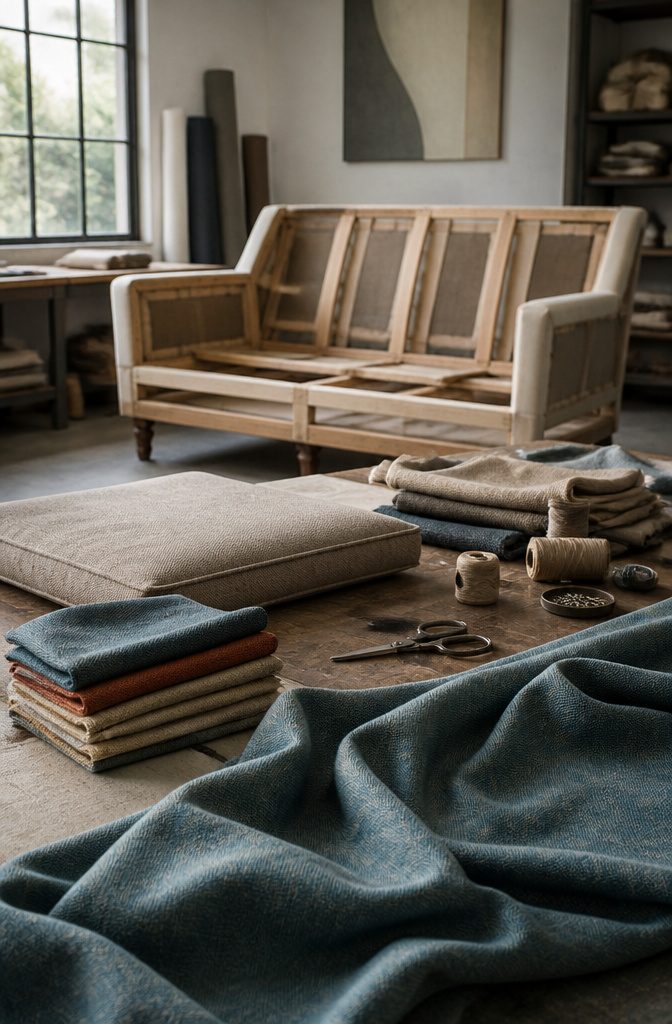
The fabric choice is where a sofa’s personality really shows up, and where the price can jump fast. A $50 per yard fabric runs the retail price roughly $600–$800 higher than a $5 per yard option on an average-sized sofa. That gap catches a lot of people off guard, especially since even high-end manufacturers stock plenty of fabrics in that $5–$10 wholesale range.
Natural fibers like cotton and linen take dye differently than synthetics, so you get richer, more subtle color. The tradeoff is durability and cleaning; they wear faster and stain easier. Polyester and olefin are the workhorses here, tough and cheap and simple to wipe down. A cotton-polyester blend splits the difference, keeping some of that natural texture while holding up to real life.
In the factory, large panels get cut by machine for clean edges, but the tricky spots around arms and corners still go to experienced hands. The best shops sew each cover, test-fit it on the frame or cushion, then adjust before the final stretch. Straight stitches, no loose threads, and fabric that sits taut without sagging: that is what separates a sofa that looks good for two years from one that looks good for ten.


Kiln-dried hardwood frame with reinforced corner blocks

EXQUISITE CRAFTSMANSHIP: Meticulously crafted with a kiln-dried hardwood frame and solid stainless steel legs showcasing durability; The 2 piece couch set includes the sofa and loveseat only
6. Final Assembly
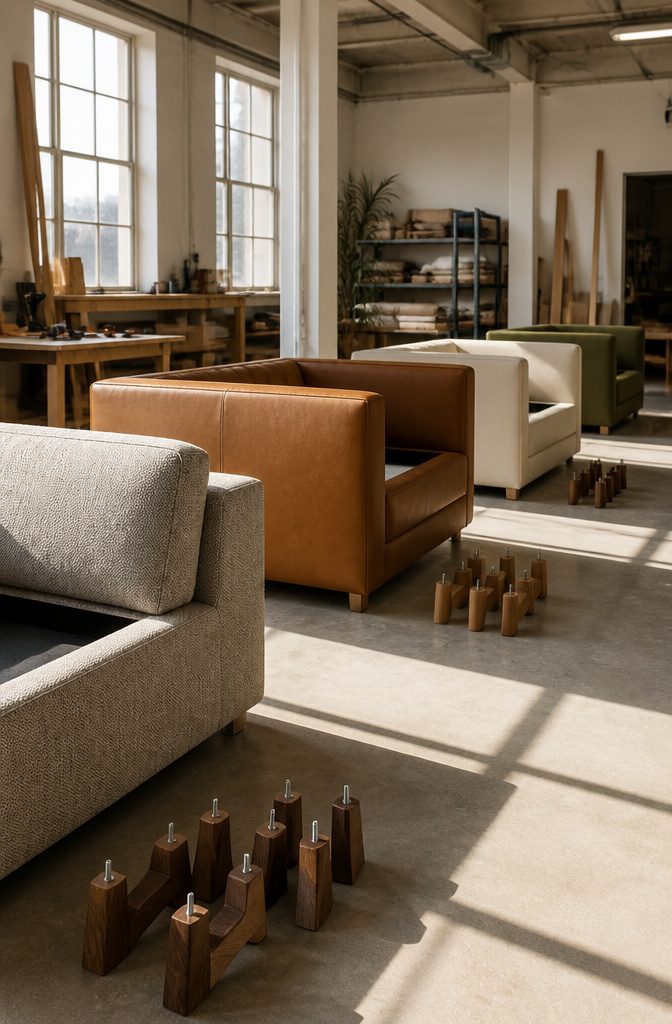
Legs get attached last, and manufacturers usually leave them off for delivery so the piece slides through doorways without catching. Threaded screws, hanger bolts, or metal plates secure them to a reinforced base, and the team checks that the sofa sits level before it moves on.
Quality control runs through the whole build, not just at the end. Inspectors look at frame joints, spring tension, and fabric alignment at each stage, but the finished piece still gets a final pass: physical testing for stability, visual inspection for consistency, and a check that every screw is tight enough to stay put through years of use.
Once it clears, the sofa is wrapped and staged for shipping. The legs go on at your door, not at the factory, which saves your walls and the delivery crew’s backs. That last step is small, but it is what turns a boxed frame into something you actually want to sit on.

【Complete Repair Kit】: This 12 PCS Couch Spring Clips Furniture upholstery sofa repair kit includes 28 screws and screwdriver, providing all necessary hardware to quickly fix sagging springs and restore comfort.
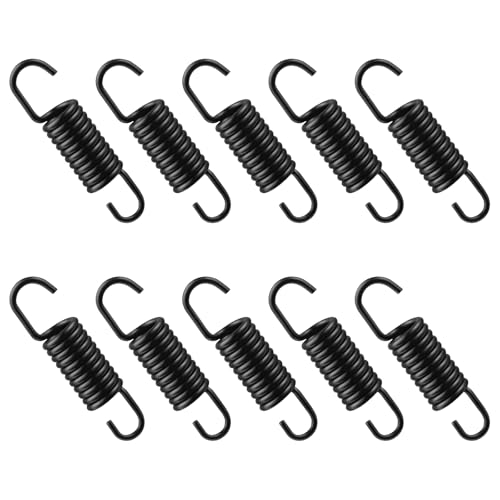
Precision Engineered for Comfort: Each 2-1/4 Inch Recliner Spring 10-pack features 12-turn coils for weight-responsive support. See diagram for exact dimensions to ensure compatibility with recliners, sofa beds, chairs, or folding furniture

2-1/4 inch Inside Hook to Hook Length, 2-1/2 inch Overall Length
Support Systems Compared
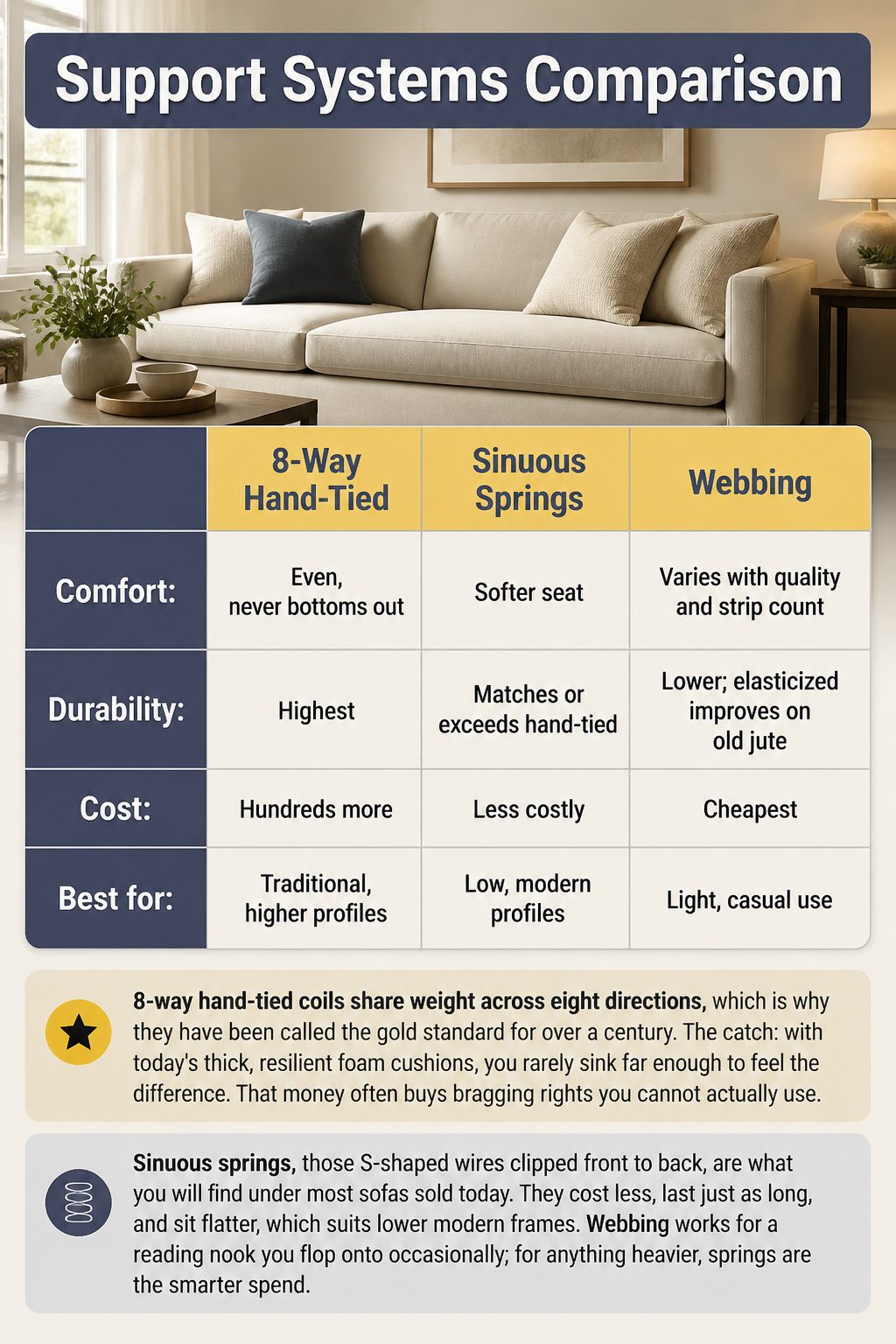
The support under your cushions determines how a sofa feels five years from now, not just on delivery day. Three systems dominate the market, and they are not close to equal.
| 8-Way Hand-Tied | Sinuous Springs | Webbing | |
|---|---|---|---|
| Comfort | Even, never bottoms out | Softer seat | Varies with quality and strip count |
| Durability | Highest | Matches or exceeds hand-tied | Lower; elasticized improves on old jute |
| Cost | Hundreds more | Less costly | Cheapest |
| Best for | Traditional, higher profiles | Low, modern profiles | Light, casual use |
8-way hand-tied coils share weight across eight directions, which is why they have been called the gold standard for over a century. The catch: with today’s thick, resilient foam cushions, you rarely sink far enough to feel the difference. That money often buys bragging rights you cannot actually use.
Sinuous springs, those S-shaped wires clipped front to back, are what you will find under most sofas sold today. They cost less, last just as long, and sit flatter, which suits lower modern frames. Webbing works for a reading nook you flop onto occasionally; for anything heavier, springs are the smarter spend.

Supportive Yet Soft / Our yoga meditation bolster adopts 5" high density foam in the middle to provide stable supporting and maintains its shape, while the outer of foam is wrapped polyester for softness and comfort. Not easy to collapse or distort, perfect for relaxation on yoga!

Couch Cushion Replacement Inserts: Bring new support to worn or flattened seating areas. Suitable for sofas, loveseats, sectionals, lounge chairs, apartments, family rooms, and everyday living spaces.

[Curved to Hold, Sagging Controlled] HAVARGO loveseat cushion support is developped to improve sagging loveseat sofa seats so they become supportive as new. Our love seat cushions are measured 24*24 inches with a thickness of 2.4 inches in the middle and 1.2 inches on the edge, our cushion support is made of high-density foam that provides exceptional stability for your couch cushions.
Frame Materials Compared
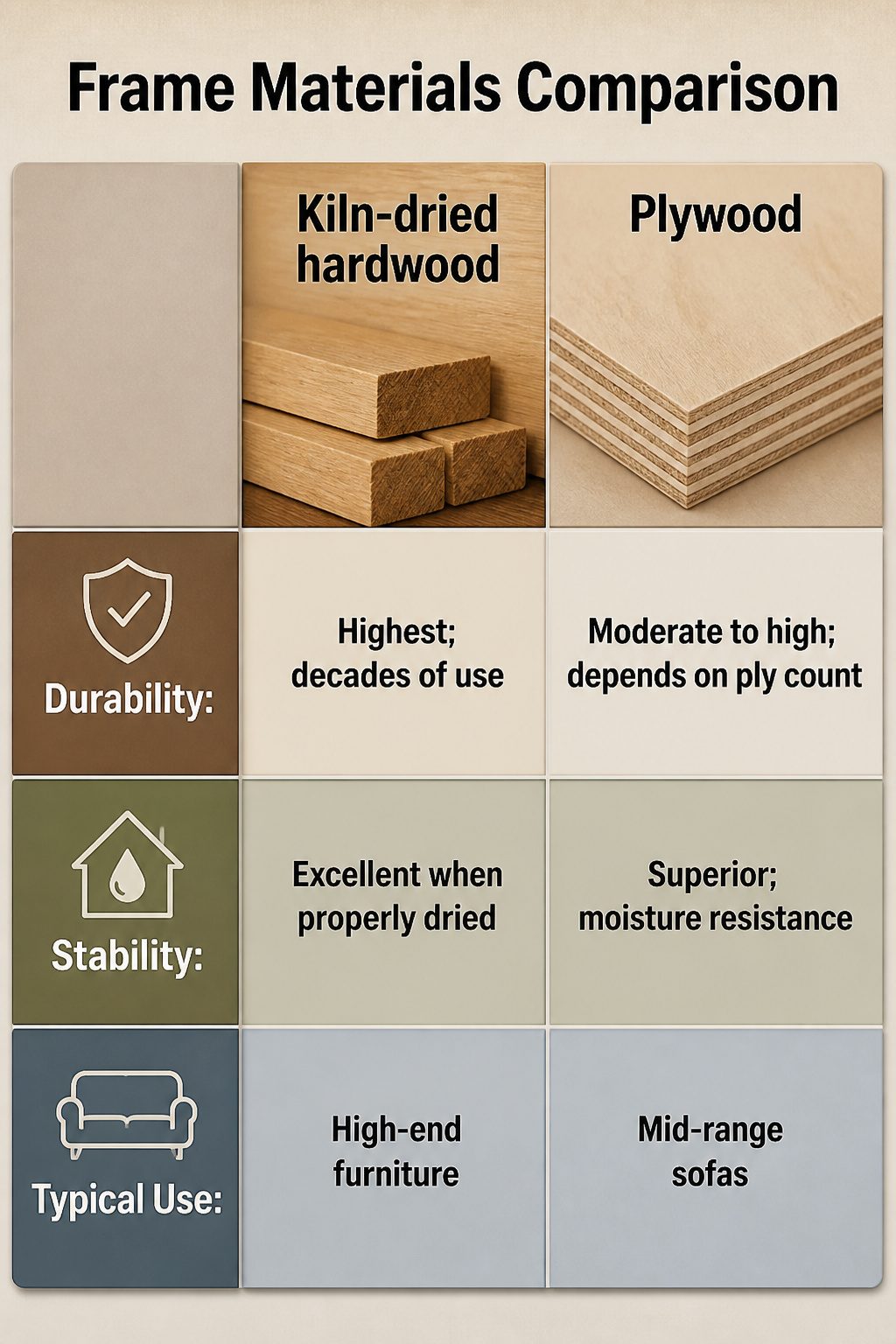
Kiln-dried hardwood sits at the top of the stack for good reason. Oak, maple, and ash resist warping and hold joints tight for decades. The drying process matters: green lumber cracks and widens its knotholes as it shrinks, so kiln-dried stock is the non-negotiable starting point for a frame that outlasts the cushions.
Plywood offers a practical middle path. Cross-layered veneers glued in alternating grain directions give it stability that solid hardwood cannot match, and it handles moisture shifts without the expansion or shrinkage that splits solid wood over time. Particle board and MDF sit at the budget end, sawdust and chips pressed with resin into something that swells the moment a spilled drink seeps through the fabric.
| Material | Durability | Stability | Typical Use |
|---|---|---|---|
| Kiln-dried hardwood | Highest; joints stay tight, decades of use | Excellent when properly dried | High-end and long-term pieces |
| Plywood | Moderate to high; depends on ply count and thickness | Superior; resists moisture expansion | Mid-range sofas, quality mass-market |
| Particle board / MDF | Low; weak and moisture-sensitive | Poor; swells with water exposure | Cost-focused, short-lifespan furniture |
I have taken apart enough sofas to know which frames survive a move and which crumble when you lift them. Hardwood wins if you plan to keep the piece. Plywood is the smart compromise for most buyers. Particle board is a false economy unless you are furnishing a temporary space and know it.

Used Book in Good Condition


Waxed Thread for Leather Sewing: 437 yards per spool, 0.55 mm thick, 630D strong, our leather sewing thread made from braided polyester, Multi-strand woven round waxed thread is strong, wear-resistant, and waterproof.
Upholstery Fabrics Compared
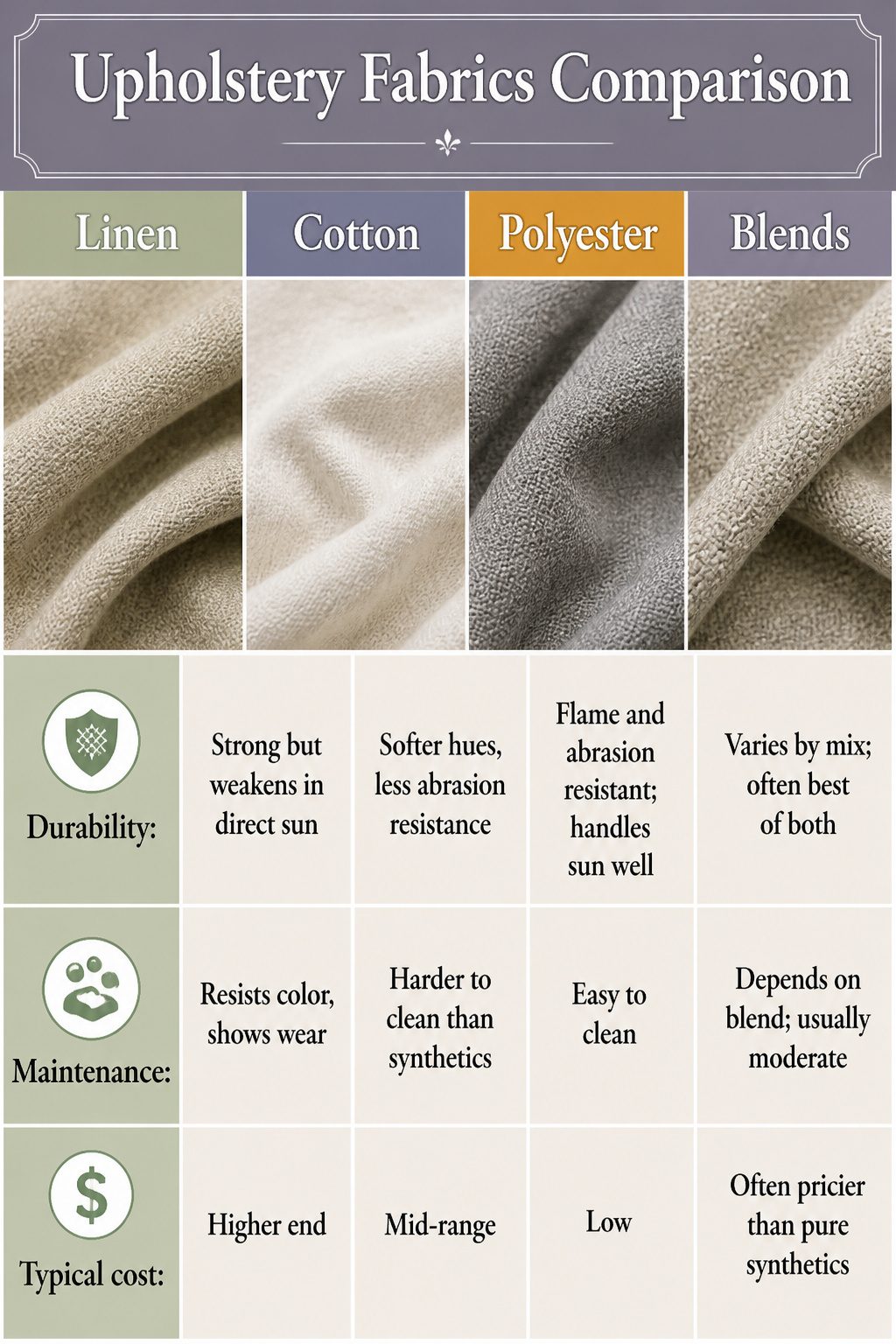
Fabric choice is where your budget lives or dies. A sofa covered in $50-per-yard material can cost $600 to $800 more at retail than the same frame in a $5-per-yard option, and that gap matters when you are already stretching to furnish a first place.
| Linen | Cotton | Polyester | Blends | |
|---|---|---|---|---|
| Durability | Strong but weakens in direct sun | Softer hues, less abrasion resistance | Flame and abrasion resistant; handles sun well | Varies by mix; often best of both |
| Maintenance | Resists color, shows wear | Harder to clean than synthetics | Easy to clean | Depends on blend; usually moderate |
| Typical cost | Higher end | Mid-range | Low | Often pricier than pure synthetics |
I have leaned toward polyester for rental pieces and anything that sees daily life with pets or kids. It is cheap, it cleans up, and the newer extruded fibers actually feel like cotton or linen now. Blends tempt me when I want something that looks softer, but I weigh whether that extra cost is worth it for a piece I might not keep past a lease.

Size: Sectional couch connectors measure 2.95 x 2.6 inches and include screws, 4 pieces (2 sets). These modular couch connectors keep your sectional secure and stable
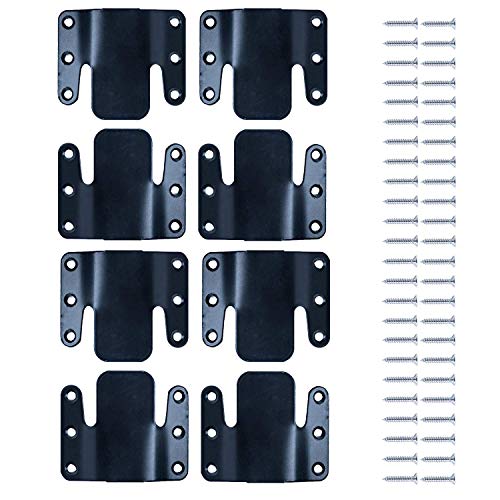
Size: Sectional couch connectors measure 2.95 x 2.6 inches and include screws, 8 pieces (4 sets). These modular couch connectors keep your sectional secure and stable.

Size:4.7”x1.9”x1.1”/120x48x28mm(L*W*H) Thickness:2 mm
What Each Part Does
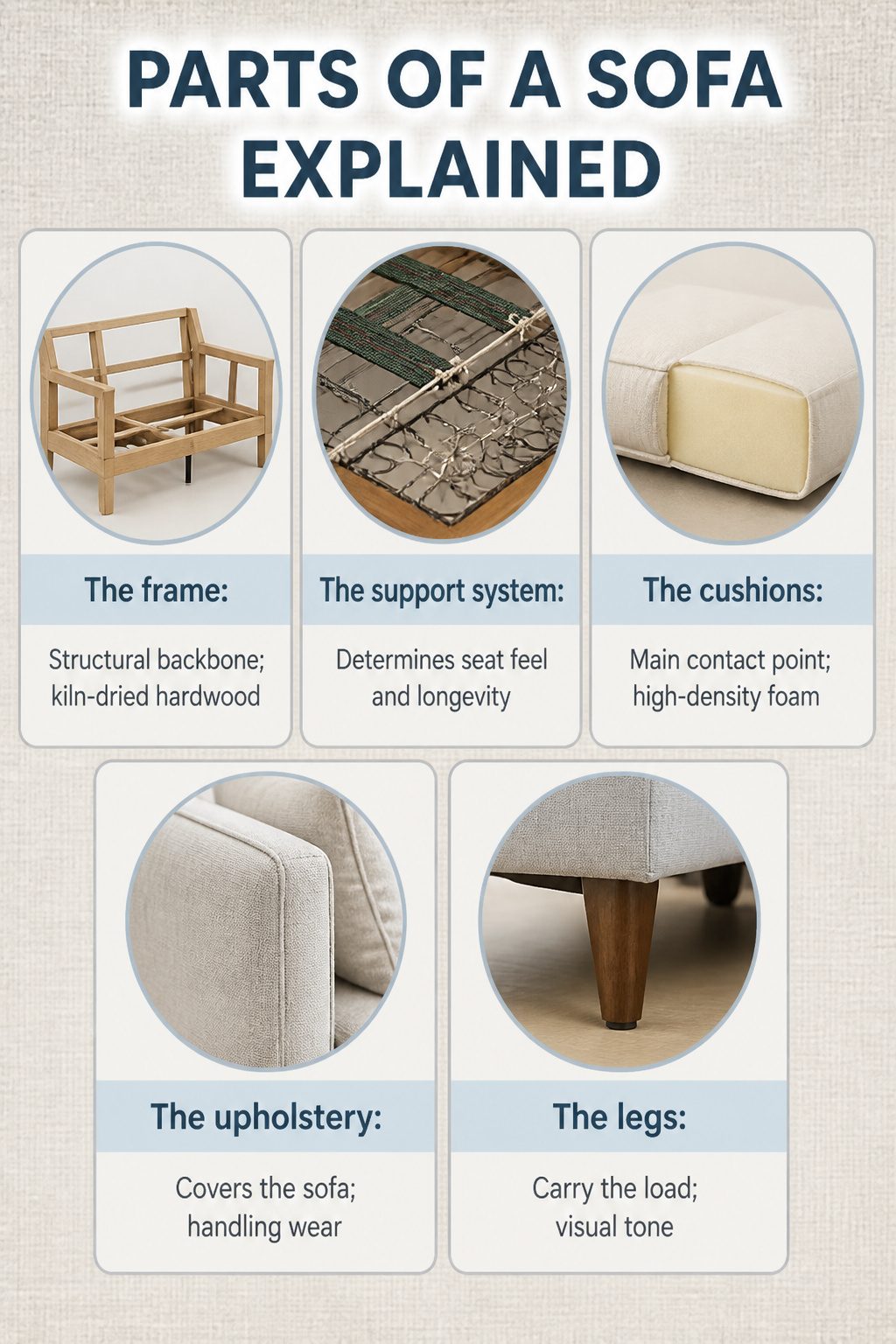
A sofa is really five separate systems working together, and knowing what each one does makes it easier to spot where a manufacturer cut corners.
- The frame is the structural backbone. Kiln-dried hardwood like oak, maple, or ash resists warping and holds joints that are doweled, glued, and screwed together. Center legs add support so the frame doesn’t bow over time.
- The support system determines how the seat feels and how long it lasts. Webbing gives a slightly springy base that molds to your body, while springs add responsiveness. The 8-way hand-tied method takes more labor but distributes weight more evenly across the cushion.
- The cushions are your main point of contact. High-density foam with good resilience keeps its shape under daily use; lower-grade foam starts sagging within months.
- The upholstery covers everything you see. Linen, velvet, leather, and performance fabrics each handle wear, light, and spills differently.
- The legs carry the load and set the visual tone. They can be built into the frame itself or attached separately, and their height affects both cleaning access and how the sofa sits in a room.
Frequently Asked Questions
What materials are used to make a sofa?
Sofas are built from a frame, support system, cushions, upholstery, and legs. Kiln-dried hardwood like oak or maple forms the frame, paired with sinuous springs, webbing, or 8-way hand-tied coils for support. Cushions use high-density foam, sometimes wrapped in Dacron or layered with down. Upholstery runs from cotton and linen to polyester, olefin, or leather, depending on budget and use.
How long does it take to make a sofa?
A handcrafted sofa takes two to six weeks, as craftspeople cut, join, and fit each layer by hand. Mass-produced models finish in days through automated cutting, stapling, and sewing systems. The gap is labor: hand-tying springs and test-fitting covers add hours that assembly lines skip.
What is the best frame material for sofas?
Kiln-dried hardwood is the most durable choice and the one recommended for longevity. Oak, maple, and ash resist warping and hold doweled, glued, and screwed joints tight for decades. Cheaper sofas use plywood or engineered wood, which feels sturdy at first but loosens and warps faster under daily use.