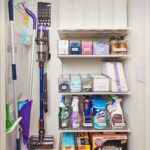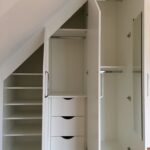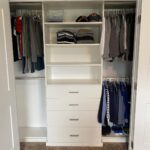


Most closets waste vertical space above your clothes and pack hanging rods so tight you can’t see what’s there.
What helps depends on how you store clothes: hanging calls for more rod space or a second bar halfway down for shirts and jackets, folding needs shelves.
When you fold, vertical storage in drawers works better than stacks because you can see every piece without pulling things apart.
A shared closet works better when you divide it by height or by volume instead of letting things creep into the other person’s area over time.
1. Use Vertical Space
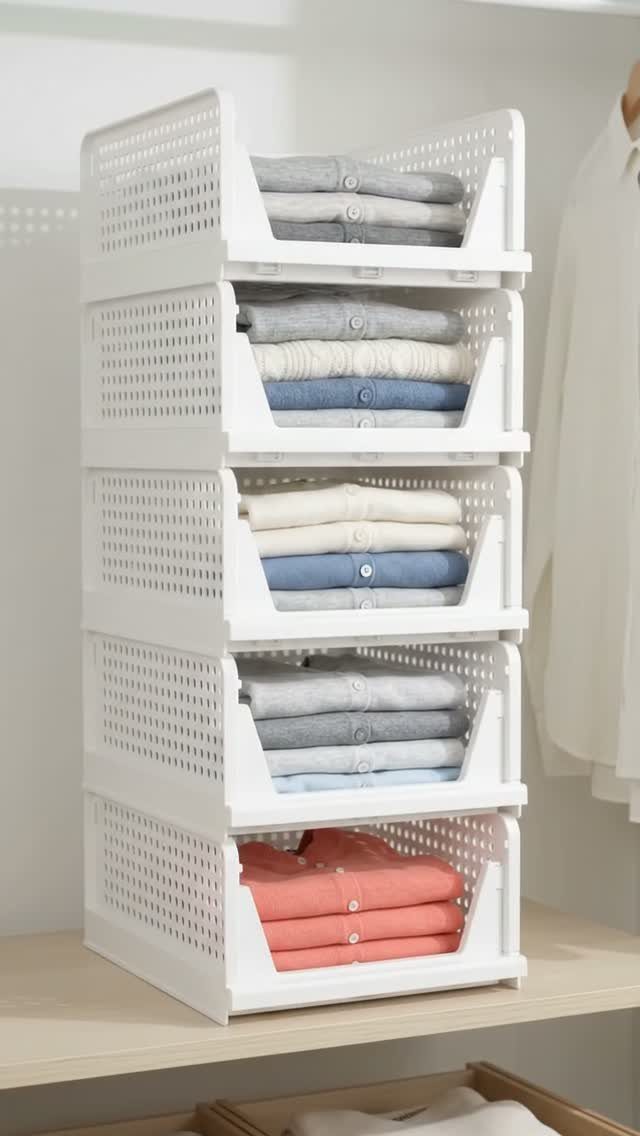
Most closets leave a lot of empty height above your clothes. If yours has a high ceiling, add another shelf or a row of hanging storage.
Stackable bins like the ones here turn that upper shelf into real storage instead of a place where things get tossed and forgotten. I’d use them for off-season clothes or anything you don’t reach for every day.
You could also hang a second rod lower down for shorter items, or add hooks along the back wall for bags and scarves.
2. Use Slim Hangers
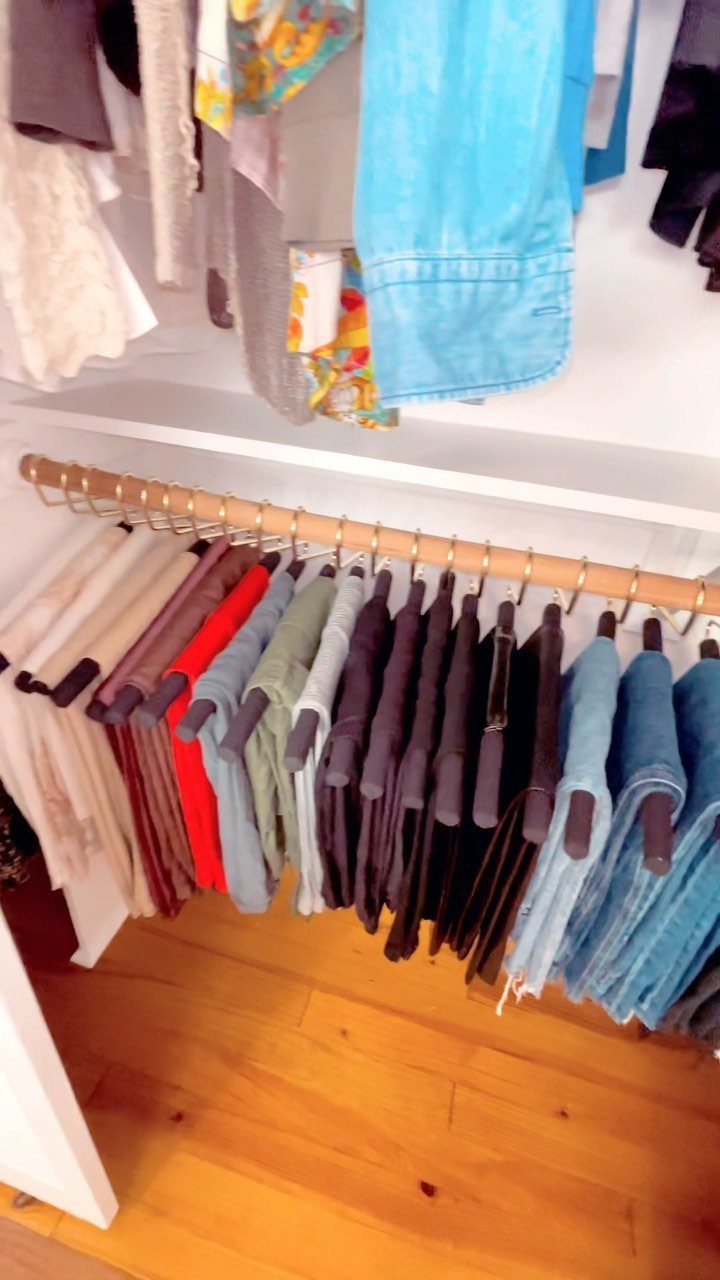
Bulky plastic and wood hangers take up more rod space than you’d think. Switching to slim hangers gives you room for more on the same rod.
Velvet-covered hangers grip clothes so they don’t slide off, and the thin profile gives you room for more shirts or pants in the same spot.
I’d buy a full set at once so everything matches. Mismatched hangers make even an organized closet look cluttered.
3. Add a Second Rod
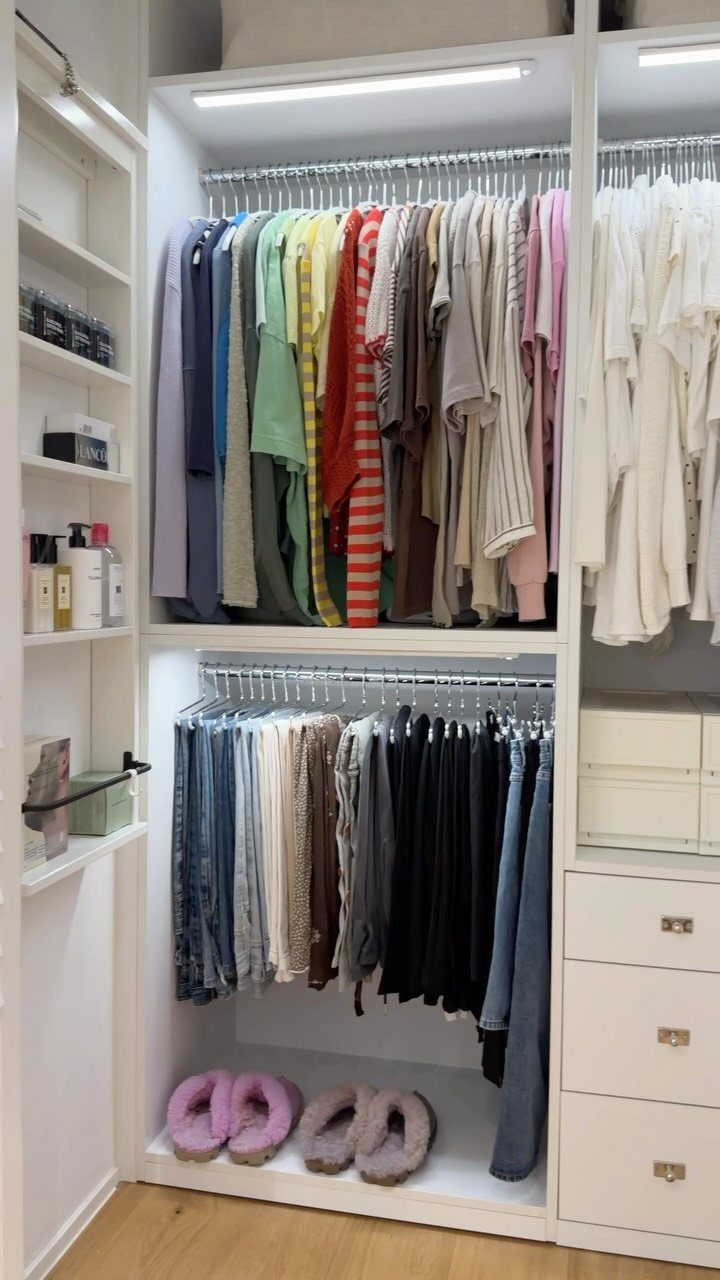
Most closets come with one rod hung high, which leaves a lot of empty air below short items like shirts and jackets. Adding a second rod below the first doubles your hanging space and needs no floor area.
Install the lower rod about 3 feet off the ground so you can hang tops on the upper rod and pants or skirts below. This works best if you hang most of your wardrobe instead of folding it.
You can buy tension rods that don’t need screws, or mount a permanent rod if you own the place.
4. Use Door Storage
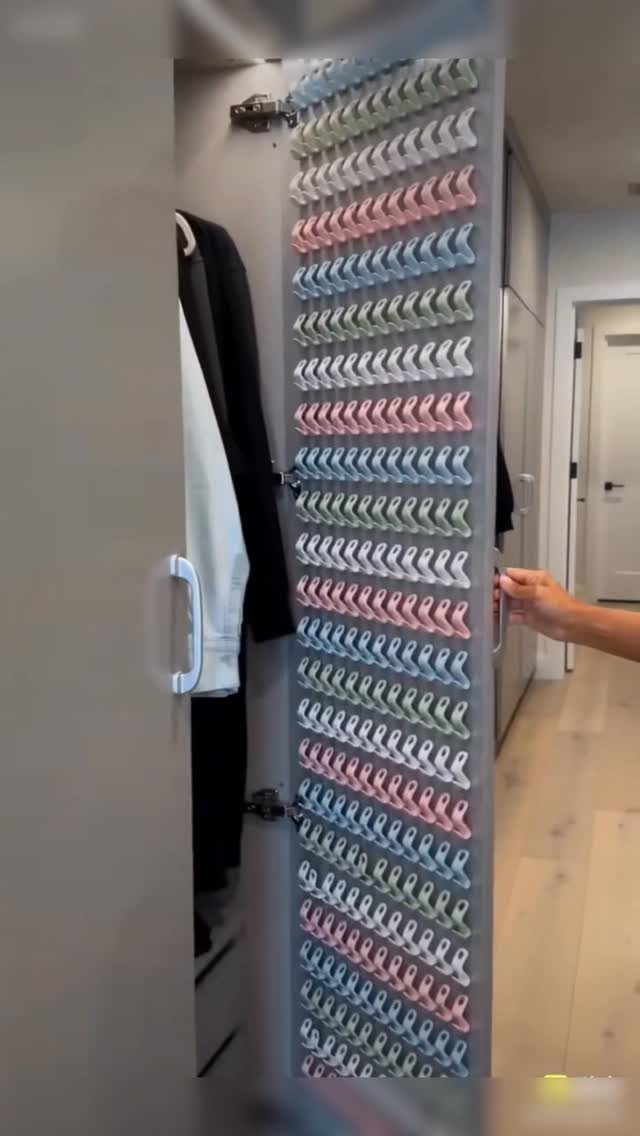
The back of a closet door is flat, unused space that can hold a lot once you give it something to hang from. Hooks, racks, and over-the-door organizers all work.
The setup here uses individual hooks, which let you hang bags, hats, scarves, or tomorrow’s outfit. I like hooks better than fabric pockets because you can see what’s there.
If you rent, look for over-the-door hardware that doesn’t need screws. It slips over the top edge and stays put when you close the door.
5. Use Shoe Storage
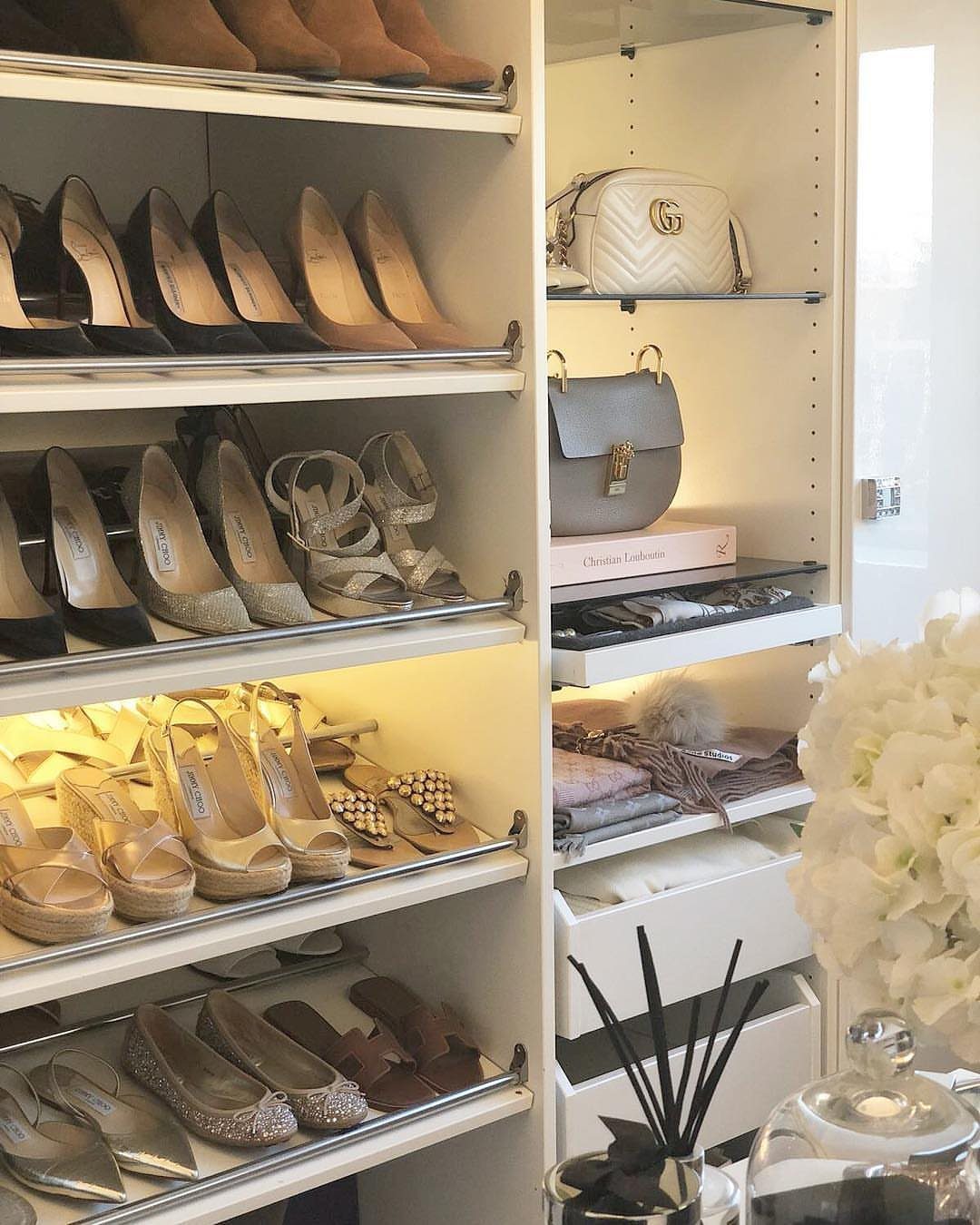
Shoes pile up fast on a closet floor, and digging through them every morning wastes time. Moving them onto shelves or into cubbies keeps pairs together and gives you back that floor space.
If you have the room, a built-in shelving unit like this one makes every pair visible at once. Each shelf is shallow enough that shoes don’t get stacked or shoved to the back.
A cheaper option is a shoe rack or a hanging organizer that clips onto your closet rod. Both get shoes off the floor and into reach.
6. Modular Closet System
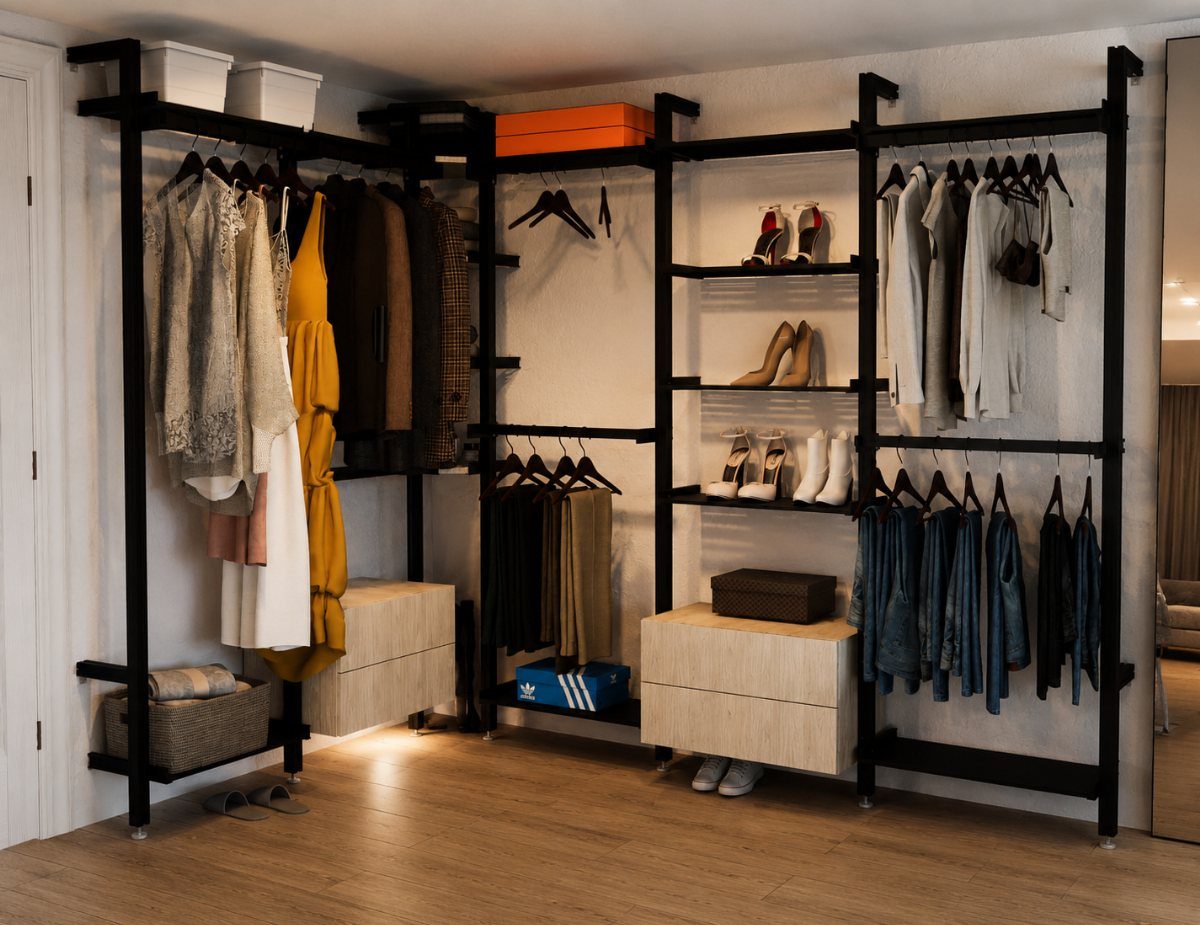
A modular system lets you build a closet setup that fits your space and changes when your needs do. You buy separate pieces like rods, shelves, and drawer units, then configure them however you want.
The black metal frame here holds hanging clothes, shoes, and storage boxes, with wooden drawer units slotted in below. You can add or move pieces without tools.
This works well if you don’t have a built-in closet or if the one you have doesn’t match how you actually store things. It’s also portable, so it moves with you.
7. Closet Shelves for Folded Clothes
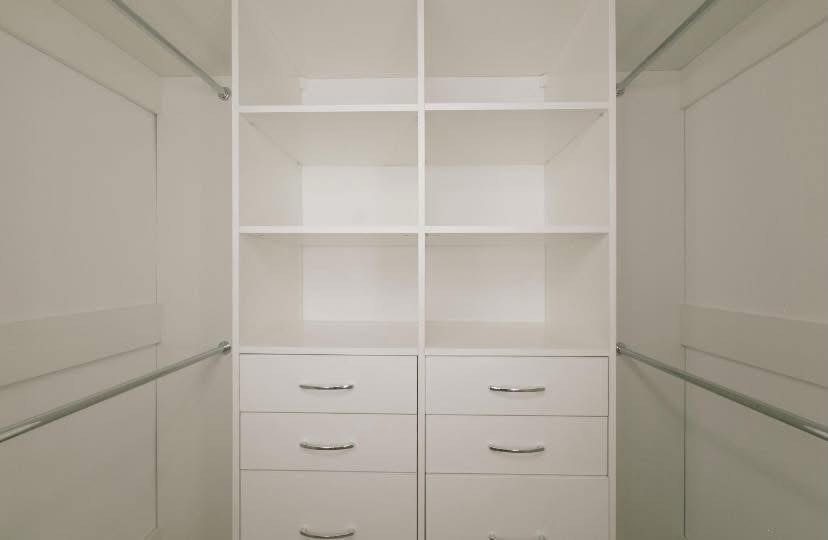
Shelves hold folded clothes just as well as drawers, and you can see everything without pulling anything open.
If you fold sweaters, jeans, or pajamas, stacking them on shelves keeps them in reach and saves rod space for things that wrinkle. Each shelf here holds a category, so you’re not digging through mixed piles.
Stacks work best when they stay short, so you can see everything and pull something from the middle without toppling the pile. Taller stacks tip over or collapse when you pull something from the middle.
8. Folded Winter Sweaters
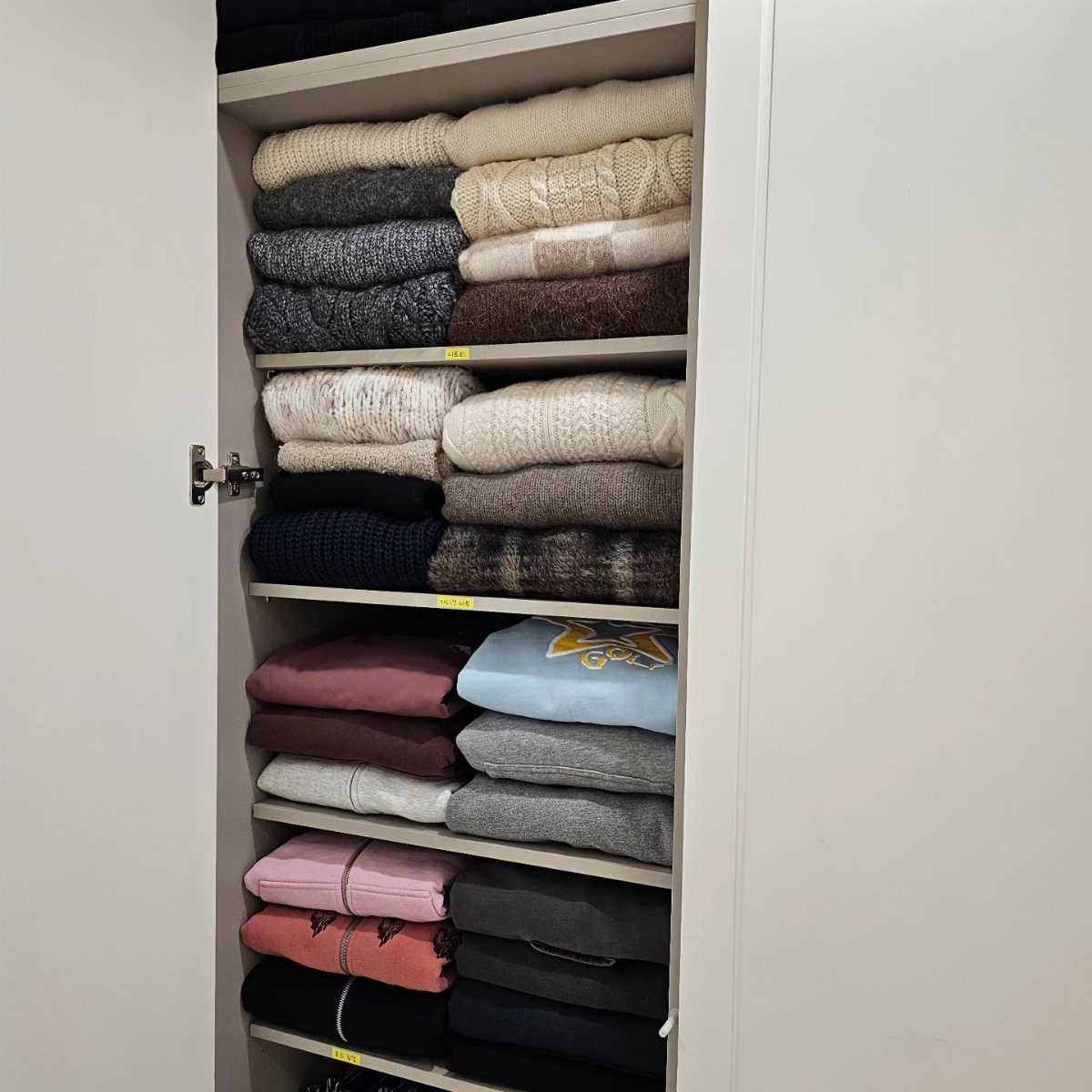
Knit sweaters stretch out on hangers, especially if they’re heavy. Folding them instead keeps their shape and frees up rod space for shirts and jackets.
Store them on a shelf where you can see the whole stack. Off-season sweaters can go higher up, and the ones you wear now stay at eye level.
I fold mine so the front faces up. That way I know which sweater I’m grabbing without unfolding 3 others first.
9. Use Under-bed Storage
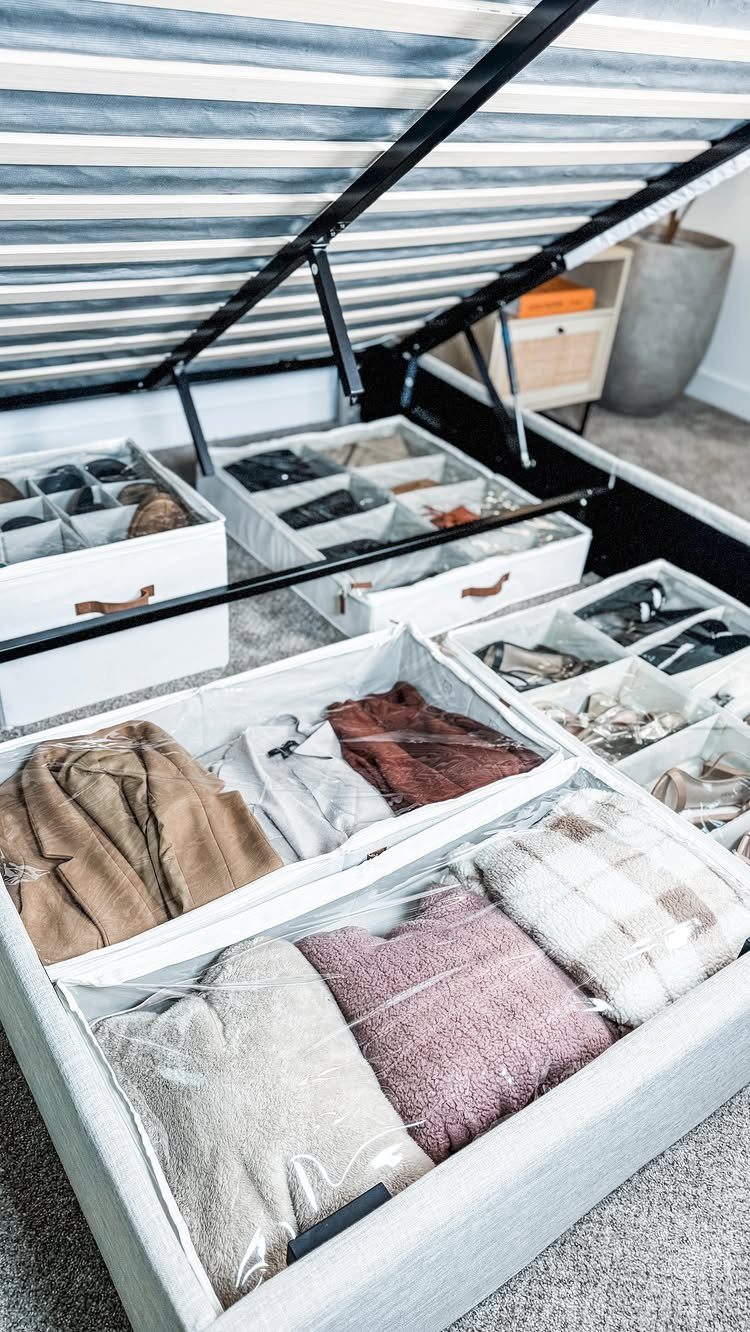
If your closet is full and your bed sits on a frame, the space underneath can hold a lot. Bins or drawers keep things contained and easier to reach than loose items shoved under.
The bed here lifts up so the whole base becomes storage. If yours doesn’t, low bins with wheels slide out without lifting the mattress.
I’d put off-season clothes there, extra bedding, or shoes that sit idle most of the year. Anything you need daily should stay in the closet where it’s faster to grab.
"The number one way to create more space is to go through your closet and edit all of your items, removing anything you no longer need, use, or want, and donating those pieces," says Wendy Trunz, Partner and Head Organizer at Jane’s Addiction Organization.
— Yahoo
10. Drawer System Under Hanging Clothes
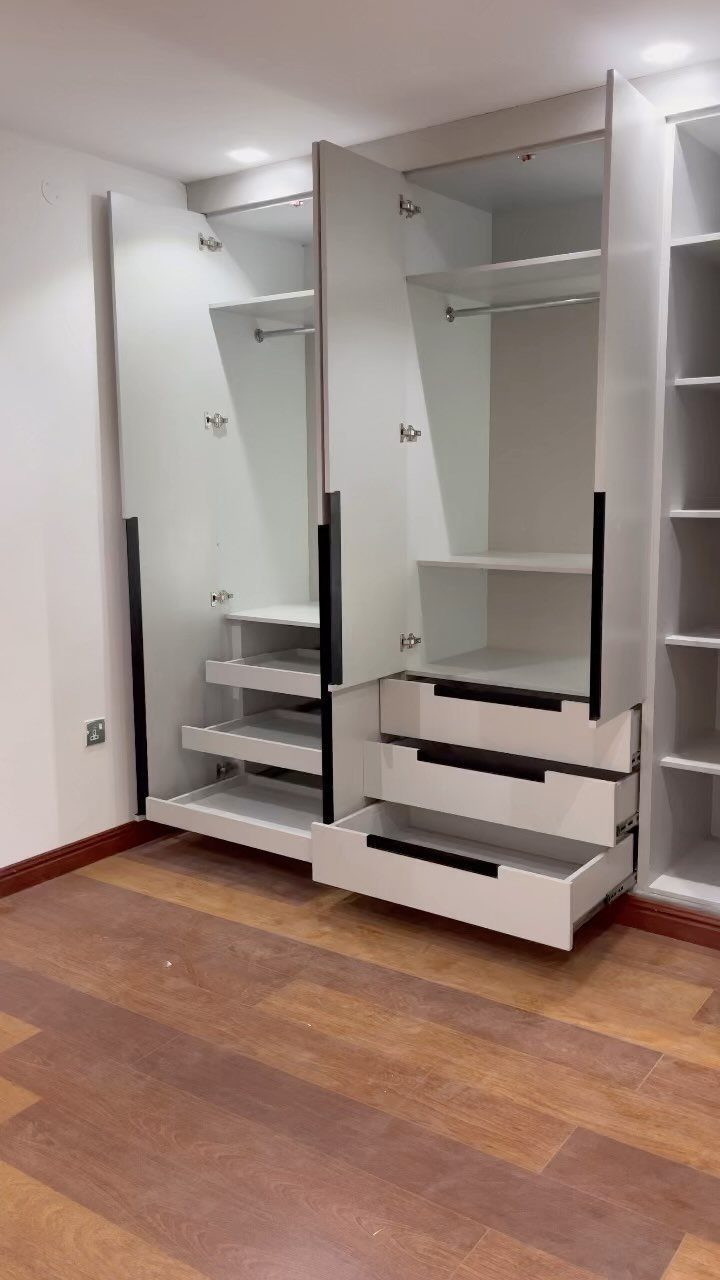
Drawers at the base of a closet give you a place for folded clothes and keep the footprint inside the closet instead of spilling into the room. They sit below hanging rods where nothing else would go.
Built-in drawers like these usually come with a custom closet system. If you’re working with what you have, freestanding drawer units fit under a shortened rod and do the same thing.
I’d put underwear, socks, and workout clothes in the drawers so they’re sorted and out of sight. Hanging clothes stay above, and the closet floor stays clear.
11. File-folded Clothes
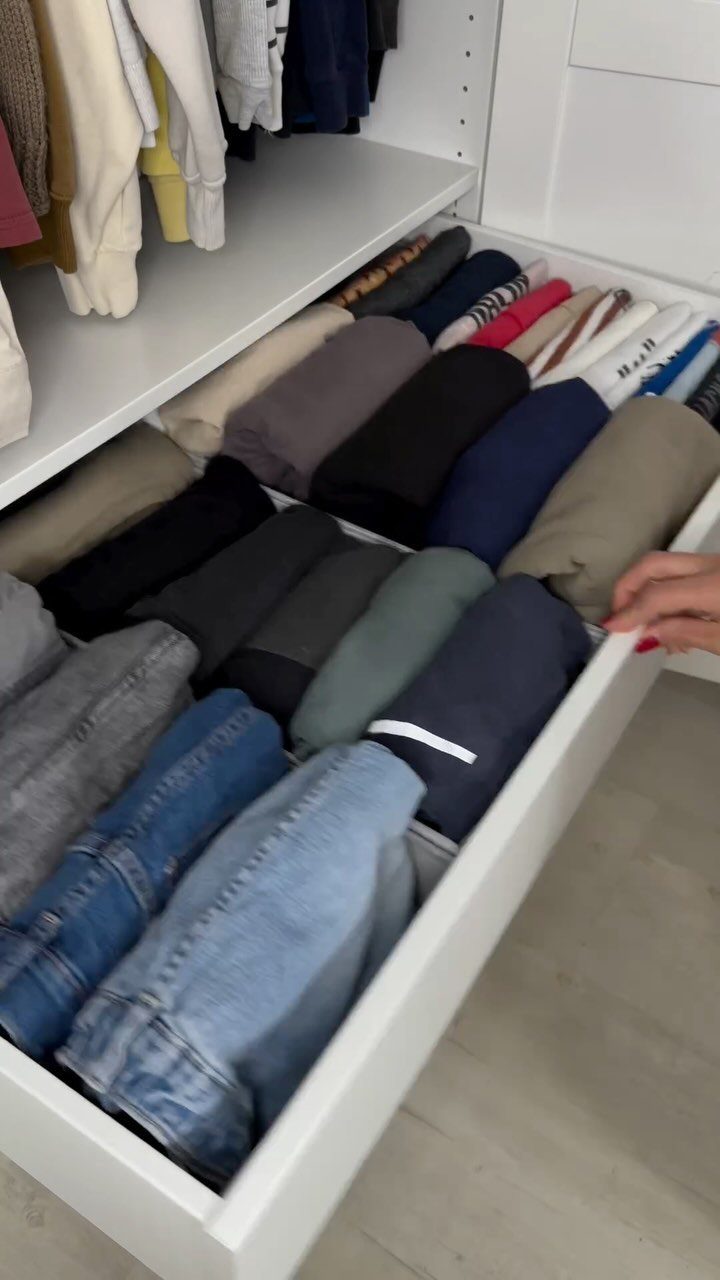
Most people stack folded clothes flat, which means the shirt at the bottom of the pile stays there until you empty the drawer.
Folding them so they stand upright lets you see everything at once and pull one piece without disturbing the rest.
Fold each item into a narrow rectangle, then stand it on its edge. They line up like files in a cabinet, and the whole drawer stays organized when you take something out.
This works best in shallow drawers. Deep drawers let the folds tip over, and then you’re back to digging.
12. Hats Displayed on a Wall
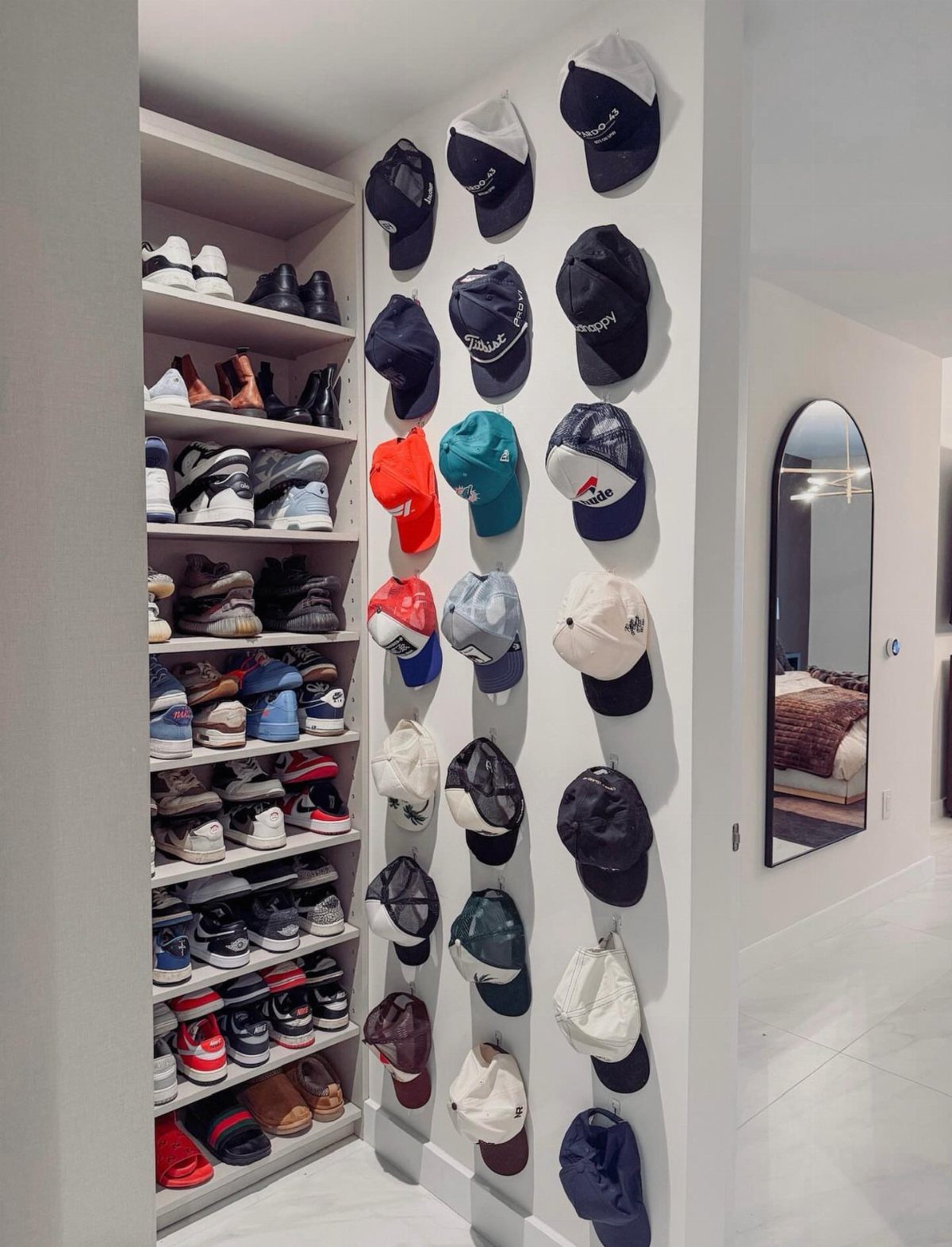
If you wear hats often, keeping them on a wall puts them in sight and out of the way. Hooks or pegs hold them flat so they don’t eat up shelf or drawer real estate.
Mount the hooks in a row at a height you can reach without a step stool. Space them far enough that brims don’t overlap or crowd each other.
This setup keeps the hats from getting crushed, and you can grab one on your way out.
I’d only do this if you actually wear them. A wall full of hats you never touch just looks like clutter.
13. Shoes Displayed on Open Shelving
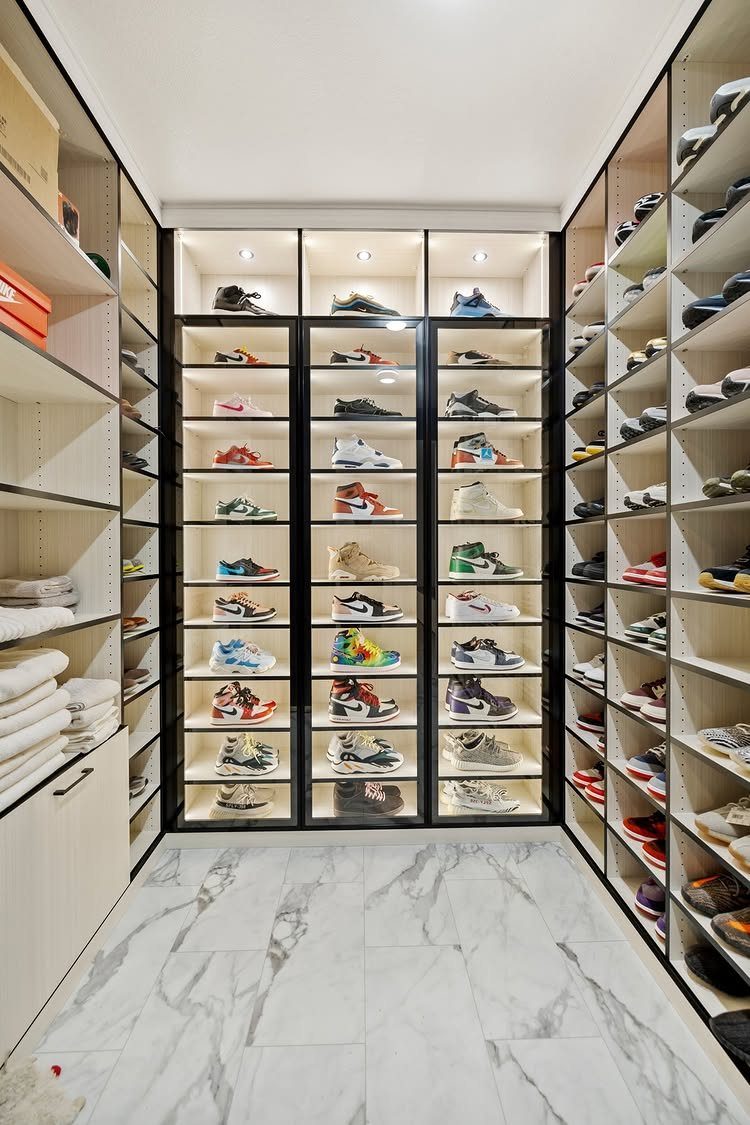
Open shelves turn a shoe collection into something you see every time you walk in, and each pair stays in reach without digging through boxes or piles.
Shelves need to sit deep enough that shoes don’t hang over the edge.
Measure the depth for the shoes you wear most often. Space them vertically so each row has clearance for the tallest pair on it.
If you have a lot of shoes, this setup takes up wall space that could hold hanging clothes or folded items. It makes sense when you wear most of what you own and want to grab a pair fast.
Plan Around Closet Contents
Start by writing down what you actually need to store.
Count how many shirts hang versus fold, how many pairs of shoes you own, whether you keep bags or hats in the closet. That list tells you what kind of storage to add.
A closet that works for someone with 10 pairs of shoes won’t work if you have 40. Same goes for the split between hanging and folded clothes.
If most of your wardrobe lives on hangers, you need more rod length. If you fold most things, shelves matter more.
Measure the height and depth of the space before you buy anything.
A shelf that’s too shallow leaves shoes hanging over the edge. A rod mounted too high puts half your clothes out of reach.
Keep Rods Browseable
A hanging rod only works if you can see what’s on it.
When clothes are packed so tight they press against each other, you can’t browse and you end up wearing the same 3 things because they’re the only ones you can spot.
If your rod is full and you still have clothes to hang, fold some of them instead.
Sweaters, jeans, and pajamas all hold up fine on a shelf, and moving them off the rod gives the hanging pieces room to breathe.
You should be able to slide hangers left and right without forcing them. If you can’t, the rod is too full.
Divide Shared Closet Zones
One way to split a shared closet is to give each person a top and bottom zone at their own height. The taller person’s hanging clothes go high, the shorter person’s go lower, and neither has to stretch or stoop.
Another option is to divide the closet by volume instead of height. If one person owns more clothes, they get more rod length or shelf space, but both people still have room for what they actually wear.
Either way, mark the division clearly so things don’t creep into the other person’s area over time.
Frequently Asked Questions
How to organize closet space?
Start by clearing out anything you don’t wear, then add storage that fits what you actually keep.
Slim hangers, a second rod, and door hooks turn empty space into real storage and leave the floor clear. Shelves and bins keep folded clothes visible instead of piled.
How can I make a small closet more functional?
Add a second rod below the first one to double your hanging space, and use the door for hooks or racks.
Bins on the top shelf and slim hangers on the rod give you more room without building anything new. If you have floor space, a small shelving unit or drawer stack fills the gap under hanging clothes.
How can I organize my small closet without spending money?
Use bins and boxes you already own to sort items on shelves, and gather your hangers so everything matches.
Tension rods and over-the-door hooks don’t need tools. Folding clothes upright instead of stacking them flat lets you see everything in a drawer without buying dividers.
How to get rid of clothes clutter?
Sort everything into keep, donate, and toss piles, and be honest about what you actually wear. Fewer clothes mean you can see what you have and the closet stays organized without constant work.