
Long-handled tools take up different amounts of space depending on whether you hang them, stack them flat, or store them overhead.
If you park in your garage and your walls are already full, ceiling racks and horizontal mounts use the room you have without blocking the car.
Wall-mounted systems range from a single 2×4 with PVC pipe holders to full rail setups that hold ladders, bikes, and yard tools on one track.
The choice depends on how many tools you’re storing and whether you need to move things around later.
1. Wall-mounted Tool Hangers
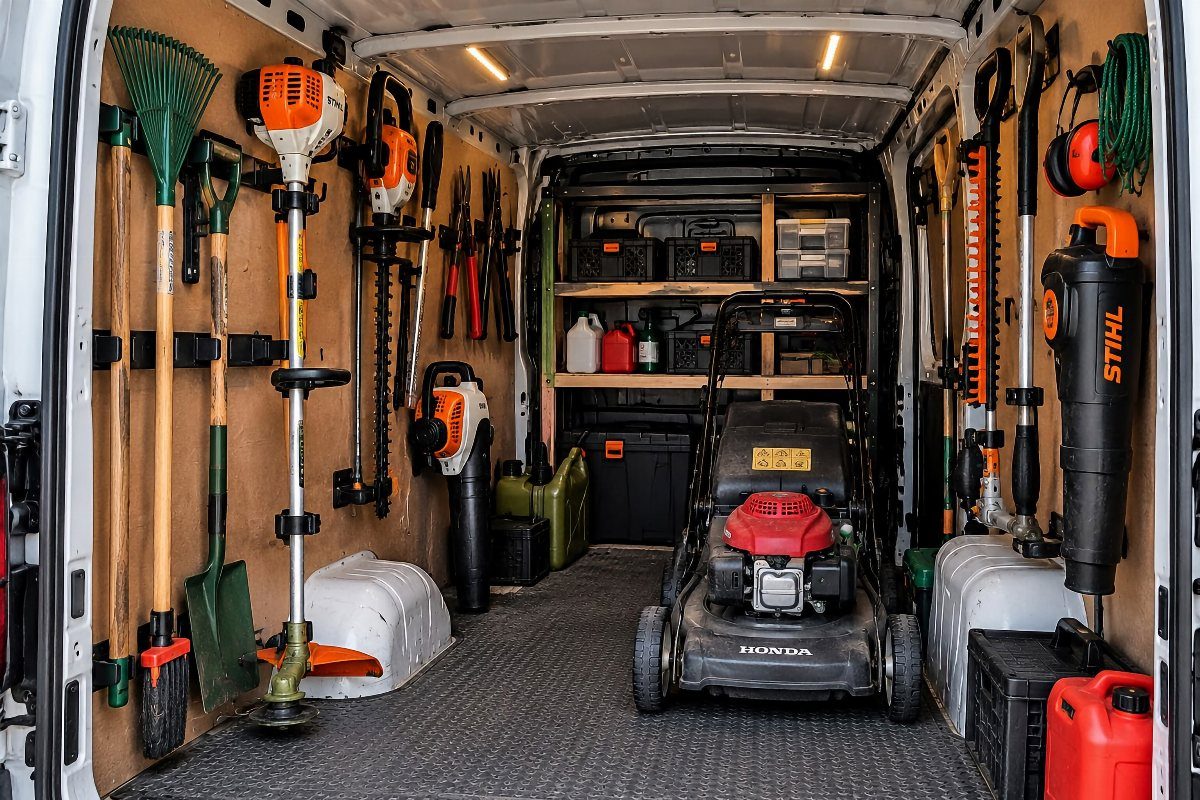
Wall-mounted hangers keep long-handled tools like rakes, shovels, and blowers off the floor and easy to grab. The hangers hold each tool separately, so you can fit them into narrow spaces along a wall or inside a closet.
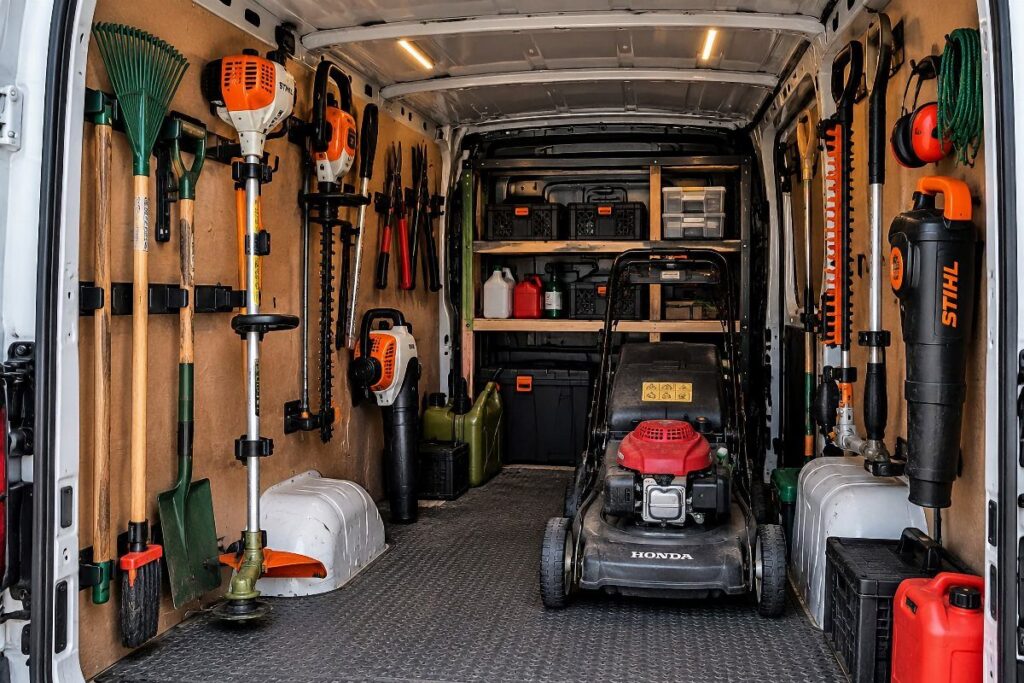
Most hangers clamp around the handle or cradle the tool head. You can mount them to studs or use anchors in drywall, and they work just as well in a garage as they do in a shed or utility van.
If you have a small collection and a little wall space, this is one of the simplest ways to clear the floor.
2. Pegboard Tool Storage

Pegboard lets you arrange hooks and hangers exactly where you need them, and you can move them around as your tool collection changes.
The holes are spaced on a grid, so you can fit different hook types for hand tools, extension cords, and small garden supplies.
Mount the pegboard to the wall with spacers behind it so the hooks have room to lock in. You can paint it to match your garage or leave it as is.
This works well if you like being able to see everything at once and you want flexibility without drilling new holes every time you add a tool.
3. Wall-Mounted Wood Tool Organizer
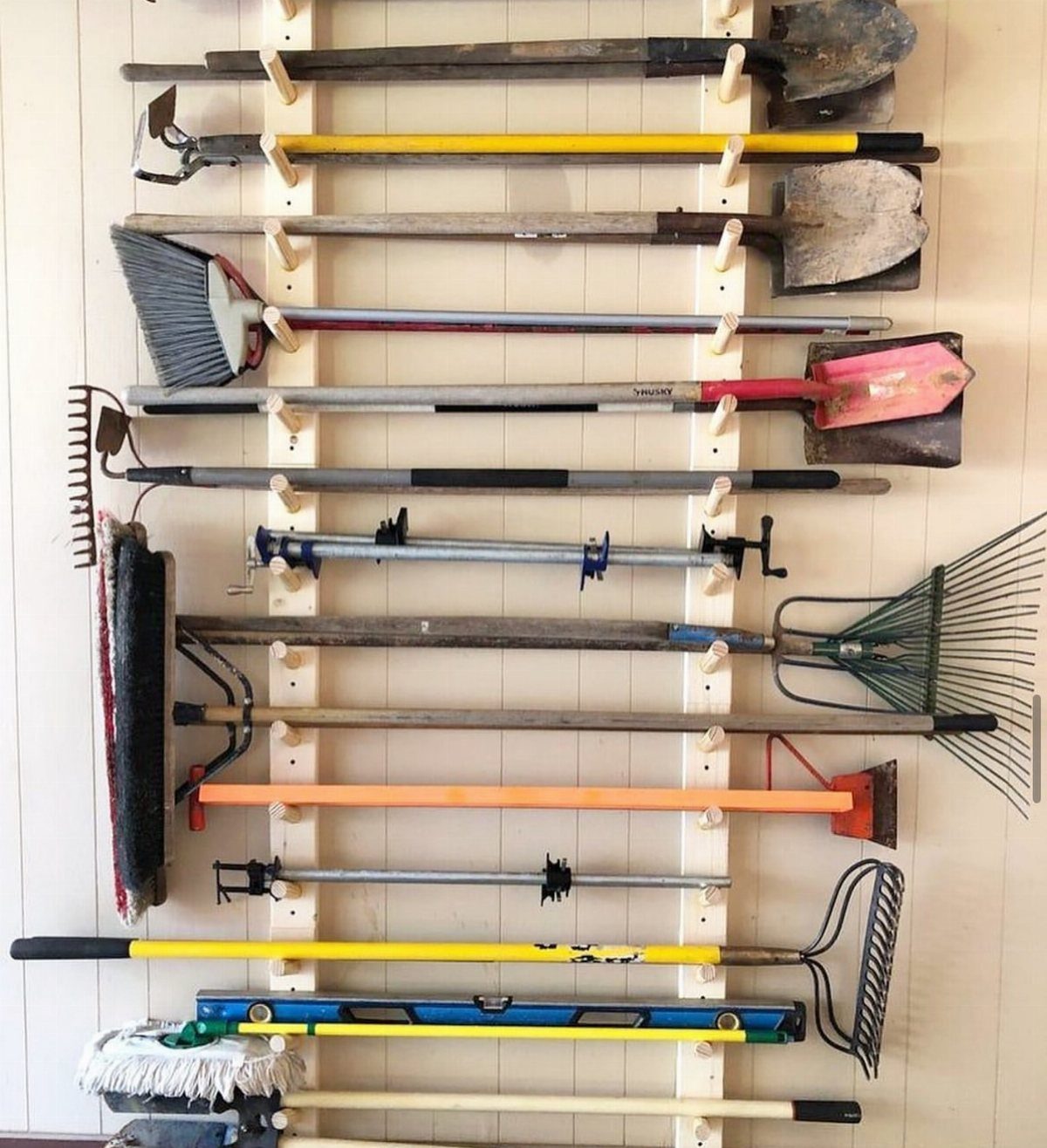
A wood organizer uses short pegs or brackets mounted to a board to hold tools horizontally along the wall. You can space the pegs to fit the tools you actually have, so nothing hangs too loose or sits too tight.
Build it from a piece of plywood or solid wood and attach dowels or screws as supports. The spacing is up to you, which makes this a good fit if your tool handles vary in length or thickness.
It takes a little more time than buying a rack, but you end up with something that fits your space exactly.
The popular Rubbermaid corner tool rack holds up to 30 tools and is designed to fit snugly into that unused corner space.
4. PVC Tool Holders on a 2×4
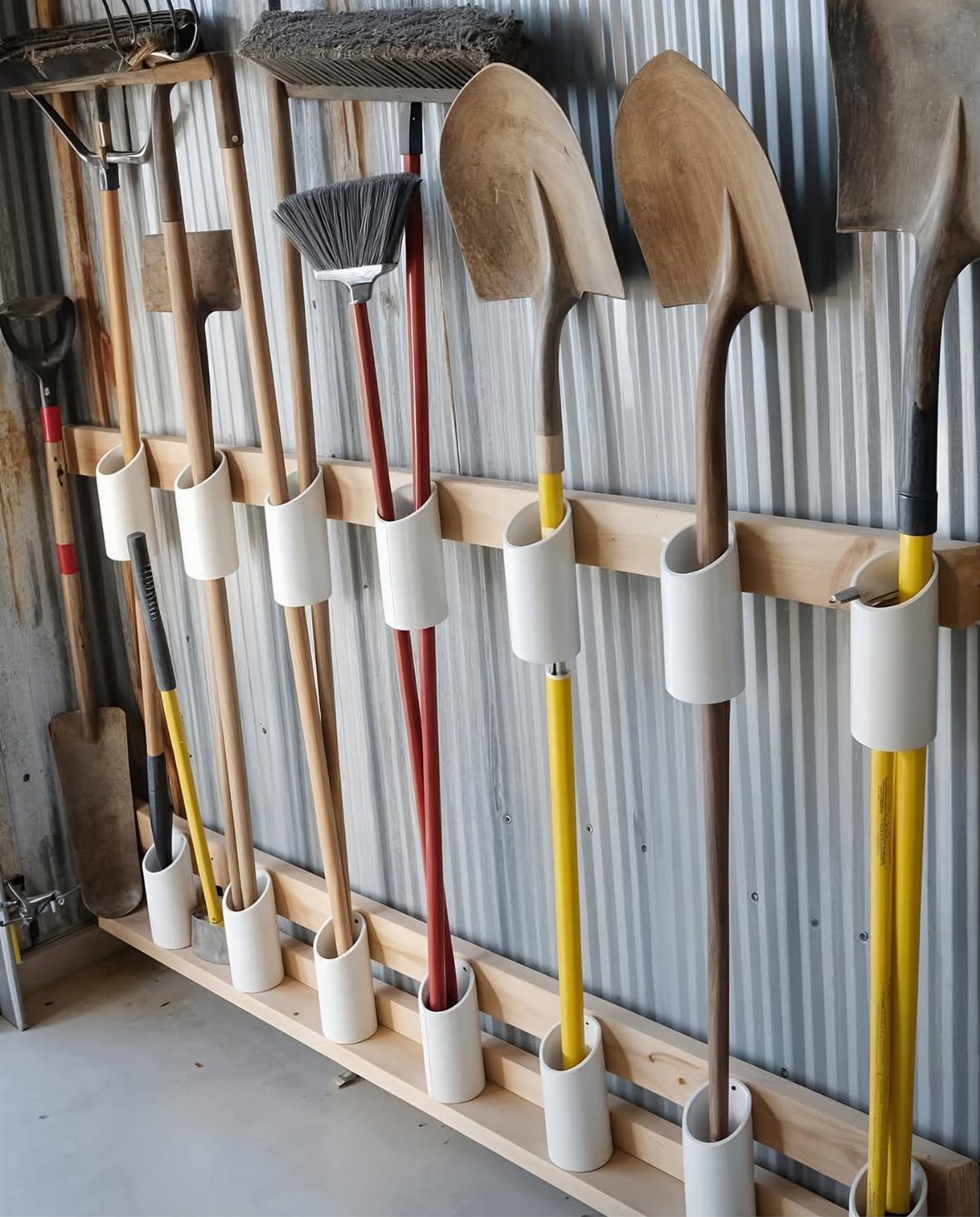
Short sections of PVC pipe work as holders for long-handled tools like shovels, rakes, and hoes. Cut the pipe into pieces a few inches long, then screw or bolt them to a 2×4 mounted horizontally on the wall.
Each tool handle slides into a pipe, and the pipe keeps it from tipping or sliding around. You can space the pipes to match your collection, and PVC is cheap and easy to cut with a handsaw.
This is a solid choice if you want something simple to build and you have a lot of tools with similar handle widths.
5. Overhead Tool Storage
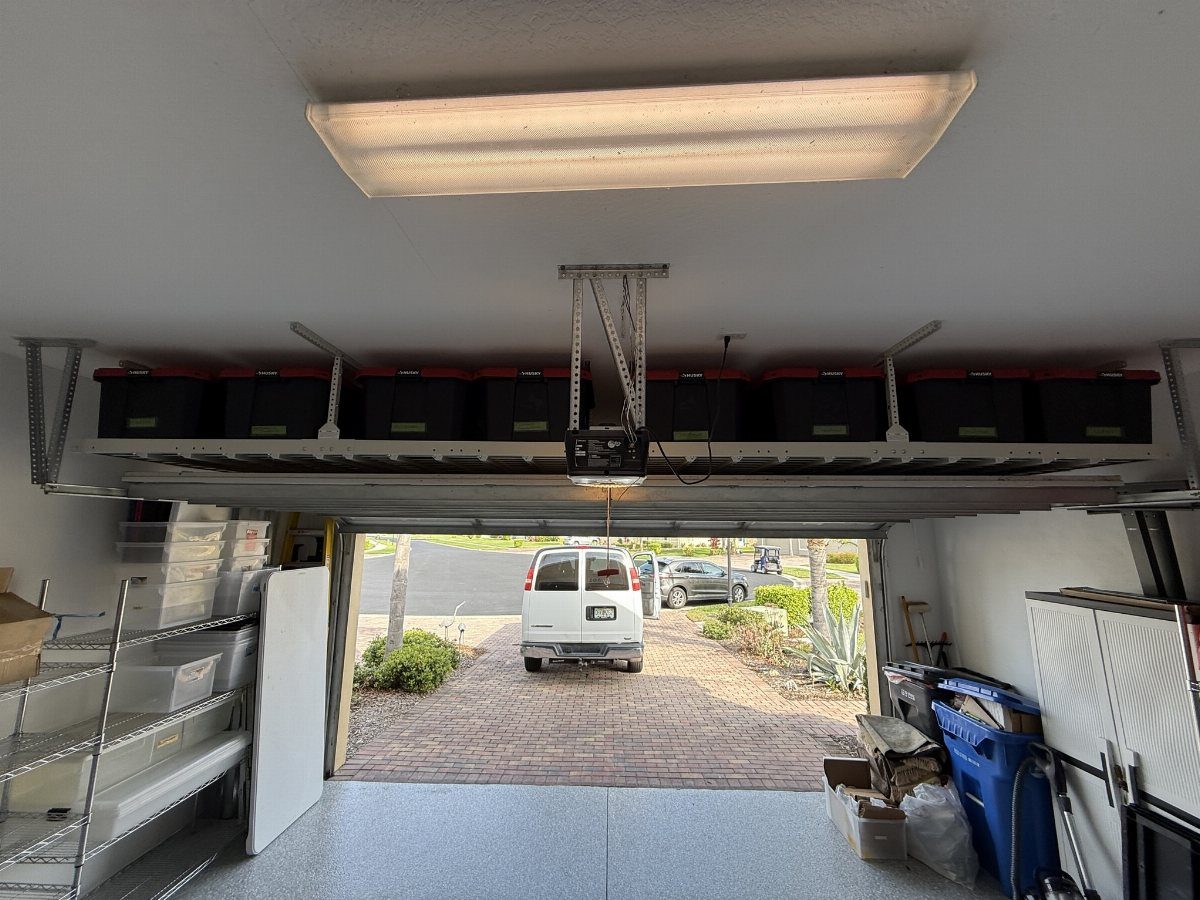
Overhead storage moves bins, seasonal items, and bulky gear up to the ceiling, freeing floor and wall space for tools you use more often.
You can mount shelves or racks to ceiling joists or use brackets that hang from the garage door track area.
I’d use this for things I reach for once a month or less: extension cords, empty pots, holiday decorations.
Make sure the rack is rated for the weight you plan to store, and leave enough clearance for your car if you park inside.
If your walls are already full, the ceiling is the next place to look.
6. Garage Tool Rail System
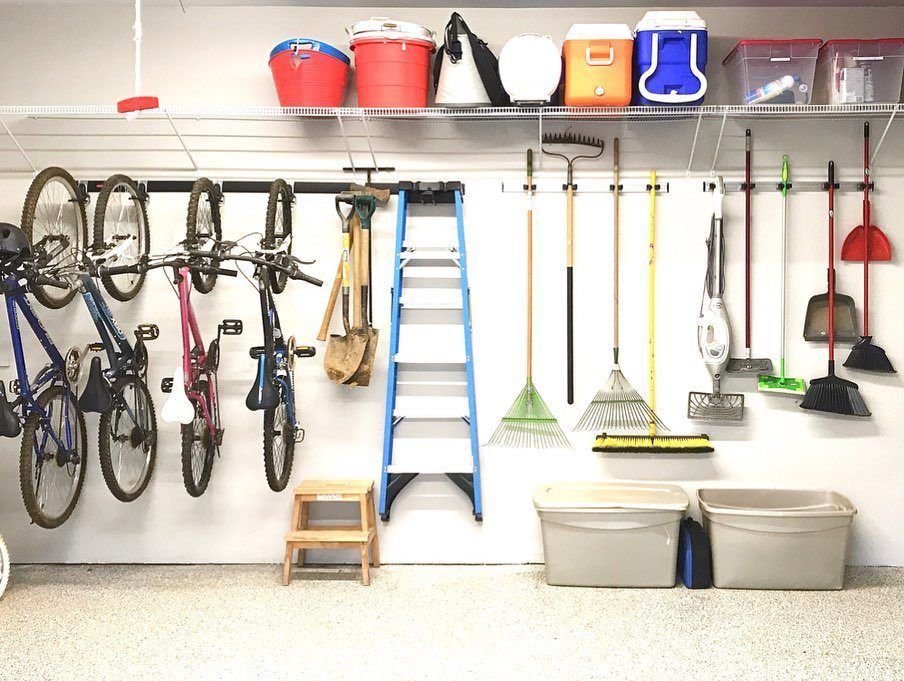
A rail system runs along the wall and holds brackets, hooks, and hangers that slide into place wherever you need them. You can hang bikes, ladders, rakes, and brooms without drilling a new hole for each one.
The rail mounts to studs, and most systems let you add or rearrange hooks as your storage needs change. Some include bins or shelves that clip onto the rail.
This is a flexible option if you want to store a mix of items and you don’t want to commit to a fixed layout. It costs more than basic hooks, but the adjustability can be worth it.
7. DIY Garage Shelving
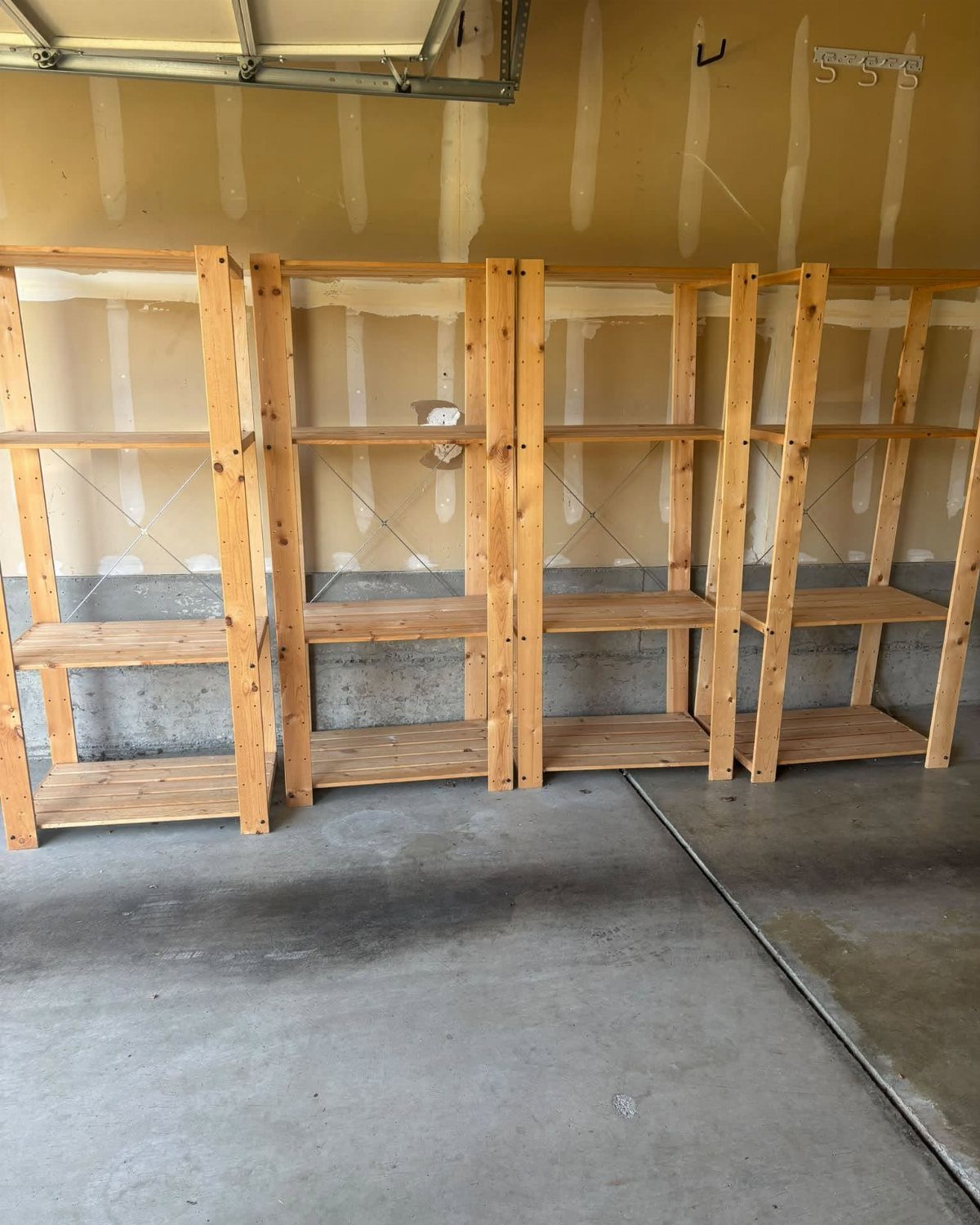
Freestanding shelving units give you open storage along a garage wall without mounting anything. Build them from 2x4s and plywood, or buy ready-made units that bolt together.
I’d use these for bins, paint cans, and yard supplies that don’t hang well. They sit on the floor, so you can move them later if your layout changes.
If you rent or don’t want to drill into the wall, this keeps storage flexible.
8. Horizontal Tool Rack
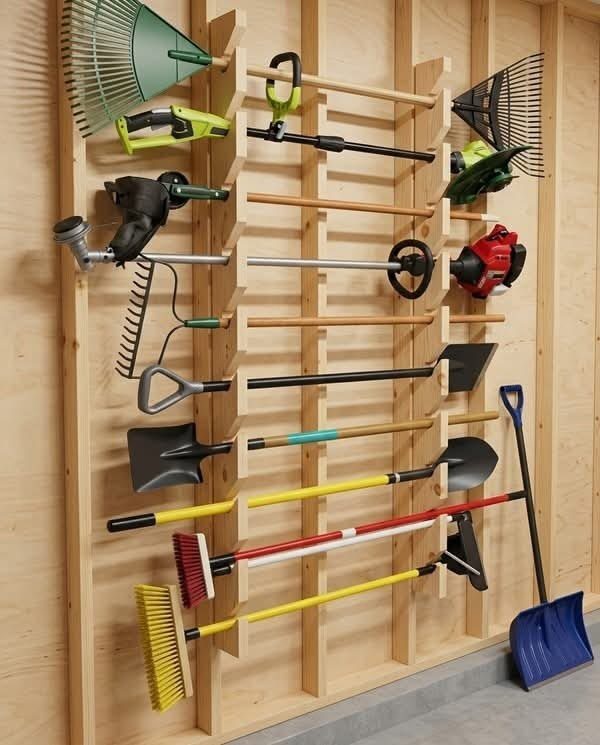
A horizontal rack holds tools sideways along the wall, with each handle resting on a support peg or bracket. Long-handled tools like rakes, hoes and shovels fit better mounted flat against the wall when they’re too tall for vertical slots.
Mount a board to the wall, then add pegs or short brackets spaced to match your tools. The handles sit parallel to the floor, so the rack takes up less vertical space than hanging tools straight down.
If your ceiling is low, this uses the room you have.
9. Hooks for Power Tools
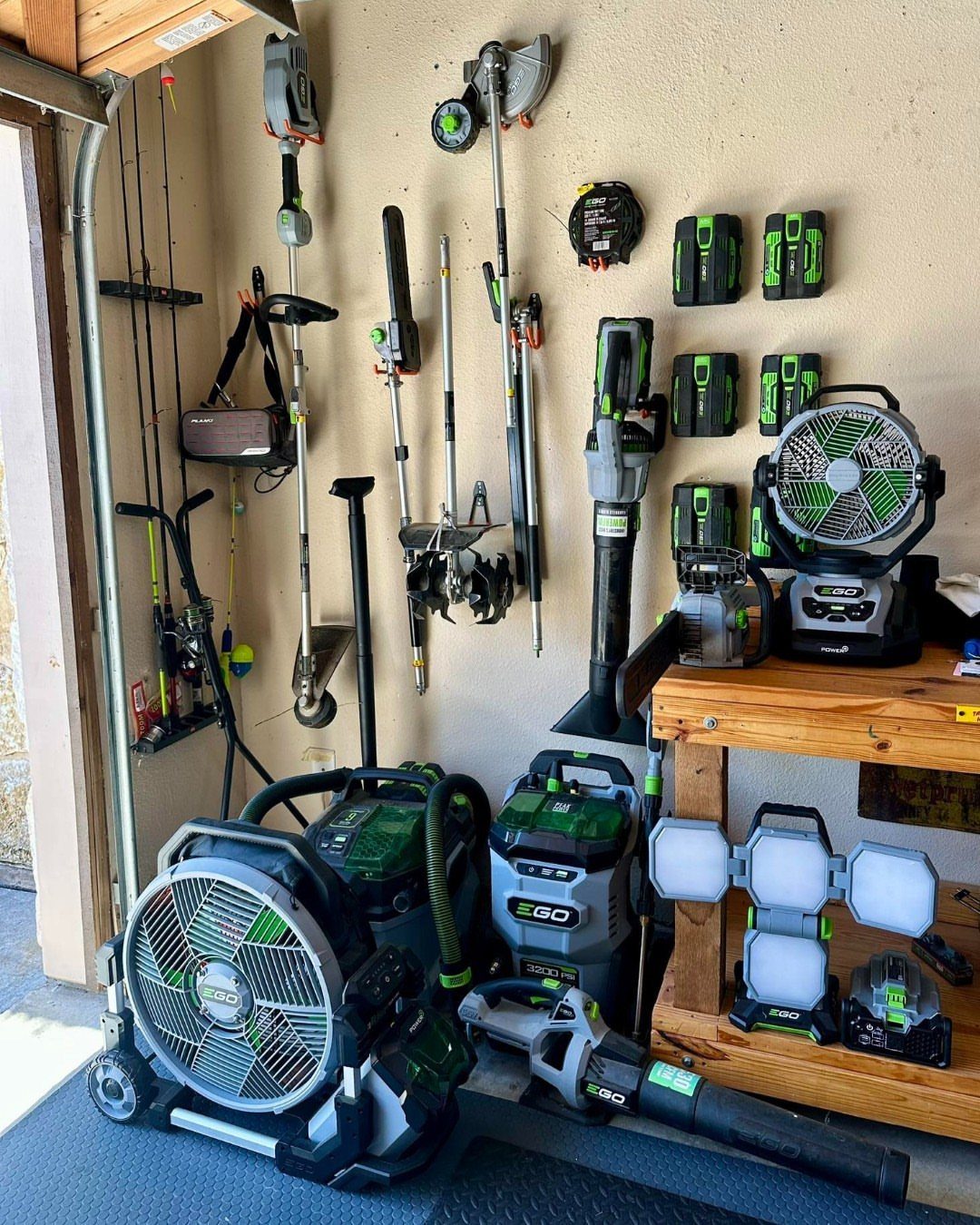
Individual hooks hold power tools like string trimmers, leaf blowers, and hedge trimmers on the wall, with batteries and accessories stored on a nearby workbench or shelf.
Hang each tool from a heavy-duty hook screwed into a stud, and group smaller items on shelves below. This keeps cords untangled and tools easy to grab.
I’d pair this with a workbench if you also need a surface for charging batteries or swapping attachments.
10. Garage Storage Cabinets
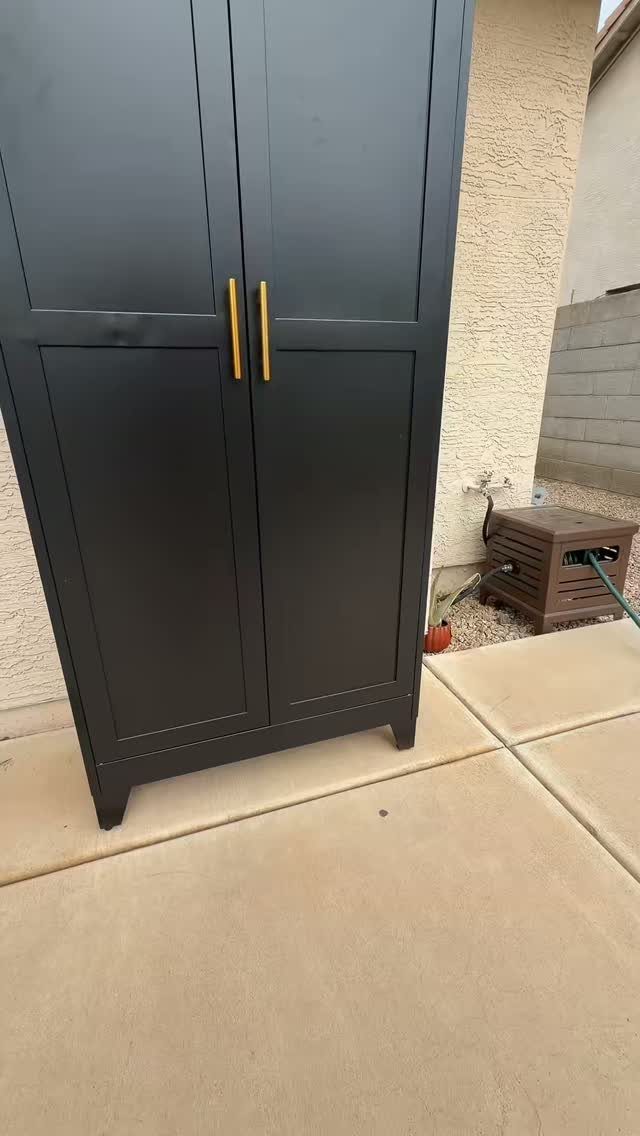
A tall metal cabinet offers enclosed storage outside the garage or on a patio. It keeps yard chemicals, fertilizers, and tools out of sight and protected from weather.
Look for cabinets rated for outdoor use, with shelves you can adjust. They lock, which helps if you store anything hazardous.
This suits smaller yards where the garage is full and you need weatherproof storage close to the garden.
11. Wall Rack for Ladders and Tools
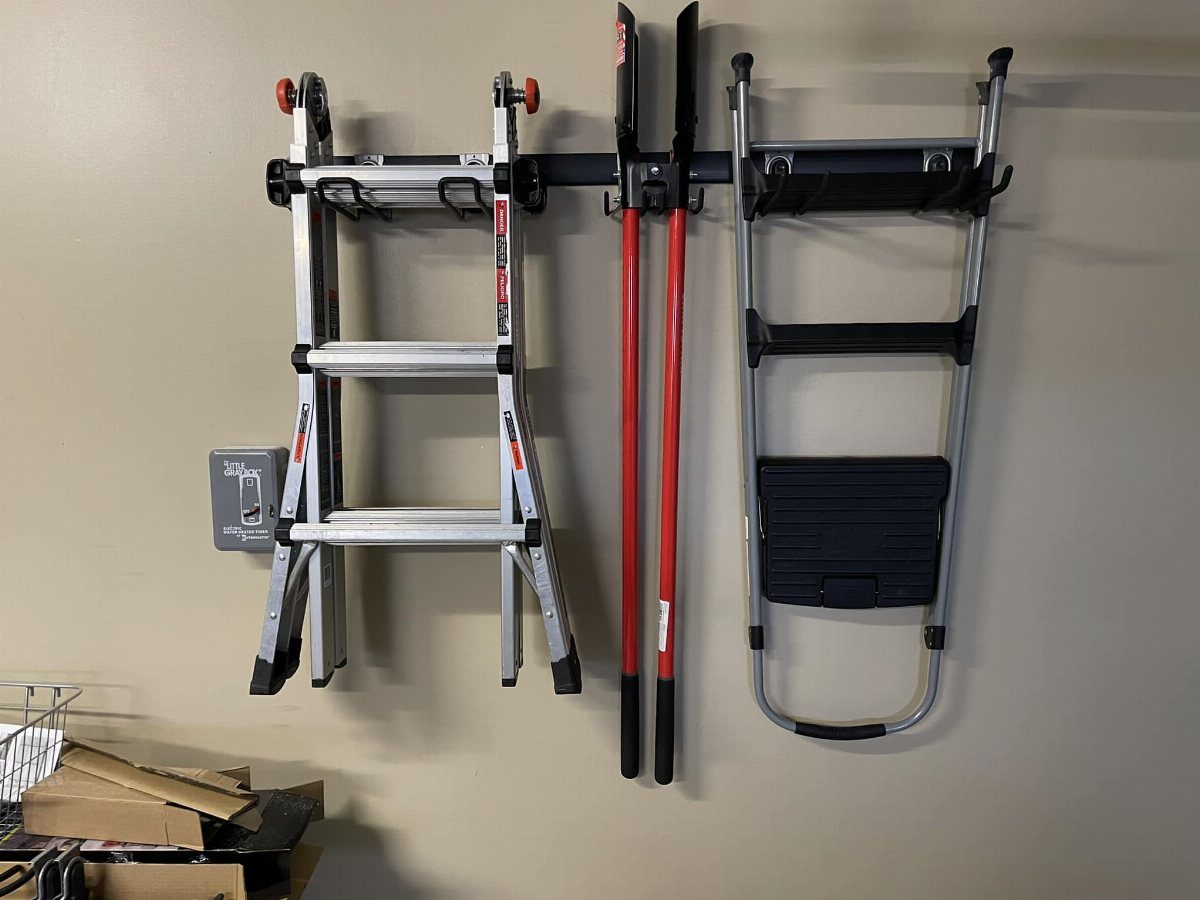
A wall-mounted rack holds ladders horizontally along with long-handled tools, keeping both off the floor in one unit. The rack brackets support the ladder rungs and cradle tool handles at the same time.
Mount it to studs and space the brackets to fit your ladder length. This works if you store a couple of ladders and want to hang tools nearby without adding separate hooks.
12. Mixed-use Garage Wall Rails
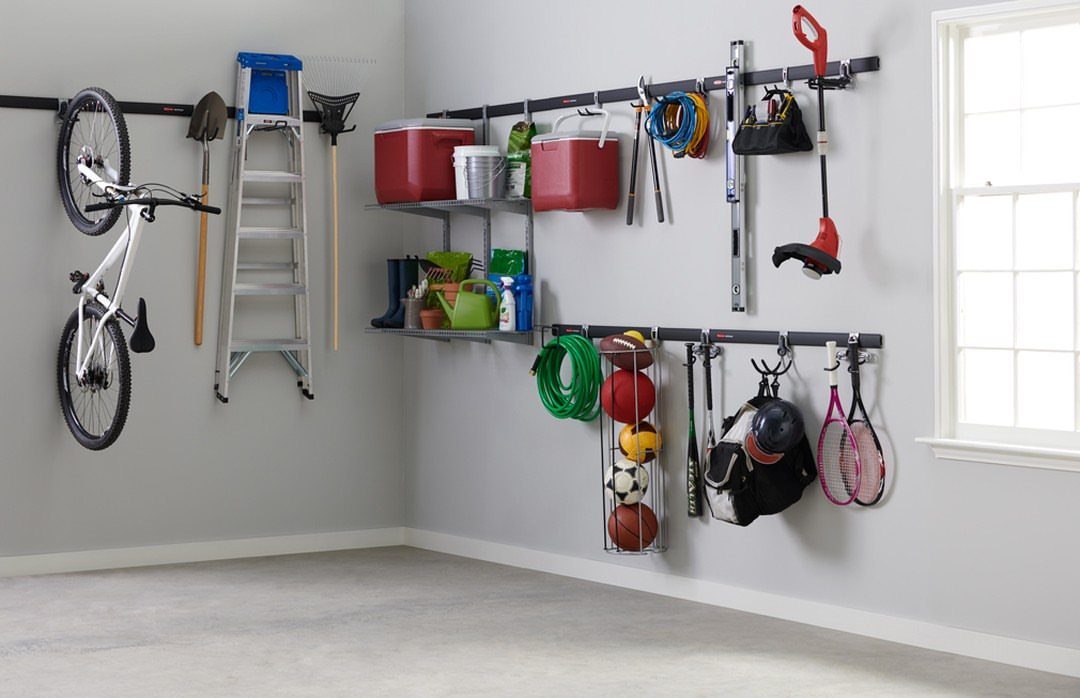
Wall rails hold a mix of hooks, brackets, and bins for tools, bikes, ladders, and sports gear.
You can clip different accessories onto the rail wherever they fit, so one system handles yard tools alongside everything else you store in the garage.
Mount the rail to studs, then add hooks for each type of item. This suits a busy garage where yard tools share space with bikes, buckets, and seasonal equipment.
If you need one system that adapts to different storage needs, this covers more ground than a rack built for one thing.
Sort Tools Before Organizing
Pull everything out before you mount a single hook. Lay yard tools on the garage floor or driveway, then sort through what you actually use.
Toss broken handles, dried-up fertilizer, and tools you forgot you owned. If you have three pairs of pruning shears, keep the one that feels best in your hand and donate the rest.
If you have three quarter-full bags of potting mix sitting around, dump them into one bin and toss the empties. Less clutter means you need less storage, and you’ll spend less time looking for what you need.
Count the long-handled tools you’re keeping—rakes, shovels, hoes—before you decide on a rack size. If you end up with 12 tools, don’t buy holders for eight.
Clean and Protect Tools
Dirt holds moisture, and moisture rusts metal. Wipe down shovels, pruners, and blades with a rag before you hang them up, especially after working in wet soil.
I keep a brush near the garage door to knock dried mud off tool heads. It takes 30 seconds and saves me from scraping rust later.
Store tools off the floor where air can circulate around them. A damp concrete slab will corrode anything sitting directly on it, even if the garage feels dry.
Check stored tools a couple of times a year for rust spots, loose handles, or frayed cords. Catching a problem early means you’re not replacing a tool mid-project.
Plan Garage Storage Zones
Walk through your garage and note which walls are clear, how much ceiling height you have above the car, and where the floor stays open. That tells you whether storage goes up, out, or overhead.
Group tools by how often you reach for them.
Daily-use items like a leaf blower or hand trowel go on wall hooks at chest height. Seasonal gear moves to overhead racks or high shelves.
Put heavy equipment like mowers and wheelbarrows on the floor near the door so you can roll them out without moving anything else.
Use bins with labels for smaller supplies—twine, gloves, seed packets—and stack them on a shelf or workbench. Loose items get lost; bins keep them in one place.
Frequently Asked Questions
How do I organize my tools in my garage?
Pegboards, hooks or rails go on clear wall space for what I reach for most, and I move seasonal gear up to overhead racks where it stays out of the way.
Group tools by how often you reach for them, and use labeled bins on shelves for smaller supplies like gloves, twine, and seed packets.
Count what you own first so you know the rack or holder you pick will actually fit everything.
Is there any good way to store long-handled yard tools?
Wall hangers, horizontal racks or PVC holders screwed to a 2×4 all lift rakes and shovels off the floor where I can reach them easily.
I hang each tool with the blade or head pointing up so I don’t walk into a sharp edge, and I space the holders to fit what I actually own. If wall space is tight, overhead racks work too.
How do you store shovels and rakes?
Hang shovels and rakes on wall-mounted hangers or a horizontal rack with the handles resting on pegs or brackets.
I mount the rack high enough that handles clear the floor but low enough that I’m not reaching past my face, and I wipe mud off blades so they don’t rust.
If you have several tools, arrange them by size so longer handles sit behind shorter ones.
What is the best storage solution for garden tools?
Hooks or racks mounted to the wall hold shovels and rakes, and a pegboard keeps smaller hand tools visible where I can see exactly what I have.
Use bins with labels for loose supplies and clean tools before you store them to protect metal from rust. Pick a system that fits the wall space you have and the number of tools you actually use.