

The average bedroom in the United States is about 132 square feet, roughly 11 by 12 feet. That figure collapses together master suites, guest rooms, kids’ rooms, and every other type, so the actual room you are measuring could be half that size or nearly triple it. A master bedroom runs closer to 224 square feet, while a legal bedroom can be as small as 70 square feet with just 7 feet on each wall.
1. Average Bedroom Size
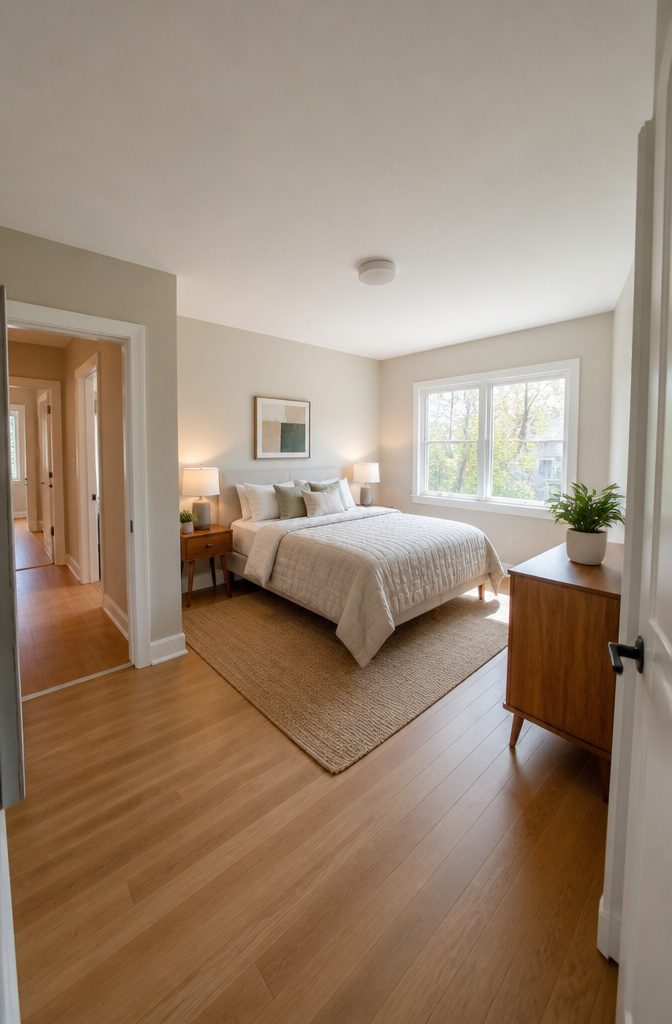
The average bedroom in the U.S. runs about 132 square feet, or roughly 11 feet by 12 feet. That figure comes from averaging every bedroom type together: master suites, secondary bedrooms, guest rooms, and kids’ rooms all get rolled into one number. In practice, that means individual bedrooms can land anywhere from 80 square feet on the small end to 350 or more for a spacious primary suite.
An 11-by-12-foot space is enough room for a bed, nightstands, a dresser, and walking paths that do not require turning sideways. It is not generous, but it is workable, and it is what most floor plans are actually drawn around. If you are measuring your own room to see whether a queen bed will fit or if you need to downsize to a full, this is the baseline to start from.

Queen Sheet Set Package Include-: {1-PC Fitted Sheet ( 60 X 80 ) Inch}, {1-PC Flat sheet ( 90 X 102 ) Inch}, {2-PC Pillowcase ( 20 X 30 ) Inches}

WARM PLUSH COMFORT FOR COOL NIGHTS: Made from soft, short-pile flannel-plush microfiber, this fitted sheet creates a smooth, cozy sleeping surface that feels especially inviting on chilly fall and winter nights. Perfect for winding down after a long day or enjoying a slow, comfortable morning in bed.
2. Master Bedroom Size
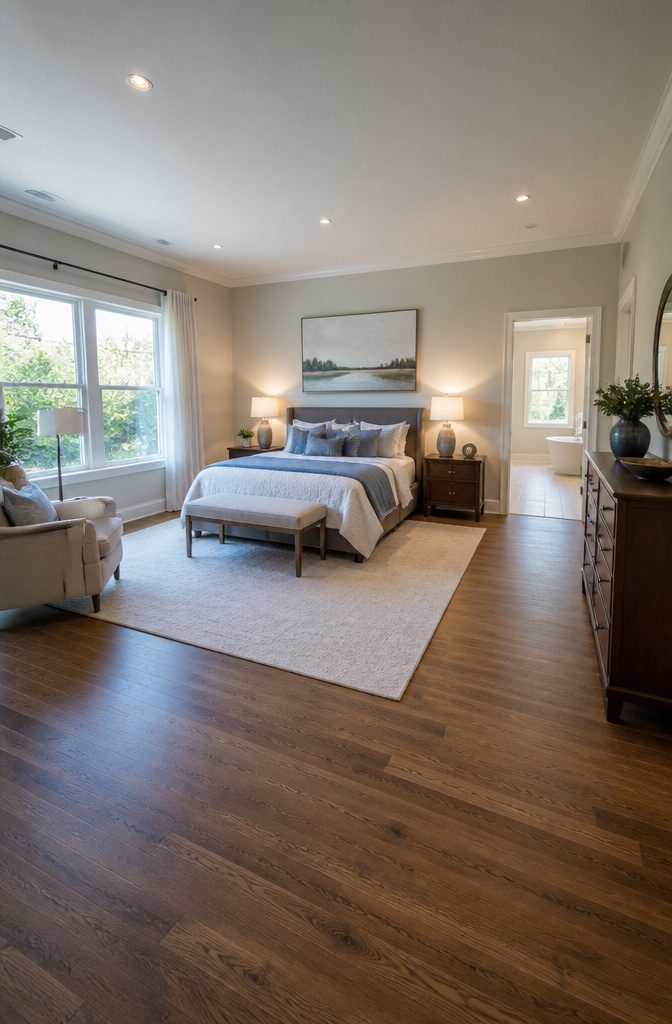
A master bedroom runs about 224 square feet, usually 14 feet by 16 feet. That is nearly double the footprint of a standard secondary bedroom, and the difference makes sense once you live with it for a while. This is the room meant to hold a king-size bed, two nightstands, a dresser, and still leave you space to walk around without shuffling sideways. Most floor plans from 1,500 to 2,500 square feet settle right in that 200 to 350 square foot range for the primary suite.
The gap between this and the overall bedroom average exists because builders treat the master as more than a place to sleep. It is the personal retreat, the one room that might absorb a small sitting area or an attached bath without eating the whole budget. In a 2,000 square foot home, the master bedroom typically claims around 11.3% of total finished space. That math lands you at roughly 226 square feet before you even add the closet or bathroom. Smaller homes under 1,500 square feet might squeeze down to 14 by 14, while anything luxury tends to push past 400 square feet and starts to feel like its own wing.

EXCLUSIVELY DESIGNED FLORAL PATTERN – This lumbar pillow cover features an original in-house designed floral pattern with crisp white tufted florals on a soft light taupe background, crafted to bring an elegant, one-of-a-kind accent to your bedroom or living room
Bed skirt for concealing a box spring, metal bed base, and under-bed storage space; helps deter dust from accumulating under the bed

Suitable for Most Types of Beds: Queen/King size suitable for Queen beds (60x 80in), King beds (76x 80in) and California King beds (72x 84in)
3. Secondary Bedroom Size
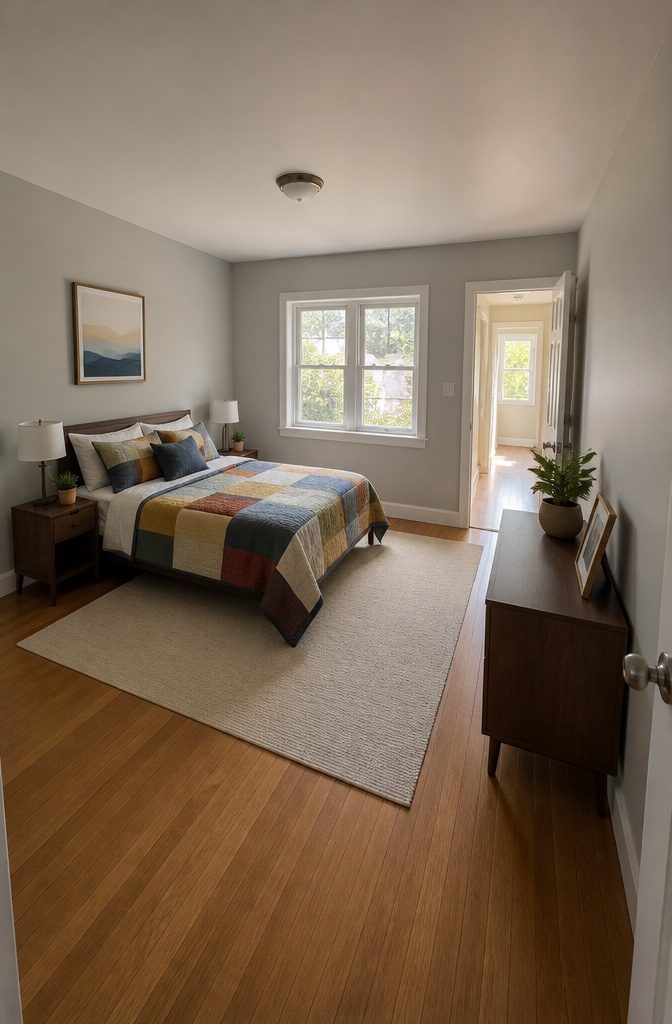
A secondary bedroom is any bedroom that is not the primary, and 120 square feet is the size you will run into most often, usually laid out as 10 feet by 12 feet. These are the second, third, or fourth bedrooms in a typical home, and they are built to a tighter budget of space than the main suite.
I have walked enough open houses to know that 10 by 12 is the point where a room stops feeling like a generous closet and starts functioning as real living space. At this size, a queen bed fits with nightstands on both sides and a narrow dresser, or a full bed opens up floor space for a desk. That flexibility is why builders keep coming back to it. A 10-by-12 room works as a guest room, a teenager’s bedroom, or a home office that can still handle an overnight visitor with an air mattress.
The layout matters more than the label. A secondary bedroom tucked down a hallway reads differently than one carved out of a basement or positioned right off the living room. The dimensions do not change, but how you use them does.

CUSHIONED AND SOFT: Washable rugs might already exist, but none are as luxurious to touch as ours. More like a mat, these competitor products might be easy to clean, but walking barefoot on them offers little to the imagination. Instead, Our area rugs 9x12 are made of thicker recycled materials, which is softer and more cushioned. This result is a soft and sumptuous addition to your home, ideal as bedroom rugs that perfectly complement family life

High-impact polystyrene (plastic) construction

Famous Art Nouveau Art: Portrait of Adele Bloch-Bauer I by Gustav Klimt - the classic icon of Art Nouveau reproduced at 10x12 inch with the scale and impact of the original
4. Guest Bedroom Size
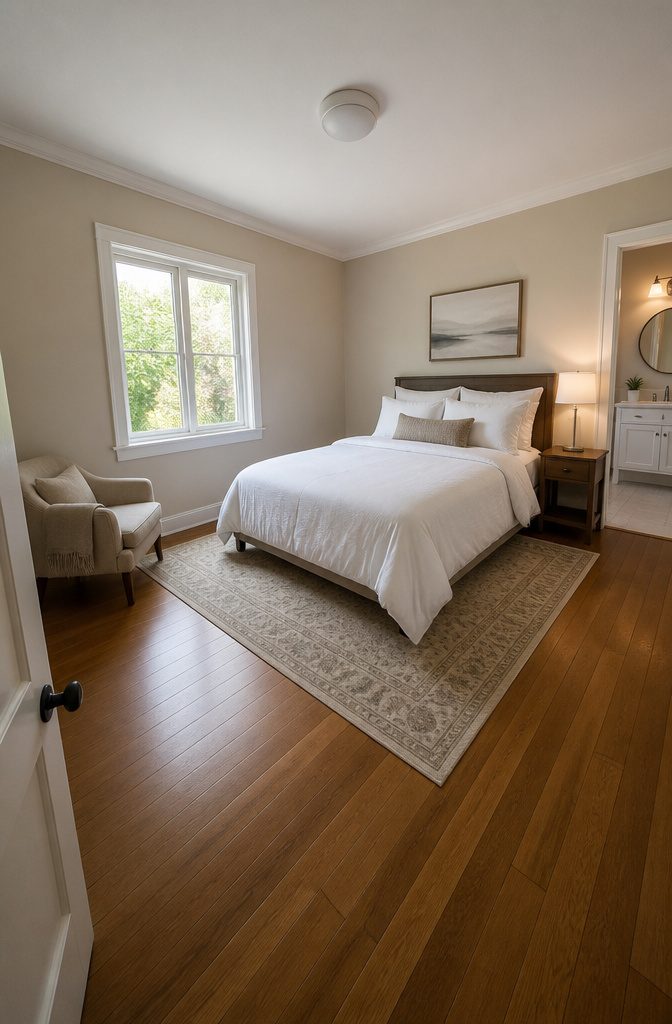
Guest bedrooms usually land around 10 by 12 feet, or 100 to 120 square feet, which is enough for a queen or full bed, a nightstand, and a small dresser without feeling cramped. That size works for most visitors and keeps the room from becoming a dumping ground for laundry.
Where guest rooms get interesting is how much they can swing. I’ve seen floor plans where a guest bedroom stretches to 150 square feet or shrinks to about 100, depending on whether the builder prioritized a bigger master suite or a third bathroom. Older apartments sometimes squeeze them smaller, while newer suburban homes might treat the guest room as a flexible second living space.
That flexibility is why the range matters more here than with other bedrooms. A guest room often doubles as a home office or hobby space, so extra square footage buys you a desk that doesn’t fold away. If you’re choosing between a 10-by-10 room and a 10-by-12, those two feet of length make the difference between a functional workspace and one where you bang your knee every morning.

【Multi-scene Application】This dresser is designed in a modern concise style, which is attractive and functional, making it suitable for any room. It can be a storage dresser in the bedroom or a side table in the living room, also great for closets, entryways, hallways, offices and more.

【Multi-scene Application】This nightstand is designed in a modern concise style, which is attractive and functional, making it suitable for any room. It can be a beside table in the bedroom or an end table in living room, also great for closets, entryways, hallways, offices and more.

3 Drawer Design: The table top measures 18" L x 14" W, and each drawer measures 14.3" L x 11.2" W x 2.6" H. The tabletop is large enough to hold a photo frame, lamp, or decoration. 3 wide drawers can store a variety of items such as remote controls, manicure kits, shavers, hair dryers, chargers, and more, so you can keep your bedroom neat and clean
5. Kids’ Bedroom Size
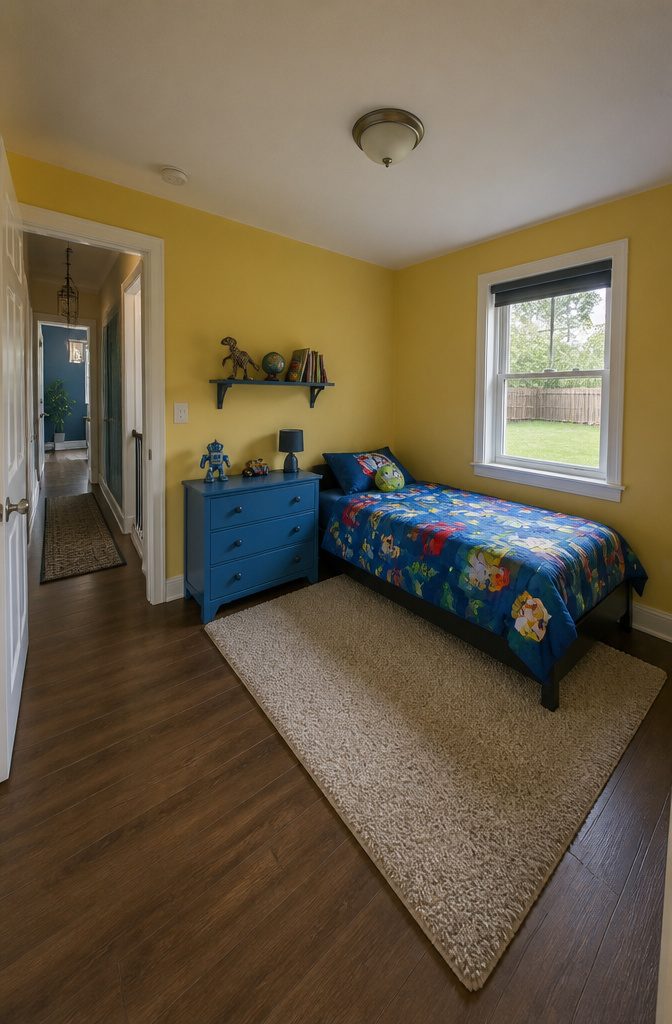
A kids’ bedroom typically runs 100 square feet, or about 10 feet by 10 feet, making it the smallest standard bedroom in most homes. That compact footprint works fine for children because a twin bed takes up less than 20 square feet, leaving room for a small dresser and either a child-sized desk or some toy storage.
Some layouts go smaller, around 80 square feet at 8 feet by 10 feet, though that gets tight once you factor in growing legs and accumulating stuff. If you are working with a shared room, bunk beds let two kids sleep in roughly the same 100 to 120 square feet that two separate twin beds would need 120 to 150 square feet to accommodate.
The legal minimum for a bedroom classification is 70 square feet, but that is a basement-level threshold, not a goal. In practice, anything under 100 square feet benefits from vertical thinking: wall-mounted shelves, over-the-door organizers, or a loft bed with desk space tucked underneath. Floor area disappears fast once a child is old enough to actually play in the room instead of just sleep in it.

Our high quality witty Surprise Face adhesive design comes in 9 inches by 7 inches. The pictures are for display and inspiration only. All of our vinyl wall decals are manufactured with premium industrial grade Lutema self-adhesive vinyls.


PHOTO FRAME SIZE: This black 8.5 x 14 frame is suitable for marriage license and pictures 7x10 with mat or 8.5x14 without mat. It can also display poster, artwork, painting, and more. Please note, for better photo retention and to prevent slipping, the display size will be 0.5inch smaller than the photo size.
6. Legal Minimum Bedroom Size
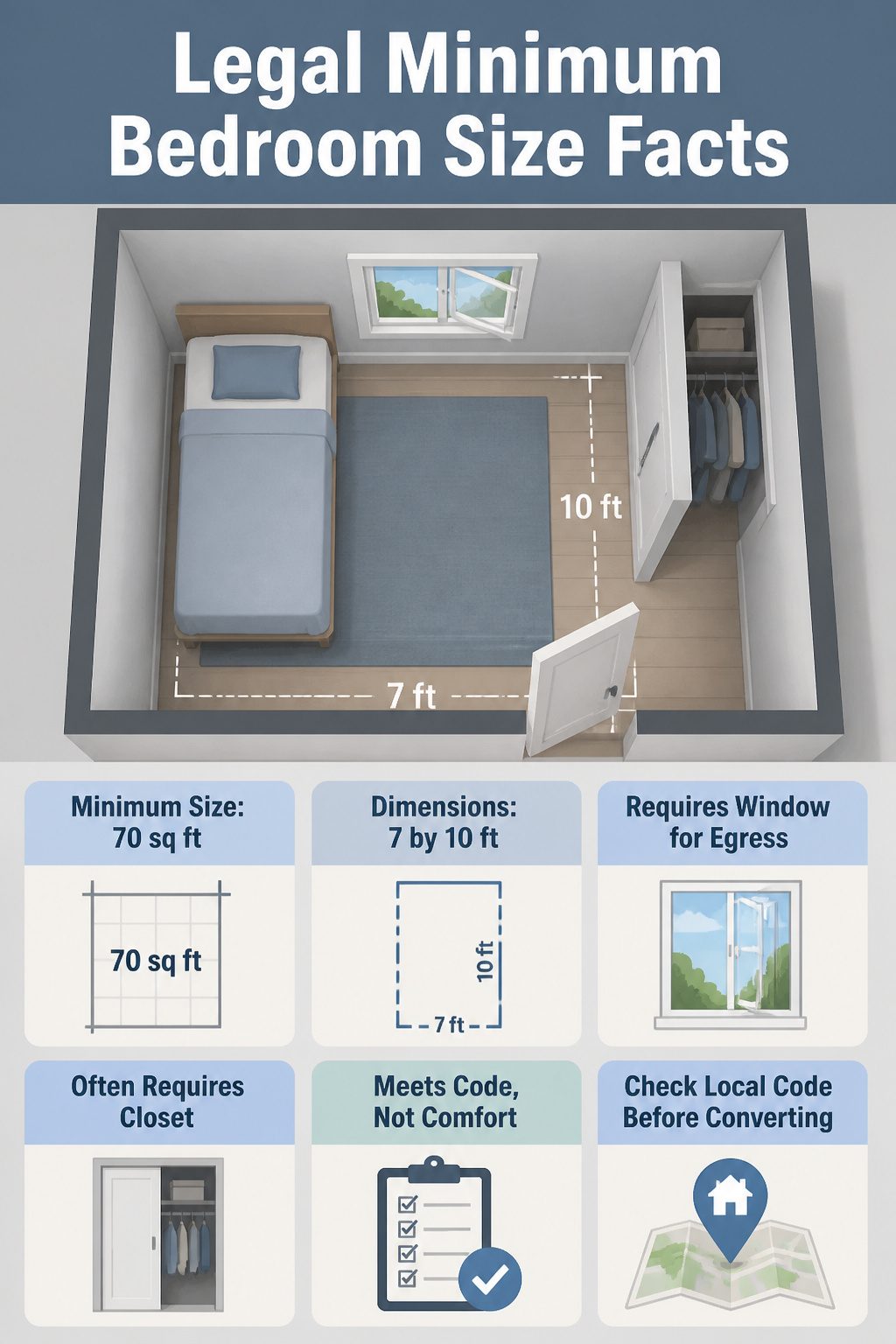
Most U.S. building codes draw the line at 70 square feet for a room to legally count as a bedroom, with at least 7 feet running in every horizontal direction. That works out to a footprint about 7 by 10 feet, which is just enough to squeeze in a twin mattress and still open the door. The same codes require a window that opens for natural light and emergency egress, and many jurisdictions also insist on a closet. These rules exist for safety, not comfort. A room that meets only the bare minimum will pass inspection, but living in it day to day is a different question. If you are converting a basement nook or listing a home, checking your local code matters. A space that looks like a bedroom to you might not legally be one to an appraiser or fire marshal.

SLIP INTO LUXURY: Experience the silky soft comfort of our 1800 Series microfiber bed sheets. Exceptionally smooth and breathable for that peaceful sleep. Superior craftsmanship and vibrant color choices for a magazine-worthy bedroom look.

Premium Egyptian Cotton: Crafted from 100% Egyptian cotton with a silky sateen weave for exceptional softness, breathability, and lasting comfort. The classic design creates a luxurious hotel-quality feel for a relaxing night's sleep.

Minimalist and Modern:This queen bed frame is made of metal, offering a simple and clean design.
What Changes Bedroom Size
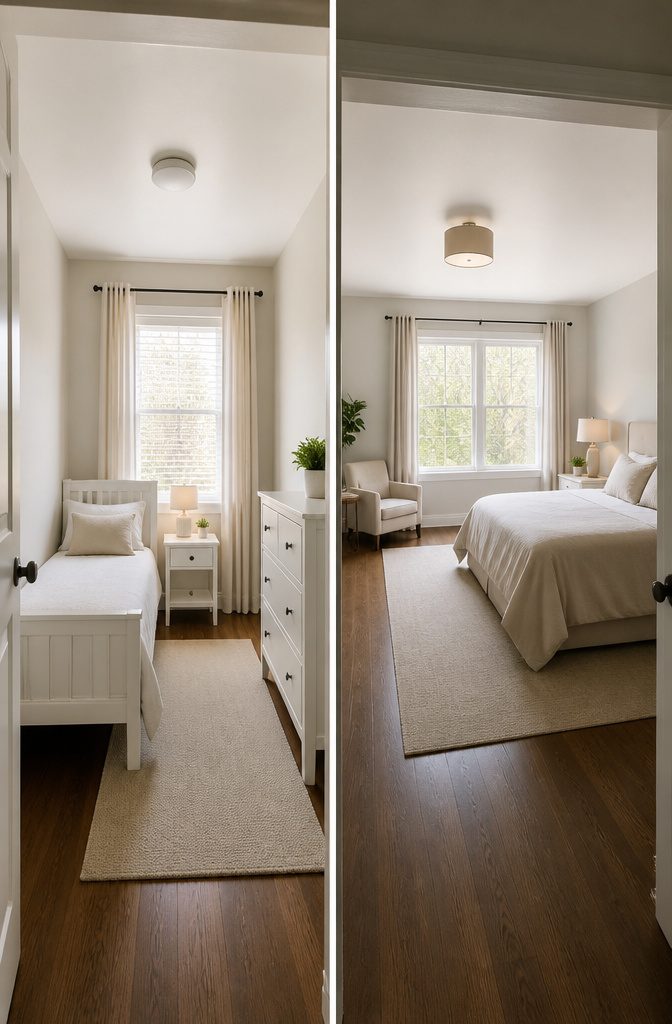
The biggest factor is usually what kind of home you’re in. Apartments squeeze bedrooms tighter than houses, and urban units run smaller still because every square foot costs more. Suburban builds have room to spread out, so a standard bedroom there might hit 12 by 14 feet or more while an older urban apartment can land around 8 by 10 feet.
When the home was built matters too. Pre-1970s places tend toward smaller, more uniform bedrooms across the board. New construction usually pairs a generous primary suite with tighter secondary rooms, so the square footage got redistributed rather than added.
Location shows up in regional patterns as well. States with newer suburban stock like Colorado and Texas trend larger, while older Northeast markets such as Massachusetts run more compact. Land availability and local building costs push those differences.
For me, reading through the spread of what’s out there, the era of construction is the most useful thing to check first. It tells you whether you’re likely dealing with four similar small rooms or one oversized primary with three afterthoughts, which changes how you plan furniture before you ever measure a wall.

Sheet set for creating a comfortable sleeping space and cozy bedroom environment

Elegant Geometric Dobby Texture: Designed with alternating vertical woven stripes and raised diamond-inspired geometric details, this white bed skirt adds subtle texture and dimension to your bed without overwhelming your bedroom décor.

Sturdy and Durable: The solid metal structure has a load-bearing capacity of up to 800 pounds, and the thickened bed foot makes the bed not shake
Fitting Furniture Without the Squeeze
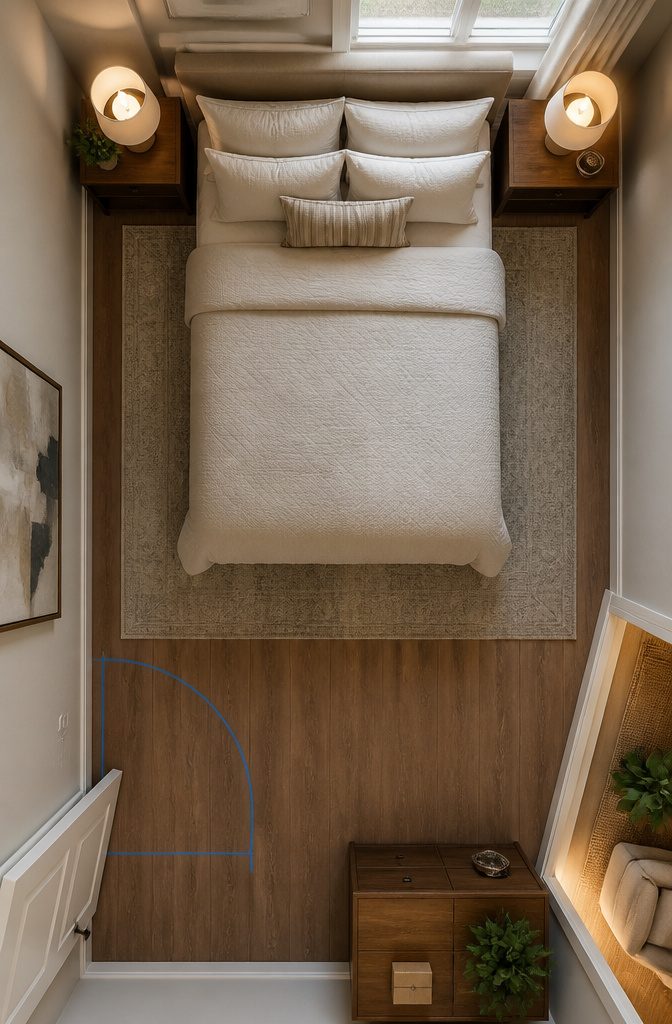
A queen bed takes up about 33 square feet on its own, but the real question is what happens when you add nightstands and still need to walk around. Leave at least 30 inches of clearance on three sides of the bed. That spacing lets two people get up without bumping knees and leaves room for the usual 18- to 24-inch nightstands.
Door swing eats more space than most people sketch on paper. A standard interior door needs about a 3-foot arc, and nothing kills a layout faster than a dresser placed where that arc needs to travel. I always tape out the swing with painter’s tape before I move anything heavy.
For a king bed, you are looking at a minimum 12 by 12 feet just to avoid feeling cramped once you add two nightstands and a dresser. A queen drops that closer to 100 to 120 square feet. If your room is under that, wall-mount the TV and skip the bench at the foot of the bed. The traffic path from door to closet matters more than the extra furniture.

INCLUDES FOUR CUBES: Keep your home tidy and organized with this set of 4 cubic storage baskets
CUSHIONED AND SOFT: Washable rugs might already exist, but none are as luxurious to touch as ours. More like a mat, these competitor products might be easy to clean, but walking barefoot on them offers little to the imagination. Instead, Our area rugs 9x12 are made of thicker recycled materials, which is softer and more cushioned. This result is a soft and sumptuous addition to your home, ideal as bedroom rugs that perfectly complement family life

5-PIECE OUTDOOR DINING SET: Includes 1 square glass table and 4 rattan patio chairs so you can create the perfect outdoor setting you've always wanted in your patio, backyard, sunroom, or porch
Frequently Asked Questions
what is the average bedroom size in the U.S?
The average bedroom in the U.S. is about 132 square feet, or roughly 11 feet by 12 feet. That figure rolls together every bedroom type: master suites, secondary bedrooms, guest rooms, and kids’ rooms. In reality, individual bedrooms can range from about 80 square feet to 350 or more.
what is the average master bedroom size?
A master bedroom averages about 224 square feet, typically 14 feet by 16 feet. That is nearly double the size of a standard secondary bedroom and gives you enough room for a king bed, two nightstands, a dresser, and clear walking space. In a typical 2,000 square foot home, the primary suite claims roughly 11.3% of total finished space.
what is the smallest a bedroom can legally be?
Most U.S. building codes set the minimum at 70 square feet, with at least 7 feet in every horizontal direction. The room also needs a window that opens for natural light and emergency egress, and many jurisdictions require a closet. A space that meets only those bare minimums will pass inspection, but day-to-day living in it is another matter.
how big should a guest bedroom be?
A guest bedroom should be about 100 to 120 square feet, usually 10 feet by 12 feet. That fits a queen or full bed, a nightstand, and a small dresser without feeling cramped. Extra square footage helps if the room doubles as a home office or hobby space, since a desk that does not fold away needs those two extra feet of length.