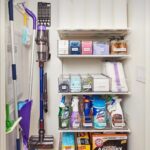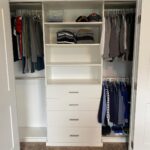


Closet shelves range from 10 to 24 inches deep depending on the closet type and what you store. The catch is that deeper shelves often waste space rather than create it, since anything past your reach turns into a forgotten pile. A 12-inch shelf puts folded sweaters within easy reach from the doorway; push to 16 inches in a reach-in closet and you’re hunting by touch.
Reach-In Closets
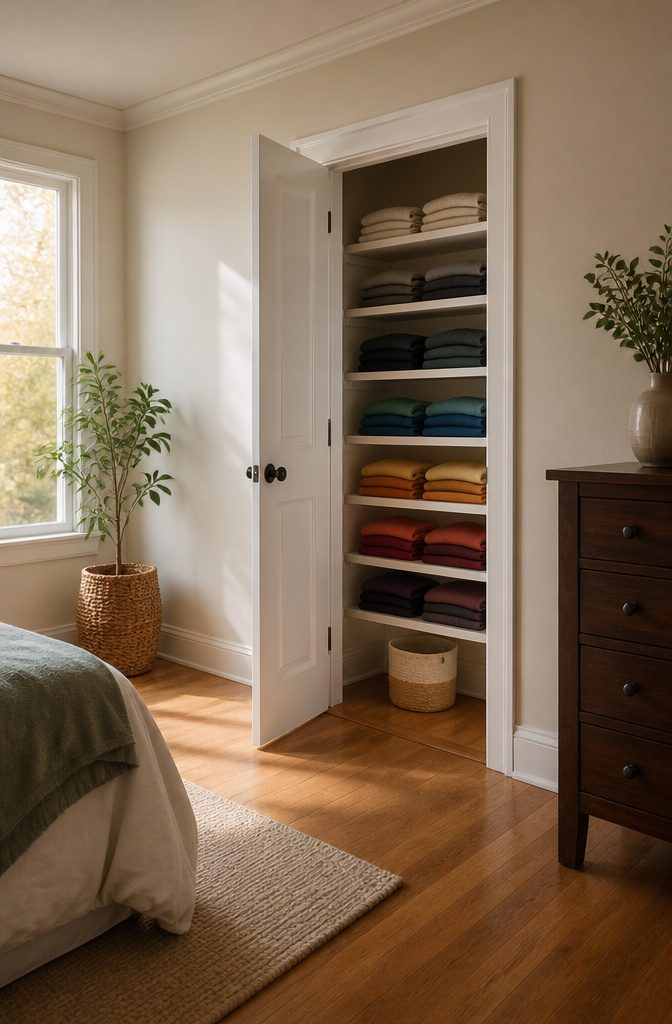
Reach-in closets are built around a single door and a shallow footprint, so the shelf depth has to work harder than it would in a walk-in. The sweet spot runs 10 to 14 inches, with the narrower end of that range fitting closets around 26 inches deep and the wider end reserved for closets deeper than 28 inches.
I used to think deeper shelves meant more storage until I helped a friend reorganize her hallway closet. She had swapped in 16-inch boards she found on sale, and within a month half her folded T-shirts had migrated to a back row she never touched. The reach-in format gives you one angle of access, one doorway of light, and no room to step inside and fish around. A 12-inch shelf puts the back row of sweaters within a forearm’s reach of the doorway; push that to 16 inches and you’re hunting by touch.
The 14-inch ceiling matters because of the reach depth rule most designers follow: the average person can comfortably reach back about 14 inches. Anything beyond that in a reach-in is dead space wearing the costume of storage. Ten inches handles shoes and accessories fine. Twelve to fourteen inches carries folded clothes without the pile collapsing into the door swing. Stick inside that window and everything stays visible, reachable, and actually used.

HIGH-QUALITY MATERIAL – HAUSHOF wire shelves are made from Q235 carbon steel, which can reach a maximum load capacity of 40 LBS. Wires are sprayed with white 80-120µm coating, thus avoiding corrosion, rust, and damage to your hands/clothes

HIGH-QUALITY MATERIAL – HAUSHOF wire shelves are made from Q235 carbon steel, which can reach a maximum load capacity of 40 LBS. Wires are sprayed with white 80-120µm coating, thus avoiding corrosion, rust, and damage to your hands/clothes

Made in United States
Walk-In Closets
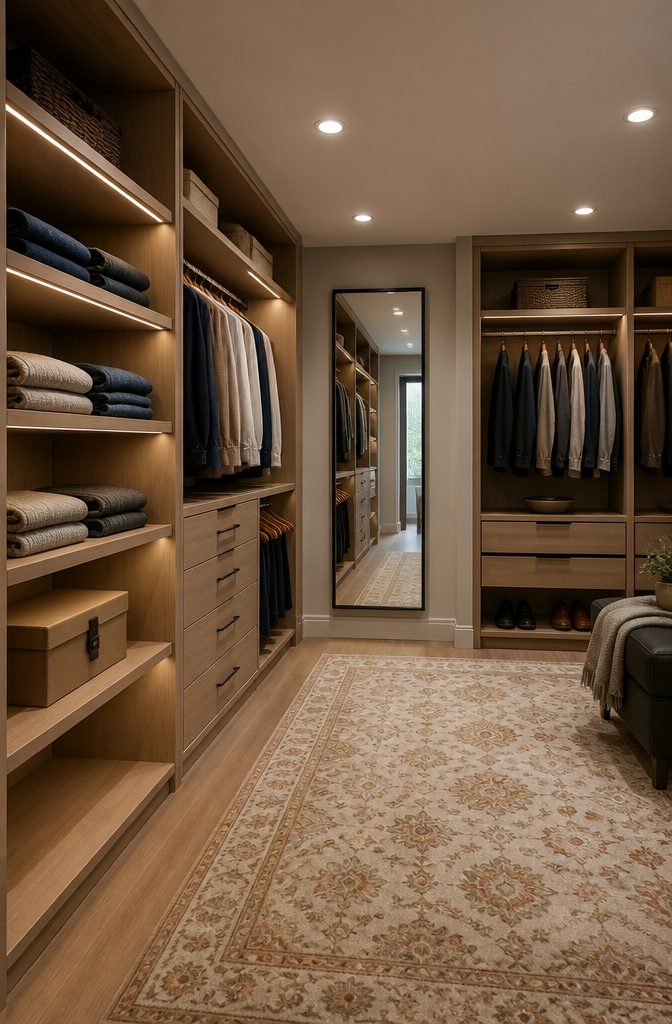
Walk-in closets give you room to go bigger, and 14 to 20 inches is the standard depth range here. That extra few inches over a reach-in makes all the difference for stacks of jeans, folded sweaters, or bins of out-of-season clothes you want out of sight but within reach.
What convinced me, reading through a bunch of these layouts, is how much the walk-in format changes the math. You are not stuck reaching past a door jamb or fishing around a single fixed hang rod. You can walk up to a shelf from straight on or the side, which means 16- or 18-inch shelves stay usable even when loaded deep. One thing I would watch, though: if your walk-in is on the tighter side, say around five feet wide, stick closer to 12 inches on both walls. Go 16 inches on each side and your middle path shrinks to about 28 inches, which starts to feel like a hallway you are storing clothes in.

Massive 59" Family-Sized Capacity Rods – Say goodbye to cramped closets! While ordinary hanging rods stop at a flimsy 39", our 4 ultra-long expandable rods stretch to a staggering 59". Plus a extra middle short rod (5 RODS TOTAL!). This open wardrobe offers monstrous space for heavy winter coats, long dresses, and your entire family's seasonal gear. (Pro tip: Keep an 8" overlap for rock-solid, wobble-free stability!)

UPGRADED BRACKETS FOR STRONGER SUPPORT: The newly designed triangular brackets provide enhanced stability and a 150 lb weight capacity, ensuring your wire shelf stays firmly in place even under heavy loads. Each bracket also features built-in rod holders, perfect for hanging clothes, rods, or other items with ease.

❀ Adjustable storage shelf rack,use for wardrobe / closet dividers, for kitchen,bedroom,bathroom, utility rooms, garages,etc. It can be installed in any place suitable for this size
Wardrobe Closets
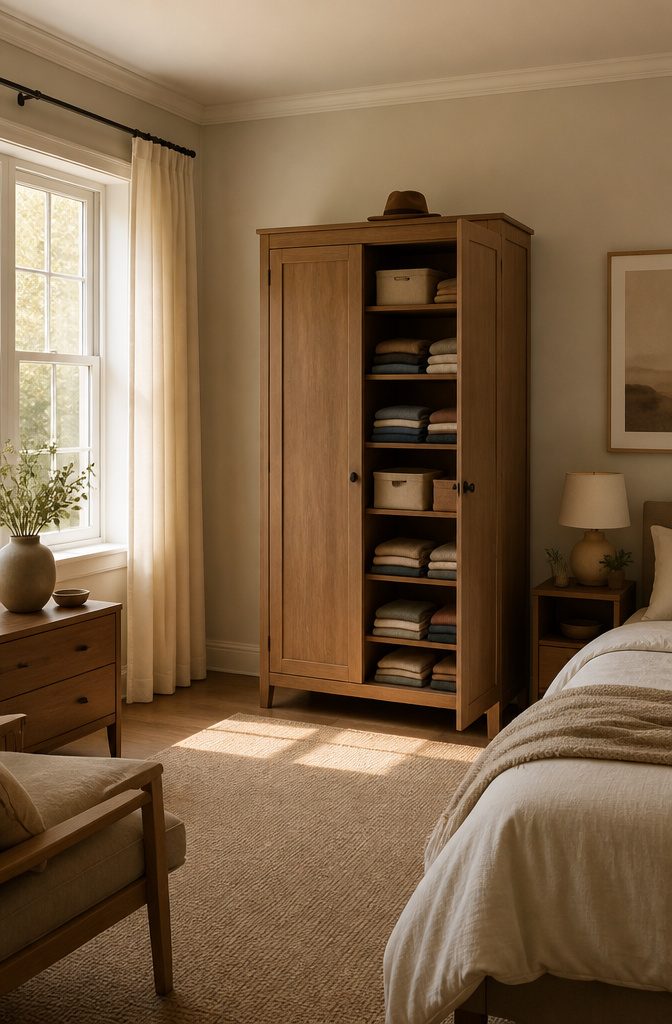
Freestanding wardrobe closets usually run 10 to 14 inches deep on their shelves, which matches reach-in closet dimensions because the same constraints apply. You are standing in front of a single opening, reaching straight in, and the whole unit often sits in a bedroom corner or rental where floor space is already tight.
A 10-inch shelf works fine for folded shirts, accessories, and shallow baskets. If the wardrobe interior clears 28 inches or more, 12 to 14 inches becomes manageable without the contents spilling past the door frame when you close it. I would not push deeper than that in a wardrobe. The whole point of these units is keeping things visible and grab-and-go; extra depth just means lost items in the back and doors that will not shut flat.

MODERN MINIMALIST DESIGN: This 3-tier closet organizer uses a clean open-shelf layout to enhance closet organizers and storage in wardrobe closets, bedrooms, and living spaces, making the closet organizer practical and space-saving

Whitmor's closet shelves create multi-purpose additional storage

Linen Closets
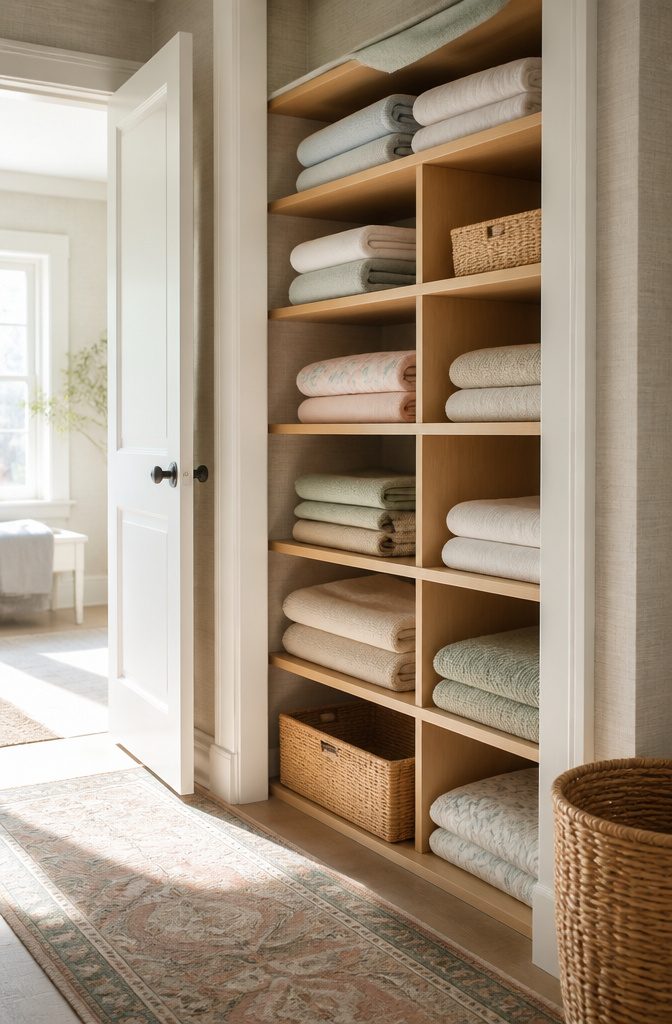
Linen closets run narrower than most people expect. The standard shelf depth sits at 12 to 16 inches, with the deeper end handling towels and bedding without swallowed-in-the-back syndrome. I have seen 14-inch shelves work as a practical middle ground: two folded bath towels stack neatly side by side, and a folded queen sheet set fits front to back with no overhang.
Vertical spacing matters just as much as depth. Folded towels need 12 to 15 inches between shelves to stack three or four high without toppling. Go tighter and you are stuck with single layers; go looser and you are burning storage height for air.
Deeper shelves—14 to 16 inches—are better for storing towels, linens, and bulky items. For bedding and towels, 12 to 15 inches [of vertical spacing] works better.
— Angi
That 12 to 15 inch gap is the figure to write down if you are marking studs for new shelving. It is enough clearance for a full stack plus your hand sliding in from above.

SPACE-SAVING STORAGE: Featuring a compact footprint of 18" x 12", the Sakugi wire shelving unit is engineered to save valuable floor space, making it ideal for small rooms or tight areas. In addition, this space-saving metal shelf allows multiple units to be seamlessly combined, creating a flexible storage solution that can expand to suit larger spaces or adapt to unique layouts.

Full-Extension Soft-Close Slides: Smooth, controlled pull-out access for everyday use

【Expandable Unique Design】Our closet shelf can extend its length from 16.81 inches to 28.74 inches, making it suitable for different usage scenarios. You can adjust the shelf width to fit your space and maximize storage. Neatly organize the cluttered items in your closet, such as off-season quilts, shoeboxes, and other storage containers.
Pantry Shelves
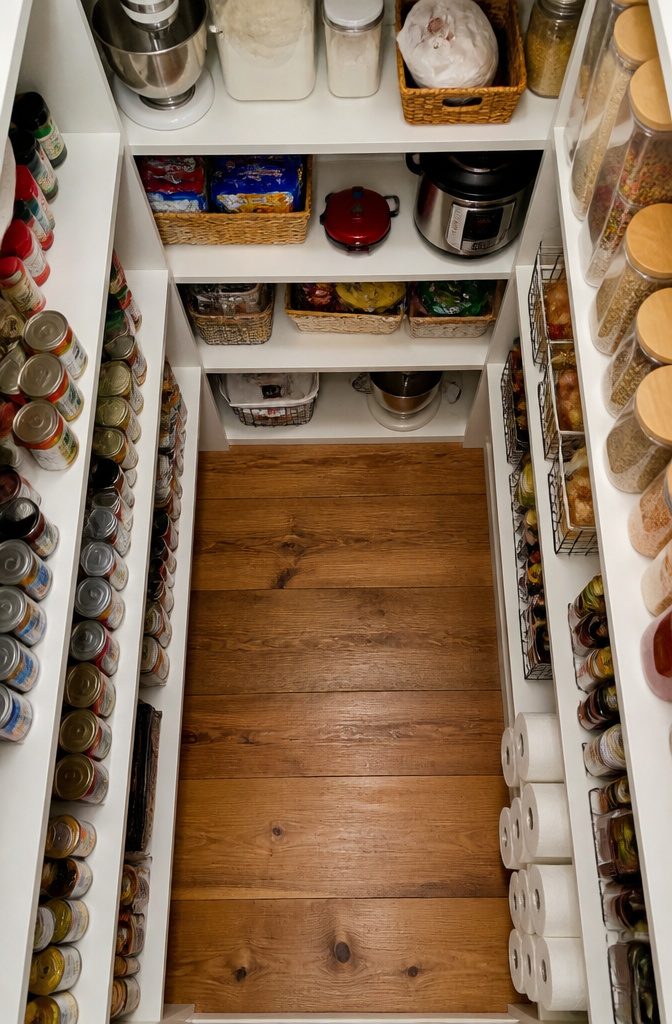
Pantry shelves run 12 to 18 inches deep, which is a little more generous than closet shelving because food storage asks for different things. The shallow end of that range, around 12 inches, lines up perfectly with a single row of canned goods or cereal boxes. You will see everything at a glance and nothing disappears into the dark back corner.
Move toward 18 inches and you start fitting small appliances, the stand mixer you pull out twice a month, or those bulk warehouse packs of paper towels. The tradeoff is real though. I have opened enough pantry doors to know that anything past about 14 inches deep means the back third becomes a hiding spot for expired soup and duplicate spice jars. You are either committing to a step stool and a flashlight or accepting that some items will live back there until you move.
If you are building new, I would land at 14 or 16 inches and call it done. Deep enough for a slow cooker, shallow enough that you still own what you own.

Sufficient quantity: the package includes 10 sheets of Jasmine scented liners, which are well packaged during the transportation process and the enough quantity can meet your home decor and replacement needs

Organized Doll Clothes Storage: This wooden doll closet features a hanging rod and bottom shelf for organizing dresses, coats, shoes, bags, and small doll accessories. The enclosed design keeps favorite outfits neatly displayed while adding a charming pink accent to pretend-play rooms

Organized Doll Clothes Storage: This wooden doll closet features a hanging rod and bottom shelf for organizing dresses, coats, shoes, bags, and small doll accessories. The enclosed design keeps favorite outfits neatly displayed while adding a charming pink accent to pretend-play rooms
Utility Closets
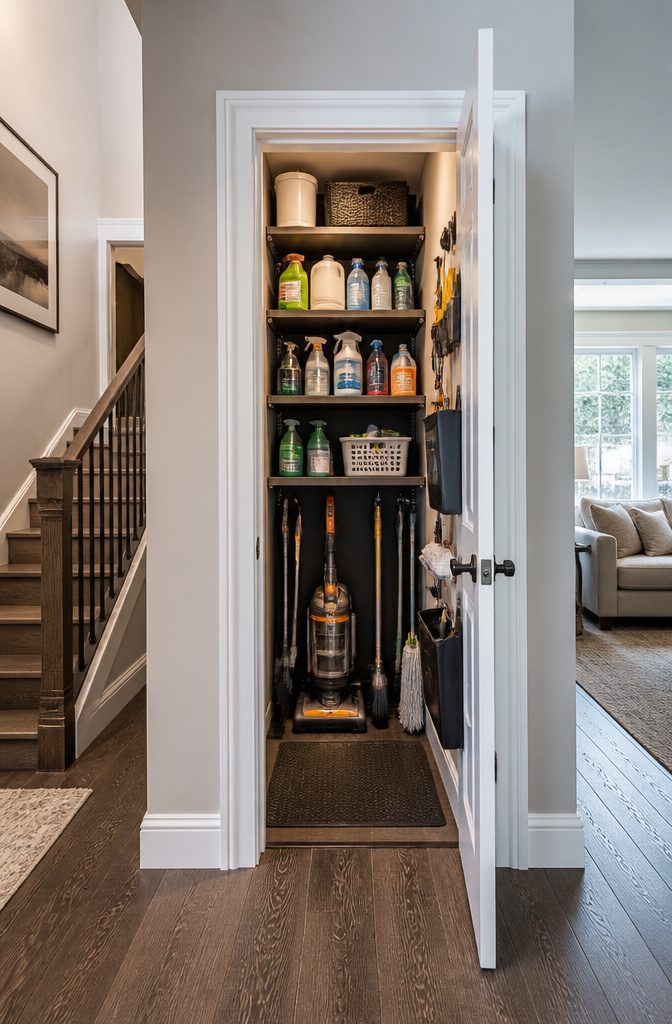
Utility closets are the workhorses of a home, and their shelves need to earn that title. The standard depth runs 10 to 16 inches, which is a wider spread than most closet types because the stuff inside varies so much.
Shallow shelves around 10 to 12 inches suit spray bottles, toolboxes, and the cleaning supplies you grab twice a week. Nothing gets lost in back. But a vacuum cleaner, a bulk paper towel haul, or a shop vac needs that 14- to 16-inch depth or it hangs off the front edge and the door won’t close.
The gap between those numbers matters when you’re planning. A utility closet stuffed with mismatched depths wastes more space than it saves. If you’re storing mostly tall bottles and long-handled tools, the deeper end of the range pays off. For a mix, I’d rather see one deeper lower shelf for bulky items and a shallower upper row for the daily stuff you actually want to reach without a step stool.

100% Solid Wood

New & Improved Design : Evelots Set of 8 closet shelf dividers for wooden shelves are made from strong steel that can last. Easily separate and section long shelves so you can stack your clothing, towels, purses, and bedding into neat organized piles that will not topple over. The 3" bracket slips under your shelf to provide extra stability. Perfect for closet separators for your bag, tshirt , or linens. Any solid or wood shelf can be organized in seconds. Sold on Amazon for over 6 years

Maximizes Vertical Closet Space: 10 tiers of cubbies for you to make full use of narrow closets or storage areas; helping you organize shoes, clothes, and other items without taking up floor space
Entryway Closets
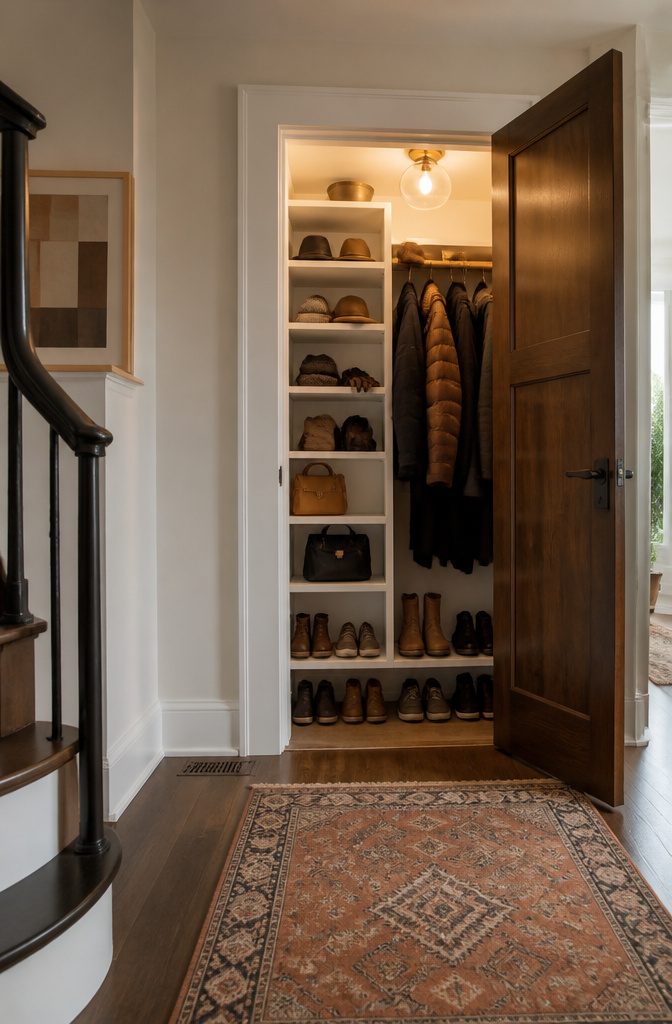
Entryway closets sit right where traffic is tightest, so shelf depth matters more than in any other spot in the house. 12 to 14 inches is the standard that keeps hats, gloves, and bags within reach without the shelf lip jutting into the hallway. Any deeper and small items start sliding to the back where you’ll forget them; I’ve watched enough morning routines stall while someone digs past a jumble of scarves to know that "black hole" problem is real.
Shoes and boots fit fine on that depth, and a lower shelf at about 12 inches handles most pairs without wasted space. The rod above sits at 66 to 70 inches for coats, with a shelf up at 80 inches for the occasional item you grab less often. In a narrow foyer, those few inches of saved depth are what let two people pass without a shuffle.

WOOD CLOSET SHELF: Add on shelf for SuiteSymphony custom closet system or use on its own

Expandable: 40.5” - 73” L x 12' D x 10.5’ H – White - Closet Rod with Hanging Shelf - Installs Between 2 Side Walls in Minutes Without Cutting or Complicated Measuring

Use individually or add to starter or deluxe closet kits.
Accessibility and Depth
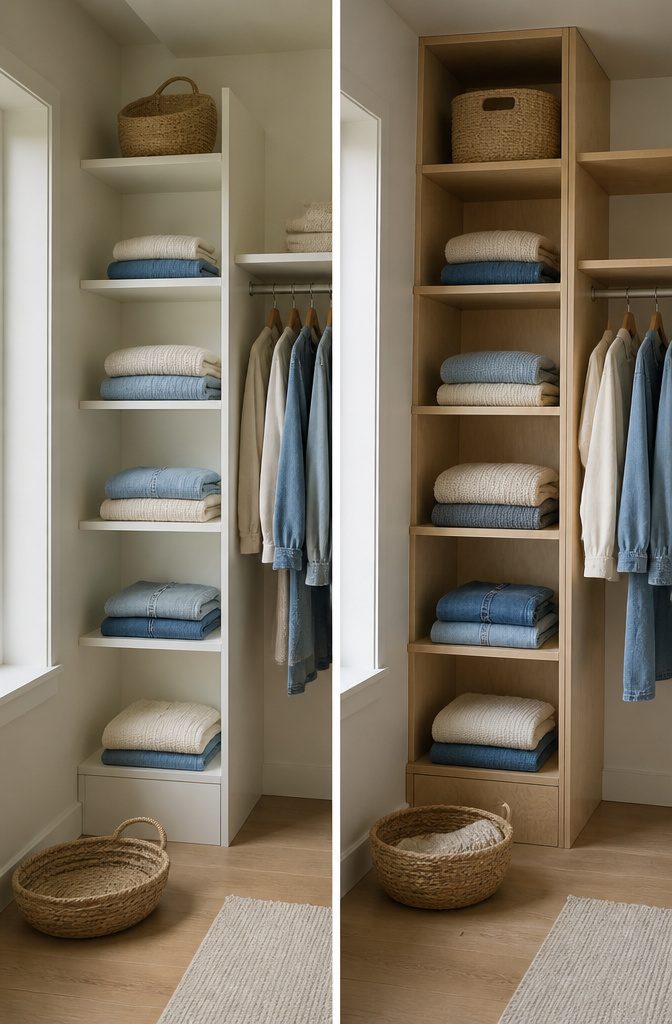
Shelf depth is the single most underestimated factor in closet design, and the mistake most people make is assuming deeper is always better. A shelf that stretches too far past your reach doesn’t add storage; it creates a dead zone where items disappear. I’ve seen closets where the back half of every shelf turned into a forgotten pile of single socks and out-of-season scarves.
The sweet spot depends on what you’re storing and how you access it. Shelves around 10 to 12 inches deep keep everything visible and within easy reach, which is why they work well for pantries and linen closets where you grab items daily. Go deeper only when the items themselves demand it, and even then, plan for the spatial relationship between your shelf, your doorway, and whatever hangs nearby. A deep shelf crowded by a hanging rod becomes awkward fast.
Using the same depth for every shelf in a closet is a common design error. Your folded sweaters need different real estate than your shoe boxes or your spare bedding. Tailor each shelf to its actual contents, or you’ll end up with wasted space and the frustration of never quite seeing what you own.

HIGH-QUALITY MATERIAL – HAUSHOF wire shelves are made from Q235 carbon steel, which can reach a maximum load capacity of 40 LBS. Wires are sprayed with white 80-120µm coating, thus avoiding corrosion, rust, and damage to your hands/clothes

【Sturdy and Durable】The heavy duty hanging closet organizer is made of metal with a smooth powder-coated coating, which not only protects the wall-mounted closet organizer shelves from wear, rust, and corrosion but also keeps your clothes from getting scratched. Each floating shelves can support up to 66 pounds, and the closet hanging rod can securely hold 15-20 items of clothing. Each connection point on the closet shelf organizer is reinforced with metal screws to ensure long-term use.

Adjustable and Custom Heights
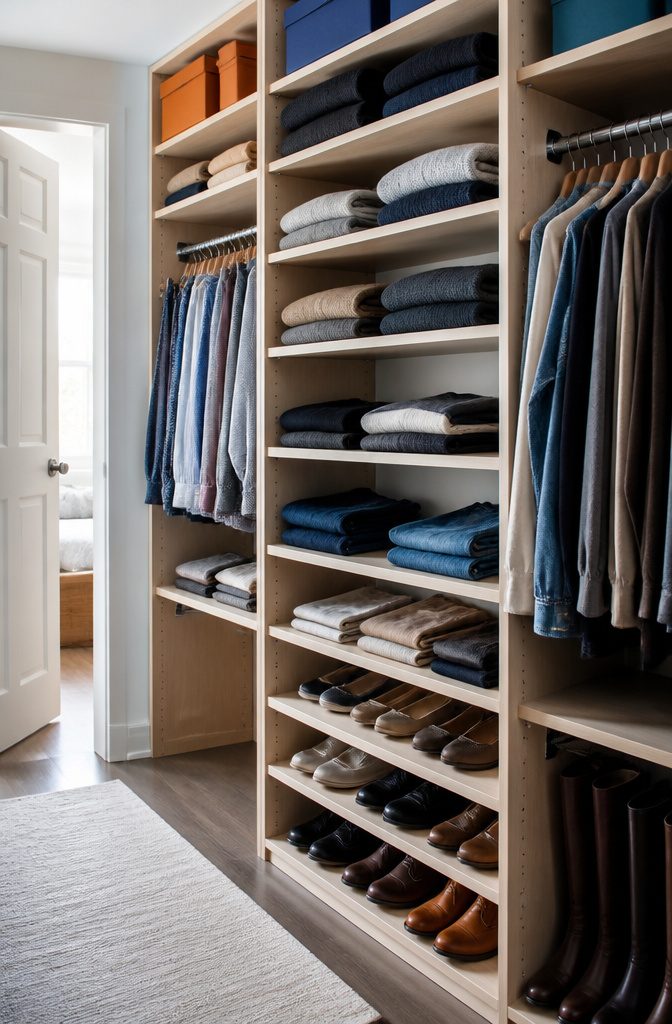
Adjustable shelf tracks with clips let you raise, lower, or swap shelves as your storage needs shift. That flexibility pays off in shared closets, kids’ rooms, or anywhere your wardrobe changes with the seasons. The upfront cost runs a bit higher than fixed shelving, but you save the hassle and expense of ripping everything out later.
The spacing matters more than most people realize at first. 12 to 15 inches of vertical clearance works best for folded clothes, giving you room to stack sweaters or jeans without crushing the pile. Shoe shelves sit much tighter: 6 to 8 inches between levels fits everyday flats and sneakers without wasting headroom. Boot storage needs more breathing room, so you’ll want to drop a shelf entirely or plan for a taller zone.
What I like about these systems is that depth adjusts too. A track system can hold 12-inch shelves for shoes one year and 14-to-16-inch boards for linens the next if you swap the brackets. That range, 12 to 24 inches, covers most closet jobs without custom carpentry.

【Expandable Unique Design】Our closet shelf can extend its length from 16.81 inches to 28.74 inches, making it suitable for different usage scenarios. You can adjust the shelf width to fit your space and maximize storage. Neatly organize the cluttered items in your closet, such as off-season quilts, shoeboxes, and other storage containers.

【Tailored for Tiny Spaces】 Tired of cluttered closets? Our 18.9" wide closet tower features 5 expandable hanging rods (18.5"-31.5"), effortlessly adapting to small apartments, narrow walk-ins, or nursery nooks. Maximize every inch of your vertical and horizontal closet space without the need for custom renovations. Can fit 3.2FT, 4FT, 5FT, 6FT, and 6.8 ft with adjustable rods

MODERN CLOSET SYSTEM DESIGN: This closet organizer combines a vertical shelf tower with two hanging bars to create flexible closet organizers and storage for a wardrobe closet, bedroom closet, or hallway closet system
Materials and Weight
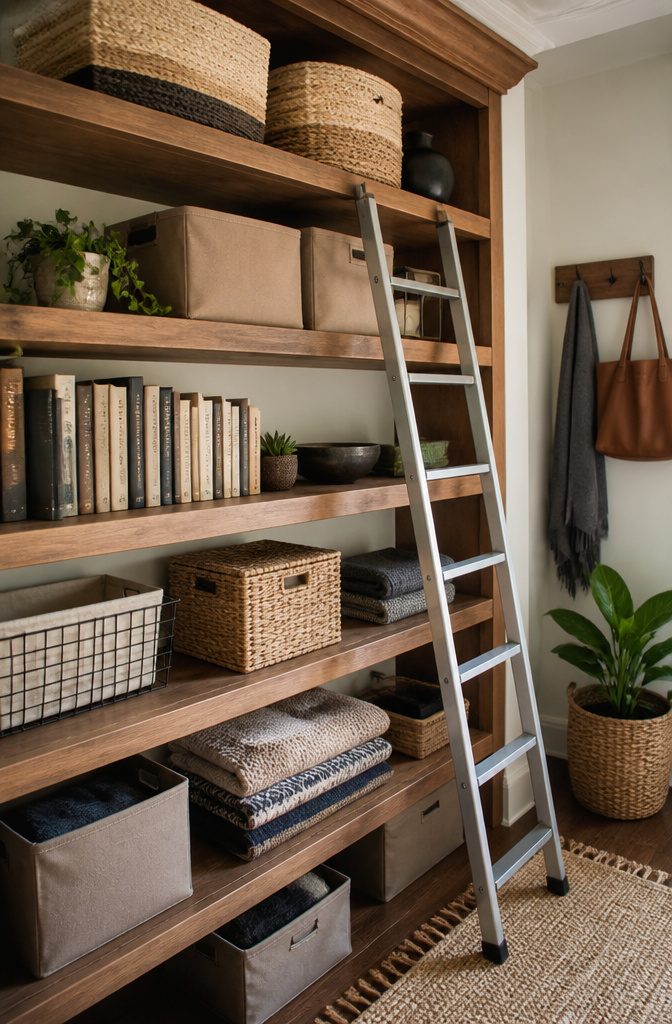
Solid wood or plywood shelves handle the deepest spans without bowing, holding steady at 16 to 24 inches even under heavy loads like books or thick blankets. Wire shelving runs lighter and cheaper, but it is happiest in the 12 to 16 inch range, best for clothes and linens where airflow matters more than brute strength. MDF splits the difference, budget-friendly at 12 to 18 inches, though it will sag over time if you pile on too much.
Span matters as much as depth. Keeping any shelf under 36 inches between supports cuts the sag risk, and a center bracket buys you more length without drama. Wire typically carries 30 to 50 pounds per linear foot, while properly anchored wood can take more. Heavy bins of shoes or stacks of jeans belong low, both for the shelf’s sake and for yours. If kids are in the house, that lower placement doubles as a safety call: less weight overhead, less chance of anything coming down.

Multifunctional Support: This is not a normal shelf bracket. Except installing wood board on it, you can also put a rod in front of this bracket and unlock its new function---using it as a clothes rack since there is a hook on the top of the bracket. The diameter of the hook is 1 inch, fitting the most rods.

DIY Modular Design: This modular kids closet adjusts as your little one grows and adapts easily to changing needs over time. Whether you want a compact organizer for a nursery or a larger wardrobe for a bedroom, this flexible closet fits various room layouts, giving your child a practical and personalized storage solution.

SPACE-SAVING DESIGN: This narrow closet organizer features an 10-tier slim tall open shelves design that suits bedrooms, dorms, living rooms, and offices, making the closet organizer suitable to any room setting
Ventilation and Lighting
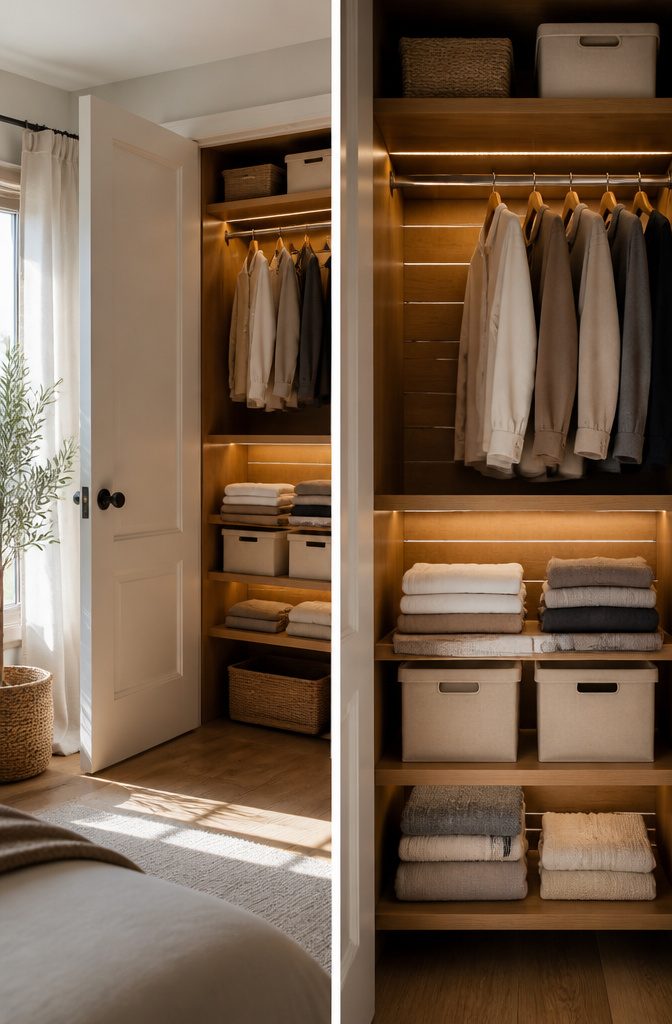
Wood shelves in a closed closet need air moving across them or they will start to smell. I learned this the hard way with a solid wood setup in a back hallway closet: the clothes pressed against the back panel picked up a faint mustiness after one humid summer. Wire shelving fixes this by letting air circulate, though you will want bins for small things that slip through. If you prefer the look of wood, leaving a gap between the shelf back and the wall helps, or choosing a ventilated design that channels air along the surface.
Deeper shelves need their own light, because anything past about the first twelve inches sits in shadow once the door closes. Overhead fixtures rarely reach the back corner where your spare linens or off-season boots end up. A battery-powered LED strip along the underside of each shelf runs about $15–25 and takes five minutes to stick in place. Wired puck lights are cleaner if you have an outlet nearby, but the battery route is usually enough for a reach-in closet you use daily. Either way, the point is seeing what you actually stored back there without dragging a step stool and a flashlight into a small space.
Shoe Shelf Depths
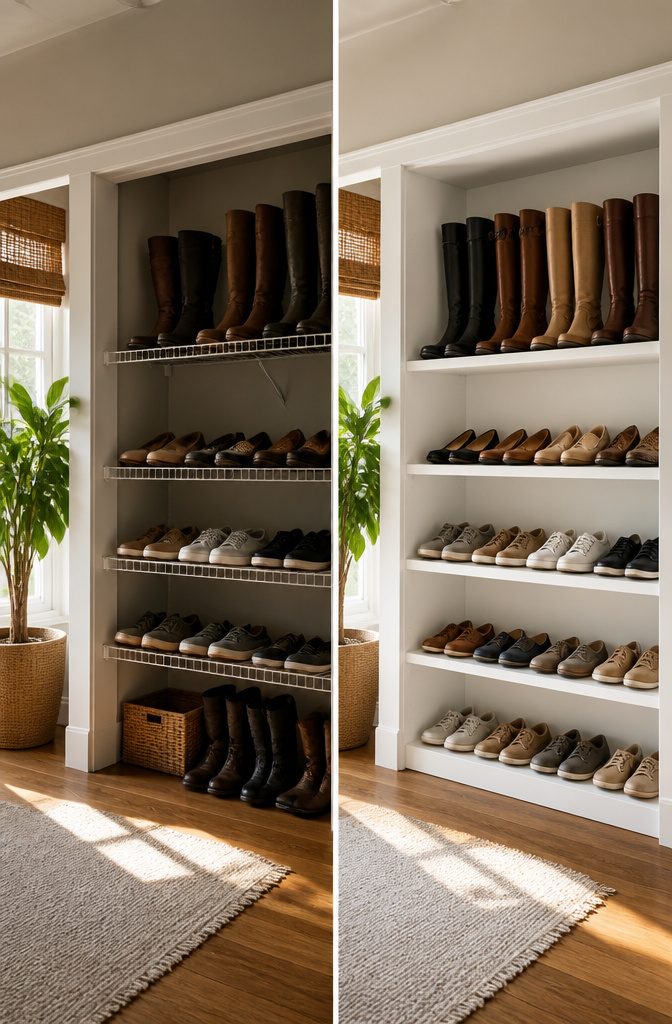
Shoe shelves run a little shallower than the rest of your closet. Most flats and sneakers fit fine on a 10 to 12 inch depth, which keeps them from getting shoved to the back where you forget them. Boots need more room, so plan for 14 to 16 inches there.
Vertical spacing matters just as much. Shoe shelves sit closer together than standard closet shelves, about 6 to 8 inches apart for everyday pairs. That tighter stack keeps your wall from turning into a shoe pile. Boots need their breathing room, though, and 12 to 15 inches of clearance keeps them upright without crushing the shaft.
I have seen closets where someone used the same 14-inch depth for everything, and half the shoe shelf ends up as dead space behind the heels. Go shallower for shoes, and you free up floor area for a laundry basket or a second row underneath.
Frequently Asked Questions
How deep should closet shelves be?
Closet shelves should run 10 to 20 inches deep depending on the closet type. Reach-in closets work best at 10 to 14 inches, walk-ins at 14 to 20 inches, and wardrobe or freestanding units at 10 to 14 inches. The key is matching depth to how you actually reach the contents, not just maximizing storage space.
What is the best depth for linen closet shelves?
Linen closet shelves should be 12 to 16 inches deep, with 14 inches as a practical middle ground. Two folded bath towels stack side by side at that depth, and a folded queen sheet set fits front to back without overhang. Pair that with 12 to 15 inches of vertical spacing between shelves so stacks stay stable.
How deep should pantry shelves be?
Pantry shelves should be 12 to 18 inches deep. Twelve inches lines up with a single row of cans and cereal boxes where everything stays visible. Sixteen to 18 inches fits small appliances and bulk items, though anything past 14 inches risks hiding expired goods in back corners you forget to check.
What is the ideal depth for shoe shelves?
Shoe shelves should be 10 to 12 inches deep for flats and sneakers, and 14 to 16 inches for boots. The shallower depth keeps everyday pairs from sliding to the back where you lose track of them. Vertical spacing matters too: 6 to 8 inches between levels for regular shoes, 12 to 15 inches for boots.
How high should closet shelves be?
The top shelf in most closets sits at 80 to 84 inches from the floor, with the hanging rod below it at 66 to 70 inches for coats. For folded clothes, leave 12 to 15 inches of vertical clearance between shelves so stacks don’t crush. Shoe shelves sit much tighter, about 6 to 8 inches apart.