

A coyote can jump 6 to 8 feet on its own, but up to 14 feet if it can grip the top rail with its front paws and pull itself over. Without that leverage, a healthy adult clears only about 4 or 5 feet from a standing start. Chain-link fencing makes the difference worse, since the mesh gives their claws built-in footholds for that two-phase climb.
How High a Fence a Coyote Can Jump
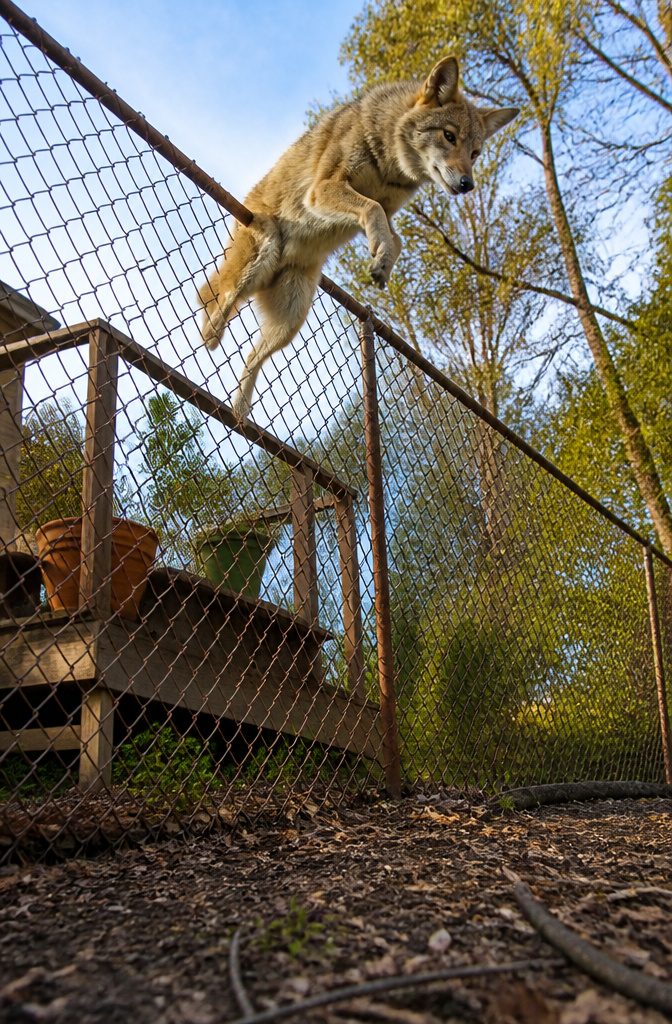
A coyote can jump 6 to 8 feet on its own, and up to 14 feet if it can grip the top with its front paws and pull itself over. From a standing start without any leverage, that drops to about 4 or 5 feet. Most healthy adults clear a 6-foot fence in just over one second, which is why it can look like they sailed right over without touching it.
What actually happens is a two-part move: the coyote jumps to grab the fence top with its front paws, pulls to add height, then brings its back legs up to spring off. That grip is the difference between a jump and a climb. Chain-link helps them, since the openings give their claws purchase. Smooth surfaces without anything to grab are harder for them, though a determined coyote still has options like digging if the fence bottom is not secured.
Age and physical condition factor in too. A younger, larger coyote jumps higher than a smaller or older one, and terrain matters for whether they get a running start.
PRIMAL INSTINCT - Keep your pets safe while embracing their primal instincts! Our cat fence topper and outdoor barrier blends seamlessly with your existing fence, keeping cats and other animals contained for worry-free outdoor fun.

【Upgraded Dig Defense Gap】Upgraded yard fence gap is reduced to 1.26 inches, which can more effectively prevent pets from breaking free from the gap to escape or other small animals from entering and damaging your garden and yard. You will receive 10 pcs garden fencing, snaps and zip ties, total length about 10.83 ft

EXCEPTIONAL PROTECTION:Crafted with high - strength materials, our cat-proof net forms an impenetrable barrier. It effectively thwarts even the most agile cats from leaping over walls. This ensures your beloved feline companions remain safely within the confines of your property, giving you peace of mind
What Helps Coyotes Jump Higher
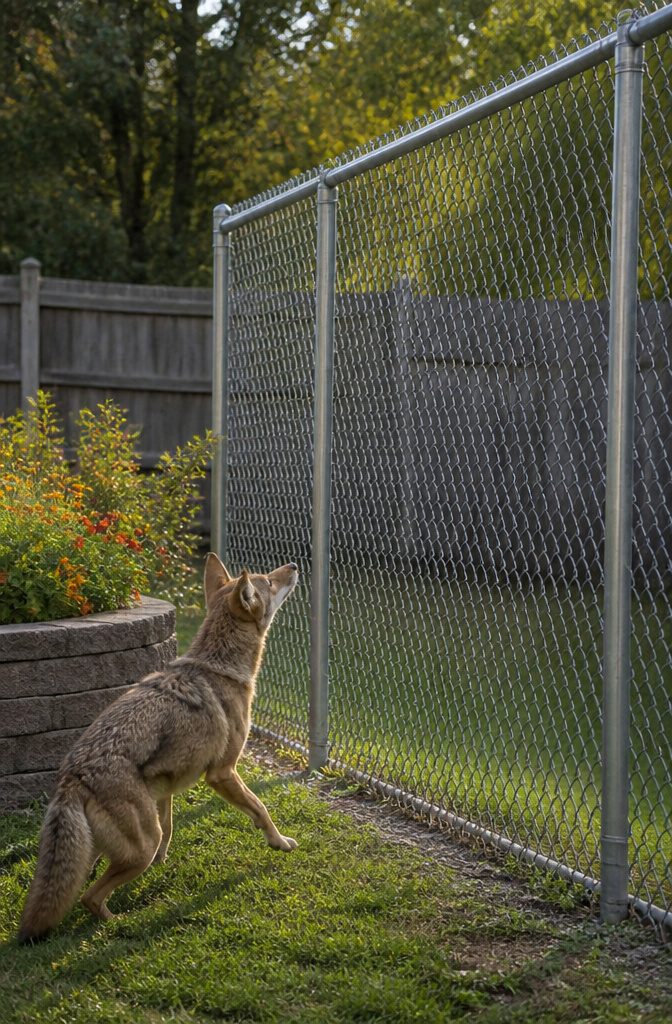
A coyote’s ability to clear a fence depends heavily on how it approaches the barrier. From a standing position, the animal manages only about 4 to 5 feet. Give it a running start and that number climbs. But the real game-changer is leverage: a coyote that can plant its front paws on the top rail and pull itself the rest of the way over transforms a 6-foot fence into something scalable up to 14 feet. The whole motion takes less than a second, which is why it looks like one clean leap when it is actually a two-phase climb.
Terrain matters too. A slope, a fallen log, or even a raised planter near the fence line effectively lowers the barrier by giving the animal a head start. Chain-link is especially vulnerable because the mesh provides built-in footholds.
Timing plays a role that most fence plans ignore. From January through March, coyotes enter mating season and become markedly more determined to breach barriers. They travel farther, push harder against obstacles, and return more persistently when turned away. A fence that works in summer may not hold the same authority in February, and that seasonal shift is worth building for from the start.

Durable material: The spikes of the metal fence are made of strong steel, and their surface is galvanized to enhance strength. These materials ensure that the spikes are not easily deformed or broken, providing reliable protection for home safety.

1. 6-Pack Value Security Pack This set includes 6 anti-climb metal spikes for full perimeter coverage around your home, garden, fence and boundary walls. Enough for large-area installation, perfect for property safety upgrade and daily outdoor security protection.

MULTIPURPOSE: Our anti climb fence spikes can be easily installed on a variety of surfaces including fences, roofs, walls and gates. The anti climb spikes will blend in perfectly with your property, Providing you with reliable protection against unwanted guests.
Fence Types Coyotes Climb or Ignore
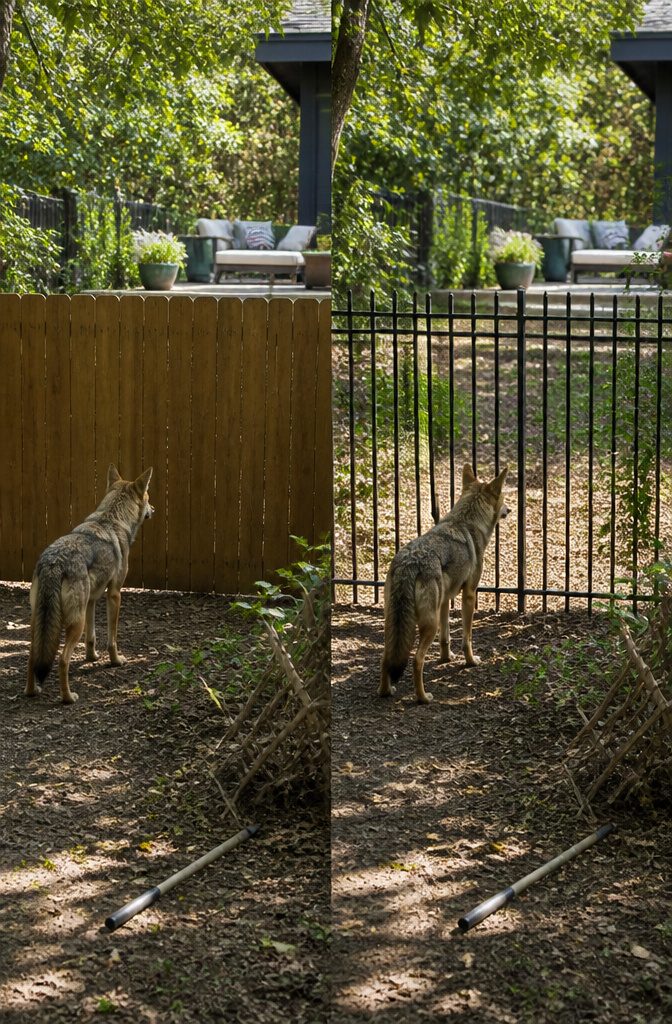
Solid wooden and vinyl fences give coyotes almost nothing to grip, which makes them harder to climb than chain-link. The gaps in chain-link fencing work like a ladder; a coyote can grab the links and pull itself up in seconds. If you already have chain-link, the fix is to attach solid panels to the lower three or four feet, then add mesh with a buried skirt or an L-footer extending 15 to 18 inches outward. That combination blocks the footholds and stops digging in one go. No fence type, though, stops a determined coyote on its own if the bottom is unsecured. Burying material at least 12 inches deep matters as much as the height above ground.

REPELS DEER AND RABBITS: Deer and rabbits don’t have to eat vegetation for the repellent to be effective—they have a natural aversion to the scent

[Upgraded Visual Deterrence] -- Featuring a unique, amber campfire-like flicker, this predator-deterrent device mimics the presence of a larger, aggressive nocturnal hunter. Unlike standard lights, this intense pulse triggers a deep-seated flight response in coyotes, raccoons, and foxes.

MULTIPURPOSE: Our anti climb fence spikes can be easily installed on a variety of surfaces including fences, roofs, walls and gates. The anti climb spikes will blend in perfectly with your property, Providing you with reliable protection against unwanted guests.
Coyote Rollers and Other Deterrents
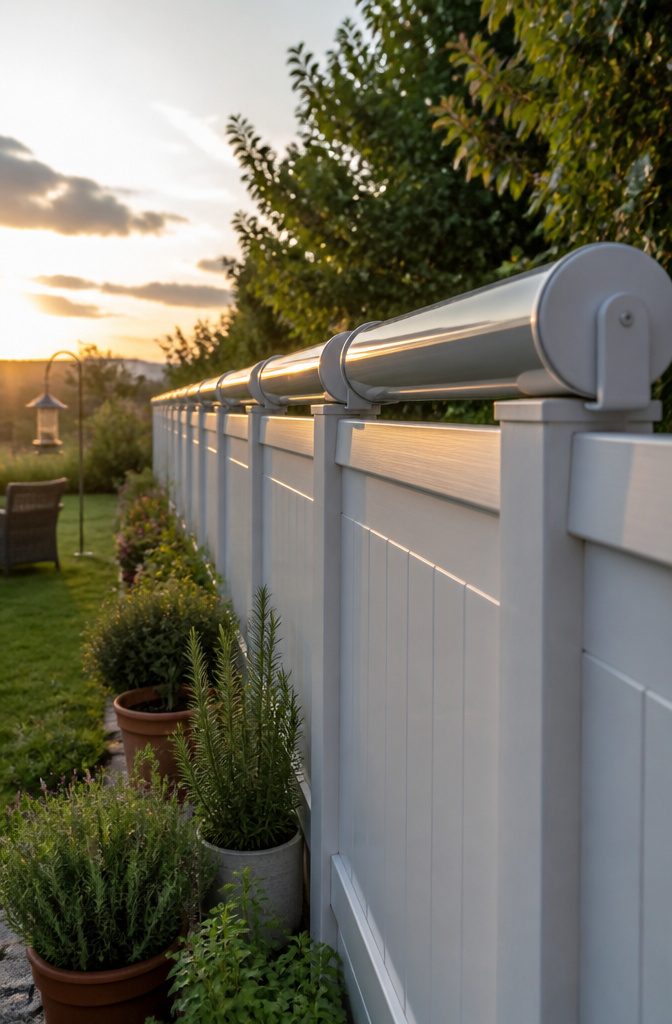
Coyote rollers are cylindrical devices mounted on top of a fence that spin when an animal tries to grab hold. The rotation strips away traction, so the coyote cannot pull itself over and usually drops back to the ground. They work with wood, wrought iron, vinyl, and chain link, though the fence beneath them still needs to be at least six feet tall or a determined coyote may simply sail over the roller entirely.
Electric fencing offers another route, delivering a low-voltage shock that startles without harming the animal. Motion-activated lights and sprinklers add layers of surprise, though I would not rely on them alone.
The most overlooked fix is often the simplest. Pet food left on the porch, unsecured garbage, bird feeders, and standing water all draw coyotes into your yard before the fence ever becomes a question. Removing those attractants costs nothing and does more than any hardware upgrade if the neighborhood smells like an easy meal.

EASY ORDERING: Everything you need for your fence project is in the box except for the final post. Only ONE additional post, BL19112, is required for the end of your project. A gate is available by searching BL19111.

The most trusted pool safety gate latch | Gate gap: 3/8 inch to 1-1/2 inch | Meets pool safety codes | Fasteners are included

Sufficient Quantity: our product package includes 2 x vinyl pocket rails; These are precision-crafted and come in an aesthetic white color adding value and elegance to your property; Trust our quality and design to provide your property with an attractive, durable and secure construction
Frequently Asked Questions
How high can a coyote jump?
A coyote can jump 6 to 8 feet on its own, and up to 14 feet if it can grip the top with its front paws and pull itself over. From a standing start without leverage, that drops to about 4 or 5 feet. Most healthy adults clear a 6-foot fence in just over one second.
What type of fence is best to keep coyotes out?
Solid wooden or vinyl fences work best because they give coyotes almost nothing to grip. Chain-link is the easiest to climb since the mesh acts like a ladder. Any fence should be at least 6 feet tall, with the bottom secured by burying material at least 12 inches deep or adding an L-footer extending 15 to 18 inches outward.
Can coyotes dig under fences?
Yes, coyotes will dig under a fence if the bottom is not secured. Burying material at least 12 inches deep matters as much as the height above ground. An L-footer extending 15 to 18 inches outward from the base blocks digging in one go.