


Most fence posts need 1–4 bags of concrete, and the post size tells you where you land in that range. A standard 4×4 post typically takes 1–2 bags, while a 6×6 post, the kind you’d use for a gate or corner, usually needs 2–4 bags. Rocky or loose soil pushes that number higher, and a deeper hole or heavy metal fencing that catches wind like a sail means more mass in the ground to resist the pull. I always round up slightly on my buy; an extra bag or two across a whole fence line is cheap insurance against the uneven hole you didn’t notice you’d dug.
How Much Concrete Per Fence Post
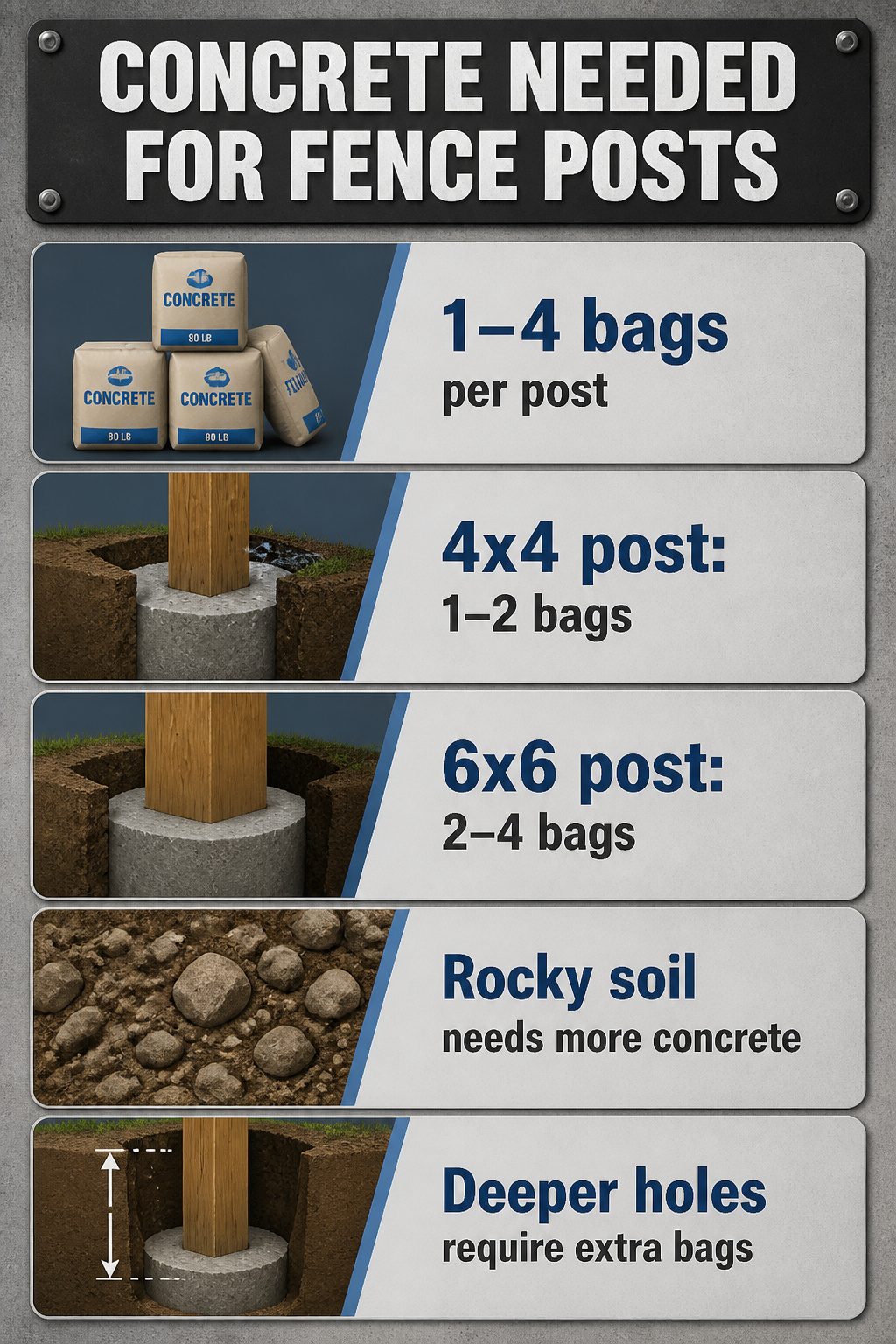
Most fence posts need 1–4 bags of concrete, and the post size tells you where you land in that range. A standard 4×4 post typically takes 1–2 bags, while a 6×6 post, the kind you’d use for a gate or corner, usually needs 2–4 bags. Those bigger posts carry more load and take more lateral stress, especially when a gate is swinging on them, so the extra concrete isn’t overkill. It’s the difference between a fence that stays put and one that leans after the first hard storm.
A few things nudge the number up or down from there. Rocky or loose soil asks for more bags to get the same grip. A deeper hole, naturally, means more concrete. And if you’re setting heavy metal fencing that catches wind like a sail, the posts need more mass in the ground to resist that pull. I always round up slightly on my buy; an extra bag or two across a whole fence line is cheap insurance against the uneven hole you didn’t notice you’d dug.
SAVE YOUR BACK: Lightweight technology replaces 80lbs of concrete with a 2.5lb bag


LARGE PACK 33.8oz - Will Intall x2 Posts | Replaces 80-100 lbs Concrete
1. Hole Size for Fence Posts
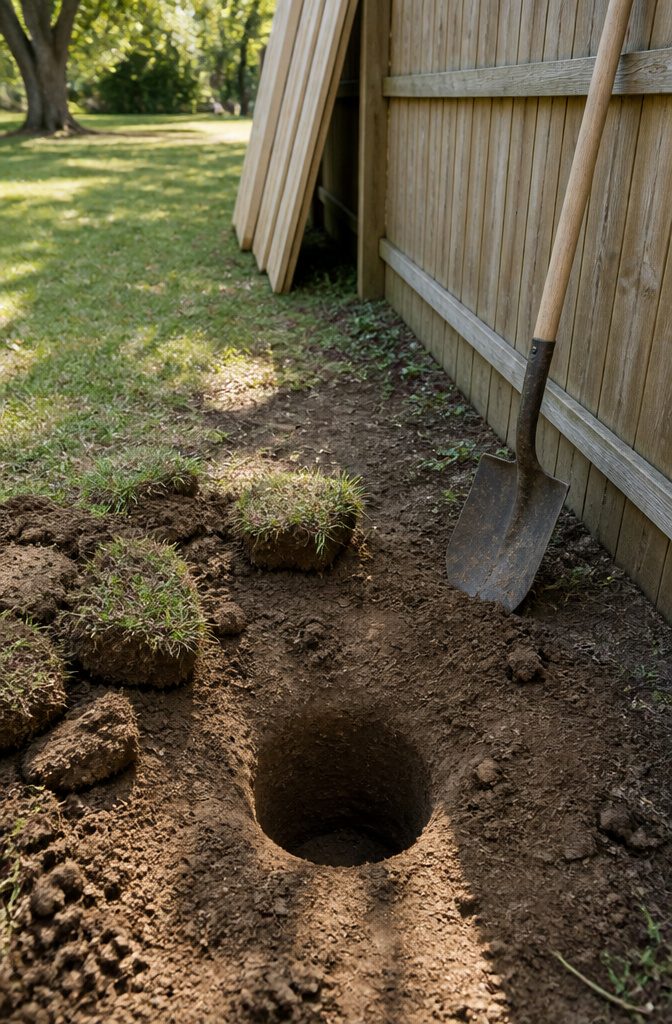
The hole diameter should be about three times the post diameter; a 4-inch post needs a 12-inch hole. Depth runs one-third to one-half the post height above ground, so a 6-foot post wants 2 to 3 feet underground.
The post hole diameter should be about 3 times as large as the diameter of the post, so a 4-inch diameter post would have a 12-inch diameter hole.
— Bob Vila
That ratio is what lets concrete grip the post properly. Too narrow and the concrete column shears; too shallow and the post leans or lifts.
Depth matters for more than stability. In southern states, frost lines sit at 0 to 12 inches, while northern states hit 48 inches or deeper. The concrete base needs to sit 6 inches below that frost line. Skip this and freeze-thaw cycles push the post upward, a problem called frost heave. I have watched neighbors relearn this the hard way: posts that stood straight in October tilted by March because the hole stopped where the soil was easy, not where it needed to be. What the fence height suggests for depth is your starting point; what your local frost line demands is your actual number.

4 Pack - 4x4 Black Powder-Coated Deck Post Connector Bracket

[Durability]: Made of 14-gauge high durability steel with a black powder coating finish, it can prevent cracking, peeling, and rusting, ensuring a long-lasting service life.

4 Pack - 4x4 Black Powder-Coated Deck Post Concrete Anchors
2. Concrete Volume Calculation
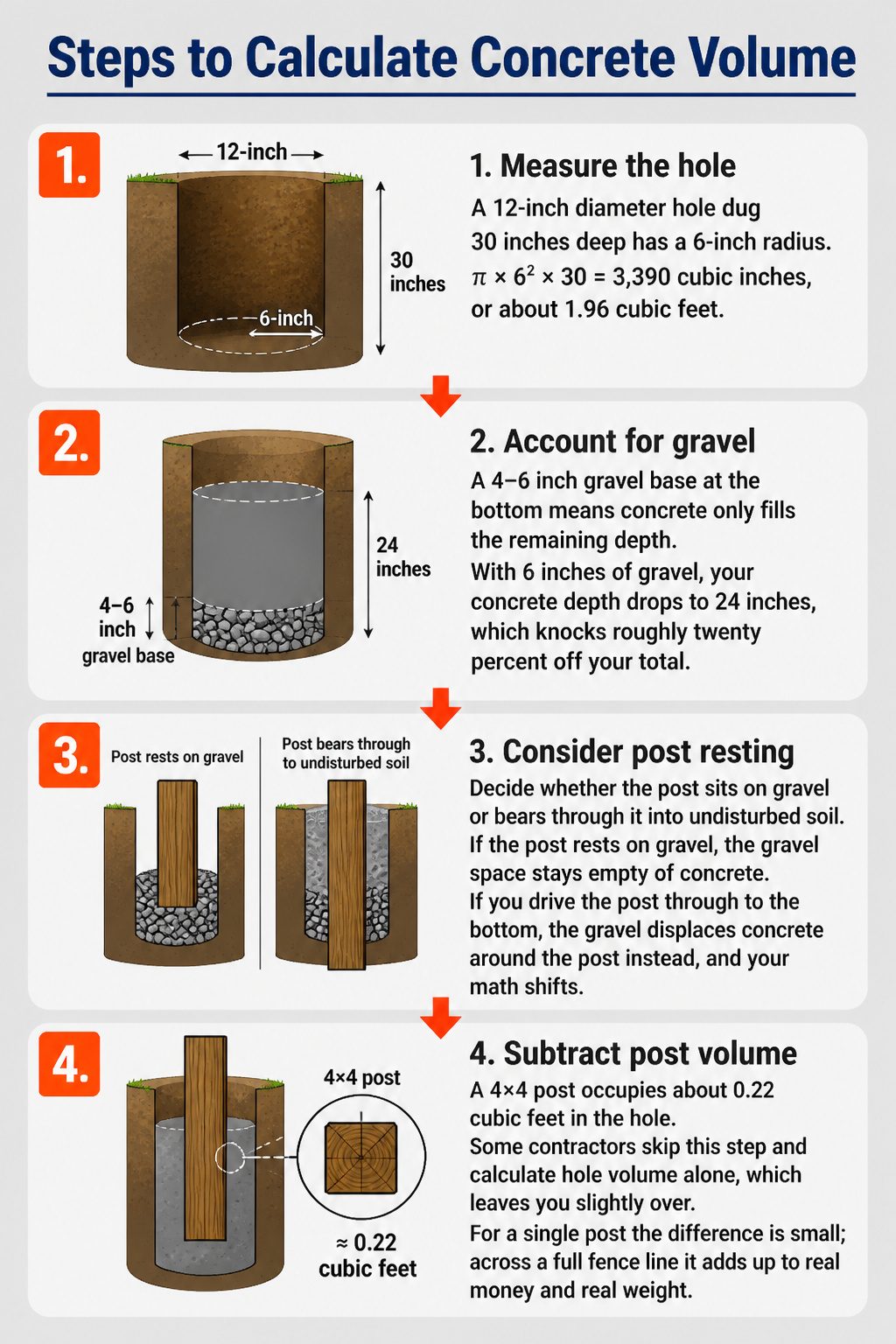
The cylinder volume formula is what turns a hole in the ground into a number of concrete bags. π × radius² × depth gives you the hole’s volume in cubic inches, which you then convert to cubic feet by dividing by 1,728.
Here is how the steps actually play out.
- Measure the hole. A 12-inch diameter hole dug 30 inches deep has a 6-inch radius. π × 6² × 30 = 3,390 cubic inches, or about 1.96 cubic feet.
- Account for the gravel layer. A 4–6 inch gravel base at the bottom means concrete only fills the remaining depth. With 6 inches of gravel, your concrete depth drops to 24 inches, which knocks roughly twenty percent off your total.
- Decide whether the post sits on gravel or bears through it into undisturbed soil. If the post rests on gravel, the gravel space stays empty of concrete. If you drive the post through to the bottom, the gravel displaces concrete around the post instead, and your math shifts.
- Subtract the post volume. A 4×4 post occupies about 0.22 cubic feet in the hole. Some contractors skip this step and calculate hole volume alone, which leaves you slightly over. For a single post the difference is small; across a full fence line it adds up to real money and real weight.

[Durability]: Made of 14-gauge high durability steel with a black powder coating finish, it can prevent cracking, peeling, and rusting, ensuring a long-lasting service life.

2 Pack - 6x6 Black Powder-Coated Deck Post Connector Bracket Deck Post Connector Bracket

Deck Base Post Anchor, for 6x6 Nominal Lumber(Actual Inner Size 5-1/2")
3. Concrete by Post Type
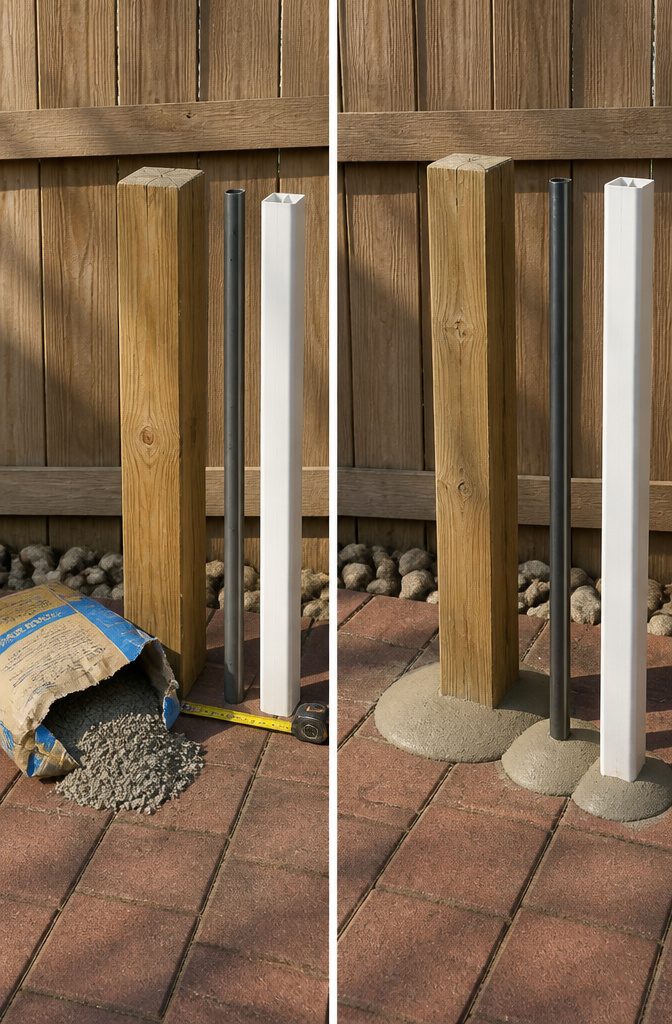
The post material matters more than you’d think. A 4×4 wood post usually needs one to three 50-pound bags, while a beefier 6×6 post runs two to four bags because the hole itself has to be wider. Steel posts are slimmer, so one to two bags typically does it, though they still need enough mass to resist wind torque. Vinyl posts land in the middle at two to three bags; they’re hollow and often have a steel insert inside, but the outer dimensions still drive the hole size.
One wrinkle I didn’t catch at first: fast-setting concrete eats up 10 to 15 percent more material than standard mix for the same job. Each 50-pound bag yields roughly 0.375 cubic feet once mixed, so that small overrun adds up fast if you’re buying for a full fence line.

Works with ALL post types.

【Heavy-Duty U-Shape Design】The Post Holder Bracket is made of high-quality Q235B steel with a black powder-coated finish. The wooden post is connected to the bracket with dual-direction locking screws, offering excellent strength and durability. The U-shape design provides secure and stable support for 6x6 wooden posts in wet concrete foundations.
4. Standard vs. Fast-Setting Concrete
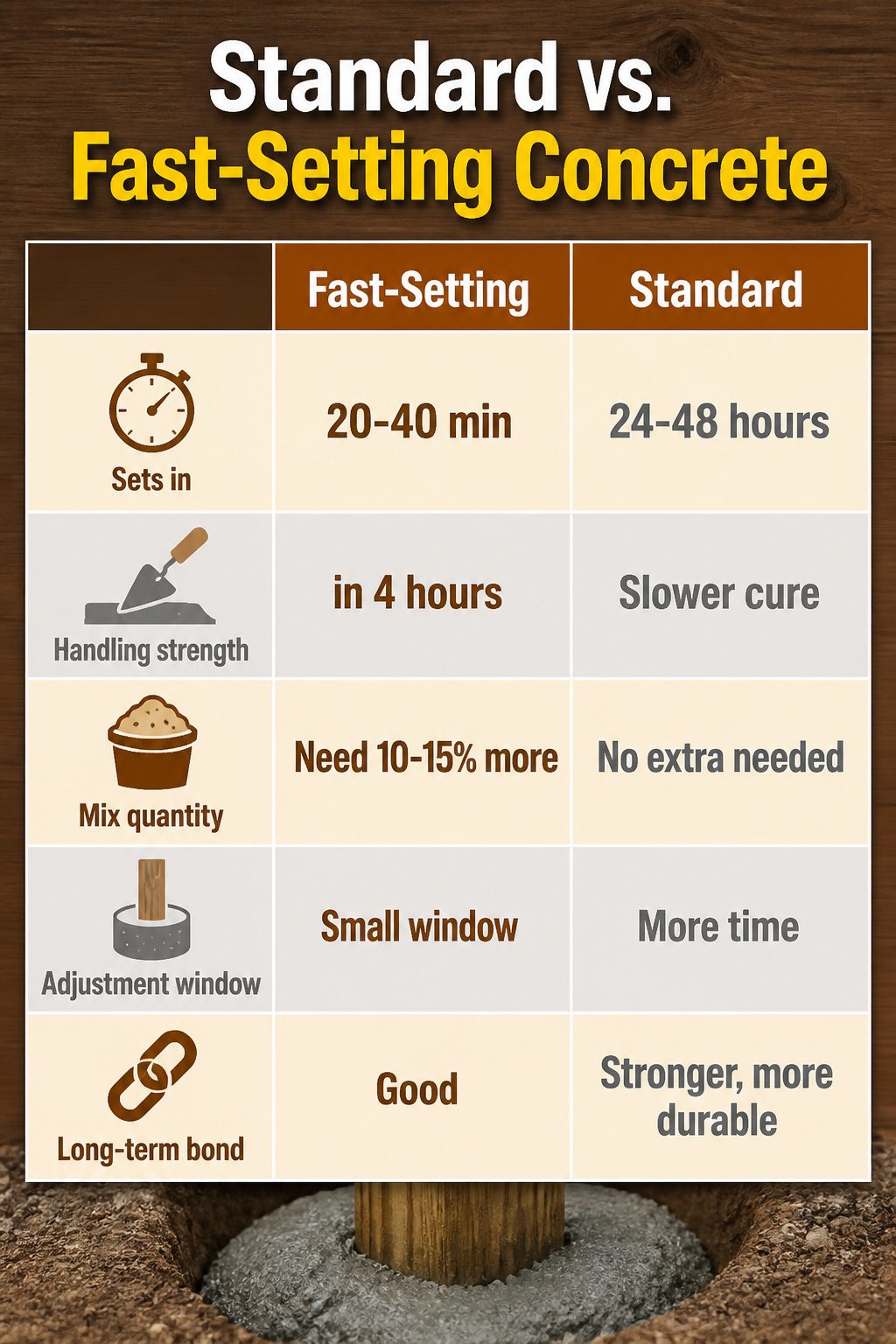
Fast-setting concrete hardens in 20 to 40 minutes and reaches handling strength within about four hours, which makes it attractive when you are trying to finish before Sunday evening. The tradeoff is speed for volume: because it sets so quickly, it does not flow and settle the way standard mix does, so you will want to pour roughly 10 to 15 percent more to be sure the hole fills completely without voids.
Standard concrete takes 24 to 48 hours to set, but that slower cure gives you time to plumb and straighten a post that shifts while you are working. It also forms a stronger, more durable bond long-term. For a fence you plan to live with for years, that extra day of waiting is usually worth it.
I tend to reach for fast-setting only when I am setting one or two posts and the weather is cooperating. Anything more than that, or any ground that feels soft or sandy, and the adjustment window of standard mix pays for itself in straight posts.

Material Of 4x4 Post Base: Made of Solid Steel, Black Powder Coated, Rustproof and Strong.

Durable Material:The metal fence post is made of durable metal, coated with black powder, durable and not easy to corrode and rust.

Material Of 4x4 Post Base: Made of Solid Steel, Black Powder Coated, Rustproof and Strong.
5. Why Concrete Matters for Fence Stability
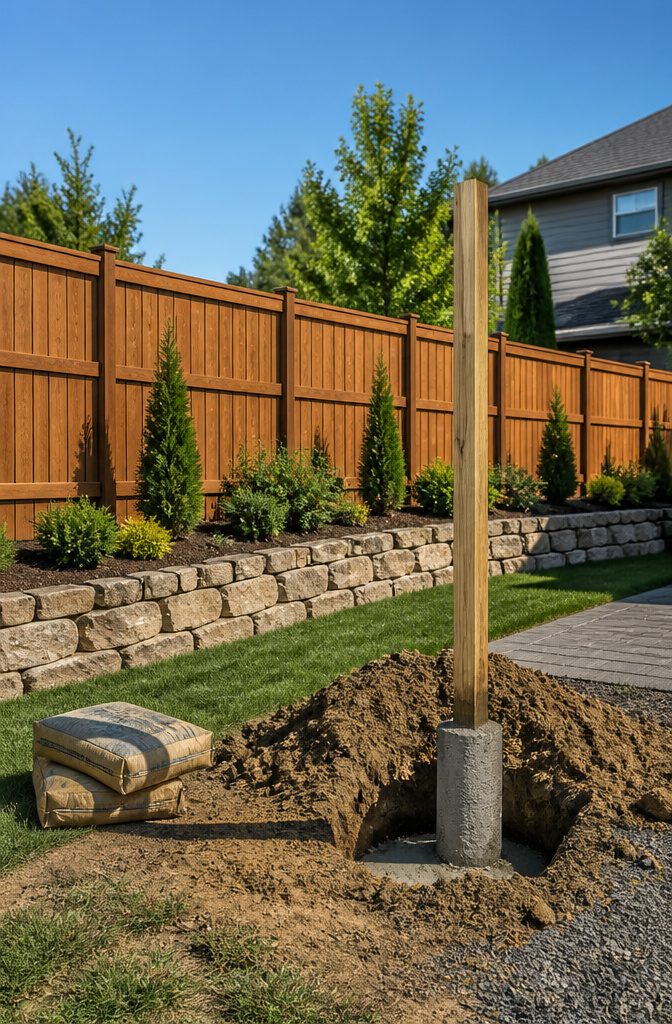
Concrete does the actual work of keeping a fence where you put it. Without enough of it, posts shift in wet soil, lean under wind load, and loosen until panels sag out of alignment. I’ve watched a gate go from slightly stiff to dragging in the grass because the post it hung on never had the mass to resist the constant pull of opening and closing.
Frost heave is the silent culprit in colder zones. Freeze-thaw cycles push posts upward when the concrete base sits above the frost line, leaving fences uneven and gates that no longer latch. Gate posts take the worst of it, their holes worked wider by the repeated lateral stress of a swinging gate. The concrete around them has to be substantial enough to anchor that movement, not just fill the hole.

𝗙𝗔𝗖𝗜𝗟𝗜𝗧𝗜𝗘𝗦 𝗟𝗜𝗙𝗘: Your life is made easier by Fence Post because it is quick and easy to mould, shape, and adjust by following clear instructions. For preparing the expanding concrete foam, no further materials are required. There is no need for extra mixing equipment or water. The kit is bundled with everything needed

EFFORTLESS FENCE POST REPAIR KIT: Upgrade your outdoor projects with our innovative expanding foam for fence posts. This concrete alternative helps solve the need for heavy lifting, messy water mixing, or extra tools. Simply mix and pour to secure your posts, making it the ultimate post hole foam solution for a clean and fast installation.

Soil Types and Concrete Needs
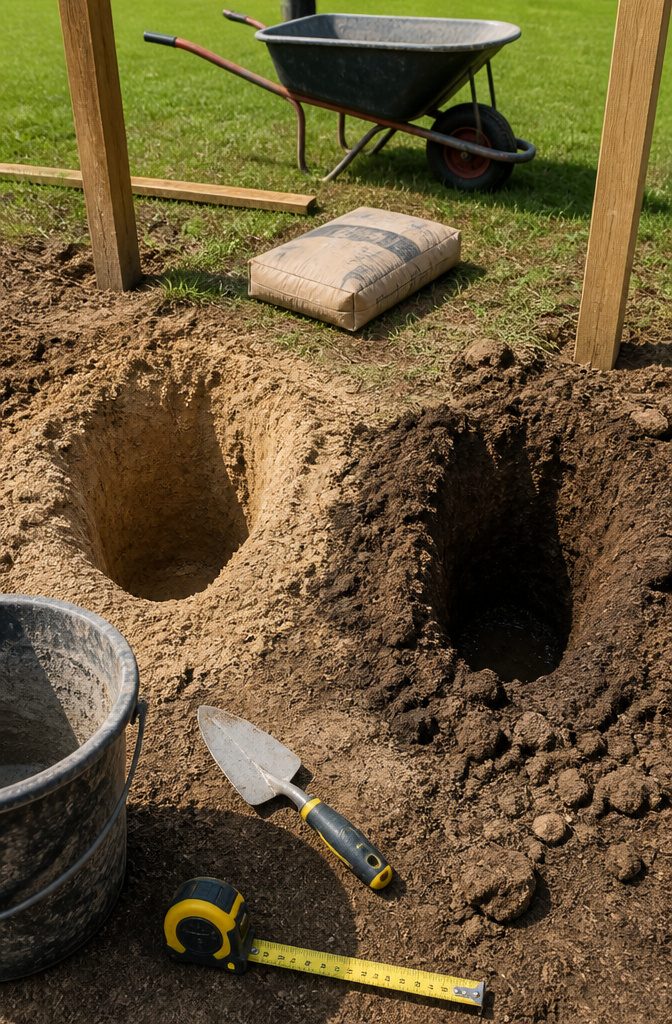
Sandy soil drains fast but grips almost nothing, so a fence post can loosen like a tooth in old gum. The hole needs to go deeper than standard depth, and the extra volume means plan on one more bag of concrete per post to fill the wider, longer cylinder you’re pouring.
Clay soil looks solid until it isn’t. It holds moisture against the post, then swells in wet months and shrinks in dry ones, working the concrete like a lever. A 4-to-6-inch gravel base at the bottom of the hole lets water escape instead of pooling, but you still want the full standard depth so the clay can’t heave the post upward.
Rocky soil fights you during digging but rewards you after. The rocks themselves lock the post in place, so you can often get away with slightly less concrete. The catch is uneven settling: concrete poured against fractured rock may leave gaps on one side. Pack the hole bottom firm and check that the post stays plumb while the concrete cures, since the rock won’t forgive a tilted start.

2 Pack - 4x4 Zinc Plated Deck Post Concrete Anchors

Strong and Durable : The black powder-coated finish of the fence post anchor resists corrosion and rust, and the upper chevron design separates the mailbox post from the wet ground, reducing the risk of moisture damage to the wood and prolonging the life of the fence.

Material:Made of 2.2mm solid steel,galvanized coating,black powder coated,rustproof and sturdy.
Frost Line by Region
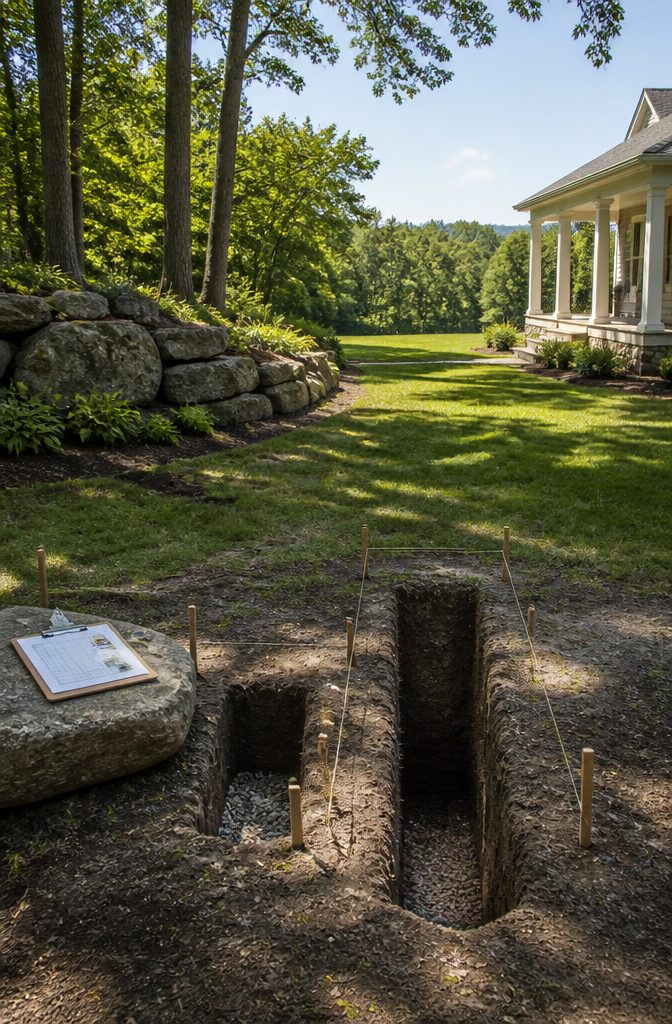
Frost line depth is the single biggest reason two neighbors pour completely different amounts of concrete for the same fence. In southern states, the line sits anywhere from zero to twelve inches down, which means a hole around eighteen to twenty-four inches deep usually covers you. Head north and that number climbs fast: thirty-six to forty-eight inches or deeper in the coldest zones, with the concrete itself needing to end six inches below that frost line to keep the post from heaving upward when soil freezes and expands.
That depth difference doubles, sometimes triples, your concrete volume before you have accounted for post height or hole width at all. A six-foot fence in a warm climate might live in a two-foot hole; the same fence in Minnesota needs a hole closer to four feet, and every inch of extra depth is more bag mix and more Saturday morning. Your local building department publishes the exact frost line depth for your area, and checking it is worth the phone call. Post depth rules from online calculators or packaging labels often assume moderate climates; they will leave you short where winter actually happens.
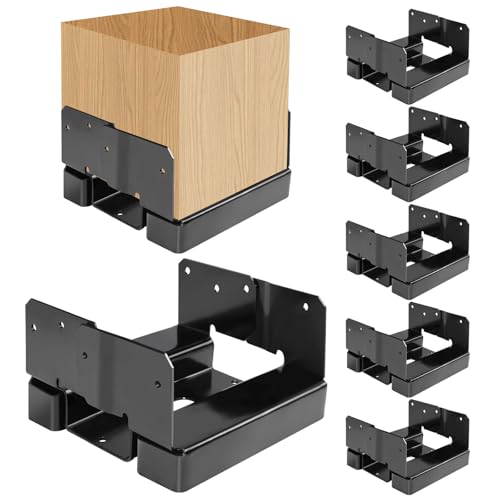
WIDELY APPLICABLE: These post bases fit standard size 6x 6 inches (actual size is 5.5x5.5 inches) posts. Widely used for gazebos, fences, mailboxes and more. Please check the size before purchase.

Wide Application: The post base fits standard 3.5”x 5.5” posts. Suitable for decks, railings, gazebos, pergolas, fence, porch, mailbox, wood to concrete Installationand and similar structures. Please verify dimensions before purchase.
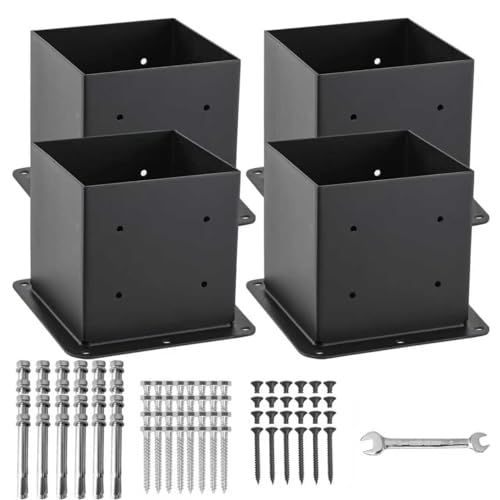
Material Of 6x6 Post Base: Made of Solid Steel, Black Powder Coated, Rustproof and Strong.
Gravel Drainage Layer
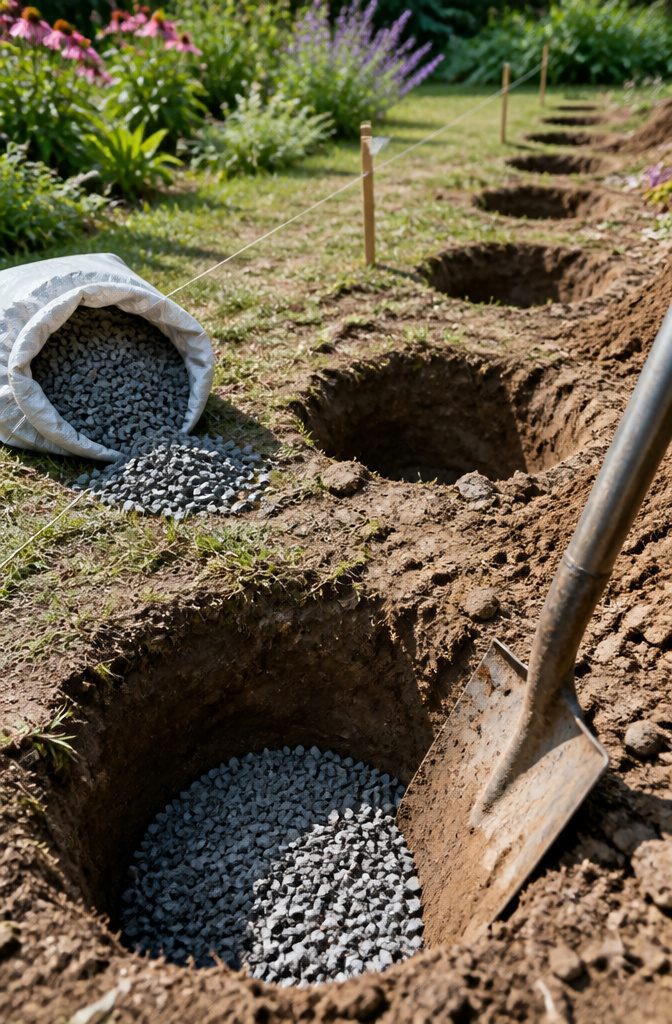
A 4 to 6 inch layer of gravel at the bottom of each post hole is what nearly every set of instructions recommends, and skipping it will cost you posts down the road. Water that collects at the base of a post is what rots wood even when it is pressure-treated, and gravel gives that water somewhere to drain instead of pooling. The same layer also helps with frost heaves in colder climates, since it creates a buffer between the post and the soil that expands and contracts.
What convinced me, reading through a dozen of these guides, is how often the gravel gets treated as an afterthought in the math. You subtract that 4 to 6 inches from your hole depth before you calculate concrete volume. A 42-inch hole becomes a 36-inch concrete pour once the gravel is in. The gravel does not reduce how much concrete you need by some vague amount; it reduces the depth of the space the concrete has to fill, which changes the number of bags you carry home from the store. Compacting the gravel with the post bottom before you mix any concrete takes an extra minute and saves you from pouring money into a void that was never meant to hold it.
Dry Pour and Alternative Methods
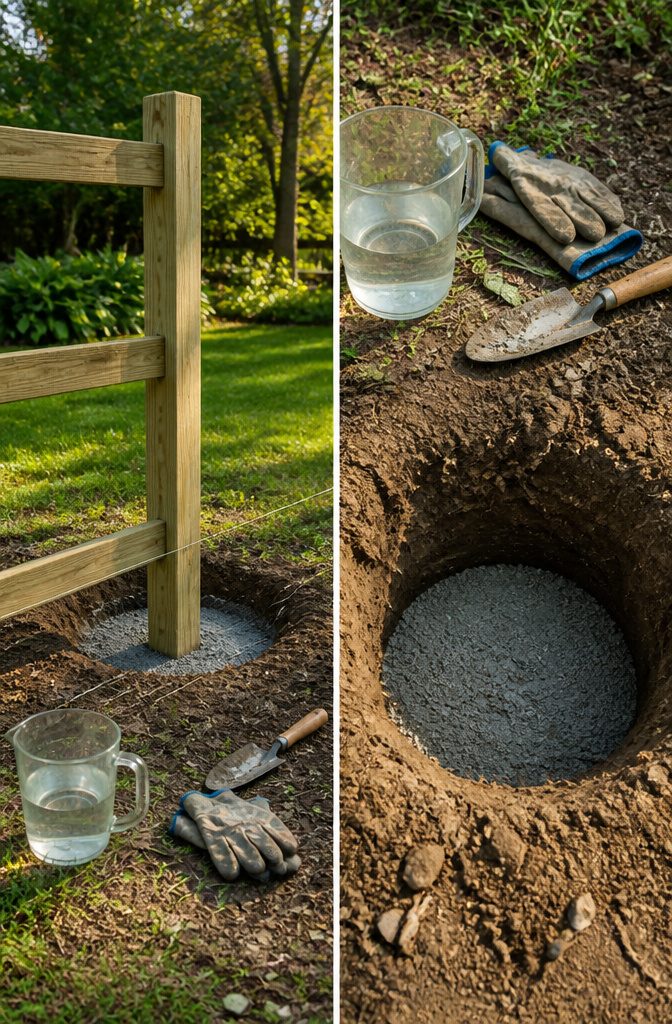
Some people swear by the dry pour method, dumping dry mix straight into the hole and adding water on top. I get the appeal; it skips the mixing step and feels faster when you are racing daylight. The problem is uneven hydration, which leaves pockets of weak or powdery concrete that never cure properly. Posts set this way are more likely to shift or fail outright, and for a fence you want to last, that gamble rarely pays off.
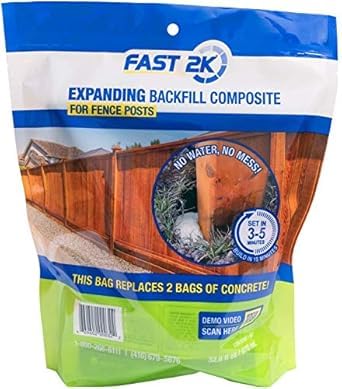
For temporary or lightweight fences, there are cleaner alternatives. Compacted gravel backfill is easier to handle and costs less upfront, though it will not match concrete for stability. Expanding foam products like Fast 2K set fast and work well for small weekend projects, but the same tradeoff applies: they are convenient now, not durable later. I would stick with proper concrete for anything meant to stand longer than a season or hold more than a light border.

Durable Material:The metal fence post is made of durable metal, coated with black powder, durable and not easy to corrode and rust.

【FITS STANDARD 4x4 POSTS】: Inner size 3.5" x 3.5" for nominal 4x4 wood posts
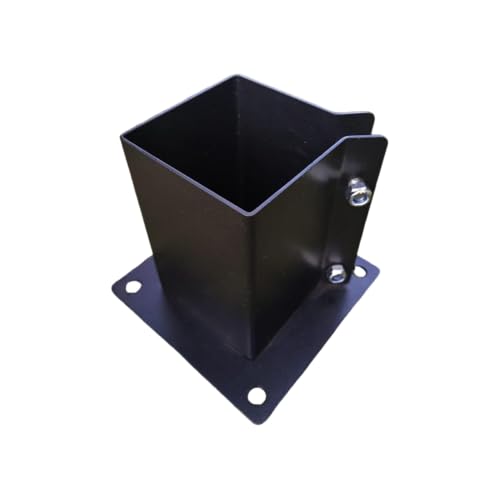
Package Contents: Post anchors package includes 1 individual post holder deck bracket. Wood posts and mounting screws are not included.
Frequently Asked Questions
How deep should a fence post be buried?
A fence post hole should be one-third to one-half the height of the post above ground. For a 6-foot post, that means 2 to 3 feet deep. In cold climates, the concrete base also needs to sit 6 inches below the local frost line to prevent frost heave from pushing the post upward.
What size hole do I need for a fence post?
The hole diameter should be about three times the post diameter. A 4-inch post needs a 12-inch hole, and a 6-inch post needs an 18-inch hole. This ratio lets the concrete grip the post properly without shearing under stress.
How much concrete do I need for a 4×4 fence post?
A standard 4×4 post typically needs 1 to 2 bags of 50-pound concrete, though sandy or loose soil can push that to 3 bags. The exact count depends on hole depth, whether you use a gravel drainage layer, and how much wind load your fence will face.
Can I use gravel instead of concrete for fence posts?
Gravel can replace concrete for temporary or lightweight fences, but it will not match concrete for long-term stability. Compacted gravel backfill is easier to handle and costs less upfront, yet posts set this way are more likely to shift, lean, or loosen over time. For anything meant to stand more than a season, proper concrete is the better choice.