
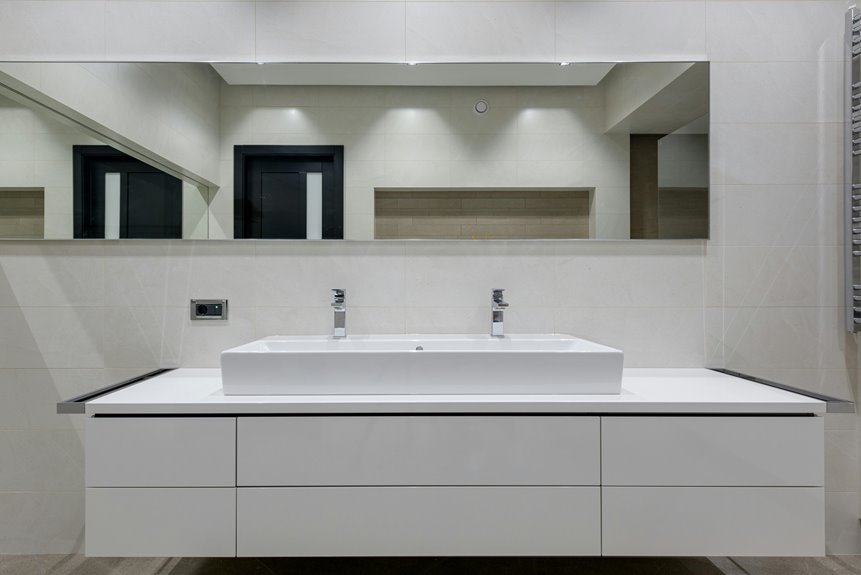

I’d say most modern homes use 34–36 inches (comfort height), while older places stick with 30–32 inches (traditional). Comfort height matches your kitchen counters, which means less back strain during your daily routine. If you’re significantly taller or shorter, don’t force yourself into standard sizes. Your wrist-to-floor measurement while your arms hang loose is your real guide.
The ADA caps accessible vanities at 34 inches with proper knee clearance underneath. Pick what actually works for your body, since this choice directly affects your posture and comfort during daily use.
What Is the Standard Bathroom Vanity Height?
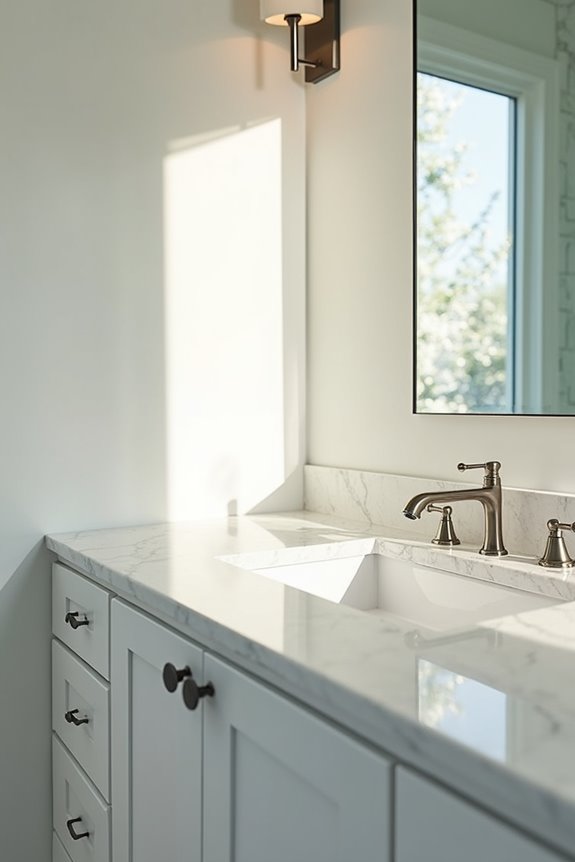
So, what exactly counts as “standard” when it comes to bathroom vanity heights? The standard has shifted considerably over time. Traditionally, vanities sat at 30 to 32 inches, which is quite low by modern standards. Today, most bathrooms range from 31 to 35.5 inches, with 30 to 34 inches being the typical range found in existing homes.
Comfort height vanities, which sit between 34 to 36 inches, are becoming the new standard. About 95 percent of custom builds now use this height. They match your kitchen counters and feel more natural if you’re average height or taller. Your actual vanity height also depends on countertop thickness, which adds another 1 to 1.5 inches.

Easy to install with a special formulated adhesive on the back of sink skirt top adheres to the rim of any sink

Slim Shaker Style: Clean, transitional profile finished in Sherwin-Williams On the Rocks for a versatile, designer look that pairs easily with modern or classic bathrooms.

Easy to install with a special formulated adhesive on the back of sink skirt top adheres to the rim of any sink
Common Vanity Height Categories
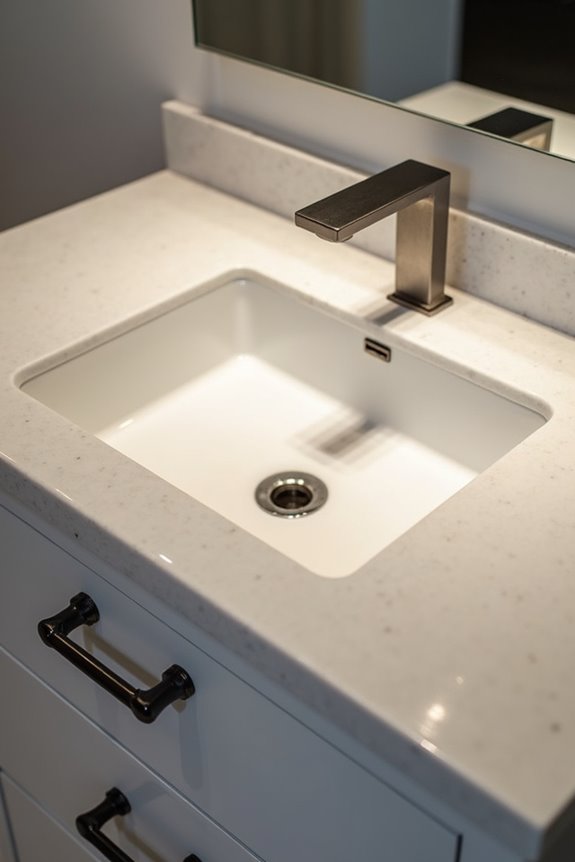
I’ve found there are really two main camps when it comes to vanity heights: the traditional 30-32 inch range, which you’ll see in older homes and bathrooms designed for kids or shorter folks, and the comfort height vanities at 34-36 inches that’ve become super popular in recent years. The comfort height option, especially that 36-inch sweet spot, actually matches your kitchen counters and cuts down on all that bending and back strain, which is why it appears in most modern remodels. Your choice depends on who’s using the bathroom most and what works best for your space and body.

Full-Overlay White Vanity: Featuring full-overlay construction, this vanity pairs a clean white finish with matte black handles for a timeless aesthetic that complements any bath decor. The ergonomic toe-kick provides generous toe space, bringing you closer to the sink. Crafted from premium engineered wood, it achieves a balance of aesthetics and quality.

【Ample Storage Solutions】Stay organized with the smart storage features of this farmhouse wood fixture freestanding pedestal bathroom cabinet. The wood bathroom storage cabinet includes a spacious double-door cabinet, an adjustable interior shelf with three height options, and three extra side shelves, providing plenty of room for all your toiletries, towels, and cosmetics—all within easy reach. The cabinet size (19"D x 31"W x 34"H) – ideal for small bathrooms or apartments

Sturdy & Durable - The 36 inch bathroom vanity with sink, made of MDF, is sturdy and durable. With its wear-resistant and corrosion-resistant properties, it is also easy to maintain and clean.
Traditional Height (30-32 inches)
Why did traditional vanities stick around for so long? They were built with accessibility in mind. They’re lower, around 30 to 32 inches, which meant kids and shorter adults could actually reach the sink comfortably without struggling. They’re still everywhere in homes built before the 2000s, which tells you something about their staying power.
What’s notable is that they remain popular today, especially in secondary bathrooms and spaces designed for children. You’ll find them more affordable and easier to source than newer styles. They offer straightforward, budget-friendly cabinetry that works. They’re practical and unpretentious; they do the job without any fuss or extra cost.
Comfort Height (34-36 inches)
What’s changed in bathrooms over the last couple decades? Comfort height vanities have basically taken over, ranging from 34 to 36 inches and matching your kitchen counters while reducing strain on your back.
| Feature | Traditional | Comfort Height |
|---|---|---|
| Height Range | 30-32″ | 34-36″ |
| Best For | Shorter users | Most modern homes |
| Back Strain | More bending | Less bending |
About 95 percent of custom vanities built today are 36 inches high, especially for master bathrooms. These heights are more comfortable because you’re not hunching over constantly. They’re particularly beneficial if you’re taller or want that contemporary look throughout your home. Comfort height vanities are now the standard choice in most new construction.
Comfort Height vs. Standard Height: Which One’s Right for You?
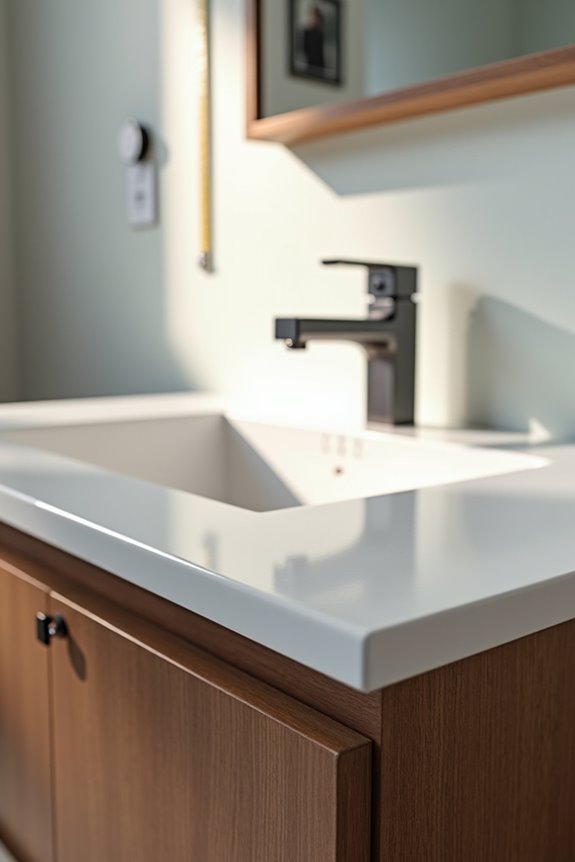
The choice between comfort height (34–36 inches) and standard height (30–32 inches) depends on who uses your bathroom and what feels right for your body. Comfort height has become the preferred option for most people because it matches your kitchen counters and reduces back strain. Standard height still makes sense if you have children, shorter family members, or need to work within a tight budget. The best choice is simply what works for your specific space and household needs.
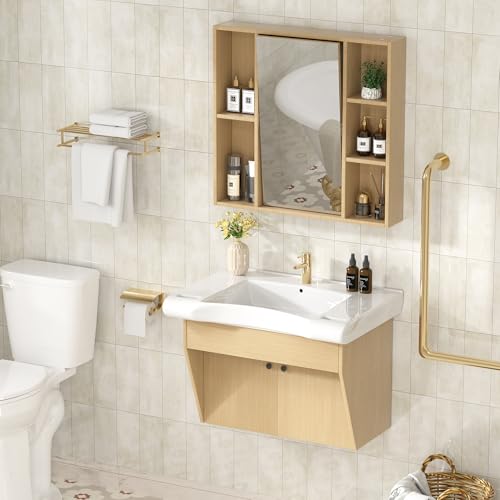
💖Warm Tip💖: 2 packages sent bathroom cabinet and basin (Faucet not included) and may arrive on different dates. Please be patient. This product requires self-assembly. Assembly instructions and hardware are included with the package.

【ADA Compliant Vanity】 Our bathroom vanity sink is thoughtfully designed to accommodate wheelchair access to promote inclusivity in the bathroom space. It is ADA compliant, ensuring accessibility and comfort for individuals with mobility challenges

💖Warm Tip💖: 2 packages sent bathroom cabinet and basin and may arrive on different dates. Please be patient. This product requires self-assembly. Assembly instructions are included with the package.
Comfort Height (34–36 inches)
Comfort height vanities range from 34 to 36 inches, matching your kitchen counters, and represent what most builders install today.
Here’s why they work well:
- Less bending required – you’re not hunching over like you’re searching for something you dropped
- Matches kitchen height – creates that sleek, connected feel throughout your home
- Appeals to taller folks – finally, a vanity that doesn’t feel designed for someone else
About 95 percent of custom-built vanities are built at the 36-inch height now, especially in master bathrooms. This height reduces strain on your neck and back and has become the new standard because it suits most people better.
Standard Height (30–32 inches)
Standard height vanities remain a practical choice for bathroom design. These 30–32 inch vanities work well for secondary bathrooms, kids’ spaces, and homes where budget is a consideration. Standard-sized cabinets are significantly more affordable and easier to find than custom options.
Standard height vanities offer clear advantages for shorter individuals and children who cannot comfortably reach taller fixtures. However, taller users or those with back pain may experience discomfort at this height. Families with younger children benefit from vanities that allow their kids to access the sink independently without requiring a stepstool. The combination of affordability, availability, and practical functionality explains their widespread use in residential bathrooms.
Factors to Consider When Choosing Your Vanity Height
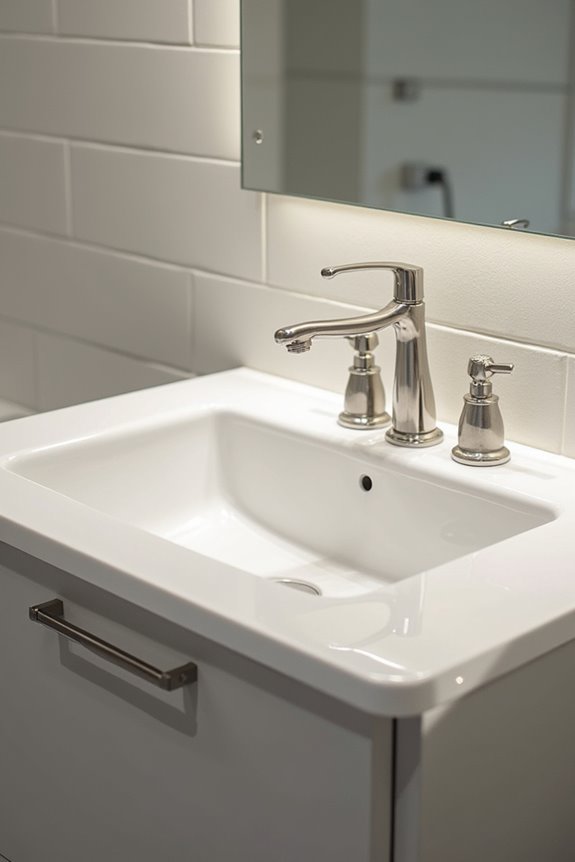
What’s the right vanity height for your bathroom? The answer depends on a few key factors, and there’s no one-size-fits-all solution.
- Your height and comfort – If you’re taller, you’ll want that 34–36 inch comfort height. If you’re shorter, a traditional 30–32 inch vanity will reduce awkward bending.
- Who uses your bathroom – With kids, a lower vanity works well without a step stool. For adults only, comfort height is the practical choice.
- Your bathroom’s style – Match your vanity height to your kitchen counters when possible. This creates a cohesive, intentional feel throughout your home.

Modern Matte Vanity: This vanity showcases a crisp matte white finish with clean lines. Its sealed base keeps dust out, while the ergonomic 3-inch toe-kick enhances comfort legroom during use. Crafted from durable engineered wood, it delivers lasting performance while seamlessly blending traditional elegance with contemporary style.

Solid Structure: This bathroom vanity is constructed from sturdy CARB P2-compliant MDF and features a freestanding ceramic sink for enhanced stability. Built to resist cracking and withstand daily use, it ensures lasting durability and reliable performance
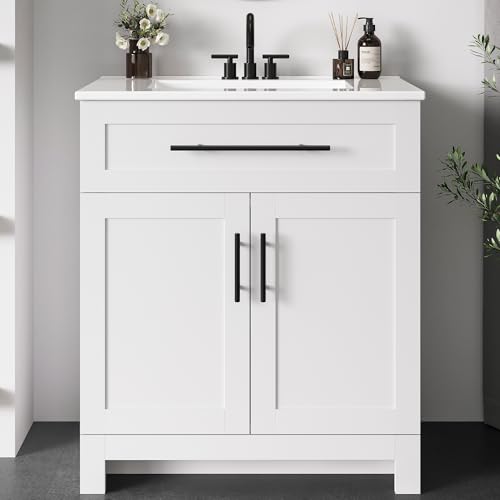
Timeless White Vanity: Featuring a clean white finish and modern lines, this vanity blends seamlessly into your existing bath space. The ergonomic toe-kick provides generous legroom, bringing you closer to the sink. Crafted from long-lasting engineered wood, this vanity showcases its quality and style.
ADA-Compliant Vanity Height
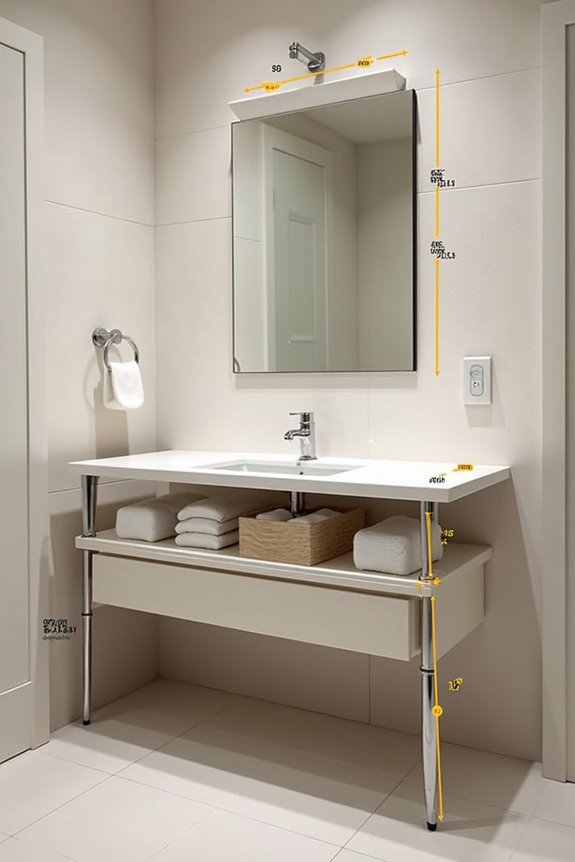
If you’re designing a bathroom for public use, accessibility needs, or you just want to cover your bases legally, ADA compliance isn’t optional. It’s the law. Your vanity should top out at 34 inches from floor to countertop, which is the maximum height allowed. This height works for most people.
Accessibility extends beyond height. You’ll need at least 27 inches of knee clearance underneath, plus 30 inches wide and 19 inches deep for wheelchair users. Ensure the sink allows folks to access the area while seated. Insulate exposed pipes so nobody gets burned.
Building ADA-compliant from the start simplifies design and installation for everyone.

GREAT SPACE SAVER: The bathroom countertop organizer is moveable, you can use it turned like a 3 tier black corner shelf or you can straighten it out and use it as a regular tiered shelf. Versatile design can surprise your by adding about 30% more space for your bathroom countertop.
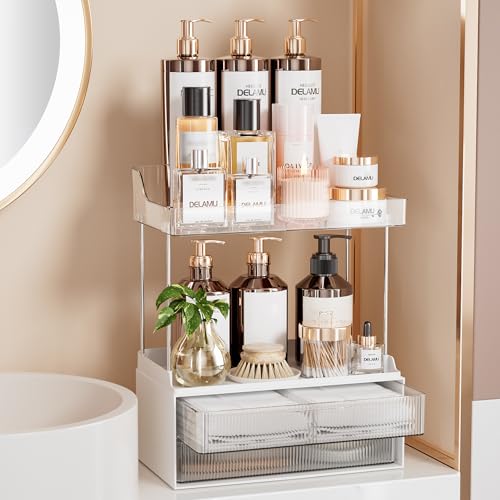
Large Capacity for Tall Bottles: Four tiers with 2 drawers and 2 open shelves (12.44" L × 7.91" W × 15.4" H) fit tall skincare bottles, perfumes, and cosmetics, keeping your countertop neat and your daily routine stress-free with this makeup organizer
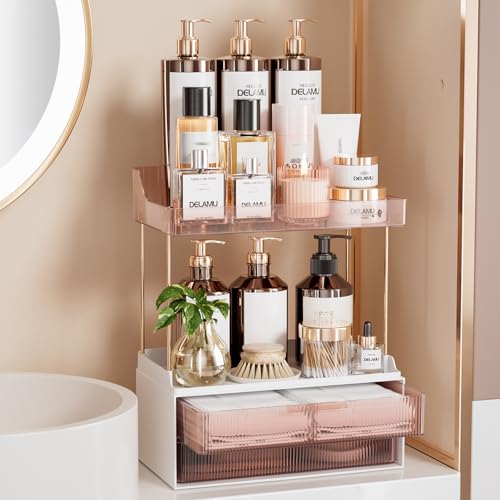
Large Capacity for Tall Bottles: Four tiers with 2 drawers and 2 open shelves (12.44" L × 7.91" W × 15.4" H) fit tall skincare bottles, perfumes, and cosmetics, keeping your countertop neat and your daily routine stress-free with this makeup organizer
When to Go Custom: Breaking the Rules with Purpose
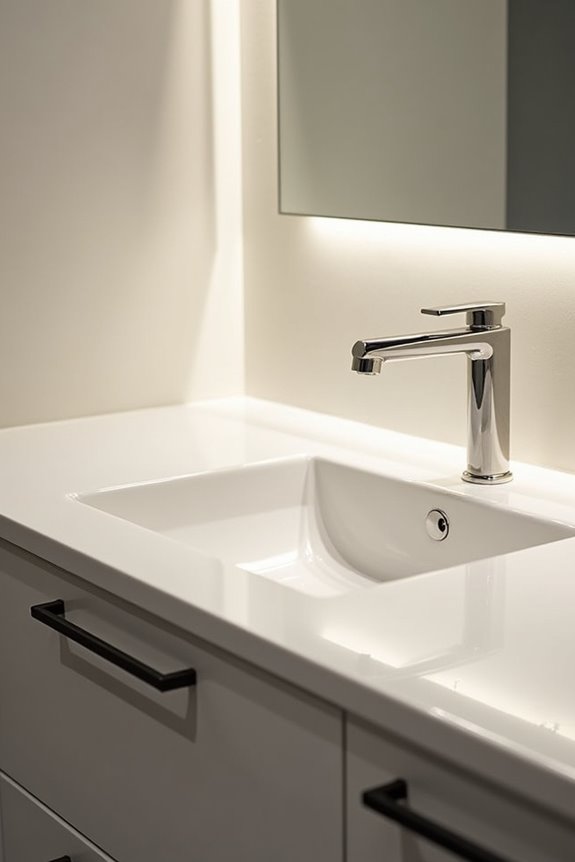
Standard heights work great for most people, but you’re not most people, and that’s totally okay. Customizing your vanity height to fit your life beats squeezing yourself into someone else’s standard.
Here’s when you should break the rules:
- You’re significantly taller or shorter than average – If you’re 6’4″ or under 5’2″, a custom height eliminates that constant back strain or awkward reaching.
- You’ve got specific physical needs – Mobility challenges, injuries, or disabilities might mean you need something different than the typical 34-36 inch range.
- Your household has mixed heights – Families with both kids and tall adults sometimes choose custom solutions, like wall-mounted vanities with adjustable heights.
Going custom means you’re prioritizing your comfort over fitting in. That’s effective design.

Easy to install with a special formulated adhesive on the back of sink skirt top adheres to the rim of any sink

Slim Shaker Design: Recessed panel styling in Sherwin-Williams Iron Ore.

Slim Shaker Design: Recessed panel styling in Sherwin-Williams On the Rocks.
How to Find Your Perfect Height
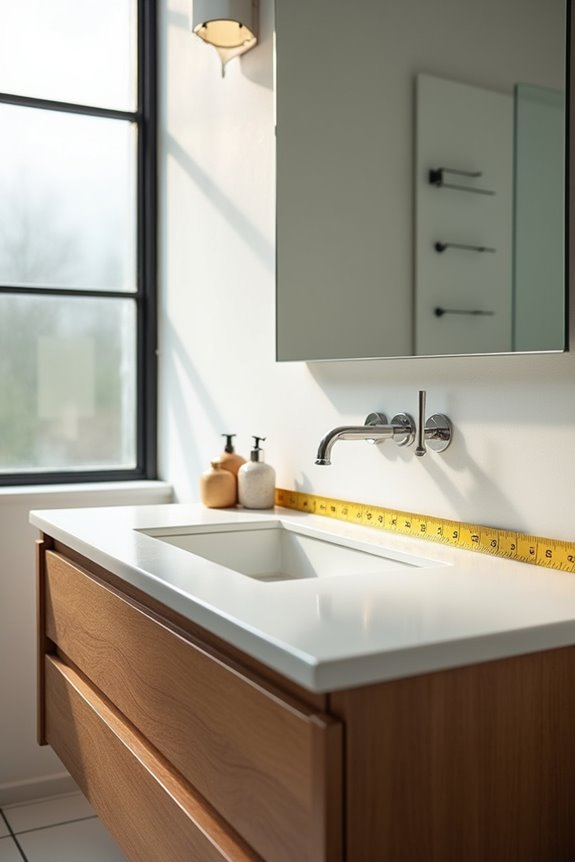
Now that you’ve decided custom is your move, let’s figure out what height works for your body and your space. Start by standing at your kitchen counter. If you like that height, you’re probably a comfort height person. If you find yourself hunching, you might want to go slightly lower. Grab a tape measure and check the distance from your floor to your wrist when your arms hang naturally. That’s your ideal vanity height and the best starting point available. If you’re significantly taller or shorter than average, custom heights aren’t luxuries; they’re necessities. Don’t settle for standard just because it’s easier. Your back will benefit from the proper fit.

Modern & Durable: With a white finish combined with black hardware, this vanity adds versatile style that complements various decors. Crafted from reliable engineered wood with a wear-resistant surface, it delivers durability for daily use. The fully floor-standing base further enhances overall stability—showcasing its quality and style.

Spacious Storage Space: Classic design with the drawers and doors creates a spacious storage space.What you want to store, it can do. Organize your essentials effortlessly with this sleek and functional design, a perfect addition to any modern bathroom

36 INCH VANITY - Add detailed elegance and quality construction to your bath remodel with this bathroom sink cabinet by Alaterre. This large vanity accommodates a 37-inch-wide by 22-inch-deep top with 1 center-set sink basin (not included).