


A nightstand should stand 24 to 28 inches tall, but the number that actually matters is your mattress height, not the tag on the box. Measure from the floor to the top of your mattress, then shop for a nightstand that sits level with that surface or within about 2 inches above it. I learned this the hard way after helping a friend wrestle a nightstand into place that looked perfect against her bare frame, then sat comically low once her 14-inch hybrid mattress and 3-inch gel topper arrived.
How Tall Is a Nightstand
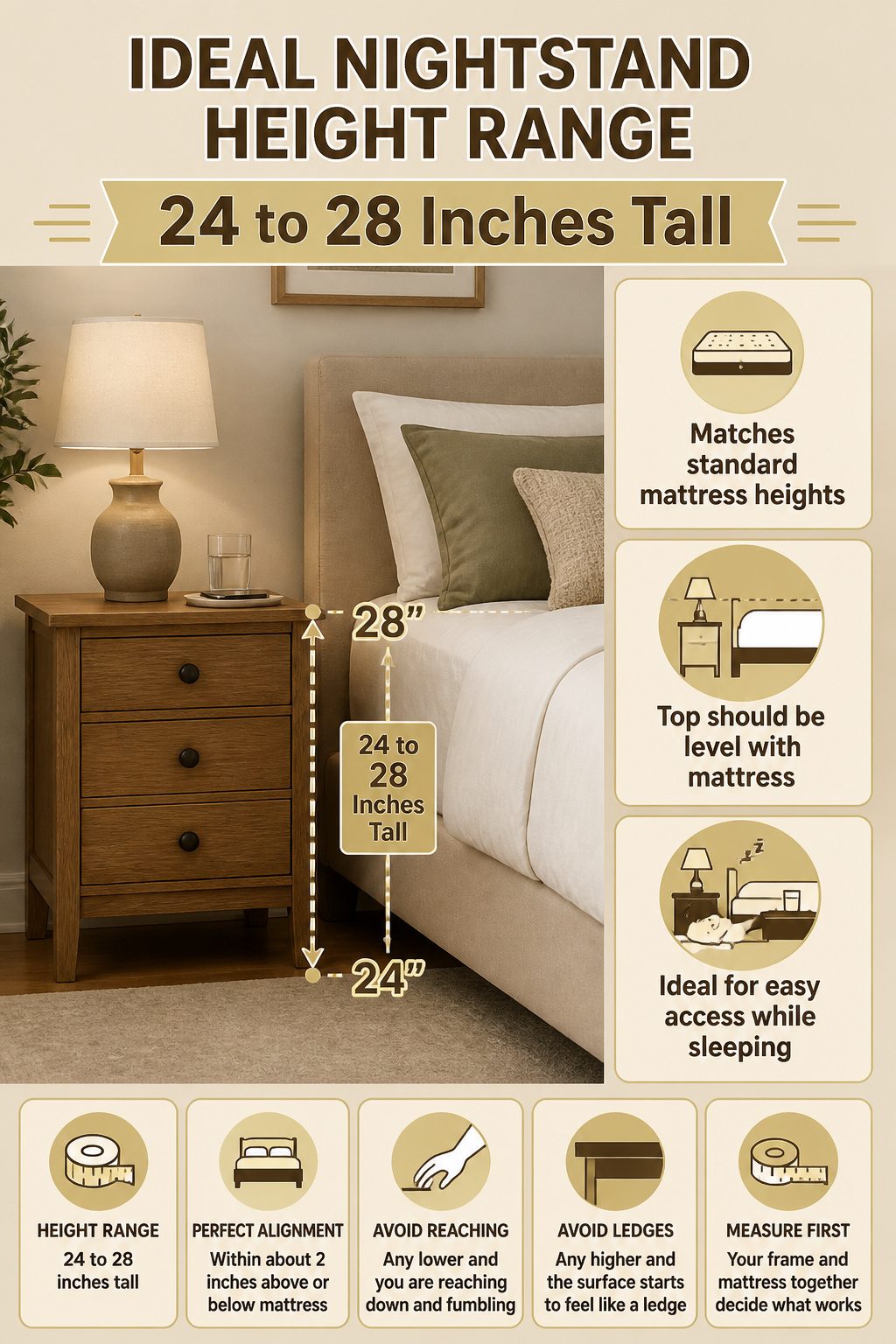
A nightstand should stand 24 to 28 inches tall, measured from the floor to the tabletop. That range lines up with most standard mattress heights and keeps your lamp, phone, and water glass within easy reach while you are half-asleep.
The real measurement that matters is not the nightstand itself but where it sits relative to your mattress. Keep the tabletop level with the mattress top, or within about 2 inches above or below that line. Any lower and you are reaching down and fumbling; any higher and the surface starts to feel like a ledge hovering over the bed.
"We recommend that the top of the nightstand be level (or even slightly lower) than the top of the mattress so items on the nightstand are within reach… A nightstand that is comparable in height to your mattress is the most enjoyable."
What that means for you: pull out a tape measure, check the distance from your floor to the top of your mattress, and shop for that number or a couple inches shorter. Your frame and mattress together decide what works, not a label on the box.

A finished look on both sides: Two matching Natural Oak tables repeat the sculpted wave texture and gold-colored metal pulls, giving the bed a more pulled-together, symmetrical modern look

A finished look on both sides: Two matching Dark Walnut tables repeat the sculpted wave texture and gold-colored metal pulls, giving the bed a richer, pulled-together warm modern look

MATCHING BEDSIDE SET OF TWO: Two coordinated tables frame the bed with consistent Dark Walnut grain, round gold knobs and raised proportions, creating balanced style and equal storage on both sides.
Average Nightstand Height
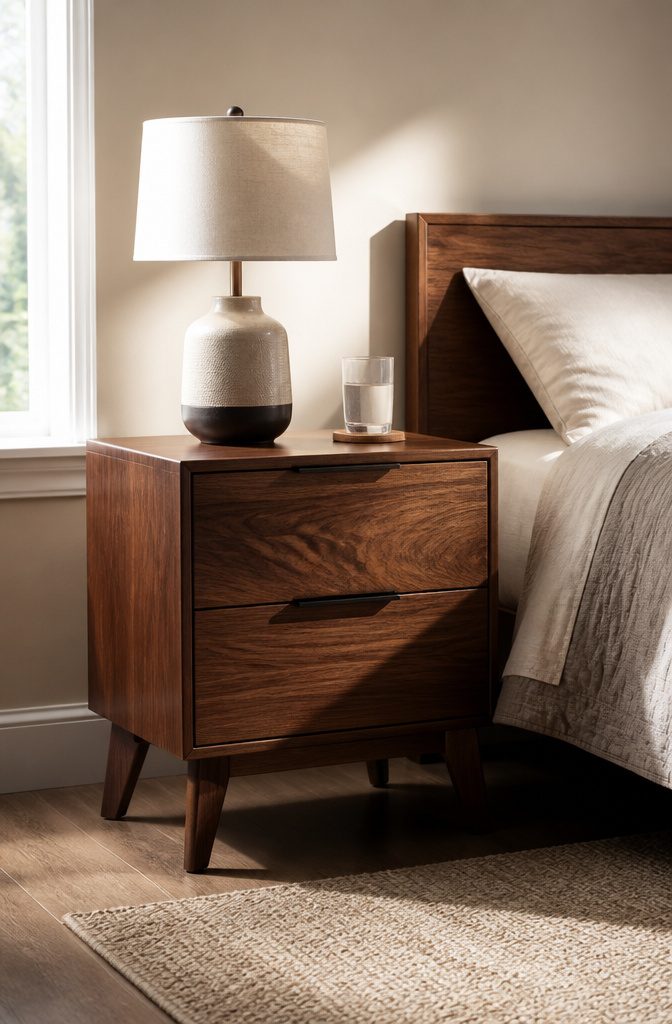
Most nightstands sold today fall between 24 and 28 inches from the floor to the tabletop. That range did not happen by accident. Decades of bed frames paired with standard innerspring mattresses settled into a combined height of roughly 24 to 25 inches, so furniture makers built nightstands to sit level with or just above the sleeping surface.
A 24-inch nightstand tends to be the safer bet for average setups. It clears most mattresses without towering over them, and it leaves room for a lamp or a glass of water within easy reach. A 28-inch piece works better when the mattress sits higher or when the bed has a tall headboard that would swallow something shorter.
The mismatch I watch for is a low platform frame against a 28-inch stand. The table ends up above shoulder height when you are lying down, and reaching up for your phone every morning gets old fast. If your mattress sits especially low or high, this default range may not be your answer.
CLASSIC RUSTIC FARMHOUSE STYLE Vintage rustic nightstand with warm neutral tone and smooth finish blends seamlessly with farmhouse, retro, and country decor elevating your bedroom style effortlessly


Fluted Panel Design & Circular Split Handles: This mid century modern nightstand features precision vertical fluting across the 2 drawers, paired with distinctive circular split handles. The grooves emphasize natural wood grain and deliver subtle layered texture. Boasting a warm, sculptural silhouette, it blends seamlessly within contemporary and classic interiors with understated, versatile appeal.
Measuring From the Mattress, Not the Frame
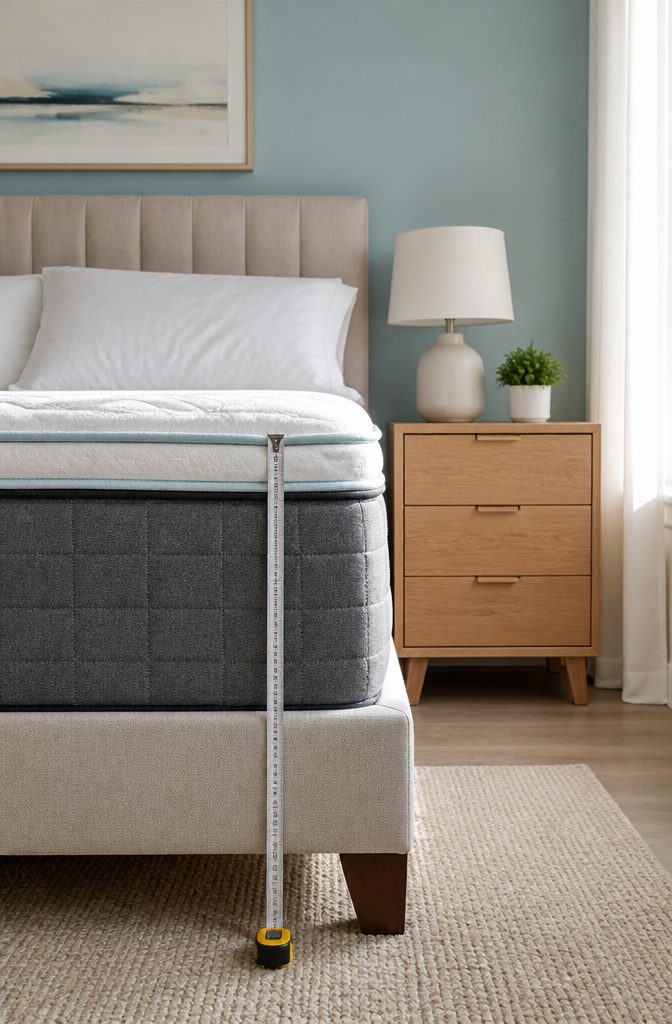
The most common mistake people make is measuring from the bed frame instead of the mattress top. Frames sit low, sometimes 12 inches off the floor or less, but your sleeping surface tells the real story. Mattress thickness runs anywhere from 8 to 16 inches, and a thick pillow-top or added topper can push that up another 3 to 6 inches you probably forgot to count. I learned this the hard way after helping a friend wrestle a nightstand into place that looked perfect against her bare frame, then sat comically low once her 14-inch hybrid mattress and 3-inch gel topper arrived. The fix is simple: stack everything you actually sleep on, then measure from floor to top of the mattress. That total, somewhere around 24 to 30 inches for most setups, is the number worth writing down before you shop.

Gun nightstand with Plenty of Storage Space: Our night stand with gun drawer has 5 tiers, the top tabletop has a height enclosure to prevent items placed on the tabletop from falling, the top tabletop is sliding, there is a hidden drawer underneath, an open storage space, and 2 spacious, large drawers, the smart nightstand provides plenty of storage space for bedside essentials and personal valuables to keep your bedroom well organized
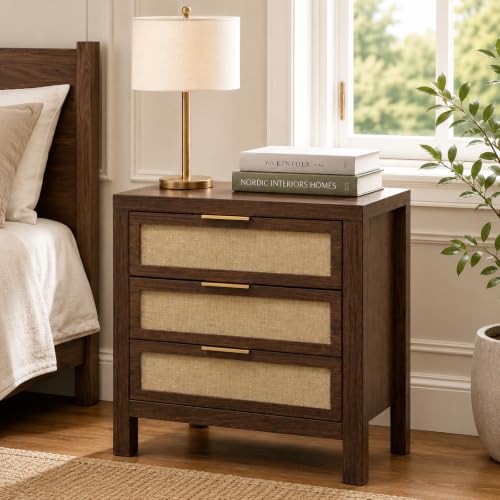
【40mm Thick Frame for Stable Support】Sturdy walnut nightstand built with 40mm thick engineered wood frame and reinforced legs to reduce shaking. It holds up to 220 lbs steadily to hold table lamps, books and daily bedroom decor.

Mid-Century Modern Style: Elevate your space with this side table from the MAEZO Collection—featuring streamlined designs, tapered legs, and smooth, curved transitions. Pair it with the matching coffee tables and dining tables for a coordinated look
Nightstand Height by Bed Type
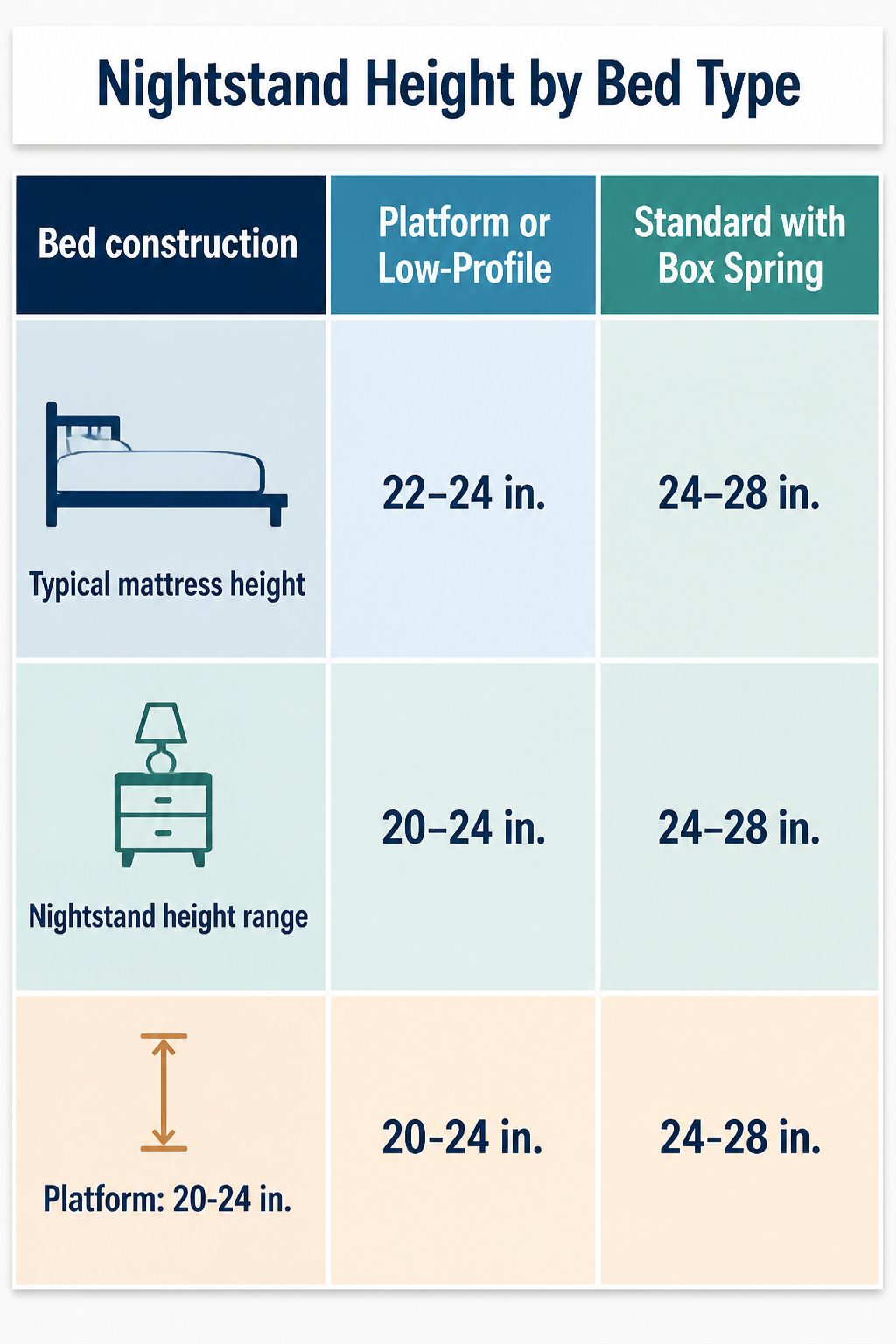
Platform beds sit low because the mattress rests directly on slats or a solid base, so the nightstand needs to come down with it. 20 to 24 inches lands right beside most platform mattresses, which typically sit 22 to 24 inches off the floor. Add a box spring or a thick pillow-top and everything shifts upward; the mattress surface climbs to 26 to 30 inches or more, and the nightstand has to follow.
I used to think "standard bed" meant one universal height until I measured my own and realized the box spring added nearly six inches I had not accounted for.
| Bed construction | Typical mattress height | Nightstand height range |
|---|---|---|
| Platform or low-profile | 22–24 in. | 20–24 in. |
| Standard with box spring | 24–28 in. | 24–28 in. |
| Pillow-top or hybrid with box spring | 28–30+ in. | 28–32 in. |
The table makes it look tidy, but real bedrooms blur the lines. A hybrid mattress on a platform frame might hit 26 inches, sitting between two rows. Measure from the floor to where you actually sleep, not the top of the headboard or the side rail, and match the nightstand to that number.

🏡【Adjustable height &Rolling】The tray is made of FSC-Certified materials. The top of the side table measures 15.8 inches long and 11.8 inches wide. This side table with wheels can be adjusted height to suit bathtub, couch, bed, and chairs, while the swivel table can be rotated 360°. The C shaped end table is designed so that it slides nicely under the sofa. This side table comes with wheels on the bottom, you can easily move it to where you want to go.

Small End Table Adjustable Height: The end Table size is 15.7"L *11.8"W *32''H(Adjust 18"-32"). Customize the height from 18" to 32" to fit your sofa, bed, or favorite chair. Whether your seating is low or high, this side table adapts effortlessly, providing a practical surface for any room.

✔️ Space-Saving and Convenient: This couch arm table fits snugly at the edge of your sofa, keeping snacks and drinks within easy reach while you relax. Simply flip it up 90° when not in use—effortless and hassle-free!
Slightly Above or Level With the Mattress
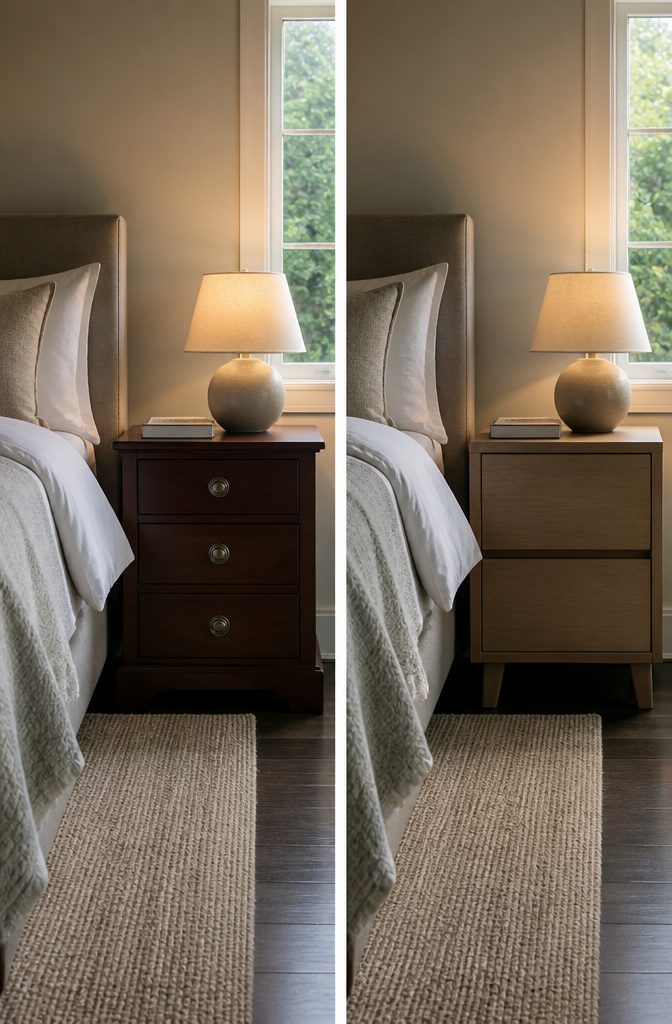
The 2-inch rule is the simplest way to get this right: your nightstand can sit level with the mattress top or rise up to 2 inches above it, but it should never drop below.
That small window keeps your reach horizontal. When you roll over for water or to switch off a lamp, your hand moves sideways instead of groping downward or lifting upward. A nightstand that sits below the mattress means you’re reaching down into a shadowed well at 2 a.m., which sounds minor until you’ve knocked the same glass over twice.
Designers tend to agree on the upper bound more than the lower. One allows nightstands slightly below mattress height; most don’t. The safer bet, and the one that saves your sleep, is to match or sit a little above.

Under Mattress Shelf: This versatile bed tray can hold your laptop, books, food—whatever you need! The steel frame fits under a mattress and secures the tray with no tools needed. Holds 17.5 lbs with 6” to 10” mattresses, 35 lbs with 10”+ mattresses

【Height Adjustable & Rotating & 270° Flip】 - The laptop tray with 360 rotation can go up and down with adjustable height for people of all ages. Besides, 270°flip over desktop offers more comfortable working experience whether on the sofa or the bed
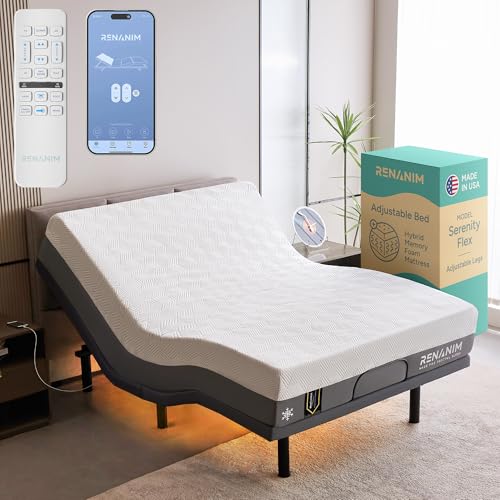
Cloud 9 Comfort: Introducing Renanim Full Adjustable Bed with Mattress Serenity Flex Series – a sleek, durable marvel with upgraded technology. Step into the era of rejuvenated sleep with reclining bed frame and mattress – 14 inch hybrid mattress; featuring dual massage and 3 leg heights. Tailored for all statures, enjoy ergonomic comfort, under-bed storage space, and simple assembly of zero gravity adjustable bed frame for serene rest.
Ergonomics and Comfort
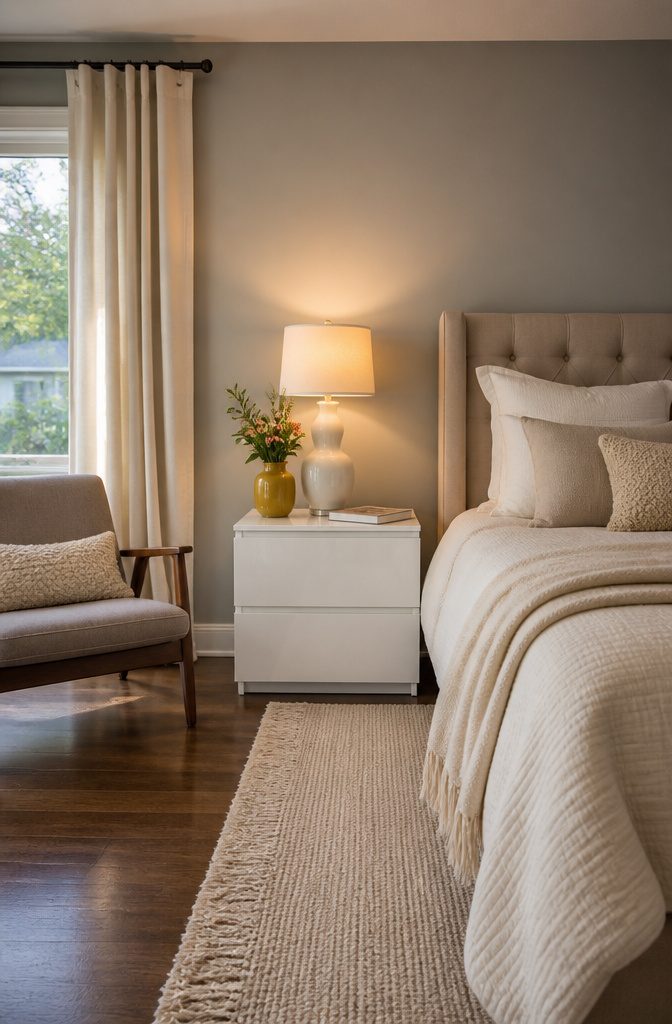
Your elbow should stay close to your body when you reach for a glass of water or your phone from bed. If the nightstand sits too low, your shoulder drops and your arm extends awkwardly downward; too high, and you are lifting against gravity every time. Neither feels good by morning.
The right nightstand height keeps your forearm nearly parallel to the floor whether you are sitting up to read or lying on your side. Mattresses typically land 25 to 28 inches from the floor, sometimes pushing 30, so most nightstands fall in that same range. If you are unsure, sit on the edge of your bed and reach toward where the table would sit. Your hand should meet the surface without stretching up or bending down. Lie down and try again. That small test saves you from months of shrugging your shoulder into a cramp every night.

Perfect for Co-Sleeping:This dog bed with mattress is designed to be placed next to your bed, allowing your dog&cat to sleep close to you without disturbing your sleep....
Feng Shui and Visual Balance
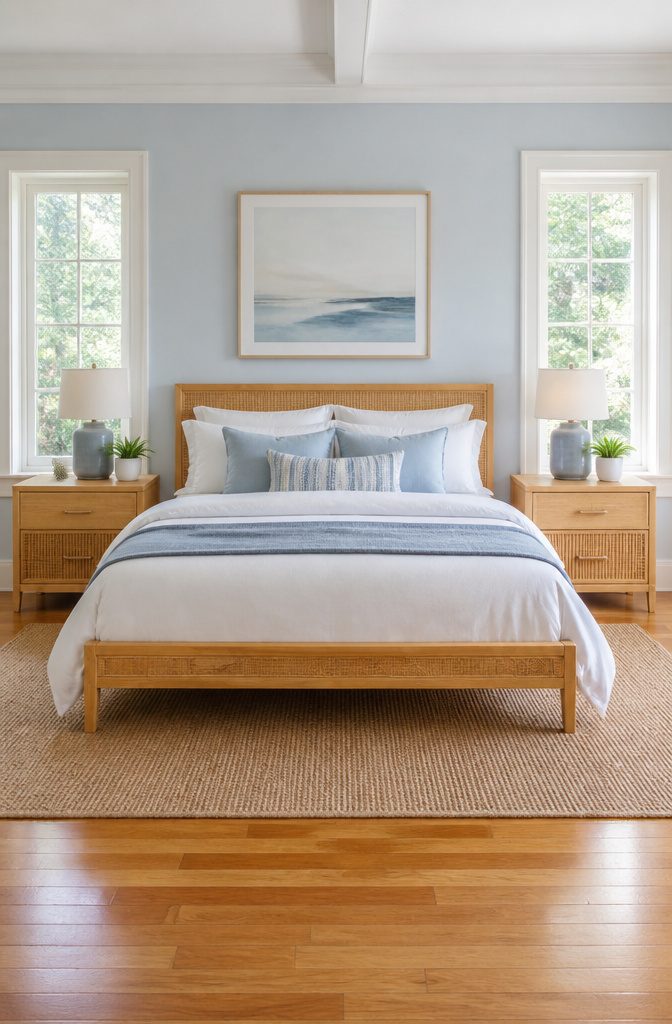
Feng shui treats the nightstand as a channel for energy, not just a shelf for your lamp. The traditional view holds that the top should sit level with your mattress or up to two inches below it. Lower is better than higher, because a surface below the mattress line lets qi move through the room without hitting a wall of furniture.
That runs against the practical rule most of us live by. For actually reaching your water glass at 2 a.m., level or even an inch above the mattress wins. Your arm travels sideways; nothing spills.
So the choice is real. If you sleep fine and the room feels calm, the functional height is probably doing more for your rest than any energy principle could. But if you are already tuning the bedroom for quiet, dropping the nightstand those two inches is a small, reversible move that costs nothing extra. Two nightstands, matched in height, matter to both camps. The symmetry matters to feng shui for flow, and to the eye for balance.

Size and Color: This square tablecloth measures 24x24 inches, suitable for nightstands, bedside tables, end tables, and plant stands. Recommended for square table from 8 x 8 inch to 16 x 16 inch, with a droop length about 4 inch to 8 inch, please confirm your table's size. Choose from a selection of 12 solid colors, including black, white, navy blue, beige, grey, red, green, royal blue, orange, pink, chocolate, and sage green, to effortlessly match any decor style or occasion. Available in a wide range of sizes to fit rectangular, square, oval, and round tables

Clear Size Guidance: Measure your table first! This 24"x24" brown square tablecloth fits tables 8"x8" to 16"x16" (providing 4-8 inches of overhang per side). Designed for end tables, dressers, plant stands, and nightstands

Versatile Charm: Use this narrow bedside table in your living room or bedroom as a sofa side table, nightstand, or accent table for a touch of rustic elegance
Adjustable and Custom Options
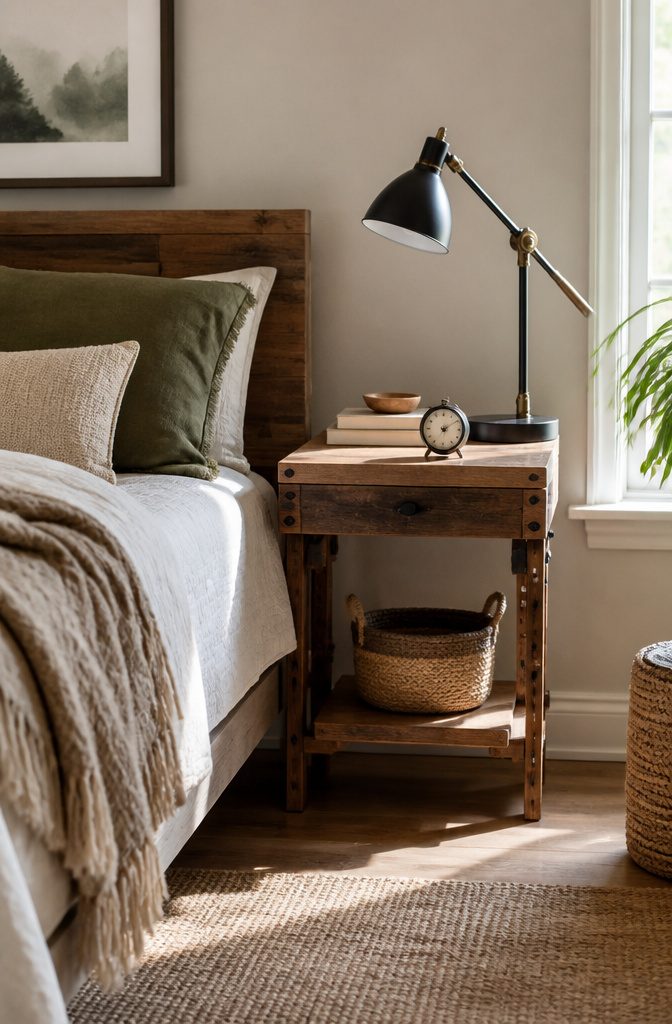
Adjustable-height nightstands make more sense than most people think, especially if your bed sits on risers or you swap mattresses every few years. Some designs use telescoping legs or stackable bases that let you shift the surface up or down a few inches without buying new furniture. That flexibility pays off when a standard 24–28 inch nightstand suddenly sits six inches below your mattress edge.
Wall-mounted floating shelves work the same way, since you choose the bracket height during installation. For beds that fall well outside typical ranges, custom builds from furniture makers or sites like Etsy and Wayfair can match the exact dimension you need. Custom pieces pair best with beds you already own, since the measurement is fixed from the start rather than guessed from a showroom tag.
A small side table with furniture risers underneath is the budget workaround I have seen hold up fine for years, though it looks a little makeshift up close. The real advantage of adjustable or custom options is never fighting your bed height twice.

🎁【Side-opening Drawer with Mesh Door】Our end table living room design with mesh door, allows ventilation, great for storing items like electronics. You can quickly check the drawer's contents without opening it.

【Flexible & Convertible Design】This tall nightstand is designed for flexible setup, allowing you to assemble it into two distinct configurations to suit your space.Choose between a nightstand with drawers & open lower shelf,or reconfigure the modules into a compact end table—perfect for adapting to bedrooms, living rooms, or entryways while maintaining the sleek functionality of a modern bedside table

Embrace an Modern Vibe:Walnut Brown with vertical grain taps,this nightstand emits an modern vibe in your bedroom. It can also catch eyes as a side table or end table throughout the home,adding elegance to home life.
What to Do If Your Nightstand Does Not Match
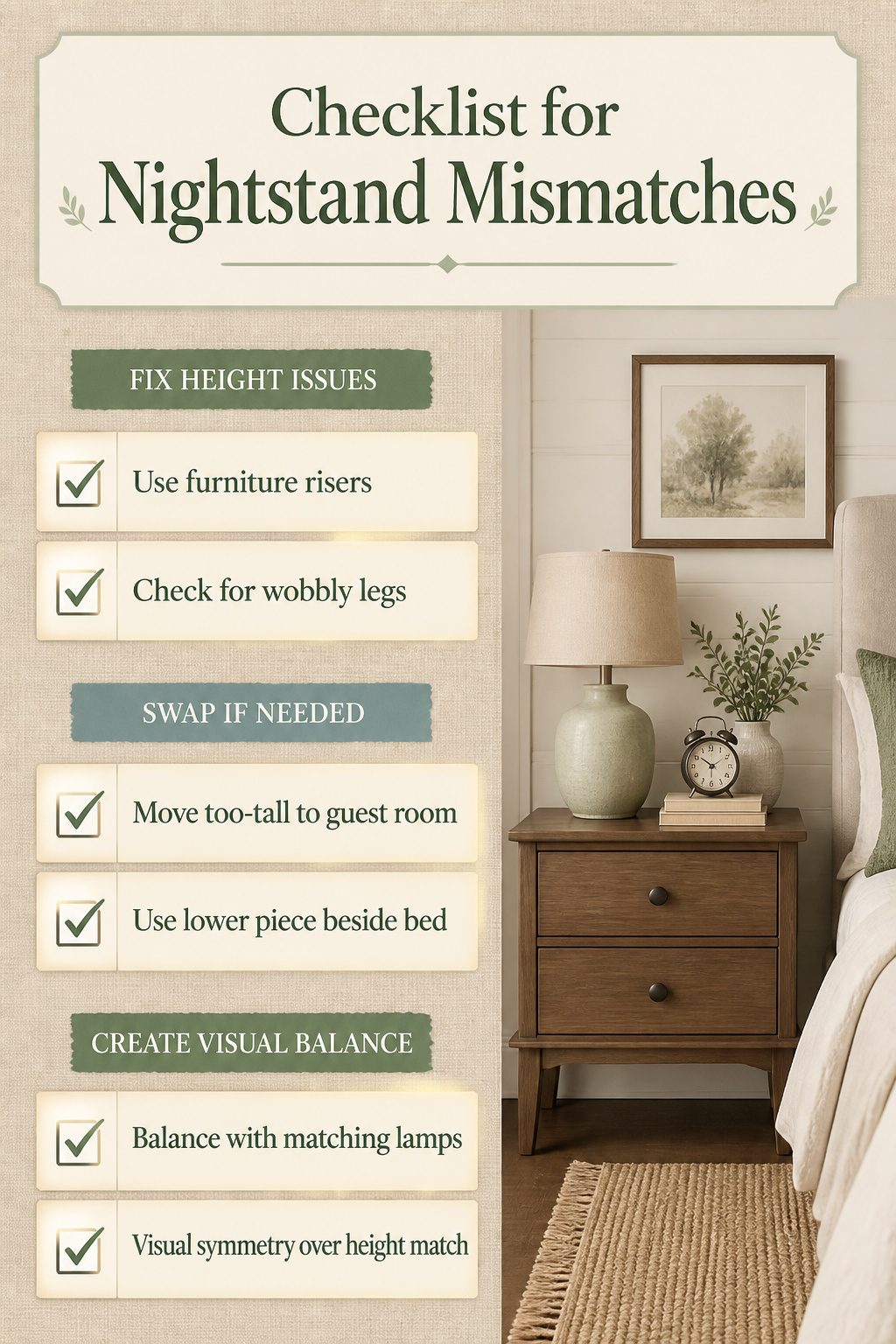
A nightstand that sits too low is easier to fix than one that towers above the mattress. Furniture risers can lift a short piece those critical few inches, and felt pads or shims work under a single wobbly leg. I’ve also had luck swapping a too-tall nightstand into the guest room and bringing a lower piece beside my own bed; the mismatch disappears when both sides of a room read as intentional rather than forced.
If you already own two different heights, balance them visually rather than matching them physically. A pair of identical lamps or matching artwork above each table tricks the eye into seeing symmetry even when the furniture differs. The height gap still matters for reaching your alarm clock, but the room itself won’t feel accidental.

[Night Stand with Swivel Top] Skip the hassle of getting up from your coziest spot just to grab or set down belongings — this rotating table top puts everything within easy reach. When locked firmly in place with the built-in knob, the tabletop supports up to 20 lbs. To prevent tipping and keep the unit stable during use, please position items with their weight centered toward the inner side of the surface.

Adjust Height & Tilt the Surface: This height-adjustable narrow end table switches between two heights (19.9" and 29.7"). The table surface tilts to an angle that suits reading, typing, drawing, or eating. Find a comfortable view, whether you're working or resting on the sofa

【Adjustable Side Table】The couch arm table is adjustable in height, varying from 17.65 inches to 33.21 inches. You can use it at different heights to do whatever you want. The 15.92''L x 11.86''W tabletop is spacious enough for your phone, laptop, magazines, snacks, and coffee
Shopping With Your Measurement
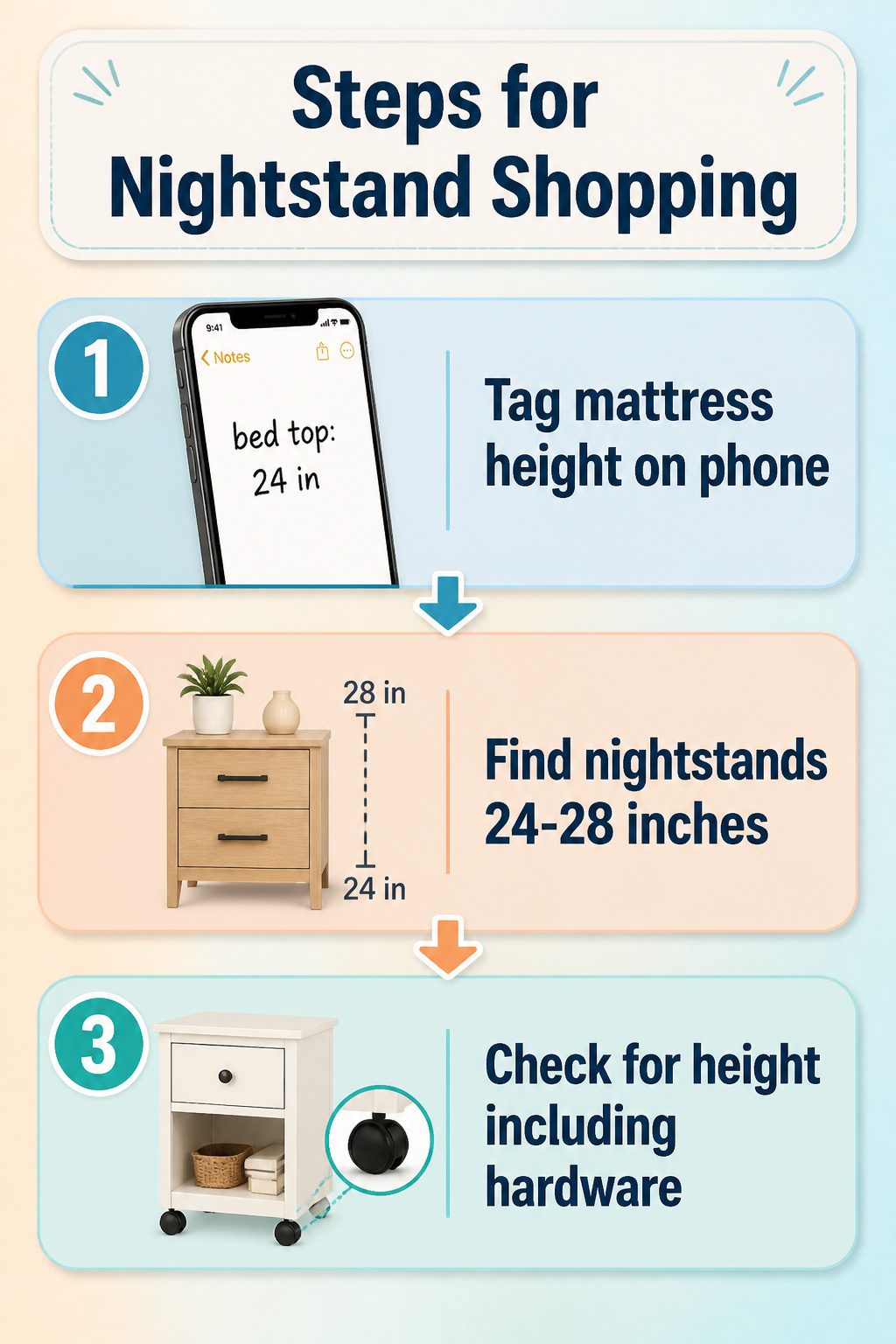
- Tag your mattress height in your phone before you leave the house. I keep mine as a note labeled "bed top: 24 in" so I do not have to guess or remeasure in an aisle.
- In a store, most nightstands you see will fall between 24 and 28 inches. That range works for many beds, but it is not universal. Hold your number up against the tag and look for something within about 2 inches either way.
- Online listings show overall height, but check whether that figure includes hardware like caster wheels or legs you might remove. A 26-inch nightstand with 3-inch casters sits very differently once they come off.

VERSATILE DESIGN: Height-adjustable lift-top surface functions as a laptop stand, drawing desk, or over-bed table for maximum functionality CHARGING STATION: Built-in USB...
Frequently Asked Questions
How tall should a nightstand be?
A nightstand should be 24 to 28 inches tall from floor to tabletop. The more important measurement is where it sits relative to your mattress top; keep the tabletop level with the mattress, or within about 2 inches above or below that line. That keeps your lamp, phone, and water glass within easy reach while you are in bed.
Should nightstands be higher or lower than the bed?
Nightstands should be level with the mattress top or up to 2 inches above it. A surface below the mattress means reaching down into a shadowed well at night, which leads to fumbling and spilled glasses. Most designers agree on the upper bound; the safer bet is to match or sit slightly above your sleeping surface.
What is the average height of nightstands?
Most nightstands sold today fall between 24 and 28 inches from floor to tabletop. Furniture makers settled on this range because standard bed frames paired with innerspring mattresses typically combine to about 24 to 25 inches in total height. A 24-inch nightstand tends to work for average setups, while a 28-inch piece suits higher mattresses or tall headboards.
How do I choose the right nightstand height?
Measure from your floor to the top of your mattress, then shop for a nightstand that matches that number or sits a couple inches shorter. Do not measure from the bed frame; mattress thickness runs 8 to 16 inches, and a pillow-top or topper can add another 3 to 6 inches you might forget to count. Write that final number down before you shop.