
A deep-cleaned living room rug in about a day, for the price of dish soap and a hose. Most people quit too early: they rinse until the top looks clean but leave the backing soaked, which is where mildew actually starts.
The fix is flipping the rug once the face feels dry, not before. Wool, synthetic, or shag all move through the same six stages; only the water temperature and the gentleness of your hand change.
How to Clean a Big Area Rug
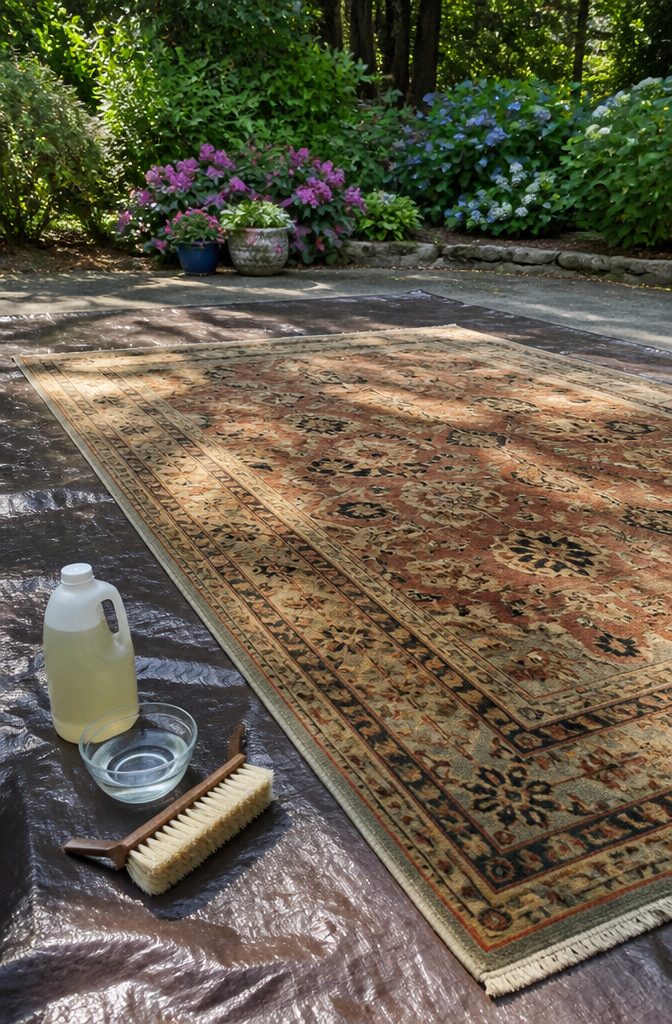
A big area rug can be deep cleaned at home without hauling it to a shop or renting gear. I’ve pulled together a six-step method that works for most large rugs you’d find in a typical living room: prep the space, spot clean stains, wash with a solution suited to the material, rinse until the water runs clear, dry completely, and finish with a final vacuum to lift the fibers.
The sequence stays the same whether your rug is synthetic or wool, though the details shift. Haul it outside if you have a hose and a tarp. Work the cleaner in with a soft brush, squeegee out what you can, and flip it once the top feels dry so the backing does not stay damp. Material-specific warnings come next, but the bones of the process do not change. A mid-pile rug from a big-box store and a hand-knotted wool piece both move through the same stages; only the product and the gentleness of your hand vary.

OUR MOST POWERFUL FORMULA: Best for tough ground-in dirt and stains.


One 64 fl oz refill of OxiClean Large Carpet Cleaner is a carpet cleaner liquid that can be used in any carpet cleaning machine
1. Move Furniture and Vacuum Both Sides
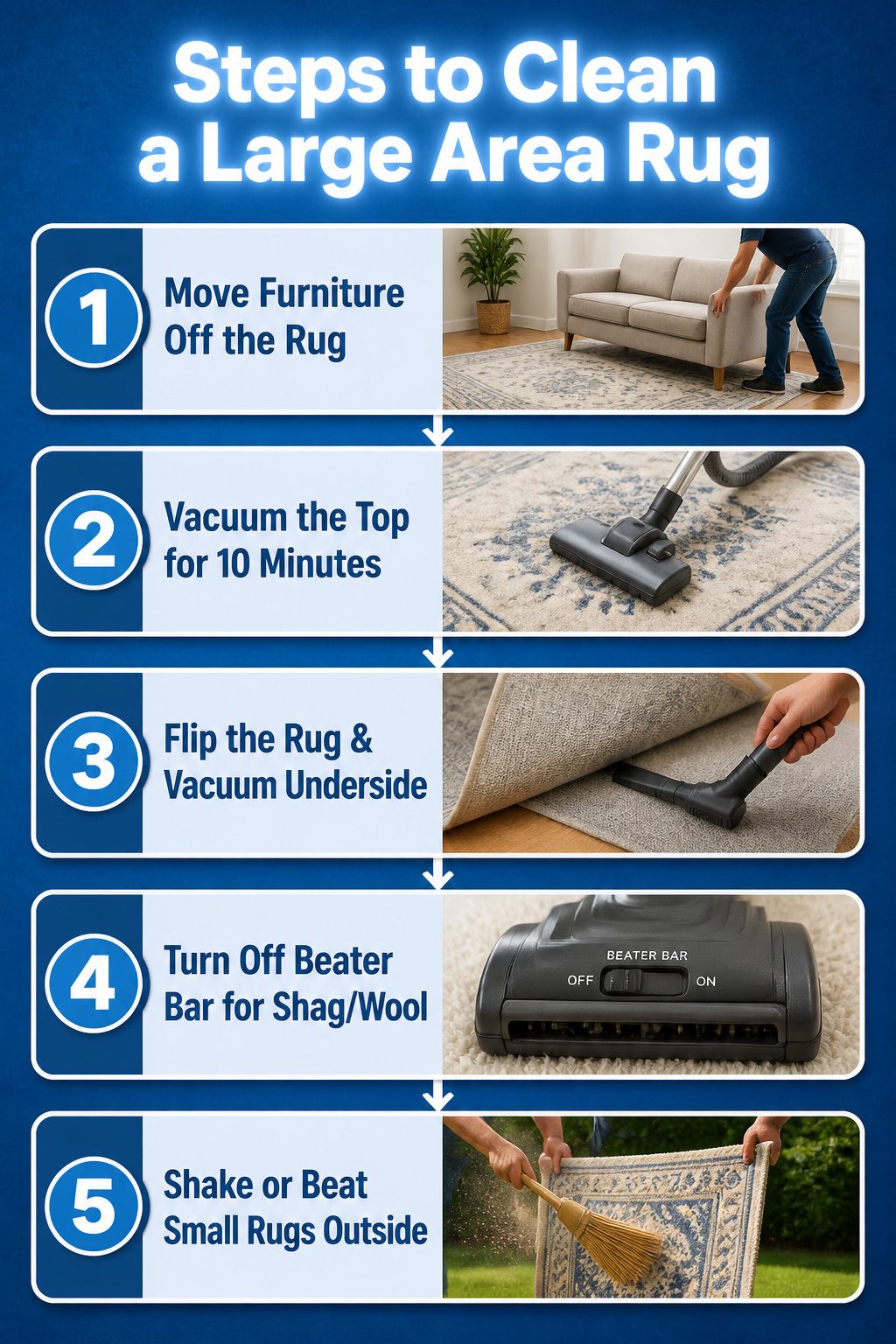
- Move every piece of furniture off the rug, even the heavy stuff. If a sofa won’t budge, slide it to one side, clean that half, then swap.
- Vacuum the top for a solid ten minutes. The canister will fill fast; that’s years of grit coming out of the pile.
- Flip the rug and vacuum the underside. This is what most people skip. Dirt works down through the fibers and sits against the backing, grinding them apart from beneath every time someone walks across.
- Turn the beater bar off for shag or wool. Suction-only keeps the fibers intact.
- If the rug is small enough to carry outside, two minutes of shaking or beating the back with a broom does more than vacuuming ever could.

Professional Strength Formula: Designed to tackle the toughest carpet stains quickly and effectively.

COMBAT CARPET STAINS FAST: Carpets show stains quickly, especially in busy, high-traffic areas. This 2-in-1 Oxy-Powered Carpet Cleaner is made for targeted spot removal and helps tackle even older, set-in-looking stains up to 7 days old, while refreshing carpets so living spaces stay cleaner and ready for everyday life and unexpected messes

WORKS ACROSS MANY SURFACES – It safely lifts stains from upholstery, carpets, rugs, and other water-safe, colorfast materials. The formula is water based, non-flammable, and odor free for worry-free cleaning anywhere in your home.
2. Blot Stains Before They Set
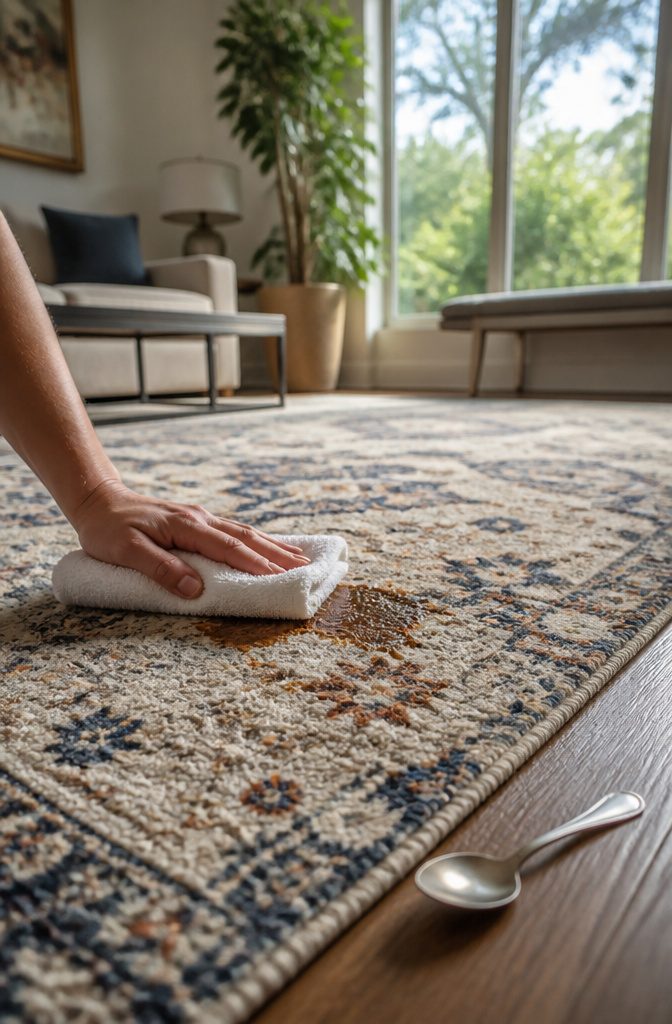
Spills on a big rug have one rule: speed beats scrubbing. The second something hits the fibers, press outward from the center with a clean white cloth, working your way in. White matters because dye from a colored towel is the last thing you need mid-cleanup, and cotton picks up liquid without adding lint back into the pile.
Your solution depends on what landed there. For most fresh messes, mix 2 liters of warm water with 2 tablespoons neutral laundry detergent and 1 tablespoon white vinegar. Warm water lifts without setting the stain; hot water does the opposite and can lock proteins or synthetics into the fibers permanently. Dampen your cloth in the mixture, then blot. Never pour directly and never scrub in circles, both of which push the stain deeper and fray the surface.
Solids get lifted out first with a spoon or the flat of a knife, then you blot what remains. If the spot’s stubborn, an enzymatic cleaner like Zout or Resolve on synthetic rugs can break down the residue, but patch-test a corner first. Once the stain lifts, rinse with plain warm water and blot again, changing cloths as they soil. Leave a fan on the area until it feels dry to the touch; lingering dampness breeds mildew, especially on wool or cotton bases.

Selected for sheepskin fleece rugs & throws
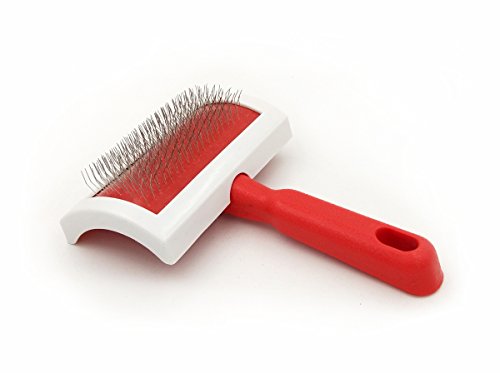
Universal curved slicker brush.
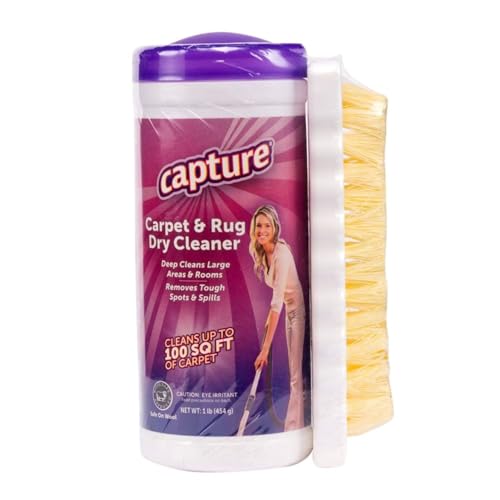
ABSORBENT DEEP DRY CLEANING: Wet cleaners cause wicking by leaving moisture in carpets, rugs, upholstery, furniture, sofa, and couch. With Capture Powder Cleaner, the spots do not reappear, it acts like heavy-duty sponges to absorb dirt and spills. This superior deodorizer and cleaner eliminates strong odors for long-lasting freshness.
3. Wash With the Right Solution for Your Material
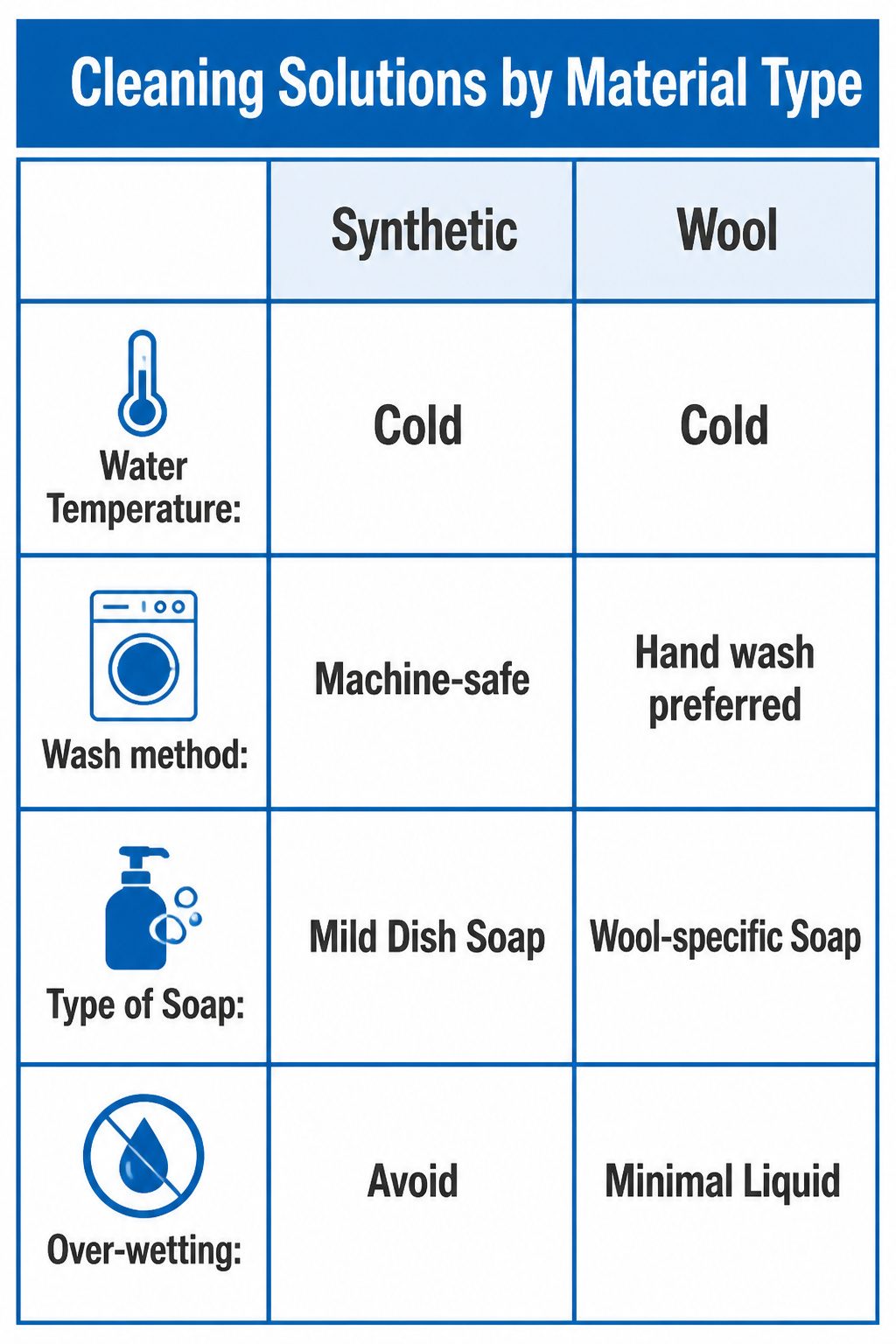
Mix your solution in a bucket before you touch the rug. Cold water and mild dish soap works for most synthetics; wool needs the same cold water treatment but with a soap labeled for wool, never standard carpet cleaner. Those stronger formulas can damage fibers you are trying to save.
A sponge or soft-bristle brush is the right tool for working the cleaner into the pile. I give it about five minutes to sit before moving toward rinsing; anything less and you are basically just wetting the surface. For small synthetic rugs with a machine-safe label, a gentle cycle in the washer is acceptable, but lay them flat to dry rather than hanging.
Jute and sisal are the outliers here. Spot clean only, treat them more like a wipeable hard surface than a washable fabric, and keep liquid minimal. Over-wetting is how most at-home rug cleanings go wrong, regardless of material.

POWERFUL HOT STEAM - 1050 watts with 3-5 minutes fast heat-up and emits pressurized powerful hot steam 230℉ for up to 8-12 minutes

TURBO STEAM POWER FOR FAST, DRY WRINKLE REMOVAL: No spitting, leaking, or wet spots with powerful 1875-watt steam for silk, everyday clothing, thick fabrics, curtains, and upholstery. Dry Steam Technology helps deliver consistent results.

2-in-1 Functionality: Use as an upright steam mop for floors and carpets or detach the handheld steamer for above floor, appliance, or other detailed cleaning
4. Rinse Until the Water Runs Clear
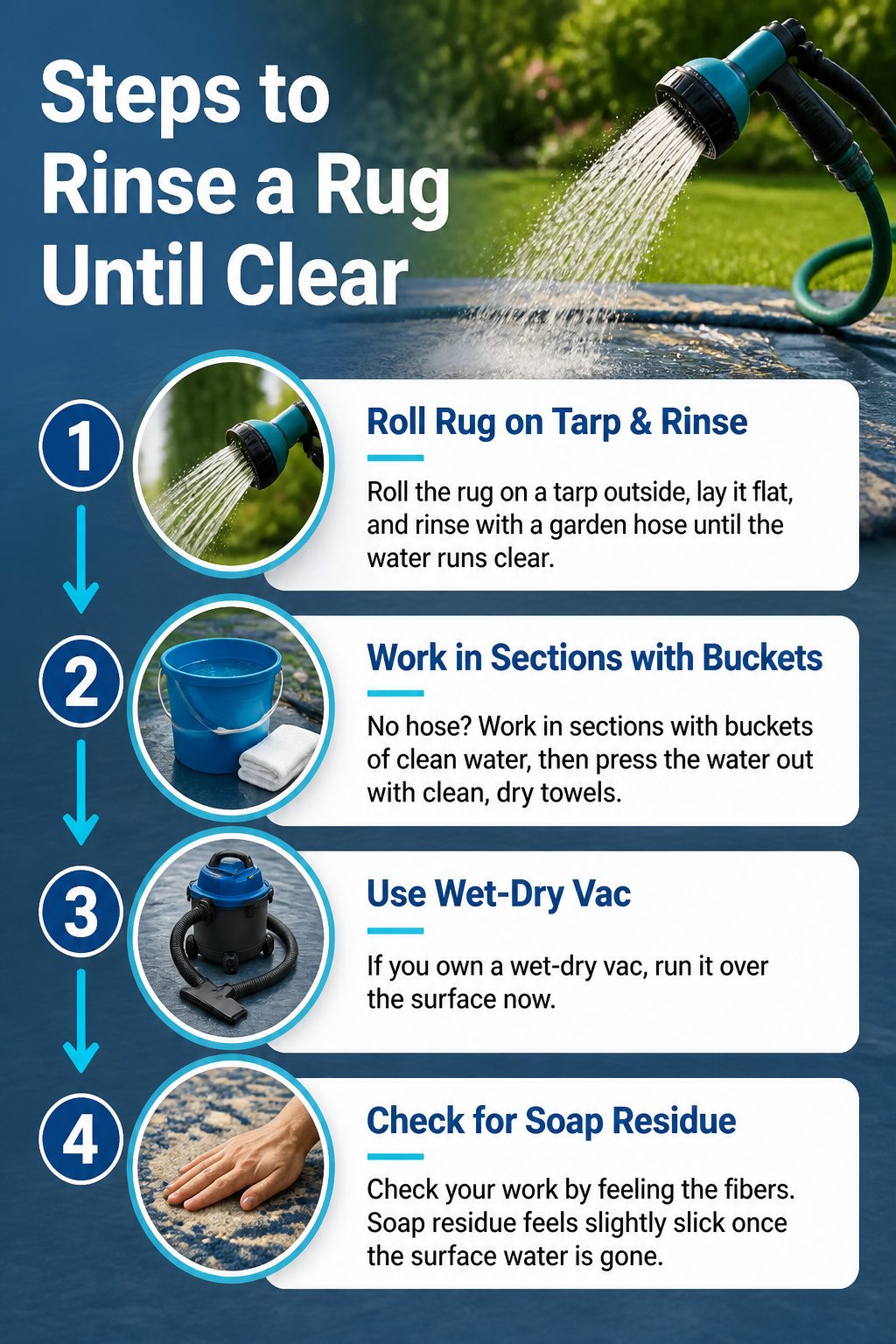
- Roll the rug on a tarp outside, lay it flat, and rinse with a garden hose until the water runs clear. The runoff should look completely free of dirt or suds; any soap left behind will act like a magnet for new grime.
- No hose? Work in sections with buckets of clean water, then press the water out with clean, dry towels. A squeegee pushing in the direction of the pile helps lift out what towels leave behind.
- If you own a wet-dry vac, run it over the surface now. You will pull out far more water than towels or a squeegee can manage alone, and the faster you get moisture out, the faster the whole drying stage goes.
- Check your work by feeling the fibers. Soap residue feels slightly slick once the surface water is gone. If you are not sure, pour one more clean bucket over the area and press with dry towels again.

MADE FOR: A more efficient drying and cooling process

TRUE 1/2 HP ALL-COPPER MOTOR: Built with a durable all-copper motor for dependable power and long service life. A true 1/2 HP design delivers professional-grade performance you can count on for demanding drying jobs.

POWERFUL AIR MOVER FAN - Experience industrial-grade airflow with AlorAir ’s air blower fan, engineered as a premium industrial blower fan. Features advanced centrifugal blower fan (aka squirrel cage blower fan) technology with 3-speed control (350-600 CFM). Nice as a fan for drying floors or water restoration tool. Unrivaled 4:1 airflow-power ratio cuts ,consuming less energy than traditional units. Excels as drying fans for water damage with rapid water removal for carpets, basements, and flood zones.
5. Dry Flat or Hang Until Both Sides Are Done
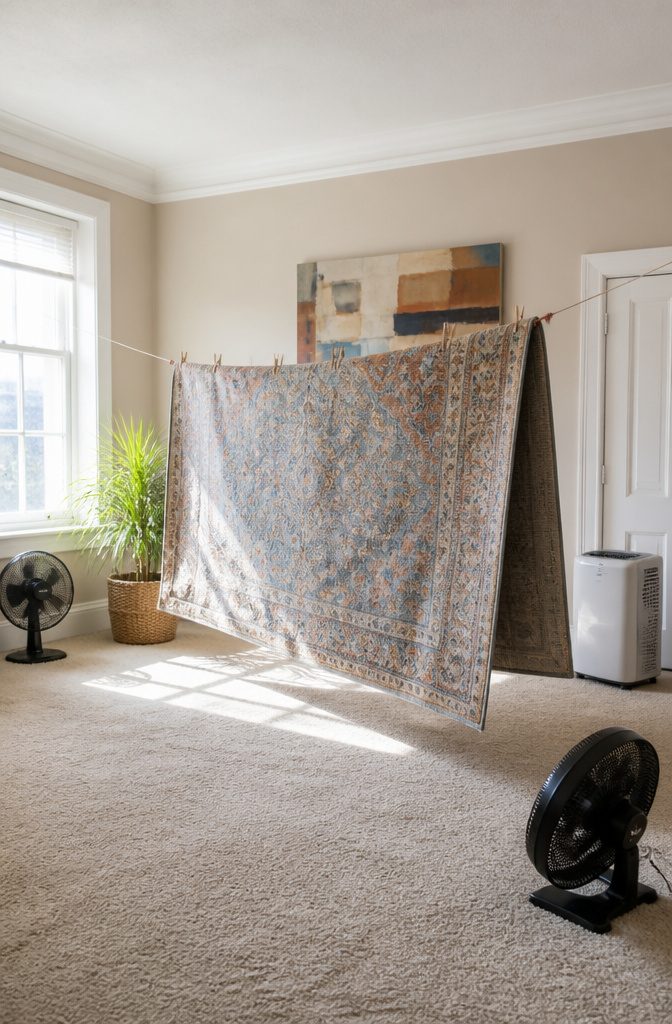
A rug that looks dry on top can still hold water underneath, and that hidden dampness is where mildew starts. Lay the rug flat in a well-ventilated room, or hang it over a sturdy railing or clothesline if you have the outdoor space and the weather cooperates. Run fans around it, or set a dehumidifier nearby if your air tends toward humid. The face can feel dry while the backing is still wet, so flip it after a few hours and let the other side catch up too.
Depending on thickness, humidity, and how much water you used, drying takes 6 to 24 hours. Press your hand firmly into several spots, especially the thicker areas, and trust the coolness test: if any part still feels cool against your palm, it needs more time. Do not walk on it during those first few hours, and absolutely do not put it back down on your floor until you are sure both sides are done.

COMPATIBLE: Designed for use with all Shark Carpet Cleaners - EX121BRN, EX151, EX201, EX301, PX201, PX202BRN, PX203BRN & PX251.

COMPATIBLE: Designed for use with all Shark Carpet Cleaners - EX121BRN, EX151, EX201, EX301, PX201, PX202BRN, PX203BRN & PX251.

[KEY ATTRIBUTES]: Size: 5' x 6'6" (5' x 7') | Thickness: 0.2 in. | Color: Seafoam Green
6. Vacuum Once More to Fluff the Fibers
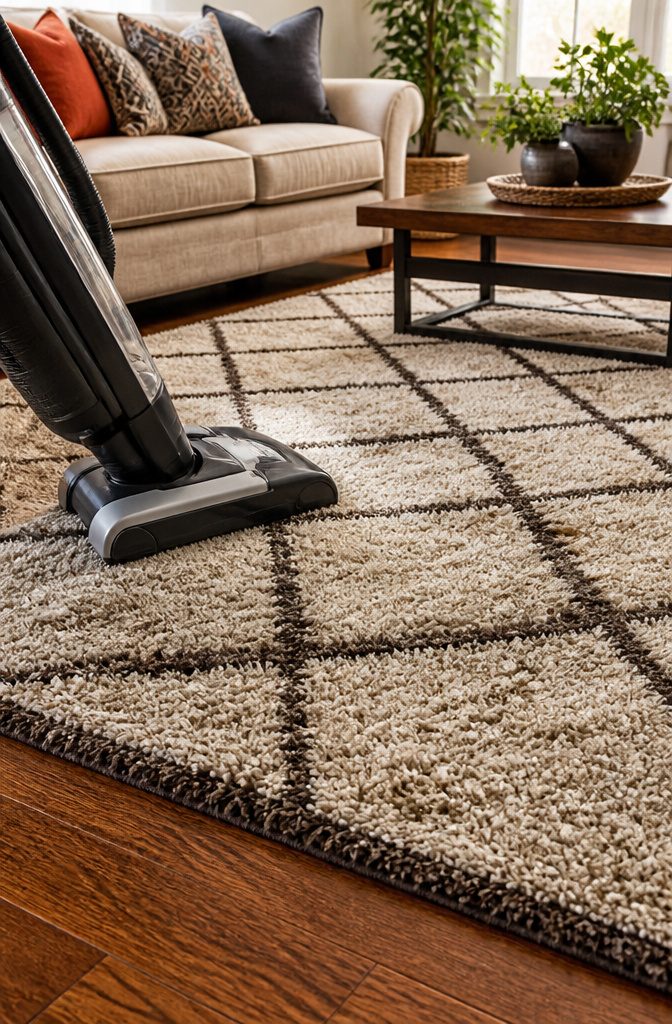
The pile on a big area rug almost always looks a little tired after it dries. Water and cleaning solution weigh fibers down, and the drying process itself can leave them stiff or matted in the direction you hung or rolled it. Running the vacuum over the surface one last time brings that texture back to life.
This final pass serves a second purpose too. Even after rinsing until the water ran clear, a few stray particles of dirt or dried detergent can remain deeper in the pile. The vacuum pulls those last remnants out before foot traffic grinds them in.
For higher pile rugs, sometimes vacuuming alone is not quite enough to restore loft. A soft-bristled brush worked through the fibers can do what the vacuum cannot, lifting and separating strands that have clumped together. I find this step especially worth the few extra minutes on shag or wool rugs, where the whole point of the rug is that plush depth underfoot.
Flip the rug and vacuum the backing as well before you move it back inside. Any grit left there will work its way through to the surface the first time someone walks across it. Vacuuming the back one more time keeps that from undoing your weekend of work.

PERMANENTLY removes tough stains like red wine, fruit juice, make-up, food grease, vegetable oil, cola, soy sauce, grape jelly, blood, urine, and more.

PET STAIN AND ODOR REMOVER: Things can get a little messy when your pet is involved - that’s where we come in; This extra-strength cleaning solution is specially formulated to tackle the toughest smells & dirtiest spots left behind by your beloved pets.

2X formula is concentrated to provide same great cleaning to remove soil and stains
Cleaning Methods by Rug Type
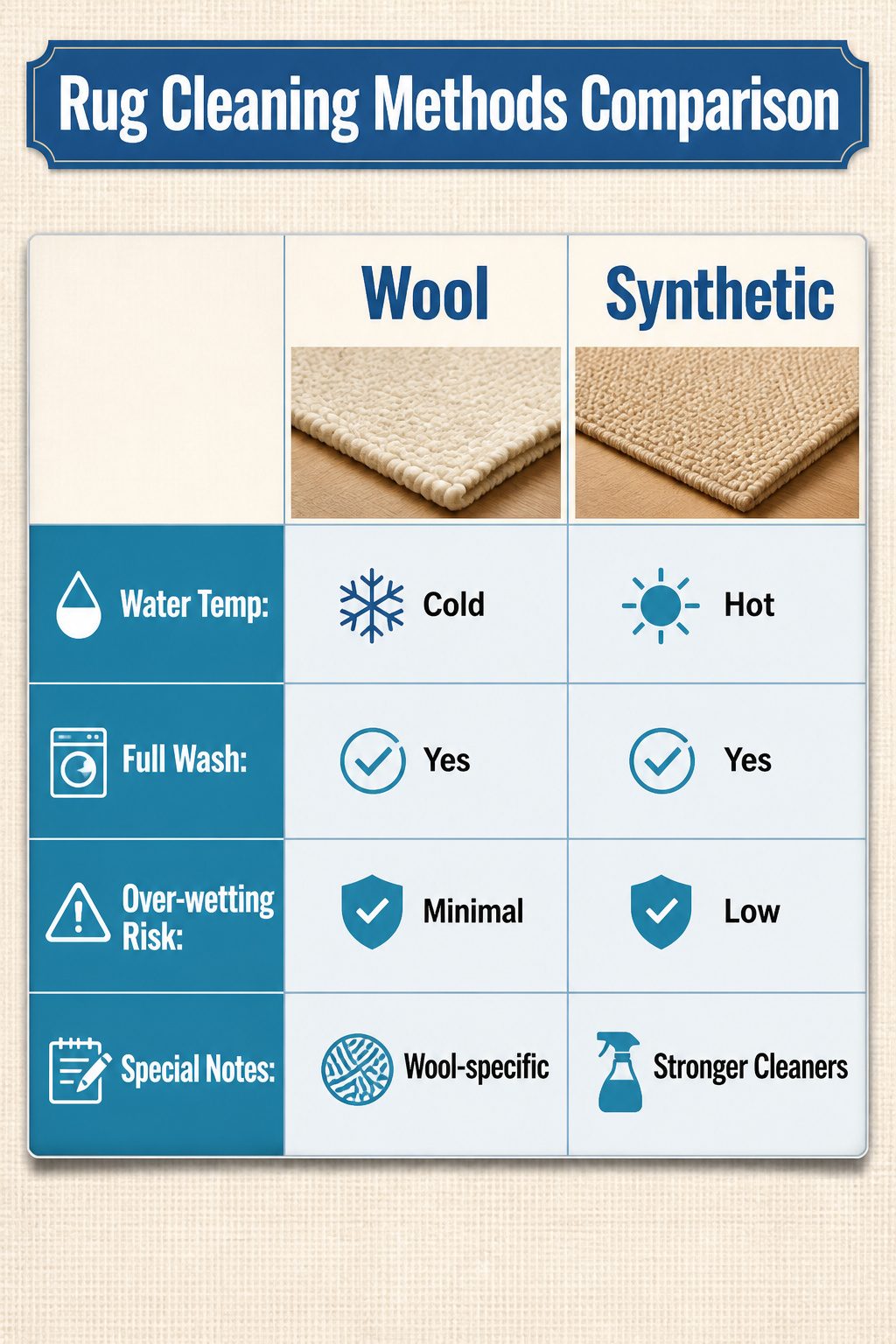
Not every rug can survive the same treatment. Wool needs cold water so the fibers do not distort. Synthetic rugs handle heat and stronger solutions without complaint. Jute and sisal are essentially wipeable surfaces, water stains them and can rot the backing, so spot clean only with blotting. Shag’s deep pile traps grit and may need a rug beater or broom to shake loose what vacuums miss. Oriental and Persian rugs, especially older hand-knotted ones, are best left to professionals with gentler tools.
| Rug type | Water temp | Full wash? | Special notes |
|---|---|---|---|
| Wool | Cold | Yes | Use wool-specific solution |
| Synthetic | Hot | Yes | Tolerates stronger cleaners |
| Jute/sisal | n/a | No | Blot only; water damages fiber |
| Shag | Cold or lukewarm | Yes | May need beating/shaking |
| Oriental/Persian | n/a | No | Professional cleaning recommended |

Unique1 Rug Renovator brush head & 1 removable telescoping handle

Carpet Brush measuring 8.3 inches long and 2.5 inches wide with a special design for cleaning car mats, foot wells, and floor liners

Deep Cleaning Power (ACCG25) - Heavy duty interior carpet cleaning brush with durable bristles designed to scrub and lift dirt, stains, and debris from carpets, mats, and upholstery for a refreshed and restored look
How Often to Clean and Test First
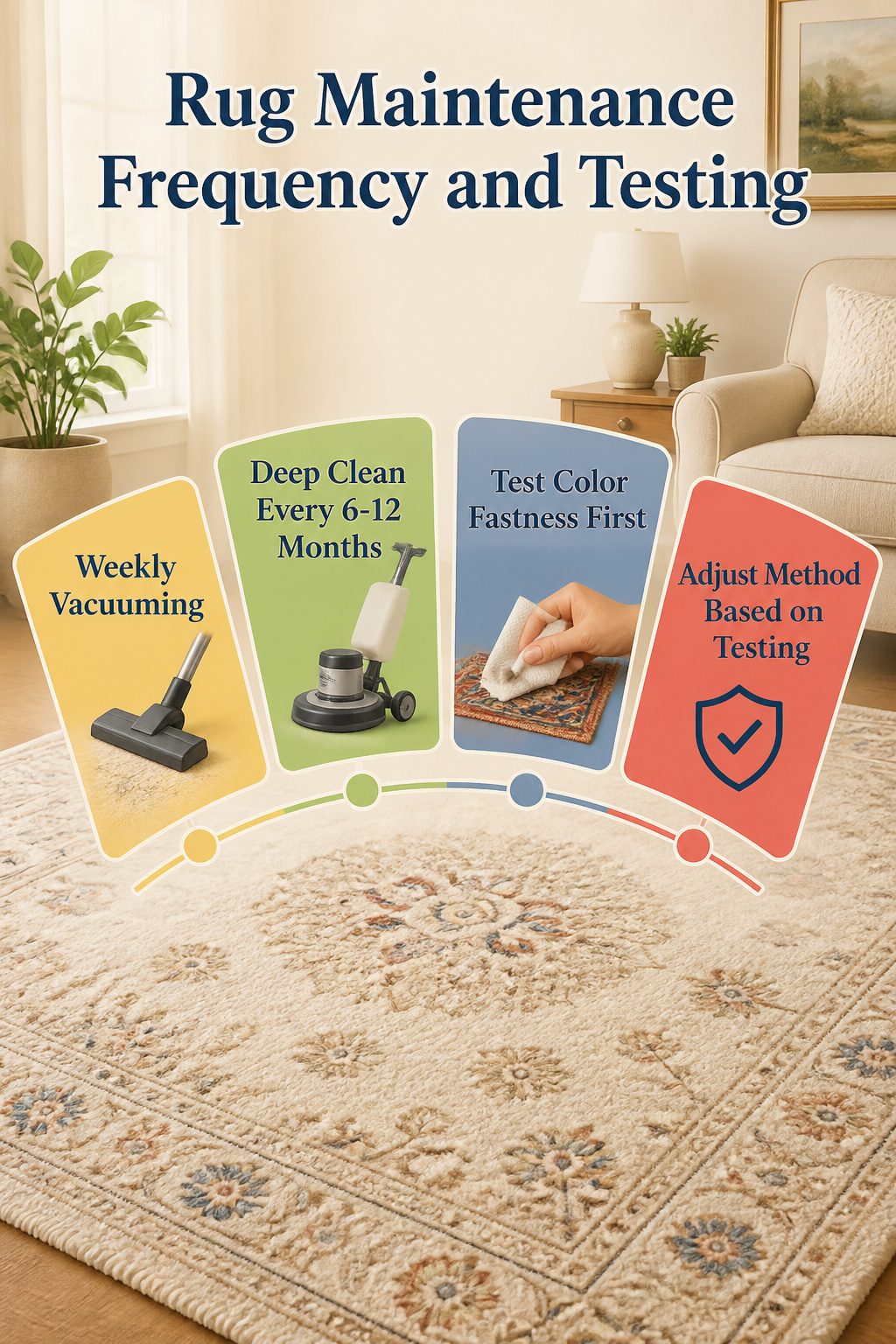
Grit is what actually wears a rug out, not the stains you notice later. I vacuum my rugs weekly for that reason, and run a deeper clean every six to twelve months (every six if pets, kids, or heavy traffic are part of the picture). Before water touches any rug, though, I test a small corner for colorfastness. This matters most for wool rugs and antique Orientals with vibrant dyes. If the color bleeds in that hidden patch, it will bleed across the whole surface once soaked. A rug that passes gets the full treatment; one that doesn’t needs a gentler hand or a professional.
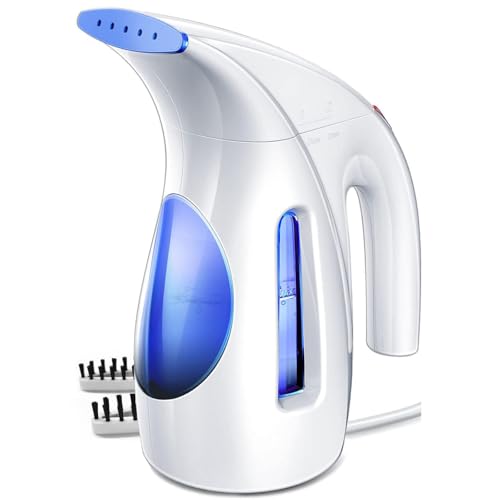
[Easy to Use] This 700W steamer generates gentle, long-lasting steam and has a 9- foot power cord, so you'll never have to worry about operating it remotely and you can iron clothes from a distance.

[Easy to Use] This 700W steamer generates gentle, long-lasting steam and has a 8.5- foot power cord, so you'll never have to worry about operating it remotely and you can iron clothes from a distance.

TURBO STEAM POWER FOR FAST, DRY WRINKLE REMOVAL: No spitting, leaking, or wet spots with powerful 1875-watt steam, making this the perfect steamer for clothes, silk, everyday clothing, garments, thick fabrics, curtains, and upholstery. Dry Steam Technology helps deliver consistent results.
What to Use and What to Skip
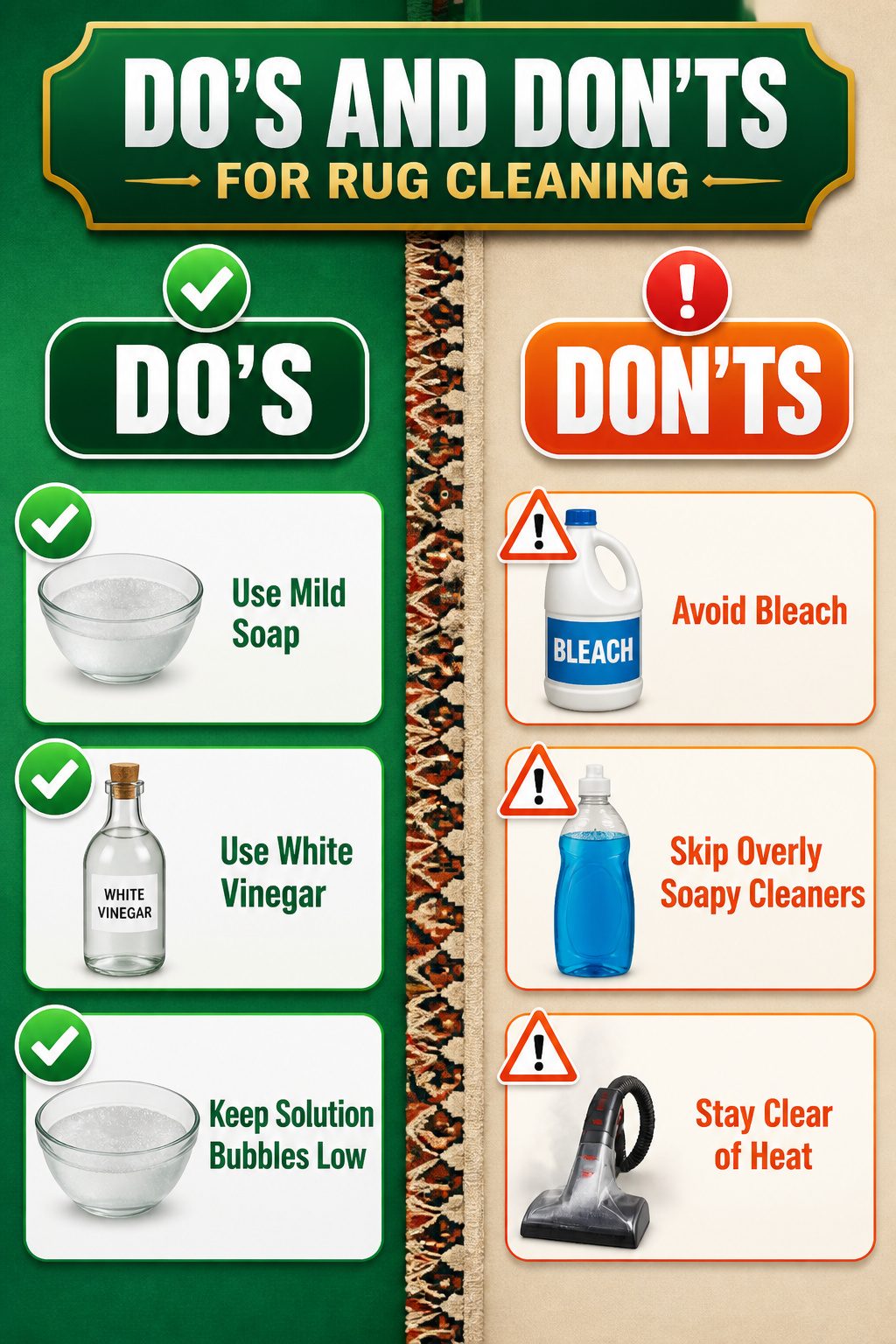
Mild dish soap or a neutral laundry detergent covered in water handles most rugs at home. White vinegar works too for a deeper cut through lingering grime. Keep the solution barely sudsy, because too much soap leaves a sticky film that pulls dirt back in faster.
What to skip:
- Bleach and ammonia strip color and chew through fibers
- Overly soapy cleaners create residue that attracts more mess
- Anything heavily perfumed, since the smell settles into the pile half-permanently
- Heat, unless you have paperwork showing the rug tolerates it
A few rug types need a professional instead. Wool wants a wool-specific formula, not your kitchen dish soap. Antique, Persian, or Oriental rugs belong with someone who has the gentle tools and a controlled dry room. Same for any rug whose tag you cannot read or that bled when you spot-tested the corner.
For cotton and synthetics, the mild stuff you already own is usually enough. Jute and sisal never get the full bath treatment, just spot work.

TRUE 1 HP ALL-COPPER MOTOR: Built with a true 1 HP all-copper motor for powerful, dependable performance and long service life. Professional-grade construction for demanding commercial and jobsite use

【Powerful & Energy-Efficient Air Mover】High-velocity airflow up to 1000 CFM with 3 adjustable speeds, powered by heavy-duty 1/4 HP motors. Delivers rapid drying for carpets, floors, walls, and water damage restoration while maintaining low energy consumption

Fast Drying: After cleaning or spills, floors often stay damp and uncomfortable to walk on. With up to 14.9 m/s air speed and 300 CFM airflow, this air mover delivers continuous air to speed up evaporation, helping floors and carpets dry faster
Keep the Rug Looking Good Longer
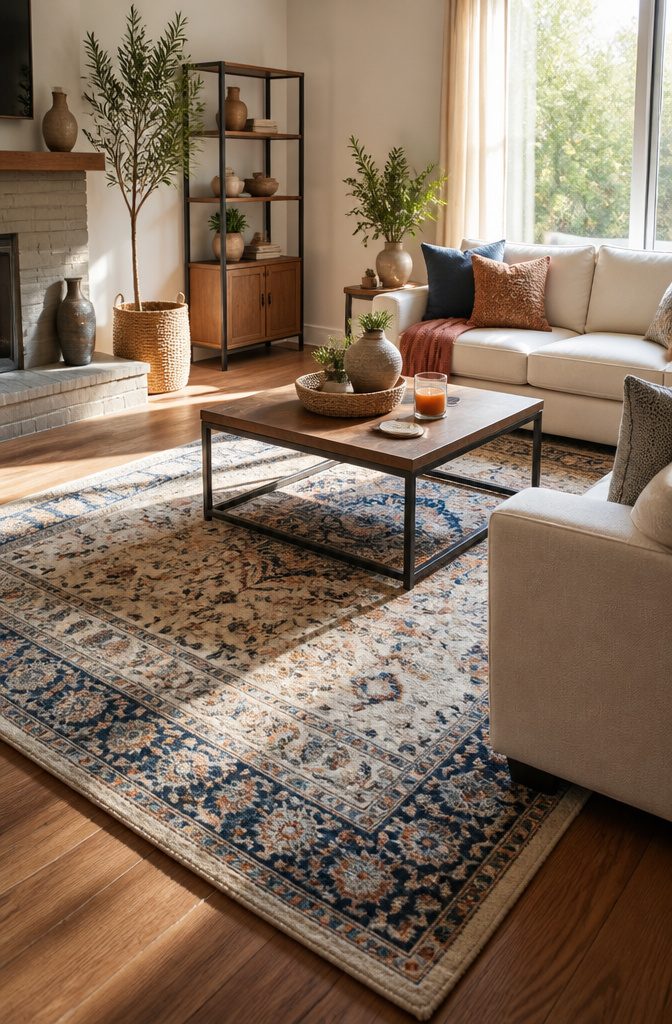
Deep cleaning puts in the work; keeping the rug looking good longer is mostly habit. I rotate mine 180 degrees once or twice a year so traffic wear and sun fade spread out evenly, and furniture does not leave permanent dents in the same four spots. A rug pad cut to fit does the rest: it stops slipping, cushions each step, and takes abrasion that would otherwise hit the backing directly. Felt or 100 percent natural rubber are the right materials. The cheap ones with PVC or synthetic latex backing contain plasticizers that can migrate into a polyurethane floor finish, leaving it yellowed or sticky enough to need refinishing. That mistake is genuinely hard to undo for the sake of a pad that often comes free with the rug.
Frequently Asked Questions
How often should I clean area rugs?
Vacuum weekly and deep clean every six to twelve months. Bump that up to every six months if you have pets, kids, or heavy foot traffic. Weekly vacuuming matters most because grit trapped in the fibers is what actually wears the rug out over time.
Can I put an area rug in the washing machine?
Only if the care label explicitly says machine washable, which usually applies to small synthetic or cotton rugs. Use a gentle cycle with cold water, then lay the rug flat to dry so it keeps its shape. Wool, natural fiber, and handmade rugs should never go in a machine.
How do you clean a wool area rug?
Use cold water and a soap labeled specifically for wool, never standard carpet cleaner or dish soap. Work the solution in gently with a soft brush or sponge, then rinse thoroughly. Hot water or harsh formulas can distort the fibers or strip natural oils from the wool.
How do you dry an area rug?
Lay it flat in a well-ventilated space or hang it over a sturdy railing or clothesline. Run fans around it or set a dehumidifier nearby, and flip it after a few hours so the backing dries too. Depending on thickness and humidity, expect six to twenty-four hours before both sides feel completely dry to the touch.
What cleaning products should I avoid on rugs?
Skip bleach and ammonia, which strip color and damage fibers. Avoid overly soapy cleaners that leave a sticky residue, and anything heavily perfumed since the scent lingers in the pile. Also avoid heat unless you have documentation that the specific rug tolerates it.