


A granite composite sink is a blend of natural stone and resin, which means it can take stains even though the surface looks solid. The resin binds hard water minerals to the surface, and those minerals then absorb pigments from coffee or wine in a way stainless steel never would. Daily drying with a soft cloth is the habit that prevents most of this; a thirty-second wipe after each use keeps the finish intact without heavy cleaners.
Daily Cleaning
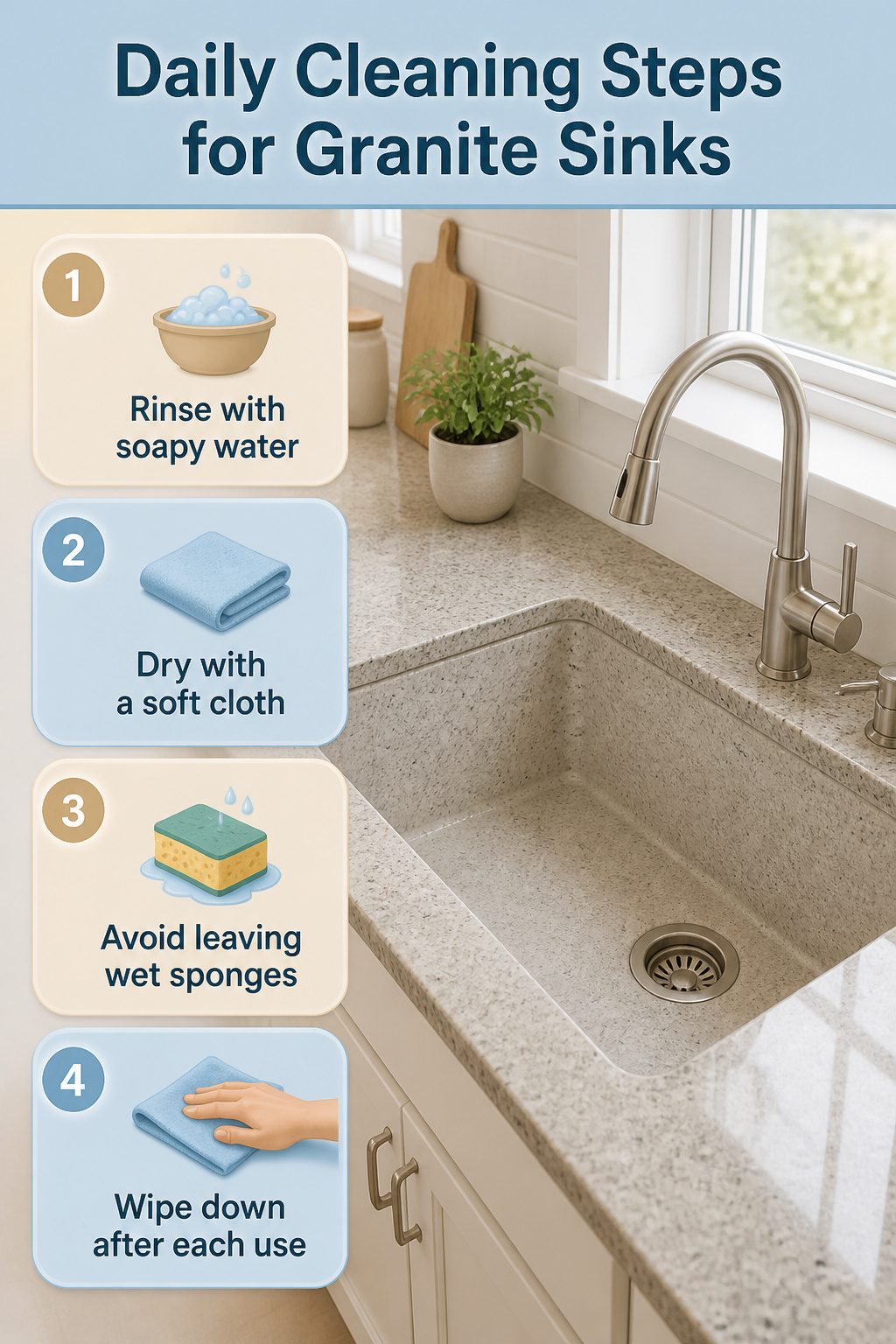
The quickest way to keep a granite sink looking clean is to rinse it with soapy water and dry it with a soft cloth after every single use. Water spots and soap film build up fast on this surface, and a thirty-second wipe-down now saves you a longer scrub later.
Wet sponges left sitting in the sink are the main thing that undoes this routine. They leave water marks and limescale deposits that turn into stains you will have to work harder to remove. I toss mine in the dish rack to dry, or hang it on a suction hook if counter space is tight.
This daily habit is what lets you skip the heavy-duty cleaners most of the time. The sink stays presentable, and your weekend project list gets a little shorter.
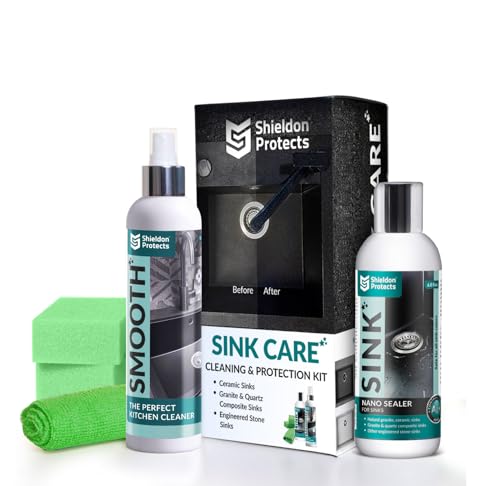
This kit will protect your sink from stains, add shine and keep it looking brand new. It will NOT remove deep-set stains. If you need to remove stubborn stains, please consider Shieldon Protects Sink Restorer Kit.

✅ Professional 3-step system – The Shieldon Protects Sink Restorer Kit restores even heavily stained sinks with a heavy-duty cleaner for tough stains, a hard water stain remover for mineral buildup, and a nano sealer that enhances the natural color of your sink. It also helps prevent water spots and future stains for long-lasting cleanliness and shine.
Deep Cleaning
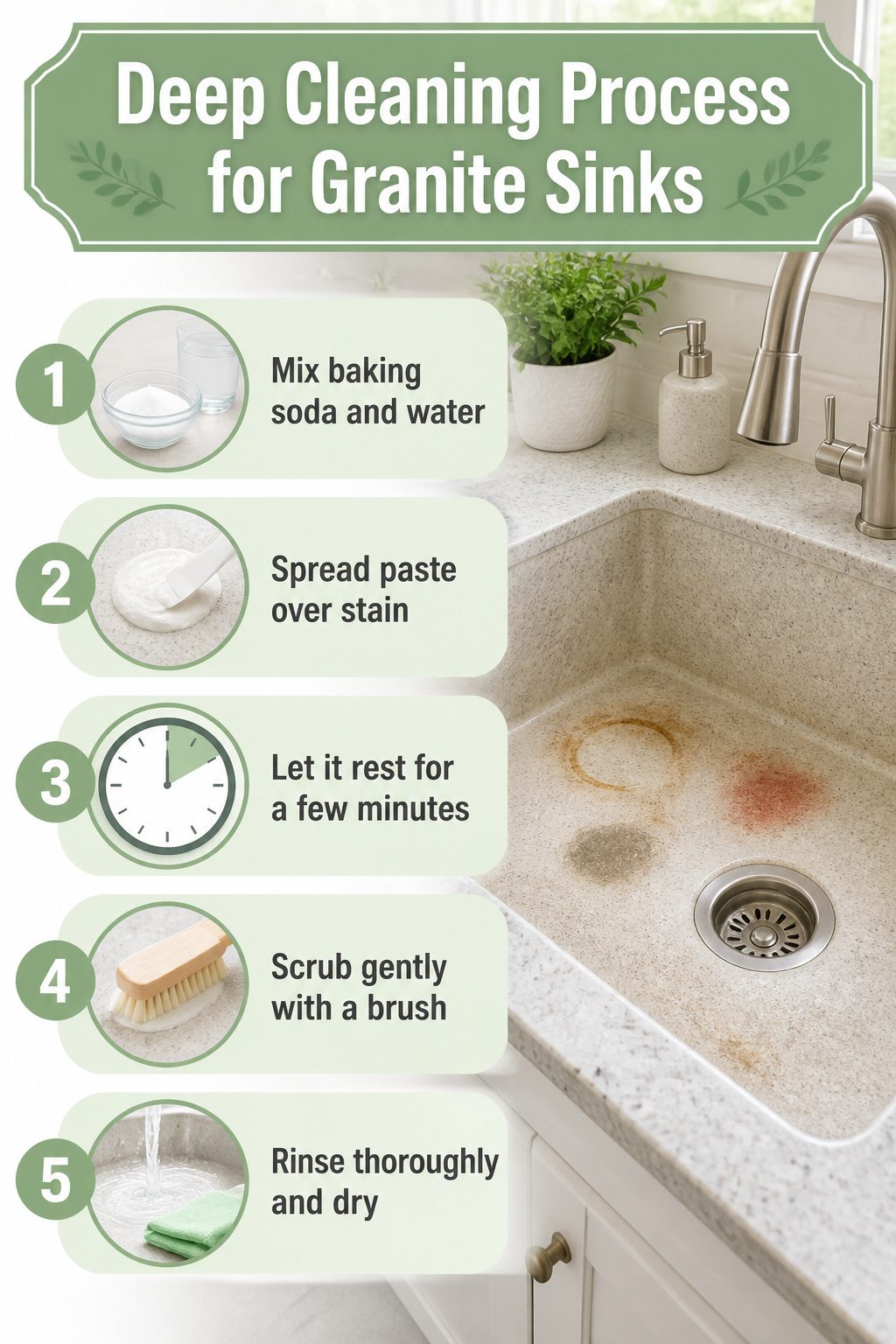
Baking soda and water make the paste I reach for when a stain sits there after the daily wipe-down. Mix it thick enough to cling, spread it over the spot, and let it rest for a few minutes. A soft-bristle brush works the paste in without scratching the surface. Rinse thoroughly, then dry with a cloth so residue does not settle back in.
I do not schedule this. It only happens when something actually appears: coffee rings, a smear of tomato sauce, the dull patch left by hard water that the regular routine missed. Some people add white vinegar for extra fizz, and that is a valid route if the stain is being stubborn. I keep it simple with just baking soda and water, which has always been enough for the spots I have dealt with.
Whatever you choose, do not leave the paste sitting for long stretches. A few minutes does the work; longer risks dulling the finish. Rinse it all away, dry it off, and the sink goes back to looking like itself.

Aunt Fannie's Sink Refresher: Lemon scented powder packed with the power of baking soda to scrub away stubborn food, grease and stains while also deodorizing sinks & drains

A HOUSEHOLD CLASSIC: This bulk 7 lb resealable bag of ARM & HAMMER Baking Soda unlocks 100+ uses across your home—from kitchens and laundry rooms to crafting tables and beyond

GranAroma Baking Soda in a convenient shaker jar
Hard Water Stains
Hard water leaves white, chalky stains on granite that daily wiping won’t touch. The fix is a 50/50 mix of white vinegar and water in a spray bottle. Coat the stains, let it sit 15 to 30 minutes, then scrub with a soft cloth or sponge. A soft toothbrush helps on stubborn spots. Rinse thoroughly with warm water and dry with a clean towel so you don’t trade mineral stains for water spots. This isn’t your everyday cleaner; it’s the specific treatment for when those white marks show up. Do it once every month or two, or whenever you notice the buildup starting.

MULTIPURPOSE HOME CLEANER - This is a truly versatile vinegar for cleaning your home, kitchen and bathroom that works on tons of different surfaces including toilets, countertops, tile floors, and even clothes and towels.

Granite Cleaner and Polish: Granite Wax Plus is perfect for granite, marble, and quartz countertops. Quick and easy solution provides a streak-free shine, enhancing your kitchen and bathroom surfaces.

Powerful Bathroom & Bathtub Cleaner: Effectively breaks down stubborn soap scum and hard water stains on tubs, tiles, and glass. Use it as a daily shower cleaner spray or a deep-clean bathtub solution—no harsh chemicals, just sparkling results.
Color Care
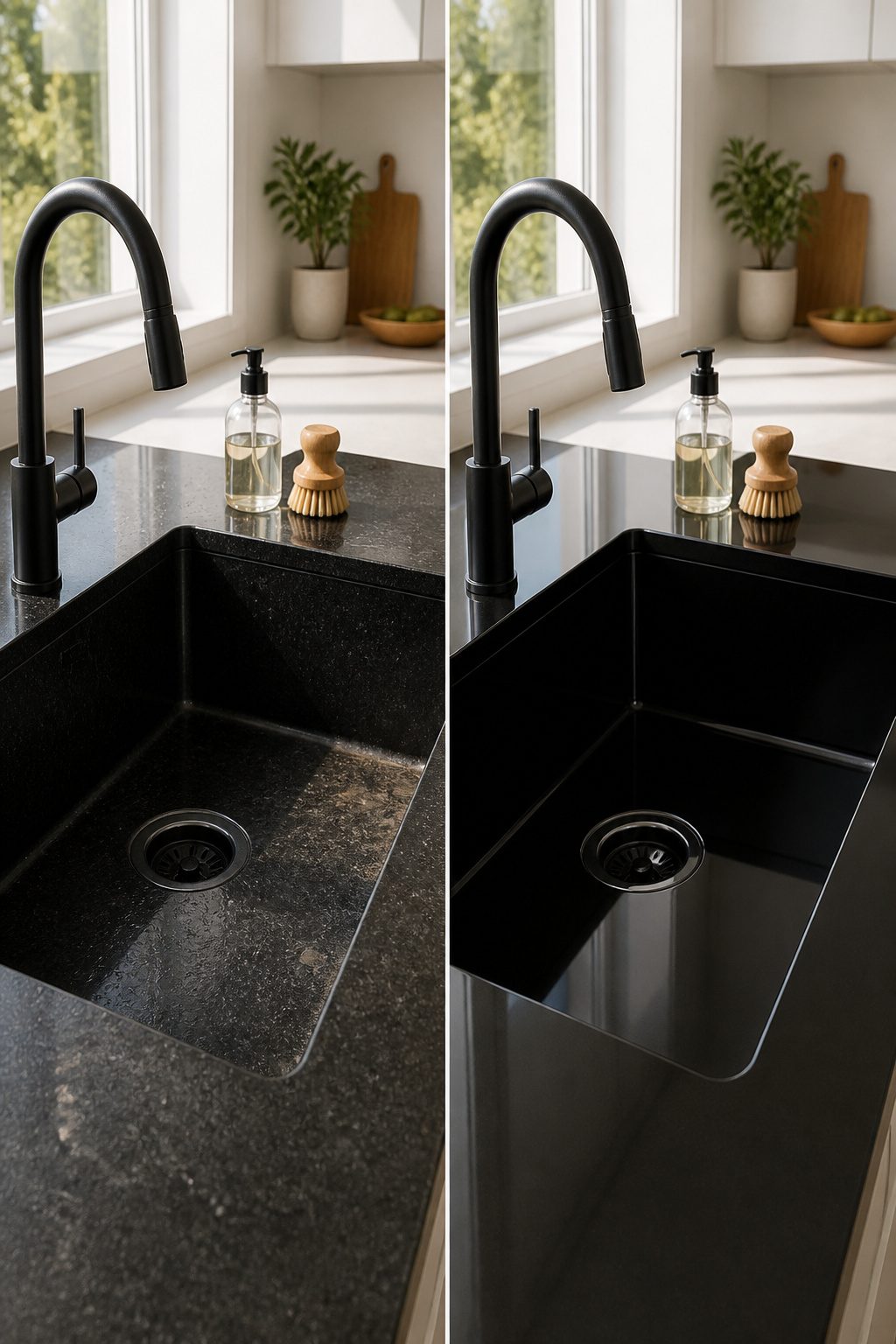
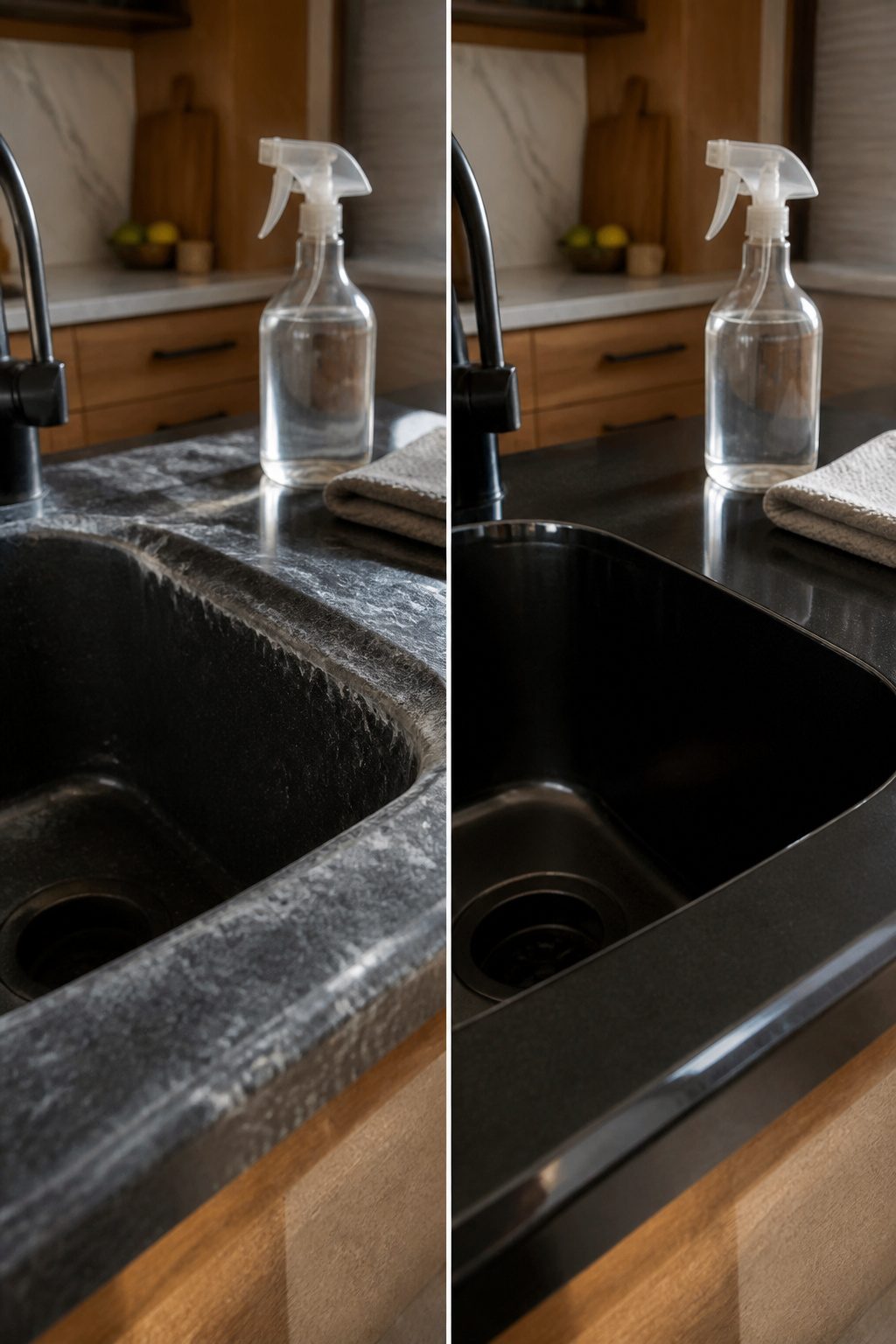
Black granite sinks show everything. Water spots, soap residue, and that faint haze from hard water sit right on the surface where you cannot miss them. Clean yours daily with a non-abrasive cleaner and a soft brush if you want it to stay looking finished. I skip a day sometimes, and the next morning I see exactly what I ignored.
White granite sinks hide less than you would think. Coffee grounds, red wine, tomato sauce, they all leave a mark if you let them sit. The minute something dark spills, rinse it and wipe it down. A nylon brush and the same gentle cleaner handle most of it, but waiting even an hour can push a stain deeper than surface level.
Both colors dull under harsh chemicals, so skip anything abrasive or acidic. Rinse thoroughly after cleaning and dry with a soft cloth. That last thirty seconds of drying is what keeps water spots from resetting the whole cycle overnight.

[Super Absorbent & Lint Free Rags] A kind of super absorbent cleaning rags and dish towels for kitchen drying. Fuzzy microfiber cleaning towels provide great absorbency on liquids and stains, but also a kind of lint free rags for long-term durable use. The microfiber cleaning cloths may soak up three times its own weight as dish towels for kitchen drying.

[Streak Free & Versatile Cleaning] The amazing absorbency to clean any surfaces in few wipes, quickly also non-scratch without streak and on glass, mirrors, dishes & cups, counters, sink or kitchenware
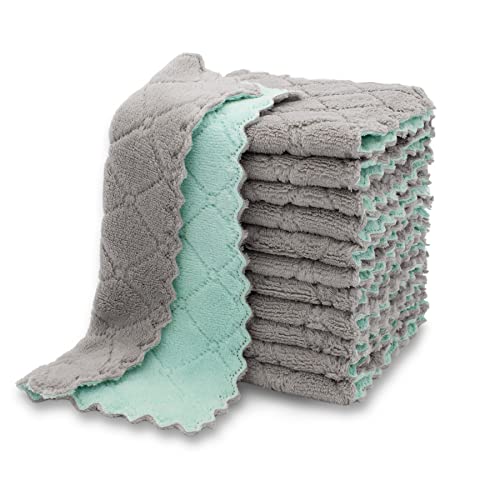
SMALL DISH CLOTHS FOR WASHING DISHES - Includes 12 coral velvet microfiber dish cloths designed for washing dishes and post-meal sink-side cleanup. Each cloth measures 11.02 x 6.30 inches, a small size that is easy to grip, rinse, and wring out during dishwashing.
What to Avoid
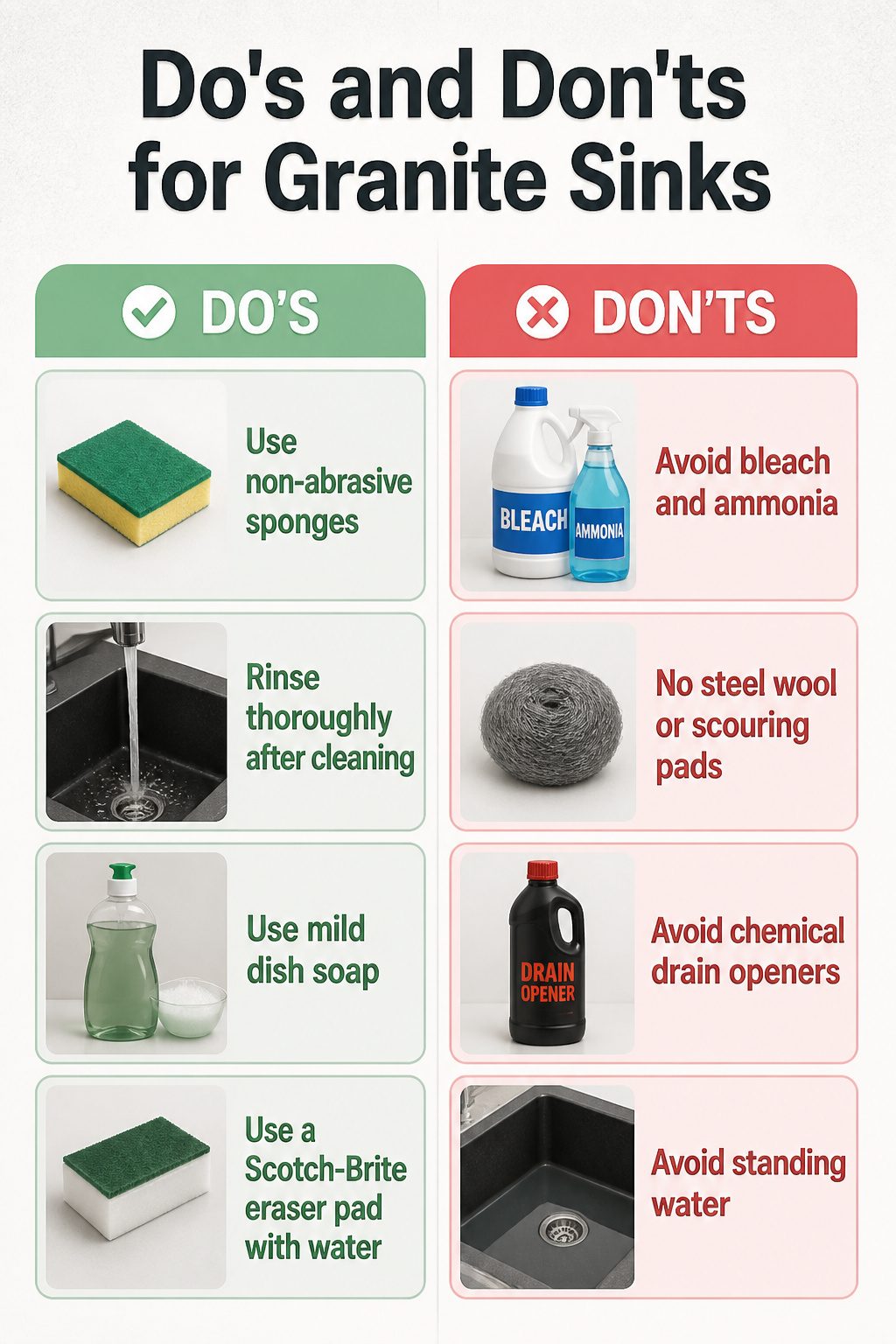
Abrasive cleaners, steel wool, and scouring pads will scratch the surface of a granite composite sink faster than you’d think. The damage isn’t always obvious right away; it starts as a dullness that spreads until the finish looks tired even when it’s clean.
Harsh chemicals are the other thing to watch. Bleach and ammonia can break down the composite material itself, especially if they’re left sitting. The same goes for chemical drain openers and anything with sodium hydroxide or hydrochloric acid. If you need bleach for the overflow or drain, rinse it away within a few minutes and never let it stand for more than thirty minutes.
Water and cleaning solutions shouldn’t pool in the basin either. Standing water leads to mineral deposits and discoloration over time, particularly in areas with hard water or high iron content.
The one exception for scratches is a Scotch-Brite eraser pad used with water. It is the only abrasive tool that sources consistently allow for buffing out light marks from silverware or pots. For everything else, stick to soft sponges and cloths, and rinse thoroughly when you’re done.

Easy to Brush off Stain: High-density firm bristles make it easy to brush off stains on a variety of surfaces without wearing and scratching

SOFT YET EFFECTIVE BRISTLES – Durable polymer fiber bristles power through food and grease while remaining safe for non-stick cookware, glassware, and fine china.
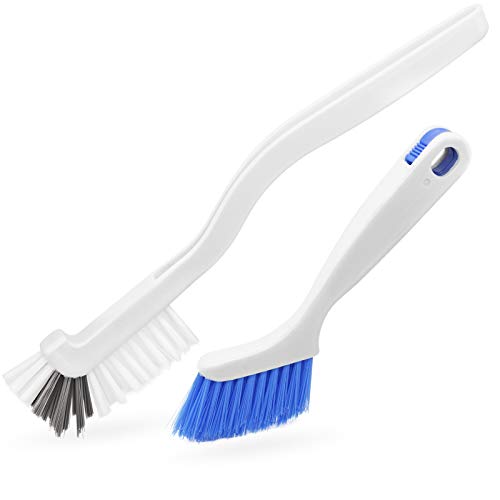
Cleaning Brush Set: 2 Pcs hand-held cleaning brushes tools set is used for cleaning kitchen surface and gap of the window, door, sliding track and other small gaps that are difficult to clean. It’s a essential and practical cleaning brush tool for home, kitchen, office, restaurant, etc.
What You Need
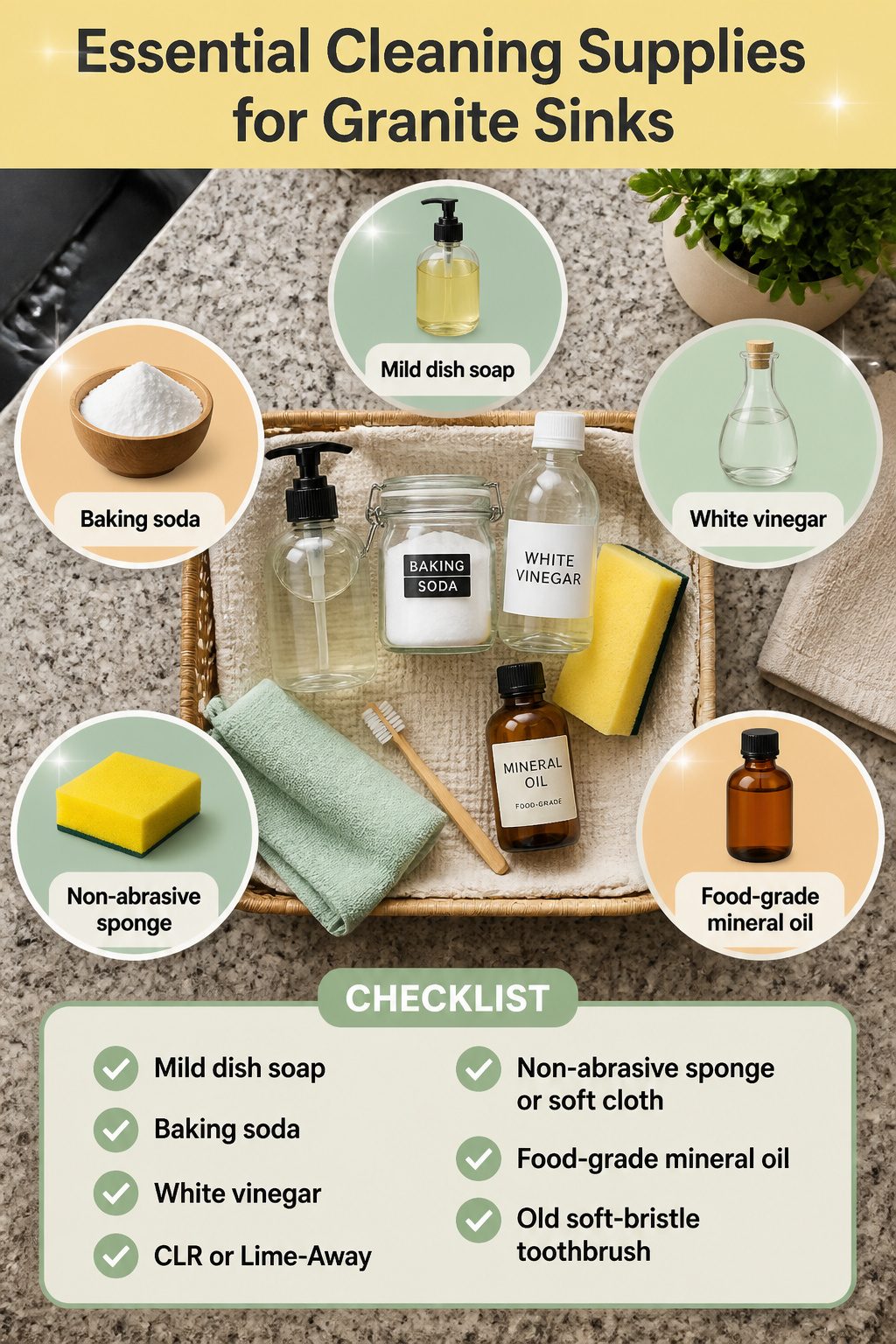
Most of what you need is probably already under your sink. The rest costs less than a trip to the coffee shop.
- Mild dish soap for daily wipe-downs
- Baking soda to lift stains without scratching the surface
- White vinegar, mixed fifty-fifty with water for hard water spots or seventy-five-twenty-five for a deeper fizzing clean
- CLR or Lime-Away for mineral deposits that vinegar won’t touch; use monthly, not daily
- A non-abrasive sponge or soft cloth, plus an old soft-bristle toothbrush for the corners
- Food-grade mineral oil to bring back the finish and slow future buildup
Skip the steel wool and powdered cleansers. They will ruin the surface faster than any stain.

Complete Sink Care Kit: Includes 250ml kitchen sink cleaner, 200ml waterproof sealant, sponge, and microfiber towel. Meets all your needs for repairing, protecting, and maintaining kitchen and sink surfaces, eliminating the need to purchase multiple products and ensuring formula compatibility for perfect application

Effective Breakage Protection:100% food grade silicone material quartz countertop protector, 5mm thick, better protects your granite, stone or quartz countertops from chipping while also protecting your glassware, plates, pots and pans Protected from potential damage.

【Universal Size】EXAKEY 3-1/2 inch kitchen sink drain works well with all standard kitchen sinks that have a 3.5-4 inch drain hole.Our kitchen sink drain is designed for compatibility, fitting perfectly into quartz, stainless steel, cast iron, and granite sinks.This makes the black sink drain assembly a useful and attractive addition to your lovely kitchen.
Why Granite Needs Different Care
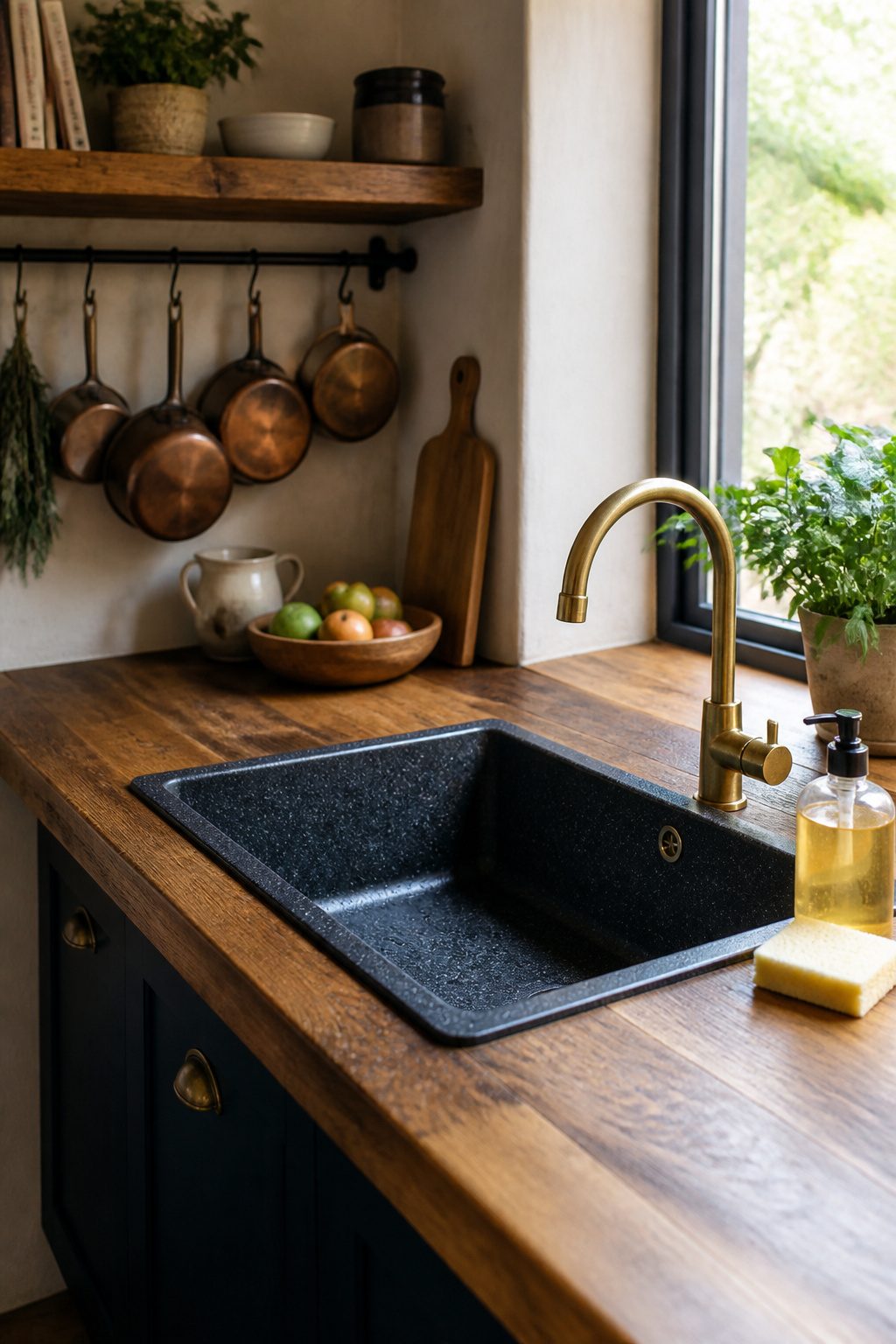
A granite composite sink is not solid stone. It is a blend of natural granite or quartz with resin, which gives it the look and weight of stone with more forgiving durability. That resin content is why the care routine differs from stainless steel.
The surface is non-porous when intact, but it can still take on stains. Hard water minerals settle on the surface, and those mineral layers then absorb pigments from coffee, tea, or wine. Once that happens, the stain sits below where a quick wipe reaches. Daily drying matters more here than with stainless steel, where water spots wipe off in seconds. With granite composite, the minerals bond.
Standard kitchen cleaners are often too aggressive. Concentrated bleach, ammonia, and acidic descalers can etch the resin or cause discoloration that does not buff out. I have seen the same warning from every manufacturer: the damage is permanent. The safest approach is mild dish soap, a soft sponge, and the habit of drying the basin after the last use of the day.
The use of these agents causes discoloration of the sink material and permanent irremovable stains, or surface etching.
— Franke
This means your everyday cleaning product probably needs to stay in the cabinet. Skip the all-purpose spray and the scouring pad, and the sink stays intact.

Pure Original Ingredients Baking Soda is the perfect kitchen staple

PURE SODIUM BICARBONATE FOR ANTACID DIGESTIVE SUPPORT AND HOUSEHOLD USE: Sanar Naturals Baking Soda is 100 percent pure sodium bicarbonate designed for multiple everyday uses including antacid digestive support baking cleaning deodorizing skin care and household applications making it one of the most versatile and practical multipurpose essentials for any home pantry or cleaning routine.

100% Sodium Bicarbonate / It's just pure sodium bicarbonate with no additives and no fillers. Combine with citric acid to make your own fizzy bath bombs.
Mineral Oil for Shine
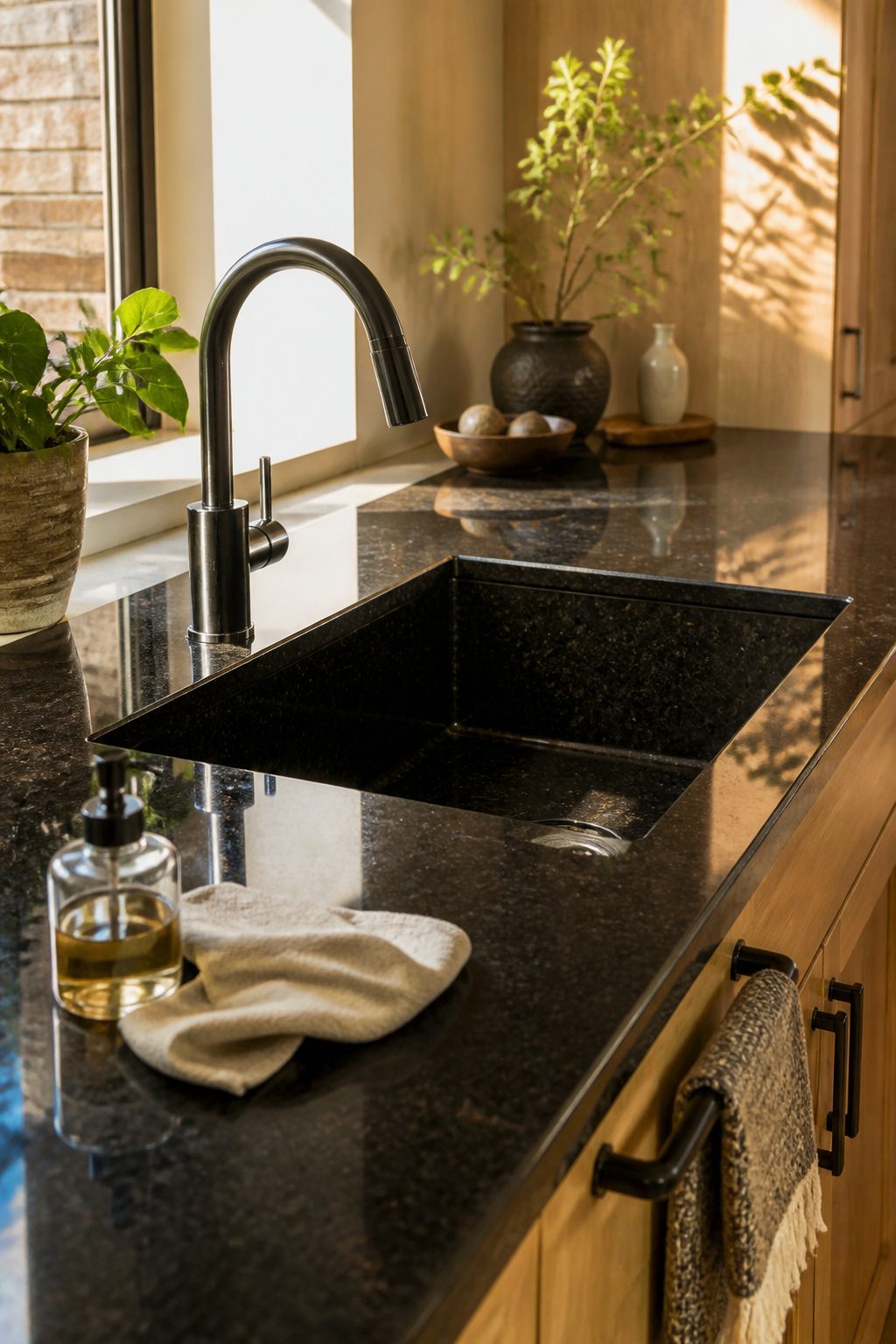
A thin coat of food grade mineral oil is the step most people skip after cleaning, and it is the one that makes a granite sink look like it did the month it was installed. The oil fills the microscopic pores left in the composite surface and gives water something to bead on instead of soaking in. I do this after every deep clean, once the sink is fully dry, and the extra few minutes pay off for weeks.
Leave the oil on for 45 minutes, then buff it off with a soft cloth. The surface will feel smoother and resist coffee, wine, and oil splatter noticeably better. If the first coat soaks in too fast or the finish looks patchy, a second application fixes it. This is not a daily step; think of it as seasonal maintenance, maybe four times a year, or whenever the stone starts looking dull again.

HARD WATER BUILD UP CLEANER: Spay and rub away water spots and mineral stains in seconds, quickly cleans away stubborn stains and buildup from windows, deck, bathtubs,...
When to Call a Professional
Most of the time, a granite sink bounces back from whatever the week throws at it. The methods above handle the usual suspects: water spots, grease, the faint haze from last night’s pasta water. But deep scratches, hairline cracks, or stains that sit through two rounds of poultice and still stare back are where my toolkit ends and a stone pro’s begins.
I draw the line at structural damage. A crack running toward the drain can let water seep into the cabinet below, and no amount of scrubbing fixes that. Same for scratches that catch your fingernail; surface dullness polishes out, but a gouge needs diamond abrasives I do not own and would not trust myself to use level.
For stains, I give it two honest tries with the baking soda paste method. If the dark ring from a cast-iron pan or the rust mark from a forgotten can is still there, a pro has access to solvent-based poultices and the training to match them to the stone’s exact composition without bleaching the color. Calling someone in feels like admitting defeat, but ruining a sink you spent real money on is the actual loss.

GRANITE & STONE CLEANING CLOTH KIT: The E-Cloth Granite & Stone Cleaning Kit is all you need to protect your home investment, removing grease & grime from enamel, granite, marble, & all stone surfaces

[Medium-Small Size for Versatility] Larger than standard cloths, these 9.8" x 9.8" towels are ideal for bigger spills and cleaning tasks

[Practical Small Size] Small cloths (9.8" x 9.8") are easy to handle, perfect for daily cleaning and polishing tasks
Frequently Asked Questions
How do I clean a granite kitchen sink?
Rinse with soapy water and dry with a soft cloth after every use. For stains that remain, make a thick paste of baking soda and water, spread it over the spot, let it sit a few minutes, then scrub with a soft-bristle brush and rinse thoroughly.
What should I avoid when cleaning my granite sink?
Skip abrasive cleaners, steel wool, scouring pads, bleach, ammonia, and chemical drain openers. These scratch the surface or break down the composite resin. Do not leave wet sponges sitting in the basin, and never let any cleaning product pool for long stretches.
How often should I deep clean my granite sink?
Deep clean only when a stain actually appears, not on a schedule. Coffee rings, tomato sauce smears, or dull patches from hard water are the signals. A few minutes with baking soda paste does the work; doing it more often than needed risks dulling the finish.