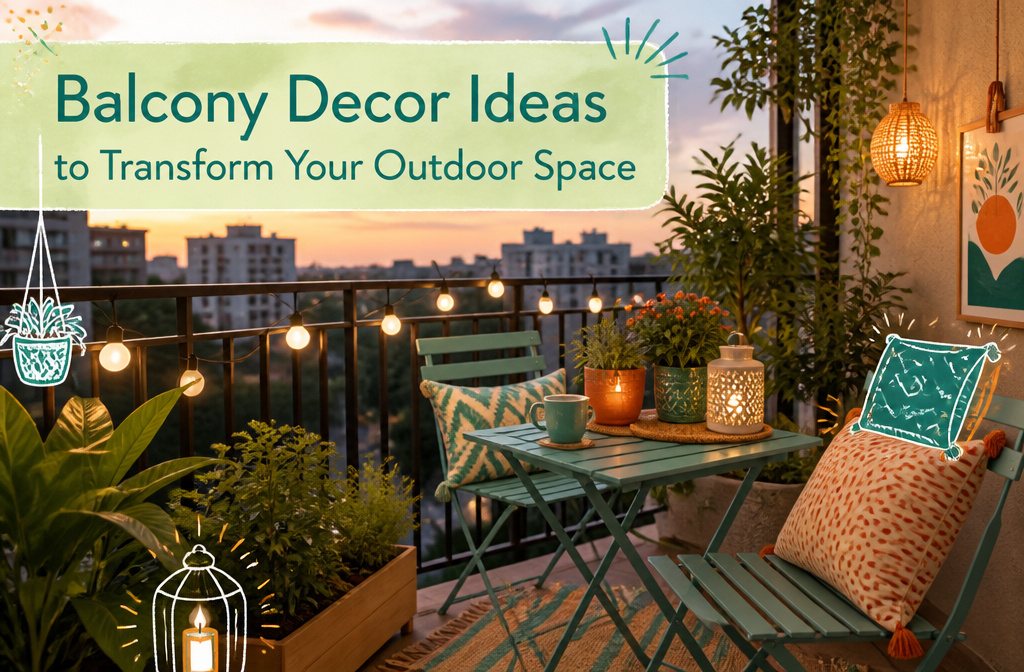

Balcony decorating in 2026 ranges from a $30 string light set to a $150 folding furniture system, and the right pick depends on whether you rent or own, how much weight your building allows, and whether your door swings outward into the only usable floor space. The IKEA Sunsdö folding chair stores flat on a single hook and comes preassembled in nine colors, which matters when a standard balcony is just 3 by 7 feet and every inch lost to storage is an inch lost to standing.
1. Plants and Greenery
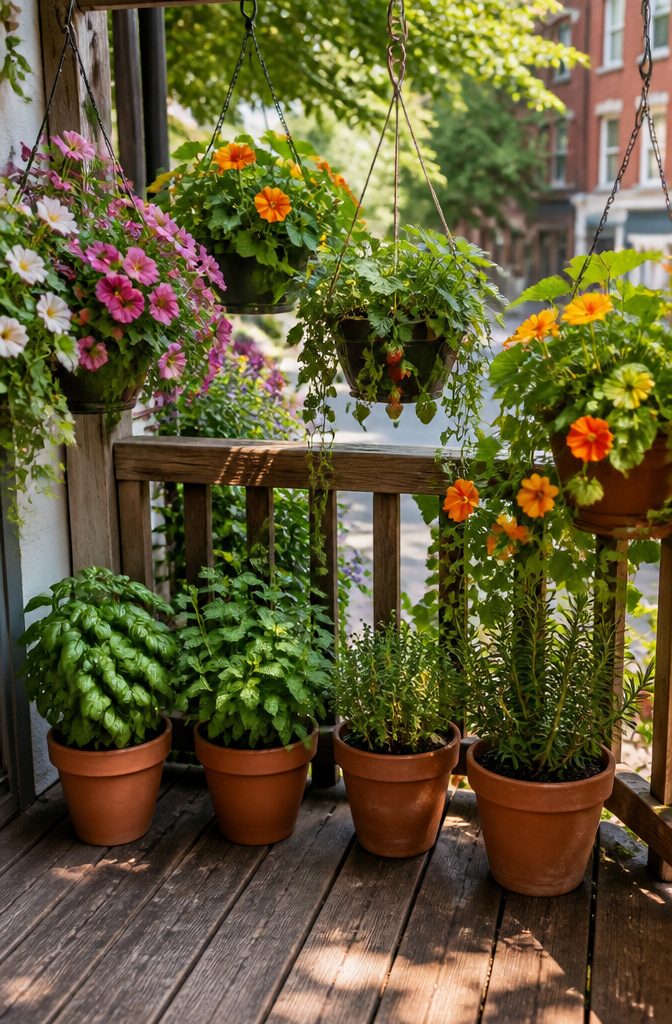
Plants are the fastest way to make a balcony feel like a room instead of a landing. A few pots of basil, mint, thyme, and rosemary by the door give you something to cook with and something to look at, and they ask very little from a rental space. Trailing petunias, nasturtiums, or strawberries in hanging planters add height without taking up floor space, while ferns and spider plants handle wind and the occasional missed watering better than most.
Container choice matters more than people think. Wall planters and railing planters keep herbs within reach and free up square footage for a chair or two. A drip setup saves you from daily watering in summer, though a simple saucer under each pot works fine if you are only out there with coffee in the morning. Regular pruning keeps compact varieties like thyme and chives from getting leggy, and repotting before roots start circling the pot means you will not lose half your crop to a hot afternoon.
I have found that mixing herbs with a few flowering trailers gives the most reward for the least effort. The herbs smell good, the flowers look good, and neither requires a green thumb or a big budget to keep alive through the season.
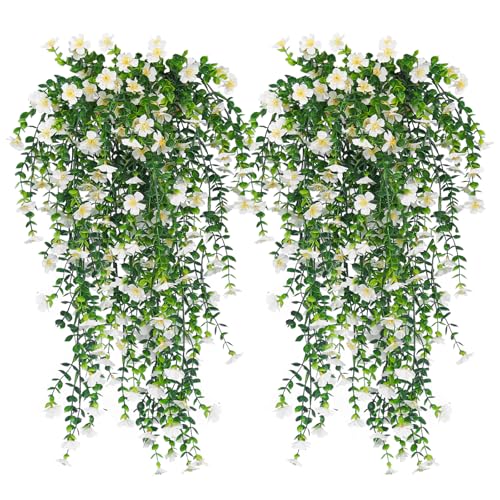
[Fake Flowers Package]: You will get 4 pcs artificial hanging mums flower plants, each about 29.5 inches(75 cm) long. Each fake hanging flowers plants has 5 flexible stems, bright daisy flowers and dense eucalyptus leaves, providing natural aesthetic appeal.

Material: Hanging fence planter made of metal iron. Durable and lightweight. Balcony flower pots are not easy to rust or damage, and have a long service life
2. Comfortable Seating
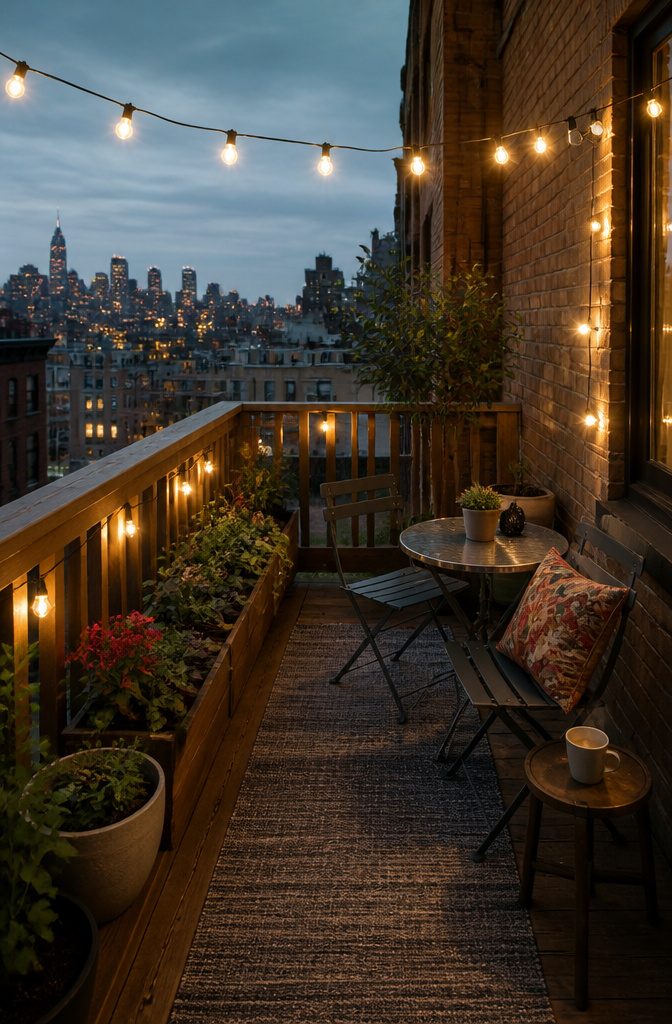
A 3 x 7 ft balcony fits two people comfortably, maybe four if nobody breathes too deep. That reality shapes every seating choice.
Bistro sets win for the tiniest footprints: a 24-inch round table and two chairs tuck against the railing and leave room to actually walk past. Folding chairs go further. The IKEA Sunsdö comes preassembled in nine colors and stores flat against a wall when you need the floor back. I have seen renters keep a pair hung on a single hook behind their sliding door.
Modular sofas sound ambitious for a rental balcony, but a two-piece sectional at roughly 60 inches can work if you measure first and buy second. Wicker, aluminum, or teak hold up outside; the frame matters more than the cushion color you will replace anyway.
"Folding chairs like the Sunsdö are a great choice for balconies because they are space-saving, portable, and easy to store when not in use, making them perfect for small spaces."
What this means: you are not committing to a single layout. Fold, store, reclaim the space for yoga or a project table tomorrow morning.

Balcony Rail Planter: Rectangular outdoor planters was designed to maximize inside growing space allowing dirt and roots to grow strong and deep.This special design can be hung on the balcony, window, garden,railing, anywhere in the room,also can be used as desktop.

Practical Size Combination: This set includes two sizes to meet different planting needs: small round pots with a 3.94" top diameter and oval large pots with a 9.84" top diameter. Ideal as planters for outdoor plants, they fit perfectly as a railing planter box for fences and rails
3. Outdoor Rugs
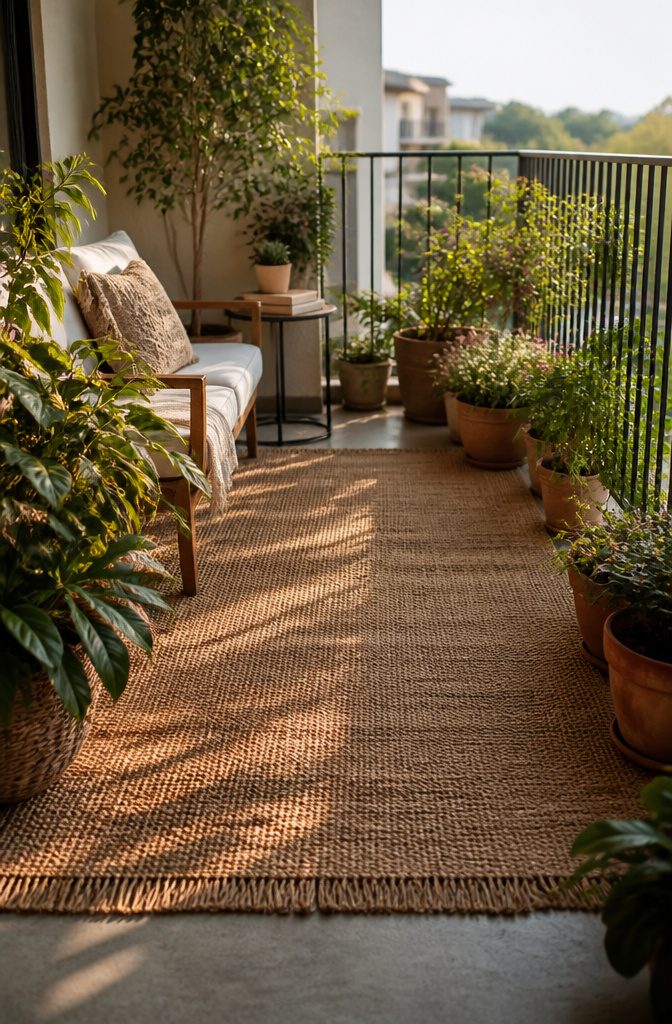
A bare balcony floor reads cold fast. An outdoor rug fixes that in about ten minutes, and the change is bigger than the effort justifies. Jute, sisal, or seagrass all soften concrete or decking without fighting the outdoors, though they handle moisture differently than synthetics do.
I go back and forth on natural versus synthetic for balconies. Polypropylene and polyester hold up against UV and resist mold better, which matters if your balcony gets rained on and lacks overhead cover. But natural fiber has a warmth that plastic never quite matches, and for covered spaces the difference in feel is worth the extra attention.
Size is where people trip up. Most balconies need something in the 5-by-7 to 8-by-10 range, but measure yours before you shop. A too-small rug looks like a bath mat that wandered outside; a too-large one bunches against the railing and traps water. Leave six to twelve inches of hard floor showing around the edges so rain drains and the space still reads as balcony, not indoor room shoved outdoors.
Pattern hides the dirt that concrete kicks up. Solid colors show every leaf and pollen drift. If your balcony faces south and bakes all summer, lighter tones stay cooler underfoot than dark ones. That is not a minor detail when you are stepping out in bare feet for morning coffee.

【Portable Chairs Set】These folding bistro chairs (No Table) are super easy to transport and store. Easily fit them into a tight corner at home or slide them into your car's trunk – they're designed to save space wherever you keep them

VIBRANT PATIO SEATING: Brighten your balcony or breakfast nook with this colorful bistro set. Includes a folding table and two chairs, perfect for small spaces or creating a cozy outdoor dining area. Adds a cheerful touch to any indoor or outdoor setting.

Modern and Ergonomic Design: The design of our patio furniture set is simple, stylish and Ergonomic. It is perfect to decorate your your yard, poolside, balcony, patio and indoor area. Provide great comfort for you while you are enjoying your leisure time
4. Lighting
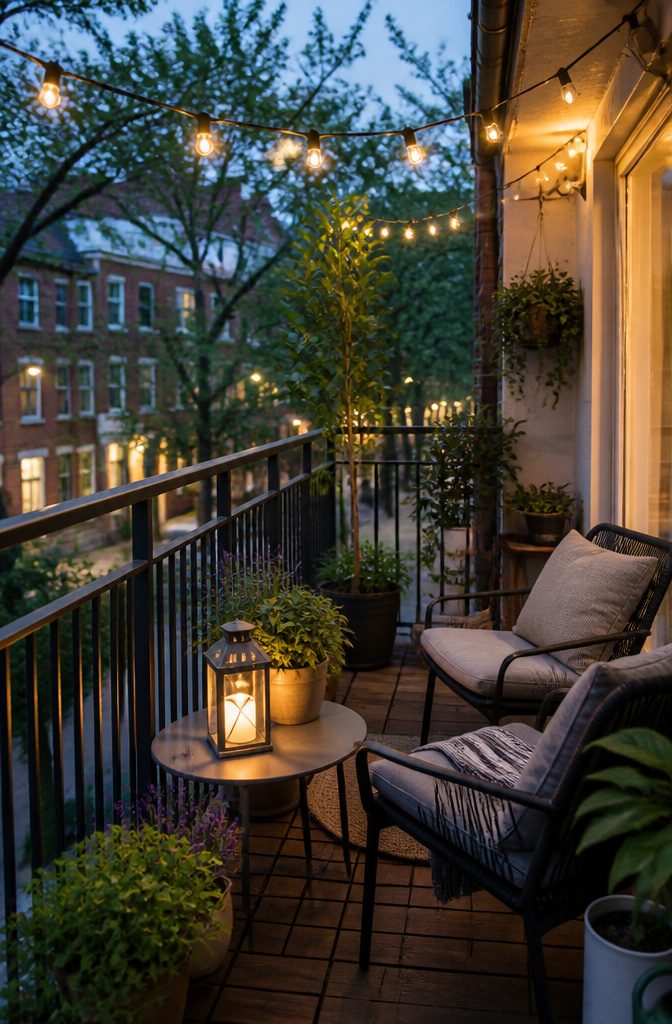
String lights are the starting point for most balcony lighting, and the math actually works in your favor. A decent set runs around $30, and that covers a surprising amount of railing or overhead space if you plan the path before you buy. Solar, battery, or plug-in options all exist, so the power question is really about what your balcony already offers. No outlet? Battery-powered strands or small solar panels that stake into a planter solve that without an extension cord snaking past the door.
Lanterns and portable lamps fill in where string lights leave shadows. A lantern on the floor near your seating area, another on a narrow shelf if you have one, and suddenly the space feels intentional after sunset rather than just dim. The weather-resistant label matters more than the style here, rain will ruin the cute ones that aren’t rated for it.
Placement is the part I think about most now. Overhead string lights need something to wrap, and balcony railings or a single wall-mounted hook usually do the job. Keep the plug end closest to your door if you are running extension cords, and set a timer so you are not climbing out there every evening. The whole point is making the balcony usable past dinner, not adding another chore.

❤[HIGH QUALITY MATERIAL]:Beach Chair Size: 20"x20"x30". The portable lightweight beach chair is made of strong iron alloy and durable oxford fabric to support people or beach gear up to 350 lbs.

❤[HIGH QUALITY MATERIAL]:Beach Chair Size: 20"x20"x30". The portable lightweight beach chair is made of strong iron alloy and durable oxford fabric to support people or beach gear up to 350 lbs.

BACKPACK BEACH CHAIR: Provides comfy and convenient seating for all your outdoor adventures including beach or lake house trips, pool days, and more; measures 23" x 25.25" x 31.5" when open
5. Decorative Accents
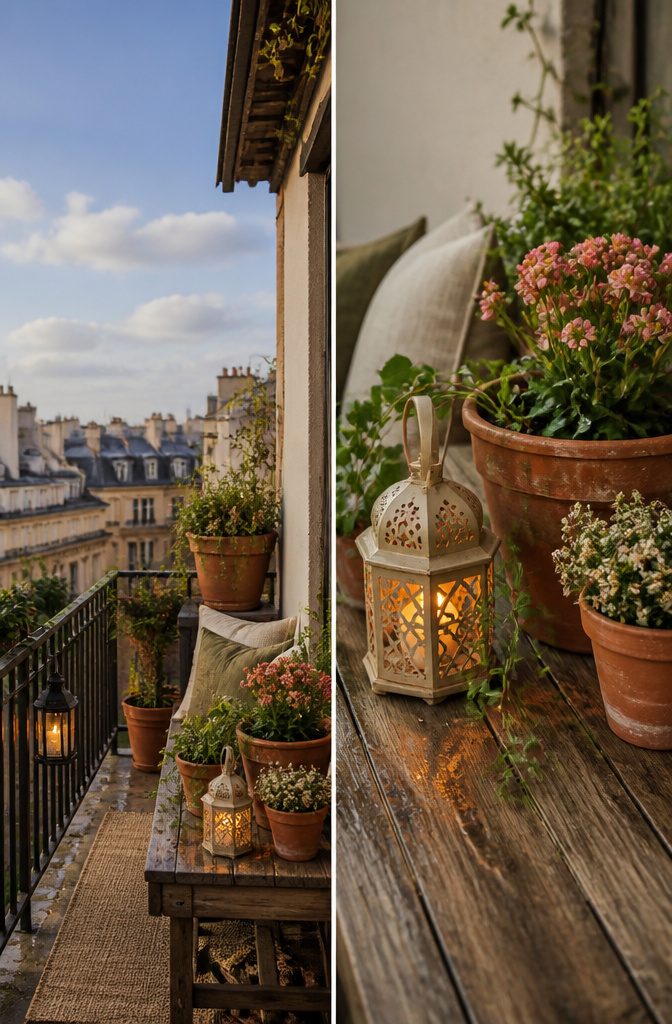
The right accents turn a balcony from storage-adjacent to somewhere you actually want to sit. I start with planters because they do double duty: grouping three terracotta or concrete pots in a corner adds height variation and somewhere for the eye to land. Sticking to one material keeps it from looking like you cleaned out three different garages.
Lanterns are the piece that stretches usable hours. Hanging one or two at different levels from the railing, or setting a battery-powered version on a small side table, gives you light without the worry of open flame in a tight space. Flameless candles inside solve the safety question before it even comes up.
Cushions are where most people overdo it. One or two weather-resistant pillows in a color that talks to your planters ties the space together without filling every square inch. If you can’t walk without bumping something, edit one piece out.
A small outdoor rug in jute or seagrass helps ground the seating area, though I bring mine inside during heavy rain. The same goes for anything fabric.

Neutral Easy Jute Rug: Our porch rug is natural looking, long lasting and magical. (Not actually made of jute) Made of safe polyester, not easy to crack, won't scratch, peel or fray over time.

Modern geometric rug in classic ivory and silver grey

Easy to Clean:This washable rug is crafted for effortless maintenance,allowing you to easily clean it with water. For regular upkeep,you can use a vacuum cleaner,broom,or washing machine. Note:Our carpet may have some wrinkles at first,you can unroll it or put very heavy books on it for a few days,or use an iron to iron the crease
6. Privacy Screens
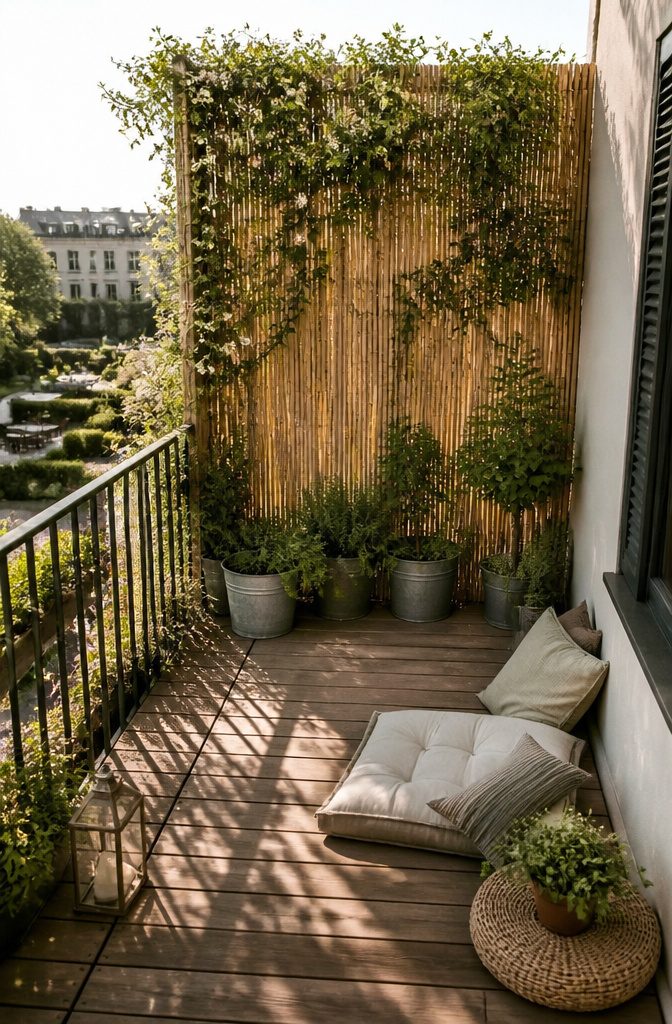
Privacy screens are the first thing I look at when a balcony feels like a fishbowl. Bamboo, wood, or metal screens block sightlines without turning the space into a box, and small gaps in the material let air and light slip through so you do not feel walled in.
A screen can pull double duty as a plant support. Train jasmine or bougainvillea up a trellis-style screen and you get a living wall that thickens as the season goes on. Pick climbers suited to your climate that will fill out in one growing season, or you are staring at bare lattice until fall.
Wood holds up if you stain or seal it. Metal lasts longer with a powder-coated finish. Bamboo gives that warm, earthy look, though it pays to check for sustainably sourced options. For balconies with railings, mounting the screen to the inside of the railing blocks views from above and below. Mixing materials, say bamboo on the sides with a metal screen across the front, adds texture without costing more than a single-material job.

✅ Package Include: 2 bundles artificial bougainvillea Trailing flower Vines. Fully flowers and leaves near nature life like real flower/leaves.

✅ Package Include: 2 bundles artificial bougainvillea Trailing flower Vines. Fully flowers and green leaves near nature life like real flower/leaves.

✅ Package Include: 2 bundles artificial bougainvillea Trailing flower Vines. Fully flowers and leaves near nature life like real flower/leaves.
7. Multi-Functional Furniture
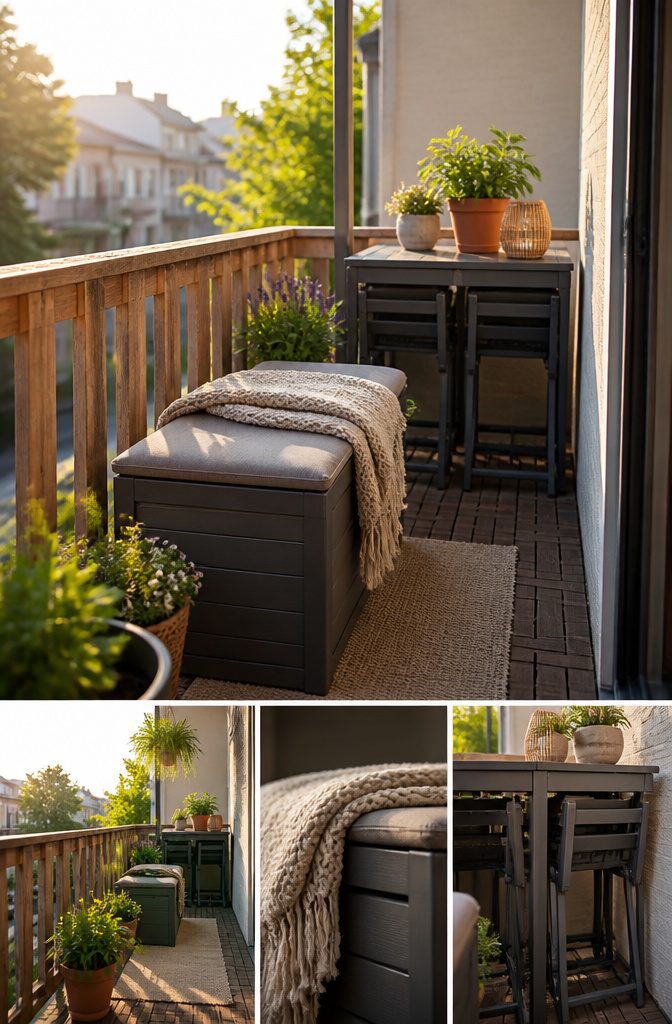
Storage ottomans are the quiet workhorses of a small balcony. Mine holds the cushion I pull out for extra seating, the throw I grab when the sun drops, and the string lights I only want out after dark. One piece doing three jobs is how you keep a 40-square-foot space from feeling like a storage closet.
Folding chairs and nesting tables work the same way. The IKEA Askholmen set runs about $150 and folds flat against the wall when you need floor space for yoga or just pacing while you take a phone call. Nesting sets let chairs slide completely under the table, which matters more than you’d think until you’re trying to squeeze past a chair back to water a single planter.
I skip anything that doesn’t earn its footprint. A bistro table that can’t adjust height, a stool that won’t double as a side table, a bench with no lid, these are space you can’t get back. Weather-resistant wicker or aluminum holds up fine; the material matters less than whether the piece folds, tucks, or hides your stuff.

Practical Pot Combination: You will receive 6 oval metal iron bucket planters measuring 10.8 x 5.5 x 4.7 inches, plus 30 zip ties for added stability. This set maximizes internal growing space, allowing plant roots to grow deep and freely for healthier plants

Multi-purpose application: The railing flower box is equipped with adjustable metal supports. It is suitable for displaying flowers, herbs and small fruits and vegetables on balconies, windowsills or railings. It can withstand long-term outdoor conditions and can be used all year round without worries.

Perfect Size for Railings & Fences: This deck planter for railing measures Top: 9.8" x 5.1", Bottom: 8.3" x 3.9", Height: 4.3". It fits most patio railings, fences, and balconies, making it ideal for herb planters outdoor or small flowers
8. Vertical Gardens
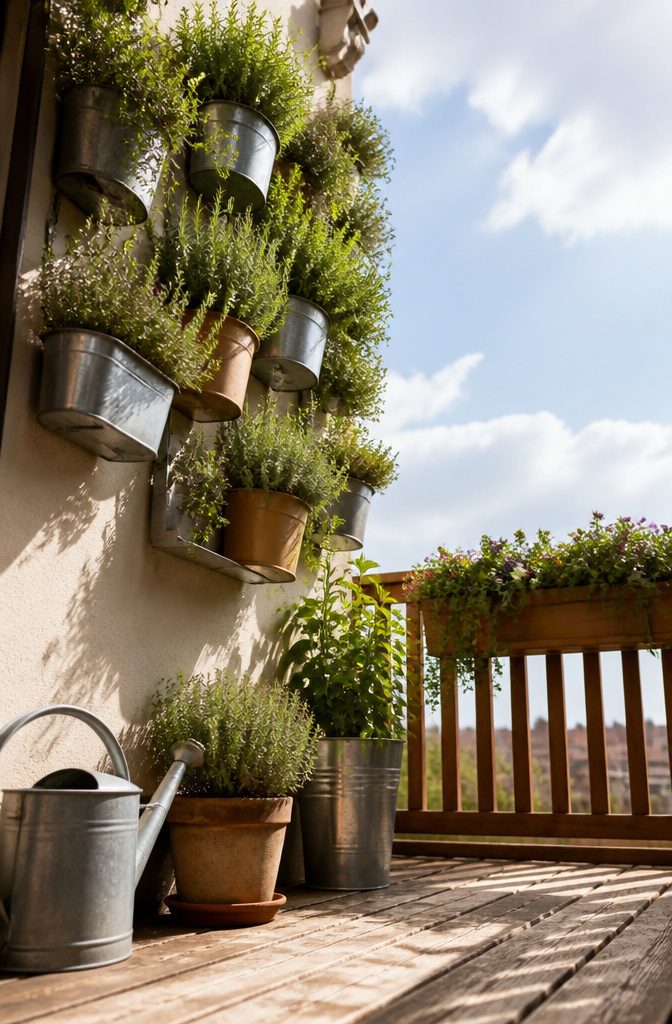
Wall-mounted planters turn the least usable square footage on a balcony into actual growing space. I have watched friends squeeze thyme, rosemary, and basil into railing planters that clip over the metal edge, no drilling required, and the herbs get enough sun to keep a kitchen stocked through summer. For something more structural, a trellis against the wall adds height without eating floor space. One designer whose work I have followed uses them to create what feels like an outdoor room, still open to light and air but visually contained. Railing planters are the renter-friendly move if your lease forbids attachments. Wall systems need more commitment, usually a bracket or two, though some lightweight felt or pocket planters hang from removable hooks. A drip setup saves daily watering, and the small upfront effort pays off once the plants establish. Choose compact, low-maintenance varieties, and prune regularly so the growth stays dense rather than leggy. The result reads as lush and intentional, not like a workaround for tight quarters.

[ARM CHAIR SET OF 2]: SAFAVIEH's Hooper Stacking Arm Chair Set showcases a blue and white faux-bamboo woven silhouette, bringing European bistro charm to patios, decks, sunrooms, and dining areas

COMPACT SET: A small, simple design allows this set to easily fit in any garden, patio, balcony, deck, and other small spaces for your own cafe dining experience at home

Vibrant Colors for Enhanced Outdoor Aesthetics: Featuring lively and eye-catching color options, this bistro patio set brightens any balcony, garden, or patio space. The vivid finish adds a cheerful touch to your outdoor decor, creating an inviting atmosphere for relaxation or entertaining.
9. Color Coordination
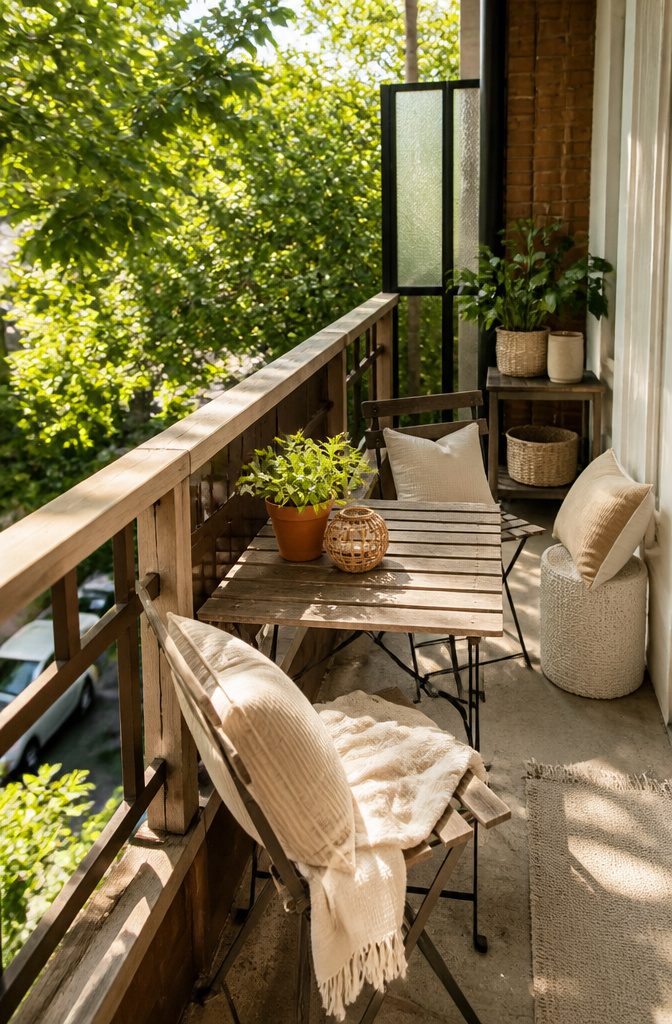
A balcony looks thrown together when every piece fights for attention. I learned that the hard way after swapping in a bright red cushion that had nothing to say to the concrete gray floor and warm wood railing already out there. The fix is a tight two- or three-color palette that borrows from what your building already gave you.
Start with the fixed stuff you cannot change: the concrete, the metal, the wood. Those tones are your anchors. From there, pick one or two colors that already live inside your home, visible through the window or sliding door. Navy against warm neutrals, peach, and tan works because it travels from indoors to out without a jolt. Cream through brown keeps it even simpler, building off the wood itself so nothing looks dropped in by accident.
The sun will bleach whatever you put out there. Bright, saturated fabrics fade fastest, so let your cushions and pillows stay neutral and bring color through items you can replace cheaply, a throw, a small planter. That way the palette holds even when one piece has had too much summer.

OUTDOOR LIVING. Great for relaxing by the campfire or sideline, the Freestyle Rocker from GCI Outdoor is an adult rocking chair that's easy to carry and set up. Relax in comfort on your adventure with smooth rocking on any surface, anywhere.

UPGRADED COMFORT: Built with durable and breathable web, the beach chair is comfortable enough to use in every season. Updated higher backrest gives you more support when you lean back

[Tanning Chair with Face]This uniquely designed tanning lounge chair is equipped with a facial opening, allowing you to easily lie down and enjoy the sunshine to the fullest, creating a completely comfortable experience.The unique facial hole design can be opened and closed according to the way you lie down, providing a comfortable experience whether facing down or up.
How You Will Actually Use the Space
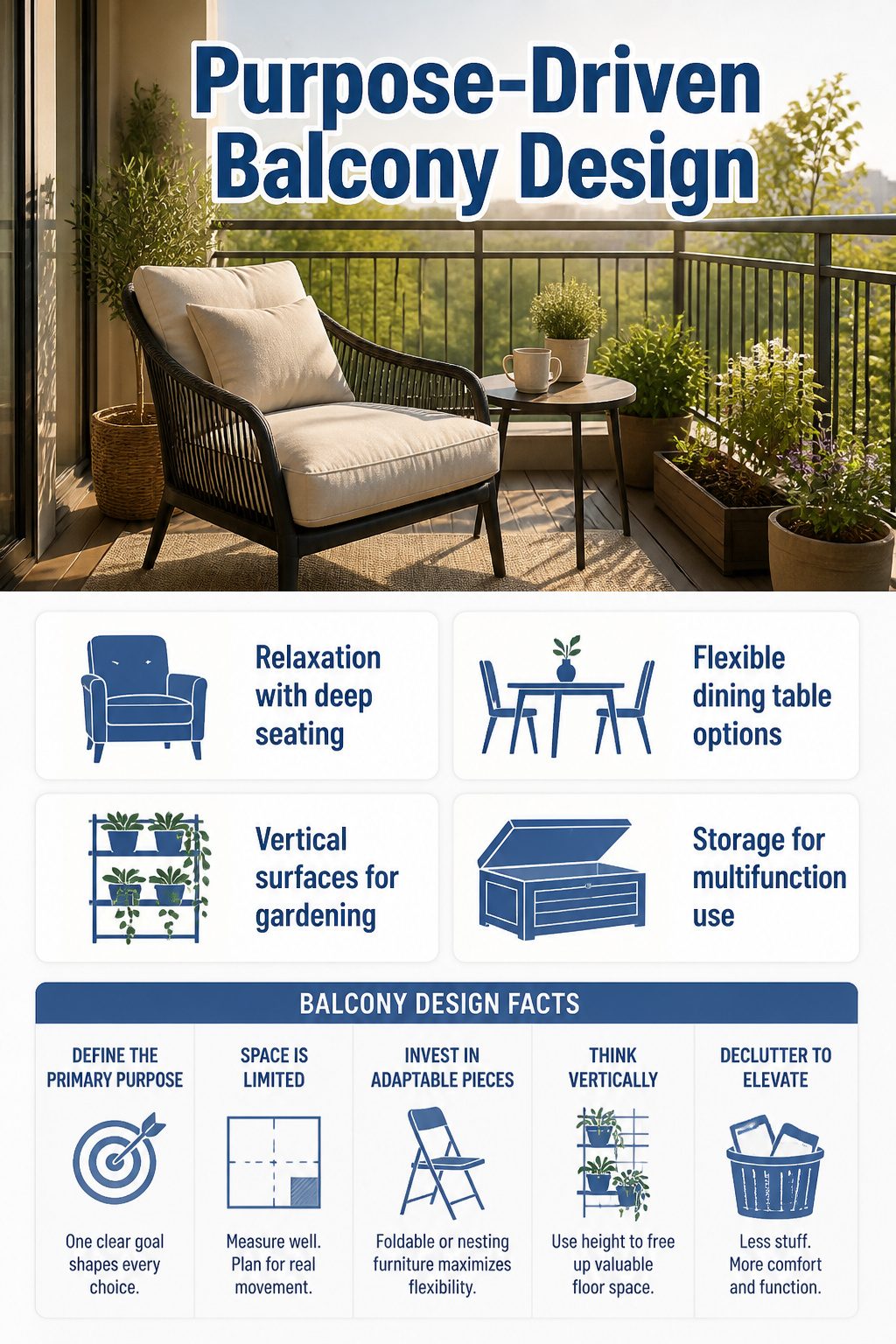
Before you buy a single planter or string a single light, sit down with your morning coffee and decide what this balcony is actually for. A space meant for solo reading needs different bones than one where you will eat dinner with a friend or start seedlings in spring.
I have watched friends skip this step, and the result is always the same: a cramped mix of chair, grill, and tomato pots that does none of those jobs well. A balcony built around relaxation wants a daybed or a deep chair with room to stretch out. A dining setup needs an adjustable-height table that can drop to cocktail height when the meal is over. If you are growing herbs, you need vertical surfaces or rail planters, and that competes with floor space for furniture.
The decision ripples through every purchase after it. Storage built into seating matters more when the same square feet must switch between functions. Foldable or nesting pieces earn their keep in a space that hosts occasionally but lounges daily. I think of it as buying backward from the moment you want to have: picture the cup of coffee, the plate of pasta, or the dirt under your nails, and let that image evict anything that does not serve it.

Modern geometric rug in classic ivory and silver grey

The Malibu Collection is an indoor/outdoor area rug featuring geometric patterns in airy, neutral palettes, with playfully fringed edges; from renowned interior designer Amber Lewis in collaboration with Loloi

Neutral Floral Scalloped Rug: Delicate repeating vintage floral pattern with scalloped wavy edges evokes a cozy cottagecore charm. Neutral earthy tone design complements farmhouse, bohemian, or vintage decor.
Measure Before You Buy
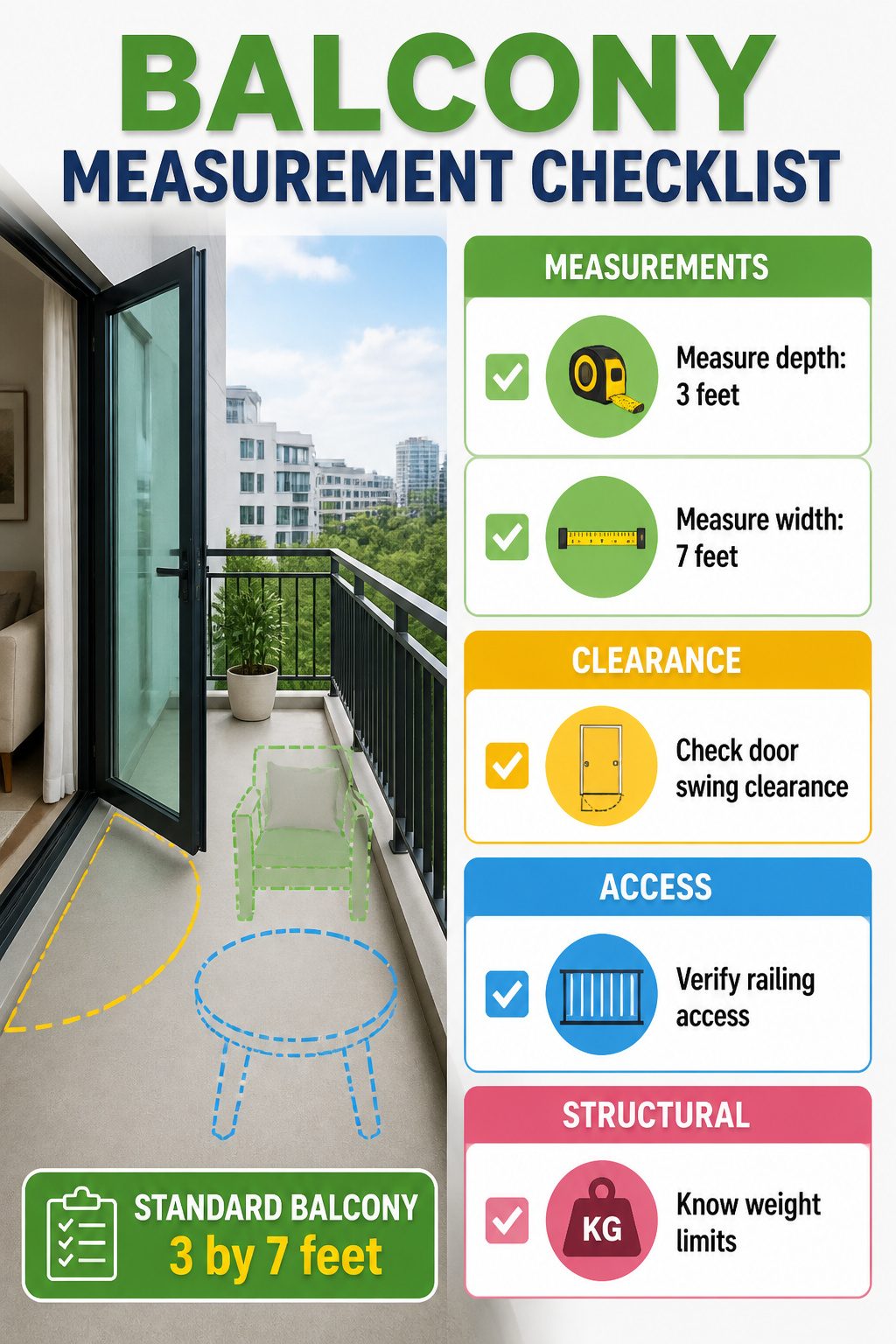
A standard balcony runs about 3 by 7 feet, and that is not a lot of room to get wrong. I measure depth from the building wall to the inside edge of the railing, then width across the full opening. Door swing eats another two feet minimum when it opens outward, so I mark that arc with painter’s tape before I buy anything. Railings need access too, especially if your building requires them for inspection or if you ever need to clean the exterior side.
Weight limits matter just as much as square footage. Building management keeps the structural load rating, and it is worth an email before you haul anything up. Solid stone or heavy concrete looks great on Pinterest until you learn the balcony cannot handle it. I aim for medium weight, pieces that stay put in wind but do not max out the structure. A chair that blows over is annoying. A chair that falls through is a lawsuit.
The doorway itself is the final gate. I have watched friends measure the balcony, skip the door frame, and end up sawing a bench on the landing. Width, height, and any tight turns in the hallway, all three numbers go on my phone before I shop.
Weather-Resistant Materials
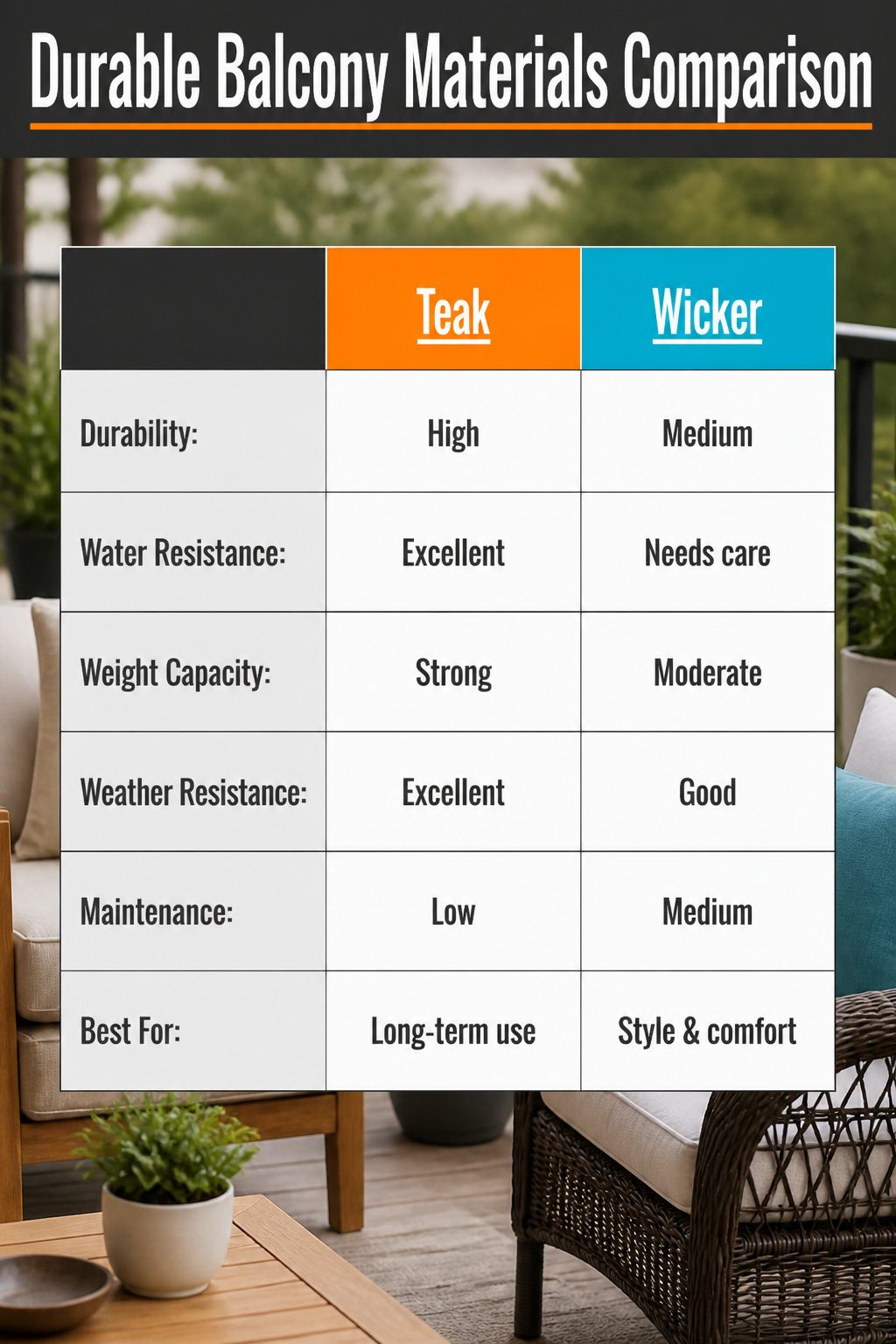
Teak, wrought iron, and aluminum frames hold up against rain and sun better than the softwoods and cheap tubing that bend or rust inside two seasons. Powder-coated metal or solid hardwood is where your money goes if you want the piece to last. Wicker works too, but only the all-weather resin kind; natural rattan turns gray and brittle fast.
For cushions, the fill matters more than the cover. Quick-dry foam drains water instead of soaking it, and performance fabrics like Sunbrella resist the UV fading that turns budget cushions chalky by August. I have dragged standard indoor cushions outside before, and the mildew smell never really washes out.
A cover helps, but the habit of pulling cushions in before a storm does more than any fabric claim. If you are leaving town, stash them inside. The frame can handle getting wet; the cushion should not have to.
Seasonal Refresh
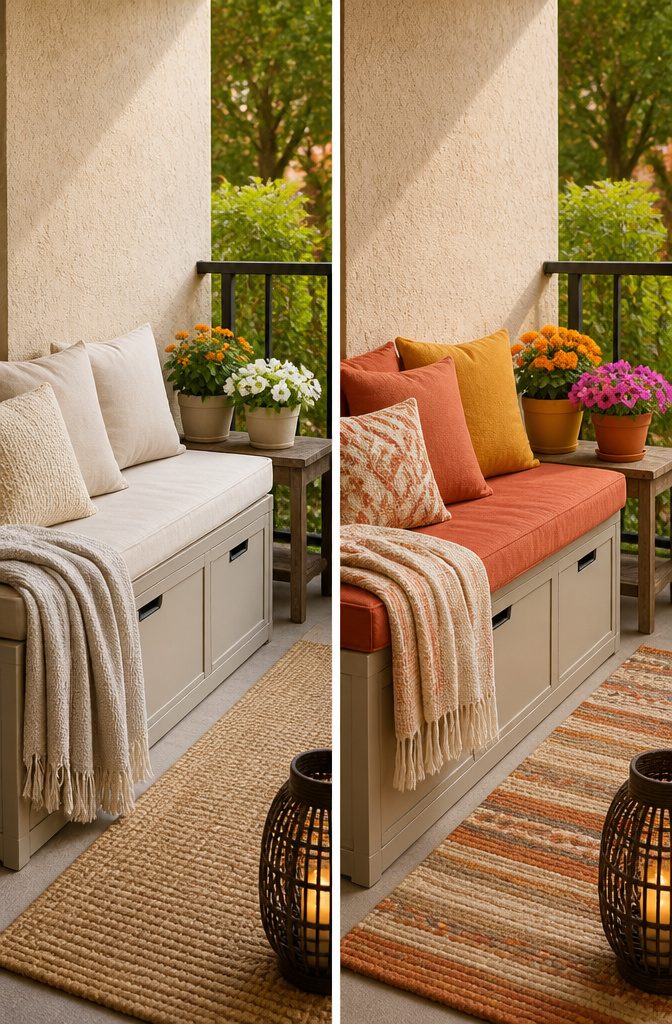
A balcony can feel stale after a few months looking at the same pillows and pots. Swapping them out is the fastest way to make the space feel alive again without spending much or doing anything permanent.
I keep a flat bin under my bed with folded cushion covers in two sizes, nothing bulky. In late March I pull out the warm tones, terracotta and mustard, and the old covers fold down to nothing for fall. The actual inserts stay on the balcony in a storage bench that came with my seating set. For plants, I rotate a few annuals rather than committing to a full replant. A couple of small pots of something blooming, swapped at the nursery, changes the whole mood for under twenty dollars. The empty plastic pots nest inside each other and hide in that same bin.
Small decor moves too. A battery lantern that reads autumnal, a striped throw that reads summer. None of it needs to match perfectly; it just needs to feel different from what you got tired of looking at.
Frequently Asked Questions
What are the best ways to decorate a small balcony?
Start with plants in pots or wall planters, add compact seating like a bistro set or folding chairs, and layer in an outdoor rug and string lights. A tight two- or three-color palette borrowed from your building’s existing materials keeps the look intentional rather than cluttered.
How can I maximize space on my balcony?
Choose multi-functional pieces like storage ottomans, folding chairs, and nesting tables that tuck away when you need floor space. Vertical gardens and railing planters grow upward instead of outward, and wall-mounted systems free up every square foot for actual living.
What plants are suitable for a balcony garden?
Herbs like basil, mint, thyme, rosemary, and chives handle containers well and give you something to cook with. For flowers and foliage, try trailing petunias, nasturtiums, strawberries in hanging planters, or resilient ferns and spider plants if you occasionally forget to water.
How do I create privacy on my balcony?
Install bamboo, wood, or metal privacy screens with small gaps that let air and light through while blocking sightlines. A trellis-style screen trained with jasmine or bougainvillea becomes a living wall that thickens through the season.
What type of lighting should I use on my balcony?
String lights wrapped along railings or overhead hooks are the starting point, running about $30 for a decent set. Add battery-powered lanterns or portable lamps near seating to fill shadows, and choose weather-resistant labels so rain does not ruin the fixture.