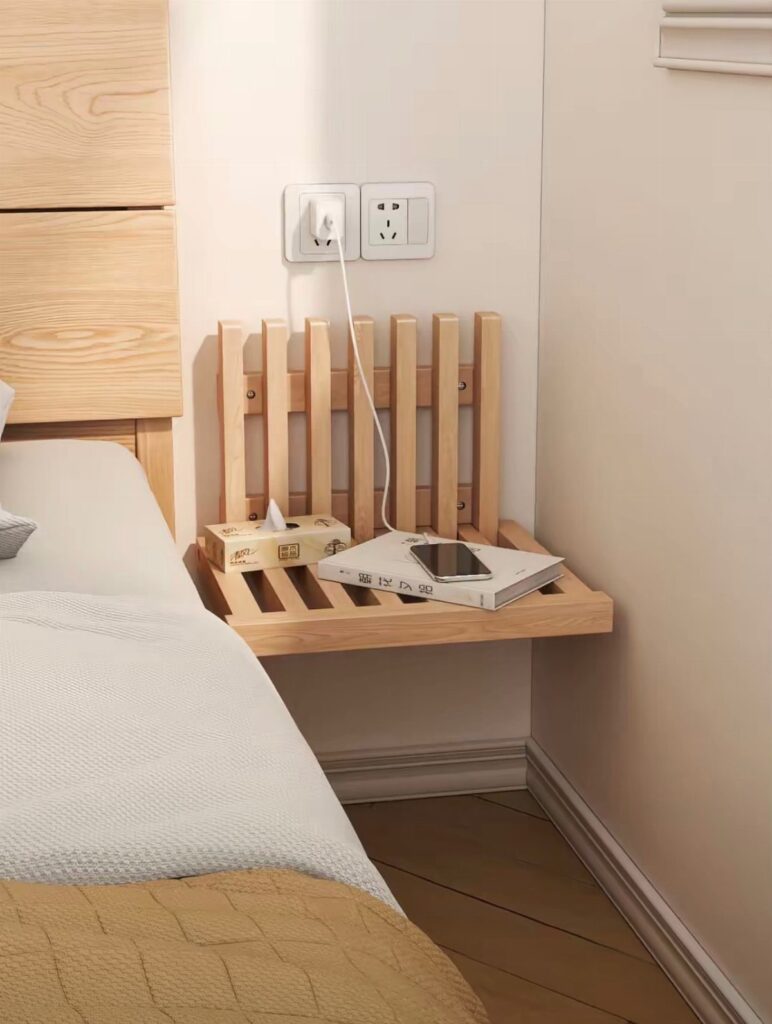

Small space storage splits into 2 tracks: pieces that claim no floor space at all, like wall-mounted shelves and hooks on the back of a door, and compact furniture that does double duty, like a loft bed with drawers built into the stairs.
Sort what you own first and count it before you buy containers, because a rack that holds 8 mugs won’t solve a stack of 12.
1. Modular Wardrobe System
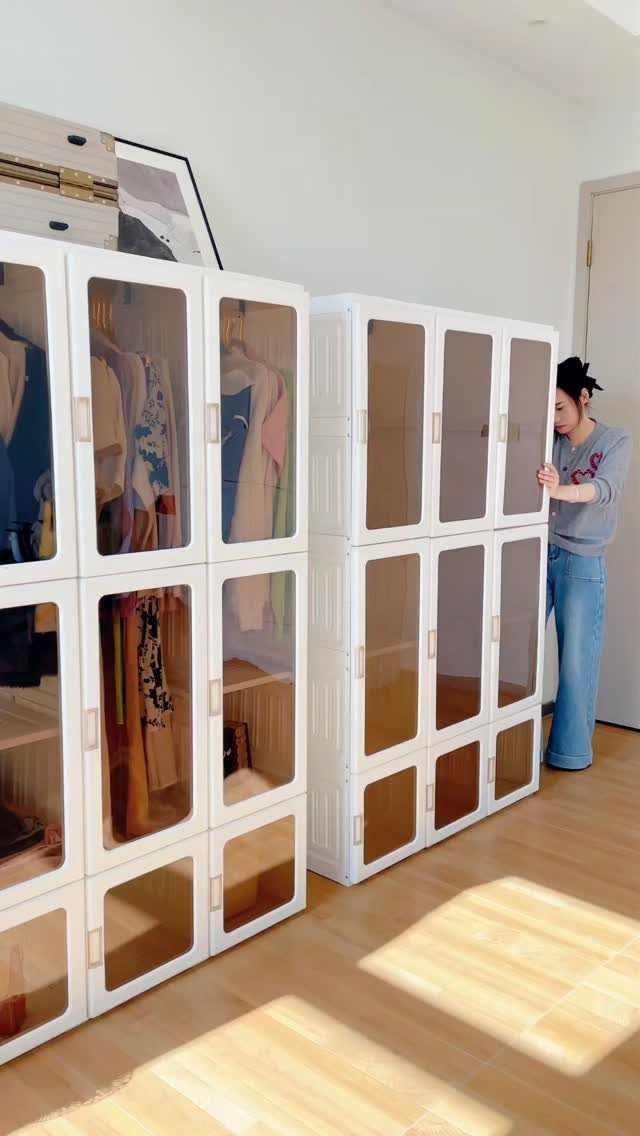
A modular wardrobe is a set of individual units you arrange and stack to fit your space. Each piece locks into the next, so you can build up or out and add more over time.
The translucent doors let you see what’s inside without opening them, which saves time when you’re getting dressed. Most systems come flat-packed and snap together without tools.
If you rent, this is storage you can take with you. The units break back down, and you’re not drilling into walls.
2. Floating Nightstand
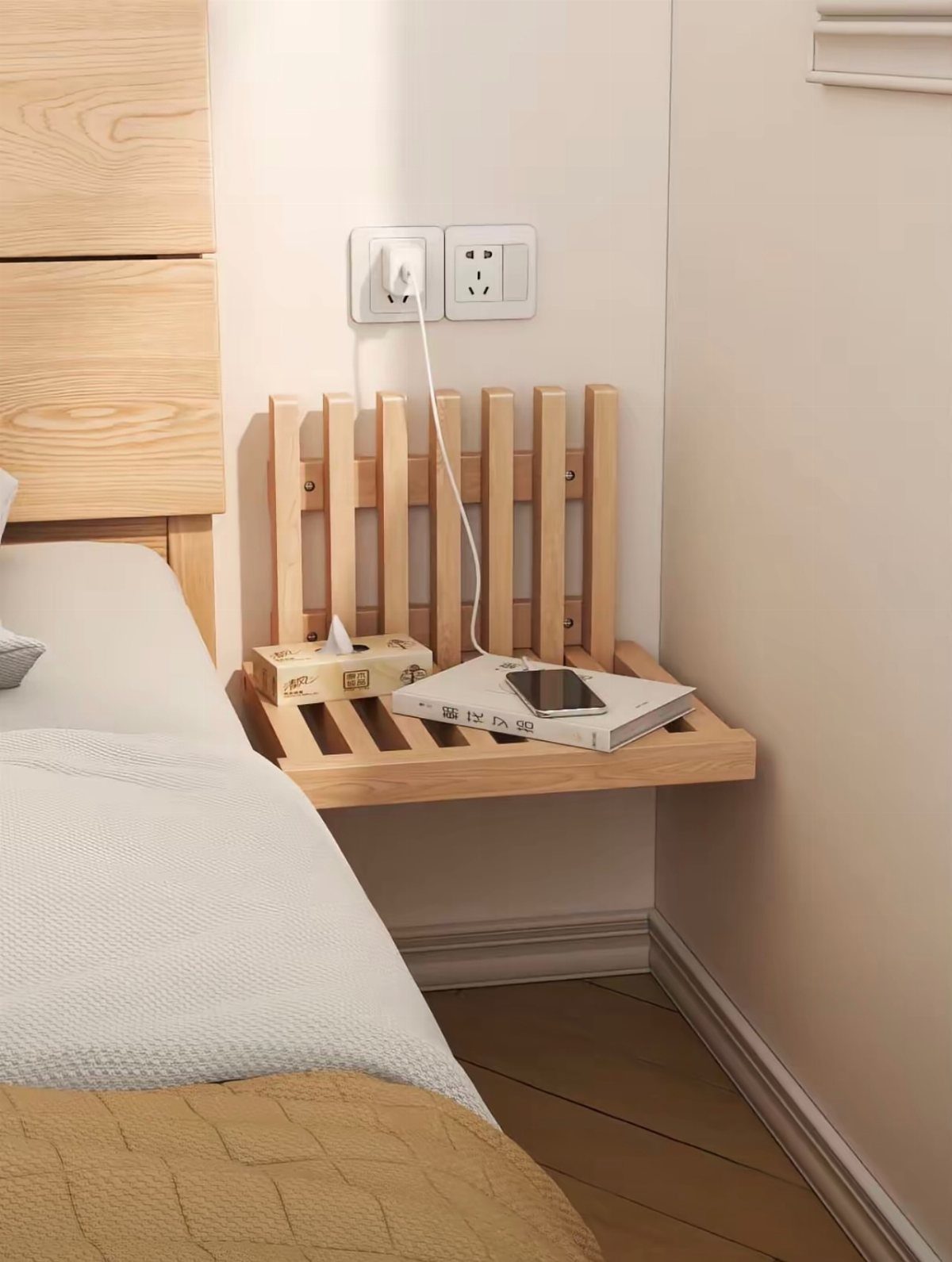
Mount a shelf directly to the wall next to your bed and it floats without legs underneath. That leaves the floor clear, which makes a tight bedroom feel less crowded.
A slatted back adds a place to lean a book or set your phone without it sliding off. The surface holds a tissue box and charger with room left over for a glass of water.
Installation takes one person and a drill. Find a stud or use drywall anchors rated for the weight you’ll put on it.
3. Custom Bed, Bookshelf, and Storage
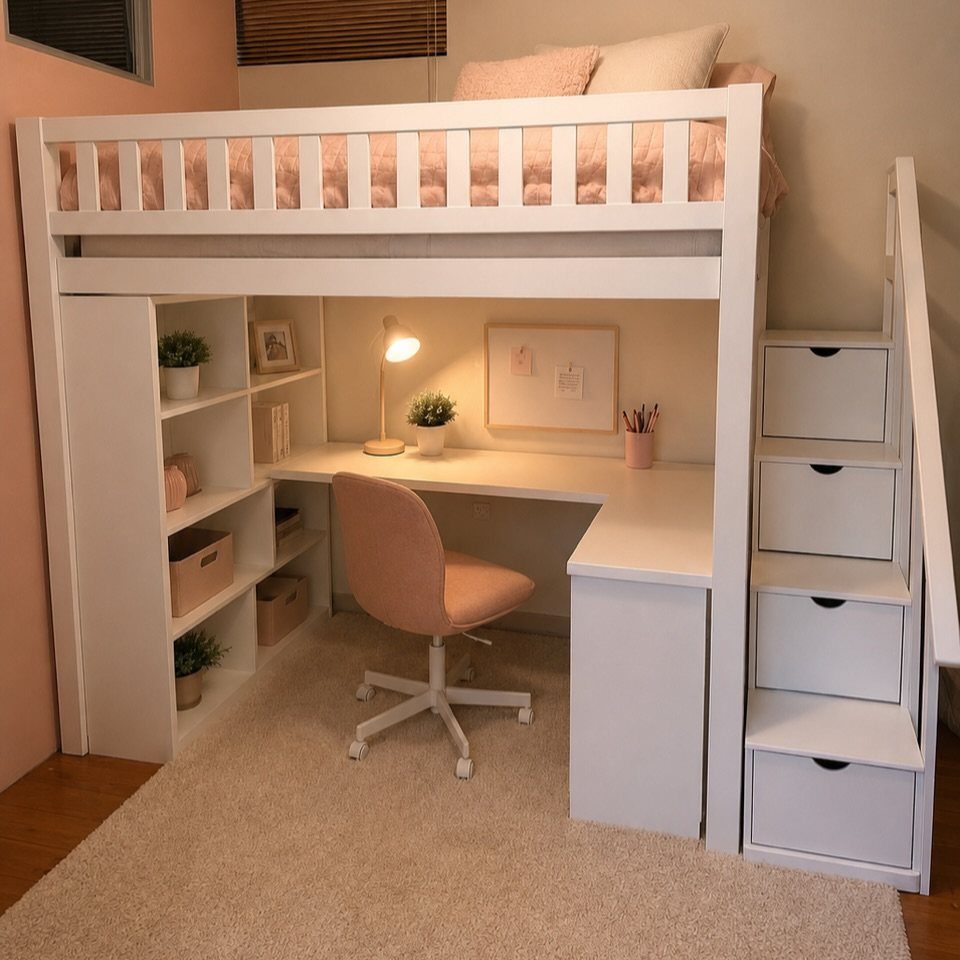
A loft bed with storage built into the frame turns vertical space into usable square footage. Stairs with drawers inside replace a ladder, and each step holds clothes, shoes or extra bedding.
Underneath, a desk and shelving unit create a workspace that doesn’t claim separate floor area. This setup works best in a room with high ceilings, where you can sit upright under the loft.
Most are custom-built to fit the room’s dimensions. If you rent, check your lease before anchoring anything this size to the wall.
“A well-organized space directly impacts how restful the room feels, which is why built-in storage beds are such a game changer.”
4. Headboard Bookshelf
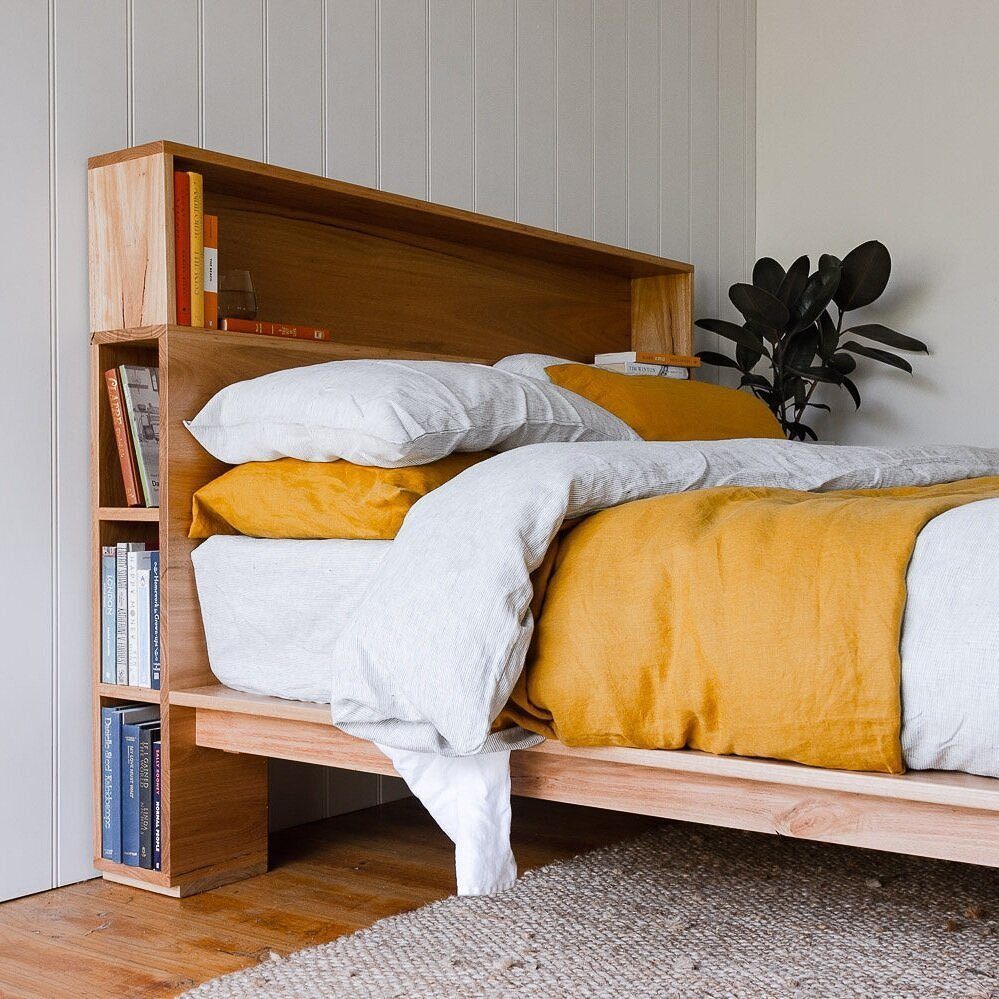
A bed frame with shelving built into the headboard holds books within reach and uses space that would otherwise sit empty behind your pillow. The open cubbies on both sides hold a small library or a row of plants.
Some versions include closed compartments for things you’d rather keep out of sight. Either way, the frame does double duty and doesn’t claim extra floor space.
If you move your bed away from the wall, this kind of headboard still makes sense. The shelves face forward and stay accessible from either side.
5. Jewelry Cabinets
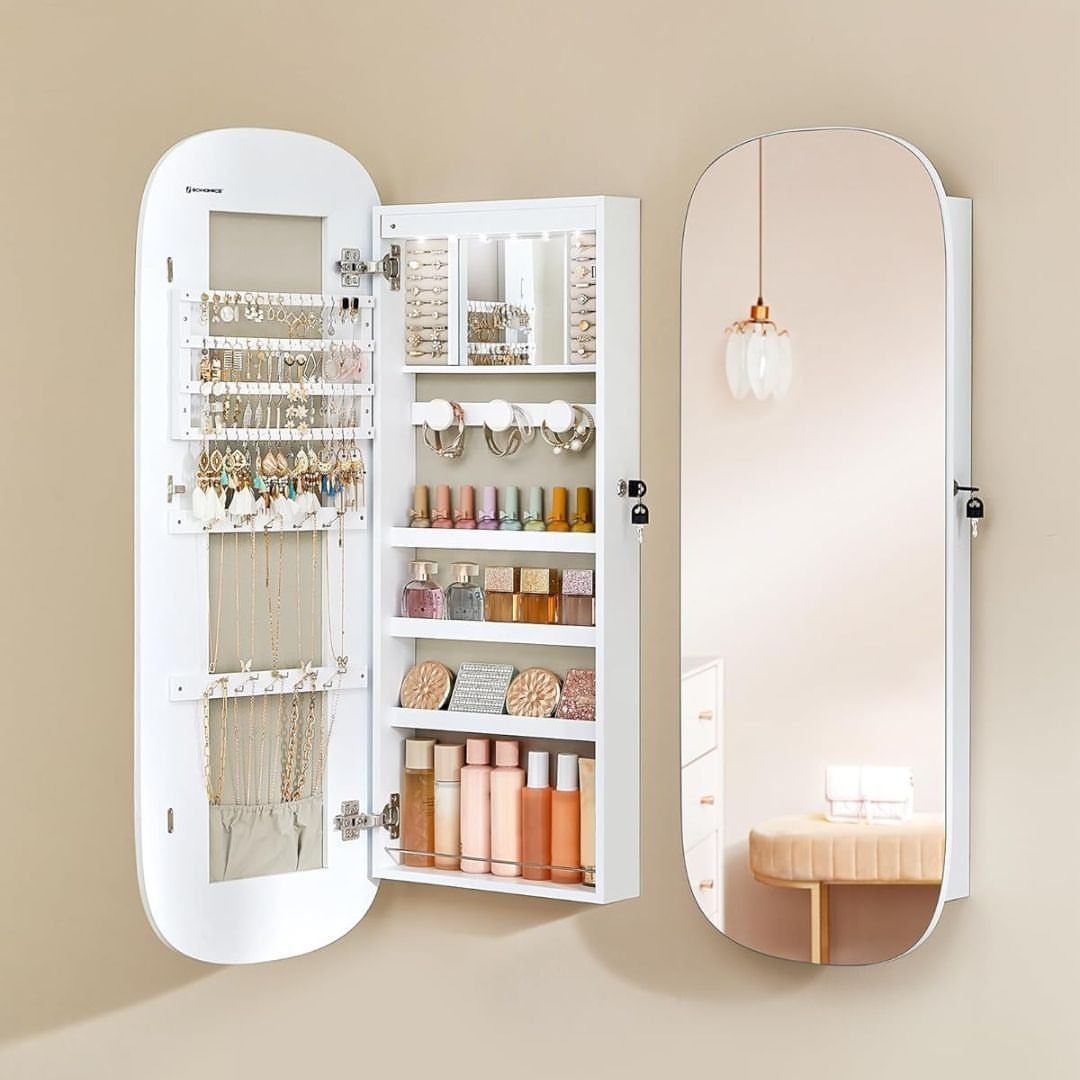
A wall-mounted jewelry cabinet holds necklaces, rings and bracelets behind a door, usually with a mirror on the front. Inside, hooks and trays keep everything separated so chains don’t tangle and earrings stay paired.
A shelf at the bottom stores perfume and lotion too. When the door closes, it all disappears and the mirror is all you see.
Hang it next to your closet or dresser so getting dressed happens in one spot. Most models need two anchors, and the door swings out, so leave clearance on one side.
6. Sculptural Hook Racks
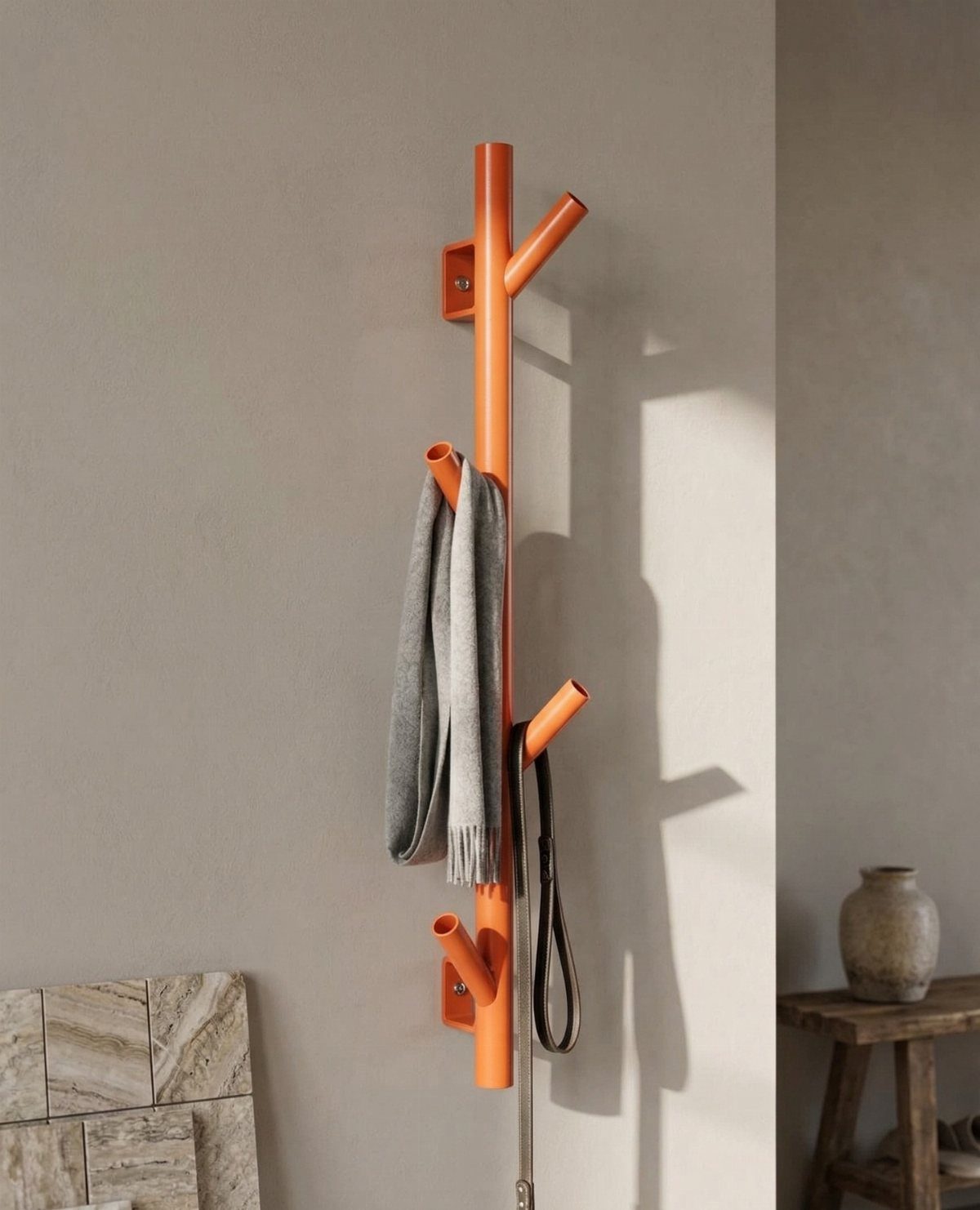
A sculptural hook rack mounts to the wall and holds coats, bags or scarves on pegs that curve or branch in shapes you’d actually want to look at. It doubles as wall art when nothing’s hanging on it.
Choose a finish and shape that work with your room. Matte black, brass and natural wood all show up often, and the rack itself takes up no floor space.
Mount it by the door or in a hallway where you drop things when you come in. Two or three small hooks spread across a wall can do the same job if one large piece feels too heavy.
7. Cabinet-door Storage
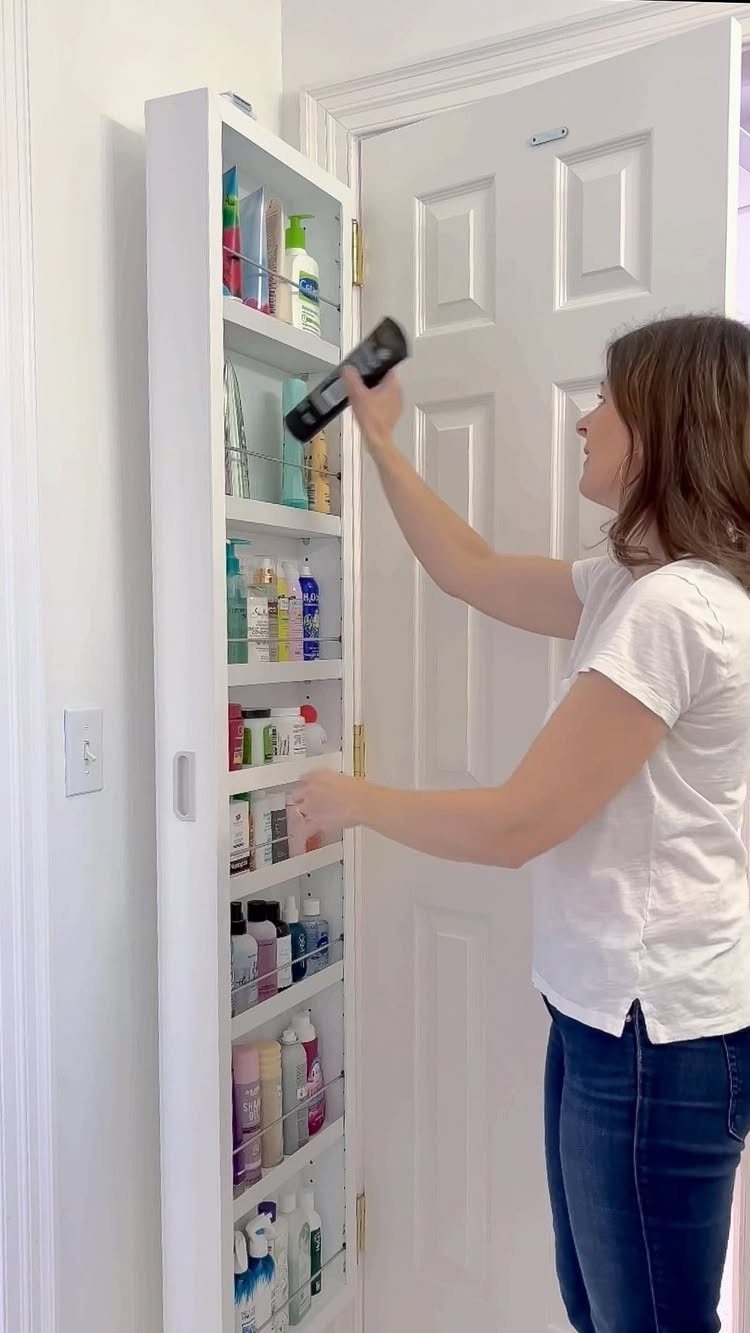
Attach wire racks or small bins to the inside of cabinet doors and the space holds hair tools, makeup or cleaning supplies without claiming shelf room. Each tier is spaced so bottles and brushes fit upright.
This works best on doors that swing fully open. If the door doesn’t swing fully open, measure the depth so nothing hits the shelves inside when it closes.
Most organizers mount with adhesive strips or screws. Adhesive comes off clean in a rental.
8. Nesting Coffee Tables
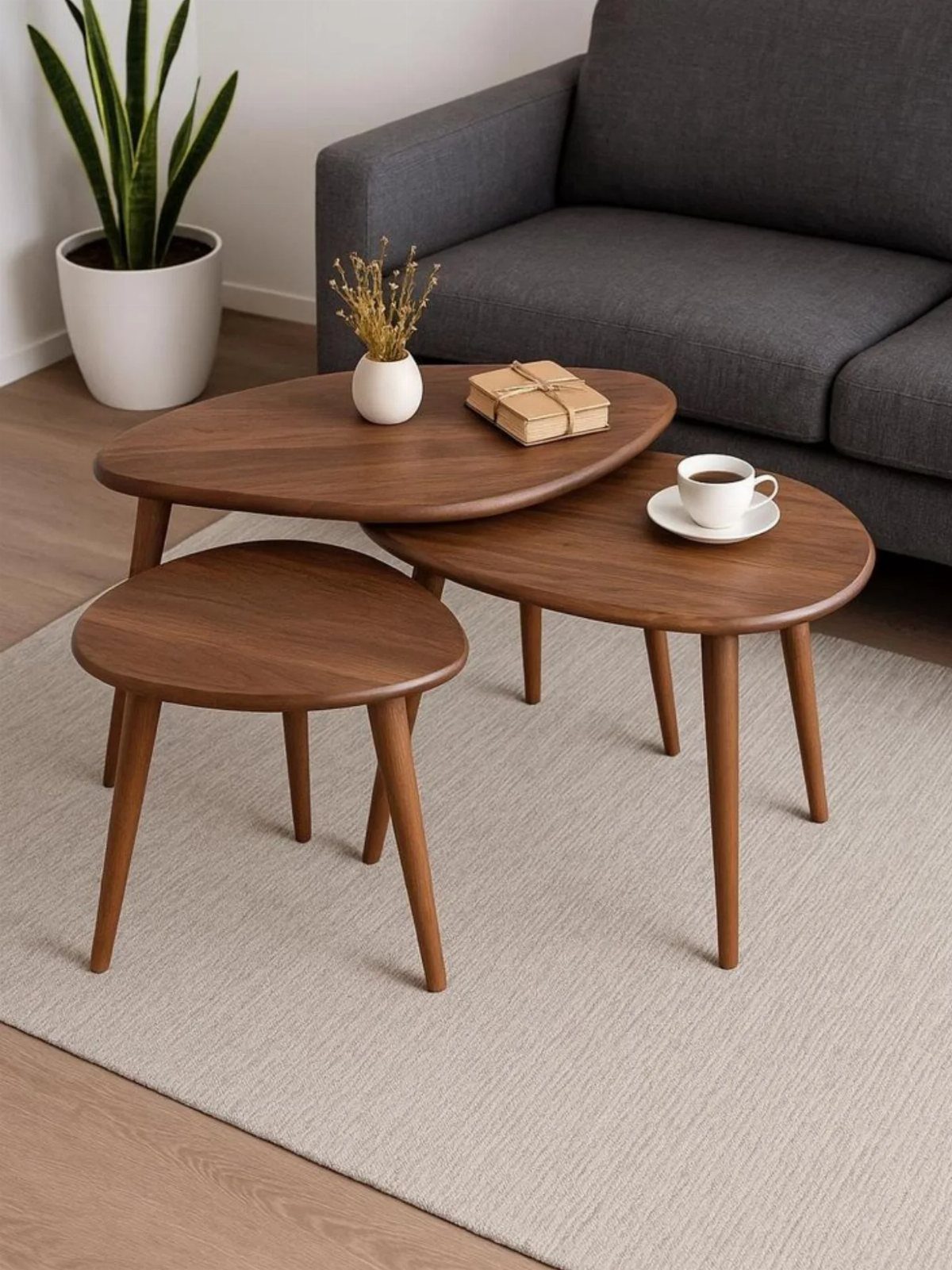
A set of nesting tables slides together into one footprint when you don’t need them all, then pulls apart when you want more surface area. Each table is a different size, so they tuck under each other without wasted space.
Use one as a side table and keep the others stored, or separate all three during a gathering. The tops hold drinks, books or a laptop, and when they’re nested you only see the largest one.
Look for sets that slide under one another into a single footprint. If one table is much shorter, it won’t sit flush when they’re pushed together.
9. Cabinet Shelf Organizers
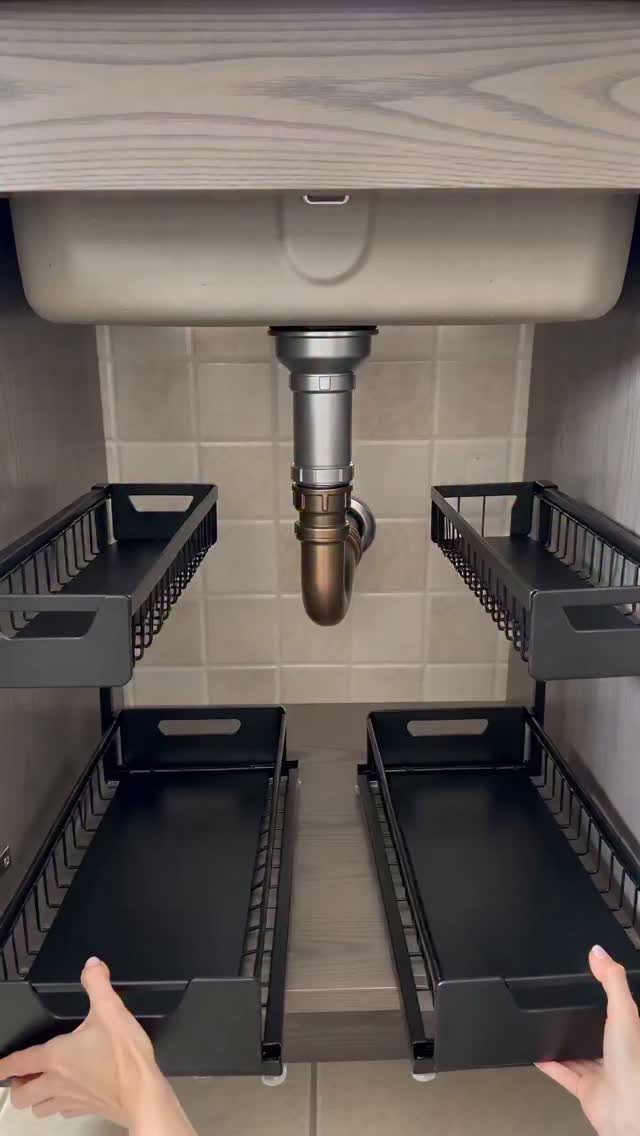
A tiered shelf inside a cabinet doubles the usable height by creating a second surface above the first. Stack cans, jars or cleaning bottles on both levels instead of piling everything in one tall column.
The organizer sits on the cabinet floor and doesn’t need installation. Measure the height and width of your cabinet before you order so it fits without blocking the door.
Wire versions let you see what’s on the lower level. Solid plastic hides what’s underneath but wipes clean when something spills.
10. Drawer Organizers
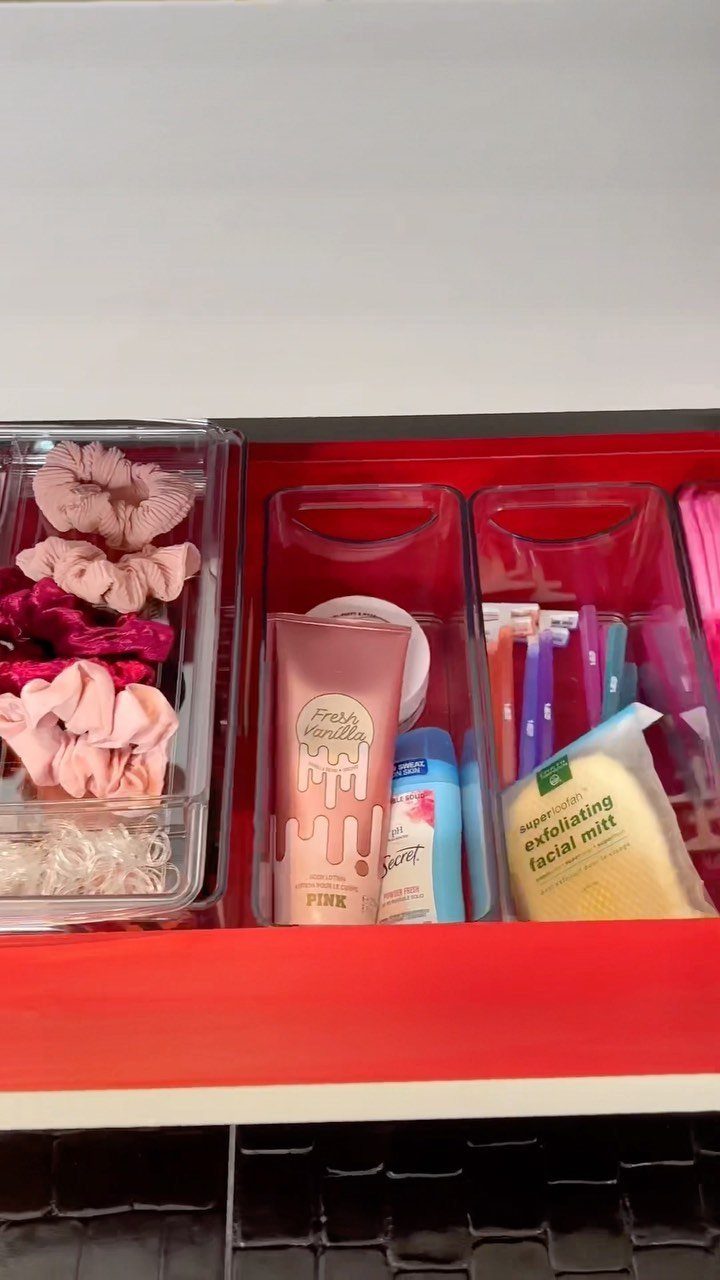
Clear plastic bins keep small items separated inside a drawer so you can find what you need without digging. Each bin holds one category: hair ties in one, lotion and deodorant in another, skincare tools in a third.
The bins stack if your drawer is deep enough, which lets you fit more without losing track of what’s on the bottom. Clear sides let you see what’s inside before you pull the bin out.
Choose bins that fit the width of your drawer with minimal gaps. If they slide around, add a non-slip liner underneath.
11. Built-in Wall Shelving
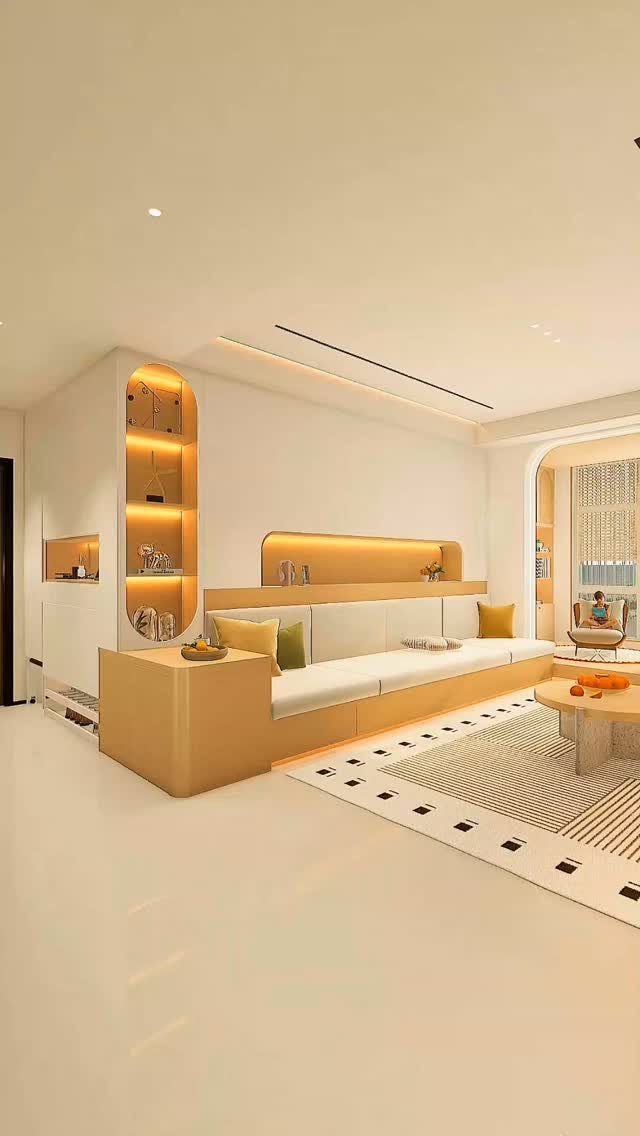
Recessed shelves carved into the wall above a built-in sofa store books, plants or picture frames without jutting into the room. Lighting inside each niche highlights what’s on display and makes the wall a feature instead of blank space.
This option requires opening the wall and framing new compartments, so it’s a commitment.
If you rent, it’s off the table. In a home you own, it works best during a renovation when the walls are already open.
The shelves sit behind the plane of the wall, so nothing on them blocks foot traffic or catches your shoulder when you walk past.
12. Narrow Shelving Unit
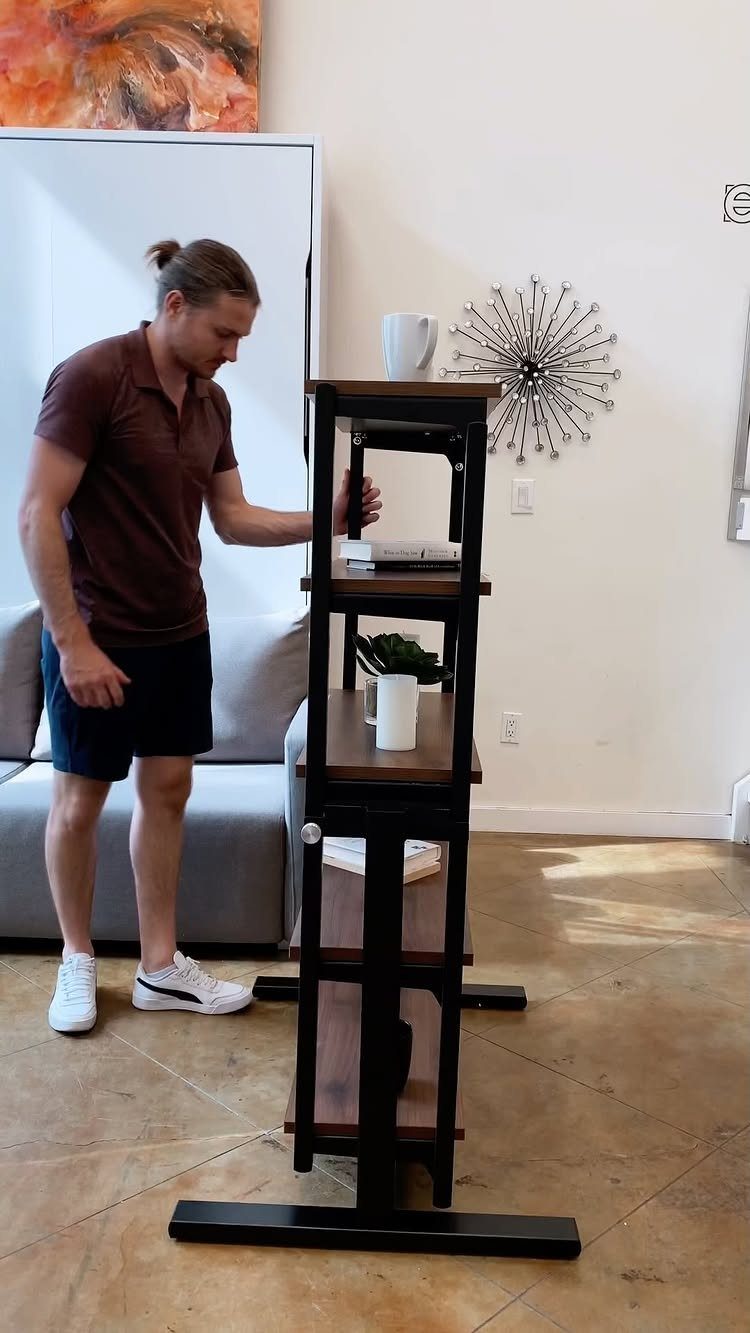
A narrow shelving unit fits into tight spots where a standard bookcase won’t go: next to a sofa, between 2 windows, or in a hallway. The metal frame keeps the footprint slim, and wooden tiers add warmth without bulk.
Each shelf holds a few books, a vase or a small plant. The vertical design uses height instead of width, so it stores more than you’d expect from something this thin.
Most narrow units run deep enough for folded towels or small baskets, but some go skinnier if you’re really tight on room.
13. Vertical Storage
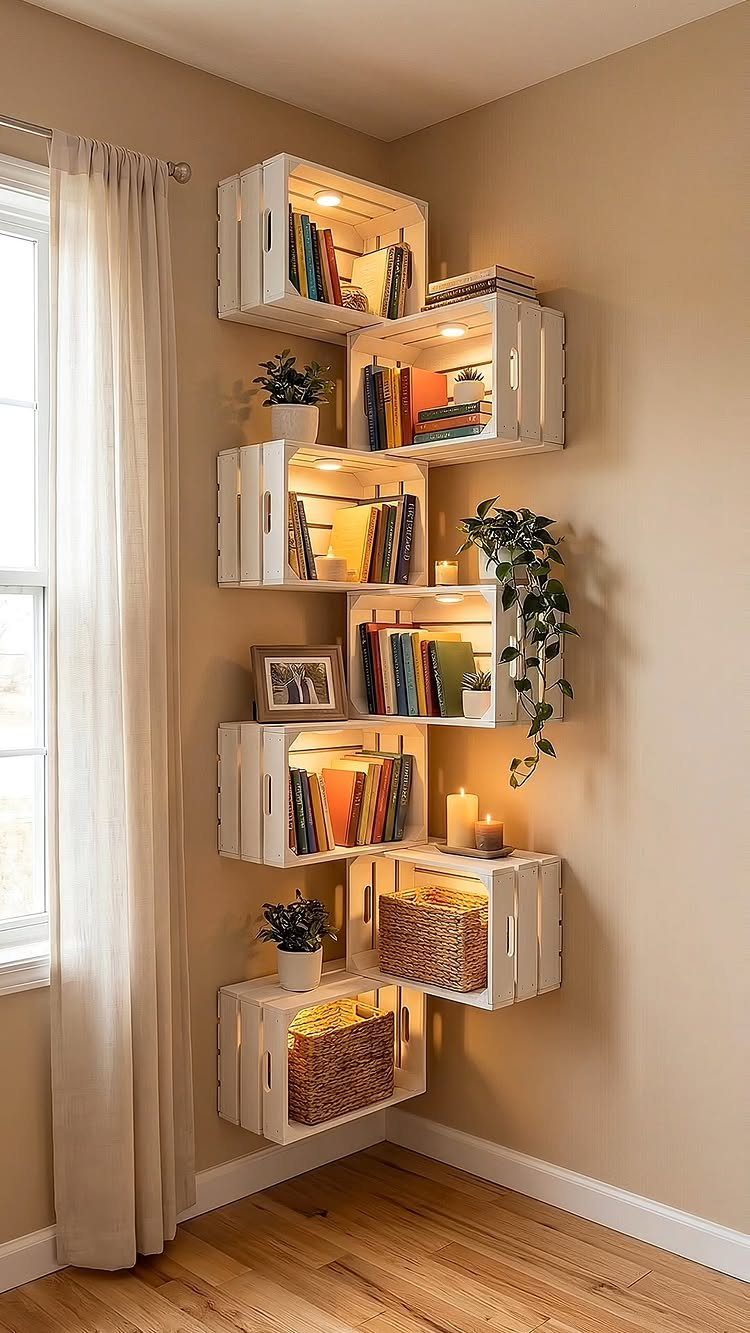
Mount crates, bins or shelves on the wall above eye level and they store books, plants or folded linens without claiming floor space. The height keeps everyday surfaces clear and makes a cramped space feel more open.
Stacking containers vertically gives you more storage in the same footprint. A single column holds as much as a low bookcase but takes up a fraction of the room.
Secure anything mounted high enough that it could hurt someone if it fell. Use wall anchors rated for the weight you’re putting up there.
14. Hooks
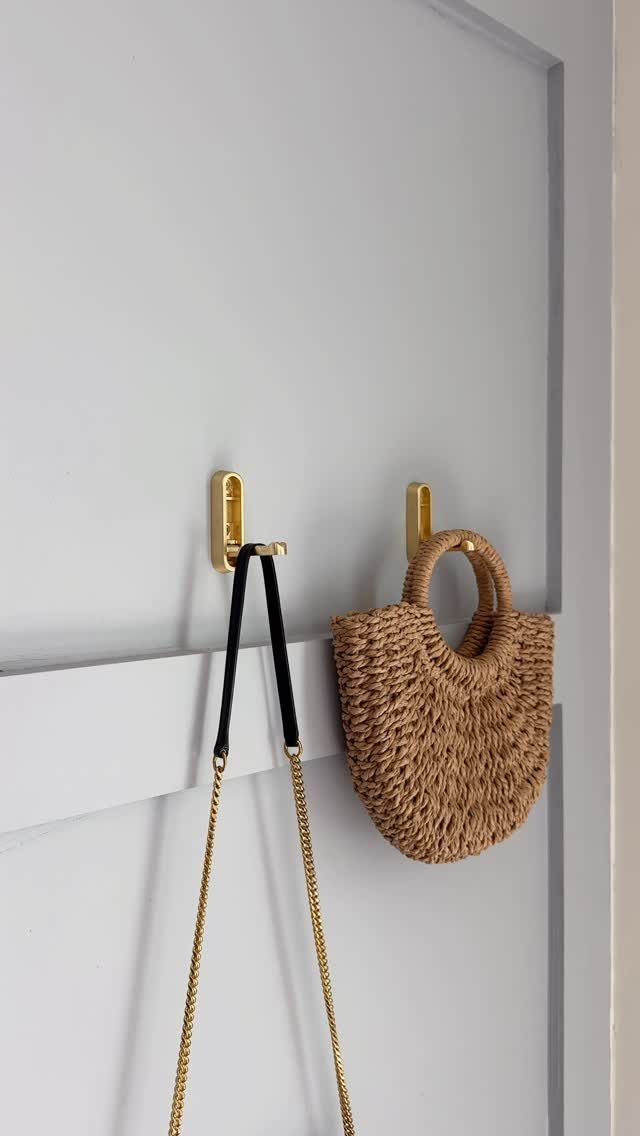
Screw hooks into a door, wall or the back of a closet and they hold bags, hats or jackets you reach for daily. Each hook takes one item, so everything has a spot and nothing ends up on the floor.
A door gets used on both sides if you mount hooks on the back. That’s storage you’re already walking past every time you open it.
2 hooks spaced a foot apart work for most bags and coats. Add more if you need them, or space them farther apart for wider items.
Sort Before Buying Storage
Go through what you own before you add containers for it. Pull everything out of one drawer, shelf or closet, then sort it into four piles: keep, donate or sell, trash, and relocate to another room.
Work in small chunks. One kitchen cabinet or one nightstand drawer in a sitting keeps the job from spreading across your whole apartment.
Set a rhythm for the next round. If you review clothes, kitchen tools and decor twice a year, the volume stays manageable and you’re not storing things you stopped using months ago.
The container that fits what you’re actually keeping costs less and takes up less room than one sized for everything you thought you might need.
Choose Renter-friendly Solutions
Start with solutions that don’t require drilling or leave marks when you move out if you rent.
Tension rods wedge between 2 walls and hold hanging storage without hardware. Adhesive hooks stick to the back of a door or inside a cabinet and peel off clean.
Floor storage like bins, nesting tables or freestanding shelves moves with you and doesn’t touch the walls.
Over-the-toilet cabinets and freestanding wardrobes give you as much storage as a built-in without altering the structure. When your lease ends, they break down and go in the truck.
Save wall-mounted shelves and anything that needs anchors for a place you own or a landlord who approves it in writing first.
Plan Storage Around Use
Count how much you’re storing before you pick a solution. If you own 12 mugs, a rack that holds 8 won’t fix the problem.
Decide whether you want things visible or hidden.
Open shelves keep books and dishes in sight, while bins and cabinets tuck clutter away. Mixing both in one room gives you flexibility.
Start with the space that needs the most help. If your entryway is where everything piles up, add hooks or a narrow bench with storage before you organize a closet that already works.
Look at what you already have and see if it can hold more. A tiered organizer inside a cabinet or drawer dividers can double your capacity without buying new furniture.
Frequently Asked Questions
How to maximize storage in a small home?
Stack storage vertically on walls and inside cabinets, use furniture that holds things inside it, and sort through what you own first so you only store what you actually use.
Where to store things when you have no storage?
Mount shelves and hooks on walls, hang organizers inside cabinet doors, and slide bins under the bed. Spaces above eye level and behind doors hold more than you’d expect without claiming floor area.
How do you organize a small house with no storage space?
Turn a window nook or corner into a bench with bins underneath the seat. The bench gives you a place to sit and the bins hold linens, shoes or anything else that needs a home.
How to create storage space in a small apartment?
Look above doors, under furniture, inside cabinet doors, and on blank walls. A shelf, hook or slim cart in any of those spots creates storage in space you weren’t using anyway.
Want a simple storage idea for very small kitchens?
Hang pots, pans or utensils from a metal bar with hooks mounted to the wall. The bar keeps bulky items off the counter and puts them within reach when you’re cooking.