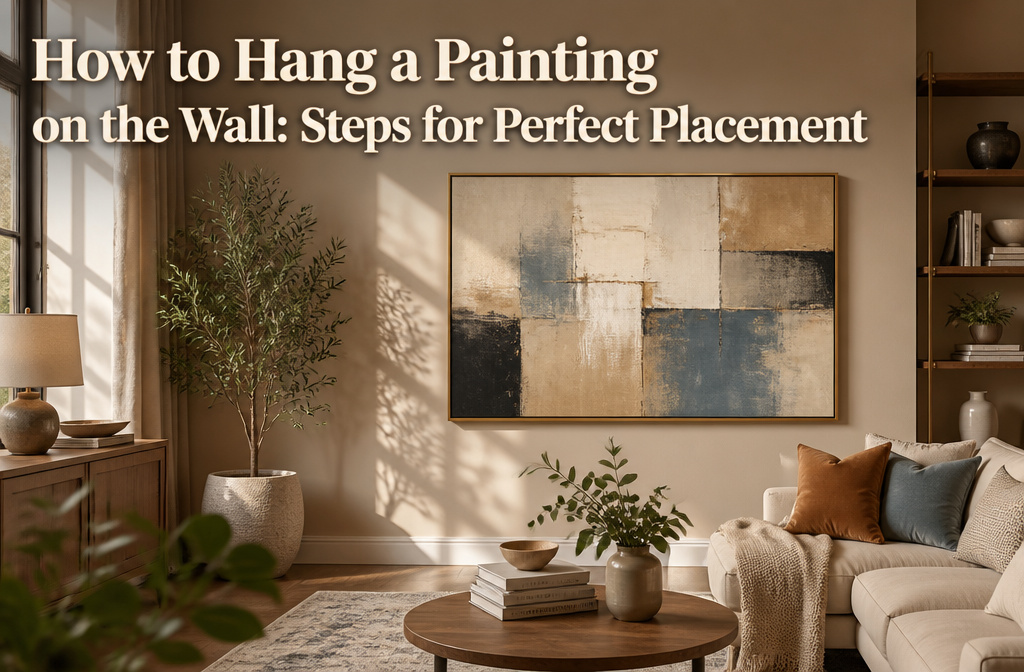

Hanging a painting at the right height takes about ten minutes and a $4 pack of Ook hooks, but most people mount it six to twelve inches too high and never know why the room feels off. The fix is anchoring to the floor, not the ceiling: the center of the frame belongs 57 to 60 inches up, a gallery standard that lands at actual eye level whether your household runs short or tall. Get that number wrong, or skip the level once it is up, and the piece tilts into a distraction you adjust for months.
1. Choose the Location
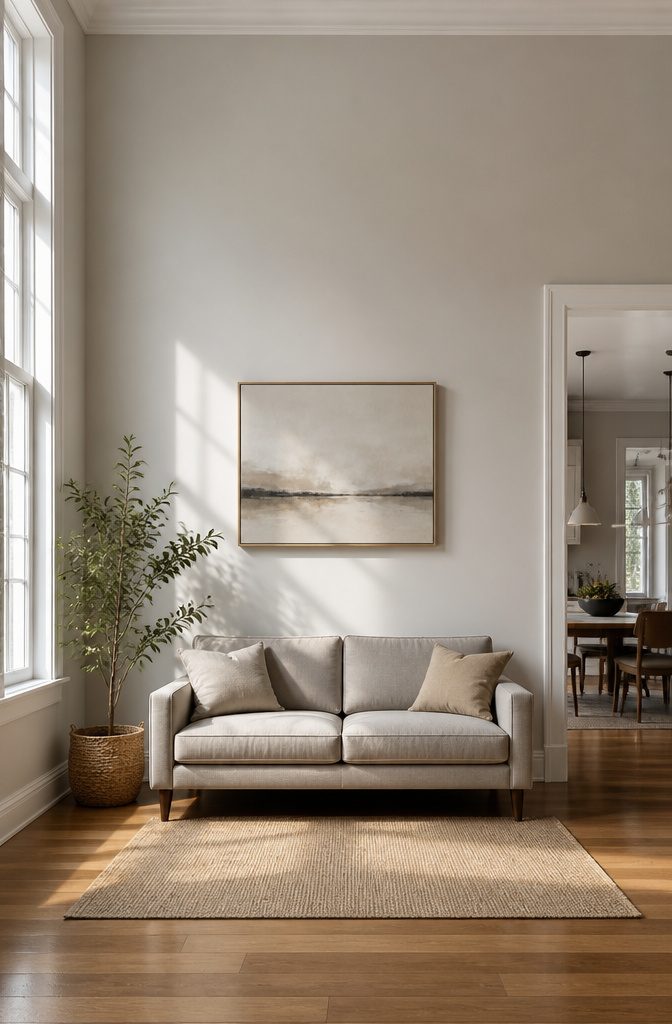
The wall you pick matters almost as much as the painting itself. I learned this the hard way after hanging a piece in a hallway where the light shifted all afternoon, turning a nice landscape into a dark rectangle by dinner. You’ll want to look at how the sun moves through the room and whether a ceiling fixture or lamp will throw glare or shadows. A spot that looks fine at noon can feel wrong at seven.
Most of us have a natural urge to hang art too high, like we’re trying to clear headroom that is not actually there. The cure is deciding location before you decide height. On a bare wall, the center of the painting should sit 56 to 60 inches from the floor — eye level for most people whether they are five-foot-two or six-foot. Once you anchor that thought to the floor, not to the ceiling, the piece lands where a person’s eyes actually fall.
Above furniture is where people really drift upward. The bottom of the frame should hang about 4 to 8 inches above the sofa or headboard, not floating somewhere near the crown molding. The painting and the furniture need to read as one unit; too much gap and they start a conversation they are not in. Width matters too — aim for artwork about two-thirds the width of what sits below it, or the whole thing starts to feel top-heavy or lost.
Traffic is the last thing to check. A hallway with shoulders brushing both walls is no place for a frame that sticks out, and a spot behind a door that swings wide is asking for a chipped corner. Step back and watch how you actually move through the room. The right wall is one you face when you enter, not one you squeeze past.

TRUSTED STRENGTH: Pack of five 15 lb. 3M CLAW(TM) Drywall Picture Hangers; each picture hanger made of hardened steel, proven to hold 15 lbs., so you can hang decor, such as pictures, mirrors and other heavy objects; Also includes five spot markers

【Quality Material】Our drywall picture hanger are made of hardened steel, each picture hook can hold up to 40 pounds, sturdy, reusable and long-lasting.
2. Measure the Wall and Painting
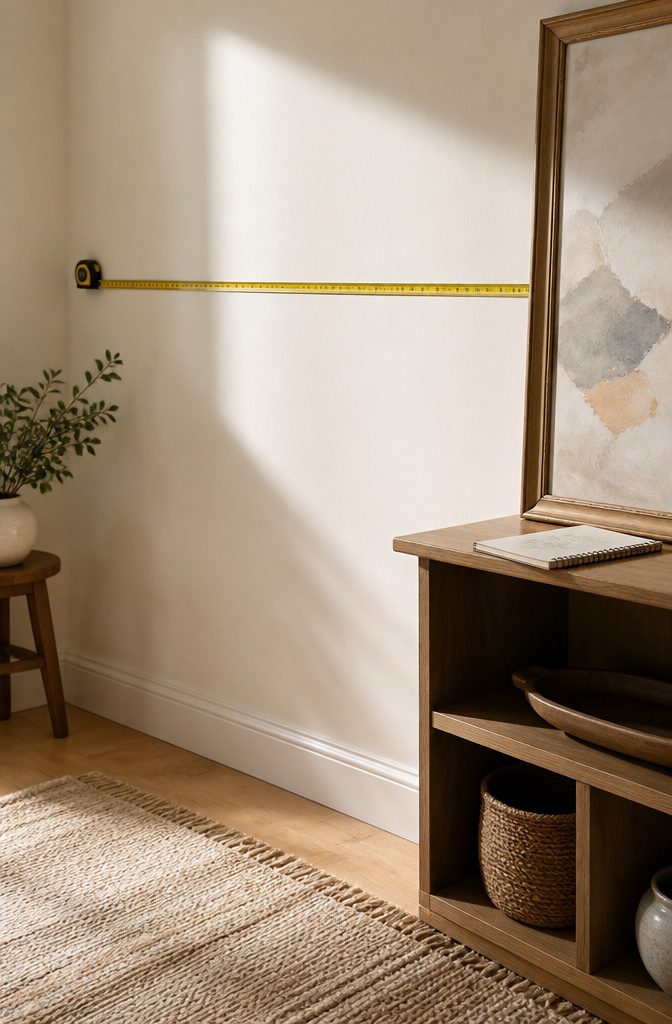
Wall width determines what counts as comfortable breathing room for a single painting and what reads as a shrunken afterthought. Measure the span you intend to fill, then measure the frame itself, edge to edge. Subtract the painting from the wall and divide what is left in half; that is your margin on each side.
For groupings, treat the cluster as one imaginary rectangle. Lay the pieces on the floor first and step back. Three to six inches between frames is the range that keeps them talking to each other without crowding. I land closer to three inches for tighter hallways and closer to six when the wall is wide open and the pieces are small. Heights within the grouping should share the same midpoint, the same 57-inch anchor, so the cluster settles as a single shape rather than a scattered list.

Precision leveling tool with a highly visible picture level bubble ensures you keep pictures straight on wall every time — the ultimate tool for hanging pictures straight

【3-in-1 All-in-One Hanging Tool】 – Combines a precision bubble level, measuring ruler (14.5 inches), and magnetic nail starter in one smart device. No more switching between hammers, tapes, or levels—just align, mark, and hang your frames in seconds. Perfect for DIY home decor projects.

【3-in-1 Professional Hanging】 Experience the ultimate picture hanging tool that combines a spirit level, a precise measuring ruler, and magnetic nail starter into one streamlined device. This all-in-one level ruler picture hanging tool eliminates the need for separate tools, allowing you to level, mark, and install with a simple punch-like motion for flawless home decor placement.
3. Find Eye Level
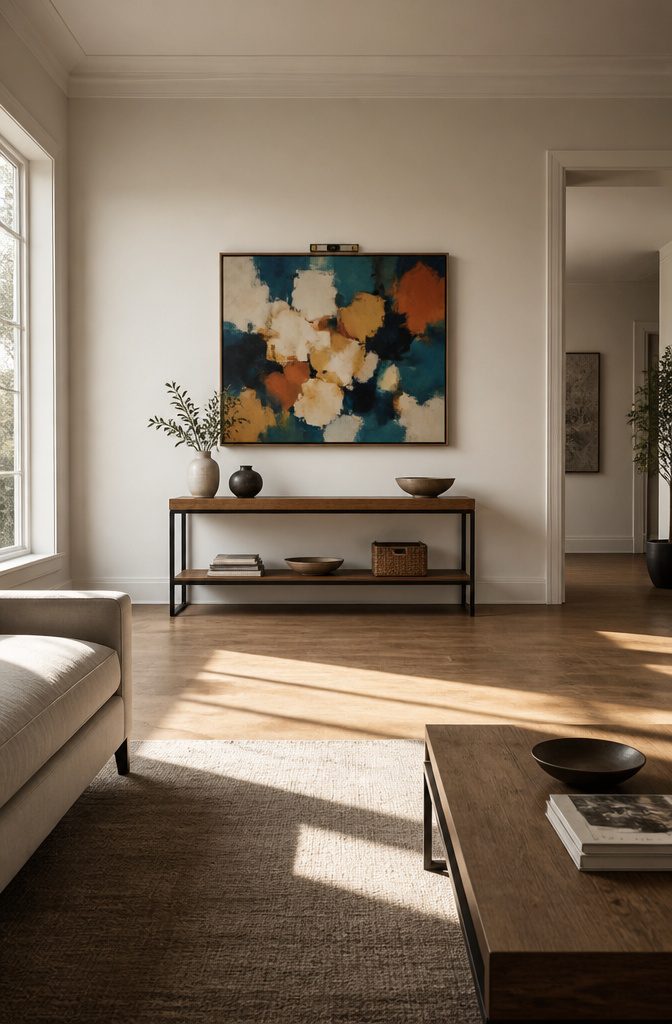
The center of your painting should sit 57–60 inches from the floor. That range is the gallery standard for average eye level, and it holds up in rooms where people are standing most of the time. Most homes land toward the upper end of that, around 60 inches, and a few designers find 57 inches feels low in rooms with taller ceilings.
What convinced me, reading through the hanging guides, is that the standard exists because it actually works. The average person’s eyes fall right near that mark without craning up or looking down, which means the piece gets viewed the way you intended instead of as an afterthought on a blank wall.
If you are six-foot-four and the people you live with are too, nudging the center upward by a few inches makes sense. The same goes if everyone in the house is closer to five feet, though that is less common and the standard was built for a reason. For almost every first project, pick a number in that 57–60 inch band and make it your fixed reference point; the math later in this guide will start from there.
DURABLE: This Viva height measuring device is crafted from aluminum, ensuring long lasting performance and robustness.

Very accurate -There are inches and centimetres measurement. It's very precise. The scale is very clear to read.

Precise Dual-Scale Measurement: Accurately measure heights from 23.6 inches (60 cm) to 78.7 inches (200 cm), making it suitable for both children and adults. The dual-scale display (inches/centimeters) ensures precise readings for all users
4. Determine Hardware Placement
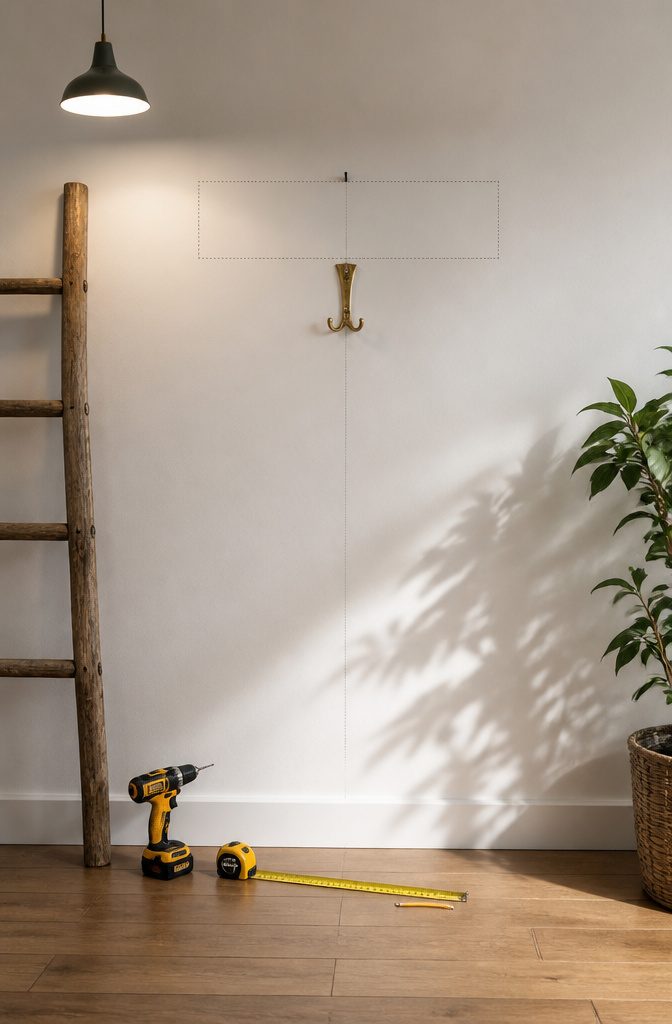
The first mark on your wall should be 57–60 inches from the floor, and which number you pick matters less than sticking with it across a whole room. I tend to use 60 inches because it reads a little cleaner with taller contemporary frames, but 57 inches is the older gallery rule and works perfectly fine.
Pull your hanging wire taut and measure straight up to the top edge of the frame. For a 34-inch painting with wire sitting 10 inches below the top, that means the center of the piece hits 17 inches down from the top. Subtract that wire distance from the half-height, and you get 7 inches. Add those 7 inches above your 57-inch mark, and the hook goes in at 64 inches.
If the math ever slips on you, the formula stays the same: half the painting’s height, minus the hardware distance, plus your chosen center height. A 24-inch frame with wire 3 inches down needs its hook at 69 inches to land dead-on at 60 inches center. The wire pulls tight once the weight is on it, so always measure taut, not loose.

Canvas Print Dimensions: Each piece measures 8x10 inches, providing a versatile size suitable for various wall spaces and arrangements Complete Set Included: This wall art...
5. Install the Hardware
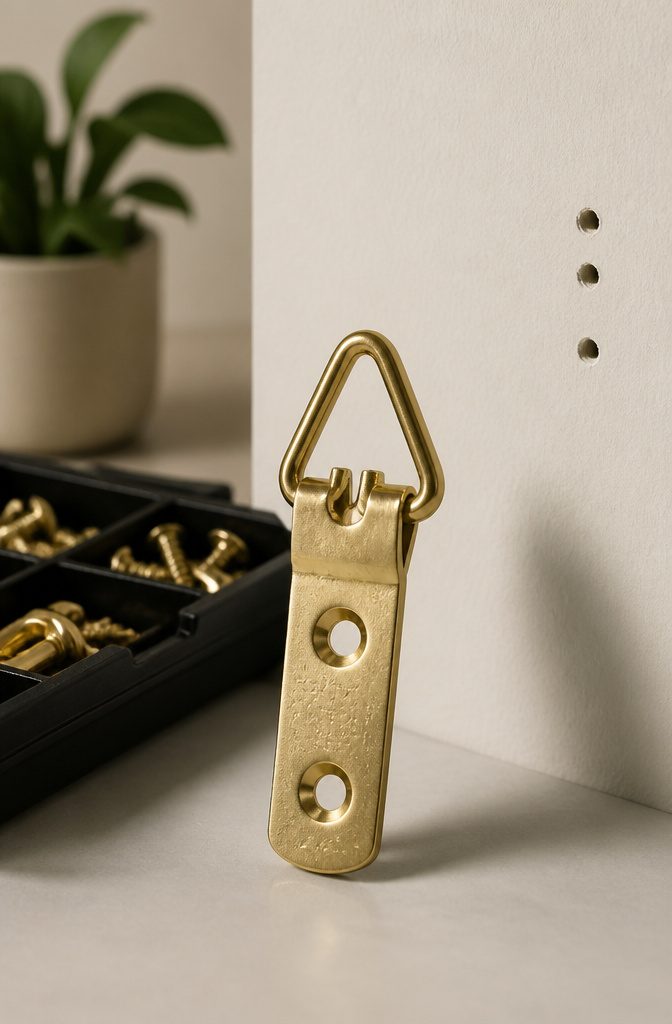
Drywall and plaster need different hardware, and the wall type matters more than most people think. In drywall, a stud gives you solid wood to bite into, but studs sit 16 inches apart center to center with about 14.5 inches of hollow space between them. Your painting’s hanging wire rarely lines up with two studs at once.
For those hollow-wall spots, Ook Professional Picture Hangers work directly into drywall without finding a stud first. They come in weight ratings the company says reach up to 100 pounds, though anything over 20 pounds really belongs in a stud anyway. The thin, brad-like pins push in by hand and pull out leaving just tiny pinholes you can barely see.
Plaster is trickier. It can crack under hammering, so pre-drilling a small pilot hole helps, and you will want a wall anchor rather than trusting a nail alone.
For renters trying to keep the deposit intact, Command strips are the cleanest escape. They stick to tile, glass, or painted drywall and peel off without a trace, but they have weight limits and they do not hold well on textured walls. I have seen a frame hold fine for months, then drop on a humid August afternoon.
Ook picture hangers mount into a wall with thin, brad-like pins rather than screws or nails. "They’re easier to pull out, and they just leave these pinholes behind… You can barely see them."
That near-invisible damage makes Ook hooks my pick for any painting under twenty pounds in a rental where you might patch anyway.

4-in-1 Picture Hangers: The picture hangers are suitable for hanging pictures and artworks. They support 30 pounds when installed in drywall (no anchor) and up to 100 pounds in wood studs

TRUSTED STRENGTH: Pack of four 25 lb. 3M CLAW(TM) Drywall Picture Hangers; each picture hanger made of hardened steel, proven to hold 25 lbs., so you can hang decor, such as pictures, mirrors and other heavy objects; Also includes four spot markers

HANGS HEAVY PIECES ON DRYWALL: This no-stud picture hanger holds heavy framed art, mirrors, and shelves on drywall without hitting a wall stud, using a folding back support that spreads the load behind the wall for a strong, secure hold.
6. Hang and Level the Painting
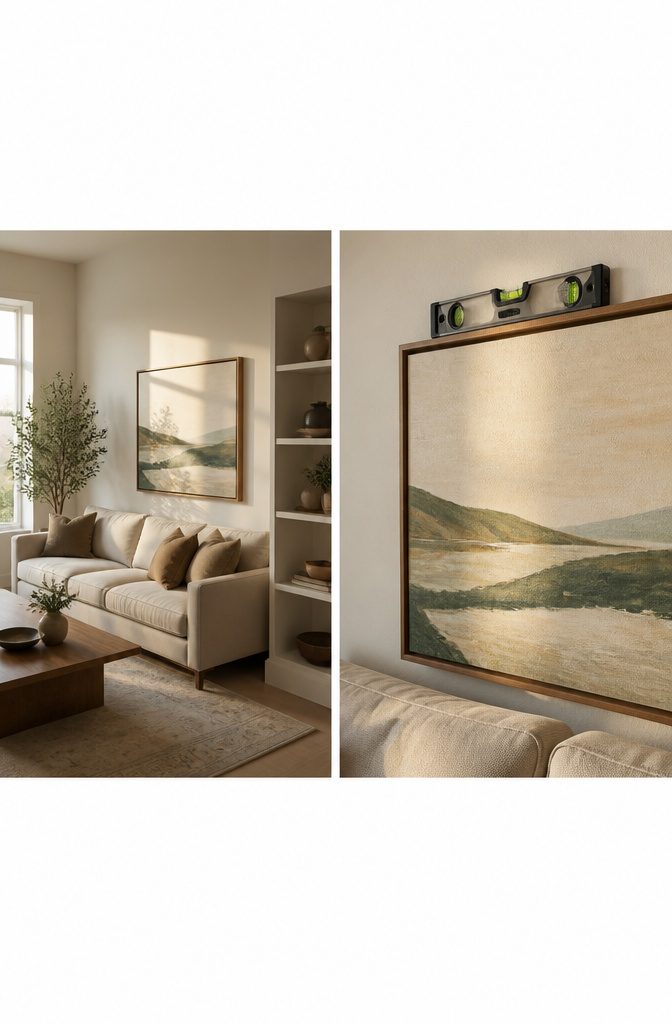
The wire slips over the hook, and the painting settles against the wall. That first placement is almost never straight, at least when I do it. A small level laid across the top of the frame fixes most of the tilt in seconds. Some people eyeball it, but the wall itself can throw you off, start with an actual level and save the second guess.
Step back to the middle of the room before you decide it is done. From close up, a frame looks fine when it is leaning three degrees left. From ten feet away, that lean announces itself. The center of the piece should hit the space between 57 and 60 inches from the floor, and you only see whether it does from a distance.
When the painting hangs above a couch or headboard, the gap matters more than the center rule. Tuck the bottom of the frame 4 to 6 inches above the furniture top in most rooms. A taller person on the couch, or a low ceiling, might push you toward 8 inches, but 4 to 6 is the tighter standard that keeps the piece connected to what sits below it. Too high and it floats; too low and you will knock it on a Saturday nap.

EFFORTLESS ORGANIZATION: Our 303pcs Heavy Duty Picture Hanging Kit boasts an exceptional design with categorized compartments, saving you precious time that would otherwise be spent searching for the right hardware. Plus, when you're done using it, everything neatly tucks away, eliminating any post-project mess. Can replace picture hanging strips.
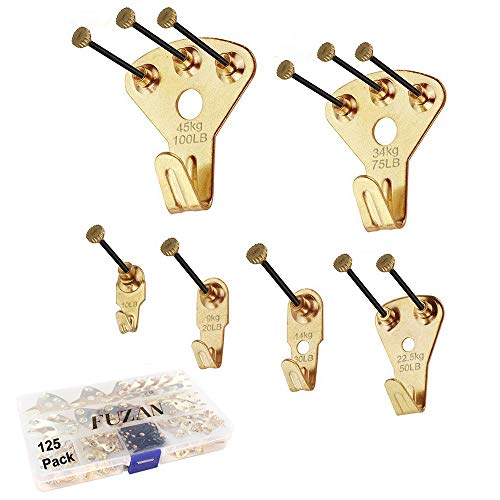
【Wide application】As an effective tool, 125 PCS picture hangers is widely applicable to most items in the home or office. It can hold 10-100 pounds and easily hang photos, decorations, clocks, clothes, kitchenware, small ledges, canvas.

Secure Your Decor with Ease: When it comes to keeping your home organized and showcasing your valuable decor, finding reliable wall mounting hardware is essential. That's precisely where QUALIHOME double headed wall screw anchors step in. These drywall screws provide exceptional security for all your wall additions, ensuring they remain securely mounted.
Eye Level: 57 or 60 Inches
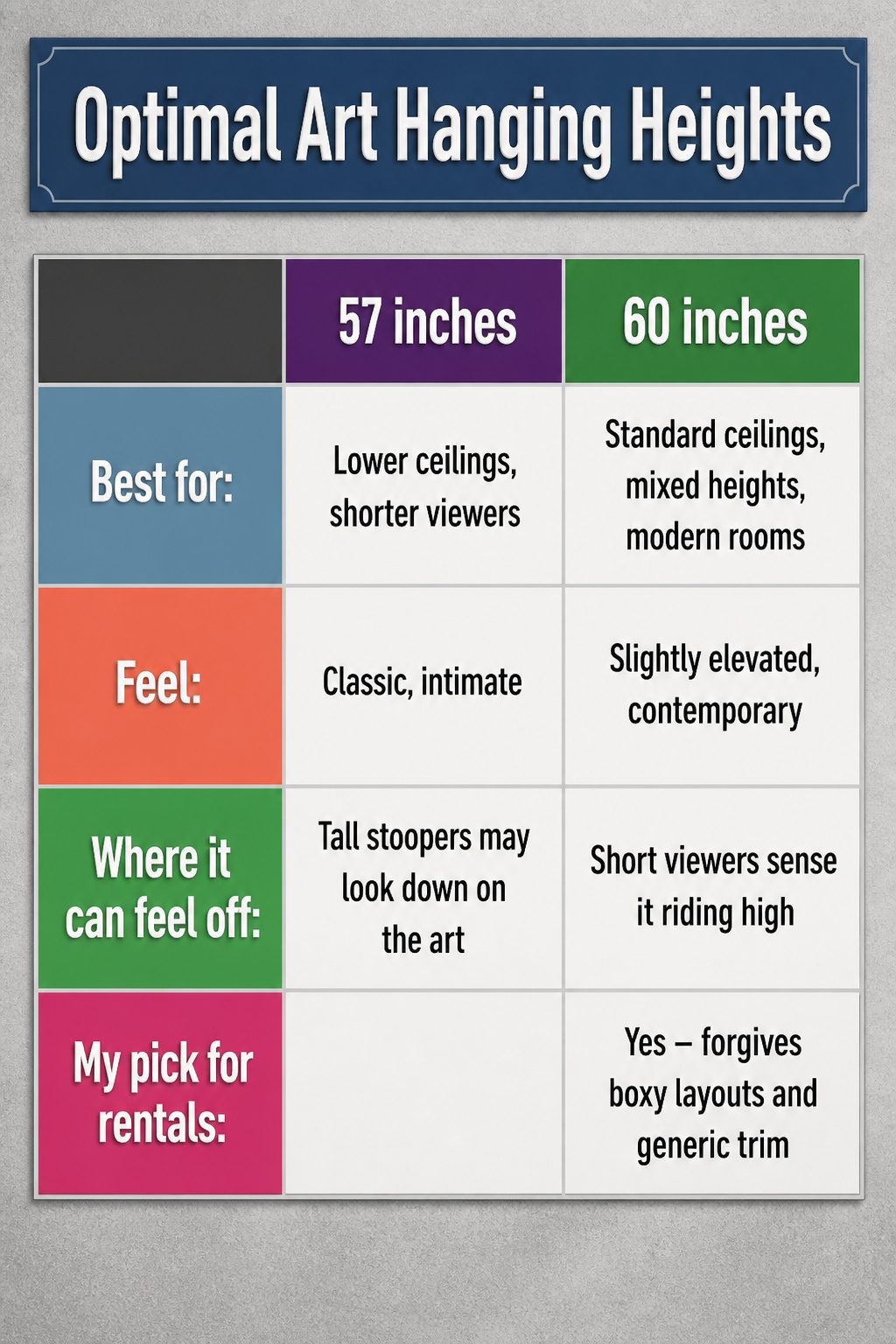
The 57-inch center-to-floor rule is what galleries and most designers actually use, not a ballpark range. That height lands near average eye level for a person around five and a half feet tall, which is why it works in rooms where nobody is standing guard over the art.
I’d argue most of us should split the difference at 60 inches. The extra three inches keep the piece from feeling low in spaces with standard eight-foot ceilings, and they account for how much taller the average adult is now than when the fifty-seven rule got established. If you are five-five or your ceilings are low, 57 inches still looks right. If anyone in your household clears six feet, 60 inches saves you from a lifetime of ducking to see what is on the wall.
Personal eye level matters less than consistency. The point is not matching your own eyeline but picking one height and repeating it across every piece in a room so the wall holds together.
| 57 inches | 60 inches | |
|---|---|---|
| Best for | Lower ceilings, shorter viewers | Standard ceilings, mixed heights, modern rooms |
| Feel | Classic, intimate | Slightly elevated, contemporary |
| Where it can feel off | Tall stoopers may look down on the art | Short viewers sense it riding high |
| My pick for rentals | Yes – forgives boxy layouts and generic trim |


【PRECISE NAIL MARKING IN SECONDS】Simply place, press, and mark - the built-in marking pin transfers exact nail positions to the wall in one smooth motion. Get it right the first time, no re-measuring or extra holes

【3-in-1 All-in-One Hanging Tool】 – Combines a precision bubble level, measuring ruler (14.5 inches), and magnetic nail starter in one smart device. No more switching between hammers, tapes, or levels—just align, mark, and hang your frames in seconds. Perfect for DIY home decor projects.
Hardware by Weight and Wall
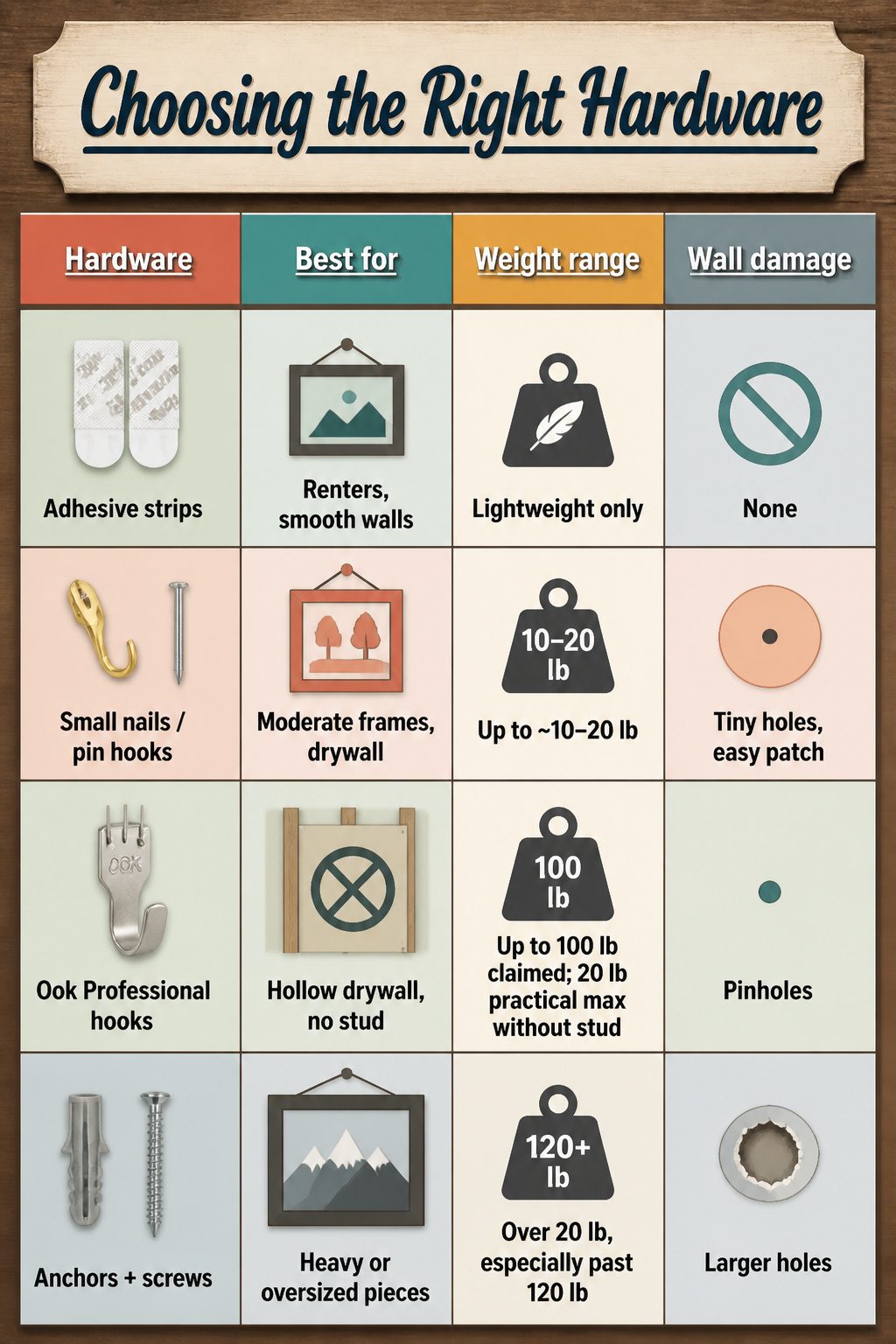
The hardware you pick is where weekend projects either hold steady or end up crooked by Tuesday. A 10-pound frame and a 50-pound mirror do not share the same solution, and the wall behind them changes the math too.
Drywall without a stud is the situation most renters face. Ook Professional Picture Hangers are built for exactly that: thin pins push in by hand, leave pinhole-sized marks, and the line tops out at 100 pounds. Personally, I would not push past 20 pounds without finding a stud anyway. Below that threshold, the same hooks work with picture wire or even with a frame rested on top if the weight stays modest.
For hardware you cannot hide, adhesive strips spare the wall entirely but cap out on lighter frames and struggle on textured surfaces. They are the true renter-friendly option when the piece is small and the wall is smooth. Nails or pin hooks step up for moderate weight, with patchable holes as tradeoff. Anchors and screws go heavier, but the holes are larger and the repair is real work.
| Hardware | Best for | Weight range | Wall damage |
|---|---|---|---|
| Adhesive strips | Renters, smooth walls | Lightweight only | None |
| Small nails / pin hooks | Moderate frames, drywall | Up to ~10–20 lb | Tiny holes, easy patch |
| Ook Professional hooks | Hollow drywall, no stud | Up to 100 lb claimed; 20 lb practical max without stud | Pinholes |
| Anchors + screws | Heavy or oversized pieces | Over 20 lb, especially past 120 lb | Larger holes |
Tile and glass need low-profile adhesive hooks instead of anything penetrative. Brick calls for brick clamps. Match the hardware to both the weight and the surface, then buy rated above what the piece actually weighs. That extra margin is what keeps it level six months from now.
Common Mistakes
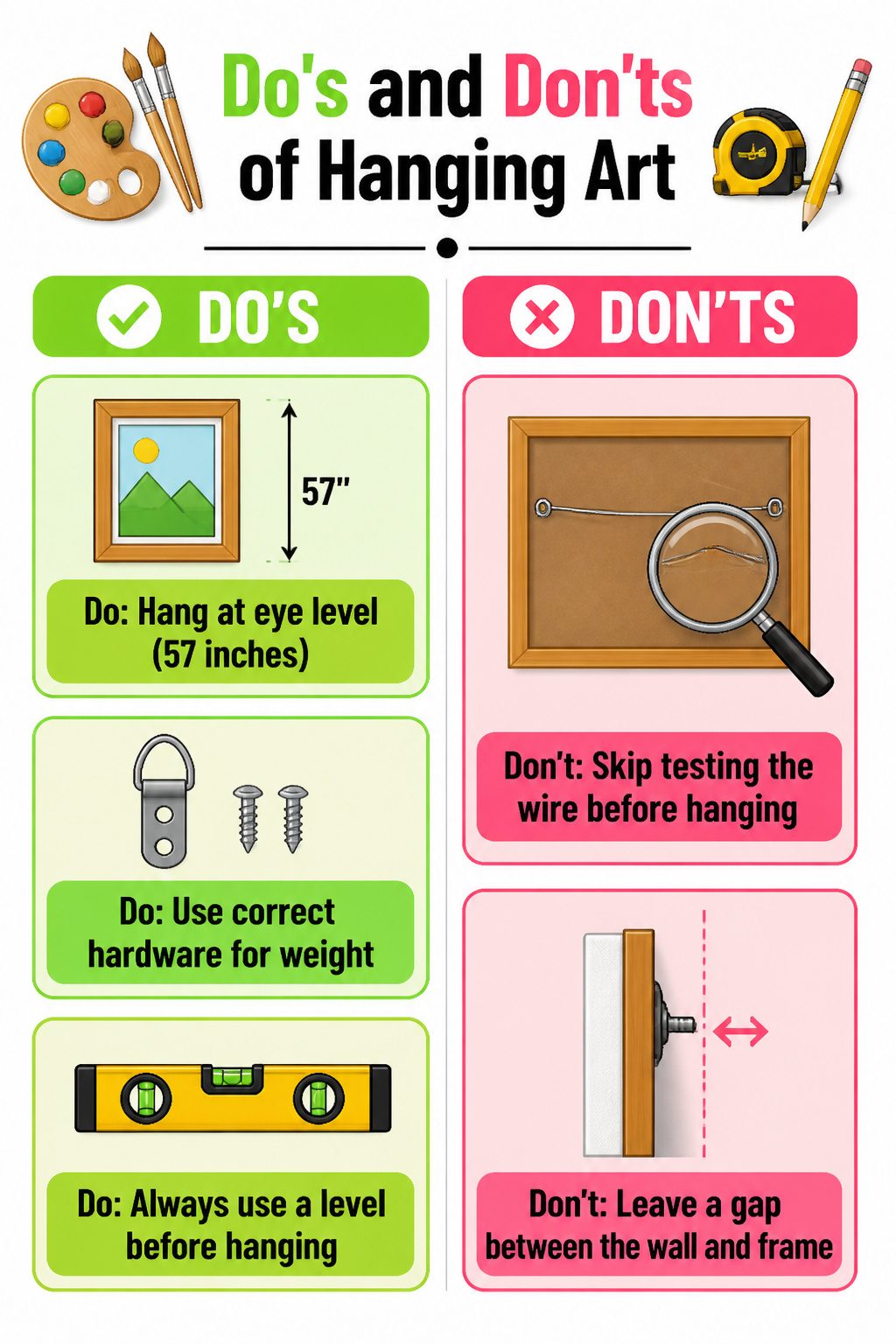
Hanging a painting sounds simple, but a few recurring slip-ups undo the whole effect. Here’s what trips people up most often:
- Hanging too high — the center of the piece should sit at roughly 57 inches from the floor, around average eye level. Most beginners mount it six or twelve inches above where it actually belongs, forcing guests to tilt their heads back to see it.
- Wrong hardware for the weight — a small nail works for light frames, but anything over a few pounds needs a picture hanger rated for the load. Heavier pieces require a stud or wall-plug anchors and screws.
- Skipping the level — it takes ten seconds and saves you from a crooked frame you’ll fix for months.
- Not testing the wire — lift the piece by its wire a few times over a soft surface first. If you feel any give or hear creaking, replace the hardware before it fails on the wall.
- Leaving a gap — a nail too proud pushes the canvas away from the wall, breaking the clean line flush mounting gives you. For gallery walls especially, that gap cheapens the whole arrangement.
Non-Traditional Hanging
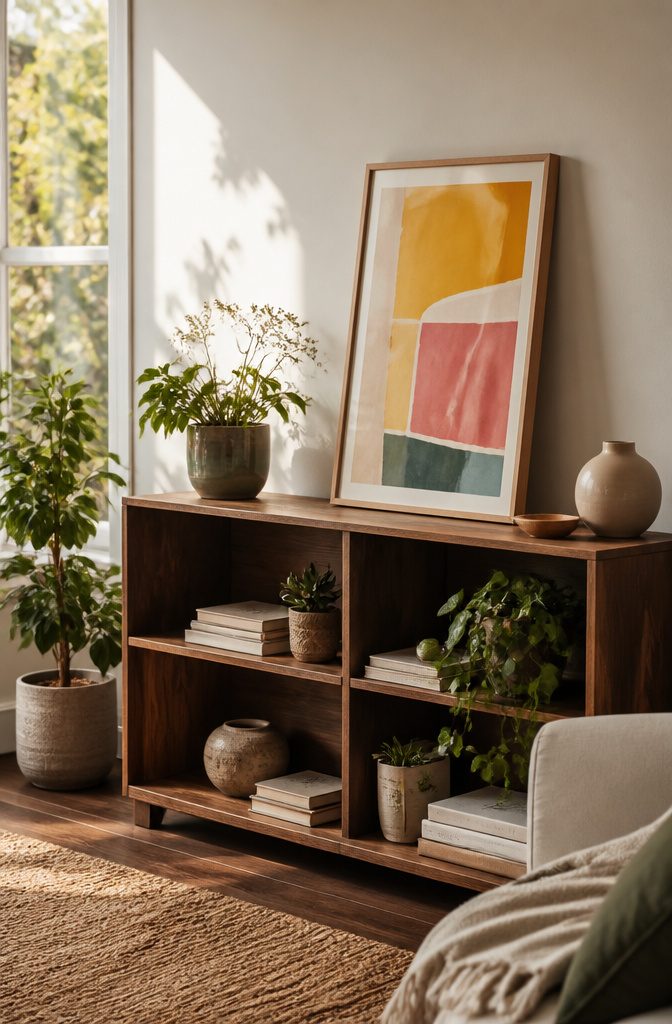
Sometimes the wall does not need a hole at all. Picture rail molding, in the older apartments that still have it, lets you swap art in minutes with a hook and some rope. The string becomes the design element, not the damage. I have leaned a framed print against the wall on top of a low bookcase and liked the casual height; it put the center of the image closer to seated eye level without my finding a stud. A shelf with a lip works the same way, holding smaller pieces upright where a renter would rather not spackle later. These methods cost nothing extra, move with your mood, and leave the plaster exactly as you found it.

HANGS HEAVY PIECES ON DRYWALL: This no-stud picture hanger holds heavy framed art, mirrors, and shelves on drywall without hitting a wall stud, using a toggle back support that spreads the load behind the wall for a strong, secure hold.

HANGS HEAVY PIECES ON DRYWALL: This no-stud picture hanger holds heavy framed art, mirrors, and shelves on drywall without hitting a wall stud, using a folding back support that spreads the load behind the wall for a strong, secure hold.

Tough steel hooks that dig deep into drywall - Hold up to 40 lbs each, built to last through all your hanging needs.
Frequently Asked Questions
How high should art be hung?
The center of a painting should sit 56 to 60 inches from the floor, which lands near average eye level for most adults. Galleries and designers have long used the 57-inch mark as standard, though 60 inches often works better in rooms with standard eight-foot ceilings or taller households. Pick one number and stick with it across every piece in a room so the wall reads as unified.
What is the best way to hang a picture?
Use hardware matched to both the weight of the piece and the wall type behind it, then check with a level before you step back. For drywall without a stud, Ook Professional Picture Hangers handle frames up to about 20 pounds with tiny pinholes that barely show. Heavier pieces need a stud, wall anchors, or screws so they stay straight for months instead of tilting by Tuesday.
How much space should be left above furniture?
The bottom of the frame should hang about 4 to 8 inches above the sofa, headboard, or table below it. Four to six inches is the tighter standard that keeps the painting and furniture reading as one connected unit rather than two unrelated objects. Too wide a gap and the art starts to float; too narrow and you risk bumping it during daily use.