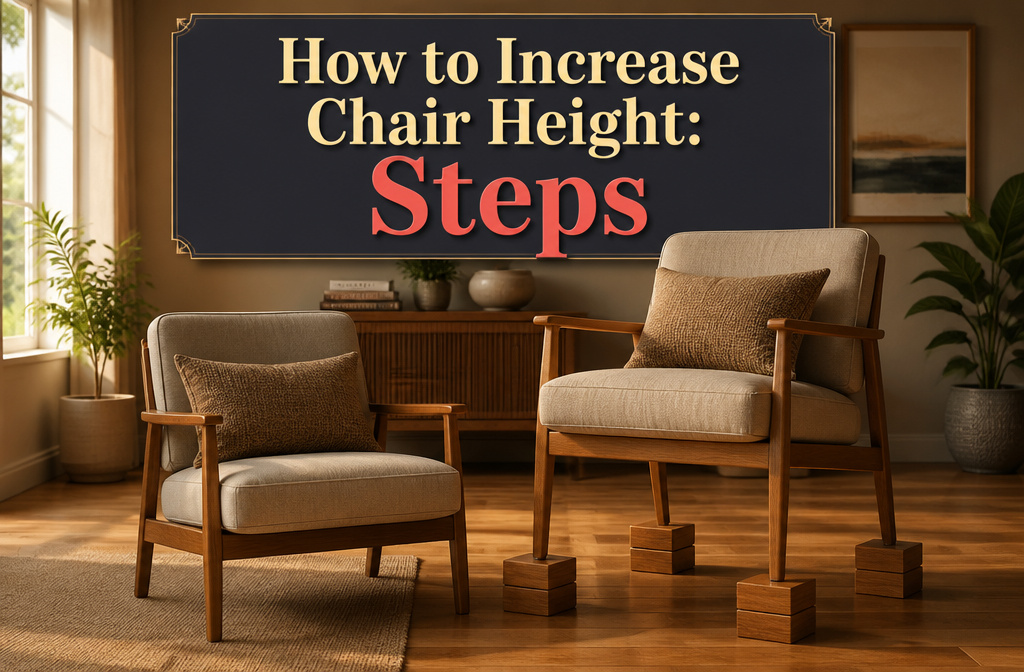

Raising a chair takes between ten minutes and a weekend, costs from nothing for leftover wood blocks to about thirty dollars for casters or replacement legs, and needs no tools beyond a screwdriver for most fixes. The stage most people skip is measuring first; they guess at how much lift they need, buy two-inch raisers for a four-inch gap, and end up with hips still below their knees. The only hard limit is six inches of total raise, past which the tipping risk outweighs what any riser can safely compensate for.
Why Chair Height Matters for Your Body
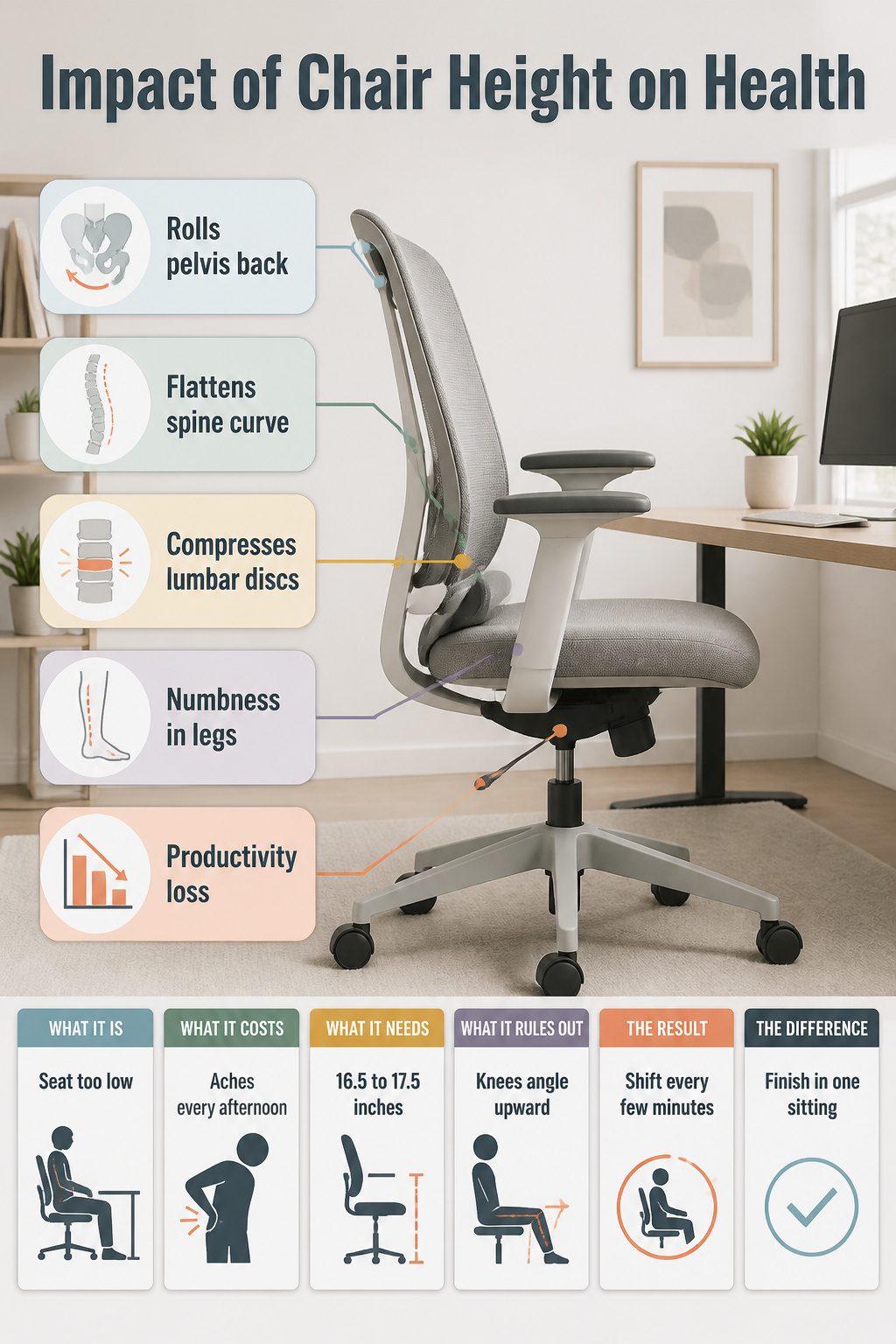
A chair that sits too low puts your hips below your knees, which rolls your pelvis back and flattens the natural curve of your spine. I spent months in a sunken desk chair before I realized why my lower back ached every afternoon; the seat had dropped almost two inches from its original height without me noticing. That slouch strains your neck forward to meet the screen, and over time it pulls on your shoulders and compresses your lumbar discs. For users between 5’0" and 5’4", the seat surface should sit at 16.5 to 17.5 inches from the floor to keep thighs level and feet flat. Below that range, your knees angle upward, circulation slows in your legs, and you end up shifting every few minutes just to stay comfortable. The productivity loss is real: when your body is working to compensate, your attention is split between the task and the discomfort. Getting the height right is the difference between finishing a project in one sitting and standing up every twenty minutes to stretch out a cramp.

The material is sturdy:We use heavy Aluminum alloy material. Allowing our furntiure risers to withstand a variety of heavy duty furniture. Compared to other bed risers, our bed risers will not crack. ! Whether it is a sofa/bed/table/chair, it can easily withstand

Heavy Duty & Large Furniture Leg Levelers- Allow easy leveling of furniture at home, office, restaurant, school or café, to match in same height. They allow raising your furniture, and help slide your furniture at ease !
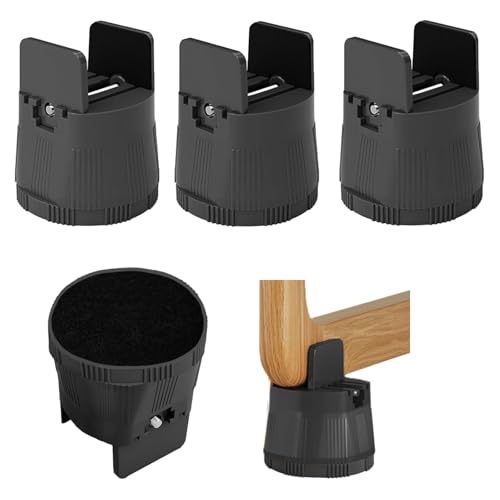
【Adjustable Furniture Risers】Our furniture risers feature an adjustable screw clamp on the top to accommodate furniture legs of varying widths, keeping your furniture in place and preventing it from slipping when moved.Our risers have 2cm of height adjustment space.It helps to secure and level any furniture with a gap less than 2cm while adding height
Measure Your Current Setup First
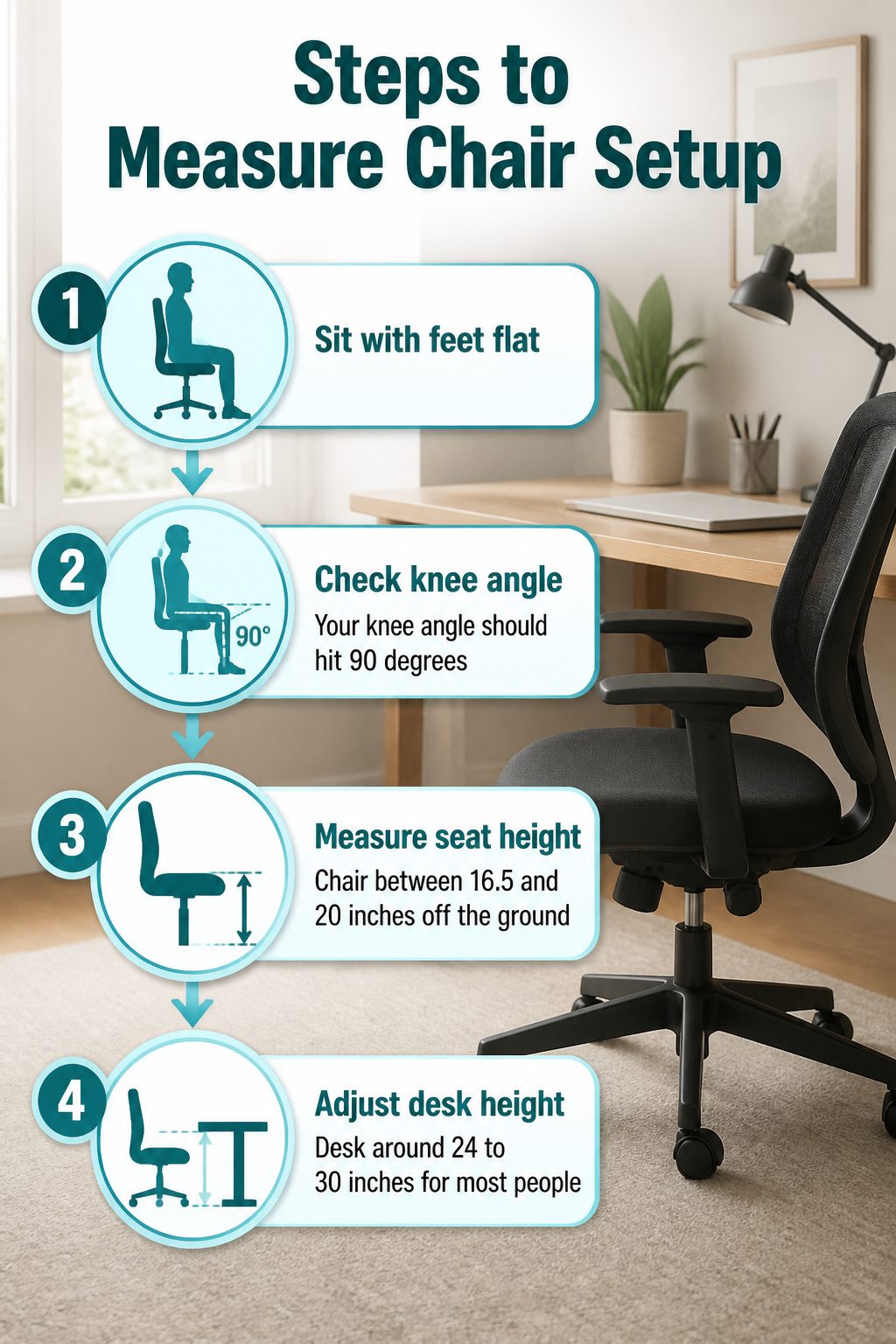
Getting the numbers down first saves you from buying the wrong fix. Sit in your chair with your feet flat on the floor and check where your knees land. Your knee angle should hit 90 degrees with your thighs roughly level. If your hips sit lower than your knees, the chair is too short. If your feet dangle, it is too tall.
Desk height matters just as much. A chair between 16.5 and 20 inches off the ground pairs with a desk around 24 to 30 inches for most people. Someone at 5’4" usually lands near a 25-inch desk and a 17-inch seat, while a 6-foot frame needs closer to 28 inches of desk and an 18.5-inch chair. These are starting points, not hard rules, since torso length and arm position vary.
Before you shop for risers or blocks, measure floor to seat, seat to desk underside, and how much clearance your legs actually have. That gap tells you whether you need an inch or four, which keeps you from overcorrecting.

LARGE SIZE FOR EXTRA COMFORT: Make yourself comfortable. The Kӧlbs Large Seat Cushion is generously sized offering more width and more depth to provide padding and comfort for your seating surface. 19 inches wide x 17 inch depth and 3 inch height. Perfect Office chair seat cushion. Proper positioning makes this an ideal seat cushion for back pain and is a road trip must. Kӧlbs provides superior chair cushions, office chair cushions, and an assortment of memory foam cushions.

★EASY TO PUT TOGETHER - Drafting chair comes with all hardware & necessary tools. Follow the instruction, you'll found easy to put together, and estimated assembly time in about 10-15mins.

𝐂𝐨𝐦𝐟𝐨𝐫𝐭𝐚𝐛𝐥𝐞 𝐒𝐩𝐨𝐧𝐠𝐞 𝐂𝐮𝐬𝐡𝐢𝐨𝐧: The larger and thicker seat of this drafting chair is made from upgraded foam with higher density, which is resilient and deformation-resistant. The cushion's edge is curved like a waterfall to minimize pressure on your thighs
1. Using Chair Raisers
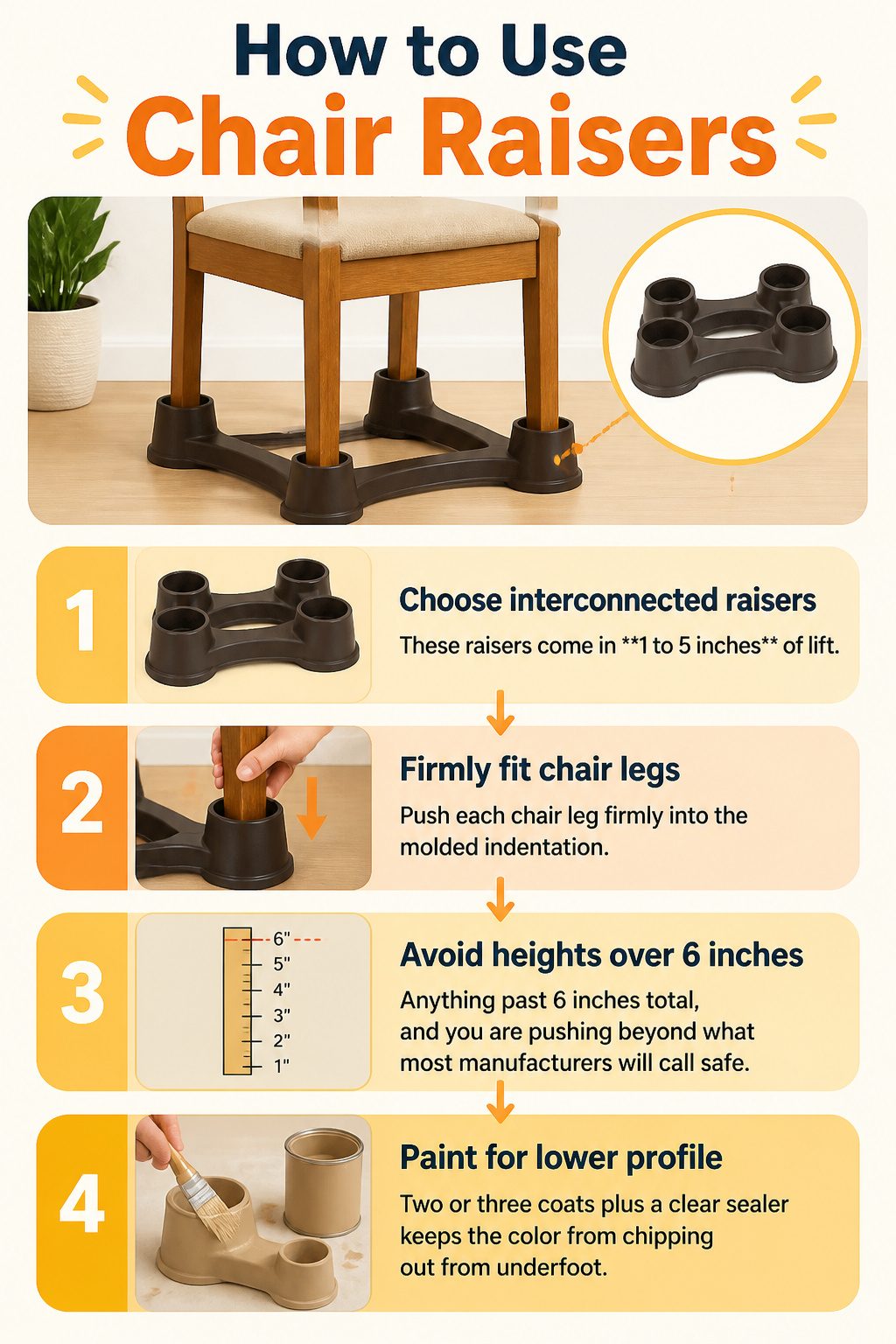
Of all the ways to raise a chair, interconnected chair raisers give you the steadiest ride. The legs link together, so the whole frame shifts as one unit instead of wobbling on four separate blocks. You will need just one interconnected piece rather than four individual cups.
These raisers come in 1 to 5 inches of lift. Anything past 6 inches total, and you are pushing beyond what most manufacturers will call safe. A dining chair that sits too low for your table is usually a quick subtraction problem: ideal seat height minus current seat height equals the raiser size you need.
Push each chair leg firmly into the molded indentation on the raiser base. The fit should feel snug, not sloppy. A second pair of hands helps here if the chair is awkward to tilt and lift solo.
For a lower profile, paint the raiser to match your chair. Two or three coats plus a clear sealer keeps the color from chipping out from underfoot. You probably will not hit an exact match, but even a close tone makes the hardware disappear.

Sturdy Material: Made with durable materials, our furniture risers are stable and strong. Each 2-inch furniture riser can support up to 5000 pounds of weight. The bottom of the risers is equipped with an anti-slip fabric base, preventing them from easily sliding or scratching on different floor surfaces.

👍【Sturdy and Stable】Our desk riser is made of thickened pp plastic with solid construction. The rubber non-slip design on the bottom can easily grip the floor not easy to slide. Compared to other bed lifts risers, our plastic risers are small and lightweight but definitely durable for heavy furniture ! Whether it's heavy furniture for home or office, it can be lifted easily and securely.

Sturdy and Heavy Duty Support:The 2 inch bed riser size: 4.5"L x 4.5"W x 2"H, please make sure your furniture legs are not thicker than 2.75". And the heavy duty bed risers can support up to 2,000 lbs when you use them together in 6 sets.
2. Raising Chairs with Wood Blocks

Wood blocks made for raising furniture match the look of wooden chair legs better than most hardware, and they cost less than store-bought raisers. We used leftover oak blocks under a vintage dining set once; stain let them disappear into the legs. The catch is they sit flat on the floor rather than cupping the leg, so the chair can skate if you push back from the table hard. They are safe, but less secure than raisers because there are no holes for the legs to sit in. That makes them a better fit for chairs that stay put, like a desk chair against a wall, than for ones that shift every day. If you go this route, get a height that matches your goal exactly, since stacking blocks weakens the setup. Test the chair before anyone sits, and expect to reglue or replace the blocks after a year or two of compression.

👍【Sturdy And Stable Bed Risers】 Our table risers are made of high quality thickened PP plastic, which is strong enough to support any heavy furniture for home or office. The internal mesh reinforcement design greatly increases its load-bearing capacity. Top bumps and rubber bottom of the desk risers can firmly grip the furniture legs, shock absorbing and anti-slip to avoid furniture sliding, protect the floor from friction and reduce noise.

Sufficient Quantity: You will receive 12pcs furniture levelers as replacement feet to update your furniture feet simply. We have two sizes for you to choose from: M6(20*15*5mm/0.8*0.6*0.2inch); M8(28*20*7mm/1.1*0.8*0.27inch)
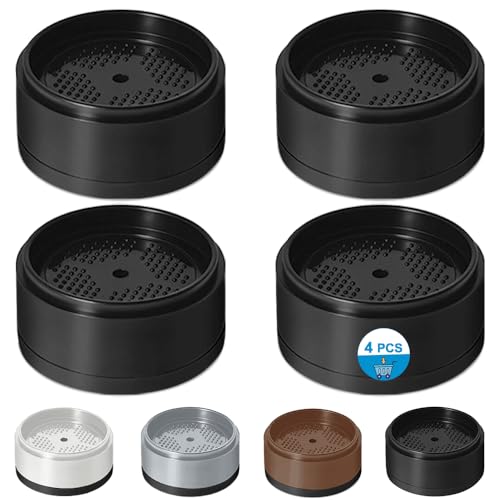
👍【Sturdy And Stable Bed Risers】 Our table risers are made of high quality thickened PP plastic, which is strong enough to support any heavy furniture for home or office. The internal mesh reinforcement design greatly increases its load-bearing capacity. Top bumps and removable thick rubber pads on the bottom of the desk risers can firmly grip the furniture legs, shock absorbing and anti-slip to avoid furniture sliding, protect floors from scratches or dents.
3. Adding Casters for Height and Mobility
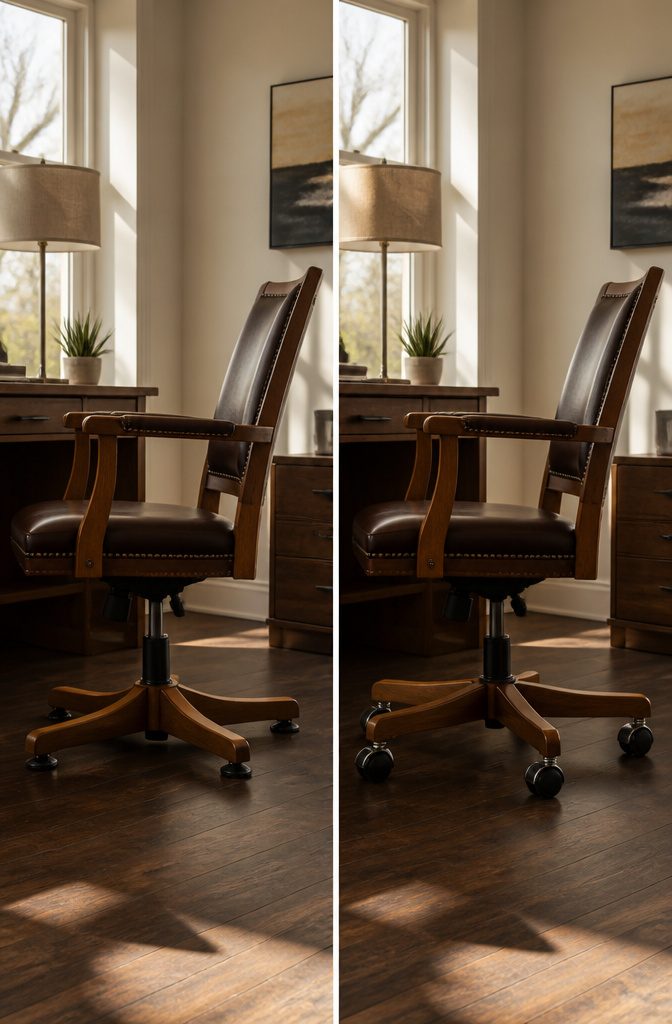
Most office chairs roll on casters that sit between 1.5 and 2 inches in diameter. Swapping yours for a larger set, usually 2 to 3 inches, gives you about an extra inch of lift plus the obvious perk of actually rolling somewhere. I like this fix for hard floors in particular, where the glide is smooth and the added height doesn’t fight the surface.
Floor type matters more than people expect. On carpet, bigger wheels can feel sticky or leave tracks you’d rather not explain to a landlord. If you’ve got thick pile or a rug you love, casters might not be your best play. Wood or laminate is where they shine.
Installation is straightforward. Flip the chair, pop the old caster out of the five-star base, and press the new stem in until it seats. There’s no hardware to lose, which is a relief at 10 p.m. on a Saturday. Just check that your base feels solid after, because a cheap plastic foot can crack under the new geometry.
For a non-office piece, a rattan or wood leg needs a small hole drilled slightly under the shank size and a dose of wood glue to keep the caster from wiggling loose. Ball-type or braked versions add stability if you’re worried about drift.

★ CORRECT SIZE & UNIVERSAL FIT: Outer cylinder diameter 2" (50mm), inner piston diameter 1" (28mm), minimum length 11.5" (293mm), maximum length 17.5" (445mm) with a 6" (152mm) adjustable stroke. Fits 99% of office and gaming chairs, including Herman Miller, Steelcase, Secretlab and more.
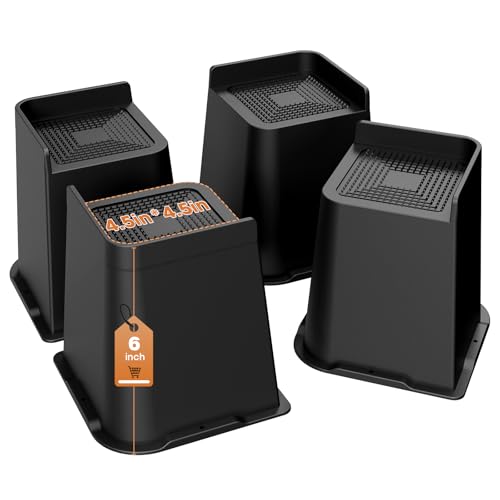
Half Side Design; the L shaped bed risers raised edge allowing you to slide bed risers under the legs easily; 2 side raised edge also makes the risers to easier to match different furniture legs.

【Fits Various Furniture Legs】These bed risers feature a trapezoid design. High: 5.9 inch ,Groove depth: 0.8 inch .Actual providing a 5.1-inch lift. The bed frame risers are only suitable for furniture legs smaller than 2.7 inches wide.
4. Using a Chair Cushion
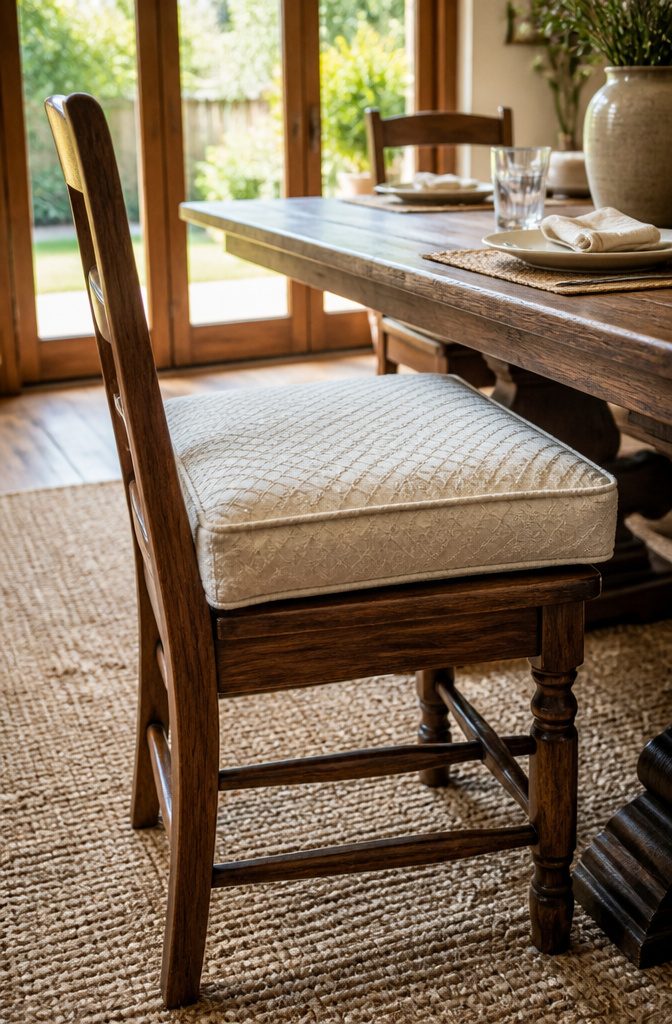
A firm foam cushion with cotton batting sits on top of your seat and adds just an inch or two, which makes it the gentlest fix in the list. It is not permanent, and that is exactly the point for anyone who rents or who is not sure yet how much height they actually need. You can peel it off the second it feels wrong.
The tradeoff is real, though. Cushions compress, they shift when you stand, and they do nothing for the chair’s center of gravity. If you need more than two inches, the seat starts to feel perched rather than supported, and your hips and thighs take the pressure. Blood circulation problems show up from cushions that are too soft or too hard, so test it for a full workday before committing.
For a non-slip fix, a matching fabric cover or pillowcase underneath keeps the pad from sliding. It is the least involved method, and sometimes that is all the project your weekend has room for.
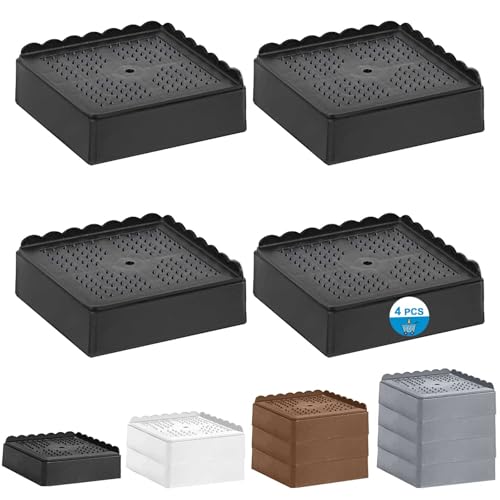
👍【Sturdy And Stable Bed Risers】 Our table risers are made of high quality thickened PP plastic, which is strong enough to support any heavy furniture for home or office. The internal mesh reinforcement design greatly increases its load-bearing capacity. Top bumps and removable thick rubber pads on the bottom of the desk risers can firmly grip the furniture legs, shock absorbing and anti-slip to avoid furniture sliding, protect floors from scratches or dents.

👍【Sturdy And Stable Bed Risers】 Our table risers are made of high quality thickened PP plastic, which is strong enough to support any heavy furniture for home or office. The internal mesh reinforcement design greatly increases its load-bearing capacity. Top bumps and rubber bottom of the desk risers can firmly grip the furniture legs, shock absorbing and anti-slip to avoid furniture sliding, protect the floor from friction and reduce noise.

The material is sturdy:We use heavy duty hard plastic material. Allowing our furntiure risers to withstand a variety of heavy duty furniture. Compared to other bed risers, our bed risers will not crack
5. Replacing Screw-In Legs
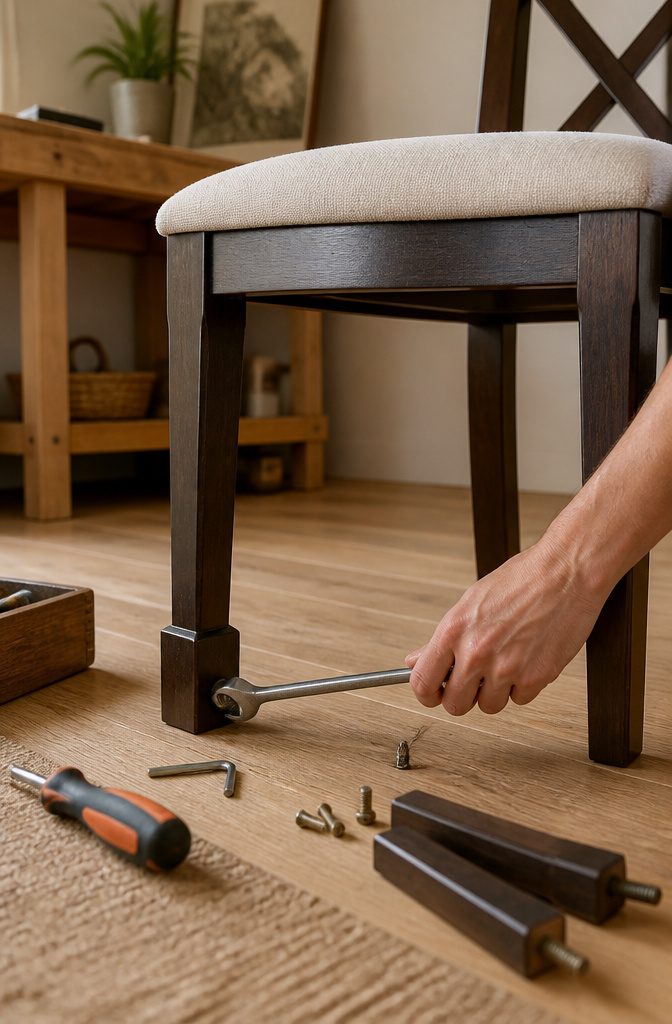
The cleanest fix for a chair with detachable legs is unscrewing the old ones and threading on taller replacements. It is permanent, it does not look like an afterthought, and you get to pick a new style while you are at it. The catch is compatibility: most screw-in legs use a standard 5/16-inch or M8 hanger bolt, but diameter and thread pitch vary enough that you should pull one existing leg and check the bolt before you order.
Wider, longer legs add more height than slender ones without the wobble risk, and they give sturdier footing for anyone who needs an easier sit and stand. If full replacement feels like too much commitment, leg extenders raise a chair by a few inches instead. Plastic risers, screw-on levelers with pads, or gelled cup-style extenders all fit under existing legs, though they read as more temporary than a new set of legs screwed tight to the frame.
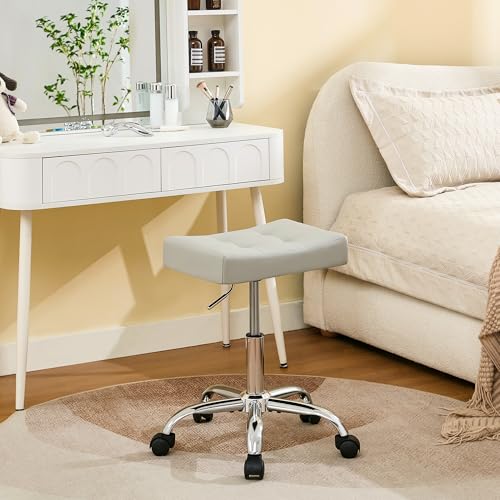
Multi-Purpose Stool for Home and Work: This rolling stool features adjustable height to accommodate different tasks and users. Suitable for home use at vanities, desks, or kitchens, it offers easy mobility and fits various room styles. In professional settings such as offices, nail salons, barbershops, tattoo studios, beauty salons, medical facilities, or retail spaces, it provides stable seating and supports comfortable positioning during use

【Ergonomic Standing Desk Chair】: This standing desk chair with ergonomically designed back, focus on provides shoulder and waist support, fits well with the body's curves, helps prevent muscle aches and pains caused by sitting for a long time, providing good protection for your spine and back. 1.2'' height adjustable lumbar support, can provide lumbar support for different needs

𝐒𝐩𝐚𝐜𝐞 𝐒𝐚𝐯𝐢𝐧𝐠: The adjustable height armrest mesh chair allows your body to be closer to the desk when in use, it is convenient to slide the high table and chair under the table when not in use, saving space. Perfect for work, home or small Spaces
6. Checking Stability After Raising
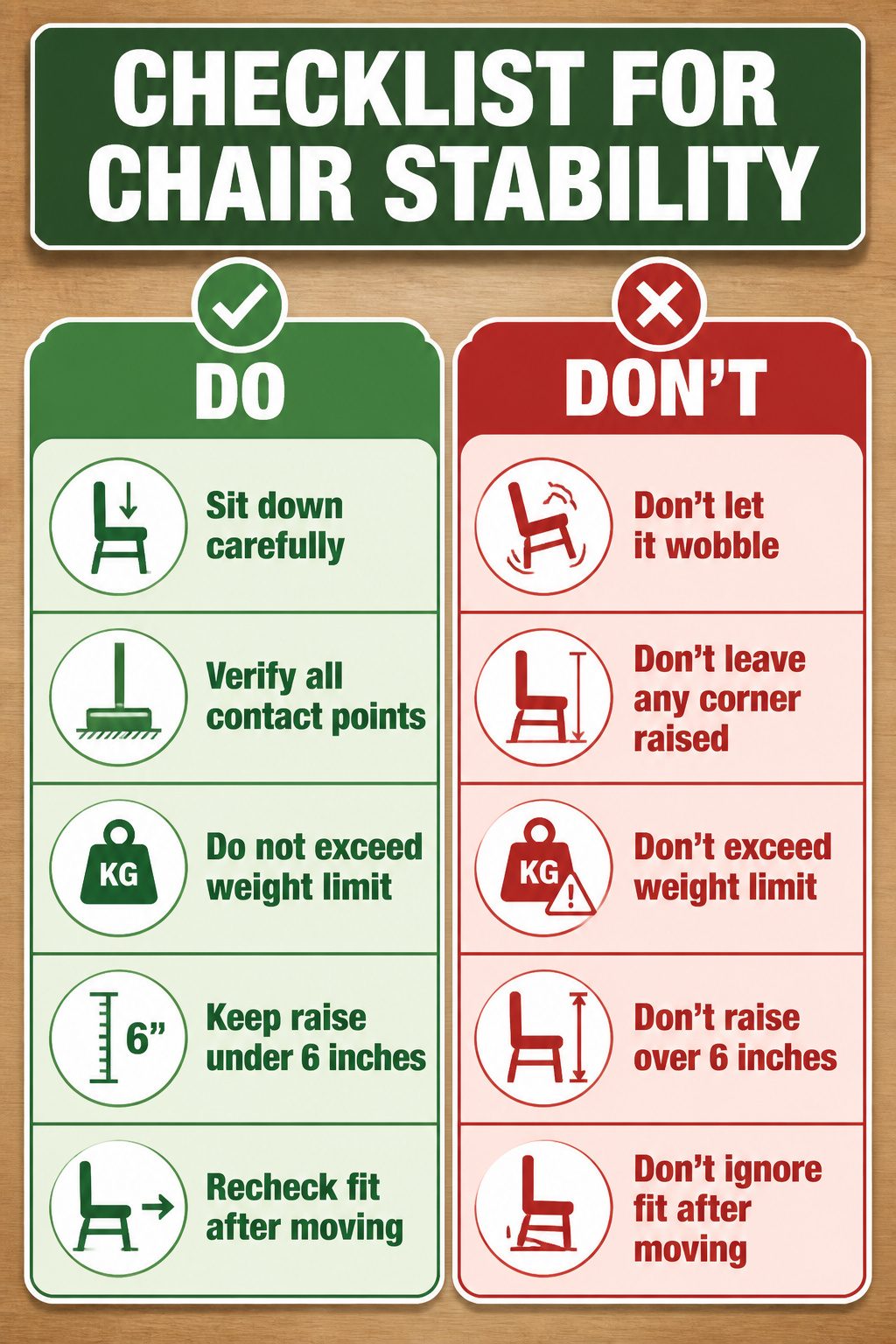
After you have raised a chair, the work is not quite done. A raised chair should not wobble or tilt in any direction. These are the checks I run before I call a fix finished.
- Sit down carefully the first time. Lower yourself slowly in case the chair slips. If the seat feels unstable, check every leg or riser and tighten or relevel until the motion stops.
- Verify that all contact points sit evenly on the floor. A single raised corner is enough to create a rocking point that gets worse with use.
- Check the label on your chair risers, blocks, or casters for the maximum weight limit you are actually buying. Add the chair’s own weight to whoever will sit in it, and do not raise the chair at all if the total exceeds what the equipment can handle safely.
- Keep the raise at or below six inches above the original seat height. Going past that mark makes tipping more likely than any riser can compensate for.
- Recheck the fit after moving the chair to a new spot. Small shifts can knock a riser or spacer out of alignment, and the next sitter will find out the hard way.
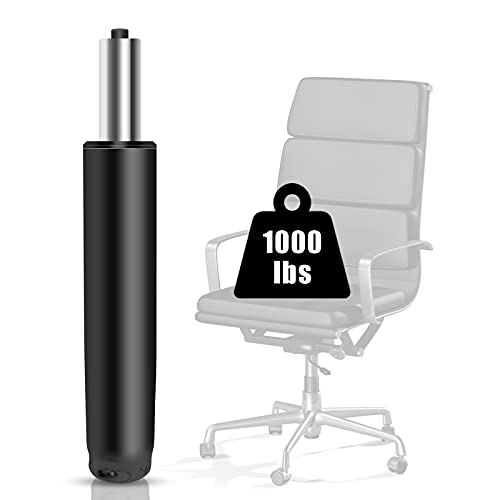
HEAVY DUTY CLASS 4 PISTON: lift cylinder, which has passed over 100,000 times of rotation/push/pull/impact test, with no loss of usability function after the experiment,they built with high-quality solid steel that can support maximum weight up to 1000 LBS.

【Space-Saving L-Shape Design】 Our bed risers feature an L-shape design that seamlessly matches furniture legs, providing 2 inches of elevation. Suitable for furniture legs smaller than 5.4"*3.5", they are seamless for couches, beds, sofas, headboards, chairs, desks, and nightstands.
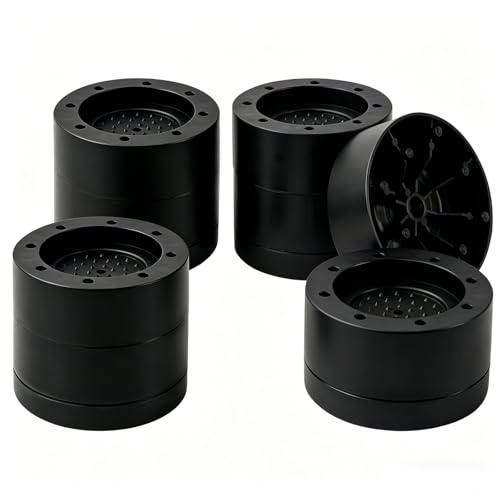
Materials: Table risers are made from high quality plastic, each bed riser can bear up to 1000 lbs, easily supporting heavy furniture without wouldn’t wobble. The solid construction ensures long-term stability, even with daily use
When to Call a Carpenter

Most chair-raising projects stay firmly in DIY territory, but a few situations really do need a professional. If your chair has tubular metal legs or any slender, non-standard construction, the usual risers or blocks can compromise its stability. That is the moment to hire a carpenter. A pro can fabricate custom legs that match the original look while giving you the height you need, something particularly worth considering for expensive or vintage pieces where a permanent change could affect value.
Commercial spaces are another clear exception. Offices and hotels have to meet ergonomic compliance standards, and a carpenter can guide you through furniture solutions that satisfy those requirements without guesswork. Even experienced home woodworkers should think twice before tackling leg replacement themselves: getting four legs perfectly even is harder than it looks, and a wobbly chair is an unsafe one. If the fix feels at all precarious, it probably is.

Package Including: You will receive 8Pcs Adjustable Leveling Feet and 8Pcs Tube Inserts.
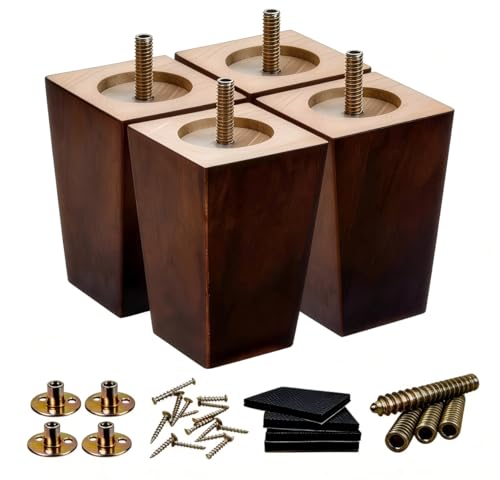
HEAVY DUTY LOAD CAPACITY — Precision-engineered solid rubberwood supports up to 1,762 lbs per set (440 lbs per unit). This 5-inch replacement provides a stable foundation for heavy sofas and preventing structural collapse without using subjective quality claims.

【Easy Installation & Universal Compatibility】: Enjoy hassle-free mounting with our bonus mounting plates, screws, and pre-installed 5/16-inch US standard Hanger Bolts. Whether your furniture is MADE IN US or imported, these legs fit seamlessly, ensuring a smooth installation process.
Stability, Mobility, and Permanence Compared
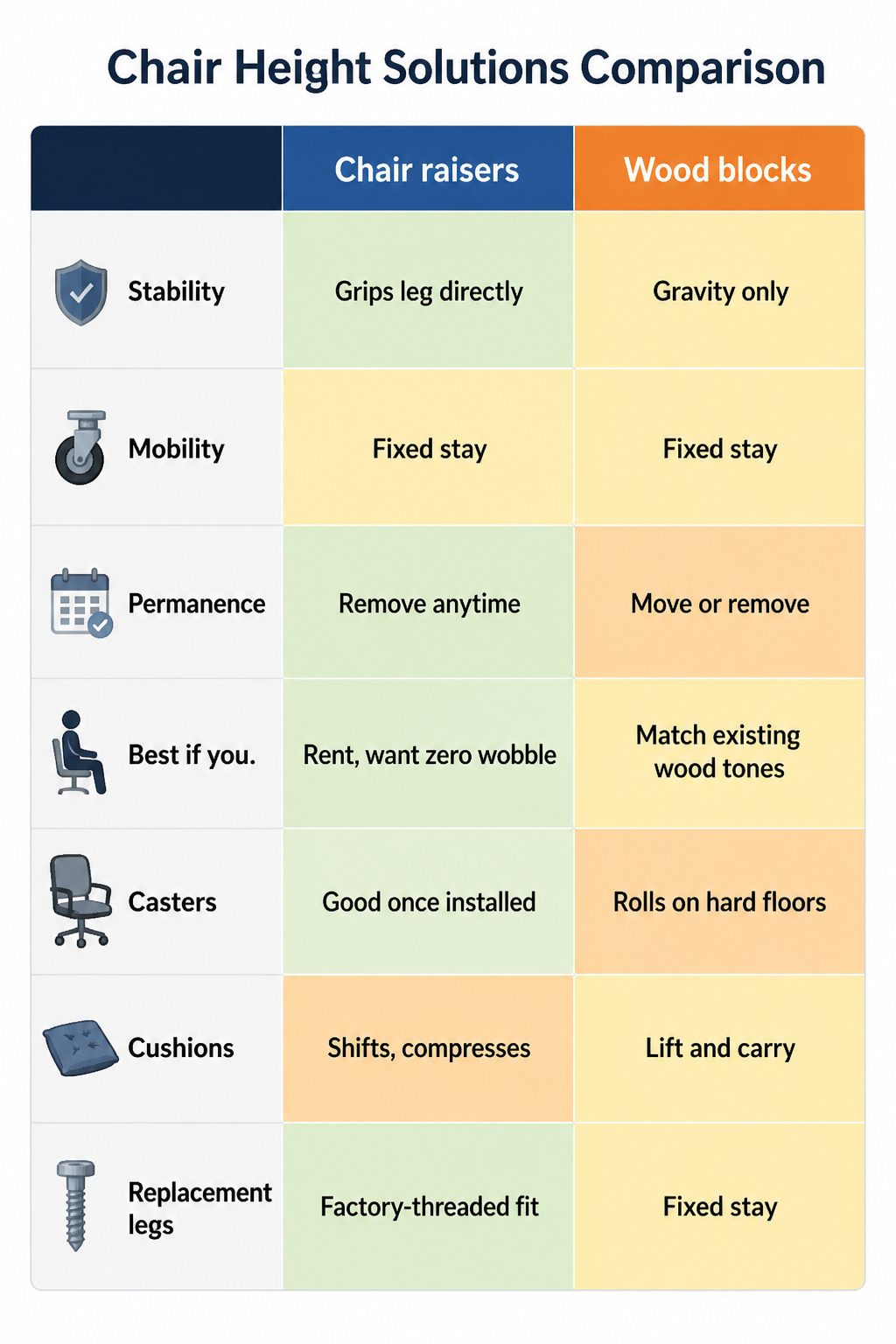
Picking between height-boosting methods comes down to three questions: will it tip, will it slide, and do you want it back. Chair raisers grab your leg with a collar or recess, which keeps the chair planted better than a wood block you simply sit on top of. Casters add two inches and roll on hardwood, but they scream "aftermarket" more than other fixes, and your floor pays for the convenience. A cushion under you is the only option that adjusts after breakfast, though it generally adds the least height of anything on the list. Solid raisers or blocks give you firmer support for long sitting; cushions do the opposite, compressing until you are nearly back where you started. Replacement screw-in legs are the most permanent fix, and often the easiest for beginners because the threading does the alignment for you. The temporary routes, raisers and cushions, come off when you move or when the chair goes back into storage.
| Stability | Mobility | Permanence | Best if you… | |
|---|---|---|---|---|
| Chair raisers | Grips leg directly | Fixed stay | Remove anytime | Rent, want zero wobble |
| Wood blocks | Gravity only | Fixed stay | Move or remove | Match existing wood tones |
| Casters | Good once installed | Rolls on hard floors | Drill to attach | Need to shift chairs often |
| Cushions | Shifts, compresses | Lift and carry | Tie on, untie off | Need under 5 inches, want softness |
| Replacement legs | Factory-threaded fit | Fixed stay | Permanent swap | Own the chair, want it to look original |
If you rent and get inspected on move-out, stick with raisers or cushions. Nothing drills, nothing fills, nothing to explain later.

[Innovative Wheel Design] - The user-friendly wheel design eliminates the need to carry it by hand, allowing you to easily move the lift chair position with the help of the wheel. Convenient for caregivers to save effort and make your family more comfortable.

【Fits Various Furniture Legs】These bed risers feature a trapezoid design. High: 5.9 inch ,Groove depth: 0.8 inch .Actual providing a 5.1-inch lift. The bed frame risers are only suitable for furniture legs smaller than 2.7 inches wide.

[Effortless Standing Assistance for Dignity] - Say goodbye to reliance on others. Our electric lift chair uses motorized lifting to help seniors stand unassisted, reducing the need for caregiver bending/straining and minimizing back pain risks. Perfect for those with limited mobility.
Frequently Asked Questions
How can I make my chair higher without buying a new one?
Chair raisers or a firm foam cushion will give you extra inches without replacing the piece. Raisers lift the whole frame evenly and stay secure under the legs, while a cushion adds one to two inches and peels off when you move. Both keep you out of the furniture store.
Is it possible to raise an office chair that doesn’t have a height adjustment?
Yes. Chair risers, cushions, or larger casters all work on chairs with no built-in adjustment. Risers are the steadiest choice for a fixed base, and swapping in 2 to 3-inch casters adds about an extra inch of lift plus easier rolling on hard floors.
Are there specific products recommended for raising chair height?
Interconnected chair raisers are the most reliable product because they link the legs into one unit instead of letting each leg wobble on its own block. They come in 1 to 5 inches of lift and grip the leg directly. For a lower profile, wood blocks stained to match work well on chairs that stay in one place.