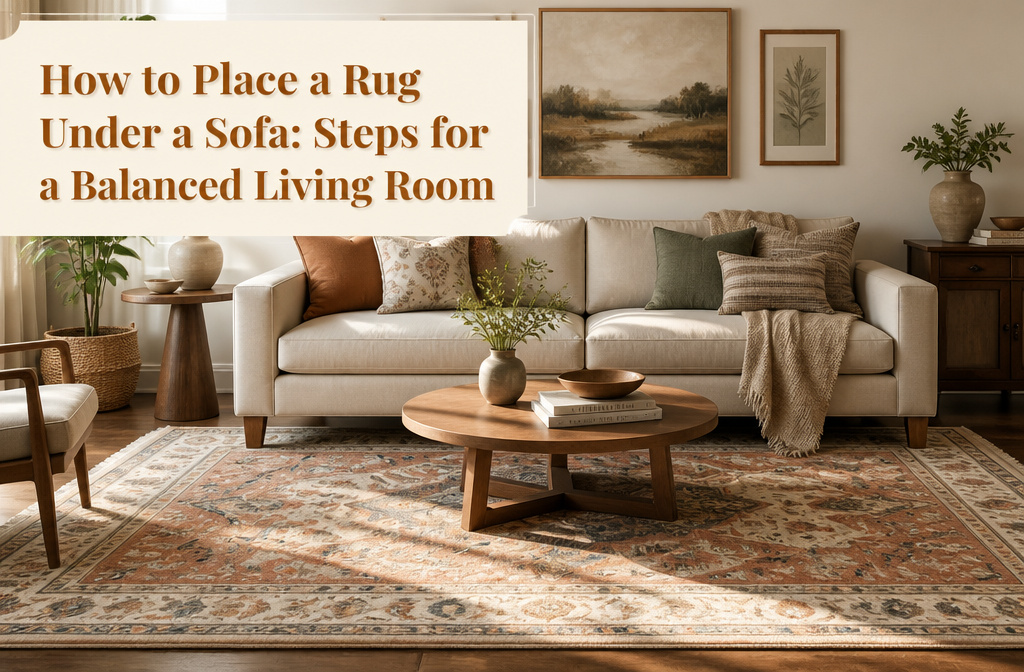

A balanced living room costs about an hour of measuring and one large enough rug, usually 8 to 12 inches past each sofa arm.
Most people get the size right and still trip on placement, sliding the rug too far under or not far enough for the front legs to read intentional.
The fix is that gap behind the sofa’s front legs: too short and the rug looks like it stopped short, too far and the whole thing drifts.
I start with just a few inches under, then adjust after a day of living with it.
1. Measure the Sofa and Space
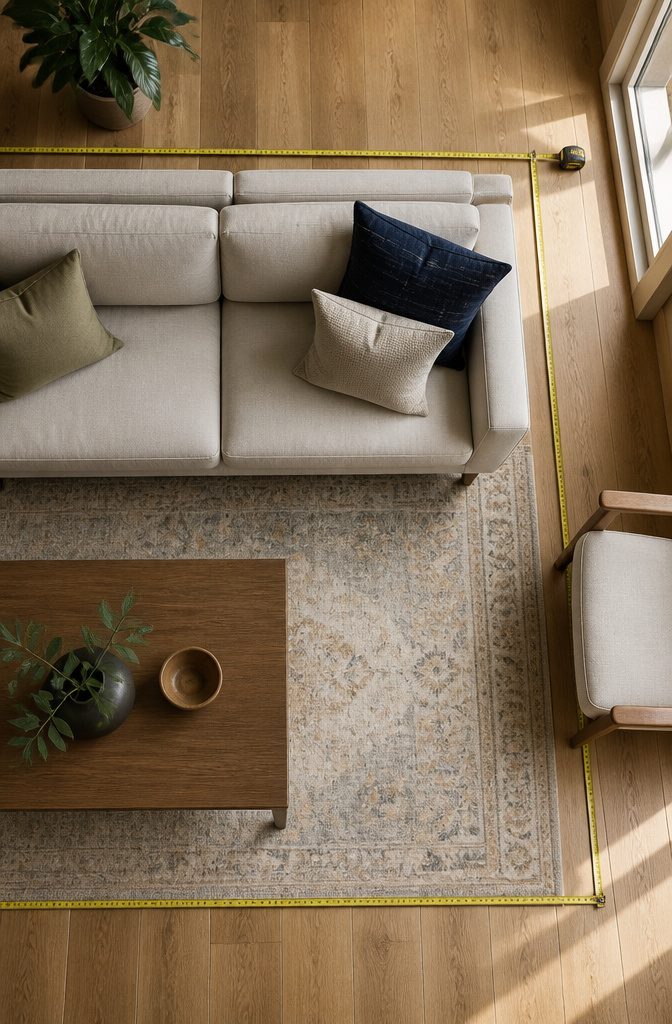
You need the sofa’s length and width before you do anything else.
A rug that stops at the sofa arms makes the whole seating area feel pinched, so 8 to 12 inches past each side of the sofa is the proportion that actually works.
I also measure the living area’s footprint, not just the rug spot. Leave about 40 centimeters of bare floor between the rug edge and the wall; less than that and the room starts to feel crowded.
Nearby furniture matters too. Your coffee table and accent chairs need to sit fully on the rug, or at least have their front legs on it, so add their spread to what you’re tracking.
If the sofa legs sit back under the frame, slide the rug farther under than you expect so the "front legs on" rule reads right visually.

Soft & Durable: This 8x10 area rug low-pile combines soft faux wool fibers with a 0.25-inch height for comfort. Tight weaving reduces shedding and edge fraying, making it perfect for high-traffic areas like living rooms, bedrooms, and entryways

New & Improved Area Rug With More Cushioning – Our new inner layer is 25% thicker than the previous material, giving this 8x10 area rug a softer, more cushioned feel underfoot. Made for families who spend time on the floor, it adds extra comfort for playing with the kids, reading, relaxing, or simply walking barefoot at home

Elegant Floral Rug: This 8x10 area rugs vintage-inspired botanical rug blends rich dark greens, vibrant and delicate floral complements any decor style, from vintage and bohemian to farmhouse and modern. Perfect rugs for living room, bedrooms, dining room rugs for under table, entryways, kids' playrooms, or home offices, it adds warmth and charm to any space. Both durable and stylish, it withstands high-traffic areas while maintaining a cozy, inviting appeal
2. Choose the Right Rug Size
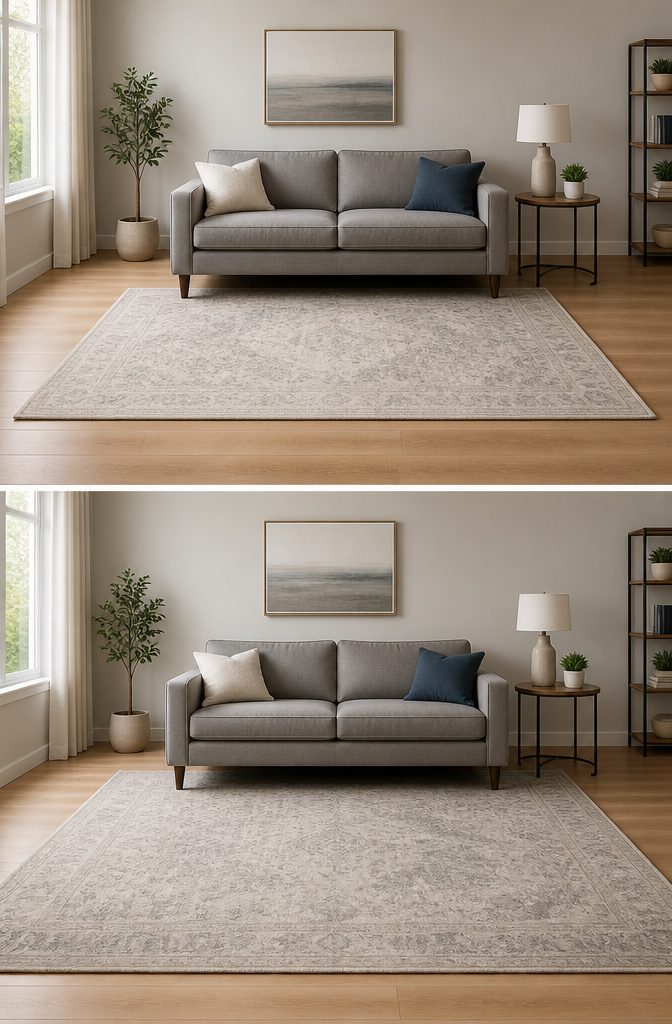
The rug should be at least as long as your sofa, with 6 to 12 inches extending past each side.
That overhang is what keeps the seating area from feeling pinched; when a rug ends right at the sofa arms, the whole room tightens up.
For a small living room, a 5×8 or 6×9 foot rug usually lands where it needs to.
I tend to picture the rug as a frame for the conversation area, not background noise, so those extra inches on each side matter more than the rug’s center pattern.
Width is a judgment call. Eight inches past each side is the comfort zone I aim for when the floor plan allows it, though six inches still holds the proportion together.
Anything closer and the rug starts to look like an afterthought slipped under the legs.

Romantic and maximalist, Botanical indoor/outdoor rugs feature large-scale florals with a poppy, vintage fabric style.

【Machine Washable & Easy Care】 Made for real life with kids, pets, and everyday messes, this washable area rug is easy to maintain and keeps your space looking fresh. The water-resistant surface helps prevent spills from quickly soaking in, giving you time to wipe away coffee, juice, pet accidents, or food stains with a towel. For daily care, simply vacuum or shake off dust and pet hair. For deeper cleaning, machine wash separately in cold water on a gentle cycle and air dry naturally. No complicated maintenance needed.

NANOWIPE LIQUID REPELLENT: Every rug from GLN is made with NanoWipe technology, meaning each fiber of your rug is protected by silica-based nanoparticles, keeping liquid and stains on the surface; The non-shedding print on our large area rugs will stay crisp even in a busy home
3. Determine Placement Style
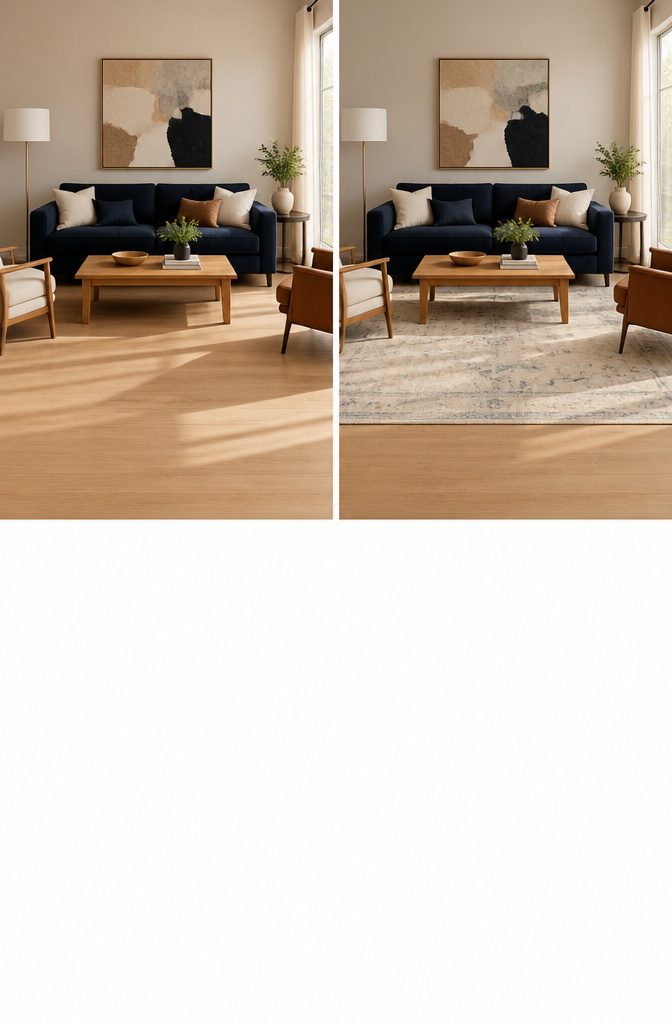
There are basically four ways to arrange a rug with your sofa, and room size usually narrows it down faster than taste does.
If the space is generous, all legs on the rug gives the most finished look.
It unifies the seating area and works especially well for floating furniture or open floor plans where the rug itself has to do the job of defining the living room zone.
You will need a rug large enough to sit under the sofa plus any side tables or chairs you want anchored together.
For most standard rooms, front legs only is the safer bet. The sofa’s front legs rest on the rug while the back legs stay on the bare floor, which still visually connects the pieces without demanding an oversized rug.
Leave at least a few inches of rug showing in front of the legs so it reads intentional, not like the rug came up short.
In a compact space, no legs on the rug keeps things open. The rug sits in front of the sofa or under the coffee table as its own focal point, and the furniture frames it rather than overlapping it.
That last variation rugs just the coffee table itself, which suits smaller rugs and intimate seating areas where you want the center of the room to feel grounded without the visual weight of furniture sitting on top.
There is no universally "right" choice here, just the one that fits your square footage and the rug you already own.

STRONG GRIPPING POWER - Natural rubber backing keeps rugs anchored firmly in place. Prevents slipping, sliding, and wrinkling in high-traffic areas.

PET FRIENDLY & NON-SLIP BACKING: 8x12 area rugs featuring simple of colors while promising a luxurious feel underfoot. The blend of a hexagon pattern and a stylish design. Non-slip TPR backing makes the covering for bringing your space together. Make the most of your time at home with our pet-friendly and easy-to-clean area rugs. Elevate the floors of your home with this show-stopping and detailed rug

Effortless Maintenance & Machine Washable: This durable area rug is designed for high-traffic spaces like living room, bedroom, kitchen, mudroom and foyer. Easily refresh with regular vacuuming or machine wash for deep cleaning—stays vibrant through everyday use
4. Position the Rug
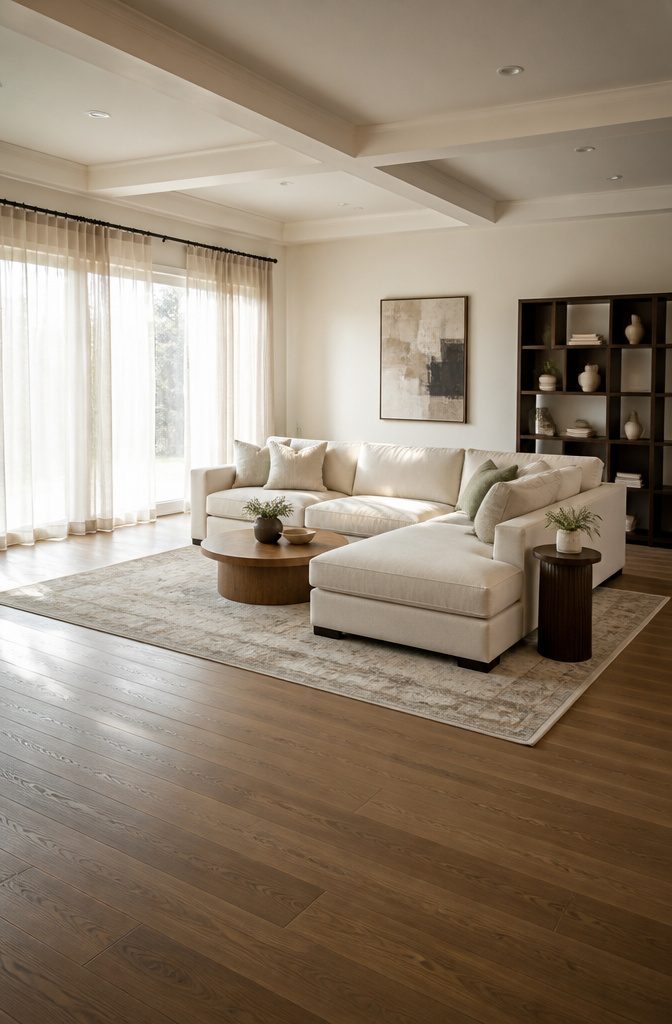
Center the rug so it sits close enough to read as part of the seating area, not an island floating in the middle of the floor.
I usually start by setting the edge just a few inches under the front legs of the sofa.
That gap behind the front legs matters: too short and the rug looks like it stopped short; too far and the whole thing drifts.
For the all-legs-on look, the rug has to stretch fully under the sofa and any side tables. That takes an especially large rug, but it pulls floating furniture together and anchors a space in open-concept layouts.
The back legs of chairs and smaller pieces can stay off the rug entirely. What counts is that front legs land fully on, creating a visual anchor that defines the zone without demanding a giant carpet.
Leave breathing room between the sofa edge and the rug perimeter so the grouping feels intentional rather than cramped.

Superior Craftsmanship: Made with premium materials and expert craftsmanship, 5x8 rug offers both durability and softness underfoot. The combination of its sturdy construction and plush texture ensures a long-lasting and comfortable experience.

Super Soft Feeling - This rug is built with the soft high fluff and a memory-foam, leave this rug feeling soft and luxurious, make your family more comfy and warm when they play on the floor. The fuzzy and warm area rug is a great choice for family party on the floor, it does what you really want.
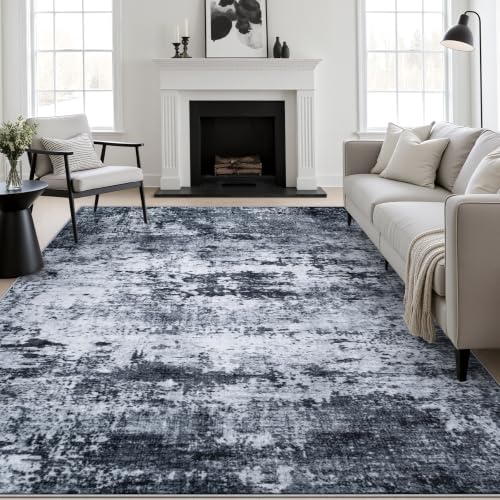
Beautiful Design Abstract Rug:The 5x8 rug design is unique and trendy, the colors blend with nature, the abstract design complements the modern tones, it blends perfectly with your home decor, adding more warmth and comfort to your home. Suitable for living room, bedroom, dining room, study, home office, etc
5. Check for Balance
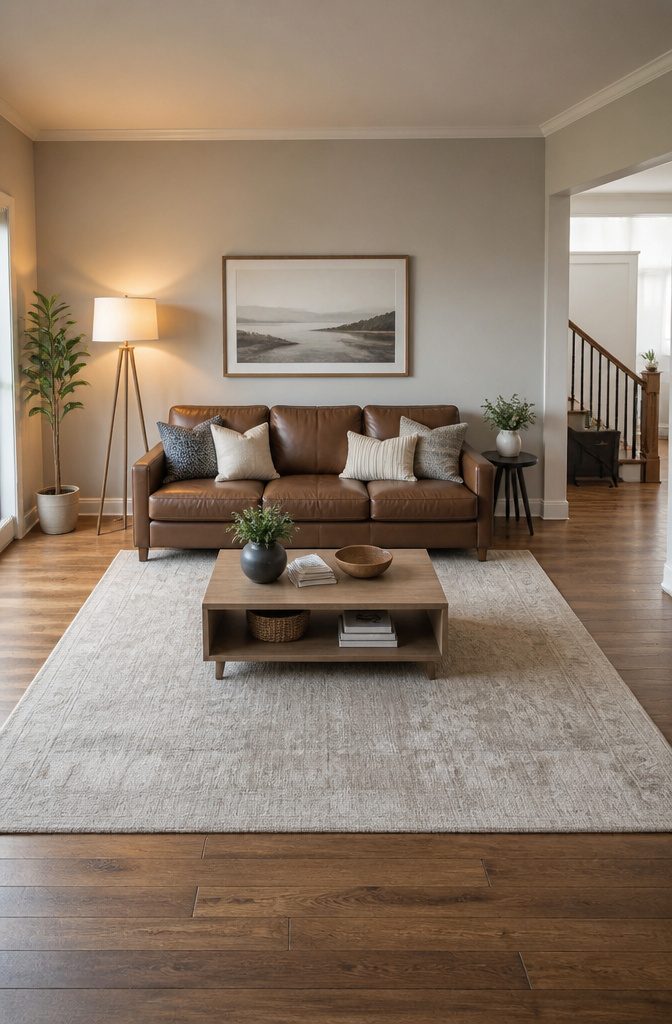
You have about two feet of wiggle room for that exposed floor border: anywhere from 8 to 24 inches, with 18 inches being the sweet spot most rooms settle on.
I like to stand in the doorway and sight down the long edge of the rug, checking that the gap looks roughly the same on the left as it does on the right.
Squat down if you need to; the floor molding gives you a fixed line to measure against.
Leave the same amount of floor space on all sides of your rug in all your rooms. Give yourself anywhere from 8 to 24 inches of clearance on all sides.
What this means for you: your rug should read as centered, not shoved into one corner.
An uneven border, even by a few inches, throws off the whole room’s balance faster than you’d think. Your eye goes straight to the wide side and reads it as a mistake.

✌INCLUDE:Square 20 Pcs Premium Furniture Sliders (OUTER DIAMETER:1 inch ) (INNER DIAMETER:3/4 inch)furniture moving sliders. PREMIUM MATERIAL: Furniture chair sliders are made of high-quality felt+durable EVA foam+plastic.

☛【Applicable Range】- Round size fit round Leg diameter length 0.87"-1"(22-25mm) furniture legs.

☛【Applicable Range】- Square M size fit Square Leg Side Length 0.75"-1"(19-25mm) furniture legs.
6. Adjust as Needed
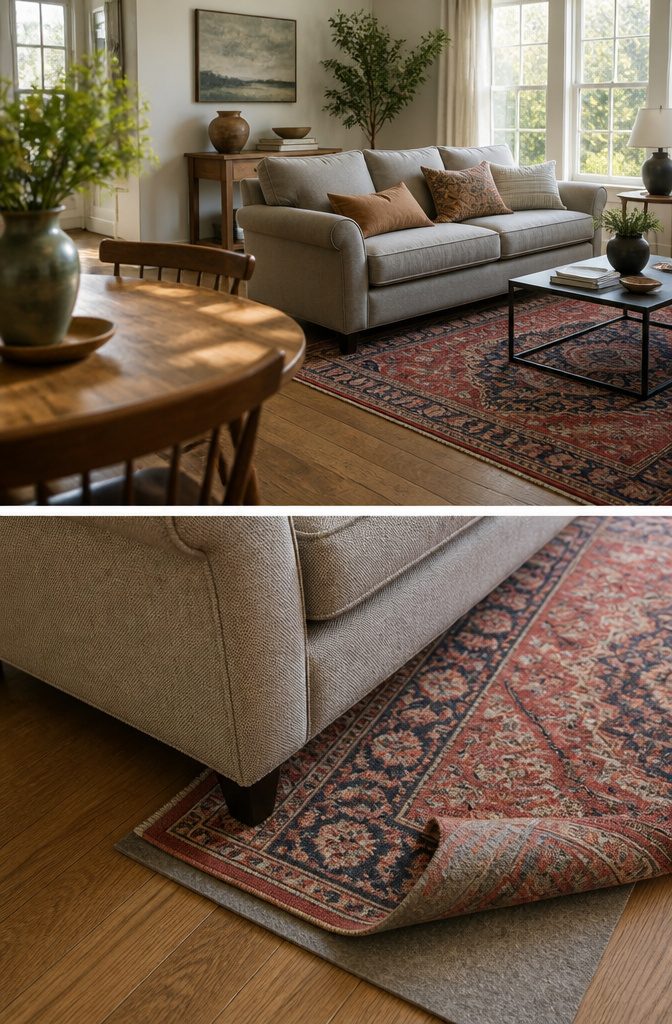
A rug rarely lands perfectly on the first try. What reads balanced in the morning can feel off by lamplight, or once the coffee table books and throws settle in.
I usually leave the placement alone for a day or two, catching it from different angles as light moves across the room.
The rug is doing the same thing itself: new wool or cotton settles under weight, so a corner that looked askew Tuesday evening might relax into place by Thursday morning.
If something still bothers you, shift it an inch or two rather than reworking the whole arrangement. That small adjustment is usually enough to center a pattern or even up the border showing on each side.
Under the rug itself, furniture pads even out more than just wobble.
A thick pad under the sofa legs bridges slight unevenness in old floorboards or transition strips, so the rug doesn’t telegraph every bump through to the surface. Two or three days of living with it beats standing there and guessing.

SOFTNESS & COMFORT: Step into cloud-like comfort with our 8x10 area rugs—unlike thin, mat-like competitors, ours are crafted from ultra-soft microfiber for a soft, cushioned feel underfoot. Perfect as bedroom rugs or cozy additions to high-traffic spaces, these soft, sumptuous rugs elevate everyday living while complementing family life

The Malibu Collection is an indoor/outdoor area rug featuring geometric patterns in airy, neutral palettes, with playfully fringed edges; from renowned interior designer Amber Lewis in collaboration with Loloi

Machine Washable Rugs: This washable rug is designed for easy cleaning. Small liquid stains can be wiped away with a damp cloth, and dust can be easily removed with a vacuum cleaner. For deeper cleaning, simply toss the rug into the washing machine to restore its fresh, clean appearance. The 8x10 washable rug is perfect for busy households
Rug Placement Styles Compared
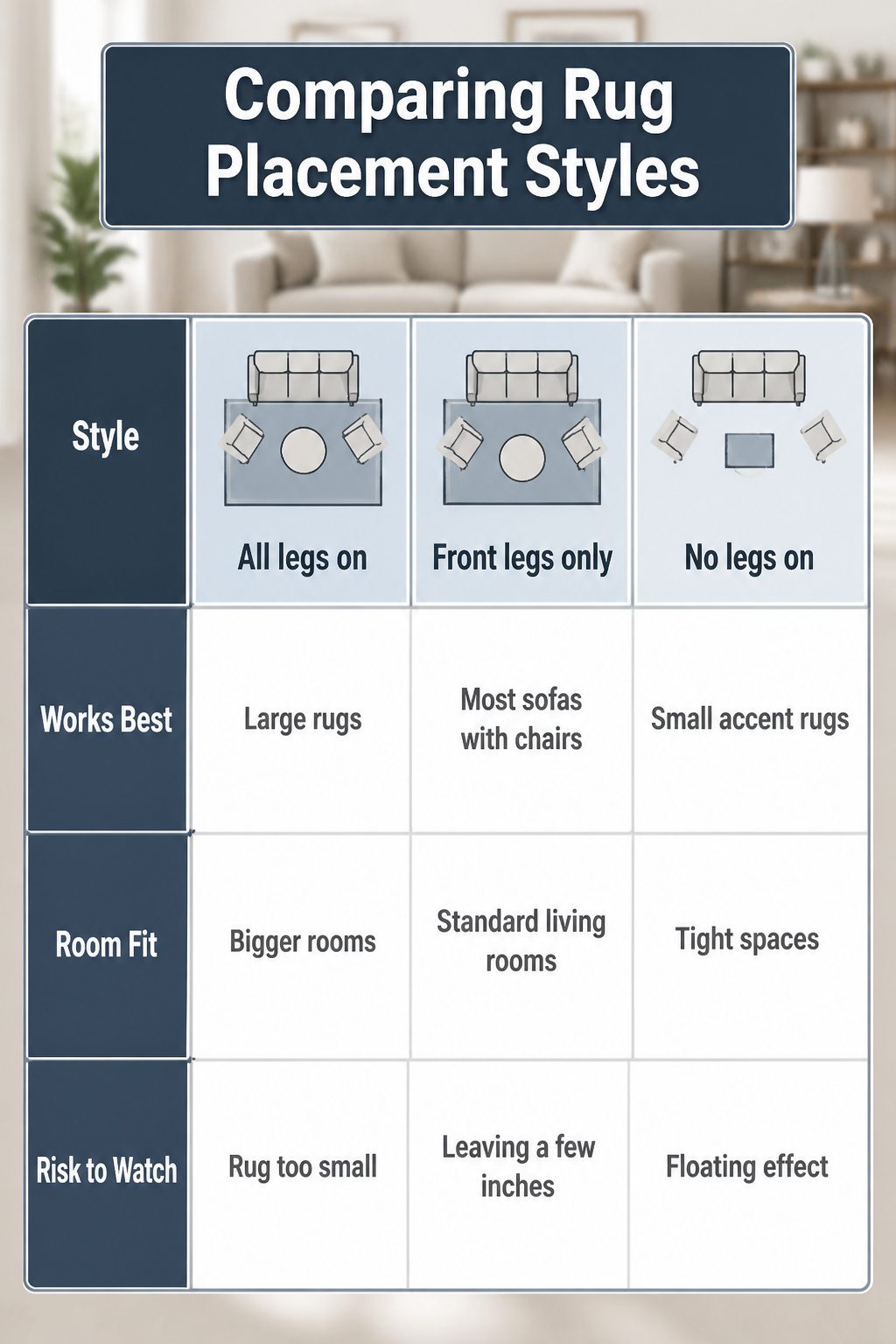
The three placement styles each sit in a sweet spot between your room size and the rug you already own or can budget for.
All legs on is the most finished look, but it needs a rug large enough to float an entire seating group without touching walls.
That makes it the best call for open-plan rooms where the rug has to draw a border the architecture does not.
Front legs only is what I see most often in real living rooms, because a medium rug still anchors the sofa and any chairs while leaving useful floor space open around the edges.
It is the forgiving default when you are not sure what you are working with.
No legs on treats the rug as a visual accent under the coffee table; it works when the rug is small enough that tucking it under furniture would look stretched, though the risk is a floating island that feels disconnected from the seating.
| Style | Works Best | Room Fit | Risk to Watch |
|---|---|---|---|
| All legs on | Large rugs, sectionals, open plans | Bigger rooms or float layouts | Rug too small makes grouping feel cramped |
| Front legs only | Most sofas with chairs | Standard living rooms | Stopping rug right at front legs; leave a few inches behind them |
| No legs on | Small accent rugs | Tight spaces, layered looks | Floating effect; rug reads as separate from seating instead of part of it |
I would skip all legs on unless the rug extends well past every piece. The others let you adjust to what you actually have.

The Chris Collection area rug by Chris Loves Julia x Loloi is a fresh take on the classic stripe, with a soft color palette and neutral background.
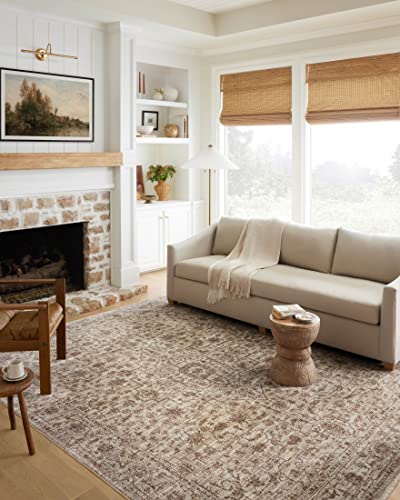
Neutral Area Rug with Style: An area rug with an intricate pattern and careful fading, the Sorrento Collection has a warm, vintage quality in a modern, earth-toned palette; designed by Loloi.

The Chris Collection area rug by Chris Loves Julia x Loloi is a fresh take on the classic stripe, with a soft color palette and neutral background.
Spacing Around the Rug
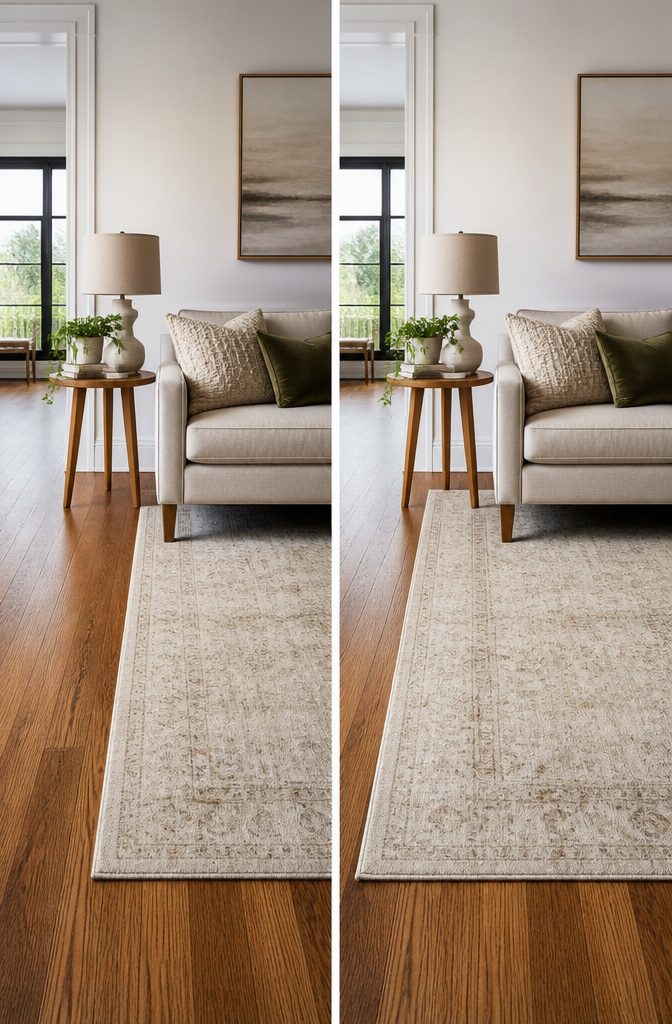
The exposed floor around your rug works like a mat around a photograph. Leave 8–24 inches of visible flooring on every side, with about 18 inches as the common sweet spot in larger living rooms.
Too little and the rug looks like it is trying to escape the walls; too much and the furniture floats awkwardly, disconnected from the room’s edges.
Your room’s shape bends the rule. In a narrow galley-style living room, 8 inches on the long sides might be all you can spare, while a wide square room can handle 24 inches comfortably.
Cramped edges fight the rug’s whole purpose: that border of floor visually expands the space and lets the rug read as an intentional layer, not an afterthought wedged between walls and sofa.
When the rug sits too close to baseboards, the eye stops at the boundary instead of traveling through the room.

Machine Washable: Keep your rug fresh with ease! Simply vacuum regularly, or for a deeper clean, toss it in the machine. Ideal as rug for dining room table, area rugs 8x12 living room and rugs for bedroom. Durable for everyday use

【Pet & Kid Friendly】8x11 area rugs made from OEKO-TEX certified, skin friendly materials, it’s ideal for homes with kids and pets. Featuring an ultra soft, 0.25" low pile construction, 8x11 rugs for living room provides cloud like comfort underfoot and is engineered to be non shedding and silky smooth for a truly premium barefoot experience.

Machine made.100% Polypropylene pile for long lasting quality.Pile height 0.39 Inches. Jute backing.
Layering Rugs
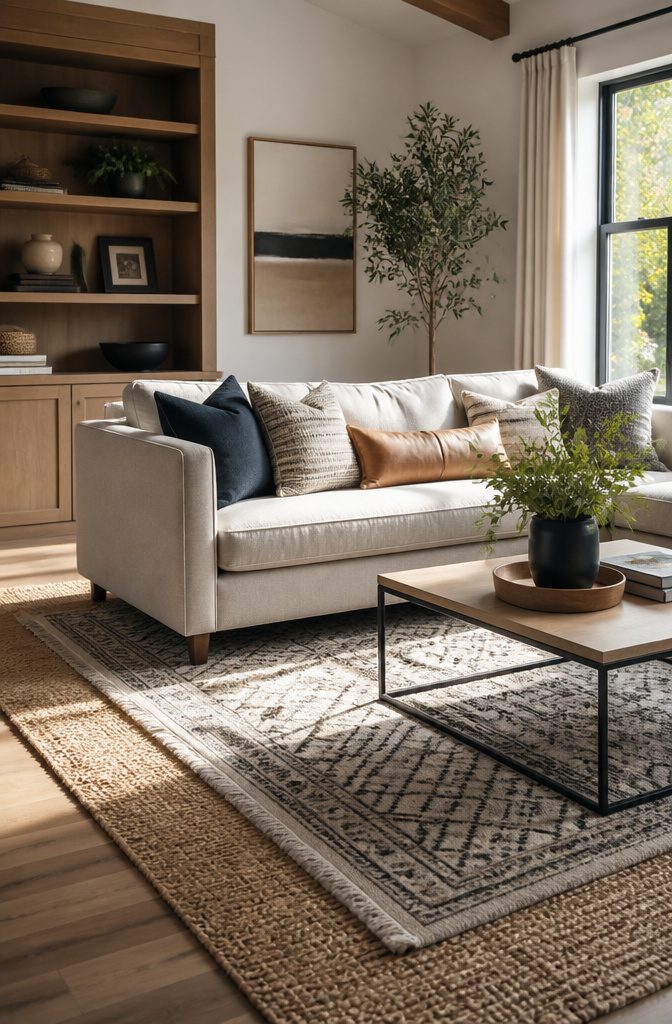
Layering a smaller patterned or textured rug over a larger neutral base, like jute or sisal, is the move I make when a single rug feels flat or when I’m stuck with a too-small piece I love but can’t return.
The bottom layer anchors the room and gives the sofa something solid to sit on, while the top layer adds color and personality without the cost of a full-size investment.
In eclectic or boho spaces, this approach feels intentional rather than improvised: the offset placement under just the front legs, or slightly to the side, reads relaxed instead of accidental.
The catch is thickness. Both rugs need to stay thin enough that your sofa legs don’t wobble and nobody trips at the edge.
I’ve layered a vintage kilim over a plain weave myself, and the trick was keeping the combined height under about a quarter inch so the transition stayed walkable.
If you’re renting, this also means you can take both with you or leave the cheap base behind.

Premium 5x8 Area Rug: Memory foam rug is made of Shu cotton pile, which is very soft and has good warmth retention; Inside the indoor rug is a memory foam pad that has good cushioning; Walking on this bedroom rug can give you comfort and peace of mind

【Fits Most Rooms】Great for living rooms, bedrooms, and dining areas. It sits nicely under sofas, beds, and tables, making the whole room look put together.
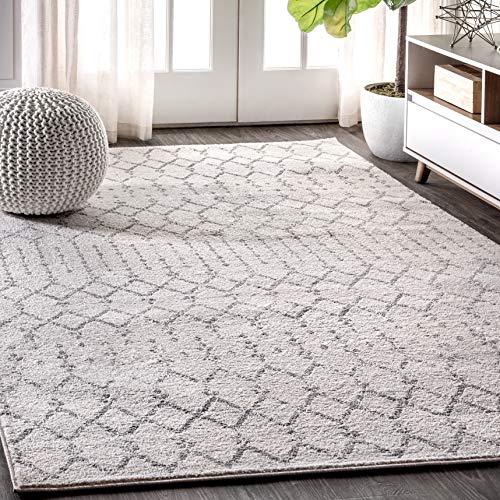
PET-FRIENDLY AND DURABLE: Durable for high-traffic areas, soft and comfortable area rug perfect for families with kids; Low-pile synthetic rug fibers won’t trap dirt and debris, so they’re pet-friendly and easy to clean
Rug Material Considerations
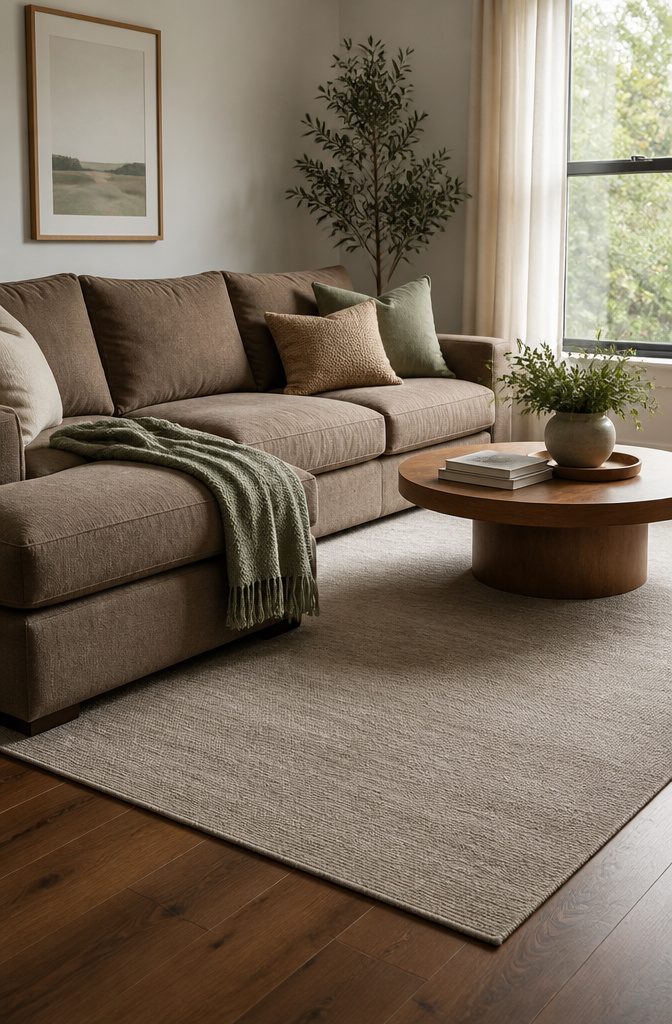
The rug you slide under your sofa has to survive the life that happens on top of it. Low-pile synthetics like nylon or polypropylene take abuse from sneakers, dog paws, and Friday night pizza without showing it.
They’re the practical choice for renters because crumbs and dust sit near the surface where a regular vacuum can reach them, and spot cleaning with a small machine usually handles the rest.
I learned to respect this tradeoff the hard way after a softer rug trapped enough debris beneath my old sectional that I felt it crunch when I finally moved out.
Wool sits in the middle, soft enough to feel good under bare feet but naturally resilient.
It costs more upfront and stains deeper when something does penetrate the fibers, so I’d only plant it under a sofa if traffic stays moderate and I trusted my security deposit wouldn’t depend on professional cleaning.
For the far side of the sofa, away from the walkway, a shag or cotton flatweave makes sense.
You get the comfort where you actually sit and lounge, but you’re not grinding dirt into deep pile every time you pass through. The catch is what happens underneath.
Any rug extending beneath furniture collects what vacuums and robots miss. Slide the sofa forward every few weeks, or schedule a deep clean before move-out, or that hidden layer becomes the reason you don’t get your deposit back.

【PREMIUM QUALITY】: 24 Pcs high-quality 1/2" furniture moving sliders. Furniture chair sliders are made of high-quality PTFE (Teflon) ,and has a very smooth surface that allows furniture feet to move quickly.

STOP FURNITURE FROM MOVING: Furniture cups locks furniture in place while protecting hardwood, tile, laminate, linoleum, and any floors surface from damage from furniture. Square furniture pads won't scratch or damage the floor, the friction is excellent to reduce noise, it's safety & useful for any floors or carpet
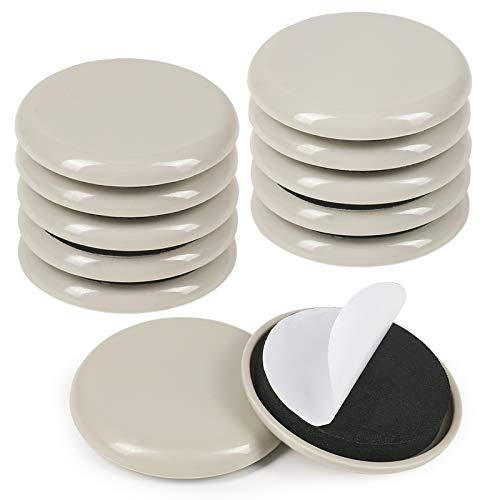
★EASY MOVING - With these stick furniture sliders, your heavy chairs will slide on the carpet very well, and furniture can be easily moved without strain, injury and no help required when you vacuum
Frequently Asked Questions
How far should a rug go under a couch?
The rug should extend 6 to 12 inches past each side of the sofa, and the front legs should sit fully on the rug with a few inches of rug showing behind them.
If the sofa legs are set back under the frame, slide the rug farther under so the placement reads intentionally rather than looking like the rug came up short.
Should a rug go under all furniture?
Not necessarily; it depends on your room size and layout. All legs on works best for large rugs in open plans, front legs only suits most standard living rooms, and no legs on keeps tight spaces feeling open.
Front legs only is the most common choice because it anchors the seating area without demanding an oversized rug.
How do I choose the right size rug?
Measure your sofa first, then pick a rug at least as long as the sofa with 6 to 12 inches extending past each side.
Add the spread of nearby pieces like coffee tables and accent chairs so they can sit fully on the rug or at least have their front legs on it.
Leave 8 to 24 inches of bare floor between the rug edge and the wall, with about 18 inches as the usual sweet spot.