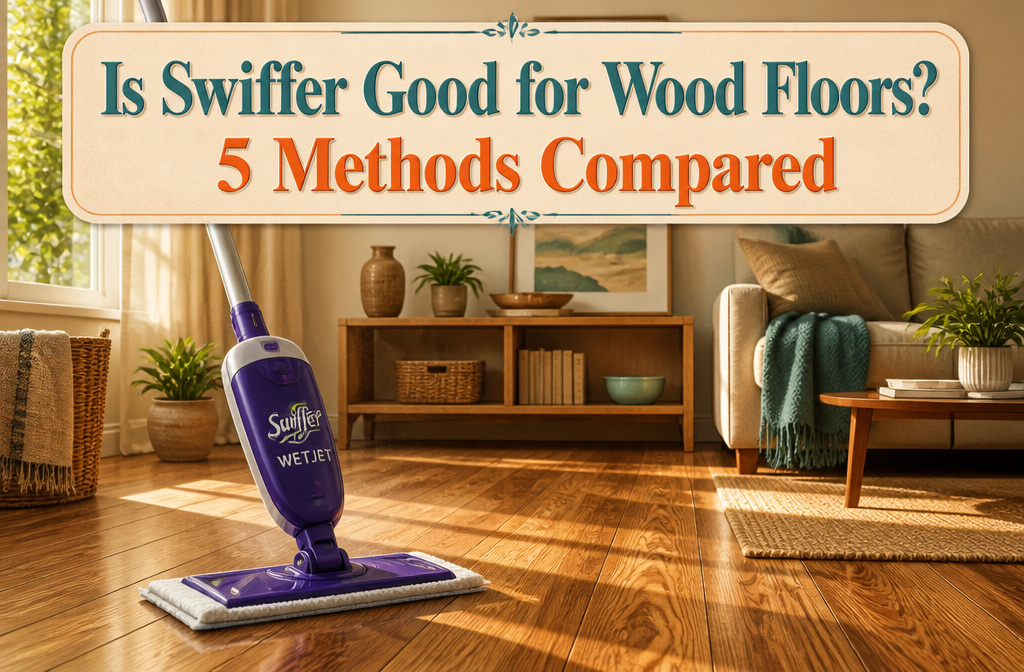

Swiffer is good for wood floors only when the wood carries a factory-applied polyurethane seal.
The moment that seal is wax, oil, or nothing at all, the same wet cloth strips the protective layer and lets moisture warp the boards underneath.
The WetJet’s own manufacturer draws that exact line, and the PowerMop’s QuickDry formula does not change it for unsealed surfaces.
Swiffer WetJet on Finished Hardwood
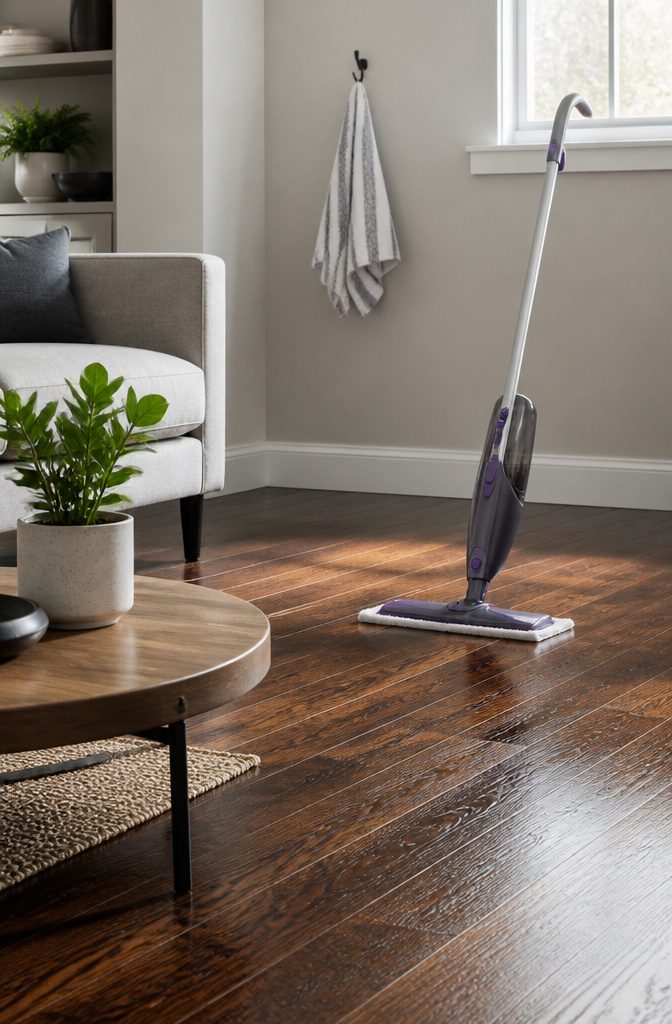
A finished hardwood floor with its factory seal intact can handle a Swiffer WetJet just fine.
The manufacturer’s own guidance says so: dry or wet refill cloths are both safe on polyurethane or other factory-applied surface finishes. The distinction that matters is whether your floor has that seal at all.
Waxed or oiled floors are a different story.
The WetJet’s cleaning solution strips those intentional surface layers on contact, breaking the protective seal and leaving the wood underneath exposed to moisture. Without that barrier, excess water soaks in and the damage becomes permanent.
The same risk applies to unfinished hardwood, which has no seal to begin with. Its porous surface drinks up moisture instantly and can crack, warp, or swell before you even finish mopping.
For waxed, oiled, or bare wood, a barely damp microfiber cloth with white vinegar is the safer route. It gives you control over how much liquid actually hits the floor, which is the whole point.

Swiffer Heavy Duty Wood Mopping Cloths are pre-moistened with a cleaning solution that bonds with dirt to trap it deep in the cloth’s core, so it can’t be re-released onto your floor as you clean.

1. ABSORB + LOCK STRIP: Our floor cleaner for mopping features an absorb + lock strip that traps dirt and grime deep in the pad, preventing it from being pushed around and improving cleaning process

WetJet Wood Cleaning cloths are microfiber-like which create a soft texture gentle on hardwood floors
Swiffer PowerMop and Wood Surfaces
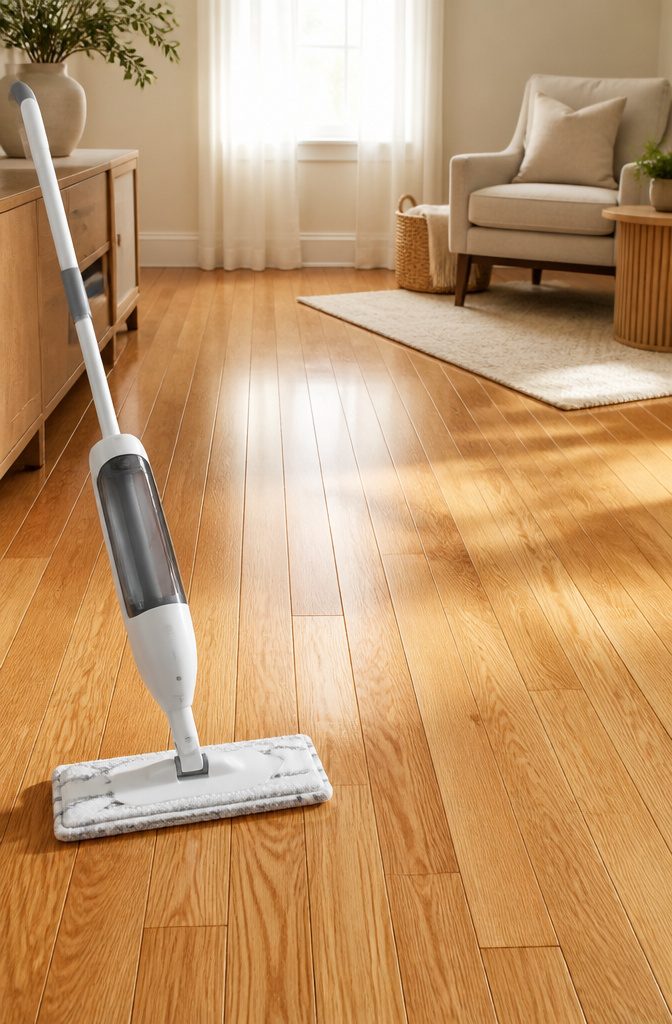
The Swiffer PowerMop builds on the WetJet idea with a few mechanical upgrades and a dedicated wood cleaning solution with what they call QuickDry formula.
That faster dry time matters on wood, where standing water is the enemy. The 3D mop pads are 30% larger than the WetJet’s, and the battery-powered spray gives you more control over how much liquid hits the floor.
The 360 swivel head is a real improvement over the fixed head on the older models.
It slides under low furniture and turns into corners without the awkward wrist gymnastics. I’ve watched renters in small apartments cover a whole room in half the passes.
The Swiffer PowerMop provides a deep-clean experience that’s equivalent to using a bucket of water and traditional mop, but instead it’s an all-in-one cleaning system that’s also lightweight, easy-to-use, and can be used across multiple surfaces.
That "multiple surfaces" claim includes wood, but treat it with some skepticism depending on your floor type. The QuickDry formula is designed for sealed hardwood, and that is where it performs best.
If your floors are waxed, oiled, or bamboo, the PowerMop still poses the same risks as any wet system: the solution can strip intentional finishes, and the moisture can damage what the finish was protecting.
These wood types need a method that adds almost no water and no cleaning agents beyond what is made specifically for them.
For standard sealed hardwood in a weekend-cleaning routine, the PowerMop hits a useful middle ground between a damp rag and hauling out a bucket.
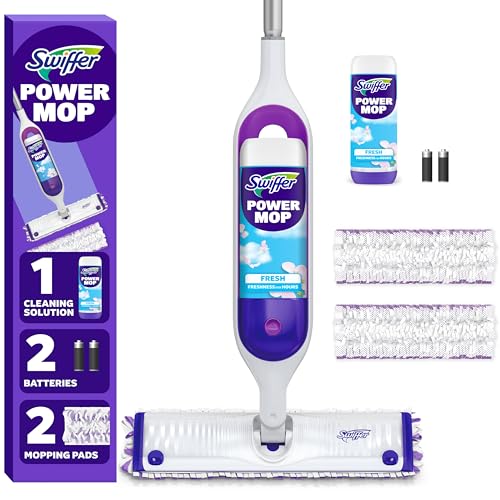
Kit Includes: PowerMop Spray Mop, 2 Mop Pad Refills, 1 Floor Cleaning solution with Fresh Scent, and 2 batteries

1. POWERFUL CLEANING: Swiffer WetJet provides the cleaning power of a mop with the convenience of a wipe, allowing you to easily clean your floors in minutes without the hassle of a traditional mop and bucket set

Premium hardwood floor mop: Complete wood floor cleaning system includes a premium spray mop, 1 oz hardwood floor cleaner concentrate pouch, refillable 34 oz cartridge, and an extra-large reusable microfiber cleaning pad; Simply add water to create ready-to-use cleaner
Bona Cleaner as Alternative
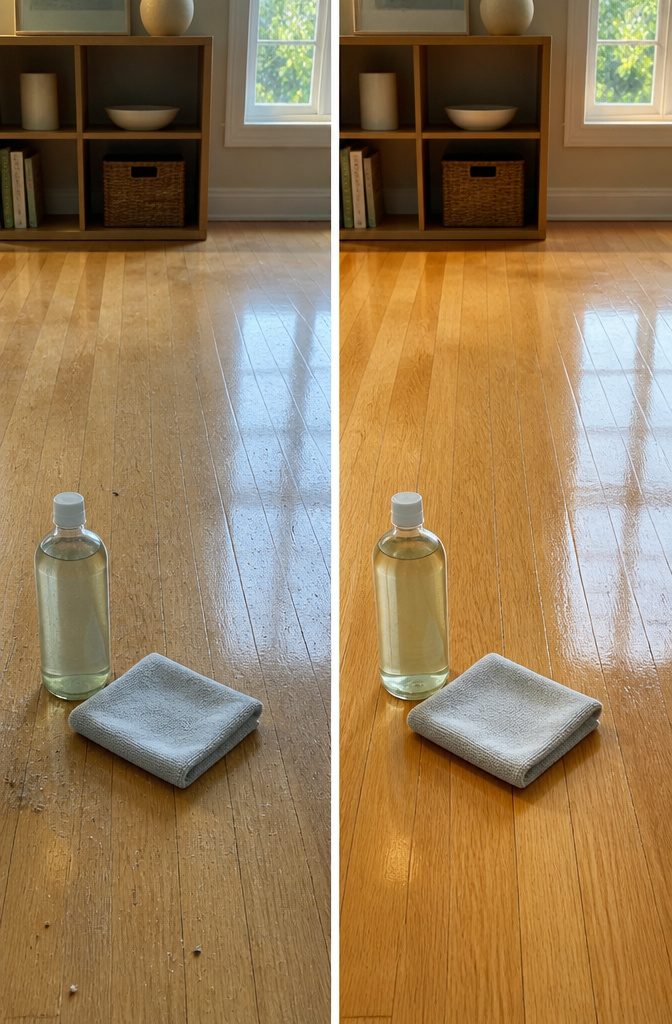
Bona cleaner comes up almost every time someone asks online whether Swiffer is good for wood floors, and there’s a reason for that.
The pH-balanced formula is made specifically for sealed hardwood and doesn’t leave the film that wet Swiffer pads often do.
I’ve watched enough rental move-out videos to know that buildup becomes visible in window light after a few months of the wrong product, and that’s exactly the residue Swiffer’s cleaning solution tends to leave behind.
That film isn’t just a cosmetic issue on waxed or oiled floors. The solution can strip the protective seal those floors need, which leaves the wood open to moisture damage you won’t notice until it’s permanent.
Cork floors run into the same problem; the chemicals are harsh enough that a simple damp cloth with a mild cleaner is the safer route.
Bona is the alternative that cleans without slowly damaging the finish.
It costs more per bottle than refilling a Swiffer, but you’re not paying twice to strip off residue later. For a weekend project budget, I’ve found it is usually the better place to put that money.

REMOVES OVER 99% OF BACTERIA: Genuine O-Cedar mop heads remove over 99% of bacteria using only water*. They don't need bleach or detergent. * BMA Labor GbR Labs tested O-Cedar Hardwood Floor N’ More refills on May 16, 2022. The tests confirmed the effectiveness of the refills. This claim remains accurate and true today.

【WORK ON EASY】With it’s large 18 Inch base can cover a lot of areas in a single scan, clean in high efficiency with less effort. Industrial grade mop, Stainless steel handle which withstands friction and frequent use, the mop head is made of solid aluminum alloy, which is more durable than plastic mop head. Velcro design makes the pad easier to attach and replace.

Compatibility:Microfiber Mop Pads Compatible with Hardwood Floors and Spray Mop Close-fitting and soft. (pad size: 18.3 x 5.3 inches)
Vinegar and Water Solution
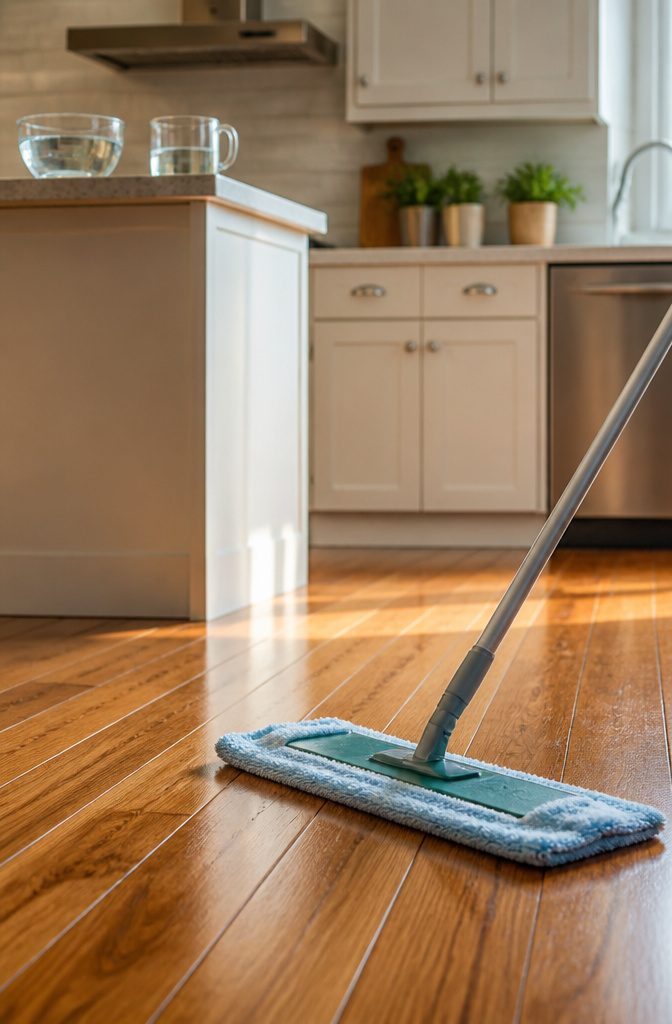
Vinegar mixes show up in almost every wood floor thread, and I get why: it is cheap, it is already under the sink, and it smells like you actually cleaned something. The method matters more than the recipe.
A microfiber cloth or mop head needs to be barely damp, not wet enough to leave the floor glossy with moisture. Wood swells when it drinks water, and swollen boards turn into warped boards you cannot un-warp.
White vinegar gets the grime up, but the acidity is the problem if you are generous with it or you let puddles sit.
On a finished floor, repeated vinegar mopping can etch the sealer. Damage that layer and the wood underneath loses its protection.
A drop or two of pH-balanced dish soap in the same water is the gentler route I would pick for finished oak, assuming the manufacturer does not already name a specific cleaner.
Unfinished hardwood is a different animal entirely: any Swiffer Wet style tool is a hard no there, and even the vinegar mix should stay on the cloth, never on the floor long enough to soak in.

FITS MOST MOPS: These wet mopping cloth refills fit most Swiffers and wet mop heads, including the Swiffer Sweeper, offering cleaning options for your home and meeting various household floor cleaners' needs


Includes 11 PowerMop Wood Mopping Pad Refills
Murphy’s Oil Soap Risks
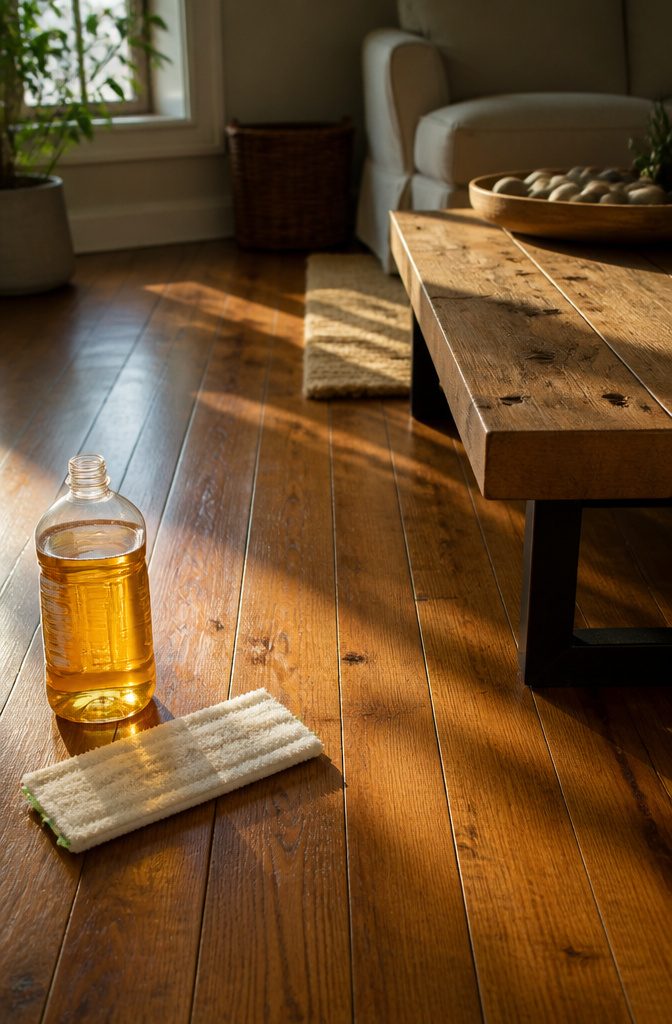
Murphy’s Oil Soap has a nostalgic pull. It smells like something grandmother’s house, and the label says pure vegetable oil, so it feels gentle.
That reputation makes it a common reach for hardwood floors, but the residue it leaves behind can shorten the life of your finish rather than protect it.
The soap contains oils that do not fully rinse away.
Instead they sit on the surface, building a thin sticky film with every use. Dust and grime stick to that film, so the floor looks dull faster, and the only real fix is stripping the buildup and recoating.
For someone renting or in a first home, refinishing costs more than the weekend and few hundred dollars this audience usually budgets.
Safer alternatives skip the oil entirely.
A pH-neutral cleaner made for wood, or even plain water on a barely-damp microfiber pad, lifts dirt without leaving anything behind. The floor stays cleaner longer and the finish wears as intended.


EASY TO USE| READY TO USE: Squirt and spread Quick Shine Multi-Surface Pure Wax on freshly cleaned and dried floors with damp mop or sponge. Second or third coat may be applied depending on floor condition

What Finished and Unfinished Means
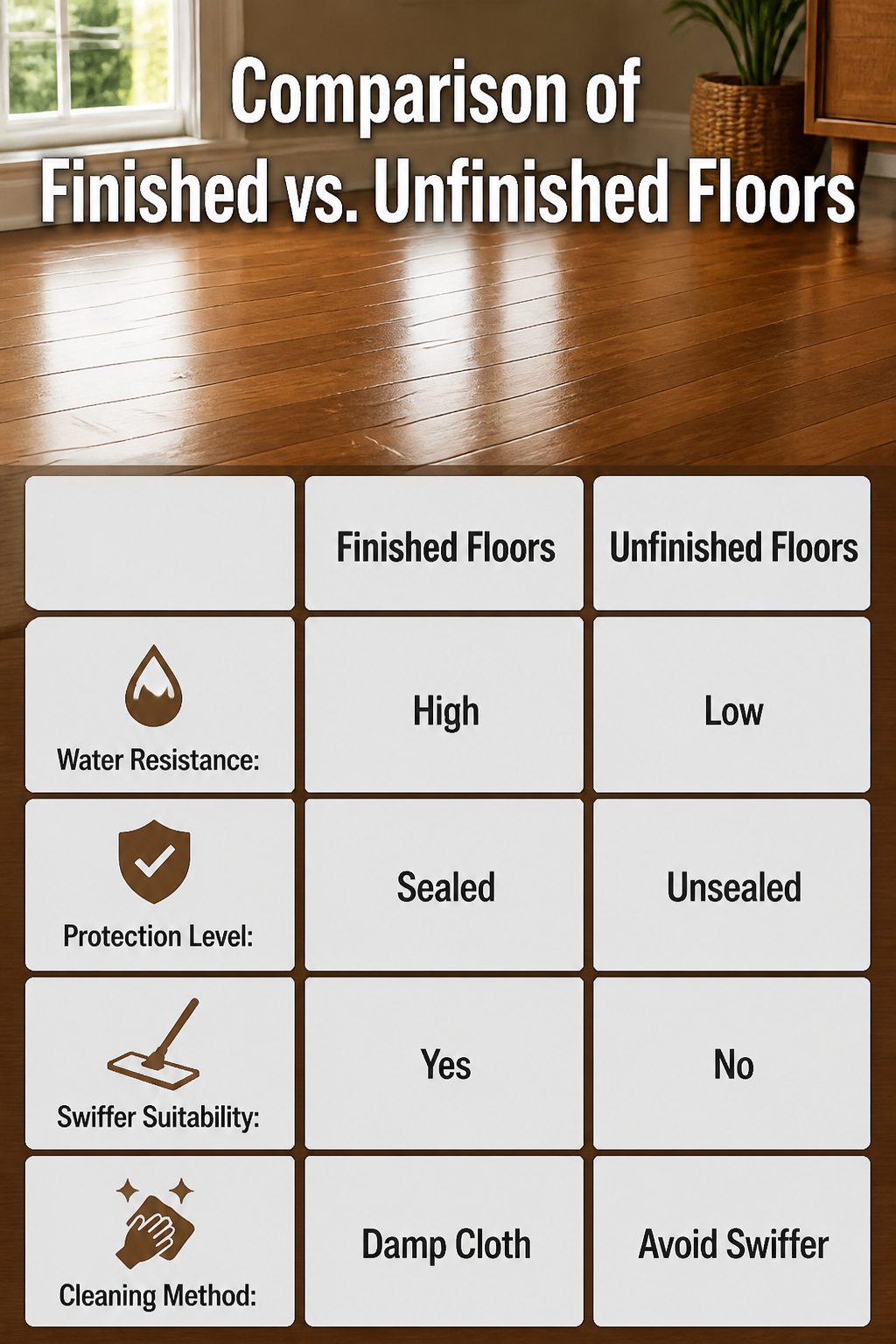
Hardwood floors fall into two camps: sealed and naked. Finished floors carry a factory or job-site polyurethane seal that sits on top of the wood like a clear rain jacket.
Unfinished hardwood has none of that protection, so every drop of Swiffer solution or mop water soaks straight into the grain. That is where warping, swelling, and cracks start.
Waxed and oiled floors sit in a middle space that looks protected but is not safe territory for a Swiffer. Wax and oil are meant to nourish the surface and preserve the shine, yet they are soft barriers.
The chemicals in most Swiffer cleaners cut through that intentional layer, stripping the protective seal and exposing the wood underneath to moisture damage. Once that barrier is gone, the floor absorbs liquid the same way unfinished wood does.
A barely damp microfiber cloth with white vinegar is the safer route for unfinished floors, but the real point is restraint. Water can still sneak between sealed boards over time.
If your hardwood is sealed, a Swiffer is fine. If it is waxed, oiled, or unfinished, keep it dry and keep those products away.

1. SAFE & FAST DRYING: This floor cleaner for mopping offers a safe and fast drying formula. This floor cleaning solution is safe for use across all hard sealed and finished surfaces - do not use on unfinished, oiled, or waxed wooden boards, non-sealed tiles, or carpeted floors because they may be water sensitive

This Antibacterial solution Kills 99.9% of Bacteria* and leaves a fresh citrus scent

EFFECTIVE CLEANING POWER: Textured absorbent multi-layer dry mopping pads trap dirt and dirty water
How Moisture Damages Wood
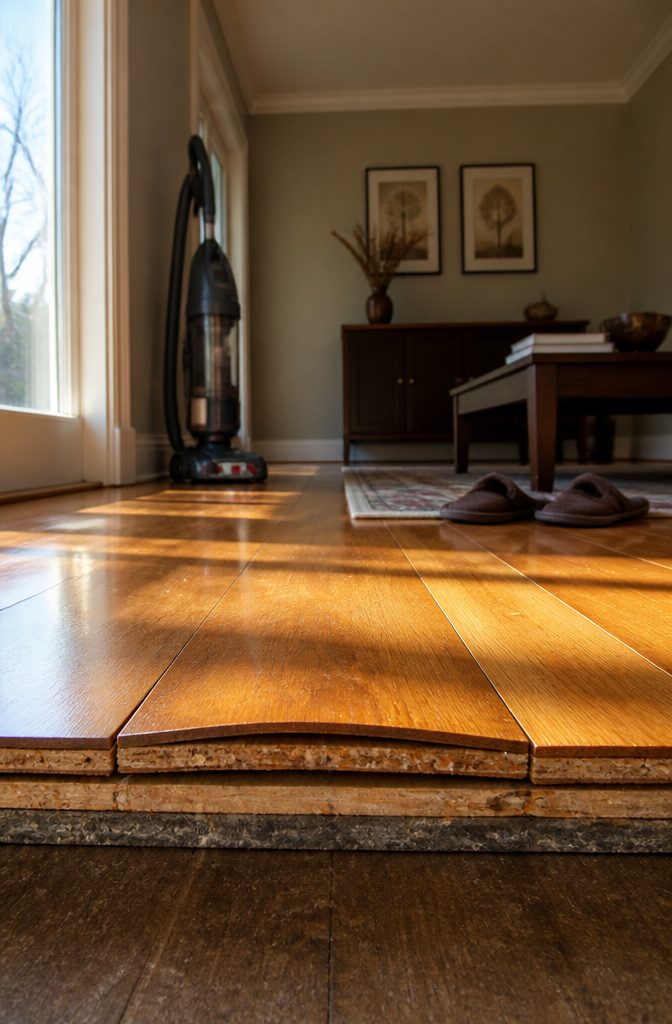
Wood and water have an old, complicated relationship. I’ve watched friends learn the hard way that barely damp is the only safe zone for real hardwood, even when it’s sealed.
Too much moisture doesn’t stay on the surface.
It sneaks between boards, and the wood responds by changing shape right where you walk. Cupping curves the edges of each plank upward, like a shallow tray.
Crowning does the opposite, humping the center higher. Both mean the flat floor you started with is gone, and so is the finish that protected it.
Once that damage sets in, refinishing isn’t optional. You’re sanding down to level wood, re-staining, resealing, and living with dust for days.
A sixty-year-old oak floor I saw went through this after someone used a wet mop regularly. The wringing mattered, and they hadn’t wrung enough.
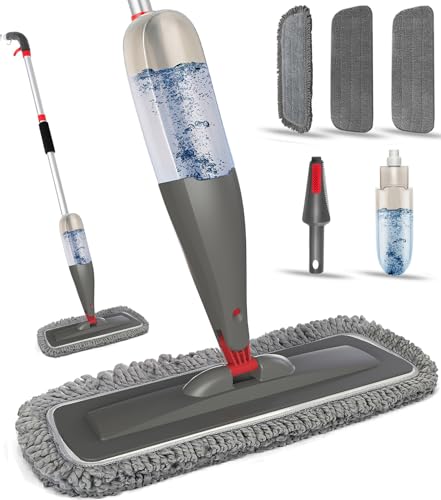
【Newly upgraded spray mop】No batteries need, just fill the bottle, and spray mist for mopping once you gently press the trigger with one hand. And clean your home in half the time vs a mop and bucket.

Refillable spray mop kit: Complete floor cleaning supplies set includes a premium spray mop with a precision fine mist spray, 1oz cleaner concentrate pouch, floor cleaner cartridge, and a reusable microfiber cleaning pad for immediate use out of the box
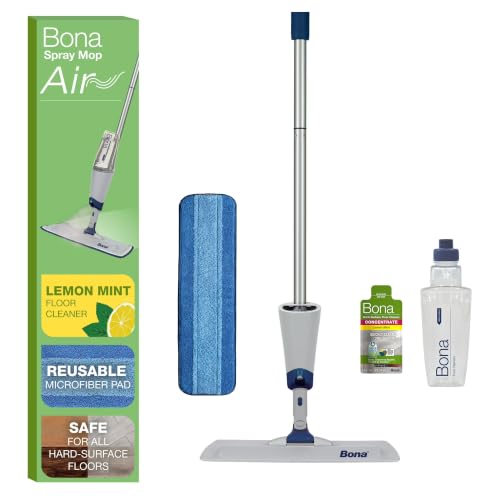
Lightweight effortless cleaning: Experience the "Air" difference with a slim, agile, lightweight design that makes floor care quick and easy; large mopping surface and fine mist sprayer provide professional coverage and a deep clean with minimal effort
Film and Buildup Over Time
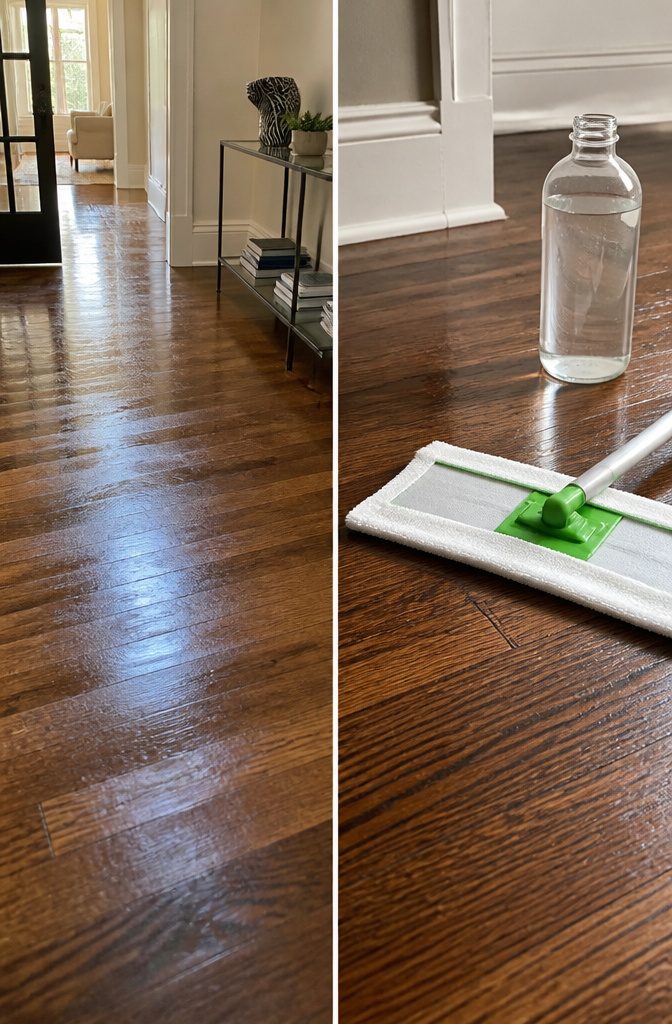
Film builds up the same way cooking grease layers on a stovetop: a little stays behind each time, and after a while you stop noticing the dullness until someone points it out.
Swiffer’s wet cloths and Murphy’s Oil Soap work this way on hardwood, leaving behind just enough residue that the finish slowly clouds over.
One homeowner who refinished maple floors in parts of her house noted that both products caused this film. Instead of a simple buff-and-coat to refresh the surface, she ended up needing a full re-sand to strip it all away.
Avoid anything that adds oil or silicone to a polyurethane finish — the floor looks nourished for a week, then permanently smudged. Lukewarm water with a barely damp cloth gets the job done without the rebuild cost.
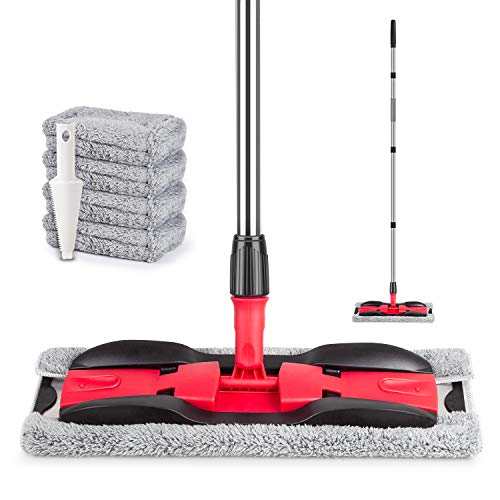
✓ Hardwood floor mop is great for housewives,househusband, pet owners, cleaners,office workers, the elderly, children, students, janitors & homeowners ect.

Microfiber Flat Mop Sets with Iron Telescopic Mop Handle & 2 Mop Refill Pads for Ocedar Hardwood Floor 'N More Mop, Washable Flat Dust Mop for Hardwood, Vinyl, Laminate, Wood, Tile Floor Cleaning Even Wall,Ceiling and Window Glass Wet and Dry Cleaning.

Microfiber Flat Mop with Adjustable Handle: Master every cleaning task with this hardwood floor mop and dust mop combo! The extendable handle (29" to 49") offers a shorter length for kids while eliminating back strain for adults, making this wet mop a perfect cleaning tool for cleaning floors and baseboards, mopping high windows or reaching baseboards without bending. This mop is a good addition to apartment essentials and cleaning supplies for housekeeping.
Frequently Asked Questions
Can I use Swiffer on my hardwood floor?
Yes, if the hardwood has a factory-applied seal like polyurethane.
Swiffer WetJet and PowerMop are both safe on finished hardwood per the manufacturer’s own guidance. Skip them for waxed, oiled, or unfinished floors; the cleaning solution strips those soft or missing seals and lets moisture damage the wood underneath.
What is the best way to clean hardwood floors?
A barely damp microfiber cloth or mop head is the safest approach across all wood types. For sealed floors, a pH-balanced cleaner made for hardwood, like Bona, avoids the film that wet Swiffer pads often leave.
For waxed, oiled, or unfinished wood, white vinegar with a barely damp cloth gives you control over how much liquid actually hits the surface.
Are there alternatives to Swiffer for cleaning hardwood floors?
Bona cleaner and a simple vinegar solution are the two main alternatives people recommend.
Bona’s pH-balanced formula cleans sealed hardwood without leaving residue that slowly clouds the finish. A vinegar mix works if you keep the cloth barely damp and avoid letting puddles sit, since repeated acidity can etch the sealer over time.