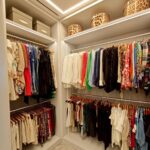
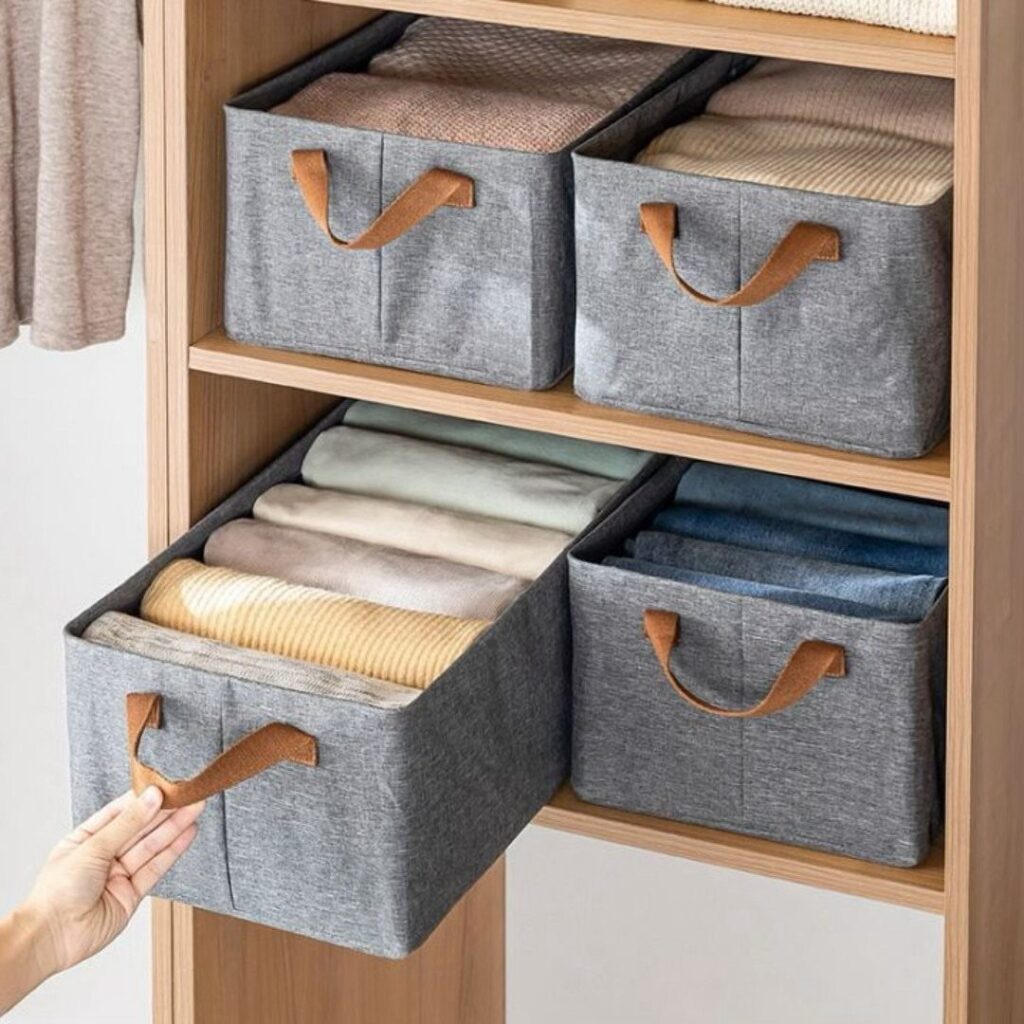

A narrow closet holds more when you fit storage to its actual dimensions instead of forcing standard organizers into a tight space.
If most of your wardrobe hangs, slim hangers and a double rod claim vertical room without widening the footprint.
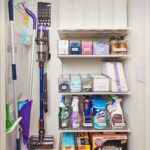
If you fold more than you hang, fabric bins sized to your shelf width keep stacks contained and easy to pull out.
Custom built-ins cost more but place shelves and rods exactly where the layout needs them, which matters when an inch or 2 decides whether another drawer fits.
1. Fabric Bins
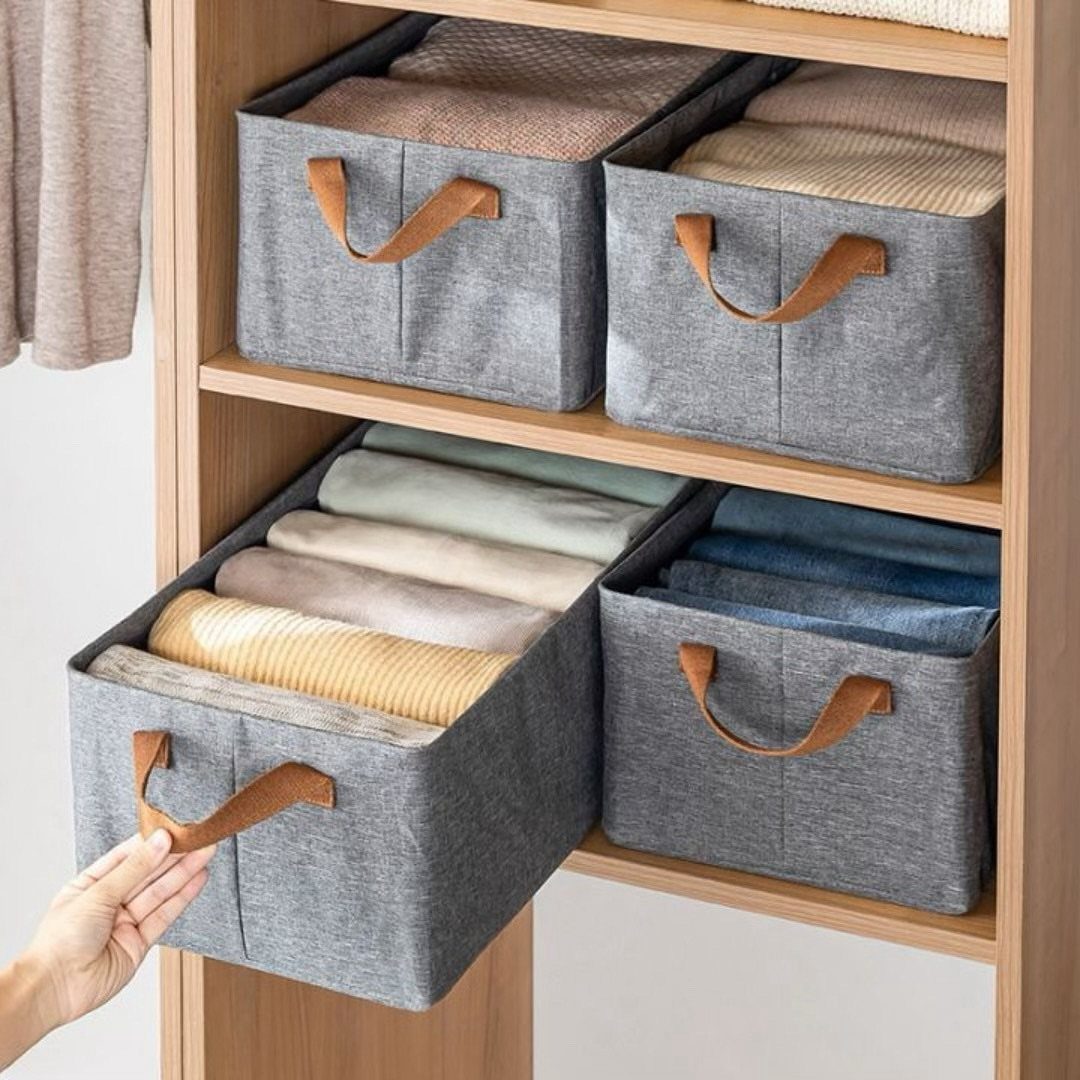
Fabric bins corral smaller items on shelves so they stay contained instead of piling up loose. They work well for things like t-shirts, workout gear, scarves, or underwear that would otherwise get messy.
Choose bins that fit the width of your shelf so you can pull the whole thing out to see what’s inside.
Soft-sided bins with handles make that easier. If your closet runs deep, label the front so you know what’s in each one without pulling it out every time.
2. Slim Hangers
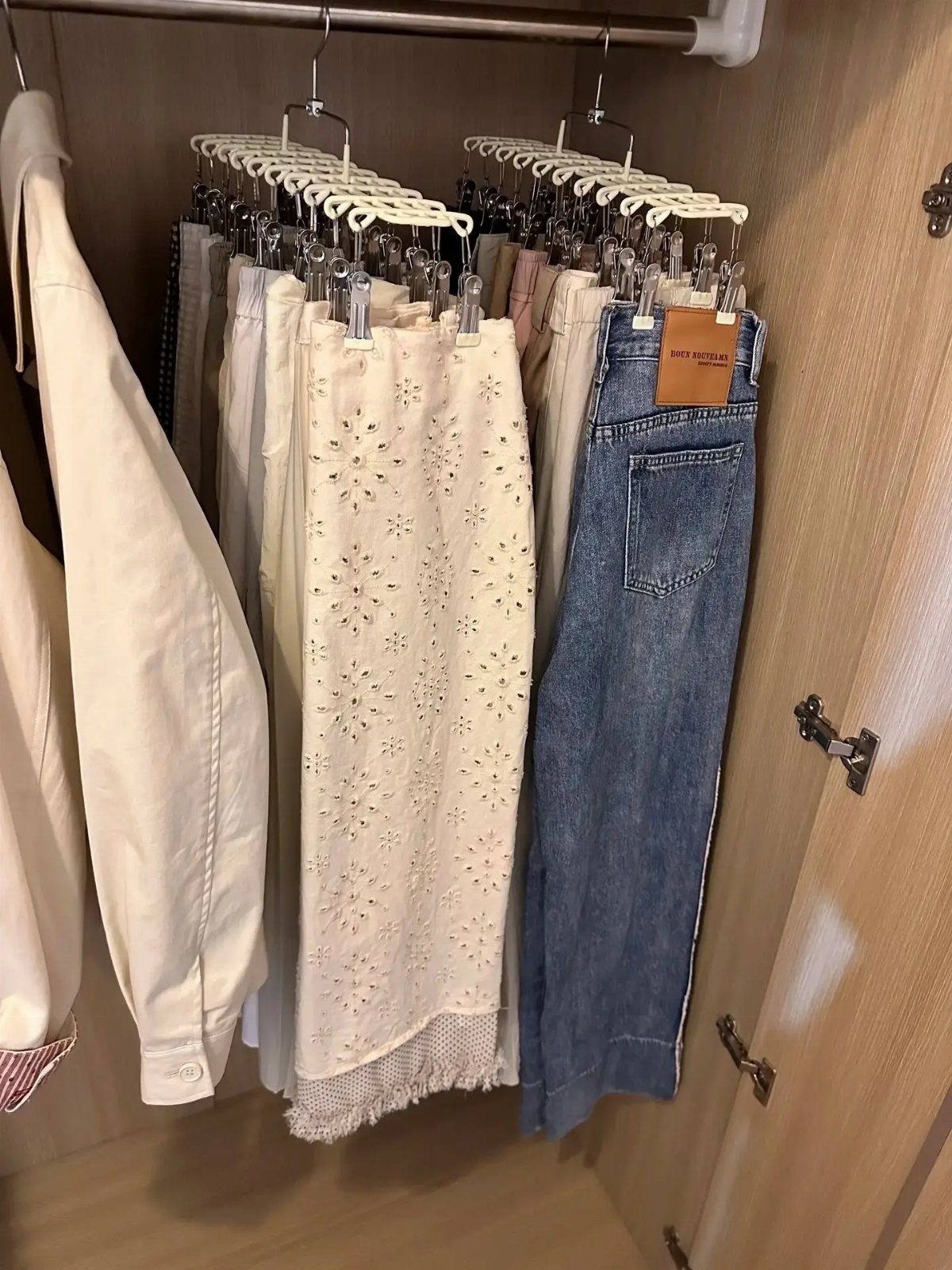
Swapping out thick plastic or wood hangers for slim ones can free up inches of rod space without changing anything else. The difference adds up fast in a narrow closet where every bit of hanging room counts.
Velvet-flocked slim hangers grip clothes without slipping, which helps if you hang dresses or silky tops.
Plain plastic slim ones work fine for jeans and casual pieces. I’d measure the rod first and count how many hangers actually fit so you know whether the swap is worth it.
3. Vertical Hanging Systems
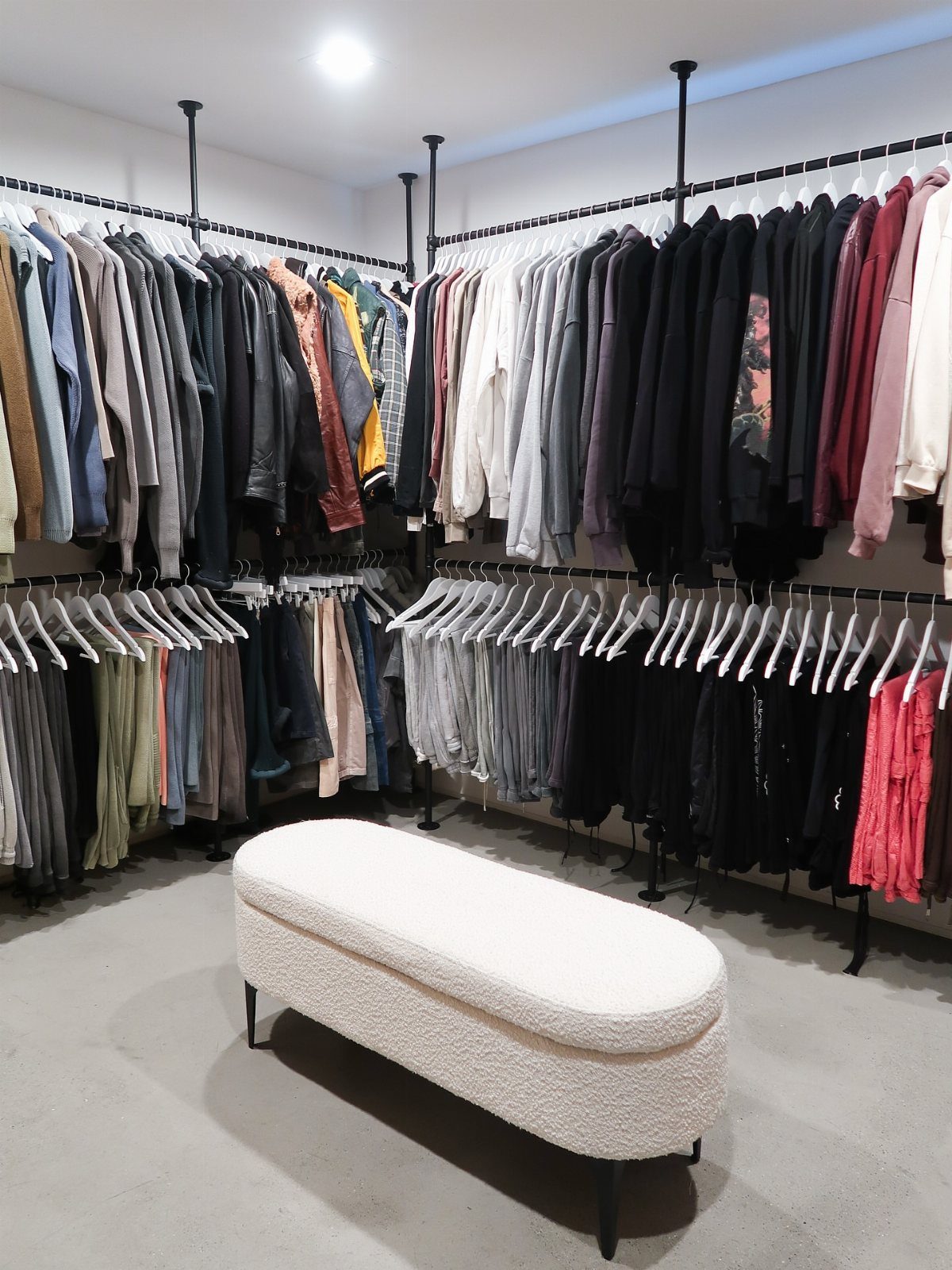
Hanging clothes in 2 or 3 tiers stacks your wardrobe vertically instead of spreading it along the rod. You get more capacity in the same wall width, which matters in a tight closet.
This works best when you have enough ceiling height to fit multiple rods and still reach the top one comfortably.
Shorter items like tops, skirts, and folded pants fit well on the lower tiers. If you wear a lot of long dresses or coats, reserve one section for a single full-height rod and tier the rest.
4. Modular Cube Inserts
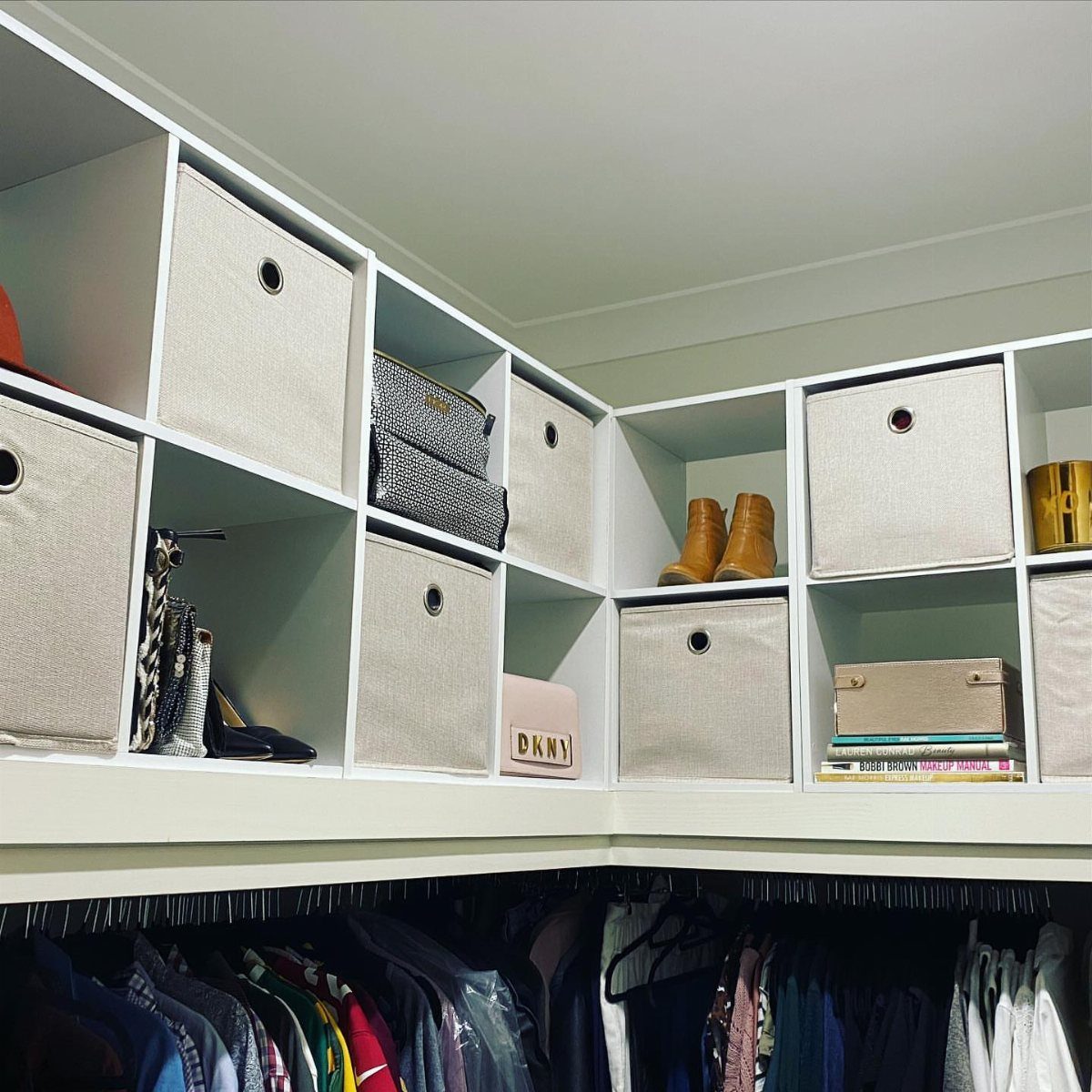
Modular cube units turn empty vertical space into divided compartments for shoes, bags, and folded clothes. They stack or sit on top of a dresser or rod, filling awkward gaps that shelves alone leave open.
Pick cubes that fit the width of your closet so they sit flush against the walls. Some come with fabric bins that slide into the openings, so smaller items stay visible instead of disappearing in the back.
I like units with at least a few open cubes so you can see shoes or bags at a glance.
5. Double Hanging Rods
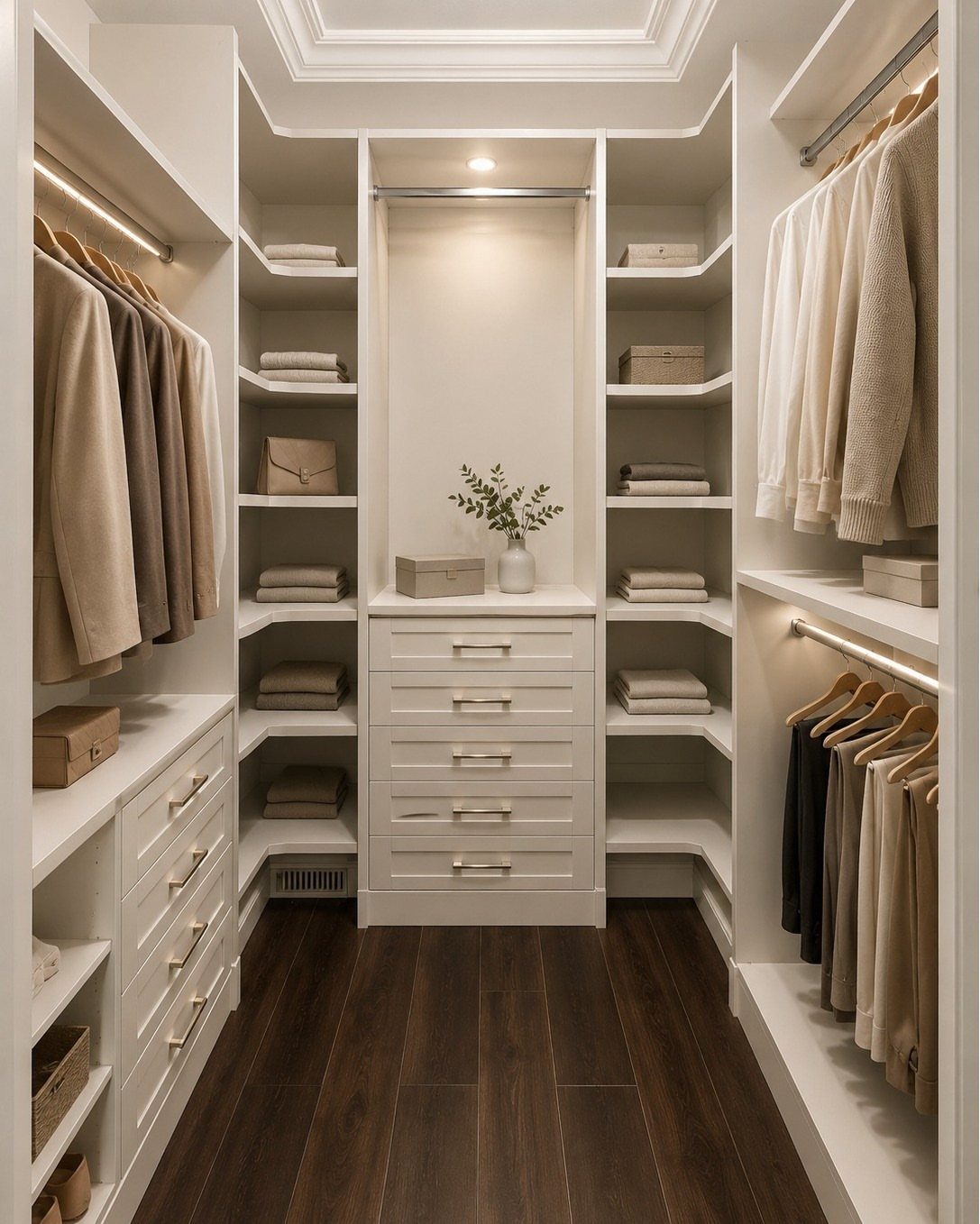
Adding a second rod below the first one doubles your hanging space for shorter items like shirts, skirts, and folded pants. Most closets have enough vertical room to fit 2 rods once you measure and confirm the clearance.
Mount the top rod at a height that lets shorter items hang without hitting the lower rod.
If you rent, tension rods or freestanding double hangers let you add the second tier without drilling. This setup suits closets where most of your wardrobe is tops and bottoms rather than dresses or coats.
6. Top Shelf
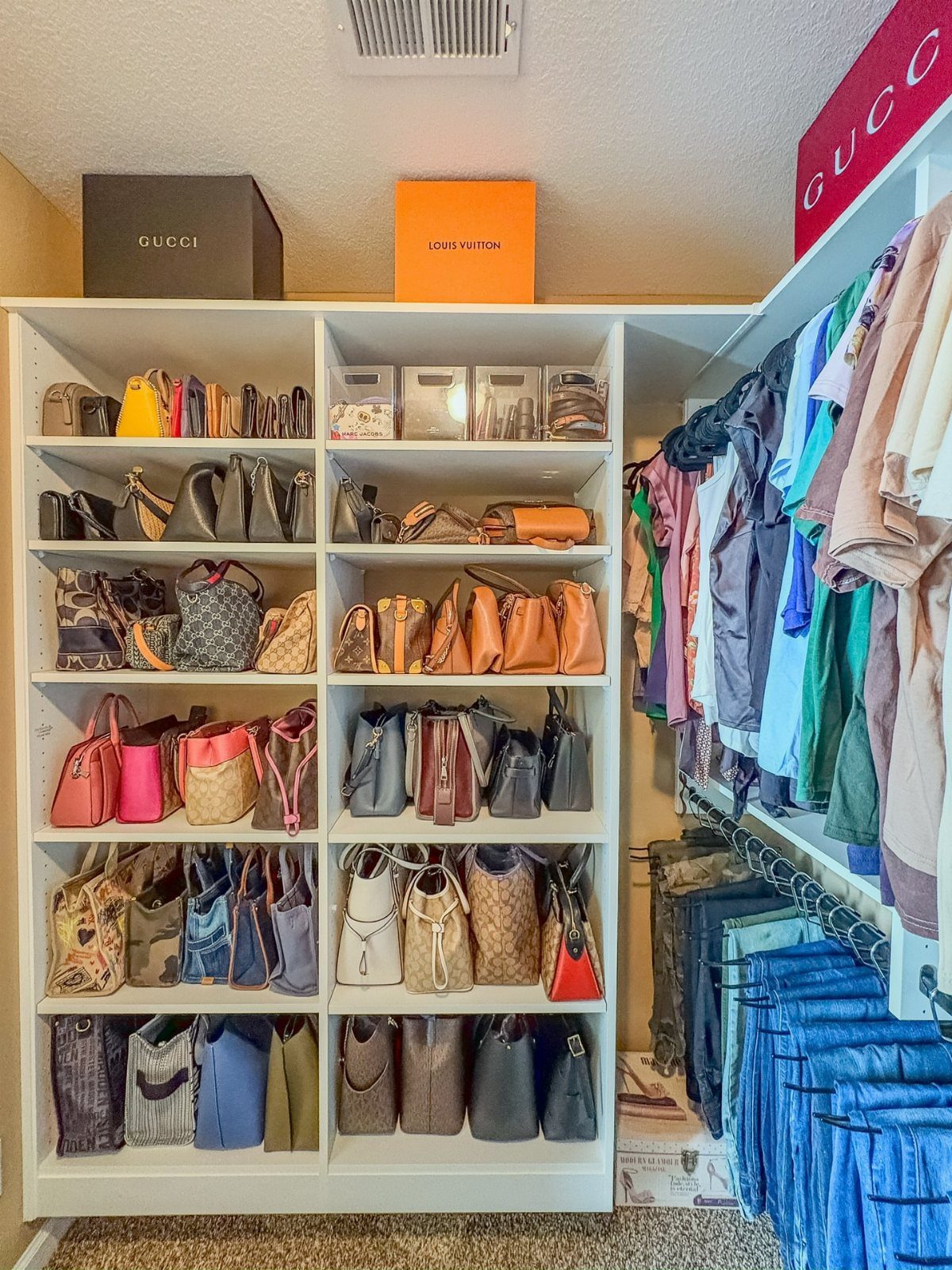
The top shelf holds things you don’t reach for daily but still want close by: out-of-season bags, shoe boxes, or luggage. Adding one above your hanging rod or shelving unit claims space that otherwise goes unused.
Mount the shelf high enough that it leaves room for the rod and hangers below it.
If you can’t reach it easily, keep a small step stool in the closet. I use the top shelf for things I rotate seasonally so I’m not climbing up there every week.
7. Drawer Organizers
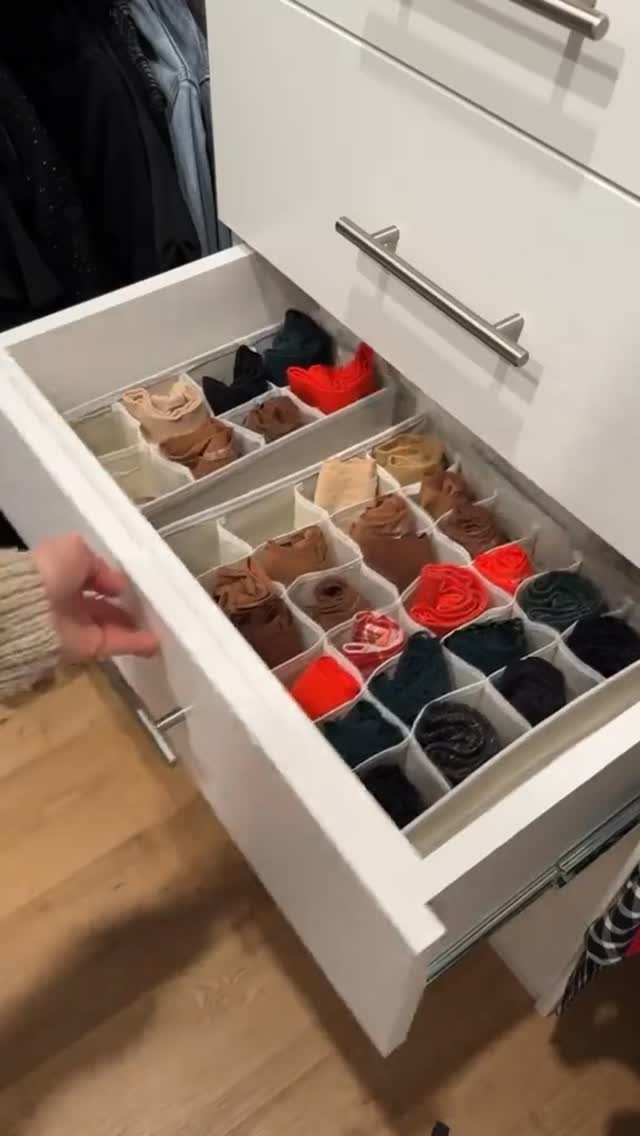
Dividers turn a drawer into a grid so socks, underwear, and accessories each get their own spot instead of mixing together. That keeps small things easy to find and stops one category from taking over the whole drawer.
Adjustable plastic or bamboo dividers let you size the compartments to fit what you actually store.
If the drawer sits on a closet shelf rather than in a dresser, measure the depth so the dividers don’t slide around when you open it.
8. Peel-and-stick Wallpaper
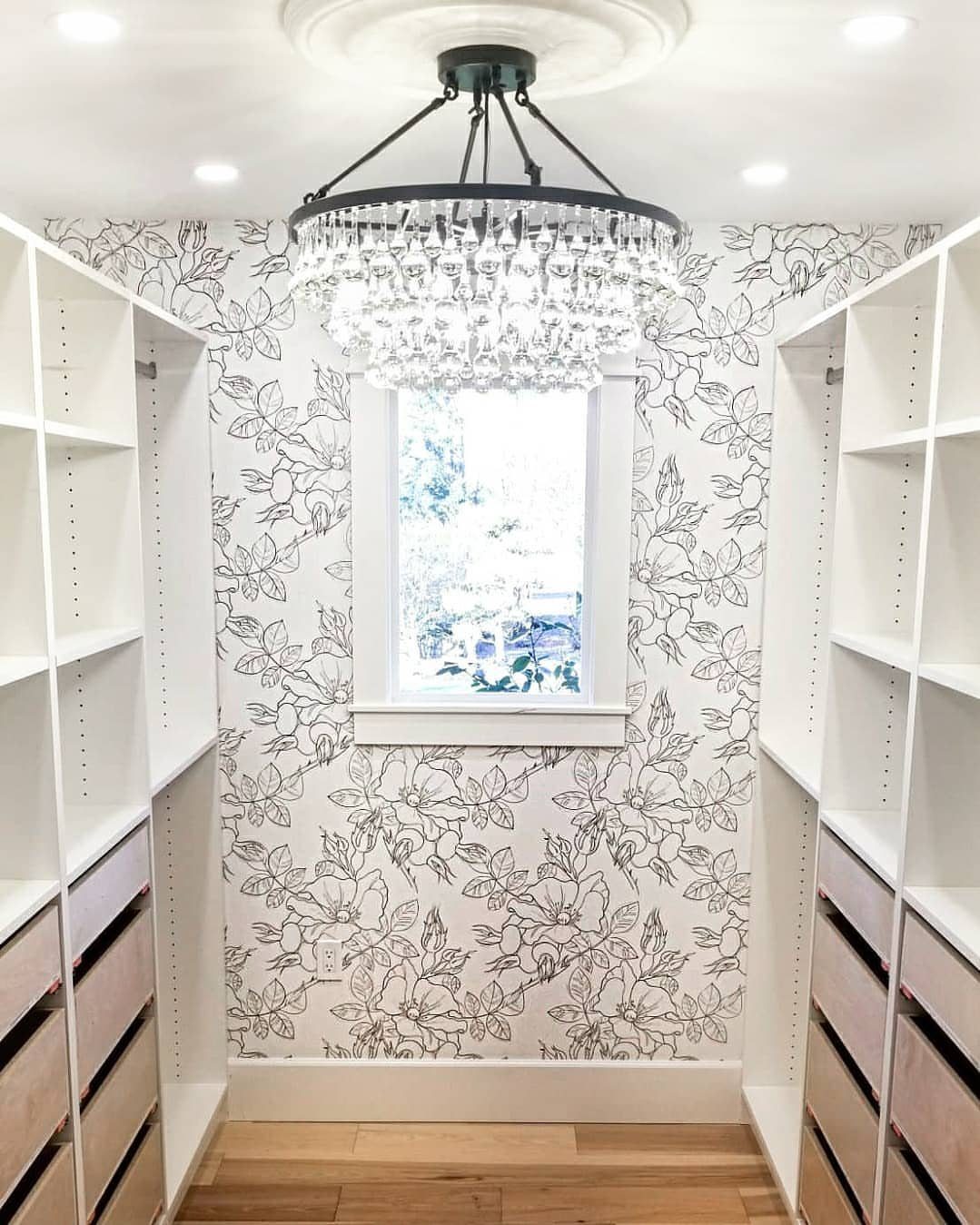
Wallpaper on the back wall turns a plain closet into a finished room without painting or committing to permanent changes. Peel-and-stick versions go up fast and pull off clean when you move or change your mind.
Pick a pattern that reads well in a small space.
Large florals or geometric prints show up even when the closet is full of clothes and boxes. Measure the wall first so you know how many rolls to order.
9. Woven Shelf Baskets
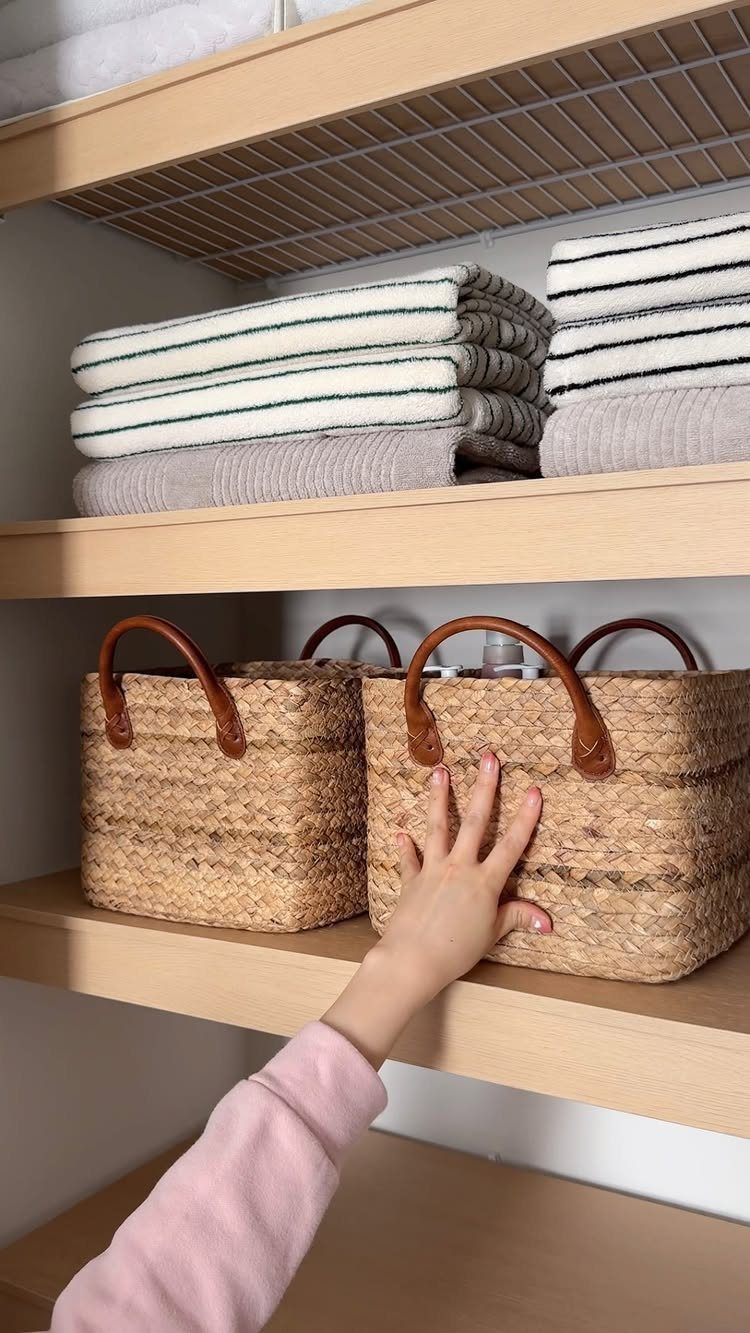
Baskets with handles sit on shelves and hold items you want contained but not hidden: scarves, hats, or folded linens. Woven seagrass adds texture and keeps the closet from looking too stark or sterile.
Size the baskets to the shelf depth so they pull out easily when you need to see what’s inside.
Leather or rope handles make that simpler. I use these for things I reach for weekly but don’t want sitting loose on the shelf.
10. Custom Built-in Closet System
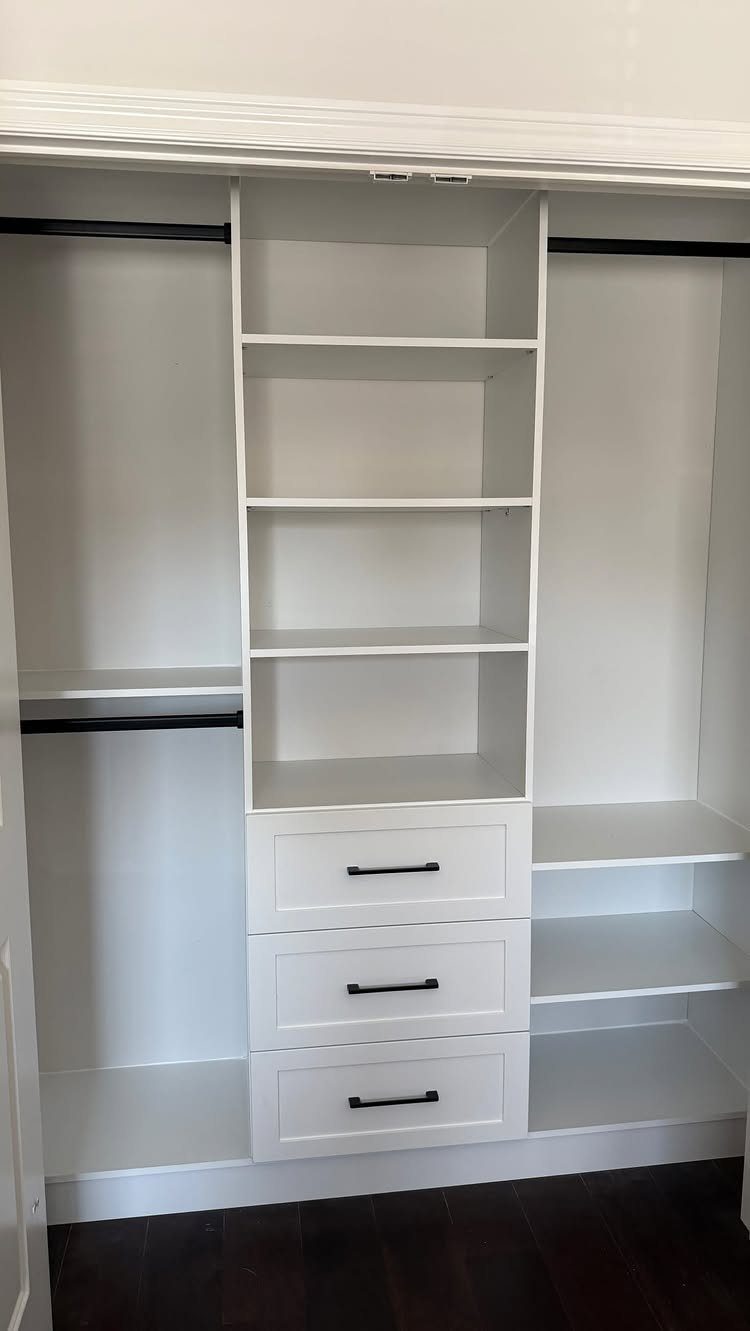
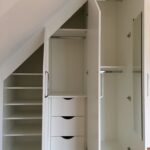
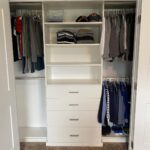
A custom system fits the exact width and height of your closet, placing rods, shelves, and drawers where you need them instead of working around standard sizes.
That matters in a narrow space where an inch or two can mean fitting another shelf or drawer.
This costs more than freestanding units and usually requires professional measuring and installation.
If you rent, modular systems that mount with brackets let you take the setup with you. Built-ins suit closets where the layout is awkward or the width is too narrow for standard furniture.
11. Open Closet Shelving and Rails
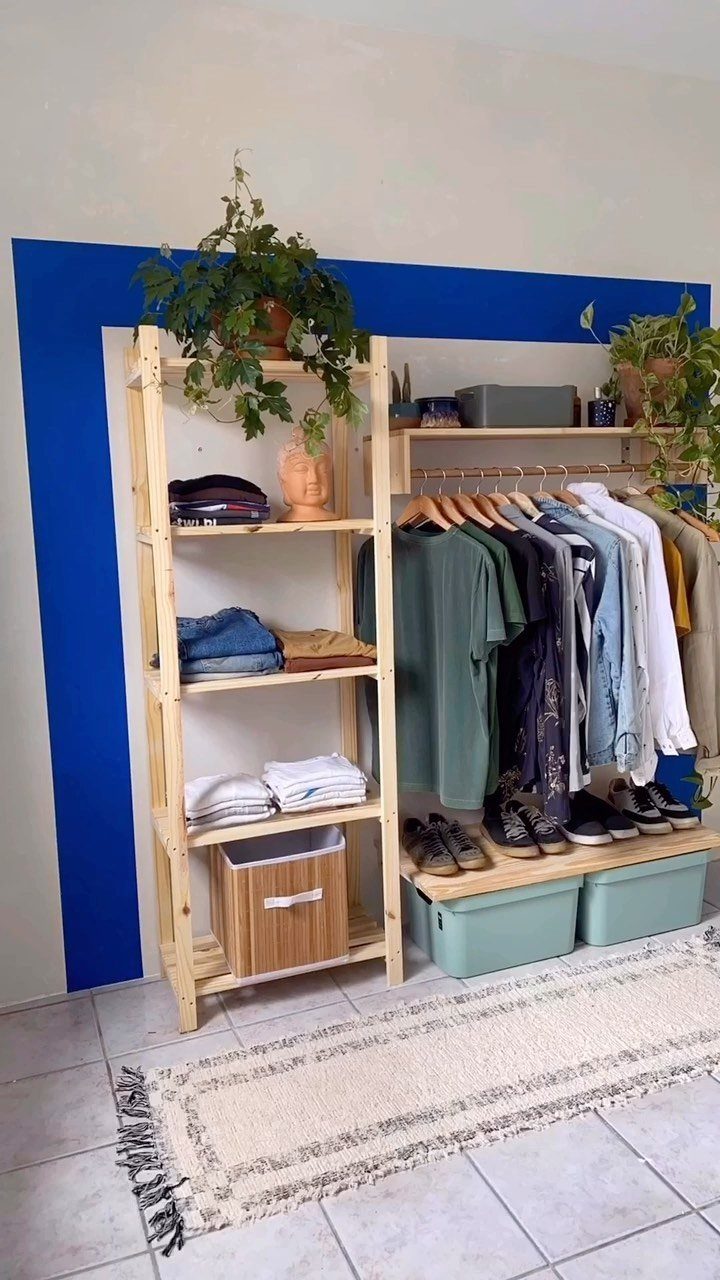
An open system mounts to the wall with brackets and holds clothes, shoes, and boxes in one compact frame. The hanging rail and shelves sit next to each other so everything stays within reach.
This works well in a bedroom where the closet is too small or nonexistent.
Wood finishes warm up a plain wall and the whole unit can move if you rearrange. Mount it to studs if you’re hanging heavy coats or a full wardrobe.
12. Shelf Dividers for Folded Clothes
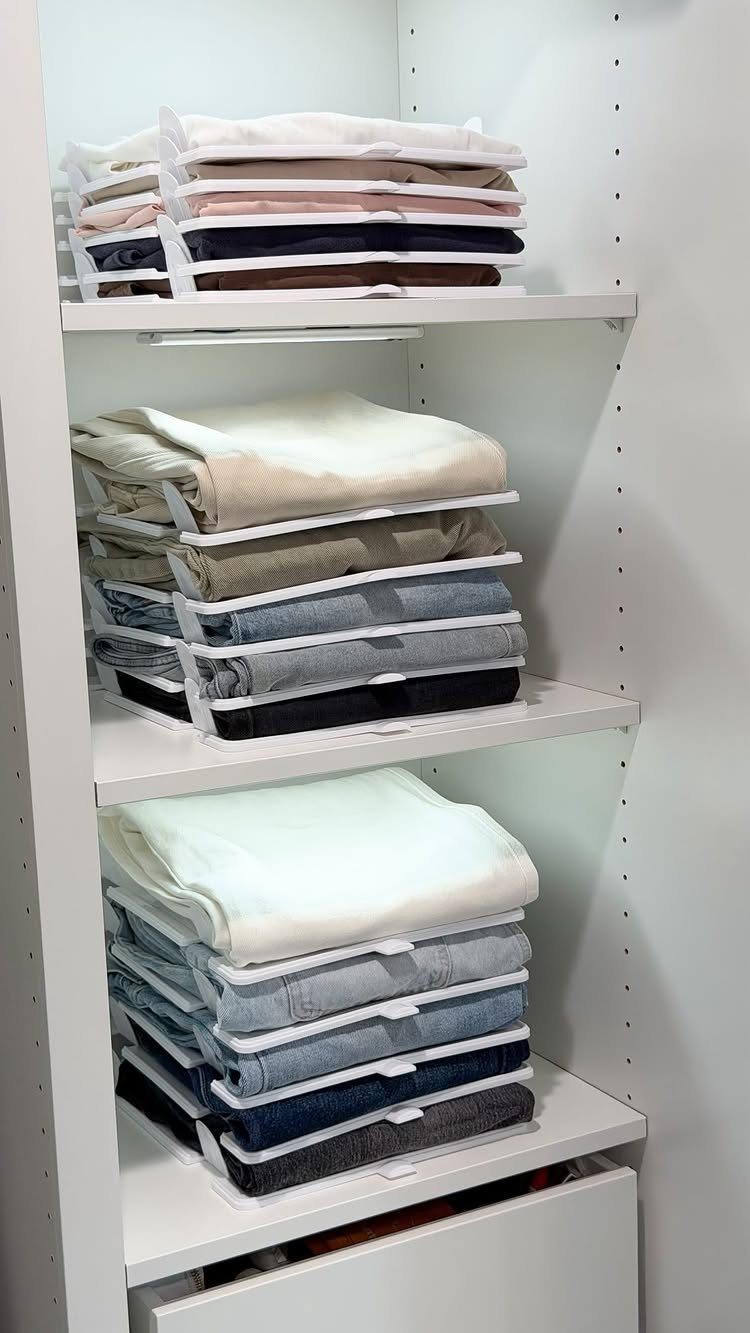
Dividers slip onto shelves and hold folded stacks upright so sweaters, jeans, or towels stay separated instead of leaning into each other. That keeps the piles neat and makes it easier to pull one item without toppling the rest.
Plastic or acrylic dividers work on wire or solid shelves.
Space them based on how thick your folded stacks are so each section holds what you actually store. I’d start with a few and add more if you find yourself restacking often.
Plan Storage Before Buying
Draw out the closet on paper first, then shop for what fits.
Mark where the rod sits, how deep the shelves run, and what height you’re working with. That tells you what will actually fit.
Measure shelf width and depth if you’re buying bins.
An 8-inch-wide fold works well for most t-shirts and pants, so you can size the bin around that. Measure the whole interior for modular units so you know whether a cube system will sit flush or leave gaps.
I’d also decide what needs storing first. If you’re keeping shoes on the floor and coats on the rod, the plan changes from someone who folds everything on shelves.
Knowing that before you shop keeps you from buying organizers that don’t match how you actually use the space.
Declutter Before Organizing
Pull everything out and sort it by category, then look for storage products that match what you kept. That shows you how much you’re really keeping and whether you need 3 bins or 6.
Get rid of clothes you don’t wear anymore.
If something hasn’t left the closet in a year, it’s taking up space that could go to things you actually reach for. I’d do this on the bed or floor where you can see the whole pile at once.
If you add a tiered hanging system or extra rods, keep a one-in-one-out rule so the new capacity doesn’t just fill up again. The space works better when it holds less than it can fit.
Frequently Asked Questions
How do you organize a small closet with no dresser?
Fabric bins on shelves hold folded clothes like workout gear and pajamas, while drawer organizers placed directly on shelves sort socks, underwear, and scarves.
Velvet hangers take up less rod space than plastic ones, so you can hang things you might otherwise fold. This setup lets the closet handle everything a dresser would.
What is the cheapest way to organize a small closet?
Get rid of clothes you don’t wear first, then buy slim hangers, fabric bins, and drawer organizers for under $50 total.
Shoe boxes and small baskets work just as well if you already have them. Getting rid of things costs nothing and opens up the most space.
How do you maximize space in a tiny closet?
Slim velvet hangers take up half the rod space of thick ones, and stackable bins on shelves use vertical room instead of floor space.
File-fold clothes into upright stacks so you can see everything at once. Put out-of-season things in bags on the top shelf, and measure before you buy bins so they sit flush.
What is the best way to fold clothes for a small closet?
Fold each piece into a rectangle and stand it upright so you can see everything at once.
This size fits most t-shirts and pants and lets you see every piece without digging through a pile. The upright stacks stay neat when you pull one item out.
How do I organize scarves in a small closet?
Fold each scarf to fit a section of a compartment organizer and slide it into its own slot.
That keeps them separated and easy to grab without tangling. Drawer organizers or fabric bins with dividers work well for this.